City, University of London Institutional Repository
Citation
: Oblasser, C., McCourt, C., Hanzal, E. and Christie, J. (2015). Vibrating vaginal
balls to improve pelvic floor muscle performance in women after childbirth: a protocol for a randomised controlled feasibility trial. Journal Of Advanced Nursing, 72(4), pp. 900-914. doi: 10.1111/jan.12868This is the supplemental version of the paper.
This version of the publication may differ from the final published
version.
Permanent repository link:
http://openaccess.city.ac.uk/13083/Link to published version
: http://dx.doi.org/10.1111/jan.12868
Copyright and reuse:
City Research Online aims to make research
outputs of City, University of London available to a wider audience.
Copyright and Moral Rights remain with the author(s) and/or copyright
holders. URLs from City Research Online may be freely distributed and
linked to.
Table 1: Inclusion and exclusion criteria
Inclusion criteria:
Women from 6 weeks to 6 months after vaginal childbirth (at beginning of intervention)
Term birth, i.e. 37+0 or more weeks of gestation
6 weeks postpartum check by obstetrician-gynaecologist performed and woman
discharged from postpartum care with diagnostic findings appropriate to this period after
childbirth
Lochia have ceased
Over the age of 18 with capacity to consent
Sufficient knowledge of written and spoken German to be able to participate in the study
Baby alive/not seriously ill
Exclusion criteria:
Currently enrolled in pelvic floor muscle training with physiotherapist, midwife or fitness
trainer
Status post perineal tear 3rd or 4th degree at most recent birth
Status post continence surgery
Current pelvic floor or gynaecological surgery
Current infection of genitourinary tract
Recurrent (>5 infectious episodes during last 12 months) or chronic (>3 weeks duration
of single episode in last 12 months) vaginal infections
Neuromuscular conditions influencing pelvic floor muscle function (e.g. multiple
sclerosis)
Major medical condition influencing infectious risk (diabetes, immune suppressive
Currently on medication that could interfere with treatment or evaluation
Currently enrolled in any other research study
Pregnancy (also commencing during participation) or pregnancy planned within the study
period
Retention of ball is impossible
Inability to perform the proposed procedures
Table 2: Feasibility criteria: the full trial will deemed to be feasible if all of the following criteria are met.
Recruitment:
≥ 10% of eligible persons give consent to participate in the trial (can only be
calculated for recruitment where professionals will note the number of eligible
women).
Pre intervention data collection:
At least 50 of the 56 or ≥ 90% (95%CI=80-100) of participants attend the first pelvic
floor muscle measurement within 3 weeks of consenting to take part in the trial.
Completion and concordance:
At least 50 of the 56 or ≥ 90% (95%CI=80-100) of participants start with the
intervention within 4 days of the initial pelvic floor muscle measurement by
perineometry.
At least 45 of the 56 or ≥ 80% (95%CI=70-90) of enrolled participants keep to the
Post intervention data collection:
At least 45 of the 56 or ≥ 80% (95% CI=70-90) of enrolled participants have the final
[image:4.595.65.530.252.730.2]data collection within 2 weeks of ending the intervention.
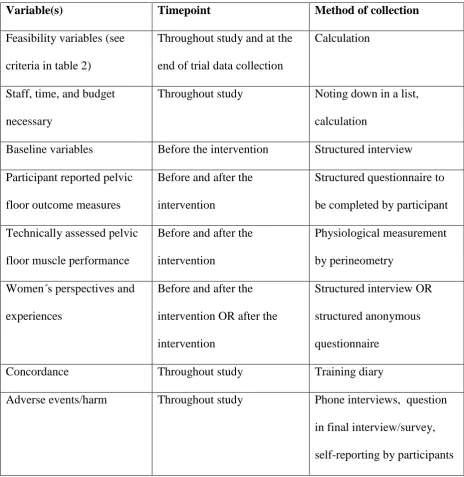
Table 3: Summary of data collection
Variable(s) Timepoint Method of collection
Feasibility variables (see
criteria in table 2)
Throughout study and at the
end of trial data collection
Calculation
Staff, time, and budget
necessary
Throughout study Noting down in a list,
calculation
Baseline variables Before the intervention Structured interview
Participant reported pelvic
floor outcome measures
Before and after the
intervention
Structured questionnaire to
be completed by participant
Technically assessed pelvic
floor muscle performance
Before and after the
intervention
Physiological measurement
by perineometry
Women´s perspectives and
experiences
Before and after the
intervention OR after the
intervention
Structured interview OR
structured anonymous
questionnaire
Concordance Throughout study Training diary
Adverse events/harm Throughout study Phone interviews, question
in final interview/survey,
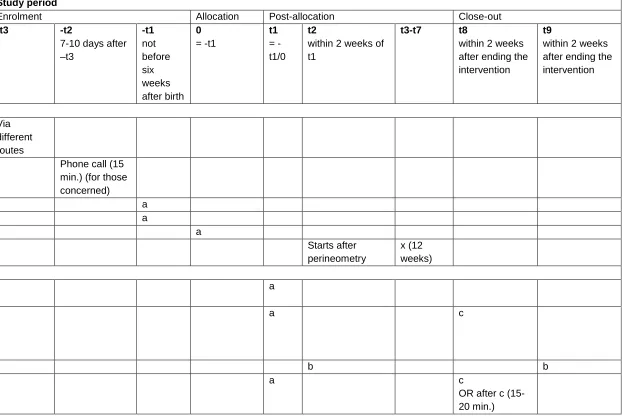
Table 4: Schedule of enrolment, interventions, and assessments
Study period
Enrolment Allocation Post-allocation Close-out
-t3 -t2
7-10 days after –t3 -t1 not before six weeks after birth 0 = -t1 t1 = -t1/0 t2
within 2 weeks of t1
t3-t7 t8
within 2 weeks after ending the intervention
t9
within 2 weeks after ending the intervention
1. Enrolment
Recruitment Via
different routes Recruitment
Initial eligibility screen
Phone call (15 min.) (for those concerned)
Eligibility screen a
Informed consent a
2. Allocation a
3 .Interventions Starts after
perineometry x (12 weeks) 4. Assessments Baseline variables collection a Participant reported outcome variables collection
a c
Perineometry b b
Interviews
OR questionnaire
a c
Adverse events monitoring
5 phone calls (à 5-10 min.)
c
a = personal meeting of CO with the potential participant, on the venue most suitable to the participant (her home, hospital room or public place where sufficient privacy can be obtained). Estimated duration: 2 hours.
b = by masked assessor (EH): Participants have to travel to Vienna General Hospital. Estimated duration of contact: 15 minutes. Travel time according to participant.
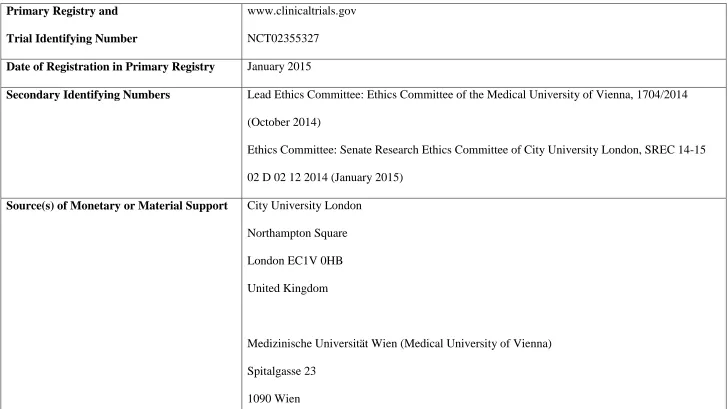
Table 5: Items from the World Health Organization Trial Registration Data Set
Primary Registry and
Trial Identifying Number
www.clinicaltrials.gov
NCT02355327
Date of Registration in Primary Registry January 2015
Secondary Identifying Numbers Lead Ethics Committee: Ethics Committee of the Medical University of Vienna, 1704/2014
(October 2014)
Ethics Committee: Senate Research Ethics Committee of City University London, SREC 14-15
02 D 02 12 2014 (January 2015)
Source(s) of Monetary or Material Support City University London
Northampton Square
London EC1V 0HB
United Kingdom
Medizinische Universität Wien (Medical University of Vienna)
Spitalgasse 23
Austria
Primary Sponsor City University London
Northampton Square
London EC1V 0HB
United Kingdom
Secondary Sponsor Medizinische Universität Wien (Medical University of Vienna)
Spitalgasse 23
1090 Wien
Austria
Contact for Public Queries Claudia Oblasser
School of Health Sciences
City University London
1 Myddelton Street
London EC1R 1UW
Tel: +(0) 20 7040 8337
Contact for Scientific Queries As above
Public Title Feasibility study on the effectiveness of vibrating vaginal balls to improve pelvic floor muscle
performance in women after childbirth [translated from German]
Scientific Title Feasibility trial on the effectiveness of vibrating vaginal balls to improve pelvic floor muscle
performance in women after childbirth
Country of Recruitment Austria
Health Condition or Problem Studied Pelvic floor health after childbirth
Interventions Experimental device: Laselle Kegel Exerciser
Participants use a vibrating pelvic floor muscle training ball for 12 weeks. The ball is inserted
into the vagina and left for 15 minutes daily in the first week, and if well tolerated 30 minutes
daily from the second week onwards. To achieve the vibrating effect, the balls are worn while
moving – performing everyday tasks or going for a walk.
Active behavioural control: Pelvic floor muscle exercises
muscle exercises. Participants will be asked to continue/start the pelvic floor muscle exercises
they routinely were recommended by customary written instructions from their health
professionals after birth.
Intervention duration for this study is 12 weeks.
Key Inclusion and Exclusion Criteria See table 1
Study Type and Design Study type: interventional
Allocation: randomised
Intervention Model: parallel assignment
Masking: single blind (outcome assessor)
Purpose: feasibility trial
Date of First Enrollment February 2015
Target Sample Size 56
Recruitment Status Recruiting
Primary Outcomes Feasibility as measured by recruitment rate (Timepoint: within 4 weeks of ending
Feasibility as measured by pre intervention pelvic floor muscle measurement attendance rate
(Timepoint: within 4 weeks of ending data collection)
Feasibility as measured by start of intervention rate (Timepoint: within 4 weeks of ending
data collection)
Feasibility as measured by concordance rate (Timepoint: within 4 weeks of ending data
collection)
Feasibility as measured by retention rate (Timepoint: within 4 weeks of ending data
collection)
Feasibility as measured by post intervention data collection attendance rate
(Timepoint: within 4 weeks of ending data collection)
Feasibility as measured by staff necessary (Timepoint: within 4 weeks of ending data
collection)
Feasibility as measured by time necessary (Timepoint: within 4 weeks of ending data
collection)
collection)
Key Secondary Outcomes Participant reported pelvic floor muscle outcomes as measured by structured questionnaire
(Timepoint: within 3 weeks before the intervention)
Participant reported pelvic floor muscle outcomes as measured by structured questionnaire
(Timepoint: within 2 weeks after the intervention)
Pelvic floor muscle performance as measured by perineometry (Timepoint: within 4 days
before the intervention) – by masked assessor
Pelvic floor muscle performance as measured by perineometry (Timepoint: within 2 weeks
after the intervention) – by masked assessor
Women´s perspectives and experiences as measured by structured interviews
(Timepoint: within 3 weeks before the intervention) – 28 of 56 women
Women´s perspectives and experiences as measured by structured interviews
(Timepoint: within 2 weeks after the intervention) – same 28 of 56 women as for previous
Women´s perspectives and experiences as measured by structured anonymous questionnaire
(Timepoint: within 3 weeks after the intervention) – 28 of 56 women (those not included
in the two previous outcome measures)
Concordance to interventions as measured by training diary (Timepoint: at time of
intervention (12 weeks))
Type, severity and number of adverse events as measured by active and passive surveillance
(interview, self-report) (Timepoint: at time of intervention (12 weeks))
Type, severity and number of adverse events as measured by active and passive surveillance
(interview/questionnaire, self-report) (Timepoint: up to 1 year after end of intervention) –