City, University of London Institutional Repository
Citation
: Boon, A. (2015). Regulation and discipline. In: A. Boon (Ed.), Lawyers’ Ethics
and Professional Responsibility. (pp. 63-104). Oxford: Hart Publishing. ISBN9781849467841
This is the accepted version of the paper.
This version of the publication may differ from the final published
version.
Permanent repository link:
http://openaccess.city.ac.uk/13637/Link to published version
:
Copyright and reuse:
City Research Online aims to make research
outputs of City, University of London available to a wider audience.
Copyright and Moral Rights remain with the author(s) and/or copyright
holders. URLs from City Research Online may be freely distributed and
linked to.
City Research Online: http://openaccess.city.ac.uk/ [email protected]
3
Regulation and discipline
INTRODUCTION
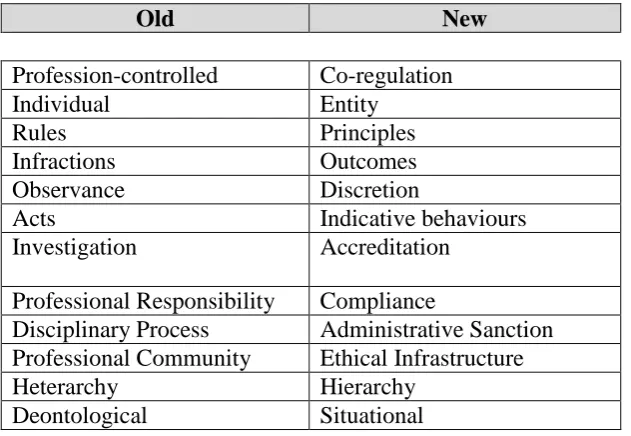
This chapter explores the regulation of legal professions. It looks at different theories of regulation before outlining the argument for self-regulation of legal services providers. It then considers ways in which future practitioners are prepared to make ethical choices by legal education and training. It also outlines the regulatory mechanisms used and the place of codes of conduct in ensuring ethical performance. The chapter concludes by outlining the change in regulatory philosophy prompted by the Legal Services Act 2007. Traditional methods of regulation are juxtaposed with the regulatory regimes beginning to emerge in response to the Act.
THEORIES OF REGULATION Definition
Regulation is a contested term with at least three current meanings.1 The first conceives of regulation as a set of authoritative and targeted rules, issued by a public agency or similar body. The second sees regulation as direct state intervention in steering the economy through its agencies, using tools such as contracting or state ownership. The third meaning sees mechanisms of social control, whoever exercises them and whether they are intended to facilitate or control, or not, as regulation. The last of these three meanings would include within the definition of regulation anything that might produce effects on behaviour. This could include workplace or other environments.
Regulation types and strategies
Government regulation
i. Command and control regulation
Command and control regulation describes the direct regulation of an industry by the state, usually through legislation. It involves the specification of quality standards (command) with specified sanctions for breach (control). A criticism of command and control approaches is that they aim to deter non-compliance rather than to encourage compliance. Its operation is therefore remedial rather than preventative.
A problem with implementing an effective command and control regime is that standards need to be specified accurately and on a large scale (for example, the level of carbon emission at a factory). A command and control regime is less feasible where it is difficult to specify quantitative standards. These various criticisms may contribute to command and control approaches being relatively ineffective in changing behaviour in the economic and organizational spheres.
ii. Indirect government regulation
Governments can regulate indirectly by inviting bids for franchises or contracts, the terms of which incorporate regulatory objectives. Contractors can also be required to submit to pre-existing quality control regimes as a term of the contract. The eminent sociologist Max Weber was ambivalent about state bureaucracy impinging on civil society. He saw state interference as an efficient, even necessary, form of organisation, but also an ‘iron cage’, inducing conformity and threatening individual freedom.
Types of self-regulation
i. Self-regulation
Self-regulation is justified by a situation of market failure. An example is where consumers cannot judge the product they are buying. This is usually the case with legal services. This is a situation of information asymmetries, where the producer knows more than the purchaser. Self-regulation is a good solution when private law cannot correct this problem adequately or cheaply enough, or where conventional public regulation is less good or more expensive.2
The preference for self-regulation over public regulation largely stems from the expertise held by the regulated sector. Formulating, implementing and amending standards is arguably cheaper for a self-regulatory agency than an external agency. Monitoring and enforcement costs are reduced and borne by the industry, rather than the taxpayer.
There are many concerns about the legitimacy and economic effect of self-regulation. Self-regulatory agencies that are not democratic cannot legitimately represent their
membership. The accumulation of too many functions, from rule formation to enforcement for example, offends the principle of the separation of powers. Restrictions on entry to self-regulated industries, and ‘rules of etiquette’, can restrict the supply of services. This enables those in self-regulated industries to claim higher profits, ‘rents’, than would be available in a competitive market.
ii. Enforced Self-regulation
Concern that self-regulation can too easily favour the regulated group have led to adjustments in regimes. Schemes whereby industries make their own rules, but have them approved by public agencies, are potentially more efficient and less costly than direct state regulation. Such schemes have been called ‘enforced self-regulation’.3
These regimes are often supported by compliance officers within firms who are under an obligation to report regulatory infractions. Regimes involving state monitoring were originally advocated as a way of dealing with self-regulatory failure.
Enforced self-regulation can be accompanied by strategies to increase competition and reduce rents. Competition between self-regulatory agencies can be sufficient to reduce prices, but this alone is not a solution. Ideally, consumers should be able to purchase the quality they can afford. Unfortunately, if consumers can compare price but not quality, this may force quality to be consistently cut, leading to a ‘race to the bottom’. Therefore, some control over quality needs to be exercised. This can be provided by external rating agencies, or by a public agency charged with eliminating anti-competitive practices and maintaining minimum quality standards.
Mixed regulation
A number of different regulatory regimes can be operated as part of a self- regulatory regime or, more typically, though a government appointed agency.
i. Responsive regulation
Responsive regulation proposes an alternative to the choice between deterrence regimes, punishing after the event, and compliance regimes, involving preventative
persuasion. Combined strategies, of initial persuasion, followed up by deterrent sanctions for recalcitrant offenders, offers a dual approach.4 It also forms a part of a wider suite, or
pyramid, of strategies, starting with self-regulation but ending with strictly enforced sanctions for non-compliance as a final step.
Compliance regimes can be developed through ongoing relationships between regulators and regulated entities. Their success depends on the transparency and clear
communication between the parties.5 Visits by regulators to regulated organisations check the
2 A Ogus ‘Rethinking Self-Regulation’ (1995) 15 Oxford Journal of Legal Studies 97. 3 J Braithwaite ‘Enforced Self-Regulation’ (1982) 80 Michigan Law Review 1466. 4
I Ayres and J Braithwaite Responsive Regulation –Transcending the Deregulation Debate (Oxford: OUP, 1992).
effectiveness of systems and the outcomes achieved. This may result in recommendations for change, for example, to systems. The focus of such visits can also escalate to other processes, such as disciplinary investigations, or to involve other sanctions, such as fines.
There are a number of potential problems with such regimes. Their success depends on a number of factors including the resources available for regulatory activity, the attitudes of regulators and political support for intervention. It is useful that the regulator has a wide range of sanctions available. If the only sanction is extremely serious it is less likely to be used. However, if the use of sanctions depends on co-operation with the regulator, there is a risk that different sanctions will be applied for the same offence, thus undermining the legitimacy of the regime.
ii. Risk-based regulation
In 2005 the Hampton Review proposed that regulatory agencies should focus
resources on the regulated parties posing the biggest risk that the regulator would not achieve its regulatory objectives. Risk-based strategies assume that there is an evidence base that allows risks to be assessed. This may lead to the risks identified being historic problems rather than prospective ones. There should also be a process of prioritization of risks at a high level. If transparent systems are in place it is likely that reporting of these priorities will evoke a hostile reaction.
iii. Reflexive regulation
Reflexive regulation refers to the idea that regulators and the regulated learn from and respond to the experience of regulation. Both adjust their behaviour accordingly, with the regulator taking on board new approaches and strategies according to what works.6
Mechanisms for this can be seen in proposals for the development of responsive regulation to take account of factors such as the attitudes of regulated parties, the wider regulatory
environment and the interplay of regulatory tools.7 Through a reflexive process, regulators can re-assess and re-design regulatory strategy.
Choice of regulatory system
Self-regulation is often associated with detailed disciplinary rules and codes of conduct. Regulation by public authority tends to be associated with administrative regimes. These may use a range of tools including inspection, audit and advice. These can be used in association with regulatory codes, although possibly not as detailed as a professional code of conduct. However, the strategies of mixed regulation could be used in a context of self-regulation. Likewise, a situation of enforced self-regulation could take on the characteristics of a mixed system.
A number of factors bear on the choice of system including the current situation of an industry, the history of performance of that industry and the approach of the state to the issue of regulation. As a generalization, hierarchical societies are more likely to favour direct government regulation, individualist societies to favour de-regulation and light touch regulation and egalitarian societies to prefer participatory models.8
REGULATION OF THE LEGAL PROFESSION Self-regulation
As the legal professional bodies grew in organisation and confidence they took on the task of guaranteeing the behaviour and performance of members. They therefore exercised
regime’ (1999) 26(2) Journal of Law & Society 215.
6 S Deakin and C McLaughlin ‘The regulation of women’s pay: from individual rights
to reflexive law?’ in J Scott, S Dex and H Joshi (eds.) Women and Employment: Changing Lives and New Challenges (Cheltenham, Edward Elgar, 2008) 313.
7
R Baldwin and J Black ‘Really Responsive Regulation’ (2008) 71:1 Modern Law Review 59.
disciplinary powers over members. Effective disciplinary machinery was essential because, without prescription or sanction, rules may not provide effective control of the whole
membership.9 Formal powers to discipline members were eventually delegated by the state and the professions operated disciplinary tribunals. The machinery supporting control of the legal profession, including disciplinary, educational and other mechanisms, is known as self-regulation.
When the legal professions first emerged, state regulation of occupations was rudimentary. The explanation for this is that, as professional practice became more sophisticated, it became incomprehensible to outsiders. External regulation was therefore seen as impracticable. With the growth of the regulatory state (see Chapter 2) the effectiveness of self-regulation was contested. This was partly because professional bodies also represented members’ interests giving them conflicting roles. Therefore, the legal professions in England and Wales currently operate under a regime closer to enforced self-regulation. This is described in more detail later in the chapter.
Regulation of the right to practice
Regulation of the right to practice is a fundamental aspect of the professional control of legal markets. The right to practice is protected by statute. It is an offence for an unqualified person to act as a solicitor, ‘wilfully pretend to be’ a solicitor or imply that he or she is a solicitor.10 Under the Legal Services Act 2007 ‘authorised persons’ in England and Wales can only undertake the reserved legal activities that their regulator can authorise and which that regulator has authorised them to undertake. Some areas of work, such as immigration and asylum, for example, can be done by non-lawyers.
Some jurisdictions are open to lawyers from other states operating in their jurisdiction, although they may not be able to do exactly the same things as home qualified lawyers. Following EU directives in 1989 and 1998, qualified lawyers from EU member states can practice in other EU jurisdictions under their own title. They must register with the SRA. They can also qualify as a lawyer of their host state provided they fill any gaps in their knowledge and skills. The host state must facilitate this by providing suitable assessments.11
PREPARATION FOR PRACTICE Socialisation into professional values
It is important not to ignore the fact that there are reasons, other than sanctions, why rules work. This is because everybody is socialised into a set of behaviours by family and other institutions. Professions provide occupational socialisation, building on these earlier stages. Membership, identification and peer pressure provided by the professional group as a whole, counterbalances workplace pressure to drop standards. Entrants to professions are socialised into values throughout their education and training and beyond. It is important, therefore, to consider whether professional structures, taken as a whole, support ethical performance of member practitioners.
i. Education
Knowledge is the foundation of professional authority. Education and training is the core responsibility of regulation. Institutionalised legal education consolidates, expands and theorises the knowledge base in universities. It is also symbolically important. Because professional knowledge changes, professional education is a lifelong activity. It used to be assumed that professionals acquired wisdom through experience. Nowadays, they are likely to be subject to compulsory Continuing Professional Development programmes. These typically require attendance at a given number of lectures a year as a condition of practice.
9 R Baldwin ‘Why Rules Don’t Work’ (1990) 53 Modern Law Review 321. 10
Solicitors’ Act 1974, ss. 20, 21 as amended.
The length of education and training signifies the intrinsic difficulty of assimilation and mastery of professional knowledge and skill. Larsson suggests that one of the reasons for professional monopolies is so that intending professionals are not dissuaded from investing time, effort and money in education and training. The result is that the education process can be seen as unnecessarily lengthy and complex. Moreover, it is arguable that it pays insufficient attention to moral values. It typically pays professional ethics, arguably one of the fundamental building blocks of professional practice, little attention. This can be attributed to the way in which University legal education developed.
ii. The curriculum
A method of study based on analysis of cases and precedents evolved in England in the nineteenth century under the influence of a largely Oxford based elite. The case method involved the systematisation, exposition and analysis of legal doctrine.12 The popularity of the case method is attributed to the Harvard Law professor Christopher Columbus Langdell who, in 1887, asserted that ‘Law is a science, and that all the available materials of that science are contained in printed books’.13
The case method became entrenched in English university law teaching between 1850 and 1907. Its material was ‘black letter law’, a term derived from the presentation of basic legal principles in bold type in traditional texts.14 The general approach became universal, although it took different forms in different jurisdictions. In the US the ‘Socratic method’ required students to state the facts of the case, the outcome and whether it was ‘good’ law.
The case method is integral to legal positivism, which holds that the legal and the moral are separate realms. Positivism defines ‘law’ as that material formally enacted by designated authorities. This contrasts with natural law, which suggests universal principles of morality, religion, and justice must be present for norms to be called ‘law’. Sugarman argues that the adoption of legal positivism by universities created an area of autonomy between the university, the profession and the state. Practitioners were masters of the relation between law and facts but legal academics ‘… were masters of the principles of law… facts and reality were kept at a safe distance’.15
From the early nineteen hundreds, law became a subject in many provincial universities. It was often developed with local law societies and taught by local practitioners. As a result, these provincial courses took a practical approach.16 In 1913 the Haldane Commission promoted the combination of theory and practice, excluding social, political or moral context, with support from the academy.17 In a post-war review of legal education, the president of the Society of Public Teachers of Law said that legal education should be based on precedent, not legislation. Criticising law and discussing law reform was dangerously like sociology, and impinged on the objectivity necessary for legal study.
As legal education developed in the twentieth century, university law schools clung to the scientific pretensions of positivism. By the 1950s the doctrinal approach to legal study was under challenge. Some legal academics argued that lawyers should know some
economics, political science and sociology as well as legal cases. In the 1970s, critics argued that the pedagogy of the case method stimulates competitiveness, orthodoxy and
12 D Sugarman “A Hatred of Disorder’: Legal Science, Liberalism and Imperialism’ in P Fitzpatrick (ed.) Dangerous Supplements: Resistance and Renewal in Jurisprudence (London, Pluto Press, 1991) 34.
13 ‘Harvard Celebration Speeches: Professor Langdell’ (1887) 8 The Law Quarterly Review 123.
14 AC Hutchinson ‘Beyond Black-Letterism: Ethics in Law and Legal Education’ (1999) 33 Law Teacher 301. 15 Sugarman “A Hatred of Disorder’ (1991) at 41.
16 B Abel-Smith and R Stevens Lawyers and the Courts: a Sociological Study of the English Legal System 1750-1965 (London, Heinemann, 1967) 182.
conservatism, turning students away from whatever public service orientations stimulated their interest in law.18
Legal positivism fell out of favour with many academics from the 1960s onwards. The professional bodies encouraged the idea that law should be taught ‘in context’
encouraging a multi-disciplinary approach.19 The evolution of legal studies from the 1960s coincided with the growth of socio-legal research in universities. This involved the empirical investigation of legal phenomena using the methods of the social sciences.
The multi-disciplinary approach to law broke the stranglehold of conventional legal study. It was a form of knowledge that was not found in practice but was valuable in law reform, as evidenced by the establishment of the Law Commission in 1965. The adoption of a broader approach to academic legal study began a debate about what legal education was for.
A broad consensus emerged between professional policy makers and University law lecturers that limited the scope of undergraduate legal education. It was only to contribute to professional development by laying the foundations of legal study through substantive core subjects. Study of the legal system, or skills or ethics was not required. This accommodated Law Schools to a wider university culture. This was based on a liberal ideal and the neutral values of scientific inquiry.
Universities have a liberal ethos in which independence is a key value. Bradney identifies John Henry Newman, the 19th Century Roman Catholic cardinal and academic, as an inspiration for this liberal ideal. Newman wished to build a Catholic University for Catholic students. He recognised, however, that he needed to be able to publish free from church interference.
Newman’s view of liberal education was that it 'apprehends the great outlines of knowledge, the principles on which it rests, the scale of its parts, its lights and its shades, its great points and its little... A habit of mind is formed which lasts through life, of which the attributes are, freedom, equitableness, calmness, moderation and wisdom.'20 This vision is usually antithetical to vocational or other ‘non-academic’ values.
Despite the absence of vocational content, legal professions often specify much of the undergraduate law curriculum as a mandatory prerequisite of progress to vocational
qualification. There is no strong rationale for most of the content. Nevertheless, in much of the common law world, further courses and an apprenticeship in practice is required.
Over the past 25 years vocational courses have developed a distinct methodology, integrating skills into practice subjects. They have increasingly required that professional ethics be taught as part of the curriculum. The focus has often been on a few rules of conduct. The result is that there is nowhere in the whole of legal education that professional ethics receives full treatment.
Glasser argued that, as the membership of professions becomes more diverse, and experiences of practice diverge, education would need to provide ‘the cement’ binding the legal profession together.21 It might therefore be expected that education and training would play a greater role in professional socialisation. This may suggest a need for programmes traversing the conventional stages of education and training.
18 D. Kennedy `How the Law School Fails: A Polemic’ (1971) 1 Yale Rev. Journal of Law and Social Action 71, C
C Stanley, Training for the Hierarchy? Reflections on the British Experience of Legal Education’, (1988) 22:2/3
The Law Teacher 78, S Matambanadzo ‘Fumbling toward a Critical Legal Pedagogy and Practice’ (2006) 4 Policy Futures in Education 90.
19 The Hon. Mr Justice Ormrod (Chairman) Report of the Committee on Legal Education (1971) Cmnd. 4595
(Ormrod), para. 109, ACLEC, para.2.4. and K Economides ‘Legal Ethics-Three Challenges for the Next Millenium’ in Ethical Challengesto LegalEducationand Conduct (Oxford, Hart, 1998) xxxii.
20 A Bradney Conversations, Choices and Chances: The Liberal Law School in the Twenty-First Century (Oxford:
Hart Publishing, 2003) 32.
Requiring the initial stage to cover ethical materials would have a number of
advantages. It would provide a common platform for the vocational stage, where a common understanding of ethics could be assumed. This would enable the vocational stage to adopt more ambitious aims and lay the foundation for higher levels of education and training at the training and post-qualification stages.
The Legal and Education and Training Review for England and Wales, which reported in 2013, came to remarkably mixed conclusions about ethics. Legal and Professional Ethics was rated one the two most important knowledge areas by barristers solicitors and CILEX members in an online survey conducted for the review. Only contract law and tort, third and fourth respectively, commanded anywhere near the same general consensus.
INSERT TB
THE FUTURE OF LEGAL SERVICES EDUCATION AND TRAINING REGULATION IN ENGLAND AND WALES (June 2013)
Ethics, values and professionalism
4.65 This was rated the most important knowledge area in the LETR online survey, a result which echoed the demand for a greater emphasis on professional ethics and conduct across the qualitative data and stakeholder responses to Discussion Papers. It is also an area that bridges the affective/moral domain and ‘habits of mind’, as well as the cognitive dimension.
4.66 An increased emphasis on ethics and legal values in LSET would be consistent with the focus of the LSA 2007 regulatory objectives, and the need to develop a more thoughtful and contextual approach to professional obligations, particularly where those are expressed via principles-based regulation or OFR rather than detailed rules. It is suggested that all approved regulators review the treatment of ethics and
professionalism within their education and training regimes to ensure that the subject is addressed with the prominence and in the depth appropriate to the public profession of law.
4.67 A majority of respondents took the view that ethics and professionalism need to be developed throughout the continuum of education and training. This view is accepted and underpins a number of the final recommendations in this report. The approach taken in Scotland which seeks to develop professionalism as a distinct foundation for both the professional training (PEAT 1) and work-based (PEAT 2) stages of training is also
commended, not least for its capacity to link commitments to personal integrity, continuing improvement, public service and diversity to the legal role.
Affective/moral
4.83 The affective and moral dimensions are critical to professional practice, and aspects of them are widely captured in competence frameworks - aside from the purely cognitive dimension of professional ethics and regulation. Independence and integrity are particularly valued in Briefing Paper 1/2012 and ‘honesty and integrity’ was also a highly-ranked attribute in the LETR online survey (Chapter 2, Table 2.8). Respect for clients and co-workers is also commonly identified, though consumer data suggest that respect for, and empathy with, clients are areas where there are still significant gaps between expectation and reality (eg, Vanilla
Research, 2010; YouGov, 2011). …
4.104 It should be noted that, despite the general emphasis placed on legal ethics and professional values, there was no majority support for the introduction of professional ethics as a further Foundation subject for the QLD/GDL. This does not preclude the academic stage from providing an important basis for the study of professional ethics. Hence it is proposed that the QLD/GDL should include outcomes that advance an awareness and understanding of the values embedded in law, legal processes and solutions, and the role of lawyers in advancing those values. Further, it is recommended that some understanding of underlying legal values should be incorporated in the education and training of any authorised person.
4.143 Outcomes will reflect the knowledge, skills and understanding required of a practitioner. Aside from the need for domain knowledge, the outcomes must place sufficient emphasis on ethics and
professionalism, core communication skills (oral and written communication and, in appropriate contexts, advocacy), business and social awareness, equality and diversity issues, and legal research. This approach highlights the need for a reasonable degree of transparency in knowledge outcomes and therefore for some increase in the specification of the Foundations of Legal Knowledge.
Professionalism and ethics
7.10 The perceived centrality of professionalism and ethics to practise across the regulated workforce is one of the clearest conclusions to be drawn from the LETR research. Legal ethics was rated ‘important’ or ‘somewhat important’ by over 90% of survey respondents and was seen as a defining feature of professional service in the qualitative data. A majority of respondents thought that an understanding of legal values, ethics and
professionalism needs to be developed throughout legal services education and training. Views differed as to what that might mean in practice. There was no majority support for the introduction of professional ethics as a new Foundation of Legal Knowledge for the QLD/GDL. This does not prevent a basis g for the study of professional ethics being provided at the academic stage. There is general support for all authorised persons receiving some education in legal values, as well as the technical ‘law on lawyering’.
7.11 Three other factors are also significant. The LSA 2007 regulatory objectives emphasise the centrality of the core ethical standards captured by s.1 LSA 2007 (‘professional principles’), as well as a wider notion, reflected across the objectives as a whole, of professional responsibility to society and to the rule of law. The
development of OFR has also been seen to require a different approach to education and training in ethical values. Lastly, a greater emphasis on ethics would better align England and Wales to international practice, where a growing number of common law jurisdictions have included some element of ethics, professional governance/regulation and professionalism as part of both initial and continuing education and training in recent years. The impact in the US of the MacCrate statement of professional values, and the introduction of a
‘professionalism’ requirement across the Law Society of Scotland’s PEAT 1 and 2, are influential examples. The PEAT definition of professionalism is particularly commended as a way of capturing the wider
commitments of legal professionals to society, addressing: • the interests of justice and democracy;
• effective and competent legal services on behalf of a client; • continuing professional education and personal development; • diversity and public service;
• trust, respect and personal integrity.
END TB
ii. Induction into a community
Many professions require that entrants go through a period of training, like an apprenticeship, before admission. Trainees are usually required to work under the guidance of an established practitioner. They develop the ability to apply their knowledge and the practical skills associated with that area of practice. It is arguable that they also develop relevant attitudes and values through this process.
In addition to apprenticeship, professions may require that entrants acquire experience within the broader professional community. Indeed, Larsson argues that community and ethicality are intimately related. It is in the culture of professions that explain the origins of practices and norms. The possibility of regulation by the community of peers began to be realised with concentrations of lawyers at the Inns of Court. This is a prime example of induction into a discernible ethical community.
The Inns eventually found an ingenious compromise to the dining requirement. Students are now required to complete 12 ‘units’ in order to be called to the Bar.22
These are known as qualifying sessions and are defined as ‘educational and collegiate activities arranged by or on behalf of the Inn for the purpose of preparing junior barristers for practice’. These sessions typically include 'dining sessions', with senior practitioners, but need not do so. Nowadays, therefore, it is usual for ‘dining’ to accompany relevant talks and training workshops. Even these limited requirements are sometimes resented.23
REGULATION OF PROFESSIONAL BEHAVIOUR Early systems of control
The regulation of early lawyers was largely by the monarch and through the courts. The first legislation concerned with the behaviour of lawyers was the Statute of Westminster (1275). This imposed the penalty of imprisonment for a term of one year and a day and disbarment on a lawyer for an act of deception. From 1280 London courts had codes of conduct applying to all practising lawyers. Serjeants practising in the courts swore an oath to uphold the dignity of the city courts. Attorneys charged with breaches of discipline were tried by juries composed of other attorneys.
Mixed regulatory controls
The use of different systems of professional regulation persists to the present day. In the early 1990s Wilkins identifies four systems that tend to be used in common law jurisdictions.24 There are the disciplinary controls exercised by legal professions under the supervision of the courts, institutional controls operating in the relevant practice forum (for example, a court) legislative controls operated by administrative agencies and liability controls, for example, negligence claims. All of these tend to operate, to some degree, in different spheres. The balance between them often reflects the effectiveness of each in controlling lawyer behaviour in its particular sphere.
Professional controls
Self-regulating professions usually control all aspects of professional behaviour, including education and training. Following the collegial principle, professions tend to operate as a heterarchy. This tends to mean that, as far as belonging to the profession is concerned, full members do not have a rank. In contrast to a hierarchy, none of those in a heterarchy are subordinate to others. In theory, the professional standards apply equally to all members, whatever their status and circumstances.
Professional self-regulation usually also includes disciplinary processes for lawyers who have broken disciplinary rules. These typically involve the regulator bringing proceedings before a panel composed of members of the profession. The panels usually have wide powers of discipline, including the power to remove a practitioner’s rights to practice. Increasingly, these panels are required to include lay members.
Forum controls
Most forums in which lawyers practice exercise some control over practitioners. These take a variety of forms. Therefore, courts and tribunals may have the power to impose
disciplinary sanctions while proceedings are ongoing. However, when there are effective disciplinary proceedings in place, judges are more likely to refer lawyers to their professional regulator. It is becoming increasingly common for courts to order that lawyers pay costs to the
22 BSB Joining and Inn
(https://www.barstandardsboard.org.uk/qualifying-as-a-barrister/bar-professional-training-course/how-to-apply-for-the-bptc/joining-an-inn/).
23 A Aldridge ‘Barristers' dinners – a bit of fun or one upper-class indulgence too many? The Guardian 12th May
2011.
other side when they have behaved unreasonably in legal proceedings. These ‘wasted costs orders’ are covered in more detail in Chapter 7: Third Parties.
Legislative controls
Legislative controls of lawyers tend to be light when self-regulation operates. Increasingly, however, legislation is used to control some legal professions. In England and Wales, the Legal Services Act 2007, which created the Legal Services Board, is a good example of this.
Liability controls
Lawyers are often liable to either their clients, or to a limited range of third parties, in circumstances where their negligence causes loss. Until 2000, liability for negligence did not extend to advocates presenting cases in court. This immunity was based on two main policy grounds. The first was that to allow clients to sue advocates could lead to the endless re-hearing of cases. The second was that the prospect of liability to clients may encourage advocates to put their duty to clients above their duty to the court. The House of Lords dismissed both arguments in the case of Hall v Simons.25
ETHICAL STANDARDS AND DECISION-MAKING Codes of conduct
The ethical standards of practitioners derive from the work they perform. These standards are often systematised and reproduced as a code of conduct. Codes of conduct take various forms. Most codes of conduct appear as a set of rules. These aim to prescribe clearly what behaviour is required in different situations. However, conduct rules often have different degrees of force. The language of some provisions requires certain behaviour in given situations, for example, where they provide that ‘you must’ do something. Others are more aspirational, for example, ‘you should’ do something.
The usefulness of codes in making ethical decisions
Codes of conduct may make it clear what the rules are, but they do not take all of the effort out of ethical decision-making. Even if they are comprehensive, professional codes cannot answer every question arising in professional work. The rules in different parts of a code of conduct may conflict, leaving doubt about which should prevail. Problems arise where applying a rule produces an outcome considered to be unethical. In these instances, professionals are presented with an ethical dilemma. There are various theories that may be useful in considering how such dilemmas should be resolved.
Ethical theories
Ethics is a branch of philosophy concerned with how people make good and right decisions on the issues confronting them. Different ethical theories suggest distinct ways of thinking about making such decisions. Four main approaches are considered here.
Considering these theories is necessary in order to illustrate the different possibilities for reaching ethical decisions and the intrinsic difficulty of making such decisions. It also shows how ethical decisions may be contestable.
Four theories about how practitioners should approach ethical dilemmas are Deontology, Consequentialism, Virtue Ethics and Principlism. Deontology, is concerned with whether there is a duty to behave in a particular way.26 Consequentialism, advocates that one must consider outcomes before deciding on a course of action. Virtue ethics is based on the proposition that
25Hall v Simons [2000] 3 All ER 673 HL.
26 Derived from the Ancient Greek deon, meaning binding duty (J Pearsall and B Trumble (eds) The Oxford English Reference Dictionary (Oxford, New York, Oxford University Press, 1995), and see D Luban ‘Freedom and Constraint in Legal Ethics: Some Mid-Course Corrections to Lawyers and Justice’ (1990) 49 Maryland Law Review
good character is essential to ethical decision making. Principlism is based on the idea that practical ethical decisions should be based on a small number of universal principles.
It is not suggested that practitioners explicitly use one or more ethical theory in any given situation. In practice, decision-making tends to be intuitive. However, although
practitioners may not consciously apply ethical theory, it is useful to be aware of the practical implications of theory.
Deontology and consequentialism
Deontic ethics assumes that certain actions are right in themselves, carrying a duty to act according to principle, irrespective of consequences. For example, Kant proposes that it is wrong to lie, even to a murderer seeking the location of an intended victim.27 This illustrates the weakness of deontology. It is inflexible and may lead to unnecessary harm. Attempting to regulate behaviour by rules of conduct is sometimes referred to as deontology. The ethicality of an act is judged by the extent to which it complies with a rule.
Consequentialism, seeks justification for actions by considering results.
Act-consequentialism considers the result of each act, while rule-Act-consequentialism appraises the results of general rules requiring or permitting acts. 28 Utilitarianism, the best-known form of Consequentialism,29 values actions achieving the overall or average well-being of people. This can be measured with reference to intensity, duration, propinquity and extent of benefit.30
The weakness of consequentialism is that it could be difficult to apply where the outcomes of a particular action are not obvious. It may therefore be a methodology better suited to calm reflection in the light of complex data. It may be more difficult for a busy practitioner to take a consequentialist approach in their everyday work.
Virtue ethics
Aretaic or virtue ethics, are traceable to the Ancient Greeks, particularly Aristotle. Virtue ethicists argue that it is the possession of inner traits, or character, that make an individual’s actions ethical. Therefore, ethical actions are those that a virtuous person would carry out in a particular situation. As is obvious, this is not particularly helpful to someone who is not sure if they are virtuous, but still want to do the right thing. Despite this limitation, virtue ethics are potentially useful in determining the profile of ideal professionals and thinking about how to educate them.
To the Greeks virtues are social goods contributing to a goal, or telos. The human telos was a good society achieved through ‘intellectual virtue’, the ability to think and reason, and moral actions for their own sake.31 According to Aristotle, virtue becomes a habit. The virtuous individual reacts naturally and morally correctly.32 Aristotle conceived of virtues as a balance between extreme behaviours. The virtue of courage, for example, lies between cowardice and rashness. Which virtues are selected for a particular purpose depends on the desired end.
Virtues, or ‘excellences’ are each unique aspects of human potential, the realisation of which make one person more human, or excellent, than another. Some are more relevant for people in certain roles, or in certain situation, than others. Much discussion about professional
27 C Korsgaard ‘Kant on Dealing with Evil’ in JP Sterba (ed.) Ethics: The Big Questions, (Oxford, Blackwell
Publishing, 1998).
28 This distinction was made by J Rawls in ‘Two Concepts of Rules’ (1955) 64 Philosophical Review 3. See also
Luban ‘Freedom and Constraint’, above at 438 and R Posner, ‘Utilitarianism, Economics and Legal Theory’ (1979) 8 Journal of Legal Studies 103.
29
D Nicholson and J Webb Professional Legal Ethics: Critical Interrogations, (Oxford, Oxford University Press, 1999) pp. 21-29.
30 See generally PA Facione, D Scherer, and T Attiq Ethics and Society,(New Jersey: Prentice-Hall, 1991). 31 A Flores ‘What Kind of Person Should a Professional Be?’ in A Flores (ed.) Professional Ideals, (Belmont, Calif.,
Wadsworth Publishing Co., 1988) 1.
32
ethics relates to whether people can be educated and trained to be virtuous and, if so, how. Is it enough that people understand ethical obligations or do they also need to develop certain capacities, such as empathy?
Research conducted by the University of Birmingham Centre for Character and Virtues, asked four groups, undergraduates, vocational course students, solicitors and barristers to select ‘… six personal character strengths from a list of 24 and, later, from the same list of 24, select six character strengths they associated with the ‘ideal’ lawyer’. It is not clear from this whether participants were asked to identify strengths that they thought they possessed or that they thought were generally important. The report of the research describes these as ‘self-reported character strengths’, suggesting that it is the former.
Q3.1. What do you think might be the point of comparing one’s own character strengths with those of an ideal lawyer a) for the individual or b) otherwise.
Q3.2. Which rank order of six character strengths do you think are most important to you personally, most important to society and most important in a lawyer
Personal Society Lawyer
Appreciation of beauty Bravery
Creativity Curiosity Fairness Forgiveness Gratitude Honesty Hope Humour Judgement Kindness Leadership Love
Love of Learning Modesty
Perseverance Perspective Prudence Self-regulation Social intelligence Spirituality
Teamwork Zest
Q3.3. How do you explain any differences between the rank orders?
Q3.5. What character strengths do you think you need to develop to be a lawyer?
The Birmingham study went on to consider the results INSERT TB
J Arthur, K Kristjansson, H Thomas, M Holdsworth, LB Confalonieri, T Qiu Virtuous
Character for the Practice of Law (Birmingham, Jubilee Centre for Character and
Virtues, University of Birmingham, 2014)
4.1.2.1 Personal virtues
Table 3 shows fairness, honesty, humour and perseverance as the most common personal virtues self-reported in all four respondent groups. Kindness and curiosity completed the six most commonly selected personal virtues for undergraduate students, while LPC/BPTC respondents identified curiosity and teamwork within their six. Of note was the finding that judgement was identified by both solicitors (whose six items also included kindness) and barristers (whose six items also included love of learning).
4.1.2.2 Virtues of the ‘Ideal’ Lawyer Table 4 shows the six virtues of the ‘ideal’ lawyer most commonly selected by respondents [the Table shows a reasonably strong consensus across undergraduates, vocational course students, solicitors and barristers. In declining order of importance the virtues identified were judgement, perseverance, perspective, fairness, social intelligence and leadership].
These findings show a greater concentration of choices than for personal virtues. As with the personal virtues, fairness and perseverance were among the most identified six virtues across the four groups with judgement and perspective also in the most identified six virtues for all four groups.
That undergraduates and LPC/BPTC students identified judgement as a leading virtue of the ‘ideal’ lawyer but that it was not in the top six personal virtues, while solicitors and barristers both identified it in their top six personal virtues and in the virtues of the ‘ideal’ lawyer, suggests that judgement is recognised as a central virtue for lawyers but one developed in practice rather than possessed at an early stage of their careers as legal professionals. For all groups, the top six items now account for a greater percentage of all choices and represent 64% and 67% of all choices by experienced lawyers. There is also greater agreement about the top six virtues of the ‘ideal’ lawyer than was the case when identifying their personal values. This is particularly apparent with the choice of
judgement and honesty by experienced lawyers as they were selected as top six virtues by 84% of solicitors and 93% of barristers. Bravery appears in the top six character strengths for an ‘ideal’ lawyer from the perspective of barristers, while teamwork
is valued by solicitors; this difference may reflect the nature of their respective roles…. What stands out from the comparison of the self-reported personal virtues and the ideal virtues is the greater correlation, across the career stages, in the virtues ascribed to the ‘ideal’ lawyer than in the self-reported virtues.’
Q3.6. Why might there be greater correlation between the virtues of an ideal lawyer than between self-reported virtues?
Q3.7. Why might perceptions of the ideal lawyer’s virtues depend on the context of their work?
END TB
Principlism is based on the idea that ethical conduct can be judged against a few, key criteria. An influential text by Beauchamp and Childress, Principles of Biomedical Ethics, provides a standard theoretical framework for analysing dilemma’s arising in medical ethics,33 but also claims wider applicability.
The four guiding principles are, autonomy (the right of an individual to make his or her own choice), beneficence (doing good and acting with the best interest of the other in mind), non-maleficence (not doing harm), and justice (achieving fairness and equality among individuals). These principles are intended to provide a practical framework for ethical decision making in pressured circumstances.
There are various criticisms of principlism. First, the selected principles may not reflect a universal consensus. The four principles selected by Beauchamp and Childress may represent dominant values in Western society, but not elsewhere. The prioritisation of moral autonomy, for example, reflects the individualistic values of the West, whereas other societies may value community and other principles, like respect and purity, more highly.34
The second criticism of Principlism is that the four key principles provide no way of resolving conflict between them. The third is that, because they are so broad, the key
principles provide little practical help with actual decision making. For example, even if we assume that the informed consent of a client shows respect for autonomy, there needs to be several subsidiary procedures and principles in place to specify what this means.35
INSERT TB
While acting for Company A, lawyer B discovers that it is engaged in activity that could result in environmental damage to a particular locality and possibly injury to people in that locality. Lawyer B’s code of conduct provides that he can only break client confidentiality in order to prevent serious injury to identifiable persons.
Q3.8. How might ethical theories be applied in helping B reach an ethical decision? Q3.9. Would your answer differ if B’s professional code of conduct provided that lawyers should not breach client confidentiality under any circumstances?
Q3.10. How helpful do you think ethical theory is in reaching ethical decisions?
END TB
Ethical discretion
Lawyers usually follow their code of conduct when making ethical decisions. To do otherwise would invite their professional body to start disciplinary proceedings against them. William Simon argued that this is too limited an ambition.36 He thought that lawyers should exercise their own judgement and discretion in deciding what clients to represent and how to represent them. This is contrary to the standard conception of the lawyer’s role although, Simon would argue, it is more likely to achieve an ethical outcome.
Using Simon’s approach, lawyers would act with the overarching aim of seeking to do justice. They would be required to consider the merits of a client’s claim relative to those of opposing parties and other potential clients.37 They might consider the resources available to
33 TL Beauchamp and JF Childress Principles of Biomedical Ethics 4th Edition (New York, Oxford, Oxford
University Press, 2001) 12.
34 T Walker ‘What principlism misses’ (2009) 35 Journal of Medical Ethics 229.
35 RB Davis ‘The Principilsm Debate: A Critical Overview’ (1995) 20 The Journal of Medicine and Philosophy 85. 36
each side in deciding what behaviour is justified. When deciding how to represent a client, weighing these considerations, the lawyer could sometimes to go beyond the letter of the law, but sometimes not even use it to its full extent.
Under Simon’s ‘discretionary’ approach, rules of conduct would be seen as rebuttable presumptions. They would be regarded as instructions to behave in a certain way unless the circumstances suggest that the values relevant to the rule would not be served by doing so. The advantage of such an approach is that it avoids over-reliance on rules and engages the professional’s moral capacity. It is not inconsistent with having codes, but it does change their nature. Within such a framework, codes operate as advisory rather than mandatory requirements.
INSERT TB
Q3.11. What are the advantages and disadvantages of requiring lawyers to exercise discretion, rather than just follow rules, when making ethical decisions?
End TB
There have been many suggestions for strengthening the ethical components of legal education. The report produced by the University of Birmingham Centre for Character and Virtues, highlighted four priorities. First, it said, more time is needed for ethics education in undergraduate courses and in vocational training.38 Second, law students need to embrace a range of ethical theories, including virtue ethics, to make sense of the moral nuances of being a good lawyer. Third, it favoured featuring models of ethical character, reasoning and action as much in such an education as those bringing commercial success. Fourth, it recommended that greater attention be given to informal learning on workplace culture, including opportunities for reflection on ethics in the workplace.
DISCIPLINARY PROCESSES
Disciplinary proceedings were one area that was not really affected by the Legal Services Act. The Act merely required that disciplinary tribunals be independent, although the different legal professions must financially support their own tribunals.
Status
In England and Wales, the main legal professions have separate disciplinary tribunals, the Solicitors Disciplinary Tribunal and the Bar’s Disciplinary Tribunal, administered by the the Bar Tribunals and Administration Service. These bodies enjoy a high degree of independence. While parties have a right of appeal to a Divisional Court of the High Court, and thence to the Court of Appeal, the unique expertise of the lawyers’ disciplinary procedures in dealing with professional misconduct is recognised and respected.
In Bolton v The Law Society39 a lawyer was convicted of misconduct, short of outright dishonesty, and suspended from practice for two years. He appealed to the Divisional Court, which quashed the sentence and fined him instead. On appeal, the Court of Appeal implicitly criticised this decision.
The Court of Appeal in Bolton held that The Law Society is the body best fitted to determine the punishment suited to misconduct by members of the legal profession and appellate courts should not be quick to interfere with the sentences the SDT passes. While the court had been wrong to interfere with the tribunal’s decision, it would be oppressive to reinstate the suspension because of the lapse of time between the offence and this appeal.
38 J Arthur, K Kristjansson, H Thomas, M Holdsworth, LB Confalonieri, T Qiu Virtuous Character for the Practice of Law (Birmingham, Jubilee Centre for Character and Virtues, University of Birmingham, 2014).
Purpose
Where professionals are guilty of a significant breach of professional rules, they can be subject to professional disciplinary proceedings. In Bolton v The Law Society the Court of set out the fundamental principle and purposes of the imposition of sanctions by the Tribunal. Sir Thomas Bingham, then Master of the Rolls, said:
“Any solicitor who is shown to have discharged his professional duties with anything less than complete integrity, probity and trustworthiness must expect severe sanctions to be imposed upon him by the Solicitors Disciplinary Tribunal.”
“... a penalty may be visited on a solicitor ... in order to punish him for what he has done and to deter any other solicitor tempted to behave in the same way ...”
“… to be sure that the offender does not have the opportunity to repeat the offence; and” “… the most fundamental of all: to maintain the reputation of the solicitors' profession as one in which every member, of whatever standing, may be trusted to the ends of the earth … a member of the public … is ordinarily entitled to expect that the solicitor will be a person whose trustworthiness is not, and never has been, seriously in question. Otherwise, the whole profession, and the public as a whole, is injured. A profession's most valuable asset is its collective reputation and the confidence which that inspires.”
Process
Infractions are usually investigated by the regulator, but cases are heard by an independent body. Different tribunals have different rules of procedure, but they tend to follow the format of adversarial proceedings. Decision making follows a judicial process. Having decided that the accused party is guilty of a breach, the tribunal has to decide an appropriate sentence. This may require that a number of factors are considered. The criteria that follow are taken from the guidance given to those serving on Bar Tribunals.40
Step 1
Consider the following checklist of relevant factors:
Individual facts of the case - breaches of the Handbook will differ significantly. The panel is entitled to form a view based on the individual facts of each case.
Assessing the seriousness of the breach - How serious is the breach? Where does the breach sit on the scale of seriousness?
Culpability - how culpable is the defendant for the breach? Did the breach arise from planned or intentional actions?
Actual harm or the risk of harm - what was the outcome of the breach? Did the breach involve actual harm or the risk of harm? Does the breach impact the general
reputation of the bar? Is there harm to the public as a result of the breach? Aggravating & mitigating factors.
Personal circumstances of the individual barrister
Previous disciplinary/professional record - is the barrister of previous good professional standing (see paragraphs 7.1 & 7.2)
Reflect on any equality and diversity factors within the case and the panel’s commitment to the Equality Act 2010 (see paragraph 1.6 above).
Step 2 – Look up the offence/breach within the Guidance (Part 2).
Step 3 – Decide whether to reduce, stay at or increase the sentence in the circumstances of the case.
Step 4 – Decide whether a concurrent or consecutive sentence would be appropriate.
40
The Bar Tribunals and Arbitration Service Sentencing Guidance: Breaches of the BSB Handbook
Step 5 – Give your reasons
INSERT TB
Q3.12. Are the Bar guidelines a suitable guide to sentencing in cases involving other legal professionals?
END TB v. Sanctions
Disciplinary tribunals typically exercise a wide range of powers, including the right to impose sanctions. For example, under the Solicitors Act 1974 s.47, the Solicitors Disciplinary Tribunal has the power to make ‘such order as it thinks fit’, including:
striking a solicitor off the roll
suspension from practice indefinitely or for a fixed period the payment of a penalty
the imposition of conditions on the issue of a practising certificate exclusion from legal aid work permanently or for a fixed period the issue of a reprimand
an order for payment of costs41
Penalties used to limited to a fine of up to £5,000 for each established allegation, but the limit was lifted by the Legal Services Act. Fines imposed by the SDT still appear to be relatively low.
Analysis of a year of disciplinary cases in 200842 showed strong correlations between:
• Misuse of client money and being struck off
• Dishonesty and being struck off
• Dishonesty and being fined
• Practising without being a recognised body and being suspended
• Breaches of the Solicitors publicity code and being reprimanded
• Failure to give proper advice / information / representation and being reprimanded
• Breaches of the solicitors account rules and being fined
In SRA v. Dennison the Court of Appeal held that striking off was appropriate for all but less serious cases of dishonesty even if, as here, client money was not involved.43 The test for dishonesty is that laid down in Twinsectra Ltd. v Yardley and others,44 where it was held that to be dishonest a solicitor must have acted dishonestly by the ordinary standards of reasonable and honest people. He also had to be aware that, by those standards, he was acting dishonestly. Most cases involving intentional misuse of client money result in striking off.
INSERT TB
Q3.13. Consider cases of Respondent A and Respondent B.
Respondent A
R was a solicitor and former president of his local Law Society. He was convicted of voyeurism under the Sexual Offences Act 2003. He was charged under s.67(1) of the Act under which a person commits an offence if—
(a) for the purpose of obtaining sexual gratification, he observes another person doing a private act, and
41 Solicitors’ Act 1974 s.47.
42 A Boon, A Whyte and A Sherr The disciplinary processes of the legal profession (unpublished report). 43
SRA v. Dennison [2012] EWCA Civ 421; (2012) 162 N.L.J. 542
(b) he knows that the other person does not consent to being observed for his sexual gratification.
There had been no physical contact involved in the offence, no exposure and no involvement of a minor. In the Magistrates’ Court R was sentenced to four months imprisonment
suspended for two years. He was required to attend a sex offender programme for two years and register as a sex offender. He received testimonials from senior partner in the firm where he worked and a promise of workplace supervision following the proceedings. He also received testimonials from some clients.
Q3.14. Is R’s case one that should be brought before the Solicitors Disciplinary Tribunal. Why?
Q3.15. Is R guilty of conduct unbefitting a solicitor or of bringing the solicitors’ profession into disrepute?
Q3.16. Assuming R is found guilty, using relevant sentencing guidelines, what sanction would you apply?
Respondent B
R had recently retired from practice and was recently divorced. He wished to claim monies due under an endowment policy. In error the insurance company sent R a form that also required his wife’s signature, even though it seemed she was not a beneficiary under the policy. R attended his ex-wife’s home to find that she was not there. It was his last day at work and he was going on a post-reitirement walking holiday the next day. He therefore put his wife’s name in the space provided for his wife’s signature and returned the form to the insurance company. He had attached a post-it note to the form explaining what he had done and why. The insurance company paid out the monies. The matter came to light when R’s ex-wife was going through his papers. She reported the matter to the police, but the CPS
declined to take action. She then went to the Law Society.
Q3.17. Is R’s case one that should be brought before the Solicitors Disciplinary Tribunal. Why?
Q3.18. Would you find Respondent B guilty of dishonesty?
Q3.19. Assuming R is found guilty, using relevant sentencing guidelines, what sanction would you apply?
END TB
Inspection and Intervention
In addition to the power to prosecute cases of indiscipline before the SDT, the SRA can inspect and if necessary intervene in solicitors’ practices. The powers contained in the Solicitors Act 1974 include the power to require production of solicitors’ accounts and production of documents.45 The powers of intervention arise, for example, where the Law Society suspects dishonesty, in the event of the bankruptcy of a solicitor or where it seems a solicitor has abandoned his practice.
Intervention usually involves closing down the firm, although this is done in such a way as to protect client interests as far as possible. Where any losses are not covered by the defaulting solicitor’s insurance, clients may be able to claim from the Solicitors Indemnity Fund.
THE LEGAL SERVICES ACT 2007 Background to the Act
Over the 30 years preceding the Legal Services Act 2007 government tried to control the legal professions. In England and Wales government shifted the system of legal services regulation towards direct government regulation with the professed aim of promoting
competition and reflecting better the interests of consumers.46 Sir David Clementi was asked to prepare review the regulatory framework for legal services and to prepare a report. His specific brief in considering reform was to:
‘(a) consider what regulatory framework would best promote competition, innovation and the public and consumer interest in an efficient, effective and independent legal sector; and (b) recommend a framework which will be independent in representing the public and
consumer interest, comprehensive, accountable, consistent, flexible, transparent, and no more restrictive or burdensome than is clearly justified.’
Clementi reported in 2004.47 His wide ranging recommendations were outlined in Chapter 2. This chapter deals with his proposals for professional regulation and the impact that the subsequent Act, the Legal Services Act 2007 (LSA) had on regulation. Clementi saw advantages in retaining elements of self-regulation. For example, he did not think that vesting regulatory control in a state agency, rather than professions, was a good idea. Further, he considered that disciplinary processes worked well.
Clementi advised that the legal professions should operate under an ‘oversight regulator’, to control regulation. He also recommended that professional regulation should operate independently of the professional bodies. This led to the separation of the representative and regulatory functions of the professional bodies and to the establishment of the Legal Services Board (LSB) in order to oversee the regulatory function.
Regulatory structure
The LSA s.29, provided that the LSB should not interfere with the representative functions of the professional bodies, but it was also charged by a sub-section to with ensuring:
(a)that the exercise of an approved regulator's regulatory functions is not prejudiced by its representative functions, or
(b)that decisions relating to the exercise of an approved regulator's regulatory functions are, so far as reasonably practicable, taken independently from decisions relating to the exercise of its representative functions.
The result of this was that the new ‘regulatory arm’ of each of the professions looked to the LSB for regulatory guidance. The regulator’s own former professional body had to be kept at arm’s length. The regulator could only listen to its views as it would with any other stakeholder, for example, through its responses to public consultations. The LSA provided a list of regulatory objectives which the LSB and the approved regulators were bound to pursue and promote.
Legal Services Act 2007 The regulatory objectives
(1)In this Act a reference to “the regulatory objectives” is a reference to the objectives of—
(a)protecting and promoting the public interest;
(b)supporting the constitutional principle of the rule of law;
46 N Semple, RG Pearce and RN Knake ‘Taxonomy of Lawyer Regulation: How Contrasting Theories of Regulation
Explain the Divergent Regulatory Regimes in Australia, England and Wales and North America’ (2013) 16:2 Legal Ethics 258.
47
(c)improving access to justice;
(d)protecting and promoting the interests of consumers;
(e)promoting competition in the provision of services within subsection (2); (f)encouraging an independent, strong, diverse and effective legal profession; (g)increasing public understanding of the citizen's legal rights and duties; (h)promoting and maintaining adherence to the professional principles.
(2)The services within this subsection are services such as are provided by authorised persons (including services which do not involve the carrying on of activities which are reserved legal activities).
(3)The “professional principles” are—
(a)that authorised persons should act with independence and integrity, (b)that authorised persons should maintain proper standards of work, (c)that authorised persons should act in the best interests of their clients,
(d)that persons who exercise before any court a right of audience, or conduct litigation in relation to proceedings in any court, by virtue of being authorised persons should comply with their duty to the court to act with independence in the interests of justice, and
(e)that the affairs of clients should be kept confidential.
(4)In this section “authorised persons” means authorised persons in relation to activities which are reserved legal activities.
Regulatory philosophy
Best regulatory practice
Under the LSA s.28approved regulators were required to have regard to:
(a) the principles under which regulatory activities should be transparent, accountable, proportionate, consistent and targeted only at cases in which action is needed, and
(b) any other principle appearing to it to represent the best regulatory practice.
Regulatory method
Principles-based regulation
Before the LSA the regulatory method favoured by government was called Principles-based regulation (PBR). Rather than the detailed codes of conduct favoured by professions PBR worked from high level principles which organisations were supposed to follow and achieve. It was used in the financial services industry and was considered to be a method of regulation that responded to the description in the LSA s.28.
The LSB championed a move away from rule-based regulation to PBR. The SRA was steered towards PBR by two reports for the Law Society, by Lord Hunt of Wirrall on regulation generally and by Nick Smedley on the regulation of large firms, both of which recommended its use. In 2011 the SRA adopted a rule-book focused on high level principles.
INSERT TB
SRA Principles 2011 1: SRA Principles
These are mandatory Principles which apply to all. You must:
1. uphold the rule of law and the proper administration of justice; 2. act with integrity;
3. not allow your independence to be compromised; 4. act in the best interests of each client;
5. provide a proper standard of service to your clients;