City, University of London Institutional Repository
Citation
:
Mitchell, M., Mackie, B., Aitken, L. M. and McKinnon, L. C. (2014). Evaluation of
an Australian nursing partnership to improve disaster response capacity. Disaster Prevention
and Management, 23(5), pp. 524-532. doi: 10.1108/DPM-04-2014-0069
This is the accepted version of the paper.
This version of the publication may differ from the final published
version.
Permanent repository link:
http://openaccess.city.ac.uk/6281/
Link to published version
:
http://dx.doi.org/10.1108/DPM-04-2014-0069
Copyright and reuse:
City Research Online aims to make research
outputs of City, University of London available to a wider audience.
Copyright and Moral Rights remain with the author(s) and/or copyright
holders. URLs from City Research Online may be freely distributed and
linked to.
City Research Online: http://openaccess.city.ac.uk/ [email protected]
1
Evaluation of an Australian nursing partnership to improve disaster response capacity
Authors: Marion Mitchell
Centre for Health Practice Innovation Griffith Health Institute, Griffith University, Brisbane, Australia and Intensive Care Unit, Princess Alexandra Hospital, Brisbane, Australia
Benjamin Mackie
Institute for Resilient Regions, University of Southern Queensland, Toowoomba, Australia
Leanne M. Aitken
Centre for Health Practice Innovation Griffith Health Institute, Griffith University, Brisbane, Australia; Intensive Care Unit,
Princess Alexandra Hospital, Brisbane, Australia and School of Health Sciences, City University London, London, UK, and
Loretta C. McKinnon
Centre for Health Practice Innovation Griffith Health Institute, Griffith University, Brisbane, Australia and Intensive Care Unit, Princess Alexandra Hospital, Brisbane, Australia
2
Abstract
Purpose
To evaluate a partnership with specialised nurses from geographically disparate hospitals to provide critical support in national disasters.
Background
The Australian Government established the National Critical Care Trauma Response Centre (NCCTRC) within Royal Darwin Hospital (RDH). A partnership with the Princess Alexandra Hospital (PAH) Brisbane occurred to support RDH during national disasters. PAH nurses undertook two-week rotations to RDH in readiness for deployment.
Methodology
PAH, NCCTRC and RDH nurses’ perceptions of the efficacy of the nurse rotations were explored in surveys and focus groups.
Findings
PAH nurses felt they were well equipped for practice in RDH and the partnership developed professional reciprocitywith the PAH nurses feeling respected, valued and part of the RDH team. This finding of adequate preparation and effective integration was consistent with the perceptions of senior staff from the participating organisations.
Value
3
Introduction
Internationally, recent disasters have resulted in significant injuries and loss of human life. Australia is no exception and has recently prepared for, and responded to terrorist events, such as bombings in Bali, and large disasters including tsunamis, cyclones, bushfires and floods. In 2005 the Australian Government recognised the need for a national approach in responding to disasters and established the National Critical Care Trauma Response Centre (NCCTRC) within Royal Darwin Hospital (RDH) in the Northern Territory, Australia. Darwin was deemed the most strategic location for the NCCTRC due to its geographical proximity to Asia and the tropics.
A first step in equipping the NCCTRC to respond in the event of a disaster was to secure a sufficient on-call workforce. A hospital partnership was deemed the most effective way to secure necessary staff numbers and the RDH and Princess Alexandra Hospital (PAH) in Brisbane were selected for this purpose. In this paper we examine the partnership which comprised intensive care (ICU), emergency department (ED), and operating theatre (OT) nurses. This appears to be the first paper to evaluate such a nursing partnership, highlighting the international importance of this study for disaster services and hospital managers and administrators.
Background
The impact of disasters is increasing across the world. It is estimated that over 15 million people in Australia alone were affected by disaster during the last decade (Brandt et al., 2003). In addition, acts of terrorism, animal and human diseases and the heightened movement of people globally increase the potential for various types of health related catastrophes (Brandt et al., 2003; International Federation of Red Cross and Red Crescent Societies, 2000). It is imperative that hospitals are adequately prepared for potential disasters (Rosenfeld et al., 2005; Achour and Price, 2010).
4
The role of the PAH in the partnership was to supply crucial back-fill staff to RDH in the event of a disaster. To achieve this, PAH nursing staff had to be work-ready to step into their respective specialty unit in the RDH to seamlessly provide care to RDH patients. This allowed RDH nursing staff competent in disaster care, to be relieved to provide critical care wherever it was needed.
Volunteer PAH nurses were required to have a minimum of five years experience in their speciality, leadership skills, and an ability to work well in small teams in stressful situations. Those selected spent an initial two-week period in their respective units in RDH for unit orientation purposes. A second rotation of one-week occurred around 12 months later to consolidate learning and maintain relationships with RDH colleagues. Four rotations of PAH nurses who went to the RDH are reported here.
Methods
A pragmatic mixed methods approach was used comprising surveys and focus groups to explore PAH, NCCTRC and RDH nurses’ perceptions of the efficacy of the nurse rotations. Combining qualitative and quantitative methods can facilitate a comprehensive assessment of the phenomena under study and can enhance understanding by incorporating multiple perspectives (Creswell, 2009; Jones and Bugge, 2006; Annells and Whitehead 2007). The assessment of the data undertaken represents a descriptive analysis of the responses of the 23 participants.
Sites
5
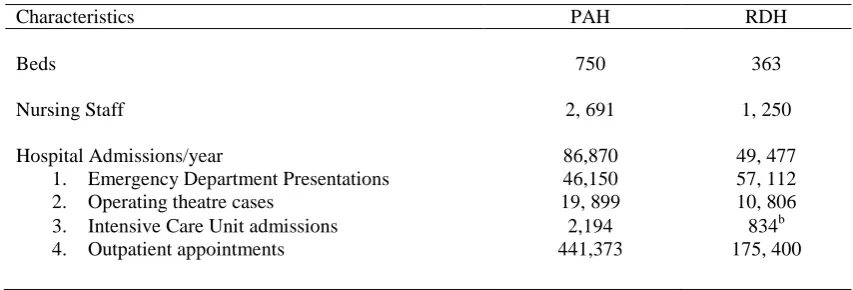
Table 1. PAH and RDH Hospital Profiles (2010-2011) a
Characteristics PAH RDH
Beds
Nursing Staff
750 2, 691
363 1, 250 Hospital Admissions/year 86,870 49, 477
1. Emergency Department Presentations 46,150 57, 112 2. Operating theatre cases 19, 899 10, 806 3. Intensive Care Unit admissions 2,194 834b 4. Outpatient appointments 441,373 175, 400
a
PAH = Princess Alexandra Hospital; RDH = Royal Darwin Hospital.
b
RDH has a combined high dependency and intensive care unit.
Sample
Participants were: PAH nurses who went to RDH (defined here as Disaster Response Service (DRS) members) and PAH, RDH and NCCTRC senior nurses from participating organisations. The term ‘senior nurses’ included educators, Nurse Unit Managers, Clinical Nurse Consultants, and Directors of Nursing. Participation was voluntary.
Data collection
Data collection included surveys and focus groups conducted by the lead author; a PAH researcher with no affiliation with the DRS, NCCTRC or RDH. Data collection occurred following a six-month period wherein four rotations had occurred. Broad questions were asked relating to participant’s perceptions of the manner in which the program prepared them to be able to support RDH in a disaster and any issues that arose from being involved in the partnership. Transcripts were prepared from the notes taken at each focus group and these were later emailed to participants for verification on their accuracy and completeness. Identified changes were made.
Surveys were completed by PAH and RDH participants prior to, and after rotation of PAH nurses to RDH. The pre-rotation survey for DRS members was designed to assess participants’:
o understanding of the program, and various roles within the DRS perceived preparedness for the RDH rotation after a one-day orientation at PAH , and
6
The post-rotation survey for DRS members contained the pre-rotation questions. In addition, items were added from the Halfer-Graf Job/Work Environment Nursing Satisfaction Survey (Halfer and Graf, 2006); a reliable and valid tool for assessing job satisfaction and RNs’ perceptions of their work environment. Ongoing recruitment and retention of PAH nurses within the DRS was considered essential for the program’s viability. The survey included items related to:
o competence (e.g. “I have the knowledge and skills to perform my role”)
o perceptions of the work environment and degree of ‘job fit’(e.g. “I can manage role demands”), and
o sources of professional fulfilment (e.g. “Acceptance by RDH multi-disciplinary team”). A pre-rotation survey for senior staff at both PAH and RDH asked for participants’ perceptions of the impact on their unit’s staffing, skill mix and culture. Participants’ perceptions of the actual impact on the above areas were subsequently explored in the post-rotation survey. The surveys were pilot tested for understanding, clarity and intent.
Data analysis
Descriptive statistics were generated using Predictive Analysis Software (SPSS Version 19). The qualitative data were assessed using a thematic content analysis. Two researchers independently assessed the data to derive codes based on identified meanings, topics, concerns or keywords. These researchers then collaboratively constructed themes from the codes identified. Illustrative quotes are provided to enhance the trustworthiness and credibility of the qualitative results (Annells and Whitehead, 2007 ). Consistent with current recommendations, the use of mixed methods facilitated a comprehensive understanding of the perceptions of the partnership program (Creswell, 2009; Jones and Bugge, 2006).
Ethical approval was received from all relevant parties prior to the commencement of the study. Focus group participants completed consent forms. Participation in the survey was deemed as consent.
Results
7
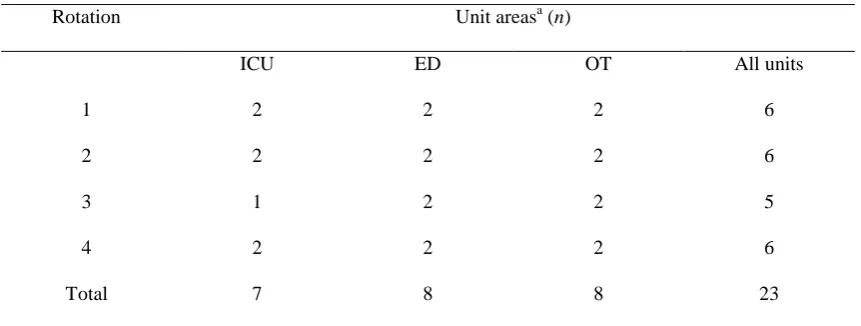
Table 2. Summary of DRS nursing numbers and clinical areas rotating to RDH (N=23)
Rotation Unit areasa (n)
ICU ED OT All units
1 2 2 2 6
2 2 2 2 6
3 1 2 2 5
4 2 2 2 6
Total 7 8 8 23
a
ICU = Intensive Care Unit, ED = Emergency Department, OT = Operating Theatre.
PAH DRS nurses worked in their respective unit at RDH for a two-week period for five, eight hour shifts each week. All PAH DRS members responded to the surveys (n=23). Six focus group discussions occurred with a total of 33 participants. Twenty were PAH staff members (DRS members = 15; senior PAH staff = 5), and the remaining were from Darwin (senior RDH nurses = 10; NCCTRC nurses=3). The results from the focus group discussions and the surveys were integrated and are reported here.
Findings related to nursing practice
Prior to attending the RDH the PAH DRS participants indicated that they had some understanding of their and others’ roles. However, in the post-rotation period, DRS participants demonstrated that they had a greater understanding and further insight following the two-week period at RDH. They considered that they had the knowledge and skills to perform their role in their respective speciality areas in RDH and understood the associated expectations. In addition, universally they felt that they had developed effective working
relationships with RDH unit staff and were well accepted by these co-workers. They felt that their expertise was valued by the RDH staff.
8
Overall PAH DRS nurses felt confident and clinically prepared to care for most patient groups. However, some expressed reservations about their capacity to care for paediatric patients. ,
“Caring for paediatric patients was of concern – I did not feel confident looking after them.”
When asked how well prepared they felt should they be required to return to RDH at short notice. PAH DRS members indicated that they felt ‘very well prepared’ (n=10), ‘well prepared’ (n=7) or ‘somewhat prepared’ (n=6).
In addition to the clinical aspects of care a theme emerged relating to the development of professional
reciprocity. The PAH DRS members indicated that they were well respected and valued by RDH staff and that they were seen as part of the team. Princess Alexandra Hospital DRS nurses volunteered to perform overtime which was highly regarded by RDH staff. In addition, PAH DRS nurses led some procedures (e.g. PAH theatre nurses coordinated the nursing aspect of operations in some instances when they were the most experienced staff member in the operating theatre). Feedback from RDH senior staff indicated that PAH DRS nurses integrated well to all units and they enhanced the knowledge of RDH staff by giving presentations and sharing policies or offering ad hoc education sessions.
A sense of trust was felt to have developed between the PAH DRS nurses and RDH staff during the rotations as all were intent on making the partnership a success. The PAH DRS nurses spoke about how they wanted to assimilate – one said: “We wanted to fit into the RDH system, and not try to change it.” The partnership benefited both the PAH DRS and RDH nurses as they learnt from each other.
9
Participants in the focus groups highlighted some logistical concerns should a disaster occur including the provision of accommodation close to the RDH and the ability of the PAH to release staff on demand. Participants did not perceive these issues as insurmountable.
Findings related to family concerns
PAH DRS nurses were asked pre-rotation about the likely impact of the rotations on their family members (who remained in Brisbane while the PAH DRS team member was in Darwin). Most staff thought that the rotations would have ‘no impact’ (35%, n=8) or ‘some impact’ (52%, n=12), with fewer staff predicting a ‘moderate impact’ (9%, n=2) and no staff reporting a ‘large impact’ (missing, n=1). The reality of the rotations was appraised as slightly less disruptive to families than expected. In the post-rotation survey PAH nurses either indicated that the rotations had ‘no effect’ (48%, n=11) or ‘some effect’ (43%, n=10) on their families. No staff member indicated that the rotations either had a ‘moderate’ or ‘large’ impact on their family (missing, n= 2).
Discussion
Preparedness is an essential element of disaster management as it has the capacity to reduce suffering of survivors and loss of life (WHO and ICN, 2009). Preparedness includes building a ready nursing workforce (Roccaforte and Cushman, 2002). In this partnership, nurses from an interstate hospital were recruited to give critical back-up to the RDH staff in the event of a disaster. The evaluation highlighted important gaps in the PAH DRS team knowledge, fostered greater understanding of their job satisfaction as part of the DRS, and identified ways to improve the system.
To optimize the effectiveness of the DRS rotation program, retention of PAH nurses was essential. Job satisfaction is a major factor in staff retention (Larabee et al., 2003; Robert, Jones and Lynn, 2004; Sawatzky and Enns, 2012 ) and a number of features of the work environment known to impact on job satisfaction including: resource access, team membership, work schedule, and perceived competence were examined in the survey.
10
commitment to the work place which was pertinent in relation to this nursing partnership. The positive relationship between high levels of job satisfaction and retention (Schaufeli et al., 2006; Lu et al., 2012), was evident in the current study where PAH DRS participants indicated their satisfaction with the program. In addition to job satisfaction, family commitments have also been noted as an important influence on nurses’ capacity to respond to calls for assistance during a disaster (Arbon et al., 2013a; Arbon et al., 2013b). The low impact of the rotations reported on families of the team members is likely to have had a positive impact on retention in the partnership program.
The period of two-weeks in the RDH was considered adequate and the PAH DRS nurses felt confident that they could provide most aspects of patient care should they be called upon in a disaster situation. There was one exception to this sense of preparedness, with some PAH DRS nurses in ED and ICU lacking confidence in relation to pediatric patient care. This concern is not unexpected as the PAH does not admit children, however, it highlights a clinical requirement that needs to be addressed.
Work-place learning has long been recognized for its ability to guide, develop and legitimize adult learning that occurs in practice. It provides the opportunity to help the learner be aware of the cognitive processes
underpinning clinical expertise and performance (Billett, 2001). Although there are many similar features within specialty areas (such as every-day equipment), there are also differences that are best addressed in the actual workplace where participation makes evident individual learning needs for work readiness (Billett, 2006). The PAH DRS nurses considered that being on-site in the RDH workplace enabled them to understand and confidently work within the RDH systems. In the case of a disaster, knowing the departmental and hospital response strategy supports staff preparedness to respond (Duong, 2009).
Experiencing a positive working culture is an important feature of successful work relationships that impact on overall organizational functioning (Nelson and Quick, 2008). Nurses in this study considered there were strong, positive ward cultures in both the RDH and the PAH units. The PAH DRS nurses felt valued, accepted and able to question their RDH colleagues. This type of positive working culture is known to support employee
11
work ability was a strength of the program; the RDH staff readily identified the benefits and advantages of having the PAH nurses in their workforce.
Conclusion
There is a paucity of literature on how nurses can practically contribute within health services in relation to national plans to adequately mitigate, prepare and respond to disasters. Insight was gained into a unique partnership between the NCCTRC, RDH and PAH which are over 3,000 kilometres apart.
12
References
Achour N. and Price ADF. (2010), “Resilience strategies of healthcare facilities: present and future”,
International Journal of Disaster Resilience in the Built Environment, Vol. 1 No. 3, pp. 264-76. Annells M, Whitehead D. (2007), “Analysis data in qualitative research”. In: Schneider Z, Whitehead D, Elliott
D, Lobiondo-Wood G, Haber J. Nursing & midwifery research : methods and appraisal for evidence-based practice (3rd edition), Elsevier, Sydney, pp. 138-55.
Arbon P, Cusack L, et al. (2013a), "Exploring staff willingness to attend work during a disaster: A study of nurses employed in four Australian emergency departments." Australasian Emergency Nursing Journal, Vol. 16 No. 3, pp. 103-9.
Arbon, P, Ranse J, et al. (2013b). "Australasian emergency nurses’ willingness to attend work in a disaster: A survey." Australasian Emergency Nursing Journal, Vol. 16 No. 2, pp. 52-7.
Armstrong M, (2010), Armstrong’s essential human resource management practice: a guide to people management, Kogan Page Ltd, London.
Autrey P, Moss J. (2006), “High-Reliability teams and situation awareness implementing a hospital emergency incident command system”. Journal of Nursing Administration, Vol. 36 No. 2, pp. 67-72.
Billett S. (2001), Learning in the Workplace: Strategies for Effective Practice. Allen & Unwin, St Leonard, NSW.
Billett, S. (2006), “Constituting the workplace curriculum”. Journal of Curriculum Studies, Vol. 38 No. 1, pp. 31–48.
Brandt DA, Abraham K, Franks R. (2003), “A strategic plan for disaster medicine in Australasia”. Emergency Medicine, Vol.15, No. 3, pp. 271-282.
Creswell JW. (2009) , Research design: qualitative, quantitative, and mixed methods approaches, Sage Publications, Thousand Oaks, California.
Duong, K. (2009), “Disaster education and training of emergency nurses in South Australia”, Australasian Emergency Nursing Journal, Vol. 12, No. 3, pp. 86-92.
Halfer D, & Graf E. (2006), “Graduate nurse perceptions of the work experience”, Nursing Econonomics, Vol. 24, No. 3, pp. 150-55.
13
http://myweb.polyu.edu.hk/~hswhocc/resource/D/2009DisasterNursingCompetencies.pdf (accessed 10 January 2014).
International Federation of Red Cross and Red Crescent Societies. (2000),World Disasters Report 2000,
International Federation of Red Cross and Red Crescent Societies, Geneva.
Jones A, Bugge C. (2006), “Improving understanding and rigour through triangulation: an exemplar based on patient participation in interaction”, Journal of Advanced Nursing, Vol. 55, No. 5, pp. 612-21.
Leifer S.L. Glass L. K. (2008), “Planning for Mass Disaster in the 1950s”, Nursing Research, Vol. 57, No.4, pp. 237–244.
Lu H, Barriball KL, Zhang, X, et al. (2012), “Job satisfaction among hospital nurses revisited: A systematic review”. International Journal of Nursing Studies, Vol 49, pp. 1017–38.
Nelson D L, Quick JC. (2008), “Understanding Organizational Behaviour”, 3rd Edition. Mason USA: Thomson. Pang S, Chang S, Cheng Y. (2009), “Pilot training program for developing disaster nursing competencies
among undergraduate students in China”, Nursing and Health Sciences, Vol. 11, pp. 367-373. Roberts BJ, Jones C, Lynn M. (2004), “Job satisfaction of new baccalaureate nurses”. Journal of Nursing
Administration, Vol. 34, No. 9, pp. 428-35.
Roccaforte JD, Cushman J G. (2002), “Disaster preparation and management for the intensive care unit”,
Current Opinion in Critical Care, Vol. 8, pp. 607–615.
Rosenfeld JV, Fitzgerald M, Kossmann T, et al. (2005), “Is the Australian hospital system adequately prepared for terrorism?” Medical Journal of Australia. Vol. 183, No. 11, pp. 567-70.
Sawatzky JA, Enns, CL. (2012), “Exploring the key predictors of retention in emergency nurses”. Journal of Nursing Management, Vol. 20, pp. 696–707.
Schaufeli WB, Bakker AB, Salanova M. (2006), “The measurement of work engagement with a short