ECONOMIC POLICY COMMITTEE
Brussels, 5 March 2002
ECFIN/EPC/117/02-EN
Contents
Preface ...2
1.
Key messages...3
2.
Structural reform in a macroeconomic perspective ...12
2.1. Recent developments and the need for further structural reform...12
2.2. Gains in overall performance 1995-2001...13
2.3. The sustainable growth strategy and structural challenges ...14
3.
Network industries ...17
3.1. Introduction ...17
3.2. Progress of structural reform in main network industries ...17
3.3. Horizontal issues ...23
4.
Ageing, pensions and fiscal sustainability ...26
5.
Market-based instruments to protect the environment ...31
5.1. Climate change and energy use ...31
5.2. Water supply, water quality and wastewater...34
5.3. Solid waste and products...35
6.
Structural reforms in Member States ...37
Belgium ...38
Denmark...41
Germany...44
Greece ...48
Spain...51
France...54
Ireland ...57
Italy ...60
Luxembourg ...57
Netherlands ...64
Austria ...67
Portugal ...69
Finland ...74
Sweden ...76
Preface
The present report is the fourth report on structural reforms prepared by the Economic Policy
Committee. It summarises the results of an annual country by country examination of economic
policies, which the Committee is asked to carry out according to its statutes.
1The country examinations are a peer review exercise focussing on progress made in the structural
reform of product, capital and labour markets and long-term aspects of public finance
sustainability. The examinations take a comprehensive look at the whole reform process, provide
"benchmarking" comparisons between countries and evaluate to what extent Member States have
implemented the country specific recommendations addressed to them in the Broad Economic
Policy Guidelines (BEPGs).
The peer review exercise incorporates the “Cardiff process”, launched by the Council in 1998, for
monitoring economic reform in Member States in order to improve the functioning of product and
capital markets in the Community. The national reports on structural reform and the Commission’s
Cardiff report
2are therefore an essential basis for the examinations.
The country examinations also assess the performance of Member States’ labour market policies,
which are an essential part of the overall economic policy framework. The examinations build on
the joint analysis prepared in the framework of the Luxembourg process and reflected in the Joint
Employment Report and the Employment Guidelines and focus inter alia on reforms of tax benefit
systems, in view of the importance hereof for other areas of economic policy.
As in previous exercises, the Committee has paid particular attention to a number of priority
sub-jects. The special topics chosen this year reflect the strategic objectives agreed by the Heads of State
and/or Government at the special European Council in Lisbon as well as priorities set by the
European Council in Gothenburg. The Committee has focused on policies to support long-term
sustainability of public finances in the light of ageing, policies to reform and liberalise public utilities
and network industries and policies to integrate economic and environment policies. Separate
an-nexes are devoted to these priority subjects.
This year, the report has been reorganised and reports only horizontal details for the special priority
subjects examined in order to reduce overlap to documents prepared by the Commission. Instead a
separate short chapter has been included for each Member State summarizing the examination of
that Member State.
By looking at a wide range of economic policy areas and by evaluating the implementation of the
BEPGs, the examinations and the present report contribute to the preparation of the multilateral
surveillance by the Council according to Article 99 (3) of the Treaty. The conclusions of the
exami-nations as reflected in this report will support the Commission and the Council in the preparation
and the adoption in Sevilla of new BEPGs, which form the centre of economic policy coordination
within the European Union.
The peer review was carried out in a working group of the EPC under the Chairmanship of Per
Callesen. It involved the 15 Member States, the European Central Bank and the European
Com-mission, which provided substantial analytical input and support for the working group. The
pres-ent report is the key output of the examinations. It was adopted by the EPC on 22 February 2002
and submitted to the ECOFIN Council for transmission to the Heads of State or Government for
their Barcelona meeting.
1See Council Decision of 29 September 2000 on the composition and the statutes of the Economic Policy
Committee (2000/604/EC); OJ L 257, 11.10.2000, p. 28
2The national reports and the Commission Cardiff report can be found on the website of the Economic
1. Key messages
Executive summary
The 4
thannual country review by the Economic Policy Committee shows that
Mem-ber States made further progress in 2001 on structural reform in product, capital and
labour markets. Over the last several years this process has contributed towards the
improved economic performance of the EU area, including supporting significant,
non-inflationary employment growth and stable macro-economic fundamentals.
Compared to the larger initiatives taken in previous years, however, few significant
reforms were launched in 2001.
Reforms in
product markets
should be speeded up. In particular with respect to
liberalisation and promotion of stronger competition in network industries as well as
in a significant number of other domestic service sectors, increasing the efficiency of
public procurement and public services, and reducing the backlog of implementation
of Community legislation. In
capital markets
, further action must be taken at the
Community level to ensure better integration and competition.
Strong efforts in education are needed to enhance productivity and reap the full
benefits of the
knowledge-based society
. An improved innovation climate is
cru-cial in this respect. Policy efforts should be geared towards improving general
framework conditions (including stronger competition, healthy fiscal and regulatory
environments and flexible labour markets conducive to worker mobility), better
in-novation institutions (including intellectual property protection), enhancing private
R&D, promoting the effectiveness of public R&D and facilitating networking.
In
labour markets
the recent tax cuts need to be followed up by improvement of
the incentives to employ and, in particular, supply labour embedded in protection
and benefit systems. Measures targeted at improved inclusion of older workers,
women and the long-term unemployed are strongly needed.
Pension systems
need to be adjusted to reward later retirement and take
consis-tently account of increasing life expectancy. The general consolidation of public
fi-nances must be speeded up in many Member States in order to ensure the
sustainability of public finances and pension systems in view of the future
demo-graphic pressure on public expenditures for pensions, health and long-term care.
Environmental policy
should be made more cost-effective through the use of
mar-ket-based instruments in addition to regulation. Further efforts at the Community
level are required in order to facilitate the use and efficiency of, e.g., taxes and
mar-ketable emission permits.
Until 2000 employment grew strongly, but further improvement is necessary, in particular
with respect to reducing high structural unemployment in many Member States. Labour
supply in all Member States is insufficient if the Lisbon and Stockholm employment
objec-tives and national employment aspirations are to be met. Overall productivity growth, and
hence the increase in living standards, has been relatively weak in recent years, although
partly reflecting large employment increases among the low skilled. No further
conver-gence in productivity levels or decreases in the dispersion of prices of tradable products has
been achieved. Capital markets have been further integrated, but the process is hampered
by delayed action at the Community level. Pension systems and budget balances are in
most cases not sufficiently prepared for the challenge of ageing populations.
Therefore the political commitment to structural reform needs to be translated into further
direct and specific action if the ambitious Lisbon targets with respect to employment and
living standards as well as the sustainability of budgets, the environment and social systems
are to be met. Action is needed both in individual Member States and at the Community
level. Economic fundamentals are basically sound, and weaker cyclical conditions should
not diminish the determination to pursue the Lisbon strategy. Continued structural reforms
– interacting with growth- and stability-oriented macro-economic policies – are a key
ele-ment of a speedy recovery and sustained growth.
In the following, the conclusions with respect to previous implementation of reforms and
challenges ahead are summarised. This includes the three special topics covered by the
2002 country review, i.e. a)
network industries, b)
ageing, pensions and fiscal
sustainability and c) market-based instruments to protect the environment. Overall,
Member States made progress with respect to implementing the 2001 specific Broad
Eco-nomic Policy Guidelines.
Product markets
In product (goods and services) markets, Member States have continued efforts towards
completing the Single Market as well as regulatory reforms. Most measures have been of a
gradual nature, but in the right direction, in broad terms following the progress of previous
years:
•
Some further progress was made towards compliance with Single Market directives
in almost all Member States. However, some Member States have substantial
imple-mentation backlogs, and only 5 Member States currently fulfil the Stockholm target of
reducing the transposition deficit to less than 1.5 per cent. Rapid progress is therefore
needed to reduce the transposition deficit.
•
Some overall reductions in
State aid
took place, and aid is also increasingly directed
away from sector-specific aid and
ad hoc aid to declining industries toward horizontal
measures. This needs to be continued. The transparency of State aid policies has
im-proved with the wider dissemination of State aid data. Care should be taken that the
present cyclical conditions do not lead to a reversion of previous efforts made in this
area.
towards co-ordinating the procurement policies of local and central levels of
govern-ments.
•
Administrative and compliance burdens have been reduced to some extent by, e.g.,
simplification of business registration and reporting procedures and the use of
elec-tronic communication with government agencies. The variation between Member
States is still substantial and efficiency needs to be further improved in all Member
States.
•
Steps have been taken towards strengthening national
competition authorities,
in-cluding moving towards more independent regulatory bodies and the consolidation of
sector-oriented into horizontal agencies. However, several countries need to pursue
further reforms along these lines in order to make the regulatory framework more
ef-fective.
•
In many sectors, there is scope for more active and targeted enforcement of
compe-tition. In some sectors – including professional services – care should be taken that
measures to safeguard consumer protection and quality do not hamper economic
effi-ciency, transparency and competition. Several Member States are examining these
is-sues, and efforts at the Community level to create an internal market in services should
be intensified.
•
In some Member States, lack of effective competition in construction and building
materials is evident, although progress has been made for some materials. Stronger
ef-forts at the Com m unity level to
harmonize
technical standards and/or strengthen
mutual recognition are needed. Cross-border competition should also be encouraged.
Network industries
Reforms of utilities in telecommunications and – to a more limited extent – energy and
transportation have succeeded in creating new markets, delivering higher-quality services
and lowering costs. There is no evidence so far of conflict between deregulation – and
hence free choice and cost-effectiveness – and universal service obligations. In some cases,
the consumer price of network services has declined by less than production cost because
of, e.g., reduced cross-subsidisation or higher taxes. However, this does not imply that the
gains to society are lower, but rather that they alleviate the burden of other taxes or prices.
The experience in network liberalisation also indicates the need to pay attention to the
management of the transition process and making sure the intended results are produced.
In this regard better information to consumers about the timeframe of the transition and
the intended improvements with respect to, e.g., quality and cost is crucial.
A liberalised framework is well established in many Member States and proceeding
ac-cording to a specific timetable in others. However, this process needs to be speeded up by
advancing deadlines already set and introducing deadlines where they do not currently exist.
Further action is warranted in most Member States to ensure effective competition and
thus lower prices in already liberalised network industries:
net-work tariffs vary greatly between Member States. At the end of 2001, agreement was
finally reached to speed up liberalisation of postal services at the Community level. A
relatively slow and gradual process is envisaged, which Member States could speed up
ahead of the agreed timetable. A number of Member States have taken the first steps in
opening up passenger railways to competition. However, a detailed assessment of the
experience with railway liberalisation is necessary to determine which model of
deregu-lation and competition provides the best outcome.
•
Typically, concentration has declined markedly along with deregulation in mobile
te-lephony and long-distance telecommunications. However, incumbent domination in
some recently deregulated utilities should be monitored as it may indicate barriers to
competition. Also, Member States should improve price transparency, and hence
fa-cilitate consumer choice, and effective competition including true contestability of
markets.
•
The inefficient use and scarcity of inter-connections of national electricity and natural
gas networks is an obstacle to competition in some Member States. Ongoing efforts to
eliminate these problems should be intensified.
•
There is substantial scope for productivity improvements through deregulation and
competition in postal services and transportation.
•
Problems due to the potential tension between the dual role of government as
regu-lator and owner need to be reduced, including addressing issues such as the
participa-tion of government-controlled or -owned firms in public tenders and cross-border
competition. In many cases privatisation, combined with measures ensuring contestable
markets, can contribute to a more transparent and efficient regulatory framework.
Capital markets
Modernisation and consolidation has taken place in the financial sector, notably banking,
within and between Member States, including cross-border mergers and acquisitions. This
has led to a strengthening of the financial sector, thereby contributing to the effectiveness
of capital markets and the allocation of financial resources provided competition is
effec-tive.
Member States have continued to reform capital markets, with special emphasis on
strengthening supervision and prudential regulation. Following last year's
recommenda-tions, progress has been achieved in developing risk capital markets, thereby providing
easier access to risk capital for new and innovative companies.
•
Member States have generally moved towards more independent
financial
supervi-sory authorities, including the provision of discretionary powers to initiate
investiga-tions. Regulators in banking, insurance and other financial services have been
com-bined in some Member States, thus improving the coherence of the regulatory
frame-work.
•
In a number of Member States, access to risk capital constitutes a challenge for new
and innovative companies, notably in the start up phase of business development.
However, in response to the recommendations of the Broad Economic Policy
Guide-lines, many Member States continued to improve the framework for venture capital,
in-cluding revisions of bankruptcy law. Also, some Member States have taken steps
to-wards improving the fiscal framework affecting small and medium-sized firms.
•
At the Community level, action must be taken to speed up the implementation of the
Financial Sector Action Plan and the Risk Capital Action Plan
and foster the
de-velopment of integrated and effective capital markets. Also, it is vital that the
Lam-falussy group recommendations on a new approach to EU
regulation of securities
markets are swiftly implemented.
Knowledge-based economy
Some progress has been made towards achieving the “knowledge-based society”. However,
large differences between Member States remain, and present efforts need to be accelerated
in order to meet the Lisbon targets, including improving the quality of labour supply:
•
The overall education level remains insufficient in many Member States and only
lim-ited progress has been made with respect to reducing the substantial backlog in some
Member States. Enrolment in secondary education has increased somewhat, but remains
too low in many countries. Furthermore, quality problems and high dropout rates
per-sist. In general, sustained employment growth has revealed labour shortages in many
sectors and occupations. Some progress has been made with respect to reducing the
shortage of specialists in ICT, science and engineering, but continued efforts are needed.
•
Efforts to increase R&D and innovation are continuing, but public R&D has decreased
in some Member States and commercial use remains insufficient. Private sector R&D
remains low in many Member States and needs to be promoted by better framework
conditions. Better interaction between public and private sector activities needs to be
developed. Better functioning and more competitive product and capital markets will
stimulate private sector R&D and innovation, as will increased mobility of researchers
and the extension of networks between the different institutions involved in R&D and
innovation. In particular the educational system has only in some Member States
suc-cessfully increased the supply of potential researchers. An increased supply of
knowl-edge workers remains a central aim in order to expand R&D activities substantially. The
creation of a cost-efficient Community patent would improve the incentives of private
firms investing in R&D. While direct public support, including tax credits, for private
R&D has been introduced in some Member States, it is too early to assess the overall
benefits and costs of these measures. Member States could look to build on the current
variety of direct and indirect support for private R&D.
•
The structure of publicly funded R&D, innovation and tertiary education are being
reviewed and reformed in a number of Member States. Improvements are needed with
respect to management, networking, cross-border interaction and efficient use of the
knowledge being created.
fur-ther obstacle may be high Internet charges due to inadequate competition in
telecom-munications.
Labour markets and tax-benefit systems
The rate of unemployment has become low in a number of Member States and decreased
in most others reflecting both cyclical and structural factors. However, significant structural
unemployment remains in many Member States and the Community at large, and
substan-tial variation between regions, age, gender and skills persists. Furthermore, a large number
of persons remain outside the labour market.
In most Member States, labour supply is insufficient if the Lisbon and Stockholm targets as
well as national ambitions are to be met. Major problems remain unsolved with respect to
employment and participation rates of older workers in most Member States, although
large differences between countries exist. Female participation rates are low in many
coun-tries. New measures in 2001 have focused on further tax reductions in line with previous
years and, to some extent, education and training, whereas efforts in other areas have been
limited.
•
Many Member States have targeted tax cuts at indirect wage costs or income taxes
for the low paid, although not on a large scale. These measures have contributed to
higher demand for low skilled workers in a number of Member States and provided
ad-ditional incentives to seek employment. However, budgetary constraints limit the scope
for further tax cuts, and such measures are in any case not sufficient to address
remain-ing problems in labour markets.
•
With considerable variation across Member States, tax reforms have generally
contrib-uted to a reduction of
marginal tax rates, thus providing stronger incentives to
in-crease work effort. In several Member States cuts in tax rates have been entirely or
partly financed by a broadening of the tax base reducing the disincentives implied by a
given overall level of taxation. In addition, several Member States have reduced marginal
effective tax rates by adjusting social security systems or introducing in-work benefits.
Efforts to reduce distortions and make tax systems more transparent should be
contin-ued.
•
Few steps have been taken to reform benefit systems. Eligibility criteria, enforcement
of availability requirements and the duration of benefits have changed little. Further
ef-forts to improve work incentives are clearly warranted, while maintaining a proper
bal-ance with respect to social protection. Otherwise, replacement rates are generally kept at
previous levels, while some recent initiatives contribute to higher replacement rates in
some Member States and somewhat lower rates in others.
•
In a number of Member States temporary employment contracts have become
substan-tially more widespread, contributing to job creation and labour market flexibility. This
has especially occurred at the entry level, hence contributing to lower youth
unemploy-ment. Very few Member States have addressed dualism in labour markets by reforming
employment protection in general. In a few Member States employment protection is
being partially replaced by extended access to, and generosity of, unemployment
bene-fits. While contributing to higher labour market flexibility and the alleviation of outsider
problems, it is crucial that such a shift avoid the creation of unemployment traps and
excessive budgetary costs. Furthermore, such measures will probably necessitate more
emphasis on the enforcement of availability requirements.
•
Efforts have been taken to increase the participation rate of women, which has risen
substantially in a number of Member States. Several Member States already meet the
Lisbon objectives, but large differences persist for the EU as a whole. More remains to
be done in order to improve incentives for women to enter the job market or remain
active in the labour market when raising children. Further reforms of the tax-benefit
system and expansion of childcare facilities may support progress towards this objective.
Child-care benefits should be designed to promote the participation of women, i.e.
benefits should be employment-conditional or non-means-tested. In some cases more
flexible working hours may help increasing female participation rates.
•
Active labour market policies in most Member States have focused on education and
retraining programmes aimed at those at risk of becoming disconnected from the labour
market. Furthermore, several countries are moving towards more competition in the
provision of employment services. In very few Member States the cost-effectiveness of
active labour market programs is systematically reviewed, while effective targeting
re-mains a challenge.
•
Some efforts have been made to raise the participation and employment rates of older
workers.
However these rates are still low or very low in almost all Member States,
hampered by a combination of tradition, insufficient labour market inclusiveness and in
particular a lack of incentives to remain in the labour force. Little progress has been
achieved with respect to increasing the employment of older workers, and hence
meet-ing the Stockholm targets. The incentives of this age group to participate in the labour
market remain limited in many countries, despite generally improved health conditions
and increasing life expectancy. If the Lisbon employment targets and the long-term
sustainability of public finances are to be met, it is necessary to reduce early retirement,
if unrelated to health status, and the use of, e.g., disability or sickness benefit schemes as
passive substitutes for unemployment benefits.
Ageing, pensions and fiscal sustainability
The long-term fiscal consequences of population ageing is a common challenge in all
Member States, but differs considerably across countries, as does the current fiscal
posi-tion. Key elements in a sustainable budget and pension strategy involve the continued
con-solidation of government finances, the promotion of later retirement and reforms of
pen-sion systems aimed at containing the long-run budgetary cost of population ageing. Very
few changes have been made with respect to income replacement rates in pension systems.
There is a strong need to assess the effects of measures already taken – including the
impact on government finances and labour force participation among the elderly.
•
Several Member States have implemented or are planning changes in
retirement
benefit provisions or various tax measures, including in a few cases an increase in the
statutory retirement age, which may contribute to a higher effective retirement age. The
impact of these measures on retirement incentives and government finances has yet to
be assessed. But it is unlikely that the measures undertaken so far along these lines will
substantially reduce the future increase in pension expenditures. Member States taking
a gradual approach to reducing incentives for early retirement should be encouraged to
speed up such efforts.
•
In many Member States, the current rate of fiscal consolidation is far from sufficient
to prepare for the expected long-term increase in public pension expenditures and the
cost of government financed health care. Efforts should therefore be taken to speed up
the reduction of government debt and adopt appropriate measures to address future
expenditure growth (e.g., pre-funding).
•
Second and third pillar pension systems are becoming more widespread as a
sup-plement to public pensions. This may contribute to improved allocation of saving over
the lifetime, the effective functioning of capital markets and may serve important
pri-orities with respect to the future living standards of retired citizens. While potentially
reducing dependency on social benefits, and hence future demands for an expansion of
public pension programmes, increases in second and third pillar pensions can not
sub-stitute for reforms of public pension systems. A sound regulatory environment for
sec-ond and third pillar systems should also be developed taking into account the need to
ensure the sustainability of public finances.
Market-based instruments to protect the environment
Among Member States, there is an increasing awareness that making environmental
poli-cies cost-effective implies relying more on market-based instruments in addition to
regula-tory measures. However, further efforts at the Community level are required in order to
pursue these objectives without negative effects on competitiveness.
•
Several Member States have implemented or planned
higher fuel and other energy
taxes, although these efforts slowed down significantly in the wake of the oil price
in-crease in 1999. In a number of Member States charges for or taxes on the extraction
and use of natural resources should generally be better aligned with total costs,
includ-ing those associated with environmental damage.
•
There is a broad tendency to exempt energy intensive sectors in industry and
trans-portation from energy taxes due to concerns about international competitiveness of
such sectors. This increases the costs of fulfilling environmental targets. Real progress
on this issue – and hence a more cost-effective way of achieving environmental
im-provements – would be facilitated by action at the Community level on, e.g., minimum
charges.
does not increase overall use of energy and other natural resources by reducing the
price of energy-intensive products. Further action should also be taken to phase out
subsidies to fossil fuel production and consumption.
•
A few Member States are introducing
tradable emission permits to combat
green-house gas emissions. The scope and efficiency of this concept needs to be developed
further, potentially through the adoption of a Community-wide emissions trading
scheme as suggested by the Commission.
2. Structural reform in a macroeconomic perspective
2.1. Recent developments and the need for further structural reform
A sharp cyclical downturn has unfolded over the course of 2001 following a fairly long
period of sustained economic growth and strong employment gains since the mid 1990s.
The slowdown was initiated by international events but was exacerbated by weak domestic
demand in most EU Member States. The macroeconomic fundamentals of the Union
re-main sound.
[image:13.595.90.544.331.523.2]Compared to previous experience the recovery came to a halt in early 2001 within a
framework of substantially improved financial balances and much lower inflation, cf. figure
2.1a. Structural improvements in labour and capital markets, fiscal consolidation, moderate
wage developments and the stability provided by the introduction of the euro have paved
the way for a more favourable position of EU economies. As a result, and against the
background of monetary easing, the slowdown should also be seen as a temporary setback
unless the international political and economic environment deteriorates significantly again.
Figure 2.1a. Inflation, EU-15. Figure 2.1b. Inflation rates, 2001.
0 1 2 3 4 5 6 7 8
90 91 92 93 94 95 96 97 98 99 00 01 0 1 2 3 4 5 6 7 8
Wage inflation HICPex HICP
Per cent Per cent
0 1 2 3 4 5 6
NL P IRL E EL I S FIN L EU B A D DK F UK 0 1 2 3 4 5 6
Per cent Per cent
Note: HICP ex is HICP excl. energy and unprocessed food. Source: Commission Services, Eurostat.
Neither the cyclical downturn nor the prospects of an impending recovery should distract
attention from the need for further structural reform, which is strongly indicated by a
number of factors:
•
Even if the slowdown in 2001 was mainly triggered by international developments, skill
shortages, general labour market pressures and capacity constraints were emerging in
most Member States before the turnaround. Also, the underlying inflationary pressures
were somewhat stronger than in previous years. Slower growth in a number of
Mem-ber States would have been necessary in any case.
•
Unemployment rates are still high and to a significant extent structural in a number of
Member States and regions. Furthermore, most Member States struggle with low
par-ticipation and employment rates among older workers and women.
•
Compared to the USA, and in view of the opportunities provided by new technologies
and globalisation, overall productivity growth has been disappointing.
The structural reform efforts of Member States must be seen in the context of the
ambi-tious targets with respect to performance in areas such as knowledge, employment, social
inclusion and the environment that were introduced at the special Lisbon Council two
years ago and confirmed and extended in Gothenburg and Stockholm. Whereas some
pro-gress towards achieving these targets has been made, much remains to be done.
The continuation and acceleration of the structural reform process – interacting with
growth- and stability-oriented macroeconomic policies – is necessary in order to facilitate
economic recovery as well as further improvements in the economic performance of
Member States along the patterns experienced during the second half of the 1990s.
2.2. Gains in overall performance 1995-2001
EU-15 GDP growth averaged 2,4 per cent over the period 1995-2001, fairly evenly split
between employment growth and increased productivity (GDP per person employed),
cf.
table 2.1.
Table 2.1. Contributions to growth, 1996-2001. EU-15 and USA.
EU-15 US
1996 1997 1998 1999 2000 20012 96-012 96-012
Productivity1... 1,4 1,5 1,3 1,1 1,6 0,6 1,3 2,2
Employment ... 0,3 1,0 1,6 1,6 1,7 1,1 1,2 1,3 GDP... 1,6 2,5 2,9 2,6 3,3 1,7 2,4 3,6 1) GDP per person employed. Total economy.
2) Commission forecast for 2001. Source: Commission Services.
As a result, cumulative employment growth over that period became close to 9 per cent,
only one percentage point lower than employment growth in the USA, despite the
signifi-cantly lower population growth than in the USA. The average unemployment rate
de-creased by more than 3 percentage points in Member States while labour force
participa-tion increased by almost 3 percentage points, cf. figure 2.2a.
Figure 2.2a. The labour market, EU-151. Figure 2.2b. GDP growth rates, 1996-20011.
65 66 67 68 69 70 71
91 92 93 94 95 96 97 98 99 00 01 7 8 9 10 11 12
Participation rate Unemployment (r.axis)
Per cent Per cent
0 3 6 9 12
IRL L FIN E P NL EL S UK B DK EU A F I D 0 3 6 9 12
1996-00 2001
Per cent Per cent
1) Including Commission estimate for 2001. Source: Commission Services, Eurostat.
con-tracts, efforts in education, training and active labour market policies as well as generally
sustainable wage developments.
Labour productivity growth has been much less encouraging. On the one hand, improving
labour market conditions have slowed down average labour productivity growth due to
higher employment among those with below average productivity and potentially also some
substitution of labour for capital reflecting the relatively moderate growth of labour costs.
Also some reduction in average hours worked took place, thus reducing output growth per
person employed. On the other hand, a number of structural reforms promoting
competi-tion, the diffusion of new technologies and globalisation have worked to increase
produc-tivity growth.
The net result is substantially lower productivity growth than in the USA over the period.
This should partly be seen as a reversal of the relative performance in the first half of the
1990s, where on average productivity growth in Member States outperformed the USA.
However in the second half of the 1990s the US and the EU shared roughly similar
exter-nal environments and labour market improvements.
The weaker productivity performance of the EU in the second half of the 90s suggests – in
spite of the efforts made so far by Member States – that structural impediments to growth
remain, particularly in areas such as competition, market integration, the diffusion of new
technologies, innovation and the efficient use of human resources.
The average performance of the Union masks significant differences in growth between
Member States, cf. figure 2.2b above. To some extent, these differences reflect different
cycli-cal positions and the fact that Member States with relatively low GDP per capita tend to
catch up with high-income Member States. However, it also reflects differences in
struc-tural conditions affecting potential growth rates of Member States.
2.3. The sustainable growth strategy and structural challenges
The special European Council in Lisbon agreed on the objective to make Europe the most
competitive and dynamic knowledge-based economy in the world, capable of sustainable
economic growth with more and better jobs and greater social cohesion. This ambition was
supplemented by the Social Policy Agenda at the Nice European Council, and through the
addition of the environmental dimension at the Gothenburg European Council, Member
States are committed to an overall Sustainable Development Strategy.
Employment
With respect to labour markets, meeting the agreed objectives requires raising the overall
employment rate from an average of 63 per cent today to 70 per cent by 2010, and raising
the female employment rate from 51 to 60 per cent by 2010. For older workers an
em-ployment target of 50 per cent for the 55-64 year old has been agreed.
remain-ing scope for increasremain-ing employment is more limited in Member States with already high
employment rates, large improvements are needed in Member States with presently lower
employment rates. Also, higher employment must to a larger extent be generated through
improvements in the functioning of labour markets as cyclical slack is currently much lower
than in the mid 90’s .
Figure 2.3a. Employment and participation rates, 2001.1
Figure 2.3b. Employment rates of women and older workers, 2001. 0 10 20 30 40 50 60 70 80 90
DK NL S UK P FIN A L D IRL EU F B EL E I 0 10 20 30 40 50 60 70 80 90 Unemployment Employment
Per cent Per cent
0 15 30 45 60 75 90
DK S FIN UK NL P A D F EU IRL B L EL E I 0 15 30 45 60 75 90
Women, 15-64 years Older workers, 55-64 years
Per cent Per cent
1) Estimated values for 2001, age 15-64 years. Source: Commission Services, Eurostat.
The unemployment rate has become fairly low in a number of Member States, but remains
high or fairly high in seven – mostly large – Member States.
Female employment rates have developed favourably since the mid-1990s. In particular
some Member States with relatively low employment rates for women have experienced
significant improvement, cf. figure 2.3b and 2.4a. Facilitating a further increase in female
em-ployment rates is a key requirement in order to satisfy the overall emem-ployment rate
objec-tives.
Figure 2.4a. Employment rates, women. Figure 2.4b. Employment rates, older workers (55-64).
-5 0 5 10 15
20 30 40 50 60 70 80
-5 0 5 10 15 2001, level
95-01, change 95-01, change
UK S F B E IRL I EL D DK FIN P A NL L -5 0 5 10 15
20 30 40 50 60 70 80
-5 0 5 10 15 2001, level
95-01, change 95-01, change
DK I P D EL E B F IRL UK NL L S FIN A
Note: Level and changes are reported in percentage points. Commission forecast for 2001. Source: Commission Services, Eurostat.
States with the lowest levels currently. The large variation across countries in the
employ-ment rates of older workers is only to a modest extent correlated with unemployemploy-ment
con-ditions. This suggests that employment of older workers, apart from tradition, is
deter-mined by incentives in pension and other social security systems, including early retirement
schemes, more than health and labour market conditions.
Productivity and living standards
Labour productivity increases have also varied substantially between Member States,
cf.
figure 2.5.a. The average rate of increase since 1995 has been of the order of 1-2 per cent
per year, but with more rapid increases in a number of, mainly smaller, Member States.
Figure 2.5a. Labour productivity. Average annual growth (production per person employed) 1996-20011.
Figure 2.5b. GDP per hour, USA=100, 20011
0 1 2 3 4 5
IRL EL P FIN US L A S DK UK B EU F D I E NL 0 1 2 3 4 5
Per cent Per cent
0 25 50 75 100 125 150
IRL EL P FIN L A S DK UK B EU F D I E NL 0 25 50 75 100 125 150
Index Index
1) Estimated values for 2001. Source: Commission Services.
On average, hourly productivity remains generally at 80-90 per cent of the level in the USA,
cf. figure 2.5b. However, in some Member States hourly productivity is higher than in the
USA, while it is significantly lower in others, although it should be emphasised that the
measurement of productivity is subject to substantial statistical uncertainty.
[image:17.595.87.542.252.431.2]3. Network industries
3.1. Introduction
Overall the national reports on structural reform are unambiguous: Liberalising network
industries and public utilities work. Production is becoming more efficient, prices are lower
than they would have been otherwise, consumers face a greater choice of services and
quality is improved.
3And there are no signs that universal service obligations are
compro-mised in liberalised markets, or that efficiency is achieved at the cost of increased
inequal-ity.
However, the reform agenda is far from complete. Despite the favourable results so far,
reforms of network utilities have been relatively few and modest during 2001. This may
indicate a slow-down in the willingness to reform, while there appears to be good reasons
to speed-up the liberalisation of network industries instead.
On the one hand, a coordinated and faster liberalisation process at the community level is
necessary to achieve the objective of a European Single Market. Two key issues must be
addressed at the EU-level. First, co-ordinated action is required to maintain the momentum
in structural reform in terms of opening network industries to competition in all Member
States. Second, common rules – e.g. for cross-border tariffs for electricity – are required to
ensure cross-border trade in the services produced in certain network industries.
On the other hand, several markets need to be formally opened to competition at the
na-tional level, and addina-tional measures are required to ensure effective competition in markets
that have already been liberalised. Member States should be urged to open markets without
necessarily requiring parallel action in other countries, as unilateral market opening will
generally provide positive benefits to domestic consumers, even if the speed of opening in
neighbouring countries is slow. Yet the full benefits of an effective Single Market can only
be achieved with coordinated efforts to ensure full market opening in all Member States.
Although reforms of network industries have been successful, some potential challenges
will have to be dealt with. For instance, the gains from energy market liberalisation may be
threatened by lack of capacity in electricity generation and networks in the medium-term.
Some of these challenges are mentioned below.
3.2. Progress of structural reform in main network industries
There have been few major reforms of network industries during 2001. This partly reflects
that no deadlines for the implementation of EU-directives expired in the past year. Thus,
Member States have generally focused on catching up with transposition backlogs and
measures to improve legislation and regulation enacted previously.
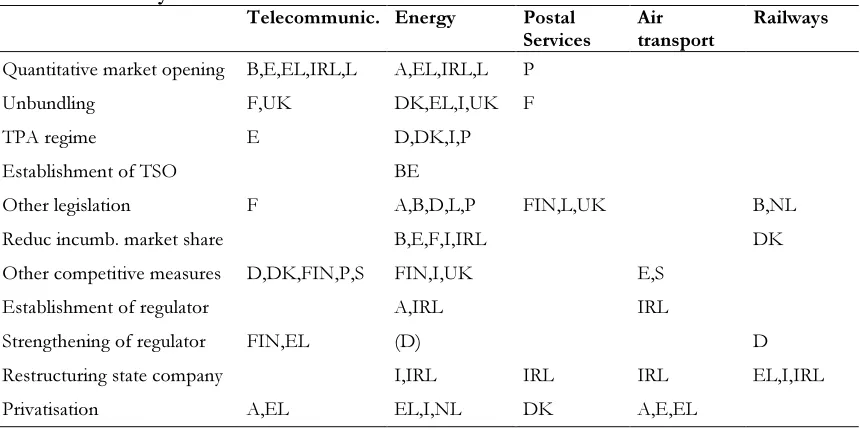
Table 3.1 summarizes the initiatives in key network industries during 2001. As few major
reforms have taken place, most of the initiatives have a relatively limited scope in terms of
liberalisation, which is one of the reservations that must be accounted for when
3 In some instances consumers have experienced higher prices. However, this phenomenon is explained by
ing the table.
4However, it clearly appears that most reforms have taken place in energy
sectors and to a lesser extent in telecommunications. This reflects to a large degree that the
liberalisation of telecommunications has been taking place in all Member States for some
years, while the opening of energy markets is more recent. Yet it may be a cause for
con-cern that only few initiatives are reported in other network industries. This is true for the
three sectors – postal services, air transport and railways – included in the table, but also
other sectors.
Table 3.1. Policy measures in 2001
Telecommunic. Energy Postal
Services
Air transport
Railways
Quantitative market opening B,E,EL,IRL,L A,EL,IRL,L P
Unbundling F,UK DK,EL,I,UK F
TPA regime E D,DK,I,P
Establishment of TSO BE
Other legislation F A,B,D,L,P FIN,L,UK B,NL
Reduc incumb. market share B,E,F,I,IRL DK
Other competitive measures D,DK,FIN,P,S FIN,I,UK E,S
Establishment of regulator A,IRL IRL
Strengthening of regulator FIN,EL (D)D
Restructuring state company I,IRL IRL IRL EL,I,IRL
Privatisation A,EL EL,I,NL DK A,E,EL
Source: National Cardiff reports, 2001.
Telecommunications
Competition in telecommunications is well-established in most market segments, aided by
new technologies that reduce the monopoly position of fixed networks. Yet several
Mem-ber States report insufficient competition in the local loop and vis-à-vis smaller consumers.
This market segment was only recently opened to competition in many Member States.
Thus, in Belgium, Greece, Ireland, Luxembourg and Spain the fixed-line local loop was
unbundled formally in 2001 in accordance with EU regulation, while new measures in
rela-tion to unbundling were introduced in France and the UK. Some countries still have to
overcome technical obstacles to make competition firmly rooted.
However, even countries which have had unbundled local loops for a number of years
experience lack of competition. To address this, Denmark and Sweden introduced
meas-ures to promote number portability, while firmer regulation of the network owner’s access
charges was introduced in Germany. The telecoms regulator was reformed and
strength-ened in Finland and Greece, and reforms are underway in Belgium, Ireland and Portugal.
A Commission survey has revealed some consumer dissatisfaction with quality and prices,
which may be due to a perception that telecoms operators are “cheating”. Several Member
States raise this point and underline the need for regulators to contribute to transparency,
e.g. by publishing price comparison, setting principles for the layout of consumer bills etc.
While such initiatives might be helpful, it must be acknowledged that the reduction of
4 The table is only intended to give rough indications. First, it contains initiatives initiated, implementation of
transparency is a reflection of the greater choice of services that are offered in telecoms.
Thus, consumers face the same transparency problems in other markets, e.g. banking
serv-ices.
Privatisation of telecommunications companies has been modest in 2001, partly due to
capital market developments for IT-stocks. Austria partly privatised the state company in
the autumn of 2000, and Greece sold a share of 10 per cent in 2001, reducing state
owner-ship to 41 per cent.
Energy – electricity and natural gas
At the end of 2001, the current electricity and gas directives were transposed correctly into
the national legislation of most Member States. During 2001, Belgium and Germany
amended the gas legislation in response to infringement procedures, and Luxembourg
transposed the gas directive. France has still not transposed the gas directive and the case
was referred to the European Court of Justice in May 2001. However, temporary measures
corresponding to the directive’s requirements have been introduced until legislation is
fi-nalised.
In 2001 the quantitative market opening was increased in several Member States, and some
opted for new deadlines that should lead to faster full liberalisation. Austria’s electricity
market was fully liberalised. Greece officially initiated a gradual market opening, but the
incumbent dominates and new entrants are not expected before 2004-05. Ireland enacted
new legislation that provides for full market opening in 2005. Luxembourg increased
mar-ket opening to 57 per cent. Wholesale electricity trade was fully liberalised in the
Nether-lands, and full market opening is aimed for in 2004.
While Finland’s geographical location prevents competition in the import of gas, new
leg-islation allows for the establishment of a secondary market. Full opening of gas markets
will take place in 2002 in Austria and possibly Greece, while the Danish government has
announced full market opening in 2004. Ireland has proposed to open the gas market
more, but 50 per cent of transport capacity is already used by competitors to the
incum-bent.
Most Member States have determined or at least announced targets for the complete
opening of electricity and gas markets. The exceptions are France in gas and electricity and
Greece, Italy and Portugal in electricity, while Finland, Greece and Portugal have
deroga-tions with respect to gas market opening. In some Member States, full liberalisation is
moreover only expected in the medium term. As delays in market opening imply that the
full benefits of a Single Market for energy services cannot be achieved, it would be
prefer-able if an agreement could be reached on a coordinated and faster path towards
competi-tive markets. The Commission’s proposal for amendments to the electricity and gas
direc-tives from March 2001 provides an appropriate basis for obtaining political agreement in
this respect.
Regulated access to transmission and legal unbundling were in 2001 introduced into
Den-mark’s revised gas legislation, and in Italy a new company was formed for the gas
infra-structure, but it is still related to the incumbent. Greece amended gas market legislation,
implying unbundling and a proposal for a new tariff structure. In the UK, stronger
unbun-dling was introduced in electricity. Thus, the same legal person can no longer hold licenses
for both electricity supply and electricity distribution.
A new energy regulator was established in Austria in 2001 and is proposed in Ireland.
Germany allocated more resources to the competition authorities dealing with
discrimina-tory behaviour in the electricity sector. In Belgium and Spain a technical manager of the
transport system (TSO) was appointed in 2001, although measures to achieve full
compli-ance with the EU directive, e.g. independence of the TSO, have not yet been implemented.
Austria awarded licences to two settlement agencies in charge of handling transactions and
pricing of balancing energy.
Besides adapting the legal framework for energy markets, several countries implemented
measures to make competition more effective. The UK established a new wholesale trading
arrangement in electricity in 2001. The arrangement replaced the existing pool and is based
on bilateral contracts, thereby introducing genuine competition. A review after three
months showed that the new arrangement had led to lower prices and higher liquidity.
Al-though somewhat delayed, Italy expects to establish a “Single Buyer” of electricity charged
with acquiring electricity at the lowest costs for those customers without market access.
To reduce the market share of the incumbent in electricity generation, the French
incum-bent had to sell 6 per cent of capacity for a merger transaction to be authorised by the
European Commission. Ireland has carried out virtual independent power producer
auc-tions, which function as a substitute until new power plants are coming on-stream. In Italy,
three electricity generation companies that were demerged from the incumbent are about
to be sold. To strengthen cross-border trade, Belgium and France have established auctions
over import/export electricity capacity. In Spain, an auction covering 25 per cent of
Alge-rian gas imports was held in 2001.
In a majority of Member States measures have been taken or are under consideration to
promote electricity production based on, e.g., renewable energy sources and small-scale
CHP (combined heat and power). In several cases the establishment of these types of
al-ternative generation capacity has been fully liberalised.
Privatisations have been limited in the energy sector. Greece has made a public offering of
the incumbent electricity company and is preparing the sale of the gas company. Bills
gov-erning privatisation of, or restructuring state-owned, energy companies are under debate in
Ireland and the Netherlands. Italy has privatised part of the electricity incumbent, but
im-posed certain restrictions on ownership, cf. below, and plan to make further privatisations
in the energy sector.
extreme peak prices, but also in other liberalised markets such as the Nordic region
ex-treme prices have been observed for brief periods. Similarly, there are examples that
priva-tised network companies – e.g. the British rail and gas infrastructure companies –
seem-ingly have under-invested in new capacity and maintenance of existing networks.
In the long term, high prices should lead to investment in new capacity, but capacity
con-straints may exist for prolonged time periods. This is partly due to the long time it takes for
an investment project to come on-stream, which in some cases may span a decade. While
the problem is easily identified, it is likely to be more difficult to solve. One obvious
solu-tion would be to introduce measures that could reduce the difference between peak and
average demand. This requires that price variations are transmitted to end-users that can
then act by reducing demand when prices are high. However, today the available
technol-ogy needed is too expensive to be economical for especially smaller consumers, but
tech-nological development may make this a viable option in the future. Meanwhile, Member
States should monitor the development of capacity investment carefully, and situations
might occur where direct public intervention is necessary for a successful outcome.
Moreover, it should be noted that several Member States are expecting increased
invest-ment as a consequence of liberalisation. Belgium and France foresee investinvest-ment in new
electricity generation. In Italy new legislation has simplified the requirements for
installa-tion of electricity generainstalla-tion capacity.
Postal services
In December 2001, the Council adopted a common position on the future liberalisation of
postal services. Today the reserved area is defined by weight and price limits of 350 gr./5
times the basic tariff. These are intended to be reduced to 100 gr./3 times the basic tariff in
2003 and 50 gr./2.5 times the basic tariff in 2006. While agreement on a path towards
lib-eralisation is a step in the right direction, the speed is not impressive and it would have
been preferable with a deadline for the full opening of postal markets.
In Sweden and Finland postal services have been fully liberalised for a number of years and
are functioning well. In both countries, the incumbent still dominates the market and
ef-fective competition is primarily taking place in certain niches, i.e. specific types of services
and in densely populated areas around the larger cities. In Finland one operating license has
been granted to a private operator, which has not yet started postal operations.
Interest-ingly, the Swedish and Finnish incumbents have been able to meet all public service
obli-gations without requiring compensation from either state or competitors. In Spain, local
mail, for instance inside the Madrid area, but not between cities, and direct advertising
services have also been liberalised.
While Member States generally report that competition in non-restricted areas is
function-ing, relatively little was done in the restricted area during 2001. At the end of 2000,
Luxem-bourg transposed the existing postal directive, and a new access regime for mail operation
came into effect in Portugal during 2001. The French government has submitted a bill that
will require the minister to create conditions for effective competition. In the UK, as a first,
albeit small, step in the direction of liberalisation the statutory monopoly of the Consignia
was replaced by a licensing system, and five interim licenses for specific postal services
were issued.
Air transport
The current downturn in the airline industry – worsened, but not caused by the terrorist
attacks on 11 September 2001 – has clearly revealed significant structural weaknesses of the
traditional European flag carriers. Having until now survived partly due to direct or indirect
state aid as well as a traditional system of regulation through bilateral air transport
agree-ments, they are now under large pressure from low cost carriers to implement structural
reforms and cost cutting. This is likely to benefit consumers in the medium-term, but
fur-ther policy measures are likely to be needed to achieve all potential benefits. For instance,
concerns have been expressed that the current regulatory framework based on bilateral air
transport agreements prevents an appropriate consolidation of the European airline
indus-try.
Few and seemingly minor changes in air transport regulation have taken place in 2001.
Ire-land established a new Commission for aviation regulation, and required reduction in
air-port charges. In many Member States competition is very limited on domestic flights. In
Sweden this was in 2001 addressed by a ruling of the authorities, preventing points earned
on the dominant airline’s frequent flyer programme from being used on domestic routes
subject to competition. A similar measure has been considered in Denmark, but does not
appear to be implemented. Spain introduced new regulation of slot allocation rules
sup-posed to increase competition in 2001. The Commission is considering a new proposal for
market-based allocation of airport slots, which could provide new impetus to competition.
Austria privatised Vienna Airport late 2000, and Ireland is giving consideration to the
in-volvement of the private sector in the ownership of the State-owned airport company. The
Spanish flag carrier was floated on the stock market in 2001, and Greece is considering
reorganising Olympic Air as part of a privatisation plan.
Railways
Progress in the liberalisation of railways has been limited. Freight transport has been fully
liberalised in several Member States, for instance in Italy in 2001. Moreover, Community
regulation requires that international freight transport be opened for competition in 2003.
Less is happening in passenger transport, although systems of licenses for local/regional
railways have been in place in, e.g., Germany, the Netherlands, Portugal, Sweden and the
UK for a number of years. In 2001, Denmark awarded the first license to a private
opera-tor, which will take over 15 per cent of passenger transport in 2003.
Belgium is currently preparing a reform of railways, including a revision of the legal
frame-work governing the relationship between the state and the railway company. In Germany, a
draft law was presented in 2001 which if enacted will strengthen supervision of
competi-tion in railways and give the regulator a more proactive role. Moreover, a task force has
recommended that a more transparent relationship between the operating and network
division of the national railway company be established. However, it is also recommended
that the network division should not be demerged from the operating company.
Corre-spondingly, an Irish report recommended, due to the scale of the country’s railways, that
the railway activities of the existing national transport company should not be placed in a
separate railway company. By contrast, Italy established a separate infrastructure company
in 2001.
in-cumbent company – as in telecommunications – or unbundled into a separate company –
the model chosen in energy markets in many Member States. Both models seem to be
as-sociated with problems, as illustrated by a general dissatisfaction with railway services, and
the mixed experience with liberalisation in, e.g., the Netherlands, Sweden and the UK. This
suggests that further analyses could be useful. One important topic is whether economies
of scope are so strong that unbundling the network from service operations yields inherent
unsatisfactory outcomes, at least with current paradigms for which services that are
allo-cated to the network company.
Belgium, Germany and the UK have published plans for large-scale investment in rail
in-frastructure. PPPs are expected to be a central vehicle to provide for investment in railway
infrastructure in some Member States, including Portugal.
3.3. Horizontal issues
Regulatory authorities – need to be strong
Gradually regulatory authorities are being adapted to the challenges of liberalised markets.
This trend can be found in all Member States and all recently liberalised network industries,
although progress varies considerably. First, the responsibilities of regulators are being
ex-tended and clarified. Second, the powers to enforce legislation are being strengthened.
Third, more resources are allocated to regulators, although there are remarkable differences
between countries.
5Fourth, the existing regulators are often merged into fewer regulatory
bodies to correspond with market developments. E.g., regulators are being established for
the entire communications and energy markets, respectively.
Most Member States have opted for sector-specific and independent regulators. There are a
few important exceptions, however. Germany, for instance, has not established an energy
regulator. Instead regulation of network access etc. is governed by Association Agreements,
while public interests are to be handled under the general competition laws. In principle,
the prohibition of cartels and abuse of dominant position encompassed in general
compe-tition legislation could be sufficient. Yet the inherent natural monopoly characteristic of
networks has led to the establishment of sector-specific regulation and regulators in most
countries. Independently of the regulatory set-up, some elements seem to be essential to
ensure effectively competition. First, continuous monitoring and supervision of access
tar-iffs and conditions is likely to be required. Second, extended powers to interfere fast and
effectively in response to uncompetitive practices are likely to be advantageous. Third,
lengthy procedures to settle claims of non-competitive practices will discourage potential
new entrants and have to be avoided.
Dominant incumbents – the need for a Single Market
A common characteristic in most network industries and countries is that the incumbent,
i.e. the company that prior to liberalisation had a national or regional monopoly, maintains
a very dominant market position. This is particularly true in the retail segment.
5 For instance, the Greek energy regulator employs 10 persons and the Finnish 15. By contrast, the British