Development co-operation with
the least developed countries
Fighting
poverty
EUROPEAN COMMISSION
Development co-operation with
the least developed countries
Contents
I. IntroductionReducing poverty in least developed countries - an overview
2. Governance,
peace and social stability Maintaining the essential elements to tackle poverty and corruption
3. Rural development and food security
Major review offers new vision for rural development
4.Trade
Generating resources by enhancing growth
5. Social services delivery Education and health are fundamental to a social strategy
6. Protecting the environment A fundamental aspect of the fight against poverty
Foreword
At the beginning of the 21st century the ongoing process of globalisation is fundamental-ly changing the world as we know it. It provides us with vast new possibilities and poten-tial opportunities for everyone, everywhere. But while those countries able to participate and reap the fruits of this process move closer together, the divide is increasing consider-ably between them and those being left out of this historic process. The international com-munity has the common responsibility to address these new development challenges, reverse the trend of mar-ginalisation and integrate the poorest countries in the globalisation process. Our overall aim should be to achieve the target set by the UN to reduce by half the number of people living in extreme poverty and who suffer from hunger by 2015.
Against this background the European Union has offered to host the 3rd UN Conference on LDCs in Brussels in May 2001, intending to give a strong political signal about the significance it attaches to the problems of the least developed countries. The EU has therefore a special commitment to the successful outcome of the conference. It believes that as one of the world's largest aid donors, it has to play a vital part in the efforts to eradicate poverty.
This ambition has to be seen in the context of a wind of change experienced in the EC's development policy during the past year. Looking back at the year 2000, three major elements have helped shape the new approach by the European Community to development policy and development co-operation:
1. the adoption of a Communication on European Development Policy, followed by the adoption of a joint declaration and an Action Plan by the Council of European Development Ministers in May and November 2000 respectively;
2. the signing of the Cotonou partnership agreement between the 77 African, Caribbean and Pacific states and the EC in June 2000, which represents a new milestone in the relationship between them; and finally
3. the reform of the management of external community aid.
At the same time, my colleague Trade Commissioner Pascal Lamy has proposed duty and quota free access for all products (except arms) originating from the LDCs to the European market.
These four important elements should help the Community respond to the double challenge of making its external aid more effective and helping the poorest countries integrate themselves progressively into the world economy.
The central focus and overall objective of the 3rd UN Conference on LDCs must be the reduction of poverty. Today, poverty can only be understood as a multifaceted problem, requiring an equally multifaceted solution. Therefore we must follow a multidimensional approach addressing the economic, political, social, environmental and institutional dimensions on all levels: on a global, regional, national and local level, with partners and actors in the public, private and civil sectors.
The guidelines for the European Union's part1c1pation in the 3rd UN-LDCs Conference identify six key themes which guide the European Union's discussions with the LDCs in the preparatory process and during the conference itself:
1. Good governance, peace and social stability, institutional capacity building;
2. Investing in people;
3. Environmental protection, sustainable natural resources management, food and food security;
4. Enhancing the productive capacity;
5. International trade, commodities and services;
6. Financing growth and development.
International development policy has entered the new millennium. Given our role as a major international partner and actor in development co-operation, the European Community is ready to bear its share of global responsibility to improve the plight of developing countries.
In this booklet the reader will find information on the EU's commitment in this endeavour.
Paul Nielson
I I
I
Reducing poverty in least
developed countries
I . I An overview of the situation
It is an uncomfortable but inescapable fact that, at the start of the 21st century, 1.5 billion people are living in abject poverty surviving on less than US$1 a day. It is clear that despite all the advances mankind has made in medicine, science and tech-nology a significant minority has been left behind.
In fact, the problem of poverty is proving so intractable that the number of countries classified by the UN as "least developed" has risen from 24 in 1971 to 49 in 2001.
• Who are the least developed countries?
Clearly, if the UN target of reducing by half the number of people living in extreme poverty and who suffer from hunger, by 2015 is to be met, there is much work to be done. The occasion of the 3rd United Nations Conference on the least developed countries provides an opportunity for the interna-tional community to review and revitalise its efforts to beat this problem. The European Community - as one of the world's largest aid donors - has a vital part to play in this effort.
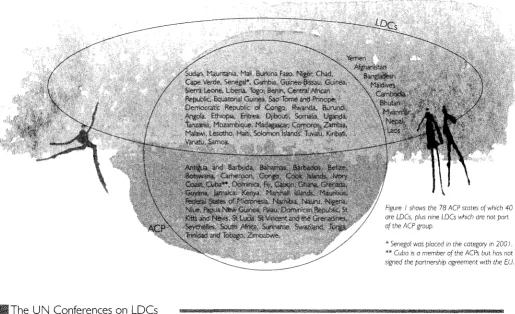
There are currently 49 states designated by the UN as 'least developed countries'. Of this heterogeneous group, 34 are in Africa, nine in Asia, five in the Pacific and one in the Caribbean. All but the nine Asian LDCs fall under the EU/ ACP regional co-operation agreement (see Fig.1).
The LDCs include 16 landlocked countries and ten small island nations. They have a combined population of some 614 million, equivalent to 10.5% of the world's population. They account for only about 0.5% of world trade and a similar share of foreign direct investment. In 1994, LDCs' exports were equivalent to US$20 per inhabitant.
The grouping was first classified in 1971 when the international community concluded that there were certain countries which stood out because of their extreme poverty and the weakness of their economies, institutions and human resources. Some of the LDCs are intrinsically disadvantaged having few natural resources or particularly challenging physical environments. Others are resource-rich but have failed to prosper because of man-made problems, poor governance or economic mismanagement.
Whilst the specific situations and historic backgrounds of the different LDCs may vary widely, all share the basic characteristic that they are ill-equipped to develop their domestic economies and ensure an adequate standard of living for their populations. Their economies are also acutely vulnerable to external shocks or natural disasters.
Initially, 24 countries were designated as least developed according to three criteria: per capita GDP, share of manufacturing in total GDP, and the adult literacy rate. The criteria have subsequently been refined to include the quality of life index, the economic diversification index and population size.
Fig. I: The least developed countries (LDCs)
[image:7.601.33.548.96.410.2]The UN Conferences on LDCs
ttm±Figure I shows the 78 ACP states of which 40
are LDCs, plus nine LDCs which are not part of the ACP group.
*Senegal was placed in the category in 200 I.
** Cuba is a member of the A CPs but has not
signed the partnership agreement w1th the EU.
l ftllilitl!iUBllllllJ ; I
Since the UN first defined the 'least developed' country grouping in 1971 it has sought to stimulate and co-ordinate interna-tional community efforts to improve their plight. Within the fora of UN conferences, donors and recipient countries are work-ing together to find solutions for the complex and intractable problems faced by the LDCs. The May 2001 conference, in Brussels, will be the third of its kind, demonstrating a continuing UN commitment to the LDCs. It will be an opportunity to build on the successes of activities in the past three decades and learn from previous experiences.
1st UN Conference on the LDCs, Paris 1981
The UN convened the first conference on the LDCs in 1981 when the international community unanimously adopted the Substantial New Programme of Action for the 1980s. This contained guidelines for domestic action by LDCs to be comple-mented by international support measures. Despite major economic policy reforms initiated by many LDCs and supportive measures by donors, the economic situation of the group worsened during the 1980s. Domestic policy shortcomings, natural disasters and adverse external conditions were all contributory factors.
2nd UN Conference on the LDCs, Paris 1990
This conference resulted in the Paris Declaration and the Programme of Action for the LDCs for the 1990s in which the inter-national community committed itself to urgent action to arrest and reverse the deterioration in the socio-economic situations of the LDCs. The emphasis was placed on the need for development to be human-centred and broadly based. Other elements included respect for human rights and observance of the rule of law; the need to improve and expand institutional capabili-ties and efficiency; and the importance of decentralisation, democratisation and transparency at all levels of decision-making.
3rd UN Conference on the LDCs, Brussels 2001
The EC's commitment
The European Community is one of the major actors in international co-operation and develop-ment assistance. It provides 55% of the total interna-tional Official Development Assistance (ODA) and more than two-thirds of grant aid. It is also the largest donor of humanitarian aid in the world.
The vast majority of EC aid goes to the develop-ing countries and qualifies as Official Development Assistance. The remaining commitments are chan-nelled to the transitional economies of Central and Eastern Europe as Official Aid (OA). The LDCs' share of ODA decreased between 1986 and 1999 but still accounts for more than a quarter of disburse-ments (see Fig. 2 and Fig.4). Between 1986 and 1999 the LDCs received US$17 billion and, as a group, were the second largest recipient of EC bilateral ODA after the Lower Middle-Income group. Every LDC has received support (see Fig. 5 European Community Bilateral ODA/OA Net Disbursements by recipient).
External aid grew from €3.3 billion in 1990 to €8.6 billion in 1999. The European Community is the fifth largest Development Assistance Committee (DAC) donor contributing 11.08% of OECD aid in 1997, up from 5.6% for the 1984-89 period.
Total EC aid committed to the ACP countries (which include the vast majority of all LDCs)
Fig. 2: European Community bilateral ODNOA net disbursements
Source: European Commrssion and EIB statrstics as reported to the OECD!DAC by the Commrssron
amounted to nearly €30billion between 1986 and 1998, of which almost 77% was provided under the Lome Conventions. And the commitment is ongo-ing- €13.5 billion will be available in the 9th European Development Fund for the period 2000-2007 for all regions.
EU members gave aid worth US$6.6 billion specif-ically to LDCs in 1998 (see Fig. 5) equivalent to 0.08% of GNP. This represents over 61% of aid from DAC countries to LDCs. Although this does not meet the UN target of earmarking 0.15-0.2% of GNP as ODA for the least developed countries it compares favourably with the performance of other major donors. The US, for example, gave 0.02% and Japan 0.04% of its GNP. Four of the Member States -Denmark, Luxembourg, The Netherlands and Sweden - do meet the target, with Belgium, Ireland and Portugal coming close.
Participation in the
HIPC
initiative
Currently, around two-thirds of LDCs have an unsustainable debt burden. LDCs and their credi-tors/donors are confronted by the so-called 'aid-and-debt trap', where high levels of 'aid-and-debt have compro-mised aid efficiency and ineffective aid has hindered the resolution of the debt problem.
[image:8.600.54.555.545.700.2]The Highh~ Indebted Poor CounttT (HIPC) initia-tin' 'Xas bunched lw the Ic\IF and the \'Corle! Bank in September ll)l)(J to remedy this situation. This initiatiYe repre~ents a co-ordinated effort lw all donors. and particularlY multilateral creditors. to relkYe the debt burden of the poor cuuntrie:i . . Although the
n·
is only a small multilateral creditor. it has been :1 m<tior player in the initiatiYe along withEl~ \[ember Sutes.
In Jmuan 1909. Cermam· (which at the time held
both the El- and G- presidency) launched the
enhanced HIPC initiati\T to cleli\·er faster. broader ;md deeper debt relief. Though easing the stringent requircmenh of the: prc,·ious HIPC plan. this ne\\" proposal still require~ a country to complete three Ycar.s of an L\JF and \\"orld Bank :tdjustment pro-gramme before these institutions agree that a coun-ttY can recciYc debt relief. Debt relief normally occurs after another three years of a country suc-cc.ssfullY follmYing the programme.
The European Commission support:-, increased funding of the T\IF \\.ord Bank:s HTPC initiati\T and in September 1999 announced a substantial contri-bution of more than €1 billion for this purpose. Tn Juh 20ll0. the Commission paid its first tranche of funding to the HTCP Trust Fund. which amounted to a total of €30 1 million. and corrcsponclecl to a third
ot the tow! paid in contributions to date ( USSS'iO
mil-Ji,ml. _-\ ~ccond EL tranclll" of €680 million is due to he paid to the Fund in 200 l.
Togetl1er \\ ith the Commission. the El- "'Iemher States also atr;Kh great importance to the link hcm·een the llll'C: initiati\e and the countries'
rxmc'rfY reduction strateg\' programmes. Debt relief alone is not enough to secure good gcwernance and ensure sustainable cle\ elopmcnt.
Improving the effectiveness of
European Development Aid
The European Communit\. in common \\ ith all major donors. h constantly appraising and rcvie\Ying its dc\·clopmenr policv to respond to changing cir-L·umsun,,es :md learn from past experiences. A major rdocusing of external communitv aid policy ;md m~magemenr occurred in 2000 which arc intended to contribute to increase the positi\·e impact of the FC de\·elopml'nt co-operation on least developed counrrie~. TherL' \\~L'rL· three significant deYelop-ll1L'nh:
F'g 3: Bilate,al support to the HI PC Trust Fund (million US$)
Source. 'HI PC lnlt!ot!vc: Perspecl!ve on the Current Framework onci options (or change IDA. Apnl 2, /999. With parliol update us1ng 1n(orrnol!on
o',DIIoble to the Comn11ssion
• a new European Development Policy and Action Plan \\ere agreed upon by the European Parliament and the Council of Ministers;
• a new den~'lopment co-operation agreement was signed between the
m:
and the 77 African, Caribbean and P~tcific countries in Cotonou in June 2000: and• the management of the ELl's external assistance was reformed with a radical overhaul of program-ming. the creation of the EuropeAid Co-operation Office - a single office in charge of programmes
implementation - and extensive devolution of
project management to external delegations.
Reduction of poverty has become the ECs central, overarching principle in development co-operation.
All the ECs development eilorts are currently specifically addressing this aim. Poverty reduction
is the core of all policies for the short. medium and long term. The EC will usc its money where it has the greatest chance of alle\ iating poverty: it \Yill concentrate grant money on the poorest countries and un the poorest parts of the population. The LDCs should benefit directly from this focus \Yhich is shared hy multilater;d entities including the International Monetary Fund. the \Vorld Bank and the Cnited Nations Development Programme a~ wdl as EU Member States.
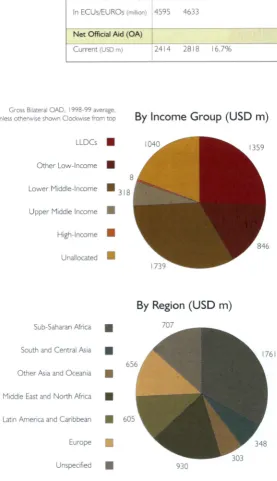
Fig. 4 Official Development Assistance (ODA) and Official AID (OA)
EC
NetODA 1998 1999 Change 1998/1999
Current (USD m) 5140 4937 -3,9% Constant ( 1998 USD m) 5140 5108 -0,6%
In ECUs/EUROs (million) 4595 4633
Net Official Aid (OA)
Current (USD m) 2414 2818 16,7%
Gross Bilateral OAD, 1998-99 average,
unless otherw1se shown Clockwise from top
By Income Group
(USD
m)
LLDCs •Other Low-Income
•
8
Lower Middle-Income • 318
Upper Middle Income
•
High-Income
•
Unallocated•
By Region
(USD
m)
Sub-Saharan Africa
•
South and Central Asia•
Other Asia and Oceania
•
Middle East and North Africa
•
Latin America and Caribbean
•
Europe
•
Unspecified
•
930Source: OECD
I Past experience has shown that success in reducing
poverty requires coherent, integrated policies which
address, simultaneously, the political, economic and social causes and effects of poverty. A strategy to
encourage trade, for example, without addressing corruption or inefficient practices in government
agencies, is doomed to fail. Investments in infr a-stnicture which boost the fortunes of one region of a country to the disadvantage of another, can dest a-bilise governments or spark ethnic conflicts.
I But no single donor can address all the complex themes and issues involved in development co-operation and so the European Community has
decided to concentrate its activity in a limited number
of priority areas where it has a comparative advantage. Six priorities were set out in the new development policy of the EC, issued in November 2000:
• Trade and development
Tne Community's trade policy is a key lever for
development as it can facilitate access to its market.
It is the biggest importer of LDC products in the world.
• Regional integration and co-operation
The Community has relevant experience and instruments at its disposal to encourage regional
integration and help countries tackle cross-border
challenges in areas like the environment and the use and management of natural resources.
• Macro-economic policies and promotion of equi-table access to social services
The Community has the political and financial weight to contribute to improving the macro
-economic framework of partner countries.
• Transport
The Community has been a major donor for many years and has built up considerable experience and
expertise. In transport it has the financial standing to
mobilise the large-scale investment required.
• Food security and sustainable rural development Again the Community has been a major donor in this
area for many years and has been at the forefront of
developing food security strategies.
• Institutional capacity building particularly for good governance and the rule of law
The Community is well placed because it can take a
more neutral stance than individual Member States
which may have complex historical relationships
with partner countries and will be influenced by their own specific national legal systems.
I The policy also reiterates the Community's support
for the promotion of human rights, gender equality and the protection of the environment. These cr oss-cutting issues must be considered at every stage of the
[image:10.599.101.318.146.268.2] [image:10.599.37.314.209.690.2]Meeting Treaty objectives
The Amsterdam Treaty, which forms the basis of EC law. sets out three main priorities for develop-ment acti\·ity: poverty reduction, sustainable development and the integration of developing countries into the world economy, with particular attention to the most disadvantaged nations.
The EC policy is also consistent with the interna-tional development targets adapted by the OECD and DAC in 1996 and endorsed by the UN Millennium Declaration in 2000. These are based on the results of the major UN Conferences of the 1990's, such as inter alia the 1992 UN Conference on
Fig. 5: European Community bilateral ODNOA net disbursements by recipients
million US$
Recipients 19861 1987; 1988 19891 1990 1991~ 19921 19931 19941 1995j 19961 19971 19981 19991 Total
LDCs I
I
Afghan1stan - - 1 - · I .58 0.33 7.74 2.3 5.64 13.48 23.82 23.84 24,56 3833 54.81 43.73 14.67 255
I
I
I
!I
I
I
I
I
I
I
I
I
Angola 9.81 8.33 2138 19.56 53.9 56.76 60.83 45.57 56.48 71.41 94.31 70.24 65.40 52 95 687 Bangladesh 20. II 39.74 54.07 I 05.44 58.7 58.85 51.34 7041 56.27 111.68 112.87 81.11 87.31 64.11 972 Benin 10 53 II .79 28.29 36.64 44.4 17.23 36.65 39.2 10.43 16.61 26 .. 31.97 29.68 2531 365 Bhutan I .58 0.4 0. 12[ 0.47 I .9 1.47 5.78 3.44 2.79 I .7 4.82 3.55 2.79 3.50 34 Burk1na Faso 8.7 15.22 23.72 14 20.2 34.89 61.19 82.54 47.02 73.24 48.85 64.7 65.26 53.27 613 Burundi II .17 10.19 27.32 35.49 35.7 56.78 65.73 23.99 36.48 23.86 9.89 2.85 -0.63 1.43 340 Cambod'1a 034 0.34 3.33 I .25 1.1 3.79 15.69 17.01 11.39 3302 52.58 32.93 32.90 27.49 233 Cape Verde 10.68 6.12 6.23 4.08 9.9 9.89 13.55 9.28 10.96 10.91 16.03 22.09 1466 7.47 152 Central African Rep. 7.31 6.43 29.41 22.82 32.9 13.94 21.59 II .81 25.17 8.12 15.34 15.96 47.57 37.98 296 Chad 18.2 36.23 49.81 33.15 20.6 23.24 11.61 6.56 37.07 27 42.57 32.67 32.06 14.15 385 Comoros 546 6.16 8.99 3.58 7.41 13.7 11.39 8 86 7.65 4.71 6.23 3.14 I 0.33 681 104 Congo. Dem. Rep. 23 21.05 36.95 53.65 51.7 15.45 ----18.71 3.08 8.4 21.15 27.77 10.76 12.63 6.09 310 Djibouti I .27 I .52 2.43 4.32 3.6 4.97 4.46 4.36 2.53 I .25 5.06' 3.27 8.82 5.90 54 Equatorial Guinea I .67 5.67 6.73 7.11 8 3.32 4.82 I .56 3.55 2.37 I .55 2.6 I .83 0.80 52
Eritrea 1.45 24.83 7.99 . 7.45 5.87 5.99 54
Ethiopia 85.7 95.91 153.35 53.84 109.2 161.48 290.62 121.28 181.93 80.21 51.84 40.7 115.01 82.80 I 624 Gambia 10.42 7.6 8.31 6.94 5.3 9.23 15 97 9.4 10.62 334 2.46 1.61 7.99 272 102 Guinea 12.89 13.06 12.29 30.81 32.7 55.14 53 63 38.83 47.5 65.05 61.48 38.06 49.81 41.69 553 Guinea-Bissau 6.13 II .06 6.92 10.97 45[ 7 7.53 4.77 24.83 12.72 13.66 25.85 9. II 16.25 161 Haiti 4.33 4.49 3.9 20.77 10.5 12.85 12.56 9.96 13.6 85.83 67.35 42.17 47.52 35.40 371 Kiribati I .06 2.08 2.84 0.59 0.61 2.22 2.69 3. II 1.16 1.94 0.87 0.64 0.55 0.75 21 Laos 0.64 1.49 0.45 I .26 22 2.4 3.07 3.56 6.52 I 0.95 128 14.72 13.83 1086 85
--~---~~ ----
-~~-Lesotho 6.13 7.31 13.92 12.05 14.2 10.09 19.87 17.55 30.6 21.41 23.25 18.77 12.85 1.40 209 Liberia 5.1 6.15 5.19 11.47 8.3 ---14.75 5.12 9.45 14. I 12.66 11.01 16.43 23.44 9.76 153 Madagascar 22.66 19.82 29.56 45.88 36.2 14.81 48.99 42.32 24.45 25.92 40.82 77.16 66.81 5079 546 Malawi 17.17 27.28 38.42 43.33 45. I 43.43 55.96 45 35.35 76.2 43.15 28.46
-·
75.70 89.03 664 Maldives 0.53 0.46 0.51 I 0.7 0.64 0.76 0.11 0.26 1.44 0.48 002 0.37 6 Mali 20.91 32.96 22.88 47.14 42.1 45.18 71.12 58.17 52.71 82.47 59.4 51.44 35.51 23. IS 645 Mauritania 15.45 10.16 19.72 34.54 22.4 38.52 42.94 52.36 44.91 41.82 107.19 81.07 75.64 87 00 674 Mozambique 33.26 25.78 66.8 89.65, 81.4 103 04 89.48 82.89 I 01.35 78.96 62 70.8 84.09 89.05 I 059 Myanmar 14.57 0.06 0.€-l.- I .21 0.1 2.72 0.13 0. II 2.34 0 94 2.7 2.50 123 29 Nepal I .74 4.65 3.52 2.02 3.9 3. IS 1.65 6 4.09 4.22 6.07 8.2 4.37 10.00 64 Niger 26 96 18.57 21.99 15.75i 42.2 52.49 43.45-·
---~---49.17 43.81 40.73 38.66 40.46 46.01 19.22 499 Rwanda 19.42 20.581 39.06 32.531 36 21.36 82.49 36.01 45.6 17.92 55.42 46.04 26.70 39. II 518 ---Sao Tome and Prinope 1.12 3.24 1.67 3.73 4.4 2.44 4.35 I .98 4.91 3.12 2.66 3.97 I .63 I 79 41 Sierra Leone 5.79 4.74 17 13.76 8.3 15.96 ----15.52 24.55 35.84 41.12 20.58 21.16 16.01 7.24 248 Solomon Islands 2.19 25.39 13.53 3.98 5.6 4.25 14.4 4.1 3.98 4.71 3.76 I .89 2.17 5.96 96
Somalia 10.7, 9.39 14.92 35.25 40.7 35.52 43 40.76 34 14.64 21.51 23.88 18.49 19.46 362 Sudan 86.17! 55.02 56.34 67.89 87.6 142 85 80.64 33.4 33.13 21.69 23.5 21,16 16.77 19.63 746 Tanzania 37.4 32.94 34.73 51.52 41.9 40.69 111.5 69.45 87.28 63.78 44 331 63.9 43.20 70.95 794 Togo 15.35 3.5 1002 7.48 40.4 13.84 34.54 4.53 9.43 15.65 872i 4.76 5.07 3.30 177 Tuvalu 0.34 0.29 0.22 0.16 0.1 0.01 003 0.25 I .05 0.77 1.0 I 0.38 0.05
o.
12 5 Uganda 16.75 31.72 39.27 35.72 35.2 29.26 155.67 4021 ----"' 58.99 112.85 57.5 53.96 55.91 6038 783
-··--Vanuatu 1551 14.42 648 I .24 2.3 459 I .23 3.87 0.66 2.86 2.99 2.06 2.20 0 97 47
Western Samoa 1.54 6.67 3.59 2.7 0.6 6.79 6.17 7.03 I .68 3.46 0.54 -0.07 0.40 0.87 42 Yemen 2.51 5.62 1.9 18 2.34 10.28 5.48 3.68 5.8 6.54 16.7 11.70 6.20 81 Zambia 16.28 19.87 34.58 33.99 25.9 31.23 94.86 143.71 45.71 76.94 37. II 28.66 20.47 8092 690
TOTAL LDCs 630 690 987 1.070 1.145 1.250 1.817 1.321 1.345 1.490 1.400 1.288 1,352 1.216 17.000
(Exciuc11ng Senegal was placed m the category 111 200 I)
[image:11.601.27.541.257.790.2]Fig, 6 A1d from DAC Countries to least developed countries (I)
Net
disbursements
Australia 110.3 12.76347078 18.3989969 158,11 16.46344638 0,04
Austria 41.405 16.48124191 I 7.76433097 86,29 18,93404134 0.04
Belgium 281.41 43.69924065 27.19309731 242.92 27.52229133 0.10 Canada 532.125 25.14750604 469.24 22.9 5009806 337.81 19.97882709 0.06
Denmark 302.575 33.97981931 495.12 30.25277861 554.42 32.53142126 0.32
Finland 198.97 38.25095642 92.26 24.35071791 104.69 26.41418984 0.08
France 1294.235 24.16256174 1391.34 22.06161472 1002.72 17.46415192 0.07
Germany 1161 105 25.45894869 O.lO 1150.17 19.63826539 1164.01 20.85785245 0.05
Ireland 17.31 32.0733741 0.06, 89.6 47.87347724 90.63 45.6367390 I 0.14
Italy 1286.2 44.28933726 OJ6 324.44 25.63628462 814.95 35.76993473 0.07
Japan 1636.575 19.86706128 1789.57 19.12342381 1550.2 14.56941 194 0.04
Luxembourg 0 0 27.81 29.42545762 29.04 25.97727883 0.17
Netherlands 634.105 29.32033403 803.47 27.2664954 801.95 26.36623071 0.21
New Zealand 16.16 16.98460245 35.51 23.0659305 27.4 21.08341028 0.06
Norway 326.48 34.82416188 520.86 39.87872384 492.58 37.27459156 0.34
Portugal 0 165.94 66.2488023 141 54.53701555 0.13
Spain 23.78 9.917424306 201.43 16.31804925 125.74 9. 140207025 0.02
Sweden 497.38 34.2011167 517.35 29.89442907 446.11 28.36550689 0.20
Switzerland 193.145 33.19669314 301.18 33.0778017 263.01 29.30081772 0.09
United Kingdom 611.445 27.07935207 835.95 24.34971309 995.64 25.77034872 0.07
United States 1392.82 14.46634815 1319.01 19.17723175 1333.43 15.17679303 0.02
TOTALDAC 10557.525 24.08504699 11026.75 22.8182585 10762.65 20.74195118 0.05
of which:
EU Members 6349.92 2 9. 7085484 5 6396.22 24.03478988 6600.11 24.03364509 0.08
(I) lnc!ud1ng 1mputed multilateral ~ovvs. 1.e making allowance for contnbut1ons through multilateral organisations.
calculated usmg the geographical d1stnbut10n of multilateral disbursements for the year of reference. Source: DAC
Environment and Development in Rio de Janeiro, the 1995 World Summit for Social Development held in Copenhagen, and the Fourth World Conference on Women held in Beijing in 1995.
Strategy implementation
To implement its strategy of tackling poverty reduction by simultaneously looking at political, economic and social issues, the Commission has also reviewed how aid should he delivered on the ground. It is now basing its activities on a number of guiding principles:
SectoJ:'i not projects- rather than using a project-based approach. interventions should form part of a comprehensive sectoral policy. Too often in the past, a project-based approach has led to the fund-ing of narrowly focused initiatives \vhich have been ill-coordinated and sometimes conflicting. The Commission is now seeking to ensure that proposals for funding fit within a wider national sectoral strategy for recipient countries. This approach encourages ownership by the partner countries,
12
donor co-ordination, harmonisation of procedures, while providing an overview of the inter-related problems of a particular sector. In sectors where it has a comparative advantage and in the areas designated as priorities for Community action (see above), the Commission will take the initiative to co-ordinate the efforts of Member States.
Complementarity and decentralisation - the EC must play to its strengths acting, predominantly, at the macro level while facilitating appropriate part-ners to operate at the meso and micro levels. With its political and economic influence, the Commission is best placed to assist countries at the institutional and macro-economic level. This could include tech-nical assistance programmes to assist a partner gov-ernment reform its judiciary, or opening up access to funding to stimulate the private sector.
make use of local knowledge and skills. This can mean government departments or agencies, non-governmental organisations (NGOs), other civil society actors or a combination of all of these. De,·elopment aid is most effective when it fosters a participatory approach.
The EC is at the forefront of efforts to improve co-ordination among donors and ensure its activities complement the work of other donors and of the Member States. As such it avoids conflicts and dupli-cation of the donor's activities and the situations where the government of a recipient country is not kept sufficiently aware of donor activities or. alterna-tively, can play one donor off against another. This means dialogue at the international level and between delegations and agencies at the count1y level. It also means working with and supporting activities of other donors such as the IMF and World Bank's Highly Indebted Poor Countries (HIPC) initia-tive which has lead to the development of the con-cept of Pove1ty Reduction Strategy Papers (PRSPs).
The EC argues that the best way to ensure that aid given to a developing country is appropriate, effective and sustainable is to ensure ownership by the government of the recipient country itself. It is therefore. increasingly, directly funding national public sector budgets allowing the government to distribute the funds as it deems appropriate accord-ing to a strategy that it has been a pmtner in devel-oping. This approach ensures recipient countries have ownership of programmes, which gives them the best chance of making a sustainable impact.
Cozmf1J' zdde programming- developing compre-hensive strategies on a country-by-country basis increases the efficiency and effectiveness of Community aid. The Commission is in the process of formulating country strategy papers in consultation and collaboration with individual developing coun-tries. which will be used as a management tool for co-operation. The papers will set out an analysis of the political, economic and social profile of the individual country and a strategy for addressing its particular needs across sectors. It is intended that these papers \Vill become a common reference point for the Community and Member States and other donors.
The Cotonou Agreement
TI1e first tangible expression of the new EU approach to development co-operation was the Cotonou Agreement, signed in June 2000. This partnership agreement between the ACP countries and the EU cov-ers a 20-year period (2000-2020). It is the successor to
the Lome Conventions and has as its overarching objective the reduction of poverty by a three-pronged approach tackling political, economic and social issues.
Preparatory work to develop the
r:
•
agreement began in 1996 and involved public debates and consultation with a broad range of actors in Europe and the ACP region.
Funding to support the agreement for the first five years has been set at €13.5 billion. A further €9.5 billion of money uncommitted in previous European Development Funds has been added along with up to €1.7 billion pledge of loans from the European Investment Bank's own resources.
The Cotonou Agreement has at its core five inter-connected guiding aims:
• to enhance the political dimension: ;':omoting dia-logue between ACP and EU, develop peace build-ing, conflict prevention and resolution strategies, support good governance and tackle corruption;
• to improve participation of non-governmental actors;
• to reduce poverty;
• to reinforce economic and trade relationships; and
• to improve financial co-operation.
These aims are fully consistent with the EC's wider development policy.
With the Cotonou Agreement, the funding arrange-ments to deliver these objectives have been complete-ly overhauled to make them simpler and more coher-ent. The previous system of having multiple instru-ments within the European Development Fund, each with different rules, has been replaced with just two -one envelope for providing grants and -one for pro-viding risk capital and loans to the private sector. The 9th EDF will include €10 billion for the grant enve-lope plus €1.3 billion reserved for regional pro-grammes. The Investment Facility, which replaces the Lome IV risk capital and interest rate subsidy facilities, is managed by the European Investment Bank and has received €2.2 billion from the 9th EDF.
The principles and approaches set out in the Cotonou Agreement are a reflection of the interna-tional development targets. They are, thus general in nature and appropriate for partnership agreements in all regions and will have an influence on devel-opment of these in the future.
Maintaining the essential elements to
tackle poverty and corruption
Corruption can have disastrous consequences on any country. but the effects of maladministration on a poor country can be more serious as resources are scarcer. The promotion of good governance is an essential prerequisite if corruption is to be tackled and poverty eradicated in the LDCs. As a major aid donor, the EC believes - in conjunction with the Member States - that, as part of a policy promoting sustainable development, good governance needs to be supported in all its aspects: accountability. trans-parency. rule of law, equity and participation.
The civil society has an important role to play in monitoring public administration and securing good governance. EC development policy encourages the development of an organised and active civil socie-ty in recipient countries as part of a strategy to con-solidate the rule of law and build the capacity of the state to fulfil its functions. In recent years, the EC has taken a number of measures to promote a greater participation of the civil society in its development policy \Vith LDCs.
Poverty and the lack of good governance continue to be major contributory factors behind many of the conflicts occurring in LDCs. Following a 1996 rep01t, the European Institutions have repeatedly reaffirmed ~heir commitment towards conflict prevention and peace-building in developing countries and have taken measures to help secure that commitment.
Good governance
There has been a drop in aid from developed countries from 0.33% of OECD donors' GNP to 0.23% over the past decade. This is a phenomenon known as 'aid fatigue' and it happens where pub-lic opinion in the EU Member States is no longer prepared to see tax payers money used to sustain corrupt regimes whilst the wider society suffers. In the fight against corruption, political decisions-makers and the public at large have increasingly focused their attention on good governance. In the Cotonou Agreement, good governance is described as a ·fundamental element' of the partnership between the EU and the ACP states.
Both sides in the agreement have also agreed to launch a specific procedure in cases of serious active and passive corruption, which can lead to aid sus-pension. This is a real innovation, both in the EU-ACP context and in international relations. This pro-cedure applies not only in cases of corruption involving European Development Fund (EDF) money but also more widely, in cases of misuse of public funds in a contracting state. By adopting such a provision in their partnership agreement, the EU and ACP countries are together sending a clear and positive signal to European taxpayers and to the legitimate beneficiaries of aid.
Moreover, there is a progressive concentration of power in the hands of international organisations such as the World Trade Organisation (WTO), which are seen as lacking sufficient democratic oversight. In the context of globalisation, good gov-ernance needs to be addressed in the form of a global institutional response. The EU has repeated-ly expressed its concern over the lack of global good governance. Such a policy is crucial not only if the democratic process is to be enhanced in LDCs, but also if these countries are to secure a bet-ter deal in a global economy.
The respect for human rights, democratic princi-ples and the rule of law are essential elements of the Cotonou Agreement and a new procedure has been introduced to deal with cases of violation. This new procedure places greater emphasis on the responsi-bility of the state concerned and allows for greater flexibility in the consultation process. Furthermore, the EU has introduced a human rights clause as part of its co-operation agreements with LDCs.
Institutional capacity-building
LDCs tend to suffer more from weak governance than from poor governance, with government serv-ices in need of reform. This could include the civil service, the legal and judicial system as well as the public procurement procedures. As a result, institu-tional capacity-building is essential if good gover-nance is to become a feature of LDCs.
The EC considers that aid suspension should only occur as a last resort, and is fully aware of the need to support institutional capacity-building in LDCs. Following the approval of a radical overhaul of its development policy, this has become a key area where the EC is committed to concentrating its activ-ities. Moreover, under Article 33 of the Cotonou Agreement, there are specific provisions for institu-tional capacity-building in the ACP countries.
Provisions on institutional capacity-building are anchored in a framework of strategies agreed jointly between the state concerned and the EC. The imple-mentation of a 'balanced partnership' based on national ownership of strategies is vital if LDC gov-ernments are to become more responsible and the EC's development programmes more successful.
The role of civil society
The engagement and close co-operation of the civil society is vital if partner countries are to expe-rience ownership of their poverty reduction strate-gies. The widest possible participation of all sectors is not only essential to provide the conditions for strengthening the democratic fabric of a country, but also for greater inclusion of the poor.
The importance of the civil society in lessening poverty was underlined in a Declaration at the Africa-Europe Summit in Lisbon in 2000: "We thus affirm that the full participation of people living in poverty in for-mulating appropriate policies and strategies and in the implementation of programmes is a prerequisite for lasting and sustainable development."
Through this contact, the EC has contributed up to €40 million towards a credit-providing project.
In the Cotonou Agreement, the promotion of par-ticipatory approaches corresponds to one of the five pillars of the partnership between the EU and the ACP states. and provisions have been made to ensure the involvement of the civil society in draw-ing up and implementdraw-ing co-operation programmes. However, a participatory approach can be costly. As a result, the Cotonou Agreement guarantees the civil society direct access to European Development Fund (EDF) resources as well as to the EU budget in order to guarantee funding for capacity support.
The EC has stressed that this new participatmy approach to development co-operation should not only apply within the context of the Cotonou Agreement. but also within the framework of the EC's development co-operation with all developing countries.
Such a parttctpatory approach requires a greater decentralisation of decision-making as well as pro-found changes in the EU procedures. The present reform of the EU's management of external assis-tance programmes - launched in May 2000 - pro-vides an opportunity to change current practices and promote greater participation by the civil society. This opportunity is reflected in the extensive devo-lution of power to EU delegations in developing
countries, who will be encouraged to play the role of critical observer and facilitator. They will be expected to:
check that the provisions in the Cotonou Agreement relating to participatory approaches are respected; and
ensure the involvement of civil society in the pro-gramming. Here, the EU encourages delegations to designate an official to be responsible for relations with the civil society.
Co-ordination of aid between donors
Development co-operation with LDCs is also based on the three Cs:
• co-ordination of development policies within the EC, the Member states and other institutions and donors;
• complementarity between the EC's development policy and that of its Member States; and
• coherence between the EC's development goals and its other policies.
The EU believes that greater co-ordination within the Union does not mean shutting out wider dia-logue with other fund donors, especially the Bretton Woods' institutions and UN agencies. As such, wher-ever possible, EU development strategies are to be linked to those of other institutions, such as the World Bank and the IMF.
In March 1998, the EU Council adopted guidelines for strengthening operational co-ordination between the Community and Member States in the field of development co-operation. Two years later, the Commission published a report on progress made since the adoption of these guidelines, which high-lighted some improvements but also noted the persistence of real difficulties with on-the-spot co-ordination.
The EC is trying to promote a regular exchange of information on all aspects of co-operation pro-grammes, including the preparation and follow-up to the implementation of individual projects. The EC is also encouraging the recipient LDCs to play a more active role in defining its strategies and development programmes and ensuring a better co-ordination of resources.
The Commission would also like to encourage the creation of 'chef de file' or designated leaders. These could either be a Member State or Commission rep-resentative acting on behalf of all co-financing part-ners in a given country and for a single programme.
The chef de file would be chosen on the basis of
specialist expertise or local contacts and would then be entrusted with the development funds. As an example, a UK representative could be designated as chef de file for the health sector in Uganda as it provides the best value added in that specific sector. Such an approach would reduce the duplication of efforts and maximise the benefits for the LDCs.
The reforms within External Relations Services of the European Commission should also allow the EU to be more efficient in the management of its external assistance. Since the end of 2000, the programming process has been strengthened and the management of the project cycle from identifica-tion to implementaidentifica-tion has been unified within a single office - EuropeAid Co-operation Office. This new office should allow for more efficiency in the implementation of EU aid.
Action on conflict prevention and
peace-building
The EU was the first major donor to debate the role of conflict prevention in development policy. In 1996, the Commission adopted a strategy on Peace-building and conflict prevention in Africa. This was followed by a series of policy documents addressing the issue of preventing the outbreak of conflicts, mainly by promoting stable and democratic systems.
Article 11 of the Cotonou Agreement allows for a strategic approach to tackling the root cause of con-flicts. These provisions include measures aimed at balancing political, economic, social and cultural opportunities within society in order to help prevent conflict and maximise peace-building efforts. Many of the projects supported by the EC in LDCs try to balance these opportunities. An active, comprehen-sive and integrated policy of peace-building and conflict prevention remains a major element of a sustainable development strategy.
The EU is also actively engaged in mediation, negotiation and reconciliation efforts. Recent exam-ples of such activities include the Lusaka peace process for the Great Lakes and the peace brokering between Ethiopia and Eritrea.
The EU and its Member States continue to push for measures to stamp out the illegal trade in gems used to fund wars in places such as Angola and Sierra Leone. In March 2000, for example, a Council Regulation prohibited the import of rough diamonds from Sierra Leone into the Community.
The global proliferation of light weapons and small arms is also a major source of instability in many LDCs. With the help of South Africa, the EU has financed the repossession of small arms in Mozambique. The EU is equally committed to set-ting responsible limits to the arms trade, which led to an EU Code of Conduct on Arms Exports in 1998. In the Code's first annual report, the EU stressed the need for the Code of Conduct to be tightened to be more consistent with the Common Foreign and Security Policy (CFSP) and to con-tribute to the Union's goals of conflict prevention and the promotion of human rights.
Anti-personnel landmines continue to cause appalling casualties in many LDCs and are an obsta-cle to the implementation of a range of EU pro-grammes. In the period 1992-1998, the EC commit-ted over €180 million to mine action worldwide by supporting de-mining programmes. assistance to mine victims, and research and development of technology. Following the entry into force of the Ottawa Convention on the Prohibition of the Use, Stockpiling, Production and Transfer of Anti-Personnel landmines and their Destruction in March 1999, the EU has become a major player in this area. In that context, the Commission adopted plans in March 2000 to strengthen the coherence and effec-tiveness of its actions in this important policy area.
The escalation of the crisis in the Democratic Republic of Congo (RDC) into a conflict involving several countries of the sub-region has also prompted the European Commission to begin reviewing its co-operation with ACP countries involved in armed con-flicts. This review should ensure that European tax-payers' money is not used for military purposes. Between 1986 and 1995, five of the principle recipi-ents of EL aiel in the ACP bloc were engaged in some form of conflict or another - Ethiopia, Mozambique, Rwanda, Sudan and Uganda are alllDCs.
The Commission insisted that the reviewed co-operation with ACP countries involved in armed con-flicts should be within the framework of the common foreign and security policy (CFSP). A joint Council and Commission report was discussed at the Nice Summit last December, in which the Commission underlined its intention to become fully involved in all future conflict prevention efforts to ensure the effectiveness of the Union's foreign policy.
The role of ECHO
Fig. 7: Finanoal decisions for humanitanan aid in LDCs 1n 1999 (€)
Source. HumonJtonan A1d Office (ECHO) Annual Rev1ew /999
ECHO managed its biggest-ever budget in 1999: a total of almost €813 million. Originally, the EC had only allocated some €331 million in its budget for humanitarian assistance during 1999. The extra spending. largely accounted for by the problems in the Balkans. \vas covered from the reserves. and the Commission ensured that no funds were diverted from other priority areas in ECHO's budget.
In 1999. ECHO spent a total of €7.3 million on acti\·ities towards preparing for disasters. The basis of ECHO's Disaster Prevention, Mitigation and Preparedness Programme (DIPECHO) is risk assess-ment and disaster limitation. In an action plan cov-ering South-East Asia and Bangladesh, DIPECHO stresses its commitment to a regional approach and has been engaged in a series of discussions with :\'GOs. So far, suggestions include the development of evacuation plans and early-warning systems in Bangladesh and risk mapping of the Mekong in Cambodia.
In the mid-1990s, the EC endorsed a new approach for strengthening links between relief, rehabilitation and development (LRRD). This is a delicate issue and a recent evaluation of ECHO's performance shows that LRRD needs to be improved. ECHO is committed to developing exit strategies aimed at the earliest possible pull-out. EC development instruments must therefore be ready to cover the immediate post -emergency phase so as to cover any gaps in provision towards the countries in need.
[image:19.600.16.187.165.361.2]a::
La.J
f--0..<(
I
u
Major review offers new vision
for rural development
The European Community, along with most large aid donors, believes that rural development contin~ ues to be a key priority for any development co~ operation programme for a range of economic, social and political reasons - first and foremost because most poor people live in ntral areas.
Around 1.3 billion people - one in four of the world"s population - live in absolute poverty, surviving on under US$1 per clay. Some 800 million people go hungry every day, including 200 million children under five years old.
The majority of poor people, around 70%, live in rural areas depending primarily on agriculture. They struggle to survive in areas with fragile ecosystems, poor access to basic needs such as health and edu~ cation services, clean water or food and where mal~ nutrition and infant mortality rates are high. The average African farmer has a life expectancy of 43 years.
Respect for human rights, particularly for women, is lovver than in urban areas and rural populations are usually politically weak and are often the first victims of poor governance. The political will to
20
develop rural areas at the same pace as urban areas is often lacking in developing countries although ntral economic growth is a crucial precondition for overall economic growth.
In the past, strategies to tackle rural poverty have focused on issues such as achieving food self~suffi~ ciency, slowing clown rural~urban migration and investment in large infrastructure projects. But in the 1990s there w:1s :1 fundamental shift in the goals of most donor agencies prompted by shrinking aid budgets and the need to use the available resources more effectively. European development assist:1nce now has the overarching objective of poverty reduc~ tion to be achieved by a focus on good governance, economic growth based on market principles and sustainable management of natural resources. It is clear that :1ttaining sust:1inable improvement in the livelihoods of rural people would be a major contri~ bution to achieving· all these go:1ls.
sought to learn from difficulties encountered in the late 1980s and early 1990s when the priority accord-ed to rural development began to decline due to a combination of disappointing past experiences with Integrated Rural Development Projects, low agricul-tural prices and the limited political influence of rural populations.
The result is a new vision for development co-operation in the rural sector based on the principles enshrined in the Treaty of Amsterdam and the Commission's overall policy objectives.
Policy in rural areas is now aiming to deliver: • more peaceful, equitable, open and democratic
rural societies:
• more effective and accountable rural institutions: • economic policies enabling rural growth: • enhanced individual assets of rural dwellers: • more sustainable natural resource management: • more coherence between EU agricultural, trade, environmental and immigration policies and the El-·s purpose of improving rural livelihood.
Rural development by its very nature spans a huge range of inter-related issues and activities and requires action on many fronts. Agricultural activities arc obvious areas for attention but social services, trade or transport initiatives are also tools to support and stimulate rural development. The opening of a new primary health clinic in a rural area or a new feeder road. for example, is part and parcel of a
coherent rural development strategy.
Rural development is hard to quantify exactly in financial terms as it is multidisciplinary and it receives support from a range of EC financial instm-ments. It is clear, however. that mral areas benefit significantly from sectoral support as aid channelled through a variety of sector programmes including those for health, education and transport which arc targeted, primarily, at basic services in rural areas.
Rural Development Profiles
Because rural development involves so many players and funding instruments, it requires a spe-cific analytical and conceptual tool to analyse spe-cific situations in individual countries. Thus, Rural Development Profiles are being developed for indi-vidual developing countries to provide a strategic framework for EC interventions in those countries where rural development is retained as an area of concentration for EC aiel.
The Commission has produced guidelines for the development of RD Profiles based on four pilot profiles produced for Uganda, Mozambique, Bangladesh (all LDCs) and Bolivia. Ideally RD Profiles \Viii become the reference point for EU
co-ordination on rural development support provid-ing a common framework for action by the EC (and its various financial instruments) and the lVIember States.
The Commission is actively participating in inter-national efforts by donors and governments to
develop agreed frameworks for intervention for par-ticular countries to ensure that activities undertaken do not duplicate or conflict. These include the World Bank"s Comprehensive Development Frameworks (CDF) and the World Bank and IMF's Poverty Reduction Strategy Papers (PRSPs). The Commission also de\·elops its own Country Support Strategies which set out the scope of activities in an individual dtTeloping countty.
Rural development profiles will only be developed for individual countries where other frameworks are not in existence or where the rural development dimension is not adequately dealt with. In countries where a PRSP is being developed, for example, an RD Profile may not be necessary if mral issues are covered thoroughly, although the Commission would expect to be actively involved in the
formu-• In 1998 Mozambique's MlniStry cultural development. (froagri)
issues towards a comprehensive str:ategy, orate and pool efforts.
lation of the PRSP. The design of RD Profiles will accompany and follow the programming process for the 9th EDF.
Co-financing
The ECs preferred approach to interventions in a developing country is co-financing the public sector budget with the national government and other donors. The ECs contribution is paid directly to the Treasury and from there to the relevant ministry which then takes charge of implementing an agreed programme. With this 'Sectoral Approach' donors are moving away from a situation where responsi-bility or financing for a particular initiative is carved up between different actors without overall co-ordination or ownership from the national government.
The Commission believes there are advantages for both recipient governments and donors of having a single programme and a single funding source for a specific sector. On the one hand there is less chance of different donors being played off against each other while on the other there is less risk of unco-ordinated or cont1icting interventions by donors and a greater likelihood that national governments will have a sense of ownership.
The approach has been pioneered in the social services sector and is increasingly being implemented
• A key objective of Proagri is to impll:'m<~nt U'll:i·ntluu•omu :'-'"'~'"":~·:~- ~·~"~··'""~ "'""cu::..,"~
de for channelling and ui•uia.5
ll.
5 '"'"'uv.• ass:is~:t&~~ed:n the agricPJ.t.~tl :>i~c"eF"~~·l~~~~~.I:J;;tt::uects is being replaced by a comprehensive LJIIJw:au:IuJ:c
ing decentralised resource altocatio~ ~nd management.
• For donors, the goal is to han<! overthe.financial is real ownership. One challenge for . .M.oza.tllbique confident enough to provide budg~t support.
• The Proagri sector programnie is built on a comprehenSive 'str·ate~gy•·aa
cultural activities such as the management offjvestoc.lr, wi_ldlift~;J:es.~a~rg!;JJanA~;'i~~~tgaitf~\
in the agricultural sector - although agricultural development strategies are rarely straightforward and there are always conflicting opinions about the best strategy to deal with a particular problem. This means the meeting of minds between all the actors that is necessary for a co-financing approach takes longer. To elate the results are variable but the Commission is confident that this strategy will reap sustainable re\vards.
Food security
For some countries the overriding and most basic problem they suffer from is food insecurity - where, because of short or long-term. natural or man-made disasters - people are starving. The EL has a budget of approximately €500 million a year to target this problem.
In recent years the EU has been developing its response beyond providing emergency aid in kind, once a disaster has struck. It is increasingly trying to tackle the causes of food insecurity, rather than sim-ply contain its eflects. This broader approach, set out in a 1996 Council Regulation, sees food security as a pm erty reduction measure and looks at both the supply and demand issues that make countries 'food insecure·.
Sometimes the problems may be short term, caused by a specific event such as a conflict. but more often there are long-term chronic and structur-al issues \Vhich exacerbate underlying difficulties associated with fragile ecosystems or harsh climates. Issues like Janel mvnership structures or urban migration. for example, can have significant impacts on the ability of a country's population to feed itself. ~Im·ing a countly towards a position of sustainable food security requires donors and recipient countries to adopt comprehensive food security strategies. As \Yell as tackling issues such as irrigation and agricul-tural practices, these strategies need to address a range of different sectoral issues like health, educa-tion. private sector development, trade and so on.
The ability of an individual to obtain and maintain adequate access to food- to be food secure- is deter-mined by how much money she or he has to purchase food and/or how much food he or she can produce. The Ell's food security programme, therefore, seeks to address both sides of this coin tackling how to increase income, how to increase production, how best to market what is produced and how to ensure that what is produced is used in the best way.
In the past donors and governments alike thought more in terms of helping countries become self-suf-ficient in food production. However this frequently led to countries switching to produce commodities ill-suited to the local agricultural conditions, or avail-able more cheaply elsewhere, while ignoring prod-ucts that could have earned valuable export income.
The EU's food security programme is a medium to long-term instrument, targeted at a specific number of countries, which seeks to make a struc-tural change in the developing country's rural economy. Most countries that are on the list of recipient countries would expect to remain so for four to five years.
Currently, there are 19 countries on the food sent-rity programme of which 11 are LDCs: Haiti, Ethiopia, Yemen, Burkina Faso, Cape Verde, Mauritania, :t\iger, Madagascar, Malawi, Mozambique and Bangladesh. To be accepted on to the pro-gramme a countty must commit to implementing a comprehensive food security strategy, which covers everything from crisis management to improving the nutritional quality of food, from improving infra-structure to increasing non-agricultural income.
The strategies are drawn up by the country itself with the help of external expertise recruited with EC resources. Additional expertise is available within Resal, the European Food Security Network. Resal is an EU-funclecl body that helps formulate and imple-ment food security policies and supports education, dissemination of good practice and discussion about food security strategies.
Fig. 8: Tackling food security requires a multi-faceted approach.
..
_____
Link internal prices to I PP i~-.,-I Open markets t~ ' commercial 1
imports : of cereals
I Support competi-1
1 tiveness 1n import I
' and 1nternal trade ,
Improve marke"0 effc1ency _, I
i
I. lmprov~ marl<et . Information systems 'I
1
Improve roads
Improve storage 1 capacity
Improve
competi-·1 tiveness 1n transport
1
and trade sectors
L _ _ _ _ _ _ _ _ _
_ji
I24
~~~__J---,
·~Improve acc~j
'II Improve.agncui-L__'" " :
I '""}'"'"Improve secunty I oflocd Ceooc_ej
- - - ~---~ncrease availab~li- ~gation and
ty of inputs drainage
I
I
Support competi-tiveness in 1nputs
marketing
Development of rural financial
markets
Research and extension
l _
_j
I
II
ncrea~e
effective IL
demand _jSupport to public
works
programmes
Cash crops devel-opment 1
Enterprise development
Increase l1vestock and dawy production and
productivity
I
I
Ensure adequate ' food use and
Reduce individuals and households'
vulnerability
Improve intrahousehold
distribution Vocational
tra1n'1ng and
apprenticeship 1 Research··· l~nd I Improve mother
l_ extens1o~ (eeding practices
Cnsis
Development 1
of rel1able information
systems
Enhance the reaction capacity
[image:24.605.27.561.244.780.2]As well as food aid, the EU programme can finance any type of initiative in any sector that is rel-eYant to food security and is part of the strategy. Examples of activities supported include:
• the supply of seed, tools or expertise to aiel food production:
• rural credit suppmt schemes targeted particularly at women:
• schemes to improve access to drinking water;
• storage schemes:
• measures to assist marketing; transpo1tation, distri-bution or processing of agricultural and food prod-ucts;
• support measures for women's and producers· organisations:
• sectoral programmes and reforms in the agricul-tural sector:
• reforms in the trade sector.
An assessment of the project "''-'u"'•"~'"'"'··'~
tuality of life of the
·ocational training availabJe
0::::
w
f--0....
<(
I
u
Generating resources
by
enhancing growth
Introduction
Trade is an important way for a developing country to generate the resources it needs for self-sustained development. Trade enhances growth, and vice versa; and - in an adequate domestic policy framework - growth helps to reduce pover-ty. Open economies generally grow faster than closed economies.
Trade policy reforms can assist the process of generating significantly higher growth rates. They can improve the efficiency of resource allocation, promote access to improved technology, facilitate the exploitation of economies of scale and boost domestic competition.
F1g. 9: Trade w1th LDCs
1998 EU
us
Trade with LDCs € 18.8bn €7.7bn
Exports to LDCs €10.lbn €2.1bn
%QUAD* exports 70% IS%
Imports from LDCs €8.7bn €5.6bn
%QUAD*imports 56% 35%
Source.· Eurostot- QUAD= EU+US+jopan+Conoda
26
Some countries have clearly been more successful than others at integrating in the global economy. The progress of newly industrialised economies in Asia and Latin America has been achieved thanks to a rise in trade and private flows of investment rather than because of development aid. So far, LDCs have generally not been able to benefit ti"om the oppor-tunities offered by globalisation.
The EU is an important market for exports from the LDCs. It is by far the biggest importer of LDC products in the world. In 1998, LDCs exported goods worth a total of €15.5 billion, of which the EU imported 56% with a value of €8.7 billion. Despite this, LDCs still face a trade deficit with the Union (see figure 9).
japan Canada
€2.9bn €0.4bn
€2.0 €0.2
14% 1%
€0.9bn €0.2bn