Article
Developing a Contextually Appropriate Integrated
Hygiene Intervention to Achieve Sustained
Reductions in Diarrheal Diseases
Tracy Morse1,2,* , Kondwani Chidziwisano1,2,3, Elizabeth Tilley2,3,4 , Rossanie Malolo2,
Save Kumwenda2,3, Janelisa Musaya5 and Sandy Cairncross6
1 Department of Civil and Environmental Engineering, University of Strathclyde, Glasgow G1 1XJ, UK 2 Center for Water, Sanitation, Health and Appropriate Technology Development (WASHTED),
University of Malawi (Polytechnic), Blantyre 3, Malawi
3 Department of Environmental Health, University of Malawi (Polytechnic), Blantyre 3, Malawi 4 Eawag, Swiss Federal Institute of Aquatic Science and Technology, 8600 Duübendorf, Switzerland 5 Department of Biomedical Sciences, University of Malawi (College of Medicine), Blantyre 3, Malawi 6 Department of Disease Control, London School of Hygiene and Tropical Medicine, London WC1E 7HT, UK
* Correspondence: [email protected]
Received: 2 August 2019; Accepted: 21 August 2019; Published: 27 August 2019
Abstract: Diarrheal disease in under-five children remains high in Sub-Saharan Africa; primarily
attributed to environmental pathogen exposure through poorly managed water, sanitation, and hygiene (WASH) pathways, including foods. This formative study in rural Malawi used a theoretical base to determine the personal, social, environmental, and psychosocial factors that are to be considered in the development of an integrated intervention for WASH and food hygiene. Using a mixed methods approach, a stakeholder analysis was followed by data collection pertaining to 1079 children between the ages of four to 90 weeks: observations (n=79); assessment of risks, attitudes, norms and self-regulation (RANAS) model (n=323); structured questionnaires (n=1000); focus group discussions (n=9); and, in-depth interviews (n=9) (PACTR201703002084166). We identified four thematic areas for the diarrheal disease intervention: hand washing with soap; food hygiene; feces management (human and animal); and, water management. The contextual issues included: the high level of knowledge on good hygiene practices not reflected in observed habits; inclusion of all family members incorporating primary caregivers (female) and financial controllers (male); and, endemic poverty as a significant barrier to hygiene infrastructure and consumable availability. The psychosocial factors identified for intervention development included social norms, abilities, and self-regulation. The resulting eight-month context specific intervention to be evaluated is described.
Keywords: WASH; food hygiene; complementary foods; RANAS; Malawi
1. Introduction
Diarrheal disease continues to be the second leading cause of death in children under five, with approximately 700,000 deaths worldwide annually [1]. It is estimated that 50% of these deaths occur in Africa and 72% occur in the first two years of life, resulting in a higher mortality rate in children than HIV, tuberculosis, and malaria combined [1,2]. The WHO has continued to emphasize not only the importance of effective treatment, but also the integral role that prevention plays in the control of diarrheal disease, which highlights priorities, such as rotavirus and measles vaccinations; promotion of early and exclusive breastfeeding and vitamin A supplementation; promotion of handwashing with soap; improved water supply quantity and quality; and, community-wide sanitation promotion [3]. Despite the fact that these types of water, sanitation, and hygiene (WASH) interventions are generally
cost effective, there has been little progress in achieving implementation at scale [4]: less than 5% of the population of Sub Saharan Africa have access to combined improved water, sanitation, and hygiene, as described by the sustainable development goal indicators [4]. However, progress has been elusive as recent publications have highlighted the various technological, social and financial complexities of reducing diarrheal disease through seemingly simple interventions [2,5–9].
The WASH Benefits and SHINE studies in Kenya and Zimbabwe, respectively, reported no impact of a range of WASH interventions on the incidence of diarrheal disease, despite extensive formative research to inform and support the development of the intervention content and delivery [10–12]. However, the WASH Benefits study in Bangladesh did demonstrate a small reduction in diarrhea, albeit with evidence that there was no benefit from a combined WASH intervention over individual sanitation or hygiene programs [13]. This may be attributed to a number of factors, including the large number of pathways in which children may become exposed to diarrheal disease pathogens. Studies within the African region have demonstrated significant contamination of the environment from both human and animal feces, which may contribute to disease transmission during environmental interactions [14–19]. Studies have also demonstrated the potential role of food contamination in diarrheal disease transmission, particularly complementary foods, which have been found to have higher levels of contamination than drinking water [20–25]. The contribution of food in the transmission of diarrhea has also been supported by the 2015 WHO report, which attributed 70% of the burden of foodborne disease to sub Saharan African and South East Asia, with 40% of this affecting children under the age of five [26]. Attempts to model the complex mechanisms that potentially link poor sanitation and hygiene to diarrheal disease, enteric enteropathy, under nutrition, and child development, highlight the challenges of understanding the myriad of environmental transmission routes and sources of contamination, which may contribute to diarrheal and other related diseases [1,5,27–29].
Despite the need for understandable, applicable information regarding how to prevent diarrhea at the household level, access to knowledge alone does not achieve sustained hygiene behavior change [30]. To achieve sustained behavior change, it is essential to consider the effects and impact of all personal, social, environmental, and psychosocial factors that directly and indirectly relate to hygiene practices, including the structural and socio-economic barriers that household members may face [31]. Models to promote positive, sustained behavior change in the WASH sector must therefore have a strong element of human psychology to support knowledge and technological based interventions [30,32]. Within the WASH sector, several models, such as Risks, Attitudes, Norms, Abilities, and Self-Regulation (RANAS) [31], Behavior Centered Design (BCD) [33], and SaniFOAM [34] have been developed, and shown, to achieve this. For example, recent studies conducted in low income countries have demonstrated the potential impact of individual training, follow-up and participatory approaches (with hazard analysis principles) on the safety of domestically produced complementary foods [35–38]. Demonstrating significant reductions in the microbiological contamination of high-risk complementary foods, and achieving improved practices in food hygiene behaviors, these interventions focused on the cleanliness of utensils, hand washing with soap (HWWS), proper storage, thorough reheating and water/milk treatment, in coordination with emotional drivers and changes in behavioral settings. However, these studies did not assess the impact of these outcomes on health indicators within their settings.
2. Methods and Results
2.1. Formative Research
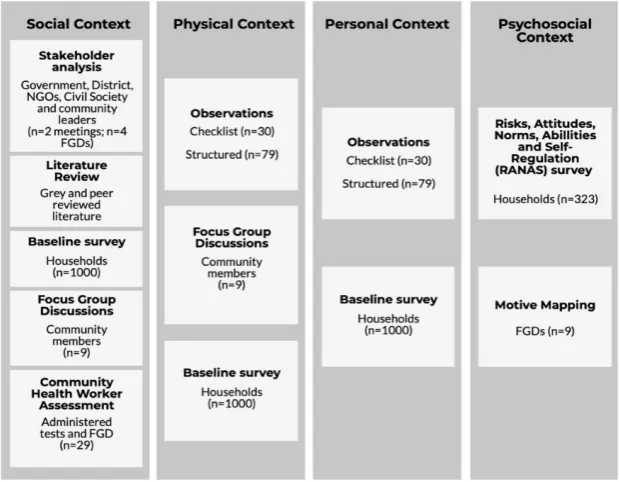
The formative research and intervention development were undertaken in four stages (Figure1) to ensure the final intervention trial took into consideration learning from previous studies [30–32,39], as well as ensuring that the specific context was clearly understood in terms of social, physical, personal, and psychosocial barriers and opportunities for behavior change and improved health outcomes. To achieve this, a mixed method approach was used, to provide a full picture of both knowledge and practice, thereby validating quantitative findings and supporting the iterative process of intervention design (Figure2). This extensive formative stage then informed the intervention development and implementation mechanisms, including appropriate tools for evaluating primary and secondary outcomes.
conducted. Therefore, such an assessment allows for the identification of critical factors that are to be addressed by a behavior change intervention.
2. Methods and Results
2.1. Formative Research
[image:3.595.193.404.264.451.2]The formative research and intervention development were undertaken in four stages (Figure 1) to ensure the final intervention trial took into consideration learning from previous studies [30,31,32,39], as well as ensuring that the specific context was clearly understood in terms of social, physical, personal, and psychosocial barriers and opportunities for behavior change and improved health outcomes. To achieve this, a mixed method approach was used, to provide a full picture of both knowledge and practice, thereby validating quantitative findings and supporting the iterative process of intervention design (Figure 2). This extensive formative stage then informed the intervention development and implementation mechanisms, including appropriate tools for evaluating primary and secondary outcomes.
Figure 1. Study stages of formative research and intervention development.
Stage4
Interven' onDesignandDevelopment
Stage3
RecruitmentandBaselineData Collec' on
Stage1
LiteratureReview
Stage2
Forma' veResearch
2 months
4 months
1 months
[image:3.595.143.453.484.725.2]3 months
Figure 1.Study stages of formative research and intervention development.
Sustainability 2019, 11, x FOR PEER REVIEW 4 of 19
Figure 2. Summary of methods used to inform and undertake formative research and intervention design.
2.2. Setting and Population
The formative study and intervention trial both took place in the Southern Region of Malawi in Chikwawa District. Covering an area [39,40] of 4755 km2, the district has an estimated population of 518,287 [41], of which 16% are under the age of five years, with an average of 4.4 people per household. The District has an under-five mortality rate of 90 deaths per 1000 births compared to 85 at national level [39]. Full vaccination coverage is 62.8%, which is slightly higher than the national average (54%), however diseases, such as diarrhea, remain higher in Chikwawa (26.3%) than nationally (22%) [39,40]. Acute respiratory infections rates among under five children are 9% (7.8% nationally). 70% of children under six months were reported to be exclusively breastfed with 88.6% being introduced to solid foods after the recommended six months. Being rural, the Chikwawa district is one of the districts with the lowest literacy rate (65.2% young female and 70.4% young male) and ranks low on the economic indicator wealth index [40]. Access to improved water sources in Chikwawa is 91.9%; however, improved sanitation coverage is 19.6%; over 40% of those with a toilet have a soil/wood floor [40]. Seven percent of households have hand washing facilities, which is half the regional average (13.8%) and only 1.3% of households have hand washing facilities with soap and water available [40]. However, 44% of households have soap available for other needs within the home [40].
2.3. Ethics and Consent to Participate
Ethical approval for this study was received from the University of Malawi College of Medicine Research Ethics Committee (P.04/16/1935) Trial Registration Number: PACTR201703002084166. Written informed consent and assent was obtained from all the caregivers of children participating in the study.
2.4. Recruitment and Participants
Malawi is divided into 28 Districts that are subdivided into Traditional Authorities (TAs). Each TA contains villages, which are administered by chiefs and/or village heads. There are 12 Traditional
Figure 2. Summary of methods used to inform and undertake formative research and
2.2. Setting and Population
The formative study and intervention trial both took place in the Southern Region of Malawi in Chikwawa District. Covering an area [39,40] of 4755 km2, the district has an estimated population of 518,287 [41], of which 16% are under the age of five years, with an average of 4.4 people per household. The District has an under-five mortality rate of 90 deaths per 1000 births compared to 85 at national level [39]. Full vaccination coverage is 62.8%, which is slightly higher than the national average (54%), however diseases, such as diarrhea, remain higher in Chikwawa (26.3%) than nationally (22%) [39,40]. Acute respiratory infections rates among under five children are 9% (7.8% nationally). 70% of children under six months were reported to be exclusively breastfed with 88.6% being introduced to solid foods after the recommended six months. Being rural, the Chikwawa district is one of the districts with the lowest literacy rate (65.2% young female and 70.4% young male) and ranks low on the economic indicator wealth index [40]. Access to improved water sources in Chikwawa is 91.9%; however, improved sanitation coverage is 19.6%; over 40% of those with a toilet have a soil/wood floor [40]. Seven percent of households have hand washing facilities, which is half the regional average (13.8%) and only 1.3% of households have hand washing facilities with soap and water available [40]. However, 44% of households have soap available for other needs within the home [40].
2.3. Ethics and Consent to Participate
Ethical approval for this study was received from the University of Malawi College of Medicine Research Ethics Committee (P.04/16/1935) Trial Registration Number: PACTR201703002084166. Written informed consent and assent was obtained from all the caregivers of children participating in the study.
2.4. Recruitment and Participants
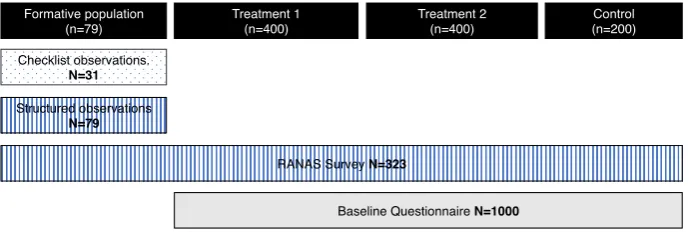
Malawi is divided into 28 Districts that are subdivided into Traditional Authorities (TAs). Each TA contains villages, which are administered by chiefs and/or village heads. There are 12 Traditional Authorities (TAs) within Chikwawa district. This work was based in three different TAs: one for each intervention arm and one for control. We selected the TAs in collaboration with the District Coordinating Team (inter sectoral team). Formative research took place in the same TA as the intervention, but amongst non-enrolled households (Figure3).
Sustainability 2019, 11, x FOR PEER REVIEW 5 of 19
[image:4.595.127.472.503.619.2]Authorities (TAs) within Chikwawa district. This work was based in three different TAs: one for each intervention arm and one for control. We selected the TAs in collaboration with the District Coordinating Team (inter sectoral team). Formative research took place in the same TA as the intervention, but amongst non-enrolled households (Figure 3).
Figure 3. Sampling framework for formative and baseline stages.
All of the recruited households (both formative and intervention) had a functioning latrine and resided within a 500m radius of a functioning borehole to ensure that there were no significant variations in access to water or sanitation infrastructure. Eligible households had a child that was aged between four and 90 weeks at enrolment to ensure that children were not neonates and that all children were under 60 months at the end of intervention period. The age of children was verified through birth and/or immunization records supplied by the caregiver. All the children in the target age range from eligible households were recruited at baseline, however only one child per household could be recruited. Physical recruitment was conducted by trained research assistants with the approval and support of community health workers (health surveillance assistants), traditional leaders (village chiefs), and community volunteers. Written consent was received from all households that were willing to participate before allocation of a household identification number and associated barcode.
2.5. Literature Review and Key Informant Interviews
A literature review was conducted to fully understand preceding food hygiene studies, their theoretical basis, methodologies, and relative outputs in term of health, behavioral, and food quality indicators. This process identified key studies and methods from which to build the formative research methodologies [25,31,33,37,42,43], and an overview of the policy landscape within the country at that time. The findings of the literature review were used in the development of an effective formative research stage, and the development of a more detailed stakeholder analysis, which was used to provide country and district specific information.
The national and district stakeholder analysis was conducted through a national meeting (n = 65 participants), a district executive committee meeting (n = 25 participants), and focus group discussions with district and non-governmental staff (n = 2) that were working in the study area, and community leaders (n = 2). These face to face meetings were conducted as public discussion forums (national and district level), and focus group discussions (district and community level). The participants were presented with the findings of the literature review and an overview of the proposed research, which they were then asked to comment on, based on previous experience and current knowledge. Information was also gathered on current programs and organizations working in the same geographical or subject areas, which were then followed up. All dialogue from the stakeholder meetings was subject to thematic analysis. With specific reference to the hygiene of complementary foods, stakeholders highlighted the issue of food safety as an ‘implied concept’ within WASH and
Figure 3.Sampling framework for formative and baseline stages.
chiefs), and community volunteers. Written consent was received from all households that were willing to participate before allocation of a household identification number and associated barcode.
2.5. Literature Review and Key Informant Interviews
A literature review was conducted to fully understand preceding food hygiene studies, their theoretical basis, methodologies, and relative outputs in term of health, behavioral, and food quality indicators. This process identified key studies and methods from which to build the formative research methodologies [25,31,33,37,42,43], and an overview of the policy landscape within the country at that time. The findings of the literature review were used in the development of an effective formative research stage, and the development of a more detailed stakeholder analysis, which was used to provide country and district specific information.
The national and district stakeholder analysis was conducted through a national meeting (n=65 participants), a district executive committee meeting (n=25 participants), and focus group discussions with district and non-governmental staff(n=2) that were working in the study area, and community leaders (n=2). These face to face meetings were conducted as public discussion forums (national and district level), and focus group discussions (district and community level). The participants were presented with the findings of the literature review and an overview of the proposed research, which they were then asked to comment on, based on previous experience and current knowledge. Information was also gathered on current programs and organizations working in the same geographical or subject areas, which were then followed up. All dialogue from the stakeholder meetings was subject to thematic analysis. With specific reference to the hygiene of complementary foods, stakeholders highlighted the issue of food safety as an ‘implied concept’ within WASH and nutrition programs, rather than explicit in its content and delivery. It also underlined the challenges in prioritizing diarrheal disease due to the lack of specific policy or strategy addressing this disease [44]. Lastly, concerns were raised regarding the sustainability of interventions in the WASH sector, and how a specific program should ensure that sustained behavior change is at the core to improve the health and well-being of the target population.
2.6. Observations
Checklist and structured observations were used for the identification of critical control points, followed by in-depth interviews. Initially, checklist observations were conducted in 30 randomly selected households in formative research households to provide a list of behaviors that were considered to put children at risk of developing diarrhea. For the checklist observations, a household was visited over two consecutive days: 6 am–12 pm on the first day and 12 pm to 6 pm on the second. The aim was to capture all the events of interest that occurred in a day. Subsequently, structured observations were conducted, specifically focusing on behaviors that were noted during checklist observations. In total, 79 households were targeted for structured observations and they were visited once from 7 am to 1 pm, as checklist observations had informed that the majority of food preparation and feeding events took place in the morning. In-depth interviews followed each checklist and structured observation period to understand how and why some practices were conducted as observed. The data was analyzed while using content analysis. Common risky practices noted during checklist observations that were further observed during structured observations were: child defecation; adult defecation; poor hand washing (after latrine use, after cleaning child’s bottom, before food preparation, before child feeding/eating, before breastfeeding); water management (source management, collection, use, and storage); animals and their feces in the compound; purchase, storage, and consumption of raw food (including fruits); preparation and storage of cooked food; reheating of left-over food; washing and storage of utensils; and, child feeding. Upon further analysis of structured observation data, the following practices were selected as the critical areas for control:
• HWWS at critical times (i.e., after latrine use, after cleaning child bottom, before food preparation
• Food hygiene: washing utensils with soap, keeping utensils and cooked food on an elevated place,
reheating of left-over food until boiling and hygienic feeding.
• Feces management: safe and immediate removal of child and animal stools from the household
compound into the latrine.
• Household water management: regular washing of water collection and storage containers with
soap and covering of water during storage with tight fitting lids.
2.7. RANAS Questionnaire and Motive Mapping
Following the observation stage, each critical hygiene point was examined to identify the psychosocial factors for the selected behaviors using a RANAS model-based [31] household questionnaire. To our knowledge, a RANAS model has not been previously applied in a food hygiene assessment. However, it has been successfully used to evaluate and achieve behavior change in water treatment, sanitation, and hand washing behaviors, and it offers a clear and structured process for data collection, analysis and identification of potential behavior change techniques to use in subsequent interventions [45–48].
The questionnaire captured demographics, hygiene behaviors, socio-economic proxy measures, and psychological variables of the RANAS model for the targeted behaviors (Table1). A household wealth index to assess socio-economic status was measured while using principal component analysis. Behavioral factors were measured through targeted questions for specific behaviors. Information regarding health and practices were measured with multiple response questions from which the enumerators chose answers given by the respondent. Behavioral factors for critical hygiene points of interest were assessed using unipolar responses ranging from 1 to 5. Statistical analysis of the behavioral factors was conducted using IBM SPSS software version 25. Only behavioral factors that significantly correlated with dependent variables in ANOVA analysis were included in the Cohen’s D test analysis to identify critical factors to be targeted with an intervention.
The skills of community health workers (n=29) were also evaluated to determine their knowledge and awareness of the critical hygiene controls identified in the formative study. This was undertaken through a supervised written assessment that was performed on a one to one basis and subsequent FGD (n=2) to explore the key findings.
Following the identification of the key behavioral factors (Table1), nine focus group discussions were conducted (n=6 women;n=3 men). These were used to validate the findings of the observations and psychosocial factors, and included a motive mapping session, which was used to assess immediate motives for the key behaviors. Seven different pictures demonstrating common motives for each behavior (attraction, nurture, disgust, status/respect, affiliation, purity, and disease) were shown and the stories were articulated around those pictures to identify the emotional drivers. Caregivers were then asked to rank the pictures according to how likely these would motivate them to practice key behaviors.
2.8. Baseline Data Collection
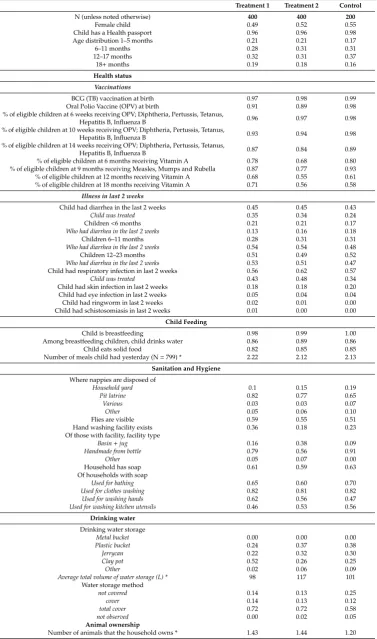
Baseline and demographic data were collected from all households at recruitment (Figure2). A structured survey was conducted to collate the information pertaining to: household membership; house construction; sanitation and hygiene facilities; water access, source and storage practices; child health; child food and feeding practices; and, animal ownership.
Table 1. Summary of behavioral factors and motives identified as significant for inclusion in the intervention.
Targeted Behavior Sub Item Group Factor Behavioral Factors Motivational Drivers
Hand washing with soap at critical times:
• Before food preparation • Before child feeding/eating • After changing baby nappy • After latrine use
Norm • Others practicing behavior
Status and affiliation Ability
• Confidence in performance (HW facility)
• Confidence in performance (soap) • Confidence in continuation (time)
Self-regulation
• Remembering (forgetting) • Remembering (attention) • Commitment (committed)
Attitude • Feeling
Food hygiene
• Washing utensils with soap
Ability
• Confidence in performance (commitment) • Confidence in continuation
Affiliation, purity, nurture and
attraction Attitude • Emotion (pleasant)
Norm
• Others practicing behavior • Others approval
• Keeping utensils on elevated place
Risk • Vulnerability
Norm • Others practicing behavior
Ability
• confidence in performance • Confidence in continuation • Confidence in recovery
• Reheating of left-over food
Attitude • Pleasant
Norms
• Others practicing behavior • Personal importance
Abilities
• Confidence in performance (because of inadequate firewood) • Confidence in continuation (because
of inadequate firewood) • Confidence in recovery ((because of
inadequate firewood)
• Child feeding practices
Attitude
• Pleasant • Like
Norms • Others practicing behavior
Ability
• Confidence in performance (they don’t have time)
Animal and child feces management
• Immediate removal of child feces with proper materials • Regular sweeping of
household environment
Risk • Vulnerability
Disgust, diseases and status Norm
• Others practicing behavior • Personal obligation
Ability
• Confidence in performance (difficult) • Confidence in performance (hurry)
Household water management
• Animals accessing water for domestic purposes
Risk • Vulnerability
Affiliation, purity, diseases and
disgust Attitude • Feeling
• Containers for collecting and storing water not washed with soap
Risk • Vulnerability
Norms • Others practicing behavior
• Water storage containers not covered, or covered with
untighten covering lid Ability
Table 2. Descriptive statistics for 1000 households from the baseline survey (For description of Treatments 1 and 2, see below).
Treatment 1 Treatment 2 Control
N (unless noted otherwise) 400 400 200
Female child 0.49 0.52 0.55
Child has a Health passport 0.96 0.96 0.98 Age distribution 1–5 months 0.21 0.21 0.17
6–11 months 0.28 0.31 0.31
12–17 months 0.32 0.31 0.37
18+months 0.19 0.18 0.16
Health status
Vaccinations
BCG (TB) vaccination at birth 0.97 0.98 0.99 Oral Polio Vaccine (OPV) at birth 0.91 0.89 0.98 % of eligible children at 6 weeks receiving OPV; Diphtheria, Pertussis, Tetanus,
Hepatitis B, Influenza B 0.96 0.97 0.98
% of eligible children at 10 weeks receiving OPV; Diphtheria, Pertussis, Tetanus,
Hepatitis B, Influenza B 0.93 0.94 0.98
% of eligible children at 14 weeks receiving OPV; Diphtheria, Pertussis, Tetanus,
Hepatitis B, Influenza B 0.87 0.84 0.89
% of eligible children at 6 months receiving Vitamin A 0.78 0.68 0.80 % of eligible children at 9 months receiving Measles, Mumps and Rubella 0.87 0.77 0.93 % of eligible children at 12 months receiving Vitamin A 0.68 0.55 0.61 % of eligible children at 18 months receiving Vitamin A 0.71 0.56 0.58
Illness in last 2 weeks
Child had diarrhea in the last 2 weeks 0.45 0.45 0.43
Child was treated 0.35 0.34 0.24
Children<6 months 0.21 0.21 0.17
Who had diarrhea in the last 2 weeks 0.13 0.16 0.18
Children 6–11 months 0.28 0.31 0.31
Who had diarrhea in the last 2 weeks 0.54 0.54 0.48
Children 12–23 months 0.51 0.49 0.52
Who had diarrhea in the last 2 weeks 0.53 0.51 0.47
Child had respiratory infection in last 2 weeks 0.56 0.62 0.57
Child was treated 0.43 0.48 0.34
Child had skin infection in last 2 weeks 0.18 0.18 0.20 Child had eye infection in last 2 weeks 0.05 0.04 0.04 Child had ringworm in last 2 weeks 0.02 0.01 0.00 Child had schistosomiasis in last 2 weeks 0.01 0.00 0.00
Child Feeding
Child is breastfeeding 0.98 0.99 1.00
Among breastfeeding children, child drinks water 0.86 0.89 0.86
Child eats solid food 0.82 0.85 0.85
Number of meals child had yesterday (N=799) * 2.22 2.12 2.13 Sanitation and Hygiene
Where nappies are disposed of
Household yard 0.1 0.15 0.19
Pit latrine 0.82 0.77 0.65
Various 0.03 0.03 0.07
Other 0.05 0.06 0.10
Flies are visible 0.59 0.55 0.51
Hand washing facility exists 0.36 0.18 0.23 Of those with facility, facility type
Basin+jug 0.16 0.38 0.09
Handmade from bottle 0.79 0.56 0.91
Other 0.05 0.07 0.00
Household has soap 0.61 0.59 0.63
Of households with soap
Used for bathing 0.65 0.60 0.70
Used for clothes washing 0.82 0.81 0.82
Used for washing hands 0.62 0.56 0.47
Used for washing kitchen utensils 0.46 0.53 0.56
Drinking water
Drinking water storage
Metal bucket 0.00 0.00 0.00
Plastic bucket 0.24 0.37 0.38
Jerrycan 0.22 0.32 0.30
Clay pot 0.52 0.26 0.25
Other 0.02 0.06 0.09
Average total volume of water storage (L) * 98 117 101
Water storage method
not covered 0.14 0.13 0.25
cover 0.14 0.13 0.12
total cover 0.72 0.72 0.58
not observed 0.00 0.02 0.05
Animal ownership
Number of animals that the household owns * 1.43 1.44 1.20
Overall, the households were primarily constructed from mud (50%) or burnt bricks (42%), and the toilets were traditional pit latrines with soil floors (96%). Complementary foods being consumed by children included maize and sorghum porridge, which in some cases included groundnut flour.
The consolidation of the baseline results with the findings of observations and RANAS, identified key contextual issues that need to be considered in the development of an effective intervention. Specifically:
• Although the mother was identified as the primary caregiver in this rural context, there is a need
for strong male involvement in the intervention, as they are the primary managers and decision makers in terms of household finance.
• There was marked homogeneity across all households in terms of diet, cooking, food storage,
feeding practices, and available utensils. This allows us to design an intervention to easily tackle food safety issues in a generic manner across the population.
• Comparison of data from baseline and observations demonstrated that knowledge of good hygiene
practice is high. However, this does not translate into practice, and as such the intervention should have a behavior-centered approach to address this gap (Figure4).
• Caregivers play a number of roles within their household and community, and any intervention
needs to be cognizant of time commitments and availability.
• Although the results showed that health workers had a good level of understanding of water and
sanitation issues (80% know to use water and soap for effective hand washing; 93% believe poor HWWS due to lack of soap/poverty; 69% understood animal feces could transmit disease), there was limited knowledge in relation to food hygiene practices (10% could describe critical behaviors around food hygiene). This needs to be addressed if they are to facilitate the intervention.
• The intervention must be cognizant of the low level of literacy and the level of poverty within
the target population, and therefore behavior change techniques must be appropriate, and recommendations need to be realistic.
Sustainability 2019, 11, x FOR PEER REVIEW 10 of 19
[image:9.595.135.459.457.655.2]• The intervention must be cognizant of the low level of literacy and the level of poverty within the target population, and therefore behavior change techniques must be appropriate, and recommendations need to be realistic.
Figure 4. Self-reported behaviors in households versus those observed during checklist and structured observations.
3. Intervention Design
The intervention was designed as a randomized cluster before and after trial with a control, and two treatment arms (Figure 5). The inclusion of two treatment arms was to measure the relative impact of the hygiene of weaning foods on primary and secondary outcomes (Table 3). Therefore, this would allow us to measure:
• The impact of each intervention on the incidence of diarrheal disease. • The impact of each intervention relative to the Control Group.
• The impact of the WASH intervention relative to the WASH + Food Hygiene Intervention. 0%
10% 20% 30% 40% 50% 60% 70% 80%
Washingutensilswithsoap Keepingutensilsonraised place
HWWSbeforefoodprep HWWSbeforechildfeeding HWWSa erlatrineuse Observa on Reported
Pe
rcen
tag
e
of
res
p
ondents
Hygienicbehaviour
Figure 4. Self-reported behaviors in households versus those observed during checklist and
structured observations.
3. Intervention Design
• The impact of each intervention on the incidence of diarrheal disease.
• The impact of each intervention relative to the Control Group.
• The impact of the WASH intervention relative to the WASH+Food Hygiene Intervention.
Sustainability 2019, 11, x FOR PEER REVIEW 11 of 19
[image:10.595.180.414.155.342.2](a) (b)
Figure 5. (a) Intervention design showing the key behaviors to be addressed and (b) the breakdown of intervention delivery by treatment arm and population.
Table 3. Variables to be measured to determine relative impact of interventions on primary and
secondary outcomes.
Outcome Variable Method of Measurement Point of Measurement
Primary Diarrheal disease
Self reporting
Household/Cluster checks with community volunteer
Community health worker reports
Continuous Baseline (illness 2 weeks prior) End line (illness 2 weeks prior)
Secondary Health • Eye infections • Acute respiratory
infections
Self reporting Baseline (illness 2 weeks prior) Continuous End line (illness 2 weeks prior)
Behavioral factors and changes
Risks, Attitudes, Norms, Abilities and Self Regulation questionnaire
Observations
Baseline Midline End line
Changes in household
environment Checklists Observations
Fortnightly checklists Baseline End line Microbiological contamination of • Food • Environment • Hands (critical times) • Stools (human &
animal)
Microbiological testing for: • Aerobic plate count • Faecal coliforms • E. coli
• Salmonella
• Shigella
• Staphylococcus aureus
• Soil transmitted helminthes • Protozoa (Crytosporidium & Giardia) • Rotavirus
End line 100 households per treatment arm and control
[image:10.595.88.507.415.699.2]Non-WASH benefits Community networks analysis Social capital measurement End line
Figure 5.(a) Intervention design showing the key behaviors to be addressed and (b) the breakdown of intervention delivery by treatment arm and population.
Table 3. Variables to be measured to determine relative impact of interventions on primary and secondary outcomes.
Outcome Variable Method of Measurement Point of Measurement
Primary Diarrheal disease
Self reporting
Household/Cluster checks with community volunteer
Community health worker reports
Continuous Baseline (illness 2 weeks prior) End line (illness 2 weeks prior)
Secondary
Health
• Eye infections • Acute
respiratory infections
Self reporting
Continuous Baseline (illness 2 weeks prior) End line (illness 2 weeks prior)
Behavioral factors and changes
Risks, Attitudes, Norms, Abilities and Self Regulation questionnaire Observations
Baseline Midline End line Changes in household
environment Checklists Observations Fortnightly checklists Baseline End line Microbiological contamination of • Food • Environment • Hands (critical times) • Stools (human & animal)
Microbiological testing for:
• Aerobic plate count • Faecal coliforms • E. coli • Salmonella • Shigella
• Staphylococcus aureus • Soil transmitted helminthes • Protozoa (Crytosporidium&Giardia) • Rotavirus
End line 100 households per treatment arm and control
Non-WASH benefits Community networks analysis
Social capital measurement End line
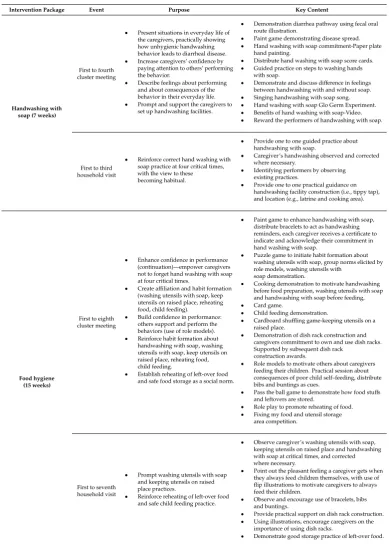
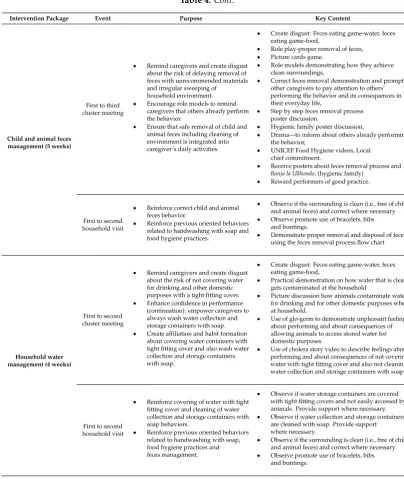
The intervention framework was based on the critical points that were identified within the formative research, which were consolidated by the research team under four thematic areas to form intervention packages (Figure3). Each of these critical points was then examined in terms of context (social, personal, and environmental), structural barriers, and psychosocial factors (RANAS model) to design specific intervention activities. These activities were then developed with an in-house design team to produce specific and complementary modules, which could be delivered through community-based volunteers with support from community health workers (Table4).
Table 4.Summary of intervention packages.
Intervention Package Event Purpose Key Content
Handwashing with soap (7 weeks)
First to fourth cluster meeting
• Present situations in everyday life of the caregivers, practically showing how unhygienic handwashing behavior leads to diarrheal disease. • Increase caregivers’ confidence by
paying attention to others’ performing the behavior.
• Describe feelings about performing and about consequences of the behavior in their everyday life. • Prompt and support the caregivers to
set up handwashing facilities.
• Demonstration diarrhea pathway using fecal oral route illustration.
• Paint game demonstrating disease spread. • Hand washing with soap commitment-Paper plate
hand painting.
• Distribute hand washing with soap score cards. • Guided practice on steps to washing hands
with soap.
• Demonstrate and discuss difference in feelings between handwashing with and without soap. • Singing handwashing with soap song. • Hand washing with soap Glo Germ Experiment. • Benefits of hand washing with soap-Video. • Reward the performers of handwashing with soap.
First to third household visit
• Reinforce correct hand washing with soap practice at four critical times, with the view to these becoming habitual.
• Provide one to one guided practice about handwashing with soap.
• Caregiver’s handwashing observed and corrected where necessary.
• Identifying performers by observing existing practices.
• Provide one to one practical guidance on handwashing facility construction (i.e., tippy tap), and location (e.g., latrine and cooking area).
Food hygiene (15 weeks)
First to eighth cluster meeting
• Enhance confidence in performance (continuation)—empower caregivers not to forget hand washing with soap at four critical times.
• Create affiliation and habit formation (washing utensils with soap, keep utensils on raised place, reheating food, child feeding).
• Build confidence in performance: others support and perform the behaviors (use of role models). • Reinforce habit formation about
handwashing with soap, washing utensils with soap, keep utensils on raised place, reheating food, child feeding.
• Establish reheating of left-over food and safe food storage as a social norm.
• Paint game to enhance handwashing with soap, distribute bracelets to act as handwashing reminders, each caregiver receives a certificate to indicate and acknowledge their commitment in hand washing with soap.
• Puzzle game to initiate habit formation about washing utensils with soap, group norms elicited by role models, washing utensils with
soap demonstration.
• Cooking demonstration to motivate handwashing before food preparation, washing utensils with soap and handwashing with soap before feeding, • Card game.
• Child feeding demonstration.
• Cardboard shuffling game-keeping utensils on a raised place.
• Demonstration of dish rack construction and caregivers commitment to own and use dish racks. Supported by subsequent dish rack
construction awards.
• Role models to motivate others about caregivers feeding their children. Practical session about consequences of poor child self–feeding, distribute bibs and buntings as cues.
• Pass the ball game to demonstrate how food stuffs and leftovers are stored.
• Role play to promote reheating of food. • Fixing my food and utensil storage
area competition.
First to seventh household visit
• Prompt washing utensils with soap and keeping utensils on raised place practices.
• Reinforce reheating of left-over food and safe child feeding practice.
• Observe caregiver’s washing utensils with soap, keeping utensils on raised place and handwashing with soap at critical times, and corrected where necessary.
• Point out the pleasant feeling a caregiver gets when they always feed children themselves, with use of flip illustrations to motivate caregivers to always feed their children.
• Observe and encourage use of bracelets, bibs and buntings.
• Provide practical support on dish rack construction. • Using illustrations, encourage caregivers on the
importance of using dish racks.
Table 4.Cont.
Intervention Package Event Purpose Key Content
Child and animal feces management (5 weeks)
First to third cluster meeting
• Remind caregivers and create disgust about the risk of delaying removal of feces with unrecommended materials and irregular sweeping of household environment. • Encourage role models to remind
caregivers that others already perform the behavior.
• Ensure that safe removal of child and animal feces including cleaning of environment is integrated into caregiver’s daily activities.
• Create disgust: Feces eating game-water, feces eating game-food,
• Role play-proper removal of feces, • Picture cards game.
• Role models demonstrating how they achieve clean surroundings,
• Correct feces removal demonstration and prompt other caregivers to pay attention to others’ performing the behavior and its consequences in their everyday life,
• Step by step feces removal process poster discussion.
• Hygienic family poster discussion,
• Drama—to inform about others already performing the behavior,
• UNICEF Food Hygiene videos, Local chief commitment.
• Receive posters about feces removal process and
Banja la Ukhondo, (hygienic family) • Reward performers of good practice.
First to second household visit
• Reinforce correct child and animal feces behavior.
• Reinforce previous oriented behaviors related to handwashing with soap and food hygiene practices.
• Observe if the surrounding is clean (i.e., free of child and animal feces) and correct where necessary • Observe promote use of bracelets, bibs
and buntings.
• Demonstrate proper removal and disposal of feces using the feces removal process flow chart
Household water management (4 weeks)
First to second cluster meeting
• Remind caregivers and create disgust about the risk of not covering water for drinking and other domestic purposes with a tight fitting cover. • Enhance confidence in performance
(continuation): empower caregivers to always wash water collection and storage containers with soap. • Create affiliation and habit formation
about covering water containers with tight fitting cover and also wash water collection and storage containers with soap.
• Create disgust: Feces eating game-water, feces eating game-food,
• Practical demonstration on how water that is clean gets contaminated at the household
• Picture discussion how animals contaminate water for drinking and for other domestic purposes when at household.
• Use of glo-germ to demonstrate unpleasant feelings about performing and about consequences of allowing animals to access stored water for domestic purposes
• Use of cholera story video to describe feelings about performing and about consequences of not covering water with tight fitting cover and also not cleaning water collection and storage containers with soap.
First to second household visit
• Reinforce covering of water with tight fitting cover and cleaning of water collection and storage containers with soap behaviors.
• Reinforce previous oriented behaviors related to handwashing with soap, food hygiene practices and feces management.
• Observe if water storage containers are covered with tight fitting covers and not easily accessed by animals. Provide support where necessary. • Observe if water collection and storage containers
are cleaned with soap. Provide support where necessary.
• Observe if the surrounding is clean (i.e., free of child and animal feces) and correct where necessary • Observe promote use of bracelets, bibs
and buntings.
3.1. Sample Size
Following Rutterford et al., the population of each treatment arm (m) was calculated based on the formula [51].
m=
Z1−α/2+Z1−β
2
[P1(1−P1) +P2(1−P2)]
∆2 ×[1+ (n−1)ρ] (1)
where the proportion of diarrhea (P1) in the Control Area was based on the value determined during
baseline data collection (0.45). The ability to detect a 15 percentage point change (i.e., 30 percent prevalence) with a power of 0.8 an alpha value of 0.05, an intra-cluster correlation coefficient (ICC) of 0.05 (assumed), a cluster size of 20 (n) yielded a population of 311 per treatment arm. When considering attrition, the two treatment arms were increased to a sample size of 400 (20 clusters of 20), while logistics and budgetary constraints meant that the Control sample size was limited to 200 (10 clusters of 20).
The sample size was calculated while using estimates that come from the 2016 Malawi Demographics and Health Survey (MDHS) (National Statistical Office & ICF Marco, 2016). Each Treatment group includes 20 clusters, and the control group has 10 clusters, which are the unit of measurement; diarrhea incidence is the outcome variable of interest from each of the clusters. Each cluster includes 20 children under five (separate households). Based on this sample size, we will be able to test the hypothesis that a given intervention has a statistically significant impact on the incidence of diarrhea. Overall, 1000 individuals (children under 5) will be included in the study.
3.2. Intervention Framework
Based on the findings of the formative and baseline data, the intervention was developed over the four critical areas, as outlined in Table4, to take place over and intensive 32-week period (Figure3). Cluster meetings and household visits took place on alternating weeks, being facilitated by community volunteers and supported by community health workers and intervention staff. Intervention content and delivery mechanisms were reviewed by a stakeholder research advisory group and pre-tested with the community volunteers. A critical review was also undertaken at the end of each module as part of the process evaluation.
3.3. Data Management and Analysis Plan
The use of mobile phones will allow for the majority of the data collected to be automatically merged into an online database. Each household was assigned a unique household identification number at baseline, which will be used to merge descriptive, observational, and microbiological data from the baseline to the end line including any and all continuous data.
Data Analysis
The primary variable of interest is the occurrence of diarrhea within the last two weeks, as reported by the primary caregiver and measured as a binary outcome. The impact of the interventions will be analyzed while using a difference-in-differences approach such that the hypothesized reduction in diarrhea in the treatment areas will be measured between the baseline and the follow-up surveys and compared to the same time points in the control areas (n=1000). Attendance at cluster meetings (individual level), cluster attendance score (cluster level), socio-economic characteristics (individual level), and household hygiene improvements (e.g., installation of a dish rack) (individual level) will be included as covariates in the model. The incidence of respiratory infection and eye infections will be analyzed likewise.
onto the log-transformed values to determine the predictors of various points of contamination for each of the organisms identified.
Behavior change will be analyzed by comparing the factors that were measured in the RANAS survey between the treatment and control areas between the three time points: baseline (n=323), midline (n=1000), and endline (n=1000).
4. Discussion
The formative results highlight the importance of understanding context in the development of an intervention in terms of personal, social, environmental, and psychosocial factors. In particular, the results highlighted the specific structural barriers to potential intervention success, such as poverty, social norms, and concerns pertaining to household abilities and self-regulation to maintain hygienic behaviors.
These findings have been integrated into an intervention plan, which builds upon successes of previous studies in food hygiene promotion [35–38], but is also cognizant of the cultural setting of rural Malawi. This is particularly relevant to the methods that were used for intervention delivery [43,49,50].
Baseline characteristics demonstrated satisfactory randomization between the cluster and treatment/control arms. Descriptive statistics from the baseline were also indicative of the characteristics within the study site, as described in Malawi’s Integrated Household Survey [39].
The intervention evaluation has been designed to measure primary health outcomes, which previous studies have not addressed. In addition, we include several secondary outcomes while using mixed methods, to support an in-depth analysis of the personal, social, environmental and psychosocial changes that the intervention might have imparted, including those not associated with specific WASH benefits.
The intervention has been designed to minimize limitations. Each Treatment Area and Control Area will be separated by a Traditional Authority to ensure that there are several kilometers and several communities between each group. The spacing of the areas is necessary for reducing spillover effects (i.e., information travelling between different Treatment Areas or from a Treatment Area to a Control Area), which could negatively impact the results.
Data collection will occur during several important seasonal changes, which are likely to affect access to water and hygiene practices (i.e., rainy and dry seasons). However, because the data that were collected in the Control Area will also be affected by seasonal changes, the final impact measured in the Treatment Areas will not be biased by these natural variations, as we will take the baseline and final values in both areas into account.
5. Conclusions
We present a summary of the findings of an extensive formative study assessing childcare practices that are focused on water, sanitation, and hygiene, including the hygiene of complementary foods. The findings of the literature review, stakeholder analysis, observations, baseline data collection, and psychosocial assessment have formed the basis of an intervention framework, as described here. This intervention is now being evaluated to determine its relative impact on the reduction of diarrheal disease in children under the age of five years in rural Malawi.
Author Contributions: All authors contributed to design of the study protocol and helped with drafting the manuscript. The following specific contributions apply: T.M., K.C., E.T. and S.C. developed the research concept and methodology. T.M., K.C., E.T., S.K., J.M. and R.M. developed data collection tools and supervised data collection. E.T. supervised data management. K.C., E.T. and T.M. undertook data analysis and interpretation. T.M., K.C. and R.M. developed the intervention content. All authors contributed to the manuscript.
Acknowledgments:The authors gratefully acknowledge the support of SHARE Consortium management team in the development and successful implementation of this formative research. We also acknowledge the support provided by Hans Mosler and Jurgita Slekiene EAWAG (Switzerland) for their support in the development and analysis of the context specific RANAS questions. A special thanks to all government extension workers, field data collectors, volunteers and household members who participated in the study.
Conflicts of Interest:The authors declare that they have no competing interests.
References
1. Walker, C.L.F.; Rudan, I.; Liu, L.; Nair, H.; Theodoratou, E.; Bhutta, Z.A.; O’Brien, K.L.; Campbell, H.; Black, R.E. Global burden of childhood pneumonia and diarrhea.Lancet2013,381. [CrossRef]
2. Bartram, J.; Cairncross, S. Hygiene, Sanitation, and Water: Forgotten Foundations of Health.PLoS Med.2010,
7, e1000367. [CrossRef] [PubMed]
3. UNICEF; WHO.Diarrhea: Why Children Are Still Dying and What Can Be Done; WHO: Geneva, Switzerland, 2009.
4. Roche, R.; Bain, R.; Cumming, O. A long way to go—Estimates of combined water, sanitation and hygiene coverage for 25 sub-Saharan African countries.PLoS ONE2017,12, e0171783.
5. Curtis, V.; Cairncross, S. Effect of washing hands with soap on diarrhoea risk in the community: A systematic review.Lancet Infect. Dis.2003,3, 275–281. [CrossRef]
6. Clasen, T.; Schmidt, W.-P.; Rabie, T.; Roberts, I.; Cairncross, S. Interventions to improve water quality for preventing diarrhoea: Systematic review and meta-analysis.BMJ2007,334, 782. [CrossRef] [PubMed] 7. Waddington, H.; Snilstveit, B.; White, H.; Fewtrell, L. Water, Sanitation and Hygiene Interventions to Combat
Childhood Diarrhea in Developing Countries.Syst. Rev. Repos.2009,119. [CrossRef]
8. Mara, D. Shared sanitation: To include or to exclude? Trans. R. Soc. Trop. Med. Hyg. 2016,110, 265–267. [CrossRef]
9. Wolf, J.; Prüss-Ustün, A.; Cumming, O.; Bartram, J.; Bonjour, S.; Cairncross, S.; Clasen, T.; Colford, J.M.; Curtis, V.; De France, J.; et al. Systematic review: Assessing the impact of drinking water and sanitation on diarrhoeal disease in low- and middle-income settings: Systematic review and meta-regression.Trop. Med. Int. Health2014,19, 928–942. [CrossRef]
10. Humphrey, J.H.; Jones, A.D.; Manges, A.; Mangwadu, G.; Maluccio, J.A.; Mbuya, M.N.N.; Moulton, L.H.; Ntozini, R.; Prendergast, A.J.; Stoltzfus, R.J.; et al. The Sanitation Hygiene Infant Nutrition Efficacy (SHINE) Trial: Rationale, Design, and Methods.Clin. Infect. Dis.2015,61, S685–S702.
11. Mbuya, M.N.N.; Tavengwa, N.V.; Stoltzfus, R.J.; Curtis, V.; Pelto, G.H.; Ntozini, R.; Kambarami, R.A.; Fundira, D.; Malaba, T.R.; Maunze, D.; et al. Design of an Intervention to Minimize Ingestion of Fecal Microbes by Young Children in Rural Zimbabwe.Clin. Infect. Dis.2015,61, S703–S709. [CrossRef]
12. Null, C.; Stewart, C.P.; Pickering, A.J.; Dentz, H.N.; Arnold, B.F.; Arnold, C.D.; Benjamin-Chung, J.; Clasen, T.; Dewey, K.G.; Fernald, L.C.H.; et al. Effects of water quality, sanitation, handwashing, and nutritional interventions on diarrhoea and child growth in rural Kenya: A cluster-randomised controlled trial.Lancet Glob. Health2018,6, e316–e329. [CrossRef]
13. Luby, S.P.; Rahman, M.; Arnold, B.F.; Unicomb, L.; Ashraf, S.; Winch, P.J.; Stewart, C.P.; Begum, F.; Hussain, F.; Benjamin-Chung, J.; et al. Effects of water quality, sanitation, handwashing, and nutritional interventions on diarrhoea and child growth in rural Bangladesh: A cluster randomised controlled trial.Lancet Glob. Health 2018,6, e302–e315. [CrossRef]
14. Berendes, D.; Leon, J.; Kirby, A.; Clennon, J.; Raj, S.; Yakubu, H.; Robb, K.; Kartikeyan, A.; Hemavathy, P.; Gunasekaran, A.; et al. Household sanitation is associated with lower risk of bacterial and protozoal enteric infections, but not viral infections and diarrhoea, in a cohort study in a low-income urban neighbourhood in Vellore, India.Trop. Med. Int. Health2017,22, 1119–1129. [CrossRef] [PubMed]
15. Wang, Y.; Moe, C.L.; Null, C.; Raj, S.J.; Baker, K.K.; Robb, K.A.; Yakubu, H.; Ampofo, J.A.; Wellington, N.; Freeman, M.C.; et al. Multipathway Quantitative Assessment of Exposure to Fecal Contamination for Young Children in Low-Income Urban Environments in Accra, Ghana: The SaniPath Analytical Approach.Am. J. Trop. Med. Hyg.2017,97, 1009–1019. [CrossRef] [PubMed]
16. Hurd, J.; Hennink, M.; Robb, K.; Null, C.; Peprah, D.; Wellington, N.; Yakubu, H.; Moe, C.L. Behavioral influences on risk of exposure to fecal contamination in low-resource neighborhoods in Accra, Ghana.
17. Ercumen, A.; Pickering, A.J.; Kwong, L.H.; Arnold, B.F.; Parvez, S.M.; Alam, M.; Sen, D.; Islam, S.; Kullmann, C.; Chase, C.; et al. Animal Feces Contribute to Domestic Fecal Contamination: Evidence from E. coli Measured in Water, Hands, Food, Flies, and Soil in Bangladesh.Environ. Sci. Technol.2017,51, 8725–8734. [CrossRef]
18. Barnes, A.N.; Mumma, J.; Cumming, O. Role, ownership and presence of domestic animals in peri-urban households of Kisumu, Kenya.Zoonoses Public Health2017,65, 202–214. [CrossRef]
19. Ngure, F.M.; Majo, F.; Mbuya, M.N.N.; Humphrey, J.H.; Govha, M.; Chasekwa, B.; Mutasa, K.; Boor, K.J.; Mazarura, E.; Curtis, V.; et al. Formative Research on Hygiene Behaviors and Geophagy among Infants and Young Children and Implications of Exposure to Fecal Bacteria.Am. J. Trop. Med. Hyg.2013,89, 709–716. [CrossRef]
20. Lanata, C. Studies of food hygiene and diarrhoeal disease.Int. J. Environ. Health Res.2003,13, S175–S183. [CrossRef]
21. Kung’u, J.K.; Boor, K.J.; Ame, S.M.; Ali, N.S.; Jackson, A.E.; Stoltzfus, R.J. Bacterial Populations in Complementary Foods and Drinking-water in Households with Children Aged 10-15 Months in Zanzibar, Tanzania.J. Health Popul. Nutr.2009,27, 41–52. [CrossRef]
22. Sheth, M.; Patel, J.; Sharma, S.; Seshadri, S. Hazard analysis and critical control points of weaning foods.
Indian J. Pediatr.2000,67, 405–410. [CrossRef]
23. Parvez, S.M.; Kwong, L.; Rahman, M.J.; Ercumen, A.; Pickering, A.J.; Ghosh, P.K.; Das, K.K.; Unicomb, L.; Luby, S.P.E. colicontamination of child complementary foods and association with domestic hygiene in rural Bangladesh.Trop. Med. Int. Health2017,22, 547–557. [CrossRef]
24. Taulo, S.; Wetlesen, A.; Abrahamsen, R.; Kululanga, G.; Mkakosya, R.; Grimason, A. Microbiological hazard identification and exposure assessment of food prepared and served in rural households of Lungwena, Malawi.Int. J. Food Microbiol.2008,125, 111–116. [CrossRef]
25. Toure, O.; Coulibaly, S.; Arby, A.; Maiga, F.; Cairncross, S. Improving microbiological food Safety in peri-urban Mali; an experimental study.Food Control2011,22, 1565–1572. [CrossRef]
26. WHO.WHO Estimates of the Global Burden of Foodborne Diseases; WHO: Geneva, Switzerland, 2015; pp. 1–255. 27. Cairncross, S.; Hunt, C.; Boisson, S.; Bostoen, K.; Curtis, V.; Fung, I.C.; Schmidt, W.-P. Water, sanitation and
hygiene for the prevention of diarrhoea.Int. J. Epidemiol.2010,39, i193–i205. [CrossRef]
28. Cairncross, S.; Bartram, J.; Cumming, O.; Brocklehurst, C. Hygiene, Sanitation, and Water: What Needs to Be Done?PLoS Med.2010,7, e1000365. [CrossRef]
29. Mara, D.; Lane, J.; Scott, B.; Trouba, D. Sanitation and Health.PLoS Med.2010,7, e1000363. [CrossRef] 30. Curtis, V.; Schmidt, W.; Luby, S.; Florez, R.; Toure, O.; Biran, A. Hygiene: New hopes, new horizons.Lancet
Infect. Dis.2011,11, 312–321. [CrossRef]
31. Mosler, H.-J. A systematic approach to behavior change interventions for the water and sanitation sector in developing countries: A conceptual model, a review, and a guideline.Int. J. Environ. Health Res.2012,22, 431–449. [CrossRef]
32. Biran, A.; Schmidt, W.-P.; Varadharajan, K.S.; Rajaraman, D.; Kumar, R.; Greenland, K.; Gopalan, B.; Aunger, R.; Curtis, V. Effect of a behaviour-change intervention on handwashing with soap in India (SuperAmma): A cluster-randomised trial.Lancet Glob. Health2014,2, e145–e154. [CrossRef]
33. Aunger, R.; Curtis, V.A Guide to Behavior Centerd Design; London School of Hygiene and Tropical Medicine: London, UK, 2015.
34. Devine, J. Introducing SaniFOAM: A Framework to Analyze Sanitation Behaviors to design Effective Sanitation Programs. 2009. Available online: http://www.wsp.org/sites/wsp.org/files/publications/GSP_ sanifoam.pdf(accessed on 26 August 2019).
35. Toure, O.; Coulibaly, S.; Arby, A.; Maiga, F.; Cairncross, S. Piloting an intervention to improve microbiological food safety in Peri-Urban Mali.Int. J. Hyg. Environ. Health2013,216, 138–145. [CrossRef] [PubMed] 36. Islam, M.S.; Mahmud, Z.H.; Gope, P.S.; Zaman, R.U.; Hossain, Z.; Islam, M.S.; Mondal, D.; Sharker, M.A.;
Islam, K.; Jahan, H.; et al. Hygiene intervention reduces contamination of weaning food in Bangladesh.Trop. Med. Int. Health2013,18, 250–258. [CrossRef] [PubMed]
38. Manjang, B.; Hemming, K.; Bradley, C.; Ensink, J.; Martin, J.T.; Sowe, J.; Jarju, A.; Cairncross, S.; Manaseki-Holland, S. Promoting hygienic weaning food handling practices through a community-based programme: Intervention implementation and baseline characteristics for a cluster randomised controlled trial in rural Gambia.BMJ Open2018,8, e017573. [CrossRef] [PubMed]
39. National Statistical Office.Malawi Demographic and Health Survey 2015–16; National Statistical Office: Zomba, Malawi, 2017; pp. 1–658.
40. National Statistical Office.Malawi MDG Endline Survey (MES) 2014 Report; National Statistical Office: Zomba, Malawi, 2014.
41. Malawi National Statistical Office. Malawi Integrated Household Survey—Household Socio-Economic Characteristics Report; Malawi National Statistical Office: Zomba, Malawi, 2017.
42. Gautam, O. Food Hygiene Intervention to Improve Food Hygiene Behaviours, and Reduce Food Contamination in Nepal: An Exploratory Trial. Ph.D. Thesis, London School of Hygiene & Tropical Medicine, London, UK, 2015. Available online: http://researchonline.lshtm.ac.uk/2531624/(accessed on 26 August 2019). [CrossRef]
43. Rippon, S.; Beattie, T.; Lungu, K.; Kumwenda, S.; Morse, T. Social capital insights from Healthy Settings needs assessment in Malawi.PLoS ONE2018,13, e0206156. [CrossRef] [PubMed]
44. PATH.Charting the Course for Integrated Diarrhea Control in Malawi; PATH: Washington DC, USA, 2011; Available online: https://path.azureedge.net/media/documents/VAC_malawi_policy_fs.pdf(accessed on 26 August 2019).
45. Contzen, N.; Meili, I.H.; Mosler, H.-J.; Molser, H.-J. Changing handwashing behaviour in southern Ethiopia: A longitudinal study on infrastructural and commitment interventions.Soc. Sci. Med.2015,124, 103–114. [CrossRef] [PubMed]
46. Lilje, J.; Kessely, H.; Mosler, H.-J. Factors Determining Water Treatment Behavior for the Prevention of Cholera in Chad.Am. J. Trop. Med. Hyg.2015,93, 57–65. [CrossRef] [PubMed]
47. Tumwebaze, I.K.; Orach, C.G.; Niwagaba, C.; Lüthi, C.; Mosler, H.-J. Sanitation facilities in Kampala slums, Uganda: users’ satisfaction and determinant factors.Int. J. Environ. Health Res. 2013,23, 191–204. [CrossRef] [PubMed]
48. Huber, A.C.; Tobias, R.; Mosler, H.J. Evidence-based tailoring of behavior-change campaigns: Increasing fluoride-free water consumption in rural ethiopia with persuasion.Appl. Psychol. Health Well-Being2014,6. [CrossRef]
49. Manda-Taylor, L.; Mwale, D.; Phiri, T.; Walsh, A.; Matthews, A.; Brugha, R.; Mwapasa, V.; Byrne, E. Changing times? Gender roles and relationships in maternal, newborn and child health in Malawi.BMC Pregnancy Childbirth2017,17, 321. [CrossRef] [PubMed]
50. Zimba, E.; Kinney, M.V.; Kachale, F.; Waltensperger, K.Z.; Blencowe, H.; Colbourn, T.; George, J.; Mwansambo, C.; Joshua, M.; Chanza, H.; et al. Newborn survival in Malawi: A decade of change and future implications.Health Policy Plan.2012,27, 88–103. [CrossRef] [PubMed]
51. Rutterford, C.; Copas, A.; Eldridge, S. Methods for sample size determination in cluster randomized trials.
Int. J. Epidemiol.2015,44, 1051–1067. [CrossRef] [PubMed]