City, University of London Institutional Repository
Citation:
Young, L. (2019). The lived experience of adults with generalised anxiety disorder. (Unpublished Doctoral thesis, City, University of London)This is the accepted version of the paper.
This version of the publication may differ from the final published
version.
Permanent repository link:
http://openaccess.city.ac.uk/21343/Link to published version:
Copyright and reuse: City Research Online aims to make research
outputs of City, University of London available to a wider audience.
Copyright and Moral Rights remain with the author(s) and/or copyright
holders. URLs from City Research Online may be freely distributed and
linked to.
City Research Online: http://openaccess.city.ac.uk/ [email protected]
1
Portfolio submitted in fulfilment of the requirements for the
Professional Doctorate in Counselling Psychology (DPsych)
Exploring Adults’ Experiences of Anxiety
Laura Young
City, University of London
Department of Psychology
2
Table of Contents
List of Tables and Figures ... 7
Abbreviations Used and Definitions ... 8
Acknowledgements ... 10
Declaration ... 11
Preface ... 12
References ... 16
Section A: Doctoral Research
... 17Abstract ... 18
1. Introduction ... 19
1.1 Overview ... 19
1.2 Defining GAD and key concepts ... 19
1.2.1 GAD ... 19
1.2.2 Worry ... 22
1.2.3 Worry in GAD is unique ... 23
1.2.4 Distinguishing between existential anxiety, pathological anxiety and fear ... 23
1.3 Literature review ... 25
1.3.1 GAD prevalence ... 25
1.3.2 Comorbidity ... 27
1.3.3 GAD aetiologies ... 29
1.3.3.1 Psychological models... 29
1.3.3.1.1 Attachment theory ... 29
1.3.3.1.2 Avoidance model of worry and GAD ... 30
1.3.3.1.3 Emotion dysregulation (ED) model ... 30
1.3.3.1.4 Contrast avoidance model of worry ... 32
1.3.3.1.5 Cognitive model of GAD ... 33
1.3.3.1.6 Metacognitive model of GAD ... 34
1.3.3.2 Socio-cultural factors... 35
1.3.3.2.1 Adverse life events (ALEs) ... 35
1.3.3.2.2 Family environments and parenting styles ... 36
1.3.3.2.3 Childhood physical or sexual abuse ... 39
1.3.3.2.4 Family history of anxiety disorders ... 40
1.3.3.3 Biological factors ... 41
1.3.3.3.1 Genetic predisposition ... 41
1.3.3.3.2 Neurocognitive factors ... 41
3
1.3.5 Mental health support for adults with GAD ... 44
1.3.6 Recent quantitative studies of adult GAD ... 45
1.3.7 Recent qualitative studies of adult GAD ... 48
1.3.8 Published (or self-published) personal accounts of GAD ... 51
1.4 Study rationale and contribution to counselling psychology ... 52
2. Methodology ... 53
2.1 Rationale for a qualitative perspective ... 53
2.2 Employing a phenomenological approach ... 53
2.2.1 What is phenomenology? ... 53
2.2.2 Use of life-world dimensions ... 55
2.2.3 Use of IPA ... 57
2.2.4 Giorgi’s critique of IPA’s theoretical underpinnings ... 59
2.3 Epistemological standpoint ... 61
2.4 Research plan ... 63
2.4.1 Initial telephone screening ... 63
2.4.2 Data collection method... 63
2.4.3 Developing the interview schedule ... 63
2.4.4 Practice telephone screening and interview ... 65
2.5 Recruitment ... 66
2.5.1 Sampling plan and sample size ... 66
2.5.2 Recruitment procedure ... 67
2.6 Participants ... 68
2.7 Procedure ... 69
2.7.1 Initial contact and telephone screenings ... 69
2.7.2 Data collection ... 70
2.8 Transcription ... 71
2.9 Analytic strategy ... 71
2.9.1 Reading and re-reading ... 72
2.9.2 Initial noting ... 72
2.9.3 Developing themes ... 73
2.9.4 Searching for connections across themes ... 73
2.9.5 Moving to the next case ... 74
2.9.6 Looking for patterns across cases ... 74
2.10 Ethical considerations ... 74
2.11 Evaluation of research ... 76
2.11.1 Sensitivity to context ... 76
2.11.2 Commitment and rigour... 77
2.11.3 Transparency and coherence ... 78
2.11.4 Impact and importance... 79
4
2.12.1 Personal reflexivity ... 80
2.12.2 Methodological reflexivity ... 81
2.12.3 Procedural reflexivity ... 82
3. Analysis ... 85
3.1 Overview ... 85
3.2 Battling with uncertainty: What’s going to happen next? ... 86
3.2.1 An endless cycle ... 86
3.2.2 No rhyme or reason ... 89
3.2.3 Grappling with time ... 93
3.2.3.1 Loss of a past self ... 93
3.2.3.2 Anticipatory anxiety ... 95
3.2.3.3 Trying to stay present... 97
3.2.4 Doubt ... 97
3.3 A struggle for autonomy: You either let it get a hold of you, or you get a hold of it . 100 3.3.1 GAD takes over self ... 100
3.3.2 The interplay between mind and body ... 102
3.3.3 I’m torturing myself ... 104
3.3.4 I’m in control ... 107
3.4 GAD and interpersonal relations: Worrying about what others think ... 109
3.4.1 GAD through others’ lenses ... 110
3.4.2 Striving to belong ... 112
3.4.3 Helpfulness of support ... 115
3.4.4 Concern for others’ welfare ... 119
3.5 The need to create meaning amid uncertainty and loss: GAD is an eye-opener .... 121
3.5.1 Learning to ride with GAD (I suppose) ... 121
3.5.2 Now I appreciate things more ... 125
3.6 Summary of findings ... 128
4. Discussion ... 130
4.1 Overview ... 130
4.2 Battling with uncertainty ... 130
4.3 A struggle for autonomy ... 136
4.4 GAD and interpersonal relations ... 140
4.5 The need to create meaning amid uncertainty and loss ... 145
4.6 Strengths and limitations ... 147
4.7 Implications for counselling psychology and beyond ... 149
4.8 Future research ... 155
4.9 Concluding thoughts ... 157
References ... 159
Appendices ... 188
5
Appendix 2: GAD-Q-IV scoring system (Newman et al., 2002) ... 190
Appendix 3: Initial interview schedule ... 191
Appendix 4: Final interview schedule ... 193
Appendix 5: Research flyer ... 195
Appendix 6: Participant information sheet ... 196
Appendix 7: Relevant support contacts ... 199
Appendix 8: Consent form... 200
Appendix 9: Written debrief ... 202
Appendix 10: Sample transcript ... 203
Appendix 11: Table of super-ordinate themes for Emma ... 204
Appendix 12: Table of group super-ordinate themes ... 208
Appendix 13: Ethics approval letter ... 212
Appendix 14: Analysis chapter format ... 213
Section B: Combined Case Study and Process Report
... 2141. Introduction...
2. Client study ...
2.1 Referral...
2.2 Assessment ...
2.2.1 Background and family history ...
2.2.2 Relationship history ...
2.2.3 Medical and psychiatric history ...
2.2.4 Presenting difficulties ...
2.2.5 Current circumstances ...
2.2.6 Sleep ...
2.2.7 Previous treatment and psychological therapy ...
2.2.8 Risk assessment ...
2.2.9 Outcome measures ...
2.2.10 Goal setting ...
2.3 Formulation and treatment plan ...
2.4 Therapy ...
2.5 Outcome and ending ...
3. Process report ...
3.1 Overview ...
3.2 Transcript and commentary ...
3.3 Session ending and evaluation ...
4. Reflective discussion ...
6
Section C: Journal Article
... 215Abstract ... 217
Introduction ... 218
Defining GAD ... 218
GAD prevalence ... 219
Comorbidity ... 220
Individual and societal impact of GAD ... 221
Mental health support for adults with GAD ... 222
Study rationale ... 223
Method ... 224
Participants... 224
Procedure ... 224
Initial contact and telephone screenings ... 224
Data collection ... 225
Data analysis ... 226
Results ... 227
Battling with uncertainty ... 227
An endless cycle ... 227
No rhyme or reason ... 229
Grappling with time ... 231
Doubt ... 233
Discussion ... 235
Summary of findings ... 235
Clinical implications ... 235
Study limitations ... 239
Future research ... 239
References ... 241
7
List of Tables and Figures
Section A: Doctoral Research
Table 1.1 Episodes of the Strange Situation
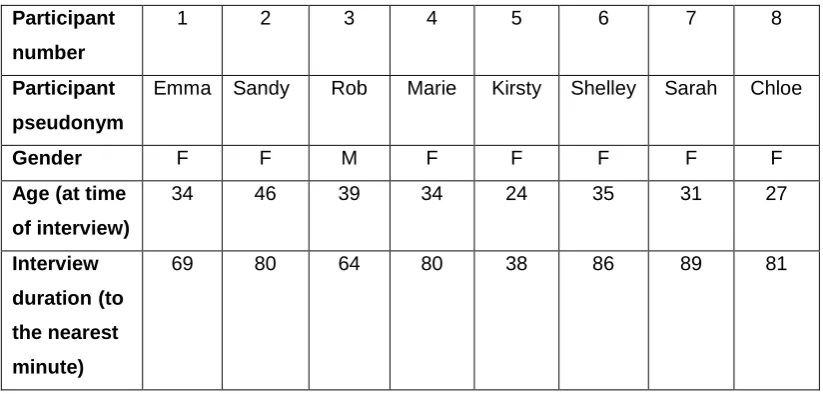
Table 2.1 Relevant participant information
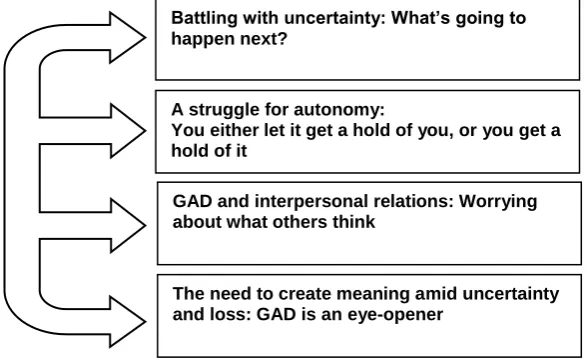
Figure 3.1 Representation of super-ordinate themes
Section B: Combined Case Study and Process Report
Figure 2.1 A diagrammatic, longitudinal formulation of Daniel’s presenting
difficulties
8
Abbreviations Used and Definitions
GAD Generalised anxiety disorder
IPA Interpretative phenomenological analysis GAD-7 Generalized Anxiety Disorder 7-Item scale CBT Cognitive behavioural therapy
ACT Acceptance and commitment therapy
GAD-Q-IV Generalized Anxiety Disorder Questionnaire IV DSM Diagnostic and Statistical Manual of Mental Disorders ICD International Classification of Diseases
APA American Psychiatric Association OCD Obsessive-compulsive disorder WHO World Health Organization
US United States
NHS National Health Service
UK United Kingdom
APMS Adult Psychiatric Morbidity Survey MDD Major depressive disorder
IBS Irritable bowel syndrome NCS National Comorbidity Survey ED Emotion dysregulation IU Intolerance of uncertainty ALE Adverse life event
NICE National Institute for Health and Care Excellence SSRI Selective serotonin reuptake inhibitor
SNRI Serotonin-noradrenaline reuptake inhibitor MI Motivational interviewing
RCT Randomised control trial
REST Restricted environmental stimulation technique GP General practitioner
BPS British Psychological Society PTSD Post-traumatic stress disorder
ABBT Acceptance-based behavioural therapy GET Graded exercise therapy
NAT Negative automatic thought
9 CFQ Chalder Fatigue scale
City, University of London Northampton Square London EC1V 0HB United Kingdom
T +44 (0)20 7040 5060
www.city.ac.uk Academic excellence for business and the professions
THE FOLLOWING PART OF THIS THESIS H
AS
BEEN REDACTED
FOR COPYRIGHT REASONS:
10
Acknowledgements
First and foremost, this training would not have been possible without my wonderful parents’ endless support (in every sense of the word), patience and love. Thank you
for enabling and encouraging me to pursue my goals and for teaching me the values of hard work and kindness.
Thank you to the eight participants and the two practice participants who generously offered their time and bravely shared their experiences with me. Being entrusted with your narratives was a true privilege and I hope I have done them justice. Thank you to the client I present in Section B of this portfolio for kindly giving me
permission to record our therapy sessions. I learnt so much during those fourteen therapeutic hours and it was an honour working with you. This portfolio would not have been possible without you eleven individuals.
Thank you to my research supervisor, Prof. George Berguno. This research would have been an even greater challenge without your guidance, knowledge, and timely use of humour. I cannot thank you enough for your thoroughness and teachings and will be forever grateful that you agreed to take me on.
Jamie, you have been a constant support and source of positivity throughout this training. Thank you for always believing that I could do this despite my (many) moments of self-doubt. Here’s to our next chapter!
Finally, thank you to the friends who have supported me through every step of this process - you know who you are. I would especially like to thank Emily, Jen, and Katie who, even when confronted with the most challenging adversities in their own lives, somehow always find the time and headspace to check-in.
11
Declaration
I grant powers of discretion to the Librarian at City, University of London to allow this thesis to be copied in whole or in part without further reference to me. This
12
Preface
This DPsych in counselling psychology portfolio is comprised of three sections: a doctoral piece of research, a combined case study and process report, and a journal article. Whilst they are distinct pieces of work, a common theme connects them; they all explore adults’ experiences of anxiety. An overview of the three sections is
presented below. I conclude this Preface by reflecting on how the common theme relates to my own experiences of becoming a counselling psychologist.
Section A: Doctoral Research
In this section, I present my doctoral research which explores the lived experiences of adults (aged eighteen and over) with generalised anxiety disorder (GAD).
Although GAD is the most frequent anxiety disorder and the second most frequent psychiatric disorder in clinical settings (Wittchen, Kessler, Beesdo, Krause, Höfler, & Hoyer, 2002), it is significantly under-detected and under-treated (Wittchen &
Jacobi, 2005). Clinicians often struggle to recognise the symptoms as belonging to GAD (Dugas & Robichaud, 2007); a difficulty compounded by the various ways in which individuals with GAD present for treatment (Timulak & McElvaney, 2018) as well as its high rate of comorbidity. The lack of empirical literature on the lived experience of GAD arguably hinders our understanding of it further. This study sought to address this gap in the literature and thus contribute to our understanding of GAD. Eight participants with a formal diagnosis of GAD were interviewed and data were analysed using interpretative phenomenological analysis (IPA).
Developed themes reflect the participants’ internal struggles (e.g., with uncertainty,
absence of perceived control, and fundamental negative self-perceptions) and how they manage these. They also explore how their interpersonal relationships have been affected by GAD. The findings’ implications for counselling psychology and the
wider context are discussed as well as suggestions for future research.
Notably, whilst this research was driven by a strong desire to understand these adults’ experiences and to give them a voice, its conception stemmed from my own
13
generalised across a wide variety of topics. I consequently began researching GAD as, at the time, my professional awareness and understanding of GAD was
significantly limited, and I needed to formulate his presenting difficulties and consider how best to approach therapy with him. This experience highlighted the potential complexities and difficulties that can arise in identifying, understanding, and working therapeutically with potential GAD. However, my perceptions of GAD as confusing and mysterious were initially triggered by a close friend’s experiences.
Her mental health team have mentioned GAD to her, and she has previously met GAD diagnostic criteria on the Generalized Anxiety Disorder 7-Item scale (GAD-7; Spitzer, Kroenke, Williams, & Löwe, 2006). This left her questioning whether a diagnosis of GAD "applies" to her, and I wonder whether this influenced why she self-identifies as having "generalised anxiety". However, her mental health team letters refer to "mixed anxiety and depressive disorder". My friend, feeling confused, asked her psychiatrist for clarification. Her psychiatrist does not think she has "straightforward GAD", adding "I don’t think it’s as simple as that". Ultimately then,
my interest in this research topic also derived from a personal desire, both as a counselling psychologist and as a friend, to better understand GAD.
Section B: Combined Case Study and Process Report
The second section brings the reader to the clinical component of the portfolio, where a combined case study and process report is presented. It describes a piece of clinical work I conducted during the final year of my counselling psychologist training, whilst working in a specialist fatigue service. The client, who I refer to as Daniel throughout to protect his anonymity, presented with exaggerated fatigue and severe anxiety. Anxiety is a maintaining factor for fatigue (Fernie & Murphy, 2009), thus our primary focus was on helping Daniel identify, challenge, and relate to his anxiety more effectively. To achieve these aims, both "traditional" cognitive behavioural therapy (CBT) and acceptance and commitment therapy (ACT)
14
Section C: Journal Article
In the final section, I present a journal article that draws on the study presented in Section A. It focuses on one of the four developed super-ordinate themes: "Battling with uncertainty", which captures participants’ difficulty tolerating uncertainty and
consequent absence of perceived control. This super-ordinate theme was chosen because it illustrates some of the fundamental internal challenges faced by participants. These findings are therefore deemed crucial in aiding our
understanding of GAD. The implications of the findings for counselling and clinical psychologists, counsellors, and psychotherapists who may assess and work with adults with GAD are discussed. I have chosen to submit this article to the Journal of Phenomenological Psychology, thus it has been formatted according to this
journal’s submission guidelines. This journal was chosen for several reasons. The article discusses key findings from a study that shares this journal’s commitment to
furthering the psychological understanding of persons in relation to self, world, others and time (as well as material objects and spatiality). Furthermore, it is the phenomenological journal with the highest impact factor. I believe that the findings have significant implications for all clinicians who may encounter adults with GAD, and I hope that the journal’s high impact factor and wide, global audience renders
the findings accessible to as many clinicians as possible. Finally, and again in line with this journal’s commitment, I hope this article encourages clinicians to consider
GAD from a phenomenological perspective. Phenomenology in the mental health field is synonymous with the pure clinical descriptions of symptoms. However, phenomenology considers phenomena as they are experienced, without reference to their psychological origins or causal statements (Denys, 2011). I believe this perspective is crucial in maximising our understanding of GAD and validating individuals’ experiences of it.
Personal Reflections
My training to become a counselling psychologist has been a long, challenging, exciting, and humbling process that, linking with this portfolio’s common theme, has often caused me significant anxiety. Echoing the research participants’ apparent
self-doubt, I believe that this level of anxiety was associated with self-pressure and self-doubt; pressure to be the ‘perfect’ therapist, and thoughts of not being cut out
15
enough’, not just in my role as a counselling psychologist but personally too.
Echoing both the piece of clinical work presented in Section B of this portfolio and some of the research participants’ narratives, I am also trying to form a new
relationship with my own anxiety. As opposed to fighting and trying to rid myself of it, I am trying to notice and accept it for what it is: an uncomfortable but essential emotion that does not need to govern my self-perceptions, decisions and
behaviours. As Rollo May (1977) wrote:
"We still cling to the illogical belief that mental health is living without anxiety. Anxiety
is essential to the human condition" (p. 3).
"Anxiety indicates vitality. Like fever, it testifies that a struggle is going on within the
personality. So long as this struggle continues, a constructive solution is possible.
When there is no longer any anxiety, the struggle is over, and depression may ensue"
16
References
Denys, D. (2011). Obsessionality & compulsivity: A phenomenology of obsessive-compulsive disorder. Philosophy, Ethics, and Humanities in Medicine, 6(1), 3-9.
Dugas, M. J., & Robichaud, M. (2007). Cognitive-behavioral treatment for generalized anxiety disorder: From science to practice. New York, NY:
Routledge.
Fernie, B., & Murphy, G. (2009). Coping better with chronic fatigue syndrome / myalgic encephalomyelitis: Cognitive behaviour therapy for CFS/ME. London,
England: Karnac Books.
May, R. (1977). The meaning of anxiety (Rev. ed.). New York, NY: Norton.
Spitzer, R. L., Kroenke, K., Williams, J. B. W., & Löwe, B. (2006). A brief measure for assessing generalized anxiety disorder: The GAD-7. Archives of Internal Medicine, 166(10), 1092-1097.
Timulak, L., & McElvaney, J. (2018). Transforming generalized anxiety: An emotion-focused approach. Abingdon, England: Routledge.
Wittchen, H.-U., & Jacobi, F. (2005). Size and burden of mental disorders in Europe – a critical review and appraisal of 27 studies. European
Neuropsychopharmacology, 15(4), 357-376.
17
Section A: Doctoral Research
The Lived Experience of Adults With Generalised
Anxiety Disorder
18
Abstract
Despite the fact that generalised anxiety disorder (GAD) is the most frequent anxiety disorder and the second most frequent psychiatric disorder in clinical settings (Wittchen, Kessler, Beesdo, Krause, Höfler, & Hoyer, 2002), it is
significantly under-detected and under-treated (Wittchen & Jacobi, 2005). There is also a lack of empirical literature on the lived experience of GAD. Considered together, this information highlights the need for a greater understanding of GAD. This study sought to address the gap in the literature, and thus contribute to this need, by exploring the lived experience of adults with GAD. Potential participants with a formal diagnosis of GAD were recruited via purposive sampling. Initial telephone screenings were conducted, during which they completed the Generalized Anxiety Disorder Questionnaire IV (GAD-Q-IV; Newman, Zuellig, Kachin, Constantino, Przeworski, Erickson, & Cashman-McGrath, 2002). A minimum total score of 7.67 was required to meet this questionnaire’s GAD diagnostic criteria. Eight participants who met this requirement participated in one semi-structured interview. Data were analysed using interpretative
phenomenological analysis (IPA) and four super-ordinate themes were developed. "Battling with uncertainty: What’s going to happen next?" captured participants’ difficulty tolerating uncertainty and consequent absence of perceived control over their life-worlds. "A struggle for autonomy: You either let it get a hold of you, or you get a hold of it" captured participants’ continuous struggle for perceived control over their senses of self, as GAD takes over. "GAD and interpersonal relations: Worrying about what others think" explored the interactions between participants’ experiences of GAD and their relationships with others. "The need to create meaning amid uncertainty and loss: GAD is an eye-opener" explored participants’ attempts to locate meaning within their distress in order to tolerate the uncertainty, torment, and losses GAD has caused. The findings are discussed in relation to existing literature. Their implications for counselling psychology and the wider context are then
19
1. Introduction
1.1 Overview
This study explored the lived experiences of adults (aged eighteen and over) with a formal diagnosis of generalised anxiety disorder (GAD). The following sections provide the context and rationale for this research.
1.2 Defining GAD and key concepts
1.2.1 GAD
The Diagnostic and Statistical Manual of Mental Disorders (DSM) classification system is more widely used to diagnose GAD than the International Classification of Diseases (ICD) system (Hazlett-Stevens, 2008). The following history of GAD’s diagnostic criteria is consequently confined to the DSM system. Both systems’
current diagnostic criteria are then presented.
GAD as a diagnostic label first appeared in the third edition of the DSM (DSM-III; American Psychiatric Association [APA], 1980) as a residual category, meaning that a diagnosis of GAD was only possible if the individual did not meet diagnostic criteria for any other DSM-III anxiety disorder (Hazlett-Stevens, 2008). The
fundamental feature was persistent anxiety. Additional symptoms such as anxious apprehension (including worry), physiological arousal, and hypervigilance that persisted for at least one month, were also required (APA, 1980). This set of criteria had one of the lowest diagnostic reliabilities of the mood and anxiety disorders (Andrews, Mahoney, Hobbs, & Genderson, 2016).
20
consistent with GAD’s chronic nature. Despite these improvements, the vague
somatic criteria remained with individuals requiring six out of eighteen varied symptoms to meet diagnosis (APA, 1987).
Investigations found that individuals with GAD were more likely than those without GAD to have trouble controlling their worries (Craske, Rapee, Jackel, & Barlow, 1989). Difficulty controlling worry therefore became a diagnostic criterion in the fourth edition of the DSM (DSM-IV; APA, 1994). Whether worries were considered unrealistic or not had little discriminatory ability, thus this criterion was dropped (Mennin, Heimberg, & Turk, 2004). It was also acknowledged that individuals with GAD could have pervasive worry regardless of how many life areas were affected, thus the requirement for two or more life circumstances was removed (Mennin et al., 2004). The six-month minimum duration was retained.
GAD diagnostic criteria were fundamentally unchanged from DSM-IV (APA, 1994) to the fifth edition (DSM-V; APA, 2013) despite the Obssessive-Compulsive Spectrum, Posttraumatic, and Dissociative Disorders Work Group’s proposed
modifications (Andrews, Hobbs, Borkovec, Beesdo, Craske, Heimberg, Rapee, Ruscio, & Stanley, 2010). They suggested that the terms generalised worry disorder, major worry disorder, and pathological worry disorder more accurately
capture GAD’s main clinical feature: excessive worry. They also proposed reducing GAD’s minimal duration from six to three months on the premise that it may be
difficult for individuals, especially children, to recall whether their worry was excessive six months ago. To improve the criteria’s discriminant validity, they
proposed that only two associated symptoms: restlessness and muscle tension should be retained in DSM-V because these are the only symptoms specific to GAD. Finally, they argued that the addition of the following four behavioural symptoms could significantly improve the diagnostic reliability of GAD: avoidance, overpreparation, procrastination, and reassurance seeking. These symptoms have been shown to be associated with GAD (Andrews et al., 2010). Despite Dugas, Charette, and Gervais’ (2018) argument that these suggestions may have increased
the diagnostic validity and reliability of GAD, none were retained in DSM-V.
21
six somatic symptoms: restlessness or feeling keyed up or on edge, being easily fatigued, difficulty concentrating or mind going blank, irritability, muscle tension, and sleep disturbance (i.e., difficulty falling or staying asleep, or restless, unsatisfying sleep). The worry, anxiety, or physical symptoms must cause clinically significant distress or impairment in social, occupational, or other important areas of
functioning. Such distress or impairment must not result from direct physiological effects of a substance (e.g., drug, medication) or a general medical condition (e.g., hyperthyroidism), nor be better explained by another psychiatric disorder. Although worry is common among individuals with anxiety disorders, GAD is distinguished from other Axis I anxiety disorders because the worry is not confined to topics related to these specific disorders. For example, individuals with social anxiety disorder mainly worry about how others perceive them, while those with obsessive-compulsive disorder (OCD) may worry about whether they locked the front door or whether they are somehow contaminated (Dugas et al., 2018).
DSM-V also contains "associated features supporting diagnosis" (APA, 2013). These include trembling, twitching, feeling shaky, or muscle aches which may accompany muscle tension. Somatic symptoms, including sweating, nausea, and diarrhoea may also be experienced as well as an exaggerated startle response.
The tenth revision of the International Classification of Diseases (ICD-10; World Health Organization [WHO], 1992) uses broader diagnostic criteria. It defines GAD as:
"Anxiety that is generalised and persistent but not restricted to, or even strongly
predominating in, any particular environmental circumstances (i.e. it is "free-floating")"
(WHO, 1992).
Associated somatic symptoms include trembling, muscle tension, sweating, and dizziness (WHO, 1992).
Slade and Andrews (2001) analysed Australian National Mental Health Survey data from a sample of 10,641 adults in the Australian population and found that although the weighted prevalence of twelve-month GAD was almost identical when defined by DSM-IV (2.6%) and ICD-10 (3.0%), less than half of those diagnosed by one system were also diagnosed by the other. This raises concerns about both systems’
22
1.2.2 Worry
Worry first gained attention in psychological inquiry in test anxiety literature. Morris and Liebert (1970) identified that test responses comprised two distinct factors. Their termed worry factor captured self-evaluated negative cognition about test performance.
In the late 1970s, research began that considered worry in its own right. In his study of the psychological aspects of insomnia, Borkovec (1979) observed that many individuals who had difficulty sleeping experienced intrusive, negative cognitions at bedtime; a process he named worrying. Since then, Borkovec and colleagues have extensively investigated the nature of the worry process. Borkovec, Robinson, Pruzinsky, and DePree (1983) initially offered a tentative definition of worry that has become widely accepted in GAD research (Clark & Beck, 2010):
"Worry is a chain of thoughts and images, negatively affect-laden and relatively
uncontrollable. The worry process represents an attempt to engage in mental
problem-solving on an issue whose outcome is uncertain but contains the possibility
of one or more negative outcomes. Consequently, worry relates closely to fear
processes" (Borkovec et al., 1983, p. 10).
In 1994, Borkovec amended this definition to capture how "worry is a predominantly verbal-linguistic attempt to avoid future aversive events" (p. 7) rather than a focus on imagery.
Although worry has been labelled the cognitive component of anxiety (O’Neill,
1985), research has demonstrated that worry is a specific construct that is
distinguishable from a larger subset of cognitive components of anxiety and can be studied in its own right (Davey, Hampton, Farrell, & Davidson, 1992; Zebb & Beck, 1998).
Despite this distinction, individuals with GAD do not always use the term worry to describe their worries. Some describe them as fears or anxiety (Dugas &
23
1.2.3 Worry in GAD is unique
Although individuals with GAD worry about the same topics all humans worry about at times, they tend to worry about most things, most of the time. They can get locked into a vicious worry cycle that is difficult to disengage from. In contrast, individuals without GAD tend to worry in response to a specific trigger and have a subjective sense of greater control over their worrying; rendering it (generally) time-limited (Wilkinson, Meares, & Freeston, 2011). Furthermore, individuals with GAD consistently worry more about minor matters, such as which book to read or what brand of oven to buy than both nonclinical individuals and those with other anxiety disorders (Brown, Moras, Zinbarg, & Barlow, 1993; Hoyer, Becker, & Roth, 2001). They also tend to worry more about unlikely or remote future events such as their plane crashing or how they will pay their unborn child’s university fees (Dugas,
Freeston, Ladouceur, Rhéaume, Provencher, & Boisvert, 1998).
1.2.4 Distinguishing between existential anxiety, neurotic anxiety and fear
Although anxiety is a universal human emotion (Simpson, Neria, Lewis-Fernández, & Schneier, 2010), a universally accepted definition does not exist (Barlow, 2002). Furthermore, anxiety is so closely related to fear that the two terms are often used interchangeably (Rachman, 2013). DSM-V defines anxiety as "anticipation of future threat" and fear as "the emotional response to real or perceived imminent threat" (APA, 2013). In light of these brief definitions and unclear distinctions, I refer to existential theory.
In his book The Concept of Anxiety, which was first published in 1844, the
existential philosopher Kierkegaard describes anxiety as the "possibility of freedom" (as cited in May, 2015). He asserts that the distinctive characteristic of humans is the range of possibility and our capacity for self-awareness of possibility. He compares these possibilities to unknown roads that lie ahead and explains that when we confront them, this evokes anxiety (as cited in May, 2015). Put another way, possibility passes over into actuality but in between lies anxiety. Selfhood (sense of identity) relies on the individual’s capacity to confront anxiety and move
24
experience, the individual wishes to move forward, actualising his or her possibilities but simultaneously wishes not to. Kierkegaard distinguishes between "normal" and "neurotic" anxiety. An individual with "normal" anxiety moves forward despite this conflict, actualising his or her freedom, whereas someone with neurotic anxiety remains in a "shut in" condition, sacrificing freedom. This involves processes of blocked awareness, inhibition, and other common neurotic responses to anxiety (as cited in May, 2015). All humans experience anxiety because it is possible to create oneself and one’s daily activities. If no possibilities existed, humans would not
experience anxiety (May, 2015). Existential anxiety then, is an anxiety that belongs to human existence itself, not to an abnormal state of mind, as in neurotic and psychotic anxiety (Tillich, 2000).
Similarly, the existential philosopher and theologian Paul Tillich (2000) defines existential anxiety as the existential awareness of nonbeing. Humans are therefore always anxious. Tillich identified three types of existential anxiety: the anxiety of death, the anxiety of meaninglessness, and the anxiety of condemnation. All are interwoven with each other but usually one type dominates in a given moment. Like Kierkegaard’s distinction between existential and neurotic anxiety, Tillich explains
that in neurotic anxiety possibilities are not actualised because actualisation of being implies the acceptance of nonbeing and its anxiety.
Tillich (2000) also distinguishes between existential anxiety and fear. He explains that fear has a definite object that can be confronted, analysed, and struggled with. In other words, it can be acted upon. Anxiety, in contrast, does not have an object, or rather its object is the negation of every object, meaning that it cannot be acted upon. The only object is the threat itself but not the source of the threat because the source is "nothingness" (nonbeing). Although fear and anxiety can be distinguished, they cannot be separated (Tillich, 2000). Fear is being afraid of something, for example, a pain, rejection from others, or the moment of dying. In the anticipation of the threat originating in things, it is not the negativity which these things will bring that frightens the individual but the anxiety about the implications of this negativity. Tillich illustrates this distinction using the fear of dying. Fear relates to the
anticipated event of being killed by illness or an accident, and thus suffering and loss. Anxiety refers to the absolute unknown after death; the threat of nothingness (nonbeing). The anxiety of not being able to preserve one’s being underlies every
25
1.3 Literature review
1.3.1 GAD prevalence
The tendency for studies to use different GAD diagnostic criteria, as well as
numerous changes to the criteria sets themselves, makes it difficult to reliably draw comparisons between data on GAD prevalence. Many large-scale epidemiological studies in the United States (US) for example, were conducted using DSM-III or DSM-III-R criteria (Dugas & Robichaud, 2007). Furthermore, studies employ different methods and prevalence estimates. Some studies consider point
prevalence (the number of individuals in a given population who have the disorder at a particular point in time), while others are based on lifetime prevalence (the number of individuals who have had the disorder at some time in their life). Some studies also report estimates of lifetime morbid risk. This is the number of
individuals who will eventually develop the disorder at some time in their life, regardless of whether they have a lifetime history at the time of assessment (Kessler, Petukhova, Sampson, Zaslavsky, & Wittchen, 2012). Ultimately, prevalence figures are estimates that must be interpreted and compared with caution.
Despite this warning, Dugas and Robichaud (2007) argue that general population prevalence rates in the US have remained relatively uniform across community-based studies. The twelve-month prevalence of GAD among adults in the general US population is 2.9%, while the adult lifetime prevalence and lifetime morbid risk are 4.3% and 9%, respectively (Kessler et al., 2012).
Europe’s median twelve-month general population prevalence is 1.7%
(Lewis-Fernández, Hinton, Laria, Patterson, Hofmann, Craske, Stein, Asnaani, & Liao, 2010). Twelve-month prevalence rates are higher for individuals of European descent than those of non-European descent (Lewis-Fernández et al., 2010).
The National Health Service (NHS) estimates that GAD affects up to 5% of the United Kingdom (UK) population (NHS, n.d.). According to the 2014 Adult
26
were based on ICD-10 diagnostic criteria and also included depressive episode, phobias, OCD, and panic disorder (McManus, Bebbington, Jenkins, & Brugha, 2016). It is noteworthy that the studies represented in this survey only included individuals living in private housing, thus this figure may underestimate GAD’s
actual adult prevalence in England. Moreover, a different figure may have been obtained if the survey applied DSM-V criteria.
Studies have demonstrated that females are twice as likely as males to experience GAD (Seedat et al., 2009; Vesga-López, Schneier, Wang, Heimberg, Liu, Hasin, & Blanco, 2008). Gender differences in England reached statistical significance in the 2014 APMS with an estimated 4.9% prevalence in males, compared to 6.8% in females (McManus et al., 2016). Various possible explanations for this difference have been proposed including hormonal differences, cultural pressures, and a higher proportion of females than males reporting anxiety (Roe-Sepowitz, Bedard, & Thyer, 2005).
With regards to prevalence across age groups, Kessler et al. (2012) found that GAD’s prevalence in the US peaks in middle age (with a median onset age of 30)
and declines across the later years of life. Furthermore, they reported that an estimated 69-74% of all lifetime cases of GAD in the US have first onsets in the 18 to 64 age range. The 2014 APMS reported that GAD was more common in
individuals living in England aged 16 to 64 than in previous years of the survey, as well as being more common in 16 to 64-year-olds than in those aged 65 or older (McManus et al., 2016). Current NHS website information differs, stating that GAD is more common in individuals aged 35 to 59 (NHS, n.d.). The fact that NHS
statistics are based on the entire UK population not just those living in England may, at least partially, account for this difference. Despite indications that GAD is less common in older adults, the Longitudinal Aging Study Amsterdam found that GAD may be the most common anxiety disorder among those aged 55 and older (Beekman, de Beurs, van Balkom, Deeg, van Dyck, & van Tilburg, 2000).
In terms of GAD’s prevalence in clinical settings, Maier, Gänsicke, Freyberger, Linz,
27
problems. In a more recent US study involving fifteen primary care clinics, 7.6% of the 965 randomly sampled patients had GAD (Kroenke, Spitzer, Williams, Monahan, & Löwe, 2007). GAD is the most frequent anxiety disorder and the second most frequent of all psychiatric disorders in clinical settings (Wittchen, Kessler, Beesdo, Krause, Höfler, & Hoyer, 2002).
1.3.2 Comorbidity
Over 90% of individuals who meet criteria for GAD in a given year also have at least one other psychiatric diagnosis (Dugas & Robichaud, 2007). Mood disorders such as major depressive disorder (MDD) and dysthymia are the most common comorbid conditions, but over 50% of individuals with GAD have an additional anxiety disorder as well (Dugas & Robichaud, 2007). Similar findings have been reported in Europe alone. Wittchen and Jacobi (2005) analysed community studies conducted in sixteen European countries and found that comorbidity with MDD was present in three out of five cases, with a similar proportion having other anxiety disorders alongside GAD.
GAD has also been found to co-occur with personality disorders. Findings from the Harvard/Brown Anxiety Research Project; a longitudinal follow-up study of DSM-III-R defined anxiety disorders, indicated that 37.7% of participants with GAD had at least one personality disorder. Avoidant, obsessive-compulsive, and dependent types were the most common (Dyck, Phillips, Warshaw, Dolan, Shea, Stout,
Massion, Zlotnick, & Keller, 2001). Grant, Hasin, Stinson, Dawson, Chou, Ruan, and Huang (2005) investigated the co-occurrence of DSM-IV personality disorders among individuals in the US general population with current DSM-IV mood or anxiety disorders, as well as those seeking treatment for one, and found that 60.6% of those with GAD met personality disorder criteria.
GAD also frequently co-occurs with physical health conditions, particularly
28
students using self-report diagnostic measures and questionnaires. Sixteen
participants met criteria for both GAD and IBS. Gros, Antony, McCabe, and Swinson (2009) found that individuals with a principal diagnosis of GAD had the highest rate of comorbid IBS: 25.8%, compared to those with a principal diagnosis of panic disorder, social anxiety disorder, OCD, specific phobia, or MDD. Individuals with GAD reported more severe and frequent IBS symptoms.
An association between GAD and heart problems also exists. GAD increased the risk of all-cause and cardiovascular disease mortality in Vietnam veterans (Phillips, Batty, Gale, Deary, Osborn, MacIntyre, & Carroll, 2009). It substantially increased the rate of subsequent cardiac problems in individuals with stable coronary artery disease; an association that could not be explained by disease severity, health behaviours, or biological mediators (Martens, de Jonge, Na, Cohen, Lett, & Whooley, 2010).
GAD also co-occurs with chronic pain conditions such as backache, joint pain and migraines, medically unexplained somatic symptoms, and sleep disorders (Nutt, Argyropoulos, Hood, & Potokar, 2006).
GAD’s high rate of comorbidity has led some anxiety disorder experts to question
whether GAD is an independent disorder or a prodromal condition that promotes the development of other anxiety or mood disorders (Dugas & Robichaud, 2007). As already highlighted, MDD is one of the most common comorbid disorders with GAD and they have a shared genetic origin (Kendler, Gardner, Gatz, & Pedersen, 2007). These findings have promoted suggestions that GAD and MDD should be combined under the umbrella term distress disorders (Newman, Llera, Erickson, Przeworski, & Castonguay, 2013). The contention that GAD is not a unique diagnostic entity has been refuted by ample evidence (Newman et al., 2013). For example, when lifetime prevalence is considered, rates of comorbidity among individuals with GAD are similar to those present in individuals with other anxiety disorders (Dugas & Robichaud, 2007). Research has also shown that the onset of GAD does not systematically precede or follow the onset of comorbid conditions (Dugas &
29
1.3.3 GAD aetiologies
Numerous theories of GAD’s cause, development, and maintenance exist. Although
Dugas et al. (2018) suggest that psychological, socio-cultural, and biological factors all play a role, Beesdo, Pine, Lieb, and Wittchen (2010) argue that more research is required to understand these factors’ specific contributions. Each factor domain is
explored in the following sections.
1.3.3.1 Psychological models
Only psychological models supported by empirical evidence are included in the following subsections.
1.3.3.1.1 Attachment theory
According to Bowlby (1973), attachment is a relational emotion regulation system and attachment processes are therefore central to our understanding of anxiety. Bowlby theorised that during the initial period of human evolution, genetic selection favoured secure attachment behaviours because they increased the likelihood of primary caregiver-infant proximity which, in turn, increased the likelihood of infant survival.
He observed that the attachment and fear systems are particularly activated in times of perceived threat. To increase their chances of survival during these instances, the child seeks proximity to and protection from the attachment figure (the child’s primary caregiver, not necessarily the birth parent). Reduction of the child’s anxiety
relies on this figure being available to protect the child from harm and to offer comfort. According to this theory then, adult anxiety may derive from childhood experiences that leave the individual uncertain of the availability of a protective figure in times of perceived threat.
30
1.3.3.1.2 Avoidance model of worry and GAD
Borkovec, Alcaine, and Behar’s (2004) avoidance model of worry and GAD
proposes that worry is a cognitive response that, in the short-term, allows individuals with GAD to avoid experiencing distressing negative emotions and concurrent autonomic arousal to otherwise unavoidable perceived internal and external threats. Specifically, catastrophic mental images are replaced by less emotionally distressing, less somatically activating verbal-linguistic activity. The removal of aversive and fearful images, and consequent dampening of negative affect, negatively reinforces worry. Worry is further reinforced by positive beliefs including beliefs that worry aids problem-solving, motivates performance, and facilitates avoidance of future negative outcomes. These beliefs are, in turn,
reinforced when aversive events do not occur or are effectively managed (Borkovec et al., 2004). However, in the long-term, worry is thought to maintain anxiety by disrupting the probable beneficial impact of naturally occurring exposure to feared stimuli. Threat associations are consequently maintained (Stapinski, Abbott, & Rapee, 2010).
Empirical support for the model includes evidence supporting the notion that worry is primarily a verbal-linguistic process (Behar & Borkovec, 2005). Borkovec and Roemer (1995) found that individuals with GAD believed that worry functions as a distraction from more emotional topics, suggesting that worry is used to avoid emotional processing and that it is reinforced by such positive beliefs. Despite these findings, Stapinski et al. (2010) argue that additional empirical data is required to build a strong evidence base for the model as mixed results from previous studies, together with their own findings, highlight the need for clarification concerning the mechanisms involved in the maintenance of threat associations and worry in GAD.
1.3.3.1.3 Emotion dysregulation (ED) model
Mennin, Heimberg, Turk, and Fresco (2002, 2005) criticise the avoidance model of worry and GAD because it fails to address what makes the emotional experience so aversive that it prompts the individual with GAD to engage in avoidance strategies such as worry. They suggest that ED may be integral in GAD’s development. Their
31
heightened emotional intensity, poor emotional understanding, negative reactivity to emotions (e.g. fear of emotions), and maladaptive management strategies. Mennin et al. (2002, 2005) suggest that individuals with GAD experience and express their emotions, particularly negative emotions, more easily and intensely than those without GAD. Being overly expressive of negative emotions on a frequent basis may lead to criticism and rejection from others which, in turn, may elicit higher levels of negative affect. They theorise that individuals with GAD can struggle to identify and differentiate between primary emotions such as fear, anger, disgust, sadness, and joy, and therefore cannot obtain useful information from their emotional
experiences. Instead, they are left feeling overwhelmed and confused. Together, these two processes may lead individuals with GAD to experience all emotions as aversive, becoming anxious when they occur. Associated reactions may include extreme hypervigilance for perceived threats and activation of negative beliefs about emotions. They suggest that these three processes make it difficult for the individual to manage their emotions in a manner appropriate to the environmental context. They propose that individuals with GAD have two types of emotional regulation deficit. One is difficulty modulating their emotional experience and/or expression. Intense emotions that are misinterpreted as dangerous may contribute to this difficulty. The second is extensive employment of control mechanisms such as avoidance and blunting which serve to decrease their emotional experience. This is where worry enters the model; as an attempt to cognitively control the regulatory problems associated with subjectively averse emotional experience.
Findings from three studies by Mennin et al. (2005) provide preliminary support for this model. In the first, Individuals with GAD reported higher levels of emotional intensity and negative emotional expressivity than controls. GAD individuals also had significantly greater difficulty identifying and describing their emotions than controls and were less able to understand their emotional experiences. GAD individuals reported more negative beliefs concerning activated emotions, including fears about the consequences of their experiences and the need to control them. This was also the case for MDD, anger, and positive emotions, not just anxiety. Finally, ED was found to effectively predict GAD; more than 75% of individuals with GAD were correctly identified. Mennin et al. emphasise the significance of this finding as there were no items on the emotion regulation scales that measured GAD symptoms. One key limitation of this study is the fact that participants were
32
consequently compared a clinical sample of individuals with GAD to a community control group. Similar findings were produced, but participants with GAD did not report greater attention to emotions than controls. This may suggest that attention to emotions is not a fundamental variable in the model. The third study attempted to begin delineating the processes involved in ED by experimentally inducing negative emotions. Participants with GAD had greater levels of self-reported physiological anxiety symptoms in response to the negative emotion inductions than controls. Following this induction, participants with GAD had more difficulty understanding and accepting their emotions and believed that they had less influence over them. These findings suggest that individuals with GAD find it difficult to manage their physiological reactions to negative emotions which may, in turn, motivate them to worry to escape distress.
Mennin et al. (2005) acknowledge that although findings from other studies also provide support for their model, ED’s specificity to GAD remains unclear; ED has
also been associated with other psychiatric disorders. Furthermore, additional investigation is needed to understand the causal links between each of the four ED processes as well as the relationship between ED and worry.
1.3.3.1.4 Contrast avoidance model of worry
Newman and Llera’s (2011) contrast avoidance model of worry posits that worry
33
2011). To test this theory, they replicated their previous study (Llera & Newman, 2010a) and found that participants with GAD reported finding worry more helpful than neutral or relaxation conditions at helping them cope with the negative
emotions evoked by watching film clips. Ironically, participants with GAD also rated their total level of negative affect as being significantly higher than the control group (Llera & Newman, 2010b). Newman and Llera assert that these findings highlight that participants with GAD found the avoidance of negative emotional contrast helpful rather than avoidance of negative emotion per se. They suggest that this may be fundamental in understanding why individuals with GAD neither avoid nor process negative emotions.
Further research is required to identify elements of the model and risk factors that are unique to GAD, as theories for other psychiatric disorders posit similar
mechanisms (Newman et al., 2013).
1.3.3.1.5 Cognitive model of GAD
The cognitive model proposed by Dugas and colleagues asserts that intolerance of uncertainty (IU) is fundamental to GAD’s development and maintenance (Dugas &
Robichaud, 2007). Dugas and Robichaud (2007) define IU as "a dispositional characteristic that results from a set of negative beliefs about uncertainty and its implications" (p. 24). They suggest that it contributes to the other three main components of the model: positive beliefs about worry, negative problem
orientation, and cognitive avoidance, and that all four components maintain worry. Negative problem orientation refers to a set of beliefs about one’s cognitive
approach to problem-solving, such as doubting one’s problem-solving abilities, finding perceived problems threatening, and negatively appraising the problem’s
outcome. Cognitive avoidance refers to strategies employed to avoid threatening cognitions and unpleasant autonomic activation, such as automatic avoidance of threatening mental images, suppressing worrisome thoughts, and avoiding situations that may trigger worry.
34
other studies indicate that IU is not a phenomenon specific to GAD; it also appears to characterise OCD (Holaway, Heimberg, & Coles, 2006; Tolin, Abramowitz, Brigidi, & Foa, 2003).
1.3.3.1.6 Metacognitive model of GAD
Wells’ (1995, 1999, 2004, 2005) metacognitive model places negative
metacognitive beliefs about worry and the resultant meta-worry (worrying about worry) as central in GAD’s development and maintenance. The model posits that
when individuals are initially faced with an anxiety-provoking situation, positive beliefs about worry are produced (e.g., believing that worry will help them cope with the situation). Wells (2005) termed this process Type 1 worry. During Type 1 worry, negative beliefs about worry are activated (for Wells’ numerous theories on how
negative beliefs about worry develop, see Wells, 1995). Individuals with GAD begin to believe that their worry is uncontrollable and inherently dangerous, and
consequently begin worrying about worry. Wells (2005) termed this meta-worry Type 2 worry. Type 2 worry is posited to be associated with numerous ineffective
coping strategies, aimed at avoiding worrying via attempts to control behaviours, cognitions, and emotions (Wells, 1999, 2004). Engaging in these strategies prevents the individual from experiencing events that may provide evidence to disconfirm the belief that worry is uncontrollable and dangerous. Furthermore, the coping strategies employed by individuals with GAD to control their cognitions and worry (e.g., thought suppression) are often unsuccessful. These individuals may consequently lose confidence in their ability to control their worry, thus reinforcing the belief that worrying is uncontrollable and dangerous (Wells, 1999). Meta-worry also increases anxiety symptoms. If individuals misinterpret these symptoms as further confirmation that worrying is uncontrollable and dangerous, meta-worry is maintained (Wells, 2005).
35
disorder (Wells & Carter, 2001). Furthermore, no longitudinal work has examined any components of the model, even though the model attempts to conceptualise the fundamental mechanisms involved in GAD’s development and maintenance (Behar,
DiMarco, Hekler, Mohlman, & Staples, 2009).
1.3.3.2 Socio-cultural factors
1.3.3.2.1 Adverse life events (ALEs)
Newman et al. (2013) assert that experiencing ALEs can make the individual question their perception of the world as predictable and safe. This results in a continuous state of anxiety that enables the individual to feel prepared for other potentially unpredictable events. Bateson, Brilot, and Nettle (2011) argue that ALEs serve to increase the individual’s vulnerability to potential threats in one or more
ways which, in turn, induces anxiety. For example, if someone experiences a financial crisis, they are vulnerable to numerous potential situations such as insufficient funds to cover living expenses.
Findings from several studies support this proposed causality. Kendler, Hettema, Butera, Gardner, and Prescott (2003) assessed stressful life events that were blindly rated on the following dimensions: humiliation, entrapment, real or imagined loss of a person, health, material objects, or respect in the community, and danger. Onsets of pure GAD were predicted by higher ratings of loss and danger.
Hoven et al. (2005) conducted a survey of 8236 New York public school students in grades four to twelve with the aim of determining prevalence and correlates of probable anxiety and depressive disorders, six months after the September 11, 2001, terror attack. Higher levels of exposure to the attack corresponded with higher prevalence for all probable anxiety and depressive disorders, including GAD,
36
A recent US study tested the hypothesis that ALEs are associated with increased risk of anxiety disorder onset and produced similar findings. Of the 1321 participants with GAD, 916 had experienced at least one ALE three years prior to GAD onset, suggesting that ALEs do play a role. Injury, and illness or death of a family member or close friend had the strongest associations with GAD onset (Miloyan, Bienvenu, Brilot, & Eaton, 2018).
1.3.3.2.2 Family environments and parenting styles
In addition to one-off or infrequent ALEs, negative familial experiences, that are often more chronic in nature, are potential risk factors for the development of GAD (Newman et al., 2013).
Insecure attachment is one such factor. Ainsworth, Blehar, Waters, and Wall (1978) developed the Strange Situation: a validated method of determining an infant’s
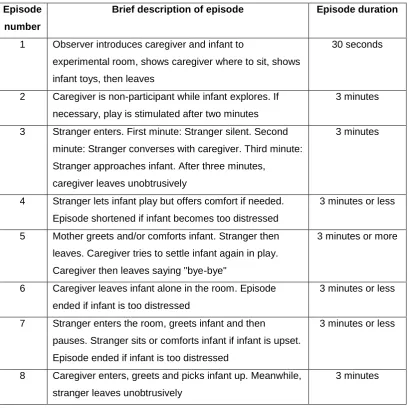
attachment behaviours to his/her primary caregiver. During the procedure, the infant’s responses to the sequence of episodes detailed in Table 1.1 below, are
observed.
Results of the Strange Situation categorise infant behaviours into three attachment styles: secure attachment, ambivalent insecure attachment, and anxious-avoidant insecure attachment. During the Strange Situation, the securely attached infant engages with the stranger if their caregiver is nearby, cries when their
caregiver leaves the room, happily reunites with their caregiver when he/she returns and does not engage with the stranger if the caregiver is not nearby. Ainsworth et al. (1978) theorise that secure attachment is marked by both a positive, close relationship with the primary caregiver (who responds appropriately to the infant’s needs), and the infant’s willingness to independently explore his/her surroundings.
In contrast, the anxious-ambivalent infant becomes distressed when the stranger enters the room, regardless of whether the caregiver is nearby or not. They exhibit extreme anxiety and distress when their caregiver leaves the room. However, when the caregiver returns, the infant is resistant to reuniting with them. Ainsworth et al. propose that infants with this insecure attachment style have inconsistent or
intrusive caregivers, and thus likely experience affective fluctuations in response to their caregiver’s inconsistent behaviour. Uncertainty about whether their needs will
37
may lead children with anxious-ambivalent attachment to experience continuous internalised anxiety as a way of preparing themselves for their caregiver’s
unpredictability (Newman et al., 2013). Finally, during the Strange Situation, the anxious-avoidant infant does not show interest in any of the adults in the room, regardless of which adults are present. They tend to avoid or ignore the caregiver, whether the stranger is nearby or not. Ainsworth et al. theorise that these infants are rejected by their caregivers. Despite the anxiety triggered by this rejection, these infants develop the belief that their caregivers will not respond to their signals of distress and need, and therefore avoid communicating their affect.
Episode number
Brief description of episode Episode duration
1 Observer introduces caregiver and infant to
experimental room, shows caregiver where to sit, shows
infant toys, then leaves
30 seconds
2 Caregiver is non-participant while infant explores. If
necessary, play is stimulated after two minutes
3 minutes
3 Stranger enters. First minute: Stranger silent. Second
minute: Stranger converses with caregiver. Third minute:
Stranger approaches infant. After three minutes,
caregiver leaves unobtrusively
3 minutes
4 Stranger lets infant play but offers comfort if needed.
Episode shortened if infant becomes too distressed
3 minutes or less
5 Mother greets and/or comforts infant. Stranger then
leaves. Caregiver tries to settle infant again in play.
Caregiver then leaves saying "bye-bye"
3 minutes or more
6 Caregiver leaves infant alone in the room. Episode
ended if infant is too distressed
3 minutes or less
7 Stranger enters the room, greets infant and then
pauses. Stranger sits or comforts infant if infant is upset.
Episode ended if infant is too distressed
3 minutes or less
8 Caregiver enters, greets and picks infant up. Meanwhile,
stranger leaves unobtrusively
[image:39.595.116.527.259.668.2]3 minutes
Table 1.1 Episodes of the Strange Situation (Ainsworth et al., 1978)
Cassidy (1995) drew from Bowlby’s (1973) attachment theory to hypothesise that
38
source of their anxiety, the child may lack confidence that their caregiver will be available to reduce the child’s anxiety in times of threat. This leads to negative
interpersonal perceptions (e.g., fear of rejection) in adult interpersonal relationships (Cassidy, Lichenstein-Phelps, Sibrava, Thomas, & Borkovec, 2009).
Numerous studies have shown that children with insecure attachments to their primary caregiver are at risk of developing GAD (see literature review by Hudson & Rapee, 2004), but few have examined the relationship between specific attachment styles and GAD development (Newman et al., 2013). Mickelson, Kessler, and Shaver (1997) examined data from the NCS and found that GAD was positively associated with both anxious-avoidant and anxious-ambivalent attachment, and negatively associated with secure attachment. Similarly, in a Dutch sample of 12 to 14-year-olds, those who classified themselves as securely attached had the lowest GAD scores. Participants who classified themselves as ambivalently attached had higher GAD scores than those who classified themselves as avoidantly attached (Muris, Meesters, van Melick, & Zwambag, 2001). In contrast to this last finding, a prospective study examined the degree to which new GAD episodes could be predicted by preceding attachment patterns in adult females. Angry-dismissive attachment (a subdivision of anxious-avoidant attachment, in which individuals are mistrustful of others, exhibit anger, and have little desire for close interpersonal relationships) was most strongly associated with new GAD episodes (Bifulco, Kwon, Jacobs, Moran, Bunn, & Beer, 2006).
There appears to be a lack of conclusive evidence about which of the two insecure attachment styles is more predictive of GAD development. Newman, Shin, and Zuellig (2016) propose a possible explanation; the existence of subgroups within GAD who identify with distinct insecure attachment styles, whereas Newman et al. (2013) suggest that both ambivalent attachment and inconsistent parenting may play a role in GAD’s development.
Other studies have demonstrated that high levels of enmeshment with the primary caregiver characterise the childhood experiences of adults with GAD (Cassidy et al., 2009; Peasley, Molina, & Borkovec, 1994). In this context, enmeshed caregiver-child relationships are marked by role reversal, in which the caregiver-child attends to their caregiver’s needs without necessarily having their own needs met in return (Dugas et al., 2018). Children are emotionally ill-equipped to adopt this role. The child’s fear
39
it is unlikely that an attachment figure unable to care for themselves would instil a sense of security in the child. High levels of enmeshment are thus particularly likely to result in enduring anxiety (Cassidy et al., 2009).
Negative parenting behaviours have also been associated with GAD’s development.
Controlling behaviours such as love withdrawal, isolating, or shaming the child invalidate the child’s emotions and experiencing. This may undermine the child’s
emotional development, thus contributing to emotion regulation difficulties, negative contrast avoidance, and heightened anxiety symptoms (Newman et al., 2013). Cassidy et al. (2009) found that retrospective reports of maternal and paternal coldness and rejection were associated with adult GAD, while in a Dutch community sample of adolescents, perceived parental behavioural and psychological control was associated with self-reported GAD symptoms (Wijsbroek, Hale, Raaijmakers, & Meeus, 2011). However, this latter finding must be interpreted with caution because it is unclear whether the participants’ primary caregivers did become more
controlling in response to their child’s GAD symptomology, or whether cognitive threat biases (a common characteristic of GAD) increased the participants’
perceptions of controlling behaviour (Newman et al., 2013; Wijsbroek et al., 2011).
GAD in children and adolescents has been associated with harsh parental discipline (Shanahan, Copeland, Costello, & Angold, 2008), over-protection, and pressure (Beesdo, Pine, et al., 2010; Nordahl, Wells, Olsson, & Bjerkeset, 2010). Newman et al. (2013) propose that the combination of these three parental behaviours may impede the child’s development of autonomy and communicate that he/she is
incapable of handling challenging situations without parental intervention. If children internalise this message of being unable to cope with unanticipated negative events and the resultant affect fluctuations, they may anticipate all potential negative events to ensure that they are emotionally prepared for all possibilities.
1.3.3.2.3 Childhood physical or sexual abuse
Physical or sexual abuse may cause the child to develop an aversion to emotional contrast due to the unpredictability of when the next abusive act will occur.
40
that the world is a dangerous place and that they have little control over what happens to them (Cougle, Timpano, Sachs-Ericsson, Keough, & Riccardi, 2010). Safren, Gershuny, Marzol, Otto, and Pollack (2002) examined the prevalence of self-reported childhood physical or sexual abuse in a sample of adults presenting for treatment of panic disorder, Social anxiety disorder, or GAD. 25% of participants with a primary diagnosis of GAD reported childhood histories of sexual or physical abuse, compared to 18% of those with pure GAD. This study’s narrow demographic
and low sample size (149 participants, 28 of whom had a primary diagnosis of GAD) not only makes it difficult to reliably compare these findings with others but also prevents examination of whether the association between GAD and childhood abuse is due to physical or sexual abuse. A more recent study aimed to address these limitations by examining the unique relationships between anxiety disorders, including GAD, and childhood physical and sexual abuse, using data from the NCS-Replication. Childhood history of physical or sexual abuse was associated with increased risk of lifetime GAD. GAD was uniquely associated with sexual abuse after controlling for physical abuse, but it was not uniquely associated with physical abuse after controlling for sexual abuse (Cougle et al., 2010).
1.3.3.2.4 Family history of anxiety disorders
In McLaughlin, Behar, and Borkovec’s (2008) study, 53% of individuals with GAD
reported having at least one family member with an anxiety disorder, suggesting that family history of anxiety disorders is a risk factor for GAD development.
Hettema, Neale, and Kendler (2001) conducted a meta-analysis of family and twin studies and found that GAD has significant familial aggregation that is modestly explained by genes. Moreover, a significant number of participants with GAD had first-degree relatives (i.e., a parent, sibling, or child) with GAD. Similarly, Beesdo, Pine, et al. (2010) found that parental GAD is a risk factor for GAD development. However, they also argue that parental GAD is not a risk factor for GAD alone; it is shared among all anxiety disorders.