Dissertation on
“TO EVALUATE THE ASSOCIATION OF
HYPERLIPIDEMIA IN PRETERM DELIVERY”
Submitted to the
The Tamil Nadu Dr. M.G.R. Medical University
in partial fulfilment of the requirements
for the award of degree of
MD [BRANCH II ]
OBSTETRICS & GYNAECOLOGY
THE TAMIL NADU Dr.M.G.R.MEDICAL UNIVERSITY
INSTITUTE OF SOCIAL OBSTETRICS,
GOVT KASTURBA GANDHI HOSPITAL,
MADRAS MEDICAL COLLEGE & HOSPITAL.
CERTIFICATE
This is to certify that the dissertation entitled “TO EVALUATE THE
ASSOCIATION OF HYPERLIPIDEMIA IN PRETERM DELIVERY”
presented herein by Dr.S.SOWMIYA , is an original work done in the
Department of Obstetrics & Gynaecology , Institute of Social Obstetrics and
Government Kasturba Gandhi Hospital , Government Madras Medical
College , Chennai, in partial fulfilment of regulations of the Tamil Nadu
Dr.M.G.R.Medical University for the award of degree of M.D.(Obstetrics
&Gynaecology) , under my guidance and supervision during the academic
period 2009-2012
Prof.Dr.V.KANAGASABAI. M.D., Prof.Dr.P.M.GOPINATH, M.D,DGO
The Dean, Director,
Government Madras Medical College The Institute of Social Obstetrics
Chennai. and Govt. Kasturba Gandhi Hospital
ACKNOWLEDGEMENT
I extend my gratitude to the Dean Professor Dr.V.KANAGASABAI M.D,
Madras Medical College, Chennai, for his kind permission to do this
dissertation and to use the hospital resource for this study.
I am extremely thankful and grateful to my respected Director Professor
Dr. P.M.GOPINATH M.D.D.G.O., Institute of Social Obstetrics and
Government Kasturba Gandhi Hospital, Chennai for providing with the
necessary facilities to carry out this study and for her continuous support and
guidance.
I
express
my
gratitude
and
thanks
to
Director
Professor.
Dr.M.MOHAMMAMBAL M.D.D.G.O., Institute of Obstetrics and
Gynaecology, Chennai for her guidance.
I am grateful and indebted to Dr. MEENA UMACHANDER M.D.D.G.O.,
Institute of Social Obstetrics and Government Kasturba Gandhi Hospital,
Chennai for her able guidance.
I extend my profound gratitude to all unit Chiefs, Registrar, Assistant
Professors for their boundless affection and support for my study.
I am ever grateful for all the pregnant women who participated in this study
CONTENTS
Sl.No
Title
Page No
1
Introduction
1
2
Review of Literature
3
3
Aim of the Study
28
4
Materials and Methods
29
5
Results and Analysis
33
6
Discussion
58
7
Summary
62
8
Conclusion
63
9
Proforma
10
Bibliography
INTRODUCTION
Obstetrics is a fine art built on the facts gathered by scientific research. In the era of modern obstetrics where there has been a rapid advancement in all specialties, preterm labor remains an enigma for the obstetricians today.
Preterm labor is defined as the onset of regular painful, frequent, uterine contractions causing progressive effacement and dilatation of cervix occurring before 37 completed weeks of gestation from the first day of last menstrual period. Any infant born before 37 completed weeks should be called as preterm (WHO 1969).
The lower limit which correlates with the fetal viability is less clearly defined. In United States it is 20 weeks. Royal college of obstetricians and Gynaecological (RCOG) working party considered it as 24 weeks. In India for legal purposes of viability it is defined as any gestation beyond 28 weeks (196 days).
influenced by the combined effect of increased estrogen and progesterone. Additionally placental lipoprotein lipase normally increases as term approaches.
REVIEW OF LITERATURE
Cator Jim, Bodnar studied in early pregnancy lipid concentration and spontaneous
preterm birth 2007 in that case control study of women with spontaneous preterm delivery cholesterol and triglycerides were elevated.
RECE MS, MCGREOR JA, ALLEN KG, HARRIS MA, case control study
concluded that elevated fatty acid metabolism in a protion of women delivered preterm increased maternal red blood cells arachidonic acid is associated with an increased risk of preterm birth.
Chenx, Scholl study of association of elevated free fatty acids during late pregancy
with preterm delivery. the concluding was elevated fasting plasma FFA were associated with an increased risk of preterm delivery.
INCIDENCE:
The incidence of pre-term labor in developed countries is between 5% to 10%. The incidence in India being 10-14% (FOGSI).
SERUM LIPIDS
Lipoproteins are classified based on their density into 5 major classes.
They are: Chylomicrons, VLDL, IDL , LDL and HDL
Chylomicron - Largest of the particles, are of intestinal origin. They are responsible
for transport of dietary triglycerides.
VLDL- Second largest particle, they are produced in liver. They transport
endogenously produced triglycerides.
LDL- is responsible for intravascular metabolism of VLDL. They contain cholesterol
ester and are the main circulating source of cholesterol. Strong relationship exists between increased LDL and cardiovascular disease.
HDL- These are small lipoproteins that originated in liver, small intestine ,
intravascular denovo synthesis. It plays a critical role in reverse transport of cholesterol from peripheral tissue to liver. It is the primary mechanism by which HDL protects against atherosclerosis.
Apoprotein provide structural stabilities to lipoprotein and determine metabolic fate of the particle upon which they reside.
Apolipoprotein Metabolic functions
Apo A1 Structural component of HDL ; LCAT activator
Apo AII Unknown
Apo AIV Unknown: possibly facilitates transfer of other apo s between HDL and chylomicrons
Apo B48 Necessary for assembly and secretion of chylomicrons from the small intestine
Apo B100 Necessary for assembly and secretion of VLDL from the liver; structural protein of VLDL, IDL , LDL ,ligand for LDL receptor
Lipoprotein particles interact with specific receptor on peripheral cell membrane that recognize particles and aid in clearance from circulation. Brown &Goldstein described the diagnosis of one such receptor in 1976. Various steroids and peptide hormones regulate these receptor-LDL interactions.
Serum Lipids in Pregnancy
Pregnancy is associated with significant variation in blood rheology consequent mainly to changes in lipoprotein profiles. Although these changes were first described by Bacquerel and Rodier the exact elucidation of these changes is yet to be defined. An extensive review of literature revealed conflicting observation and implication of lipoprotein metabolism in normal and abnormal pregnancies.All plasma lipoprotein fractions undergo striking increase during pregnancy. All lipid levels significantly increase in second and third trimester.
• Total triglycerides increase 2-3 fold
• Total cholesterol rises 50-60% above non-pregnant levels.
• Apo-B increases by 56%
• Total cholesterol increases by 43%
• LDL increases by 36%
• Apo-A increases by 32%
These changes are gradual and increase progressively throughout pregnancy after 25 weeks and peaks at term and return to pre pregnant level 6-8 weeks post partum.
Qualitatively some lipoproteins such as HDL, LDL becomes TGL enriched. VLDL however increases cholesterol and TGL 2-5 fold compared to non-pregnant levels. LDL, after an initial drop at 8 weeks, rises steadily up to term by 45-50% It is the only lipoprotein to remain elevated even after 8 weeks of delivery irrespective to lactation. Post partum measurements of lipids should be delayed for 6 months in women who did not have hypercholesterolemia prior to pregnancy.1
HDL is of particular interest. Unlike other lipoproteins, which rise through 36 weeks, this lipoprotein reaches its maximum level at mid gestation. It increases by 45% until 24 weeks and subsequently falls to 15% above non-pregnant level. These changes are confined to HDL2 sub fraction. HDL3 changes little.2
The physiological hyperlipidemia is of potential significance from several point of view3 increase in plasma TGL may enhance available essential and non essential TGL and free fatty acids for placental transfer to fetus
a) LDL rise appears to be necessary for placental steroidogenesis and also for Transplacental cholesterol transfer to fetus.
b) TGL-increase may be a parameter of a general metabolic adaptation by mother to augment nutrient flow to fetus.
In a review article Herrara stressed that during early pregnancy there is increased body fat accumulation associated with both hyperplasia and lipogenesis During late pregnancy there is an accelerated breakdown to fat depots, which play an important role in fetal development.5
LIPIDS NON-PREGNANT ADULT FIRST TRIMESTER SECOND TRIMESTER THIRD TRIMESTER TOTAL
CHOLESTEROL(mg/dl) < 200 141 - 210 176 - 299 219 - 349
TRIGLYCERIDES(mg/dl) < 150 40 – 159 73 - 382 131 - 453
WILLIAM OBSTETRICS 23 rd edition
Etiology:
Only when the factors causing prematurity are clearly understood any attempt at prevention can be made.
Nearly 50-60% preterm births occur following spontaneous labor. 30% is due to premature rupture of membranes and rest are iatrogenic.
Hyperlipidemia:
Catov et al reported that an elevation in maternal triglycerides or cholesterol level in early gestation was associated with a greater than 2 fold increased risk of preterm delivery.
Uterine Causes:
Congenital abnormalities 1-3% particularly septate and bicornuate uterus.
Incompetent cervix and cervical anatomical abnormalities.
Overdistension of uterus.
Genetic:
∗ Genes for decidual relaxin.
∗ Fetal mitochondrial trifunctional protein defect.
∗ IL-1, B2 adrenergic receptor gene.
∗ Tumour necrosis factor - alpha are implicated.
Fetal:
• Congenital abnormalities.
Placental:
Abnormal placentation (causing decreased uteroplacental blood flow).
Anatomical abnormalities, Placenta Praeyia
Infections:
a. Uterine Infections.
Group B streptococcus (Boloitt et al lamontet al )
Chlamydia trichomatis (Martin et al Harrison)
Mycoplasma hominis & ureaplasma urealyticum (Klein et al, 2005)
Asymptomatic bacterial vaginosis and trichomonas vaginalis confers a modest risk of spontaneous preterm labor (Gravett et al)
b. Extrauterine Infections:
High prematurity rate is associated with asymptomatic bacteruria & UTI (Robertson et al).
Other are systemic illness like pneumonia, pyelonephritis, periodontal disease is associated with preterm labor. (Xiong X 2006)
Vaginal Bleeding:
Vaginal bleeding in early pregnancy is associated with preterm labor (Williams obstetrics 23rd edition.)
Pathophysiology:
The control of parturition is achieved by complex integration of endocrine, paracrine and autocrine mechanism.
The fetal pituitary adrenal axis needs to be intact (Gonitk B et al) stress induced release of corticotrophin releasing hormone initiates parturition.
When fetal adrenal axis becomes more sensitive to ACTH there is increase in cortisol production, which leads to increased 17- alpha hydroxylase and finally decreased progesterone.
Differential production of PGE2 and PGF 2alpha by the three enzymes – phopholipases, PGH2 synthase, 15 hydroxy prostaglandin dehydrogenase may be the key in the balance between uterine quiescence and activity. This decidual activation and production of uterotropins is the penultimate event in initiation of labor.
Lipid changes in preterm delivery:
Maternal hyperlipidemia is one of the most consistent and stricking changes to take place in lipid metabolism during pregnancy. The mechanisms responsible for these changes include increased lipolytic and decreased LPL activities in adipose tissue. (Herrera and colleagues, 2006). the hepatic effects of estradiol and progesterone also play an important role (Desoye and associates 1987).
We have several hypothesis for why high FFA may increase risk of spontaneous preterm delivery.
FFAS were positively correlated with cord plasma FFAS. These include the essential FFAS and their metabolically important derivatives such as arachidonic acid a precursor of the eicosanoids including prostacyclins and prostaglandins.
2. It is known that prostaglandin play an important role by stimulating the uterine contractions that drive preterm delivery, Reece et al reported a higher proportion of maternal RBC and plasma arachidonic acid in preterm cases compared with controls Thus the could be indirect evidence for excessive maternal arachidonic availability or mobilization in preterm labor.
High FFAS may link to proinflammatory pathways. Preterm labor is recognized as an inflammatory phenomenon, even in the absence of infection, specific unsaturated fatty acids, particularly the essential fatty acid linoleic acid, which comes from the maternal diet.
Selectively stimulate the development of a proinflammatory response in human endothelial cells studied in Vitro, increases in inflammatory cytokine formation in human decidua stimulate prostaglandins synthesis. Thus high maternal circulating FFA could be linked to inflammation a known risk factor for preterm delivery.
Epidemiology
1. Race
The incidence is greater among black women(Varner et al 2005)
It is more common in extremes of age. Lumley JM et al 1993, reported high incidence of preterm delivery in women under 17 Years and over 35 years.
3. Weight
Poor nutrition, prepregnancy weight and weight gain during pregnancy play a important role in causing preterm birth. Hickly and colleague 1995, have shown low maternal prenatal gain is specifically associated with preterm birth
4. Stature
Short statured mother have more tendency to produce smaller babies.
5. Socio-Economic Status
Women from lower socio economic status tends to be less educated and would not have satisfactory general, perinatal and antenatal care (Goffinet F 2005) are at increased risk of preterm labour.
6. Addictions
Woman who smoke cigarettes or who abuse cocaine are at increased risk of preterm labor (Berns 2002)
7. Occupational Factors
Those involved in manual work are more prone for preterm labor.
PREDISPOSING FACTORS
1. Stress
standing decreases uteroplacental blood flow and increases the frequency of large placental infarcts causing growth retardation.Preterm birth is increased in women living alone, and those who are subjected to physical abuse.
2. Coitus
Coitus was not found to be associated but increasing numbers of sexual
partners increased the risk of recurrent preterm delivery (yost NP et al 2006).
3. Reproductive History
a. Previous Preterm Birth
The history of one previous preterm birth is associated with a recurrence risk if 16-41% (Williams 23rd edition), risk increasing with the number of preterm birth decreasing with the number of term deliveries.
b. Previous abortion
There is increase in the preterm deliveries in woman who Experienced one or more second trimester abortions.
c. Cervical incompetence
d. Uterine anomalies
e. Pregnancy complications
Multiple pregnancies(Goldenberg RL, 2002)
Hydramnios
Preclampsia
Second trimester bleeding not due to placental causes
4. Interpregnancy interval
A significant increase in preterm birth was observed when the interval between birth and LMP if next pregnancy was less than 3 month.
5. Fetal Gender
The main fetal factor influencing the rate of preterm delivery is fetal sex, with preponderance if males delivering preterm.
PREDICTION OF PRETERM LABOUR
Cervical assessment
Asymptomatic cervical dilatation after mid pregnancy has gained attention as a risk factor for preterm delivery.
Owen and Colleagues (2003) concluded that the value of cervical length to predict preterm birth before 35 weeks is apparent only in women at high risk for preterm birth.
Ultrasound is a better modality than digital evaluation of cervical length because the upper half of cervix which cannot be reached digitally can be measured by ultra sonogram.
Fetal breathing movements: Absences of fetal breathing movement on ultrasound
performer at the time of admission on women who presented with threatened preterm labor was also found to be accurate test in predicting spontaneous preterm birth.
Uterine Activity Monitoring
Current opinion is that for most patients home uterine monitoring is not better than frequent nursing contact and support. Katz and Associates found that women who has subsequent preterm delivery had increased uterine contractions at 30 weeks
Only patient, who cannot recognize adequately the presence of contractions like multifetal gestation and other over distended uterus may benefit from home uterine monitoring.
Fibronectins
The presence of fetal fibronectin in cervicovaginal secretions in late second and early third trimester has been proposed as a specific predictor of preterm labor (Lock wood and coworkers 1991). It represents disruption of choriodecidul interface which can be caused by preterm labor. It can be measured using ELISA and values exceeding 50ng/ml are considered positive result. However of concern is the high false positive rate if there is contamination with amniotic fluid, semen, maternal blood and in patients with cerclage. The test in more accurate in predicting spontaneous preterm birth within 7-10 days in women with symptoms of threatened preterm labor before advanced cervical dilatation.
In symptomatic women the group found that cervicovaginal fetal fibronectin and absence of fetal breathing moments of ultrasonogram are likely to be accurate in predicting preterm birth.
Biochemical Markers
1. Salivary oestriol : progesterone ratio
2. Salivary oestriol >1.8/ml before 34 weeks has a sensitivity of 68% and specificity of 76% for preterm labor before 35 weeks of gestation(Darne et all)
3. Serum collagenase
4. Tissue inhibitor if metalloproteinase (TIMP) /Matrix 5. Relaxin
6. Corticotrophin Releasing Hormone (CRH) 7. Human chorionic gonadotropin
8. Mediators of inflammation and infection
a. C-Reactive protein b. Granulocyte elastase c. Cytokines (Il-6, TNF)
d. Amniotic fluid glucose concentration e. Zinc and Lipocortin -1 (Romeo R et al) g. Positive cultures
DIAGNOSIS OF PRETERM LABOR
Symptoms of preterm labour
Menstrual like cramps
Low, dull back ache
Pressure (Feels like baby is pushing down)
abdominal cramping
Increase or change in vaginal discharge
Uterine contractions that are 10 minutes apart of closer
2. Pelvic examination
3. Ultrasonogram
Ultrasonographic assessment in preterm labor
Fetal viability
Gestational age
Estimated fetal weight
Indicators of preterm labor
Transvaginal cervical assessment
Fetal breathing movements
Amniotic fluid volume
Fetal presentation and lie
Fetal movements and tone
Fetal anomaly
Placental localisation and morphology
Uterine fibroid and adnexal mass
4. Tococardiography
The amplitude, duration, shapes of contraction frequency and basal tone and monitored. The uterine activity is monitored. Changes in FHR ( Fetal Heart Rate) pattern occurring in preterm labor is normally due to immaturity of cardiovascular system. Repetitive late decelerations, absent variability and variable decelerations are sign of placental insufficiency.
RISK OF PRETERM INFANT:
Birth asphyxia
Respiratory Distress syndrome
Apneoa of prematurity
Jaundice
Haemorrhage
Metabolic problem
Retrolental fibroplasia
Developmental Delay
Reduced growth potential
Recurrent Respiratory infections
Cerebral palsy
Necrotizing enterocolitis
Patent Ductus arteriosus
Broncho pulmonary dysplasia
Feeding difficulties
Learning difficulties
Sudden Infant death syndrome
Intraventricular/Intra cerebral hemorrhage.
PREVENTION OF PRETERM LABOR
I Basic care:
1) Support system of family should be developed.
2) Numerous suggestions on coping with physical and mental stresses of maintaining a pregnancy should be descried.
3) Education, supportive services from health care provider and financial issues are of common concern.
4) Behavioural and lifestyle modification
a. Smoking cessation (Burguet et al)
b. Adequate nutrition
II Bed rest and Hydration
Although bedrest and hydration are widely used as the first step of prevention and treatment, there is no evidence that this practice is beneficial (Freda MC et al, Goldenberg RL et al.,)
Bed rest should be advised with caution after evaluating its benefits and risks in an individual, and not routinely keeping in mind its adverse effects like venous thrombosis and pulmonary edema.
Aggressive Treatment of Cervicovaginal Infection
review by Varma R, Gupta JK 2006 concluded that screening and treatment of asymptomatic bacteruria and bacterial vaginosis in low risk population groups may reduce the rate of preterm deliveries.
Most Randomised control trials show that intravaginal clindamycin cream used to treat bacterial vaginosis does not prevent preterm birth. (Kekkki et al, 2001)
Cervical Encerclage
A short cervix diagnosed by ultrasound in asymptomatic women may be an indication for cerelage. The role of cervical for the prevention of preterm delivery is now disputed. A number of systematic reviews which demonstrate a trend towards reduction in preterm delivers before 34 weeks in high risk women who had cerelage compared to those managed expectantly (Honest H, et al).
Two randomized trials Lazar et al., and Rush et al., did not show benefit for routine cerclage in women at moderate risk of preterm delivery. Also cerclage has an inherent risk which actually increase preterm labor by increasing the pericervial inflammation or infection. Hence unless the diagnosis is specific it is not recommended. But a MRC/RCOG trial in low risk women demonstrated that cerclage was associated with low risk of delivery below 33wks.
Progesterone
of 17 hydroxy progesterone caproate, intramuscularly every week from 20 to 36 weeks.
A Cochrane Systematic Review in 2006 by Dodd JM et al found that the use of progesterone on women with history of spontaneous preterm birth resulted in a reduction in risk of preterm birth before 34 weeks of gestation and Infant birth weight than 2500 grams. But the dose, route of administration and time commencement of therapy has not been arrived conclusively by this study for need of further information. For women with threatened preterm labor the role of progesterone is uncertain as per this review.
MANAGEMENT OF PRETERM LABOR
Bedrest and Hydration
Steroids
In 1995, a National Institute of Health Consensus development panel recommended corticosteroids for fetal lung maturation in preterm labor. Since then there has been nearly universal acceptance and implementation of these recommendations.
All pregnant women between 24 and 34 weeks of gestation who are at risk of preterm delivery within 7 days should be considered candidates for antenatal corticosteroids.
Although benefit on neonatal outcome is maximum between 24 hours and 7days after initiation of therapy, steroids confer significant survival advantages even when delivery occurs within 24 hours Therefore treatment should not be withheld when delivery is probable within 24 hours.
Tocolysis
Tocolysis is pharmacological suppression of uterine activity
Indication:
Preterm delivery is a major cause of perinatal morbidity and mortality. Tocolytic agents are effective in reducing the likelihood of delivery wthin 48 hours but do not reduce the overall risk of preterm delivery.
Consideration should be given for administration of tocolytics to all women experiencing preterm labor when there is a delay in delivery
- to permit in - utero transfer to a tertiary perinatal centre for multi Disciplinary management (obstetrician, neonatologist, anaesthetists).
- to gain upto 48 hours to allow for the administration of corticosteroid to enhance pulmonary maturity .
BETA SYMPATHOMIMETICS
I generation:- Isoxsuprine, Orciperenaline, isoprenaline
II generation:- Ritodrine, Terbutaline, fenoterol.
The most commonly used β2 agonist for tocolysis is ritodrine., then are terbutaline and salbutamol.
Ritodrine:
Ritodrine infusion is started at a dose of 50µg/min and increased very 20
minutes until uterus is quiescent or side effects limit escalation of dose. Side effects are palpitations, tremor, nausea, headache, chest pain, dyspnoea, pulmonary edema, hypokalemia, myocardial ischemia, arrhythmias.
Terbutaline:
Not used as much as ritodrine, but is effective in temporarily suppressing contraction when given parenterally.
Intravenous dose is 5-10µg/min, increased every 10-15 min to a maximum of 80µg .2.5-5mg is given orally every 4-6 hours & 250 µg subcutaneously every 20-30
min given as 4-6 doses. Terbutaline has higher a risk of hyperglycemia than ritodrine. Other side effects are similar. But β2 agonists are no longer the first choice of drugs for tocolysis because of their side effects(RCOG Clinical Guide Lines, 2002 and Anotayanonth et al., 2004)
Contraindications of ββββ2 agonist:-
• Symptomatic cardiac disease especially ventricular outflow obstruction
• Hyperthyroidism
• Sickle cell disease
• Uncontrolled maternal diabetes mellitus
• Chorioamnionitis
• Eclampsia or severe preeclampsia
• Multifetal gestation
• Severe obstetrical bleeding
MAGNESIUM SULPHATE
MgSO4 uncouples the depolarisation contraction coupling. During the
depolarisation of myometrial cells, Mg++ competes with ca+ to for entry into the
cell causing less intracellular ca+ to participate in actin -myosin interaction during smooth muscle contraction. It affects neural transmission by modifying acetyl choline release and sensitivity at motor end plate .
Contractility is inhibited at serum level of 5-8 mEq/dl. Deep tendon reflexes are lost at 9-13mEq/dl. Respiratory depression occurs at >14mEq/dl.
Dosage: Intravenous loading dose of 4g administered over 20 minutes followed by
maintenance dose of 1 -2g/hr.
Magnesium sulphate is an ineffective tocolytic agent as shown by a Cochrane systematic review (Crowther et al, 2002., Cox etal 1990)
PROSTAGLANDIN SYNTHETASE INHIBITORS
Drugs like aspirin, indomethacin, naproxen fenamate and silenced inhibit the prostaglandin synthesis, decrease the myometrial gap junctions and decrease the influx of calcium
Maternal side effects includes nausea, vomiting, drug rash headache, gastritis,diarrhoea. In fetus it produces constriction of ductus arteriosus,pulmonary hypertension and oligohydramnios. Intraventricular hemorrhage, necrotising entercolitis have also been reported.
They are effective as single dose in inhibiting the myometrial activity in many women at term (Reiss et al, 1997). Tow randomised trials which compared the effect of indomethacin and placebo in delaying delivery showed significant delay at 48 hours and at 7-10 days.
Comparison with agonists show similar efficacy ,but a better side effect profile (RCOG GUIDELINE 2002). However, their use is limited because of their effects in the fetus.
CALCIUM CHANNEL BLOCKERS
they reduce the tone of smooth muscles. The commonly used drug Nifedipine is a potent inhibitor of myometrial contractions in non pregnant, pregnant and post partum uterus (Anderson et al, 1979)
Treatment Regime
The optimal dosing regimen of Nifedipine has not yet defined. Read and Wellby 1986, George et al 1991, showed that an initial dose of 30mg followed by 20mg 8th hourly for 3 days, reported a 75% successful tocolysis in 71% and 76% respectively. The tocolytic regimen given in Obstetrics and Gynaecology Clinics of North America(Andrienne Z et al) is loading dose 30 mg orally and maintenance dose of 10-20 mg orally every 4-6 hrs.
In Clinical Obstetrics and Gynaecology 2000, Amy E et al found the following dosing regimens in various study protocols. Most administered a initial loading dose of 30mg of oral nifedipine followed by 10mg to 20mg dose every 4 to 6 hrs. Sublingual nifedipine loading doses are no longer advised.
OXYTOCIN ANTAGONISTS (ATOSIBAN)
There will be increase in myometrial oxytocin receptors in labor. The analogue competitively blocks the oxytocin receptors and inhibits preterm labor.
Atosiban is given intravenously 6.75 mg bolus over one minute followed by infusion at 18mg /hr for 3hours and then 6mg/hr for upto 45 hours. Duration of treatment should not exceed 48 hrs and the dose should not exceed 330 mg of atosiban. Side effects are nausea, chest pain, vomiting and dyspnoea. Compared to β
Royal College of Obstetricians and Gynaecologists guidelines 2002, suggest that if tocolytics are administered, the first choice should be oxytocin antagonists or Nifedipine. But compared with other tocolytics atosiban therapy is costly.
NITRIC OXIDE DONORS (GLYCERYL TRINITRATE)
Nitiric oxide is a potent endogenous hormone causing smooth muscle relaxation. The No donors inhibit corticotrophin releasing hormone secretion which acts as a promoter of parturition. 10mg of Glyceryl Trinitrate patch is applied over the fundal region of maternal abdomen. If tocolysis is not achieved in one hour, another 10mg patch can be applied to a maximum dose of 20mg in24 hors. Cochrane review (2000) by Duckitt K et al showed that nitroglycerine did not delay delivery or improve neonatal outcome when compare with placebo, no treatment or alternative tocolytics.
K+ CHANNEL OPENERS:
Diazoxide is a medication structurally related to thiazide diuretics that is used in treatment of hypertensive crisis It inhibits contractility of smooth muscles there by rendering myometrial quiescence
AIM OF THE STUDY
MATERIALS AND METHODS
The study group includes 444 healthy pregnant women, fasting triglycerides and cholesterol levels during 24, 28, 32 weeks Gestation who have come to antenatal checkup at the Institute of Obstetrics Kasturba Gandhi Hospital for Women and
Children, Triplicane, Chennai-5 during the period September 2010 to October
2011.
Only those patients we could follow up to term and planning delivery at KGH were included in the study. The design of the study prospective study. The biochemical investigations were done at the Institute of Biochemistry, Madras Medical College. The hospital ethical committee approved the study.
Out of 444 antenatal mothers selected on the basis of inclusion and exclusion criteria 44 were excluded during the study for various reasons. 18 developed PIH, 4 developed Gestational diabetes Mellitus, and 22 were lost to follow up.
INCLUSION CRITERIA:
Age = 17 – 35 yrs.
Gestational age = From participants last menstrual period confirmed or modified by USG.
EXCLUSION CRITERIA:
- GDM
- Pregnancy included Hypertension
- Multiple pregnancy
- Hydramnios
- Cervical Incompetence
- Preexisting medical disease
- Cardiovascular disorder
- Renal disorder
- Congenital anamolies of fetus/malformation
- Maternal Alcohol consumption <20g/day
- Smoking
- Unknown last menstural period.
METHODS:
In all these antenatal mothers detailed history with special reference to diet and habits, followed by complete general and obstetric examination were done. The purpose of interrogation and investigation was explained to every patient and her informed consent obtained.
GENERAL EXAMINATION:
Height, weight, pulse, blood pressure, edema, anemia, cardiovascular, respiratory and central nervous system disorder were examined.
PROCEDURE:
From all the antenatal mothers who were included in the study, blood sample was taken after overnight fasting.
Under strict aseptic precaution blood was obtained for Serum triglycerides and other investigations by venepuncture.
Serum triglycerides and cholesterol between 24, 28 ,32 weeks gestation were obtained after overnight fast. The patients were followed till delivery.
LABORATORY TESTS:
The blood samples for serum triglycerides and cholesterol were collected and analyzed.
TOTAL CHOLESTEROL:
Serum total cholesterol were determined by automated enzymatic method using Burstein, Lopes-Vivella CHOD-PAP method. Chylomicrons are precipitated by adding phosphotungstic acid solution and magnesium ion to the sample. Centrifugation leaves HDL in supernatant fluid. The cholesterol content is determined enzymatically.
PROCEDURE:
TRIGLYCERIDES:
It is estimated by Enzymatic colorimetric test GPO-PAP method using reagent supplied y centronic Gm6H-Germany.
PRINCIPLE:
The formation of colored phenazone compound n treating triglycerides with the reagent forms the basis of the test.
Sample of 10 ml and 1000 ml of reagent are mixed and incubated for 5 minutes at 37 C and absorbance of sample measured within 60 minutes.
RESULTS AND ANALYSIS
Statistical Tools :
The information collected regarding all the selected cases were recorded in a Master Chart. Data analysis was done with the help of computer using Epidemiological Information Package (EPI 2010) developed by Centre for Disease Control, Atlanta.
RESULTS
A: PROFILE OF CASES STUDIED
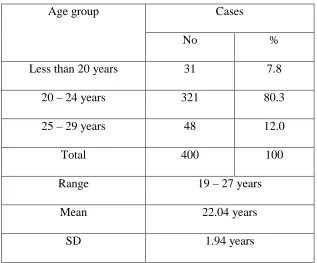
Table 1: Age Distribution
Cases Age group
No %
Less than 20 years 31 7.8
20 – 24 years 321 80.3
25 – 29 years 48 12.0
Total 400 100
Range 19 – 27 years
Mean 22.04 years
SD 1.94 years
[image:41.595.158.475.275.538.2]
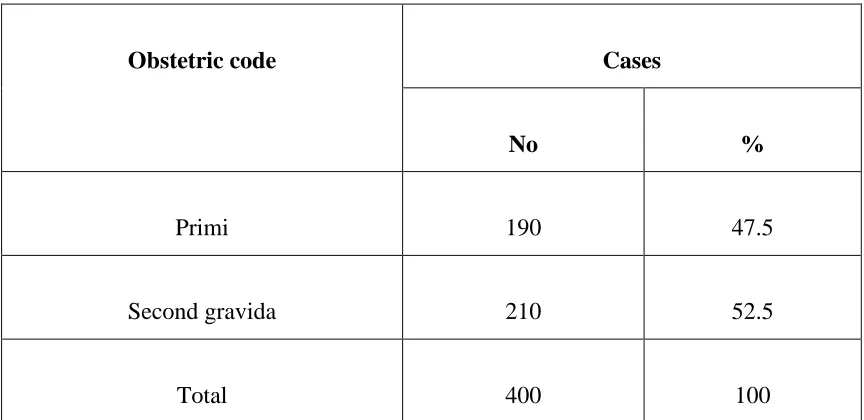
Table 2: Obstetric Code
Cases Obstetric code
No %
Primi 190 47.5
Second gravida 210 52.5
Total 400 100
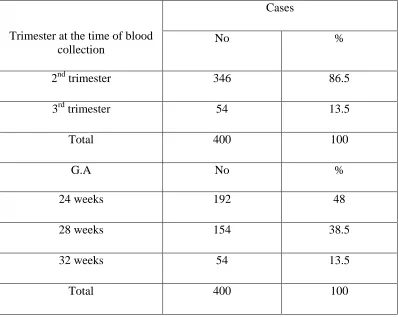
Table 3
Gestational age at which blood was collected for lipid analysis
Cases Trimester at the time of blood
collection
No %
2nd trimester 346 86.5
3rd trimester 54 13.5
Total 400 100
G.A No %
24 weeks 192 48
28 weeks 154 38.5
32 weeks 54 13.5
Total 400 100
B : LIPID PROFILE
Table 4 : Total Cholesterol
Total cholesterol (mg/dl)
Normal Abnormal
Trimester
No % No %
2nd trimester (346) 330 95.4 16 4.6
3rd trimester ( 54) 53 98.1 1 1.9
Total ( 400) 383 95.8 17 4.3
Range 145 – 397
Mean 247.3
SD 41.3
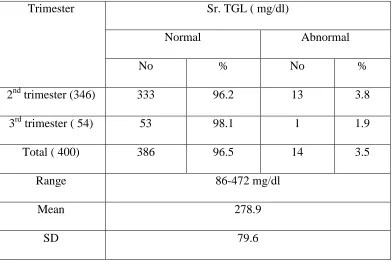
Table 5 : Serum Triglycerides
Sr. TGL ( mg/dl)
Normal Abnormal
Trimester
No % No %
2nd trimester (346) 333 96.2 13 3.8
3rd trimester ( 54) 53 98.1 1 1.9
Total ( 400) 386 96.5 14 3.5
Range 86-472 mg/dl
Mean 278.9
SD 79.6
C : OUTCOME OF DELIVERY
Table 6 : Outcome
Cases Outcome
No %
Good 390 97.5
Preterm 10 2.5
Total 400 100
D : RELATIONSHIP BETWEEN LIPID LEVELS AND OTHER
VARIABLES WITH OUTCOME OF DELIVERY
Table 7 : Age of mother and outcome of delivery
Age of mother ( in years) Outcome of delivery
Mean SD
Good 22.06 1.95
Preterm 21.02 1.55
‘p’ 0.1389
Not significant
Table 8 : Obstetric code and outcome of delivery
Outcome of delivery
Good Preterm
Obst. Code No. of cases
No % No %
Primi 190 185 97.4 5 2.6
Second gravida 210 205 97.6 5 2.4
‘p’ 0.5611
Not significant
Table 9 : Serum cholesterol and outcome of delivery
Outcome of delivery
Good Preterm
Sr. cholesterol No. of cases
No % No %
Normal 383 383 100 - -
Abnormal 17 7 41.2 10 58.8
Sr. cholesterol Mean
SD
245.2 39.5
329.3 25.3
‘p’ 0.0001
Significant
Table 10 : Serum
T
riglycerides and pregnancy outcome
Outcome of delivery
Good Preterm
Sr. TGL No. of cases
No % No %
Normal 386 385 99.7 1 0.3
Abnormal 14 5 35.7 9 64.3
Sr. TGL Mean
SD
275.2 77.3
411.3 50.5
‘p’ 0.0001
Significant
0.3 % of mothers with normal triglyceride values and 64.3% of mothers with abnormal values had preterm delivery. The mean TGL values of these two types of outcome were 275.5 and 411.3. These differences are statistically significant ( p < 0.05).
Table 11 : Outcome of delivery & Fetal Weight
Fetal Weight ( in kgs) Outcome of delivery
Mean SD
Good 2.87 1.23
Preterm 1.93 0.16
‘p’ 0.0001
Significant
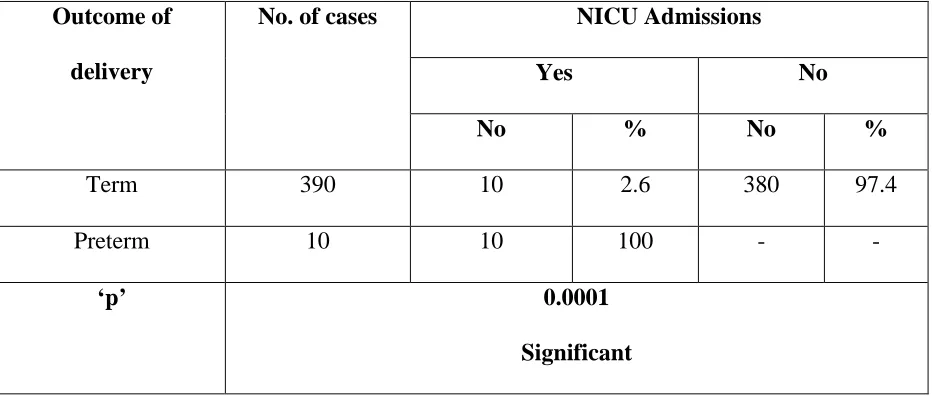
Table 12 : Outcome of delivery and NICU Admissions
NICU Admissions
Yes No
Outcome of
delivery
No. of cases
No % No %
Term 390 10 2.6 380 97.4
Preterm 10 10 100 - -
‘p’ 0.0001
Significant
DISCUSSION
Preterm delivery is defined as birth occurring prior to 37 completed weeks gestation.incidence in india 10 – 14% and developed countries 5% to 10%. 400 antenatal mothers are taken for study
Their serum triglycerides and cholesterol values were collected.All the patients were followed till term and some of them delivered preterm.
American medical journal OBSTETRICS AND GYNAECOLOGY 2007, December 197 (6) 610. Cator jim, Bodnar studied in early pregnancy lipid concentration and spontaneous preterm brith.
In that case control study of women with spontaneous preterm brith,cholesterol, high density lipoprotein, low density lipoprotein, triglycerides were evalvated. lipid concentration and gestational changes as well as risk for preterm birth were evalvated in women who delivered < 34 weeks (n = 23 ) > or = 34 < 37 (n=67 ) and > or = 37 weeks (n = 199)
In another study done by Rece ms,Mcgreor ja,Allen kg,Harris ma,amj
Obstetrics And Gynaecology 1997 april 176 (4) – 907 14. A case-control study was
conducted to find out the possible pathogenesis of preterm birth. Thirty-seven preterm (mean gestational age 34 weeks) and 34 control mother-baby dyads (gestational age 40 weeks) were evaluated. The maternal percent of total arachidonic acid in red blood cells and plasma was increased in preterm cases versus controls at delivery (3.8- and 1.6-fold, respectively, p < 0.05). Maternal red blood cell eicosapentaenoic acid (1.98 +/- 0.15, p < 0.0001) and omega-3/omega-6 ratios (0.58 +/- 0.22, p < 0.009) were lower in preterm cases than in controls at delivery (4.64 +/- 0.32 and 1.27 +/- 0.12, respectively). Docosapentaenoic acid, a marker of omega-3 essential fatty acid deficiency, was higher in preterm maternal red blood cells (1.26 +/- 0.18, p < 0.0001) and amnion (1.27 +/- 0.19, p < 0.001) compared with term controls (0.12 +/- 0.07 and 0.58 +/- 0.13, respectively). And the results are 1) altered essential fatty acid intake or metabolism in a portion of women delivered preterm and (2) increased maternal red blood cell arachidonic acid is associated with an increased risk of preterm birth.
Serum Cholesterol And Outcome Of Delivery
Outcome of delivery
Good Preterm
Sr. cholesterol No. of cases
No % No %
Normal 383 383 100 - -
Abnormal 17 7 41.2 10 58.8
Sr. cholesterol Mean SD 245.2 39.5 329.3 25.3
‘p’ 0.0001
Significant
All the mothers with normal cholesterol values had good outcome whereas 58.8% of mothers with abnormal cholesterol values had preterm deliveries. This difference in statistically significant ( p = 0.0001).
These data may have important clinical significance because they provide a possible link between preterm delivery and high lipid level.
In Current Study - Serum Triglycerides and Pregnancy Outcome
Outcome of deliveryGood Preterm
Sr. TGL No. of cases
No % No %
Normal 386 385 99.7 1 0.3
Abnormal 14 5 35.7 9 64.3
Sr. TGL Mean SD 275.2 77.3 411.3 50.5
‘p’ 0.0001
Significant
0.3 % of mothers with normal triglyceride values and 64.3% of mothers with abnormal values had preterm delivery. The mean TGL values of these two types of outcome were 275.5 and 411.3. These differences are statistically significant (p < 0.05).
SUMMARY
• To evaluate the elevated serum triglycerides and cholesterol levels as a predictor of preterm delivery.
• The study group includes 400 uncomplicated pregnant women of 24 ,28, 32 weeks of gestation during the period September 2010 to October 2011 at Institute of social obstetrics and Govt Kasturba Gandhi hospital. • From all the antenatal mothers included in the study the blood sample of
serum triglycerides and cholesterol was taken after overnight fasting and were followed till delivery.
• In this study group age of the mother and outcome of delivery has no statistically significant.
• The study group with primis and second gravidas with preterm deliveryy has no statistically significant.
• The study group with normal cholesterol values had good outcome were as 58.8% study group with elevated cholesterol values had preterm delivery is statistically significant ( p=0.0001 )
• The study group with normal triglycerides of 0.3% and 64.3% of elevated triglycerides had preterm delivery. The mean of triglycerides values of the two types of outcome were 275.5 and 411.3 are statistically significant. • In the current study elevated triglycerides and cholesterol levels was found
CONCLUSION
1. Serum Triglycerides and Cholesterol levels was evaluated in 400 antenatal mothers at 24, 28, 32 weeks of gestation with Fasting triglycerides and Cholesterol levels.
2. Serum Triglycerides and Cholesterol levels was found to be elevated in patients who have gone in for preterm labor than those gone for
term pregnancy.
3. Hence Serum Triglycerides and Cholesterol levels has been found to be useful simple marker for preterm delivery.
PROFORMA
Name Age
IP.No Unit
Gravida
Para Last Menstrual Period (LMP)
Live Expected date of Delivery
(EDD)
Abortion Corrected EDD(C.EDD)
SES Menstrual cycle
Occupation Height
Residence Weight
Booked/Unbooked (UB)
Immunized/Not
DOA(Date of Admission)
Duration of hospital stay
DOD (Date of Discharge)
period of gestation
Present complaints
Lower abdominal pain
Dull low backache
Vaginal discharge
Fluid leaking per vaginum
Fever
UTI(urinary tract infection)
URI (Upper Respiratory Tract Infection)
Obstetric history
Trimester
Hyperemesis
Exanthematous fever
Bleeding
Radiation exposure
Medication
Pain abdomen
II.Trimester
Date of Quickening
Bleeding per vaginum
History of (H/O) PIH
H/O GDM(Gestational diabetes Mellitus)
III.Trimester
Bleeding per vaginum
UTI
Cervico vaginal infection
Coitus
Diabetes
Hypertension
Fever
Past obstetric history
Previous child birth
H/O abortion
H/O Preterm labor
H/O Babies with congenitak anamolies
Past Medical History
Tuberculosis
Bronchial Asthma
STD (sexually Transmitted diseases)
Jaundice
Heart disease
Diabetes mellitus
Epilepsy
Renal disease
General examination
Temperature(T) Pallor Pedal Edema
PR BP RR RS CVS
Obstetric examination - Per abdomen
Investigations
urine culture sensitivity
Complete Blood Count
Blood urea
Sugar
S.Creatinine
S.Electrolytes
VDRL
ECG
USG Abdomen
Bibliography
1. Brizzi P Tonolo G, Esposito F et al. Lipoprotein metabolism during normal
pregnancy. Am J. Obstet Gynae 1999; 430-434.
2. Sitadevi C, Parudu MB, Kumar YM et al. Longitudinal study of serum
lipids and lipoproteins is normal pregnancy and puerperuim Trop .
Geogr. Med 1981;33:319-23
3. Rymer J, Constable S, Lumb P, Crook M. Serum Lipoprotein (A) and
apolipoproteins during pregnancy and postpartum in normal women. J.
Obstet Gynaecol May 2002; 22(3):256-9
4. Majurklewiz JC, Watts GF, Warburton FG et al. Serum Lipids, lipoproteins
and apolipoprotein in pregnant non-diabetic patients.
5. Herrara E.Lipid metabolim in pregnancy and the consequences in fetus
and newborn. Endocrine 2002;19:43-45.
6. Goldenerg RL, culhane JF lams JD Romero R. Epidemiology and causes of
preterm birth lancer 2008.371:75-84
7. Institute of Medicine Preterm birth; causes consequences and prevention
Washington Dc National Academies Press:2006
8. Haas JS, Fuentes Aflick E, Stewart AL ,Jackson RA , Dean ML Brawarsky
P, et al prepregnancy heath status and the risk of preterm delivery. Arch
pediatr adolesc med 2005 159:58-63
9. Hofman PL ,Regan F, Jackson WE, Jefferies c, Knight DB, Robinson EM, et
al Premature birth and later insulin resistance New Engl J Med 2004
10.Cato JM, Bodhar LM, Kip KE, Hubel C ,Ness RB, Harger G ,et al Early
pregnancy lipid concentrations and spontaneous preterm birth .AM J Ob
stet Gynecol.2007;197.610e-610e7
11.Catov JM, Newman AB, Roberts JM, Kelsey SF, Sutton-Tyrell K, Harris
TB, et al. Preterm delivery and later maternal cardiovascular disease risk.
Epidemiol. 2007;18:733-739.
12.Smith GCS, Pell JP,Walsh D. Pregnancy complications and maternal risk
of is ischaemic heart disease a retrospective cohort study of 129 290 births.
Lancet 2001;357:2002-2006.
13.Herrera E, Amusquivar E. Lipid metabolism in the fetus and the newborn.
Diabetes Metab Res Rev .2000;’16:202-210.
14.Income, earnings, and poverty data from the 2005 American /community
Survey (online) 2006. Available from
http.www.census.gov/prod/2006pubs/acs-02.pdf.
15.Institute of Medicine. Nutrition during pregnancy:Part I, Nutritional
status and weight gain. Washington DC: National Academy
Press;1990.pp.2-23.
16.American Diabetes Association. Diabetes Care.Vol.23.2000.Gestational
Diabetes Mellitus pp s77-S79
17.Scholl TO, Leskiw M, Chen X ,Sims M, Stein TP, Oxidative stress, diet, and
18.Zhang J, Bowes WA, Birth weight- for- gestational age patterns by race,
sex, and parity in the United States population Ob stet Gynecol
1995:86:200-208
19.Hedderson MM, Ferrara A, Sacks DA. Gestational diabetes mellitus and
lesser degrees of pregnancy hyperglycemia; association with increased
risk of spontaneous preterm birth Obstet Gynecol 2003:102:850-856
20.Nohr Ea, Bech BH, Vaeth M, Resmussen KM, Henriksen TB, Olsen J.
Obesity, gestational weight gain, and preterm birth a study within the
Danish National Birth cohort. Paediatr Perinat Epidemiol 2007:215- 14
21.Roberts JM, Pearson G, Cutler J, Lindheimer M. Summary of the NHLBI
working group on research on hypertension during pregnancy
Hypertension 2003 41:437: 445
22.Lockwood CJ, Kuzynski E. Markers of risk for preterm delivery. J perinat
Med 1999 27:5-20
23.Berghaus TM ,Demmelmair H, Koletzko B. Fatty acid composition of lipid
classes in maternal and cord plasma at birth Eur j Pediatr. 1998 157
763-768
24.Reece Ms, McGregor JA, Allen KGD, Harris MA. Maternal and perinatal
long fatty acids; possible roles in preterm birth. Am J Obstet Gynecol, 1997
;176; 907- 914
25.Casey Ml, Cox SM, Beutler B, Milewich L, Mac Donald Pc.
Cachectin/tumor necrosis is factor- a formation in human deciduas. J clin
26.Pitiphat W, Gillman MW, Joshipura KJ, Williams PL, Douglass CW, Rich-
Edwards JW. Plasma C -Reactive Protein in early pregnancy and preterm
delivery am J epidemiol 2005:162; 1108-1113
27.Toborek M, lee YW, Garrido R, Kaiser S, Hennig B .Unsaturated fatty
acids selectively induce an inflammatory environment in human
endothelial cells. Am J clin Nutr. 2002; 75; 119-125
28.Sivan E, Homko CJ, Whittaker PG, Reece EA, chen X Boden G. Free Fatty
acids and insulin resistance during pregnancy. J clin Endocrinol Metab
1998:83:2338-2342
29.Seely EW, Solomon CG, Insulin resistance and its - potential role in
pregnancy Induced hypertension.j clin endocrinol meteb. 2007: 88:
2393-2398
30.Lu GV, Rouse DJ, DuBard M, Cliver S, Kimberlin D, Hauth JC. The effect
of the increasing prevalence of maternal obesity on perinatal morbidity.
Obstet Gynecol.2001;185:845-849.
31.Kaiser PS, Kirby RS. Obesity as a risk factor for cesarean in a low -risk
population. Obstet Gynecol. 2001;97:39-43.
32.Hendler I, Goldenberg RL , Mercer BM, lams JD, Meis PJ, Moawad AG, et
al. The preterm prediction study: association between maternal body mass
index and spontaneous and indicated preterm birth. Am J Ob stet Gynecol
2005;192:882-886.
S.NO
NAME AGE IP
NO
OBSTETR IC CODE
LMP EDD BLOOD
COLLE CTION WEEKS S.CHOLES TEROL S. TRIGLYCE RIDES OUT COME FETAL WEIGH T (KG)
NICU ADMIS SION
1 LAKSHMI 25 3014 G2P1L1 02/03/10 09/12/10 24 180 103 TERM 2.8 NO
2 AMBIKA 24 3088 PRIMI 05/03/10 12/12/10 24 200 129 TERM 3.0 NO
3 GRACE 22 3725 PRIMI 23/05/10 30/02/11 24 210 138 TERM 2.7 NO
4 SHEEBA 27 3645 G2P1L1 29/06/10 06/04/11 28 290 150 TERM 2.8 NO
5 LALITHA 23 3212 G2P1L1 20/08/10 27/05/11 32 333 178 TERM 2.7 NO
6 LILLY 25 3423 PRIMI 15/03/10 21/12/10 28 232 236 TERM 2.9 NO
7 JEBA 21 7625 G2PIL1 24/08/10 31/05/11 24 230 321 TERM 2.7 NO
8 RAMYA 24 3545 PRIMI 18/03/10 26/12/10 28 218 287 TERM 2.9 NO
9 FATHIMA 22 3654 G2P1L1 11/09/10 18/06/11 28 236 376 TERM 2.9 NO
10 PRIYA 19 3767 PRIMI 22/07/10 29/04/11 32 280 345 TERM 2.8 NO
11 DEVI 20 3645 PRIMI 04/05/10 11/02/11 24 203 338 TERM 3.2 NO
12 ANNE 22 3256 G2P1L1 08/05/10 15/02/11 24 209 370 TERM 2. NO
13 VEMBU 23 3897 G2P1L1 19/09/10 26/06/11 24 189 201 TERM 2.7 NO
14 KANIKA 21 3745 PRIMI 24/03/10 31/12/10 32 321 150 TERM 2.7 NO
15 VANI 25 3264 G2P1L1 23/06/10 29/03/11 24 183 189 TERM 2.8 NO
16 NITHYA 26 2546 G2P1L1 12/03/10 19/12/10 28 185 198 TERM 2.8 NO
17 RAJI 20 3612 PRIMI 30/06/10 07/04/11 24 194 220 TERM 2.8 NO
19 PUSHPA 23 3243 G2P1L1 10/04/10 17/01/11 28 189 167 TERM 2.9 YES
20 USHA 19 3906 PRIMI 17/07/10 24/04/11 32 219 387 TERM 2.9 NO
21 MARIYAM 20 3712 PRIMI 13/04/10 20/01/11 24 243 145 TERM 2.9 NO
22 ANITHA 24 3456 G2P1L1 13/04/10 20/01/11 24 239 120 TERM 2.9 NO
23 AMBIKA 25 2434 G2P1L1 19/04/10 26/01/11 28 217 187 TERM 2.9 NO
24 SATHYA 23 3762 G2P1L1 21/05/10 28/02/11 32 329 267 TERM 2.8 NO
25 VANI 22 3154 G2P1L1 13/06/10 20/03/11 32 250 378 TERM 2.8 NO
26 MANJU 21 3651 PRIMI 03/06/10 10/03/11 24 198 154 TERM 2.8 NO
27 RANI 21 3871 PRIMI 07/07/10 14/04/11 24 182 138 TERM 2.8 NO
28 KUMARI 26 3908 G2P1L1 05/07/10 12/04/11 24 204 222 TERM 2.8 NO
29 NATHIYA 20 3710 PRIMI 08/04/10 15/01/11 24 220 287 TERM 2.8 NO
30 KOUSALYA 19 3004 PRIMI 11/04/10 18/01/11 28 232 375 TERM 2.8 NO
31 KALAI 19 3612 PRIMI 18/05/10 25/02/11 28 278 328 TERM 2.8 NO
32 BHARATHI 21 3817 G2P1L1 04/06/10 11/03/11 32 302 249 TERM 2.8 NO
33 THARANI 24 3945 G2P1L1 12/06/10 19/03/11 24 245 289 TERM 2.8 NO
34 SUKUMARI 20 3732 G2P1L1 24/07/10 1/05/11 28 145 328 TERM 2.8 NO
35 ANITHA 20 3767 PRIMI 22/08/10 29/05/11 24 219 210 TERM 2.7 NO
36 SUJI 25 3634 G2P1L1 28/03/10 04/12/10 28 201 207 TERM 2.7 NO
37 VALLI 22 3624 PRIMI 14/09/10 21/06/11 28 228 302 TERM 2.7 YES
38 RAMYA 24 3898 G2P1L1 11/12/10 18/09/11 24 275 189 TERM 2.8 NO
40 BLESSY 21 3709 PRIMI 25/11/10 02/09/11 32 289 378 TERM 2.8 NO
41 JAMILA 22 3203 G2P1L1 15/12/10 22/09/11 24 190 345 TERM 2.8 NO
42 MALIKA 22 3150 G2P1L1 12/08/10 19/05/11 28 230 298 TERM 2.9 NO
43 SHANTHI 20 3265 PRIMI 10/10/10 17/07/11 28 335 421 PRETER
M-32 WKS
1.850 YES
44 JAYA 20 4512 G2P2L1 24/10/10 31/07/11 24 178 165 TERM 2.6 NO
45 MARY 19 2369 PRIMI 22/03/10 29/12/10 24 238 113 TERM 2.6 NO
46 MALLI 23 5125 PRIMI 24/04/10 31/01/11 28 223 376 TERM 2.8 NO
47 SHEELA 22 2487 G2P1L1 12/03/10 19/09/11 28 178 139 TERM 2.7 NO
48 RAGA 21 1265 G2P1L1 15/11/10 22/08/11 28 200 298 TERM 2.7 NO
49 RAJI 22 2356 G2P1L1 25/12/10 O1/09/11 28 243 234 TERM 2.7 NO
50 AJITHA 23 1478 G2P1L1 02/12/10 09/09/11 24 184 194 TERM 2.7 YES
51 JAYA 21 2698 PRIMI 04/04/10 11/01/11 28 208 320 TERM 2.7 NO
52 ELAVARASI 25 3214 G2P1L1 22/03/10 29/12/10 28 214 289 TERM 2.7 NO
53 MARY 19 2358 PRIMI 08/09/10 15/06/11 32 323 410 TERM 2.8 NO
54 JANCY 20 1698 PRIMI 20/03/10 27/12/10 28 180 225 TERM 2.7 NO
55 ALAMELU 26 3985 G2P1L1 13/05/10 20/02/10 28 190 298 TERM 2.9 NO
57 RATHI 24 1265 G2P1L1 15/08/10 22/05/11 28 234 303 TERM 2.7 NO
58 SIVARANJANI 21 1598 PRIMI 09/09/10 16/06/11 28 188 256 TERM 2.9 NO
59 JANCY 22 2589 G2P1L1 05/05/10 12/02/11 24 190 175 TERM 2.9 NO
60 KALAIVANI 19 1325 PRIMI 18/10/10 25/07/11 24 194 245 TERM 2.9 NO
61 NANDHINI 19 2698 PRIMI 21/09/10 28/06/11 24 223 265 TERM 2.7 NO
62 KANMANI 20 2969 PRIMI 11/07/10 18/04/11 28 256 320 TERM 2.7 NO
63 SAROJA 24 1569 G2P1L1 8/03/10 15/12/10 24 270 332 TERM 2.7 NO
64 GAYATHRI 23 2365 G2P1L1 12/03/10 19/12/10 24 286 302 TERM 2.7 NO
65 KAVITHA 23 4865 G2P1L1 15/10/10 22/07/11 24 285 234 TERM 3.5 NO
66 KANIKA 23 2314 G2P1L1 19/10/10 26/07/11 24 245 278 TERM 2.8 NO
67 CLARA 26 1856 G2P1L1 04/11/10 11/08/11 28 196 245 TERM 2.6 NO
68 SHEELA 21 5369 PRIMI 18/11/10 25/08/11 32 220 387 TERM 2.8 YES
69 THARA 20 4236 PRIMI 20/11/10 27/08/11 24 314 402 PRETER
M-32 WKS
1.9 YES
70 PUSHPA 19 2658 PRIMI 22/11/10 29/08/11 28 188 329 TERM 2.6 NO
71 TAMIL 23 2159 G2P1L1 08/04/10 15/01/11 28 179 315 TERM 2.7 NO
72 SOBANA 21 3698 G1P1L1 03/07/10 10/04/11 28 306 278 PRETER
M-34 WKS
2.2 YES
73 KAVYA 23 2489 G2P1L1 20/03/10 27/12/10 32 250 328 TERM 2.9 NO
74 KIRUTHIKA 24 2178 G2P1L1 24/05/10 31/02/11 32 224 298 TERM 2.9 NO
76 SOLAIYAMMA 21 3125 PRIMI 16/08/10 23/05/11 24 218 245 TERM 2.8 NO
77 SUGANTHI 22 3254 PRIMI 12/07/10 19/04/11 28 187 312 TERM 2.8 NO
78 MALAR 20 2985 PRIMI 20/05/10 27/03/11 24 198 124 TERM 2.9 NO
79 REVATHI 27 2569 G2P1L1 21/04/10 27/01/11 24 196 130 TERM 2.9 YES
80 SUGANYA 26 2489 G2P1L1 19/06/10 26/03/11 24 194 142 TERM 2.9 NO
81 RATHIKA 21 2658 PRIMI 16/06/10 25/03/11 28 226 150 TERM 2.9 NO
82 SANGEEAH 23 2478 PRIMI 02/04/10 09/01/11 24 208 126 TERM 3.3 NO
83 SUGANYA 24 3432 G2P1L1 09/04/10 16/01/11 24 246 234 TERM 2.9 NO
84 CHANDRA 21 4356 PRIMI 24/04/10 31/01/11 24 268 168 TERM 2.8 NO
85 MAGALAM 23 4367 PRIMI 13/08/10 20/05/11 28 278 142 TERM 2.8 NO
86 MANOGARI 24 2435 G2P1L1 24/03/10 31/12/10 32 256 152 TERM 2.8 NO
87 SUBHA 25 3367 G2P1L1 10/03/10 17/12/10 32 286 168 TERM 2.8 YES
88 JAYALAKSHMI 23 3278 G2P1L1 08/05/10 15/02/11 28 185 224 TERM 2.8 NO
89 RAJALAKSHMI 21 4398 G2P1L1 19/06/10 26/03/11 24 189 238 TERM 2.7 NO
90 NATHIYA 22 2478 PRIMI 20/07/10 27/04/11 24 192 102 TERM 2.7 NO
91 DIVIYA 20 3248 PRIMI 20/07/10 27/04/11 24 244 234 TERM 3.1 NO
92 KALAIVANI 21 3125 G2P1L1 21/08/10 18/05/11 24 186 110 TERM 2.9 NO
93 CHITHRA 23 4685 G2P1L1 02/07/10 09/04/11 28 230 168 TERM 2.8 NO
94 KAVITHA 21 2985 PRIMI 08/04/10 15/01/11 28 240 180 TERM 2.9 NO
95 KRISHNAVENI 20 2487 PRIMI 15/08/10 22/05/11 32 254 324 TERM 2.8 NO
97 ANUSHYA 21 2147 G2P1L1 09/09/10 16/06/11 32 248 254 TERM 2.8 NO
98 AMMU 21 2985 PRIMI 20/05/10 27/02/11 24 186 164 TERM 2.9 NO
99 ANUJA 20 3248 PRIMI 17/04/10 24/01/11 28 243 174 TERM 2.9 NO
100 POORNA 21 2145 PRIMI 19/07/10 26/04/11 28 254 194 TERM 2.9 NO
101 SEETHA 27 2985 G2P1L1 01/03/10 08/12/10 24 259 120 TERM 2.8 NO
102 RANI 23 1698 G2P1L1 05/05/10 12/02/11 32 397 472 PRETER
M-32 WKS
1.950 YES
103 SUDHA 22 1789 PRIMI 16/06/10 23/03/11 28 183 86 TERM 2.7 NO
104 KAMAKSHI 21 2536 PRIMI 19/07/10 26/04/11 24 198 124 TERM 2.7 NO
105 ROSE 24 4289 G2P1L1 22/04/10 29/01/11 32 224 254 TERM 2.8 NO
106 ANITHA 25 3269 G2P1L1 23/06/10 30/03/11 32 324 260 TERM 2.8 NO
107 LAVANYA 20 2564 PRIMI 01/04/10 08/01/11 24 186 98 TERM 2.8 NO
108 SWETHA 20 3254 PRIMI 03/06/10 10/03/11 28 192 221 TERM 2.8 NO
109 PRADEEPA 23 2541 G2P1L1 07/07/10 14/04/11 32 240 345 TERM 2.7 NO
110 RENUKA 21 2985 PRIMI 11/04/10 18/01/11 24 244 134 TERM 2.7 NO
111 MALATHI 22 2415 PRIMI 19/04/10 26/01/11 28 254 234 TERM 2.9 NO
112 SAVITHA 22 2365 G2P1L1 20/04/10 27/01/11 32 250 345 TERM 3.0 YES
113 BARANI 21 2376 G2P1L1 21/05/10 28/02/11 24 182 98 TERM 2.9 NO
114 PAVITHRA 19 2398 PRIMI 23/07/10 30/04/11 24 224 214 TERM 2.9 NO
115 RAJAKUMARI 19 2487 PRIMI 23/07/10 30/04/11 24 194 234 TERM 2.7 NO
117 SANGETA 22 1267 G2P1L1 18/07/10 26/04/11 28 274 364 TERM 2.7 NO
118 AGALYA 21 2359 PRIMI 11/03/10 18/12/10 24 333 430 PRETER
M-32 WKS
2.0 YES
119 SARANYA 23 3256 G2P1L1 17/07/10 24/04/11 28 234 235 TERM 2.7 NO
120 SELVI 25 1258 G2P1L1 20/05/10 27/02/11 28 198 324 TERM 2.7 NO
121 NARMATHA 26 1478 G2P1L1 14/05/10 21/02/11 28 264 368 TERM 2.7 NO
122 AMBIKA 23 2698 G2P1L1 18/04/10 25/01/11 24 244 144 TERM 2.7 NO
123 SARITHA 21 2369 PRIMI 20/07/10 27/04/11 24 224 124 TERM 2.8 NO
124 SARASWATHI 21 1498 PRIMI 08/05/10 15/02/11 24 186 156 TERM 3.250 NO
125 SATHYA 24 2541 G2P1L1 01/09/10 O8/06/11 32 254 442 TERM 2.8 NO
126 LATHA 24 3012 G2P1L1 20/05/10 27/02/11 28 246 136 TERM 2.9 NO
127 SAFEEBA 23 2325 G2P1L 10/07/10 17/04/11 24 244 146 TERM 2.9 NO
128 UMA 21 2486 PRIMI 19/08/10 26/06/11 24 186 158 TERM 2.9 YES
129 SHAKELA 20 2148 PRIMI 20/04/10 27/01/11 24 202 176 TERM 2.9 NO
130 SHYLAJA 20 2963 PRIMI 22/08/10 30/05/11 28 319 431 PRETER
M-34 WKS
2.0 YES
131 VIJAYA 19 3058 PRIMI 29/08/10 05/06/11 28 265 268 TERM 2.8 NO
132 SRIDEVI 19 3045 PRIMI 10/04/10 17/01/11 28 278 324 TERM 2.7 NO
133 MANIMEGALAI 24 1258 G2P1L1 16/05/10 21/02/11 24 184 224 TERM 2.8 NO
134 SATHYA 23 1632 G2P1L1 17/07/10 24/03/11 28 196 256 TERM 2.8 NO
136 DEVIPRIYA 19 1523 PRIMI 01/03/10 08/12/10 32 310 324 TERM 2.8 NO
137 VANI 25 1473 G2P1L1 05/05/10 12/03/11 24 186 234 TERM 2.7 NO
138 INDHU 26 1787 G2P1L1 09/07/10 16/04/11 24 192 245 TERM 2.7 NO
139 NISHA 27 2386 G2P1L1 19/04/10 25/01/11 24 180 265 TERM 2.7 NO
140 RASATHI 22 3086 PRIMI 20/05/10 27/02/11 28 288 276 TERM 2.7 NO
141 PADMA 23 2853 G2P1L1 18/03/10 25/12/10 28 268 284 TERM 2.7 NO
142 GAYATHRI 21 2586 PRIMI 09/03/10 16/12/10 24 232 123 TERM 2.7 NO
143 BHARATHI 21 2185 PRIMI 19/05/10 26/02/11 24 195 145 TERM 2.8 NO
144 BAKYA 24 2954 G2P1L1 15/07/10 22/04/11 28 262 164 TERM 2.8 NO
145 PARAMESWARI 20 3258 PRIMI 10/04/10 17/01/11 32 280 346 TERM 2.8 NO
146 VALARMATHI 25 2145 G2P1L1 20/08/10 27/05/11 24 194 184 TERM 2.8 NO
147 SUNDARI 22 2698 PRIMI 24/04/10 31/01/11 24 184 196 TERM 2.8 NO
148 PAVALAM 21 2478 PRIMI 18/04/10 25/01/11 28 198 276 TERM 2.8 YES
149 SAVAGAMI 21 2563 PRIMI 10/05/10 17/03/11 28 232 321 TERM 2.8 NO
150 SASIKALA 23 3021 G2P1L1 18/06/10 25/03/11 28 278 325 TERM 2.8 NO
151 GOMATHI 20 3549 PRIMI 10/04/10 17/01/11 28 212 378 TERM 2.8 NO
152 MAINA 24 2145 G2P1L1 11/05/11 18/02/11 24 243 245 TERM 2.8 NO
153 ARULMOZHI 25 2658 G2P1L1 20/06/10 27/02/11 24 267 193 TERM 2.8 NO
154 KAMAKSHI 23 3021 G2P1L1 21/05/10 28/02/11 24 189 356 TERM 2.8 NO
155 USHA 23 2136 G2P1L1 10/03/10 17/12/10 28 198 420 TERM 2.8 YES
157 USHA RANI 20 2765 PRIMI 02/10/10 09/07/11 24 278 343 TERM 2.7 NO
158 RADHIKA 21 2154 G2P1L1 23/04/10 30/01/11 28 356 287 TERM 2.7 NO
159 POORAKALA 20 2031 PRIMI 10/05/10 17/02/11 28 239 231 TERM 2.7 NO
160 RAMADEVI 21 3025 G2P1L1 21/04/10 28/01/11 32 310 403 TERM 2.7 NO
161 SREJA 24 1203 G2P1L1 24/07/11 01/05/11 24 239 254 TERM 2.7 NO
162 GAYATHRI 25 2691 G2P1L1 10/07/10 17/04/1