Copyright © 1998, American Society for Microbiology. All Rights Reserved.
Sequences in pol Are Required for Transfer of Human
Foamy Virus-Based Vectors
OTTO ERLWEIN, PAUL D. BIENIASZ,†ANDMYRA O. MCCLURE*
Department of Genito-Urinary Medicine and Communicable Diseases, Jefferiss Research Trust Laboratories, Imperial College School of Medicine at St. Mary’s, London W2 1NY, United Kingdom
Received 27 January 1998/Accepted 23 March 1998
A series of vectors with heterologous genes was constructed from HSRV1, an infectious clone of human foamy virus (HFV), and transfected into baby hamster kidney cells to generate stably transfected vector cell lines. Two cis-acting sequences were required to achieve efficient rescue by helper virus. The first element was located at the 5*end upstream of position 1274 of the proviral DNA. Interestingly, a mutation in the leader sequence which decreased the ability to dimerize in vitro inhibited transfer by helper HFV. A second element that was important for vector transfer was located in the pol gene between positions 5638 and 6317. Constructs lacking this element were only poorly transferred by helper HFV, even though their RNA was produced in the vector cell lines. This finding rules out the possibility that the observed lack of transfer was due to RNA instability. A minimal vector containing only these two elements could be successfully delivered by helper HFV, confirming that all essential cis-acting sequences were present. The presence of a sequence described as a second polypurine tract in HFV was not necessary for transfer. Our data identified the minimal sequence require-ments for HFV vector transfer for the development of useful vector systems.
The packaging of genomic RNA into retroviral particles is a complex and highly specific process involving interactions be-tween viral structural proteins and cis-acting sequences in the
viral RNA, called psi (C) or encapsidation signals (29). The
packaging sequences for several retroviruses have been mapped. For Moloney murine leukemia virus (30), spleen ne-crosis virus (46), bovine leukemia virus (20), and type D ret-roviruses (44), these essential cis sequences are in close
prox-imity to the 59 end in the untranslated leader region of the
genomic RNA, next to the splice donor site. In Moloney mu-rine leukemia virus, psi can extend into the gag open reading frame (ORF) (5, 31). A more complex situation is found in retroviruses such as Rous sarcoma virus (RSV) and human immunodeficiency virus type 1 (HIV-1). For RSV, sequences upstream of the major splice donor site are involved in pack-aging, raising the question of how the spliced transcripts are distinguished from the genomic RNA in the encapsidation process (3, 21, 35). Direct-repeat sequences flanking the v-src gene enhance packaging by exerting an influence on several steps of the viral life cycle (41, 42). For HIV-1, sequences involved in packaging are located between the major splice donor site and the gag ORF (1, 12, 28). However, additional sequences in the env ORF enhance the efficiency of the process (7, 22, 37).
Secondary structures for psi sequences have been predicted, and a stem-loop structure common to a variety of retroviruses has been described (2, 17, 23, 47). Controversy exists as to whether dimerization plays an important role in RNA packag-ing (3, 6, 13, 26, 34); this idea is supported by the fact that the dimer linkage structure (DLS) of retroviruses, which mediates
stable and noncovalent intermolecular linkage of the RNA monomers, coincides with the psi sequence.
Foamy viruses are a subfamily of retroviruses which may constitute good candidate vectors for gene delivery because of their broad tropism, their benign nature, and their greater packaging potential compared with that of other retroviruses (8, 18, 38, 40). However, the packaging sequence(s) has not been determined in detail. Recently, Russell and Miller (38) reported the construction of human foamy virus (HFV)-based vectors carrying genes for neomycin phosphotransferase and alkaline phosphatase. These constructs, with deletions in the
gag, pol, and env ORFs, could be successfully transferred to
recipient cells when cotransfected with wild-type helper HFV DNA, implying that the deleted sequences were not involved in transfer.
To investigate which sequences are necessary for gene de-livery, a series of HFV-based vectors with deletions in the viral genome were constructed and stably transfected cell lines were generated. After transfection with a plasmid carrying helper HFV, it was found that sequences in the pol gene were needed, in addition to the leader region, to allow efficient transfer by helper HFV.
MATERIALS AND METHODS
Recombinant DNA.Previously described laboratory procedures were followed for the manipulation of DNA, plasmid preparation, and cloning (39). The con-structs used in the transfer experiments are depicted in Fig. 1 and were subjected to restriction enzyme digestion for verification of their construction. All con-structs were derived from HSRV1 (36), an infectious molecular clone of HFV with a deletion in the U3 region. The positions cited refer to the proviral DNA. The start site of transcription (11) of viral RNA coincides with position 778 of HSRV1.
The construction of plasmid pHSG11 has been described elsewhere (8). In this plasmid, the accessory bel genes are replaced by the gusA reporter gene, coding forb-glucuronidase (GUS), under the control of the simian virus 40 (SV40) early promoter (SV40-gusA cassette). To generate plasmids expressing hygromycin resistance, the HindIII/ClaI fragment of pBabehygro (32) was inserted into plas-mid pPBS behind the poliovirus internal ribosomal entry site (IRES). This IRES-hygrorcassette was then inserted as an SpeI/SalI fragment into plasmid pHSG-11 digested with SpeI and NheI (the SalI and NheI sites being blunt ended) to replace sequences between positions 5894 and 9250. The resulting * Corresponding author. Mailing address: Department of
Genito-Urinary Medicine and Communicable Diseases, Jefferiss Research Trust Laboratories, Imperial College School of Medicine at St. Mary’s, Praed St., London W2 1NY, United Kingdom. Phone: 44 171 886 6700. Fax: 44 171 886 6645. E-mail: [email protected].
† Present address: Howard Hughes Medical Institute, Duke Univer-sity Medical Center, Durham, NC 27710.
5510
on November 9, 2019 by guest
http://jvi.asm.org/
plasmid was called pIH-7 (Fig. 1). Vector pIH-1 was generated by insertion of the SpeI fragment from positions 5895 to 6927 into the SpeI site of pIH-7.
Constructs pIH-2, pIH-3, and pIH-4, which have internal deletions in the leader and gag ORF, were generated with primer pairs P1-P2, P1-P3, and P1-P4, respectively. These were used to amplify by PCR sequences from a KpnI site of plasmid pHSRV1 50 bp before the beginning of the viral U3 region up to positions 1551, 1274, and 1173, respectively. The oligonucleotides used are listed in Table 1 with nonviral sequences underlined. The amplicons were then used to replace the sequences up to the second BglII site at position 2153 of plasmid pHSG11. The BstXI fragment of this plasmid consisting of the 39pol sequences
from position 6011 to the beginning of the SV40-gusA cassette was also ex-changed for the equivalent fragment of pIH-1, which contains the IRES-hygror cassette. Thus, plasmids pIH-2, pIH-3, and pIH-4 had internal deletions of proviral sequences from positions 1551 to 2153, 1274 to 2153, and 1173 to 2153, respectively. Plasmid pIH-1, BamHI resulted from mutant M32 (16), which represents the insertion of a BamHI linker into the Klenow fragment-treated
AvrII site at position 1180 in the leader region of plasmid pIH-1.
Constructs pIH-5 and pIH-6 encode proviral DNA up to positions 6372 and 6318, respectively. Sequences including positions 5869 to 6372 and 5869 to 6318 were amplified with primer pairs P5-P6 and P5-P7, and the respective amplicons were digested with SpeI and cloned into the SpeI site of plasmid pIH-7 as described above. Plasmid pIH-8 was generated from pIH-7 by deletion of the viral sequences from the SwaI site at position 2817. Construct pIH-9 was gen-erated by PCR amplification of HSRV1 sequences from positions 6766 to 7786 with primer pair P8-P9 and insertion of the amplicon as an NheI fragment into the SpeI site of plasmid pIH-7.
Vector pIH-10 represents plasmid pIH-6 with an internal deletion from
posi-tions 1551 to 6011 of a BstXI site. It was constructed by replacing sequences of pIH-2 with annealed oligonucleotides P10 and P11, introducing SwaI and PacI sites for cloning. The BstXI fragment was then exchanged for the IRES-hygror cassette of plasmid pIH-6 plus proviral sequences up to position 6318. To gen-erate plasmid pIH-11, sequences from positions 5638 to 6317 were amplified with primer pair P12-P13 and cloned as a PacI/XbaI fragment into vector pIH-10 digested with PacI and SpeI. This mutant has an internal deletion from positions 1551 to 5638. Plasmid pIH-12 originated from plasmid pIH-10 but includes additional pol sequences from positions 4678 to 5428 of pHSRV1. The amplicon generated from primer pair P14-P15 was cloned as a SwaI/PacI fragment into pIH-10.
To monitor the transfer of plasmids pIH-2 and pIH-3 by helper HFV, total cellular DNA from the recipient cells was extracted with a DNA extraction kit (Qiagen). About 0.5mg of DNA was PCR amplified between positions 1118 and 2255 with primer pair P20-P21. The generated fragments were gel purified and sequenced on an automated sequencer with AmpliTaqFS and the ABI310 se-quence analysis system (Perkin-Elmer).
Cells and DNA transfections.Stably transfected vector cell lines were gener-ated with Lipofectin (GIBCO BRL) from BHK/Bel-1 cells, which constitutively express the viral transactivator Bel-1 (8). They were selected in Dulbecco’s modified Eagle’s medium containing 5% fetal calf serum, 0.5 mg of G-418 (GIBCO BRL) per ml, and 400mg of hygromycin (Sigma) per ml. The selection medium was changed daily until colonies of hygromycin-resistant cells were observed. These were subsequently pooled, and stable transfection was verified by staining for GUS expression.
BHLL cells (9) were used as recipient cells in the transfer experiments. They were cultured in Dulbecco’s modified Eagle’s medium supplemented with 5% fetal calf serum. These cells carry the lacZ gene under the transcriptional control of the HFV long terminal repeat (LTR). Infection by helper HFV expressing the viral transactivator Bel-1 was monitored by 5-bromo-4-chloro-3-indolyl-b-D
-galactopyranoside (X-Gal) staining, whereas the vector was quantified by 5-bro-mo-4-chloro-3-indolyl-b-D-glucuronide (X-GlcA) staining for GUS expression.
To produce helper HFV, 43105cells of the vector cell lines were transfected in the presence of Lipofectamine (GIBCO BRL) with 5mg of DNA from plasmid pFOV-7 (40). The selection medium was changed daily but was replaced with nonselective medium on the day before the supernatant was harvested (Fig. 2).
Transfer of the construct by helper HFV.On day 7 posttransfection with plasmid pFOV-7, supernatant fluid collected from the stably transfected vector cell lines was assayed for the presence of the helper virus and the construct (Fig. 2). The supernatant was filtered through a 0.45-mm-pore-size membrane (Acro-disc), and 1, 0.1, or 0.01 ml in duplicate was plated onto BHLL cells. One replicate was assayed for the presence of helper HFV by counting b-galactosi-dase (b-Gal)-positive foci, and the other was assayed for GUS expression to determine the transfer of the construct.
Staining for GUS andb-Gal activities.Staining for GUS andb-Gal expression has been described elsewhere (8, 9).
RNase protection assay.To generate the antisense probe, sequences from positions 1118 to 1655 of proviral DNA were amplified by PCR with primer pair P20-P22 and cloned as a MunI/HindIII fragment into plasmid pSPT18 (Boehr-inger Mannheim Biochemicals) digested with EcoRI/HindIII. The plasmid was digested with SspI at position 1392 of HSRV1 and transcribed with SP6 poly-merase (Boehringer-Mannheim) in the presence of32P. This procedure resulted in a radiolabelled riboprobe 272 nucleotides (nt) long. Of those, 263 nt were complementary to full-length helper HFV from positions 1393 to 1655 or 159 nt (from positions 1393 to 1551) for the transcripts with internal deletions. Total cellular RNA was extracted from stably transfected cells with the RNeasy kit (Qiagen), and 10mg was ethanol precipitated along with 43105cpm of gel-purified riboprobe. RNase protection assays were carried out with an RPA II kit (Ambion). Plasmid pBR322 digested with MspI provided a size marker for electrophoresis. A linearized plasmid for the humanb-actin gene (Ambion) generated a radiolabelled transcript of 218 nt, 127 nt of which were complemen-tary to cellular RNA to provide an internal control.
RESULTS
A series of HFV-based vectors was constructed; each
con-struct carried the IRES-hygror cassette and the SV40-gusA
cassette (Fig. 1). To investigate the transfer of the constructs by replication-competent helper HFV, the vectors were stably transfected into BHK/Bel-1 cells (8). The derived vector cell lines were then transfected with plasmid pFOV-7 carrying rep-lication-competent helper HFV (38). The supernatant was plated on recipient BHLL cells (9) 1 week after transfection (Fig. 2), when the HFV-induced cytopathic effect of the vector producing-cell lines was maximal. Since BHLL cells carry the
gene for b-Gal under the control of the HFV LTR, helper
[image:2.612.53.287.76.390.2]virus infection was monitored by the addition of X-Gal, while vector transfer was assayed by incubation with X-GlcA.
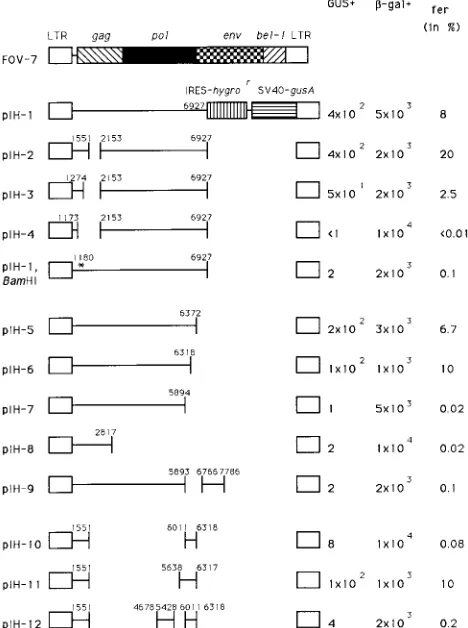
FIG. 1. Constructs used in the packaging experiments with respect to the pFOV-7 helper virus. Numbers indicate the proviral DNA of HSRV1. The U3 region is 777 bp long; thus, the start site of transcription (11) of viral RNA coincides with position 778. IRES-hygrorindicates the gene encoding hygromycin
resistance under the control of the poliovirus IRES. SV40-gusA denotes the gusA gene under the control of the SV40 early promoter. Solid lines indicate HSRV1 sequences present in the vector constructs. Transfer was assayed by GUS (vec-tor) andb-Gal (helper HFV) expression per milliliter. Values shown are the means of at least three independent experiments. The ratios of numbers of GUS-positive colonies to numbers ofb-Gal-positive colonies are given in per-centages. The asterisk in plasmid pIH-1, BamHI denotes the site of mutation.
on November 9, 2019 by guest
http://jvi.asm.org/
Delineation of sequences in the leader and gag ORF re-quired for transfer of HFV vectors.Plasmid pIH-1 generated a vector with sequences from positions 1 to 6927 of proviral DNA. When BHK/Bel-1 cells stably expressing this construct were transfected with helper virus DNA and the supernatant was plated on BHLL cells, vector-transduced, GUS-positive
foci approximated 10% ofb-Gal-positive foci resulting from
infection by helper HFV (Fig. 1). This result demonstrated that the cis-acting sequences essential for transfer were present. The criterion for transfer adopted was that the con-struct titer should constitute at least 1% of the helper virus titer. Constructs with a titer of less than 1% that of helper HFV were described as being poorly transferred. To investigate the
contribution of the 59 end of the genome, mutants pIH-2,
pIH-3, and pIH-4, with internal deletions of proviral sequences from positions 1551 to 2153, 1274 to 2153, and 1173 to 2153, respectively, were constructed. Transfer was observed for mu-tants with deletions in gag (pIH-2 and, to a lesser extent, pIH-3). However, no transfer was observed for construct pIH-4, in which part of the leader region was also deleted (Fig. 1), suggesting that sequences crucial for transfer lie upstream of position 1274.
Retrovirus genomes frequently recombine, and it was theo-retically possible that transfer could be accounted for by the regeneration of a packaging signal by recombination between helper HFV and vector genomes. To investigate this possibil-ity, vector cell lines expressing deletion mutants pIH-2, pIH-3, and pIH-4 were transfected with plasmid pFOV-7, and the supernatant was added to BHK/Bel-1 cells to enable the syn-thesis of vector-derived RNA and the subsequent expression of
the IRES-hygror cassette. Following incubation in selection
medium, no hygromycin-resistant colonies were detected for construct pIH-4, only for constructs pIH-2 and pIH-3. Al-though the supernatant must have represented a mixture of viral particles encoding the construct and helper HFV, no cytopathic effect appeared in the hygromycin-resistant cells. These cells stained blue when tested for GUS expression, in-dicating the presence of the construct (data not shown).
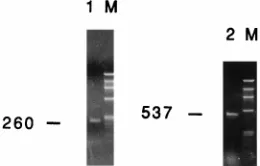
Cellular DNA was extracted and subjected to PCR with primer pair P20-P21 (Table 1). For helper virus, a fragment of 1,138 bp was expected, whereas deletion mutants pIH-2 and pIH-3 were expected to provide fragments of 537 and 260 bp, respectively. When plasmids pIH-2 and pIH-3 were mixed and
PCR was performed, we found that the longer PCR product, from pIH-2, was less abundantly produced. We were, however, able to detect the PCR product from plasmid pIH-2 if this plasmid was present at 10% the amount of pIH-3. Control DNA from uninfected cells gave no signal (data not shown); no band corresponding to the size of full-length helper virus was observed with DNA from the hygromycin-resistant cells, whereas deletion mutant fragments of the expected sizes were readily seen (Fig. 3). DNA sequencing confirmed the transfer of original deletion mutants pIH-2 and pIH-3.
The DLS consists of several sites which direct the dimeriza-tion of HFV RNA in vitro and is located in the region con-taining the primer binding site, the leader region, and the start of the gag gene. Mutations in a palindromic sequence of 10 nt in site II (SII) within the leader region led to a decreased ability of RNA to dimerize in vitro (16). To investigate the functional relationship of this in vitro finding to the transfer by helper HFV, we constructed a plasmid (pIH-1, BamHI) in which the palindrome was extended by the insertion of a
BamHI linker at position 1180 of the proviral DNA. The RNA
of this mutant dimerizes poorly in vitro (16). Figure 1 shows that the transfer of this mutant by helper HFV was also greatly reduced, suggesting the importance of an intact DLS for trans-fer.
[image:3.612.56.549.80.265.2]Additional sequences in the pol ORF are required for the transfer of HFV vectors.Plasmids pIH-5 and pIH-6 were con-structed to include proviral sequences from positions 1 to 6372 and 1 to 6318, respectively. These constructs could be trans-ferred (Fig. 1). Plasmid pIH-6 lacks a sequence, described as a second polypurine tract (PPT), which might play a role in reverse transcription (25, 43). However, this sequence was dispensable for the transfer of vector genomes. In contrast to these plasmids, plasmid pIH-7, with sequences up to position 5894, was found to be poorly transferred by helper HFV, constituting less than 1% of the values obtained for helper HFV (Fig. 1). We generated two other constructs, pIH-8 and pIH-9. Plasmid pIH-8 includes HSRV1 sequences from posi-tions 1 to 2817. Plasmid pIH-9 includes proviral sequences from positions 1 to 7786 but has an internal deletion from positions 5893 to 6766. Both constructs behaved in a manner similar to that of plasmid pIH-7, indicating that they also lacked important sequences.
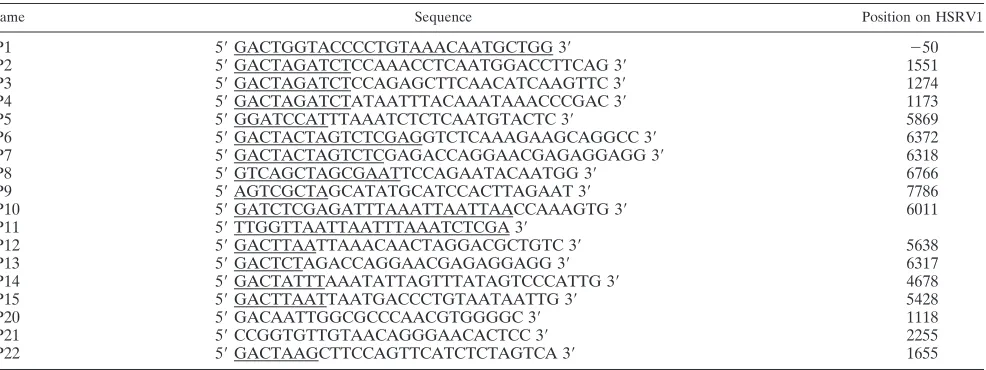
TABLE 1. Nucleotide sequences of the oligonucleotides useda
Name Sequence Position on HSRV1
P1 59GACTGGTACCCCTGTAAACAATGCTGG 39 250
P2 59GACTAGATCTCCAAACCTCAATGGACCTTCAG 39 1551
P3 59GACTAGATCTCCAGAGCTTCAACATCAAGTTC 39 1274
P4 59GACTAGATCTATAATTTACAAATAAACCCGAC 39 1173
P5 59GGATCCATTTAAATCTCTCAATGTACTC 39 5869
P6 59GACTACTAGTCTCGAGGTCTCAAAGAAGCAGGCC 39 6372
P7 59GACTACTAGTCTCGAGACCAGGAACGAGAGGAGG 39 6318
P8 59GTCAGCTAGCGAATTCCAGAATACAATGG 39 6766
P9 59AGTCGCTAGCATATGCATCCACTTAGAAT 39 7786
P10 59GATCTCGAGATTTAAATTAATTAACCAAAGTG 39 6011
P11 59TTGGTTAATTAATTTAAATCTCGA 39
P12 59GACTTAATTAAACAACTAGGACGCTGTC 39 5638
P13 59GACTCTAGACCAGGAACGAGAGGAGG 39 6317
P14 59GACTATTTAAATATTAGTTTATAGTCCCATTG 39 4678
P15 59GACTTAATTAATGACCCTGTAATAATTG 39 5428
P20 59GACAATTGGCGCCCAACGTGGGGC 39 1118
P21 59CCGGTGTTGTAACAGGGAACACTCC 39 2255
P22 59GACTAAGCTTCCAGTTCATCTCTAGTCA 39 1655
aNonviral sequences are underlined. P11 is a nonviral sequence.
on November 9, 2019 by guest
http://jvi.asm.org/
Construction of an HFV vector containing minimal cis-act-ing sequences. To examine the possibility that further se-quences in the gag or pol ORF were necessary for transfer by HFV, an internal deletion in the proviral sequences from po-sitions 1551 to 6011 of plasmid pIH-6 was constructed. The resulting construct, pIH-10, was poorly transferred, whereas plasmid pIH-11, containing HSRV1 sequences up to position 6317 and having an internal deletion from positions 1551 to 5638 of the proviral DNA, was efficiently transferred. Another construct, pIH-12, which resulted from insertion of proviral sequences from positions 4678 to 5428 into construct pIH-10, was only poorly transferred (Fig. 1). These results demonstrate the importance of the pol sequences after position 5638 of HSRV1, which cannot be substituted by other upstream se-quences. In the viral RNA, this position corresponds to posi-tion 4861. These results are in keeping with the findings of Russell and Miller (38) and, furthermore, define for the first time the minimal cis-acting sequences required for vector transfer.
Stability of vector RNA. We addressed the question of whether the vector cell lines produced the same amounts of RNA from transferable and nontransferable constructs to ex-clude the possibility that the lack of transfer resulted from an instability in the vector cell lines of RNAs lacking the pol
sequences. To investigate this question, an RNase protection assay was performed. The riboprobe was generated from po-sitions 1393 to 1655 of the proviral sequences (Fig. 4A), rep-resenting positions 616 to 878 of HFV RNA, and hybridized only to unspliced RNA, since the major splice donor site of HFV lies at position 51 (33). Cellular RNA was extracted from a set of vector cell lines generated from three transferable and three poorly transferable constructs. These two groups of con-structs included examples with or without an internal deletion (Fig. 4B).
Mutants with internal deletions comprised the poorly trans-ferable constructs pIH-10 (Fig. 4B, lane 2) and pIH-12 (lane 4) as well as the transferable construct pIH-2 (lane 3). Mutants without internal deletions included the transferable constructs pIH-1 (Fig. 4B, lane 7) and pIH-6 (lane 9) as well as the poorly transferable construct pIH-7 (lane 8). RNAs from untreated BHK/Bel-1 cells (Fig. 4B, lanes 1 and 6) and BHK/Bel-1 cells transfected with plasmid pFOV-7 (lane 5) were included as controls. For constructs pIH-10, pIH-2 and pIH-12, with inter-nal deletions from proviral position 1551 (RNA, 774), a pro-tected band of 159 nt was seen (Fig. 4B, lanes 2, 3, and 4, C*), whereas helper HFV and constructs pIH-1, pIH-7 and pIH-6, without an internal deletion, resulted in the protection of a fragment of 263 nt (lanes 7, 8, and 9, C). A 127-nt fragment of
the humanb-actin gene served as an internal control.
Some variations in RNA production were noted with, for example, constructs pIH-10 (Fig. 4B, lane 2) and pIH-2 (lane 3) as well as constructs pIH-7 (lane 8) and pIH-6 (lane 9). These variations may be accounted for by the fact that the vector cell lines represented pooled populations of transfected cells and, thus, included cells with different integration and subsequent transcription events. However, since construct pIH-10, being more abundant than construct pIH-2, was still only poorly transferred (Fig. 1), the variations in RNA synthe-sis cannot account for the different transfer efficiencies of the constructs. Viral RNA from control BHK/Bel-1 cells trans-fected with plasmid pFOV-7 gave a much stronger signal (Fig. 4B, lane 5) than constructs in the vector cell lines. This result suggests that the RNA synthesis of helper HFV also exceeded the synthesis of the constructs in the respective vector cell lines. The reason for this finding is not known, but it probably explains why each deletion mutant was transferred at only a fraction of the amount observed for helper HFV. Several
[image:4.612.55.285.58.445.2]frag-FIG. 2. Schematic presentation of the protocol followed to test for transfer. DMEM, Dulbecco’s modified Eagle’s medium; FCS, fetal calf serum.
FIG. 3. Assay for recombination between construct pIH-2 or pIH-3 and helper HFV used in the transfer experiments. Vector cell lines for each construct were transfected with helper HFV DNA, and the supernatant was used to infect BHK/Bel-1 cells. This procedure allowed transcription from the LTR of the constructs and subsequent expression of the IRES-hygrorcassette. Primer pair P20-P21 was used to amplify DNA from hygromycin-resistant colonies. Due to the sizes of their internal deletions, PCR fragments of 537 and 260 bp would be expected if plasmids pIH-2 and pIH-3 were transferred without recombination. Helper HFV would generate a fragment of 1,138 bp. Lanes: 1, PCR product of cells exposed to helper HFV and construct pIH-3; 2, PCR product of cells exposed to helper HFV and construct pIH-2 (in both cases, no fragment corre-sponding to helper HFV could be detected); M, molecular weight markerfX174 cut with HaeIII. The sizes of the bands are, from top to bottom (in base pairs): 1,353, 1,078, 872, 603, 310, 281, 271, 234, 194, 118, and 72.
on November 9, 2019 by guest
http://jvi.asm.org/
[image:4.612.363.493.526.609.2]ments smaller than the human b-actin gene fragment were observed. They were, however, not present if hybridization was carried out with a riboprobe for construct RNA only (data not shown). Furthermore, since these bands also appeared in BHK/Bel-1 cells without construct RNA (Fig. 4B, lanes 1 and
6), they must be specific for the b-actin probe. A possible
explanation for their presence could be that mismatches
oc-curred when the humanb-actin gene and the hamster
equiv-alent in the BHK/Bel-1 cells hybridized. Mismatches are likely to result in higher sensitivity to RNase treatment and the generation of smaller protected species.
DISCUSSION
The successful use of vectors based on replication-compe-tent and replication-incompereplication-compe-tent HFV to deliver heterologous genes has been reported (8, 18, 38, 40). However, these vectors still encode large parts of viral sequences, limiting the space available for the incorporation of foreign DNA. To exploit further foamy viruses as vectors for gene delivery, we investi-gated what sequences in the viral genome were necessary for the construction of a minimal HFV-based vector. Because the titer of viruses released from foamy virus-infected cells is low, we used an indirect approach to monitor whether helper HFV could transfer constructs carrying reporter genes. The experi-ments described here, therefore, cannot strictly distinguish among the impairment of nucleoplasmic transport, the pack-aging process, and subsequent steps of the replication cycle after the infection of recipient cells (e.g., reverse transcription and integration).
Constructs carrying the genes hygror and gusA were
intro-duced into the viral genome, and stably expressing vector cell lines were generated. After transfection of these vector cell lines with helper HFV, the supernatant was assayed for the packaged construct by infection of recipient cells and staining for the reporter gene. From these experiments it was evident that functional HFV vectors must contain two distinct regions of the viral genome. The first of these two regions, located at
the 59end of the proviral genome upstream of position 1274
[image:5.612.52.288.80.617.2](RNA, 497), by analogy to other retroviruses probably consti-tutes a common DLS-encapsidation packaging signal (6, 10, 15, 20). Three sites (SI, SII, and SIII) in the leader region are important for full dimerization of HFV RNA in vitro (16). A deletion mutant (pIH-4) lacking SII and SIII was not a func-tional vector. However, deletion mutants pIH-2 and pIH-3, both of which include the complete DLS, could be transferred (Fig. 1), as proved by sequence analysis after transfer to recip-ient cells. The observation that plasmid pIH-1, BamHI, carry-ing a mutation in the SII palindrome which impaires dimer-ization in vitro, also inhibited transfer by helper HFV indicates that these two functional sites are closely linked. The splice donor site of HFV is located at position 51 of viral RNA (33). Therefore, the putative packaging sequence in the leader re-gion of viral RNA is present only on unspliced genomic RNA. The second region needed for efficient transfer by helper HFV lies in the pol ORF between positions 5638 and 6317 of proviral DNA (4861 and 5540, respectively, of viral RNA). Deletion mutants which lacked these sequences could not be transferred, whereas constructs which included these se-quences constituted functional vectors (Fig. 1). It has been reported that the pol ORF of foamy viruses possesses a second central PPT, a feature shared only by the lentiviruses (reviewed in reference 24), and a dual mode of initiation of plus-strand DNA synthesis has been suggested (25, 43). This is the case for HIV-1, for which a PPT duplication has been described (45), and mutation of this central PPT reduces the infectivity of the
FIG. 4. RNase protection assay. (A) Localization of the riboprobe in the gag ORF. Numbers indicate the proviral DNA of HSRV1. The expected sizes of the protected RNA fragments for constructs with and without internal deletions protected by the riboprobe are indicated. nt, nucleotides. (B) RNA from stably transfected vector cell lines was compared with RNA from BHK/Bel-1 cells and RNA from BHK/Bel-1 cells producing helper HFV (FOV-7). Vectors pIH-10, pIH-2, and pIH-12 yielded a protected fragment of 159 nt (C*). Vectors pIH-1, pIH-7, and pIH-6 yielded a protected fragment of 263 nt (C). A fragment (127 nt) of humanb-actin RNA (hu) served as an internal control. M, molecular weight marker pBR322 cut with MspI. The sizes of the DNA fragments are indicated in nucleotides.
on November 9, 2019 by guest
http://jvi.asm.org/
virus (19). In HSRV1, the central PPT is located at positions 6340 to 6351. However, since pIH-6 and pIH-11 could be efficiently transferred in the absence of this sequence, its in-fluence in the context of replication-defective vectors is, at most, minor.
Additional env sequences which are required to produce vectors based on HIV-1 have been described, although subse-quent investigations could not define a specific sequence (7, 22, 37). For RSV, direct-repeat sequences flanking the v-src gene are also essential cis-acting sequences (41, 42). The situation with HFV seems to be similar in that two sequences from different parts of the genome must be present simultanously to enable efficient transfer by helper HFV. The mechanism by which the region in pol exerts its influence is unclear, but the RNase protection assay carried out showed that a potential instability or a low rate of synthesis of RNA lacking this region was not the explanation. Like other complex retroviruses (14), HFV has a transcriptional transactivator. In order to allow cytoplasmic expression of unspliced and singly spliced mRNAs encoding the structural proteins, some complex retroviruses, such as HIV-1, require a posttranscriptional transactivator (Rev) and the presence of a specific recognition element (responsive element) within these mRNAs. No or Rev-responsive element-like functions are required for HFV gene expression (27). Moreover, it was shown recently that the Pol protein of HFV is not required for packaging (4). These find-ings beg the question of how and where the unspliced genomic RNA of HFV is recognized and packaged. A possible function of the sequences in the pol ORF is that they work in a manner similar to that of a constitutive transport element, as described for Mason-Pfizer monkey virus (11), allowing unspliced RNA to effectively reach the cytoplasm. So far, we have not investi-gated whether the sequences in the pol ORF can act as a constitutive transport element or whether they are responsible for other functions.
Recently, it became clear that the life cycle of foamy viruses is different from that of other retroviruses and that it follows a pathway not unlike that of hepadnaviruses (48). The detailed contributions of the pol sequences to the replication process in general and to packaging in particular remain to be deter-mined. However, with the identification of the minimal cis-acting sequences described here and the construction of a useful vector (pIH-11) with only about 3.6 kb of proviral se-quences remaining for the delivery of heterologous genes, it will be possible to fully exploit the potential packaging capacity of HFV as a vector.
ACKNOWLEDGMENTS
We are grateful to the EC and to the Wellcome Trust for funding this study and to the Jefferiss Research Trust for laboratory support. Plasmid pPBS with the poliovirus IRES was provided by R. Vile of the ICRF Unit, Hammersmith Hospital, London, United Kingdom. We thank Albert Stu¨hler for helpful discussion.
REFERENCES
1. Aldovini, A., and R. A. Young. 1990. Mutations of RNA and protein se-quences involved in human immunodeficiency virus type 1 packaging result in production of noninfectious virus. J. Virol. 64:1920–1926.
2. Alford, R. L., S. Honda, C. B. Lawrence, and J. W. Belmont. 1991. RNA secondary structure analysis of the packaging signal for Moloney murine leukemia virus. Virology 183:611–619.
3. Aronoff, R., A. M. Hajjar, and M. L. Linial. 1993. Avian retroviral RNA encapsidation: reexamination of functional 59RNA sequences and the role of nucleocapsid Cys-His motifs. J. Virol. 67:178–188.
4. Baldwin, D. W., and M. L. Linial. 1998. The roles of Pol and Env in the assembly pathway of human foamy virus. J. Virol. 72:3658–3665. 5. Bender, M. A., T. D. Palmer, R. E. Gelinas, and A. D. Miller. 1987. Evidence
that the packaging signal of Moloney murine leukemia virus extends into the
gag region. J. Virol. 61:1639–1646.
6. Berkhout, B., and J. L. B. van Wamel. 1996. Role of the DIS hairpin in replication of human immunodeficiency virus type 1. J. Virol. 70:6723–6732. 7. Berkowitz, R. D., M.-L. Hammarskjo¨ld, C. Helga-Maria, D. Rekosh, and
S. P. Goff.1995. 59Regions of HIV-1 are not sufficient for encapsidation: implications for the HIV-1 packaging signal. Virology 212:718–723. 8. Bieniasz, P. D., O. Erlwein, A. Aguzzi, A. Rethwilm, and M. O. McClure.
1997. Gene transfer using replication-defective human foamy virus vectors. Virology 235:65–72.
9. Bieniasz, P. D., A. Rethwilm, R. Pitman, I. Christie, and M. O. McClure. 1995. A comparative study of higher primate foamy viruses including a new virus from a gorilla. Virology 207:217–228.
10. Bieth, E., C. Gabus, and J.-L. Darlix. 1990. A study of the dimer formation of Rous sarcoma virus RNA and of its effect on viral protein synthesis in vitro. Nucleic Acids Res. 18:119–127.
11. Bray, M., S. Prasad, J. W. Dubay, E. Hunter, K.-T. Jeang, D. Rekosh, and
M.-L. Hammarskjo¨ld.1994. A small element from the Mason-Pfizer monkey virus genome makes human immunodeficiency virus type 1 expression and replication Rev-independent. Proc. Natl. Acad. Sci. USA 91:1256–1260. 12. Buchschacher, G. L., Jr., and A. T. Panganiban. 1992. Human
immunode-ficiency virus vectors for inducible expression of foreign genes. J. Virol.
66:2731–2739.
13. Clever, J. L., and T. G. Parslow. 1997. Mutant human immunodeficiency virus type 1 genomes with defects in RNA dimerization or encapsidation. J. Virol. 71:3407–3414.
14. Cullen, B. R. 1992. Human immunodeficiency virus as a prototypic complex retrovirus. J. Virol. 65:1053–1056.
15. Darlix, J.-L., C. Gabus, M.-T. Nugyere, F. Clavel, and F. Barre-Sinoussi. 1990. cis Elements and trans-acting factors involved in the RNA dimerization of the human immunodeficiency virus HIV-1. J. Mol. Biol. 216:689–699. 16. Erlwein, O., D. Cain, N. Fischer, A. Rethwilm, and M. O. McClure. 1997.
Identification of sites that act together to direct dimerization of human foamy virus RNA in vitro. Virology 229:251–258.
17. Harrison, G. P., E. Hunter, and A. M. Lever. 1995. Secondary structure model of the Mason-Pfizer monkey virus 59leader sequence: identification of a structural motif common to a variety of retroviruses. J. Virol. 69:2175– 2186.
18. Hirata, R. K., A. D. Miller, R. G. Andrews, and D. W. Russell. 1996. Trans-duction of hematopoietic cells by foamy virus vectors. Blood 88:3654–3661. 19. Hungnes, O., E. Tjotta, and B. Grinde. 1992. Mutations in the central polypurine tract of HIV-1 result in delayed replication. Virology 190:440– 442.
20. Katoh, I., T. Yasunaga, and Y. Yoshinaka. 1993. Bovine leukemia virus RNA sequences involved in dimerization and specific gag protein binding: close relation to the packaging sites of avian, murine, and human retroviruses. J. Virol. 67:1830–1839.
21. Katz, R. A., R. W. Terry, and A. M. Skalka. 1986. A conserved cis-acting sequence in the 59 leader of avian sarcoma virus RNA is required for packaging. J. Virol. 59:163–167.
22. Kaye, J. F., J. H. Richardson, and A. M. Lever. 1995. cis-Acting sequences involved in human immunodeficiency virus type 1 RNA packaging. J. Virol.
69:6588–6592.
23. Konings, D. A. M., M. A. Nash, J. V. Maizel, and R. B. Arlinghaus. 1992. Novel GACG-hairpin pair motif in the 59untranslated region of type C retroviruses related to murine leukemia virus. J. Virol. 66:632–640. 24. Kupiec, J.-J., and P. Sonigo. 1996. Reverse transcriptase jumps and gaps.
J. Gen. Virol. 77:1987–1991.
25. Kupiec, J. J., J. Tobaly-Tapiero, M. Canivet, H. M. Santillana, R. M. Flu¨gel,
J. Peries, and R. Emanoil-Ravier.1988. Evidence for a gapped linear duplex DNA intermediate in the replicative cycle of human and simian spumavi-ruses. Nucleic Acids Res. 16:9557–9565.
26. Laughrea, M., L. Jette, J. Mak, L. Kleiman, C. Liang, and M. A. Wainberg. 1997. Mutations in the kissing-loop hairpin of human immunodeficiency virus type 1 reduce viral infectivity as well as genomic RNA packaging and dimerization. J. Virol. 71:3397–3406.
27. Lee, A. H., H. Y. Lee, and Y. C. Sung. 1994. The gene expression of human foamy virus does not require a post-transcriptional transactivator. Virology
204:409–413.
28. Lever, A. M. L., H. Go¨ttlinger, W. Haseltine, and J. Sodroski. 1989. Identi-fication of a sequence required for efficient packaging of human immuno-deficiency virus type 1 RNA into virions. J. Virol. 63:4085–4087. 29. Linial, M. L., and A. D. Miller. 1990. Retroviral RNA packaging: sequence
requirements and implications, p. 125–152. In R. Swanstrom and P. K. Vogt (ed.), Retroviruses: strategies of replication. Springer-Verlag, New York, N.Y.
30. Mann, R., R. C. Mulligan, and D. Baltimore. 1983. Construction of a retro-virus packaging mutant and its use to produce helper-free defective retrovi-rus. Cell 33:153–159.
31. Mansky, L. M., A. E. Krueger, and H. M. Temin. 1995. The bovine leukemia virus encapsidation signal is discontinuous and extends into the 59end of the
gag gene. J. Virol. 69:3282–3289.
32. Morgenstern, J. P., and H. Land. 1990. Advanced mammalian gene transfer: high titre retroviral vectors and a complementary helper free packaging cell
on November 9, 2019 by guest
http://jvi.asm.org/
line. Nucleic Acids Res. 18:3587–3596.
33. Muranyi, W., and R. M. Flu¨gel. 1991. Analysis of splicing pattern of human spumatetrovirus by polymerase chain reaction reveals complex RNA struc-tures. J. Virol. 65:727–735.
34. Paillart, J.-C., L. Berthoux, M. Ottmann, J.-L. Darlix, R. Marquet, B.
Ehres-mann, and C. Ehresmann.1996. A dual role of the putative RNA dimer-ization initiation site of human immunodeficiency virus type 1 in genomic RNA packaging and proviral DNA synthesis. J. Virol. 70:8348–8354. 35. Pugatsch, T., and D. W. Stacey. 1983. Identification of a sequence likely to
be required for avian retroviral packaging. Virology 128:505–511. 36. Rethwilm, A., G. Baunach, K.-O. Netzer, B. Maurer, B. Borisch, and V. ter
Meulen.1990. Infectious DNA of the human spumaretrovirus. Nucleic Acids Res. 18:733–738.
37. Richardson, J. H., L. A. Child, and A. M. L. Lever. 1993. Packaging of human immunodeficiency virus type 1 RNA requires cis-acting sequences outside the 59leader region. J. Virol. 67:3997–4005.
38. Russell, D. W., and A. D. Miller. 1996. Foamy virus vectors. J. Virol. 70: 217–222.
39. Sambrook, J., E. F. Fritsch, and T. Maniatis. 1989. Molecular cloning: a laboratory manual, 2nd ed. Cold Spring Harbor Laboratory, Cold Spring Harbor, N.Y.
40. Schmidt, M., and A. Rethwilm. 1995. Replicating foamy virus-based vectors directing high level expression of foreign genes. Virology 210:167–178. 41. Simpson, S. B., L. Zhang, R. C. Craven, and C. M. Stoltzfus. 1997. Rous
sarcoma virus direct repeat cis elements exert effects at several points in the virus life cycle. J. Virol. 71:9150–9156.
42. Sorge, J., W. Ricci, and S. H. Hughes. 1983. cis-Acting RNA packaging locus in the 115-nucleotide direct repeat of Rous sarcoma virus. J. Virol. 48:667– 675.
43. Tobaly-Tapiero, J., J. J. Kupiec, H. M. Santillana, M. Canivet, J. Peries, and
R. Emanoil-Ravier.1991. Further characterization of the gapped DNA in-termediates of human spumavirus: evidence for a dual role in initiation of plus-strand DNA synthesis. J. Gen. Virol. 72:606–608.
44. Vile, R. G., M. Ali, E. Hunter, and M. O. McClure. 1992. Identification of a generalised packaging sequence for D-type retroviruses and generation of a D-type retroviral vector. Virology 189:786–791.
45. Wain-Hobson, S., P. Sonigo, O. Danos, S. Cole, and M. Alizon. 1985. Nu-cleotide sequence of the AIDS virus, LAV. Cell 40:9–17.
46. Watanabe, S., and H. M. Temin. 1982. Encapsidation sequences for spleen necrosis virus, an avian retrovirus, are between the 59long terminal repeat and the start of the gag gene. Proc. Natl. Acad. Sci. USA 79:5986–5990. 47. Yang, Y., and H. M. Temin. 1994. A double hairpin structure is necessary for
the efficient encapsidation of spleen necrosis virus retroviral RNA. EMBO J.
13:713–726.
48. Yu, S., D. N. Baldwin, S. R. Gwynn, S. Yendapalli, and M. L. Linial. 1996. The human foamy virus replication pathway is distinct from that of retrovi-ruses and hepadnaviretrovi-ruses. Science 271:1579–1582.