JOURNALOFVIROLOGY,JUlY1993,p.4372-4378
0022-538X/93/074372-07$02.00/0
Copyright X 1993,AmericanSociety for Microbiology
Vaccination To Prevent Persistent
Viral Infectiont
MICHAEL B. A. OLDSTONE,* ANTOINETTE TISHON, MICHAELEDDLESTON, JUAN CARLOS DE LATORRE, THOMAS McKEE,4 ANDJ. LINDSAY WHITITON Division of Virology, Department of Neuropharmacology, The Scripps Research Institute,
LaJolla, California 92037
Received 4February 1993/Accepted 25 March1993
Persistentvirusinfectionsare
increasingly
being recognized as a significantcauseof human morbidity andmortality. Toestablish persistence,avirusmustestablish infection and evade eradication by the host immune
response,inparticular by cytotoxicTlymphocytes (CTL). We have studiedavirus that establishes persistence
inpartbysuppressing the CTLresponse of theinfected host. The virus persistsinmany celltypes,including lymphocytesandmacrophages. Weshowthatprior immunizationwithavaccinedesignedtoinduce CTL(in the absence ofantiviralantibody) confers complete protection against subsequent establishment of persistence inall tissuesanalyzed. The vaccinecanbedesignedtoexpress asfewas10amino acids ofaviral proteinthat
comprisetheCTLepitope. Further,twoCTLepitopesfor twodiscrete MHC haplotypescanbe successfully
used inasingle vaccinethat protects both strains ofmice.Hence,a"stringofCTLepitopes" (beads)concept for vaccination is feasible. Finally, the CTL vaccine provided protection against the establishment of persistence byanimmunosuppressivevirus.
The recognition that viruses can persist for life in their hosts andas aconsequencecausechronic diseases(2, 10, 26) isanimportantadvanceofmodemvirology.Onehallmark of
persistentinfectionbyDNAorRNAviruses is theirability toexist within selectedcells, especially lymphocytes and/or macrophages, of the immune system (reviewed reference 13). Indeed, with several such persistent or latentviruses, lymphocytesandmacrophagesservenotonlyas a sourcefor
harboring the viral genome but also as transporters that
carry viruses to multiple sites (8, 20) and as potential
factories where viruses can reactivate, thereby reinitiating
infection(8, 9, 20, 21).
The incidence of many acute viral diseases (smallpox, polio, measles, mumps, etc.) has fallen dramatically as a
result of vaccination. However, while such vaccinations
protect against disease, they do not necessarily prevent infection. Forexample, polioviruscanstillinfect, and repli-cate in, the gut tissues of vaccinated individuals; however, theprimedimmune responseis sufficiently rapidand effec-tivetopreventextensive virusproductionand viralspreadto
nervous tissue. This viral replication in immunized hosts
wouldpresentaproblemwhenoneisdealingwithpersistent
or latent viruses, since it provides the virus a window of
opportunityinwhichtoestablishpersistence and evadethe host immune response. Therefore, vaccine strategies to protectagainstviruses thatpersistorcauselatencyneedto
differ from those usedtocombatacuteviral diseases(14, 22). Protection against persistent or latent viruses may require effectiveprevention ofinfection in the immunizedhost,and
anyinfection which doesoccurmustberecognizedataearly stage and eradicated. We have focused on the second requirement, by evaluatingthe role ofcytotoxicT lympho-cytes (CTL) in countering persistent viral infection. Al-though neutralizing antibody produced by vaccinesto
com-* Correspondingauthor.
tPublication 7261-NP from the Division ofVirology, Department ofNeuropharmacology, The Scripps Research Institute, LaJolla, Calif.
tPresent address:DepartmentofPathology, Cambridge
Univer-sity, Cambridge,UnitedKingdomCB22QQ.
bat infection iseffectiveagainstcell-free virus inbody fluids, it is generally inefficient against cell-associated virus of persistent infection. CTL attack infected cells whose
sur-facesexpressviralantigens (peptide)bound tomajor
histo-compatibility complex (MHC) glycoproteins (16, 27, 31). This attacksystemishighlyefficient in that 102orfewerviral
moleculesarerequiredfor T-cell activation and lysis,
com-paredwith 106or moreviral molecules needed for antiviral
antibody-andcomplement-mediated lysis (6, 24, 25). Addi-tionally, because CTL can recognize nonstructural early
viral antigens beforestructural late antigens are made (re-viewed reference 16),infected cellscanbe killedbefore the
virus canassemble and release infectiousprogenyorwhen minimalamountsofearly proteinsarebeingproduced, thus preventingvirusspread.
TheCTLresponseinanindividual isfrequentlylimitedto recognition ofa few discrete peptidesequences on aviral
protein, reflecting the limited numbers of viral peptides which bind with sufficient affinity to the MHC class I molecules. Usingmoleculargenetic andbiochemical analy-ses, we have mapped, on several MHCbackgrounds, the epitopes on lymphocytic choriomeningitis virus (LCMV) Armstrong strain (Arm) with which CTL interact. In the
contextof restrictionbyMHC class I molecules forthe H-2d haplotype, >96% of the bulkorclonalresponseCTL
recog-nize LCMVnucleoyrotein(NP) amino acids(aa) 119to 127 (restrictedtothe L allele) (29).Inthe
H-2b
environment(all restrictedbytheD'allele),CTLrecognizeNPaa396to404 (30) and glycoprotein (GP)aa 33to 41 (12) and278 to 286 (19).Identification of thesesequencesenabledustodevelop strategiestomanipulate this interaction.Here,we reportsuccessful vaccinationagainst persistent viral infection. Immunization with a vaccine designed to
induce CTL, in the absence of antiviral antibody, confers protection against subsequent establishment ofpersistence by an immunosuppressive virus. Replication ofvirus was
prevented in all tissues as well as cells comprising the immune system, i.e., macrophages and lymphocytes. The vaccine could be designed to express as few as 10 amino acids that form the viral peptide functioning as a CTL
epitope.Two different CTLepitopes fortwodistinct MHC
4372
Vol. 67, No. 7
on November 9, 2019 by guest
http://jvi.asm.org/
NOTES 4373
TABLE 1. Preventionby CTL vaccine of persistent infectiona
Vaccineeffectivenessb
Mouse strain MHCKIDL LCMV NP aa
haplotype expressed Virus in MeanPFFU/ml
micec of serum
C57BL/6 bbb 1-201 30/30 1.4 x 10
bbb None 14/14 2.4 x 10⁵
bbb 1-558 0/8 0
BALB/WEHI dddd 1-201 0/10 0
dddd None 5/5 1.7 x 10⁵
SWR/J qqqq 1-201 0/24 0
qqqq None 8/8 2.7 x 10⁵
C3H.Q qqqq 1-201 0/6 0
qqqq None 2/2 8.2 x 10⁴
pj/Jd uuu 1-201 0/5 0
a Micereceived asingleinoculation i.p. of 2 x10⁷PFUof arecombinantVVvaccine expressing LCMV NP aa1to 201 orLCMVNP aa 1 to 558. Six weeks later, micewerechallengedi.v.with2 x106PFU of LCMV Armcl13.
bDetermined28daysafterLCMVArmcl 13 challenge.
cNumber ofmice with virusinsera/totalnumber of mice ineachgroup.
dPL/Jmiceinoculated onlyi.v. with 2 x
10"
PFUof LCMVArm cl13 routinely died of a CD8+-dependentCTL-mediatedimmunopathologic disease (26a).haplotypes were successfully used in one vaccine, validating the string-of-beads conceptfor vaccinating an outbred pop-ulation suchashumans.
Virus, construction of vaccines, vaccination, and challenge. Theorigin, cloning, and plaque purification of LCMV Arm clone (cl) 13 and LCMV Armcl 53b have been described elsewhere (1, 7, 23). Virus was quantitated by standard plaque assay on Vero cells (7). Cells containing infectious virus were quantitated by a standard infectious center pro-cedure(3). Construction and use of a recombinant vaccinia virus (VV)vaccine expressing the full-length NP of LCMV Arm(VVNPaa1to558)Cl 53b or the first 201 amino acids
(VVNPaa1 to201)have been published elsewhere(12, 18,
29). Byusingasimilar approach, recombinant VVvaccines
thatexpressed the M3peptide
([M]KAVYNFATCG[VTS];
the GP1 CTL epitope that protects H-2b mice) (12), MG4
Vaccine Prevention ofPersistent Viral Infection Mouse MHCW/NP
Strain KIDL 1-201 0 20 40 60 80 100
C5713L.6bbb 'No
C57BL/6 bbb +
BALB dddd No
BALB dddd +
B10.A bbdd No
B1O.A bbdd +
C57BL/6bbb W/NP
1-558
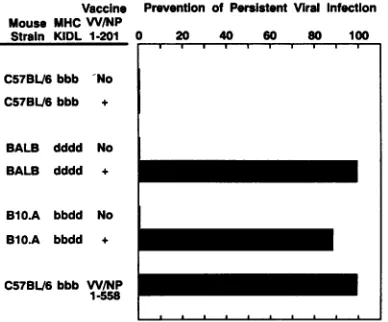
FIG. 1. Involvement ofDdLdclass IMHC restriction in prevent-ing persistent viral infection of BALB and B1O.A 18r mice. Mice (groups of eightormore) received a single inoculation of 2 x 10⁷
PFU ofarecombinantVVvaccineexpressing LCMV NPaa1to201
orLCMVNPaa1to558i.p. Six weeks later, micewerechallenged
with2x 106PFU of LCMV Armcl 13 i.v. Their blood sampled 30
daysaftercl 13 challengewastestedby standard plaqueassay on
Vero cells.Prevention ofpersistent viral infection (number of mice nothaving virus/totalnumber inoculated)wasassociatedwith the
absence ofvirus PFUin theblood.
peptide ([M]ERPQASGVYMGNLT[VTS]; the NP CTL
epitopethat protects
H-2d,
H-2q, and H-2"mice) (18, 29),or MG3 plus MG4([M]KAVYNFATCG[GRTM]ERPQASG
VYMGNLT[VTS]) were synthesized. The amino acids in brackets were added to provide a start for translation (M),
spacers(VTS) precedingastopcodon,orlinkers(GRTM)to allowexpression of bothepitopes inasinglepeptide.
BALB/WEHI or
BALB/c/byj (H-2KIdIY
L ), C57BL/6(H-2Kb1bDb),
C3H.Q (H-2K7IqDq), PL/J (H-2KuuDu),SWR/J (H-2KYI7Dq), and B1O.A 18r (H-2KbIDLd) mice were obtained from the vivarium of The Scripps Research Institute. Various experiments used six to eight mice per groupunless noted otherwise. Miceat6to8weeks ofage,of either sex, were immunized with a single intraperitoneal (i.p.) inoculation of2x
107
PFUof recombinantW(WNP aa1to558, WNPaa 1to201,W GP aa33to42, W NP aa117to130,orWGPaa34to42plusNPaa117to130or WSC1l (which is devoid ofLCMVsequences)in 0.2 ml.Six to eight weeks later, mice received 2 x 10⁶ PFU of LCMV Arm cl 13 intravenously (i.v.). This inoculation
routinely led to persistent viral infection in otherwise un-treated mice(1, 3, 17).
CTL generation and detection. Primary LCMV-specific
CTLwere generated byprimingmice in vivo with 2 x 10⁵
PFU of LCMV Arm. Anti-W CTLwere similarlyinduced
byi.p. inoculation with 2 x 10⁷PFU of WSC11.Spleens were isolated on day 7; single-cell suspensions of
spleno-cytes (free from erythrocytes) were prepared in complete
RPMI 1640medium and tested forcytotoxicityasdescribed
previously(12, 29).
Secondary cytotoxic effector cells were
generated by
immunizing mice i.p. with 2 x 10⁵PFU of LCMV Arm or with 2 x 10⁷ PFU of W recombinants. Six weeks
later,
spleens were removed, freed oferythrocytes, and restimu-lated invitro withsyngeneicLCMV Arm-infectedperitoneal
exudate macrophages as described previously
(12).
Forrestimulation, 2 x 10⁵ macrophages, irradiated with 2,000
rads for 30 min and infected 48 h previously with LCMV Arm(multiplicityof infection of1),wereincubated with4 x
106
spleencells per ml of RPMI 1640 mediumsupplemented
with calfserum(12, 29). After 5daKs at37°C, effector cells wereharvested and testedbythe S Cr release assay.
Astandard 6-h
51Cr
release assaywas used asdescribedpreviously (3, 12, 19, 29). Target cells were infected with VOL. 67,1993
on November 9, 2019 by guest
http://jvi.asm.org/
[image:2.612.93.287.471.632.2]TABLE 2. Prevention by CTL vaccine of establishment of persistentviralinfectiona
Day107, no. of Day 195, in situ CR
Experimental Mouse no. Day23, PFU/ml infectious hybridizationb P
condition of blood centers/106
PBMN PBMN Spleen Spleen Liver Brain
Vaccinated SWR/J 36 0 0 0/1,512 0/1,500 Nil Nil Nil
Nonvaccinated SWR/J6 5 x 10⁵ 103 ND 49/959 + + +
Vaccinated SWR/J 38 0 0 1/2,800 0/2,500 Nil Nil Nil
Nonvaccinated SWR/J 7 6 x 10⁵ 110 60/1,600 60/630 + + +
Vaccinated SWR/J 40 0 0 0/1,280 1/2,500 Nil Nil Nil
Nonvaccinated SWR/J 41 9 x 10⁵ 200 220/1,800 36/1,296 + + +
aMicereceivedasingleinoculation i.p.of 2x10⁷PFUof arecombinant VVvaccineexpressingLCMV NP aa 1 to 201. Six weekslater,mice werechallenged i.v. with 2x10⁶PFU ofLCMVArmcl13. Days reflectdaysonwhich assays wereperformedafter cl 13challenge. PBMN,peripheralblood mononuclear cells. Data wererecordedfor six mice.Forsimilarresultswithothervaccinated mice,seeTable 1.
bNumber of cellscontainingviral nucleic acidsequences/totalnumber of cells counted. ND, notdetermined.Fordetails of PFU,infectiouscenter,and in situ assays, seeMaterialsand Methods.
LCMVArm at amultiplicity of infection of 1 48 h before the assay or with recombinant VV 16 h before the assay at a multiplicityof infection of 3.Secondaryin vitro-restimulated spleen cells wereincubatedwith target cells at effector-to-targetratios of 50:1to6.25:1. The percentspecific lysiswas calculatedas 100 x (counts per minute released by CTL
-counts per minute of spontaneous release)/(counts per minute of total release - countsperminute of spontaneous
release).
Nucleic acid
analysis.
In situ hybridization of splenic or peripheral blood mononuclear cells byusing[35S]cDNA
to LCMV NP was done accordingto our published methods(17).
Northern(RNA)blotanalysisandpolymerasechain reac-tion (PCR) primingwereperformed asdescribedpreviously
(5). Briefly, RNAwasharvested from tissuesby the method ofChomczynskiandSacchi(4).RNAwasimmobilizedon a nylon membrane andprobedwith LCMV Arm NP (5). For PCR, LCMV NP RNA was amplified by Perkin-Elmer's protocol and 30 cycles of95°Cfor denaturation and58°C for annealing. The PCR fragments were sized with Bethesda Research Laboratories' 100-bp ladder. The PCR product was resolved on a 2% agarose gel and visualized with ethidium bromide. Oligonucleotides used were 21-mers,
primerA(CAGTTATAGGTGCTCTTCCGC
[complementa-rytonucleotides1994 to 1974 of LCMVNP]) (5)andprimer
B
(AGATCTGGGAGCCTTGClTTTG
[nucleotides 1706 to 1726 of LCMVNP]),whichamplify a289-bpfragment.OneinjectionofaVV-LCMV vaccinecontainingNP aa1 to 201 totally protectedH-2d mice from developing persis-tentinfection(Table 1).TheNPepitopeaa116to127 is also
VACCINATION(VV/NP1-201)+CL13
asequencerecognizedby CTL in H-2q andH-2Umice(18),
and animals of thesehaplotypes weresimilarly protected by avaccinecontaining that sequence (Table 1). Further, NP aa 1to201 do not generate either neutralizing or enzyme-linked immunosorbent assay(ELISA) binding antibody; thus, pro-tectionby this vaccine isdependent on CTL activity (12, 18, 29, 30). Indeed, both vaccine preparations induced MHC-restrictedLCMV-specific CTL,asdemonstrated by genera-tion of memory CTL in vitro (data not shown) (17, 19).
However,in
H-2"
mice, which do not possess a CTL epitope contained within this vaccine (NP aa 1to 201),vaccination failed to prevent persistent infection, although vaccination with full-lengthNP(aa1 to558) confers complete protection uponthesemice(Table 1).H-2"
micehaveaCTLepitopeat NPaa396to404(30). Protectionmapswith the classIMHC molecules which present the epitopes (Fig. 1) and the generation of anti-LCMV CTL. Interestingly, PL/J mice, when inoculated with cl 13 at doses of 1 x 10⁵ to 2 x10⁶
PFU i.v., unexpectedly died 6 to 8 days following viral inoculation. Studies to be reported elsewhere (26a) show that deathwasdue to CD8+ LCMV-specific CTL.
Earlier in vitro studies using non-H-2d cells transfected with the
Ld
gene(29) documented that the NP epitope aa 119 to127wasrestrictedbyLd.
Todetermine whether theK or DL end of the MHC locus was required for protectionagainst viral persistence in vivo, groups of C57BL/6
(H-2KbIbDb),
BALB/CDJ(H-2KdIdDdLd),
and B1O.A 18r(H-2KbIbDdLd)
mice (8 to 15 pergroup)werevaccinated with VVNP 1to201 andchallenged 6 weeks later with cl 13. As seeninFig. 1,B1O.A18rmice and BALB mice were alike in that bothwereprotected but were different from C57BL/6CL13 ONLY
SWRIJ31 SWR/J32 SWR/J33 SWR;J34 SWR/J41 SWR/J6 2 3
Br Liv Spl Br Liv Spl Br Liv Spi Br Liv Spl Br Liv Spl Br Liv Spl
LCMV I NP
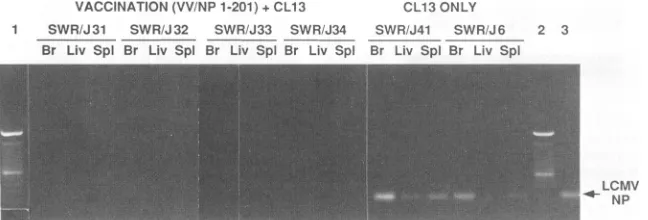
FIG. 2. PCRanalysis showingthat micereceiving the recombinantVV-LCMVvaccine containing NP aa 1 to 201 6 weeksprior to cl 13
challengefailedtoshowviral nucleic acid sequences in the brain (Br), liver (Liv), or spleen(Spl). Sixty days after cl 13 challenge, mice were
sacrificed and RNAwasharvested from tissue. LCMV NP RNA wasamplifiedby PCRasdescribed in Materials and Methods.
4374 NOTES J. VIROL.
on November 9, 2019 by guest
http://jvi.asm.org/
[image:3.612.143.467.579.689.2]NOTES 4375
-
i-, *-
' ,'S ~~~~~~~~~0
#4
40
.e
*~~~
**49.'Z',wSt.* * a,,' * *'*
BI
.V'
0
-S1
',1
*1*
C
I
$-. *. 4 .. .
* * 9 * tG
S. *
__- ¢ spa'
*
*_
a. *' *.
dl..
S. *
S.. SJ
IF~~~~~
av
;e~ ~. ~ 9 . l , S
FIG. 3. In situhybridization of spleniclymphoidcells (A and B) andperipheral blood mononuclear cells (C and D), using[35S]cDNAto LCMV NP(seeMaterials andMethods). (A and C) SWR/J mouse 7, which did not receive the recombinantVV-LCMVNP vaccinecontaining aa1to201; (BandD)SWR/J mouse 38, which did receive the vaccine (see Table 2). Six weeks later, both mice received 2 x10⁶PFUof cl
13i.v.Analysisof viral nucleic acid sequences in lymphoidcells was performed 195 days after the cl 13 challenge.
mice, which developed persistent infection. Hence, in vivo
protectionwithVVNP aa1to 201 wasassociated with the DL end of the MHC classIcomplex.
Intravenous inoculation of 2 x 10⁶ PFU of cl 13,avariant of LCMVArm(1, 3, 17),into 6-week-old orolderC57BL/6
(H-2f),
BALB/WEHI or BALB/CbyJ(H-2f),
B1O.A 18r(H_2bd), SWR/J (H-2), or C3H.q (H-2) mice suppresses their virus-specific CTL response and causes persistent infection. Persistence is demonstrated by recovery from blood and tissues of 1 x 10³-5to1 x 106PFUof virus and by detection of viral nucleic acid sequences in tissues from these micethroughout mostof their lives(Tables 1 and2). The NPepitope aa 116to 127 is ashared CTL epitope for BALB (H-2d), SWR/J (H-2), and PL/J (H-2) mice (18); afterasingle i.p. inoculation of2 x 107PFU ofrecombinant vaccinecontainingcDNAofLCMV encoding NP aa 1 to 201
(12) andchallenge 6 weeks later with 2 x 10⁶PFU of cl 13 i.v., all mice of these strainswereprotected from persistent viral infection (Table 1). In contrast, this vaccine failed to protectC57BL/6mice, which donotbind this sequence but rather possess a CTL epitope at LCMV NP aa 396 to 404
(30).As seenin Table 1,whenthis sequencewasincluded in the recombinant vaccine expressing NP 1 to 558, C57BL/6
mice were protected from persistent infection when
chal-lengedwithLCMV cl 13.
Above we demonstrate theabsence, over a short term, of virus invaccinated hosts. However, the formal possibility exists that virus is latent andundetected but may emergeat a later date. Therefore, individually vaccinated mice and unvaccinated controls were monitored for 1.5 years after viralinoculation.Asobserved in Table 2 andFig.2to4,the vastmajority of vaccinated mice containednoviralnucleic acid sequences. Equallyimportantwasthe absence of infec-tiousvirus,asdeterminedbyinfectiouscenteranalysis,orof viralnucleic acid sequences, asassayedby PCR and in situ
hybridization in lymphocytes and/or monocytes of vacci-natedmice (Table 2;Fig. 2 to4).
In afinal series ofexperiments, recombinantVVvaccines were constructed to include oligonucleotides that encoded LCMV NP aa 119 to 127 or LCMV GP aa 33 to 42. A methionine was added to the beginning of each sequence
(NP117ERPQASGVYMGNLand GP 33KAVYNFATCG)
followedbystop codons. AllsixC57BL/6micegivenasingle
inoculation of recombinantVV expressing onlyLCMV GP MKAVYNFATCG were completely
protected
frompersis-tent infection, since their blood contained no viral PFU,
VOL.67, 1993
on November 9, 2019 by guest
http://jvi.asm.org/
[image:4.612.85.545.77.435.2]4376 NOTES
I4T
t' ,. ;Ej# ~.
- 4 J
~~~~4IC ~. , *~: ~ * ~ , *
410~~
F
***;
S * .9-*-9 St *
*
# 4
4*4. *
f.+.hl
l*-Sl.A*h
t
c~~r
.,4
#
J44-k*.9§,, , a*.. .
.4
4 9 , * |
;. * 4 *,
*
pt
; tf. .rX.
*
*
t*
*
s-t*
:* * ~ ~~~ 9.
..* 4 ¶, v -W
t
.*
-.9
.* *... ,,-,
lr9
W 4
,v .. w. * *w. -. . ..
4"?
!*
*6
9
*
t **.
9
.4~~~~~~~~4
,S,* V ; E W IL
*
9..*. .
g;-~ ~** 9 4E.t.
w.
'.'
4
9t
>t
*:
9%'.9' ., *,,*t * {. $
4
W
44
~
FIG. 4. In situhybridizationofspleniclymphoidcells(AandB)andperipheralblood mononuclear cells(CandD), using [35S]cDNAto
LCMVNP.(AandC) BALB/CbyJmouse12, whichdidnotreceivethe recombinantVV-LCMVvaccinecontainingNPaa1to201vaccine; (B and D) BALB/CbyJmouse40, whichdidreceive thevaccine.Six weekslater,bothmicereceived 2 x 10⁶ PFU ofcl 13 i.v.Analysisof viral nucleicacid sequencesinlymphoidcellswasperformed 195daysafter the cl 13challenge.
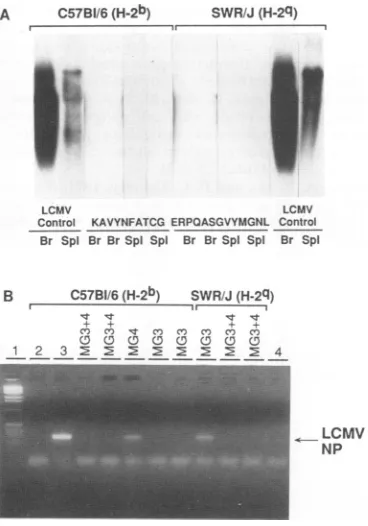
their peripheral blood mononuclear cells did not score as infectious centers, and their tissues were free from viral nucleic acid sequences (Fig. 5). Further, antibodies to LCMVwere notgenerated byusingeither ELISAor immu-nofluorescence assays (12). In contrast, age- and sex-matched C57BL/6 mice that either received no vaccine or received recombinant VV vaccine expressing only LCMV NP aa 117to 129 all showed infectious virus in their blood
ranging from2 x 104 to 8 x 10⁴ PFU/ml ofserum. SWR/J
micereceivinga VVrecombinant expressingLCMVNP aa 117to 129wereprotected fromdeveloping persistent infec-tion resulting from a later challenge with 2 x 10⁶ PFU of LCMV Arm cl 13 administered i.v. When a single VV recombinantcontainingoligonucleotides encodingKAVYN FATCG andERPQASGVYMGNLwasused, bothH-?2and
H-2Y
micewereprotected from developing persistent infec-tion afterLCMVArmcl 13challenge (Fig.5).In summary, the immune system functions to recognize foreign materials and then attack and destroy them. Thus,
the immune responseagainstvirusorvirus-infected cells isa balance between protective immunity and
immunopatho-logic injury. Consequently, care must be taken in design,
dosage, and timingof vaccinationto ensurewide and
effec-tiveprotectionwithout harmful sideeffects (11, 15). Inthis report,wedocument the construction anduse ofavaccine thatprevented the establishment ofpersistentviral infection. Importantly, the CTL vaccineprotectedagainstavirus that
possessed the ability to persist and cause
immunosuppres-sion. Interestingly, thevaccineconstruct contained LCMV amino acid sequencesNP aa1to201orGPaa1 to51,which
generatedCTL responses in
H-2d,
H-Y, H-2u,
orH-2b
mice,respectively. Vaccination into theappropriateH-2haplotype
prevented theestablishment ofpersistent infection, includ-ing infection of host lymphocytes or monocytes. This vac-cine could be modifiedtoexpressasfewas10amino acids of viral sequence and still providecomplete protection. Incor-poration of two disparate sequences that elicit CTL re-sponses indifferenthaplotypesprovidedprotectionforboth haplotypes. Similar observations of the utilityof the
string-of-beads concept were recently seen for control of acute viral infection (28). Since, for several MHC haplotypes,
similar viral sequences promoteCTLgenerationand
recog-nition,vaccines containingthese shared subunits may pro-vide highly effective protection for a number of MHC backgrounds. This observationcoupled with theuseof short sequences(10aminoacids) inaneffective vaccine indicates J.VIROL.
on November 9, 2019 by guest
http://jvi.asm.org/
[image:5.612.73.535.75.431.2]NOTES 4377
A C57BI/6 (H-2b) SWR/J (H-2q)
--
-LCMV LCMV
Control KAVYNFATCG ERPOASGVYMGNL Control Br Spi Br BrSpi Spi Br BrSpiSpi Br Spi
B C57BI/6(H-2b) SWR/J (H-2q)
F l1
Cn C't Co C'O C Co CO
0C CDC0 CD CD 0
12 3 : E5 2 2 4
LCMV
NP
FIG. 5. Evidence that vaccination with recombinant VV that containsoligonucleotideswhich encoding peptides correspondingto CTLepitopesprotectsmicefrom persistent viral infection.C57BL/6 (H-2b)orSWR/J(H-2Y)mice receivedasingle inoculation of 2x10⁷
PFU ofa recombinantVVvaccine expressing MG3 peptide,MG4 peptide,orMG3 plusMG4 (for descriptions,seetext). Control mice
receivedeithernovaccinationorVValone (not expressing MG3or
MG4). Sixweeks later, all mice received 2 x 10⁶PFU of cl 13i.v. (A) Northern blotoftwovaccinated C57BL/6and SWR/J mice that
wererepresentativeof the fourtosix mice studied from eachgroup.
Theblot was hybridized to an LCMV NP probe. Br, brain; Spl,
spleen. (B) PCR analysis inother vaccinated mice (groups of four each). Lane 1contains1-kilobase markers; lanes 2, 3, and4arefrom
a C57BL/6 mouse that did not receive the vaccine butwas
chal-lenged with 2 x 10⁶ PFU of cl 13.In lane 2, the PCR isrun in the
absenceofreverse transcriptasebut with RNA extracted from the brainofacl 13-infectedmouse;in lane 3, the reversetranscriptase is present. Inlane4, thePCR isrunwithwatersubstituting forthe RNA. The expected viral NP amplified fragment is shown as a
289-bpproduct.
the feasibility of inserting multiple sets of such sequences
from the same anddifferentviral proteins that bind
specifi-callytoawidevarietyof MHCglycoproteins and hence offer
vaccineprotectiontoanoutbred population suchashumans.
Thisworkwassupportedinpartby USPHS grantsAI-09484 (to M.B.A.O.),AG-04342 and AI-27028(to J.L.W.), and AG-04342 (to J.C.T.), a SERC/NATO fellowship (to T.M.), and USPHS grant
MH-47680(to M.E. and J.C.T.).
REFERENCES
1. Ahmed,R., A. Salmi, L. D. Butler,J. M. Chiller, and M. B. A. Oldstone. 1984. Selection of genetic variants of lymphocytic choriomeningitis virusin spleensof persistently infected mice: role in suppression of cytotoxic T lymphocyte response and viral persistence.J. Exp. Med. 160:521-540.
2. Ahmed, R., and J. G. Stevens. 1990. Viral persistence, p. 241-266.In B.Fieldsand D.Knipe (ed.), Fields virology.Raven Press, NewYork.
3. Borrow, P., A. Tishon,and M. B. A. Oldstone. 1991. Infection of
lymphocytes by a virus that aborts cytotoxic T lymphocyte activity and establishes persistent infection. J. Exp. Med. 174:203-212.
4. Chomczynski, P., and N. Sacchi. 1987. Single step method of RNA isolation by acid guanidinium thiocyanate-phenol-chloro-formextraction. Anal. Biochem. 162:156-159.
5. de la Torre, J. C., and M. B. A. Oldstone. 1992. Selective disruption of growth hormone transcription machinery by viral infection. Proc. Natl. Acad. Sci. USA 89:9939-9943.
6. Demotz, S., H. M. Grey, and A. Sette. 1990. The minimal number of class II MHC-antigen complexes needed for T cell activation. Science 249:1028-1030.
7. Dutko, F. J., and M. B. A. Oldstone. 1983. Genomic and biological variation among commonly used lymphocytic chorio-meningitis virus strains. J. Gen. Virol. 64:1689-1698.
8. Fujinami, R. S., and M. B. A. Oldstone. 1981. Failure to cleave measles virus fusion protein in lymphoid cells: a possible mechanism for viral persistence in lymphocytes. J. Exp. Med.
154:1489-1499.
9. Greene, W. C. 1991. The molecular biology of human immuno-deficiency virus type 1 infection. N. Engl. J. Med. 324:308-317. 10. Haywood, A. M. 1986.
Patterns
of persistent viral infections. N.Engl. J. Med. 315:939-942.
11. Hotchin, J., and L. B. Hotchin. 1991. Vaccination, immunopa-thology, and immunity. Science 253:210. (Letter.)
12. Klavinskis, L. S., J. L.
Whitton,
and M. B. A. Oldstone. 1989. Molecularly engineered vaccine which expresses an immuno-dominant T-cell epitope induces cytotoxic T lymphocytes that confer protection from lethal virus infection. J. Virol. 63:4311-4316.13. McChesney, M. B., and M. B. A. Oldstone. 1987. Viruses perturb lymphocyte functions: selected principles characteriz-ing virus induced immunosuppression. Annu. Rev. Immunol. 5:279-304.
14. Murphy, B., and R. M. ChanocL 1990. Immunization against viruses, p. 469-506. In B. Fields and D. Knipe (ed.), Fields virology. Raven Press, New York.
15. Oehen, S., H. Hengartner, and R. Zinkernagel. 1991. Vaccina-tion for disease. Science 251:195-198.
16. Oldstone, M. B. A. 1991. Molecular anatomy of viral persis-tence. J. Virol. 65:6381-6386.
17. Oldstone, M. B. A., M. Salvato, A. Tishon, and H. Lewicki. 1988. Virus-lymphocyte interactions. III. Biologic parameters of a virus variant that fails to generate CTL and establishes persis-tent infection in immunocompepersis-tent hosts. Virology
164:507-516.
18. Oldstone, M. B. A., A. Tishon, R. Geckeler, H.
Lewicki,
and J. L.Whitton. 1992. A common antiviral cytotoxic T-lympho-cyte epitope for diverse major histocompatibility haplotypes: implications for vaccination. Proc. Natl. Acad. Sci. USA 89: 2752-2755.19. Oldstone, M. B. A., J. L. Whitton, H.
Lewicki,
and A. Tishon. 1988. Fine dissection of a nine amino acid glycoprotein epitope, a major determinant recognized by lymphocytic choriomeningi-tis virus specific class I restricted H-2Dbcytotoxic T lympho-cytes. J. Exp. Med. 168:559-570.20. Peluso, R., A. Haase, L. Stowring, M. Edwards, and P. Ventura. 1985. A trojan horse mechanism for the spread of visna virus in monocytes. Virology 147:231-236.
21. Rosenberg, Z. F., and A. S. Fauci. 1991. Immunopathogenesis of HIV infection. FASEB J. 5:2382-2390.
22. Sabin, A. B. 1991. Effectiveness of AIDS vaccines. Science
251:1161. (Letter.)
23. Salvato, M., E. Shimomaye, P.Southern,and M. B. A. Oldstone.
1988. Virus-lymphocyte interactions. IV. Molecular character-ization of LCMV Armstrong
(CTL+)
and that of its variant, Clone 13 (CTL-). Virology 164:517-522.24. Sissons, J. G. P., M. B. A. Oldstone, and R. D. Schreiber. 1980. Antibody-independent activation of the alternative complement pathway by measles virus-infected cells. Proc. Natl. Acad. Sci.
USA 77:559-562.
25. Sissons, J. G. P., R. D. Schreiber, L. H. Perrin, N. R. Cooper, H. J. Muller-Eberhard, and M. B. A. Oldstone. 1979. Lysis of
VOL.67, 1993
on November 9, 2019 by guest
http://jvi.asm.org/
[image:6.612.94.278.76.339.2]4378 NOTES
measles virus-infected cells by the purified cytolytic alternative complement pathway andantibody. J. Exp. Med. 150:445-454. 26. Southern, P., and M. B. A. Oldstone. 1986. Medical conse-quencesof persistent viral infection. N. Engl. J. Med. 314:359-367.
26a.Tishon, A.,etal.Unpublished data.
27. Townsend, A. R. M., J. Rothbard,F. Gotch, G. Bahadur, D. C. Wraith, and A. J. McMichael. 1986. The epitopes of influenza nucleoprotein recognized by cytotoxic T lymphocytes canbe
defined with shortsynthetic peptides. Cell 44:959-964. 28. Whitton, J. L., N. Sheng, M. B. A. Oldstone, and T. A. McKee.
1993. A "string-of-beads" vaccine, comprising linked
mini-genes, confers protection from lethal-dose virus challenge. J.
Virol. 67:348-352.
29. Whitton, J. L., A. Tishon, H. Lewicki, J. Gebhard, T. Cook,M. Salvato, E. Joly, and M. B. A. Oldstone. 1989. Molecular analyses ofafive amino acid cytotoxic Tlymphocyte (CTL) epitope: animmunodominantregion which induces nonrecipro-cal CTL cross-reactivity. J. Virol. 63:4303-4310.
30. Yanagi, Y., A. Tishon, H. Lewicki, B. A. Cubitt,and M. B. A. Oldstone. 1992. Diversity of T-cell receptors in virus-specific cytotoxic T lymphocytes recognizing three distinct viral epitopes restricted byasingle major histocompatibility complex molecule. J. Virol.66:2527-2531.
31. Zinkernagel, R. M., and P. C.Doherty. 1974. Restriction of in vitro T cell mediated cytotoxicity in lymphocytic choriomenin-gitis within asyngeneicorsemiallogeneicsystem.Nature 248: 701-703.
J. VIROL.
![FIG. 3.LCMVaa13 i.v. 1 In situ hybridization of splenic lymphoid cells (A and B) and peripheral blood mononuclear cells (C and D), using [35S]cDNA to NP (see Materials and Methods)](https://thumb-us.123doks.com/thumbv2/123dok_us/1300606.83153/4.612.85.545.77.435/lcmvaa-hybridization-splenic-lymphoid-peripheral-mononuclear-materials-methods.webp)
![FIG.c~~rviralLCMV(B 4. In situ hybridization of splenic lymphoid cells (A and B) and peripheral blood mononuclear cells (C and D), using [35S]cDNA to NP](https://thumb-us.123doks.com/thumbv2/123dok_us/1300606.83153/5.612.73.535.75.431/rvirallcmv-hybridization-splenic-lymphoid-peripheral-blood-mononuclear-using.webp)