H U M A N C O G N I T I V E P E R F O R M A N C E : A
N E U R O P H Y S I O L O G I C A L A S S E S S M E N T O F T H E I M PA C T T H AT R E V E R S E A S S E S S M E N T P R I M I N G H A S O N M E N TA L
W O R K L O A D , P E R F O R M A N C E A N D C O G N I T I V E E F F I C I E N C Y D U R I N G T R A N S I E N T I N F O R M AT I O N P R O C E S S I N G
A Thesis submitted by
Kylie L Hutchings Mangion
BTeach (PAVE) CQU, BLDes CQU, MEd Tech USQ, CAHRI
For the Award of
Doctor of Education
Abstract
This study assessed cognitive efficiency (CE) during transient information processing by capturing the neural activity experienced during the completion of varying levels of cognitive processing. The study researched the impact of low versus high cognitive demand on transient information and the effect that reverse assessment priming has on overall neural activity, and the correlations of mental workload (MWL) with performance and with CE. In total, 13 university students and staff members from the University of Southern Queensland participated in both low and high cognitive demand level experiments. Experiment 1 consisted of a low level transient information processing task and Experiment 2 involved a high level transient information task.
All participants completed both control intervals and test intervals for both experiments. Test intervals included the provision of a reverse assessment priming strategy prior to the presentation of the Transient Information Processing Task (TIPT) stimuli. All students were asked to complete a handiness, demographic, general health and prior knowledge questionnaire to enable consistency across the experimental groups. Students were matched and presented with a TIPT whereby they were deemed to have no or very minimal prior exposure to and knowledge of the topic.
The TIPTs presented were either two minutes or four minutes in duration and were in auditory format. Topics were made up of an even mix of animals and countries. The study aimed to analyze the CE further; this was achieved by the students completing a written multiple choice assessment immediately following each TIPT. Results highlighted the extent to which working memory capacity depletes as the complexity of transient information increases. Whilst the assessment results demonstrated the students’ working memory ability to process transient information, the procedure is difficult by nature owing to the inability of information to be decoded, processed and encoded without an opportunity to review and transfer it into a more permanent state or to link it to previous schematic networks.
This study provides objective evidence that the MWL from a neurophysiological measure differs between a low cognitive demanding TIPT and a high cognitive demanding TIPT in both settings where subjects completed the low and high TIPT (control) tasks and the low and high TIPT reverse assessment processing stimuli (RAPS) (test) tasks. This enables an insight into the degree to which brain activity responds to a change in stimuli and, in particular, transient information whereby the individual is unable to make a more permanent record or has control over the speed or mode in which the information is presented in order to process the incoming information within working memory. The duration of each stimulus was what differentiated the low cognitive demanding task and the high cognitive demanding task; therefore results indicate that the longer that an individual attempts to process continually presented transient information, the more MWL increases. The neural activity increased in 91% of subjects between the low and high TIPT (control) tasks and 75% of subjects between the low and high RAPS (test) tasks. Results indicated that the use of RAPS has a minimal impact on the MWL imposed during a low cognitive demanding TIPT. However, the use of RAPS can prove to be an effective strategy in reducing the MWL experienced during a high cognitive demanding TIPT. RAPS had a minimal effect on the low cognitive demanding tasks, although as the level of the task complexity increased so too did the positive impact of using RAPS. It has been established that the use of RAPS is an effective strategy to reduce MLW during a TIPT; in this study it resulted in a decrease of up to 34.64% in MWL.
The results of this study indicated that the use of RAPS resulted in a positive
impact on the performance results achieved across both low and high level TIPTs in all possible situations.The study outcomes demonstrated that in 100% of subjects an increase was achieved in the human performance between the low TIPT (control) and low TIPT RAPS (test) tasks, recording an increase of up to 40% in performance scores achieved. Similarly, during the high TIPT (control) and high TIPT RAPS (test) intervals, wherever an increase was possible, 100% of situations experienced an increase in performance scores of up to 80%.
Certification of Thesis
This thesis is entirely the work of Kylie Hutchings Mangion except where otherwise acknowledged. The work is original and has not previously been submitted for any other award, except where acknowledged.
Acknowledgements
I should like to take this opportunity to thank the many people who have made this thesis possible. First I should like to extend my sincere thanks and gratitude to my supervisors, Professor Raj Gururajan and Professor Patrick Danaher, for accepting the challenge of supervising my study. With their support the passion to undertake this study grew throughout each different phase. I am truly thankful to have been so fortunate to have their unquestionable expertise in my corner for this journey.
The professional support received from a range of others has contributed to my own personal growth and development through the journey. Rachel King provided much more than her passion for numbers and statistics. The team at My Neurologist Toowoomba, Australia, Grant Kleinschmidt, Paul, Christy, and Suzanne, enabled my study to gain the objective and authentic legs for which I had hoped by allowing me access to their facility. Having the support of such a professional team of great people ensured that the data collection phase not only ran smoothly but also was a great experience.
I would like to express my sincere thanks to Cameron Charles of Compumendics for both the support provided in accessing the necessary software and the expert support throughout the analysis phases of my study. Without this technology, the study path about which I had dreamt simply would not have been made possible.
The assistance of Katrina Wilson in the painstaking task of editing and proof reading my thesis has been appreciated and welcomed at a time that enabled me to focus on the data and the findings of my study. I can speak for my husband in thanking you that he is now relieved of this task.
I must also thank the Executive Director of the Australian Centre for Radio Frequency Bio-effects Research at the University of Wollongong (UOW) and Dr David Camfield, a Post-Doctoral Research Fellow at UOW, for inviting me to assist in collecting data for studies off site using the Electroencephalography technologies, the hands on experience allowing me to learn the specialist knowledge required and to gain further insight into the associated research methodologies.
I would also like to extend a very special thank you and gratitude to Phyll Coombes, I am so honoured to have such experience and talents review my thesis. An opportunity to gain such honest feedback has enabled my writing to rise to another level.
Dedication
Abbreviations
α Alpha
β Beta
CACL Collective average cognitive load CE Cognitive efficiency
CL/CD Cognitive load and cognitive demand have been used synonymously
EEG Electroencephalogram
ERD Event related desynchronisation ERS Event related synchronisation
HCD High cognitive demand
HCEPM Human capital efficiency performance and management
LCD Low cognitive demand
MWL Mental workload
ϴ Theta
PARI Phonological attention rehearsal interruption RAPS Reverse assessment priming strategy
TIPT Transient information processing task UHCI Unique human cognitive investment
Table of Contents
HUMAN COGNITIVE PERFORMANCE: A NEUROPHYSIOLOGICAL ASSESSMENT OF THE IMPACT THAT REVERSE ASSESSMENT PRIMING HAS ON MENTAL WORKLOAD, PERFORMANCE AND COGNITIVE EFFICIENCY DURING TRANSIENT INFORMATION PROCESSING ... I
ABSTRACT ... II
CERTIFICATION OF THESIS ... V
ACKNOWLEDGEMENTS ... VI
DEDICATION ... VIII
ABBREVIATIONS ... IX
TABLE OF CONTENTS ... X
LIST OF FIGURES ... XIV
LIST OF TABLES ... XX
LIST OF DATA EQUATIONS ... XXII
CHAPTER 1 INTRODUCTION ... 1
1.1 STATEMENT OF THE PROBLEM ... 5
1.2 PURPOSE OF THE STUDY ... 7
1.3 SIGNIFICANCE AND AIM OF THIS STUDY ... 8
CHAPTER 2 LITERATURE REVIEW ... 9
2.1 REVIEW OF THE LITERATURE ... 10
2.2 HCA AND COGNITIVE PROCESSING ... 11
2.3 WORKING MEMORY ... 18
2.4 COGNITIVE LOAD THEORY (CLT) ... 28
2.4.1 Intrinsic cognitive load ... 32
2.4.2 Extraneous cognitive load ... 32
2.4.3 Germane cognitive load ... 34
2.4.4 Worked example effect ... 37
2.4.5 Split attention effect ... 39
2.4.6 Modality effect ... 39
2.4.7 Redundancy effect ... 40
2.4.8 Expertise reversal effect ... 41
2.4.9 Guidance fading effect ... 41
2.4.10 Imagination effect ... 42
2.4.12 Element interactivity and isolated interactivity effect ... 45
2.5 COGNITIVE LOAD MEASUREMENT ... 46
2.5.1 Subjective measures ... 48
2.6 PERFORMANCE MEASURES ... 50
2.7 PHYSIOLOGICAL MEASURES ... 51
2.8 SUMMARY OF THE LITERATURE ... 59
CHAPTER 3 RESEARCH METHOD STRUCTURE ... 64
3.1 RESEARCH QUESTION 1 ... 65
3.2 RESEARCH QUESTION 2 ... 65
3.3 RESEARCH QUESTION 3 ... 66
3.4 RESEARCH QUESTION 4 ... 66
3.5 PHILOSOPHY ... 66
3.6 APPROACH ... 68
3.7 METHOD ... 69
3.8 TECHNIQUE ... 70
3.9 ETHICAL CONSIDERATIONS ... 72
CHAPTER 4 THE TASKS REQUIRED FOR THE EXPERIMENT ... 74
4.1 EYE CALIBRATION VISUAL STIMULI ... 75
4.2 THE TRANSIENT INFORMATION PROCESSING TASK (TIPT) ... 76
4.3 THE REVERSE ASSESSMENT PRIMING STIMULI (RAPS) ... 77
4.4 PERFORMANCE ASSESSMENT TASK ... 80
4.5 EYES RESTING (CLOSED) TASK ... 81
4.6 MWL MEASURE AND METRICS ... 82
4.7 THE RESEARCHER ... 86
4.8 THE RECRUITMENT AND SUBJECT PARTICIPATION ... 87
4.9 SUBJECT PRE SCREENING ... 88
4.10 THE DATA COLLECTION PROCESS ... 88
4.11 SUBJECT PREPARATION AND SETUP ... 93
4.12 SIGNAL ACQUISITION ... 94
4.13 EXPERIMENT 1 ... 97
4.14 EXPERIMENT 2 ... 98
CHAPTER 5 DATA COLLECTION ... 102
5.1 THE PARTICIPANTS ... 103
5.2 THE RAW DATA RESULTS ... 103
5.3 PRE-PROCESSING OF RAW EEG DATA ... 103
5.5 THE DEMOGRAPHIC AND PRIOR KNOWLEDGE QUESTIONNAIRE DATA ... 106
5.6 THE TRANSIENT INFORMATION PROCESSING ASSESSMENT TASK PERFORMANCE SCORES RAW DATA ... 107
5.7 THE RAW EEGDATA ... 109
5.7.1 MWL raw neural data ... 109
5.7.2 Unique human cognitive investment (UHCI) ... 116
5.7.3 CE ... 117
CHAPTER 6 DATA ANALYSIS ... 119
6.1.1 Research question 1 ... 121
6.1.2 Comparing the MWL - Low TIPT (control) Task with the High TIPT (control) Task ... 147
6.1.3 Research question 2 ... 150
6.1.4 Research question 3 ... 158
6.1.5 Research question 4 ... 187
CHAPTER 7 DISCUSSION AND OUTCOMES ... 207
7.1 OUTCOMES ... 207
7.2 DISCUSSION ... 208
7.3 IMPLICATIONS ... 216
7.4 LIMITATIONS AND FUTURE RESEARCH ... 217
7.5 SPECIAL CONTRIBUTIONS OF THIS STUDY ... 218
7.6 CONCLUSION ... 219
REFERENCES ... 223
APPENDIX A TRANSIENT INFORMATION, EFFECT AND SUGGESTED STRATEGY (SWELLER ET AL., 2011F) 242 APPENDIX B RECRUITMENT FLYER ... 248
APPENDIX C LETTER TO INTERESTED PARTIES ... 249
APPENDIX D PARTICIPANT INFORMATION SHEET ... 250
APPENDIX E CONSENT FORM ... 253
APPENDIX F TRANSIENT NFORMATION PROCESSING TASK (AUDIO SCRIPTS) ... 254
APPENDIX G DEMOGRAPHIC AND PRIOR KNOWLEDGE QUESTIONNAIRE ... 263
APPENDIX H ASSESSMENT QUESTIONS SHEET (ALL TASKS X 20) ... 264
APPENDIX I REVERSE ASSESSMENT PRIMING STIMULI (X6) ... 276
APPENDIX J SELF-REPORTED LEVELS OF PRIOR KNOWLEDGE ... 288
APPENDIX L EEG RAW DATA ... 291
APPENDIX M CE DATA ... 300
List of Figures
Figure 0-1 Chapter 1 Introduction flowchart 1
Figure 2-1 Chapter 2 Literature review flowchart 9
Figure 2-2 Flow of information through the working memory system (Atkinson & Shiffrin, 1968). Based on Atkinson and Shiffrin (1968) Copyright (1968) (Baddeley, 1998, p.
169) 23
Figure 2-3 The original three component model of working memory proposed by A. Baddeley and Hitch (1974,) as cited in Baddeley, 2003, p. 191). 24 Figure 2-4 The phonological loop with the phonological store and the Articulatory Loop
(Baddeley, 1986). 26
Figure 2-5 Latest multi-component model of working memory (Baddeley, 2000, p. 418) 26 Figure 2-6 Breakdown of total cognitive load according to the CLT 35 Figure 2-7 A subjective approach in the measurements of cognitive load 50
Figure 2-8 Brainwave rhythms 54
Figure 2-9 Alpha suppression. 56
Figure 2-10 “Generalised ERD: measures the relative deviation of the event related dynamics (solid) from a constant baseline level (dashed) (Lemm, Müller, & Curio, 2009, p. 3).
57
Figure 2-11 ERD/ERS formula (Antonenko et al., 2010, p. 6) 58
Figure 2-12 Instructional efficiency formula (Paas, Tuovinen, et al., 2003, p. 68) 58
Figure 3-1 Chapter 3 Research method structure flowchart 64
Figure 3-2 Structure of a trial of the EEG recording sessions for Experiment 1 and 2 72 Figure 4-1 Tasks required for the experiment Chapter 4 flowchart 74
Figure 4-2 Eye calibration stimuli 75
Figure 4-3 Eye related artifacts recorded using Compumedics Profusion 4EEG software during
the eye calibration stage 81
Figure 4-4 Topography of electrode placement 10/20 montage 83
Figure 4-5 10/20 Electrode placement demonstrating the even distribution and measurement
points from the anion and nasion 83
Figure 4-6 Event related desynchronisation curve 84
Figure 4-8 The accumulative band power and the averaged band power can be differentiated 86
Figure 4-9 EEG recording session timeline 90
Figure 4-10 How the subjects were measured 93
Figure 4-11 EEG consumables 93
Figure 4-12 Subject with 10mm gold capped electrodes fitted to the scalp 94
Figure 4-13 Amplifier illustrating the lead labels 95
Figure 4-14 Impedance checker montage - prior to electrode placement 96 Figure 4-15 Impedance checker function after the electrodes had been attached to the subject’s
scalp, with a range of 3.7 between the highest and the lowest readings. 96 Figure 4-16 Neural data being recorded and displayed in the Profusion 4 EEG interface at a
sampling rate of 256 amps 100
Figure 4-17 The cognitive processing model for a single TIPT and RAPS single trial 100
Figure 5-1 Data collection Chapter 5 flowchart 102
Figure 5-2 EEG recording in the original sourced format as it appears in the Profusion4EEG
interface 104
Figure 5-3 Visual identification of bad blocks of data 105
Figure 5-4 Compumedics CURRY 7 software 105
Figure 5-5 Electrodes averaged referenced deviation (EBME, 2016, p. 2) 106
Figure 6-1 Data analysis Chapter 6 flowchart 119
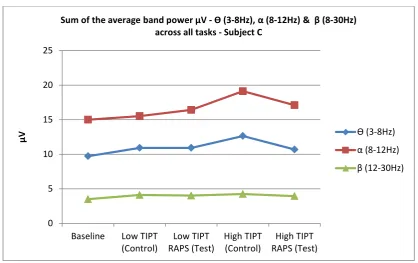
Figure 6-2 Recording of all events as shown in CURRY 7 interface 121 Figure 6-3 Line graph patterning of band power theta (3-8Hz) alpha (8-12) and beta (8-30Hz)
across all tasks – Subject A 122
Figure 6-4 Bar graph patterning of band power theta (3-8Hz) alpha (8-12) and beta (8-30Hz)
across all tasks – Subject A 122
Figure 6-5 Line graph patterning of band power theta (3-8Hz) alpha (8-12) and beta (8-30Hz)
across all tasks –Subject B 123
Figure 6-6 Bar graph patterning of band power theta (3-8Hz) alpha (8-12) and beta (8-30Hz)
across all tasks –Subject B 124
Figure 6-7 Line graph patterning of band power theta (3-8Hz) alpha (8-12) and beta (8-30Hz)
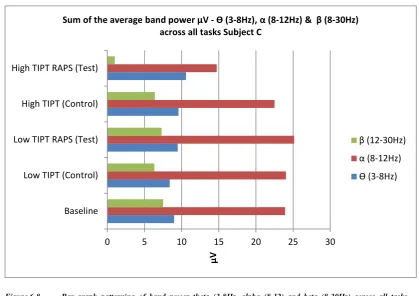
across all tasks –Subject C 125
Figure 6-8 Bar graph patterning of band power theta (3-8Hz, alpha (8-12) and beta (8-30Hz)
Figure 6-9 Line graph patterning of band power theta (3-8Hz) alpha (8-12) and beta (8-30Hz)
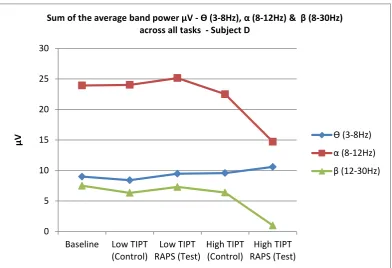
across all tasks –Subject D 127
Figure 6-10 Bar graph patterning of band power theta (3-8Hz) alpha (8-12) and beta (8-30Hz)
across all tasks – Subject D 127
Figure 6-11 Line graph patterning of band power theta (3-8Hz) alpha (8-12) and beta (8-30Hz)
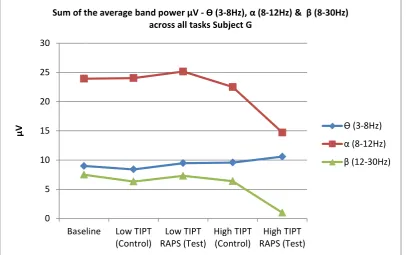
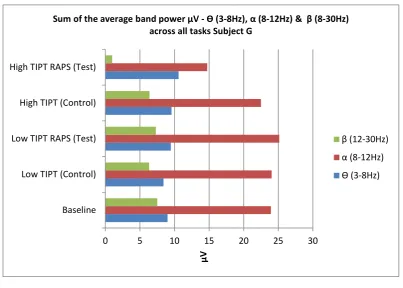
across all tasks –Subject G 128
Figure 6-12 Bar graph patterning of band power theta (3-8Hz) alpha (8-12) and beta (8-30Hz)
across all tasks –Subject G 129
Figure 6-13 Line graph patterning of band power theta (3-8Hz) alpha (8-12) and beta (8-30Hz)
across all tasks –Subject H 130
Figure 6-14 Bar graph patterning of band power theta (3-8Hz) alpha (8-12) and beta (8-30Hz)
across all tasks – Subject H 130
Figure 6-15 Line graph patterning of band power theta (3-8Hz,) alpha (8-12) and beta (8-30Hz)
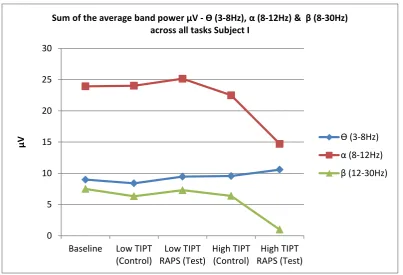
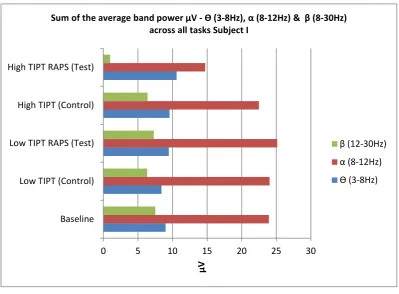
across all tasks –Subject I 131
Figure 6-16 Bar graph patterning of band power theta (3-8Hz), alpha (8-12) and beta (8-30Hz)
across all tasks –Subject I 132
Figure 6-17 Line graph patterning of band power theta (3-8Hz), alpha (8-12) and beta (8-30Hz)
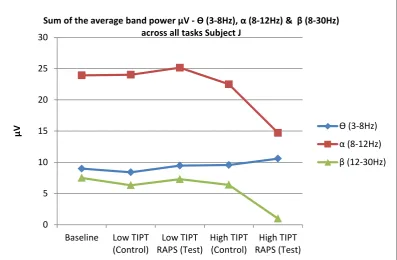
across all tasks –Subject J 133
Figure 6-18 Bar graph patterning of band power theta (3-8Hz), alpha (8-12) and beta (8-30Hz)
across all tasks –Subject J 133
Figure 6-19 Line graph patterning of band power theta (3-8Hz), alpha (8-12) and beta (8-30Hz)
across all tasks –Subject K 134
Figure 6-20 Bar graph patterning of band power theta (3-8Hz), alpha (8-12) and beta (8-30Hz)
across all tasks –Subject K 135
Figure 6-21 Line graph patterning of band power theta (3-8Hz), alpha (8-12) and beta (8-30Hz)
across all tasks – Subject L 136
Figure 6-22 Bar graph patterning of band power theta (3-8Hz), alpha (8-12) and beta (8-30Hz)
across all tasks –Subject L 136
Figure 6-23 Line graph patterning of band power theta (3-8Hz), alpha (8-12) and beta (8-30Hz)
across all tasks –Subject M 137
Figure 6-24 Bar graph patterning of band power theta (3-8Hz), alpha (8-12) and beta (8-30Hz)
across all tasks –Subject M 138
Figure 6-25 Line graph patterning of band power theta (3-8Hz), alpha (8-12) and beta (8-30Hz)
Figure 6-26 Bar graph patterning of band power theta (3-8Hz), alpha (8-12) and beta (8-30Hz)
across all tasks –Subject N 139
Figure 6-27 Averaged - Sum of the average band power μV - ϴ (3-8Hz), α (8-12Hz) and β (8
-30Hz) across all tasks – All Subjects 140
Figure 6-28 MWL low (control)/high (control) and low (test)/high (test) tasks – Subject A 141 Figure 6-29 MWL low (control)/high (control) and low (test)/high (test) tasks – Subject B 142 Figure 6-30 MWL low (control)/high (control) and low (test)/high (test) tasks – Subject C 142 Figure 6-31 MWL low (control)/high (control) and low (test)/high (test) tasks –Subject D 143 Figure 6-32 MWL low (control)/high (control) and low (test)/high (test) tasks – Subject G 143 Figure 6-33 MWL low (control)/high (control) and low (test)/high (test) tasks – Subject H 144 Figure 6-34 MWL low (control)/high (control) and low (test) high (test) tasks – Subject I 144 Figure 6-35 MWL low (control)/high (control) and low (test)/high (test) tasks – Subject J 145 Figure 6-36 MWL low (control)/high (control) and low (test) high (test) tasks – Subject K 145 Figure 6-37 MWL low (control)/high (control) and low (test/ high (test) tasks – Subject L 146 Figure 6-38 MWL low (control)/high (control) and low (test)/high (test) tasks – Subject M 146 Figure 6-39 MWL low (control)/high (control) and low (test)/high (test) tasks – Subject N 147 Figure 6-40 MWL μV low TIPT task (control) vs high TIPT (control) - Sum of the average band
power (value) alpha (8-12Hz) 147
Figure 6-41 MWL μV low TIPT RAPS (test) task vs high RAPS TIPT (test) task - Sum of the average α (8-12Hz) band power value (alpha) μV 149 Figure 6-42 MWL low TIPT (control)/low TIPT RAPS (test) and high TIPT (control)/high TIPT RAPS
(test) – Subject A 150
Figure 6-43 MWL low TIPT (control)/low TIPT RAPS (test) and high TIPT (control)/high TIPT RAPS
(test) – Subject B 151
Figure 6-44 MWL low TIPT (control)/low TIPT RAPS (test) and high TIPT (control)/high TIPT RAPS
(test) – Subject C 151
Figure 6-45 MWL low TIPT (control)/low TIPT RAPS (test) and high TIPT (control)/high TIPT RAPS
(test) – Subject D 152
Figure 6-46 MWL low TIPT (control)/low TIPT RAPS (test) and high TIPT (control)/high TIPT RAPS
(test) – Subject G 153
Figure 6-47 MWL low TIPT (control)/low TIPT RAPS (test) and high TIPT (control)/high TIPT RAPS
(test) – Subject H 153
Figure 6-48 MWL low TIPT (control)/low TIPT RAPS (test) and high TIPT (control)/high TIPT RAPS
Figure 6-49 MWL low TIPT (control)/low TIPT RAPS (test) and high TIPT (control)/high TIPT RAPS
(test) – Subject J 155
Figure 6-50 MWL low TIPT (control)/low TIPT RAPS (test) and high TIPT (control)/high TIPT RAPS
(test) – Subject K 155
Figure 6-51 MWL low TIPT (control)/low TIPT RAPS (test) and high TIPT (control)/high TIPT RAPS
(test) – Subject L 156
Figure 6-52 MWL low TIPT (control)/low TIPT RAPS (test) and high TIPT (control)/high TIPT RAPS
(test) – Subject M 157
Figure 6-53 MWL low TIPT (control)/low TIPT RAPS (test) and high TIPT (control)/high TIPT RAPS
(test) – Subject N 157
Figure 6-54 Performance scores low TIPT (control)/ (test) and high TIPT (control)/(test) Subject A 158 Figure 6-55 Performance scores low TIPT (control)/(test) and high TIPT (control)/(test) Subject B
159 Figure 6-56 Performance scores low TIPT (control)/(test) and high TIPT (control)/(test) Subject C
160 Figure 6-57 Performance scores low TIPT (control)/(test) and high TIPT (control)/(test)- Subject D
161 Figure 6-58 Performance scores low TIPT (control)/(test) and high TIPT (control)/(test) Subject G
162 Figure 6-59 Performance scores low TIPT (control)/(test) and high TIPT (control)/(test) Subject H
163 Figure 6-60 Performance scores low TIPT (control)/(test) and high TIPT (control)/(test) Subject I
164 Figure 6-61 Performance scores low TIPT (control)/(test) and high TIPT (control)/(test) Subject J
165 Figure 6-62 Performance scores low TIPT (control)/(test) and high TIPT (control)/(test) Subject K
166 Figure 6-63 Performance scores low TIPT (control)/(test) and high TIPT (control)/(test) Subject L
167 Figure 6-64 Performance scores low TIPT (control)/(test) and high TIPT (control)/(test) Subject M
168 Figure 6-65 Performance scores low TIPT (control)/(test) and high TIPT (control)/(test) Subject N
Figure 6-66 MWL low TIPT (control) vs low RAPS TIPT (test) - Sum of the average α (8-12Hz) band
power value μV 170
Figure 6-67 MWL high TIPT (control) vs high RAPS TIPT (test) - sum of the average α (8-12Hz)
band power value μV 171
Figure 6-68 Radar map of MWL low TIPT (control) vs low RAPS TIPT (test) - sum of the average α
(8-12Hz) band power value μV 172
Figure 6-69 Radar map MWL high TIPT (control) vs high RAPS TIPT (test) - sum of the average α
(8-12Hz) band power value μV 172
Figure 6-70 Performance scores low TIPT (control/test) task 173
List of Tables
Table 4-1 TIPT stimuli pool 76
Table 4-2 The transient information processing task (TIPT) and RAPS experiment flow, including eye calibration, eyes closed and assessment completion 92
Table 4-3 Stimuli selection for experiment 1 – Low TIPT 98
Table 4-4 Stimuli selection for experiment 2 – High TIPT 99
Table 5-1 Low TIPT assessment task performance scores 107
Table 5-2 High TIPT assessment task performance scores 108
Table 5-3 Raw neural data across all tasks, ϴ = theta (3-8Hz), α = alpha (8-12Hz), β = beta (12
-30Hz) - Subject A 109
Table 5-4 Raw neural data across all tasks, ϴ = theta (3-8Hz), α = alpha (8-12Hz), β = beta (12
-30Hz) - Subject B 109
Table 5-5 Raw neural data across all tasks, ϴ = theta (3-8Hz), α = alpha (8-12Hz), β = beta (12
-30Hz) - Subject C 110
Table 5-6 Raw neural data across all tasks, ϴ = theta (3-8Hz), α = alpha (8-12Hz), β = beta (12
-30Hz) - Subject D 110
Table 5-7 Raw neural data across all tasks, ϴ = theta (3-8Hz), α = alpha (8-12Hz), β = beta (12
-30Hz) - Subject G 110
Table 5-8 Raw neural data across all tasks, ϴ = theta (3-8Hz), α = alpha (8-12Hz), β = beta (12
-30Hz) - Subject H 110
Table 5-9 Raw neural data across all tasks, ϴ = theta (3-8Hz), α = alpha (8-12Hz), β = beta (12
-30Hz) - Subject I 110
Table 5-10 Raw neural data across all tasks, ϴ = theta (3-8Hz), α = alpha (8-12Hz), β = beta (12
-30Hz) - Subject J 111
Table 5-11 Raw neural data across all tasks, ϴ = theta (3-8Hz), α = alpha (8-12Hz), β = beta (12
-30Hz) - Subject K 111
Table 5-12 Raw neural data across all tasks, ϴ = theta (3-8Hz), α = alpha (8-12Hz), β = beta (12
-30Hz) - Subject L 111
Table 5-13 Raw neural data across all tasks, ϴ = theta (3-8Hz), α = alpha (8-12Hz), β = beta (12
-30Hz) - Subject M 111
Table 5-14 Raw neural data across all tasks, ϴ = theta (3-8Hz), α = alpha (8-12Hz), β = beta (12
-30Hz) - Subject N 111
Table 5-15 MWL low TIPT task (Control) task vs high TIPT (control) task - sum of the average
Table 5-16 MWL low TIPT RAPS (test) task vs high TIPT RAPS (test)task - sum of the average
band power (value) α(8-12Hz) 113
Table 5-17 MWL low TIPT (control) vs low RAPS TIPT (test) - sum of the average band power
(value) α (8-12Hz) 114
Table 5-18 MWL high TIPT (control) vs high TIPT RAPS (test) - sum of the average band power
(value) α (8-12Hz) 115
Table 5-19 UHCI- low TIPT (control) & low TIPT RAPS (test) 116
Table 5-20 UHCI- high TIPT (control) & high TIPT RAPS (test) 116 Table 5-21 CE scores - low TIPT (control) & low TIPT RAPS (test) 117 Table 5-22 CE scores - high TIPT (control) & high TIPT RAPS (test) 118 Table 6-1 Performance scores and MWL low TIPT (control) vs low RAPS TIPT (test) 177 Table 6-2 Performance scores high TIPT (control) vs high RAPS TIPT (test) 182 Table 6-3 MWL across baseline - low TIPT (control) and low TIPT RAPS (test) 187 Table 6-4 UHCI – low TIPT (control) an low TIPT RAPS (test) 189
Table 6-5 UHCI- low TIPT (control) and low TIPT (test) 189
Table 6-6 MWL across baseline - high TIPT (control) and (test) 191
Table 6-7 UHCI - high TIPT control and high test (RAPS) 193
Table 6-8 CE low (control vs test) TIPT 195
List of Data Equations
Equation 1 UHCI 302
Equation 2 MWL 302
Chapter 1 Introduction
This introduction chapter aims to provide the contextual setting for the study - including the problems faced within the field of study, the explicit purpose of the research and the significance of this uniquely positioned multi-disciplinary investigation.
Figure 0-1 Chapter 1 Introduction flowchart
The world in which we live is busy and media rich, and it stops for no one. Very few people can get by without relying on the technologies of contemporary times. These technologies have been responsible for the increased development of multimedia learning solutions; which have provided positive outcomes and certainly more engaging experiences for learners. If we consider what has been done to the content of these solutions in comparison with a more traditional, paper-based format, we can observe changes to the demands on the audience, and how we view them together with alterations of the ways in which we review, process and recall these changes.
2011). This brings with it complications: regardless of our professional capacity, educational achievements or personal situations, we are required to process information continuously and therefore a human-centred design approach is required. In order to achieve optimal human cognition and to process information in the most efficient manner, information should be presented with an understanding of human cognitive processing:
Dealing with complexity has become one of the greatest challenges for modern societies. To reason and decide, plan and act in complex domains is no longer limited to highly specialised professionals in restricted areas such as medical diagnosis, controlling technical processes or serious game playing. Complexity has reached everyday life (Schmid, Ragni, Gonzalez, & Funke, 2011, p. 211).
Education and learning are reliant on the effectiveness of the design of instructional materials. Video using both visual and audio modes is one of the strategies used to present large, complex pieces of information. When referring to transient information as complex, the length of the material is typically what determines its level or degree of complexity (Leahy & Sweller, 2011). Depending on the nature of this strategy, information may be transient. From this perspective, this study explores the cognitive load experienced during transient information processing and examines the impact that reverse assessment priming has as a strategy for alleviating mental workload (MWL) and the overall level of performance and cognitive efficiency (CE) achieved.
Correlations are sought with how we learn, how we create new knowledge and the processes involved. Within the field of cognitive neuroscience, techniques such as electrophysiological and imaging techniques are being deployed by researchers to forge ahead in this multidisciplinary field (Ruiter, Kesteren, & Fernandez, 2012). Cognitive neuroscience and understanding the ways in which our brains operate are beginning to be recognised as playing an important part in improving educational practices (Ruiter et al., 2012, p. 226).
need also to select the format and mode that will perform these functions in the most efficient manner (Reed, 2006). This reflects the view of Geake and Cooper (2003) that the research findings support the view that the educational field should in fact be “embracing rather than ignoring cognitive neuroscience” (Geake & Cooper, 2003, p. 1). Instructional designers need to build a repertoire of cognitive strategies as part of their design tool box. Like most tool boxes, not all tools suit all situations or solutions (West, Farmer, & Wolff, 1991).
The objectives, the content, the learners and the resources available will differ and so will the tools that should be selected. Instruction involves arranging and organising information with the aim of constructing knowledge as a permanent record held in an individual’s long-term memory that can be recalled when required (Sweller, 2008a). A knowledge of neurocognitive instructional strategies is beneficial to creating an effective learning solution as “an increased knowledge of brain function can inform and improve educational practice” (Ruiter et al., 2012, p. 226).
The relationship between cognition and instructional practices has been described by more than one theorist as being “intertwined”, firstly by Mayer (Mayer, 2002) and then in a more specific correlation with the architectural structures responsible for processing, whereby “instructional design and human cognitive architecture (HCA) are inseparably intertwined” (Sweller, 2004, p. 9). Without such knowledge of how we learn and process information, effective communicative and learning solutions are not possible (Mayer, 2002).
The outcome or result of learning can be viewed as a permanent change within the brain known as adaptive plasticity, occurring post stimulus (Bransford, Brown, Cocking, & United States National Research Council. Committee on Developments in the Science of Learning, 1999; Van Kesteren, Ruiter, Fernández, & Henson, 2012). It is how the stimuli, instructional event and information are structured and presented that will determine the effectiveness of the processing. According to Reed (2012), an understanding of how humans encode, store and modify information – the structural processes of cognition – should be the basis for how instructional information should be designed.
advantage of the strengths of our cognitive systems rather than hinder an individual’s learning by over complicating how information is processed. “ However, before we can realise such an intelligent support technology, further basic research of complex cognitive systems is needed” (Schmid et al., 2011, p. 212). Research into human cognitive functions provides the very insights needed, an “algorithm” for information design (Schmid et al., 2011, p. 212). A teacher’s or a designer’s knowledge of how we learn allows the selection of techniques that are conducive to achieving a particular educational goal (Bransford et al., 1999).
Without a framework on which to base systems, process, task and product designs, we cannot be clear about the degree of efficiency of each instructional strategy used, and in a multimedia world we can “run the risk of being unusual and entertaining but not effective” (Baggio, 2010, p. 1). With research amongst the cognitive science and psychology fields expanding, cognition is being viewed closely by educational and instructional specialists as playing a major role in the integration of new knowledge.
As a result of the cognitive research and new strategies that are aimed at aligning the educational design with the cognitive constructs and functions, teachers and instructional designers can no longer rely on the traditional techniques applied for decades in order to achieve their primary educational goal of new knowledge integration.
With more informed and refined methods now available, approaches to educational “design based on visual elegance, common sense and convenience are inadequate” (Chandler & Sweller, 1991, p. 294). Smith and Ragan (2005) defined instructional design as a “systematic and reflective process of translating principles of learning and instruction into the plan for instructional materials, activities, information resources, and evaluation” (p. 1). Achieving more effective learning practices can be realised with an understanding of “how people learn and think” (Mayer, 2002, p. 55).
recognised: that cognitive science has become an integral part of the instructional design process (West et al., 1991). This study highlights the importance of understanding how the human cognitive architecture operates and therefore how different stimuli either contribute, impact or influence, aligning and further extending this analogy and scientific foundation on information design.
An issue that may arise when transient information is presented is the need to deal with or process the ongoing and consistent stream of information. Whilst such transient stimuli are attended to, the task of prioritising the incoming information will be a difficult one (Nobre & Stokes, 2011).
Based on a review of literature, there is little evidence of investigations into the neural activity during transient information processing with a view to achieving CE, and therefore to date no method or design strategy exists. Although it is well documented that mental overload affects efficiency (Xie & Salvendy, 2000), the aim of this study was to investigate and provide objective data that quantified the neural activity during information processing and in particular stimuli presented in a transient mode.
This study has particular interest in extraneous load, as a direct result of the instructional format, mode and strategies selected by instructional designers (Sweller, 2012; Sweller, Ayres, & Kalyuga, 2011f; Sweller, Van Merrienboer, & Paas, 1998)
In the next chapter, this study reviews and draws from relevant and acknowledged literature within the area of HCA), cognitive processing, working memory, cognitive load theory and cognitive load measurement, and in particular the use of neurophysiological measures to establish the neural activity during cognitive processing.
1.1 Statement of the problem
effectiveness of how learning is evaluated when an open and transparent analysis is required. Ultimately, a discussion may result about which strategies are being adopted, why they are being adopted and evidence for what designers are using to support their practices. Evidence to explore and improve the quality of educational practices further is not found within the confines of educational research. The scope needs to be broadened.
Despite the relevance and interrelated nature of education, psychology and neuroscience research, very little overlap of the three distinct areas is found in the literature reviewed and is rarely found in practice. Such consistency in the absence of research indicates the difficulty of coordinating the disciplines involved. Over the past three decades, the problem appears to have been placed in the too hard basket and it has proven difficult for a multidisciplinary approach to be adopted by those within the areas of neuroscience, psychology and education. Those who have made a concerted effort have been known to identify gaps in the literature and inconsistent investigations, while those working within such disciplines are making a difference and working towards understanding the science behind learning (Ruiter et al., 2012). Information processing and learning have received recent interest in studies under the banner of “cognitive science, which deals with the mental processes of learning, memory and problem solving” (Cooper, 1998, p. 1). Cognitive ergonomics or neuroergonomics is where cognitive science and mental processing address the zone of interaction between humans and information systems: therefore “clearly, information systems would be most effective if their design is informed by an understanding of the human-information interaction of their intended users” (Fidel & Pejtersen, 2004, p. 1). The way in which we perceive process and interpret information directly impacts on our capacity to perform.
To undertake this type of study requires the examination of HCA literature, with a particular focus on the sub-structure of working memory, its capacities, corresponding implications for instructional practices and neurocognitive instructional strategies aimed to reduce the cognitive load as a result.
31). A human design approach is aimed at achieving the optimal in interaction between human processing systems and products.
The core and primary problem that exists today is that there is an absence of understanding of how the human cognitive processing system operates. Snippets of research exist into cognitive load; however, further research into how people respond in a neural sense to different stimuli is lacking.
1.2 Purpose of the study
Put simply, “information overload is a fact of life in the contemporary global networked society (Berka et al., 2007, p. 231). Cognitive research has resulted in theories that have been established to assist with the mental processes of the human cognitive system. In designing information to be processed attempts must be made to avoid overloading the “central bottleneck” (Schnotz & Kürschner, 2007, p. 470) of one’s cognitive system.
The purpose of this study is to capture the neural activity experienced during the completion of a transient information processing task and assessment, analyse the MWL experienced against the level of accurate information processed, stored and recalled, then establish the impact that the utilisation of Reverse Assessment Priming (RAP) had on the cognitive demand/MWL experienced, performance and the overall level of CE achieved.
This RAP strategy is designed to investigate further earlier event related potential research, whereby studies revealed that “recollection and familiarity have qualitatively distinct neural correlates” (Rugg & Curran, 2007, p. 256). It is hoped that these correlations will have a positive impact on processing information and reduce the decay of information and/or prompt attention to particular stimuli in order to increase the cognitive load and the level of accurately processed and stored information to achieve an overall higher level of human performance and CE. The ability to capture the continuous neural account of the MWL experienced in this study was crucial to establishing strategies to optimise human cognitive performance and efficiency in information processing (Berka et al., 2007).
This enquiry answers the following questions:
• What impact does the use of Reverse Assessment Priming Stimuli (RAPS) have on the MWL imposed during a low cognitive demanding and a high cognitive demanding TIPT?
• What impact does the use of RAPS have on the performance results achieved across both low and high level TIPT?
• What impact does the use of RAPS have on the overall CE achieved across both low and high level TIPT?
1.3 Significance and aim of this study
The purpose of this study is to provide answers about how transient information is processed through the lenses of neural activity. The study highlights how MWL differs between low and high cognitively demanding transient information tasks. The study tests an information design strategy called reverse assessment processing stimuli (RAPS). The results demonstrate the impact that this strategy has on the MWL experienced from a neural perspective, the impact on human performance results achieved and the overall impact on the level of CE achieved during the presentation of information in a transient mode. The investigation into human cognitive performance is aimed at enabling designers to create and present instructional and communicative collateral that achieves optimal human cognitive performance.
The subsequent chapters cover the following topics; a review of relevant literature; research methods structure; tasks required for the experiment; data
Chapter 2 Literature Review
This chapter reviews current literature with respect to how we process stimuli within the human cognitive architecture (HCA) and highlights the impact that instructional design can have on the effectiveness of learning and information processing. Theories relating to HCA, working memory, cognitive load theory (CLT), cognitive load measurement, performance measure and physiological measures of MWL – are included in the review.
2.1 Review of the literature
Given that it is well recognised that the brain is the “main organ involved in learning” (Ruiter et al., 2012, p. 226), it is the system and the infrastructure used within it that form a logical starting point in this review of the literature. I begin by examining what is meant in the literature by the term “cognition” and the human structures that are believed to carry out the cognitive functions. A person’s ongoing cognitive development relies on mental structures and internal processes; this is how we make sense of the world around us, and the environment and the information with which we are presented. Each of us creates mental representations, forms patterns and uses our own previous experiences and knowledge as a sounding board in order to understand and comprehend our surrounding environments (Bruner, 1966; Lee & Seel, 2012). We construct new knowledge.
Cognitive efficiency (CE) requires understanding and acknowledging the neurocognitive resources used during information processing, known as the HCA, a collective name given to the following interrelating sub-structures: sensory memory; working memory; and long term memory.
All of these sub-structures play a role in cognition; however, primarily cognitive studies “focus on a memory system that keeps active a limited amount of information for a brief period of time” (Smith & Jonides, 1997, p. 5). The working memory is a substructure of the overall HCA. An important feature lies in the limited capacity of this sub-structure as it poses limitations on cognitive processing. Kahnerman (1973) advises that “cognitive operations exhibit capacity limitations, such as increasing demands resulting in diminished performance” (as cited in (Gazzaley, 2011, p. 1415).
2.2 HCA and cognitive processing
What is it called when we identify an object, remember a person’s name, read a sentence and comprehend what we have read or when we listen to our teacher’s instructions? These are just a few examples of the very complex and diverse processes of human cognition (Ashcraft, 2006b). Cognitive processors are unavoidable, somewhat like an automatic function that operates on demand. Most people are not aware of, or at least do not consciously think about, their cognitive processing ability. Every decision is made up of many facets; solutions are a product of a process. Cognitive processing has a lot to answer for. Technology and research are enabling us to gain more and more of an understanding of how such operational functions are structured and work within individuals.
How we process information, think, learn and store information in memory are all processes of human cognition, responsibility lies with the HCA. The term architecture is appropriately referred to as an analogical expression of how the human cognitive structures are placed or organised and how these structures interact in order to fulfil their interdependent roles within cognitive processing.
The “architecture as a theory of cognitive capacity” is defined by (Pylyshyn, 1988, p. 3) as another way of looking at the role of the architecture, as a way of understanding the set of possible cognitive processes that are enabled by the structure of the brain. “HCA provides a generic framework of the information-processing stages that learners use to encode, store and modify information” (Reed, 2012, p. 1452). The HCA framework “refers to the manner in which the components that constitute human cognition are organised” (Sweller et al., 2011e, p. 15).
The HCA is well-represented in research, although several models exist. One example is the unified cognitive Adaptive Control of Thought – Rational (ACT – R) Model by Anderson (1983), which depicts visual and motor sensory buffers and clearly separates declarative and procedural knowledge – all of which is indicative of a coordinated systems model. In addition to this model by Anderson, there are others such as biologically inspired cognitive architectures (Goertzel, Lian, Arel, de Garis, & Chen, 2010).
Theoretical and computational models of cognitive architecture dominate the available literature. Examples include the ACT-R model (Goertzel et al., 2010, p. 31) and the ICARUS model by Langley, Laird, and Rogers (2009) that Goertzel et al. (2010) detail as an integrated architecture consisting of several modules: “a perceptual system, a planning system, an executive system and several memory systems” (Goertzel et al., 2010, p. 31). Each model, computational or not, represents in its own way the structural components of the memory systems, although they need to consider the unique capabilities of the HCA.
The working memory sub-structure is specifically responsible for recognising, encoding and decoding information. A process that takes the newly received information from the sensory memory and compares it with previously stored information in the long term memory is what is referred to as cognitive processing. Recent research by (Langley et al., 2009) about what cognition involves was summarised as the capabilities that architecture should support.
cognitive task analysis and design that aimed to develop a human information processing modelling and that used Fleishman’s (1995) more comprehensive list of 21 cognitive abilities:
Oral comprehension, written comprehension, oral expression, written expression, fluency of ideas, originality, memorisation, problem sensitivity, mathematical reasoning, number facility, deductive reasoning, inductive reasoning, information ordering, category flexibility, seed of closure, flexibility of closure, spatial orientation, visualisation, perceptual speed, selective attention, time sharing - as cited in (Wei & Salvendy, 2006, p. 357).
In order to perform these cognitive functions, as previously outlined, Ashcraft (2006b) supports the assumption of cognitive psychology: “mental processes exist, they can be studied scientifically and…people are active information processes” (Ashcraft, 2006b).
The scope of these cognitive processes that are carried out over several stages, have been known for decades, commencing with the transformation of incoming sensory information, reduction, elaboration, storage and the recovery of information (Neisser, 1967, p. 4). In a similar manner to this research, Langley et al. (2009) provide a collective summary of the functional capabilities that an HCA should support. The same authors also categorised an HCA with respect to its internal properties: as a “representation of knowledge, the organisation it places on that knowledge, the manner in which it utilises its knowledge and the mechanisms that support acquisition and revision of knowledge through learning” (Langley et al., 2009, p. 149). Sweller (2008a) believes that “the extent to which any instruction is effective depends heavily on whether it takes the characteristics of human cognition into account” (Sweller, 2008a, p. 370).
The HCA memory structure responsible for processing information is known as “working memory” and this system has “the capacity to deliberately control attention in order to hold and manipulate information” (Gevins & Smith, 2000, p. 829). Neural networks are built on successful information processing, and ongoing neurocognitive retrievals are the foundation for further successful cognitive processing. All stimuli should be compatible with the structure and functionality of the HCA in order to achieve successful knowledge integration and CE. “In such an architecture, the impact of cognitive load on knowledge acquisition is substantial” and requires a design approach that respects the limitations and constraints (Revithis, Wilson, & Marcus, 2010, p. 299).
The literature demonstrates a range of different strategies that may be applied to instructional design. West et al. (1991, p. 19) recommends taking a “hybridization, or combination of cognitive strategies” (p. 19) approach. The study of neuroergonomics brings fresh light to the design or at least the research informs design practices into how the brain responds in everyday contexts, linking cognition to behavior and therefore enabling an insight into better practices in the aim for efficiency (Parasuraman & Rizzo, 2006). Designing instructional material and using a cognitive strategies approach provide learners with “mental activity” opportunities to assist them in encoding the information, making sense of the new information and enabling them to store the important details in long term memory, building and further developing their own individual schema (West et al., 1991, p. 22). Cognitive design strategies may include reducing materials into bite sized chunks and presenting learners with limited new information. This is an example of a cognitive strategy that gives the learner’s cognitive processing system time to process the information successfully.
formatted and therefore the process of making sense of information and positioning the concepts is undertaken with ease, the incoming information is aligned and enables the learner to process it easily. There are so many questions that can be answered in presenting a large, broad and detailed topic in a concept map. In acknowledging the ways in which the cognitive system operates and adopts a design approach with these considerations in mind, it is possible to save processing time and grant the learner a head start.
This mirroring of the learner’s own filing system can assist in fast tracking the cognitive process. Initial questions that will be asked, such as “How broad is this topic?”, “What are similar topics?”, “Do I know any of these?”, “In what order should they be filed?”, “Are there any hierarchical relationships?” and “What other relationship exist among topics?” – are all answered within a very minimal timeframe by concept mapping. Learners will immediately be able to identify the interdependence, any distant relationships and the order of importance as well as a range of other factors. Despite the fact of how our schematic networks function and the part in which they play as expressed by Bartlett (1932) “conceptualises a schema as an organising and orienting attitude or effect resulting from the abstraction and articulation of past experience” there has been minimal research into how designs can assist cognitive processes (as cited in (Ausubel, 1967, p. 120).
It is evident in the literature that an understanding of the roles and functions of the working memory is repeatedly found. However, there are also vague mentions, unresolved questions and ongoing research on the relationship, boundaries and interrelated components between attention and working memory; it is suggested that they overlap (Fougnie, 2008). It is not the existence of attention that is disputed by working memory theorists, but rather the timing of such a process. The attention given to stimuli can be influenced and driven by the perceptions of the person and/or it can be goal directed. It is obvious that the stimulus that is successful in gaining the attention of the working memory will maintain the foci and therefore the information presented will go on to be encoded (Gazzaley & Nobre, 2012).
During the review of the literature on the HCA, a particular focus was directed at exploring the working memories role and components. It was found that the work of Baddeley (1986) was primarily responsible for shaping the literature, facilitating ongoing research and proposing the “cognitive architecture of working memory” (Smith & Jonides, 1997, p. 8).
Depending on the type of content, the mode and format of the presented information, the learning experience itself, the types of emotions involved and the level of previous exposure, therefore, the existing schema, as well as the current knowledge base of the learner, may alter the parts of the brain involved in processing information (Ruiter et al., 2012; Sweller et al., 2011e; Van Kesteren et al., 2012). A person’s schematic networks are an important consideration in learning and processing new information.
The nature of these structures is what enables the long term memory to organise large amounts of information in a fashion that allows easy retrieval when required. Therefore, when a person has a previous experience, there will already be a predetermined storage location or at least somewhere to begin.
The function and purpose of the human long term memory have changed over the years and, with more and more research into the cognitive architecture of humans, our understanding of its role is improved. It was once thought to be a repository whereby information was stored as separate and isolated pieces of information (Sweller, 2008a). As this is no longer the case, information is now thought to be arranged into related material, which was a defining discovery in the research and named the “primary finding of the cognitive science revolution” (Sweller, 2008a, p. 371), thereby making the long term memory an important component and sub structure of the HCA.
There is no dispute about the long term memory’s level of contribution to the overall role of the HCA. This being the case, having prior exposure to a topic will see that learners have information to draw on and therefore focuses one’s attention and cognitive resources on processing incoming stimuli. The ability to access similar information that has been previously stored allows a seamless, faster and more efficient processing (Lee & Seel, 2012).
The cognitive architecture itself remains consistent across all humans; however, the spatial areas of the brain and the role of particular memory processes during cognitive processing may differ (Bransford et al., 1999). Research supports the theory that the “brain structure dictates that learning design should begin with what the learner knows” (Hendel, Oughton, Pickthorn, Schilling, & Versiglia, 2011). Central to all information processing, regardless of the mode, structure and level of expertise, is the HCA’s working memory structure (Ruiter et al., 2012).
2.3 Working memory
According to Baddeley (2003, p. 189), “working memory involves the temporary storage and manipulation of information that is assumed to be necessary for a wide range of complex cognitive activities” (p. 189), or “representations from within long-term memory that are currently within the focus of attention” (Awh, Vogel, & Oh, 2006, p. 201; Van Kesteren et al., 2012). It is here that we “compare, contrast and compare” (Kirschner, 2002, p. 2) information.
The purpose of working memory can be explained as an individual’s ability to create links between individual unitary pieces of information in order to make an association and therefore make sense of (Shipstead, Lindsey, Marshall, & Engle, 2014) a process whereby new incoming stimuli stored on a temporary basis whereby it undergoes a rehearsal process within the working memory and its sub structures; the executive function of drawing from current knowledge schemas within long term memory is a continuous part of the processing (Revithis et al., 2010; Ruiter et al., 2012). An approach to learning design known as schema based learning was named as such due the way in which information would be presented, the format was presented in a format that took into consideration an individual’s prior knowledge therefore allowing the new stimuli to be links to all ready stored material within the learners schematic networks. A process or learning design approach that assists the working memory to process the incoming stimuli, identifying a link between the person’s current schema of stored knowledge and experiences, then linking these to the new information (Lee & Seel, 2012).
presented, it is possible to process that concept; it does, however, involve an extended process and new schema need to be developed.
Individuals’ fluid intelligence is said to be derived from their cognitive capability – their ability to complete complex cognitive functions. At this stage it seems logical to define “complexity”, or at least to ensure that an understanding of what is meant by complex can indeed vary. It can be safely assumed through research that cognitive complexity indicates that the level of difficulty in processing is increased. It should be considered, however, that the way in which or how this takes place may differ. Kurup, Bignoli, Scally, and Cassimatis (2011) discuss the causation of cognitive complexity and advise that this can be a result of several variables, “by adding sufficient rules or constraints to an original task description” (p. 281), therefore requiring learners to possess an increased “depth of detail and knowledge” (p. 281) in order to complete the task successfully, or when a problem is presented over a series of tasks.
The differences in schema connections held by an individual can be indicative of where learners are placed on the novice and experts scale; “a novice with far fewer prior connections cannot hold new information in isolation” (Hendel et al., 2011, p. 6). Research has demonstrated links between a person’s level of expertise and established schema networks within the chess domain. Chess masters or those perceived as experts have large amounts of information stored in their long term memory. In the way of chess configurations, possible moves and therefore when faced with making a decision, solving a problem and taking their next move are all a reflection on the existing schematic networks that an individual chess player has developed as a result of being previously exposed to an assortment of chess positions and possible moves, strategies and winning solutions .
with novel information” (Shipstead et al., 2014, p. 116) relies on this ability. Sweller et al. (2011e) advise that, in the absence of prior knowledge and sufficient schema, novice learners need to go in search of possible solutions, whereas those with a more developed schema will be able to draw from these, utilizing and demonstrating of how applying “general principles of adaptive organisation and coherence maximisation” would be applied and to the learners benefit (Lee & Seel, 2012, p. 2946), which is how the HCA and in particular the working memory approaches reasoning.
The confusion within the literature and ongoing research on the nature and role of working memory has been acknowledged (Miyake & Shah, 1999; Richardson et al., 1996). It is undisputed, however, that “working memory plays an essential role in complex cognition” (Miyake & Shah, 1999, p. 1). There is evidence that, over the last few decades throughout the field, a range of terms and metaphors have been used to refer to working memory in an analogic manner, highlighting different characteristics that the structure and its purpose are thought to contribute these include: the “box” or “place”, the “workspace” or “blackboard” the “mental energy” or “resources” metaphor and the “juggling” metaphor (Miyake & Shah, 1999; Smith & Jonides, 1997; Van der Linden, 1998).
According to Van der Linden (1998), in relation to the controversial argument of whether the working memory is in fact seen as a gateway to working memory or not, he continues to support this theory and also acknowledges it as a workspace that is accessed by both incoming stimuli and long term memory. Countless models exist to cover each theory and argument, each generally contradicting the other (Baddeley, 1986; Carpenter et al., 2000; Ericsson & Kintsch, 1995; Oberauer & Kliegl, 2006). Working memory has also been referred to as a mental blackboard with respect to its ability to capture and hold information for use in complex processing tasks (Baddeley & Hitch, 1974; Smith & Jonides, 1997) and to “highlight the temporary maintenance of information in a limited capacity system that promotes efficient access and updating” (Awh et al., 2006, p. 201).
working memory”; “the control and regulation of working memory”; “the unitary versus non-unitary nature of working memory”; “the nature of working memory limitations”, “the role of working memory in complex cognition activities”; “the relationship of working memory to long-term memory and knowledge”; ”the relationship of working memory to attention and consciousness” and “the biological implementation of working memory” (Miyake & Shah, 1999, p. 5).
Baddeley and Hitch (1974) used the term “working memory” as the title for the original three component functional model of working memory, as illustrated in Figure 2-3 which was originally coined in 1960 by Miller (1956), then used by Atkinson and Shiffrin (1968) and then adopted again by Baddeley (2010, p. 136) as the title for his new multicomponent working memory model. Research into the field of cognitive psychology and the part that working memory plays has relied heavily on the latest multicomponent model by Baddeley (2000) that sees an episodic buffer added, which “allows the binding of information to create integrated episodes” (Schmid et al., 2011, p. 7). There have been many models of working memory, such as the dual coding theory by Pavio (1986) that is not too dissimilar to the three component working memory model detailed in Figure 2-3 (Baddeley, 2000, 2003; Baddeley & Hitch, 1974), which also specifies that verbal and visual information is processed via separate systems. However, it is also thought to use a collaborative approach to assist in creating a representation of the material presented (Pavio, 1986). The concept of a working memory model allows researchers to “highlight the temporary maintenance of information in a limited capacity system that promotes efficient access and updating” (Awh et al., 2006, p. 201) in a graphical sense, a framework that follows the information from input to processing (Awh et al., 2006, p. 201).
This information needs rehearsing in order to maintain the information before it is lost. If it is lost at this stage, within the short term memory store stage, it cannot be retrieved and therefore never makes it to a long term memory store (Miyake & Shah, 1999).
suitable information to which to apply attention. Research illustrates the ongoing and continual processing of humans and in return labels humans as “active information processors” (Ashcraft, 2006b, p. 3). Working memory certainly has its job cut out: this reasoning, as previously mentioned, is ongoing in order to make sense of the new stimuli or to position the information. In this context, the purpose of assimilation is important: “it is not enough to simply have a collection of passive schemas; one must also know how to use them” (Lee & Seel, 2012, p. 2946). All of this takes place whilst individuals are resisting, avoiding, prioritising and controlling the allocation and direction of their conscious awareness (Shipstead et al., 2014).
The working memory relies on linking to the previously stored information. Research has shown “how we use our large store of information to impose order and meaning on our environment” (Sweller, 2008a, p. 373). Research has also shown how our existing knowledge, experiences and stored information influence our mental processing; this is known as the “top-down or conceptually driven processing” (Ashcraft, 2006a, p. 53). An individual’s existing cognitive structure of a topic is the dominating influential factor of learning within that field (Ausubel, 1967). These control processes of working memory are one of the main controversial topics surrounding working memory, first raised by (Atkinson & Shiffrin, 1968), as seen in Figure 2-2 and in Baddeley and Hitch (1974) revised working memory model, as shown in Figure 2-3.
The work of Baddeley and Hitch (1974) through their functional model “has introduced the concept and inspired decades of research into the capacities, properties and mechanisms of working memory” (RepovŠ & Baddeley, 2006, p. 5).
Figure 2-2 Flow of information through the working memory system (Atkinson & Shiffrin, 1968). Based on Atkinson
Despite their merits, none of these models has received the same amount of recognition and attention that has been received by the original three component model of working memory illustrated in Figure 2.3, as proposed by Baddeley and Hitch (1974). Baddeley and Hitch (1974) original model of working memory is shown to be divided into slave structures: one to attend to visual information; and the other to attend to acoustic information. A central executive system acts as the coordinator or hub between the two slave systems; it is responsible for combining information from both sources (Baddeley, 2003).
Figure 2-3 The original three component model of working memory proposed by A. Baddeley and Hitch (1974,) as cited
in Baddeley, 2003, p. 191).
down into two subcomponents. Baddeley (2003) proposed a structure for the phonological loop, comprising of several stages: Auditory Input – Phonological Analysis; Phonological Short Term Storage; Rehearsal Process; and Spoken Output (RepovŠ & Baddeley, 2006; Smith & Jonides, 1997).
According to this non-unitary model of working memory, the analysis of information begins with the storage of short term traces of auditory input; unfortunately these traces decay after a few seconds. The rehearsal stage provides the person with an opportunity to make a more permanent memory of the input; this stage acts as a refresher (Baddeley, 2003; RepovŠ & Baddeley, 2006, p. 191; Smith & Jonides, 1997). The results demonstrated during a verbal task experiment support a “two component architecture, with structures in the back of the brain mediating storage, and structures in the front mediating rehearsal” (Smith & Jonides, 1997, p. 8).
Figure 2-4 The phonological loop with the phonological store and the Articulatory Loop (Baddeley, 1986).
Learning or extension of the neural networks is strengthened during the retrieval process and not necessarily during the initial processing stage – hence the need for re–exposure, repetition, review and rehearsal in order for the successful processing and storage of information. Schema acquisition and the effects of different stimuli formats have been heavily studied in recent years, such as presenting text only, diagrams separately, combining them or in multimodal formats, all in an attempt to work with the constructs of the HCA and the working memory components (Baddeley, 1998; Ginns, Chandler, & Sweller, 2003; Gog, Kester, Nievelstein, Giesbers, & Paas, 2009; Sweller & Chandler, 1994a; Wayne, Paul, & John, 2003).
As an example of how important the design and presentation are to the successful processing of information, a study by Baddeley and Levy (1971) showed that pairing words according to their semantic similarities demonstrated that by presenting information in a variation of formats such as in sentences had a positive impact on the ability to recall the words (Baddeley, Vallar, & Wilson, 1987). According to Baddeley et al. (1987), “subjects successfully recalled about five unrelated words; however they were able to recall up to 15 words when using sentences” as cited in (Schmid et al., 2011, p. 15). Mayer (2002) also supported aspects of cognitive theory whereby information is processed via a dual channel system, visual and audio (Baddeley, 1986, 1998, 1999b; Pavio, 1986; Sweller, 1999), where each of the processing channels has a limited capacity (Baddeley, 1986, 1999a; Schmid et al., 2011; Sweller, 1999). Typically arranging content to utilise both the auditory and the visual channels will further assist the processing of information (Mayer, 1999, 2001; Sweller, 1999).
The literature clearly defines the role that attention plays within the HCA as follows: “attentional enhancement for relevant stimuli and suppression of irrelevant stimuli” (Gazzaley & Nobre, 2012, p. 131). This is a gatekeeper role within working memory, a role that assists in allowing the limited capacity of working memo