UNIVERSITI TEKNIKAL MALAYSIA MELAKA
MECHANICAL BEHAVIOR & WATER ABSORPTION OF METAL
MATRIX COMPOSITE (TIN+RICE HUSK) FABRICATED VIA
PERMANENT MOULD CASTING: (EXPERIMENT WITH 5%
WT AND 15% WT RICE HUSK)
This report submitted in accordance with requirement of the Universiti Teknikal Malaysia Melaka (UTeM) for the Bachelor Degree of Manufacturing Engineering
(Manufacturing Design) (Hons.)
by
SYED MUHAMMAD HAZWAN BIN SAYED ALI
B050910259
890507015613
∕
UNIVERSITI TEKNIKAL MALAYSIA MELAKA
BORANG PENGESAHAN STATUS LAPORAN PROJEK SARJANA MUDA
TAJUK: MECHANICAL BEHAVIOR & WATER ABSORPTION OF METAL MATRIX COMPOSITE (TIN+RICE HUSK) FABRICATED VIA PERMANENT MOULD CASTING: (EXPERIMENT WITH 5% WT AND 15% WT RICE HUSK)
SESI PENGAJIAN: 2012/13 Semester 2
Saya SYED MUHAMMAD HAZWAN BIN SAYED ALI
mengaku membenarkan Laporan PSM ini disimpan di Perpustakaan Universiti Teknikal Malaysia Melaka (UTeM) dengan syarat-syarat kegunaan seperti berikut:
1. Laporan PSM adalah hak milik Universiti Teknikal Malaysia Melaka dan penulis. 2. Perpustakaan Universiti Teknikal Malaysia Melaka dibenarkan membuat salinan
untuk tujuan pengajian sahaja dengan izin penulis.
3. Perpustakaan dibenarkan membuat salinan laporan PSM ini sebagai bahan pertukaran antara institusi pengajian tinggi.
4. **Sila tandakan (√)
SULIT
TERHAD
∕ TIDAK TERHAD
(Mengandungi maklumat yang berdarjah keselamatan atau kepentingan Malaysiasebagaimana yang termaktub dalam AKTA RAHSIA RASMI 1972)
(Mengandungi maklumat TERHAD yang telah ditentukan oleh organisasi/badan di mana penyelidikan dijalankan)
Alamat Tetap:
No. 52, Lorong Bukit Setongkol 26, Perkampungan Cenderawasih,
25200 Kuantan,Pahang Darul Makmur
Tarikh: _________________________
Disahkan oleh:
Cop Rasmi:
Tarikh: _______________________
** Jika Laporan PSM ini SULIT atau TERHAD, sila lampirkan surat daripada pihak berkuasa/organisasi berkenaan dengan menyatakan sekali sebab dan tempoh laporan PSM ini perlu dikelaskan sebagai SULIT atau TERHAD.
3rd June 2013 3
DECLARATION
I hereby, declared this report entitled “Mechanical Behavior & Water Absorption of Metal Matrix Composite (Tin+Rice Husk) Fabricated via Permanent Mould Casting:
(Experiment with 5% wt and 15% wt Rice Husk)” is the results of my own research except as cited in references.
Signature : ………
APPROVAL
This report is submitted to the Faculty of Manufacturing Engineering of UTeM as a partial fulfillment of the requirements for the degree of Bachelor of Manufacturing Engineering (Manufacturing Design) (Hons.). The members of the supervisory committee are as follow:
i
ABSTRAK
Projek ini bertajuk ‘Tindak Balas Mekanikal dan Penyerapan Air dari Bahan Campuran ( Timah + Serkam Padi) melalui Penuangan Acuan Kekal (Ujikaji meliputi: 5% wt and 15% wt Serkam Padi )’ bertujuan mengkaji sifat-sifat mekanik bahan untuk menghasilkan production tooling iaitu Edge Clamp. Objektif kajian ini adalah bertujuan untuk mencari komposisi yang paling sesuai dalam menghasilkan Edge Clamp antara timah dan serkam padi bagi menggantikan bahan yang sedia ada untuk membuat production tooling. Selain itu, penggabungan antara serat semula jadi (serkam padi) dan
ii
ABSTRACT
iii
DEDICATION
Specially dedicated to my family, Academic Supervisor, All my friends as well who have
iv
ACKNOWLEDGEMENT
Bissmillahirrahmanirrahim,
Alhamdulillah, with the source and guidance of ALLAH s.w.t, I managed to complete the final year project. It is always a pleasure to remind the fine people at Universiti Teknikal Malaysia Melaka (UTeM) for their sincere guidance I received to uphold my training as well as theoretical skills in engineering.
First and foremost, I would like to thank to my supervisor of this project, Mr. Hazman Bin Hasib for the valuable guidance and advice. He inspired me greatly to work on this project. His willingness to motivate me contributed tremendously to my project. I also would like to thank him for showing me some example that related to the topic of my project. Besides, I would like to thank the authority of Universiti Teknikal Malaysia Melaka (UTeM) for providing me with a good environment and facilities to complete this project. Besides that, I would like to thank Dr. Taufik who was abundantly helpful and offered invaluable assistance, support and guidance. Without his knowledge and assistance this study would not have been successful. Meanwhile, to my partner Nurfarahain Binti Mohd Fadzil who had given me her advices, opinions and suggestion in completing my final year project during 28 weeks of studies at Universiti Teknikal Malaysia Melaka (UTeM). I have benefited not only in technical skill but also in interpersonal skill.
Last but not least, deepest thanks and appreciation to my parents, family, special mate of mine, and others for their cooperation, encouragement, constructive suggestion and full of support for the report completion, from the beginning till the end. Also thanks to all of my friends and everyone, those have been contributed by supporting my work and help me during this final year project till it is fully completed.
v
TABLE OF CONTENT
Abstrak i
Abstract ii Dedication iii
Acknowledgement iv Table of Content v List of Tables viii
List of Figures ix List Abbreviations, Symbols and Nomenclatures xi
CHAPTER 1: INTRODUCTION 1
1.1.Background 1
1.2.Problem statement 3 1.3.Scope 3 1.4.Objective 4 2. Gs CHAPTER 2: LITERATURE REVIEW 5
2.1.Workholding Devices 5 2.1.1. Edge Clamp 6
2.2.Material Selection for Clamp 7 2.2.1. Tin 7 2.2.1.1. Tin Application 9 2.2.2. Natural Fibers 9
2.2.2.1. Types of Natural Fibers 10
2.2.2.2. Natural Fiber Composites 11
vi
2.3.Type of Mechanical Testing 13
2.3.1. Tension 13
2.3.2. Compression 15
2.3.3. Torsion 15
2.3.4. Bending (Flexure) 16
2.3.5. Fatigue Testing 16
2.3.6. Hardness 17
2.4.Metal Casting 18
2.4.1. Sand Casting 18
2.4.2. Permanent Casting 20
CHAPTER 3: METHODOLOGY 22
3.1.Flow Chart 23
3.2.Problem Identification, Objective and Scope Research 24
3.3.Material Selection 24
3.4.Specimen Fabrication 25
3.4.1. 3D Drawing 25
3.4.2. Detail Drawing 27
3.4.3. Laser Cutting Process 27
3.4.4. Casting Process 29
3.4.5. Mechanical Testing 32
3.4.5.1. Tensile Test 33
3.4.5.2. Rockwell Hardness Test 35
3.4.5.2.1. Procedure of Rockwell Test 35
3.4.5.3. Flexural Test 38
3.4.5.4. Water Absorption Test 39
vii
CHAPTER 4: RESULT AND DISCUSSION 42
4.1.Specimen Mould 42
4.2.Specimen for Material Testing 43
4.3.Flexural Testing 45
4.4.Tensile Testing 49
4.5.Hardness Testing 53
4.6.Water Absorption Testing 56
CHAPTER 5: CONCLUSION AND RECOMMENDATION 58
5.1.Conclusion 58
5.2.Recommendation 59
REFERENCES 60
APPENDICES 64
A GANT CHART 64
B DETAIL DRAWING 66
viii
LIST OF TABLES
2.1 Material properties for Tin 8
2.2 Mechanical Properties of Natural Fibers 10
2.3 Main Composition of Rice Husk 12
3.1 Casting Process on specimen mould 29
3.2 Dimensions of Specimen for Tensile Test 34
3.3 Water Absorption Process 40
4.1 Dimension Specimen ASTM E 8M 45
4.2 Result for Flexural Test 46
4.3 Dimension Specimen ASTM E 8M 49
4.4 Result for Tensile Test 50
4.5 Results for 5% Composition Hardness Test 53
4.6 Results for 15% Composition Hardness Test 54
4.7 Results for 5% Composition Water Absorption Test 56
ix
LIST OF FIGURES
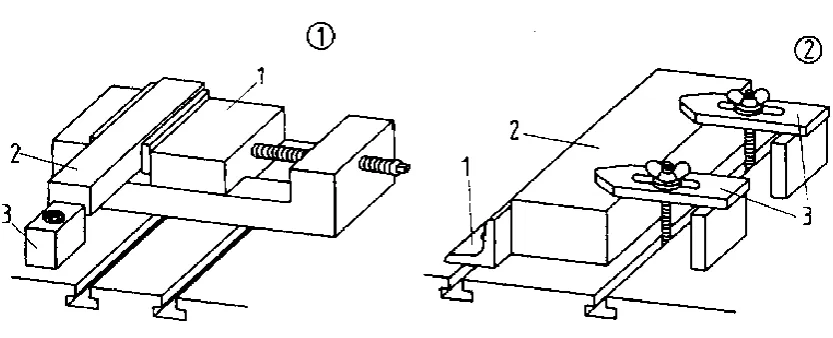
1.1 Example of Clamping on the Machine Working Table; 1 1) Clamping in the machine vice;
2) Clamping directly onto the machine table.
1.2 The classification of different natural fibers 2
2.1 Rice Husk 12
2.2 (a) A standard tensile-test specimen before and after pulling, 14
showing original and final gage lengths. (b) Stages in specimen behavior in a tension test 2.3 A typical torsion-test specimen; it is mounted between the 15
two heads of a testing machine and twisted 2.4 Two bend-test methods for brittle materials: 16
(a) three-point bending; (b) four-point bending 2.5 Typical Components of Two-part Sand Casting 19
2.6 Basic steps of sand molding in a flask with permanent pattern 20
2.7 Example of Permanent Casting 21
3.1 3D model specimen hardness and water absorption test 25
3.2 3D model specimen flexural test 26
3.3 3D model specimen tensile test 26
3.4 Stainless Steel Plate 28
3.5 Cutting Process by Laser Cutting Machine 28
3.6 Example of Universal Test Machine 33
3.7 Rockwell Hardness Tester 35
3.8 Rockwell hardness testing principle 36
x
3.10 Testing Specimen 38
3.11 Example of Universal Test Machine with three points bending 39
Flexure fixtures 3.12 Example of Water Absorption Test 39
4.1 Specimens’ Mould before Casting 42
4.2 Pouring Molten Metal into the Mould 43
4.3 Tensile Test Specimen 44
4.4 Hardness and Water Absorption Test Specimen 44
4.5 Flexural Test Specimen 45
4.6 Result for Flexural Test 46
4.7 Sample of 5% composition flexural test 47
4.8 Sample of 15% composition flexural test 47
4.9 Tensile Testing 50
4.10 Sample of 5% composition tensile test 51
4.11 Sample of 15% composition tensile test 51
xi
LIST OF ABBREVIATION AND SYMBOLS
% - Percentage
° - Degree
2D - 2 dimensional
3D - 3 dimensional
Al - Aluminum
CAD - Computer Aided Design
Cm - centimetres
FDM - Fused Deposition Modelling
G - Grams
GPa - Giga Pascal
HV - Hardness - Vickers
J - Joule
J/kg.K - Joule per Kilogram.Kelvin
K - Kelvin
Kg - kilograms
kg/m3 - Kilogram per Meter cubic Kg/m-s - Kilogram per Meter Second-1 L x W x H - Length x Width x High
m - Meters
mm - millimetres
MPa - Mega Pascal
o
C - Degree Celcius
RP - Rapid Prototyping
Sn - Stannum (Tin)
STL - Stereolithography
xii
W/m.K - Watt per Meter.Kelvin
RH - Rice Husk
UTS - Universal Testing Machine
YS - Yield Strength
N - Newton
1
CHAPTER 1
INTRODUCTION
1.1 Background
[image:17.595.114.531.518.687.2]One of the work holding devices that is used to securely hold the position and prevent movement of the part against the locator throughout the machining cycle is a clamp. The term clamp is used when the tool is temporary use for positioning and holding components during working process. Some clamp is used for temporary, as in positioning component while others are intended to be permanent. The clamp must not damage or deform the part and must be strong enough to hold the part and to resist movement. The material used to produce the clamp must be from the high toughness and high hardness to prevent clamping force damaging or bending to part and some kind of recycle material can be used.
2
For this project, Tin (Sn) was use as the main materials because the material is cheaper than other material and can recycled. Tin (Sn) have low hardness, low melting point, low toughness of material properties and high ductility of material; and because of that, involving the reinforced material Rice Husk Fibres is important to increase the hardness and strength. Natural fibre is a type of renewable sources and a new generation of reinforcements and supplements for polymer based materials (Mei-po Ho et. al., 2012).
[image:18.595.109.529.332.638.2]Natural fibres can be divided based on their origin, derivations of plant, animal and mineral types which are detailed shown in Figure 1.2
3
Natural fibre is one of the excellent reinforced materials that are tough and hard and have found to be a potential reinforcement. The different natural fibres sisal and rice husk fibres seem to be promising materials because of the high tensile strength of sisal fibre and the toughness of rice husk fibre (Jacob et. al., 2004).
1.2 Problem Statement
There is a major weakness in the edge clamp for milling table production in the current production tool design in the industry, and the weakness is the cost to produce the edge clamp is high. This is due to material use for edge clamps are made from metal such as stainless steel, carbon steel and other metals. The cost also includes the fabrication of the tools and the material. Other than that, even though the metals are one of the best materials for tooling production, but metal is not green technology material. This is the reason of use Tin as the composition in producing production tooling because it is easy to find, cheap and recyclable. As the rice husk is a natural fibre, it cannot stand alone to make a product and need combination with other metals such as Tin to make the properties much stronger than before. Therefore, in this report, the enhancement plans for quality improvement and cost reduction by applying Tin and Rice husk will be well proposed. For the process, sand casting process will be applied in this project because sand casting is one of the easier techniques of casting.
1.3 Scope
4
1.4 Objective
The objectives of this research are to:
1. To find the suitable composition between Tin (Sn) and Rice Husk Fibers 2. To test each of composition base on hardness, flexural, water absorption and
tensile strength.
5
CHAPTER 2
LITERATURE REVIEW
The literature review is definitely to the ideas and knowledge on a topic that we cover. This chapter will briefly explain about the problem issue, research objective and the methodology that supported by the establish knowledge that review from journals, books articles and close source from the internet. In Chapter 2, project report provided the introduction to the specimen that used in order to make strap clamp. Hot press machine to make the specimen is reviewed in this chapter. Besides that, this chapter review of the types of testing will be used for this project such as tensile test, surface roughness test and hardness test. Furthermore, material properties of Tin, Rice Husk and Silicon Carbide which is the materials used to produce the clamp by using sand casting process also include in this chapter. The sand casting process also consists in this review but not to detail.
2.1 Workholding Devices
6
1. The clamp must be strong enough to hold the part and resist movement 2. The clamp must not damage or deform the part.
3. The clamp should be fast-acting and allow rapid loading and unloading of parts.
The function of a clamp is to hold a part against the locators during the machining cycle. To be effective and efficient, clamps must be planned into the tool design. Some of clamping devices for milling and machining centres that is extensive to use are:
(a) Strap clamp (b) Cam clamp (c) Toggle Clamp (d) Push pull clamp (e) Edge clamp
2.1.1 Edge Clamp
7
securing in position of the clamp body on the workpiece can be achieved by displacing the clamping jaws in the guide means in the direction towards the workpiece (Klimach et. al., 2000).
2.2 Material Selection for Clamp
Material selection is a step in the process of designing any physical object. In the context of material selection for clamp, the main goal is to minimize cost while meeting the suitable performance for the clamp. Systematic selection of the suitable material for a given application begins with properties and costs of candidate materials. The performance of an engineering element is limited by the properties of the material of which it is made, and by the shapes to which this material can be formed (Ashby and Cebon, 1993).
2.2.1 Tin
Tin is a silvery-gray metallic element which has been used by humans for thousands of years. The symbol is Sn, from the Latin stannum, and its atomic number is 50, placing it with other metals such as antimony and aluminum. Almost every continent on Earth has a source of tin, usually in the form of cassiterite, an oxide mineral. The word for the metal appears to have been borrowed from a pre-Indo-European language. Old forms of German and Dutch, among other languages, have cognates of the word, but the roots are somewhat unclear. The Tin is used in pure form in storage tanks for pharmaceutical chemical solutions, as electrodes of capacitors, and fuse wire and as organ pipes. The applications usually use alloyed with some lead
8
B.C. copper implements contained very little tin as local reserves of tin had been exhausted. The Sumerians were required to travel to find the necessary ores. Bronze was a much more useful alloy than copper as farm implements and weapons could be made from it. Nonetheless, it needed the discovery of tin to become the alloy of choice.
[image:24.595.101.531.220.721.2]
Table 2.1: Material properties for Tin (CES Cambridge)
General Properties
Density 7.26e3 -7.27 kg/m^3
Price 12.9 – 14.2 USD/kg
Mechanical Properties
Young modulus 41 – 45 GPa
Yield strength (elastic limit) 7 – 15 MPa
Tensile strength 11 – 18 MPa
Flexural strength (modulus of rupture) 30 – 40 MPa
Elongation 55 – 75 % strain
Hardness - Vickers 3 – 5 HV
Fatigue strength at 10^7 cycles 4 – 9 MPa
Fracture toughness 15 – 30 MPa.m^1/2
Thermal Properties
Melting point 230 – 232 °C
Maximum service temperature 90– 100 °C
Thermal conductor or insulator Good conductor
Thermal conductivity 60 – 61.5 W/m.°C
Specific heat capacity 216 – 228 J/kg.°C
Electrical Properties
Electrical conductor or insulator Good conductor
Eco Properties
Embodied energy, primary production 35 – 40 MJ/kg CO2 footprint, primary production 1.9 – 2 kg/kg