Engineering RNA Devices for Gene Regulation, Biosensing,
and Higher-Order Cellular Information Processing
Thesis by
Maung Nyan Win
In Partial Fulfillment of the Requirements
for the Degree of
Doctor of Philosophy
California Institute of Technology
Pasadena, California
2008
© 2008
Maung Nyan Win
Acknowledgements
I would first and foremost like to thank my research advisor, Christina Smolke, for
her continuous support and creative and insightful advice provided to me throughout my
graduate study time at Caltech. Her research enthusiasm, scholarship, and dedication has
inspired and challenged me as a researcher. Her guidance has been invaluable in helping me
accomplish my thesis projects. It has been a great honor and a distinct pleasure to work with
her at both professional and social levels.
I would also like to thank my thesis committee members, Judith Campbell, Carl
Parker, and Anand Asthagiri, for their helpful comments and inputs. I have been privileged
and enjoyed working in an environment that is pleasant, wonderful, and full of friendly
professionals. Of course, the environment spans from our own laboratory to the Division of
Chemistry and Chemical Engineering and the entire Caltech campus. I am grateful to have
both professional and social support from my colleagues in the Smolke group. Thanks to
Kristy Hawkins and Andrew Babiskin for frequently providing their ‘ready-made’ plasmid
vectors, which saved me from slaving over a few clonings. I have also enjoyed the company
of a few ‘lunch and coffee’ friends, especially, Andrew Babiskin, Joe Liang, and Leo
d'Espaux; without their wonderful and fun company, the five-year period would have felt
twice as long.
I would like to show my great appreciation to my cousin and her husband, Janice and
David Lye. I came to the United States about nine years ago from Burma and started my
undergraduate study at Virginia Commonwealth University while staying at my cousin and
her husband’s house. Without their help and support, I would not have become a graduate
student at Caltech. I would also like to attribute this to my undergraduate university and
for my graduate study at Caltech. I would like to acknowledge my partner, Steve Fitzgerald,
who has been a wonderful companion for my graduate career at Caltech, and I am very much
thankful to have him as my partner.
Finally, none of my achievements would have been remotely possible without the
help and support of my parents. I am deeply, deeply grateful for everything that they have
Engineering RNA Devices for Gene Regulation, Biosensing, and
Higher-order Cellular Information Processing
Maung Nyan Win
B.S., Virginia Commonwealth University
M.S., California Institute of Technology
Ph.D., California Institute of Technology
Abstract
The proper regulation of gene expression is critical to many biological processes
occurring in the cell. It is becoming increasingly apparent that post-transcriptional processing
pathways play significant roles in regulating the expression of various genes in both
prokaryotic and eukaryotic organisms, where they direct a variety of complex cellular
functions. A striking example of a biological communication and control system directing
sophisticated gene expression regulation through precise molecular recognition is the class of
RNA regulatory elements, called riboswitches, comprised of distinct sensor (ligand-binding)
and actuator (gene-regulatory) functions that control gene expression in response to changing
levels of specific target ligand concentrations.
Inspired by these natural examples, numerous synthetic riboswitch systems have been
developed and have made profound contribution to the field of riboswitch engineering.
However, these early examples of synthetic riboswitches pose one or more challenges, such
as portability of the switch design across different cellular systems and modularity and
programmability of the components comprising the switch molecule. Therefore, we set out to
framework for the reliable design and construction of gene regulatory systems that can
control the expression of specific target genes in response to effector molecules of interest.
The platform is called the “ribozyme switch” and composed of distinct functional
components, which are modularly coupled and functionally independent of each other.
Through this platform, ribozyme switch devices that enable up- or down-regulation of target
gene expression were developed. Design modularity and response programmability of the
switch platform were also demonstrated. We also exhibited the versatility of the platform in
implementing application-specific control systems for small molecule-mediated regulation of
cell growth and non-invasive in vivo sensing of metabolite production.
Through the ribozyme switch platform, we further constructed higher-order RNA
devices that enable complex cellular information processing operations, including logic
control (AND, NOR, and NAND gates), advanced computation (bandpass filter and signal
shift in the output swing), and cooperativity (signal gain). Finally, we extended the small
ribozyme switch platform responsive to small molecules to a different class of ligand
molecules, proteins, by developing protein-responsive gene regulators and cellular biosensors.
In addition to engineering RNA devices for programming cellular function, we also
developed a high-throughput method for functional characterization of small
molecule-binding RNA aptamers, which enables robust, accurate, and rapid characterization of such
RNA aptamers. This method can be very useful as we (and others) develop RNA aptamers
for small molecules of specific interest, which can be subsequently integrated into the
ribozyme switch platform as sensing elements for specific applications. Together, these
research developments hold synergistic values for the reliable construction of ‘designer’
Table of Contents
Acknowledgments iii
Abstract v
Table of Contents vii
List of Tables xii
List of Figures xiii
Chapter I: Introduction 1
1.1. RNA as a versatile and powerful gene-regulatory element 1
1.2. RNA as sensory elements that exhibit universal sensing/binding properties 3
1.2.1. RNA elements that serve as thermosensors 4
1.2.2. RNA elements that bind nucleic acids 4
1.2.3. RNA elements that bind molecular ligands 4
1.3. Riboswitches are ligand-responsive RNA regulators of gene expression 7 1.3.1. General composition and conformational dynamics of riboswitches 9
1.3.2. Mechanisms of ligand-controlled gene regulation by riboswitches 10
1.3.3. Riboswitch targets and implementation in metabolic networks 12
1.4. Current synthetic riboswitch systems for ligand-mediated regulation of target
gene expression 12
1.4.1. Riboswitch construction based on aptamer insertion within a transcript 13 1.4.2. Riboswitch construction based on direct attachment of the aptamer
to a regulatory element 16
1.4.3. Riboswitch construction based on an evolved linker between the aptamer
and regulatory domains 18
1.5. Further advancing the current field of engineering synthetic riboswitch
systems 22
1.6. Interrelationship among the thesis projects 23
Chapter II: Codeine-binding RNA aptamers and rapid determination of
their binding constants using a direct coupling surface plasmon
resonance assay 33
Abstract 33
2.1. Introduction 34
2.2. Results 36
2.2.1. Selection of codeine-binding RNA aptamers 36 2.2.2. Qualitative assessment of codeine-binding affinity of the enriched final
pool 38
2.2.3. Determination of small molecule-aptamer binding constants using a direct
coupling surface plasmon resonance assay 39
2.2.4. Assays reveal distinct specificities of the codeine-binding aptamers to other
benzylisoquinoline alkaloid targets 43
2.2.5. Characterization of mini-aptamers that demonstrate binding affinities
similar to the full-length aptamers 45
2.2.6. Characterization of modified mini-aptamer sequences supports the
proposed secondary structures 48
2.2.7. Validation of the direct coupling SPR assay for characterization of
small molecule-aptamer binding properties 52
2.3. Discussion 56
2.4. Materials and Methods 59
2.4.1. DNA template library preparation 59
2.4.2. Codeine coupling and affinity chromatography matrix preparation 60
2.4.3. Initial RNA library pool preparation 60
2.4.4. In vitroselection of codeine-binding aptamers 61
2.4.5. Aptamer library sequence analysis 62
2.4.6. Qualitative binding affinity assay 62
2.4.7. Quantitative direct coupling small molecule-aptamer binding assay 63 2.4.8. Isocratic affinity elution and specificity assays 64
2.4.9. Truncation experiments 65
2.4.11. Dopamine aptamer binding assay 66
2.5. Supplementary Information 68
Supplementary Figures 68
Acknowledgements 70
References 71
Chapter III: A modular and extensible RNA-based gene-regulatory platform
for engineering cellular function 76
Abstract 76
3.1. Introduction 77
3.2. Results 78
3.2.1. Component specification for a scalable and portable gene-regulatory
system 78
3.2.2. Design strategies for engineering portability, utility, and composability
into a biological control system 79
3.2.3. Engineering mechanisms for information transmission between the
modular switch domains 82
3.2.4. Rational tuning strategies enable programming of switch regulatory
response 87
3.2.5. The ribozyme switch platform exhibits component modularity and
specificity 88
3.2.6. Component modularity enables implementation of ribozyme switches
as regulatory systems in diverse applications 90
3.3. Discussion 93
3.4. Materials and Methods 95
3.4.1. Plasmid, switch construction, and cell strains 95 3.4.2. RNA secondary structure prediction and free energy calculation 96
3.4.3. Ribozyme characterization assays 96
3.4.4. Cell growth regulation assays 97
3.4.5. Metabolite sensing assays 97
3.4.7.Quantification of cellular transcript levels 99
3.5. Supplementary Information 99
Supplementary Text 3.1: Glossary of terms 99
Supplementary Text 3.2: Ribozyme control constructs for loop sequence
coupling and stem integration controls 106
Supplementary Text 3.3: Rational tuning strategies for strand displacement-
based switches 107
Supplementary Figures and Tables 112
Acknowledgements 121
References 122
Chapter IV: Higher-order cellular information processing through
synthetic RNA devices 126
Abstract 126
4.1. Introduction 127
4.2. Results 128
4.2.1. Functional RNA device composition framework and general signal
integration schemes 128
4.2.2. Higher-order RNA device based on SI 1
(signal integration within the 3’ UTR) 131
4.2.3. Higher-order RNA devices based on SI 2
(signal integration at the ribozyme core) 134 4.2.4. Higher-order RNA devices based on SI 3
(signal integration through a single ribozyme stem) 136
4.3. Discussion 140
4.4. Materials and Methods 142
4.4.1. Plasmid construction, cloning, and cell strains 142 4.4.2. RNA secondary structure prediction, free energy calculation, and
corresponding proposed mechanism 143
4.4.3. In vivo assays for characterization of RNA device properties and
4.4.4. Characterization of device higher-order information processing
properties 145
4.5. Supplementary Information 146
Supplementary Text 4.1: RNA device response properties and standards in
data presentation 146
Supplementary Text 4.2: Predicted and observed response properties of
coupled single-input gates 149
Supplementary Text 4.3: Layered architectures extend the information
processing capabilities of SI 1 153
Supplementary Text 4.4: Non-layered architectures (SI 2, SI 3) for an OR
gate operation 154
Supplementary Text 4.5: Programming signal gain through multiple
sensor-transmitter components 156
Supplementary Text 4.6: Device sequences 157
Supplementary Figures and Tables 171
Acknowledgements 183
References 183
Chapter V: Engineering protein-responsive gene regulators and cellular
biosensors 189
Abstract 189
5.1. Introduction 190
5.2. Results 193
5.2.1. General composition framework and construction scheme for
protein-responsive ribozyme switches 193 5.2.2. Development of protein-responsive ribozyme switches 195 5.2.3. In vivo functional activity of p50-responsive ribozyme switches 197
5.3. Discussion and Future Work 199
5.4. Materials and Methods 200
5.4.2. RNA secondary structure prediction and free energy calculation 201
5.4.3. Ribozyme characterization assays 202
5.4.4. Fluorescence quantification 202
Acknowledgements 203
References 203
List of Tables
Table 2.1. Codeine-binding affinities of the full-length aptamer sequences as determined from the direct coupling SPR assay.
Table 2.2. Dissociation rate constants (koff) for codeine binding of the final pool, FC5, FC45, and their corresponding truncated sequences. The corresponding association rate constant (kon) is equivalent to koff/Kd.
Table 2.3. Codeine-binding affinities of several full-length aptamers determined from replicate SPR binding assays for method reproducibility assessment.
Supplementary Table 3.1. Relative steady-state ribozyme switch and ribozyme control transcript levels in the presence and absence of theophylline.
Supplementary Table 3.2. Free energies (-ΔG, kcal/mol) of individual conformations (ribozyme-active and -inactive) and the energy difference (ΔΔG, kcal/mol) between the free energies of these two conformations predicted by RNAstructure 4.2.
Supplementary Table 3.3. Primer and additional ribozyme construct sequences.
Supplementary Table 4.1. The basal output signals and output swings of the RNA devices studied in this work are shown in % device response over the full transcriptional range of the employed promoter.
List of Figures and Supplementary Figures
Figure 1.1. A schematic illustration of an in vitro selection process known as SELEX.
Figure 1.2. A schematic diagram of a typical riboswitch composed of two distinct domains. Figure 1.3. A schematic illustration of mechanisms by which riboswitches achieve gene
expression regulation in response to their target metabolite binding.
Figure 1.4. A schematic illustration of riboswitches constructed based on aptamer insertion within a target transcript.
Figure 1.5. A schematic illustration of riboswitches constructed based on direct attachment between the aptamer and regulatory domains.
Figure 1.6. A schematic illustration of riboswitches constructed based on an evolved linker between the aptamer and regulatory domains.
Figure 2.1. Codeine-binding RNA aptamer clone sequences.
Figure 2.2. Schematics of the codeine-immobilized surfaces used in the in vitro selection
process and SPR binding property assay.
Figure 2.3. Concentration-dependent codeine-binding responses and the corresponding equilibrium binding curve.
Figure 2.4. Equilibrium codeine-binding response curves.
Figure 2.5. The FC5 and FC45 aptamers exhibit differing specificities to BIA structural analogues.
Figure 2.6. Codeine-binding mini-aptamer characterization.
Figure 2.7. Structural stabilization and sequence requirements of the FC5 mini-aptamer stems.
Figure 2.8. Structural stabilization of the FC45 mini-aptamer. Figure 2.9. Validation of the direct coupling SPR assay.
Figure 3.1. General design strategy for engineering ribozyme switches.
Figure 3.2. Regulatory properties of the strand displacement information transmission mechanism.
Figure 3.3. Regulatory properties of the helix slipping information transmission mechanism Figure 3.4. Tunability of the strand displacement-based ribozyme switches.
Figure 3.6. System modularity of ribozyme switches enables implementation in programmed cell growth.
Figure 3.7. System modularity of ribozyme switches enables implementation in non-invasive detection of metabolite biosynthesis.
Figure 4.1. Functional RNA device composition framework.
Figure 4.2. Higher-order RNA devices based on signal integration within the 3’ UTR (SI 1). Figure 4.3. Higher-order RNA devices based on signal integration at the ribozyme core (SI
2).
Figure 4.4. Higher-order RNA devices based on signal integration at a single ribozyme stem (SI 3).
Figure 5.1. General composition framework and modular design strategy for engineering ligand-controlled ribozyme switch-based gene regulatory systems
Figure 5.2. A general construction scheme for protein-responsive ribozyme switches. Color schemes follow those described in Figure 5.1.
Figure 5.3. Sequences and structures of RNA aptamers with affinity and specificity for
NF-κB p50.
Figure 5.4. Modular design strategies and systematic engineering of an NF-κB p50-responsive ribozyme switch.
Figure 5.5. Sequences and secondary structures of two p50-responsive ribozyme switches in their ligand-bound conformations.
Figure 5.6. The device response of p50-responsive ribozyme switches exhibiting ON switch regulatory responses.
Supplementary Text 4.2 Figure 1. The device response over varying input concentrations of representative coupled gate devices (2xL2bulgeOff1, right; 2xL2bulge1, left) constructed through SI 1.1 and their corresponding single-gate device counterparts (L2bulgeOff1, L2bulge1).
inverting the output of an AND gate. Right, schematic illustrating an OR gate operation by inverting the output of a NOR gate.
Supplementary Text 4.4 Figure 1. Schematic representation of an RNA device based on SI 2 that functions as an OR gate operator.
Supplementary Text 4.4 Figure 2. OR gate devices.
Supplementary Figure 2.1. Qualitative assessment of the enrichment in codeine-binding affinity of the final aptamer pool.
Supplementary Figure 2.2. Alternative FC45 mini-aptamer structures support the proposed structure of the FC45 mini-aptamer.
Supplementary Figure 2.3. Structural stabilization studies of FC5 and FC45 mini-aptamers. Supplementary Figure 2.4. Structural probing results through lead-inducedand RNase T1
cleavage patterns.
Supplementary Figure 3.1. Control constructs supporting the design strategy for engineering ligand-regulated ribozyme switches.
Supplementary Figure 3.2. Flow cytometry histograms of L2bulge1, L2bulgeOff1, and the ribozyme control cell populations grown in the presence (+) and absence (-) of 5 mM theophylline.
Supplementary Figure 3.3. Flow cytometry histograms of the helix slipping-based ribozyme switch cell populations grown in the presence (+) and absence (-) of 5 mM theophylline.
Supplementary Figure 3.4. Temporal responses of L2bulge1, L1cm10, and L2cm4 in response to the addition of 5 mM theophylline (final concentration).
Supplementary Figure 3.5. Sequences and structures of tuned ribozyme switches in the L2bulge series.
Supplementary Figure 3.7. Detection of intracellular accumulation of the substrate xanthosine and the product xanthine over three different time points.
Supplementary Figure 3.8. Dynamic ranges of regulation of the ribozyme switches and controls engineered in this work.
Supplementary Figure 4.1. The device response and truth table of an AND gate operator (L2bulge9+L2bulge1tc) based on SI 1.2.
Supplementary Figure 4.3. The device response and truth table of a NOR gate operator (L2bulgeOff1+L2bulgeOff2tc) based on SI 1.3.
Supplementary Figure 4.4. Schematic representation and device response of a bandpass filter operator (L2bulge1+L2bulgeOff1) based on SI 1.4.
Supplementary Figure 4.5. The device response and truth table of a NAND gate operator (L1cm10-L2bulgeOff1tc) based on SI 2.1.
Supplementary Figure 4.6. The device response and truth table of AND gate operators (tc-theo-On2 and tc-theo-On3) based on SI 3.1.
Supplementary Figure 4.7. The device response of RNA devices comprised of internal Buffer and Inverter gates and their single internal gate device counterpart (L2bulge1).
Supplementary Figure 4.8. The device response over varying input concentrations of a representative RNA device comprised of internal Buffer and Inverter gates (theo-theo-On1) and its single internal gate device counterpart (L2bulge1) demonstrates no signal gain (nH
≈ 1).
Supplementary Figure 4.9. The device response over varying input concentrations of RNA devices comprised of internal Buffer and Inverter gates (theo-theo-On10–12) and their single internal gate device counterpart (L2bulge1) demonstrates programmed cooperativity.
Supplementary Figure 4.11. The device response over varying theophylline concentrations of representative RNA devices comprised of two internal Inverter gates (theo-theo-Off2, nH ≈ 1; theo-theo-Off6, nH ≈
1.2), and their single internal gate device counterpart (L2bulgeOff1, nH ≈ 1).
Supplementary Figure 4.12. The device response of a representative RNA device comprised of internal Buffer and Inverter gates (theo-theo-On1) and its mutated sensor variants demonstrates that input binding at both internal gates is responsible for the device response.
Supplementary Figure 4.13. The device response of a representative RNA device comprised of two internal Inverter gates (theo-theo-Off2) and its mutated sensor variants demonstrates that input binding at both internal gates is responsible for the device response.
Supplementary Figure 4.14. The device response of a representative RNA device comprised of internal Buffer and Inverter gates that exhibits programmed cooperativity (theo-theo-On13) and its mutated sensor variants demonstrates that input binding at both internal gates is responsible for the device response.
Supplementary Figure 4.15. The device response of a representative RNA device comprised of two internal Inverter gates that exhibits programmed cooperativity (theo-theo-Off6) and its mutated sensor variants demonstrates that input binding at both internal gates is responsible for the device response.
Supplementary Figure 4.16. Secondary structures and sequences of input-bound states of representative RNA devices.
Chapter I: Introduction*
The proper regulation of gene expression is critical to many biological processes
occurring in the cell. It is becoming increasingly apparent that post-transcriptional processing
pathways play significant roles in regulating gene expression in both prokaryotic and
eukaryotic organisms where they direct a variety of complex cellular functions. The
directions regulating these processes are encoded within the genome, and many of them act
at the level of cis- or trans-acting RNA elements that bind a wide range of biological
molecules such as DNA, proteins, and other RNA molecules. Recent discoveries reveal
larger roles of RNA as a sophisticated gene-regulatory molecule, which can implement
diverse regulatory forms, such as riboswitches1-5 and ribozymes6, 7, in regulating target gene
expression. Therefore, RNA represents an attractive platform for the development of novel
gene-regulatory tools for a variety of biotechnological and medical applications and present
opportunities for the modular design and construction of synthetic RNA switches and sensors
to program different cellular functions.
1.1. RNA as a versatile and powerful gene-regulatory element
Ribonucleic acid (RNA) has traditionally been recognized for its role as a passive
messenger of genetic information between the genome and the proteome in all living
organisms. However, there are an increasing number of discoveries of naturally-occurring
RNA molecules that act as regulatory elements, performing various cellular functions
including gene expression regulation through sophisticated mechanisms, thereby expanding
its traditional role as a genetic messenger and revealing it as a functionally versatile molecule.
Riboswitches1-5, ribozymes6, 7, antisense RNAs8, 9, and small interfering and microRNAs
(siRNAs and miRNAs, respectively)10-13 are examples of RNA elements that exert their
regulatory effects at different levels of the gene expression pathway such as transcription,
translation, splicing, or decay. Unlike messenger RNAs (mRNAs), these regulatory RNAs
are often noncoding RNAs (ncRNAs) or do not encode protein information. In addition,
these regulatory elements are implemented through diverse physical compositions that can be
grouped generally into cis- and trans-acting elements. In the former composition, the
regulatory element is integrated within the transcript that harbors the target gene, whereas in
the latter composition the regulatory element is a separate RNA molecule that acts on the
transcript harboring the target gene through RNA-RNA binding interactions between the two
individual molecules.
RNA exhibits a wide variety of functional properties, including catalytic, gene-
regulatory, and ligand-binding activities. In addition, integrated RNA regulatory molecules
have been characterized that achieve more sophisticated control over the expression of target
proteins through a combination of these functional properties. These functional properties are
encoded within the nucleotide sequence of an RNA molecule, which subsequently dictates its
secondary and tertiary structure and ultimately its function. RNA adopts different
conformations by folding into secondary and tertiary structures, which interact with various
cellular constituents such as DNA, proteins, small molecules, and other RNA molecules14, 15.
Furthermore, RNA molecules exhibit structural flexibility, which enable them to dynamically
adopt different conformations. The binding of cellular and environmental molecules to
particular RNA conformations has been demonstrated to regulate the equilibrium distribution
functional activity of RNA is more directly defined by its secondary structure. This
relationship between RNA secondary structure and function, in combination with predictive
RNA secondary structure / energetic folding programs and rational and/or combinatorial
design strategies, has enabled molecular engineers to construct synthetic ‘designer’
regulatory RNA elements17-19. In addition, technological advances in RNA engineering have
demonstrated the programming of regulatory properties through alteration of nucleotide
composition and ultimately RNA structure-function relationships17-19.
Recent research in RNA biology and engineering supports the model of RNA as a
versatile and powerful molecule possessing biologically-relevant gene-regulatory properties.
Advances in RNA technology and nucleic acid engineering have allowed researchers to
apply naturally-occurring RNAs as basic regulatory platforms and to develop more
sophisticated regulatory RNA elements that involve integrated designs of multiple platforms.
These synthetic riboregulators enable gene expression to be regulated in a more controlled
manner and represent powerful tools for fundamental research and exhibit important
applications in biotechnology and medical research.
1.2. RNA as sensory elements that exhibit universal sensing/binding properties
RNA molecules are functionally diverse and structurally flexible, and exhibit a wide
range of regulatory properties such as catalytic, interactive, and allosteric binding properties.
A unique property of RNA molecules is their sensing/binding capability to various types of
inputs ranging from temperature to varied molecular ligands. Similar to other regulatory
1.2.1. RNA elements that serve as thermosensors
RNA secondary structure is known to be highly dependent on temperature such that
RNA assumes different structures in response to changes in temperature. Examples of such
temperature-responsive RNA elements have been described20. For instance, genes that
encode small heat-shock proteins and regulators of heat shock-responsive genes were found
to contain sequences in their 5’ untranslated regions (UTRs) that are capable of sequestering
the Shine-Dalgarno (SD) sequence or prokaryotic ribosomal binding site (RBS) and the start
codon AUG. The dependent adoption of RNA secondary structures at different temperatures
is used to regulate the accessibility of these sequences by the ribosome, which subsequently
modulates target gene expression levels, thereby enabling these RNA elements to serve as
thermosensing gene expression regulators.
1.2.2. RNA elements that bind nucleic acids
Instances where RNA molecules exert their regulatory activities through base-pairing
interactions with other RNA molecules are widespread in both natural and synthetic
biological systems. For instance, a class of RNA molecules, called antisense RNAs, are
single-stranded, trans-acting non-coding RNA elements, whose sequences are
complementary to target transcripts and usually consist of 12-20 complementary nucleotides8.
These RNA regulatory elements bind to their target transcripts through a sequence-specific
hybridization event, resulting in the inhibition of gene expression from the bound mRNA21.
As a natural example, SgrS is an antisense RNA that down-regulates the expression of the
glucose transporter through base-pairing with the ptsG transcript when localized to the cell
good synthetic example of RNA-RNA interactions through which a gene-regulatory function
was achieved was described by Isaacs et al.24. In their engineered system, an RNA sequence
segment was integrated into a location upstream of the RBS of a reporter gene to serve as a
nucleic acid-sensing domain. This segment sequesters the RBS in the absence of the target
RNA molecule, thereby suppressing the expression of the reporter gene. In the presence of
the target RNA molecule, the sensor domain becomes bound to the target through RNA-RNA
base-pairing interactions and releases the RBS for efficient translation, thereby serving as a
nucleic acid-binding sensor domain.
1.2.3. RNA elements that bind molecular ligands
The ability of RNA structural elements to bind specific molecular ligands has been
characterized in several natural systems1. However, researchers have also generated many
examples of synthetic RNA ligand-binding elements, referred to as aptamers, in the
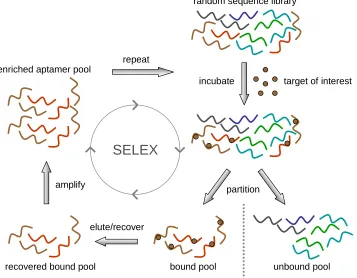
laboratory. Synthetic aptamers can be generated through a standardized in vitro selection
process known as SELEX (Systematic Evolution of Ligands by EXponential enrichment)25, 26
(Figure 1.1). SELEX provides a very powerful selection method through which nucleic acid
molecules exhibiting rare and specific binding properties to a ligand of interest can be
generated de novo by selecting for functional binding activities from large randomized
nucleic acid pools through iterative in vitro selection and amplification cycles. In vitro RNA
aptamer selection schemes begin with a large pool of single-stranded RNA molecules
generated through in vitro transcription from a DNA library. Aptamer pools are usually
comprised of 30-70 randomized nucleotides, in order to generate an initial sequence diversity
subject to a partitioning event to separate bound members from unbound members. The most
commonly used partitioning schemes are based on affinity chromatography. Bound
(functional) members are recovered and then amplified through reverse transcription and
polymerase chain reaction (PCR) to yield a pool enriched for target binding. This enriched
pool will become the input pool for the next round of selection.
random sequence library
target of interest incubate
[image:24.612.100.457.218.496.2]repeat
Figure 1.1. A schematic illustration of an in vitro selection process known as SELEX. The process starts with a large randomized pool of single-stranded RNA molecules transcribed from their DNA templates. The RNA pool is then incubated with target molecules of interest followed by separation of target-bound pool, which is reverse-transcribed to cDNA and amplified for the next selection cycle. The selection cycle is repeated typically for 8-15 cycles.
SELEX is particularly powerful in that RNA sequences that bind particular ligands
can be generated de novo and the binding properties of the resulting aptamers can be
programmed as desired. Specifically, aptamer binding properties such as affinities and
partition
unbound pool bound pool
amplify enriched aptamer pool
SELEX
elute/recover
each selection. Aptamer affinities are tailored through the stringency of each selection cycle,
normally by modifying wash volumes and target concentrations, whereas aptamer
specificities are tailored through performed counter-selections with molecular analogues to
the target. Typically eight to fifteen selection cycles are required to generate aptamers with
high binding affinities and specificities. Recent work has demonstrated that protein aptamer
selection schemes can be automated using standard robotics28-30. In addition, partitioning
schemes for protein aptamer selections based on capillary electrophoresis have been recently
developed that provide several advantages over conventional affinity-based partitioning
schemes31-33. In particular, the efficiency of separation between the bound and unbound pools
is significantly greater such that aptamers can be generated in fewer selection cycles.
Synthetic aptamers have been generated to a wide range of target ligands, including small
molecules, antibiotics, carbohydrates, amino acids, peptides, proteins34, and even organelles
such as phospholipid bilayers35, 36, indicating that synthetic aptamers can be potentially
generated to any targets of interest for user-specific applications.
1.3. Riboswitches are ligand-responsive RNA regulators of gene expression
All living organisms must manage the expression of many different genes in response
to different signals such as metabolic demands and environmental changes37. This type of
genetic management requires highly responsive sensors that accurately measure the
magnitude of a particular signal and subsequently modulate the amount of the appropriate
gene products to be synthesized. Proteins have traditionally been viewed as being the
demonstrated that elements within mRNAs, termed riboswitches, are also capable of
performing such tasks.
Riboswitches are cis-acting RNA elements that modulate the expression of target
genes through integrated sensor and regulatory domains. This integration scheme enables
riboswitches to sense their target ligands, typically cellular metabolites, through direct
binding interactions and thus autonomously mediate their own functional activity in response
to changing metabolite levels. While the majority of riboswitches characterized to-date have
been discovered in bacteria, it has been shown more recently that these complex RNA
regulatory elements are also present in eukaryotes5, 38. Riboswitches exhibiting unique
mechanistic properties have also been recently identified. For example, the glycine
riboswitch exhibits cooperative binding to its metabolite product, in which the metabolite
binding turns on the gene expression of the enzyme responsible for the glycine cleavage
system3. This cooperative-binding feature is present in the glycine riboswitch and is proposed
to ensure that the metabolite is indeed in excess after consumption to provide carbon flux
through the citric acid cycle while maintaining sufficient amounts of the amino acid available
for protein synthesis. In another example, a tandem riboswitch system was characterized that
exhibits a Boolean logic ability and functions as a two-input NOR logic gate, in which the
two ligands (S-adenosylmethionine and coenzyme B12) can independently suppress the target
gene expression by binding their corresponding aptamers located upstream of a structure
resembling an intrinsic transcription terminator4. Another tandem riboswitch system was
very recently discovered that consists of two distinct riboswitches39. Unlike the glycine
riboswitch and the two input-responsive logic-gate riboswitch systems, this riboswitch
respectively. This tandem riboswitch system responds independently to the same metabolite,
thiamine pyrophosphate (TPP), and is predicted to function in concert to yield a more
‘digital’ gene control output response than a single riboswitch system.
1.3.1 General composition and conformational dynamics of riboswitches
mRNA 5’ mRNA 5’
metabolite aptamer
domain
expression platform
Gene Expression ON
Gene Expression OFF
[image:27.612.100.520.210.297.2]metabolite binding-stabilized conformation
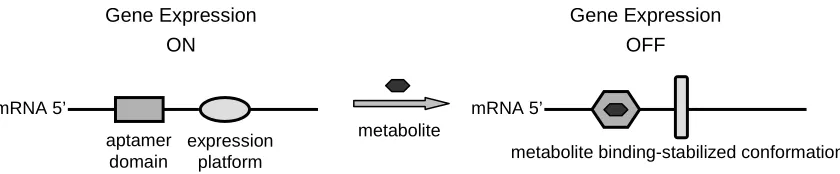
Figure 1.2. A schematic diagram of a typical riboswitch composed of two distinct domains: the ligand-binding domain known as the aptamer domain and the regulatory domain known
as the expression platform (adapted from Winkler and Breaker37). Metabolite binding to the
aptamer domain enables the stabilization of the rearranged conformation of the riboswitch (right), resulting in a shift in the equilibrium distribution between the two regulatory conformations that leads to the metabolite-dependent regulation of target gene expression.
Riboswitches are naturally-occurring, metabolite-responsive gene control elements
primarily located within the 5’ UTRs of cellular transcripts37. A riboswitch is typically
comprised of two domains: the ligand-binding or sensor domain known as the aptamer
domain, and the gene-regulatory domain known as the expression platform (Figure 1.2)37.
Both domains are structurally flexible and capable of adopting different conformations.
Riboswitches accomplish ligand-controlled regulation of gene expression through targeted
dynamic switching between two primary conformations at equilibrium: one in which the
regulatory domain is active and the other in which it is inactive. One of these conformational
states is associated with the formation of the ligand-binding pocket within the aptamer
domain, whereas the other carries an incorrectly formed binding pocket. Therefore,
appropriate combination of different conformational states adopted by the aptamer and
regulatory domains. Ligand binding to the riboswitch shifts the equilibrium distribution
between these stable conformations to favor the ligand-bound form, thereby resulting in an
allosteric gene regulation event. Most of the riboswitches characterized to date down-regulate
the expression of the target gene; however, in a few exceptions such as the glycine3 and
adenine riboswitches40, target gene expression is activated upon binding of the
metabolite-ligand to the riboswitch.
1.3.2. Mechanisms of ligand-controlled gene regulation by riboswitches
Riboswitches regulate target gene expression in cis in response to changing
metabolite levels through different mechanisms involving transcription termination40, 41,
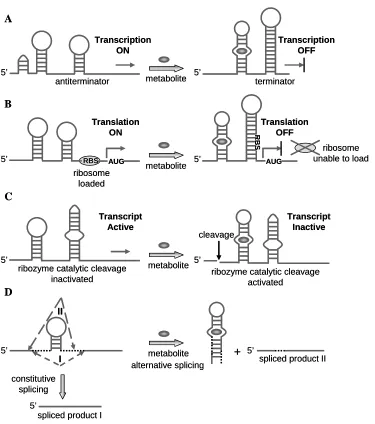
translation initiation42, mRNA processing43, and splicing5 (Figure 1.3). Transcription
termination takes place through the mediated formation of a rho-independent terminator stem,
which is usually GC rich, thereby destabilizing the transcription elongation complex41.
Regulation can also target the disruption of the formation of a terminator stem upon
metabolite binding, which allows proper transcription and thus up-regulation of target
expression levels40. Riboswitches can also mediate translation initiation by undergoing
adopting a secondary structure that interferes with ribosomal access to the target gene, such
as sequestering the ribosome-binding site (RBS) or Shine-Dalgarno (SD) sequence in
prokaryotic cells42. Regulation targeting transcript processing or deactivation can be achieved
through expression platforms comprised of self-cleaving ribozymes, where the target
transcripts undergo a ligand-directed cleavage event43. Regulation through splicing has
riboswitch can either repress or activate the expression of the main protein product by
modulating the splice site choice through structural rearrangements5. Metabolite-binding
domains have also been found within the 3’ UTRs of transcripts in certain organisms,
suggesting that riboswitch-mediated gene control may also occur through the regulation of
mRNA stability38.
A
B
C
D
5’ 5’
terminator
antiterminator metabolite
Transcription ON
Transcription OFF
5’ RBS AUG 5’
RBS
AUG
ribosome loaded
ribosome unable to load metabolite
Translation ON
Translation OFF
5’ 5’
cleavage
metabolite ribozyme catalytic cleavage
inactivated ribozyme catalytic cleavage activated
Transcript Active
Transcript Inactive
5’ metabolite +
5’
5’
spliced product I II
I spliced product II
constitutive splicing
alternative splicing A
B
C
D
5’ 5’
terminator
antiterminator metabolite
Transcription ON
Transcription OFF
5’ RBS AUG 5’
RBS
AUG
ribosome loaded
ribosome unable to load metabolite
Translation ON
Translation OFF
5’ 5’
cleavage
metabolite ribozyme catalytic cleavage
inactivated ribozyme catalytic cleavage activated
Transcript Active
Transcript Inactive
5’ metabolite +
5’
5’
spliced product I II
I spliced product II
constitutive splicing
[image:29.612.95.470.196.620.2]alternative splicing
Figure 1.3. A schematic illustration of mechanisms by which riboswitches achieve gene expression regulation in response to their target metabolite binding (A and B adapted from
Nudler and Mironov44). Ligand-regulated mechanisms involve (A) the formation of a
1.3.3. Riboswitch targets and implementation in metabolic networks
Most of the riboswitches characterized to-date have been discovered in bacteria. Cells
employ these elements as genetic regulators in many fundamental metabolic pathways in
response to changing metabolite levels. Target metabolites include various classes of small
molecules such as amino acids, nucleotide bases, and coenzymes45. The presence of the
integrated sensor domain enables riboswitches to sense intracellular metabolite
concentrations through specific binding interactions and subsequently regulate expression
levels of the associated gene product through allosteric conformational changes. Typically,
this gene product is an enzyme directly involved in the biosynthesis, biodegradation, and/or
transport of the target metabolite45. This mode of regulation provides a direct dynamic
relationship between the intracellular metabolite concentration and the expression levels of
the enzyme responsible for the metabolism, catabolism, and transport of the target metabolite.
In addition, riboswitches are capable of binding their target metabolites with high
specificities and affinities. Several different classes of natural riboswitches, their
corresponding target metabolites, and functional roles in metabolic networks in various
organisms are reviewed elsewhere in detail45.
1.4. Current synthetic riboswitch systems for ligand-mediated regulation of target gene
expression
Riboswitches are sophisticated gene control elements that achieve regulation by direct
sensing of target metabolite levels and exhibit molecular recognition, high affinities, and
precise control. Examples of the level of complexity achieved by these genetic regulatory
control of the TPP riboswitch39, the cooperative binding property of the glycine riboswitch3,
and the NOR gate signal processing behavior of the SAM - coenzyme B12 riboswitch4,
demonstrating that riboswitches are powerful sensor-actuator control systems for
autonomous gene expression control.
Inspired by the natural examples of riboswitches, numerous synthetic riboswitch
systems have been engineered for artificial, ligand-mediated control of gene expression of
target mRNAs. Many recent engineering efforts have focused on the construction of such
synthetic ligand-controlled RNA-based gene regulatory elements through the integration of
sensor and regulatory domains18. The flexibility in RNA regulatory systems, the
programmability inherent in RNA design strategies, and the ability to generate sensor
domains to potentially any molecular ligand of interest, enable such synthetic riboswitch
systems to hold significant promise in transforming our ability to engineer cellular function.
Therefore, engineered riboswitch control elements are attractive molecular tools for
applications in synthetic network design where they can serve as powerful regulators of
expression levels of genes of interest as well as in vivo biosensors of their corresponding
target ligands through mechanisms of molecular recognition that go beyond base pairing. An
overview of various engineered riboswitch systems that employ diverse gene-expression
regulatory platforms is provided below to highlight the current technologies and challenges
in the field of constructing synthetic riboswitches.
1.4.1. Riboswitch construction based on aptamer insertion within a transcript
Synthetic riboswitches have been constructed by inserting an aptamer or multiple
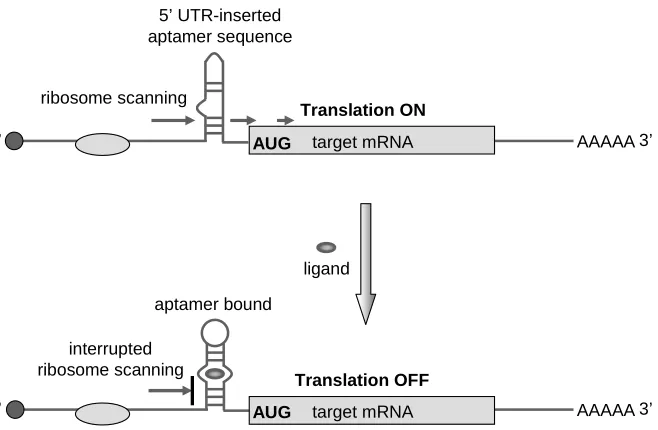
aptamers directly into the 5’ UTR of a target mRNA in eukaryotes (Figure 1.4). Although the
the cap region or the start codon of the transcript. This insertion strategy is a trail-and-error
strategy, as the inserted aptamer(s) often does not result in ligand-mediated regulation of
gene expression and may even cause substantial knockdown of the target gene in the absence
of ligand. This strategy requires that the insertion of the aptamer itself and its associated
secondary structure does not interfere with translation in the absence of the target ligand. The
binding of ligand to the aptamer results in structural stabilization due to the molecular
binding interaction between the aptamer and its target34, 46. Similar to binding of a protein to
the 5’ UTR47, 48, this stabilized secondary structure can repress translation49 presumably by
interfering with ribosomal scanning or ribosome-mRNA interactions required for effective
translation.
5’ AUG AAAAA3’
Figure 1.4. A schematic illustration of riboswitches constructed based on aptamer insertion within a target transcript. An aptamer or multiple aptamers can be inserted into the 5’ untranslated region of an mRNA transcript near the 5’ cap region or the start codon. Such an insertion may allow the aptamer-fused transcript region to adopt two primary conformations, one in which the aptamer binding pocket is disrupted (top) and the other in which the aptamer is correctly formed to reside its ligand (bottom), and the ligand binding shifts the equilibrium towards the latter conformation by stabilizing this conformation. This insertion strategy yet requires that the former conformation not introduce steric hindrance to ribosome for proper translation and that the ligand-bound latter conformation effectively inhibit translation through its stabilized structure.
5’ 3’
target mRNA ribosome scanning
ligand 5’ UTR-inserted aptamer sequence
aptamer bound
Translation ON
Translation OFF
interrupted ribosome scanning
AAAAA
[image:32.612.96.425.346.561.2]Werstuck and Green50 constructed the first examples of such riboswitches by
inserting small molecule-binding RNA aptamers into the 5’ UTR of transcripts. Translation
was demonstrated to be repressed by the addition of the appropriate ligands both in vitro and
in vivo in mammalian cells. Following this initial work, different research groups have
constructed synthetic riboswitches through this design strategy using theophylline-51,
biotin-52
, and tetracycline-binding53 aptamers, and demonstrated similar ligand-controlled gene
regulation in different systems, including wheat germ extracts54, Xenopus oocyte54, and the
budding yeast S. cerevisiae55, 56.
Synthetic riboswitches have also been constructed to regulate translation of target
genes in prokaryotes through a similar aptamer insertion strategy. Although still located in
the 5’ UTR of the target transcript, prokaryotes do not exhibit the same type of ribosomal
scanning as eukaryotic organisms. Therefore, the physical implementation of these switches
requires slightly different design strategies. In bacteria, the sequence distance between the
ribosomal binding site (RBS) and the start codon is relatively short and varies between 5 to
13 nucleotides57. As a result, targeted insertion of an aptamer in this region to interfere with
ribosomal scanning through a ligand-induced secondary structure is generally not applicable.
In most bacteria, translation initiation relies on ribosomal accessibility to the RBS and the
start codon, and thus mRNA secondary structure in the translational initiation region can
dictate the efficiency of translation58-60. Desai and Gallivan developed a synthetic riboswitch
system in E. coli where they inserted the theophylline aptamer51 to a location five base-pairs
upstream of the RBS to modulate ribosomal access to the RBS through ligand binding61. The
theophylline-dependent up-regulation of gene expression by this synthetic riboswitch was
of up-regulation from this synthetic riboswitch was observed to be dramatically affected
when the aptamer was moved to a slightly different location, two or eight base-pairs
upstream of the RBS, indicating the functional sensitivity of this riboswitch system to the
aptamer insertion location.
1.4.2. Riboswitch construction based on direct attachment of the aptamer to a regulatory
element
Synthetic riboswitches have been constructed by directly attaching an aptamer to the
regulatory domain, such that ligand binding to the aptamer inhibits the activity of the
regulatory domain through some mechanism (Figure 1.5). This construction strategy is also a
trial-and-error strategy, since the desired ligand-responsive regulatory activity may be highly
specific to the location of attachment, the mechanism of action, and the specific
aptamer-regulator pair.
A riboswitch system based on this strategy was developed by An et al. to modulate
Dicer processing of an shRNA molecule through a small molecule ligand-aptamer interaction
within this RNAi substrate62. In this example, the theophylline aptamer51 was directly fused
to an shRNA molecule, in place of the loop sequence. This shRNA construct silenced
reporter gene expression in mammalian cells in a theophylline dose-dependent manner. Dicer
cleavage of the aptamer-fused shRNA for subsequent generation of siRNAs was
demonstrated to be modulated in vitro and in vivo by theophylline. This ligand-mediated
regulation of Dicer processing was likely achieved due to locating the ligand-binding site of
the aptamer sufficiently close to the Dicer processing site, such that theophylline binding to
siRNA-ligand-mediated regulatory effect was abolished when the shRNA stem was extended by one
or two base-pairs, resulting in a small shift in the aptamer fusion point compared to the initial
fusion design.
Figure 1.5. A schematic illustration of riboswitches constructed based on direct attachment between the aptamer and regulatory domains. An aptamer is directly attached to the regulatory platform in a way that the ligand-binding pocket within the aptamer is sufficiently close to the regulatory platform. In the absence of ligand, the partner regulatory element is capable of loading onto its platform and enabling the corresponding regulatory event to occur. In the presence of ligand, ligand binding to the aptamer and residing within the binding pocket create steric hindrance for the partner regulatory element loading to its platform, resulting in the inhibition of the normal regulatory event.
This direct attachment strategy has also been employed in constructing a synthetic
riboswitch that regulates gene expression at the level of splicing. This riboswitch was
designed by insertion of the theophylline aptamer51 near the 3’ consensus splice site region of
a model pre-mRNA to modulate the splicing of the pre-mRNA through ligand-aptamer
complex interactions63. The addition of theophylline was shown to repress the in vitro
+
aptamer regulatory element (shRNA, splice site, etc.)
aptamer-fused regulatory element direct
attachment
partner regulator for regulatory element (Dicer, Spliceosome, etc.)
partner regulator loaded
regulatory activity enabled regulatory activity inhibited partner regulator
[image:35.612.94.470.153.427.2]splicing of the mRNA harboring the aptamer and have no regulatory effect on the
pre-mRNA without the aptamer. In addition, the aptamer’s effect on splicing was demonstrated
to be location-dependent and explained by modulating the spliceosome’s accessibility to the
splice site. The pre-mRNA harboring an aptamer with a stable base stem, inserted to
encompass the 3’ splice site AG within the ligand-binding sequence exhibited the most
efficient splicing inhibition, as the splice site becomes less accessible when theophylline
resides in the aptamer binding pocket.
Synthetic riboswitches constructed through the direct attachment strategy between the
aptamer and regulatory domains exhibit functional dependence on the attachment location of
the aptamer to the regulatory domain. This is because the ligand-mediated regulatory
mechanism relies solely on how effective the ligand-aptamer complex interaction is in
affecting the functional activity of the regulatory domain. This mechanism is not
standardized and is highly specific to the particular aptamer-regulator pair. Therefore, such
engineered riboswitches lack a reliable composition framework for integrating sensor and
regulatory domains that results in allosteric binding properties.
1.4.3. Riboswitch construction based on an evolved linker between the aptamer and
regulatory domains
Synthetic riboswitches have also been constructed by using a linker region that
couples the aptamer and regulatory domains and serves as an element that translates the
ligand-binding event in the aptamer domain to the adjacent regulatory domain. Early
examples of evolved linker regions implemented a mechanism of information transmission
manner64. Such functional elements are often evolved through in vitro selection procedures
and referred to as ‘communication modules’64. These dynamic elements are typically three to
five base-pairs long and often contain non-Watson-Crick base pairing.
targeted random library regions for communication module and ligand binding
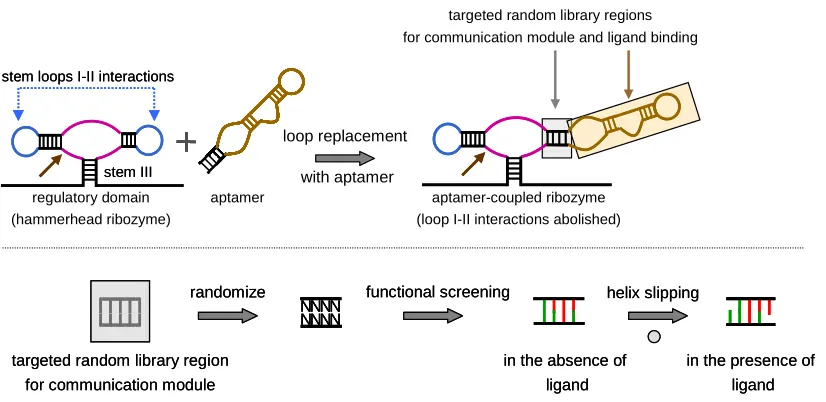
Figure 1.6. A schematic illustration of riboswitches constructed based on an evolved linker
between the aptamer and regulatory domains. An in vitro functional communication
module-based allosteric hammerhead ribozyme system is shown as an example. In general, an aptamer is attached to the regulatory domain through a linker (top), whose function is evolved to be ligand-dependent through selection from a random sequence library (bottom). The functional linkers are called ‘communication modules’, which employ the helix slipping mechanism in mediating the activity of the regulatory domain. An existing functional linker can also be used to mediate the activities of other regulatory platforms such as the RBS. In addition, an existing functional linker can also be used to couple a regulatory domain to an aptamer domain comprised of a random sequence library to evolve the latter to bind a new ligand of interest and function in this ligand-dependent manner (top). In this particular
example of the in vitro allosteric ribozyme system, part of the aptamer domain replaces one
loop of the ribozyme domain, thereby abolishing loop I-II interactions required for in vivo
functionality.
Significant effort has been directed towards the construction of communication
[image:37.612.108.521.153.354.2]module-based riboswitches that use a hammerhead ribozyme as the regulatory domain
(Figure 1.6), as ribozymes have proven to be a powerful platform for controlling gene
expression. Several research groups have engineered a class of in vitro riboswitches called
allosteric ribozymes64-70. Allosteric ribozymes resemble allosteric enzymes in that binding of
stem III
direct direct stem loops I-II interactions
stem III
direct direct stem loops I-II interactions
loop replacement with aptamer
aptamer-coupled ribozyme (loop I-II interactions abolished) regulatory domain
(hammerhead ribozyme)
aptamer
randomize
targeted random library region for communication module
N N N N N N N N
functional screening
in the absence of ligand
in the presence of ligand helix slipping
randomize
targeted random library region for communication module
N N N N N N N N N N N N N N N N
functional screening
in the absence of ligand
specific effectors, typically small molecule ligands, modulate the functional activities of the
molecule71. An allosteric ribozyme contains two separate domains, a catalytic, or regulatory,
domain and a ligand-binding, or aptamer, domain, which interact in a ligand-dependent
manner to control the catalytic activity of the molecule71. Thus, the allosteric property of
these ribozymes enables their catalytic activity to be regulated through specific ligands, and
therefore may represent a modular design platform that can directly make use of different
ligand-aptamer pairs.
Different strategies including rational design, library screening, and combinatorial
approaches have been employed to generate allosteric hammerhead ribozymes71, 72. Rational
design strategies involve integration of an existing aptamer domain directly to the catalytic
domain of the ribozyme through different linkers, followed by examination of the activities
of the resulting integrated constructs65-67. Library screening strategies involve screening
randomized sequence libraries for novel aptamer domains (sometimes including
communication modules) that function allosterically with the attached catalytic domain73, 74.
Finally, the combined approach involves integration of an existing aptamer domain to the
ribozyme’s catalytic domain through a randomized linker region, and screening for
functional linker sequences from this library that result in allosteric binding64, 68, 69. The
majority of synthetic allosteric hammerhead ribozymes constructed to-date are responsive to
small molecule ligands such as theophylline51, 64, adenosine triphosphate (ATP)65, 75, and
flavin mononucleotide (FMN)66, 76.
Researchers have also developed communication module-based riboswitches using a
different regulatory platform such as the RBS. Suess et al. engineered a synthetic riboswitch
placed at a position proximal to the RBS77. This linker element had been proposed to perform
helix slipping by one nucleotide between the ligand-bound and unbound states71. In their
design, the communication module served as a helix bridge between the aptamer and the
RBS such that binding of theophylline to its aptamer causes a single-nucleotide shift in the
communication module, thereby enabling ribosome binding to the RBS without steric
interference, and thus efficient translation in the presence of theophylline. This design
scheme is similar to a direct coupling design between a theophylline aptamer and RBS
described above, except that a distinct communication module was incorporated between the
aptamer and regulatory domains.
Linker regions have also been evolved, which implemented a different mechanism of
information transmission known as ‘strand displacement’, a functionally similar mechanism
to ‘helix slipping’. Gallivan and colleagues developed a second riboswitch system as an
extension of their initial direct attachment riboswitch design, using a combined rational and
library screening design strategy78. A linker region adjoining the theophylline aptamer and
the RBS was randomized, and sequences that translated a ligand-binding event in the aptamer
domain to a structural change in the RBS, thereby regulating ribosomal access to the RBS,
were screened through plate-based assays. These sequences are functionally similar to
communication modules in that they translate ligand-binding events at the aptamer domain to
the regulatory domain, but they are compositionally and mechanistically distinct. Gene
expression regulation through this second class of linker regions takes place through the
strand-displacement mechanism instead of a helix slipping mechanism. The functional
sequences are complementary to regions of the theophylline aptamer such that base-pairing
RBS, whereas binding of theophylline to its aptamer disrupts this conformation and releases
the RBS, resulting in up-regulation of target gene expression. As such, this regulatory
mechanism is specific to the theophylline aptamer employed in this system and is not
functionally independent. Consequently, this riboswitch system is not readily amenable to the
insertion of different aptamers and thus lacks modularity, such that new linker regions would
need to be generated by screening for specific aptamer-regulator pairs.
1.5. Further advancing the current field of engineering synthetic riboswitch systems
Numerous synthetic riboswitch systems have been developed for ligand-mediated
regulation of functional activities both in vitro and in vivo as described above. These systems
have made remarkable contributions in advancing the fielding of engineering synthetic RNA
switches and sensors. During the past decade, the field has rapidly emerged and gained
tremendous interest, as engineered riboswitches are effective regulatory elements that hold
significant promise in transforming our ability to engineer cellular functions for various
biotechnological applications through the functionally versatile biological substrate, RNA.
Nevertheless, previous examples of synthetic riboswitches face one or more limitations such
as failure to function in the cellular environment (in vivo functionality), requirement of
specific cellular machinery (portability across different cellular systems), functional
dependence among components within the switch molecule (modularity), programmability of
the components (response tunability), and limited availability of molecular ligands or inputs
that can be employed (scalability).
In order to further advance the promising field of riboswitch engineering, we set out
Allosteric hammerhead ribozymes with in vivo functionality are highly attractive substrates for the development of a functionally versatile riboswitch platform for the following reasons:
first, their regulatory mechanism employs self-cleavage and thus does not require
cell-specific machinery (portability); and second, since RNA aptamers can be de novo generated
for potentially any target ligands of interest using a standardized procedure known as
SELEX25, 26 and the sensor domain of allosteric hammerhead ribozymes is comprised of an
RNA aptamer, it is amenable to many user-specified molecular inputs that can be employed
(scalability). Therefore, we employed allosteric hammerhead ribozymes as platform
substrates, incorporated engineering design principles and strategies into our design, and
developed an in vivo functional riboswitch platform, called the ribozyme switch79, that is
modular in design, tunable in regulation, scalable in molecular input, and portable in
regulatory mechanism across diverse cellular systems, thereby further advancing the current
field of riboswitch engineering.
1.6. Interrelationship among the thesis projects
Chapter I provides an overview of RNA as a functionally versatile molecule, and
current technologies and challenges in the field of riboswitch engineering, from which my
thesis projects were developed. Chapter II describes work on one of my thesis projects,
which provides a high-throughput method for functional characterization of small
molecule-binding RNA aptamers. This method will enable robust, accurate, and rapid characterization
of such RNA aptamers and can be very useful as we (and others) develop RNA aptamers for
small molecules of specific interest that are to be integrated into the ribozyme switch
work in the development of the above-mentioned extensible ribozyme switch platform for the
reliable design and construction of ligand-controlled gene-regulatory systems applicable
across different cellular systems. Chapter IV describes a sophisticated application aspect of
our ribozyme switch platform through which higher-order RNA devices were built to achieve
complex cellular information processing operations, including logic control, advanced
computation, and cooperativity. Chapter V describes the functional extension of the small
molecule-responsive ribozyme switch platform to respond to a different class of ligand
molecules, proteins, in developing protein-responsive gene regulators and cellular biosensors.
This extension broadens the platform utility to a wider range of biotechnological applications.
These research projects synergistically support each other such that ‘designer’
gene-regulatory systems for various biotechnological and medical applications can be reliably and
effectively constructed.
References
1. Mandal, M. & Breaker, R. R. Gene regulation by riboswitches. Nat Rev Mol Cell
Biol 5, 451-63 (2004).
2. Breaker, R. R. Complex riboswitches. Science 319, 1795-7 (2008).
3. Mandal, M. et al. A glycine-dependent riboswitch that uses cooperative binding to
control gene expression. Science 306, 275-9 (2004).
4. Sudarsan, N. et al. Tandem riboswitch architectures exhibit complex gene control
5. Cheah, M. T., Wachter, A., Sudarsan, N. & Breaker, R. R. Control of alternative
RNA splicing and gene expression by eukaryotic riboswitches. Nature 447, 497-500
(2007).
6. Doudna, J. A. & Cech, T. R. The chemical repertoire of natural ribozymes. Nature
418, 222-8 (2002).
7. Fedor, M. J. & Williamson, J. R. The catalytic diversity of RNAs. Nat Rev Mol Cell
Biol 6, 399-412 (2005).
8. Simons, R. W. Naturally occurring antisense RNA control--a brief review. Gene 72,
35-44 (1988).
9. Inouye, M. Antisense RNA: its functions and applications in gene regulation--a
review. Gene 72, 25-34 (1988).
10. Meister, G. & Tuschl, T. Mechanisms of gene silencing by double-stranded RNA.
Nature 431, 343-9 (2004).
11. Dykxhoorn, D. M., Novina, C. D. & Sharp, P. A. Killing the messenger: short RNAs
that silence gene expression. Nat Rev Mol Cell Biol 4, 457-67 (2003).
12. Novina, C. D. & Sharp, P. A. The RNAi revolution. Nature 430, 161-4 (2004).
13. Tang, G. siRNA and miRNA: an insight into RISCs. Trends Biochem Sci 30, 106-14
(2005).