Straw mulch in organically grown potatoes
Evaluation and optimisation for virus vector control
PhD-Thesis submitted to the
Faculty of Organic Agricultural Sciences,
University of Kassel,
to fulfil the requirements for the degree
Doktor der Agrarwissenschaften (Dr. agr.)
by
Table of contents
Summary ... 5
Zusammenfassung... 7
1 Introduction... 9
References... 10
2 Literature review... 12
2.1 Practice of organic potato growing ... 12
2.2 The Potato virus Y pathosystem ... 13
2.2.1 Biology and epidemiology of PVY... 13
2.2.2 Economic background... 16
2.2.3 Approaches to the control of PVY ... 18
2.3 Mulches and aphid behaviour ... 21
2.3.1 Host finding behaviour of aphids ... 21
2.3.2 Effects of visual stimuli on aphids ... 24
2.3.2.1 Primary colour effects on aphids ... 24
2.3.2.2 Secondary colour effects: Mulches and other backgrounds... 25
2.4 Agronomic effects of straw mulch in potatoes ... 26
2.4.1 Abiotic requirements for potato growing ... 26
2.4.2 Yield, properties and use of cereal straw ... 27
2.4.3 Effects of straw mulch on the soil ... 28
2.4.3.1 Soil physical properties... 28
2.4.3.2 Soil chemical properties... 29
2.4.3.3 Soil biota ... 29
References... 30
3 Potato Virus Y reduction by straw mulch in organic potatoes ... 46
Summary... 46
3.1 Introduction... 46
3.2 Materials and Methods... 47
3.2.1 Field experimental design ... 47
3.2.1.1 Small scale experiments... 47
3.2.1.2 Effect of area mulched (scaling up experiment) ... 49
3.2.2 Harvest and yield measurement ... 49
3.2.3 Virus diagnosis and vector monitoring ... 49
3.2.4 Statistical analysis ... 50
3.3 Results... 50
3.3.1 Virus and vectors... 50
3.3.1.1 Vector phenology and species composition of vectors ... 50
3.3.1.2 General effects of straw mulch and presprouting ... 51
3.3.1.3 Temporal aspects: Treatment effects and vector phenology... 53
3.3.1.4 Spatial aspects... 54
3.3.2 Yield... 54
3.4 Discussion... 55
Acknowledgements... 57
Reference List... 57
4 Effects of straw mulch on potato-colonising aphids (Hemiptera: Aphididae) in potatoes .... 61
4.1 Introduction... 61
4.2 Material and Methods ... 62
4.2.1 Field experimental design ... 62
4.2.2 Aphid infestation of potato leaves... 63
4.2.3 Landing response to varied amounts of straw mulch ... 63
4.2.4 Statistical analysis ... 63
4.3 Results... 63
4.3.1 Effect of straw mulch on aphid infestation of leaves ... 63
4.3.2 Landing response to varied amount of straw mulch... 65
4.4 Discussion... 65
Acknowledgements... 67
References cited... 67
5 Response of alate aphids to green targets on coloured backgrounds ... 70
Abstract... 70
5.1 Introduction... 70
5.2 Materials and Methods... 71
5.2.1 Field experimental designs... 71
5.2.2 Spectral measurements... 72
5.2.3 Statistical analysis ... 72
5.3 Results... 74
5.4 Discussion... 77
Acknowledgements... 79
References... 80
6 Effects of straw mulch on soil nitrate dynamics, weeds, yield and soil erosion in organically grown potatoes... 84
Abstract... 84
6.1 Introduction... 84
6.2 Material and Methods ... 86
6.2.1 Field experimental design ... 86
6.2.2 Soil sampling... 88
6.2.3 Plant growth parameters... 88
6.2.4 Weed assessments ... 89
6.2.5 Harvest and yield measurement ... 89
6.2.6 Soil erosion... 89
6.2.7 Estimation of area covered by varied amounts of straw ... 90
6.2.8 Statistical analysis ... 90
6.3 Results and Discussion ... 90
6.3.1 Soil moisture ... 90
6.3.2 Soil nitrate dynamics... 91
6.3.3 Parameters of plant nutritional status and plant growth ... 92
6.3.4 Weeds... 93
6.3.5 Yield and tuber size fractions... 95
6.3.6 Soil erosion... 96
6.3.7 Coverage by straw mulch as affected by the amount applied ... 97
6.4 Conclusion ... 98
Acknowledgements... 99
7 Effect of straw mulch on late blight (Phytophthora infestans) and black scurf (Rhizoctonia
solani) in organic potatoes ... 104
Abstract... 104
7.1 Introduction... 104
7.2 Material and methods... 105
7.2.1 Field experimental design ... 105
7.2.2 Microclimatic measurements ... 107
7.2.3 Late blight and black scurf assessments... 107
7.2.4 Statistical analysis ... 108
7.3 Results... 108
7.3.1 Microclimate ... 108
7.3.2 Late blight ... 110
7.3.3 Black scurf ... 110
7.4 Discussion... 111
7.4.1 Microclimate ... 111
7.4.2 Late blight ... 111
7.4.3 Black scurf ... 112
Acknowledgements... 112
References... 112
8 Synoptic discussion ... 115
8.1 Evaluation and optimisation of straw mulch for PVY control... 115
8.1.1 Timing and vector phenology ... 115
8.1.2 Mulching material ... 117
8.1.3 Straw mulch in certified vs. saved seed potatoes ... 118
8.2 Weeds and weeding ... 119
8.3 Evaluation and optimisation of straw spreading machinery ... 120
8.4 Summarising system evaluation ... 122
References... 123
Acknowledgements... 126
Annex... 128
Numbering of field experiments ... 128
Virus diagnosis ... 128
Additonal experiment (from chapter 5) ... 130
References... 131
Use of data transformation in agricultural research... 132
Abstract ... 132
Introduction... 132
Material and Methods ... 133
Results... 133
Discussion ... 136
Conclusions... 137
Acknowledgements ... 137
References... 137
Summary
1. In order to evaluate effects of straw mulch applied at 2.5 – 5 t ha-1 in organically grown potatoes (Solanum tuberosum L.), 21 field experiments were conducted over five years at two locations (Northern Hessen and Southern Niedersachsen, Germany). The experimental sites were characterised by temperate climate conditions (635 – 709 mm precipitation year-1; 8.1°C mean air temperature) and loamy silt soils. The main focus of the study was on aphids and the aphid-transmitted Potato virus Y (PVY). This disease is a main problem in seed potato production. In addition to virus and vectors, associated agronomic effects of straw mulch were studied.
2. Straw mulch significantly reduced the incidence of PVY. It was most effective as a protectant for young plants against PVY, thus when a high vector pressure occurred early in the year. Combined mulching and presprouting (chitting) had a synergistic effect on the reduction of PVY incidence, with mulching affecting early vectors while the chitted plants exhibited adult plant resistance earlier, thus protecting from late occurring vectors.
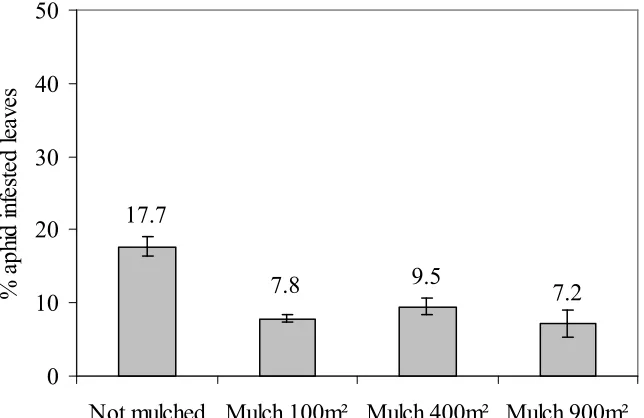
3. Straw mulch reduced aphid infestation on potato leaves and populations of potato-colonising aphids, but did not affect population growth rates. Scaling up the area mulched stepwise from 100 m² to 900m² consistently kept aphid infestation at reduced levels.
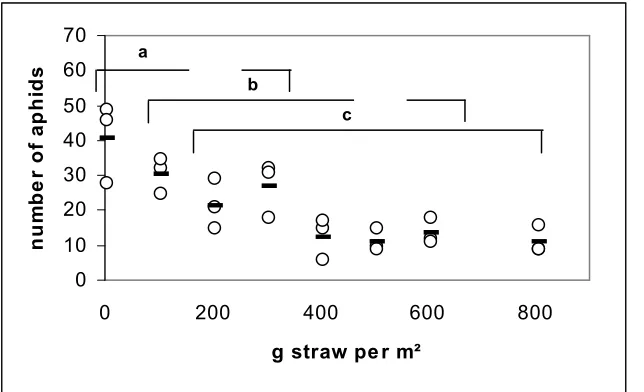
4. In a small scale experiment, straw mulch resulted in a reduction of the number of winged aphids landing in green water traps, compared to traps placed on bare soil; this effect was significant with amounts of 200 g straw m-2 and ≥ 400 g m-2, but increasing the straw quantity beyond 200 g m-2 did not cause a further significant aphid reduction.
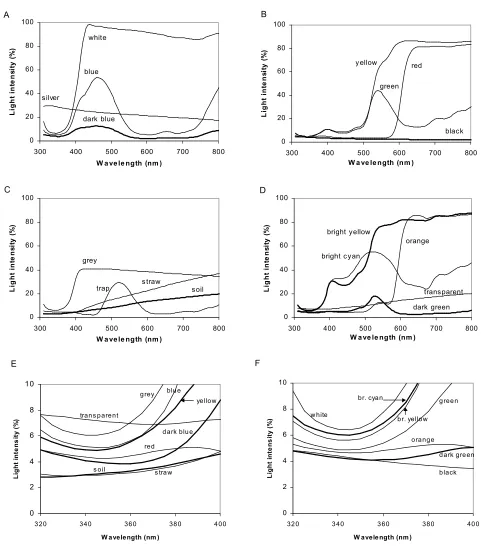
5. In two further field experiments in 2003, aphid landing in green water traps placed on various backgrounds was tested, including differently coloured plastic sheets, straw and uncovered soil as backgrounds. Aphid catches were highest in traps on uncovered background (soil), and lowest in traps on white or silver backgrounds. For seven aphid species there was a negative correlation between UV-reflectance (320 – 400 nm) of backgrounds and log(N+1)-transformed number of individuals. However, the effect of straw mulch (reduced aphid catches with straw compared to soil), could not be attributed to differences in UV-reflectance, as the UV reflectance was almost identical in soil and straw.
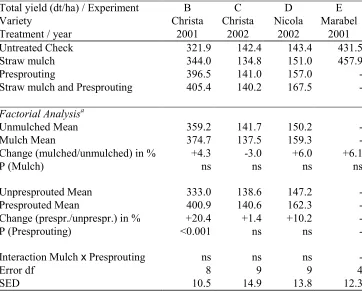
6. Tuber yield and tuber size distribution were not influenced significantly or in a uniform direction by straw mulch application in eleven field experiments, conducted over four years.
7. There was no consistent effect of straw mulch on weed parameters as number of weeds, weed cover and above-ground biomass of weeds.
9. The risk of undesirable post harvest N-leaching was reduced by straw mulch due to the immobilisation of nitrate-N after harvest at 6.8 – 7.0 kg N t-1 straw in two experiments (18 – 34 kg NO3–N ha
-1
).
10. Soil erosion was greatly reduced (by >97 %) in a rain simulation experiment on a 8 % sloping potato field with 20 % crop cover.
11. Severity of late blight (Phytophthora infestans) was estimated in five of the experiments at 3 – 7 dates per experiment. Straw mulch had no significant effect on late blight severity, measured as relative area under the disease progress curve, in any of the experiments, but a trend reducing late blight by straw mulch was observed in all five experiments.
12. Infestation with sclerotia of black scurf (Rhizoctonia solani) on harvested tubers, assessed on 100 – 220 tubers per plot, was not influenced consistently by straw mulch, with effects being non-significant in eight out of nine experiments.
13. Effects of straw mulch on microclimate, measured in one field experiment, were dependent on the time of the day, with the air in mulched plots being moister and cooler at night and dryer and warmer during the day. This effect was less marked in the period 4 – 6 weeks after mulching than in the fortnight directly after mulching.
Zusammenfassung
1. Um die Wirkung von Strohmulch (2.5 – 5 t ha-1) in ökologisch angebauten Kartoffeln (Solanum tuberosum L.) zu untersuchen, wurden 21 Feldversuche über fünf Jahre an zwei Standorten in Nord-Hessen und Süd-Niedersachsen durchgeführt. Die Versuchsflächen waren durch ein gemäßigtes Makroklima (635 – 709 mm Niederschlag pro Jahr; 8.1°C mittlere Lufttemperatur) und schluffig-lehmige Böden gekennzeichnet. Das Hauptaugenmerk der Untersuchung lag auf Blattläusen und dem von ihnen übertragenen Kartoffel-Virus Y (PVY). Diese Krankheit stellt ein Hauptproblem in der Pflanzkartoffelerzeugung dar. Zusätzlich wurden Effekte von Strohmulch in Kartoffeln auf agronomische Parameter (Ertrag u.a.) untersucht.
2. Strohmulch führte zu einer signifikanten Reduktion der mit PVY infizierten Ernteknollen. Die Reduktion war am stärksten, wenn der Vektordruck im Frühjahr am höchsten war. Die kombinierte Anwendung von Strohmulch und Vorkeimen hatte einen synergistischen Effekt bei der Virusreduktion: während Strohmulch bei starkem Frühjahrsflug der Vektoren wirksam war, konnte Vorkeimen in Jahren mit schwachem Frühjahrsflug aber stärkerem Sommerflug durch frühere Ausbildung der Altersresistenz Virusinfektionen vermindern.
3. Strohmulch verminderte den Blattlausbefall auf Kartoffelblättern und die Populationen kartoffelbesiedelnder Läuse, jedoch nicht die Wachstumsraten der Blattlauspopulation. Bei der schrittweisen Vergrößerung der Versuchsflächen von 100 m² auf 900m² blieb der Blattlausbefall in den gemulchten Flächen gegenüber der ungemulchten Kontrolle auf reduziertem Niveau. 4. In einem Kleinparzellenversuch führte Strohmulch zu einer Verminderung der Anzahl gefügelter
Blattläuse in Grünschalen, im Vergleich zu Grünschalen auf brachem Boden. Dieser Effekt war signifikant mit 200 g Stroh pro m2 und Mengen über 400 g m-2. Jedoch führte eine Steigerung der Menge über 200 g m-2 hinaus nicht zu einer zusätzlichen signifikanten Verminderung der Blattlauszahlen.
5. In zwei weiteren Feldexperimenten im Jahr 2003 wurde die Zahl geflügelter Blattläuse in Grünschalen erfaßt, die auf verschiedene Hintergründe gestellt wurden. Dabei wurden verschiedenfarbige Plastikfolien, Stroh und unbedeckter Boden als Hintergründe verwendet. Die Blattlausfänge waren am höchsten in den Fallen auf unbedecktem Boden, während sie am geringsten in Fallen auf weißem oder silbernem Hintergrund waren. Bei sieben Blattlausarten korrelierte die UV-Reflexion (320 – 400 nm) der Hintergründe negativ mit der log(N+1)-transformierten Individuenzahl der Läuse. Strohmulch reduzierte auch hier im Vergleich zu unbedecktem Boden die Blattlauszahlen, jedoch war dieser Effekt nicht auf Unterschiede in der UV-Strahlung zurückzuführen, da Stroh und Boden in diesem Wellenlängenbereich eine fast identische Reflexion zeigten.
7. Strohmulch hatte keinen konsistenten Effekt auf Beikräuter (Anzahl Beikräuter pro Fläche, Beikrautdeckung und Biomasse der Beikräuter).
8. Dass Strohmulch keinen signifikanten Effekte auf Ertrag und Unkräuter hatte, wurde hauptsächlich auf die relativ geringen Strohaufwandmengen zurückgeführt, die sich nach dem Hauptziel der Vektorregulierung richteten.
9. Das Risiko der Stickstoffauswaschung in der Nacherntephase wurde durch Strohmulch aufgrund der Immobilisierung von Nitrat-N nach der Ernte (6.8 – 7.0 kg N pro t Stroh) in zwei Experimenten vermindert; dies entsprach 18 – 34 kg NO3–N ha
-1
.
10. In einem Feldversuch mit einem Regensimulator auf einem 8 % abfallenden Kartoffelfeld verminderte Strohmulch die Bodenerosion um über 97 %.
11. Der Befall der Kartoffelpflanzen mit Krautfäule (Phytophthora infestans) wurde in fünf Versuchen an 3 – 7 Terminen bonitiert. Strohmulch hatte in keinem Versuch einen Effekt auf den Krautfäulebefall (bzgl. Fläche unter der Befallskurve), jedoch konnte in allen fünf Versuchen ein nicht-signifikanter Trend zur Krautfäulereduzierung durch Strohmulch beobachtet werden.
12. Der Befall der Ernteknollen mit der Pockenkrankheit (Sclerotien von Rhizoctonia solani) wurde bei 100 – 220 Knollen pro Parzelle bonitiert; der Befall wurde nicht einheitlich durch Strohmulch beeinflusst. In acht von neun Experimenten waren die Effekte nicht signifikant.
13. Die Wirkung von Strohmulch auf das Mikroklima im Kartoffelbestand wurde in einem Feldversuch gemessen. Nachts war die Luft in den gemulchten Parzellen kühler und feuchter als in den ungemulchten, tagsüber trockener und wärmer. Diese Effekte waren vier bis sechs Wochen nach dem Mulchen weniger deutlich als in den ersten zwei Wochen direkt nach der Mulchausbringung.
1 Introduction
In public perception, one of the most important principles of organic farming is the forbidden use of synthetically produced pesticides, distinguishing it from conventional agriculture; however, for the conception and understanding of organic farming it is more appropriate to define this farming system by its aims and practices (Lampkin, 1994). One of the aims of organic farming is to design agricultural ecosystems in a way more similar to natural ecosystems (Altieri et al., 1996). This idea includes the establishment of a permanent cover of the soil (Rusch, 1985), which can be achieved by green manuring, intercropping, mixed or relay cropping, but also by mulching the soil. Mulch in general can be defined as (dead organic) material deliberately applied to the soil as a coverage. In contrast to covering the soil with living companion plants, mulch does not show negative effects on the crop by competition. Mulching as an ancient agricultural practice in several garden and field crops (King, 1984) serves a multitude of functions, including soil erosion control and increase of soil organic matter (Jacks et al., 1955; Rowe-Dutton, 1957).
A rather unexpected effect of straw mulch is the reduction of aphid transmitted viruses (Kendall et al., 1991; Jones, 1994; Eggers and Heimbach, 2001; Heimbach et al., 2001; Heimbach et al., 2002). In potatoes, as a crop of high economic importance in organic farming (Dreyer and Padel, 1992), many plant health problems arise from the fact that the crop is propagated solely vegetatively (Schumann, 1991). These problems include aphid transmitted virus diseases that can severely reduce yields (Radtke et al., 2000).
The general aim of the thesis presented is to comprehensively describe and evaluate the application of straw mulch in organic potatoes from the perspective of both plant protection and agronomy. It is centred around effects of mulch on the currently most important potato virus disease, the Potato Virus Y (PVY). As this disease is transmitted by aphids, a main emphasis of this thesis is put on the effects of straw mulch on these insects.
application is investigated (Döring et al., to be submitted). Finally, chapter 8 brings together the five previous papers by a summarising discussion.
References
Altieri, M. A., Nicholls, C. I., Wolfe, M. S., 1996. Biodiversity - a central concept in organic agriculture: restraining pests and diseases. In: Østergaard, T. V. (Ed.), Fundamentals of organic agriculture. 11th IFOAM International Scientific Conference Proceedings Vol.1, Tholey-Theley, pp. 91-112.
Dreyer, W., Padel, S., 1992. Kartoffelanbau. In: Neuerburg, W., Padel, S. (Eds.), Organisch-biologischer Landbau in der Praxis. Verlags-Union Agrar, München, Frankfurt, Bern, pp. 153-160.
Eggers, C., Heimbach, U., 2001. Reduzierung des Blattlausbefalls durch Mulchsaatverfahren in Ackerbohne. Mitteilungen der Deutschen Gesellschaft für Allgemeine und Angewandte Entomologie 13, 253-256.
Heimbach, U., Eggers, C., Thieme, T., 2001. Optische Beeinflussung von Blattläusen durch Strohmulch. Mitteilungen der Deutschen Gesellschaft für Allgemeine und Angewandte Entomologie 13, 289-292.
Heimbach, U., Eggers, C., Thieme, T., 2002. Weniger Blattläuse durch Mulchen. Gesunde Pflanzen 54, 119-125.
Jacks, G. V., Brind, W. D., Smith, R., 1955. Mulching. Technical Communication of the Commonwealth Bureau of Soil Science 49, 1-87.
Jones, R. A. C., 1994. Effect of mulching with cereal straw and row spacing on spread of bean mosaic potyvirus into narrow-leafed lupins (Lupinus angustifolius). Annals of Applied Biology 124 : 45-58.
Kendall, D. A., Chinn, N. E., Smith, B. D., Tidboald, C., Winstone, L., Western, N. M., 1991. Effects of straw disposal and tillage on spread of barley yellow dwarf virus in winter barley. Annals of Applied Biology 119: 359-364.
King, F. H., 1984. 4000 Jahre Landbau in China Korea und Japan (German translation by E. Reinau; original title: Farmers of forty centuries - permanent agriculture in China, Korea and Japan, 1st ed., 1911 Madison, Wis.). G. E. Siebeneicher, München.
Lampkin, N., 1994. Organic Farming. Farming Press, Ipswich. 715 pp.
Radtke, W., Rieckmann, W., Brendler, F., 2000. Kartoffel - Krankheiten, Schädlinge, Unkräuter. Verlag Th. Mann, Gelsenkirchen-Buer. 272 pp.
Rusch, H. P., 1985. Bodenfruchtbarkeit - eine Studie biologischen Denkens. Haug-Verlag, Heidelberg. 243 pp.
Schumann, G. L., 1991. Plant diseases - their biology and social impact. American Phytopathological Society, St. Paul, Minnesota. 397 pp.
[Chapter 3] Saucke, H. and Döring, T. F. 2004. Potato virus Y reduction by straw mulch in organic potatoes. Annals of Applied Biology 144: 347-355.
[Chapter 4] Döring, T. F. and Saucke, H. Effects of straw mulch on aphids (Hemiptera: Aphididae) in potatoes. (to be submitted to Journal of Economic Entomology)
[Chapter 5] Döring, T. F., Kirchner, S. M., Kühne, S., and Saucke, H. 2004. Response of alate aphids to green targets on differently coloured backgrounds. Entomologia experimentalis et applicata 113: 53-62.
[Chapter 6] Döring, T. F., Brandt, M., Heß, J., Finckh, M. R. and Saucke, H. 2005. Effect of straw mulch on yield, weed development, nitrate dynamics and soil erosion in organic potatoes. Field Crops Research. (accepted)
2 Literature review
This chapter serves to give a general introduction for the following experimental studies (chapter 3 to 7) and is separated into four sections. In the first section, general conditions of current organic potato growing practice are outlined. The second section deals with one of the most important virus disease of potatoes, PVY. It builds the background for the first two papers (Saucke & Döring, 2004, chapter 3; and chapter 4), which describe the effects of straw mulch on PVY and its vectors. In order to give a better understanding of chapter 5, the third section will then consider concepts of aphid host finding behaviour and the effects of mulches on this behaviour. In the last section, introducing chapter 6 and 7, agronomic and pedological aspects of straw mulch applications are presented.
2.1 Practice of organic potato growing
This section aims to outline the special features of organic potato growing in the temperate zones. In organic farming, potatoes have a high economic importance and value, especially when sold directly to the consumer (Dreyer and Padel, 1992). The peculiarities of organic potato farming mainly concern plant protection, rotational design, preparation of seed tubers, and weed control.
From the problems experienced during organic potato production, plant protection issues are by far the most important (Lampkin, 1994). Late blight, caused by the fungal pathogen Phytophthora infestans (Montagne) de Bary is seen as the most important disease in ware potatoes (Dreyer and Padel, 1992; Tamm et al., 1999). Other pests and diseases that regularly cause high (economic) losses in organic ware potatoes are the fungal diseases black scurf (Rhizoctonia solani Kühn), early blight (Alternaria solani Ellis & Martin), and silver scurf (Helminthosporium solani Durieu & Montagne); the bacterial diseases soft rot or black leg (Erwinia carotovora Jones), and common scab (Streptomyces scabies Thaxter); the insects Colorado potato beetle (Leptinotarsa decemlineata Say) and the larvae of click beetle species (Agriotes spec.); and the potato cyst nematodes Globodera rostochiensis Wollenweber and G. pallida Stone (Möller et al., 2003).
potatoes (Dreyer and Padel, 1992; Möller and Kolbe, 2003). While some grain legumes were observed to be of variable value for the following potato crop, grass-legume mixtures (leys) are assessed to be the optimum precrop for a high yield response (Möller and Kolbe, 2003). The comparison of one year vs. two year grass-clover leys showed variable results.
Before planting the potatoes, presprouting (= chitting; also see section 2.2.3) is recommended for organic ware potato growing (Meinck, 1998); the major objective of this measure is to escape in time from late blight by earlier plant development (Dreyer and Padel, 1992). Therefore, presprouting usually increases and stabilises the yield level, leading to a 12–28 % yield increase in years when vegetation is terminated early by Phytophthora infestans (Karalus and Kainz, 2003; Möller, 2003b). Presprouting is also recommended as a control measure against the damage caused by early Rhizoctonia solani infections (Focke, 1952, Karalus and Kainz, 2003).
Weed control in organic potato growing is mostly done by 1) (chain-)harrowing and re-ridging (once to) twice between planting and emergence, and 2) subsequent cultivations and re-ridging when plants are larger (Lampkin, 1994). Besides weed control, ridging also serves to break up soil crusts that impede the aeration of the soil, to build a stable ridge with high volume for potato roots and tubers and to prevent greening of tubers (Kainz, 2003). Machines used for weeding are reviewed by Kainz (2003). Often, high levels of weeds occur later in the season, following the late blight infection that drastically reduces competition for light, water and nutrients exerted by the potato plant; high weed levels at harvest can impede the harvesting process and therefore cutting of haulm and weeds or sometimes hand weeding are done before harvest.
The potato crop is propagated vegetatively by seed tubers. In organic as well as conventional agriculture, the production of seed tubers differs from the production of potatoes for human consumption or industrial use. The peculiarities of seed potato production mainly refer to the required narrow size limits and the control of tuber transmitted virus diseases (Böhm, 2003).
2.2 The Potato virus Y pathosystem
This section deals with the currently most important virus disease of potatoes, the Potato virus Y (PVY). It starts with an outline of the disease biology and epidemiology, will then consider the economic importance of PVY for (organic) potato growing, and finally give a brief overview of selected regulation measurements.
2.2.1 Biology and epidemiology of PVY
2002). In insect-vectored plant viruses – unlike, e.g., fungus-transmitted viruses – the behaviour of the vector further increases the complexity of the pathosystem (Nemecek, 1993).
The potato (Solanum tuberosum L.) is host for at least 37 virus and viroid diseases, of which eleven display a broader geographic distribution (Stevenson, 2001). Currently, in Europe the most important and dominant potato virus is the Potato virus Y (PVY) (Weidemann, 1988; Derron and Goy, 1990; Sigvald, 1992; Rongai and Cerato, 1997; Reschke, 1999; Ruiz de Arcaute et al., 2002; Rasocha et al., 2003). The world wide distributed PVY is a species of the family Potyviridae, whose members have flexuous particles ("rods") of 650–900 nm length and 11–15 nm diameter; the genome consists of single strand RNA. The genus Potyvirus is the largest of the family with 91 species and 88 tentative species (Hull, 2002).
Transmission of PVY is experimentally possible by mechanical inoculation (sap transmission), and also contact transmission has been reported for some isolates; in the field, however, the only relevant mode of PVY transmission is transmission by aphids (Homoptera: Aphidoidea) (Beemster and De Bokx, 1987; Stevenson, 2001). At least three factors can be distinguished that are required for a successful virus transmission (Nemecek, 1993): (1) the presence of vectors at a susceptible stage of plant age, quantitatively expressed as vector abundance (2) the (quantitatively varying) ability to transmit the virus (vector propensity) and (3) the appropriate behaviour of the vector: the aphid probes or feeds on an infected plant, moves to an uninfected one and probes or feeds again.
PVY is vectored non-persistently (Matthews, 1992); this means that the time for acquisition from infected plants and for transmission to uninfected plants is very short: a few seconds of probing are sufficient for the vector to acquire or transmit the virus (Bradley, 1954), because the virus is not acquired from the phloem but from epidermal cells. The virus is carried at the distal part of stylets (Bradley and Ganong, 1955; Wang et al., 1996; but see Martín et al., 1997) and a helper component is necessary in PVY transmission (Blanc et al., 1998). Although apterous (=wingless) aphids are able to transmit PVY, most PVY spread is caused by alate (=winged) aphids (Broadbent and Tinsley, 1951; Nemecek, 1993). Following acquisition of PVY, the infectivity of the vector decreases already within approximately 1 h and is mostly lost after only a few hours (van Hoof, 1980; Katis and Gibson, 1985). The transmission probability is decreased by increasing the length of the acquisition or inoculation period (Bradley and Rideout, 1953).
The ability to transmit PVY is dependent on the virus strain (Bawden and Kassanis, 1947), the aphid species (Bawden and Kassanis, 1947; van Hoof, 1980; van Harten, 1983; Sigvald, 1984; Boiteau et al., 1988; De Bokx and Piron, 1990; Derron and Goy, 1990; Collar et al., 1998; Halbert et al., 2003) and on the aphid biotype (Singh and Khurana, 1987).
of PVY vectors belong to species that do not colonise potato (Katis and Gibson, 1985; Piron, 1986; Harrington and Gibson, 1989; Heimbach et al., 1998). Most PVY vectors are members of the family Aphididae; tested aphid species of other families (Anoeciidae, Drepanosiphidae, Lachnidae) were not found to be able to transmit PVY (Harrington and Gibson, 1989). The polyphagous green peach aphid (Myzus persicae Sulzer) is the most efficient vector of PVY (e.g., Beemster and De Bokx, 1987; Sigvald, 1992). However, since vector abundance and probing behaviour also determine the spread of the virus, other species may be more important in a particular situation in the field. For example, Brachycaudus helichrysi, a non-coloniser of potato, has been shown to contribute to a similar or higher degree to PVY spread than M. persicae (Harrington and Gibson, 1989).
Following the infection of the plant by a vector (primary infection), the virus is transported from cell to cell through plasmodesmata (Hull, 2002); after reaching the phloem, it is carried from the leaves to newly formed tubers (Zobelt, 1998). Infected tubers systemically infect the whole plant when they are used as seed potatoes (secondary infection). Plants grown from PVY infected tubers develop virus strain specific symptoms. Infection with PVYN (tobacco veinal necrosis or new strain) induces weak yellow-green mosaic on the potato leaves, whereas the PVYO strain (original) leads to black-brown spots on the underside of leaves (Beemster and De Bokx, 1987; Radtke et al., 2000). Severe infection with PVY in susceptible varieties can lead to leaf drop (Bawden, 1943). In 1980, a new sub-strain of PVYN, the PVYNTN (TN from tuber necrosis) was found in Hungary. This pathogen rapidly spread all over Europe (Duvauchelle and Kerlan, 1996; Cerato et al., 1997; Tomassoli et al., 1998). It causes necrotic rings on the tuber, rendering tubers unmarketable even as ware potatoes. Other strains like PVYC and PVYZ do not play an economically important role in Europe (Radtke et al., 2000). PVY displays an extraordinarily high genetic diversity (Blanco-Urgoiti et al., 1998; Dedic et al., 2003) and also recombinations of different strains have been found (Glais et al., 2002).
An important feature of plant-virus interactions is the fact that the susceptibility of the potato to the virus declines over time with increasing physiological age of the plant (Hunnius, 1977). This was termed "age resistance" or "mature plant resistance" (Sigvald, 1985; Kegler et al., 1993; Andersson et al., 2002).
The host range of the PVY mainly comprises solanaceous species (tobacco, pepper, potato, egg-plant), but also many weed species from other families like Chenopodium album L., (Chenopodiaceae), Sonchus arvensis L., Taraxacum officinale Weber ex Wiggers (Asteraceae) and Euphorbia helioscopia L.(Euphorbiaceae) have been shown to be PVY hosts (Schwarz, 1959; Stollberg, 2000). However, PVY sources other than potato plants are regarded not to be relevant for the empidemics of PVY in potatoes (Carter and Harrington, 1991).
was high in harvested tubers; so, the relative contribution of spring flight was seen to be larger than that of summer flight (Rieckmann & Zahn, 1998). Nemecek et al. (1995) showed with a calibrated simulation model that PVY dynamics are largely dependent on the initial inoculum y0 (i.e. percentage
infected seed). Regarding the spatial distribution of PVY in potato fields, virus incidence was demonstrated to rapidly decrease with increasing distance from the infection source (Gregory and Read, 1949); in this study the percentage of plants infected with PVY decreased by a factor of >10 within the first 2.25 m distance from the infection source in three out of four years. Similar observations were made by Singh et al. (1984). They found that no infection with PVY occurred beyond distances of 2.4–4.8 m from the infection source. Cherif and Hattab (1994) determined the percentage y of PVY infected potato plants as y=13.55/x²+0.68, with x being the distance in meters from an infection strip.
2.2.2 Economic background
Plant virus diseases can cause severe yield losses (Oerke et al., 1994; Bos, 1999). While primary infection of potatoes with PVY does not cause significant yield reduction, plants grown from PVY infected seed tubers (secondarily infected plants) yield from 14 to over 80 % less than uninfected plants (Köhler and Klinkowski, 1954; Arenz and Hunnius, 1959; Borchardt et al., 1964; Jotoff, 1971; Wenzl, 1980; van der Zaag, 1987; Radtke et al., 2000). The yield decrease is dependent on the virus strain and the variety (Winiger and Bérces, 1974). Despite the high variability of the yield response to virus infection, in agricultural practice and extension often a rule of thumb value of 50 % yield reduction in virus infected plants is largely accepted, i.e. 0.5 % yield reduction per percent virus infected seed tubers in the field.
In order to ensure high quality seed for ware potato growers, in many countries seed potato certification schemes have been established that define upper limits of infection levels for certified seed potatoes (Hunnius, 1972; Shepard and Claflin, 1975). There are a number of certification grades or levels, with higher levels having lower tolerance of virus infection. Initially, potatoes are made virus free using meristem culture and virostatica in the laboratory (Kassanis, 1957; Hunnius, 1977). Subsequent generations are produced in the field, with decreasing certification grades. The continuous use of uncertified seed potatoes year by year usually leads to a quick accumulation of virus infections and corresponding yield decline.
ratio regarding seed buying was between 1.4 and 2.0 in the 1960´s and increased in the 1970´s (range 1.5-4.1) (Uhlmann 1985). Although the available amount of certified seed does not only vary with the yield level but also with the highly variable virus infection (Table 2.1), the seed potato price varies less from year to year than the ware potatoes price (coefficient of variation calculated from Uhlmann, 1985, p.47).
The high price of certified results in (1) the avoidance of the purchase of certified seed and instead the use of own uncertified seed from last year´s production (saved seed); for example, the ratio of certified seed to all seed used was 35-38 % in the early 1980´s in Germany (Uhlmann, 1985); (2) the development of a black market for uncertified second generation seed potatoes (Uhlmann, 1985). Due to these uncertainties, economic calculations for seed potato production are difficult.
In the organic sector, an important aim is to minimise the reliance on conventionally produced seed, including seed potatoes. At first, due to the low availability of organically grown certified seed potatoes (Böhm, 2003), the principle of self-sufficiency concerning seed could not fully be maintained, and organic growers who wanted to use certified seed were largely dependent on conventional seed potatoes. With the growing organic market and increasing specialisation, however, the use of conventional seed for organic growers was restricted (in 1996) and has been finally forbidden (from 2004 on) in the European Union. The total organic seed potato area in Germany was 300 to 350 ha in 2001, equalling about 1.6–1.9 % of the total seed potato area (Böhm, 2003). Since the organic sector has been growing for several years (e.g., AGÖL, 2001) and organic potato production is expected to continue to grow in the EU (Tamm et al., 2004), the demand for organic seed potatoes will presumably continue to rise.
Table 2.1: Rejection rates of seed potatoes and percentage of virus infections caused by PVY in Germany and Czechia, ordered by year of publication
Region or country
ha nr. of years
% decertifiede of seed potato lots
% of viroses caused by
PVY
Reference
mean min median max mean
Hannovera 4 861 5 6.4 8.4 10.1 n.m. Körner (1975)
Weser-Ems 489 5 - 1.8 - n.m. Wetzel and Franken (1975);
Hesse (1975)
Bayern 85 7 3.5 5.8 14.4 n.m. Veeh (1976)
Germany 17 603 10d 3.3 7.3 16.6 n.m. Uhlmann (1985)
Hannover n.m.c 19 1.1 4.5 41.1 ca. 95 Reschke (1999)
MeVob 4 541 10 0.4 2.0 19.6 88.8 Kürzinger and Kürzinger
(2001)
Czech Rep. 5 370 4 4.9 6.6 23.7 (main) Rasocha et al. (2003)
Hessen 219 1 - 4.9 - n.m. Schnabel (2004)
a: "Geschlossene Anbaugebiete" (contiguous areas of seed potato production) b: MeVo: Mecklenburg-Vorpommern;
c: n.m. not mentioned d: 1974-1983
2.2.3 Approaches to the control of PVY
Several strategies of PVY control and potato virus management in general have been published and repeatedly reviewed (Schuster, 1946; Hunnius, 1977; Loebenstein and Raccah, 1980; Zitter and Simons, 1980; Weidemann, 1988; Khurana and Garg, 1998; Radcliffe and Ragsdale, 2002). Many of the practices of PVY control were already known in the 18th century as tools against the degeneration diseases of potato ("curl") (Bagnall, 1991). However, the currently available solutions for practical application are still limited. In this section, selected approaches relevant to the presented studies will be briefly reviewed. Measurements to control PVY comprise (1) the general genetic (varietal) resistance to the virus; (2) the removal or reduction of inoculum (infected plants or seed) by the use of certified seed, roguing, or placement of the field far from infection sources; (3) the management of temporal coincidence of plant susceptibility with vector occurrence by presprouting or early haulm destruction; (4) the management of plant nutrition; approaches that interfere with (5) the vector itself (geographical distribution, abundance and reproduction); and with (6) interactions between vector and virus (acquisition and transmission) and with (7) interactions between vector and plant (host finding, settling).
(2) Reduction of inoculum. The usage of certified seed is a further very successful strategy to reduce virus infection levels in potatoes (Pieper et al., 1930; Radcliffe and Ragsdale, 2002). This was recently demonstrated in India when potato virus incidence dropped considerably after advances were made in the establishment of official seed potato certification schemes (Khurana, 1998). A problem associated with the certification of seed is the low number of tubers tested. This results in a relatively large confidence interval around the officially diagnosed percentage of infection. For instance, assuming a Poisson distribution and the case of 10 % infection in certified seed (= threshold in Germany) among the usual 100 tubers tested per 3 ha, the "real" infection level is greater than 15 % with a probability of 5 %.
Roguing, i.e. the removal of obviously infected plants from the field, is a common and important measure to reduce virus incidence in potatoes (Weidemann, 1988; Hattab et al., 1994; Nemecek et al., 1995), especially for organic growers. However, there are several practical aspects which are a constraint for efficient implementation. New PVY strains like PVYN-Wilga display no or only very weak symptoms on above-ground parts of the crop (Radtke et al., 2000) and do not only make roguing extremely difficult but can be seen as a consequence of roguing because of the selection of symptomless strains. Already in the 1950´s, when the PVYN strain occurred first in Europe, a lack of symptoms with this strain was observed (Weidemann, 1988). Symptoms may also be masked by high levels of nitrogen (Wenzl and Reichard, 1973). Moreover, roguing is very labour intensive (Schramm, 1974) and expensive (Kainz, 1998). Efficient roguing requires skilled personnel and certain weather conditions (absence of direct sunlight). Finally, the gap created with the removal of the infected plant can lead to higher attractiveness of the neighbouring plants to vectors (see section 2.3) and increased weed infestation.
The local or regional placement of the field can further contribute to inoculum reduction, namely by the isolation of seed potatoes from generally more heavily infected ware potato stands. "Contiguous" seed potato areas therefore proved to be more successful in certification rates than smaller areas interspersed with ware potatoes (Körner, 1975).
A main strategy in virus control is the choice of the geographic area for seed potato production: virus diseases occur less in areas of higher latitudes, at higher altitudes, and at the wind-swept coasts (Wetzel and Franken, 1975), where natural vector abundance is low. Therefore, within Europe, regions have been specified for seed potato production.
in certain years with early vector activity, presprouting may increase the risk of early virus infection due to the earlier emergence, and is therefore not generally recommended (Karalus, 1998b; Böhm, 2003).
A strategy similar to presprouting is the shortening of the susceptible period of the crop at the end of the growing season by early killing of vines (haulm destruction) (Krätzig, 1975) or by green crop lifting (Fittje and Böhm, 2002; Böhm and Fittje, 2002). In organic farming, the late blight infection can been seen as a natural haulm destruction agent, helping in reducing late virus infections. With these measures, whether deliberately controlled or not, timing relative to vector phenology is essential for the success of virus reduction. A major disadvantage of shortening the growing period of the crop is yield reduction; in the case of early green crop lifting a yield reduction by 22.4 % was observed (Fittje and Böhm, 2001), which appears relatively high even for seed potatoes.
(4) Plant nutrition management. In several cases, plant nutrition management was demonstrated to influence virus infections in potatoes, but effects were not significant in other studies (Klapp, 1951; Krüger, 1951; Proeseler, 1963; Birecki et al., 1964; Hunnius, 1967). Rieckmann (2000) points out that high levels of N lead to masking of virus symptoms and make roguing more difficult. Following these investigations, the general recommendation for seed potato production is a moderate nitrogen level (Böhm, 2003) and a high level of phosphorus (Brouwer, 1976).
(5) Direct control of vectors. The killing of the vector by insecticides (aphicides) for control of non-persistent viruses has continuously been subject to criticism since the 1950s (Broadbent, 1957; Radcliffe and Ragsdale, 2002). Nevertheless it is still a regularly used and frequently recommended measure in conventional agriculture (Kürzinger, 2000; Rieckmann, 2000, p. 153). The most important drawback of aphicides is their low effectiveness against non-persistent viruses (Smith and Webb, 1969; Rieckmann, 1991; Boiteau and Singh, 1999), because the time for virus acquisition and transmission is too short for the pesticides to kill the vector (Shanks and Chapman, 1965; Zellner, 1998). This is particularly true for systemic pesticides (Perring et al., 1999). Thus, the widespread replacement of contact insecticides in conventional practice by systemic ones is regarded as the main reason for the present dominance of PVY, whereas the persistently transmitted PLRV and others are largely under insecticidal control. Perring et al. (1999) reviewed field experiments on PVY control with insecticides and found successful control in six studies and nine studies where insecticides failed to control PVY.
certification and are sold for human consumption. Although newly developed aphicides with different modes of action, more rapid degradation in the tuber or in the soil might possibly display these problems to a lesser degree, they are not an option for organic growers.
(6) Interference with virus transmission. An approach that impedes the transmission of the virus is the application of mineral oils (Külps and Hein, 1972; Vanderveken, 1977). At present however, this approach is not practised in seed potato production. The use of Neem oil, as a botanically derived substance allowed in organic farming, has been studied in Northern Spain with "partial control" of PVY (Handizi and Legorburu, 2002).
(7) Interference with host finding and settling of the vector. As aphids are known to colonise the crop from the field margin (Moericke, 1941), large square fields with a low margin/area ratio are recommended for seed potato production (Böhm, 2003). Some further vector related approaches like the use of trap crops (Difonzo et al., 1996; Thieme et al., 1998), nets (Handizi and Legorburu, 2002) and alarm pheromones (Nault and Montgomery, 1977; Hille Ris Lambers and Schepers, 1978) are not relevant to this study and are reviewed elsewhere (see above). They have not yet reached the state of widely adopted practices.
From the quick mode of transmission of PVY and its epidemiology it can be reasoned that approaches interfering with early phases of the host finding behaviour of the vector are likely to be efficient for PVY control. This has not only been concluded from simulations with an epidemiological model of PVY (Nemecek, 1993), but has also been confirmed in many studies in numerous other crops where so-called reflective surfaces were successfully used for vector control. These are reviewed in section 2.3.2.2.
2.3 Mulches and aphid behaviour
Straw mulch can considerably reduce aphid infestation and virus infection in potatoes (chapter 3 and 4). A series of experiments was conducted to elucidate the mechanisms involved in straw mulch effects on alate aphids. To give a broader background to the experiments presented chapter 5, a short review on host finding behaviour of aphids is followed by a section summarising the effects of various mulch materials on aphids and aphid-vectored viruses.
2.3.1 Host finding behaviour of aphids
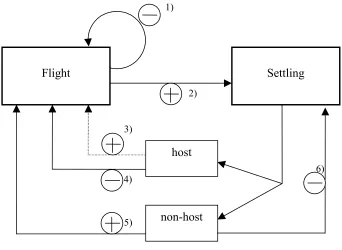
(1) After the last moult and wing hardening and before take-off from the winter host plant, the aphid is in a resting mood (Ruhestimmung); this phase before take-off is also referred to as teneral period. (2) Environmental conditions (low wind speed, above-threshold air temperatures, no precipitation) allow the aphid to enter the flight mood (Flugstimmung). With take-off, the winged aphid is positive phototactic and shows a positive response to UV wavelengths. Rising from the leaf into the sky, the flying aphid is lost to the observer´s eye after several metres, but there is strong evidence that aphids fly over longer distances once they have taken off, given favourable flight conditions. This period is called distance flight or migration flight (Distanzflug).
(3) In the following attacking flight (Befallsflug; and corresponding attacking mood = Befallsstimmung), the aphid repeatedly lands and probes on plants. Short, so-called trivial flights from plant to plant are made during this stage. Nemecek (1993, p. 71) estimated that the probable distance of trivial flight bouts is about 13 m, with 20 % of flights terminating within 1 m from take-off.
(4) The behavioural sequence is terminated by the settling period (settling mood = Ansiedlungsstimmung) in which first larvae are deposited on the (summer) host plant. According to Moericke´s model, the four moods overlap in time.
1)
2)
Flight Settling
host
non-host
antagonistic depression
antagonistic induction
3)
4)
5)
[image:23.595.98.440.75.325.2]6)
Fig. 2.1: Mutual interaction of flight and settling response in alate Aphis fabae. For explanation of (1)-(6) see text.
(1) The longer the duration of the flight, the weaker becomes the rate of climb, i.e. the flight response (Moericke, 1955a; Johnson, 1958; Kennedy, 1966: fig. 1, group A).
(2) The longer the flight, the stronger becomes the settling response (excitation of settling by flight, antagonistic induction). (Kennedy, 1965: fig. 3 and 4; Kennedy and Booth, 1963: fig. 3; Kennedy and Ludlow, 1974).
(3) After the (first) landing(s) on a host leaf presented, flight is resumed (rebounce of flight) with an increased maximum strength compared to the time before landing (antagonistic induction) (Kennedy, 1966: fig. 4 A). Also in the field, aphids having found a host depart from the host in large proportions (Kennedy et al., 1959a; Kennedy et al., 1959b).
(4) After host contacts, the flight response, measured as the average or minimum rate of climb, becomes weaker than directly before landing on the host (inhibition of flight by settling, antagonistic depression) (Kennedy, 1965: fig. 4).
(6) A series of prior landings on a non-host leaf weakens the settling response to host leaves (Kennedy and Booth, 1964: fig. 4). However, Klingauf (1976) found a stronger settling response of Acyrthosiphum pisum on hosts after short non-host than after host contact.
As the repeated alternation between probing and short flights is of paramount importance for the transmission of plant viruses, it has been subject to extensive research. Many stimuli and environmental conditions have been found to influence flight (Broadbent, 1949), and landing or probing response during the "attacking flight", including tactile (Hennig, 1963), visual (see below) and olfactory cues. Olfactory stimuli, such as isolated plant volatiles, have been shown to play a role in host finding of aphids (Chapman et al., 1981), but these are considered to be less important, mainly because alate aphids are obviously not able to discriminate between host and non-host prior to probing, i.e. they alight "quite indiscriminately" on host and non-host (Kennedy, 1950; Kennedy et al., 1959a; Kennedy et al., 1959b).
2.3.2 Effects of visual stimuli on aphids
2.3.2.1 Primary colour effects on aphids
The first study suggesting that aphids react to visual stimuli was published by Moore (1937) on aphid response to coloured pesticides and dusts. However, in this investigation, the alighting response was not observed but only the number of aphid colonies, and colour (wavelength) was not separated from light intensity. Evidence for colour perception in aphids was then given by Moericke (1950). The number of probings on differently coloured and illuminated paper was highest in orange, yellow and green, and low on red and blue; aphids that came from a coloured paper to a grey one differed in their probing activity on the grey paper, with the highest response (on grey) after blue, suggesting a successive contrast effect. With a series of field experiments Moericke (1955) demonstrated the effect of colour stimuli on aphid landing. Pure yellow without ultraviolet showed the strongest attraction to alatae, with orange, yellow-green and green following, whereas the aphids responded with low landing rates to red, blue, purple, white, grey and black. Already small areas (2.6 cm diameter) of yellow are attractive to aphids. On large (2.4 m x 2.4 m) yellow cloth, aphids landed preferably at the margin (outer 10–20 cm) whereas fewer alighted in the centre. The attractiveness of the green-yellow wavelength band (around 550 nm) was confirmed with respect to approaches by walking (Hodgson and Elbakhiet, 1985), flying (Hardie, 1989), and probing (Pelletier, 1990). There was even a positive effect of yellow light on reproduction and survival on artificial diets (Auclair, 1967). Because of the attractiveness of yellow to landing aphids, yellow traps are widely used for aphid monitoring (Moericke, 1951; Rieckmann and Zahn, 1998) and suggested for control (Budnik et al., 1996).
(Moericke, 1969). Rhopalosiphum padi L. was more attracted to green than to yellow whereas Sitobion avenae F., Rhopalosiphum maidis Fitch and Schizaphis graminum Rondani preferred yellow (Kieckhefer et al., 1976).
Besides the attractiveness of yellow, landing aphids are known to be generally repelled by shorter wavelengths (Moericke, 1955a; Kennedy et al., 1961). However, the response of aphid landing to white, which usually has a high short-wave reflexion, was varying (Moericke, 1962). As humans are not able to see UV, the varying UV reflexion of white across different studies may be one reason why results were inconsistent. In contrast to the repellency of short wavelengths to landing aphids, alatae in stage 2 of Moericke´s behavioural sequence (distance flight) are attracted to UV. This was interpreted as a change in the aphid´s "mood". In field experiments the attractiveness or repellency of white may therefore also reflect different moods of individual aphids.
2.3.2.2 Secondary colour effects: Mulches and other backgrounds
Mulch can be defined as dead material deliberately applied to the soil as a coverage. Although traditionally the word is used for organic material (including straw), in horticultural crops, the term "mulch" currently includes and is often focussed on plastic material. In any case, mulches form a background to the crop that is optically different from the plant and the soil. So, apart from the direct or primary optical influence of the plant on the aphid described in the previous section (2.3.2.1), a secondary effect of the background on landing can be supposed.
Indeed, different mulches have been reported to have a repellent effect on aphids as virus vectors and to reduce virus incidence in different cultures. The materials applied included aluminium, and white, black or coloured (blue, green, silver, and gold) plastic mulch (Smith et al., 1964; Dickson and Laird, 1966; Johnson et al., 1967; Adlerz and Everett, 1968; Wolfenbarger and Moore, 1968; Heathcote, 1968; Jones and Chapman, 1968; Smith and Webb, 1969; Fusco and Thurston, 1970; Kring, 1970; George and Kring, 1971; Shands and Simpson, 1972; Nawrocka et al., 1975; Daiber and Donaldson, 1976; Eulitz, 1977; Wyman et al., 1979; McLean et al., 1982; Kuroli and Erdélyi, 1990; Jones, 1991; Liburd et al., 1998; Brust, 2000).
Nearly all colours or materials tested show some degree of reduction in the number of alate aphids caught in yellow water traps in the mulched vs. in the unmulched treatments. The highest efficiency was consistently found with aluminium, often reducing alatae that landed in traps by over 90%. In line with this result, it was found that aluminium mulch reduced the incidence of aphid vectored plant viruses in various crops to a high degree. Black mulch material also lead to decreased aphid infestation on the crop, aphid landing rates or virus incidence, but usually with a lower reduction efficiency and with a high variability of the efficiency between the studies.
sugar beet stecklings on aphid infestation of beet plants depended on the aphid species. While Aphis fabae was always most abundant in open beds, i.e. without cover crop, the response of Myzus persicae was inconsistent over two years. Infection with Beet Yellow Virus was reduced by both barley and mustard cover compared to beets without cover crop. Interestingly, virus reduction was higher with cover crops than with aluminium strips between sugar beet rows over three years. In cabbage, undersowings with subterranean clover (Trifolium subterraneum) lead to the reduction of aphid populations (Lehmhus, 2001). Bigler et al. (1995) found that over four years, aphid populations on corn were reduced when the corn was drilled into a rotovated band of a grass-clover meadow or green rye by an average of 80 % (meadow) and 49 % (rye), compared to conventional drilling into completely uncovered soil.
In the investigations on the use of mulch for protection of plants from virus diseases, three features were often stated: (1) The higher the percentage of soil covered with mulch the higher the efficiency (e.g., Adlerz and Everett, 1968; Lehmhus, 2001) (2) The efficiency of the mulch decreases over the growing season along with the increasing canopy of the plant (e.g., Brust, 2000). (3) The comparably high costs of mulching are only economically justified in high value crops or when severe losses occur regularly due to virus diseases (e.g., Brust, 2000).
The experience that various green living mulches reduced infestation of several insect pest species, including aphids on cruciferous crops, was explained by Finch with the 'appropriate/inappropriate landing' theory (Finch, 1996; Finch and Kienegger, 1997; Finch and Collier, 2000; Finch and Collier, 2003). It is based on the observation that phytophagous insects land indiscriminately on green surfaces, but usually avoid landing on brown surfaces like soil. While host contact (appropriate landing) leads to settling, an inappropriate landing, i.e. on a non-host plant, is followed by the insect flying off the plant. In this case, the host searching process is either repeated or the insect "simply leaves the area" (Finch and Collier, 2003, p. 132).
The considerations set forth in the previous two sections lead to the question if straw mulch reduces aphid infestation by direct repellency in a short-wavelength band; by camouflage; or by the 'appropriate/inappropriate landing' mechanism. This will be discussed in the chapters 5 and 8.
2.4 Agronomic effects of straw mulch in potatoes
For the potential adoption of straw mulch application in practice, it is crucial to know how the main agronomic parameters, especially yield, are affected. This is presented in chapter 6. The following review will first describe the abiotic requirements for potato growing, then consider the properties and use of cereal straw and finally summarise known effects of mulches on the soil.
2.4.1 Abiotic requirements for potato growing
optimum temperature for yield is around 17°C (Kolbe, 2003). The optimal water availability is about 60–80 % of water holding capacity (Kolbe, 2003). Compared to other crops (e.g., rye), potatoes display only weak yield responses to changes in soil texture. Potatoes can be grown over a broad soil texture range and negative effects on yield were only observed on very heavy clay soils or very sandy soils (Kolbe, 2003). On lighter sandy soils, sufficient water availability is crucial. However, many quality parameters are negatively affected when potatoes are grown on clay soils and benefit under sandy soil conditions. Regarding soil structure, potatoes have a low tolerance to soil crusting and require a friable and loose soil, that quickly warms up.
2.4.2 Yield, properties and use of cereal straw
For temperate climate conditions, Boguslawski and Debruck, (1977) report yields of cereal straw between 4.0 and 8.0 t ha-1 with 5.0 t ha-1 on the average; winter wheat and rye showed higher straw yields (5.5 t ha-1 DM) than summer wheat and winter barley (4.5 t ha-1 DM). According to yield increases during the last few decades, more recently published figures are well above these values, with 7.0 to 9.0 t ha-1 for winter wheat (Kübler, 1994). For organic farming, Stöppler (1989) reports wheat straw yields between 5.2 and 7.2 t ha-1 from experiments with 20 varieties over three years. Straw is mainly used for animal husbandry (as bedding material, to bind urine and dung, and as occasional fodder). In a survey for Germany in 1974, three quarters of the total straw were used for this purpose. Further 20 % were incorporated into the soil, and 5 % were burnt (Boguslawski and Debruck, 1977). Currently, straw burning on the field is forbidden by law.
Cereal straw contains low levels of N (0.4% of dry matter), but has a high C content, resulting in a high C/N ratio ranging from 85 (summer barley) to 100 (wheat and rye). K levels of cereal straw range between 1.0 % of DM (in wheat) to 2.5 % of DM (in oats), and P contents are between 0.07 and 0.17% of DM (Boguslawski and Debruck, 1977). More than 90 % of straw is organic matter, with cellulose around 45 % and lignine 15-18 % of dry organic matter. A further important component of straw is SiO2 with 3-5 % of dry matter.
2.4.3 Effects of straw mulch on the soil
2.4.3.1 Soil physical properties
Many investigators have found increased soil moisture under straw mulch (Albrecht, 1922; Albrecht and Uhland, 1925; Torstensson, 1931; Turk and Partridge, 1947; Verma and Kohnke, 1951; Pereira and Jones, 1954). Absolute differences in the moisture content between mulched and unmulched soil (top 30 cm) range from 1 to over 6 weight-% and are typically around 2 to 3 %. Increased soil moisture under mulch has mainly been attributed to two causes: (1) increased infiltration (Duley and Kelly, 1939; Ayanlaja and Sanwo, 1991), caused by interception of rain drops by mulch in turn leading to reduced soil compaction and pore sealing; (2) decreased evaporation, i.e. improved moisture conservation (Esselen, 1937; Russel, 1940; James, 1945; Mooers et al., 1948; Adams, 1966; Lal, 1975; Ayanlaja and Sanwo, 1991). It was found that half the effect of evaporation control comes from shading (Russel, 1940). Evaporation control increases with higher amounts of straw mulch (Russel, 1940; Verma and Kohnke, 1951), but the increase in the effect from additional amounts of straw decreases, i.e. already light applications of straw are almost as effective as heavier ones (Russel, 1940).
Further reasons for increased soil moisture have been seen in weed suppression by mulch leading to lower evapotranspiration, the higher albedo of straw than of uncovered soil, leading to lower surface temperature, and increased dew formation with mulch (Jacks et al., 1955). The effect of increased soil moisture decreases with soil depth, i.e., it can be observed mainly in the upper soil layers (Morita and Oguro, 1951; Adams, 1966). A further important condition that influences the effect of mulch on soil moisture is the amount of rainfall: due to interception of the precipitation, small showers may not be saved at all, so the effect of mulch intercepting the rain and causing its evaporation before reaching the soil is highest with low rainfalls (Russel, 1940).
Soil temperature has been found to be stabilised under straw mulch in many studies. Straw mulch increased soil temperatures in winter (Heuser, 1930), during the night (Musso, 1932) or minimum soil temperatures (Singh et al., 1988), but decreased average and maximum soil temperatures in summer by 1 to 6 K, mostly by 2 to 3 K (Hays and Smith, 1900; Albrecht, 1922; Albrecht and Uhland, 1925; Heuser, 1930; Torstensson, 1931; James, 1945; McCalla and Duley, 1946; Opitz, 1948; Lal, 1975; Singh et al., 1988; Caliskan and Caliskan, 2002). The decrease in soil temperature was higher under heavier than under lighter mulch (Scott, 1921; McCalla and Duley, 1946; Lal, 1987). While the straw is darkening during the season, temperature differences between mulched and unmulched soil decrease (McCalla, 1944).
higher infiltration (Jacks et al., 1955); and reduced impact of falling raindrops on the soil and therefore reduced break-up of soil aggregates (Jacks et al., 1955). Borst & Woodburn concluded from a series of experiments with straw mulch that "the flow of water over the surface was of much less importance than raindrop impact as an erosion-causing factor, and that elimination of the latter was the main contribution of the mulch." (Borst and Woodburn, 1942b).
2.4.3.2 Soil chemical properties
In some early studies, nitrate levels have been found to be lower in soil under mulch than in unmulched soil (Scott, 1921). When straw (at 8t/acre) was removed in autumn and replaced in spring over three years, also lower nitrate levels were found in a silt loam soil under mulch (Albrecht, 1922). In addition, indirect effects of straw mulch may alter the nitrate content of the soil during the growing season. Higher soil moisture or decreased soil temperature may both increase or decrease the soil nitrate content. When straw is incorporated into the soil, soil nitrogen may be locked up due to the high C/N-ratio of straw (immobilisation) (Jacks et al., 1955; Thurston, 1997; Cheshire et al., 1999). On arable farms, straw is often incorporated into the soil after the harvest of the cereals.
Long term application of straw mulch was shown to increase the organic matter content of the soil (Thurston, 1997), but also in the short term, i.e. following one year of straw application, a slight increase by 0.2 %-points caused by straw mulch was observed (Verma and Kohnke, 1951).
2.4.3.3 Soil biota
Various soil biota have been reported to benefit from the application of straw mulch. For example, earthworm populations have been shown to increase under straw mulch (Thurston, 1997). Mulch protects the soil from excessive desiccation and "provides earthworms with readily available food" (Jacks et al., 1955). As a consequence, earthworms may decrease the straw cover by feeding on it. In soil samples (0-23 cm) from straw mulched and unmulched potato fields (Krüger, 1952) counted individuals of the soil fauna; although it was not stated how much straw was applied and sampling dates differed between treatments, it may carefully be concluded from this study that the number of collemboles, diplopodes, and dipteran larvae was higher, but the number of enchytraeids and mites was lower under straw than in bare soil.
References
Adams, J. E., 1966. Influence of mulches on runoff, erosion and soil moisture depletion. Soil Science Society of America Proceedings 30, 110-114.
Adlerz, W. C., Everett, P. H., 1968. Aluminum foil and white polyethylene mulches to repel aphids and control watermelon mosaic. Journal of Economic Entomology 61, 1276-1279.
AGÖL (Arbeitsgemeinschaft Ökologischer Landbau), 2001. Entwicklung des ökologischen Landbaus in Deutschland. Ökologie und Landbau 118, 2.
Agrios, G. N., 1988. Plant Pathology. 3rd ed. Academic Press, San Diego. 803 pp.
Albrecht, W. A., 1922. Nitrate accumulation under straw mulch. Soil Science 14, 299-305.
Albrecht, W. A., Uhland, R. E., 1925. Nitrate accumulation under the straw mulch. Soil Science 20, 253-267.
Andersson, B., Sigvald, R., Wiik, L., Båth, B., Ascard, J., Erjefält, L., Olsson, K., 2002. Ecological potato production I. Effects of plant protection methods on potato late blight, potato virus Y and yield. In: Wenzel, G., Wulfert, I. (Eds.), 15th Triennial Conference of the European Association for Potato Research, Hamburg, p. 198.
Anonymus, 1987. Final general discussion – durability of resistance. In: Ciba Foundation Symposium 133: Plant resistance to viruses. John Wiley & Sons, Chichester, New York. 196-201.
Arenz, B., Hunnius, W., 1959. Der Einfluss verschiedener Virusarten auf die Ertragsbildung bei der Kartoffel. Bayerisches landwirtschaftliches Jahrbuch 36, 163-173.
Auclair, J. L., 1967. Effects of light and sugars on rearing the cotton aphid, Aphis gossypii, on a germ-free and holidic diet. Journal of Insect Physiology 13, 1247-1268.
Ayanlaja, S. A., Sanwo, J. O., 1991. Management of soil organic matter in the farming systems of the low land humid tropics of West Africa. A review. Soil Technology 4, 265-277.
Bagnall, R. H., 1991. Cyclic epidemics of aphid-borne potato viruses in Northern seed-potato-growing areas. In: Harris, K.F. (Ed.), Advances in Disease Vector Research. Springer-Verlag, Berlin, New York. pp. 53-71.
Bawden, F. C., Kassanis, B. K., 1947. The behaviour of some naturally occurring strains of potato virus Y. Annals of Applied Biology 34, 503-516.
Bawden, F. C., 1943. Some properties of the potato viruses. Annals of Applied Biology 30, 82-83. Beemster, A. B. R., De Bokx, J. A. , 1987. Survey of properties and symptoms. In: De Bokx, J. A.,
van der Want, J. P. H. (Eds.), Viruses of potatoes and seed-potato production, 2nd ed., Wageningen, pp. 84-115.
Bigler, F., Waldburger, M., Frei, G., 1995. Vier Maisanbauverfahren 1990-1993 – Krankheiten und Schädlinge. Agrarforschung 2 (9), 380-382.
Blanc, S., Ammar, E. D., Garcia-Lampasona, S., Dolja, V. V., Llave, C., Baker, J., Pirone, T. P., 1998. Mutations in the potyvirus helper component protein: effects on interactions with virions and aphid stylets. Journal of General Virology 79, 3119-3122.
Blanco-Urgoiti, B., Tribodet, M., Leclere, S., Ponz, F., De San Roman, C. P., Legorburu Faus, J. , Kerlan, C., 1998. Characterization of potato potyvirus Y (PVY) isolates from seed potato batches. Situation of the NTN, Wilga and Z isolates. European Journal of Plant Pathology 104, 811-819.
Boguslawski, E. v., Debruck, J., 1977. Strohdüngung und Bodenfruchtbarkeit. DLG-Verlag, Frankfurt a.M. 92 pp.
Boiteau, G., Singh, R. P., Parry, R. H., Pelletier, Y., 1988. The spread of PVYo in New Brunswick potato fields: timing and vectors. American Potato Journal 65, 639-649.
Boiteau, G., Osborn, W. P. L., 1997. Behavioural effects of imidacloprid, a new nicotinyl insecticide, on the potato aphid, Macrosiphum euphorbiae (Thomas) (Homoptera Aphididae). The Canadian Entomologist 129, 241-249.
Boiteau, G., Singh, R. P., 1999. Field assessment of imidacloprid to reduce the spread of PVYo and PLRV in potato. American Journal of Potato Research 76, 31-36.
Borchardt, G., Bode, O., Bartels, R., Holz, W., 1964. Untersuchungen über die Minderung des Ertrages von Kartoffelpflanzen durch Virusinfektionen. Nachrichtenblatt des Deutschen Pflanzenschutzdienstes 16, 150-156.
Borst, H. L., Woodburn, R., 1942a. Effect of mulches and surface conditions on the water relations and erosion of Muskingum soils. United States Department of Agriculture Technical Bulletin 825, 1-16.
Borst, H. L., Woodburn, R., 1942b. The effect of mulching and the methods of cultivation on run-off and erosion from Muskingum silt loam. Agricultural Engineering 23, 19-22.
Bos, L., 1999. Plant viruses, unique and intriguing pathogens. Backhuys Publishers, Leiden. 358 pp. Böhm, H., 2003. Pflanzkartoffelanbau. In: Möller, K., Kolbe, H., Böhm, H. (Eds.), Handbuch
Ökologischer Kartoffelbau. Agrarverlag, Leopoldsdorf, Austria, pp. 165-174.
Böhm, H., Fittje, S., 2002. Green crop lifting - an alternative producing healthy seed potatoes in the system of organic farming. In: Wenzel, G., Wulfert, I. (Eds.), 15th Triennial Conference of the European Association for Potato Research, Hamburg, p. 168.
Bradley, R. H. E., 1954. Studies of the mechanism of transmission of potato virus Y by the green peach aphid, Myzus persicae (Sulz.) (Homoptera: Aphididae). Canadian Journal of Zoology 32, 64-73.
Bradley, R. H. E., Rideout, D. W., 1953. Comparative transmission of potato virus Y by four aphid species that infest potato. Canadian Journal of Zoology 31, 333-341.