ITS APPLICATION TO
BOTANICAL KEY GENERATION
by
E.G. Faulkner, B.E., B.A..
G
rge,9., e
Submitted in fulfilment of the requirements
for the degree of
Doctor of Philosophy
University of Tasmania, December 1992
The dissatisfaction expressed by taxonomists with the results
obtained from automatic key-generation methodologies
employing deductive logic led to an examination of interactive
key generation methodologies employing inductive logic.
Philosophical and psychological aspects of induction were
examined to ensure that the resulting methodology would be
philosophically and psychologically acceptable, and a case was
made that such methods would in fact be more widely
understood in the community than deductively-based
methodologies. The effects of the discussion on the debate about
the existence of artificial intelligence and the problems of
obtaining rules for expert systems were noted, and a
computerised methodology implemented. The results of applying
this methodology to Tasmanian data obtained from
measurements of specimens of the
Acaenacomplex and
3
4
5
14
16
21
22
Abstract
Contents
Contents
Contents
Contents
Contents
- Summary
- Sections
- Figures
- Tables
- Equations
Introduction
Artificial Intelligence and the Development of
Human Induction
Background to Computer Simulation of
Induction
A Statistical Approach to Inductive
Categorisation
Inductive Categorisation Implementation
Inductive Categorisation, Dendrograms, and
Botanical Data
Inductive Categorisation; Key Construction
Future Work
Conclusions
Reference List
Appendix A: Clustering Methodology and
Categorisation.
Appendix B: Neural Network Methodology and
Categorisation.
Appendix C: Voting Methodology and
Categorisation.
Appendix D: Discriminant Analysis and
Categorisation.
Appendix E: Validity of Data Used.
27
83
118
174
187
202
249
250
252
285
314
351
359
Introduction
22
Artificial Intelligence and the Development of
Human Induction
271.1 The Use of Induction in Reasoning
27
1.1.1 Purpose of Induction
28
1.1.1.1 Inductive Classification is not Absolute 28
1.1.1.2 Complete enumeration versus partial
enumeration
29
1.1.2 Induction is useful in practice
31
1.1.3 Mill's methods for the use of induction 34
1.1.4 Limitations of Induction
36
1.2 Theories concerning Induction
36
1.2.1 Theories of Helmholtz
37
1.2.2 Theories of Dewey
38
1.2.3 Theories of Rowe
38
1.2.4 "Gestalt" versus "Information Processing"
Theories
38
1.2.5 Theories of Piaget
39
1.2.5.1 Period of Sensory-Motor Intelligence 41
1.2.5.2 Stage of Preoperational Thought 42
1.2.5.3 Stage of Concrete Thought
44
1.2.5.4 Propositional or Formal Operations 45
1.3 How widely applicable are these theories? 45
1.3.1 Does everyone achieve deductive logic? 46
1.3.2 Automaticity
49
1.3.3 Automaticity and Induction
53
1.3.4 Limitations of Expert systems
54
1.4 Simulation of Induction
54
1.4.1 What can be simulated?
55
1.4.2 Relationship between Induction and Intelligence 56
1.4.3 Advantages of Induction
61
1.5 Controversy about existence of Artificial
Intelligence
63
1.5.2 Beliefs taken as axioms, and their
consequences.
64
1.5.2.2.1 Christian Libertarians
72
1.5.2.2.2 Aristotelian Libertarians
74
1.5.2.2.3 Pantheist Libertarians
75
1.5.2.2.4 Parallelist and Epiphenomenalist
Libertarians
77
1.5.2.2.5 Summary; Libertarians and Artificial
Intelligence
77
1.5.3 Cognitive Modelling and Artificial Intelligence 79
1.5.4 Computer Science and Artificial Intelligence 80
1.6 Summary: induction, humans and expert systems 82
Background To Computer Simulation of
Induction
83
2.1 Deriving Rules to Systematise Data
83
2.1.1 Discrete and Continuous Data
84
2.1.2 Data Compression applied to real-numbered
characteristics
85
2.1.3 Key Building - A Background History 86
2.1.4 Categorisation of Numeric Data
97
2.1.5 Classification of discrete valued characteristics 97
2.2 Obtaining Rules for use in Expert systems 98
2.2.1 Collecting the Expertise
91
2.2.2 Induction and the Feigenbaum bottle-neck 100
2.2.3 Common Problems with Data of Botanic Origin 106
2.3 'Selecta-key' Specification
117
A Statistical Approach To Inductive
Categorisation
118
3.1 Key decisions using a single characteristic 118
3.1.1 Statistics and Inductive Categorisation 119
3.1.2 Tests assuming Parametric Distributions 120
3.1.2.1 Large Sample Tests
121
3.1.2.1.1 Introduction — Properties of a Normal
Curve
121
3.1.2.1.2 Distinguishing between two Species 125
3.1.2.1.3 Are the means of two large-sample
distributions different?
126
3.1.2.1.4 Separation points in large sample
Table of Contents Sections
3.1.2.1.5 Distinguishing between many large-
sample distributions
134
3.1.2.1.6 Splitting Points and Multiple
Distributions
136
3.1.2.1.6.1 Method 1 — 'Grouping' 137
3.1.2.1.6.2 Method 2 — 'Individual Difference' 138
3.1.2.1.7 Type 1 errors and Decision Keys 142
3.1.2.3 Small Sample Parametric Tests
145
3.1.2.3.1 Introduction
146
3.1.2.3.2 Difference between means, small
sample parametric distributions 146
3.1.2.3.3 Choosing a splitting point, with small
sample distributions
148
3.1.2.3.4 Distinguishing between many small-
sample distributions
148
3.1.3 Non-Parametric Tests
148
3.1.3.1 Introduction to non-parametric tests 149
3.1.3.1.1 Sign Test
149
3.1.3.1.2 U Test
149
3.1.3.1.3 Randomisation Tests — Introduction 150
3.1.3.1.4 Randomisation Tests — Advantages &
Disadvantages
150
3.1.3.2 Randomisation Tests — Possible method of
use
152
3.1.3.2.1 Distinguishing between two non-
parametric distributions
153
3.1.3.2.2 Randomisation Tests — Minimum
group sizes
157
3.1.3.2.3 Approximate Randomisation Tests 157
3.1.3.2.3.1 Approximate Randomisation tests for
large groups
158
3.1.3.2.3.2 Approximate Randomisation tests for
small groups
160
3.1.3.2.4 Randomisation Tests — Comparison
with parametric tests
160
3.1.3.2.5 Randomisation Tests — Are keys
3.1.3.2.6 Randomisation Tests — Approach
adopted
162
3.1.3.2.7 Randomisation Tests — Splitting Point
Selection
162
3.1.3.2.8 Randomisation Tests — Distinguishing
between many distributions 162
3.1.3.3 Randomisation Tests — Summary 163
3.2 Error Correction — Use of Multiple
Characteristics
163
3.2.1 Choice of the best single characteristic to use 163
3.2.2 Construction of the key
165
3.2.2.1 Key construction — Expert aided by
Selecta-key
165
3.2.2.2 Key construction — Automatic 165
3.2.3 Use of more than one characteristic per
decision
167
3.2.3.1 Error Correction using Multiple
Characteristics
167
3.2.3.2 Multiple Characteristics and Selecta-key 169
3.3 'Voting' Methodology
172
3.4 Summary — Statistical Methods
173
Inductive Categorisation Implementation 174
4.1 First prototype of Selecta-key
174
4.2 Second prototype of Selecta-key
175
4.3 Third prototype of Selecta-key
177
4.4 Simplified Inductive Classification (Voting). 182
4.5 Checking for Outliers
182
4.6 Aristotelian Neural Net Simulator
183
4.7 Ancillary programs
184
Inductive Categorisation, Dendrograms, and
Botanical Data
187
5.1 Botanic Dendrograms — Limitations of the Selecta-
key approach.
187
5.1.1 Dendrogram types — Genealogical
Dendrograms
188
5.1.3 Dendrogram types — Identification
Dendrograms
190
5.2 Requirements of Botanic Data
191
5.2.1 Data Requirements for Comparison of
Methodologies for the Identification of Botanic
Specimens
192
5.2.2 Data Requirements for the accurate
identification of Botanic Specimens
194
5.3 An examination of Data Sets for use in Methodology
Comparison
195
5.3.1 Choice of data for suitability for use in
methodology comparisons.
195
5.3.2 An examination of data sets for use in accurate
botanic specimen identification
196
5.4 Training and Test Sets of Data
198
5.5 Summary
200
Inductive
Categorisation & Key Construction 202
6.1 Comparison of Results obtained from Selecta-key
and 1st Class
203
6.1.1 Key construction — Selecta-key and 1st Class 203
6.1.2 Alternate Key construction — Selecta-key and
1st Class
206
6.2 Comparing Selecta-key's
Acaena
and
Danthonia
Keys with existing keys.
210
6.2.1 Results obtained using Selecta-key with the
Acaena
data
211
6.2.1.1
Acaena
Data, Collier's Summary Key 211
6.2.1.2
Acaena
Data, Quinlan's C4.5 Algorithm 211
6.2.1.3
Acaena
Data, Orchard's Key
212
6.2.1.4
Acaena
Data, Selecta-key Imitation of
Orchard's Key
214
6.2.1.5
Acaena Data —
Key derived from Selecta-
key
215
6.2.2 Results obtained using Selecta-key with the
Danthonia
data
217
6.2.2.1
Danthonia
data — Collier's Key 217
6.2.2.2
Danthonia
data — Key derived from
Selecta-key
221
6.3 Computer time used
225
6.4 Statistical-only versus statistical plus randomisation
runs
226
6.5 Alternative Methodologies; Implementation and Test
Runs
227
6.5.1 Alternative Methodologies — Cluster Analysis 228
6.5.1.1 Purpose of Cluster Analysis
228
6.5.1.2 Natural Number of Clusters
229
6.5.1.3 Rate of identification using Cluster
Analysis
229
6.5.1.4 Summary of results using Cluster Analysis 230
6.5.2 Alternative Methodologies — Neural Nets 233
6.5.2.1 Species Identification, Aristotelian neural
net
233
6.5.2.2 Species Identification, non-Aristotelian
neural net
234
6.5.2.3 Neural net summary
236
6.5.3 Alternative Methodologies — Voting 237
6.5.3.1 Discussion of Voting Methodology 237
6.5.3.2 Results obtained by use of the Voting
Methodology
238
6.5.3.3 Summary — Voting Methodology 238
•
6.5.4 Alternative Methodologies — Discriminant
Analysis
239
6.5.4.1 Parametric Discriminant Analysis 239
6.5.4.1.1 Parametric methodology employed 239
6.5.4.1.2 Results obtained from the parametric
discriminant analysis
240
6.5.4.2 Non-Parametric Discriminant Analysis 241
6.5.4.2.1 Non-parametric methodology
employed
241
6.5.4.2.2 Results obtained from the non-
parametric discriminant analysis 241
6.5.5 Summary — Alternative Methods
242
6.7 Summary of Results
248
Future Work
249
Conclusions
250
Reference List
252
Appendix A
Clustering Methodology
285
A.1 Discussion on Clustering.
285
A.1.1 Finding the number of clusters
286
A.1.2 Poorly and well separated clusters
287
A.1.3 Clustering limitations involving incomplete data 290
A.2 Results obtained using Clustering Methodology 290
A.2.1 Preliminary results using Ward's method plus
discriminant analysis with the Acaena and
Danthonia data.
291
A.2.2 The number of clusters in the Acaena and
Danthonia data.
296
A.2.3 Full clustering results using the Acaena data 298
A.2.4 Full clustering results for the Danthonia data 307
A.3 Summary
313
Appendix B: Neural Networks
314
B.1 Can the human brain be imitated?
314
B.1.1 Attempts to imitate the brain
315
B.1.2 Are rules necessary?
316
B.1.3 Should imitations start bottom-up or top-down? 317
B.1.4 Imitating the brain's parallel processing 317
B.1.5 How does the brain work?
319
B.1.5.1 The black box approach
319
B.1.5.2 The divide-and-conquer approach 320
B.1.5.3 Applying a combined approach
320
B.2 Modelling the Neuron
321
B.3 Joining the model neurons into a network — brief
summary
324
B.3.1 Hopfield nets
326
B.3.2 Hamming nets
326
B.3.4 Carpenter/Grossberg classifiers
326
B.3.5 Kohonen nets
327
B.3.6 Neocognition nets
327
B.3.7 Multi-layer perceptron nets
327
B.3.7.1 A 3-layer perceptron net
328
B.3.7.2 Ability of a 3-layer perceptron net to
generalise
330
B.3.7.3 More than 3 layers in a perceptron net? 332
B.4 Some Neural Net Theory
333
B.5 Implementation Issues
338
B.6 Results Obtained
339
B.6.1 Training and Test Data Sets
339
B.6.2 Results obtained from Neural Net runs 339
B.6.2.1 Data Treatment
340
B.6.2.2 Experiences with the Aristotelian Net 340
B.6.2.3 Results Obtained with non-Aristotelian Net 342
B.7 Discussion
349
B.8 Summary
349
Appendix C: Voting Methods
351
C.1 Voting Methodology
351
C.1.1 Detail of Methodology
351
C.1.2 Implementation
352
C.2 Results from Voting Methodology
353
C.2.1 Treatment of Data
353
C.2.2 Results from Data
353
C.3 Discussion of Methodology
355
C.3.1 Discussion of Results
356
C.3.2 Advantages and Disadvantages
357
C.4 Summary
358
Appendix D: Discriminant Analyses
359
D.1 Discussion of the Methodologies employed for the
Discriminant Analyses
359
D.1.1 Detail of Methodologies
359
D.1.2 Implementation
360
D.2 Results obtained by applying Discriminant Analysis
Methodologies
360
D.2.2 Results from Data
361
D.2.2.1 Results from a parametric methodology 361
D.2.2.2 Results from a non-parametric
methodology
363
D.2.3 Discussion of Results
365
D.3 Advantages and Disadvantages
366
D.4 Summary
366
Appendix E: Data Used
367
E.1 Origins of the Data
367
E.2 Types of Data used
367
E.3 Suitability of the Data Characteristics used 369
E.4 Consistency of Data
376
E.4.1 Form of the data
376
E.4.2 Presence of Outliers
377
E.4.2.1 Examination for possible Data Entry
errors
378
E.4.2.2 Examination for possibly anomalous
specimens
380
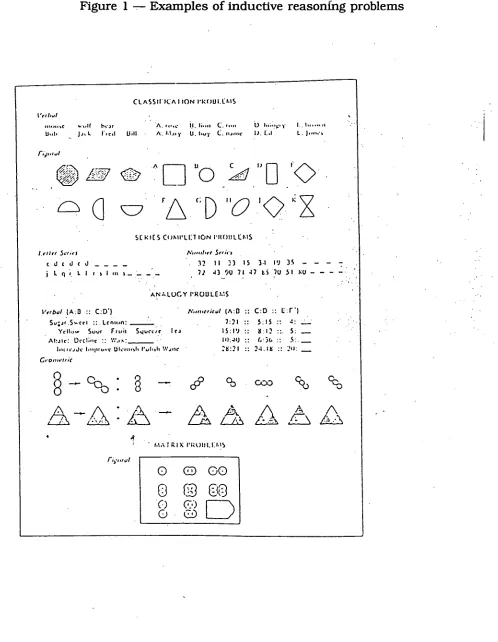
Figure 1 — Examples of inductive reasoning problems 58
Figure 2 — Examples of true and false figural analogies 59
Figure 3 — An IQ test analogical reasoning problem 60
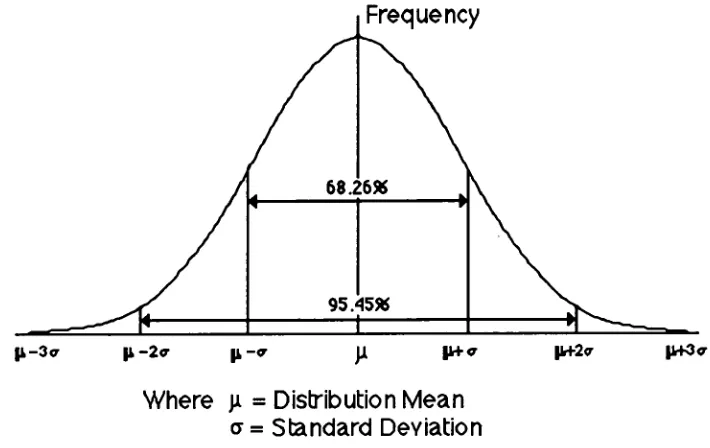
Figure 4 — Normal or Gaussian Probability Curve 122
Figure 5 — Area under Normal Probability Curve 124
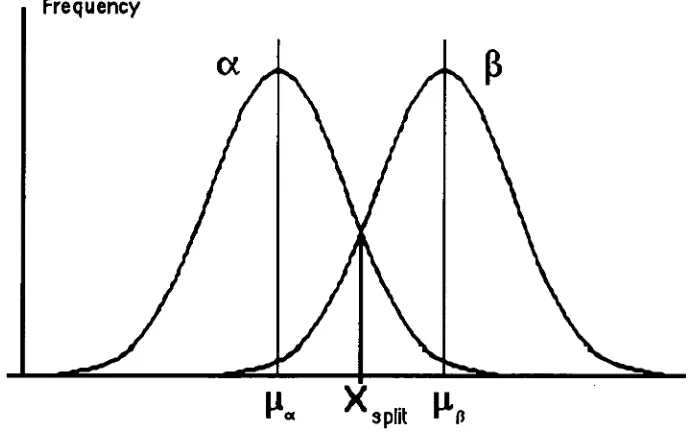
Figure 6 — Distributions exhibiting separation 126
Figure 7 — Distributions exhibiting separation 128
Figure 8 — Overlapping distributions
130
Figure 9 — Overlapping distributions
131
Figure 10 — Scores on an Arithmetic Reasoning Test 132
Figure 11 — Incompletely separated distributions 134
Figure 12 — Multiple distributions
135
Figure 13 — Multi-modal distributions with splitting
point S1
137
Figure 14 — Multi-modal distributions with small
distributions grouped about splitting point Si 138
Figure 15 — Matrix of confidence levels
139
Figure 16 — Splitting point S2 chosen
140
Figure 17 — S3 splitting point chosen
140
Figure 18 — Splitting point S4 chosen
141
Figure 19 — x
sp
ii
t
in a distribution
176
Figure 20 — A cladogram showing Hennig's definition
of a relationship
189
Figure 21 —
Acaena
key produced by the Selecta-key
system
204
Figure 22 — The summary decision key from Collier's
Figure 6
204
Figure 23 —
Acaena
classification key, constructed
without flower data
207
•
Figure 24 — Key from
Pt Class,
using no-flower, no-
fruit
Acaena ovina
data
208-209
Figure 25 — The decision key produced by the C4.5
algorithm
212
Figure 26 — Orchard's Key to the Australian Species
and varieties of
Acaena.
213
Figure 27 — Selecta-key key for
Acaena ovina
taxa 216
Figure 29 — Selecta-key
Danthonia
key 222-225
Figure 30 — Species-specific plot of Fisher's Iris data,
clustered by Ward's method
288
Figure 31 — Cluster-specific plot of Fisher's Iris data,
clustered by Ward's method
289
Figure 32 — Cluster-specific plot of the
Acaena
data,
clustered by Ward's method
293
Figure 33 — Taxa-specific plot of the
Acaena
data,
clustered by Ward's method
294
Figure 34 — Cluster-specific plot of the
Danthonia
data, clustered by Ward's method
295
Figure 35 — Diagrammatic representation of a Neuron 321
Figure 36 — McCulloch-Pitts model of a Neuron 322
Figure 37 — Main Types of Neural Networks 325
Figure 38 — Three-layer perceptron net
328
Figure 39 — Binary image of a character
329
Figure 40 — Diagrammatic representation of an input-
layer Neuron
334
Figure 41 — Diagrammatic representation of a middle-
layer Neuron
334
Figure 42 — Shape of a Sigmoid function
335
Figure 43 — Diagrammatic representation of an output-
layer Neuron
335
Figure 44 — Delta rule weight changes
336
Table 1 — A possible leaf length distribution 103
Table 2 — Area between confidence limits
124
Table 3 — Mean and standard deviation
132
Table 4 — Percentage correctly classified after
successive questions
144
Table 5 — Observed value of leaf length
154
Table 6— Randomisation of two
Acaena Ovina
measurement groups
155
Table 7 — Minimum Group Size for Randomisation
Test
157
Table 8 — Binary representation of multiple
characteristic decision
170
Table 9 — Binary representation of sample specimens 170
Table 10 — t test results
205
Table 11 — t test results
206
Table 12
—Acaena
classification rate obtained by use
of Collier's key
211
Table 13 —
Acaena
classification rate obtained by use
of the C4.5 key
212
Table 14
—Acaena
classification rate obtained by use
of Orchard's key
214
Table 15 —
Acaena
classification rate obtained by use
of "imitation" key
215
Table 16 —
Acaena
classification rate obtained by use
of Selecta-key key
216
Table 17 —
Danthonia
classification rate obtained by
use of Collier's key
220
Table 18 — Classification rate, Selecta-key
Danthonia
key
225
Table 19 — Relative running times of Selecta-key and
ID3 algorithms
226
Table 20 — Rate of identification of
Acaena
data using
Cluster Analysis
231
Table 21 — Rate of identification of
Danthonia
data
using Cluster Analysis
232
Table 22 — Classification rate, Aristotelian neural net
Table 23 — Average classification rate, non-Aristotelian
neural net method using
Acaena
data
235
Table 24 — Average classification rate, neural net
method using
Danthonia
data
236
Table 25 — Average classification rate, Voting
methodology (first choice only)
238
Table 26 — Average classification rate, Voting
methodology (first two choices only)
238
Table 27 — Average classification rate, discriminant
analysis using the
Danthonia
data
240
Table 28 — Average classification rate using the
Acaena
data (excluding the specimens having incomplete
data)
240
Table 29 — Average classification rate using the
Acaena
data (including the specimens having incomplete
data)
241
Table 30 — Average classification rate using the
Danthonia
data, Epanechnikov's kernel
methodology
242
Table 31 — Ranges of classification rates using the
Danthonia
data
242
Table 32 — Ranges of classification rates using the
Acaena
data
243
Table 33 — Classification of
Danthonia
data 244
Table 34— Classification of
Acaena
data
245
Table 35 — Key to the
Acaena
data
299
Table 36 — Density Linkage Cluster Analysis for the
Acaena
data
301
Table 37 — Two-stage Density Linkage Cluster Analysis
for the
Acaena
data
302
Table 38 — Single Linkage & Ward's Cluster Analyses
for the
Acaena
data
304
Table 39 — Average, Complete, Centroid and EML
Cluster Analyses for the
Acaena
data
305
Table 40— Flexible, McQuitty and Median Cluster
Analyses for the
Acaena
data
306
Table 42 — EML and Ward's Cluster Analyses for the
Danthonia
data
309
Table 43 — Average, Complete, McQuitty and Flexible
Cluster Analyses for the
Danthonia
data 310
Table 44 — Density and Two-stage Density Cluster
Analyses for the
Danthonia
data
311
Table 45 — Centroid, Single Linkage and Median
Cluster Analyses for the
Danthonia
data 312
Table 46 — Classification rate, Aristotelian Neural net
method, using
Danthonia
data.
341
Table 47 — Classification rate, non-Aristotelian Neural
net method using
Acaena
data; network
configuration = 31 input nodes, 63 hidden nodes and
11 output nodes
343
Table 48 — Classification rate, Neural net method using
Acaena
data; network configuration = 31 input
nodes, 41 hidden nodes and 11 output nodes 343
Table 49 — Classification rate, Neural net method using
Acaena
data; network configuration = 31 input
nodes, 21 hidden nodes and 11 output nodes 344
Table 50 — Classification rate, Neural net method using
Acaena
data; network configuration = 31 input
nodes, 11 hidden nodes and 11 output nodes 344
Table 51 — Average Classification rate, non-
Aristotelian Neural Net method using the
Acaena
data
345
Table 52 — Classification rate, non-Aristotelian Neural
net method using
Danthonia
data; network
configuration = 41 input nodes, 83 hidden nodes and
19 output nodes
345
Table 53 — Classification rate, Neural net method using
Danthonia
data; network configuration = 41 input
nodes, 63 hidden nodes and 19 output nodes 346
Table 54 — Classification rate, Neural net method using
Danthonia
data; network configuration = 41 input
Table 55 — Classification rate, Neural net method using
Danthonia
data; network configuration = 41 input
nodes, 23 hidden nodes and 19 output nodes 347
Table 56 — Classification rate, Neural net method using
Danthonia
data; network configuration = 41 input
nodes, 13 hidden nodes and 19 output nodes 347
Table 57 — Classification rate, Neural net method using
Danthonia
data; network configuration = 41 input
nodes, 8 hidden nodes and 19 output nodes 348
Table 58 — Average Classification rate, non-
Aristotelian method using
Danthonia
data. 348
Table 59 — Classification rate — First choice; Voting
methodology using
Danthonia
data
354
Table 60 — Total Classification rate — first choice;
Voting methodology using
Danthonia
data 354
Table 61 — First two choices — Voting methodology
using
Danthonia
data
355
Table 62 — Total Classification rate — first two
choices; Voting methodology using
Danthonia
data 355
Table 63 — Classification rate — multivariate normal
methodology using
Danthonia
data
362
Table 64 — Average classification rate — multivariate
normal methodology using
Danthonia
data 362
Table 65 — Total classification rate for completely
described specimens — multivariate normal
methodology using
Acaena
data
363
Table 66 — Total classification rate for all specimens —
multivariate normal methodology using
Acaena
data 363
Table 67 — Classification rate — Epanechnikov's kernel
methodology using
Danthonia
data
364
Table 68 — Average classification rate —
Epanechnikov's kernel methodology using
Danthonia
Table 69 — Correlations between
Acaena
characteristics — Part 1
371
Table 69 (continued) — Correlations between
Acaena
characteristics — Part 2
372
Table 70— Correlations between
Danthonia
characteristics — Part 1
373
Table 70 (continued) — Correlations between
Danthonia
characteristics — Part 2
374
Table 70 (continued) — Correlations between
Danthonia
characteristics — Part 3
375
Table 70 (continued) — Correlations between
Danthonia
Equation 1
123
Equation 2
123
Equation 3
123
Equation 4
124
Equation 5
127
Equation 6
127
Equation 7
127
Equation 8
129
Equation 9
129
Equation 10
129
Equation 11
130
Equation 12
130
Equation 13
131
Equation 14
147
Equation 15
147
Equation 16
147
Equation 17
147
Equation 18
155
Equation 19
159
Equation 20
159
Equation 21
159
Equation 22
159
Equation 23
160
Equation 24
160
Equation 25
168
SIMULATED INDUCTION
ITS APPLICATION TO
BOTANICAL KEY GENERATION
Introduction
The subject of this thesis is induction, specifically the application of induction and the acceptability of inductively based artificial intelligence methodologies when applied to key generation in the botanic area.
This area contains many challenges to the key designer. It represents a field of expertise in which the statistical methodologies developed in recent years do not fit easily. Traditional key generation in this area has depended on the use of mainly qualitative rather than quantitative characteristics, typically employing phenotypical rather than genotypical attributes.
This thesis briefly examines the philosophical background and historically noted problems of employing inductive methodologies (rather than the deductive methodologies more usually employed in the physical sciences) and notes the consequential philosophical and practical limitations imposed on the subsequent use of the resultant key or expert system produced by the application of inductive methodology.
mature human population, and thus has less universality of application than is desirable in a general-purpose tool.
Before the key builder can gain the full benefits of the application of the methodologies of artificial intelligence, it is fundamental that he or she should feel comfortable with the concept of intelligence (or at least a portion thereof) residing within an artificial construct. This thesis argues that the level of comfort with, and acceptance of these concepts will depend largely on the basic axioms and constructs of belief employed in the expert's belief system. Some aspects of belief systems are briefly examined with respect to the algorithmic objection to the existence to artificial intelligence, and the likely effect of those belief systems on the acceptance of the concept of artificial intelligence is postulated.
With this background, a methodology of key construction is suggested which allows the combination of elements of the qualitative expertise of the domain expert with the calculative ability of the computer. This is done by presenting the expert with a list of statistically valid alternative splitting points; separate computational procedures being available for normal & non-normal populations. The inclusion of the expert in the system is felt to be vital, given the qualitative nature and sampling problems typical in much data of botanic origin. Inherent in this methodology is the elimination of the necessity to prune the resulting key, and the ability to produce polythetic as well as the more usual monothetic keys.
The work is described under eight main headings, with alternative methodologies and the validity of the data being examined in a further five Appendices.
• This Introduction explains the purpose and plan of this thesis.
• The Artificial Intelligence and the Development of Htunan
Induction section defines induction in the relatively well
established psychologically based terms of human development. Comparisons are made between human and expert system abilities at various stages of human development. This comparison occurs against the philosophical background of induction, whilst acknowledging that there is a controversy about the existence of artificial intelligence. It then briefly suggests that the type of classification accorded intelligent machines may be predicated by the (often unexamined) philosophical axioms of belief employed by the person making the judgement. It is argued that some sets of axiomatic beliefs
make the idea of machine intelligence quite unacceptable, while others put no obstacle in the path of the acceptance of the concept of intelligent machines.
• Background to Computer Simulation of Induction examines
some of the previous successes and problems in simulating inductive processes by computer.
• A Statistical Approach to Inductive Categorisation suggests
some methods which could simulate induction in such a way that the results would both be more acceptable and understandable to many human experts, and may be more reliable in the face of missing or mis-classified data.
• Inductive Categorisation Implementation discusses
• Inductive Categorisation, Dendrograms, and Botanical Data comments on the construction of dendritic trees (keys) in botany. Three types of dendrograms are commonly referred to in botanic literature. These types are discussed in the light of the applicability of the Selecta-key approach to their construction. The problems which typically occur in collections of botanic data are also examined, with a view to ensuring that the data employed in the comparisons between Selecta-key and other methodologies adequately represents the problems typical of botanic data collections. • The section entitled Inductive Categorisation; Key
Construction examines both the implementation of this statistical approach to inductive categorisation in the Selecta-key programs, and the results obtained by applying entropy-based and Selecta-key systems to key construction for the Acaena ovina and Danthonial botanical data. It also compares the results of the suggested methodology with previously applied methods, including discriminant analysis, various clustering procedures, two implementations of neural net methodology, and a simpler variation of the Selecta-key methodology referred to as the voting methodology. It concludes with discussion of the comparative results.
• The Future Work section summarises briefly the future directions work on this project could take to extend the work and make the results easier for a domain expert to use.
• The Conclusion section briefly summarises the ideas proposed and the work achieved in this project.
• The Reference List section lists references referred to in the body of this thesis.
'The Acaena data was made up from measurements taken from specimens collected and made available by the Curator of the Tasmanian Herbarium, Dr. A. R Orchard. He also made Danthonia specimens available for measurement. The author wishes to express sincere thanks to Dr. Orchard for his generosity in making this data available, and to stress that any conclusions made about or from the data are the responsibility of the author alone.
• Appendix A: Clustering Methodology and Categorisation details results obtained by applying clustering methodology to the Acaena and Danthonia data, and makes these results available for comparison with the other methodologies considered in this thesis.
• Appendix B: Neural Network Methodology and Categorisation examines the background of attempts to imitate a postulated method of information processing in the human brain, looks at some competing architectures, and applies two variations of these methodologies in relation to the inductive categorisation of the Acaena and Danthonia data.
• Appendix C: Voting Methodology and Categorisation introduces a variation of the methodology proposed in this thesis, examines it's advantages and disadvantages, and notes the results obtained when this methodology is applied to the Acaena and Danthonia data.
• Appendix D: Discriminant Analysis and Categorisation uses the statistical approach of discriminant analysis to provide results for comparison with the other methodologies.
ARTIFICIAL INTELLIGENCE
AND THE DEVELOPMENT OF
HUMAN INDUCTION.
Induction is a significant topic in the area of expert systems, which is currently an important commercial application of artificial intelligence. In this section the philosophical and psychological background to the development and application of human induction is examined. Section 1.1 examines the use of one aspect of artificial intelligence, induction, in human reasoning. Section 1.2 notes theories of induction which have been advanced by various authorities. Section 1.3 considers the extent to which these theories are germane to the general human population. Section 1.4 looks at the simulation of induction. Section 1.5 refers to the controversy about the very existence of Artificial Intelligence, and section 1.6 makes some summary conclusions about the differences in the use of induction by human and expert systems.
1.1 The Use of Induction in Reasoning
1.1.1
Purpose of Induction
English and English define an inductive test as 'one in which the task is to derive a principle from a number of particular examples'.' Chaplin concurs. 2 Hence by implication, the application of induction assumes there is some underlying pattern or theory implicit in the raw data. The goal of the inductive process is to reveal and document these patterns.
1.1.1.1 Inductive
Classification is not absolute
Chalmers illustrates the basic principle of induction by stating:-
If a large number of As have been observed under a wide variety of conditions, and if all those observed As without exception possessed the property B, then all As have property B. 3
However Kant warns:-
"Experience teaches us ... that a thing is so and so, but not that it cannot be otherwise." 4
Hence it is worth emphasising that an inductive classification is not absolute, as:-
strictly speaking, one should not say: "This animal is a sparrow", but: "This animal is more (or less) sparrow than this or those animals", just as we would say of an object that it is "more (or less) brown than ...". 5
Bloomfield makes a similar point;
'English, Horace B., and English, Ava C., A Comprehensive Dictionary of Psychological and Psychoanalytic Terms, Longmans, Green and Co., New York,
1958, p. 260.
2Chaplin, J. P., Dictionary of Psychology, Dell Publishing Co., New York, 1975,
p. 256.
3Chalmers, A. F., What is this thing called Science, Second Edition, University
of Queensland Press, St Lucia, 1982, p. 5.
4Quoted by Aune p. 88; see: Aune, Bruce, Knowledge of the External World,
Routledge, London, 1991.
for example, on the basis of observing the attribute "whiteness" among several different members of the swan species one might infer that all swans were white.'
Mackie uses a similar illustration. 2
The potential problem that can occur if inductive reasoning is associated with incomplete enumeration was starkly illustrated by Bertrand Russell, who gave the example of a turkey which inductively assumed that he was always fed at 9:00 a.m.; after all, the regular 9:00 a.m. feed occurred under all conditions, regardless of day of week, fine or inclement weather, number of other occupants in his cage, and any other variant he observed. This inductively derived rule worked well for him until Christmas day when at 9:00 a.m. his throat was cut and he was eaten for dinner. 3
Russell's response to this problem
was to say that "induction as such" cannot be justified because "it can be shown to lead to falsehood as often as truth." 4
1.1.1.2 Complete enumeration versus partial
enumeration
Induction was formulated by Aristotle, and by derivation means a leading on (by contrast, the derivation of deduction
means a leading down from). Aristotle intended his logic to be
Induction by Complete Enumeration, but since complete
'Bloomfield, Brian P., 'Capturing expertise by rule induction,' in The Knowledge
Engineering Review, Cambridge University Press, Vol. 2, No. 1, March 1987, p.
56.
2Mackie, J. L., 'The Paradox of Confirmation', in Probabilities, Problems and Paradoxes, Luckenbach, Sidney A., (Ed.), Dickenson Publishing Company Inc.,
1972, pps. 241-252.
3ibid., p. 14. Similarly Coady, in his recent book on Testimony, quotes Locke 'We
might recall the case of the King of Siam discussed by Locke and Hume. As Locke tells it, the King when informed by a certain Dutch ambassador 'that the water in his country would sometimes in cold weather be so hard that men walked on it, and that it would bear an elephant if he were there' replied, 'Hitherto I have believed the strange things you have told me, because I look on you as a sober, fair man: but now I am sure you lie" Coady, C. A. J., Testimony, Oxford
University Press, Oxford, 1992, p. 180. The reference to Locke given by Coady is: 'John Locke, An Essay on Human Understanding, bk iv, ch. xv, s. 5.'.
enumeration is rarely possible,' induction has long been criticised. Francis Bacon (1561-1626) criticised it as follows:-
The induction which proceeds by simple enumeration is childish; its conclusions are precarious, and exposed to a peril from a contradictory instance; and it generally decides on too small a number of facts, and on those only which are at hand. 2
Margaret A. Boden comments:-
'Induction' carries overtones of the loose, the shoddy, and the impure, if not of the positively indecent. Even those, like Russell, who defend induction clearly regard it as the poor man's deduction. 3
Crowson comments on the likely reason for these scathing opinions: 4
For the natural philosophers, the ultimate test of a scientific law is its predictive power; I think this criteria could well be applied to the generalisations of natural history too. In general, the principles of natural history are of the nature of inductive generalisations—they are not to be established, as many laws of physics have been, by a single crucial experiment, but by the accumulation of a large number of supporting instances. A phenomenon which is no doubt connected with the current eclipse of natural history is the anti-inductive bias of nearly all recently influential philosophers. A favourite word among the English-speaking ones has been 'rigour', which can be translated as 'relying exclusively on strict deductive methods'. Rigour of this sort is not characteristic of natural history, which
1Dietterich states 'In practice, it is rare for a learning algorithm to have even 50% of the possible training examples available for learning. Similar arguments have been put forward concerning the learning power of back propagation': see: Dietterich, Thomas G., 'Limitations on Inductive Learning', in Segre, Alberto Maria (Ed.), Proceedings of the Sixth International Workshop on Machine
Learning, Morgan Kaufmann Publishers Inc., San Mateo, U.S.A., 1989. Note that
back propagation is discussed in Appendix B of this thesis.
2Quoted in Luce, A. A., Teach Yourself Logic, English Universities Press, London, 1958, p. 176.
3Boden, Margaret A., 'Real World Reasoning', in Cohen, L. Jonathon, & Hesse, Mary (Ed.), Applications of Inductive Logic, Clarendon Press, Oxford, 1980, p. 359.
4Note that when Crowson refers to 'inductive generalisations' he is assuming partial enumeration; (complete enumeration being almost invariably
is characteristically ignored by these philosophers when looking for scientific illustrations of their theories. 1
Similarly:-
Scientific explanation is usually described as a deduction of a statement describing what has to be explained from premisses which include a) general "laws of nature", b) description of "initial conditions." ... He also speaks about "inductive explanations" but, in accordance with our deductive (i.e. Popperian) position, we will not accept this concept into our framework. 2
Considering the 'anti-inductive bias of nearly all recently influential philosophers' noted above, one may reasonably wonder why induction is used at all.
1.1.2 Induction is useful in practice.
However induction is used. Crowson gave an example of the use of inductive prediction in the area of natural history when he wrote:
My generalisation ... was based on the examination of only a few hundred species, and thus might appear as a rather bold piece of induction. I had, in fact, predicated a character for something like 10,000 genera on the basis of its presence in about 200 of them—and so far no exceptions have been bought to light. 3
Crowson continues:
... in other instances, generalisations of this sort ... have often proved to be subject to some exceptions, however, in cases like
'Crowson, p. 12.
2Kroy, Moshe, Moral Competence, An Application of Modal Logic to
Rationalistic Psychology, Mouton, The Hague, 1975, p. 44. note that in the original text the quotation above included references which I deleted to assist clarity. The references were: 'K. R Popper, The Logic of Scientific Discovery (Harper, 1959), p.60. (b) C. G. Hempel, Aspects of Scientific Explanation and other
Essays in the Philosophy of Science (The Free Press, 1965), Pt. 1. '(c) I. Sheffler, The Anatomy of Inquiry (Knopf, 1967), pps. 25-31'.
these, a prediction which proves to be right in only 95 per cent of instances is still worth making.'
Simon notes a similar principle relevant in economics when he comments:-
In the face of this complexity the real-world business firm turns to procedures that find good enough answers to questions whose best answers are unknowable. Thus economic man is in fact a satisficer, a person who accepts "good enough" alternatives, not because he prefers less to more but because he has no choice. 2
The economic concept of man as a satisficer applies in the cases examined by this thesis. Induction may not prove anything in the sense that modus ponendo ponens or modus tollendo tollens does, but if it is the best available, its use is a satisficing solution to the situation in hand.
Finally, consider the engineering profession where much construction is based on codes. Codes are repositories of recommended practice, necessary because the idealised mathematical models provided by science are generally not adequate to deal with the real-life situations faced by engineers. As an example consider the problems faced by an engineer who wishes to construct in wood. Mathematical models assume a uniform, continuous material, whereas wood is cellular, with properties which vary considerably both across the grain, between trees (even of the same species), and whose strength is effected by the presence or absence of knots. Even the treatment used to dry moisture from the green timber can effect strength, with the effects varying from the outside to the inside of the stack being dried, and between different sizes of timber situated similarly within the stack. To resolve these problems, engineers have historically taken an inductive approach. A large number of sample pieces of wood are tested, and an inductively derived prediction as to the safe strength of all timber is made, based on the small number of samples tested. These predicted strengths are recorded in the recommended code of practice, and used for
'Crowson, p. 14.
design of timber structures Similar inductively derived codes of practice are the basis of much of engineering, and are the reason many engineers defme their discipline as an art, not a science. The success of this inductive approach can be seen in almost everything artificial which both surrounds and is used by homo sapiens sapiens.. Perhaps, as Francis Bacon comments 'Our only hope therefore lies in a true induction'. 1
The justification of induction in the previous paragraphs may be summed up by saying that, in practice, induction is useful.
However modern mathematical theorists and philosophers have gone further, challenging the older ideas about the postulated supremacy of the deductive approach. The experiential mechanism which permits and succours the type of success mentioned above is suggested by Aune, who comments (in a book published last year that 'was certainly stimulated by what can be called the new mathematical inductive logic'):- 2
According to an influential school of statisticians whose characteristic claim was first enunciated by C. S. Peirce, the basic probabilities needed for experimental inference do not have to be well founded or accurate in some sense. Experimental inference based on Bayes' theorem is self correcting: if one begins with prior probabilities that are not extreme (close to 0 or 1) and continues to update one's probability functions by the rule of conditioning, the effect of one's initial uninferred probabilities will become progressively smaller as one proceeds, so that two people starting out with different basic probabilities and updating their probability functions by successive conditioning involving the same evidential input will eventually agree on the probabilities they ascribe to relevant hypotheses. This claim, which can be demonstrated mathematically, 3
leads to a situation where:
'Bacon, Francis, First Book of Aphorisms, quoted by Forsyth, R S. in The Evolution of Intelligence', The Third International Expert Systems Conference,
Learned Engineering, Oxford, 1987, p. 61.
2Aune, p. Xii.
3Aune, pps. 172 - 173. Aune comments that 'Peirce's claim was that "properly conducted inductive research corrects its own premisses"; see Charles Peirce,
people who receive the same experiences will naturally move towards a consensus on the probability of causes. The probabilities will be objective in the sense that informed people with adequate experience can agree about themi
Aune continues:
• It is important to realise that, as regards to the facts of the
world, the logic of inductive inference is comparable to that of deductive inference. The latter cannot tell us what, absolutely speaking, is true about the world; it can merely tell us what is true if something else is true. 2
It
seems that Aune is, in emphasis, essentially agreeing with
the comment made a decade earlier by Boden:-
Inductive reasoning 'as she is spoke' is more worthy of
epistemological
respect than is commonly allowed by logicians. If one is to take into account the real computational constraints upon real computational systems, then the norms of real — or even artificial —thinking
have at least as much right to be treated as normative as do the rules of deductive logic. For rationality cannot in practice do without them. 31.1.3 Mill's methods for the use of Induction
Given that induction is useful in practice, the next step is to
formalise a method of using it. John Stuart Mill (1806-73)
suggested five Methods, here expressed as rules.
The Rule of Agreement.
If two or more instances of the phenomenon under
investigation have only one circumstance in common, the
circumstance
in which alone all the instancesagree is the
cause (or effect)
of the given phenomenon. 4op. cit.. 20p. cit..
3Boden, 'Real World Reasoning', p. 375.
The Rule of Difference.
If an instance in which the phenomenon under investigation occurs, and an instance in which it does not occur, have every circumstance in common save one, that one occurring only in the former, the circumstance in which alone the two instances differ, is the effect, or the cause, or an indispensable part of the cause, of the phenomenon. 1
The Rule of Agreement and Difference. (The Joint Method')
If two or more instances in which the phenomenon occurs have only one circumstance in common, while two or more instances in which it does not occur have nothing in common save the absence of that circumstance; the circumstance in which alone the two sets of instances differ, is the effect, or the cause, or an indispensable part of the cause, of the phenomenon. 2
The Rule of Residues.
Subduct from any phenomenon such part as is known by previous inductions to be the effect of certain antecedents, and the residue of the phenomenon is the effect of the remaining antecedents. 3
The Rule of Concomitant Variations.
Whatever phenomenon varies in any manner whenever another phenomenon varies in some particular manner, is either a cause or an effect of that phenomenon, or is connected with it through some fact of causation. 4
Variations of these rules are used in many applications, such as Pople's abductive reasoning in a medical diagnosis system, where a collection of symptoms evokes a hypothesis as to the cause of the symptoms. 5
lIbid., p. 256.
2Ib1d., p. 259. 3Ibid., p. 260.
4Ibid. p. 263.
5Quoted by Winograd, Terry, 'Computer Programs for Inductive Reasoning', in
Cohen, Jonathon and Hesse, Mary (Ed.), Applications of Inductive Logic,
It is important to note that in Pople's system the result is regarded as an hypothesis not as a proven fact. Much of the past criticism of inductive logic may be attributed to confusion between these two. It is interesting and a little ironic in this context to note that Bloomfield uses the instance of the 'whiteness of the swan'. This argument has been used in many of the older philosophical texts, but in more recent ones written since the discovery of Australia, it has often been replaced by 'the blackness of the raven'. 1 The reason for this is evident as I look out my window in Tasmania; the only swans I can see are black.
1.1.4 Limitations of Induction
The example of the swans clearly illustrates the fundamental limitation of an inductive system; i.e. the conclusion obtained by an inductive system only applies to the classes of data contained in the system's data base. If data pertaining to a data type that is new or unknown to the system is typed in, a false classification may occur, the identification achieved possibly being the one known to the system that is closest to the input data. 2
Within this limitation, it is suggested that induction is useful.
1.2 Theories concerning Induction
Given that induction is useful in assisting to solve some problems, it may well be useful to simulate induction. An inductive procedure could be used to front end an expert system by providing some or all of the classificatory expertise needed by that system. It would also, incidentally, allow the composite induction/expert system combination to meet Schank's
'Hempel, Carl C., 'Studies in the Logic of Confirmation', in Luckenbach, Sidney A., (Ed.), Probabilities, Problems and Paradoxes, Dickenson Publishing
Company, California, 1972, pps. 223-230; also Chalmers, p. 14; also Holland, John H., Holyoak, Keith J., Nisbett, Richard E. and Thagard, Paul R, Induction, The MIT Press, Cambridge, Massachusetts, 1987, P. 6.
2 This point is important in the context of induction and the incorporation of inductively derived of rules in an expert system. Many expert systems contain no facility to give an indication that a false classification may have been made. By comparison, the first prototype neural net model (used for comparison purposes later in this thesis) was written with this in mind. It is referred to as an
definition of an A.I. process as, 'the science of endowing programs with the ability to change themselves for the better as a result of their own experienc es ' . 1
To understand what is being simulated, some background discussion of induction and human cognition is necessary.
The process by which humans solve problems has long been an area of interest to philosophers, who speculated about the processes involved. In the following paragraphs, sections 1.2.1, 1.2.2, 1.2.3 and 1.2.5 outline the approach to induction taken by Helmholtz, Dewey, Rowe and Piaget, respectively. Section 1.2.4 notes the fundamental difference between the approaches of the 'indivisible whole' and 'divide-and-conquer' theorists. The approach of Piaget is examined in somewhat greater detail than is the case of the other theorists, and through his approach induction is placed in the context of human cognitive development.
1.2.1 Theories of Helmholtz
Helmholtz (1894) suggested that the inductive process, where a problem P exists, is:-2
1) Investigation of P in all directions; 2) Not consciously thinking about P; 3) Appearance of 'happy idea'.
This approach would seem to accord with the Gestalt theory that responses are 'properties of the whole ... and are not derived by summation of its parts. ... The notion of "parts" with attributes of their own, independently of the whole, is held to be misleading' . 3
1 Schank, Roger, A.L Magazine, Winter/spring 1983, quoted by Amoliar, Stephen
W., Induction: Processes of Inference, Learning and Discovery, IEEE Expert,
Computer Society of the IEEE, USA, Fall 1987, p.92.
2Rowe, Helga A. H., Problem Solving and Intelligence, Lawrence Erlbaum Associates, Hillsdale, New Jersey, 1985, pps. 120, 121.
1.2.2 Theories of Dewey
Dewey (1910) took a different approach, suggesting that the process of induction involved:- 1
1) Felt difficulty;
2) Location and definition;
3) Possible solutions;
4) Reasoning;
5) Acceptance or rejection.
Dewey's model of problem solving allows reasoning, and the possible subdivision of the problem.
1.2.3 Theories of Rowe
Rowe reviews other theoretical approaches by Wallas, Rossman, Young, Polya, Hutchison, Mawardi, Osborn, Skemp, Newell and Simon, Johnson, Anderson and Sternberg. 2 She then postulates what she calls a root model, with each problem being broken into smaller parts which may be solved independently. 3
1.2.4 "Gestalt" versus "Information Processing" Theories
The Gestalt or 'indivisible whole' 4 approach exemplified by Helmholtz and others, and the 'information processing, divide and conquer' approach taken by Dewey, Rowe and others, have both competed for researchers' attention as they have examined human development.
Critics of knowledge engineering such as the Dreyfuses argue that experts do not use rules but, rather, intuitive processes
'Rowe, ibid.
2Rowe, pps. 119- 126.
3The 'root model is similar in form to the 'hierarchical tree' model used in Inductive inference. It is discussed in Rowe, pps. 127-129.
built up through experiences which are stored in the expert's memory'
This places the Dreyfuses close to the Gestalt view of humanity, with knowledge part of a largely indivisible whole, and hence common sense being inductively derived from the knowledge base of previous experiences.
By contrast, many researchers in the artificial intelligence area accept (at least implicitly) the information processing approach that simulation of portions of intelligent human behaviour is possible, and very often researchers holding this view use primarily deductive logic in their investigations.
The implications of these disparate views on the inductive process will be discussed later in this chapter, after the psychologically based views of Piaget have been considered.
1.2.5 Theories of Piaget
Piaget studied children's cognitive development from 1921 to 1980, and his subsequent work led to the development of his theory of genetic epistemology, which is probably the most unified theory of human intellectual and cognitive development. Writing in 1992, Anderson comments:
It is safe to say that, as yet, nothing has replaced Piagetian theory as a general theory of cognitive development. 2
For this reason, we will look at the cognitive theory of the development of induction mainly from the point of view of Piaget's ideas.
Whereas Wechsler writes:
Intelligence . . . is the aggregate or global capacity of the individual to act purposefully, to think rationally and deal effectively with his environment, 3
'Bloomfield, pps. 59-60. 2Anderson, Mike, p. 115.