A NOVEL APPROACH TO IMPROVE THERAPEUTIC EFFICACY
A Dissertation submitted to
THE TAMILNADU Dr. M.G.R. MEDICAL UNIVERSITY, CHENNAI In the partial fulfillment of the requirement for
the award of degree of
MASTER OF PHARMACY
IN
PHARMACEUTICS
Submitted by
M. BALAJI RAGUNATH
(Reg. No.261211352
)
Under the guidence of
Prof.D
R.N.NARAYANAN.,
M.Pharm., Ph.DDirector & HOD Department of Pharmaceutics Jaya College of Paramedical Sciences
College of Pharmacy Thiruninravur Chennai – 602024.
Principal,
Jaya College of Paramedical Sciences, College of Pharmacy,
Thiruninravur, Chennai - 602 024.
CERTIFICATE
This is to certify that this dissertation entitled “Formulation Development of
Megesterol acetate, A Novel Approach to Improve Therapeutic Efficacy”
submitted by M. BALAJI RAGUNATH (261211352) in partial fulfillment of the requirement for the award of degree of Master of Pharmacy in Pharmaceutical Analysis by The Tamil Nadu Dr. M.G.R. Medical University, Chennai, is a bonafide record work done by him during the year 2013 – 2014.
Date: Place: Chennai
Director & HOD,
Department of Pharmaceutics
Jaya College of Paramedical Sciences, College of Pharmacy,
Thiruninravur, Chennai - 602 024.
CERTIFICATE
This is to certify that this dissertation entitled “Formulation Development of
Megesterol acetate, A Novel Approach to Improve Therapeutic Efficacy”
submitted by M. BALAJI RAGUNATH (261211352) in partial fulfillment of the requirement for the award of degree of Master of Pharmacy in Pharmaceutical Analysis by The Tamil Nadu Dr. M.G.R. Medical University, Chennai, is a bonafide record work done by him during the year 2013 – 2014 under my guidance.
Date: Place: Chennai
ACKNOWLEDGEMENT
With immense pleasure and respects, I record my deep sense of gratitude to Prof.A.Maheswaran, M.Pharm., PGDBM., MBA., (Ph.D), Principal, Jaya College of Paramedical Sciences, College of Pharmacy, Chennai, for his valuable suggestions.
I express my sincere thanks to Prof.A.Kanagaraj M.A., M.Phil., Chairman, Mrs.K.Vijayakumari M.A., B.Ed., Secretary, Mr.Navaraj, Vice Chairman , Jaya College of Paramedical Sciences, College of Pharmacy, Chennai, for providing necessary facilities to carry out works during academic study.
Words seldom sufficient to express my gratitude and feelings to Mr. MANOJ KUMAR SINGH., M.Pharm, R & D Manager, BAFNA
PHARMACEUTICALS LTD, Chennai, for granting me the opportunity to carry out my project work.
It is my profound duty to thank DR. N. NARAYANAN, M.Pharm., Ph.D, Director &
HOD, Department of Pharmaceutics, Jaya College of Paramedical Sciences, College of Pharmacy, Chennai, for his unstained guidance and valuable suggestions. It is my pleasure and privilege to express heartfelt thanks to him for showing care in my endeavour.
My sincere thanks to Mr.Hari Babu, for his support throughout my academic carrier. I would like to thank Non Teaching Staff of Jaya College of Pharmacy for their support in my project.
It is said “ LEARNING BEGINS AT HOME”. It is a privilege to extend my special thanks to my father MR. K.MURALI, my mother MRS K.KALYANI and my dear sister Mrs. M.DEEPA without whose unconditional love and support; this process of my learning would have been incomplete. And they are also the backbone for all successful endeavours in my life.
Words can’t express my sincere gratitude and obligation to my dear batch mate and to all other batch mates who directly helped during my work. I would like to thank my friends who directly or indirectly helped during my work.
Above all, I humbly submit my dissertation work, into the hands of almighty, who is the source of all wisdom and knowledge for the successful completion of my thesis.
“I deeply grateful to my family members, staffs and my friends for their Love, Encouragement and guidance”
Page i
GLOSSARY OF ABBREVIATIONS
oC Degree centigrade
FT-IR Fourier Transform Infra Red µg Microgram
nm Nano metres mg Milligram ml Millilitres min Minutes hr Hours
% Percent/percentage
q.s Quantity sufficient
rpm Revolutions per Minute RH Relative Humidity
HRT Hormone replacement therapy BCS Biopharmaceutical classification System
SMEDDS Self microemulsifying drug delivery
System
SCF Super critical fluid GIT Gastro Intestinal Tract
Tc Critical Temperature
Tp Critical Pressure
CD Cyclodextrins
Page ii
Page iii
CONTENTS
S.No TITLE Page. No
1 ABSTRACT I
2 SCOPE AND OBJECTIVE II
3 INTRODUCTION 1
4 DRUG AND POLYMER PROFILE 23
5 LITERATURE REVIEW 42
6 EXPERIMENTAL WORK 51
7 INVESTIGATIONAL REPORTS 69
8 RESULTS AND DISCUSSIONS 87
9 CONCLUSION 91
Page IV
LIST OF TABLES
S.No.
TABLES
PAGE
No.
1 USP and BP solubility criteria 10
2 List of materials 51
3 List of equipments and instruments used 52
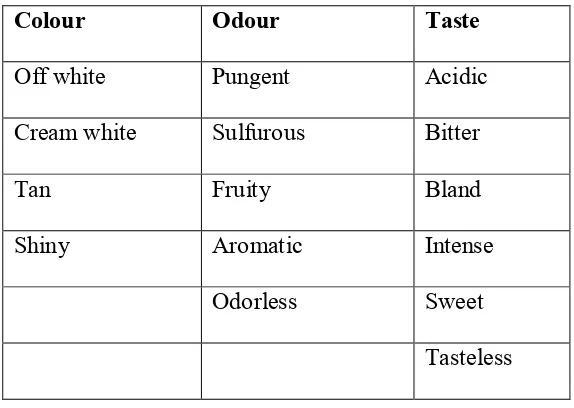
4 Organoleptic properties 53
5 Solubility chart 54
6 Particle size range 55
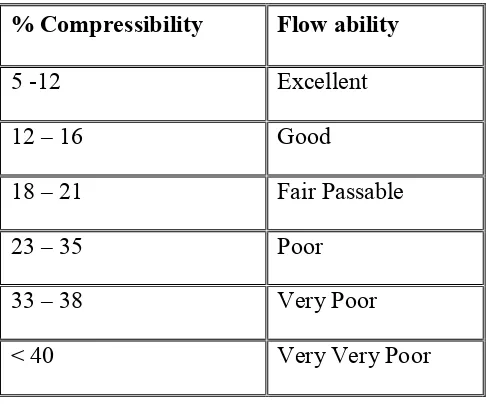
7 Angle of Repose as an Indication of Powder Flow Properties 57 8 Relationship between % compressibility and flow ability 58
9 Hausner’s ratio 58
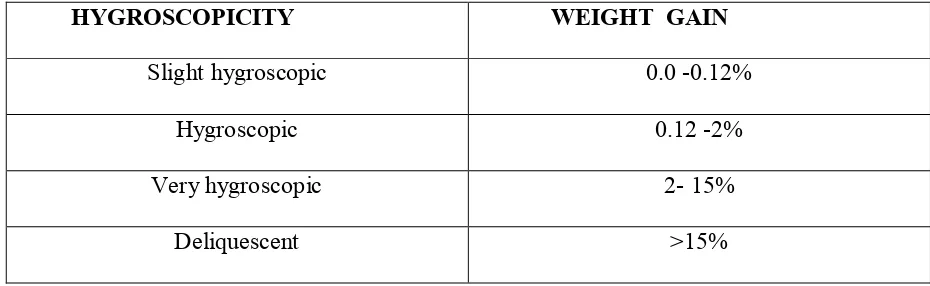
10 Hygroscopicity 59
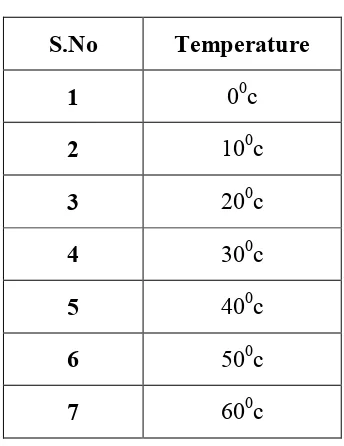
11 Thermal stability 60
12 Composition of solid dispersion of megesterol acetate with PEG 6000
62
13 Composition of Megesterol acetate with PEG6000 by dry granulation technique
62
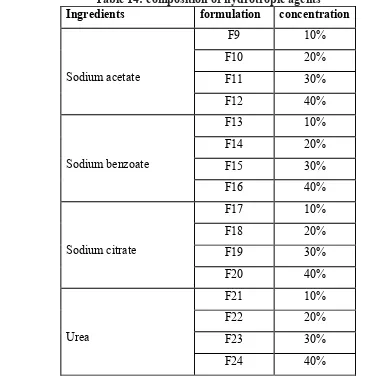
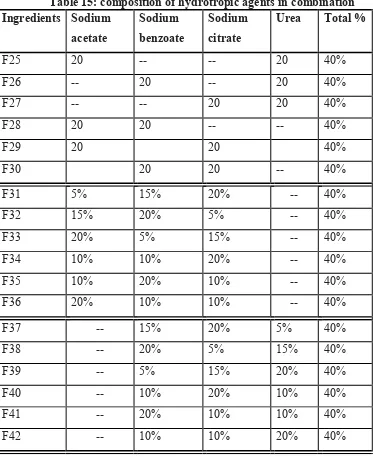
14 Composition of hydrotropic agents 63 15 Composition of hydrotropic agents in combination 64 16 Composition of solid dispersion of Megesterol acetate and
hydrotropic agents
65
17 Standard limit value in weight variation test 66
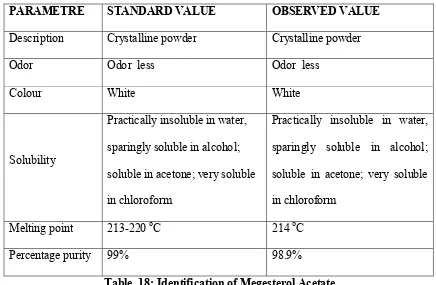
18 Identification of Megesterol Acetate 69
19 Thermal degradation 69
20 Flow properties of Megesterol Acetate 70
21 Solubility of API in different solvents 70
22 Hygroscopicity of Megesterol acetate 71
23 Analytical methods for estimation of Megesterol acetate 72 24 Characterization of Megesterol Acetate powder Formulated with
Citric acid
79 25 Post compression studies of Megesterol Acetate tablets with
Superdisintegrants
79
26 Dissolution studies of Megesterol acetate with SSG &Crosspovidone 80 27 Solubility studies of Megesterol with different Hydrotropic agents 82 28 Solubility studies of Megesterol with different Hydrotropic agents in
combination
83 29 % of drug release of Megesterol acetate tablets using hydrotropic
agents
84 30 Comparision of Drug release profile of Megesterol acetate solid
dispersion using hydrotropic agents with innovator
Page V
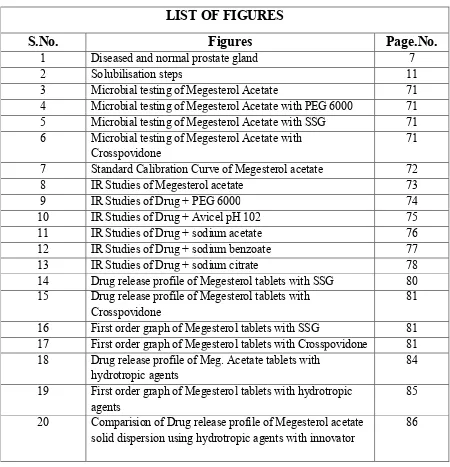
LIST OF FIGURES
S.No.
Figures
Page.No.
1 Diseased and normal prostate gland 7 2 Solubilisation steps 11 3 Microbial testing of Megesterol Acetate 71 4 Microbial testing of Megesterol Acetate with PEG 6000 71 5 Microbial testing of Megesterol Acetate with SSG 71 6 Microbial testing of Megesterol Acetate with
Crosspovidone
71
7 Standard Calibration Curve of Megesterol acetate 72 8 IR Studies of Megesterol acetate 73 9 IR Studies of Drug + PEG 6000 74 10 IR Studies of Drug + Avicel pH 102 75 11 IR Studies of Drug + sodium acetate 76 12 IR Studies of Drug + sodium benzoate 77 13 IR Studies of Drug + sodium citrate 78 14 Drug release profile of Megesterol tablets with SSG 80 15 Drug release profile of Megesterol tablets with
Crosspovidone
81
16 First order graph of Megesterol tablets with SSG 81 17 First order graph of Megesterol tablets with Crosspovidone 81 18 Drug release profile of Meg. Acetate tablets with
hydrotropic agents
84
19 First order graph of Megesterol tablets with hydrotropic agents
85
20 Comparision of Drug release profile of Megesterol acetate solid dispersion using hydrotropic agents with innovator
[image:10.595.100.550.99.566.2]Page I
ABSTRACT
Megesterol acetate a synthetic derivative of naturally occurring steroidal hormone progesterone, used in the treatment of breast cancer. The drug is poorly soluble and thermosensitive. The rate of dissolution and its bioavailability is less. In this investigation an attempt was made to develop novel drug to enhance the dissolution of solid oral formulation of Megesterol acetate using solid dispersion and hydrotropic techniques. The tablets can be prepared using less complicated and less expensive excipients, process, as well as to fulfill better therapeutic action for pharmaceutical use. In the study the approach of hydrotropic technique used hydrotropic agents like sodium acetate, sodium benzoate, sodium citrate and urea. In the solid dispersion technique PEG 6000 is used as a carrier. The dissolution pattern of optimized formulation was compared with Innovator product and it was found to be superior to the Innovator product.
Page II
SCOPE AND OBJECT
The last 50 yrs has seen a better understanding of the causes and treatment of breast cancer. Hence, early detection and technology has improved the prognosis of cancer patient to an unprecedented level. Megesterol acetate is a novel synthetic antineoplastic and progestational drug in the treatment of breast cancer. It is a new chemical entity, belongs to BCS class II, which exhibits low aqueous solubility and high membrane permeability that leads to poor bioavailability. To develop the formulation the following challenges need to overcome.
1. Poor solubility 2. Thermal degradation 3. Potent drug
4. Poor stability
5. Long elimination half life 6. Onset of action is slow
Conventional megesterol acetate tablets are practically insoluble in water and have slow onset of action and poor bioavailability therefore cannot give effective therapy. Hence I have designed. Formulation development of megesterol acetate immediate release tablets provide following benefits;
1. Megesterol acetate has been to be effective therapy for the treatment of breast and prostate cancer.
2. Improvement of bioavailability, avoidance of tissue accumulation. 3. Givesassurance for long term stability.
Page III
The present study is to develop immediate release megesterol acetate tablets by using a novel technique mixed hydrotropy with different polymers by using different hydrotropic agents and super disintigrents at different ratios.
To fulfil the above scope the major objects of the investigations are as follows
1. To design megesterol acetate immediate release tablets. 2. To conduct preformulation studies of the API.
3. To prepare poorly soluble megesterol acetate tablets by using solid dispersion and mixed hydrotropy technique.
4. The primary object of this study was to enhance solubility of megesterol acetate. 5. To study the influence of polymer concentration on the megesterol acetate to optimise
best polymer.
6. To optimise better technique. 7. To determine rate of dissolution.
8. To evaluate kinetic mechanisms of drug release.
Page 1
CHAPTER-1 INTRODUCTION
1.1.CANCER
A tumour is a swelling or mass resulting from abnormal growth of tissue. Cancer is likely to damage important or vital organs or tissue in any or all part of the body.
Cancer is a class of diseases characterized by out-of-control cell growth. There are over 100 different types of cancer, and each is classified by the type of cell that is initially affected 1.1.2. Types of cancer
1. Leukaemia: cancer of blood in which white blood cells shown an abnormal increase 2. Carcinomas: cancer of epithelial cells
3. Sarcomas: cancer of connective tissue 4. Lymphomas: cancer of lymphatic tissue 5. Lipomas: cancer of adipose tissue 1.1.3. Location for cancer
Cancer occurring in any part of body has unique characteristic 1. Bile ducts:
The bile ducts may become involved either with cancer developing within the ducts themselves or with cancer in adjacent structures. The earlier significant symptom in jaundice, which results from continuous obstruction to flow of bile.
2. Breast:
Page 2
3. Bone:
The cancer of bone grows due to blood streams or from some adjacent organ or tissues. Bones cancer causes pain swelling and weakens the bone.
4. Esophagus:
Cancer of esophagus is also common it may occur in any part of organ from the throat on down, but mostly in the lower part. Due to cancer of esophagus there is difficulty in the swallowing.
5. Lung:
The cancer of lings is becoming more prominent in our country which causes maximum death in our country. The main reason for the lung cancer is cigarette without treatment the survival rate for the usual type of lung cancer is zero. In the total type of cancer 40% are infected by the lung cancer.
6. Ovary:
This is the most dreadful cancer amongst the women. The most of the women die due to cancer of ovary in our country. This can be treated by surgery
7. Pancreas:
The cancer of pancreas causes the pain in the upper part of the membrane. Cancer of pancreas also causes jaundice. The cancer is highly malignant cancer of pancreas is more common in men than women. This can be removed by surgery.
8. Stomach:
Page 3
9. Thyroid:
This cancer causes the enlargement of thyroid gland, development of nodules in the gland. The removal of these nodules is very necessary for the treatment of this disease.
10.Tounge:
Cancer of tounge cause more death than any other cancer within the mouth. It results persistent inflammation.
1.2. BREAST CANCER
Page 4
1.2.1. Risk factors: Age:
The risk of developing breast cancer increases with age. It’s rare in women under 35. 8 out of 10 breast cancers (80%) occur in women aged 50 or over.
Previous cancer:
1. Breast cancer, including ductal carcinoma in situ 2. Lobular carcinoma in situ
3. An over-production of slightly abnormal cells called atypical ductal hyperplasia 4. Radiotherapy to the chest to treat Hodgkin lymphoma at a young age
Hormonal factors:
1. Taking combined hormone replacement therapy (HRT) containing oestrogen and progesterone over several years (if you’re over 50)
2. Starting your periods early (under 12) or having a late menopause (after 50) 3. Taking the contraceptive pill (but the risk reduces if you stop taking it). Certain lifestyle:
These include drinking more than two units of alcohol a day over many years, being overweight and smoking heavily.
Genetic factors:
Family history only 5–10% (1 in 20–1 in 10) of breast cancers is thought to be linked to an inherited breast cancer gene.
1.2.2. Symptoms
Symptoms of breast cancer can include: • A lump in the breast
• A change in the size or shape of the breast
Page 5
• A nipple that’s turned in (inverted) • A rash (like eczema) on the nipple • Discharge from the nipple
• Swelling or a lump in the armpit. 1.2.3. Breast cancer diagnosed
Mammogram
Fine needle aspiration (FNA)
Ultrasound and FNA of the lymph Nodes Biopsy of tissue
Needle (core) biopsy
CT (computerised tomography) scan MRI (magnetic resonance imaging) scan A breast ultrasound
X- Rays ultrasound
1.3. PROSTATE CANCER
Prostate cancer is a form of cancer that develops in the prostate, a gland in the male reproductive system. Most prostate cancers are slow growing;[1] however, there are cases of aggressive prostate cancers.[2] The cancer cells may metastasize (spread) from the prostate to other parts of the body, particularly the bones and lymph nodes. Prostate cancer may cause pain, difficulty in urinating, problems during sexual intercourse, or erectile dysfunction. Other symptoms can potentially develop during later stages of the disease.
1.3.1. Symptoms
Page 6
Hematuria (blood in the urine), and Dysuria (painful urination).
Prostate cancer is associated with urinary dysfunction as the prostate gland surrounds the prostatic urethra. Changes within the gland, therefore, directly affect urinary function. Advanced prostate cancer can spread to other parts of the body, possibly causing additional symptoms. The most common symptom is bone pain, often in the vertebrae (bones of the spine), pelvis, or ribs. Spread of cancer into other bones such as the femur is usually to the proximal part of the bone. Prostate cancer in the spine can also compress the spinal cord, causing leg weakness and urinary and fecal incontinence.
1.3.2. Risk factors
A complete understanding of the causes of prostate cancer remains elusive.[13] The primary risk factors are obesity, age and family history. Prostate cancer is very uncommon in men younger than 45, but becomes more common with advancing age
a. Genetic
Genetic background may contribute to prostate cancer risk, as suggested by associations with race, family, and specific gene variants.
b. Viral
In 2006, a previously unknown retrovirus, Xenotropic MuLV-related virus or XMRV, was associated with human prostate tumors, but subsequent reports on the virus were contradictory and the original 2006 finding was instead due to a previously undetected contamination.
c. Sexual factors
Page 7
1.3.3. Diagnosis Biopsy,
Digital rectal examination (DRE). Cystoscopy
Transrectal ultrasonography
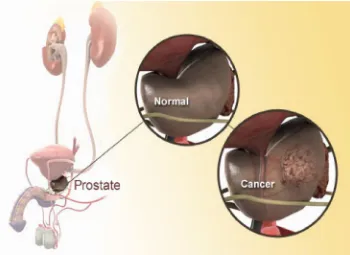
[image:20.595.164.514.246.501.2]
Fig no. 1. Diseased and normal prostate gland
1.4. Different types of chemotherapy drugs
Chemotherapy drugs can be divided into several groups based on factors such as how they work, their chemical structure, and their relationship to another drug. Because some drugs act in more than one way, they may belong to more than one group.
1.4.1. Alkylating agents
Page 8
Nitrosoureas: which include streptozocin, carmustine (BCNU), and lomustine
Alkyl sulfonates: busulfan
Triazines: dacarbazine (DTIC) and temozolomide (Temodar®)
Ethylenimines: thiotepa and altretamine (hexamethylmelamine)
1.4.2. Antimetabolites
5-fluorouracil (5-FU), 6-mercaptopurine (6-MP) ,Capecitabine (Xeloda®), Cladribine, Floxuridine, Hydroxyurea, Methotrexate, Pentostatin, Thioguanine
1.4.3. Anti-tumour antibiotics
Anthracyclines
Daunorubicin , Doxorubicin (Adriamycin®) , Epirubicin , Idarubicin 1.4.4. Other anti-tumor antibiotics
Topoisomerase inhibitors
Topoisomerase I inhibitors: Topotecan and irinotecan
Topoisomerase II inhibitors: Etoposide, teniposide, Mitoxantrone.
1.4.5. Mitotic inhibitors
Taxanes: paclitaxel (Taxol®) and docetaxel (Taxotere®)
Epothilones: ixabepilone (Ixempra®)
Vinca alkaloids: vinblastine (Velban®), vincristine (Oncovin®), and vinorelbine
Page 9
1.4.6. Corticosteroids
Prednisone, methylprednisolone (Solumedrol®), and dexamethasone (Decadron®). 1.4.7. Other types of cancer drugs
a. Targeted therapies
Imatinib (Gleevec®), gefitinib (Iressa®), sunitinib (Sutent®) and bortezomib (Velcade®). b. Differentiating agents
Retinoids, tretinoin (ATRA or Atralin®) and bexarotene (Targretin®), as well as arsenic trioxide (Arsenox®).
c. Hormone therapy
The anti-estrogens: fulvestrant (Faslodex®), tamoxifen, and toremifene (Fareston®)
Aromatase inhibitors: anastrozole (Arimidex®), exemestane (Aromasin®)
Progestins:Megesterol acetate (Megace®)
Estrogens
Anti-androgens: bicalutamide (Casodex®), flutamide (Eulexin®) d. Immunotherapy
Monoclonal antibody therapy (passive immunotherapies), such as rituximab (Rituxan®) and alemtuzumab (Campath®)
Non-specific immunotherapies and adjuvants (other substances or cells that boost the immune response), such as BCG, interleukin-2 (IL-2), and interferon-alfa
Page 10
1.5. SOLUBILITY:
Solubility is the property of a solid, liquid, or gaseous chemical substance called solute to dissolve in a solid, liquid, or gaseous solvent to form a homogeneous solution of the maximum quantity of solute in a certain quantity of solvent at a specified temperature and pressure
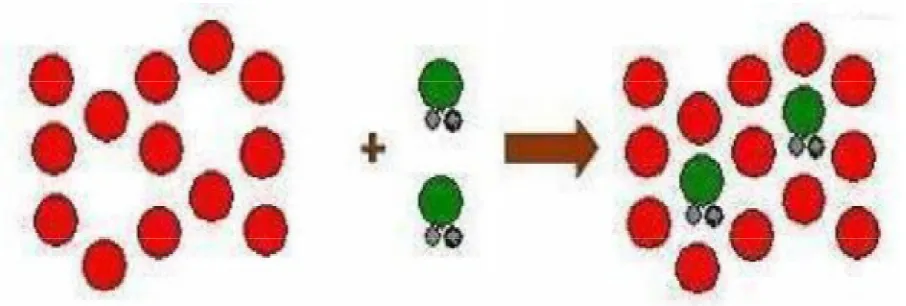
1.5.1. Process of Solubilisation:
The process of solubilization contains three steps. First step involves the separation of the molecules of the solvent to provide space in the solvent for the solute, second step involves the breaking of intermolecular or inter-ionic bonds in the solute, and third & final step involves the interaction between the solvent and the solute molecule or ion.
TABLE 1: USP and BP solubility criteria
Descriptive term Part of solvent required per part of solute Very soluble
Freely soluble Soluble
Sparingly soluble
Slightly soluble Very Slightly soluble
Practically insoluble
Page 11
Step 1: Holes open in the solvent
Step2: Molecules of the solid breaks away from the bulk
[image:24.595.98.551.492.645.2]Step 3:The freed solid molecule is integrated into the hole in the solvent
Page 12
1.5.2. BCS CLASSES:
According to the BCS (Biopharmaceutical classification system) all drugs have been divided into four classes:
Class I— high soluble and high permeable,
Class II—low soluble and high permeable,
Class III—high soluble and low permeable and
Class IV—low soluble and low permeable. 1.5.3. Importance of Solubility:
1. Especially for class II (low solubility and high permeability) substances according to the BCS, the bioavailability may be enhanced by increasing the solubility and dissolution rate of the drug in the gastro-intestinal fluids.
2. As for BCS class II drugs rate limiting step is drug release from the dosage form and solubility in the gastric fluid and not the absorption, so increasing the solubility in turn increases the bioavailability for BCS class II drugs.
3. The poor solubility and low dissolution rate of poorly water soluble drugs in the aqueous gastrointestinal fluids often cause insufficient bioavailability. so increasing the solubility in turn increases the bioavailability for them.
4. Solubility is one of the important parameters to achieve desired concentration of drug in systemic circulation for achieving required pharmacological response.
5. Poorly water soluble drugs often require high doses and have administration frequency in order to reach therapeutic plasma concentrations after oral administration.
6. Low aqueous solubility is the major problem encountered with formulation development of new chemical entities as well as generic development.
Page 13
8. Water is the solvent of choice for liquid pharmaceutical formulations.
9. Most of the drugs are either weakly acidic or weakly basic having poor aqueous solubility. 10. Poorly water soluble drugs having slow drug absorption leads to inadequate and variable bioavailability and gastrointestinal mucosal toxicity.
11. For orally administered drugs solubility is the most important one rate limiting parameter to achieve their desired concentration in systemic circulation for pharmacological response.
1.5.4. Enhancement of solubilization and bioavailability of poorly soluble drugs
Solubilization of poorly soluble drugs is a frequently encountered challenge in screening studies of new chemical entities as well as in formulation design and development .A number of methodologies can be adapted to improve solubilization of poor water soluble drug and further to improve its bioavailability. Orally administered drugs completely absorb only when they show fair solubility in gastric medium and such drugs shows good bioavailability. The techniques generally employed for solubilization of drug includes micronization, chemical modification, pH adjustment, solid dispersion, complexation, co?solvency, micellar solubilization, hydrotropy etc.
Page 14
These in vivo and in vitro characteristics and the difficulties in achieving predictable and reproducible in vivo/in vitro correlations are often sufficiently difficult to develop formulation on many newly synthesized compounds due to solubility issues.
1.6. TECHNIQUES OF SOLUBILITY AND BIOAVAILABILITY ENHANCEMENT
There are various techniques available to improve the solubility of poorly soluble drugs. Some of the approaches to improve the solubility are:
(1) pH adjustment
It is well documented that the influence of the changes in pH within the gastrointestinal tract upon the bioavailability of pharmaceuticals. The absorption of drug is largely dependent upon diffusion, which varies with pH of the individual regions within the gastrointestinal tract, the pKa of the drug and permeability, which are not only moderated by the surface area of the region in which it is released, but also the regional pH effects upon drug ionization. By applying a pH change, poorly water soluble drugs with parts of the molecule that can be protonated (base) or deprotonated (acid) may potentially be dissolved in water.
(2) Micro-emulsion
Page 15
in improving the solubility of drugs formulated as micro-emulsions. An anhydrous system of emulsions is that self microemulsifying drug delivery system (SMEDDS) or micro-emulsion pre-concentrate. It is composed of oil, surfactant and co-surfactant and has the ability to form o/w microemulsion when dispersed in aqueous phase under gentle agitation (3) Self-emulsifying drug delivery systems
Self-emulsifying or self-micro emulsifying systems use the concept of in situ formation of emulsion in the gastrointestinal tract. The mixture of oil, surfactant, co-surfactant, one or more hydrophilic solvents and co-solvent forms a transparent isotropic solution that is known as the self-emulsifying drug delivery system (SEDDS) , in the absence of external phase (water) and forms fine o/w emulsions or micro-emulsions spontaneously upon dilution by the aqueous phase in the GIT and is used for improving lipophillic drug dissolution and absorption.
(4) Manipulation of solid state
Page 16
(5) Particle size reduction
The bioavailability of poorly soluble drugs is often intrinsically related to drug particle size. By reducing particle size, the increased surface area may improve the dissolution properties of the drug to allow a wider range of formulation approaches and delivery technologies . The larger surface area allows a greater interaction with the solvent which cause increase in solubility . Conventional methods of particle size reduction, such as comminution and spray drying, rely upon mechanical stress to disaggregate the active compound. Nowadays Particle size reduction can be achieved by micronization and nano-suspension.
In Micronization of drugs is done by milling techniques using jet mill, rotor stator colloid mills etc.
Nano-suspension is another technique which is sub-micron colloidal dispersion of pure particles of drug, which are stabilized by surfactants.
Nano-suspensions are produced by homogenization and wet milling process [43]. Re-crystallization of poorly soluble materials using liquid solvents and anti-solvents has also been employed successfully to reduce particle size.
(6) Super critical fluid (SCF) process
Page 17
nearcritical temperatures, SCFs are high compressible, allowing moderate changes in pressure to greatly alter the density and mass transport characteristics of a fluid that largely determine its solvent power . A SCF exists as a single phase above its critical temperature (Tc) and pressure (Pc). SCFs have properties useful to product processing because they are intermediate between those of pure liquid and gas (i.e., liquid-like density, gas-like compressibility and viscosity and higher diffusivity than liquids).At near-critical temperatures, SCFs are high compressible, allowing moderate changes in pressure to greatly alter the density and mass transport characteristics of a fluid that largely determine its solvent power .
(7) Inclusion complexes/complexation
Lipophillic drug-cyclodextrin complexes, commonly known as inclusion complexes, can be formed simply by adding the drug and excipients together, resulting in enhanced drug solubilization. Cyclodextrins (CD) are a group of structurally-related cyclic oligosaccharides that have a polar cavity and hydrophilic external surface. Inclusion complexes are formed by the insertion of the nonpolar molecule or the nonpolar region of one molecule (known as guest) into the cavity of another molecule or group of molecules (known as host). The most commonly used host molecules are cyclodextrins. Cyclodextrins consisting of 6, 7 and 8 D glucopyranosyl units connected to Q -1, 4 glycosidic linkages are known as Q, R, D, cyclodextrins, respectively. Derivatives of R-cyclodextrin with increased water solubility (e.g. hydroxypropyl-R-cyclodextrin HP-R-CD) are most commonly used in pharmaceutical formulation.
(8) Co-solvency
Page 18
solution with enhanced solubility for poorly soluble compounds. Historically, this is one of the most widely used techniques because it is simple to produce and evaluate Co-solvency has been utilized in different formulations including solids and liquids. Examples of solvents used in co-solvent mixtures are PEG 300, propylene glycol or ethanol. Various concentrations (5-40%) of the solid binary systems with polyethylene glycol 6000 were employed to increase solubility and dissolution. Co- Solvents can increase the solubility of poorly soluble compounds several thousand times compared to the aqueous solubility of the drug alone. (9) Miceller solubilization
The use of surfactants to improve the dissolution performance of poorly soluble drug products has also been successfully employed. Surfactants can lower surface tension and improve the dissolution of lipophillic drugs in aqueous medium. They can also be used to stabilize drug suspensions. When the concentration of surfactants exceeds their critical micelle concentration (CMC, which is in the range of 0.05-0.10% for most surfactants), micelle formation occurs, entrapping the drugs within the micelles .This process is known as micellisation and generally results in enhanced solubility of poorly soluble drugs. Commonly used non-ionic surfactants include polysorbates, polyoxyethylated castor oil, polyoxyethylated glycerides, lauroyl macroglycerides and mono- and di-fatty acid esters of low molecular weight polyethylene glycols. Surfactants are also often used to stabilize micro-emulsions and suspensions into which drugs are dissolved.
(10) Hydrotrophy
Page 19
sodium alginate, urea and the poorly soluble drugs. Solute consists of alkali metal salts of various organic acids. Hydrotropic agents are ionic organic salts. Additives or salts that increase solubility in given solvent are said to “salt in” the solute and those salts that decrease solubility “salt out” the solute. Several salts with large anions or cations that are themselves very soluble in water result in “salting in” of non electrolytes called “hydrotropic salts” a phenomenon known as “hydrotropism”. Hydrotropic solutions do not show colloidal properties and involve a weak interaction between the hydrotropic agent and solute.
The classification of hydrotropes on the basis of molecular structure is difficult, since a wide variety of compounds have been reported to exhibit hydrotropic behavior. Specific examples may include ethanol, aromatic alcohols like resorcinol, pyrogallol, catechol, aand bnaphthols and salicylates, alkaloids like caffeine and nicotine, ionic surfactants like diacids, SDS (sodium dodecyl sulphate) and dodecylated oxidibenzene.
(11) Solid Dispersions
In this technique, a poorly soluble drug is dispersed in a highly soluble solid hydrophilic matrix, which enhances the dissolution of the drug. Solid dispersion techniques can yield eutectic (non-molecular level mixing) or solid solution (molecular level mixing) products. Eutectic dispersions are homogeneous dispersions of crystalline or amorphous drugs in crystalline or amorphous carriers. In the solid solution form, the drug could be partially or completely soluble in the dispersing matrix.
Page 20
Solid dispersions represent a useful pharmaceutical technique for increasing the dissolution, absorption and therapeutic efficacy of drugs in dosage forms. The most commonly used hydrophilic carriers for solid dispersions include polyvinylpyrrolidone, polyethylene glycols, Plasdone-S630, Tween-80, Docusate sodium, Myrj-52, Pluronic-F68 and Sodium Lauryl Sulphate used
Various techniques to prepare the solid dispersion of hydrophobic drugs to improve their aqueous solubility
1. Hot melt method (fusion method)
The physical mixture of a drug and a watersoluble carrier was heated directly until it melted. The melted mixture was then cooled and solidified rapidly in an ice bath under rigorous stirring. The final solid mass was crushed, pulverized, and sieved, which can be compressed into tablets with the help of tabletting agents. The melting point of a binary system is dependent upon its composition, i.e., the selection of the carrier and the weight fraction of the drug in the system.
2. Solvent Evaporation Method
The first to dissolve both the drug and the carrier in a common solvent and then evaporate the solvent under vacuum to produce a solid solution. This enabled them to produce a solid solution of the highly lipophillic R-carotene in the highly water soluble carrier polyvinylpyrrolidone. Many investigators studied solid dispersion of meloxicam15, naproxen and nimesulide using solvent evaporation technique.
3. Hot melt extrusion
Page 21
(12) Nano-suspension
Nano-suspension technology has been developed as a promising candidate for efficient delivery of hydrophobic drugs. This technology is applied to poorly soluble drugs that are insoluble in both water and oils. The particle size distribution of the solid particles in nano-suspensions is usually less than one micron with an average particle size ranging between 200 and 600 nm. There are various methods for preparation of Nano-suspension includes Media Milling (Nanocrystals), High Pressure Homogenization in water (Dissocubes), High Pressure Homogenization in nonaqueous media (Nanopure) and combination of Precipitation and High-Pressure Homogenization (Nanoedege).
(13) Cryogenic techniques
Cryogenic techniques have been developed to creating nano-structured amorphous drug particles with high degree of porosity at very low temperature conditions so enhance the dissolution rate of drugs. Cryogenic inventions can be defined by the type of injection device (capillary, rotary, pneumatic and ultrasonic nozzle), location of nozzle (above or under the liquid level) and the composition of cryogenic liquid (hydro fluoro alkanes, N2, Ar, O2 and organic solvents). After cryogenic processing, dry powder can be obtained by various drying processes (spray freeze drying, atmospheric freeze drying, vacuum freeze drying and lyophilization).
(14) Nano-crystallization
Page 22
1.7. IMMEDIATE RELEASE DRUG DELIVERY SYSTEM
Immediate release drug delivery system is also conventional type of drug delivery system and it is defined as - Immediate release tablets are designed to disintegrate and release their medicaments with no special rate controlling features such as special coatings and other techniques.
1.7.1. Advantages of immediate release drug delivery systems2 Release the drug immediately.
More flexibility for adjusting the dose.
It can be prepared with minimum dose of drug.
There is no dose dumping problem.
Immediate release drug delivery systems used in both initial stage and final stage of disease.
Page 23
CHAPTER-2
DRUG PROFILE
2.1. 1. MEGESTEROL ACETATE:
Generic name : Megace and Megace ES
Category : Antineoplastic Agents
Chemical structure :
Chemical and IUPAC name : (1S, 2R,10R,11S,14R,15S)-14-acetyl-14-hydroxy-2,15-
dimethyltetracyclo[8.7.0.0^{2,7}.0^{11,15}]heptadeca6,8-
dien-5-one.
Molecular formula : C24H32O4
Molecular weight : 384.509 g/mol
Physical data:
Colour : white, crystalline solid
Odour : none.
Taste : bitter
Solubility : practically insoluble in water, soluble in acetone,
sparingly soluble in alcohol.
Page 24
Melting point : about 217 °C.
Mechanism of action of Megesterol acetate:
The precise mechanism by which Megesterol acetate produces effects in anorexia and cachexia is
unknown at the present time, but its progestin antitumour activity may involve suppression of
luteinizing hormone by inhibition of pituitary function. Studies also suggest that the Megesterol's
weight gain effect is related to its appetite-stimulant or metabolic effects rather than its
glucocorticoid-like effects or the production of edema. It has also been suggested that Megesterol
may alter metabolic pathyways via interferences with the production or action of mediators such
as cachectin, a hormone that inhibits adipocyte lipogenic enzymes.
Pharmacodynamics of Megesterol Acetate
Megesterol Megesterol acetate significantly increases both appetite and bodyweight. In doses
ranging from 160 to 1600 mg/day, Megesterol acetate shown to stimulate appetite, increase
caloric intake, induce a sense of wellbeing, and produce weight gain. Weight gain occurs
predominantly in the form of fat, which is of fat, which is potentially beneficial because the
caloric stores in fatty tissue provide more kilocalories per gram than similar amounts of either
protein or carbohydrate (i.e. 9.0 kcal vs 4.0 kcal and 4.0 kcal, respectively). Fat also helps
stabilize core body temperatures and protects bony tissue; for example, the fat pads in the hips
can help protect debilitated patients from hip fractures secondary to falls.
Pharmacokinetics of Megesterol Acetate
Megesterol acetate is absorbed rapidly from the gastrointestinal tract. However, studies in
Page 25
absorption; a factor that may be more significant in patients receiving the tablet formulation. In
some patients, absorption is slower, with the more sustained plasma drug levels seen in a
1-compartment model. In others, absorption is rapid, with a 2-1-compartment-like elimination curve.
Megesterol acetate is completely metabolized in the liver to free steroids and the metabolites are
conjugated with glucuronic acid. Metabolites account for only 5–8% of the administered dose,
which is considered negligible. The major route of drug elimination in humans is renal.
Indications and usage:
Megesterol acetate tablets are indicated for the palliative treatment of advanced carcinoma of the
breast or endometrium (i.e., recurrent, inoperable, or metastatic disease). It should not be used in
lieu of currently accepted procedures such as surgery, radiation, or chemotherapy.
Adverse reactions:
Weight Gain
Weight gain is a frequent side effect of Megesterol. This gain has been associated with increased
appetite and is not necessarily associated with fluid retention.
Thromboembolic Phenomena
Thromboembolic phenomena including thrombophlebitis and pulmonary embolism (in some
cases fatal) have been reported.
Other Adverse Reactions
Heart failure, nausea and vomiting, edema, breakthrough menstrual bleeding, dyspnea, tumor
flare (with or without hypercalcemia), hyperglycemia, glucose intolerance, alopecia,
hypertension, carpal tunnel syndrome, mood changes, hot flashes, malaise, asthenia, lethargy,
Page 26
2.1.2. SODIUM STARCH GLYCOLATE
Synonyms: Carboxymethyl starch, sodium salt, carboxymethylamylum natricum.
Chemical Name and CAS Registry Number: Sodium carboxymethyl starch [9063-38-1].
Structural Formula:
Functional Category: Tablet and capsule disintegrant.
Description: Sodium starch glycolate is a white or almost white free-flowing very hygroscopic
powder.
Solubility: Practically insoluble in methylene chloride. It gives a translucent suspension in water.
Stability and Storage Conditions: Tablets prepared with sodium starch glycolate have good
storage properties. Sodium starch glycolate is stable although very hygroscopic, and should be
stored in a well-closed container in order to protect it from wide variations of humidity and
temperature, which may cause caking. The physical properties of sodium starch glycolate remain
unchanged for up to 3 years if it is stored at moderate temperatures and humidity.
Incompatibilities: Sodium starch glycolate is incompatible with ascorbic acid.
Applications in Pharmaceutical Formulation or Technology:
Sodium starch glycolate is widely used in oral pharmaceuticals as a disintegrant in
Page 27
It is commonly used in tablets prepared by either direct-compression or wet-granulation
processes. The usual concentration employed in a formulation is between 2% and 8%,
with the optimum concentration about 4%, although in many cases 2% is sufficient.
Disintegration occurs by rapid uptake of water followed by rapid and enormous swelling.
Although the effectiveness of many disintegrants is affected by the presence of
hydrophobic excipients such as lubricants, the disintegrant efficiency of sodium starch
glycolate is unimpaired. Increasing the tablet compression pressure also appears to have
no effect on disintegration time.
Sodium starch glycolate has also been investigated for use as a suspending vehicle.
S
2.1.3. MANNITOL
Synonyms: Cordycepic acid; 421; D- mannitol; manna sugar, mannite
Chemical name CAS Registry Number: D- mannitol. [69-65-8]
Empirical formula: C6H14O6.
Molecular weight: 182.17
Structural formula:
Description:
It is a hexahydric alcohol related to mannose and isomeric with
sorbital Mannitol occurs as a white, odourless, crystalline powder or free flowing granules. It
has a sweet taste approximately as sweet as glucose and half as sweet as sucrose and imparts a
cooling sensation in mouth. Microscopically, it appears as orthorhombic needles when
Page 28
Functional categories: Sweetening agent; tablet and capsule diluent; tonicity agent; vehicle
(bulking agent) for lyophilized preparation.
Solubility: It is soluble in alkalis, in ethanol (95%) 1 in 83 in ether practically insoluble in
glycerin 1 in 18, water 1 in 5.5.
Stability and storage: It is stable and should be stored in well closed container in a cool, dry
place.
Incompatibilities: Not reported in dry state
Applications in Pharmaceutical Formulations or technology:
Mannitol is widely used in pharmaceutical formulations and food products.
In pharmaceutical preparations it is primarily used as a diluent (10–90% w/w) in tablet
formulations, where it is of particular value since it is not hygroscopic and may thus be
used with moisture-sensitive active ingredients.
Mannitol may be used in direct-compression tablet applications for which the granular
and spray-dried forms are available, or in wet granulations.
Granulations containing mannitol have the advantage of being dried easily
Specific tablet applications include antacid preparations, glyceryl trinitrate tablets, and
vitamin preparations.
Mannitol is commonly used as an excipient in the manufacture of chewable tablet
formulations because of its negative heat of solution, sweetness, and ‘mouthfeel’
Mannitol has also been used to prevent thickening in aqueous antacid
suspensions of aluminum hydroxide (<7% w/v). It has been suggested as a plasticizer
in soft-gelatin capsules, as a component of sustained-release tablet formulations, and as
Page 29
2.1.4. CROSSPOVIDONE
Synonyms: Crospovidonum, crosslinked povidone, PVPP, Insoluble PVP Polyplasdone XL;
Polyplasdone XL-10; polyvinylpolypyrrolidone.
Chemical Name and CAS Registry Number:
1-Ethenyl-2-pyrrolidinone homopolymer [9003-39-8]
Empirical Formula and Molecular Weight
(C6H9NO) n >10, 00, 000
Structural Formula:
Description:
White, free flowing, compressible powder. A synthetic homopolymer of cross-linked N-vinyl-2- pyrrolidone.
Solubility:
Practically insoluble in water, acids, alkalis, and all organic solvents. Hygroscopic. Swells
rapidly in water. Rapidly disperses in water, but does not gel even after prolonged exposure.
Functional Category: Super-disintegrant
Pharmacopeial Specifications
pH: pH (10% slurry): 5.0 – 8.0
Page 30
Acidity/alkalinity: pH= 5.0–8.0 for a 10% w/v aqueous solution
Applications in Pharmaceutical Formulation or Technology
Crospovidone is a water-insoluble tablet disintegrant and dissolution agent used at 2–5% concentration in tablets prepared by direct compression or wet- and dry-granulation methods.
Stabilizers for beer, vinegar, fruit and wine, prolonging the storage life.
Disintegrants and fillers in pharmaceutical tablets and capsules.
Detoxicants in detoxifiers or toxin absorbents.
Stabilizers for moisture sensitive active ingredients (e. G. Vitamins, enzymes).
Crospovidone can also be used as a solubility enhancer.
With the technique of co-evaporation, crospovidone canbe used to enhance the solubility
of poorly soluble drugs.
2.1.5. TALC
Synonyms: Hydrous magnesium calcium silicate, powdered talc.
Chemical Name and CAS Registry Number: Talc [14807-96-6]
Empirical Formula and Molecular Weight: Talc is a purified, hydrated, magnesium silicate,
approximating to the formula, Mg6 (Si2O5)4(OH) 4.
Functional Category: Anticaking agent; glidant; tablet and capsule diluent; tablet and capsule
lubricant.
Description: Talc is a very fine, white to grayish-white, odorless, impalpable, unctuous,
crystalline powder. It adheres readily to the skin and is soft to the touch and free from grittiness.
Stability and Storage Conditions: Talc is a stable material and may be sterilized by heating at
1608C for not less than 1 hour. It may also be sterilized by exposure to ethylene oxide or gamma
Page 31
Incompatibilities:
Incompatible with quaternary ammonium compounds
Applications in Pharmaceutical Formulation or Technology:
Talc was once widely used in oral solid dosage formulations as a lubricant and diluent.
It is widely used as a dissolution retardant in the development of controlled-release
products.
Talc is also used as a lubricant in tablet formulations, in a novel powder coating for
extended-release pellets, and as an adsorbant.
In topical preparations, talc is used as a dusting powder, although it should not be used to
dust surgical gloves.
2.1.6. SODIUM ACETATE:
Synonyms:
Acetic acid, sodium salt; E262; natrii acetas trihydricus; sodium ethanoate.
Chemical Name and CAS Registry Number:
Sodium acetate anhydrous [127-09-3], Sodium acetate trihydrate [6131-90-4]
Empirical Formula and Molecular Weight
C2H3NaO2 82.0 (for anhydrous)
C2H3NaO23H2O 136.1 (for trihydrate)
Page 32
Description
Sodium acetate occurs as colorless, transparent crystals or a granular crystalline powder with a
slight acetic acid odor.
Functional Category
Antimicrobial preservative, buffering agent, flavoring agent, stabilizing agent.
Solubility
Soluble 1 in 0.8 in water, 1 in 20 in ethanol (95%).
Applications in Pharmaceutical Formulation or Technology
Sodium acetate is used as part of a buffer system when combined with acetic acid in
various intramuscular, intravenous, topical, ophthalmic, nasal, oral, otic, and
subcutaneous formulations. It may be used to reduce the bitterness of oral
pharmaceuticals.
It can be used to enhance the antimicrobial properties of formulations; it has been shown
to inhibit the growth of S. aureus and E. coli, but not C. albicansin protein hydrolysate
solutions.
It is widely used in the food industry as a preservative.
Sodium acetate has also been used therapeutically for the treatment of metabolic acidosis
in premature infants and in hemodialysis solutions.
2.1.7. SODIUM BENZOATE:
Synonyms
Benzoic acid sodium salt; benzoate of soda; E211; natrii benzoas; natrium benzoicum; sobenate;
Page 33
Chemical Name and CAS Registry Number
Sodium benzoate [532-32-1]
Empirical Formula and Molecular Weight
C7H5NaO2 144.1
Structural Formula
Description
Sodium benzoate occurs as a white granular or crystalline, slightly hygroscopic powder. It is
odorless, or with faint odor of benzoin and has an unpleasant sweet and saline taste.
Functional Category
Antimicrobial preservative, tablet and capsule lubricant.
Solubility
Soluble 1 in 1.8 in water, 1 in 75 in ethanol (95%).
Applications in Pharmaceutical Formulation or Technology
Sodium benzoate is used primarily as an antimicrobial preservative in cosmetics, foods,
and pharmaceuticals.
It is used in concentrations of 0.02–0.5% in oral medicines, 0.5% in parenteral products
and 0.1–0.5% in cosmetics.
Sodium benzoate is used in preference to benzoic acid in some circumstances, owing to
Page 34
Sodium benzoate has also been used as a tablet lubricant(1) at 2–5% w/w concentrations.
Solutions of sodium benzoate have also been administered, orally or intravenously, in
order to determine liver function.
Stability and Storage Conditions
Aqueous solutions may be sterilized by autoclaving or filtration. The bulk material should be
stored in a well-closed container, in a cool, dry place.
Incompatibilities
Incompatible with quaternary compounds, gelatin, ferric salts, calcium salts, and salts of heavy
metals, including silver, lead, and mercury. Preservative activity may be reduced by interactions
with kaolin or non ionic surfactants.
2.1.8. SODIUM CITRATE
Synonyms:
Citric acid trisodium salt; sodium citrate tertiary; trisodium citrate.
Chemical Name and CAS Registry Number:
Trisodium 2-hydroxypropane-1,2,3-tricarboxylate dehydrate [6132-04-3]
Empirical Formula and Molecular Weight:
C6H5Na3O7_2H2O 294.10
Functional Category:
Alkalizing agent; buffering agent; emulsifying agent; sequestering agent.
Description:
Sodium citrate dihydrate consists of odorless, colorless, monoclinic crystals, or a white
crystalline powder with a cooling, saline taste. It is slightly deliquescent in moist air, and in warm
Page 35
Structural Formula:
Solubility:
Soluble 1 in 1.5 of water, 1 in 0.6 of boiling water, practically insoluble in ethanol (95%).
Applications in Pharmaceutical Formulation or Technology:
Sodium citrate, as either the dihydrate or anhydrous material, is widely used in
pharmaceutical formulations.
It is used in food products, primarily to adjust the pH of solutions.
It is also used as a sequestering agent.
The anhydrous material is used in effervescent tablet formulations.
Sodium citrate is additionally used as a blood anticoagulant either alone or in combination
with other citrates such as disodium hydrogen citrate.
Therapeutically, sodium citrate is used to relieve the painful irritation caused by cystitis,
and also to treat dehydration and acidosis due to diarrhea.
2.1.9. MAGNESIUM STEARATE
Synonyms
Dibasic magnesium stearate; magnesium distearate; magnesia stearas; magnesium octadecanoate;
magnesium salt; stearic acid, magnesium salt.
Chemical Name and CAS Registry Number
Page 36
Empirical Formula and Molecular Weight
C36H70MgO4 591.24
Structural Formula
[CH3 (CH2)16COO]2 Mg
Functional Category
Tablet and capsule lubricant.
Applications in Pharmaceutical Formulation or Technology
Magnesium stearate is widely used in cosmetics, foods, and pharmaceutical formulations.
It is primarily used as a lubricant in capsule and tablet manufacture at concentrations
between 0.25% and 5.0% w/w. It is also used in barrier creams
Description
Magnesium stearate is a very fine, light white, precipitated or milled, impalpable powder of low
bulk density, having a faint odor of stearic acid and a characteristic taste. The powder is greasy to
the touch and readily adheres to the skin.
2.2. POLYETHYLENE GLYCOL (PEG) 6000:
Synonyms
Polyglycol, Polyethylene oxide, Polyoxy ethylene, PEG 6000
Chemical Name and CAS Registry Number
a-Hydro-o-hydroxypoly(oxy-1,2-ethanediyl) [25322-68-3]
Empirical Formula and Molecular Weight
H(OCH2CH2)nOH 6000
Page 37
Ointment base; plasticizer; solvent; suppository base; tablet and
capsule lubricant.
Structural Formula
Description
The USP32–NF27 describes polyethylene glycol as being an addition polymer of ethylene oxide
and water. Polyethylene glycol grades 200–600 are liquids; grades 1000 and above are solids at
ambient temperatures. Solid grades (PEG>1000) are white or off-white in color, and range in
consistency from pastes to waxy flakes. They have a faint, sweet odor. Grades of PEG 6000 and
above are available as free flowing milled powders.
Solubility
Solid polyethylene glycols are soluble in acetone, dichloromethane, ethanol (95%), and
methanol; they are slightly soluble in aliphatic hydrocarbons and ether, but insoluble in fats, fixed
oils, and mineral oil.
Applications in Pharmaceutical Formulation or Technology
Polyethylene glycols (PEGs) are widely used in a variety of pharmaceutical formulations,
including parenteral, topical, ophthalmic, oral, and rectal preparations.
Polyethylene glycol has been used experimentally in biodegradable polymeric matrices
used in controlled-release systems.
Page 38
Polyethylene glycols are stable, hydrophilic substances that are essentially nonirritant to
the skin.
In solid-dosage formulations, higher-molecular-weight polyethylene glycols can enhance
the effectiveness of tablet binders and impart plasticity to granules.
Polyethylene glycols can also be used to enhance the aqueous solubility or dissolution
characteristics of poorly soluble com pounds by making solid dispersions with an
appropriate polyethylene glycol.
Polyethylene glycol grades with molecular weights of 6000 and above can be used as
lubricants, particularly for soluble tablets.
2.2.1. MICRCRYSTALLINE CELLULOSE (AVICEL pH 102)
Synonyms
Avicel PH; Cellets; Celex; cellulose gel; hellulosum microcristallnum; Celphere; Ceolus KG;
crystalline cellulose.
Chemical Name and CAS Registry Number
Cellulose [9004-34-6]
Empirical Formula and Molecular Weight
(C6H10O5)n ≈36 000
Page 39
Structural Formula
Functional Category
Adsorbent; suspending agent; tablet and capsule diluent; tablet disintegrant
Description
Microcrystalline cellulose is a purified, partially depolymerized cellulose that occurs as a white,
odorless, tasteless, crystalline powder composed of porous particles. It is commercially available
in different particle sizes and moisture grades that have different properties and applications.
Applications in Pharmaceutical Formulation or Technology
Microcrystalline cellulose is widely used in pharmaceuticals, primarily as a binder/diluent
in oral tablet and capsule formulations where it is used in both wet-granulation and
direct-compression processes.
Enhance drug dissolution by speeding tablet disintegration.
Improves flow, better compressibility, Accommodation of moisture-sensitive actives.
Microcrystalline cellulose also has some lubricant and disintegrant properties that make it
Page 40
UREA
Synonyms
Biopure 100; Germall 115; imidazolidinyl urea; 1,10-
methylenebis{3-[3-(hydroxymethyl)-2,5-dioxo-4-imidazolidinyl] urea}.
Chemical Name and CAS Registry Number
N, N00-Methylenebis {N0-[3-(hydroxymethyl)-2, 5-dioxo-4-imidazolidinyl] urea} [39236-46-9]
Empirical Formula and Molecular Weight
C11H16N8O8 388.29 (for anhydrous)
C11H16N8O8.H2O 406.33 (for monohydrate)
Structural Formula
Functional Category
Antimicrobial preservative.
Description
Imidurea is a white, free-flowing odorless powder.
Solubility
Page 41
Incompatibilities
Imidurea is incompatible with strong oxidants. It is compatible with other preservatives including
sorbic acid and quaternary ammonium compounds.
Applications in Pharmaceutical Formulation or Technology
Imidurea is a broad-spectrum antimicrobial preservative used in cosmetics and topical
pharmaceutical formulations; typical concentrations used are 0.03–0.5% w/w.
It is effective between pH 3–9 and is reported to have synergistic effects when used with
parabens.
Page 42
CHAPTER -3 LITERATURE REVIEW
3.1. Shinde S.S1, Patil S.S. 1, Mevekari F.I. 1, Satpute A.S. An approach for solubility enhancement: solid dispersion. Objective of this work is to improve the solubility and dissolution rate of poorly water soluble Aceclofenac by solid dispersion method followed by solvent evaporation method. And to compare effectiveness of hydrophilic polymer PVP-k30, HPMC E-5, using porous carrier Aerosil 200. , resultant complexes were evaluated for drug content, infrared spectroscopy, and XRD and dissolution study. International Journal of Advances in Pharmaceutical Sciences 1 (2010) 299-308.
3.2. Biresh Sarkar, Devananda Jain, Shailendra Singh Solanki. Improvement of Solubility of Flavonoids by Using Different Solubilization Techniques. Quercetin one of the
most common flavonoids reported to possess numerous pharmacological activities and shows poor aqueous solubility. In order to improve solubility and dissolution rate of quercetin different solubilisation techniques like; hydrotropic solubilization, mixed hydrotropy and hydrotropic solid dispersions were used. The objective was also aimed to explore the application of different hydrotropic agents at their optimum concentration; thus decreases the chances of their own toxicity. Result concluded that the toxic level of hydrotropic agents was decreased because their minimum concentrations were found to be sufficient to produced desired results.
3.3. Kapadiya Nidhi, Singhvi Indrajeet, Mehta Khushboo. Hydrotropy: A Promising tool for solubility enhancement: A Review.The study on solubility yields information about
Page 43
preparation of emulsion system etc. International Journal of Drug Development & Research April-June 2011, Vol. 3, Issue 2.
3.4. K.P.R. Chowdary and Veeraiah Enturi. Enhancement of Dissolution Rate and Formulation Development of Efavirenz Tablets Employing Starch Citrate-A New Modified
Starch. Starch as a carrier in solid dispersions for enhancing the dissolution rate of efavirenz.
The feasibility of formulating solid dispersions of efavirenz in starch citrate into compressed tablets with enhanced dissolution rate was also investigated. Starch citrate was prepared by reacting starch with citric acid at elevated temperatures. It was insoluble in water and has good swelling (1500%) property without pasting or gelling when heated in water. Solid dispersions of efavirenz in starch citrate were prepared by solvent evaporation method employing various weight ratios of drug: starch citrate such as 2:1(SD-1), 1:1(SD-2), 1:2(SD-3), 1:3(SD-4) and 1:9(SD-5) and were evaluated for dissolution rate and efficiency. All the solid dispersions prepared gave rapid and higher dissolution of efavirenz when compared to pure drug.Journal of Applied Pharmaceutical Science 01 (05); 2011: 119-123.
3.5. R. C. Doijad, A. B. Pathan, S. S.Gaikwad, S. S. Baraskar N. B. Pawar, V. D. Maske. Liquisolid: A Novel Technique for Dissolution Enhancement of Poorly Soluble Drugs. The
Page 44
3.6. Divya Theja, Vishnuvardhan Rao T , Jamuna P and Sabitha Reddy P. An approach to increase solubility of Rifampicin by Solid dispersion technique. Solubility is one of the
important parameter to achieve desired concentration of drug in systemic circulation for pharmacological response to be shown. The purpose of this work was to describe the enhance solubility of rifampicin by using solid dispersion technique and Physical mixture with PEG6000. Here drug and carrier ratio 1:1, 1:2, 1:3 and 1:10 respectively. The prepared samples were evaluated by SEM, Drug content, In-vitro studies, Wettability and Solubility, IR studies, Angle of repose. In-vitro drug release showed fast and complete release over a period of 2hrs in pH7.4 release profile of solid dispersion (SD 10) were compared with pure drug and physical mixture. IJPSR, 2012; Vol. 3(6): 1800-1805.
3.7. S.Vidyadhara, J.Ramesh Babu, RLC.Sasidhar, A.Ramu, S.Siva Prasad and M.Tejasree. Formulation and evaluation of Glimepiride solid dispertions and their tablet formulation for enhanced bioavailability.Solid dispersions of Glimepiride with sodium starch
Page 45
3.8. Ganesh Chaulang*, Kundan Patil, Dhananjay Ghodke, Shagufta Khan and Pramod Yeole. Preparation and Characterization of Solid Dispersion Tablet of Furosemide with Crospovidone. This article investigates enhancement of the dissolution profile of furosemide
using solid dispersion (SD) with crospovidone (CPV) by using kneading technique. 1:1 (w/w) and 1:2 (w/w) solid dispersions were prepared by kneading method using solvent water and ethanol in 1:1 ratio. Dissolution studies using the USP paddle method were performed for solid dispersions of furosemide at 37 ± 0.5oC and 50 rpm in simulated gastric fluid (SGF) of pH 1.2. Fourier transformer infrared (FTIR) spectroscopy, differential scanning calorimetry (DSC), and x-ray diffractometry (XRD) were performed to identify the physicochemical interaction between drug and carrier, hence its effect on dissolution. Tablets were formulated containing solid dispersion products and compared with commercial products. Tablets containing solid dispersion exhibited better dissolution profile than commercial tablets. Research J. Pharm. and Tech. 1(4): Oct.-Dec. 2008.
Page 46
mean relative bioavailabilities of 97 per cent and 118 per cent, respectively. Biopharmaceutics and drug disposition, 1986 Jan-Feb; 7(1):35-46.
3.10. Hong SW, Lee BS, Park SJ, Jeon HR, Moon KY, Kang MH, Park SH, Choi SU, Song WH, Lee J, Choi YW. Solid dispersion formulations of Megesterol acetate with copovidone for enhanced dissolution and oral bioavailability. In order to enhance the
dissolution profile and oral bioavailability of Megesterol acetate (MA), solid dispersions of MA (MASDs) were formulated with copovidone and crystal sugar as a hydrophilic polymeric carrier and an inert core bead, respectively. Solvent evaporation method and fluidized bed coating technique were employed. MASDs were categorized as crystalline solid dispersion by the characterization of differential scanning calorimetry and X-ray diffraction. Dissolution of MASD was gradually increased up to 15 min, after which it reached a plateau. For the initial period, dissolution rates were in the decreasing order of MASD (1:2) ≥ MASD (1:1) > MASD (1:3) > MASD (1:5) > MASD (1:0.5) > MA powder. In the comparative pharmacokinetic study with Megace OS, a reference drug product, MASD (1:1) showed improved bioavailability of over 220% with 2-fold higher C(max) and 30% faster T(max). We conclude that MASD (1:1) is a good candidate for the development of oral solid dosage forms. Archives of pharmaceutical research, 2011 Jan; 34(1):127-35.
3.11. Yellela S.R. Krishnaiah. Pharmaceutical Technologies for Enhancing Oral Bioavailability of Poorly Soluble Drugs, The oral bioavailability of BCS class II drugs with
Page 47
3.12. B. Agaiah Goudb, J. Rajub and D. Rambhaua: IJPBS 2012, Formulation and Evaluation of Megesterol Proniosomal Systems; Over 40% of old and new drug molecules
are implicated with poor oral bioavailability due to poor drug solubility in aqueous environment of gastro-intestinal lumen. Megesterol acetate, a synthetic derivative of the naturally occurring steroid hormone used to manage various disorders that affect women. Megesterol does not appear to be well absorbed from the gut. This may be related to its relative insolubility (2μg/ml) micronized formulations are more completely absorbed than are non micronized preparations. Liposomal drug products have shown improved oral bioavailability.
3.13. Robert A. Femia1 and Richert E. Goyette: Bio drugs 2005, The Science of Megesterol Acetate Delivery Potential to Improve Outcomes in Cachexia; Anorexia is
considered a key component of the anorexia-Cachexia syndrome. Progestogens, particularly Megesterol acetate,
are commonly used to treat anorexia-Cachexia. The mechanism of action of Megesterol is believed to involve stimulation of appetite by both direct and indirect pathways and antagonism of the metabolic effects of the principal catabolic cytokines. Because the bioavailability of Megesterol ac