FORMULATION DEVELOPMENT AND IN VITRO EVALUATION OF GASTRO RETENTIVE FLOATING TABLETS OF BETAHISTINE HYDROCHLORIDE
A Dissertation submitted to
THE TAMILNADU Dr. M.G.R. MEDICAL UNIVERSITY CHENNAI – 600 032
In partial fulfillment of the requirements for the award of degree of
MASTER OF PHARMACY IN PHARMACEUTICS
Submitted by
Reg No. 261211253 Under the guidance of
K. ELANGO M. Pharm., (Ph.D.,)
Professor and Head Department of Pharmaceutics
COLLEGE OF PHARMACY MADRAS MEDICAL COLLEGE
DEPARTMENT OF PHARMACEUTICS COLLEGE OF PHARMACY MADRAS MEDICAL COLLEGE
CHENNAI-600 003 TAMIL NADU
EVALUATION OF THESIS
This is to certify that the research work embodied in this thesis entitled
“FORMULATION
DEVELOPMENT
AND
IN
VITRO
EVALUATION OF GASTRO RETENTIVE FLOATING TABLETS
OF BETAHISTINE HYDROCHLORIDE”
is carried out by
Reg. No.
261211253
at College of Pharmacy, Madras Medical College is evaluated.
Evaluated by Date:
COLLEGE OF PHARMACY
MADRAS MEDICAL COLLEGE
CHENNAI-600 003.
TAMIL NADU
ENDORSEMENT BY THE PRINCIPAL
This is to certify that the research work embodied in this thesis entitled
“FORMULATION DEVELOPMENT AND
IN VITRO
EVALUATION
OF GASTRO RETENTIVE FLOATING TABLETS OF BETAHISTINE
HYDROCHLORIDE”
is a bonafide research work done by
Reg. No.
261211253
in partial fulfillment of the requirement of the degree of Master
of Pharmacy in Pharmaceutics by The Tamil Nadu Dr. M.G.R. Medical
University during the academic year 2013-2014.
Dr. A. Jerad Suresh M.Pharm., Ph.D., MBA., Date:
DEPARTMENT OF PHARMACEUTICS
COLLEGE OF PHARMACY
MADRAS MEDICAL COLLEGE
CHENNAI-600 003
TAMIL NADU
CERTIFICATE
This is to certify that research work embodied in this thesis entitled
“FORMULATION DEVELOPMENT AND
IN VITRO
EVALUATION
OF
GASTRO
RETENTIVE
FLOATING
TABLETS
OF
BETAHISTINE HYDROCHLORIDE”
is a bonafide research work done
by
S CHINNARAJA
with
Reg. No. 261211253
in partial fulfillment of the
requirement of the degree of Master of Pharmacy in Pharmaceutics by The
Tamil Nadu Dr. M.G.R. Medical University during the academic year
2013-2014. This research work has been carried out under my supervision and is to
my satisfaction.
Prof. K. Elango M.Pharm., (Ph.D.,) Date:
Place: Chennai
ACKNOWLEDGEMENT
Though words are seldom sufficient to express gratitude and feelings, it somehow gives me an opportunity to acknowledge those who helped me during the tenure of my study.
First of all thank almighty who has given me the strength and self-confidence to live and accomplish my dreams.
I extend my sincere and heartful thanks to Dr. A. Jerad suresh M.Pharm., Ph.D, MBA,
Principal and Professor of Pharmaceutical Chemistry, College of Pharmacy, Madras Medical College, Chennai-03 for granting me permission of carrying out my research work.
It is my privilege to express my gratitude and heartfulness to my guide Prof. K. Elango M.Pharm.,(Ph.D.,) Professor and Head, Department of Pharmaceutics, College of
Pharmacy, Madras Medical College, Chennai-03, for his constant guidance and tremendous encouragement and his optimistic approach in bringing out this project as a successful one.
It is a great pleasure to extend my thanks to all my staff members of the Department of Pharmaceutics Dr. N. Deattu M.Pharm., Ph.D., Mrs. S. Daisy chellakumari M.Pharm., (Ph.D), Mrs. R. Devi damayanthi M.Pharm., (Ph.D) for their precious suggestions and benevolent attention.
I extend my thanks to Mr. R. Marthandan Lab supervisor, Mrs. R. Shankari Lab technician, Department of Pharmaceutics, College of Pharmacy, Madras Medical College, Chennai-03.
I extend my cordial thanks to my senior Mr. Selvaraj and my friend M. Venkatesh babu for arranging gift sample of drug to carry out my project.
I take great pleasure in sharing the credit of this project with my dear friends P. Ramu, D. David Selvakumar, S. Kishore kumar, Al. Akilandeswari, U. Catherin, R. Rajakumari, B. Priya, G. Suhasini for giving me encouragement and timely suggestions.
I extend my thanks to my juniors D. Jaison, B. Prabakaran, K. Gnanasuriyan, V.Sundarraj, T.Chitra, K. Thangalakshmi, M. Adhi Lakshmi, S. Kiruthika, R. Elavarasi, D. Renuka for timely help.
S.No TITLE PAGE No
1 Introduction 1
2 Review of literature 24
3 Aim and plan of work 34
4 Rationale of the study 35
5 Disease profile 37
6 Drug profile 46
7 Excipients profile 49
8 Materials and methods 60
9 Results and discussion 74
10 Summary and conclusion 104
11 References 106
LIST OF ABBREVIATIONS
% Percentage
µg microgram
BCS Biopharmaceutics Classification System
BET Betahistine
BPPV Benign paroxysmal positional vertigo
CAS Chemical Abstract Service
cm centimeter
cps Centipoise
CR Contolled Release
CRDDS Controlled Release Drug Delivery System
FDA Food and Drug Administration
FTIR Fourier Transform Infra-Red
g gram
GIT Gastrointestinal tract
GMT Gastric emptying time
GRDDS Gastro retentive drug delivery system
GRT Gastro retentive time
HPMC Hydroxypropyl methylcellulose
HPMC Hydroxypropylmethyl cellulose
hrs hours
MCC Micro crystalline cellulose
min minute
mL milliliter
mm millimeter
N normality
NC no change
nm nanometer
PVP Poly vinyl pyrrolidone
RH Relative Humidity
SCMC Sodium carboxy methyl cellulose
USP United States Pharmacopoeia
1. Introduction
Department of Pharmaceutics, Madras Medical College. Page 1 INTRODUCTION:
Oral solid dosage forms:
Oral route is the most frequently used route for administration of drugs. Tablets and capsules represent the majority of dosage forms administered orally. Tablets are solid preparations each containing a single dose of one or more active substances. They are obtained by compressing uniform volumes of particles or by another suitable manufacturing technique, such as extrusion, moulding or freeze-drying (lyophilisation). Tablets are intended for oral administration. Some are swallowed whole, some after being chewed, some are dissolved or dispersed in water before being administered and some are retained in the mouth where the active substance is liberated.1
Tablets are usually straight, circular solid cylinders, the end surface of which are flat or convex and the edges of which may be beveled. They may have break marks and may bear a symbol or other markings. Tablets may be coated or uncoated. Tablets consists of one or more active substances with or without excipients such as diluents, binders, disintegrating agents, glidants, lubricants, substances capable of modifying the behavior of the preparation in digestive tract, colouring matter authorized by the competent authority and flavouring substances.1
For many disease states the ideal dosage regimen is that by which an acceptable therapeutic concentration of drug at the site(s) of action is attained immediately and is then maintained constant for the desired duration of the treatment. Therefore, ‘steady-state’ plasma concentrations of a drug can be achieved promptly and maintained by the repetitive administration of conventional oral dosage form. Although conventional oral dosage form releases the complete dosage of drug rapidly in immediate absorption into the systemic circulation, it has some severe limitations such as,
1. Drugs having short half-life require frequent administration
2. The fluctuations of drug concentration in plasma can lead to under medication or over medication.
1. Introduction
Department of Pharmaceutics, Madras Medical College. Page 2
4. The typical peak-plasma concentration-time profile of immediate release makes the attainment of steady state concentration difficult.
These limitations led to the development of ‘extended-release’ preparations, for reducing the cyclical plasma concentrations. A variety of terms was used to describe these systems.
• Delayed release • Repeat action
• Prolonged release • Sustained release
• Extended release • Controlled release
• Modified release
Delayed release:
A delayed-release dosage form is designed to release the drug at a time other than promptly after administration. The delay may be time based or based on the influence of environmental conditions like gastrointestinal pH. (E.g.) enteric-coated tablets, pulsatile-release capsules.
Repeat action:
Repeat action forms usually contain two single doses of medication, one is released fairly soon after administration and the second dose is subsequently released in an extended manner at intermittent intervals.
Prolonged release:
It provides drug absorption over a longer period of time than from a conventional dosage form. However, there is an implication that onset is delayed because of an overall slower release rate from the dosage form.
Sustained release:
1. Introduction
Department of Pharmaceutics, Madras Medical College. Page 3 Extended release:
It allows a reduction in dosing frequency from that necessitated by a conventional dosage forms so that plasma concentrations are maintained at a therapeutic level for a prolonged period of time (usually between 8 and 12 hours).
Controlled release:
These dosage forms release drug at a constant rate and provide plasma concentrations that remain invariant with time.
Modified release:
These are the dosage forms whose drug release characteristics of time course and/or location are chosen to accomplish therapeutic or convenience objectives not offered by conventional forms.
It is interesting to note that the USP considers that the terms controlled release; prolonged release and sustained release are interchangeable with each other. From a biopharmaceutical perspective this is not strictly a concern.2
CONTROLLED RELEASE DRUG DELIVERY SYSTEMS: 3
1. Introduction
Department of Pharmaceutics, Madras Medical College. Page 4 Fig.1.1: Plasma drug concentration – profiles for conventional release formulation, a sustained release formulation and a zero – order controlled release formulation.
In general, the goal of a sustained release dosage form is to maintain therapeutic blood or tissue levels of the drug for an extended period. This is usually accomplished by attempting to obtain zero order release from the dosage form that is independent of the amount of the drug in the delivery system (i.e., a constant release rate).
Advantages of controlled release drug delivery systems
1. Improved patient compliance.
2. Reduction in fluctuation in steady-state levels.
3. Increased safety margin of high potency drugs due to better control of plasma levels. 4. Maximum utilization of drug enabling reduction in total amount of dose administered. 5. Better control of disease condition.
6. Reduced intensity of local or systemic side effects.
Disadvantages of controlled release drug delivery system
1. Decrease systemic availability in comparison to immediate release formulation or conventional dosage forms. This may be due to
• Incomplete release
1. Introduction
Department of Pharmaceutics, Madras Medical College. Page 5
• Increased instability,
• Insufficient residence time for complete release
• Site-specific absorption • pH dependent solubility
2. Retrieval of drug is difficult in case of toxicity, poisoning or hypersensitivity reactions.
3. Reduced potential for dosage adjustment of drugs normally administered in varying strengths.
4. Higher cost of formulation.
An oral controlled-release system can be designed either as a continuous release system or as a pulsed release system.
1. Continuous release systems release drug continuously over an extended period of time.
2. Pulsatile release systems are characterized by a time period of no release followed by a rapid and complete or extended drug release.
Continuous release system can be classified into two categories-
1. Continuous-Transit systems 2. Gastro retentive systems
Oral controlled release dosage forms can be classified into different ways. One way is to distinguish between single-unit dosage forms such as tablets and capsules, and multiparticulate dosage forms such as pellets or beads. Controlled release products can be classified into3
• Reservoir systems
• Osmotic systems • Ion-exchange resins
1. Introduction
Department of Pharmaceutics, Madras Medical College. Page 6 GASTRORETENTIVE DRUG DELIVERY SYSTEMS (GRDDS) 4
Dosage form with a prolonged gastric residence and controlled drug delivery are called as GRDDS. Thus, these dosage forms significantly extend the period of time over which the drugs may be release in comparison to other controlled release drug delivery systems. Such systems have several applications and advantages-
1. Effective in delivery of sparingly soluble and insoluble drugs or drugs having low solubility at intestinal pH e.g. diazepam.
2. Effective in the therapy of local disease such as H. pylori infection with drugs such as antibiotics or acidity treatment with antacids and misoprostol.
3. Suitable for administering drugs having absorption window in stomach or upper part of small intestine, e.g.gabapentin, metformin, levodopa, riboflavin, etc.
4. Suitable for administering drugs unstable in intestine or colon e.g. Captopril.
5. Enables reduction in variability in drug absorption which is commonly due to differences in gastric residence time.
6. Drugs which undergo abrupt changes in their pH dependent solubility due to factors such as food, age and pathophysiological conditions of GI tract.
Advantages
1. The bioavailability of therapeutic agents can be significantly enhanced especially for those which get metabolized in the upper GIT by this gastro retentive drug delivery approach in comparison to the administration of non-gastro retentive drug delivery. 2. For drugs with relatively short half-life, sustained release may result in a flip-flop
pharmacokinetics and also enable reduced frequency of dosing with improved patient compliance.
1. Introduction
Department of Pharmaceutics, Madras Medical College. Page 7
4. Gastro retentive drug delivery can produce prolong and sustain release of drugs from dosage forms which avail local therapy in the stomach and small intestine. Hence they are useful in the treatment of disorders related to stomach and small intestine.
5. The controlled, slow delivery of drug form gastro retentive dosage form provides sufficient local action at the diseased site, thus minimizing or eliminating systemic exposure of drugs. This site-specific drug delivery reduces undesirable effects of side effects.
6. Gastro retentive dosage forms minimize the fluctuation of drug concentrations and effects. Therefore, concentration dependent adverse effects that are associated with peak concentrations can be presented. This feature is of special importance for drug with a narrow therapeutic index.
7. Gastro retentive drug delivery can minimize the counter activity of the body leading to higher drug efficiency.
8. Reduction of fluctuation in drug concentration makes it possible to obtain improved selectivity in receptor activation.
9. The sustained mode of drug release from Gastro retentive doses form enables extension of the time over a critical concentration and thus enhances the pharmacological effects and improves the chemical outcomes.
Disadvantages
1. These require sufficiently high levels of stomach fluids, for the system to float and to work efficiently.
2. Not suitable for drugs with stability or solubility problem in stomach.
3. Drugs which undergo extensive first pass metabolism are not suitable candidates. 4. Drugs with irritant effect also limit the applicability.
Requirements for the gastro retentive formulations
1. Introduction
Department of Pharmaceutics, Madras Medical College. Page 8
The strategies for delaying drug transit through the GIT fall into one of three categories-
1. Pharmacological approach: involves co-administration or incorporation of a drug into the dosage form that delays either gastric emptying e.g. antimuscarinic agents such as propantheline or a drug that retards gastric motility e.g. loperamide.
2. Physiological approach: use of natural materials or fat derivatives such as triethanolamine myristate which stimulate the duodenal receptors to slow gastric emptying. Use of large amounts of volume filling polymer such as polycarbophil can slow gastric emptying.
3. Pharmaceutical approach: the first two approaches are not used because of toxicity problems. The various pharmaceutical approaches or systems used for gastroretention can be classified as-
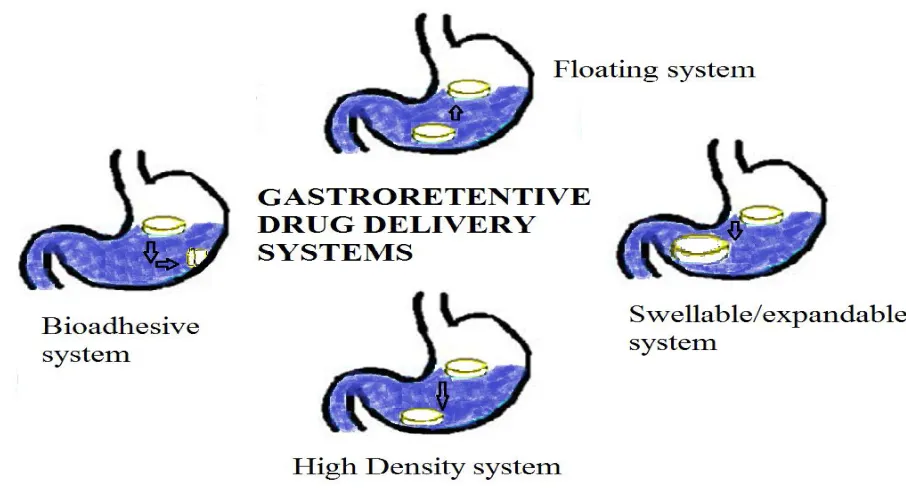
a. Floating systems
b. Swelling and expanding systems c. Bioadhesive systems
d. Modified shape systems e. High density systems
GASTRIC EMPTYING AND PROBLEMS
The stomach is anatomically divided into three parts
1. Fundus 2. Body
3. Antrum (pylorus)
1. Introduction
Department of Pharmaceutics, Madras Medical College. Page 9
Phase-I lasts 45-60 min, is quiescent, with rare low amplitude contractions.
Phase-II with a length of 30-45 min has intermediate amplitude contractions & involves bile secretion.
Phase-III is also termed ‘housekeeper wave’ & extends for 5-15 min.
Phase-IV has a length of less than 5 min & connects between the maximal amplitude contractions to the basal phase.
Fig 1.2: Phases of migrating myoelectric complex
Factors affecting gastric retention
Density, size, shape of dosage form, concomitant intake of food and drugs such as anticholinergic agents(e.g., atropine, propantheline), opiates(e.g., codeine) and prokinetic agents (e.g.,metoclopramide, cisapride), and biological factors such as gender, posture, age, body mass index, and disease states(e.g., diabetes, Crohn’s disease)
1. Density
1. Introduction
Department of Pharmaceutics, Madras Medical College. Page 10
Both positions may isolate the dosage system from the pylorus. A density of < 1.0 gm/ cm3 is
required to exhibit floating property. 2. Food
Food affects the GRT of dosage forms depending on its nature, caloric content, and the frequency of intake. Nature of meal-feeding of indigestible polymers or fatty acid salts can change the motility pattern of stomach to a fed-state, thus decreasing the gastric emptying rate and prolonging drug release. Caloric content-GRT can be increased by 4-10 hours with a meal that is high in proteins and fats. Frequency of feed- The GRT can increase by over 400 minutes when successive meals are given compared with a single meal due to the low frequency of myoelectric motor complex.
3. Size
Small-size tablets are emptied from the stomach during the digestive phase, while larger units are expelled during housekeeper waves. Floating units with a diameter equal to or less than 7.5mm had longer GRTs compared to non-floating units. GRT were similar for floating and non-floating units having a larger diameter of 9.9mm.
4. Shape
Ring-shaped and tetrahedron-shaped devices have a better gastric residence time as compared with other shapes.
5. Gender
Mean ambulatory GRT in males (3.4±0.6 hours) is less compared with their age and race matched female counterparts (4.6±1.2 hours), regardless of the weight, height and body surface.
6. Fed or unfed state
Under fasting conditions, the GI motility is characterized by periods of strong motor activity or the migrating myoelectric complex (MMC) that occurs every 1.5 to 2 hours. The MMC sweeps undigested material from the stomach and, if the timing of administration of the formulation coincides with that of the MMC, the GRT of the unit can be expected to be very short. However, in the fed state, MMC is delayed and GRT is considerably longer.
1. Introduction
Department of Pharmaceutics, Madras Medical College. Page 11
GASTRORETENTIVE DRUG DELIVERY SYSTEMS
Non- Floating systems Floating systems
Floating pills
Floating systems with ion exchange
resins Floating capsules
Intra gastric osmotically controlled drug delivery systems
Inflatable gastrointestinal drug delivery systems
Intra gastric floating gastrointestinal drug delivery systems
Matrix tablets Gas generating agents Effervescent systems Expandabl e systems High density systems Swelling systems Bioadhesive systems Non-effervescent systems Hydrodynamically balanced systems Volatile liquid containing systems
1. Introduction
Department of Pharmaceutics, Madras Medical College. Page 12
[image:22.595.78.531.134.379.2]APPROACHES TO GASTRIC RETENTION4
Fig.1.3: showing various approaches for gastro retentive drug delivery systems
FLOATING DRUG DELIVERY SYSTEMS4
1. Introduction
Department of Pharmaceutics, Madras Medical College. Page 13
[image:23.595.83.544.138.377.2]1. Effervescent systems 2. Non-Effervescent systems
Fig. 1.4: Mechanism of floating drug delivery systems
The magnitude and direction of force/resultant weight (up or down) is corresponding to its buoyancy force (F buoyancy) and gravity force (Fgravity) acting on dosage form
F = F buoyancy – F gravity F = Df g V – Ds g V
F = (Df – Ds) g V
F = (Df – M/V) g V
Where,
F = resultant weight of object Df = Density of Fluid
1. Introduction
Department of Pharmaceutics, Madras Medical College. Page 14
So when Ds, density of dosage form is lower, F force is positive gives buoyancy and when it is Ds is higher, F will negative shows sinking.
Plot of F vs. Time is drawn and floating time is time when F approaches to zero from positive values.
Fig.1.5: Effect of buoyancy force and gravity force on drug delivery system
Effervescent (gas generating) systems
1. Introduction
Department of Pharmaceutics, Madras Medical College. Page 15
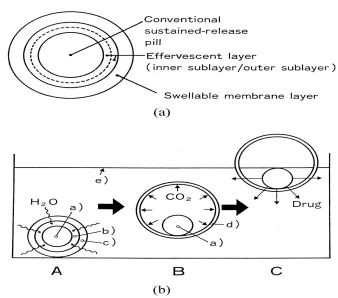
Fig. 1.6: (a) multiple unit oral floating dosage system (b) stages of floating mechanism A. Penetration of water B. Generation of carbon dioxide and floating C. Dissolution of drug
These systems are further classified as below. 1. Volatile liquid containing systems
These are further categorized as
[image:25.595.133.471.125.423.2]1. Introduction
Department of Pharmaceutics, Madras Medical College. Page 16
Fig.1.7: showing intragastric floating gastrointestinal drug delivery system
[image:26.595.149.510.125.331.2]B. Inflatable gastrointestinal delivery system: These systems possess inflatable chamber containing liquid ether which gasifies at body temperature to inflate the stomach. Inflatable chamber contains bioerodible polymer filament (e.g., copolymer of polyvinyl alcohol and polyethylene) that gradually dissolves in gastric fluid and finally causes inflatable chamber to release gas and collapse.
1. Introduction
Department of Pharmaceutics, Madras Medical College. Page 17
[image:27.595.106.526.231.438.2]C. Intragastric-osmotically controlled drug delivery system: It is composed of osmotic pressure controlled drug delivery device and an inflatable floating capsule. In the stomach, inflatable capsule disintegrates and releases the osmotically controlled drug delivery system which contains two components; drug reservoir compartment and osmotically active compartment5.
Fig.1.9: showing Intragastric osmotically controlled drug delivery systems 2. Matrix tablets
It may be formulated as a single layer matrix tablet by incorporating bicarbonates in matrix forming hydocolloid gelling agent or a bilayer matrix tablet with gas generating matrix as one layer and drug being the second layer. It can also be formulated as triple layer matrix tablet with gas generating matrix as one layer and 2 drug layers.
3. Gas generating systems
These systems utilize effervescent compounds like sodium bicarbonate, citric acid and tartaric acid. It is further divided as follows.
1. Introduction
Department of Pharmaceutics, Madras Medical College. Page 18
B. Floating pills: These are a type of sustained release formulations which are basically multiple unit type of dosage forms. The sustained release pill is surrounded by two layers. Outer layer consists of swellable membrane and the inner layer consists of effervescent agents. The system swells due to swellable membrane and then sinks. Due to presence of effervescent agents, CO2 is released and the system floats.
C. Floating systems with ion exchange resins: The most common approach for formulating these systems involves resin beads loaded with bicarbonate. This is then coated with ethyl cellulose which is usually insoluble but permeable to water. This causes carbon dioxide to release and the system to float.
Non effervescent FDDS
Non-effervescent floating drug delivery systems are normally prepared from gel-forming or highly swellable cellulose type hydrocolloids, polysaccharides or matrix gel-forming polymers like polyacrylate, polycarbonate, polystyrene and polymethacrylate. In one approach, intimate mixing of drug with a gel forming hydrocolloid which results in contact with gastric fluid after oral administration and maintain a relative integrity of shape and a bulk density less than unity within the gastric environment. The air trapped by the swollen polymer confers buoyancy to these dosage forms. Excipients used most commonly in these systems include hydroxy propyl methylcellulose (HPMC) polyacrylates, polyvinyl acetate, carbopolagar, sodium alginate, calcium chloride, polyethylene oxide and polycarbonates. These are further classified as follows
1. Hydrodynamically balanced drug delivery systems
1. Introduction
Department of Pharmaceutics, Madras Medical College. Page 19
allows water penetration to the inner layers, maintaining surface hydration and buoyancy to dosage form. Incorporation of fatty excipients gives low-density formulations reducing the erosion. Effective drug deliveries depend on the balance of drug loading and the effect of polymer on its release profile.
2. Microballoons / hollow microspheres
These systems contain outer polymer shell loaded with drug. The outer polymer shell is made up of polymers like polycarbonate, cellulose acetate, calcium alginate, agar, etc. Buoyancy lag time and drug release from the system is dependent on the quantity of polymers used in the formulation. These are prepared by emulsion-solvent diffusion method.
3. Alginate beads
These are formulated using calcium and low methoxylated pectin or calcium low methoxylated pectin and sodium alginate. In this type, sodium alginate solution is added to aqueous solution of calcium chloride which causes precipitation of calcium alginate (beads). These beads are then separated and dried by air convection and freeze dried. This results in the formation of a porous system which remains buoyant in the stomach.
4. Layered tablets
These may be of single layer or double layered.
1. Introduction
[image:30.595.226.419.108.309.2]Department of Pharmaceutics, Madras Medical College. Page 20
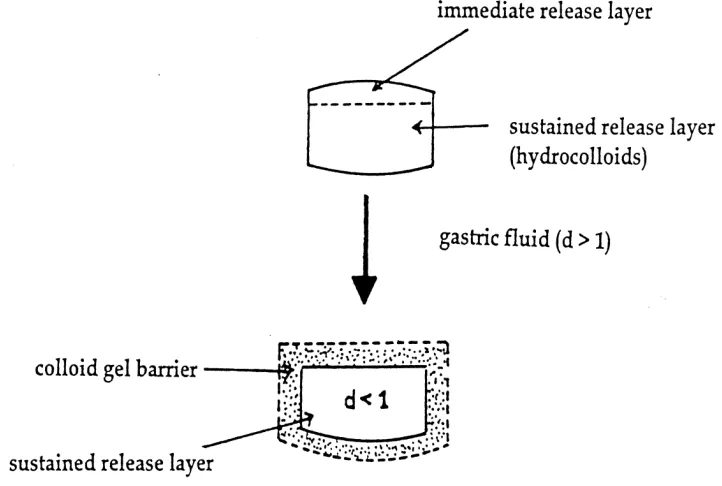
Fig. 1.10: intra gastric floating tablet
B. Double layered floating tablets: This type of tablets contains two layers. One of which is immediate releasing layer and the other is sustained release layer containing drug and hydrocolloids which remains in the stomach for a prolonged period of time.
[image:30.595.123.484.420.663.2]1. Introduction
Department of Pharmaceutics, Madras Medical College. Page 21 NON-FLOATING SYSTEMS
These are another class of gastroretentive drug delivery systems which do not float but remain in the stomach for a prolonged time period. These systems are formulated by any of the following approaches.
1. Bioadhesive systems: These types of systems adhere to the biological membrane (mucosa) of the stomach and maintain intimate contact with the membrane for a longer time and hence retains in stomach for its prolonged release. These systems are formulated using bioadhesive polymers which can adhere to epithelial surface in the stomach. Some of the most promising excipients that have been used commonly in these systems include polycarbophil, carbopol, lectins, chitosan, CMC and gliadin, etc. 2. Swelling systems: These are a type of non-floating gastro retentive drug delivery system which when enters stomach swells (due to presence of swellable polymers) to an extent that cannot pass through the pyloric sphincter leading to its retention in the stomach.
3. High density systems: These systems possess density greater than the gastric fluids due to which the system sinks to the bottom and remains in the stomach. These are formulated by coating drug on heavy inert materials like zinc oxide, titanium dioxide, iron powder, etc.
4. Expandable systems: These systems are capable of expanding and retain in the stomach for longer periods. These are usually formulated as a capsule containing dosage form in folded and compact form. After being exposed to stomach environment, capsule shell disintegrates and dosage form expands preventing its exit through the stomach. By using a suitable polymer, sustained and controlled drug delivery can be achieved.
5. Evaluation of gastro retentive dosage forms
1. Introduction
Department of Pharmaceutics, Madras Medical College. Page 22
Tab.1.1: Gastro retentive products available in the market
Brand name Active ingredient
Cifran OD® Ciprofloxacin
Madopar® L-dopa & Benserazide
Valrelease® Diazepam
Topalkan® Aluminium-Magnesium antacid
Liquid Gavison® Aluminum hydroxide
Almagate
flatcoat® Aluminium-Magnesium antacid
Conviron® Ferrous sulphate
1. Introduction
Department of Pharmaceutics, Madras Medical College. Page 23
Tab.1.2: Commonly used drug in formulation of gastro retentive dosage forms
Dosage forms Drugs
Floating tablets
Acetaminophen, acetylsalicylic acid, ampicillin, amoxicillin trihydrate, Atenolol, Captopril, cinnerezine, Chlorpheniramine maleate, ciprofloxacin, diltiazem, Isosorbide mononitrate, Para amino benzoic acid, prednisolone, nimodipine, sotalol, Theophylline, verapamil
Floating capsules
Chlordiazepoxide hydrochloride, diazepam, furosemide, L-dopa and Benserazide, nicardipine, misoprostol, Propranolol, pepstatin
Floating microspheres
Aspirin , griseofulvin, P-nitro aniline, ibuprofen, terfenadine, tranilast
Floating granules
Diclofenac sodium, indomethacin, prednisolone
2. Review of literature
Department of Pharmaceutics, Madras Medical College. Page 24 REVIEW OF LITERATURE
M.Parvathi6 formulated and evaluated floating tablets of metformin hydrochloride composed
of HPMC K 100 and gellan gum by wet granulation method. The developed floating tablets of Metformin hydrochloride showed prolonged drug release for at least 12 hrs, thereby improving the bioavailability and patient compliance.
C.Bijumol et al.,7 formulated and evaluated floating tablets of theophylline using gel forming
hydrophilic polymers such as HPMC K4M, HPMC K100M and HPMC 15 cps. Formulations with HPMC K100M & HPMC K4M showed better buoyancy, control of drug release and the drug release was similar to that of marketed product.
K.Ravishankar et al.,8 formulated and evaluated Ciprofloxacin floating tablets using
different polymer like HPMC K4M, SCMC and carbopol 934 by direct compression technique. The experimental results revealed that all formulated tablets were of good quality with regard to hardness (3.7 ‐ 4 kg/cm2), thickness (0.3 – 0.35 cm), density (~ 1 g/cm3),
weight variation (1.3‐ 4.2) and drug content (>90%). As the result of floating capability study
increasing the effervescent base of tablets from 5% to 10% significantly lower the lag time of floating (From about 6 min to 1.5 min) as well as floating duration (From about 21 hrs to 10 hrs). Invitro drug release showed that all formulation released 80% of the ciprofloxacin hydrochloride in 12 hrs study period. It was found that all the formulations were statistically significant (p ≤ 0.05).
Ara N. Patel et al.,9 formulated and evaluated Diltiazem floating tablets were formulated
2. Review of literature
Department of Pharmaceutics, Madras Medical College. Page 25 Md. Nazmul Hussain et al.,10 formulated and evaluated Gastro retentive floating tablet of
Simvastatin using hydrophilic rate retardant by direct compression technique using Methocel K4M as the rate controlling polymer. Methocel K4M was evaluated for its gel forming and release controlling properties. Sodium bicarbonate and citric acid were incorporated as gas generating agents. The drug release study was evaluated for eight hours using 0.1N HCl. The release mechanisms were explored and explained with zero order, first order, Higuchi, Hixon Crowell and Korsmeyer equations. It was found that the mean dissolution time, percentage drug release, release rate constant and diffusion exponent were influenced significantly by the amount of polymer incorporation.
M Seth et al.,11designed and characterized of floating tablets of an anti-diabetic drug. The
objective of the study was to formulate and evaluate floating tablet of Pioglitazone employing guar gum, a natural gum in comparison to gellan gum which is also a natural polymer. Sodium bicarbonate was added as gas generating agent. Addition of bees wax was significantly enhanced the buoyancy of the tablets formulated with both the two polymers. The results of in vitro drug release studies showed that optimized formulation could release the drug for more than 12 hrs and remain buoyant for 12 hrs.
CH.Swarna Kamala Chinthala et al.,12 formulated and evaluated gastro retentive floating
tablets of gabapentin using effervescent technology containing gabapentin in the form of tablets using polymers like HPMC K100M, HPMC K15M, Polyox WSR 303 and sodium bicarbonate as gas generating agent. At all the strengths of the polymer tested combination of HPMC K100M and POLYOX WSR 303 (2:1) gave relatively slow release of gabapentin over 24 h when compared to other formulations. The in vitro data is fitted in to different kinetic models and the best-fit was achieved with the Higuchi model. The optimized formulation followed first order release kinetics followed by non fickian diffusion.
Sandeep Kumar G et al.,13 formulated and evaluated gastro retentive floating tablets of
2. Review of literature
Department of Pharmaceutics, Madras Medical College. Page 26
prepared with hydrophilic polymers like HPMC K4M and HPMC K15M. From the Preformulation studies for drug excipients compatibility it was observed that there was no compatability problem with the excipients used in study. The drug release from most of the formulations follows fickian diffusion. From in vivo X-ray studies, it was clearly observed that the floating tablets showed a gastric residence of nearby 6 hrs in fed state.
Prasad K. Lende et al.,14 carried out formulation optimization and in-vitro evaluation of floating tablet of Stavudine containing HPMC K100M and Xanthan gum as releaseretardant polymers were studied. Sodium bi-carbonate and citric acid are used as gas generating agents. The tablets were prepared by direct compression method. Optimization was done by using design expert 8.0.4.1 and optimized formulation of stavudine floating tablet shows no significant change in hardness, drug content, floating lag time and % cumulative drug release
pattern after the stability period of 3 months at 400C/75% relative humidity.
Chandrasekhara Rao Baru et al., 15 formulated and evaluated Ibuprofen floating tablets
using variouspolymers like HPMC K4M and Carbopol 940 to enhance the bioavailability and therapeutic efficacy of ibuprofen. 4 formulations (F1 to F4) floating tablets of Ibuprofen were prepared using variable concentrations of HPMC E5M and Carbopol 940, buoyancy lag time and the total floating time was studied for all the formulations, the compatibility evaluations were performed by DSC analysis. Studies imply that polymers are compatible with each other. There was no interaction found between polymer and drug.
Ravi Kumar et al.,16 formulated and evaluated effervescent floating tablet of Famotidine
2. Review of literature
Department of Pharmaceutics, Madras Medical College. Page 27
from polymeric relaxation. Optimized formulation showed no significant change in physical appearance, drug content, total buoyancy time or in vitro dissolution study after storage at 45 °C/75% RH for three months.
Naresh et al.,17 carried out formulation and characterization of effervescent floating tablets of
Esomeprazole drugs using gas-forming agents, like sodium bicarbonate, citric acid. Floating tablets were prepared by wet granulation method using PVP K-30 as a binder and the other polymers include HPMC K100M, HPMC K15M and Carbopol 934 P. All the formulations showed good floating lag time i.e. less than 3 mins. The batch containing combination of HPMC 15M, HPMC K100M and Carbopol 934P showed total floating lag time more than 24 hrs. The optimized batch showed the highest swelling index among all the prepared batches (i.e. 95%).
Arunachalam A et al.,18 designed and evaluated levofloxacin hemihydrate floating tablets by
wet granulation method, using the polymer, hydroxypropyl methyl cellulose (HPMC K100M) with different amounts and other excipients and sodium bicarbonate as gas generating agent. The study aims to improve the oral bioavailability of the drug and to achieve extended retention in the stomach which may result in prolonged absorption.
J. A. Raval et al.,19 formulated Ranitidine hydrochloride floating matrix tablets based on low
2. Review of literature
Department of Pharmaceutics, Madras Medical College. Page 28
of matrix forming polymer. The highly porous copolymer provided a low density and, thus, excellent in vitro floating behavior of the tablets at a concentration of 15% (w/w).
Md. Sarfaraz et al.,20 formulated and evaluation bilayer floating tablets of Tramadol
hydrochloride using release retarding polymers like hydroxypropyl methyl cellulose grades (HPMC K4M, K15M, K100M), PEO, Sodium alginate and sodium bicarbonate as gas generating agent, with a view to deliver the drug at sustained or controlled manner in gastrointestinal tract and consequently in to systemic circulation. Formulations were found uniform with respect to thickness (5.04 to 5.07 mm) and hardness (6.3 to 6.6 kg/cm2). The friability (0.29 to 0.37%), weight variation (1.44 to 1.71%) and Drug content (98.73 to 99.23%) of different batch of tablets were found within prescribed limits. Formulation F3 selected as best formulation, shown buoyancy lag time of 39 sec, total floating time of 36 hrs and drug release of 95.90% in a period of 24 hrs. Tablets followed diffusion controlled first order kinetics and non-fickian transport of the drug.
S.Daisy chellakumarai et al.,21 formulated and evaluated floating tablets of Ondansetron
hydrochloride using various proportions of polymers such as HPMC K4M and Ethyl cellulose. This was employed to enhance the bioavailability and therapeutic efficacy of the drug. Formulation containing high HPMC K4M and ethyl cellulose showed good floating property with total floating time between 8-12 hours. The tablets were also evaluated for its hardness, friability and in-vitro evaluation test. All parameters complied with IP limits. Results of this study indicated that the combinations of hydrophilic polymers with hydrophobic polymers were suitable to optimize sustained release formulation of Ondansetron hydrochloride.
Shailesh S Chalikwar et al.,22 carried out design, development, and in vitro characterization
2. Review of literature
Department of Pharmaceutics, Madras Medical College. Page 29
4M (X1), concentration of Chitosan (X2) and concentration of effervescent agent (X3) whereas % cumulative drug release (Y1), bioadhesive strength (Y2), and floating lag time (Y3) were taken as dependent variables. The prepared tablets could float within 3 min and remain buoyant for more than 12 hrs. Biphasic release tablet showed satisfactory results with profound effect of independent variables on dependent variables, and followed zero order kinetics for 12 hrs with non-Fickian diffusion transport with swelling mechanism.
Priti Tagde et al.,23 Formulated & evaluated bilayer floating tablets of metoprolol tartrate
using disintegrant starch for the fast release layer and HPMC K grade polymers for the sustaining layer. In vitro dissolution studies were carried out in an Indian Pharmacopoeia dissolution testing apparatus I (paddle method). The formulations gave an initial burst effect to provide the loading dose of the drug followed by sustained release for 12 h from the sustaining layer of matrix embedded tablets. The In-vitro release study of this tablet indicated sustained release for Metoprolol tartrate and followed zero order release and 95% drug in 24hrs in vitro and it follow Fickian diffusion.
Neeraj Kumar Fuloria et al.,24 designed and evaluated gastric floating matrix tablets of an
anti-hypertensive drug perindropil erbumine by direct compression method. Tablets were prepared by using various grades of Hydroxylpropylmethyl cellulose i.e., HPMC K4M, HPMC K15M. Sodium bicarbonate and citric acid was incorporated as a gas generating agents. The buoyancy lag time was found less than 1 minute for all the prepared tablets and affected by viscosity of the polymers and their concentrations. The total floating time for different formulations was in the range of 12-14 hrs. The present work concludes that, floating tablets of Perindropil Erbumine showed promising result and there exist a scope for in vivo evaluation using suitable animal model.
J Padmavathy et al.,25 Formulated and evaluated ofloxacin floating tablets using HPMC.
2. Review of literature
Department of Pharmaceutics, Madras Medical College. Page 30
HMC K4M, HPMC K15M and HPMC K100M (floating agent) as polymers along with sodium bicarbonate as gas generating agent. The formulations were evaluated for their physicochemical properties, buoyancy lag time, total floating time, swelling index and in vitro drug release. It was found that the hardness of the tablets affects the buoyancy characteristic of the dosage form. All formulation possessed good floating properties with total floating time between 8-12 hrs.
Rajendra Jangde et.al.,26 formulatedmonolithic floating tablets of Nimesulide. The polymer
used were HPMC (low & High viscosity), gaur gum, carbopol along with sodium bicarbonate as the gas generating agents. The prepared tablets were evaluated their physicochemical properties and drug release. In-vitro release studies indicated that the nimesulide release from the floating dosage form was uniform & followed zero order release. The incorporation of guar gum helps to maintain the devices integrity and due to its viscosity property also affect the drugs release profile. Sodium bicarbonate which was used as the gas-generating agents causes the tablets to floats the required time>24hrs.
Krunal patel M et.al.,27 Prepared and evaluated gastro retentive floating tablets of
mebendazole. The purpose of this research was to prepare a gastro retentive drug delivery system of Mebendazole. Chitosan and hydroxypropyl methyl cellulose of various viscosity were used. Sodium bicarbonate was incorporated as a gas generating agent. The effects of citric acid and stearic acid on drug release profile and floating properties were investigated. The addition of stearic acid reduces the drug dissolution due to its hydrophobic nature. The specific study was carried out to formulate such a dosage form that can neutralize the acidity locally in the stomach. The granulation was formed by fluidized bed processor in which top spray technique was adopted for forming the granules.
Jaimini Manish et al.,28 formulated and evaluated effervescent floating matrix tablet of
2. Review of literature
Department of Pharmaceutics, Madras Medical College. Page 31
optimum in vitro buoyancy. It was observed that tablet remain float for 8-10 hrs. The tablets with high grades of methocel (K100) were found to float for longer duration as compared with formulations containing methocel K15M. It is evident from this investigation that gas powered floating matrix tablet could be promising delivery system for Losartan potassium with sustained release action.
Shweta Sharma et al.,29 formulated captopril floating matrix tablets using different polymers
as release retarding agent employing various grades of HPMC in varying ratios to formulate the floating tablets. Lactose was used as a diluent in the preparation of the tablets. Sodium bicarbonate was incorporated into the tablets to aid buoyancy of the tablets. It was concluded that the formulation F1 is the best formulations as the extent of drug release was found to be around 85%. This batch also showed immediate floatation and floatation duration of more than 8hr. The drug release model of this formulation complies with zero order kinetics.
Roughe N et al.,30 conducted a study to evaluate the factors that improves the in vitro buoyancy and drug release profile of floating mini tablets containing either Piretinide or Atenolol as the model drug. The buoyancy of the minitablets were achieved either by the swelling of the excipients or by incorporating gas generating agent, sodium bicarbonate. The study concluded that it was possible to produce mini tablets containing either Piretinide or Atenolol, which have a positive resultant weight during more than 6 hrs and satisfactory release profiles.
Ingani HM, et al.,31 described the formulation, dissolution, buoyancy and in vivo release tests of a double layer, sustained release Riboflavin phosphate sodium hydrophosphate matrix oral tablet containing a carbon dioxide generating layer. The in vivo behavior of this floating tablet was then compared to a classical hydrodynamically balanced capsule system. The floating dosage forms had increased residence time as compared to the non-floating tablet
Menon A et al.,32 reported the formulation of a monolithic floating dosage form for
2. Review of literature
Department of Pharmaceutics, Madras Medical College. Page 32 Shoufeng Li et al.,33 developed an optimized gastric floating drug delivery system for oral
controlled delivery of Calcium. A central, composite Box-Wilson design for the controlled release of calcium was used with three formulation variables; HPMC loading, citric acid loading and magnesium stearate loading. All three formulation variables were found to significantly affect release properties. Only HPMC loading was found to be significant for floating properties.
Hilton AK, et al.,34 fabricated an oral sustained release floating tablets of Amoxycillin
trihydrate and carried out the in vitro – in vivo evaluation. From the studies, it shows that the drug slowly released in the stomach by diffusion from the floating matrix tablet and then trickles towards the proximal intestine where absorption occurs. It improved the delivery of antibiotic resulting in more uniform levels of antibiotic following less frequent oral dosing.
Ozdemir N, et al.,35 developed floating bilayer tablet of Furosemide β-cyclodextrin inclusion
complex. They determined the gastric residence time using radiographs by adding BaSO4 and
reported that the tablet stayed in stomach for 6 hrs. Also the bioavailability of Furosemide from floating tablet was about 1.8 times those of the conventional tablet and also significant in vitro – in vivo correlation was detected. Propranolol in a floating dosage form that demonstrates both rapid and sustained release properties were reported.
Machida S et al.,36 fabricated two drug formulations which floated in gastric juice. One, a
buoyant tablet, consisted of powdered Soyabean protein, drug and Sodium bicarbonate. The other, a laminated film type preparation consisted of a drug film, an effervescing film containing Sodium bicarbonate and outer drug release regulating time. Cinnarazine, an acid soluble drug was used as the model drug.
2. Review of literature
Department of Pharmaceutics, Madras Medical College. Page 33 El-Kamel et al.,38 developed a sustained release system for Ketoprofen to increase its
residence time in the stomach without contact with the mucosa and was achieved through the preparation of floating microparticles by the emulsion solvent diffusion technique. All the floating microparticle formulations were evaluated for flow properties, packability and drug release rate.
Joseph NJ, et al.,39 studied the effect of solvent evaporation technique on floating type
hollow polycarbonate microsphere of Piroxicam which were capable of floating on simulated gastric fluid. Pharmacokinetic analysis showed that the bioavailability of Piroxicam hollow microsphere was about 1.4 times that of free drug and was about 4.3 times for the dosage form consisting of microsphere plus the loading dose. The elimination half-life was increased by three times that of free drug.
Park, et al.,40 developed and evaluated floating beads from Sodium Alginate solution
containing CaCO3or NaHCO3as gas-forming agents with Riboflavin as a model drug. In vitro release studies revealed that CaCO3 is superior to NaHCO3 as gas forming agent in alginate
3. Aim and plan of work
Department of Pharmaceutics, Madras Medical College. Page 34 AIM AND PLAN OF WORK
Aim of project work
1. The main objective of the present study is to develop gastro retentive floating tablets containing BET hydrochloride as sustained release for the effective treatment of vertigo.
2. To reduce frequency of administration and improve patient compliance of BET hydrochloride .
Plan of the work:
1. Preformulation Studies.
Physical compatibility study Chemical compatibility study
2. Preparation of standard curve for BET hydrochloride. 3. Precompression studies of blends
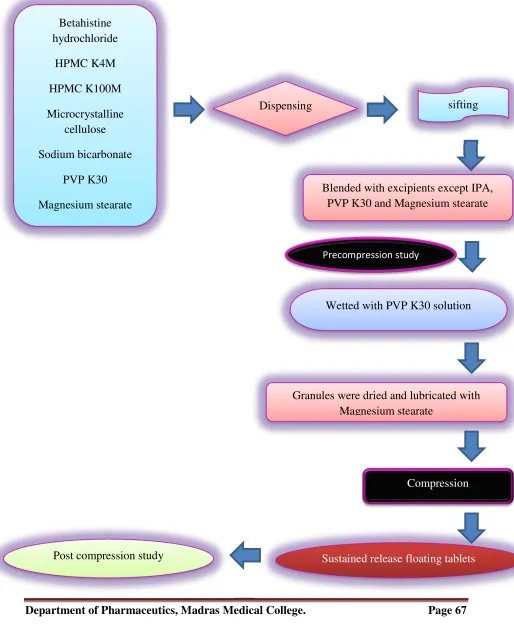
4. Formulation of sustained release granules
5. Formulation of floating matrix tablets of BET hydrochloride using various grades of polymer of HPMC and in different proportions.
6. Post compression evaluation of tablets
• Description
• Uniformity of Weight
• Hardness
• Diameter and Thickness
• Friability
• Floating characteristics of tablets
• Swelling index • Drug content
• In vitro release study of tablets
4. Rationale of the study
Department of Pharmaceutics, Madras Medical College. Page 35
RATIONALE OF THE STUDY
Vertigo is defined as the sensation of motion, when no motion is occurring relative to the earth’s gravity. It is a symptom that can be caused by disrupted activity in any part of the vestibular system or pathological conditions of other systems. The clinical course of vertigo can vary depending on the cause. Acute, severe attacks of vertigo can last from hours to days.
Vertigo is more commonly classified as taking one of three clinical courses; attacks lasting seconds or minutes (e.g.vestibular paroxysm), attacks lasting hours (e.g. Meniere’s disease or vestibular migraine) or prolonged attacks lasting several days over a week (e.g. vestibular neuritis)41,42
Rationale for selection of drug
Betahistine is used to treat vertigo and exerts action by dilating blood vessel within the inner ear which can relieve pressure from excess fluid. The successful treatment of vertigo depends on the maintenance of effective drug concentration level in the body for which a constant and uniform supply of drug is desired.
BET hydrochloride is a first line treatment option for otogenic vertigo43. The shorter
biological half-life (3-4 hours), rapid and complete absorption and the dosage of three times a day make BET hydrochloride an ideal candidate for sustained release formulations, which reduce the frequency of dose in order to improve patient compliance.43
Rationale for selection of dosage form
4. Rationale of the study
Department of Pharmaceutics, Madras Medical College. Page 36
5. Disease profile
Department of Pharmaceutics, Madras Medical College. Page 37 DISEASE PROFILE
Vertigo41-42
Vertigo is an illusion of movement, where the patient, or the environment, seems to be moving. Imbalance always accompanies vertigo, but is not always due to vertigo and is not a synonym for vertigo.
Normal balance requires:
(a) Accurate sensory information from the eyes, proprioceptive receptors and the vestibular labyrinth (b) Coordination of this information within the brain (c) A normal motor output from the central nervous system to an intact musculoskeletal system. A fault in any of these impairs balance.
Vertigo arises if information from vestibular sources conflicts with that from the other sensory systems, or when a disordered central integration system in the brain does not correctly assess the body’s movements from vestibular input. Vertigo is always a symptom of vestibular defect. This may lie in the peripheral labyrinth or in its connections within the brain. When severe it is accompanied by nausea and vomiting.
Vertigo is caused by:
(a) Peripheral vestibular disorders (labyrinthine)
(b) Spread to the labyrinth of infection from middle ear disease
(c) Central vestibular disorders, such as multiple sclerosis, tumours, infarcts
(d) External insults to the vestibular system by drugs, anaemia, hypoglycaemia, hypotension, viral infection
The commonest peripheral vestibular disorders are,
1. Menière’s disease and other forms of endolymphatic hydrops,
5. Disease profile
Department of Pharmaceutics, Madras Medical College. Page 38
3. Sudden vestibular failure and
4. Vascular disturbances.41
Menière’s disease
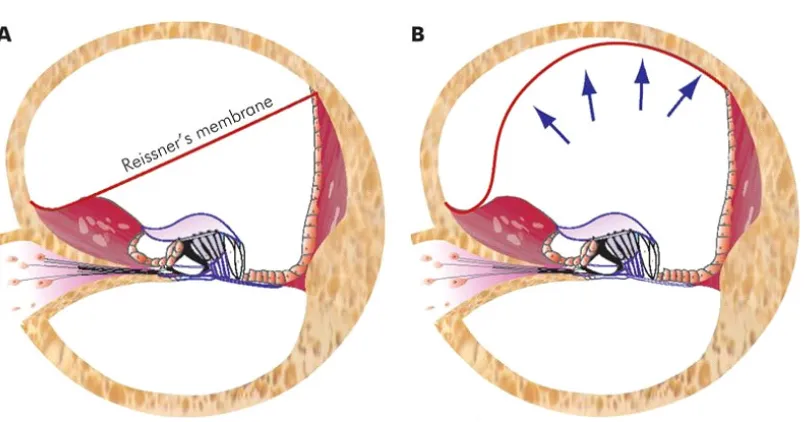
This is a disorder of endolymph control associated with dilatation of the endolymphatic spaces of the membranous labyrinth. Dilatation, or endolymphatic hydrops, may be caused by disorders of the otic capsule, but in Menière’s disease it is, by definition, idiopathic. The disease usually affects only one ear, first producing symptoms between the ages of 30 and 60. It is characterised by vertigo, fluctuating hearing loss, tinnitus and sense of pressure in the involved ear. Vertigo is of sudden onset, lasts for a few minutes to 24 hours or so.
Pathology
Fig. 5.1: (A) Normal cochlear duct. (B) Cochlear duct is distended with endolymph pushing the Reissner’s membrane into scala vestibuli.
[image:52.595.101.503.369.580.2]5. Disease profile
Department of Pharmaceutics, Madras Medical College. Page 39
into the apical part of scala tympani. The distended saccule may come to lie against the stapes footplate. The utricle and saccule may show out-pouchings into the semicircular canals
Aetiology
The main pathology in Meniere's disease is distension of endolymphatic system due to increased volume of endolymph. This can result either from increased production of endolymph or its faulty absorption or both. Normally, endolymph is secreted by stria vascularis, fills the membranous labyrinth and is absorbed through the endolymphatic sac.
The exact cause of Meniere's disease is not yet known. Various theories have been postulated.
1. Defective absorption by endolymphatic sac
5. Disease profile
Department of Pharmaceutics, Madras Medical College. Page 40
poor vascularity and thus poor absorption by the sac. Distension of membranous labyrinth leads to rupture of Reissner's membrane and thus mixing of perilymph with endolymph, which is thought to bring about an attack of vertigo.
2. Vasomotor disturbance
There is sympathetic over-activity resulting in spasm of internal auditory artery and/or its branches, thus interfering with the function of cochlear or vestibular sensory neuroepithelium. This is responsible for deafness and vertigo. Anoxia of capillaries of stria vascularis also causes increased permeability, with transudation of fluid and increased production of endolymph.
3. Allergy
The offending allergen may be a foodstuff or an inhalant. In these cases, inner ear acts as the "shock organ" producing excess of endolymph. Nearly 50% of patients with Meniere's disease have concomitant inhalant and/or food allergy.
It is possible that Meniere's disease is multifactorial, resulting in the common end point of endolymphatic hydrops with classical presentation.
4. Sodium and water retention
Excessive amounts of fluid are retained leading to endolymphatic hydrops. 5. Hypothyroidism
About 3% of cases of Meniere's disease are due to hypothyroidism. Such cases benefit from thyroid replacement therapy.
6. Autoimmune and viral aetiologies
Have also been suggested on the basis of experimental, laboratory and clinical observations.
Treatment of Menière’s disease
5. Disease profile
Department of Pharmaceutics, Madras Medical College. Page 41
It has been demonstrated that otoconial debris, consisting of crystals of calcium carbonate, is released from the degenerating macula of the utricle and floats freely in the endolymph. When it settles on the cupula of posterior semicircular canal in a critical head position, it causes displacement of the cupula and vertigo. The vertigo is fatiguable on assuming the same position repeatedly due to dispersal of the otoconia but can be induced again after a period of rest. Thus, typical history and Hallpike manoeuvre establishes the diagnosis.
It is characterised by vertigo when the head is placed in a certain critical position. There is no hearing loss or other neurologic symptoms. Positional testing establishes the diagnosis and helps to differentiate it from positional vertigo of central origin. Disease is caused by a disorder of posterior semicircular canal though many patients have history of head trauma and ear infection.
2. Benign paroxysmal positional vertigo (BPPV)
Peripheral (Lesions of end organs vestibular nerve)
Central (Lesions of brainstem and central connections)
• Meniere's disease
• Benign paroxysmal positional
vertigo
• Vestibular neuronitis • Labyrinthitis
• Vestibulotoxic drugs • Head trauma
• Perilymph fistula • Syphilis
• Acoustic neuroma
• Vertebrobasilar insufficiency
• Posterior inferior cerebellar artery
syndrome
• Basilar migraine • Cerebellar disease • Multiple sclerosis
• Tumours of brainstem and fourth
ventricle
• Epilepsy
5. Disease profile
Department of Pharmaceutics, Madras Medical College. Page 42
The condition can be treated by performing Epley's manoeuvre. The principle of this
manoeuvre is to reposition the otoconial debris from the posterior semicircular canal back into the utricle. The doctor stands behind the patient and the assistant on the side. The patient is made to sit on the table so that when he is made to lie down, his head is beyond the edge of the table as is done in Dix-Hallpike manoeuvre. His face is turned 45° to the affected side.
There should be a pause at each position till there is no nystagmus or there is slowing of nystagmus, before changing to the next position. After manoeuvre is complete, patient should maintain an upright posture for 48 hours. Eighty percent of the patients will be cured by a single manoeuvre. If the patient remains symptomatic, the manoeuvre can be repeated. A bone vibrator placed on the mastoid bone helps to loosen the debris.
3. Vestibular neuronitis
It is characterized by severe vertigo of sudden onset with no cochlear symptoms. Attacks may last from a few days to 2 or 3 weeks. It is thought to occur due to a virus that attacks vestibular ganglion. Management of acute attack is similar to that in Meniere's disease. The disease is usually self-limiting.
4. Labyrinthitis
Circumscribed labyrinthitis is seen in cases of unsafe type of CSOM, and fistula test is positive.
Serous labyrinthitis is caused by trauma or infection (viral or bacterial) adjacent to inner ear but without actual invasion. There is severe vertigo and sensorineural hearing loss. A partial or full recovery of inner ear functions is possible if treated early.
5. Disease profile
Department of Pharmaceutics, Madras Medical College. Page 43
5. Vestibulotoxic drugs
Several drugs cause ototoxicity by damaging the hair cells of the inner ear. Some primarily affect the cochlear while others affect the vestibular labyrinth. Aminoglycoside antibiotics particularly streptomycin, gentamicin, kanamycin have been shown to affect hair cells of the crista ampullaris and to some extent those of the maculae. Certain other drugs which cause dizziness or unsteadiness are antihypertensives, labyrinthine sedatives, oestrogen preparations, diuretics, antimicrobials (nalidixic acid, metronidazole) and antimalarials. However, their mode of action may be different.
6. Head trauma
Head injury may cause concussion of labyrinth, completely disrupt the bony labyrinth or VIIIth nerve, or cause a perilymph fistula. Severe acoustic trauma, such as that caused by an explosion can also disturb the vestibular end organ (otoliths) and result in vertigo.
7. Perilymph fistula
In this condition, perilymph leaks into the middle ear through the oval or round window. It can follow as a complication of stapedectomy, or ear surgery when stapes is accidentally dislocated. It can also result from sudden pressure changes in the middle ear (e.g. barotrauma, diving, forceful Valsalva) or raised intracranial pressure (weightlifting or vigorous coughing). A perilymph fistula causes intermittent vertigo and fluctuating sensorineural hearing loss, sometimes with tinnitus and sense of fullness in the ear.
8. Syphilis
5. Disease profile
Department of Pharmaceutics, Madras Medical College. Page 44
central type of vestibular dysfunction.
9. Acoustic neuroma
It has been classified in peripheral vestibular disorders as it arises from CN VIII within internal acoustic meatus. It causes only unsteadiness or vague sensation of motion. Severe episodic vertigo, as seen in the end organ disease, is usually missing.
Other tumours of temporal bone (e.g. glomus tumour, carcinoma of external or middle ear and secondaries), destroy the labyrinth directly and cause vertigo41.
Duration of vertigo
• Menière’s disease – hours.
• Benign paroxysmal positional vertigo – seconds only.
• Sudden vestibular failure – days
Operation is advised if the symptoms are not controlled by medication. Conservative surgical procedures aim to protect hearing, and include decompression of the endolymphatic sac and selective division of the vestibular branch of the vestibulocochlear nerve (vestibular neurectomy). Labyrinthectomy, with total destruction of the membranous labyrinth, guarantees relief from the vertigo but at the expense of total loss of hearing in that ear. This is often acceptable if the hearing remains only as a painful distorted shred in the affected ear when the other is normal.
Symptomatic treatment of vertigo
5. Disease profile
Department of Pharmaceutics, Madras Medical College. Page 45
If vestibular deficit, rather than irritation of a labyrinthine system, is pronounced, vestibular sedatives may exacerbate the symptoms.
6. Drug profile
Department of Pharmaceutics, Madras Medical College. Page 46 DRUG PROFILE
BETAHISTINE HYDROCHLORIDE46-48
Chemical structure46
.2HCl
Chemical name46
Methyl[2-(pyridin-2-yl)ethyl]amine dihydrochloride.
CAS number46
5579-84-0
Molecular formula46
C8H12N2.2HCl
Molecular weight46
209.11
Description48
A white to off white, crystalline powder; sometimes clumped, odourless or almost odourless, very hygroscopic.
Solubility48
6. Drug profile
Department of Pharmaceutics, Madras Medical College. Page 47 Melting point
150-154 °C
Category
Anti-histaminic
Pharmacology47
Pharmacokinetics
Absorption :
When given orally, betahistine is rapidly absorbed from the gastrointestinal tract.
Protein binding :
5%
Half-life :
3-4 hours
Metabolism & elimination:
Metabolized by liver and excreted through urine (85-90%)
Mechanism of action47
Betahistine has a very strong affinity as an antagonist for histamine H3 receptors and a weak
affinity as an agonist for histamine H1 receptors. Betahistine seems to dilate the blood vessels
within the inner ear which can relieve pressure from excess fluid and act on the smooth muscle.