SOCIAL RESEARCH NUMBER: 14/2018
PUBLICATION DATE : 13/03/2018
Evaluation of the Creative Learning through
the Arts programme
Report 2: Interim Evaluation Report
Evaluation of the Creative Learning through the Arts programme
Report 2: Interim Evaluation Report
Endaf Griffiths, Wavehill
Mair Bell, Wavehill
David Parker
Andy Parkinson, Consilium Research
Views expressed in this report are those of the researcher and not necessarily those of
the Welsh Government.
For further information please contact:
Richard Thurston, Deputy Chief Social Research Officer
Knowledge and Analytical Services
Welsh Government
Cathays Park
Cardiff
CF10 3NQ
Tel: 0300 025 5324
Table of contents
Glossary... 4
1. Introduction ... 5
2. Progress to Date ... 8
3. Lead Creative School Case Studies... 18
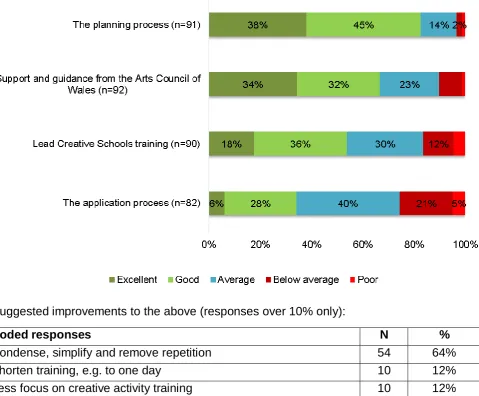
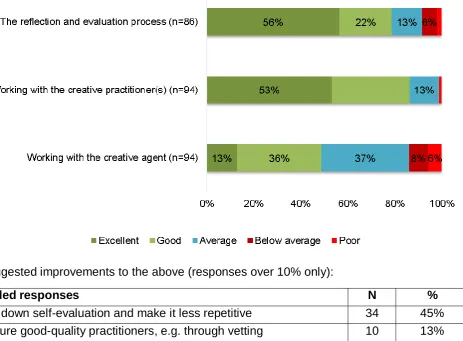
4. Findings of a Survey of Participating Teachers ... 47
5. Findings of a Survey of Participating Artists and Arts Organisations... 63
6. Findings of Interviews with Stakeholders ... 71
7. Conclusion and Recommendations... 82
Appendix 1: More details on the Lead Creative Schools Scheme (Strand 1)... 88
Appendix 2: More details on the All-Wales Arts and Education Programme (Strand 2)... 91
List of figures
All images were provided by the schools involved. ... 3
Figure 2.1: Number of Lead Creative School-status schools, per academic year... 10
Figure 2.2: Representativeness of Round 1 and 2 Lead Creative Schools, by region ... 11
Figure 2.3: Representativeness of Round 1 and 2 Lead Creative Schools, by primary and
secondary school ... 11 Figure 2.4: Percentage of schools per WIMD (2014) quartile – Lead Creative Schools and
all schools in Wales... 12
Figure 2.5: Representativeness of Experience the Arts Fund grant distribution, by region .. 14 Figure 2.6: Percentage of schools per WIMD (2014) quartile – Experience the Arts Fund
grants and all schools in Wales ... 15
Figure 2.7: Google Analytics data for the Creative Learning Zone... 16 Figure 4.1: Teachers’ ratings for management and delivery aspects of the Lead Creative
Schools Scheme and suggested improvements (A) ... 50
Figure 4.5: Perceptions of teachers of arts and culture: pre-intervention and on the day of
the survey... 59
Figure 4.7: Perceptions of teachers of their schools: pre-intervention and on the day of the
survey... 61 Figure 5.3: Artists’ perceived outcomes of the Lead Creative Schools Scheme ... 66 Figure 5.5: Artists’ perceptions of…. – prior to their involvement with the programme and on
the day of the survey ... 69
Figure 5.6: Artists responses when asked to agree or disagree with to a series of outcome related statements starting: “As a result of the Creative Learning through the Arts programme…” ... 70
Figure A.1: Distribution of respondents, by Local Authority (n=108) ... 94
Figure A.2: Distribution of respondents, by academic year taught (n=108, multiple
responses possible) ... 95
Figure A.3: Distribution of respondents, by subject taught (n=108) ... 95
Figure A.4: The number of years that respondents had been teaching in schools (n=108) . 96
Acknowledgement
We would like to thank the wide range of individuals and organisations that have contributed to this report. The evaluation would not be possible without these contributions. Particular thanks to all the respondents to the surveys discussed within the report and the schools, teachers, pupils and artists who contributed to the case studies within this report.
Glossary
ATLAC Arts as a Tool for Learning Across the Curriculum (Scotland)
CAPE Chicago Arts Programme in Education
CCE Creativity, Culture and Education (international foundation promoting creativity in children)
CCiSS Cultural Coordinators in Scottish Schools (Scotland)
CP Creative Partnerships (England)
CPL Continuous Professional Learning
CSC Central and South Wales Education Consortium
EAS South East Wales Education Consortium
eFSM Eligible for Free School Meals
ERW South West and Mid Wales Education Consortium
GwE North Wales Education Consortium
INSET In-service Training
ITT Initial Teacher Training
LAs Local Authorities
LCS Lead Creative Schools
MAT More Able and Talented
NFER National Foundation for Educational Research
OECD Organisation for Economic Cooperation and Development
REC Regional Education Consortium
RSA Royal Society for the Encouragement of Arts, Manufactures and Commerce
SDP School Development Plan
1.
Introduction
Background
1.1 In March 2014, the Welsh Government issued a response to Professor Dai Smith’s
report on the review of Arts in Education in the Schools of Wales (2013), agreeing
to all of the recommendations made. The response also pledged to develop a
plan which would formally assert the central role that the report envisaged for arts
education in schools in Wales while also delivering the commitment within the
Programme for Government at that time to maximising participation in the arts and
to working with the Arts Council of Wales so as to develop an action plan for the
arts and young people. In a subsequent report, Successful Futures (2015), which
followed an independent review of curricular and assessment arrangements in
Wales, Professor Graham Donaldson also reaffirmed the importance of creativity
in the development of our children and young people.
1.2 The response was the publication of Creative Learning through the Arts — an action plan for Wales: 2015–2020 — and, launched in March 2015, the Creative
Learning through the Arts programme, a partnership between the Arts Council of
Wales and the Welsh Government. The programme is managed by a team within
the Arts Council of Wales, under the direction of the Director for Engagement and
Participation. It is supported by equal investments of Big
Lottery Fund and Department for Education and Skills
funding, totalling around £20m over five years. Click on
the image on the right to watch a brief video introducing
the programme1.
1.3 The programme consists of two innovative strands of educational activities. Strand
1, the Lead Creative Schools Scheme, is focused on improving attainment through creativity. It is an intensive intervention that involves teachers, ‘Creative Agents’ and ‘Creative Practitioners’ working together in order to deliver a creative
approach to learning. It is anticipated that this scheme will support around a third
of the schools in Wales during the five-year lifetime of the Creative Learning
through the Arts programme.
1
If the link to the right does not work, you can watch please click on the following link or cut and paste the URL into your browser: https://www.youtube.com/watch?v=xKgYsEcjnqI
1.4 Strand 2, the All-Wales Arts and Education Programme, includes a range of
different activities designed to increase and improve opportunities for teachers,
learners, artists and arts/cultural/heritage organisations to work together:
a) The Creative Learning Zone is designed to be a source of online information
and a collaboration hub for teachers, learners, Creative Practitioners
organisations and practitioners;
b) The establishment of four Regional Arts and Education Networks with a remit
to (amongst other things) provide opportunities for teachers and artists to
develop and share their knowledge and skills;
c) Local Arts Champions, managed by the Regional Arts and Education
Networks, whose role it is to promote best practices and support others in
adopting similar approaches; and
d) The Experiencing the Arts Fund, which offers grants to schools to provide
children and young people with opportunities to engage in new creative,
cultural and arts experiences.
Purpose of the evaluation and method
1.5 The evaluation is being undertaken by the social and economic research company
Wavehill, in association with Consilium Research and Consultancy and the RSA
(Royal Society for the Encouragement of Arts, Manufactures and Commerce).
Broadly, its purpose is to examine the design, delivery, impact and value for
money of the Creative Learning through the Arts programme.
1.6 During its lifetime, the evaluation not only will assess the effectiveness of the
programme in relation to its original aims and objectives, but also will relate the
findings to literature describing the effects of the arts and creativity in schools. By
these means, it will contribute to the evidence base for learning and development
in relation to creative education and help to inform future debate surrounding
practices and policies nationally and internationally.
1.7 This second interim report does not cover all of those elements, with the focus
being on assessing progress made to date and beginning to explore the evidence
of emerging outcomes. It follows the first evaluation report, published in July 2017,
which explored the rationale for the programme and used Theory of Change2 to
explore the changes (or outcomes) anticipated for the Creative Learning through
2
the Arts programme and how they could be measured. Essentially, the first report
provided the foundation upon which subsequent phases of the evaluation are
building. It also included an initial literature review and discussed the rationale for
the programme3.
1.8 The research undertaken during this phase of the evaluation included:
Surveys of teachers (n=108) and artists and arts organisations (n=70) involved in the programme, primarily via the Lead Creative Schools Scheme;
‘Case study’ visits to seven schools supported by the Lead Creative Schools Scheme; and
Interviews with stakeholders (n=22) involved in various elements of the
Creative Learning through the Arts programme, including Welsh Government
officials, Arts Council of Wales staff, and individuals involved in the delivery of
different elements of the programme (e.g. the Regional Arts and Education
Networks).
Structure of this report
1.9 The remainder of this report is structured as follows: Section 2 provides an update
on the progress being made by the programme, including the number of schools
supported. Section 3 presents the case studies for the schools visited by the
evaluation team during this phase of the evaluation. Sections 4 and 5 consider the
findings of the survey of teachers and artists and arts organisations participating in
the programme respectively. Section 6 then discusses the findings of the
interviews with project stakeholders. Finally, Section 7 sets out the conclusions
that can be drawn from this phase of the evaluation, the recommendations that are
being made, and the next steps in the evaluation process.
3
2.
Progress to Date
Introduction
2.1 This section provides an update on the delivery of the Creative Learning through
the Arts programme as of April 2017.
The Lead Creative Schools Scheme (Strand 1)
2.2 The Lead Creative Schools Scheme is focused on improving attainment through creativity. It is an intensive intervention that involves teachers, ‘Creative Agents’ and ‘Creative Practitioners’ working together in order to deliver a creative
approach to learning. All local-authority-maintained and voluntary-aided primary
and secondary schools, including special schools, in Wales are eligible to apply to
be Lead Creative Schools, including specialist teaching facilities within schools.
2.3 An overview of both the application and implementation process for the Lead
Creative Schools Scheme can be found in Appendix 1. To summarise here,
however, schools apply through a competitive process to become part of the Lead Creative Schools Scheme. Supported schools then work with a ‘Creative Agent’ to develop a project which will address the school’s identified priorities. The first term
of the school year (autumn term) is spent planning the programme for the spring
term. The classroom creative learning activity between the pupils, teachers and ‘Creative Practitioner’ takes place in the spring term and internal reflective
evaluation of the activity is undertaken in the summer term. Schools are supported for two years — with the second-year structure being the same as the first-year
structure and with priorities and activities informed by year-one learning.
2.4 The Lead Creative Schools Scheme is being delivered over three rounds with
supported schools participating for two years:
Round 1: academic years 2015/16 and 2016/17
Round 2: academic years 2016/17 and 2017/18
Round 3: academic years 2017/18 and 2018/19
2.5 These rounds overlap, so from September 2016, Round 1 Year 2 Lead Creative
Schools ran in parallel with Round 2 Year 1 Lead Creative Schools. This will
continue in such a way that from September 2017, Round 2 Year 2 Lead Creative
2.6 Early in 2017, a new ‘development strand’ for Year 3 was introduced, aimed at
supporting a group of Round 1 schools within each region in delivering a
programme of school-to-school support in their local area in line with the new
curricular Pioneer Schools Model. The rationale for this was that the Arts Council
of Wales wanted to build on the knowledge and expertise of Round 1 schools by
inviting them to apply to continue in the scheme for a third year, working
specifically with schools new to the scheme. It also increases the number of
schools engaged in the scheme. This new strand was developed from a pilot of the
approach delivered by a selection of Round 1 schools in the previous year.
2.7 At the time of this report, Round 1 schools were being invited to submit an
expression of interest in participating in the development strand, with a maximum
of six places per region available. To be eligible to apply, schools must recruit and
commit to working with a maximum of two schools that have not been involved in
the scheme thus far.
Number of schools engaged
2.8 At the inception of the programme in 2015, it was anticipated that the Lead
Creative Schools Scheme would support a third of schools in Wales (provision for
both Welsh and English media) during its five-year lifetime. In 2015 there were
1,582 eligible schools in Wales; thus, the aim was to engage 522 schools.
2.9 The 279 schools engaged in Rounds 1 and 2 therefore represent over 50% of the
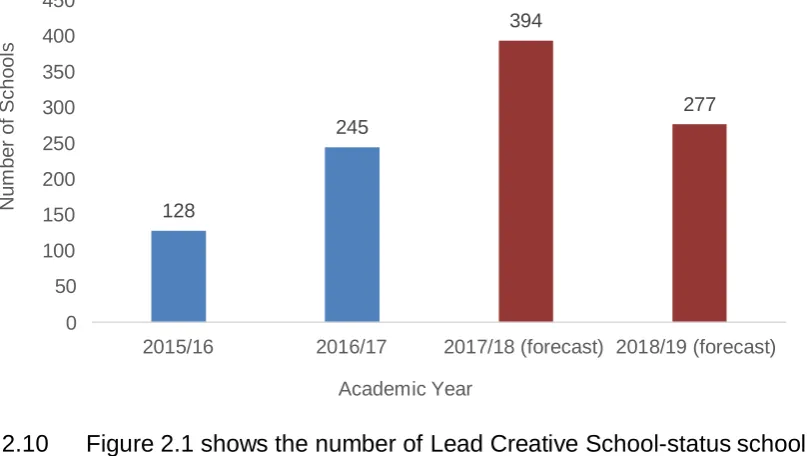
target for the scheme. If all Round 3 applications were approved (which is not
guaranteed), this would bring the total number of schools participating in the
scheme to 506. At the time of this report, the assessment phase for Round 3
schools was ongoing, with 210 applications (involving 227 schools) having been
received by the Arts Council of Wales. If the schools engaged via the new
development strand (see paragraph 2.6) are included in the total (n=36), as well as
those participating in the pilot in the previous year (n=19), the total engaged
Nu m be r o f Sc ho o ls
Figure 2.1: Number of Lead Creative School-status schools, per academic year
450 400 350 300 250 200 150 100 50 0 128 245 394 277
2015/16 2016/17 2017/18 (forecast) 2018/19 (forecast)
Academic Year
2.10 Figure 2.1 shows the number of Lead Creative School-status schools per year,
using the number of applications received for Round 3 within the forecasted
figures for the 2017/18 and 2018/19 academic years. At its peak, close to 400 schools are likely to be ‘fully’ participating in the scheme (excluding schools
participating in the development strand). The administrative burden (the number of
schools to support, monitor, etc.) on the programme team is therefore likely to be
highest during the 2017/18 academic year.
Distribution of schools engaged
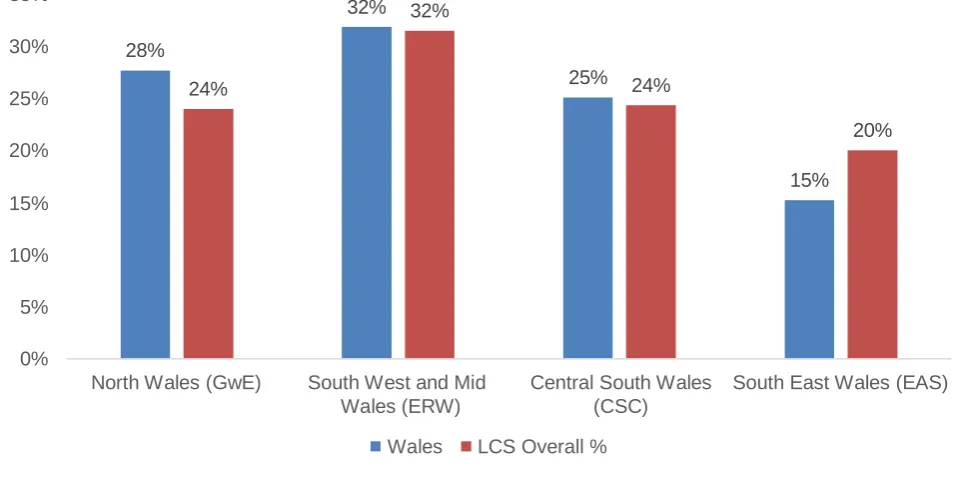
2.11 Figure 2.2 illustrates the representativeness of Round 1 and 2 schools (in total) by
region (Regional Education Consortia). The blue-coloured bar shows the
proportion of all schools in Wales in each region, while the red-coloured bar shows
the same for Lead Creative Schools. Although the distribution is relatively similar
to the population of schools in Wales, schools in North Wales (GwE) are
underrepresented, while those in South East Wales (EAS) are overrepresented. If
the ambition is for participation in the scheme to match the actual distribution of
schools in Wales, action may therefore be appropriate so as to boost the number
[image:12.596.56.460.86.314.2]Figure 2.2: Representativeness of Round 1 and 2 Lead Creative Schools, by region 35% 30% 25% 20% 15% 28% 24% 32% 32% 25% 24% 15% 20% 10% 5% 0%
North Wales (GwE) South West and Mid Wales (ERW)
Central South Wales (CSC)
South East Wales (EAS)
Wales LCS Overall %
2.12 Compared to the population of all schools in Wales, primary schools are
underrepresented within the Lead Creative Schools group, while secondary
schools are overrepresented (Figure 2.3). Again, therefore, some action may be
appropriate in order to boost the number of primary schools participating.
Figure 2.3: Representativeness of Round 1 and 2 Lead Creative Schools, by primary
and secondary school
100% 90% 80% 70% 60% 50% 40% 30% 20% 10% 0% 87% 69% 13% 31%
Primary Secondary
[image:13.596.55.399.516.720.2]P e rc e n tag e o f s c h oo ls
2.13 The Welsh Index of Multiple Deprivation (WIMD) is the Welsh Government’s
official measure of relative deprivation for small areas in Wales. It is designed to
identify those small areas in which there are the highest concentrations of several
different types of deprivation. As such, WIMD is a measure of multiple deprivation
indicators that is both an area-based measure and a measure of relative
deprivation. The latest version was published in 20144.
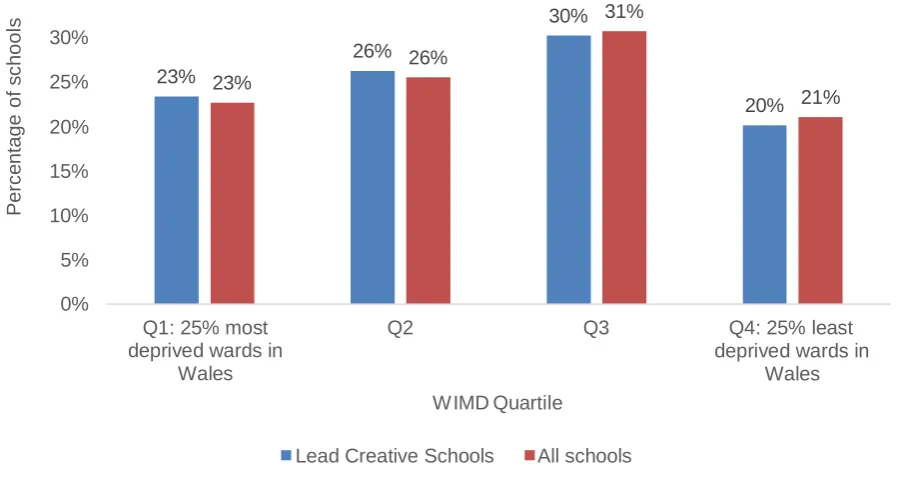
2.14 Figure 2.4 shows the percentage of schools participating in the Lead Creative
Schools Scheme and the population of schools in Wales as a whole per WIMD
quartile. It shows a very close match between the distribution of Lead Creative
School-status schools and the distribution of all schools in Wales, suggesting that
[image:14.596.52.503.371.613.2]deprivation does not have a substantial impact on participation in the scheme.
Figure 2.4: Percentage of schools per WIMD (2014) quartile – Lead Creative Schools
and all schools in Wales
35% 30% 25% 20% 23% 23% 26% 26% 30% 31% 20% 21% 15% 10% 5% 0%
Q1: 25% most deprived wards in
Wales
Q2 Q3 Q4: 25% least
deprived wards in Wales WIMD Quartile
Lead Creative Schools All schools
4
All-Wales Arts and Education Programme (Strand 2)
2.15 The All-Wales Arts and Education Programme includes a range of different
activities designed to increase and improve opportunities for teachers, learners,
artists and arts/cultural/heritage organisations to work together. A basic
introduction to the key components of the programme is included below, with
further details to be found in Appendix 2.
Regional Arts and Education Networks
2.16 The remit of the four Regional Arts and Education Networks is, amongst other
things, to provide opportunities for teachers and artists to develop and share their
knowledge and skills. They also manage the Local Arts Champions, whose role it
will be to promote best practices and support others in adopting similar
approaches.
2.17 The first 15 months of funding for the networks completed at the end of March
2017, with submissions being prepared by all four networks to the Arts Council of
Wales for a second year (12 months) of funding. The networks have launched the
Arts Champions programme, which will identify exceptional teachers of arts
subjects and arts practitioners who will seek to inspire and support their peers.
Experiencing the Arts Fund
2.18 The Experiencing the Arts Fund is designed to encourage schools to provide children and young people with opportunities to ‘go one step further’ in their
exploration of creative, cultural and arts experiences. It includes two elements,
both launched in March 2016.
2.19 Go and See provides schools with the opportunity to apply for small, one-off grants
of up to £1,000 to fund single visits to high-quality arts events in venues across
Wales. Experiences could include visits to performances and exhibitions or visits
to experience arts professionals developing and creating their work.
2.20 Creative Collaborations is intended to bring schools and cultural organisations
together so as to work on innovative projects that will be sustained for up to one
academic year. Grants of between £5,000 and £25,000 are available to fund up to
2.21 A change was introduced in April 2017 in response to what was considered by the
Arts Council to be a disappointing number of high-quality applications for this fund. This involved the introduction of a ‘Tasters’ option (a grant of between £5,000 and
£7,500) for smaller-scale projects with a strong element of experimentation and/or
creative risk taking. These projects are described within the guidance issued by the Arts Council as being about ‘dipping a toe in the water’ and ‘trying something completely new’.
2.22 Data provided by the Arts Council of Wales for the 2016/17 year at the time of
writing this report show 106 Go and See grants and 22 Creative Collaborations
grants approved.
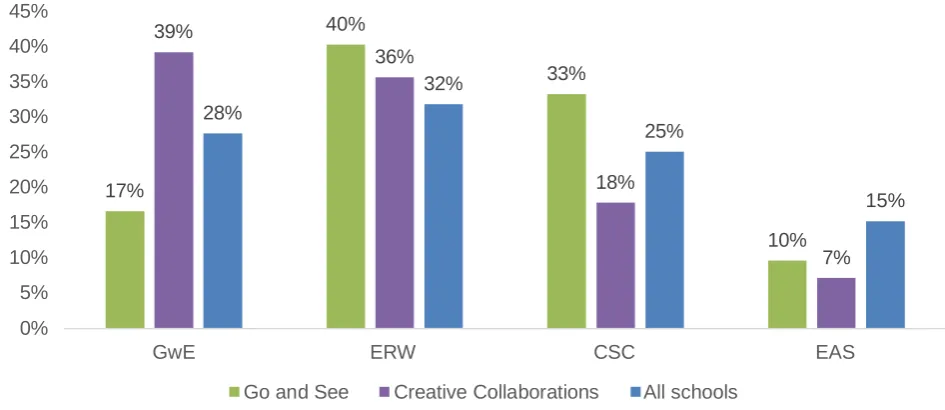
2.23 Figure 2.5 shows the distribution of the number of grants approved per education
consortium region in Wales. For comparison, the distribution of all schools in
Wales is also shown. It shows that for Go and See grants, schools in North Wales
(GWE) and South East Wales are underrepresented, whilst the opposite is the
case in South West and Mid Wales (ERW) and Central South Wales (CSC). The
distribution of Creative Collaborations grants is different, with North Wales (GWE)
and South West Wales (ERW) dominating. It is unclear at the moment as to why
these differences are apparent, but it is an issue which programme administrators
[image:16.596.89.562.534.739.2]may choose to explore.
Figure 2.5: Representativeness of Experience the Arts Fund grant distribution, by
region 45% 40% 35% 30% 25% 20% 15% 10% 5% 0% 17% 39% 28% 40% 36% 32% 33% 18% 25% 10% 15% 7%
GwE ERW CSC EAS
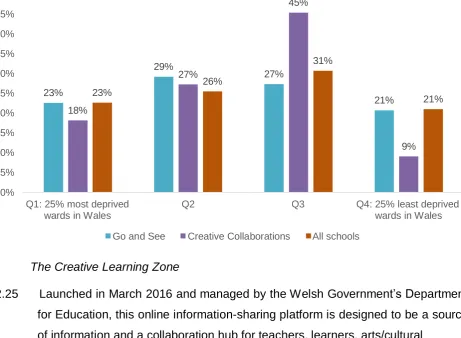
2.24 Figure 2.6 shows the distribution of grants approved and schools in Wales per
WIMD quartile. Whilst the distribution of Go and See grants is close to the
distribution of schools in Wales, there is a clear underrepresentation of Creative
Collaborations grants from the 25% least deprived wards in Wales and
overrepresentation in the third quartile. This is something which programme
[image:17.596.62.524.243.581.2]administrators may wish to consider addressing.
Figure 2.6: Percentage of schools per WIMD (2014) quartile – Experience the Arts
Fund grants and all schools in Wales
50%
45%
40%
35%
30%
25%
20%
15%
10%
5%
0%
23%
18% 23%
29% 27%
26% 27%
45%
31%
21% 21%
9%
Q1: 25% most deprived wards in Wales
Q2 Q3 Q4: 25% least deprived wards in Wales
Go and See Creative Collaborations All schools
The Creative Learning Zone
2.25 Launched in March 2016 and managed by the Welsh Government’s Department
for Education, this online information-sharing platform is designed to be a source
of information and a collaboration hub for teachers, learners, arts/cultural
organisations and practitioners. Material is being added to the portal as it becomes
Nu m b er of pa ge v ie w s N u m b er o f un ique v is it o rs / N u m b er o f re so u rc es v iewed
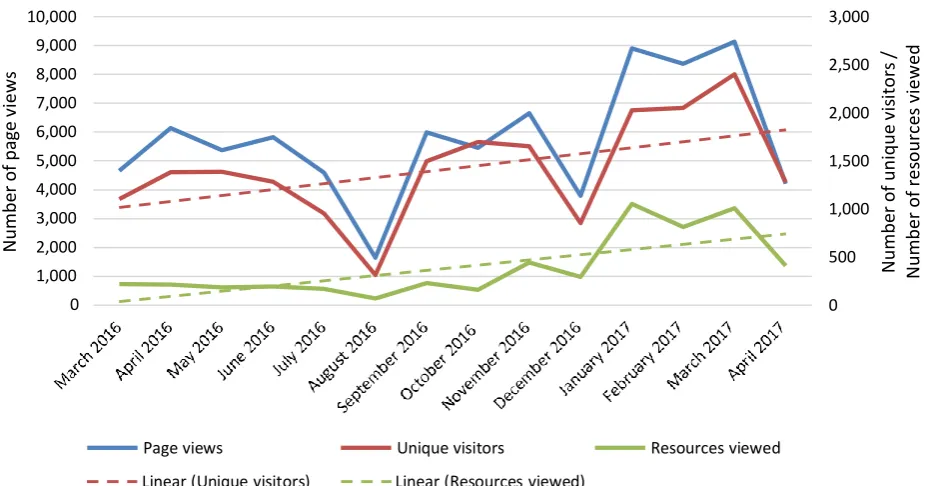
2.26 Figure 2.7 shows Google Analytics5 data for the Creative Learning Zone: page
[image:18.596.64.529.138.381.2]views6, unique visitors to the site, and the number of resources viewed.
Figure 2.7: Google Analytics data for the Creative Learning Zone
10,000 9,000 8,000 7,000 6,000 5,000 4,000 3,000 2,000 1,000 0
Page views Unique visitors Resources viewed
3,000 2,500 2,000 1,500 1,000 500 0
Linear (Unique visitors) Linear (Resources viewed)
2.27 Two Y axes have been used to make it easier to compare the data with the primary
axis (on the left) being used for the number of page views and the axis on the right
being used for the number of unique visitors and the number of resources viewed.
2.28 As one would probably expect, there is a close correlation between the number of
page views (which peaks at 9,137 in March 2017) and number of unique visitors
(which peaks at 2,402 in March 2017). The linear trend line for both is positive.
The number of page views peaks/dips in the data are explained by the school
holiday periods. The number of resources viewed has a similar pattern, peaking at
just over 1,000 in January 2017 and March 2017. Again, the linear trend line is
positive. Whilst the trend of increasing use of the site is positive, we have no data
to which these figures can be compared so as to make a judgement on the levels
of use. These figures will, however, continue to be monitored as the evaluation
progresses.
5
Google Analytics is a web analytics service offered by Google that tracks and reports website traffic 6
2.29 Available from May 2017 (and therefore not reviewed in this report), Celc is an
online toolkit designed to demonstrate how the creative arts can provide
stimulating and rich opportunities to help teachers meet the requirements of the
Literacy and Numeracy Framework. Celc is designed for teachers at Upper
Foundation, Key Stage 2 and Key Stage 3, providing inspiring ideas, useful links
and practical guidance to teachers in order to meet the needs of the Literacy and
3.
Lead Creative School Case Studies
Introduction
3.1 This section presents case studies on seven schools participating in the Lead
Creative Schools Scheme. They were selected by the Lead Creative Schools
regional teams, in association with the evaluation team, as best practice examples
of Round 1 schools that had effectively delivered the Lead Creative Schools
concept. At this stage, the intention is not to review a representative sample of
schools participating in the scheme. It is not therefore possible to assess at this
stage whether these case studies are typical of schools participating in the Lead
Creative Schools Scheme as a whole. Rather, the intention was to review schools
selected to demonstrate the potential of the scheme, i.e. examples of best
practice.
3.2 Case study fieldwork was undertaken in early 2017, several months following the
completion of the first year of activity (at the end of the 2015/16 academic year).
The case study visits involved the following:
A visit to the school from a senior researcher from the evaluation team;
Interviews during the visit with the senior management of the participating school;
Interviews during the visit with the teacher(s) involved in the delivery of the
Lead Creative Schools Scheme in the school;
Focus groups with pupils who participated in the scheme; and
Interviews either during the visit or subsequently by telephone with the Creative
Agent and, in some cases, Creative Practitioners supporting the participating
school.
3.3 The seven schools in question were (in no particular order):
Bryn Primary School, Caerphilly
Bishop Hedley High School, Merthyr Tydfil
St Cenydd Comprehensive School, Caerphilly
Ysgol Pencoch and Ysgol Maes Hyfryd, Flintshire (joint case study)
Ysgol Cynwyd Sant, Maesteg
Case Study 1: Bryn Primary School
Background
3.4 Bryn Primary School is in Pontllanfraith (near Blackwood). It provides education to
pupils between three and 11 years of age. The local authority is Caerphilly County
Borough. At the time of the visit there were 191 pupils enrolled, including 27 who
attended the nursery on a part-time basis. Pupils enter nursery in the term
following their third birthday.
3.5 Approximately 13.6% of pupils are entitled to free school meals, which is below
local and national averages. This figure has doubled in the last four years.
Approximately 16% of pupils are considered to have additional educational needs,
including very few pupils with statements of special educational needs. These
figures are also below local and national averages.
3.6 Ninety-seven per cent of pupils come from white British backgrounds. No pupil
speaks Welsh at home or speaks English as an additional language.
3.7 Very few pupils were temporarily excluded in the previous year. There are very few pupils who are ‘looked after’ by the local authority. The school was last inspected
in February 2012. The current Headteacher was appointed in September 2009.
3.8 As a relatively small school, Bryn Primary School has only eight teachers and
within the context of the Lead Creative Schools Scheme, this has meant that core
messages and principles underpinning the programme appear to have been quick
to permeate throughout all year groups.
Objective
3.9 During the 2015/16 academic year the school sought to use its Lead Creative
Schools status to address an issue flagged during its 2013 Estyn inspection: low
achievement in writing among boys. In addition, recent PASS survey data (Pupil
Attitudes to Self and School) indicated that Year 5 boys, in particular, were feeling
less purposeful about learning, so it was decided that 14 boys from that year group
would be the focus of the Lead Creative Schools intervention, testing the approach
Delivery
3.10 From the outset, pupil voice was key — young people were given the opportunity
to contribute to and inform the recruitment materials and interview all artists and
creative professionals that applied to work with the school. A writer and actor were
eventually chosen.
3.11 The planning process was collaborative — with teachers and artists working together so as to design the intervention — and identified a need to make writing
exciting, authentic, and rooted in shared experiences (PASS data had revealed
that Year 5 boys were not working collaboratively and had not really bonded as a
group).
3.12 For 16 weeks, during the spring term of 2016, the writer worked with the Year 5
boys one day a week. During that time, the boys were off timetable, immersed in a
series of stimulating and provocative role-play scenarios which suggested a wide
range of possibilities. These stimuli were designed to be open-ended and require
further development in order to complete the project. This would be the boys' task.
Outcomes
3.13 Speaking to the Deputy Head and Lead Creative Schools School Coordinator, it
quickly became clear that the project had taken teachers in new directions and
beyond their 'comfort zones'. In discussing how the writing component was woven
into the role-play and dramatic elements, they described the loss of confidence
among teachers when, after nine of the 16 weeks, they realised that no writing had
yet been attempted. Concerns grew that while the project was engaging and fun, it
might not be offering enough to improve writing. The artist working on the project
suggested that they wait a while longer before beginning the more formal literacy
elements, explaining that by immersing in the role play deeply and in sustained
ways, the results would be more powerful.
3.14 This proved to be correct. After week 11, when writing tasks began to be
introduced, the boys were described as being so steeped in the imaginary world
that the writer/actor had created and cared so much about the characters that they
3.15 There were a range of ability groups among the boys with regard to writing.
Teachers described some of the boys at Lead Creative Schools as writing with
great skill at the end of the project and, in a sense, having had their potential
'unblocked' by the engaging way in which the artist had framed the activity. Others, with lower ability, showed different types of improvement — an ability to open up
about characters, discuss their traits and display interest and a growing confidence
in writing.
3.16 The class teacher felt that the work had had an impact in the following ways:
3.17 For the boys who participated, it reinvigorated their interest in learning generally; it
helped them to bond as a group and feel a sense of purpose and belonging
towards the school. Finally, in terms of teacher-moderated tasks, the teacher
reported it had a measurable impact on their writing and oracy:
100% of pupils made gains
64% made gains of two or more sublevels (based on work assessed and moderated by teachers)
79% are now working on or above the KS2 National Curriculum Level
43% have met their personal target set
3.18 For the artist that co-planned and co-delivered the project it had helped them to
better understand the dynamics of school life, where to acquiesce on points of planning and where to hold a line in order to retain the force of the project —
delaying the writing phase for so long was a good example of this.
3.19 For the teachers at Bryn Primary, classroom release time was arranged so that
everybody had a chance to see the methods and approaches in action by sitting in
on at least a whole-day session. This led to acceptance and, finally, the
championing of these approaches by all staff. The spring term is now designated a
creative learning term, wherein these types of approaches are sustained and
monitored for impact. This is a lasting impact and one that the school has already
Conclusion
3.20 There is no question that from the perspective of the teachers, Bryn Primary's
Lead Creative Schools experience has been regarded as overwhelmingly positive,
but there is no way of knowing so early in the programme's life whether the work
undertaken there in 2015/16 is indicative of Lead Creative Schools work more
generally.
3.21 There may be elements of exceptionality in this example that will always confound
whatever the overall 'average' of Lead Creative Schools work might be. For
example, the small size of the school undoubtedly worked in its favour with regard
to sharing learning. Moreover, the staff almost evenly comprised a group of relatively new professionals of 3–4 years and much more experienced staff of 15
years or more. Interestingly, the class teacher speculated that the mix of
innovation, experience and optimal organisational size may have rendered the
initial project more impactful.
3.22 However, in highly effective examples, even where they are exceptions rather than
the rule, important lessons can be learnt; furthermore, for Creative Learning
through the Arts more generally, some notable facets of the Bryn Primary project
include:
An effective balance of partnership between the artist and teacher
Sustained reflection prior to planning helped to target learners and give focus to the intervention design
Built-in approaches to knowledge sharing meant that all teachers in the school were able to engage in and gain insights into the artist’s approach
Senior leadership buy-in has made long-term use of creative approaches easier to adopt by all
A focused approach to evidence gathering meant that pupil perceptions, quotes, teacher-moderated work, parent feedback and teacher reflections were
all part of the final evaluation report
Creative Habits of Mind have been folded into the school’s strategy regarding
assessment more generally — the habits are now part of the basket of skills
Case Study 2: Bishop Hedley High School
Background
3.23 Bishop Hedley School is a split-site 1960s comprehensive, situated just south of
the Brecon Beacons. Historically, the area would have offered employment mainly
via manufacturing or mining. However, since the 1980s there has been a steady
decline in industry and, therefore, a rise in intergenerational unemployment.
3.24 Consequently, the school faces multiple challenges. The vast majority of pupils of
the school stem from the Heads of the Valleys, serving parishes from Aberdare,
Hirwaun, Merthyr Tydfil, Merthyr Vale, Gurnos, Dowlais, Ebbw Vale, Tredegar, and
Rhymney. The school serves a catchment area of economic disadvantage, which
is a result of the decline of heavy industry, especially mining and steelmaking in
the South Wales Valleys and surrounding areas. Twenty-three per cent of children
are on the FSM register and 24% have English as an additional language. Locally
there are strong Polish and Filipino communities, partly driven by employment in
the local meat-processing factory and the hospital respectively.
3.25 As a faith school, it draws children from a wide catchment area. Nine coaches bus
in children from an 18-mile radius, stretching as far as Brynmawr and Glynneath.
At the time of the visit there were 490 children enrolled, with 116 applicants for the
following September's Year 7 intake.
3.26 Three local Catholic primaries have strong links to Bishop Hedley and the school is
always looking for ways in which to connect with other teachers, learners and their
families in the local community.
Objective
3.27 The story of Bishop Hedley's journey towards Lead Creative School status has its
roots in a change of Headteacher a decade ago. At that time the new Headteacher
found good-quality provision in the core curriculum and subject specialist teaching,
but a poverty of aspiration and ambition among learners that needed to be
addressed. Since then the school has opened itself to a range of interventions
designed to build aspiration and engagement with the wider world. Teachers have
been encouraged to develop through local, national and overseas learning visits,
3.28 When the Lead Creative Schools Scheme was launched, the Deputy Head
immediately saw the potential that it held to take the school to another level.
Already steeped in the Five Creative Habits of Mind approach to learning as
outlined by Art Costa, the Lead Creative Schools coordinating teacher saw
connections with the Creativity Wheel, as well as the dispositions underpinning
creative practice.
Delivery
3.29 The school's dedicated Creative Agent has been supportive throughout, and aside
from the Lead Creative Schools School Coordinator's perception of the overly
bureaucratic process of Year 1 evaluation, the overall design of the programme
and the position and role of the personnel involved feel exactly right and fit for
purpose. He remarked that while the intervention design may seem 'person-
heavy', it was important to have the Creative Agent acting as a critical friend and
conduit to reliable artists and creative professionals.
3.30 The School Coordinator cascaded the training that he received prior to Lead
Creative Schools to peers at Bishop Hedley High School. Some teachers were
perceived to be more receptive towards the concepts than were others, but, as
Deputy Head, the Coordinator was able to bring some profile and status to the
intervention and the initial projects in English and Art were met with enthusiasm by
teachers and pupils alike. He emphasised the importance of senior teacher buy-in.
When a commitment of time is required, when children may need to be taken off
the traditional timetable in order to fulfil the project's potential, it was suggested
that it can take a Headteacher or Deputy Head to ensure that commitment
endures, especially during times of intensive assessment or examination.
3.31 Prior to the projects commencing, the school ensured that its plan for bringing
learning to life through more authentic experiences in English and Art dovetailed
with its overarching School Improvement Plan and also that it set a course which
was congruent with Bishop Hedley's status as a Pioneer School.
3.32 All of the teachers involved in the first two projects — modernising a dramatic
rendition of Romeo and Juliet and the design and manufacture of Elizabethan-style jewellery — were interested in the possibilities afforded by professional, creative
people bringing their styles of working and their expert vocabulary into the learning
actor–writer duo leading on the drama side with Year 8 pupils and a professional
jeweller working with Year 10.
Outcomes
3.33 The pupils involved in both projects were unequivocal in their praise towards the
entire process and were eager to share their perceptions of the benefits and
impacts.
3.34 Speaking about the particular attributes of the professionals involved, the Year 8
pupils remarked:
“They made the learning fun and less formal; they shared stories about their
own lives and let you inside their lives a bit, which made everyone feel more relaxed and like we were more equal.”
“Karen explained how she worked from home, and that she used all kinds of
raw materials, even scrap metal. She made one ring that cost her about £20
but it was sold for £500. It made me think that these kinds of jobs where you can do the thing you like most can be realistic.” (Year 10 pupil)
3.35 Pupils were usually involved in an initial 2–3 sessions (doing preparation or research) and then a further 5–6 sessions (working more practically, rehearsing
scenes or prototyping jewellery). This more active style of learning was something
by which all of the young people were enthused. As one boy remarked:
“The learning was more active, and we used different spaces. It all seemed to flow better.”
3.36 Asking the pupils to reflect on what had been most enjoyable and least enjoyable, it
was interesting to see a very clear split between the creative, exploratory side of
the project and those moments when there was a need to shift to more traditional approaches to recording and reflecting on activity — essentially two different styles
of learning. On the positive side were 'the craft based preparation (making props,
jewellery design and so forth), collaboration with peers in active learning
(improvising, sharing ideas, co-creating), the final performance, the acting,
rehearsals, the making parts, welding and soldering'. The least enjoyable were
improving through trial and error in practical ways, etc. There appears to be
something that dampens motivation and lowers engagement with learning about
phases of activity that revert to desk-based, more theoretical learning. There are
also hints of a division between learners who are attracted to the performance
aspects of the arts and those who enjoy the technical and craft elements more.
This may explain why the notion of 'audience' is seen as both a positive and a
negative within a group whose overall assessment of the intervention was whol ly
positive.
3.37 The Deputy Head reflected that pupils’ positive dispositions towards the
intervention would perhaps not have been evident quite as much 10 years earlier,
before the school began to embrace a range of strategies with which to help boost
the confidence and aspiration of learners. He felt that this was important to
acknowledge, in the sense that there may be a state of readiness or receptiveness
for the kinds of opportunities that Lead Creative Schools offer. In his view, Bishop
Headley had undertaken groundwork that enabled them to take the best
advantage of the LCS opportunity. Without that condition setting, he felt, Lead
Creative School status may have been overwhelming at first.
3.38 The English teacher who had worked alongside the Creative Practitioners reflected
on what she had learned from the process. In her view, the learning had been on a technical level — ways to better use the performance spaces, interesting
alternative drama warm-ups, methods for rehearsing and managing resulting
discussions, etc. It had not been a huge shift in perspective or philosophy. This is
perhaps unsurprising, given that drama teaching has a long history of being a freer
and more experimental area of the curriculum, perhaps closer in style and tone to
professional counterparts in theatre than other curricular subjects could claim to
be. Therefore, it was not surprising to hear the class teacher suggest that the
pedagogy of the actors was not too dissimilar to her own.
3.39 In that sense, she did not personally take away from the experience a reformed
sense of vocabulary, discourse or tone. Instead, she cited the actor's use of space
— in which to rehearse and to perform in public — as feeling quite radical. This led
her to reconsider the way in which the English department currently conceive their
learning spaces; in addition, she and her peers are essentially repeating the
'modernising Shakespeare' project, this time focusing on Hamlet, and leading it
Conclusion
3.40 Overall, Bishop Hedley's Year 1 experiences as a Lead Creative School have been
regarded as extremely positive. There is a senior-level commitment to the values
of Creative Learning through the Arts and a belief in the benefits that an arts-rich
curriculum can bring. The Lead Creative Schools Coordinator displayed a
deep understanding of the link between creative skills and Creative Habits of Mind,
as set out in the preparatory training designed by Creativity, Culture and Education
(CCE), and enhanced chances of success in school and the wider world. The
school's existing familiarity with Art Costa's work will undoubtedly have helped. He
described the school as a work in progress, still. At the present time, he felt that
the creative elements somewhat wrapped around and augmented other styles of
teaching, some of which were more traditional, and focused on reinforcing basic
knowledge and skills. In the future, he contemplated the potential for greater
synergy between the development of core knowledge and creative pedagogies,
but whatever the future brings, there is no doubting the authenticity and the impact
that the journey is already having on teachers and young people.
Case Study 3: St. Cenydd Community School
Background
3.41 St. Cenydd is located in Caerphilly County Borough. Situated in extensive grounds, with views of the semi-rural Caerphilly Basin, St. Cenydd is a popular, mixed 11–
18 community school of over 1,100 pupils. Historically, Caerphilly was a mining
town and since the decline of that industry, despite pockets of regeneration and
some opportunities in retail sectors, unemployment has remained high and
intergenerational unemployment within families is not uncommon.
Objective
3.42 The Head of Geography was keen to explore the benefits of more creative
approaches to learning with a targeted group of young people who were felt to
have potential that was being unfulfilled in the subject. Reasons for this were
varied and complex, but the group as a whole represented children who had lost
some of their enthusiasm towards learning, sometimes lacking motivation, and this
project was designed to give their academic skills (particularly in data collection
Delivery
3.43 As one of the first waves of schools in the Lead Creative Schools Scheme, the
school is now coming to the close of its funded activities, but has plans to extend
the reach and impact of creative pedagogies with particular cohorts of pupils.
3.44 The first year of activity was
led by the Head of
Geography, who acted as the
Lead Creative Schools
Coordinator after the
departure of the Deputy
Head. She was also the
classroom project lead for an
intervention that sought to
develop geographical
knowledge and data skills
through photography.
3.45 Working closely with an artist-photographer, a group of Year 8 pupils eligible for
FSM deepened their understanding of the local environment and broader concepts
of rivers flowing from source to sea. As part of this project, children worked with a
professional photographer to chart the course of a local river at strategic points,
showing key differences in the river's features and surrounding physical
landscape.
3.46 The photographer's role was to encourage the children to engage more deeply
with the environment, looking closely at vistas or rock formations with an artist's
eye for detail and finding ways of capturing natural beauty as well as
encapsulating geographical information.
Outcomes
3.47 Speaking to the children who participated in this project, it was clear that the work
had left a mark. It was close to a full calendar year since they had first embarked
on the project when the visit to the school to prepare this case study took place,
but they spoke about it with freshness and enthusiasm, which made it seem more
recent. Their memory for small details and the thoughtfulness of the reflections
upon impact and effect were sincere and seemed to symbolise how different the
experience had been for them from what they considered 'normal' school.
3.48 They explained that they had channelled their geographical learning into three
main outputs: sketchbooks, Tumblr blogs, and a photographic exhibition in
Caerphilly Castle.
3.49 When asked about whether these types of output felt different from, or in any way
better than, normal reflections of learning for assessment by teachers, they all
cited the sense of pride that they felt in the work. The collaboration sharpened their
visual sense and raised the quality of their work so that they felt their photographs
to be of a professional standard. One girl described the sense of almost
professional pride that she felt when standing in Caerphilly Castle overhearing
passers-by commenting positively on photographs that she had taken. The boost to pupils’ self-confidence was tangible even one year on.
3.50 When asked to pick the thing that they enjoyed most and the thing that they had
liked least about the project, there was unanimity in their responses: the practical,
outdoor aspects and the more professional approach to photography were thought
of as the best elements. The least popular were the moments when the 'traditional'
curriculum crept back in, e.g. having to complete bar charts on rubbish and waste
found by the river's edge.
3.51 Pupils enjoyed the way in which photography became a method of getting them
out of the classroom and closer to real-world learning. The key idea that they took
away from the project was a deceptively simple, albeit powerful, one: if you are
learning about rivers, go to a river, rather than a classroom. The power of the
framed photographs was twofold: they were artistic works in their own right, but
they also brought that authentic moment back to the school and the children
related to that very positively. As one girl commented: "We could have learned the
same geography knowledge sitting here at a desk. But one year later, I don't think
I would remember as much as I do, because it was just better. We were outside, it was fun, we were sharing the whole thing as a group — it just made the whole
thing more memorable."
3.52 Asking the children whether this project had affected them beyond the core
geographical learning, they all suggested that the photographer's insights into an
artist's working life had been eye-opening and inspirational. "When [the
photographer] was here she would just talk about her life. She's quite famous and
has won prizes. That was exciting, but it was interesting in other ways, because
3.53 There were simpler impacts, too. One young girl explained that she had enjoyed
being outdoors and walking so much that she had asked her family if they could
sometimes go on rural walks together, which was something that they now did
frequently. While these changes might be difficult to measure and, in a sense, are
quite small-scale, they do relate very strongly to the overarching aims of St.
Cenydd School.
3.54 The school's Deputy Head explained that there were three important ways in
which Lead Creative Schools helped the school to fulfil its priorities. Firstly, it was
a key strand of work aiming to improve levels of engagement with learning among
FSM pupils. Secondly, it was designed to be a programme of shared and
distributed learning, so he saw it as feeding into CPD priorities across the entire
school. Thirdly, it was a very stimulating middle-management opportunity for the
Head of Geography, who had managed the budget and overall administration.
3.55 All of the children who described their participation and talked about their
photographs were drawn from the FSM cohort; all had demonstrated some level of
additional learning need, underachievement and/or poor attendance at school. As
a result of participation, the Deputy Head felt that they were clearly now switched
on to learning generally and, according to teacher-assessed work in geography, were making excellent progress on 1–3 sublevels on average. As one boy
reflected: "We've got loads out of this project. Not just what we did last year, but
now we've got new chances to do creative things. We have a project like this one
in Germany, so we can travel there and repeat some of the learning we did here
with kids from Germany and Syria. It has made me feel better about being at
school, it's more fun, and I wouldn't want to miss out on something like this if it
came up again."
3.56 Sustainability is a key consideration for the school and it was interesting to hear
their views on this. There is a form of sustainability that they both espoused that
will come naturally through shared practice of teachers and upskilling through
peer-led CPD. This will ensure that not only project lead teachers, but also other
staff not directly involved will be stimulated to consider creative pedagogies.
However, there are other times when a professional photographer or an equivalent
will be required in order to kick-start a theme or produce a new method of learning using a particular art form or media — it is there that schools will need to be
being so, and the Deputy Head was robust in assurances that they intended to
keep up their engagement with this approach to teaching and learning.
3.57 The Head of Geography suggested that there may be an argument for Creative
Learning through the Arts funding, or eventually the school's internal funds, so as
to offer a Teaching and Learning Responsibility (TLR) point for coordinating work
in the Lead Creative Schools vein. The advantage thereof, in her view, would be
twofold: it would assure the status and visibility of this work in the long term and
would also mean that the TLR time 'off' timetable would create less reliance on
supply teachers to backfill 'project time' spent on co-planning and evaluation.
3.58 Building towards the future, St. Cenydd is now looking to expand the photography
project. Funding has been secured to take the photography project, including the
original group of participating children, to Germany as part of a 'twin school' project
that will involve German, Czech and refugee Syrian children in an exciting, cross-
cultural venture.
Conclusion
3.59 Given that the overriding ambition for the Lead Creative Schools intervention was
to help engage FSM learners and to help build their ambition and aspiration, the
Year 1 project was perceived to have been very successful.
3.60 The challenge, as clearly recognised by the school, will be to find ways in which to
sustain this work going forward and to ensure that it feeds into the imminent
changes to education in Wales inspired by the Donaldson Report. St. Cenydd remains optimistic about this. As the Deputy Head remarked: “There is a definite
synergy between Lead Creative Schools and Donaldson. One way of looking at
this, in terms of sustainability, is that with the ongoing changes it looks like we will
be expected to work more in this way anyway. Being a Lead Creative School has meant we have a bit of a head start.”
Case Study 4: Ysgol Pen Coch and Ysgol Maes Hyfryd
Background
3.61 Ysgol Pen Coch and Ysgol Maes Hyfryd are maintained special schools in
Flintshire that opened in September 2009 following the reorganisation of special
education provision. Both schools provide support to children with a range of
difficulties, e.g. autistic spectrum disorders. Many pupils also have associated
communication, behavioural or sensory difficulties.
3.62 Ysgol Pen Coch provides learning to 94 pupils aged 2–11 years. English is the
predominant language of almost all pupils and no pupils speak Welsh as their first language at home. The school’s first Estyn inspection report of April 2011 rated the school as ‘good’, with pupils achieving good standards in their learning and in key
learning skills.
3.63 Ysgol Maes Hyfryd provides learning to up to 135 pupils aged 11–19 years. The
school has sensory rooms, a soft playroom, and good outside play and sports
facilities. Similar to Ysgol Pen Coch, English is the predominant language of
almost all pupils. One third of pupils are entitled to free school meals. This is
higher than the all-Wales average.
3.64 The school’s first Estyn inspection report of January 2012 rated the school as ‘good’, with good provision for pupils to acquire communication, numeracy and
information and communication technology (ICT) skills throughout the curriculum. The inspection team rated the prospects for improvement as ‘good’. One of the
areas recommended for improvement in the inspection report was in making sure
that where teaching is excellent, teachers share their good practices throughout
the school.
Objective
3.65 Following the launch of the Lead Creative Schools Scheme, both schools had
applied separately to join the Round 1 cohort. However, following direction from
the Arts Council of Wales, the schools were awarded funding for a collaborative
project that focused on improving the transition from primary to secondary for Year
6 Ysgol Pen Coch pupils moving to Ysgol Maes Hyfryd in the following academic
year.
3.66 The joint project aimed to address a number of development priorities as identified
by both schools, namely:
Improving the transition from primary to secondary for Year 6 Ysgol Pen Coch pupils moving up to Ysgol Maes Hyfryd;
Creating a more personalised curriculum incorporating key life skills
(communication and digital literacy) that will transfer into lifelong learning skills;
and
Embedding the Cwricwlwm Cymreig in the project content.
3.67 Both schools wanted to use the Lead Creative Schools Scheme as an opportunity
to strengthen collaborative working and encourage pupils to be more involved in
planning their own learning. The cross-curricular responsibilities of literacy and digital competence introduced as part of Donaldson’s curricular reforms were a
stimulus for the project in providing a 'roadmap' for pupils according to their
individual needs.
Delivery
3.68 The Year 1 project, entitled ‘Digging up the Past’, focused on the Bronze
Age and used the art of storytelling
(combined with the use of digital
technology) to develop a multi-
sensory performance by pupils from
both schools. The project was mainly
delivered off site at the Eco Centre, a
forest school maintained by Ysgol
Maes Hyfryd.
3.69 Two teachers were chosen by the schools’ respective senior leadership
teams to be involved in the project.
3.70 Both schools had prior experience of working with external Creative Practitioners,
although this had mainly involved short-term activities led by the Creative
Practitioners. The Lead Creative Schools project used joint planning and group
evaluation sessions between the teachers and the Creative Practitioners as a
mechanism with which to strengthen the collaborative nature of the project and
enable learning to be shared and new skills developed.
3.71 The freeform, mobile and organic approach adopted in the first half of the project
used loosely structured workshop sessions to encourage creativity and
collaboration between the artists and pupils. This resulted in a more appropriate
project progressed, the Creative Practitioners disengaged their roles so as to allow
the teachers to adopt their creative roles and take on a greater lead responsibility
in the delivery of the creative activities. This was also mirrored in the pupils who
took more personal responsibility for their contributions in the later stages of the
project. The process of collaboration was facilitated and supported by the
appointed Creative Agent from the Arts Council of Wales.
3.72 Delivery of the project at the Eco Centre enabled the teachers and Creative
Practitioners to establish a community of learning. This was effective in promoting
collaboration and effective inter-pupil relationships with peer pressure or
behavioural patterns of school. The Eco Centre enabled the pupils to be inspired
by nature and share a joint and immersive adventure. At the Eco Centre, school
behavioural patterns were left at school and new behavioural patterns developed
that enabled the pupils to engage effectively within the range of creative activities
and challenges presented through the delivery of the project.
Outcomes
3.73 All pupils showed improvement in literacy throughout the process, with progress
measured using Literacy and Numeracy Framework (LNF) assessment grids. LNF targets were incorporated into pupils’ Individual Education Plans, with progression
tracked in areas of 'Speaking' and 'Collaboration and Discussion'. Their progress
was also evident during the end performance at the Eco Centre. Whilst supporting the practical development of literacy skills, the project sparked pupils’ imagination. Through imaginative storytelling and working ‘in role’ and through the extension of ‘hot-seating’ techniques, teaching staff observed that most pupils were able to
improve their literacy skills by communicating their fictional stories.
3.74 All pupils were active in rehearsals and were motivated to offer creative
contributions to the performance; furthermore, teachers noted that the confidence
of those who were previously shy grew during the term. Their ownership of the
project encouraged pupils to work more independently and maintained their
interest. Teaching staff involved in the project observed that pupils also showed
empathy in character towards each other and communicated phrases and actions
that clearly displayed their understanding of what would be expected from the
3.75 This can also be evidenced in the film of the final performance, and during the
school visit the pupils were able to recall their characters and discuss the roles that
they played in the group.
“I’ve enjoyed it here…I’ve learnt about mud. I’ve got good at putting mud on the roundhouse. I could remember how to do it again if I had to…My
storytelling has got better. I made up the Fox Ninja story; I could do more if I wanted. I think I’m a good storyteller.” (Ysgol Pen Coch pupil)
3.76 Nearly a year following their involvement in the ‘Digging up the Past’ project, pupils
engaged as part of the school visit were able to recall the tasks and activities
involved in creating their fictional stories and planning their multi-sensory
performance. The pupils spoke with pride and enthusiasm about their involvement
in the project and the respective roles that they played.
3.77 Feedback from teaching staff, both as part of the school visit and recorded in the
LSC Project Evaluation Form, emphasised that the project has enabled the
schools to explore how improvements in communication skills can effectively be
put to use as part of a transition project. This element of the project has been successful, with drama and storytelling activities being used to improve pupils’ communication skills, which, in turn, allowed the pupils to ‘role-play’ effective
communication with one another in a safe, fictional environment which then
transitioned into their actual school environment. The physical aspect of the project tasks necessitated the need for teamwork, which further improved pupils’
communication skills, as did the need for them to retell their fictional stories.
3.78 Ultimately, the developments achieved in pupils’ communication and collaboration
skills have facilitated an improved transition of Ysgol Pen Coch pupils towards
Ysgol Maes Hyfryd, with anecdotal evidence from teaching staff highlighting the resultant positive impact on pupils’ progression and engagement in learning.
3.79 One element that proved challenging for the project was pupils’ reflection and self-
evaluation, as this is an area that special needs pupils find difficult. As such, a
range of approaches were used to evidence the positive impacts on pupils,
including teacher observation, records of discussion with pupils, pupil case
conferences with parents and staff, pupil learning journals, and
digital/photographic evidence from the Lead Creative Schools project.
introducing the Creative Habits of Mind to the pupils, teachers familiarised
themselves with the distinctive vocabulary in order to identify and prioritise what
would be important learning outcomes for the pupils as part of the Lead Creative
Schools project. Sustainable and embedded creative learning was developed as
teachers identified and praised habits such as persistence, discipline, imagination
and exploration through the delivery of the project. As the project progressed, it
became easier for the pupils to evaluate and recognise how well they were
learning from their actions.
3.81 The ambition for both schools is to embed the Five Creative Habits of Mind and
deliver creative learning sessions that ensure that medium-term plans are
developed in a more cross-curricular approach. All elements in skill-based learning
are to be incorporated in a medium-term plan in order to develop a generic
scheme of work for the future that focuses on skills rather than the current
thematic, topic-based approach.
3.82 Ensuring consistency of the approach and the use of the Creative Habits of Mind
has been identified by the schools as a critical determinant of success; the
intention is to embed the language of creativity in the pedagogical approach used
by all teachers throughout both schools.
3.83 Learning from the first year of the Lead Creative Schools Scheme has informed
the approach used in the second-year project developed by staff from Ysgol Pen
Coch and Ysgol Maes Hyfryd. Professional development sessions have been
delivered so as to share the experiences and creative approaches used in the
delivery of the Lead Creative Schools project, although further work is planned in
order to support the process of embedding the model of working more fully
throughout both schools.
Conclusion
3.84 The Lead Creative Schools project has provided an opportunity to co-design and
co-deliver a more in-depth creative intervention using a collaborative team
approach. This has enabled the teachers to learn new creative ways of working
from the Creative Practitioners. The Lead Creative Schools project has raised teachers’ awareness of the effectiveness of improvised role play in promoting peer
relationships, creative thinking, personal independence, and oral confidence. New