DISSERTATION ON
A STUDY TO ASSESS THE EFFECTIVENESS OF
STRUCTURED TEACHING PROGRAMME REGARDING
KNOWLEDGE ON IMPACT OF SOCIAL NETWORK AMONG
SCHOOL AGE CHILDREN AT SELECTED SCHOOL IN
MEDAVAKKAM RURAL AREA, CHENNAI.
M.SC (NURSING) DEGREE EXAMINATION
BRANCH – II CHILD HEALTH NURSING
COLLEGE OF NURSING
MADRAS MEDICAL COLLEGE, CHENNAI –600 003
A dissertation submitted to
THE TAMILNADU DR.M.G.R. MEDICAL UNIVERSITY,
CHENNAI – 600 032
In partial fulfillment of the requirement for the award of the degree of
MASTER OF SCIENCE IN NURSING
A STUDY TO ASSESS THE EFFECTIVENESS OF
STRUCTURED TEACHING PROGRAMME REGARDING
KNOWLEDGE ON IMPACT OF SOCIAL NETWORK AMONG
SCHOOL AGE CHILDREN AT SELECTED SCHOOL IN
MEDAVAKKAM RURAL AREA, CHENNAI.
Examination : M.Sc (Nursing) Degree Examination Examination Month and Year :
Branch & Course : II – CHILD HEALTH NURSING Register Number : 301616252
Institution : COLLEGE OF NURSING,
MADRAS MEDICAL COLLEGE, CHENNAI – 600 003.
Sd: __________________ Sd: ___________________ Internal Examiner External Examiner
Date: ____________ Date: ____________
CERTIFICATE
This is to certify that this dissertation titled, “A STUDY TO ASSESS THE EFFECTIVENESS OF STRUCTURED TEACHING PROGRAMME REGARDING KNOWLEDGE ON IMPACT OF SOCIAL NETWORK AMONG SCHOOL AGE CHILDREN AT SELECTED SCHOOL IN MEDAVAKKAM RURAL AREA, CHENNAI” is the bonafide work done by Mrs.G.VIJAYANIRMALA, M.Sc NURSING II Year student, College of Nursing, Madras Medical College, Chenna- 03, submitted to The Tamil Nadu DR.M.G.R Medical University, Chennai-32, in partial fulfillment of the university rules and regulation towards the award of the degree of MASTER OF SCIENCE IN NURSING, BRANCH–II, CHILD HEALTH NURSING under our guidance and supervision during the academic period from 2016 – 2018.
Mrs.A.Thahira Begum, M.Sc(N)., MBA., M.Phil., Principal,
College of Nursing, Madras Medical College, Chennai – 03.
Dr.R.Jayanthi, M.D., F.R.C.P. (Glasg)., Dean,
“A STUDY TO ASSESS THE EFFECTIVENESS OF
STRUCTURED TEACHING PROGRAMME REGARDING
KNOWLEDGE ON IMPACT OF SOCIAL NETWORK AMONG
SCHOOL AGE CHILDREN AT SELECTED SCHOOL IN
MEDAVAKKAM RURAL AREA, CHENNAI”
Approved by Dissertation Committee on : 11.07.2017
RESEARCH GUIDE
Mrs.A.Thahira Begum, M.Sc (N)., MBA.,M.Phil.,
Principal, _____________ College of Nursing,
Madras Medical College, Chennai – 600 003.
CLINICAL SPECIALITY GUIDE
Mrs.G.MARY, M.Sc (N)., M.B.A., _______________
Lecturer, Head of the Department, Department of Child Health Nursing,
College of Nursing, Madras Medical College, Chennai-600 003.
MEDICAL EXPERT
Dr.A.T.ARASAR SEERALAR, MD., DCH., _____________
Director and Superintendent,
Institute of Child Health and Hospital for Children, Egmore, Chennai – 600 008.
A Dissertation submitted to
THE TAMIL NADU DR.M.G.R. MEDICAL UNIVERSITY
CHENNAI- 600 032.
In partial fulfillment of the requirement for the award of the degreeof
MASTER OF SCIENCE IN NURSING
ACKNOWLEDGEMENT
“For you, Lord, have made me glad through your work: I will triumph in the
works of your hands”
- Psalm 92:4 Gratitude calls never expressed in words but this only to deep perceptions, which make words to flow from one’s inner heart.
First of all, I praise God almighty, merciful and passionate, for providing me this opportunity and granting me the capability to proceed this study successfully. I lift up my heart in gratitude to God almighty, for I feel the hand of God on me, leading me through thick and thin heights of knowledge. It is he who granted me the grace and the physical and mental strength behind all my efforts.
This dissertation appears in its current form due to the assistance and guidance of many professionals and non-professionals. The investigator is whole heartedly indebted to her research advisors for their comprehensive assistance in various forms.
I express my genuine gratitude to the Institutional Ethics Committee of Madras Medical College for giving me an opportunity to conduct this study.
I wish to express my sincere thanks to Dr.R.Jayanthi, M.D., F.R.C.P.(Glasg)., Dean, Madras Medical College, Chennai-03, for providing necessary facilities and extending support to conduct this study.
My deep sincere thanks to Dr.A.T.Arasar Seeralar, M.D., D.C.H., Director and Superintendent and Dr.T.Ravichandran, M.D., D.C.H., Former Director and Superintendent, Institute of Child Health and Hospital for Children, Egmore, Chennai – 08.
I am great full to Dr.V.K. Palani B.Sc, MBBS, DPH, DIH, Director of Health Service, Saidapet, at Chenglepet Health Unit District and Dr.Ravichandran MBBS, Medical Officer of Primary Health Centre, Medavakkam for giving me the permission to conduct this study at Medavakkam, Chennai - 100.
I express my whole hearted gratitude to my esteemed guide,
Mrs.A.Thahira Begum M.Sc(N)., MBA., M.Phil., Principal College of Nursing, Madras Medical College, Chennai-03 for her academic and professional excellence, brain storming ideas, treasured guidance, highly instructive research mentorship, thought provoking suggestions, prudent guidance, moral support and patience that has moulded me to conquer the spirit of knowledge for sculpturing my manuscript into thesis.
I am highly indebted to Mrs.G.Mary, M.Sc(N)., MBA., Lecturer, H.O.D - Child Health Nursing, College of Nursing, Madras Medical College, Chennai-03 for her great support, warm encouragement, thoughtful and constant guidance, valuable suggestions, timely, insightful decision and correction of the thesis with constant motivation and willingness to help all the time for the fruitful outcome of this study.
I am grateful to Mr.A.SenthilKumaran, M.Sc(N)., Lecturer,
I am thankful to all the Faculty of College of Nursing, Madras Medical College, Chennai -03 for their timely advice, encouragement and support.
I am grateful to Mrs.P.Amurthavalli M.A., M.Ed., Chief Educational Officer, Kanchipuram, for giving me the permission to conduct the study among School age children, Government High School, Medavakkam Chennai - 100.
I extend my thanks to Mr.Palanisamy M.A., B.Ed, Head Master, Government High School, Medavakkem, Chennai -100 for his constant support, co-operation, encouragement and timely help to complete my study smoothly.
I am thankful to all the Teachers of the Government High School, Medavakkam, Chennai –100 for their timely advice, encouragement and support.
I have much pleasure of expressing my cordial appreciation and thanks to all the School age Students of Government High School, Medavakkam, Chennai–100 who participated in this study with interest and cooperation.
It is my pleasure and privilege to express my deep sense of gratitude to Dr.Zealous Mary, M.Sc(N)., Ph.D., H.O.D & Professor Child Health Nursing, M.M.M College of Nursing and Ms.R.Chitra, M.Sc(N), Reader, M.A Chidambaram College of Nursing for validated the tool of this study.
I thank our librarian Mr.S.Ravi., M.L.I.S., College of Nursing, Madras Medical College for his co-operation and assistance which built the sound knowledge for this study.
I owe my great sense of gratitude to Jas Ahamed Aslam, Shajee Computers and Mr.Ramesh, B.A., MSM Xerox for their enthusiastic help and sincere effort in typing the manuscript with valuable computer skills and also bringing this study into a printed form.
I thank Mr.A.Joseph Santha Seelan, M.A., M.A., B.Ed., M.Phil., B.T. Assistant, for editing and providing certificate of English editing.
I thank Mrs.K.Shameen Banu, M.A., B.Ed., M.Phil., for editing and providing certificate of Tamil editing.
I extend my immense love and gratitude to my parents
Mr.N.Gangadaran, Rtd, Jail Superintendent, Mrs. G. Minnalammal
and my mother-in-law Mrs.G.Kanniammal for their loving support, encouragement, earnest prayer, which enabled me to accomplish my study.
A very special thanks to my life partner Mr.G.Mohanasundaram M.A., Rtd., DRO who laid the foundation of my higher studies and for his constant support, endless patience, unflagging love and motivation which helped me to complete my study successfully.
I am grateful to convey thanks to my lovable daughter
I take this opportunity to thank all my Colleagues, Friends,
Teaching and Non-Teaching Staff Members of Madras Medical College – College of Nursing for their co-operation and help rendered
ABSTRACT
Social network has bad effect on the teens through survey, comments and research from the internet, the researcher was able to gather some information regarding these effe cts. The students become victims of social network more often than anyone else. It also affects the health of the children physically, mentally, and socially. Social networking affects their school academic performance, school activities, handwriting, spelling, grammar and also memory outcome power. However it is more evident that the negative effects over weigh the positive. So the investigator felt the need to assess the knowledge on the impact of social network among school age children, who are the risk and vulnerable group of the society.
TITLE: “A study to assess the effectiveness of structured teaching programme regarding knowledge on impact of social network among school age children at selected school in Medavakkam rural area, Chennai.”
OBJECTIVES: To assess the knowledge regarding the impact of social network among school age children and to evaluate the effectiveness of structured teaching programme and the association between the post test knowledge on impact of social network with selected demographic variables among school age children.
social network to school age children. After7 days post-test was conducted by using same tool.
RESULTS:
The result shows in post test after structured teaching programme, Students were gained 20.68% more knowledge score than pretest score and the mean differences were 10.52% by using students paired t-test. It is statistically significant.INDEX
CHAPTER CONTENT PAGE NO
I INTRODUCTION 1
1.1. Need for the study 8
1.2. Statement of the problem 12
1.3. Objectives 13
1.4. Operational Definitions 13
1.5. Assumptions 14
1.6. Research Hypothesis 14
1.7 Delimitation 14
II REVIEW OF LITERATURE
2.1. Review of Literature 15
2.2. Conceptual framework 32
III METHODOLOGY
3.1. Research approach 34
3.2. Study design 34
3.3. Study setting 35
3.4. Duration of the study 35
3.5. Study population 35
3.6. Study sample 36
3.7. Sampling criterion 3.7.1. Inclusion criteria 3.7.2. Exclusion criteria
36
3.8. Sample size 36
3.9.Sampling technique 36
3.10. Research variables 3.10.1.Independent variable 3.10.2. Dependent variable 3.10.3. Attribute variables
CHAPTER CONTENT PAGE NO
3.11.Development and description of the tool 3.11.1.Development of tool
3.11.2. Description of the tool 3.11.3.Scoring procedure
36
3.12. Content Validity 38
3.13. Reliability 39
3.14. Protection of Human Subjects 39
3.15.Pilot study 39
3.16.Data collection procedure 40
3.17.Intervention protocol 41
3.18.Data entry and analysis 41
IV DATA ANALYSIS AND INTERPRETATION 43
V DISCUSSION 64
VI SUMMARY,IMPLICATION, LIMITATION,
RECOMMENDATION, AND CONCLUSION
6.1 Summary of the study 70
6.2 Major findings of the study 71
6.3 Implication of the study 74
6.4 Limitation 78
6.5 Recommendation 78
6.6 Conclusion 79
LIST OF TABLES
Table
No. Title
Page No.
3.1 Table description of study design 34
3.2 Blue print of questionnaire 38
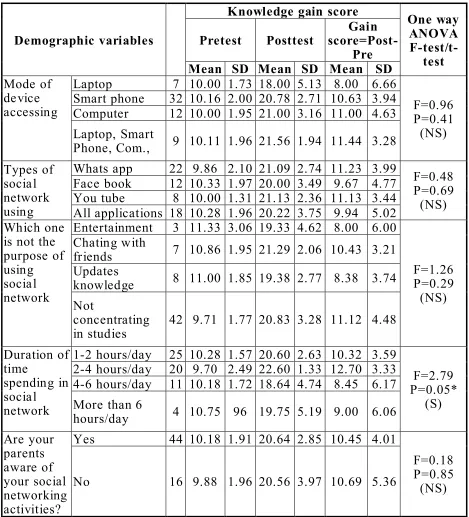
4.1 Distribution of sample according to their demographic characteristics
46
4.2 Domain wise pretest percentage of knowledge on
impact of social network among school age children 48 4.3 Overall pretest knowledge score 49 4.4 Pre-test level of knowledge
4.4.1 knowledge score interpretation
49
4.5 Domainwise posttest percentage of knowledge on
impact of social network among school age children 50 4.6 Overall post test knowledge score 51
4.7 Posttest level of knowledge 51
4.8 Comparison of domainwise pretest and posttest knowledge score
52 4.9 Comparison of overall knowledge score before
and after structured teaching programme
54
4.10 Domainwise pretest and posttest percentage of knowledge
55
4.11 Comparison of pretest and posttest level of
knowledge score 56
4.12 Effectiveness and generalization of knowledge gain score after structured teaching programme
57 4.13 Association between pretest level of knowledge and
their demographic variables
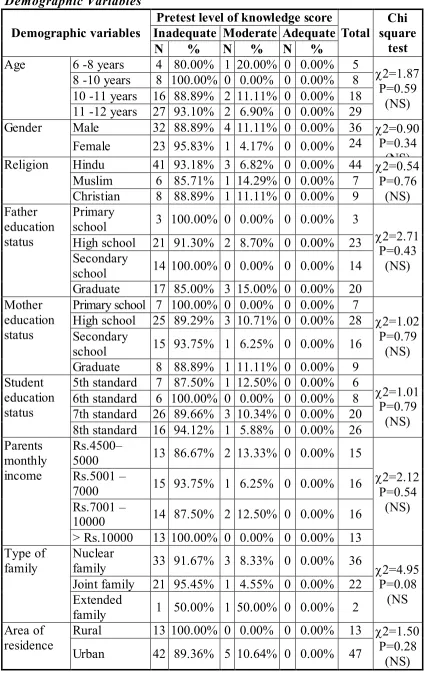
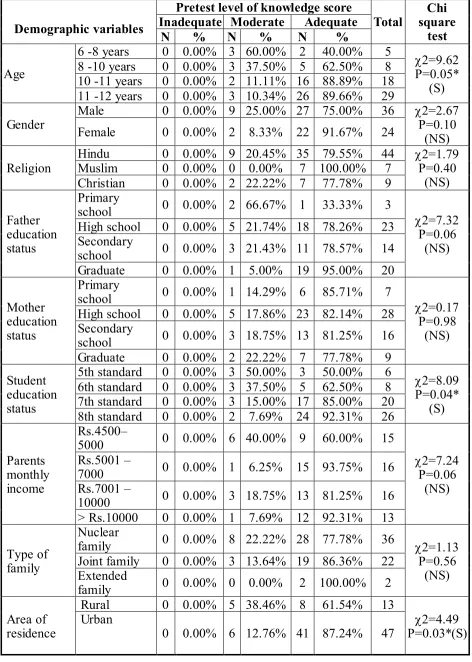
58 4.14 Association between posttest level of knowledge
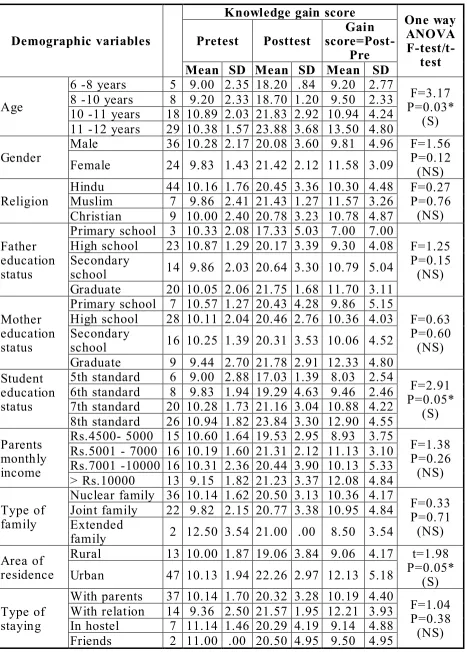
and their demographic variables 60 4.15 Association between knowledge gain score and
demographic variables
LIST OF FIGURES
FIG.
NO TITLE
2.1 Conceptual frame work based onModified Imogene King’s Open System Model
3.1 Schematic presentation of research design 4.1 Age wise distribution of children
4.2 Gender distribution of children
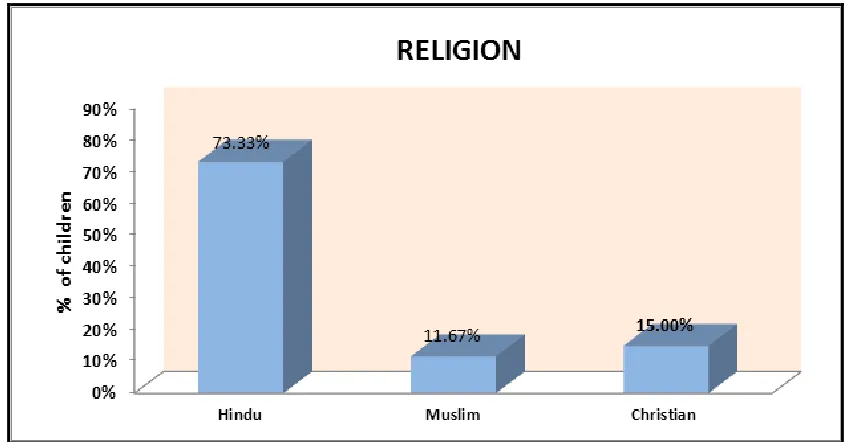
4.3 Religion wise distribution of children
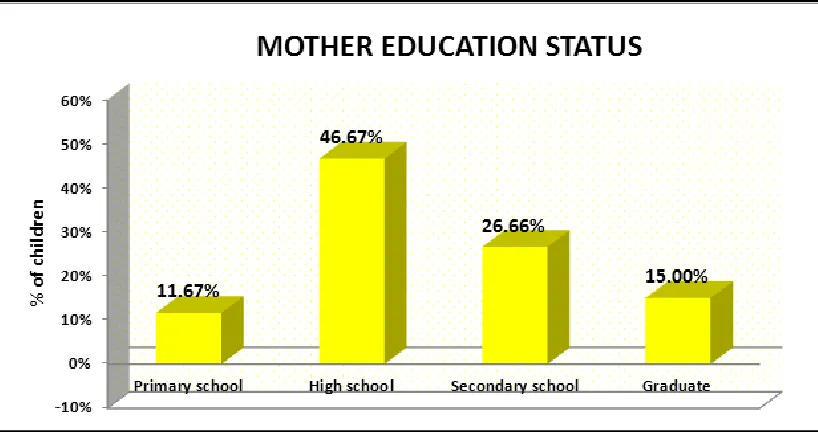
4.4 Father Education Status wise distribution of children 4.5 Mother Education Status wise distribution of children 4.6 Student Education Status wise distributions of children 4.7 Family Monthly Income wise distributions of children 4.8 Type of Family System wise distributions of children 4.9 Place of Residence wise distributions of children 4.10 Type of Staying wise distributions of children
4.11 Mode of device assessing wise distributions of children 4.12 Type of Social Network using wise Distributions of children 4.13 Purpose of not using network wise distributions of children 4.14 Duration of time spending in social network wise distributions of
children
4.15 Parents awareness of social network activities of children
4.16 Percentage distribution of Pretest level of knowledge score in children
4.17 Percentage distribution of Posttest level of knowledge score in children
FIG.
NO TITLE
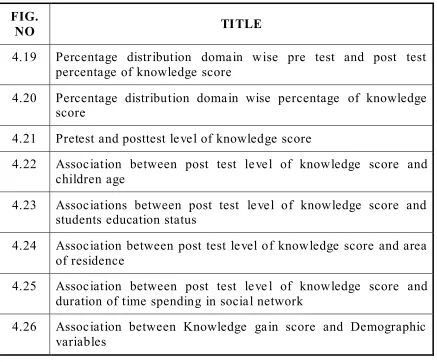
4.19 Percentage distribution domain wise pre test and post test percentage of knowledge score
4.20 Percentage distribution domain wise percentage of knowledge score
4.21 Pretest and posttest level of knowledge score
4.22 Association between post test level of knowledge score and children age
4.23 Associations between post test level of knowledge score and students education status
4.24 Association between post test level of knowledge score and area of residence
4.25 Association between post test leve l of knowledge score and duration of time spending in social network
[image:16.596.86.523.70.432.2]LIST OF APPENDICES
S.
No DESCRIPTION
1. Certificate approval by Institutional Ethics Committee 2. Certificate of content validity by Experts
3. Letter seeking permission to conduct the study 4. Tool for data collection
Section A: Questionnaire regarding socio demographic variables of school age children
Section B: Semi structured questionnaire regarding knowledge on the impact of social network.
Structured teaching programme on knowledge regarding the impact of social network among school age children.
5. Informed consent form – Engligh Informed consent form – Tamil
6 Certificate for Tamil Editing 7. Certificate for English Editing
LIST OF ABBREVIATION
ABBREVIATION EXPANSION
ADD Attention deficit disorder
CI Confidence Interval
DF Degrees of Freedom
P Significance
SD Standard Deviation
SNS Social networking system
STP Structured teaching programme
MVE Media violence exposure
EF Effective functioning
CHAPTER-I
INTRODUCTION
“What you post online speaks about you who you really are. POST with
intention REPOST with caution”
– Germany Kent Social Networking sites are dedicated website or other application which enables users to communicate with each other by posting information,contents,messages, images,they share a connection, and view and traverse their list of connections and those made by others within the system. Nature and nomenclature of these connections may vary from site to site.
Social media and new technologies are giving children many ways to express themselves and to have fun, which of course, comes with a costly price. Media technologies have been changing throughout the past century, affecting not only the communication methods amongst children, but also their social and psychological behaviour. Newly invented cell phones, television and internet has oversaturated the world.
Social networking site is described as a website where individuals set up online profile, describing his/her interests. It has both positive and negative effects on society.1
Social networking has greatly impact on society, especially when it comes to common sites such as face book, my space, or even twitter. Although social network can have a positive and negative impac t on society. The social network websites make the people to easily interact with the people they know or people they don‟t know.
not to employ the term “network” for two reasons, emphasis and scope. “Network” emphasizes relationship initiation often between strangers. While network is possible on these sites, it is not the primary practice on many of them, nor is it what differentiates them.
In today‟s society, electronic media are thoroughly integrated into the life, with television, movies, videos, music, video games, and computers, central to both work and play. While these media outlets can provide education and entertainment to children, many researches are concerned with the negative impact of electronic media on children. Media is used as a third parent or servant. Lot of aspects is important related to media exposure and child behavior. Media exposure affects the neuro development, nutrition, health and academic achievements of the child. Parent education plays an important role in the behavior modification of the children.
A prospective study was conducted in Thomas Jafferson university medical school. United States on effect of visual media use on school performance. Four wave longitudinal telephone study of a national sample of 6,486 students aged 10 -14 years. Adjusted for baseline school performance, baseline levels of mediators, and a range of covariates, both screen exposure time and media content had adverse effect on school performance. These aspects of visual media use adversely affect school performance by increasing sensation seeking, substance use, and school problem behaviour.
family time. Background social network interferes with the children‟s ability to focus on play. They do not discriminate between social network and real life events.2
Radio, television (TV), movies, video games, cell phones, and computer networks have assumed central roles in our children's daily lives. The media has demonstrated potentially profound effects, both positive and negative, on children's cognitive, social, and behavioral development. Considering the increasing exposure of children to newer forms of media, we decided to review the current literature on the effects of media on child health both in the Western countries and India. It is widely accepted that media has profound influence on child health, including violence, obesity, tobacco and alcohol use, and risky sexual behaviors. Simultaneously, med ia may have some positive effects on child health. We need to find ways to optimize the role of media in our society, taking advantage of their positive attributes and minimizing their negative ones. We need to understand better how to reverse the negative impact of media and make it more positive.3
Children are determined to find their own identity with the choices they had and seem to accept any new idea that comes along. Their pulse had been following the development of new technologies. Cell phones, earphones, e-mails, instant sagging, twitter and a plethora of social networking media; cannot imagine their lives without some or all of these. They spend a large part of their time with them, they are connected.
caution. Computers, mobile phones, social network do many wonders like voice box, ring tones, SMS ,E-mails, taking photos and so on….. But the children who are at risk for the prevailing health hazards due to these electronic gadgets, must know various preventive aspects of health hazards and to follow their safe practice.4
Most parents are clueless, and have no idea about media effects. They probably have no idea what their children are watching. Parents need to understand that media can have an impact on everything they're concerned about with their children's health and development: school performance, learning disabilities, sex, drugs, aggressive behaviour.
Abuse of social network can have various negative consequences for the internet addict, such a failure to fulfill role obligations at school and at home, impairment of social relationships, violating schools rules or laws because of social network. As social media sites continue to grow in popularity, it is our premise that technology is a vital part in today‟s student success equation. We estimate the influence of social networks on educational attainment and behavioral outcomes of students in school. More specifically, we investigate how separating from pre -existing social net works during the transition from elementary to middle school affect students' academic progress and school and social satisfaction.5
Social networking sites like Face book, twitter, 2go, My Space, Skype etc. have mesmerized millions of users, many of whom have been made to use these sites as parts of their daily activities. Currently, there is a plethora of social networks with various features meant to suit the different interests of their followers. Some are accessed via computer alone while others can be used with mobile phones.
example of social networking site. Today, Face book is the largest social network in the world.6
The World Wide Web has been radically transformed, shifting from an information repository to a more social environment where users are not only passive receivers or active harvesters of information, but also creators of content (Bruns, 2008). Web-based technologies now encompass the socializing features of virtual spaces that have emerged as zones for information sharing, collaboration, and community formation and extension (Suter, Alexander, & Kaplan, 2005). Social media are technologies that facilitate social interaction, make possible collaboration, and enable deliberation across stakeholders. These technologies now include blogs, wikis, media (audio, photo, video, text) sharing tools, networking platforms (including Facebook), and virtual worlds (Bryer&Zavatarro, 2001).7
Girls are more likely than boys to send and receive text messages frequently, as are older teens ages 10-17. More than 2 in 5 girls (42%) send text messages to friends daily, while about a third (34%) of boys do the same. The difference between younger and older teens is even starker – 25% of teens ages 10-14 send text messages daily compared 51% of teens ages 12-17. As with phone ownership and other uses of mobile devices, there are no racial or ethnic differences when it comes to text messaging.
Girls ages 12-17 are more likely than boys to use any kind of phone for voice calling. More than a third (36%) of girls say that they use a landline phone daily, compared with 27% of boys. Similarly, 55% of girls with cell phones talk daily on their cell phone, while 47% of cell phone-owning boys report the same.
tend to use mobile phones to ca ll pals a few times or less per week. More than seven in ten 17-year-olds with phones talk to friends on their cell phones daily, while just 28% of 12-year-olds with phones say the same. A large percentage of phone-owning younger teens ages 12-14 say that they talk to friends at least once a week – 18% of those ages 12-14 report weekly cell phone use, while 10% of those ages 15-17 do.8
CURRENT STSTISTICS ON THE SOCIAL NETWORK
MEDIA
1) 75% of male internet users are on Facebook as well as 83% of female internet users.
2) According to recode, 44% of teenagers asked to choose one social network if “trapped on a deserted island” chose Snapchat, ahead of Instagram (24 percent) and Facebook (14 percent).
3) Female internet users are more likely to use Instagram than men, at 38% vs. 26%.
4) 29% of internet users with college degrees use Twitter, compared to 20% with high school degrees or less.
5) 81% of millennials check Twitter at least once per day.
6) 91% of Social Media Users Are Accessing Social Channels Via Mobile Devices from CoSchedule.
7) 22% of the world‟s total population uses Facebook. 8) LinkedIn boasts more than 530 millions user profiles.
10) YouTube overall, and even YouTube on mobile alone, reaches more 12-34 and 12-49 year-olds than any cable network in the U.S.
55% of the parents of 12 years said that their child was on face book, 41% have negative experience as a result of using social media. 81% of online users were 9 to 17 years of age view social media site.
A case of internet sex crime against children involving social media site in a face to face meeting.
Only 18% of parents with children under 10 years on face book were actually “friends” with their children on the site.
It is generally accepted that physical activity confers benefits to psychosocial health, functional ability and general quality of life a nd has been proven to reduce the risk of coronary heart disease and some cancers. Here, physical activity refers to „any bodily movement produced by skeletal muscles those results in energy expenditure‟.
1.1 NEED OF THE STUDY
Globally
This statistic shows the average daily usage of social media world wide. As of 2017, daily social media usage of global internet users amounted
to 135 minutes per day, up from 126 daily minutes in the previous year.
Global social networking audiences surpassed two billion users in 2016. The most popular social network worldwide is Facebook; with 1.86 billion monthly active users by the end of 2016. Other popular social networks include WeChat, Twitter, Instagram, Tumblr and Sina Weibo. Some mobile messaging apps such as Line or Kakaotalk have transformed into social platforms by including profile timelines and games reminiscent of traditional social networks. Currently, the global average social network penetration rate was 37 percent. North and South America ranked first and second in this category at 66 and 59 percent respectively. In total, 21 percent of U.S. online time was spent on social media content. One of the most popular online activities, social networking, is becoming predominantly mobile. December 2016 data reveals that in the United States, 60 percent of social media time was spent via smartphone app. As of the fourth quarter of 2016, Facebook had 1.15 billion mobile-only active users worldwide. Social media has made its innovators rich – as of March 2017, Facebook‟s founder and CEO Mark Zuckerberg had a net worth of 56 billion U.S. dollars. Other successful social media entrepreneurs included other Facebook founders and early investors. With 27.6 billion U.S. dollars in revenue in 2016, Facebook is also the social network with the biggest annual revenue.10
National Level
network users are under the age of 30 years although the number of older users is. Around 45% of interest users aged 65 or older now use Face book, increasing from 35% in 2012.
SOCIAL NETWORK FACTS AND STATISTICS INDIA
Facebook Facts From India
India has world‟s largest number of Facebook Users with ove r 195 million users, overtaking US by over 4 million subscribers.
There are 155 Million Monthly Active Users (MAUs) in India, of which 147 millions MAUs access Facebook via Mobile phones and 73 million users are active daily on Mobiles.
Top 5 countries accessing Facebook are India, USA, Brazil, UK and Germany.
Key Facebook Users from India are aged 18-24, which is the largest and fastest growing population segment.
A users revisits Facebook more than 3 times in a day.
Indian users can access Facebook in 12 languages and 670 Million users are connected to at least one news publishers page.
In India, 76% of Facebook users are Men, and 24% users are women, which illustrates the barriers women face in India to access technology and information.
Nearly 52% of Facebook users in India hesitate or aren‟t bothered to mention relationship status on their profile.
Most of the active Facebook users like to keep their stories and posts to “Only Friends”.11
State Level
Social network adoption among social network users in India is around 84% today. This translates to around 110 million social network users in India. This includes users mainly accessing Social network sites like Face book, Twitter, LinkedIn and You Tube. Other new and upcoming social network sites like Pinterest. Tumblr and Foursquare are yet to take off in a major way in India. India achieved a baseline of Internet access in 2002, but its per capita income is about USD 3,600 and its rural population, nearly 70 percent. Gender disparities, as defined by the gender gap index, are quite pronounced in India.
Teenagers have previously lagged behind adults in their ownership of cell phones, but several years of survey data collected by the Pew Internet & American Life Project show that those ages 12 -17 are closing the gap in cell phone ownership. The Project first began surveying teenagers about their mobile phones in its 2004 Teens and Parents project when a survey showed that 85% of teens had a cell phone. Since that time, mobile phone use has climbed steadily among teens ages 12 to 17 – to 63% in fall of 2012 and then to 71% in early 2016.
In comparison, 77% of all children (and 88% of parents) had a cell phone or other mobile device at a similar point in 2016. Cell phone ownership among children has since risen to 85%, based on the results of our most recent tracking survey of children conducted in April 2016. The project is currently conducting a survey of teens and their parents and will be releasing the new figures in early 2017. The survey shows that,
77% of teens own a Play Station
74% of teens own an iPod or Mp3 player
60% of teens “own” a desktop or laptop computer 55% of teens own a portable gaming device.12 How teens use voice calling
Girls ages 12-17 are more likely than boys to use any kind of phone for voice calling. More than a third (36%) of girls say that they use a landline phone daily, compared with 27% of boys. Similarly, 55% of girls with cell phones talk daily on their cell phone, while 47% of cell phone-owning boys report the same.
The older the teen, the more likely she uses her phone frequently. Older teens use them to talk to friends on a daily basis; younger teens tend to use mobile phones to call pals a few times or less per week. More than seven in ten 17-year-olds with phones talk to friends on their cell phones daily, while just 28% of 12-year-olds with phones say the same. A large percentage of phone-owning younger teens ages 12-14 say that they talk to friends at least once a week – 18% of those ages 12-14 report weekly cell phone use, while 10% of those ages 15-17 do.
While male internet penetration is around 10.6% of the overall population, while women‟s and girls‟ Inter net penetration in India is around 9.8% of total population today. Out of the total online population of Internet users in India around 52% males and 48% females use social network sites.
According various studies, scientists‟ evaluation determined that social isolation can lead to a host of emotional, psychological, physical and mental problems which include anxiety, depression and somatic complaints among many others.
Social network has bad effect on the teens through survey, comments and research from the internet, the researcher was able to gather some information regarding these effects. These sites have caused some potential harm to the society. The students become victims of social network more often than anyone else. This is because of the reason than when they are studying or searching their course material online, they get attracted to these sites to kill the boredom in their study times, diverting these attention from work. It also affects the health of the children physically, mentally, and change in social behaviour. They are affected in their school academic performance, school activities, handwriting, spelling, grammer, and also memory retaining power. However it is more evident that the negative affects over weigh t the positive ones.13
So the investigator felt the need to assess, the knowledge on the impact of social network among school age children, who are the risk and vulnerable group of the society.
1.2 STATEMENT OF THE PROBLEM
1.3 OBJECTIVES
To assess the pre test existing knowledge on impact of social network among school age children.
To evaluate the effectiveness of structured teaching programme on impact of social network among school age children.
To assess the post test level of knowledge on impact of social network among school age children.
To find out association the post test score on impact of social network with selected demographic variables among school age children.
1.4 OPERATIONAL DEFINITION
Assess
It refers to find out the knowledge regarding the impact of social network among school age children.
Effectiveness
Refers to the outcome of structured teaching programme on reducing the impact of social network.
Structured Teaching Programme
It refers to the systematically developed instructions and aid designed for the group of school age students to provide information regarding the knowledge on the impact of social network, for a period of 45mins by using laptop, Power point, booklets for a group of school age children.
Knowledge
Social network
Refers to an application which enables users to communicate with each other by posting information, comments, messages, and images. Impact of social network
Refers to in which a schooler enables to communicate with each other by posting comments, messages, images is that someone misusing of their account like hacking, cyber bulling, sexual predators.
School Age Children
Refers to the individual who are between age group of 6 to 12 years.
1.5 ASSUMPTION
Students may have varying level of knowledge regarding the impact of social network.
Structured teaching programme may help to improve the knowledge of students regarding the impact of social network.
1.6 RESEARCH HYPOTHESIS
H1: There will be significant at P<0.001 difference between pre - test level and post-test knowledge score regarding the impact of social network.
H2: There will be a significant association between post- test level of knowledge of children and selected socio demographic variables.
1.7 DELIMITATION
The study is delimited
The sample size is limited only to 60 subjects The study period is limited to only 4 weeks
CHAPTER-II
LITERATURE REVIEW RELATED TO STUDY
“Technology is like a fish. The longer it stays on the shelf, the less desirable
it becomes”
–Andrew Heller According to Polit and Hunger (1999) review of literature is a critical summary of research on a topic of interest generally prepared to put a research problem on context or to identify gaps and weakness on previous studies to justify a new investigation. It refers to extensive, exhaustive and systematic examination of publication relavent to research project. The task of reviewing literature involves the identification, selection, critical analysis and reporting of existing information on the topic of interest.
The researcher came across with numerous theoretical and empirical literature related to topic under study. The relevant and related literature that was found useful has been represented as follows.
2.1 REVIEW OF LITERATURE
The literature review for the present study has been organized and presented under the following headings:
2.1.1 SECTION- A : Reviews related to impact of social network
2.1.2 SECTION –B : Reviews related to impact of social network in Health (physical, psychological, social
behavior) and their learning problems.
2.1.1 SECTION – A: REVIEWS RELATED TO IMPACT OF
SOCIAL NETWORK
Hardell, L. (2018) a study was conducted to evaluate the evidence of brain tumor by the use of mobile phones and cordless phones emit radiofrequency (RF) radiation. The brain is the main target organ for RF emissions from the handheld wireless phone. An evaluation of the scientific evidence on the brain tumor risk was made in May 2011 by the International Agency for Research on Cancer at World Health Organization. The scientific panel reached the conclusion that RF radiation from devices that emit non ionizing RF radiation in the frequency range 30 kHz–300 GHz that is, a “possible” human carcinogen. Well‐being needs to be carefully evaluated as an effect of changed behavior in children and adolescents through their interactions with modern digital technologies.14
Fietzer, A. W., & Chin, S. (2018) a study was conducted to provide an overview of the impact of digital screen media (e.g video games, mobile devices) on the executive functioning (EF) of children and adolescents from a clinical neuropsychological perspective. Our review emphasizes the EF domains of attention, working memo ry, inhibition, set shifting, fluency, planning, and problem solving among typically developing individuals and those with special needs. They conclude with specifications of the need for longitudinal research examining how screen media affects trajectorie s of EF development among all individuals.15
revealed that they -Intention to use online social networks is strongly determined by social presence. Among the five values, social related factors had the most significant impact on the intention to use.16
Monica Munjial Singh, Mohammad Amiri, (2017) a study was conducted to highlights the main purposes of utilization and time spent social media by the children and early youth. Dependency of children age group youth on social media is now leading to addiction. Through the several studies, it is widely accepted that over utilization of social media has profound negative influence on the Indian early youth. This study focuses on negative effects of utilizing social media on the life of youth. The result of study shows that, over utilizat ion of social media leads towards addiction.17
Nasir Koranteng Asiedu, (2017) this study investigates and analyses the positive and negative effects of social media on students‟ academic and social lives. 204 students from University of Ghana and Kwame Nkrumah University of Science and Technology were randomly selected to participated. The study indicates that the positive effects of social media outweighs its negative counterpart hence, students should not be entirely discouraged from visiting social media sites. The promotion of shorthand writing which has the ability to affect the writing of good grammar were also found to be the negative effects of social media usage on students in both Institutions.18
their parents were aware of their online social networking activities (82.2 %). About 38.7 % said that their parents were in their friend group on online social networking. There is negative correlation between time spent on social networks and perceived student performance in specific subjects.19
Livingstone S, Ólafsson K, (2017) this article explains as Internet use becomes widespread at home, parents are trying to maximize their children's online opportunities while also minimizing online risks. They surveyed parents of 6to 14 years old in 8 European countries. A factor analysis revealed 2 parental mediation strategies. Enabling mediation is associated with increased online opportunities but also risks. Restrictive mediation is associated with fewer online risks but at the cost of opportunities, reflecting policy advice that regards media use as primarily problematic. It is favored when parent or child digital skills are lower, potentially keeping vulnerable children safe yet undermining their digital inclusion.20
Khurana N (2015) the study of this research aims to create an immense level of awareness among the children exposed to social networking sites. It has now become an evident and usual sight to face individuals being insensitive to chat in worshipping places, homes when relatives and guests are around, highways, schools, colleges and social gatherings wherein they are so preoccupied and engrossed into their phones that they do not even bother to look up as to where they are which results in their inability to prioritize as to what is important and what isn‟t. Attention has thus been shifted from real to virtual world and visible to invisible friends.21
Patrina HY Caldwell Henry Go et al.,(2015) this paper reviews the literature on the impact of social media “Negative Effects of Social
Media on Children and Adolescents”, Social media can affect the mental
up as teens‟ use goes up. Also, teens who use Facebook tend to be more narcissistic, antisocial, and aggressive. Many forms of cyberbullying is also a problem and can lead to the victims experiencing depression and anxiety, cause of many suicides in young people. It is bad enough that there are children who are victims of negative comments by peers, many young online users are lured by online sexual predators. Many o f them are not aware that they are individually targeted because the sites keep track of their habits and demographics. These young people and their parents need to be aware of how they are targeted so smarter choices can be made around their spending habits.22
Masters K. (2015) this study aimed to measure SNS addiction rates among health sciences students. 81 students completed the survey Of the three SNSs, YouTube was most commonly used (100%), followed by Facebook (91.4%) and Twitter (70.4%). Usage an d addiction rates varied significantly across the three SNSs. Addiction rates to Facebook, YouTube and Twitter, respectively, varied according to the criteria used. Rates of SNS addiction among this cohort indicate a need for intervention. The results suggest that addiction to individual SNSs should be measured and that work-related activities should be taken into account during measurement.23
depression. Five studies investigated self-harm or suicidality, with conflicting results. Results indicate that the most common reason for cyberbullying is relationship issues, with girls most often being the recipients. Responses to cyberbullying are most often passive, with a pervasive lack of awareness or confidence that anything can be done. 24
Bedassa, F. (2014) the purpose of this study is to assess the impact of social networking sites i.e. Facebook on students‟ academic performance in Wollega University. 384 students‟ selected using stratified sampling technique. The findings of this study shows that time spent on Facebook and addiction to it negatively and significantly affects students‟ academic performance.25
Sudipta Deb Roy (2014) conducted a study to assess the Impact of Social Networks on students of Vivekananda school of Education. 60 students of Karimganj Town including male and female and were selected on randomized techniques. The study results reveal that 43.18% people uses Social Networking sites for communication with friends, 11% uses for uploading photos/videos, 6.81% uses for discussing study materials with their friends, about 38% people uses for all the above purposes. 40% peo ple agreed that they are suffering social networking sites daily.26
Josan D, et.al., (2014) conducted a study to assess the relationship of Social network in relation to the Academic Performance at Centro Escolar University-Malolos. 138 respondents drawn using stratif ied random sampling. There are 102 males and 36 females participated in this study. The study revealed that 71 or 51.4% of the respondents have reached below satisfactory grade average while 67 or 48.6% students have successfully reached the satisfactory academic performance from an average grade. 61 or 44.3% falls under the occasional user of Social media while 77 or 55.7% falls under frequent user of Social media.27
students in Ghana. 50 students and 500 questionnaires were administered to students from same Institution. Thus the study reveals that whatsapp takes much of students study time, results in procrastination related problems, destroys students‟ spellings and grammatical construction of sentences, leads to lack of concentration during lectures, results in difficulty in balancing online activities (whatsapp) and academic preparation and distracts students from completing their assignments.28
Al-Sharqi (2014) conducted a comparative study to assess the impact and perceptions of social media on Arts and Science Students. 2605 male and female students of different ages. By purposive sampling techniques, the study findings revealed that support the advantages of social media use on students‟ social behavior and do not indicate any obvious disadvantages. The findings include identification of dominant discipline -based and common perceptions. Differentiating factors include the Science group having interest in respecting opinions of others and the Arts group emphasizing on freedom of expression29
Dr.Musah Adams (2013) conducted a mixed method study to assess the influence of social network for academic performance among students. The total population for the study 5249. The study result revealed that majority of respondents used Whatsapp and Face book for making friends and chatting. In addition, majority of respondents experienced negative effects such as poor grammar and spelling, late submission of assignment, less study time and poor academic performance due to the heavy participation on social media networks.30
more likely to report cyberbullying behaviors. At the same time, respondents who believed that the adults in their life wou ld punish them for cyberbullying were less likely to participate. The goal of mitigating this behavior and its negative outcomes among early adult populations.31
Masood Badri (2012) this study uses structural equations modeling to test a hypothetical socia l network model with applications. 34,896 school children in Abu Dhabi. The study describe s the effect of other variables, such as parental know how, is also investigated. Results support the idea of reciprocal relations among perceived performance, learning from social networking, and the effect of social networking. Evidence for a model that includes opposite pathways implies that the problem of social networking constructs, its antecedents, and possible consequences should be examined with caution.32
Gwenn Schurgin O'Keeffe et al (2011) a study was conducted to assess the using Social media web site activity of today‟s children and adolescents. Pediatricians are in a unique position to help families understand these sites and to encourage healthy use and urge parents to monitor for potential problems with cyberbullying, “Facebook depression,” sexting, and exposure to inappropriate content, children and adolescents are at some risk as they navigate and experiment with social media. Recent research indicates that there are frequent online expressions of offline behaviors, such as bullying, clique -forming, and sexual experimentation, that have introduced problems such as cyberbullying, privacy issues, and “sexting.” Other problems that merit awareness include Internet.33
48 including (26 males and 22 females). It indicate that 45%of the sample admitted that they spent 68 hours per day checking social media sites , while 23% spent more than 8 hours ; 20% spent 2 -4 hours and only 12% spent less than 2 hours on this task. The study concluded that while most students used social media and spent many hours, there was a negative aspect to student‟s use of social media.34
2.1.2. SECTION – B: REVIEWS RELATED TO IMPACT
OF SOCIAL NETWORK IN HEALTH (PHYSICAL,
PSYCHOLOGICAL, SOCIAL BEHAVIOR) AND THEIR
LEARNING PROBLEMS.
Asiri AK, Almetrek MA, (2018) a study to assess the impact of using social media (i.e., Twitter and WhatsApp) on sleep quality and to identify risk factors associated with poor sleep quality among students in King Khalid University. Most students use Twitter / WhatsApp for 3-4 or more than 5 hours daily (31.1% for both). Most students (88.7%) use Twitter/WhatsApp during night. Almost one third of students have poor sleep quality, especially those who use social media for more than two hours daily. This study indicates a strong need for integrating sleep hygiene education for students and to provide health education to promote correct and effective use of social networks 35
Chang FC, Chiu CH, (2018) this study was conducted to assess the computer/mobile device screen time and eye care behavior of children and examined the roles of risk per ception and parental practices. A sample of 2,454 child-parent dyads recruited from 30 primary schools in Taipei city. Risk perception by children and parental practices are associated with the amount of screen time that children regularly engage in and their level of eye care behavio ur.37
Monica Munjial Singh (2017) a study was conducted to assess the main purposes of utilizing social media by the children . Dependency of children on social media is now leading to addiction. Several studies, accepted that over utilization of social media has profound negative influence on the Indian children. The main purposes of utilizing social media by the children, has been made to find out the time spent on browsing social networking sites by the children. This study focuses on the major; and the positive and negative effects of utilizing social me dia on the life of children. The study concludes that, over utilization of social media leads children towards addiction.38
Van der Kolk, B. A. (2017) a study was conducted to find effect of child abuse experiences on attachment-related anxiety. The current study examined the relation between three forms of child abuse (sexual, physical, and psychological) severity, emotion dysregulation, and attachment-related anxiety and avoidance among 830 children. Results indicated that emotion dysregulation significantly mediated the relationship between child abuse severity and attachment-related anxiety and avoidance.39
duration and frequency of abuse, age at onset, the child's reporting of the offense, parental reaction, and institutional response are also considered. The study concludes that severity of child hood sexual abuse was linked to impact of social media. Child hood physical and sexual abuse were linked positively and negatively to online social network pattern.40
Harris Hyun-soo Kim (2016) a study examines the extent to which online media activities are associated with psychological behavior of children at Korean Children Panel Survey (KCPS), are estimated to probe the psychological effects of time spent online. While holding constant a host of time-lagged control variables at individual (student) and contextual (school) levels, the analysis shows that online social networking is adversely associated with the psychological status of students, measured in terms of self-reported mental problems and suicidal thought. The bulk of previous research on the pros and cons of online social media use is based on cross-sectional data, thereby precluding causal inference, the current research offers more conclusive evidence on the direction of causation.41
age-appropriate critical thinking and digital literacy, and support open family communication.42
Sampasa-Kanyinga,H et al (2015) This study investigated the association between time spent on SNSs by middle and high school children in Ottawa 753 students (55% female) in grades. Students who reported unmet need for mental health support were more likely to report using SNSs for more than 2 hours every day than those with no identified unmet need for mental health support. Daily SNS use of more than 2 hours was also independently associated with poor self-rating of mental health and experiences of high levels of psychological distress and suicidal ideation. The findings suggest that students with poor mental health may be greater users of SNSs.43
Alene Kennedy-Hendricks, PhD et al 2015 This study sought to examine whether the health composition of the social networks of children living in subsidized housing (among higher -income neighbors) differs from the social network composition of children living in public housing developments (among lower-income neighbors); and children‟s social network composition is associated with children‟s own health. Social network composition was significantly associated with several aspects of children‟s own health, suggesting the potential importance of social networks for the health of vulnerable populat ions.44
Knowledge of resources, including those within the schools and community, allows the obstetrician–gynecologist to provide support to children facing these issues.45
Winpenny, E. M., Marteau, T. M et al (2013) a study was conducted to assess how Facebook was the social media site with the highest reach, with an average monthly reach of 89% of males and 91% of females aged 12–24. YouTube had a similar average monthly reach while Twitter had a considerably lower usage in the age groups studied. Facebook pages,YouTube content and Twitter content could be accessed by those of all ages. The rise in online marketing of alcohol and the high use of social media websites by young people suggests that this is an area requiring further monitoring and regulation.46
Epstein LH, Roemmich JN, et al., (2013) a study to assess the effects of reducing over viewing and computer use on children‟s body mass index (BMI) as a risk factor for the development of overweight at children‟s hospital. 70 children aged 7 to 12 years whose BMI was at or above the 75th BMI percentile for age and sex. Children randomized to the intervention group showed greater reductions in targeted sedentary behavior (P < .001), zBMI (P < .05), and energy intake (P < .05) compared with the monitoring control group. Reducing over viewing and computer use may have an important role in preventing obesity and in lowering BMI in young children. 47
all children, preteens and teenagers by making them more prone to anxiety, depression, and other psychological disorders, as well as by making them more susceptible to future health problems. Studies found that middle school, high school and college students who checked Facebook at least once during a 15-minute study period achieved lower grades.48
Michael Gradisar (2010) a study was conducted to assess electronic media have often been considered to have a negative impact on the sleep of children and adolescents, The present study identified 36 papers that have investigated the relationship between sleep and electronic media in school-aged children and adolescents, including use of computers, electronic gaming, and/or the internet, mobile telephones, and music. Many variables have been investigated across these studies, although de layed bedtime and shorter total sleep time have been found to be most consistently related to media use. A model of the mechanisms by which media use may affect sleep is presented and discussed as a vehicle for future research. 49
2.13.SECTION –C: REVIEWS RELATED TO EFFECTIVENESS
OF STRUCTURED TEACHING PROGRAMME ON IMPACT OF
SOCIAL NETWORK.
Gruzd A, Haythornthwaite C, (2018) a study was conducted to assess the effectiveness of teaching module on social media are applied in teaching in higher education. 333 instructors in higher educatio n, were asked about general social media use and specific use in teaching. (1) exposing students to practices, (2) extending the range of the learning environment, and (3) promoting learning through social interaction and collaboration. Results provide a more comprehensive picture of social media use than found in previous work, encompassing not only the array of media used but also the range of purposes associated with use of social media in contemporary teaching initiatives.51
Philippa Collin (2015) a study was conducted to understand the effectiveness on use of social media, impacts on wellbeing. To support effective policy, practice and service innovation, this review examined literature published since 2010 on children and young people's use of social media and effects on their wellbeing. From the age of five nearly all teenagers are avid users of social network services (SNS), online games and chat rooms, forums and instant messaging. Consequently, social media is becoming a common feature of children and young people's everyday lives. Their effects on the wellbeing of children and young people are an emerging focus for research, policy and service delivery.52
representative group. The results show that 50% of male and 58% female students disagree that the social media affects their study habits negatively. Without ignoring the negative effects completely 32% of the male students and 38% of the female students agreed that social network affects their study habits negatively.53
Dr.Debarati Halder (2015) this paper presents information communication technology on the essential part of school curriculums in India today. The biggest problem the children may be groomed to consume and contribute to cyber crimes like child pornography they may pick up dangerous habits of cyber bullying and hacking as well. The article will analyse the reasons for the occurrence of such crimes from socio-legal perspectives and offers functional solutions. This article also offers a model policy guild line that can be adopted by the schools in India. Accompanying social networking in teacher education, held on 26th and 27th March, 2015 by Loyola college of education, Chennai directing students for positive usage of internet and digital communication mechanisms like WhatsApp.54
Sushma Mishra, (2014) conducted a survey study to assess the effectiveness of structured teaching program on Internet addiction and academic performance among students. 87 students, (54 male, 46 female). Research on age factors found that students between the ages of 07 to 18 were the most susceptible to addiction. A numbers of investigators have suggested that addiction to the Internet among students is dramatically comparable to addiction to drugs, alcohol, violence obesity, lack of sleep, and nutrition deficiencies. 55
found . This is the first meta-analysis evaluating the effectiveness of SNS interventions in changing health-related behaviors. Overall, SNS interventions appeared to be effective in promoting changes in health -related behaviors, and further research regarding the application of these promising tools is warranted. Our study showed a positive effect of SNS interventions on health behavior-related outcomes.56
Mr.Syed Muhammad Rafi, (2013) conducted a study to assess the effectiveness of STP package on effect of internet a ddiction among adolescent boys between 11- 17 years in Bangalore, Karnataka. The study was conducted among adolescent boys from school, Bangalore. Data was collected structured questionnaire method on internet addiction Pre Experimental design was used (one group pre test- post test). The study result revel that Seven per cent of teenagers aged 13 to 17 described themselves as "becoming addicted" to the net and other 26 per cent said they used it every day and considered it "an important part of their lives the impact of internet use on teenagers found a third of respondents were "in the process of becoming psychologically addicted" and teenagers, on average, spent 13 hours a week on-line.57
Keol Lim and Ellen B Meier (2012) this study as such begins with the explanation of how the number of international students getting admission in US universities has increased..Findings of the study clearly showed that the respondents benefitted from their use of social networking sites. The interactions helped to decrease their anxiety in the new culture. The potential of Social Networking Sites in contributing to the affective and cognitive adaptation for international students including the connection between Internet use and academic achievement.58
decreasing risky online behavior. Significant results were found between pre- and posttest scores related to Internet safety knowledge. Most results related to risky online behavior were not significant. Results provide evidence that participation in psychoeducational Internet safety interventions is associated with an increase in Internet safety knowledge but is not significantly associated with a change in risky online behavior.59
2.2 CONCEPTUAL FRAME WORK
Conceptual models, like theories, deals with the abstractions (concepts) that are assembled by virtue of their relevance to a common theme (Polit & Beck 2008).
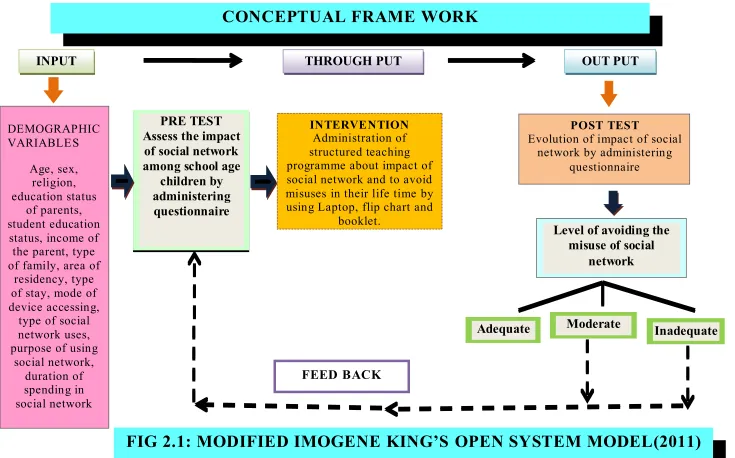
According to Modified Imogene king Open System Model (2011), all system are open, in that there is continual exchange of matter energy information. Open system has verifying degree of interaction with the environment from which the system receives input and gives feedbacks. Kings describes as follows
The main concepts of the open system model are input, throughput, output and feedback. In open system, theory input refers to matter energy and information that enters to the system through its boundary, throughput refers to matter, energy and information that are processed. After processing the input, the system returns to output matter, energy and information feedback refers to environmental response to the systems. Output used by the system for adjustment, correction and accommodation to the interaction with the environment.
spending in social network. The pretest misuse of social network by help of questionnaires it contain general information a bout social network.
In Throughput, the information will be imparted and processed by means of structures teaching programme on misuse of social network i.e., introduction, misuse about social network, benefits, advantage and disadvantage.
In Output, the knowledge levels of the study population will be assessed by conducting posttest. The population will be categorized based on their knowledge percentage levels such as inadequate, moderately adequate, adequate knowledge and those with inadequate knowledge level will be reinforced with structured teaching programme. This is indicated by feedback.
FEEDBACK
CHAPTER – III
RESEARCH METHODOLOGY
This chapter deals with research methodology adopted for the study and includes the description of research design, setting, variable, population sample size, sampling technique, criteria for sample selection. Development and description of the tool data collection procedure and plan for data analysis.
3.1
RESERCH APPROCH
Quantitative research approach
3.2 RESEARCH DESIGN
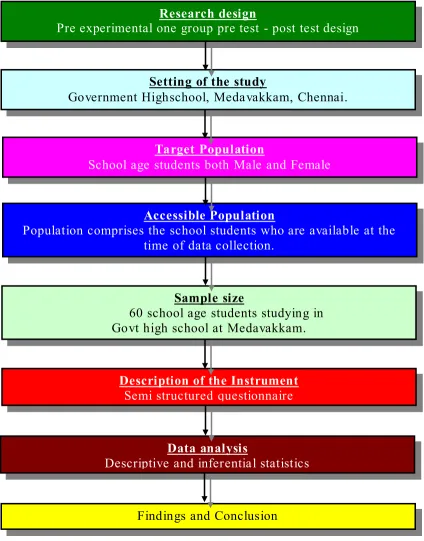
The research design was used in this study is pre experimental design (one group pretest-post test) with manipulation, no randomization and no control group.
Table -3.1 Description of study design
Pre test Intervention Post test
O1 X – Structured teaching programme, booklet
and flip chart
O2
KEY WORDS
This design can be represented as O1 X O2
O1 = pre test to assess the knowledge regarding impacts of social
network on among school age children.
X = structured teaching programme regarding the impacts of social network
O2 = post test to assess the knowledge on the impact of social
3.3 STUDY SETTING
Government High School, Medavakkam Chennai 600 100.
3.4 DURATION OF THE STUDY
Four weeks3.5 STUDY POPULATION
Target Population: Target population comprises the school children in Govt High School at Medavakkam.
Accessible Population: Accessible Population comprises the school age children who are available at the time of data collection.
3.6 STUDY SAMPLE
The sample comprised of School age children studying in Government High School at Medavakkam, Chennai – 100.
3.7 SAMPLING CRITERION
3.7.1 Inclusion Criteria Students who are in the age