Strategic Infrastructure Asset Management: A Conceptual
Framework to Identify Capabilities
by
Eric Too
School of Urban Development Queensland University of Technology
Brisbane, QLD 4000 Australia
&
Linda Too
Mirvac School of Sustainable Development Bond University,
Gold Coast, QLD4229
Abstract
Purpose – The purpose of this paper is to develop a conceptual framework that can be used to identify capabilities needed in the management of infrastructure assets.
Design/Methodology/Approach – This paper utilises a qualitative approach to analyse secondary data in order to develop a conceptual framework that identifies capabilities for strategic infrastructure asset management.
Findings – In anexternal business environment that is undergoing rapid changes, it is more appropriate to focus on factors internal to the organisation such as resources and capabilities as a basis to develop competitive advantage. However, there is currently very little understanding of the internal capabilities that are appropriate for infrastructure asset management. Therefore, a conceptual framework is needful to guide infrastructure organisations in the identification of capabilities.
Research limitations – This is a conceptual paper and future empirical research should be conducted to validate the propositions made in this paper.
Practical implications – The paper clearly argues the need for infrastructure organisations to adopt a systematic approach to identifying capabilities needed in the management of strategic infrastructure assets. The discussion on the impact of essential capabilities is useful in providing the impetus for managers who operate in a deregulated infrastructure business landscape to review their existing strategies.
Originality/Value – This research provides a new perspective on how asset managers can create value to their organisations by investing in the relevant capabilities.
Strategic Infrastructure Asset Management: A Conceptual
Framework to Identify Capabilities
Introduction
Corporate real estate management seeks to optimise the utilisation of real estate assets to facilitate the achievement of goals within non-real estate companies. While much research has been undertaken in relation to the management of commercial, residential and industrial corporate real estate, there is a dearth of studies on infrastructure asset management. The New Collins Dictionary and Thesaurus defined infrastructure as “the stock of fixed capital structure in a country including factories, roads, schools, etc. considered as a determinant of economic growth”. Development economists often refer to infrastructure as “social overhead capital” described as investments in networks such as transportation, water and sewerage, power, communication and irrigation systems.
Like any other real estate assets, the development of infrastructure is highly capital intensive. However, infrastructure assets encompass several more layers of complexity that sets it apart from traditional real estate assets. First, the production of infrastructure services is subject to steep increasing returns to scale. This implies a tendency towards monopoly and therefore the industry is necessarily heavily regulated. Next, infrastructure generates public goods giving rise to the issue of non-excludability. This outcome again leads to the demand for government funding and regulation. For these reasons, infrastructure assets are traditionally owned and managed by the public sector. As such, they are sometimes called public infrastructure capital.
infrastructure suffered from low labour productivity, deteriorating fixed facilities and equipment, poor service quality, chronic revenue shortages and inadequate investments (Kessides 2004). In response, many countries have reformed the institutional options for the provision of infrastructure services that include a combination of competitive restructuring, privatisation and establishment of regulatory mechanisms.
In these changing business environments, infrastructure organisations need to maximise the investments they have made in their existing infrastructure assets in order to reduce their capital and operating expenditures and improve the organisation’s overall performance. Literature in strategic management suggests that to understand an organisation’s performance, there is a need to focus on factors internal to the organisation in addition to the industry structure. For example, Ravichandran et al. (2005) argued that the resource-based theory and its extensions with their focus on firm resources and capabilities can provide the appropriate theoretical lens to examine how factors internal to the organisation can be a source of competitive advantage. An organisation can only gain advantage and achieve superior performance when it has the right capabilities (Smallwood and Panowyk 2005). To this end, the challenge for infrastructure organisations is the optimal allocation of the scarce resources among competing initiatives to acquire the relevant capabilities. Hence, it is of significant importance to identify the core capabilities that an organisation should develop that will make a difference in infrastructure asset performance.
A Strategic Approach to Infrastructure Asset Management
As owners, operators and maintainers of infrastructure assets, infrastructure organisations assume significant responsibility to ensure the successful performance of the assets to meet the expectations of stakeholders. Hence, infrastructure organisations are under pressure to improve their operations, customer satisfaction, productivity, asset quality, environmental performance and a host of other performance indicators.
For asset management to become a true value-adding pursuit within a corporate framework, it must be primarily concerned with filling a strategic role; that is, asset managers must be proactive not reactive in their approach. They must be able to forecast the needs of their organisations and make forward plans that will support the aims of the organisation in the future. This strategic view is important as it takes a long-term view of infrastructure performance and cost. Accordingly, strategic infrastructure asset management is aimed at achieving organisational long term goals and effectiveness through dynamic alignment of the required infrastructure assets to meet changing customer needs.
The need for a strategic and integrated approach has slowly gained attention. For example, Too et al. (2006) reviewed some of the current asset management practice by government agencies in Australia and found that despite the different frameworks adopted in the practice, they are all advocating a strategic approach. Similarly, Tao et al. (2000) proposed that from a business perspective, the asset management framework must comprise dynamic business processes to link all asset types together under a single business context. The American Association of State Highway and Transportation Officials (AASHTO 2002) similarly echoed that asset management represents an approach to managing infrastructure that is strategic.
and objectives based on performance and sustainability. Increasingly, asset managers are devoting their attention to a very broad range of concerns that combines engineering principles with sound business practices, information management and economic theory as well as the more traditional operational concerns related to maintenance of assets.
Strategy and Performance
The seminal works of Andrews (1971),Ansoff (1965) and Chandler (1962) provide the foundation for the field of strategic management (Rumelt et al. 1994). Collectively, they help define a number of critical concepts and propositions in strategy, including how strategy affects performance, the importance of both external opportunities and internal capabilities, the notion that structure follows strategy, the practical distinction between formulation and implementation and the active role of managers in strategic management (Hoskisson et al. 1999). The classical approaches of strategy development, namely the design school led by Andrews (Andrews 1971, 1987) and the planning school led by Selznick (1957) and Ansoff (1965, 1988) have advocated the use of internal resources to match external threats and opportunities.
By contrast, the link between strategy and the organisation’s resources and skills has suffered comparative neglect. In the 1990s, there was a resurgence of interest in the role of the organisation’s resources as the foundation for organisation strategy. This, once again, increased emphasis on resources internal to organisations, which is known as the resource-based view (RBV) (Barney 1991; Wernerfelt 1995). Central to this RBV is the idea that the organisation is essentially a pool of resources and capabilities and that these resources and capabilities are the primary determinants of its strategy and performance.
In the strategy formation process, RBV takes a different route compared to that of the “industrial organisation economics” (IOE) theory. IOE theorists such as Porter (1996; 1980) argued that an organisation’s performance was closely related to industrial structure. The organisation itself was seen as an allocator of resources between different product-market opportunities. Hence under this view, the key strategic tasks were centred on competitive positioning within an industry. Mintzberg (1994) called this the positioning school of strategy development.
The resource-based view rejects this view of the relationship between the organisation and its context. The resource-based view differentiates between the endogenous resources of the organisation and the contextual determinants of competitiveness such as location, regulatory factors and technical compatibility (Wernerfelt 1995). RBV practitioners argue that internally generated competencies, not competitive positioning, are seen as critical to an organisation’s competitive performance. This is aptly summarised by Whittington (1993) “In this view, strategy becomes a patient, inwardly aware process, rather than the fluid, externally oriented pursuit of opportunity.”
Appropriateness of RBV for Infrastructure Organisation
(Zajac et al. 2000). This tension is magnified when technology jumps to a new level while the organisation still possesses the same stock of resources or old technology. The organisation will not be able to sustain its competitive advantage unless new stocks of resources and capabilities are obtained. Therefore, Grant (1991) argued that internal resources and capabilities provide the basic direction for an organisation’s strategy. When the external environment is in a state of flux, the organisation’s own resources and capabilities may be a much more stable basis on which to define its identity.
All organisations, including infrastructure organisations, must create value to justify their existence. Competitive advantage can help an organisation create better value for the customers and hence it contributes to organisational performance (Ma 2000). Ma (1999) proposed two basic schemes to categorise the substance of competitive advantage: the dichotomies between positional and kinetic and between homogeneous and heterogeneous.
Positional advantages are primarily ownership-based or access-based and are often static such as (a) superior endowments of managerial talents, skilled and dedicated employees, superior corporate culture (Barney 1991); (b) size-based advantages such as market power, economy of scale, and economy of experience (Ghemawat 1986); (c) better control of supply and favourable access to distributors (Porter 1985).
Deregulation and privatisation of infrastructure provision in recent years has no doubt brought challenges and difficulties to infrastructure organisations. It has changed the whole structure and environment of the business dynamic. In times of rapid change and high uncertainty such as those experienced by infrastructure organisations, Ma (2000) suggested that kinetic advantages would be more likely to produce sustainable superior performance.
Ma (1999) also suggested that an organisation’s competitive advantage over a rival could be homogeneous or heterogeneous. When an organisation and its rivals are competing in basically the same way using similar or homogeneous strengths and skills, the organisation’s advantage over rivals, if any, will likely be deriving from doing the same thing better. Such advantage is regarded as homogeneous advantage. An organisation can also enjoy heterogeneous advantage over rivals by playing the game differently or playing a totally different game such as better serving the customers through different skills, resource combinations, or products from those of its rivals.
Infrastructure organisations have, in the past, competed based on homogenous advantage, that is, using similar strengths and skills because they are traditionally managed by government and semi-government organisations. However, in the recent shift towards deregulation and privatisation where the emphasis is focuses on customer and accountability of results, infrastructure organisation must consider playing the game differently. They must now look at heterogeneous advantages in order to sustain their performance.
end, the following section will adopt the tenets of the RBV paradigm to develop a conceptual framework for identifying internal capabilities that would enhance the performance of infrastructure organisations.
A Conceptual Framework for Identifying Capabilities
Step 1 – Define Responsibilities of Asset Management
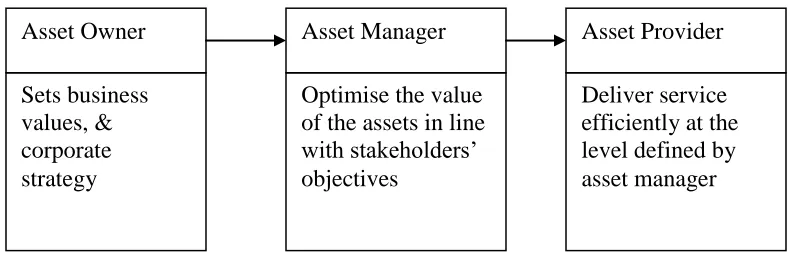
At the heart of asset management is the concept of continuous improvement. Byrne (1996), for example, explains that asset management should be implemented based on the principles of continuous improvement, in successive and manageable steps to allow the complexities and dynamics of the process to be fully understood progressively. In the light of the complex nature of asset management, Humphrey (2003) and Woodhouse (2003) advocate that the complexity of managing an asset intensive infrastructure business be reduced by dividing responsibility among three key entities: the asset owner, the asset manager,and the service provider (see Figure 1). This approach provides a clear separation between making the decision and carrying out the action and allows each entity to specialise and thereby focus on specific capabilities and responsibilities. The clear demarcation of roles and responsibilities are summarised by Humphrey (2003) as follow:
1) The top management sets the business values, corporate strategy and corporate
structure. They provide guidance to the asset manager by delineating the asset costs’ the risk the organisation is prepared to accept and the level of performance it expects.
2) The asset manager focuses on asset strategies and decision-making. The basic function
is to optimise the value of the assets in line with stakeholders’ objectives. The asset manager decides how and where money is to be spent, sets policies and standards the service provider will follow.
3) The service provider’s foremost responsibility is frontline execution. This includes
FIGURE 1: Demarcation of Roles in the Management of Infrastructure Assets
Step 2 –Alignment of Infrastructure Asset Management Goals
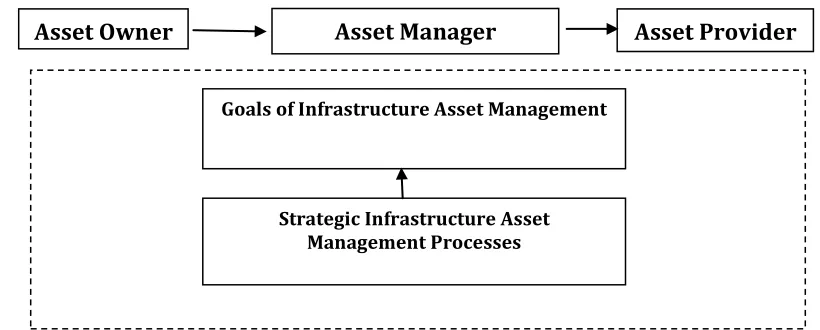
Figure 1 has shown that the responsibility of setting strategic corporate goals rests with the asset owners. These broad goals serve as guidelines to the asset manager in terms of the asset costs, the risks the organisation is prepared to accept and the level of performance it expects. From the strategic perspective, the principles of asset management must be soundly based upon the alignment and fit of the organisation’s resources to best meet the needs of the customer within the environment in which it is requires to compete in order to maximise returns to stakeholders. The Asset Manager, being the custodian of the infrastructure organisation’s main resource, that is the infrastructure asset, needs to align the goals of infrastructure asset management with those of the strategic business goals as defined by the asset owner so that it can achieve long-term stakeholder value enhancement. Hence, the asset manager needs to understand the goals of asset management that can support the broader organisation’s business goals. This is illustrated in Figure 2 below.
[image:11.612.105.509.578.672.2]#
FIGURE 2: Goals of Infrastructure Asset Management
Asset Owner Asset Manager Asset Provider
Sets business values, & corporate strategy
Optimise the value of the assets in line with stakeholders’ objectives
Deliver service efficiently at the level defined by asset manager
Asset Owner Asset Manager Asset Provider
Step 3 –Identify Strategic/Core Infrastructure Asset Management Processes
Having established the goals of infrastructure asset management, strategies must now be identified within the asset management function to prescribe how these goals can be accomplished. Brown (2005) suggests that these strategies within the context of asset management framework are in fact processes in which an asset is effectively managed throughout its entire life cycle.
Kennedy (2007) confirmed that asset management itself is a life cycle process and believed good asset management processes are essential. This thinking recognises asset management as an overarching business process that integrates into all aspects of the way the business functions to deliver its comprehensive corporate plans (NSW Treasury 2004). Thus, it is pertinent to identify the core processes around the infrastructure asset life cycle that are necessary for improving the performance of infrastructure assets. The infrastructure asset life cycle processes can generally be grouped into three clusters namely asset planning, asset creation and asset operation. This is shown in Figure 3 below.
FIGURE 3: Main Cluster of Asset Life Cycle
Core processes describe the end-to-end work that starts from the customer and ends with the customer and always using cross-functional activities (Hung 2001). The organisation will have as many processes as are necessary to carry out the natural business activities defined by the
Asset Planning
Asset Creation
life cycle of the infrastructure assets. However, many scholars acknowledged that not all business processes would be a source of competitive advantage. For example, Kaplan and Norton (2004a) suggested that managers must identify and focus on a critical few internal processes that have the greatest impact on strategy and can create value to the organisation. DeToroand McCabe (1997) state that core processes are those processes that are strategically important to the organisation’s success and have a high impact on customer satisfaction.
[image:13.612.98.508.366.531.2]When economic and technological complexity increases, asset managers must devote more attention to definition and improvement of the few critical business processes that determine success and failure (Zehir et al. 2006). In order to create value to the organisation, such business processes must support the business goals (e.g., Kaplan and Norton 2004b; Zehir et al. 2006). Hence, asset managers must understand what are the core asset management processes that can create value to infrastructure organisations. This is illustrated in Figure 4 below.
FIGURE 4: SIAM Processes Must Support the organisation’s goals
Step 4 –Delineate Challenges Within Strategic/Core Infrastructure Management Processes
Scholars have proposed that to maintain competitive advantage, organisations should develop capabilities for improving core business processes (Hammer 2001; Zott 2003). However, the notion of capability is relatively new in the context of infrastructure asset management. There are many capabilities that an organisation should develop to achieve asset management goals. Some will be developed adequately, others poorly, but a few must be superior if the
Asset Owner Asset Manager Asset Provider
Goals of Infrastructure Asset Management
organisation is to outperform the competition. In addition, it is acknowledged that resources and capabilities, by themselves, cannot be a source of competitive advantage. That is, resources and capabilities can only be a source of competitive advantage if they are used to ‘do something’, that is, if those resources and capabilities are exploited through processes.
The effectiveness of infrastructure asset management processes is inseparable from the appropriate capabilities that support them. To facilitate efficient implementation, the capabilities of the organisation should strategically support these processes. Therefore, for creating sustained advantages in the markets, the organisation needs to develop and deploy a range of capabilities around the customer value-chain or processes which can be helpful in responding to different challenges in the markets (Collis 1994; Porter 1991).
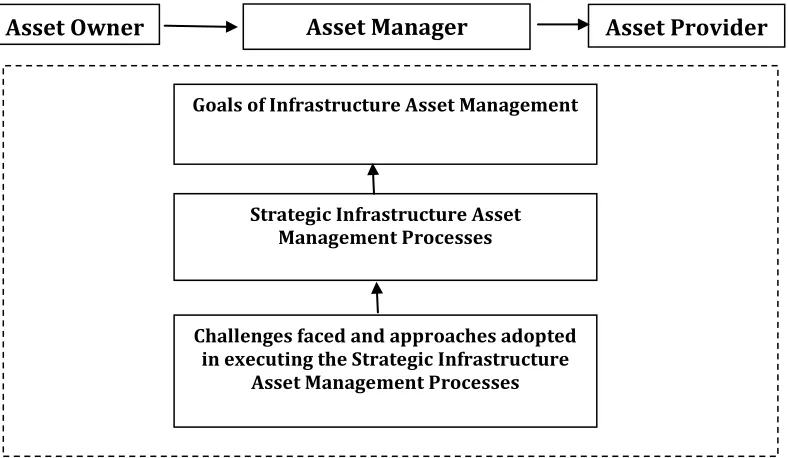
[image:14.612.59.453.448.677.2]In order to identify the relevant capabilities, there is a need to first consider the challenges in executing the core infrastructure asset management process and the measures to overcome them. By focusing on challenges, it highlights and isolates the core capabilities needed for the successful conduct of these processes. Thus, before any capabilities can be conceptualised, asset managers must understand the challenges encountered and approaches that can be adopted to address them. This is illustrated in Figure 5 below.
FIGURE 5: Challenges in Executing SIAM Processes
Asset Owner Asset Manager Asset Provider
Goals of Infrastructure Asset Management
Strategic Infrastructure Asset Management Processes
Challenges faced and approaches adopted in executing the Strategic Infrastructure
Step 5 – Distil Infrastructure Strategic Infrastructure Asset Management Capabilities
There are many capabilities that can be associated with each process. Collis (1994) warned that it may well be impossible to list the complete set of all capabilities that can be sources of superior performance because they can be found in every single activity the organisation performs and along multiple dimensions for each activity (such as faster, more flexibility etc).
In addition, capabilities are context and time specific (Collis 1994). There is no magic list of capabilities appropriate to every organisation (Ulrich and Smallwood 2004). Ethiraj et al. (2005) argued that not all capabilities provide the same marginal contribution to performance. They further argue that if different capabilities have different costs and benefits associated with the development and acquisition, managers should pay attention to understanding these trade-offs in making investments in capability development. The organisation should, therefore, invest in those capabilities that can contribute to the performance. Hence it is important that in identifying capabilities that are the sources of performance difference, it needs to be contextually grounded (Ethiraj et al. 2005).
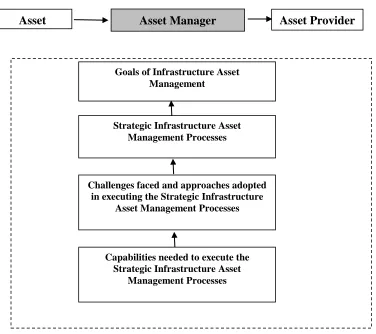
FIGURE 6: A Conceptual Framework to Identify Capabilities for Strategic Infrastructure Asset Management
Conclusion
This paper has argued for the need to adopt a strategic approach towards infrastructure asset management given the increasing pressure to enhance performance. A resource-based view approach to infrastructure asset management is recommended where there are dynamic changes in the business environment. The resource-based paradigm suggests that in order to improve the performance of infrastructure assets, essential capabilities to enable the key processes must be identified. However, to date there has been little application of this concept to infrastructure asset management. This paper, therefore, draws heavily on literature from the strategic management field and provides a first step in applying this concept to the complex environment of infrastructure asset management. Capabilities are deeply embedded within the fabric of organisations and, therefore, can be hard for the management to identify.
Asset Owner
Asset Manager Asset Provider
Goals of Infrastructure Asset Management
Strategic Infrastructure Asset Management Processes
Challenges faced and approaches adopted in executing the Strategic Infrastructure
Asset Management Processes
Capabilities needed to execute the Strategic Infrastructure Asset
Based on this argument, a conceptual framework has been proposed that systematically identifies the issues that need to be clarified before the isolation of core capabilities needed for infrastructure asset management. It is hoped that this will be a useful tool to identify the core capabilities needed in the strategic management of infrastructure assets.
References
AASHTO (2002), "Transportation Asset Management Guide, prepared for the National Cooperative Highway Research Program (NCHRP)", AASHTO Publication RP-TAMG-1, Washington D.C., November 2002.
Andrews, K. R. (1971), The concept of corporate strategy, Richard D. Irwin, Homewood, IL Andrews, K. R. (1987), The concept of corporate strategy, Richard D. Irwin, Homewood, IL Ansoff, H. I. (1965), Corporate strategy, McGraw Hill, New York
Ansoff, H. I. (1988), The new corporate strategy, John Wiley & Sons, New York
Barney, J. B. (1991), "Firm Resources and Sustained Competitive Advantage", Journal of Management, Vol. 17, pp. 99-120.
Barney, J. B. (2002), "Strategic Management: From Informed Conversation to Academic Discipline", Academy of Management Executive, Vol. 16, pp. 53-57.
Barney, J. B. and Wright, P. M. (1998), "On Becoming a Strategic Partner: The Role of Human Resource in Gaining Competitive Advantage", Human Resource Management, Vol. 37, pp. 31-46.
Brown, C. (2005), "A holistic approach to the management of electrical assets within an Australian supply utility", Thesis, Type, Sydney Graduate School of Management, University of Western Sydney.
Byrne, R. (1996), "An innovative (quality based) approach to asset management improvement strategies", Asset Management and Maintenance in the Public Sector Conference, Sydney,
Chandler, A. (1962), Strategy and Structure, MIT Press, Cambridge, MA
Day, G. S. (1994), "The capabilities of market-driven organisation", Journal of Marketing,
Vol. 58, pp. 37-52.
DeToro, I. and McCabe, T. (1997), "How to stay flexible and elude fads", Quality Progress,
Vol. 30, pp. 55-60.
Dierickx, I. and Cool, K. (1989), Asset stock accumulation and the sustainability of competitive advantage. IN FOSS, N. (Ed.) Resources, Firms and Strategies: A Reader in the Resource-Based Perspective. Oxford University Press Inc. New York
Ethiraj, S. K., Kale, P., Krishnan, M. S. and Singh, J. V. (2005), "Where do capabilities come from and how do they matter? A study in the software services industry", Strategic Management Journal, Vol. 26, pp. 25-45.
Ghemawat, P. (1986), "Sustainable advantage", Harvard Business Review, Vol. 64, pp. 53-58. Grant, R. M. (1991), "The Resource-Based Theory of Competitive Advantage: Implications for Strategy Formulation", California Management Review, Vol. 33, pp. 114.
Hamel, G. (2000), Leading the revolution, Harvard Business School Press, Boston
Hammer, M. (2001), The agenda: What every business must do to dominate the decade,
Crown Publishers, New York
Hoskisson, R. E., Wan, W. P., Yiu, D. and Hitt, M. A. (1999), "Theory and research in strategic management: swings of a pendulum", Journal of Management, Vol. 25, pp. 417-456.
Humphrey, B. (2003), Asset Management, in theory and practice.Energy Pulse: Insight, Analysis and Commentary on the Global Power Industry
Hung, R. Y. (2001), An empirical examination of the relationship between BPM and business performance: A study of Australia's top 1000 companies. PhD Dissertation.
Sydney, The University of Sydney.
Juga, J. (1999), "Generic capabilities: combining positional and resource-based views for strategic advantage", Journal of Strategic Marketing, Vol. 7, pp. 3-18.
Kaplan, R. S. and Norton, D. P. (2004a), "Measuring the strategic readiness of intangible assets", Harvard Business Review, Vol. 82, pp. 52-63.
Kaplan, R. S. and Norton, D. P. (2004b), Strategy maps: Converting intangible assets into tangible outcomes, Harvard Business School Publishing Corporation,
Kennedy, J. (2007), "Asset Management Council: Model and Definition", ICOMS Asset Management Conference 2007: Total Asset Management Sydney, Australia, 21st to 24th May 2007, Asset Management Council,
Kessides, I. N. (2004), "Reforming infrastructure: privatisation, regulation and competition", The World Bank, Washington, D.C.,
Learned, E. P., Christensen, R., Andrews, K. R. and Guth, W. D. (1969), Business Policy: Text and Case, Richard D. Irwin, Homewood, IL
LGV (2004), "Asset Management Policy, Strategy and Plan", Department of Victorian Communities, Local Government Victoria, Melbourne, August 2004.
Ma, H. (1999), "Anatomy of competitive advantage: a SELECT framework", Management Decision, Vol. 37, pp. 709-718.
Ma, H. (2000), "Competitive advantage & firm performance", Competitiveness Review, Vol. 10, pp. 16-32.
Mintzberg, H. (1994), The rise and fall of strategic planning: preconceiving roles for planning, plans, planners,Free Press, New York
Mintzberg, H. and Westley, F. (2001), "It's not what you think", MIT Sloan Management Review, Vol., pp. 89-93.
NPWC (1996), "Total Asset Management", National Public Works Council Inc, Deakin, ACT, May 1996.
NSW Treasury (2004), "Total Asset Management", Sydney, September 2004.
Porter, M. (1996), "What is strategy?",Harvard Business Review, Vol. 74, pp. 61-78. Porter, M. E. (1980), Competitive Strategy, Free Press, New York
Porter, M. E. (1981), "The Contribution of Industrial Organisation to Strategic Management", The Academy of Management Review, Vol. 6, pp. 609-620.
Porter, M. E. (1985), Competitive Advantage, Free Press, New York
Porter, M. E. (1991), "Towards a Dynamic Theory of Strategy", Strategic Management Journal, Vol. 12, pp. 95-117.
Ray, G., Barney, J. B. and Muhanna, W. A. (2004), "Capabilities, business processes, and competitive advantage: Choosing the dependent variable in empirical tests of the resource-based view", Strategic Management Journal, Vol. 25, pp. 23.
Rumelt, R. P., Schendel, D. and Teece, D. J. (1994), Fundamental Issues in Strategy, Harvard Business School Press, Cambridge, MA
Selznick, P. (1957), Leadership in Administration, Harper & Row, New York
Smallwood, N. and Panowyk, M. (2005), "Building Capabilities", Executive Excellence, Vol. 22, pp. 17.
Tao, Z., Zophy, G. and Weigmann, J. (2000), "Asset Management Model and Systems Integration Approach", Transportation Research Board, Washington,
Too, E., Betts, M. and Kumar, A. (2006), "A Strategic Approach to Infrastructure Asset Management", BEE Postgraduate Research Conference, Infrastructure 2006: Sustainability & Innovation, Queensland University of Technology, Brisbane, 26 September 2006,
Ulrich, D. and Smallwood, N. (2004), "Capitalizing on Capabilities", Harvard Business Review, Vol. 82, pp. 119-127.
Wernerfelt, B. (1995), "The resource-based view of the firm: Ten years after", Strategic Management Journal, Vol. 16, pp. 171.
Whittington, R. (1993), What is Strategy - and does it matter?,Routledge, London
Woodhouse, J. (2003), "Asset Management: Latest thinking", ICAMM 2003 - International Conference on Asset and Maintenance Management, University of Pretoria, 1-2 October 2003, Zajac, E. J., Kraatz, M. S. and Bresser, K. F. (2000), "Modelling the dynamics of strategic fit: A normative approach to strategic change", Strategic Management Journal, Vol. 21, pp. 429-453.
Zehir, C., Acar, A. Z. and Tanriverdi, H. (2006), "Identifying organisational capabilities as predictors of growth and business performance", The Business Review, Cambridge, Vol. 5,
pp. 109-116.