1 INTRODUCTION
Practical talent training is the teaching target of art design in application-oriented institutes. In the era of computer science and information network, students with mature theories and skills can only meet the re-quirements of enterprise rather than the target of ca-reer and social development. With social progress, the public needs more art idea, not the application of art. Artistic creativity is the carrier of designers’ mind, which cannot be implemented by theories or skills. Therefore, multi-perspective horizon teaching has become one of the development directions of art de-sign in application-oriented institutes.
2 ART DESIGN AND THE EDUCATION ORIENTATION IN APPLICATION-ORIENTED INSTITUTES
2.1 Basic factors and essence of design 2.1.1 Basic factors of design
Design is created for the behavior of building new things. Based on existing knowledge, practices and
experiences, it creates new things and the way to im-plement. Thus, design has three factors, including cognition of subjective thought, creation of new things and the method and behavior of implementation. These three factors are the basis, target and the meth-od of implementing target.
2.1.2 Essence of design
From three factors of design, subjective thought and objective practice are not only the key factors of de-sign, but also the impact to each other. On one hand, cognition of subjective thought decides efficiency and applicability of the implementation of designed target. On the other hand, objective practice provides the applied method for subjective thought. And design is the mixing result of both. From the perspective of designer, design is working behavior. Moreover, it’s a kind of expression, which deepens designers’ cogn i-tion of social economy and life and their self-feelings. Design is more like creation, which is created by de-signer based on the knowledge and idea. Besides, designers want their creations to fulfil certain re-quirement of social public. And the creations them-selves reflect the character of designers, such as thoughts, feelings, interest and dream. These charac-ters will be spread to the society and public. At the same time, designers hope their creation can receive
Multi-perspective horizon research on the teaching of art design in
application-oriented institutes
Xiaomeng Lu*
Shandong University of Art& Design, Jinan, Shandong, China
ABSTRACT: In the era of knowledge, the trans-boundary integration of knowledge is booming. New knowledge, new information and new application are continuously produced. However, it is more likely to see that existing developed theories and technologies will be replaced, marginalized or even eliminated. Therefore, application-oriented institutes must break the original teaching mode of simple courses and then employ new multi-perspective horizon course teaching method. From the perspective of the education orientation and objec-tive of art design in application-oriented institutes, this paper compares the multi-perspecobjec-tive horizon teaching and the interdisciplinary teaching. It proposes the teaching strategies of multi-perspective horizon teaching about art design in application-oriented institutes, as well as the professional skills needed during teaching of special-ized courses.
Keywords: application-oriented institutes; art design; multi-perspective horizon; teaching research
*Corresponding author: [email protected] C
approval from public or professionals. The approval is also the huge motivation of designers. Therefore, de-signers try to seek breakthrough in order to gain self-spiritual satisfaction. Take this couch (Figure 1) which is designed by Holland design team Droog for example. This couch has assured social practicality, as well as strong designers’ feelings. It expresses desig n-ers’ cognitions and feelings about social environment, humanism, interest and dream. The most important thing is that designers make new attempt and break-through on the structure, model, material and color, which makes this couch become one artwork with appreciation value.
In conclusion, this paper agrees with following statements:
The essence of design is creation, namely, create new things. At the same time, a design also creates artistic conception about spirit and psychology for public. It is the carrier of designer’s subjective thought and the breakthrough about the self-cognition of sub-jective thought.
Figure 1. Couch designed by Holland design team Droog
2.2 Art ideas’ value in art design
2.2.1 Important engine-catalyzed experience econo-my
With the boost of technology, material wealth pro-duced by social economy is accumulated faster and faster. Aims of attending economy are no longer for the basic survival, but for more aesthetic pleasure of sprit and psychology. Thus aesthetic pleasure has become one of the forces facilitating individuals to join economic activities and arousing their important motive power in some fields. Aesthetics and economy can be highly merged and become aesthetic economy, which has been confirmed by economists that it al-ready has become a kind of economy.
Two key factors for the existing economy are prod-uct and service. Among these two key factors, service is a kind of behavior pattern giving people’s satisfa c-tion of psychology needs. Product is a materialized form which gives objective perception to designers, producers and users, as well as visual stimulation and sense experience. From the aspect of social life, prod-uct’s visual stimulation is the key factor of the impl e-mentation of economy form. The effect of visual stimulation is decided by product’s art idea to a great
extent. Art idea gives individually aesthetic effects. The higher level of aesthetics is, the better aesthetic effects people obtain, and the higher possibility of completing economic form is. In other word, except some basic suppliers, people usually pay more atten-tion on the aesthetic and emoatten-tional experience. Therefore, in the era that social material wealth can completely satisfy survival needs and has large amount of disposable income, people’s consumption is not only the practicality of products or normal service functions, but the aesthetic economy form which is a merging of aesthetics, experience, practicality and products. So the idea of art design composes the core of products’ aesthetics, which gives consumers aes-thetic satisfaction and then becomes the key motive power of modern economy form.
The main method of implementing aesthetics is the visual and psychological experiences stimulated by objective things. So the essence of aesthetic economy is experience economy. Experience is a special thing when people respond to some stimulation. No matter whether the thing is real or virtual, the stimulation is caused by the direct observation or involvement to the things. It involves perceptual factors such as custom-ers’ sense, emotion, feelings and reasonable factors which include knowledge, intelligence and thinking. People can also gain truly and real psychological feel-ings by physical contact and practice. Experience economy is that “enterprise treat service as stage, product as prop, customer as center, and creates activ-ity which can attract customers attending and become memory” (“Experience Economy”, Pine II & Gilmore, 1999). The main power of developing modern econ-omy is “exceeding function, competing on providing experience” (Marshall, former president of British Airways). “We are stepping from bowel economy to spirit economy, since the bowels needed be fulfilled are certain” (American futurist Alvin Toffler, "Future Shock", 1970). It is not possible to give rise to cus-tomers’ value memories without the direct involv e-ment of art ideas and the experience stimulation. The diversity of customers’ aesthetic tastes stimulates the diversity of art idea in products. As a result, it pushes economy development. Thus, art idea is the important engine of experience economy development.
2.2.2 Main manifestations of constructing social civilization development
history to modern times. It is designers’ understanding of social civilization. So these utensils reflect the great significance of art idea to the development of human social civilization, as well as the huge power to push the development of social economy.
Any utensils are the specific results of design. Art idea in design is the reflection of people’s inner world to the change of culture. The reflection is the inher-itance of culture as well as the constancy of some things’ development. However, during the develo p-ment progress of human civilization, civilization has very obvious regionality under the condition of lack-ing high information communication. Regionality obstructs the merging of different civilization, which limits the level and extent of knowledge. All of the art ideas are created based on the existing design experi-ence in fixed region, which restricts its development. But it does not change design ideas that exert huge improvement effects on social civilization develop-ment. For example, the sandglass which is changed from drip is a marvelous and creative design. Armil-lary sphere is not only a great invention of science, but also a remarkable artwork of art idea. These designs all come from the existing experience, but they will have long-last impact on the development of social civilization. What’s more, the basic principles within them are still applied today.
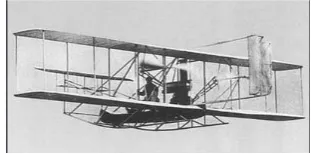
[image:3.595.323.482.130.222.2]On the other hand, human have affluent imagination ability since they have abstract thoughts and imagina-tion. The ideas have foresight and improve human’s life and the progress of human civilization develop-ment, though they may even violate the science at that time. For example, the proposal and implementation of aerobat is the most import idea in human civiliza-tion history (Figure 2). It is no exaggeraciviliza-tion to say that the invention of aerobat and steamer has largely shortened the evolution timeline of human civilization.
Figure 2. The first aircraft designed by Wrights
When social development level is not developed, the design of utensils pays more attention of function-ality rather than the art idea. When it comes to 21st century, the design aim of product has been changed with the support of high-developed science technology. With the premise of functionality, art idea gets much more attention than function during product design. Art design ideas are emerged like an endless stream in design circle, which push development of all fields. Take the creative portable A5 water bottle (Figure 3) for example, it has become the forerunner of import in
[image:3.595.113.269.504.581.2]this industry.
Figure 3. Creative portable A5 water bottle
2.2.3 Art ideas in design provide high-level spirit enjoyment
First, idea is a kind of ideology. In the practical life, not all vagarious ideas can be put into practice. There are two factors deciding whether idea can be imple-mented. One is the creative consciousness, and the other one is validity of design idea. Creative con-sciousness does not come from instinct but the ac-quired conscious impulsion. This conscious impulsion is a kind of ability of acute and consciousness which is formed during education, and this ability is totally based on teachers’ teaching method and teaching level. The validity of design idea is not inborn either. It is built on solid theoretical knowledge, professional knowledge and abundant practice experience. Howev-er, although this kind of idea exceeds old-fashioned experience, the old-fashioned experience also cannot be ignored. It comprehensively embodies the theoreti-cal design knowledge, professional technitheoreti-cal skills, practice experience and superior creative conscious-ness. Besides, this comprehensive ability, namely, the so-called acquired ability, which can be obtained by education. During design, art idea’s power of giving high-level spiritual enjoyment is based on designer’s ability of acute consciousness, catching consciousness and the implementation ability of the idea, which are obtained by teachers or self-study. The stronger the ability is, the higher the level of spiritual enjoyment will achieve. At the same time, it can improve design-ers’ art ideas and stimulate human to improve the level of spiritual enjoyment. Through obeying this principle, human can achieve the ultimate aim of improving the quality of social life.
2.2.4 Orientation of art design education
along with social development. And different people in social stage and social class have different require-ments of spiritual needs. When the level of social material development is low, people pay more atten-tion on satisfacatten-tion of basic living requirements. At that time, spiritual enjoyment and satisfaction are the privilege of people from upper class without any con-nection with ordinary people. Thus, design just meets requirement of basic application. When society comes to the developed stage, condition of material life is better and basic needs of living are not problems, some application and spiritual satisfaction in design are becoming different in different fields and material categories. With the increasing development speed of social progress, social wealth accumulates continu-ously and human’s aesthetic taste becomes better and better, and life becomes more and more artistic, re-sulting in the trend of higher proportion of aesthetics than application. This trend which has impacts on design can be featured with art, and the artistic life can bring art in design in turn. This artistry in design can be reflected in many aspects such as fashion, furniture, architecture, plane design and product design. The main factors of one application need to be considered is the artistic factor of appearance, durable ornamental and spirit enjoyment to human, instead of application. Art in life brings people visual enjoyment. But the essence of social life decides that the application is consistent, no matter which kind of goods’ design. Design is the manifestation of designer’s subjective thoughts in the basic frame of application. Generally, there is no need to discuss basic application during design, but discuss the artistry and spirit needs. Take furniture for example, the basic application of furni-ture cannot be changed, no matter how to design. So the design aspires providing physical comfortable and spirit satisfaction for target customers and suiting to the aesthetic needs. To meet the target, designers’ high aesthetic taste and art attainment are quite important, which are main factors for keeping validity of design results. According to above analysis, the orientation of art design education in application-oriented institutes is aiming to teach students comprehensive art attain-ment and improve innovative ability of meeting spir-itual needs and aesthetic taste of target customers. In other word, these institutions should focus on training students’ comprehensive ability of fusing abstract and image thoughts, in order to training high Applied Tal-ent with ability of application and innovation.
3 MULTI-PERSPECTIVE HORIZON TEACHING OF ART DESIGN IN APPLICTION-ORIENTED INSTITUTES
3.1 Art design teaching orientation: “knowledge technology +”
From the training objective of students major in art
design in application-oriented institutes, innovation ability is key ability, which is the motive power of pushing individual’s career development, as well as social development. Without the ability, students are just skilled workers, not application-oriented skilled talents. Application-oriented skilled talents not only master professional skills, but also have quality of innovation. Although design furniture based on books is a kind of professional skill, adding intelligence and spiritual needs to furniture is what exactly applica-tion-oriented skilled talents do. The former one is the application of skill which can only satisfy basic life, and the latter one is innovation which extends profes-sional skill to artistry. The innovation can only be implemented by adding other knowledge and ability and then give owners spiritual satisfaction and aes-thetic taste. Art design adds art to life and makes the result of thought and self-consciousness permeates the commodity and designer’s design. The result’s artistic expression and appeal is the root of the efficiency and applicability. The former one is decided by designer’s artistic taste which is decided by designer’s solid knowledge and reasonable knowledge structure. If application-oriented institutes set the training target of teaching as satisfying employment, it will be too nar-row. It is not good for students’ career development and the needs of social development, so the teaching orientation of art design in application-oriented insti-tutes should be extended to “Knowledge Technology +”. “Knowledge Technology” is the major theory knowledge technology. Based on this, “+” includes the basic skills, the ability of lifelong self-regulated learning and innovation under multi-perspective hori-zon, the aesthetic taste, the life attitude, the words, the latest technology and the critical thinking.
3.2 Connotation of multi-perspective horizon 3.2.1 Horizon of aesthetic taste
from the perspective of employment and social service, art design works should be approved by public so that they should be efficient and applicable. Therefore, catering to the public’s aesthetic taste should be a priority to be concerned. Significance of individual’s aesthetic taste is to transform the public’s aesthetic taste trend into self-taste which is innovative. So the ability of grasping public’s aesthetic taste trend is the key when teaching art design major students. In the teaching of art design in application-oriented institutes, it should mingle with the perspective of aesthetic horizon and knowledge, so as to improve students’ self-aesthetic taste and ability of acquiring public’s aesthetic taste trend.
3.2.2 Horizon of subjective thoughts
From the perspective of materialism, any result of artistic design is the real life which is reflected in in-dividual’s consciousness. The objective of social m a-terial life decides that social maa-terial life has no ten-dentiousness. All the tendentiousness reflected in the result of art design is imposed by designer’s subjective thought. So, all of the external manifestations of art design works are the performances of designer’s su b-jective thought. From the perspective of existence and consciousness, although individual’s consciousness is the reflection of material life, the knowledge of mate-rial life is greatly determined by individual’s subje c-tive thought if one has enough knowledge and experi-ence. Positive subjective thought will be reflected on design works as positivity and brightness. Passive subjective thought will be reflected on design works as gloom and suppression. For aesthetic theory, pas-sive inclination, such as gloom and suppression, has aesthetic value, too. But the intensive aesthetic effect will give too much pressure to people. It has risk of being abandoned by mainstream society. In high-leveled material and civilized society, people pay more attention to the true meaning of human life, and the main trend of social life is positive, enlightened and antrorse. Such trend gives people huge signifi-cance, which is also the life people wanted. Therefore, in order to train students’ positive thought and help form their horizon of positive life, the course of art design should be philosophy-centered and combined with positive thought.
3.2.3 Horizon of language and linguistic
Language is an important foundation of learning all kinds of knowledge and realizing the ability of per-ception and cognition thinking. And linguistics is the irreplaceable expression tool of continuous cognition thinking and perception. The level of language directly determines the depth and extent of cognition and per-ception ability. The ability of controlling the language determines the continuous cognition thinking and perception and the degree of them being expressed accurately, and language develops with ideas while integrating the instruction, aesthetics and culture into
one. In many cases, it is not that the student is not intelligent, but the students lack enough capacity of understanding and expression. Therefore, we take the “Viewing the Waterfall at Mount Lu” which is used as a title of setting up an urban landscape design as an example.
An ancient Chinese poet Li Bai’s poem “Viewing the Waterfall at Mount Lu” is etherealized and maje s-tic, having thousands of images which make people’s thoughts be carried away afar, and thus one takes it as the title to set up an urban landscape design. There is a problem that a center of the word is relevant with the understanding and expression of context language. In the panorama, the verbs “bearing”, ”hanging” and ”downing” have constituted the etherealization and verve of the Waterfall at Mount Lu, the verbs “flying” and “falling” have reflected the majesty and mystery of it , thus constituting the framework of the whole landscape design. While the “sun”, ”purple” and ”silver” have constituted the basic tone of sight. Adding the wonderful “smoke”, a majestic and sin gu-lar urban landscape arises spontaneously. All of the perceptions are reflected here, and the method of per-forming that by image and adding vivid description to performance all need keen abilities of language and linguistics, continuous thinking and accurate expres-sion. So this kind of image cannot be simply ex-pressed with a censer peak, a waterfall and a man looking at it from afar.
3.2.4 Horizon of obtaining advanced knowledge technology under the background of network computer
The development of network computer and high rapid streaming of information accelerate the update and reform of knowledge technology. Thus, in the level of technology application, the fruit of technology can be globally shared within very short time even several seconds. Because the fruits of technology develop-ment have competitiveness, inheritance and relevance, the so-called causal relationship about the new tech-nology will be created based on knowledge we are still using. The update rapid is too quickly for people get-ting familiar with all kinds of technologies. From the perspective of global environment, there is always a need in the progress of evolution, especially the ap-plication of art design which will be substituted or emerged in an endless stream. If lacking of sensitive-ness and ability of acceptance of knowledge technol-ogy, we cannot catch up social development. Under this environment, art design works cannot meet re-quirements if just using existing skills and knowledge. They need designers’ ability and consciousness of study and mastering advanced knowledge and tech-nology and their sensitiveness of techtech-nology. Such ability and consciousness are not inborn, but acquired, which must be gained under the teaching and leading of teacher and self-study in school. Thus, horizon of obtaining advanced knowledge technology under the background of network computer should be included to the teaching of art design in application-oriented institutes.
4 PRACTICAL DIMENSION: MULTI- PERSPEC-TIVE HORIZON TEACHING STRATEGIES OF ART DESIGN COURSE IN APPLICATION -ORIENTED INSTITUTES
4.1 Multi-perspective horizon teaching strategies of art design course
4.1.1 Strengthen multi-perspective horizon teaching consciousness
In teaching practice, either teacher or school empha-sizes the level of professional theory teaching, profes-sional technology teaching and profesprofes-sional quality. Actually, aforementioned qualities are also considered by assessment and the career development of teacher. They are important and correct during teaching natural science which emphasizes logical thought. Learning is the behaviour or progress of developing skills or knowledge (Arsham, 2002). Learning of design knowledge pays more attention on practical operation. Essence of design is creation. Design is considered as a kind of abductive reasoning, facing problem of un-clear definition, it is solved by construction of multi-ple aspects. For students, the design knowledge acqui-sition needs understanding the entire problem.
Differ-ent from simple consult, the design knowledge cannot be directly taught to students or achieved by the rea-soning method of material world. Besides, design needs lots of discussions with participants on different projects and contents. Therefore, design progress is the process of socialization, and the results are con-structed by different kinds of knowledge (Bucciarelli, 2001). Besides, the things’ practicality is constant, so the image thought is emphasized more in the teaching of art design. Therefore, application-oriented institutes should firstly broaden teaching horizon, improve and strengthen consciousness of Multi-Perspective Hori-zon teaching. With consciousness of multi-perspective horizon teaching, educators can adapt to the practice of teaching, so as to avoid limited doctrine of the thinking mode and be trained to open mind in the beginning.
4.1.2 Pay attention to the cultivation of lifelong ac-quired knowledge and ability
Knowledge and ability can be acquired through two methods: active acquisition and inactive acquisition. In school, the main acquisition method is inactive; in working, the main acquisition method is active. These two methods have close-knit internal logical connec-tion. In school, students not only acquire basic major theory and skill, but also the scientific reasonable thinking mode and ability of knowing and analyzing problems, which construct the basis of lifelong study and innovative ability. However, current teaching of art design pays more attention on theory, not on methods and innovation. Thus, students can acquire theoretical knowledge and skill but cannot acquire ability on how to learn and handle new knowledge and skill, which is not good for training new applied tal-ents. Application-oriented institutes should take the training of lifelong study and innovation as one of the main courses in the teaching of art design. One is en-lightening teaching mode, and the other method is innovative teaching mode. The former one requires teachers to put forward more questions to lead stu-dents to think and develop their good thinking habit. The latter one can be implemented by the method that students share understanding of art works and then teachers and students give evaluation and discussion. The third method emphasizes logicality of teaching, which needs a new kind of teaching method involving new knowledge and technology to explain logically. 4.1.3 Practice teaching of innovation and
entrepre-neurship
to cultivate applied talents in application-oriented institutes, and there are three keys as follows.
a. Build a “multi-level, three-dimensional and open” practical teaching system
One main aspect of multi-perspective horizon teaching is seeking and constructing reasonable “mu l-ti-level, three-dimensional and open” teaching system. In the past, teaching in school and college is insular and independent; it lacks wide connection, seeks for professional test scores and pays less attention on thought ability. Therefore, it is necessary to reform the teaching system and construct a “multi-level, three-dimensional and open” practical teaching system. This teaching system includes basis and comprehen-sive knowledge, research and innovation. It can facili-tate the combination of on-campus teaching and off-campus practice, and it also improves the devel-opment of students’ knowledge, ability and quality.
b. Correct understanding of innovation and entre-preneurship from the perspective of critical thinking
By the influence of reports preferring success, lots of students have strong prejudice on innovation and entrepreneurship. They think it is just running a com-pany or store by individual or a team. And this phe-nomenon will be raised to a higher level of success, dream realization and individual dignity. It leads stu-dents who are major in art design to have selective judgment, and this consciousness will impact on stu-dents to make wrong decision that they can obtain success without any critical thinking. Thus “the Be i-jing drifters” may be the representatives who harbor such consciousness. Usually, they will fail and get hurt from the wrong decision. The reason why this phenomenon occurs is that there is lacking in critical thinking which should be taught in school. From mul-ti-perspective horizon and in the teaching of art design, critical thinking method and consideration from mul-tiple perspectives should be applied in order to culti-vate the ability of self-learning, innovation, entrepre-neurship, and critical thinking. Thus students with these abilities can avoid selective judgment con-sciousness and improve their cognition about entre-preneurship.
4.2 Requirements of teachers in multi-perspective horizon teaching of art design course
4.2.1 Improve the overall quality of course teachers In the past 50 years, there is big improvement about education of art design. It has built good foundation and cultivated thousands of talents for Chinese eco-nomic progress. Currently, teacher resources about art design can be divided into two categories. One cate-gory is teachers in art institutions who are major in art or the arts and crafts. They have been educated through the training of professional art or the arts and crafts, and they’re trained well in this field. The other category is teachers who are majored in polytechnic in
polytechnic colleges, including architecture. No matter what type, the knowledge structure of teachers is the key factor of the teaching result. Multi-perspective horizon teaching requires high-qualified teachers. However, currently, course teaching exists inde-pendently, so teachers’ quality must be improved through multi-perspective horizon teaching. There are several methods: The first one is to integrate majors and course structures related to art design; the second method is to organize meetings or activities on cross-course and extend understanding of different courses; the third method is to encourage teachers learning knowledge of related major; the last one is to design teaching modules according to the mul-ti-perspective horizon teaching.
4.2.2 Step out to see diversified social and economic life
Global horizon is also important to the development of discipline. New York Polytechnic University’s pres i-dent Edward Giuliano launched an experimental pro-ject with Nanjing University of Posts and Telecom-munications. He expressed his opinions on the method of cultivating talents: It can be seen from the re-searches that there is no connection between scores and innovation ability, entrepreneurship spirit and leadership. Chinese score examination system will result in students lacking creation ability.
There are new requirements with the development of society for the art design major teachers. Teachers should go out to see diversified social and economic life, and then combine with their own theoretical knowledge and teaching experience to create new teaching methods combined with theory and new ac-quisition from society. On this, Edward Giuliano said teachers in New York Schools are better than those Chinese teachers. “Besides, Chinese teachers are also lack of this consciousness. Although they use the same teaching materials as ours, the gap exists because of teachers’ experience”. Therefore, it shows the im-portant meaning about teachers’ experience on im-proving and extending multi-perspective horizon.
To solve this issue, this paper gives out three meth-ods as follows:
The first one is that teachers must do practice and self-study during teaching because teacher’s ability can be the determined factor about students’ ability. In global society, knowledge comes out quality. To catch up with latest new knowledge, teachers must do self-study. They should step into market and do prac-tice and self-study to enrich their knowledge and tech-nical skills, so as to improve ability of mul-ti-perspective horizon teaching.
The third one is cooperation among schools. Cul-ture is varied in different areas, which can restrict the ability of individuals. However, cooperation is a good way to break the restriction. Teachers in different schools and different areas can work in other schools to gain more special knowledge, including teaching and the teaching and research activity. Therefore, they can absorb the advantages from others and improve the entire teaching level.
4.2.3 Set up tutors for teachers
Young teachers are the main teaching resources. They have received higher education, obtained training from theory and skill and had solid theoretical basis. What’s more, they have lots of advantages such as wide hori-zon, active thoughts and spirit of multi-perspective horizon. Nevertheless, lacking experience becomes their disadvantage when applying knowledge they’ve learnt to the teaching activity. And experiments also show that young teachers are lack of experience, sen-sitiveness, innovation consciousness and critical thinking. It is not good to cultivate students’ related ability. Thus, colleges and universities should set up a kind of tutor mechanism to lead these young teachers.
a. Guide of converting booklore to the teaching knowledge
The self-absorption booklore can be adjusted by self-subjective consciousness and judgement. But the knowledge teaching is a process of knowledge output. It is systematic and integral knowledge output, even though it is affected by teachers. Repeating what the book tells will have bad influence on teaching. Young teachers can attend tutor’s class to get guide of co n-verting book knowledge to teaching knowledge.
b. Guide of teaching skills
Teaching results are determined according to teaching skills. But for young teachers, it is hard to acquire better teaching skill, thus making students lose their interest during class. Therefore, tutors should guide them from multiple aspects, including knowledge point mastering, new technology combin-ing, method combincombin-ing, aesthetic perspective handling and language design. All of them can be included to the teaching skill, which also contains body language, face language and story language. Besides, expressing skill should also be included, such as intonation. All of these aspects can impact teaching level and have posi-tive influence on students’ interests and development of ability.
c. Discuss and improve the ability of mul-ti-perspective horizon teaching
Multi-perspective horizon teaching of art design is a kind of teaching innovation with high demand. Teaching areas are not only major theories, but the expand knowledge from other related majors. This is a big shock toward traditional teaching, which is a chal-lenge to all teachers. The innovation requires teachers have abundant knowledge, rich teaching experience and acute thought consciousness. The first two are the
expertise of elder teachers, and the latter one is the speciality of young teachers. No one can implement multi-perspective teaching without the help from oth-ers. Young teachers can establish theories related to art design but may have a few mistakes on process, subjective thoughts and so on. With assistance of tu-tors, they can improve their teaching. And during the practice of teaching, they should be together to discuss and cooperate with each other. Such cooperation will combine the specialities of all teachers and gain the teaching ability of all teachers in the end. The ad-vantages of such cooperation also includes increasing academic exchanges, eliminating barriers to knowledge, broadening their horizons, and sharing successes, difficulties and technical skills. Thus, this is an important way to implement multi-perspective horizon teaching
REFERENCES
[1] Brooke Noel Moore. & Richard Parker, 2013. Critical
Thinking. Zhusu Mei translation, Machinery Industry Press, 7.
[2] Committee on Facilitating Interdisciplinary Research,
National Academy of Sciences, National Academy of
Engineering, Institute of Medicine. Facilitating
Interdis-ciplinary Research. Washington DC: The National
Academies Press, 2004.
[3] Liu Zhonglin. 1998. Modern cross subject. Zhejiang
Education Press.
[4] Tim van Gelder, Reason! : Improving Informal
Reason-ing Skills, in ProceedReason-ings of the Australian Computers in Education Conference, 2000.
[5] Zhang Peng. 2014. Interdisciplinary fusion of talent
worth the wait, Wen Wei Po, 12.23.
[6] Swanson G. 1994. Graphic Design Education as a
Liber-al Art: Design and Knowledge in the University and the" Real World". Design issues: 53-63.
[7] Anderson T. 2003. Art education for life. International
Journal of Art & Design Education, 22(1): 58-66.
[8] Duncum P. 2001. Visual culture: Developments,
defini-tions, and directions for art education. Studies in art ed-ucation: 101-112.
[9] Zhang Ce. 2014. Chinese Higher Education in Art and
Design Practice Curriculum exploration and research. Hunan Normal University.
[10] Ding secret gold, Cheng Yapeng High Art Designs
Edu-cational Innovation Talents Training Mode - College of Art and Design in Beijing Forestry University, for
ex-ample. Arts Education, 2015, 08: 246-248.
[11] Chen Gaoya Universities of art and design education
in-novation to explore. Industry and Technology Forum, 2015, 14: 157-158.
[12] Luo secret of Higher Education Reform of Art Design.
Chinese and foreign entrepreneurs, 2015, 24: 175.
[13] Luo Xiaocong. 2015. On Cultivating Creative Talents of
Art Design Education. Education and Vocation, 22:
92-94.
[14] Yong-qin Q I. 2002. Innovative Education and Teaching
Experiment of Higher Institute. Laboratory Research
and Exploration, 3: 002.
[15] Francis C A, Jordan N. & Porter P, et al. 2011.
sustainable agriculture. Critical Reviews in Plant Sci-ences, 30(1-2): 226-237.
[16] Eom S B, Wen H J. & Ashill N. 2006. The Determinants
of Students' Perceived Learning Outcomes and Satisfac-tion in University Online EducaSatisfac-tion: An Empirical
In-vestigation*. Decision Sciences Journal of Innovative
Education, 4(2): 215-235.
[17] Hargreaves A. 2003. Teaching in the knowledge society:
Education in the age of insecurity. Teachers College Press.
[18] Hall P. & Weaver L. 2001. Interdisciplinary education
and teamwork: a long and winding road. Medical
educa-tion, 35(9): 867-875.
[19] Dillon P M, Noble K A. & Kaplan L. 2009. Simulation
as a means to foster collaborative interdisciplinary
edu-cation. Nursing Education Perspectives, 30(2): 87-90.
[20] Flores M A. & Day C. 2006. Contexts which shape and
reshape new teachers’ identities: A multi-perspective
study. Teaching and teacher education, 22(2): 219-232.
[21] Bhatia V. 2002. Applied genre analysis: a