RIT Scholar Works
Theses
Thesis/Dissertation Collections
2008
A framework for integrating DNA sequenced data
Prabin Dutta
Follow this and additional works at:
http://scholarworks.rit.edu/theses
This Thesis is brought to you for free and open access by the Thesis/Dissertation Collections at RIT Scholar Works. It has been accepted for inclusion
in Theses by an authorized administrator of RIT Scholar Works. For more information, please contact
Recommended Citation
ROCHESTER
INSTITUTE
OF
TECHNOLOGY
Department
of
Computer Science
A Framework for
Integrating
DNA Sequenced
Data
by
Prabin Dutta
March
24,
2008
Thesis
submitted
in
partial
fulfillment
of
the
requirements
for
the
degree
of
Master
of
Science
in
Computer Science
Rajendra
K.
Raj,
Advisor
Paul
Tymann,
Reader
Signature Block
1) _ _ _ _
R_e_K_e
_R_a~J~·
_______
Prof. Rajendra K. Raj
2) _ _ _
P_a_u_1
T~y_m_a_n_n
_____
prof. Paul T. Tymann
Permission to Reproduce Thesis
A Framework for Integrating DNA Sequenced Data
I,
Prabin Dutta, hereby grant permission to the Wallace Memorial Library of R.I.T. to
reproduce my thesis in whole or in part. Any reproduction will not be for commercial use
or profit.
Prabin Dutta
Acknowledgement
During
this
work
many
people
have
offered
their support,
advice and wisdom.
I
am
truly
grateful
to
each one of
them
and cognizant
that
I
could not
have
done
it
alone.
1.
Prof. Rajendra K.
Raj
for his
guidance,
support
and
inspiration
through
out
the
development
of
this thesis.
2.
Prof. Paul
T. Tymann
for
helping
me
to
stimulate
ideas
and
to
find
this
research
topic
and agreed
to
be
the
reader of
this thesis.
3.
Prof. Warren R.
Carithers
who
agreed
to
be
the
observer of
this thesis.
TABLE
OF CONTENTS
ABSTRACT
6
1. INTRODUCTION
7
2. OVERVIEW
OF RELATIONALDNA
23
3.
SYSTEM
DESIGN AND IMPLEMENTATION
41
4.
ANALYSIS
52
5.
CONCLUSIONS
62
APPENDIX A: FRONT END IMPLEMENTATION CODE
68
APPENDIX B: CUSTOM PARSER IMPLEMENTATION CODE
75
APPENDIX C: FIGURES
81
A Framework
for
Integrating
DNA Sequenced Data
Abstract
The Human Genome
Project
generated vast
amounts
of DNA
sequenced
data
scattered
in
disparate data
sources
in
a
variety
of
formats.
Integrating
biological data
and
extracting
information
held
in
DNA
sequences
are
major
ongoing
tasks
for biologists
and software professionals.
This
thesis
explored
issues
of
finding,
extracting,
merging
and
synthesizing
information
from
multiple
disparate data
sources
containing DNA
sequenced
data,
which
is
composed
of 3
billion
chemical
building
blocks
of bases.
We
proposed a
biological data
integration
framework based
on
typical
usage
patterns
to
simplify
these
issues
for
biologists.
The
framework
uses
a
relational
database
management
system
at
the
backend,
and
provides
techniques
to extract, store,
and
manage
the
data.
This
framework
was
implemented,
evaluated,
and
compared
with
existing
biological
data
1. Introduction
This
chapter
introduces
challenges
in
integrating
biological data
that
normally biological
scientists encounter
during
extracting, retrieving
and
synthesizing
scientific
data. The
chapter
is
organized
as
follows.
It
begins
with a
discussion
on
background
of
biological
data
evolution.
We
will
discuss
ever
enduring
challenges of
integrating
biological
data
in
section
1
.2.To
understand
the
problem
domain
and our research
landscape
more
in
depth,
we cover characteristics of
biological data
and
different biological
data
formats in
this
section
too.
Section
1.3
covers related works
in
this
problem
domain. Section 1.4
states
our
hypothesis.
1.1 Background
on
Domain
The
mysteries of
human
cell
biology
have
been captivating human
endeavor since
the
days
of
Gregor Mendel (1822
-1884).
In 1865
Mendel,
the
father
of genetics published
his
analysis
of
heredity.
Later
on
Nobel
laureate Barbara McClintock
provided
the
microscopic
evidence of chromosome
breakage
and reunion
during
recombination
[12].
The
discovery
of
double
helical
structure of
DNA
is
another milestone of genetics.
In
1953
Watson
and
Crick
showed
that the
structure
of
DNA
is
a
double
helix [12].
However
prior
to the
Watson
and
Crick's
study,
in
1940
Beadle, Tatum,
Ephrussi
proved
that
the
function
of
genes
was
established
as
a
repository
for
the
information
to
synthesize
a protein.
The
ultimate
triumph
of
Genetics
is
the
Human
Genome
Project
[14].
In
May
1990
Department
of
Energy (DOE)
declared
the
beginning
of
Human Genome Project. This
publicly
funded
project costs
$200
million
dollar
per year
and anticipated
to
be
lasting
for
15
years.
The
objectives of
this
project
are
Mapping
and
sequencing
the
human
genome
and
the
genomes
of
model
organisms;
Ethical,
legal,
and social
considerations;
Research training,
technology
development
and
Technology
transfer.
The Human Genome
Project
is
successfully
completed
in
April
13,
2003. The
project
generated
a plethora of
information
on
human
genome
especially
on
DNA
sequenced
data.
DNA
is
simply
a
long
string
of
four
molecules
-Adenine
(A),
Thymine
(T),
Guanine
(G),
Cytosine(C)
arrayed
in
sequence
and
it
carries
heredity
information.
However searching,
extracting,
merging
and
synthesizing
this
information
held in
the
molecule remain a complex and
daunting
task.
1.2 Problem Definition
and
Motivation
1.2.1 Biological Data Integration Common Problems
While DOE
completed
the
Human Genome
Project,
other
scientific,
commercial
and
educational organizations
started
storing
the
genome
data
and
extracting
the
stored
data.
The
data
generated
by
Human Genome Project
is
crucial
for biological
scientists
for
scientific analysis.
The individual
organizations
publish
data in
autonomous
data
sources
and
these
data
sources
vary
considerably
in
contents,
access
methods, capacity,
query
processing
and
services.
Biological
data integration is
a complex
task
for both bioinformaticians
and
biologists
and
significant
efforts
have been
made
to
overcome
these
complexities
during
last
twenty
years.
Researchers
need
integrated
access
to
data from
multiple
sources.
Concept
identification
and resolution
is
a complex
task
because data
contained
in
two
data
sources
may
refer
to the
same
object
and
hence
confusion
increases.
Again
different data
sources
may
contain
data in different formats
and
reconciling
them to
a
single
repository is
another
daunting
task.
We
spent a major part of
this
research
only
on
data
transformation.
This
is because
raw
data
needs
to
be
extracted
in
order
to
make
them
suitable
for storing
in
scientific repository.
Concepts overloading (whether
two
abstract concepts
have really
Therefore,
biological data integration is
a complex
task
and
much of effort
has
to
be
made
by
scientists
to
overcome
these
complexities.
Biologists
use
computers
and computer
tools to
collect and analyze results
from
largely
automated
instruments
used
in biological
sciences.
The initial
computational
analysis
is
mandatory
to
answer
many
biological
questions.
The
web
is
another
source
of
large
amount of
information
available
for
scientists.
Therefore
the
biological
science
discovery
process
is nothing
but converting
data into
information,
information
into
knowledge
and
finally
knowledge into discovery.
Data
^^^^
Information
^Knowledge
^_Discovery
However
information
integration
in
discovery
process
involves
lots
of
enduring
challenges.
Information
integration in biological
science
greatly
differs from
traditional
information integration in
that the
nature of
biological data
(nature
of
biological data
will
be discussed
in
section
1.2.3).
The
recent
trend
in biological
science
research
is
moving
from
wet
lab
to
computer
science
lab,
which
is known
as
information driven discovery.
In
the
recent
past,
reductionist
molecular
biology
gave
biologist
the tool to
identify
and
characterized
molecules
and
cells, the
fundamental
building
block
of
living
system.
However,
a system
level
approach
in
biology
is
necessary
to
understand
and
analyze
molecules
and
ultimately
cells,
function in tissues,
organs,
organisms and population.
The
objective
of
Genomics
Sequence
Gene
finding
Genome-Comparison
Gene
expression
profile
Micro
array
Experiments
Proteomics
Protein
Expression
Structure
Functions
Systems
Biology
Regulatory
Network
Metabolic
Pathway
Database
Computational
Tools
Database
Computational
Tools
Database
Computational
Tools
Fig
1.1:
Biological
Information
Discovery
Process
Research
discovery
and synthesis
are now
driven
by
the
complex
information
arising
intrinsically
from
biology
itself
and
from
the
diversity, heterogeneity
of experimental
observation.
The database
and
computing
activities will need
to
be integrated
to
produce
more
meaningful
and
effective
results
from
biological
data.
The
new
emerging
techniques, for
example
Gene
finding
algorithms and
clustering,
make
the
whole process
of
biological
discovery
a robust one.
In
order
to
successfully
complete
the
discovery
process, the
biologist
must
be
able
to
find,
extract,
merge
and
synthesize
information
from
multiple,
disparate data
sources.
Biologists
also need
to
access and retrieve
the
most up-to-date
biological data.
To
find
the
most
relevant
information,
biologists
need
to
be
able
to
perform complex queries
across
multiple
heterogeneous databases.
The
robustness
of
integration information
infrastructure
involves
complex
database
queries,
computational
algorithms,
and
application
software.
The
most efficient analytical
tools
and algorithms are required
to
extract
meaningful
information
from
massive volume
and
diverse biological
data.
1.2.2
Diversity
and
Variability
Another
challenge
of
integrating
biological
data is its
diversity
and variability.
The
nature
of
biological data is
intrinsically
complex
and
is
organized
in loose hierarchies
that
reflect
our
understanding
of
the
complex
living
systems.
Different
individuals
and species
vary
tremendously,
so
naturally
biological data does
also.
On
top
of
diverse
and
variable
finding
right
data
source
itself is
a challenge.
Biological
data
sources
represent
a
loose
collection
of
autonomous
web
sites,
each with
its
own
governing
body
and
infrastructure.
Heterogeneous data formats
ranges
from
simple
files
to
fully
structured
database
system.
Biological data
sources
are subject
to
ongoing
changes
including
data
content and
data
schema.
Analysis
of
biological data
requires
both database
query
activities and proper
usage of
computational
analysis
tools.
From
the
above
discussion
we saw
that
DNA
sequence
data
sets are
intrinsically
complex
in
nature.
The
data
structure spans
many
orders of
magnitudes
in time,
space and poses
challenges
in
informatics,
modeling
equivalent or
beyond any
other
colossal
scientific
challenges.
Biological data
ranges
from
plain
text
of
laboratory
record
and
literature
publications,
nucleic
acid
and
protein
sequences,
three-dimensional
structures
of
molecules
and
biomedical
images
with
different
levels
of
resolutions.
They
also
encompasses experimental output
from
technology
and
diverse
as
micro-array
chips, gels,
light
and electronic
microscopy,
nuclear magnetic resonance and mass spectrometry.
Though
high
throughput
and automated
technologies
generate a
large
volume of
data,
the
striking
feature
of
life
science
data is
not volume
but its
diversity
and variability.
1.2.3 Characteristics
of
Biological
Data (DNA Sequence
Data)
1.2.3.1 Structure
of a nucleotide
The primary
objective
of
this
thesis
is
to
propose
a
solution
to
store
and
manage
X
NH_
0
0
NH2
X
m
H^
JL
.CH3H
1
._
X
I
I
I
I
H
H
H
H
Adenine
Thymine
Guanine
Cytosine
Fig
1.2:
The
diagram
depicts
the
chemical
composition
of
each
nucleotide
AAAAGAAAAGGTTAGAAAGATGAGAGATGATAAAGGGTCCATTTGAGGTTAGGTAATATGGTTTG
GTATCCCTGTAGTTAAAAGTTTTTGTCTTATTTTAGAATACTGTGACTATTTCTTTAGTATTAAT
TTTTCCTTCTGTTTTCCTCATCTAGGGAACCCCAAGAGCATCCAATAGAAGCTGTGCAATTATGT
AAAATTTTCAACTGTCTTCCTCAAAATAAAGAAGTATGGTAATCTTTACCTGTATACAGTGCAGA
GCCTTCTCAGAAGCACAGAATATTTTTATATTTCCTTTATGTGAATTTTTAAGCTGCAAATCTGA
TGGCCTTAATTTCCTTTTTGACACTGAAAGTTTTGTAAAAGAAATCATGTCCATACACTTTGTTG
CAAGATGTGAATTATTGACACTGAACTTAATAACTGTGTACTGTTCGGAAGGGGTTCCTCAAATT
TTTTGACTTTTTTTGTATGTGTGTTTTTTCTTTTTTTTTAAGTTCTTATGAGGAGGGAGGGTAAA
TAAACCACTGTGCGTCTTGGTGTAATTTGAAGATTGCCCCATCTAGACTAGCAATCTCTTCATTA
TTCTCTGCTATATATAAAACGGTGCTGTGAGGGAGGGGAAAAGCATTTTTCAATATATTGAACTT
TTGTACTGAATTTTTTTGTAATAAGCAATCAAGGTTATAATTTTTTTTAAAATAGAAATTTTGTA
AGAAGGCAATATTAACCTAATCACCATGTAAGCACTCTGGATGATGGATTCCACAAAACTTGGTT
TTATGGTTACTTCTTCTCTTAGATTCTTAATTCATGAGGAGGGTGGGGGAGGGAGGTGGAGGGAG
GGAAGGGTTTCTCTATTAAAATGCATTCGTTGTGTTTTTTAAGATAGTGTAACTTGCTAAA.TTTC
TTATGTGACATTAACAAATAAAAAAGCTCTTTTAATATTAGATAA
[image:13.519.59.411.78.198.2] [image:13.519.71.466.272.522.2]5'
P
3'
H
6
6
\A^
*$\
0
0
p
p
6
6
^c
**|
0
0
p
p
6
6
|,T
A^
0
0
P
P
6
6
^G
c^
0
o
H
3"P
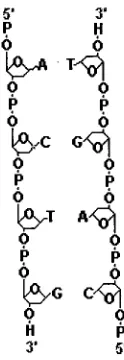
5'Fig
1.4:
Double
Helical
Structure
of
DNA
1.2.3.2 Different DNA Sequence formats
One
of
the
major
challenges
in
integrating
DNA
sequence
data is its data format.
Currently
DNA
sequenced
data
are
stored
in
several
different formats.
Some
of
these
formats
are
discussed below.
1.2.3.3 Plain Sequence format
Plain Sequence format only
contain one sequence
in
IUPAC
characters
including
spaces.
The
example
below
shows a
Plain Sequence Format.
ACAAGATGCCATTGTCCCCCGGCCTCCTGCTGCTGCTGCTCTCCGGGGCCACGGCCACCGCTGCCCTGCC
CCTGGAGGGTGGCCCCACCGGCCGAGACAGCGAGCATATGCAGGAAGCGGCAGGAATAAGGAAAAGCAGC
CTCCTGACTTTCCTCGCTTGGTGGTTTGAGTGGACCTCCCAGGCCAGTGCCGGGCCCCTCATAGGAGAGG
AAGCTCGGGAGGTGGCCAGGCGGCAGGAAGGCGCACCCCCCCAGCAATCCGCGCGCCGGGACAGAATGCC
CTGCAGGAACTTCTTCTGGAAGACCTTCTCCTCCTGCAAATAAAACCTCACCCATGAATGCTCACGCAAG
TTTAATTACAGACCTGAA
1.2.3.4 EMBL Format
In
EMBL
format
several sequences could
be
stored
in
one
file.
The
example
below
shows
[image:14.519.240.302.62.242.2]ID
AB000263
standard;
RNA;
PRI;
368
BP.
XX
AC
AB000263;
XX
DE
Homo
sapiens mRNAfor
prepro cortistatinlike
peptide,
complete cds.XX
SQ
Sequence
368
BP;
acaagatgcc attgtccccc ggcctcctgc
tgctgctgct
ctccggggccacggccaccg
60
ctgccctgcc cctggagggt
ggccccaccg gccgagacag
cgagcatatg
caggaagcgg
120
caggaataag
gaaaagcagc ctcctgactttcctcgcttg
gtggtttgag
tggacctccc
180
aggccagtgc cgggcccctc
ataggagagg
aagctcgggaggtggccagg
cggcaggaag
240
gcgcaccccc ccagcaatcc
gcgcgccggg
acagaatgcc ctgcaggaacttcttctgga
300
agaccttctc ctcctgcaaa
taaaacctca
cccatgaatg
ctcacgcaag
tttaattaca
360
gacctgaa
368
//
The
start of
the
sequence
is indicated
by
"SQ"and
the
end of
the
sequence
is indicated
by
"//"
1.2.3.5
FASTA format
(University
of
Virginia)
The
sequence
file in
FASTA
format
can contain several sequences.
An
example
is
shown
below.
>AB000263
|
acc=AB000263|descr=Homo sapiens mRNAfor
prepro cortistatinlike
peptide,
complete cds.|
len=368
ACAAGATGCCATTGTCCCCCGGCCTCCTGCTGCTGCTGCTCTCCGGGGCCACGGCCACCGCTGCCCTGCC
CCTGGAGGGTGGCCCCACCGGCCGAGACAGCGAGCATATGCAGGAAGCGGCAGGAATAAGGAAAAGCAGC
CTCCTGACTTTCCTCGCTTGGTGGTTTGAGTGGACCTCCCAGGCCAGTGCCGGGCCCCTCATAGGAGAGG
AAGCTCGGGAGGTGGCCAGGCGGCAGGAAGGCGCACCCCCCCAGCAATCCGCGCGCCGGGACAGAATGCC
CTGCAGG-^CTTCTTCTGGAAGACCTTCTCCTCCTGCAAATAAAACCTCACCCATGAATGCTCACGCAAG
TTTAATTACAGACCTGAA
1.2.3.6
GCG
format
(Genetic
Computer
Group,
University
of
Wisconsin)
In
this
format
the
sequence
file
contains
exactly
one sequence.
XX
AC
AB000263
;
XX
DE
Homo
sapiens mRNAfor
prepro cortistatinlike
peptide, complete cds.XX
SQ
Sequence
368
BP;
AB000263
Length:
368
Check:
4514
1
acaagatgcc attgtccccc ggcctcctgctgctgctgct
ctccggggccacggccaccg
61
ctgccctgcc cctggagggtggccccaccg gccgagacag cgagcatatg caggaagcgg
121
caggaataag
gaaaagcagc ctcctgactttcctcgcttg
gtggtttgag
tggacctccc
181
aggccagtgc cgggcccctcataggagagg
aagctcgggaggtggccagg
cggcaggaag
241
gcgcaccccc ccagcaatccgcgcgccggg
acagaatgcc ctgcaggaacttcttctgga
301
agaccttctc ctcctgcaaataaaacctca
cccatgaatg ctcacgcaag
tttaattaca
361
gacctgaa1.2.3.7 GenBank format (NCBI's DNA Sequence
Database)
GenBank
format
sequence
file
can contain several sequences.
The
example
is
shown
below.
LOCUS
AB000263
368
bp
mRNAlinear
PRI
05-FEB-1999
DEFINITION
Homo
sapiens mRNAfor
prepro cortistatinlike
peptide,
completecds.
ACCESSION
AB000263
ORIGIN
1
acaagatgcc attgtccccc ggcctcctgctgctgctgct
ctccggggccacggccaccg
61
ctgccctgcc cctggagggtggccccaccg gccgagacag cgagcatatg caggaagcgg
121
caggaataag
gaaaagcagc ctcctgactttcctcgcttg
gtggtttgag
tggacctccc
181
aggccagtgc cgggcccctcataggagagg
aagctcgggaggtggccagg
cggcaggaag
241
gcgcaccccc ccagcaatccgcgcgccggg
acagaatgcc ctgcaggaacttcttctgga
301
agaccttctc ctcctgcaaataaaacctca
cccatgaatg
ctcacgcaag
tttaattaca
361
gacctgaa//
1.2.3.8
IG
format
The
sequence
file in IG format
can contain several sequences.
However
comment
lines
are acceptable
in
this
format.
The
following
example
shows
IG format
sequence
data.
AB000263
ACAAGATGCCATTGTCCCCCGGCCTCCTGCTGCTGCTGCTCTCCGGGGCCACGGCCACCGCTGCCCTGCC
CCTGGAGGGTGGCCCCACCGGCCGAGACAGCGAGCATATGCAGGAAGCGGCAGGAATAAGGAAAAGCAGC
CTCCTGACTTTCCTCGCTTGGTGGTTTGAGTGGACCTCCCAGGCCAGTGCCGGGCCCCTCATAGGAGAGG
AAGCTCGGGAGGTGGCCAGGCGGCAGGAAGGCGC^CCCCCCCAGCAATCCGCGCGCCGGGACAGAATGCC
CTG<_AGGAACTTCTTCTGGAAGACCTTCTCCTCCTGCAAATAAAACCTCACCCATGAATGCTCACGCAAG
TTTAATTACAGACCTGAAl
1.3 Related
Works
There has been
much effort made
to
overcome
biological data
integration
challenges.
The
first
generation
bioinformatics
solution employs a series of non-interoperable and
non-scalable
quick
fixes
to translate
data from
one
format
to
another
[11]. The
second
generation
data integration
solutions
provide
a
more
structured
environment
for
code
reuse,
flexibility
and
thereby
give robust
integration
[11].
However,
all
solutions must
be
able
to
access and retrieve relevant
data from
a
broad
range of
disparate data
sources,
transform
retrieved
data into designated data
model,
provide a rich common
data
model
for
extracting
retrieved
data
and
presenting
integrated data
objects
to the
end
user
applications.
The
approaches are
the
Data Warehouse
approach, the
Federation
approach
and
the
Mediator
approach.
Another
solution
is Ontology.
Ontology
is
defined
as
a
description
of concepts
and
relationships
that
exist
among
concepts
for
a
particular
domain
of
knowledge.
One
of
the
pioneers
University
of
Pennsylvania
developed
a
data integration
system
called
KLEISLI
[11].
KLEISLI
is
a mediator system
that
encompasses a complex
data
objects
model,
high-level query language
and a powerful
query
optimizer.
However
since
it is
mediator
system
KLEISLI
does
not
contain
an
integrated database
management
system.
Later
on
University
of
Pennsylvania
developed
a new system
K2
[11].
K2
is
a
successor of
KLEISLI. Though K2
is
a successor of
KLEISLI,
it has lots
of new
features
including
the
concept
of
dictionaries.
SRS
[11]
(Sequence Retrieval
System)
is
another
data integration
system
developed
by
raw
data from
EMBL, Swiss-Prot, Medline,
HTML
and
XML
files.
While
SRS
shields
users
from
underlying
data
sources,
TAMBIS
(Transparent
Access
to
Multiple
Bioinformatics
Information
Sources)
uses
ontology
of
molecular
biology
and
bioinformatics
to
manage
presentation
and use
of source.
When
TAMBIS
receives
a
query,
it automatically identifies
the
source
that
can
be
used
to
answer
the
query
and
construct
a valid and efficient plan.
Another
mediator
approach
is
P/FDM [11]. P/FDM determines
which
databases
are
relevant
for
answering
user's queries.
Accordingly
it breaks
user
query
into
multiple sub
queries
and sends
it
to
different
external
data
sources.
The
result of
NCBI's
[13]
(National
Council for
Bioinformatics
Information)
endeavor
to
integrate
biological
data
is GenExpress
[11]. The
goal of
GenExpress data
management
system
is
to
integrate
expression
data
with
sample
and
Gene
annotations
to explore,
interpret
and
analyze
expression
data. Another
approach
is
DiscoveryLink
[11]
and
it
enables
integration
of
diverse data from
diverse
sources
into
a
single,
virtual
database,
with
the
goal of
making it
easier
for
scientists
to
find
the
information
they
need
to
prevent
and cure
diseases.
On
top
of
the scientific,
commercial
and educational
organizations, the
individuals
or
group
of
researchers
are also
trying
to
find
a solution
to
data integration
problems of
biological data. Bruce Blackwell
and
Siva Ravada
[3]
made
an
effort
to
integrate
biological
data
by
using Oracle9i.
Oracle9i
is
an
Object Relational
Database
Management
System. Jake Yue
Chen,
John
V.
Carlis
[5]
proposed
Similar-join,
a
DBMS
package
to
extract
data in
a more efficient way.
L.
Krishnamurthy,
J.
Nadeau,
G.
Ozsoyoglu,
M.
Ozsoyoglu,
G.
Chaeffer,
M.
Tasan,
W. XU
[6]'s
effort
is
to
find
out
the
DNA
sequence
by
using
Pathway
Database.
It
is
time
for IT
professionals
and
biologists
to
work
together to
overcome ever
enduring
challenges
(finding,
extracting,
merging
and
synthesizing)
of
biological data. In
the
integration infrastructure
underlining
all aspects
of
data.
Although
tremendous
progress
has been
made
in
this regards,
biological information
discovery
process,
at semantic
level
is
still
a major
challenge.
1.4 Hypothesis
After
going
through
a
details discussion
with
my
committee
members,
it is
concluded
that
vast
amount
of
biological
data,
its
nature and
characteristics,
diversity
and
heterogeneity
are
the
major causes of
this ongoing,
enduring
problem
(searching,
extracting,
merging
and
synthesizing
biological
data).
Our
need
is
an
integrated
system
that
enables
a
biological
scientist
to
searching,
extracting,
merging
and
synthesizing
biological
data
from
disparate
data
sources
efficiently.
We
propose a system
that
uses
a
Relational Database Management System
as
backend
data
repository
for
scientific
data
analysis.
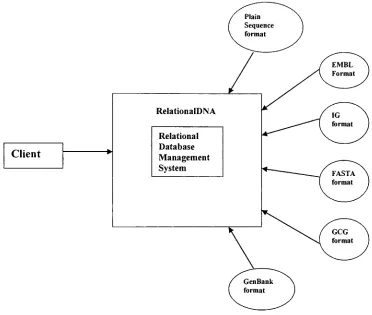
The System
captures
DNA
sequence
data from
variety
of physical
data
sources, transforms
diverse data
and stores and manages
it in
such
a
way
that
data
retrieval and analysis
become
easier
for Scientists.
Over
the
past
eleven years
I have
been
consistently working
on
Relational Database
Management Systems. I
have developed
several
systems
while
working
for
Global
Integrated
Software Solutions Inc. Also
during
the tenure
of
my
teaching
career at
Seneca
College
of
Applied
Arts
and
Technology
at
York
University, Toronto, Canada,
(http://cs.senecac.on.ca/~prabin.dutta/),
I
encountered
lots
of challenges with
Relational
Database Management System.
My
industrial
experience,
experimental
observations and
intuition
compel me
to
believe
that
Relational
Database Management System is
one of
the
best
approaches
to
integrate DNA Sequence data
scattered
in disparate
sources.
As
the
molecular
biology
research
explodes
from individual
researchers
to
big
research
organizations,
the
number and size of
publicly
available
data
sources are also
growing
exponentially.
There
are
hundreds
of
publicly
available
data
sources
currently
available
now.
These databases
are
divided primarily
into
two
types.
1.5.1
Primary
Databases
Primary
databases
maintain original
submission
by
experimentalists and
scientists.
The
submitter
has full
control over
those
databases. Some
examples of
primary databases
are
GenBank, DDBJ, EMBL, SNP,
and
GEO.
1.5.2
Derivative
Databases
Derivative
databases
are
built from
primary
databases.
The
content
of
the
derivative
databases
are
controlled
by
third
party
organizations who
has
the
soul
intent
to
create
them.
Some
examples of
derivative databases
are
Refseq, TPA, RefSNP, UniGene,
and
NCBI Protein.
The
proposed
solution
RelationalDNA
has
a
derivative database
attached
to
it.
For
this research,
we will
be
using
only
three
primary
databases.
l.DDBJ
2. GenBank
3. EMBL
These
three
databases
make
International Nucleotide Sequence
Database Collaboration.
These
three
databases
are
synchronized
every 24
hours
and
hence
they
maintain same
piece
of
information. But
the
format
in
which
data
being
stored
in
each
database is
different. We
will
take
a closer
look
at
GenBank
as
this
data
source will
be
used
heavily
for
this
research.
-/-Fa.,
ft"?'//,-.'.., nthrita rahg-jv/GenbankJ
GenBank Overview
Pubtvted
Entrez
-BLASTOMIM
I
>international
sequencedatabases
exceed100
gigabasesGrowth
ofthe|
internationalNucleotide Sequence Database CollaborationB<
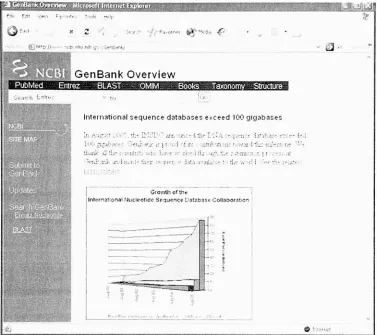
Fig
1.5:
GenBank
web
site
GenBank
is
the
NIH
genetic
sequence
database.
This
is
an annotated collection of all
publicly
available
DNA
sequences.
The
size of
GenBank
database is
100 GB. At
this
time there
are
approximately 65,369,091,950
bases in 61,132,599
sequence records
in
the
traditional
GenBank
division
and each record
in
GenBank
is in GenBank flat file format
GenBank
allows scientists
to
submit
and update
data.
There
are
several
methods
used
to
search
GenBank
database.
Primary
method
for
searching GenBank is its built-in
tool
Entrez
[14]. Entrez is
a
client-server system
for
[image:21.520.61.438.94.429.2]A
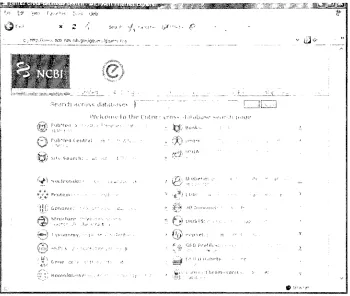
snapshot
of
Entrez is
shown
below.
if* rj-...^i ;,vS ..:3
i_Ji_liJI
dr"
XZ
2eJ< -j-fi,-.,._.<$>:*-,
f, .L_..?
.;>.((.net,rfa.rth.5,,.,-^.,r..'5>,fc), V
g]l
A r ,Iv
_M _j> 'O
NCBI
.;...:.Se.rchdsros-;ddtr,r..i<,>.
j"
Welcome
loUu'f>
Ij;
---..spoge
j
:
ce'^!
''* ,:X)^-,. -, .... -.
,,_,>._-.(.:-.:_>
m: ..%
:'~"A!>
H
"'--I'"-*'--'- >- =---- '5
'-::-" " ""'-:' ,t
-ri-...-.-,t...
0
IUI.: -.,..- ,.., ,'.:,..j]fj
.enomri
-<<< .. -: .;:..; as - ;- ' Sonuiiir.
,--*. ...
.
:~ .. :'> : ;
p%SfriifUirf :':>:-:: f;.-,..-.^ !
q4 UtssSIS: .
! :
-**)
i.':v-,i'K.rr.y. \& V. ;.>:=-rP-'.
@
,,.s,:.: .1 ..-., ..,.,.^
hU^ * '* ,u'--1--'
-,
'
,g 51 <:.:.
- . 1.-:,
>-,
:
;;-" ... ...-.,. ... .
:i;:;;
Mom.io-nl.- ,-,. ,:r.-#V
'.n;-M ii"-ni"9
ln.err.e-;
-Fig
1.6:
Entrez
to
retrieve
DNA
sequenced
data
1.7
Roadmap
The
rest
of
the
report
is
organized as
follows.
We
will
design
of a
backend data
repository
for
the
proposed
data integration
solution,
RelationalDNA,
in
chapter
2. DNA
sequenced
data
are
collected
from GenBank for
scientific analysis.
After
complete analysis of raw
data (DNA
sequenced
data)
we will
create user views and will
undertake
a complete normalization
(NF1,
NF2
and
NF3)
of
these
user views.
Chapter
2
completes with creation of a
fully
normalized
database.
In
chapter
3,
we will
design
and
implement
all
other components of our
proposed system
(RelationalDNA). The
proposed system
has
three
major components.
Firstly,
there
is
a
[image:22.519.61.411.91.387.2]mechanism
to
load
extracted
data.
In
order
to
create a
suitable
file
to
load data
into
our
database,
we will
design
and
implement
a
parser
(written
in
Java)
which convert
raw
DNA
sequenced
data file
to
a
tab
separated
file.
Then
we will
design
and
implement
loading
mechanism
to
load data into
our
back
end
data
repository.
Thirdly,
we will
design
and
implement
a
data
retrieval mechanism.
To
accomplish
this goal,
we will use
mostly
Oracle built in
techniques.
We
will create a client
tool
(written
in
Java)
to
be
used
by
a
biological
scientist
for data
retrieval.
In
chapter
4,
we will
do
an
analysis
to
find
the
efficacy
of
the
proposed
system with
existing
systems.
Chapter 5
is
the
conclusions.
In
this
chapter
firstly,
we
will
define
current status of
this
work.
Secondly,
we will
have
a
detailed
discussion
about
future
work
on
the
same
topic
2.
Overview
of
RelationalDNA
Complex data
centric
applications
necessitate
a
stable
and
reliable
back
end
data
repository.
This
chapter
focuses
various
facets
of
designing
a
data
warehouse.
Inevitable
components
of
data
warehouse
such as
fact table,
dimension
table
and
star schema are
discussed
at
the
first
section of
this
chapter.
An
intricate
part of
the
database design
process
is database
normalization
and we
have
carried out
a complete
normalization
in
second
section
of
this
chapter.
Since it is
a
data
warehouse
system,
much emphasis
is
made on
Normalization Form
1,
Normalization
Form 2
and
Normalization
Form 3.
The
design
process
eventually
leads
us
to
create a star schema
based
on normalized
tables
in
section
three.
This
chapter concludes with a
thorough
discussion
of merits and
demerits
of
Relational Database
Management System.
2.1 Proposed Relational Database Management System
The
design
process
of
data
warehouse
significantly differs
from
online
transaction
processing
systems
in
that the
raw
data
stored
in data
warehouse
is
captured,
extracted
and
transformed
from disparate data
sources.
Each
external
data
source uses
its
own
domain
specific
data
model
and schema.
Due
to
both
syntactic and semantic
differences
of
various
data
sources,
creating
a
unified
schema
is
always
a
challenge
in data
warehouse and
has
received
substantial
attention
in
research.
2.1.1
Introduction to
Data
Warehouse
The
proposed
system,
RelationalDNA,
is
a collection of
data
marts
representing DNA
sequenced
data from
different
data
sources.
It
is
an
integrated decision
support
database
whose contents are
derived from
various operational
databases
and contains
historical,
summarized
information. The
data
structure
is
optimized
to
perform
well
aggregate
queries
running
on a
large
amounts
data.
Unlike Online
Transaction
Processing Systems,
the
structure
of
data
warehouse
is
easier
for
end
users
(biological
scientists)
to
navigate,
to
transform
data
to
a
form
that
is
suitable
for
transporting
to
destination
system.
In
RelationalDNA
we will
design
and
implement
custom parsers
to transform
data
(Custom
parsers will
be discussed in Chapter
3).
The
following
list depicts
objects
on which
Data
warehouse
is built.
2.1.2
Fact
Table
Fact tables
are also
known
as
detailed
tables
in data
warehouse.
They
contain
detailed
facts
and
transactions
within warehouse.
In
a
regular schedule
fact
tables
are populated
with
transformed
data from
other systems.
Though
there
is less
number of
fact
tables
in
a
data
warehouse,
their
size
is
really
big.
They
include
compound
keys,
which
organize
the
transactions
into dimensions.
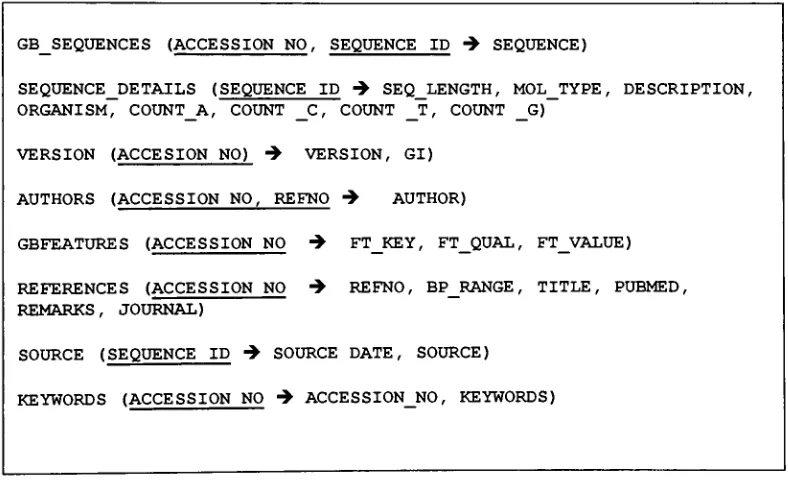
An
example of
fact
table
in RelationalDNA
is
the
GB_
SEQUENCE
table.
GB
SEQUENCES
ACCESSION_NO
SEQUENCE_ID
SEQUENCE
Fig
2.1
the
fact
table
of
RelationalDNA
2.1.3
Dimension Table
Dimension
tables
describe
categories
of
information
contained
within
the
fact
table.
Normally
dimension
tables
are
created
to
perform
transactions
by
product,
time,
and
location
or
by
organizational
units.
Dimension
tables
are
very
small
in
size and
they
rarely
change.
Sometime
they
are
also
called
lookup
or
reference
table.
In
GBFEATURES
ACCESSION_NO
FT_KEY
FT_QUAL
FT
VALUE
KEYWORDS
ACCESSION_NO
KEYWORDS
VERSION
ACCESSION_NO
VERSION
GI
SEQUENCE DETAILS
SEQUENCE_ID
SEQ_LENGTH
MOL_TYPE
DESCRIPTION
ORGANISM
COUNT_A
COUNT
COUNT
COUNT
G
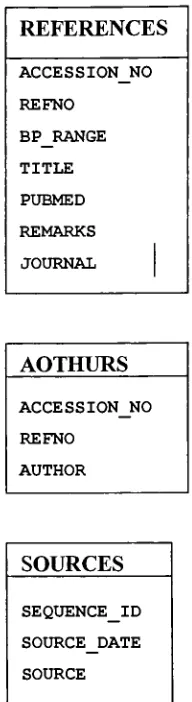
REFERENCES
ACCESSION_NO
REFNO
BP_RANGE
TITLE
PUBMED
REMARKS
JOURNAL
AOTHURS
ACCESSION_NO
REFNO
AUTHOR
SOURCES
SEQUENCE_ID
SOURCE_DATE
SOURCE
Fig
2.2
the
dimension
tables
of
RelationalDNA
[image:26.519.375.471.73.424.2]Star Schema defines
a
series
of
dimension
tables
around
the
fact
table.
The
following
diagram depicts
the
star
schema
of
RelationalDNA.
GBFEATURES
ACCESSION_NO
FT_KEY
FT_QUAL
FT
VALUE
>
KEYWORDS
ACCESSION_NO
KEYWORDS
VERSION
ACCESSION_NO
VERSION
GI
GBSEQUENCES
ACCESSION_NO
SEQUENCE_ID
SEQUENCE
SEQUENCE_DETAILS
SEQUENCE_ID
SEQ_LENGTH
MOL_TYPE
DESCRIPTION
ORGANISM
COUNT_A
COUNT
COUNT
COUNT
G
<
REFERENCES
ACCESSION_NO
REFNO
BP_RANGE
TITLE
PUBMED
REMARKS
JOURNAL
4
AOTHURS
ACCESSION_NO
REFNO
AUTHOR
<
SOURCES
SEQUENCE_ID
SOURCE_DATE
SOURCE
[image:27.519.65.473.110.658.2]The
above
diagram depicts
the
final draft
of proposed
data
warehouse
system
design.
However
to
achieve
this
goal we
have
undertaken a
through
and
long
process
of
database
design
and
normalization.
In
next a
few
sections we will
be
discussing
database design
and
normalization process
in details.
2.2 Traditional
systems
development
life
cycles
The
traditional
system
development life
cycle
has
seven phases.
These
phases are
briefly
described below.
Phase 1: Project identification
and selection
Purpose:
To
develop
a
preliminary understanding
of
the
business
situation
that
has
caused a request
for
a new or an enhanced
information
system
Deliverables: A
formal
request
to
conduct
a project
to
design
and
develop
an
information
system solution
to
business
problems
and opportunities.
Phase
2: Project initiation
and
planning
Purpose:
To
state
business
situations and
how information
systems might
help
solve
a problem or make an
opportunity
possible.
Deliverables:
A
written
request
to
study
the
possible
changes
to
an
existing
system
or
the
development
of
the
new system.
Phase
3:
Analysis
Purpose:
To
analyze
the
business
situation
thoroughly
to
determine
requirements,
to
structure
those
requirements
and
to
select
among
Deliverables:
The functional
specification
for
the
system
that
meets user
requirements
and
is feasible
to
develop
and
implement.
Phase
4:
logical design
Purpose:
To
elicit and structure all
information
requirements.
Deliverables: Detailed functional
specifications of all
data,
forms,
reports,
displays
and
processing
rules.
Phase
5:
Physical
design
Purpose: To
develop
all
technology
and organizational specifications.
Deliverables:
Program
and
database
structure,
technology
purchases,
physical site plans and organizational
redesign.
Phase 6: Implementation
Purpose: To
write
programs,
build
data
files,
test
and
install
the
new
system, train
users and
finalize documentation.
Deliverables:
Programs
that
work
accurately
and
to
specifications,
documentations
and
training
materials.
Phase 7: Maintenance
Purpose: To
monitor
the
operations and usefulness
of a system and repair
and
enhance
the
system
Deliverables: Periodic
audits
to the
system
to
demonstrate
whether
the
system
is
accurate
and still meets our need.
We have been
working
on
this
project
directly
and
indirectly
from
January
2004.
and
Planning
and
Analysis)
have
already
been
completed
under
the
supervision
of
Professor R K Raj.
Other
phases
are
going
to
be discussed in
the
remaining
sections of
this
chapter.
2.3 Database Design
As
we
have
mentioned
in
the
previous
section
that the
purpose
of
database
design
phase
is
to
elicit and
structure
all
information
requirements.
A
detailed functional
specification
of all
data, forms,
reports,
displays
and
processing
rules
are
presented
at
the
end
of
database design
phase.
The
minimal
data
rule
is
applied.
"AH
that
is
needed
is
there,
and allthat
is
there
is
Our database design
goals were
1
.to
determine
end-user
views,
outputs and
transaction
processing
requirement
2.
to
define
entities,
attributes and
their
relationship
3.
to
identify
main processes: seamless
data (DNA
sequenced
data)
entry
to the
system,
record update
by
original
author,
and seamless
data
retrieval
from
the
system
4.
to
define
the
location
of
tables
and access requirement.
During
the
initial
study
phase of
this
project
we
tried to
determine
the
entities
involved
and
to
create
a separate
table
for
each
type
of entity.
The
following
is
partial set of
data
we
have
collected
from
GenBank.
The
original
file had
53
references and
2558bp
and
most
of
the
references
and part of
the
sequence are removed.
LOCUS
MM002639
2558
bp
mRNAlinear
PRI23-APR-2006
DEFINITION
Homo
sapiens serpin peptidaseinhibitor,
clade B(ovalbumin)
,member
5
(SERPINB5)
, mRNA.ACCESSION NM_002639
VERSION
NM_002639.2GI: 52851464
KEYWORDS
SOURCE
Homo
sapiens(human)
ORGANISM
Homo
sapiensEukaryota;
Metazoa;
Chordata;
Craniata;
Vertebrata;
Euteleostomi
;REFERENCE
AUTHORS
JOURNAL
PUBMED
REMARK
REFERENCE
AUTHORS
JOURNAL
PUBMED
REMARK
FEATURES
source gene CDSSTS
STS
STS
1
(bases
1
to
2558)
Yin,S.,
Li,X.,
Meng,Y.
,Finley,R.L.
Jr.,
Sakr,W., Yang,H.,
Reddy,N.and
Sheng,S.
Tumor-suppressive
maspin regulates cell responseto
oxidative stressby
direct interaction
with glutathioneS-transferase
J.
Biol.
Chem.
280
(41)
,34985-34996
(2005)
16049007
GeneRIF:
maspin,
through
its
direct interaction
with glutathioneS-transferase,
may
inhibit
oxidative stress-inducedROS
generation and vascular endothelial growthfactor
Ainduction
2
(bases
1
to
2558)
Chim,S.S.,
Tong,Y.K.,
Chiu,R.W.
,Lau,T.K.,
Leung, T.N.,
Chan,L.Y.,
Oudejans,C.B.
,Ding,C.
andLo.I.M.
Detection
ofthe
placental epigenetic signature ofthe
maspin genein
maternal plasmaProc.
Natl.
Acad.
Sci.
U.S.A.
102
(41),
14753-14758
(2005)
16203989
GeneRIF:
The
maspin gene promoter wasfound
tobe hypomethylated in
placentaltissues
anddensely
methylatedin
maternalblood
cellsthus
serving
as a markerfor
noninvasive prenatal assessment.Location/Qualifiers
1.
.2558/organism="Homo
sapiens" /mol_type=" mRNA"/db_xref="taxon:
9606"/
chromo some= "1 8
" /map="18q21.3"1.
.2558/gene="SERPINB5"
/note="synonyms:
PI5,
maspin"/db_xref="GeneID :
5268
"/db_xref="HGNC :
8949"/db_xref="HPRD
:HPRD_01111"/db_xref="MIM:
154790"68.
.1195/gene="SERPINB5"
/go_function="serine-type
endopeptidaseinhibitor
activity"
/go_process="cell
motility
[pmid
8290962]"/note="protease
inhibitor
5
(maspin)
"/codon_s
tar t=l
/product="serine
(or
cysteine) proteinase
inhibitor,
clade B(ovalbumin)
, member5"
/protein_id="NP_002630
/db_xref="GI
:4505789"/db_xref="GeneID :
52
68
"/
db_xref
= "HGNC:8 9 49
"/db_xref="HPRD
:HPRD_01111"/db_xref="MIM:
154790"/translation="MDALQLANSAFAVDLFKQLCEKEPLGNVLFSPICLSTSLSLAQV
GAKGDTANEIGOVLH-TNVKDIPFGFQ-VTSDVNKLSSFYSLKLIKRLYVDKSLNLST EFISSI-OIPYAKELETVDFKDKLEETKGQINNSIKDLTDGHFENILADNSVNDQTKIL VV>O^YFVGKWMKKFPESETKECPFRLNKTDTKPVQMMNMEATFCMGNIDSINCKIIE LP-X2NKHLSMFILLPKDVEDESTGLEKIEK2LNSESLSQW-^PSTMANAKVKLSIPKF KVEKMIDPKACLENLGLKHIFSEDTSDFSGMSETKGVALSNVIHKVCLEITEDGGDSI EVPGARILQHKDELNADHPFIYIIRHNKTRNIIFFGKFCSP"88.
.222 /gene="SERPINB5"/standard_name="GDB:
435245"/db_xref="UniSTS:
157216"1199.
.1357 /gene="SERPINB5
"/standard_name="GDB:435240"
/db_xref
="UniSTS:157215"1588.
.1920/gene="SERPINB5"
/standard_name="SHGC-12569"
/db_xref="UniSTS
:11720"2101.
.2286/gene="SERPINB5"
/db_xref
="UniSTS :58530" polyA_signal2537
..2542
/gene="
SERPINB5
"ORIGIN
1
ttgtgctcct
cgcttgcctg
ttccttttcc
acgcattttc caggataactgtgactccag
61
gcccgcaatg
gatgccctgc aactagcaaattcggctttt
gccgttgatc tgttcaaaca121
actatgtgaa aaggagccactgggcaatgt
cctcttctct ccaatctgtc tctccacctc181
tctgtcactt
gctcaagtgg
gtgctaaagg
tgacactgca
aatgaaattg
gacaggttct241
tcattttgaa
aatgtcaaag
atataccctttggatttcaa
acagtaacat cggatgtaaa301
caaacttagttccttttact
cactgaaactaatcaagcgg
ctctacgtag
acaaatctct361
gaatctttct acagagttcatcagctctac
gaagagaccctatgcaaagg
aattggaaac421
tgttgacttc
aaagataaattggaagaaac
gaaaggtcag
atcaacaact caattaagga481
tctcacagat ggccactttg
agaacatttt agctgacaacagtgtgaacg
accagaccaa541
aatccttgtg
gttaatgctg
cctactttgttggcaagtgg
atgaagaaat ttcctgaatc601
agaaacaaaa gaatgtcctttcagactcaa
caagacagacaccaaaccag
tgcagatgat661
gaacatggag
gccacgttct gtatgggaaa cattgacagt atcaattgta agatcataga721
gcttcctttt caaaataagc atctcagcat gttcatcctactacccaagg
atgtggagga781
tgagtccaca
ggcttggaga agattgaaaa acaactcaactcagagtcac
tgtcacagtg
841
gactaatcccagcaccatgg
ccaatgccaa ggtcaaactc tccattccaa aatttaaggt901
ggaaaagatg
attgatccca aggcttgtct ggaaaatcta gggctgaaacatatcttcag
961
tgaagacaca
tctgatttct
ctggaatgtcagagaccaag
ggagtggccc tatcaaatgt1021
tatccacaaa gtgtgcttag
aaataactgaagatggtggg gattccatag
aggtgccagg
1081
agcacggatc ctgcagcaca aggatgaatt gaatgctgac catcccttta tttacatcat1141
caggcacaac aaaactcgaa acatcatttt ctttggcaaattctgttctc
cttaagtggc1201
atagcccatg
ttaagtcctc
cctgactttt ctgtggatgc cgatttctgt aaactctgca1261
tccagagatt
cattttctag
atacaataaa ttgctaatgt tgctggatca ggaagccgcc1321
agtacttgtc atatgtagccttcacacaga
tagacctttt
tttttttcca attctatctt1381
ttgtttcctt
ttttcccata
agacaatgac atacgcttttaatgaaaagg
aatcacgtta1441
gaggaaaaat atttattcattatttgtcaa
attgtccggg
gtagttggca gaaatacagt1501
cttccacaaa gaaaattcct ataaggaaga tttggaagct cttcttccca gcactatgct1561
ttccttcttt
gggatagaga atgttccaga cattctcgcttccctgaaag
actgaagaaa1621
gtgtagtgca tgggacccac gaaactgccctggctccagt
gaaacttggg
cacatgctca1681
ggctactataggtccagaag
tccttatgtt aagccctggc aggcaggtgt ttattaaaat1741
tctgaatttt
ggggattttc aaaagataat attttacata cactgtatgttatagaactt
1801
catggatcag
atctggggca gcaacctata aatcaacaccttaatatgct
gcaacaaaat1861
gtagaatatt cagacaaaat ggatacataa agactaagtagcccataagg
ggtcaaaatt1921
tgctgccaaa tgcgtatgcc accaacttac aaaaacactt cgttcgcaga gcttttcaga1981
ttgtggaatg ttggataagg
aattatagac ctctagtagctgaaatgcaa
gaccccaaga2041
ggaagttcag
atcttaatat aaattcactttcatttttga
tagctgtccc
atctggtcat2101
gtggttggca ctagactggt ggcaggggcttctagctgac
tcgcacaggg
attctcacaa2161
tagccgatat cagaatttgt gttgaaggaa cttgtctctt catctaatat gatagcggga2221
aaaggagagg
aaactactgc ctttagaaaatataagtaaa
gtgattaaag
tgctcacgtt2281
accttgacac atagtttttcagtctatggg
tttagttact
ttagatggca agcatgtaac2341
ttatattaat agtaatttgt aaagttgggt ggataagcta tccctgttgccggttcatgg
2401
attacttctc tataaaaaat atatatttac caaaaaattttgtgacattc
cttctcccat2461
ctcttccttg acatgcattg
taaataggtt cttcttgttc tgagattcaatattgaattt
2521
ctcctatgct attgacaata aaatattatt gaactacc//
Contents
of
this
file
are
explained
below.
File Header
o
File
info line:
File
name
Full database
name
('GenBank')
Brief description
of
the
file
o
Date:
the
date
of current release
in
the
form
day
month
year'
o
Release
number:
the
current release
number
Major
release
number
Version
o
Size
number:
Number
of
entries
Number
of
bases
Number
of
sequence
Following
elements
or
fields
are related
to
GenBank
entries
LOCUS field
o
Locus
name
o
Sequence
Length
o
Molecule
Type: The
type
of molecule
that
was sequenced
o
GenBank
Division:
One
of
the
17
sequence
divisions
a record
belongs
to
o
Modification
Date: The
date
of
last
modification
DEFINITION field
o
Scientific
organism,
gene/protein
name,
o
Brief
description
of
the
sequence's
function if
the
sequence
is
non-coding
or completeness
qualifier,
such as
"complete
cds"
and
its
description if
the
sequence
has
a
coding
region
(CDS)
ACCESSION: The
unique
identifier for
a sequence record
VERSION: A
nucleotide sequence
identification
number
that
represents
a
single,
specific
sequence
in
the
GenBank
database
o
GI:
"Genlnfo
Identifier"
sequence
identification
number
KEYWORDS:
Words
or phrases
describing
the
sequence.
SOURCE: Free-format information
including
an abbreviated
form
of
the
organism
name,
sometimes
followed
by
a molecule
type
REFERENCE
field
o
REFERENCE ID: Sequential
number
o
AUTHORS
:
List
of authors
o
TITLE: Title
of
the
published
work
or
tentative
title
of an unpublished
work,
or
direct
submission substitution
o
JOURNAL: MEDLINE
abbreviation
of
the
journal
name
o
MEDLINE: MEDLINE
unique
identifier
(UID)
o
Direct Submission
:
Contact information
of
the
submitter
o
Source:
Mandatory
feature in
each record
that
summarizes
the
length
of
the
sequence,
scientific name
of
the
source
organism,
and
Taxon ID
number.
Can
also
include
other
information
such as
map
location,
strain, clone, tissue
type,
etc.,
Organism
name
Taxon: A
stable unique
identification
number
for
the taxon
of
the
source
organism
Chromosome
type
Map
type
Followings
are
two
example
features,
a complete
list
of
features
can
be found from
GenBank documentation
and release
note.
o
CDS:
Coding
sequence;
region of nucleotides
that
corresponds
with
the
sequence
of amino acids
in
a protein
(location
includes
start and
stop
codons).
Gene
type
note
codon start position
product