Applying Augmented Reality to the Concept
Development Stage of the Total Design Methodology
Gordon M. Mair, Andrew Robinson, John Storr
Department of Design, Manufacture, and Engineering Management, University of Strathclyde, 75 Montrose Street, Glasgow, G1 1XJ, Scotland, UK
Abstract. This paper suggests an approach to assist the identification of suitable areas of application of AR within the product design process. The approach utilizes an established methodology for product design development that allows each stage in the design process to be identified and considered in a logical and structured manner. By doing this we can consider the suitability for AR at each stage as opposed to the use of hand drawings, basic computer aided design, virtual reality, or rapid prototyping techniques and suchlike to produce physical models. As an example of this we consider the concept design stage of the product design process and conduct some preliminary experiments in the use of AR to facilitate the activity.
Keywords: Augmented reality, product design, total design, concept design, industrial design.
1
Introduction
It is apparent that within the realm of product design and manufacture there is an ongoing need to reduce the time from the identification of a market need for a product and the satisfaction of that need in the form of a finished product that meets the cus-tomer‟s requirements. Over the past few decades an important method of meeting this need has been the implementation of the concept of Concurrent Engineering - this is an attempt to consider in an integrated and parallel manner, product design, develop-ment, manufacture, delivery, maintenance, and end of product life considerations. This approach has been employed by many major manufacturing companies and uti-lizes multidisciplinary teams comprised of, for example, component suppliers, prod-uct design and manufacturing engineers, purchasing personnel, and customers. Effi-cient and unambiguous communication of ideas is essential throughout this activity and we consider here how this can be facilitated by the use of Augmented Reality.
the selling of the successful product to satisfy that need – an activity that encompasses product, process, people and organization.” The elements of this methodology are summarized here and used as a vehicle for identifying specific aspects of the design process where AR could be usefully employed. We show that not only is the use of AR beneficial for the product designer but also for improving communication with the final customer and others involved in the integrated concurrent engineering exer-cise of new product innovation.
2
Total Design
Total Design is a methodology that allows a rational and detailed approach to product design from identification of a market need through to satisfaction of that need by the provision of a desired product. The main stages involved include the fol-lowing.
1) Based on the market need a Product Design Specification (PDS) is produced. This is a comprehensive document that forms the basis of all the work that follows. It does not state what the final design should be but it sets the criteria the design must satisfy. As this stage does not require any graphical images AR is not relevant here.
2) Once the PDS has been completed the „concept design‟ stage is implemented to create and critically assess potential designs that can satisfy the PDS. Various tech-niques, such as brainstorming, are employed to generate the concepts which are then compared and evaluated using decision matrices in order to select a final concept. This paper will show that AR is potentially very useful at this stage.
3) „Detail design‟ is now carried out to develop the concept design into a practical form. Here the individual components and sub-assemblies are designed and accompa-nying detailed calculations for mechanical, thermodynamic, electrical, electronic and other aspects are carried out. Within this process other „design for X‟ considerations will be considered. For example; design for manufacture and assembly, design for ergonomics, design for maintenance, design for the environment, and design for re-manufacturing are among a number aspects that are important. While AR could be used at this stage there is much more scope for application of established computer aided design and simulation methods to develop and examine the design. Of course larger products such as ships and aircraft will also benefit from the use of virtual reali-ty at this stage.
4) Manufacturing the product, at this stage simulation packages for factory layout are used coupled with computer aided process planning and other computer based tools to optimize the work flow, material control, and final dispatch. However there is also the opportunity here to utilize AR when considering the positioning of produc-tion machinery such as industrial robots, CNC machines, conveyors, etc.
2.1 Concept Design
This paper is focused on the potential use of AR in stage 2, the concept design stage. It is worth noting that some studies have noted the fact that CAD modelling can be harmful to the early stages of the design process, the representation of a component in this form is deemed to be too detailed and overbearing when concepts should be considering innovation and development [2,3]. Specifically results of a study by Be-nami and Jin [4] state that “The essential finding from the experiment was that am-biguous entities stimulate behaviours more than non-amam-biguous entities”. Based on these observations, it is apparent that the use of basic CAD modelling at this stage of the design process can potentially stunt a designer‟s ability for creativity in a design. However we consider that it may be possible for the use of Augmented Reality to increase levels of creativity for conceptual design, whilst allowing appropriate inter-action and detail for the designer.
Two systems presented by Fuge et al. [5] and Fiorentino et al. [6] have looked at the use of AR in conceptual design and product realisation. The system presented by Fuge et al. focused on the construction of freeform surfaces. The role of multiple shape representation was addressed and the user was required to interact using a data glove and a head-mounted display in order to create an immersive style environment. The system was successful in that it allowed rapid creation of freeform surfaces with-out the need for constraints generally required in CAD modelling. A similar system was presented by Fiorentino et al. [6] where semi-transparent glasses were used in-stead of an HMD.. Again the system allowed a designer to create freeform curves and surfaces in an AR environment. Although the objective of the system was to assist in product realisation, the use of AR to assist in Rapid Prototyping technologies was suggested. They observe that the method of using trial-and-error to evaluate design iterations is “one of the biggest bottlenecks in the industrialisation process.” This observation was also acknowledged by Verlinden and Horváth in two separate publi-cations [7, 8], where the idea that the use of AR to assist in concept generation and the reduction of design iteration was introduced. However it appears a knowledge gap is present here as the use of AR to support concept realisation is not yet fully investigat-ed. Ong et al [9] also applied AR in the early design stages during the product devel-opment process. This was done by introducing a spatial AR (SAR) configuration where real world images or textures are projected onto a physical shape model to give the impression of the final design which can then be inspected. This is a very basic use of augmented reality as an image is simply projected using a projector. Another study looked at the use of augmented reality to aid the visualisation of Computer-Aided Design (CAD) parts [10]. It was found that certain students had difficulty with the spatial cognition of the multi-view projections of a CAD model they had created. To resolve this, a quick response (QR) code was placed onto the drawing. AR soft-ware was then used to view the specific 3D model, aiding the spatial cognition of the students.
de-sign process. Although it is noted that CAD is a key component for conceptualisation and product realisation, it is apparent that CAD has a “fundamental problem of intan-gibility”. It is thought that the use of AR applications within product development can be utilised to overcome these issues.
2.2 Collaborative Design
It is not uncommon for design teams in the current design climate to be working in separate countries or even continents; synchronous and a-synchronous working has become a vital component in the design process and this must be facilitated with col-laborative design applications. Even if the situation arises where a design team are all working together in one place, it is likely that the group will consist of members from many backgrounds and disciplines. In order to facilitate these members, design tech-niques which easily represent a product concept or component for design evaluation must be utilised. AR technologies have been implemented extensively for collabora-tive design applications [12–16] allowing for representation, evaluation and modifica-tion of a design in a group environment.
It has been recurrently observed that although CAD systems are a vital component in the current product development process, they lack the “natural feel” that is provid-ed with traditional methods of product realization. The result of this is a lack of tactile feedback provided to the user regarding their design.
Collaboration with users, clients and other stakeholders throughout the design pro-cess is vital as it allows for the development of usable and useful products [17]. It allows for a “human-centric” approach within the design process creating solutions that are directly influenced by the user and other stakeholders.
One of the main issues when designing products for clients is the fragmentation in the client-designer relationship. This can be related to the relationship between the designer and a senior manager or CEO of a company who may not be familiar with the design process. Schumann et al noted that “Nowadays the convincing presentation of new products is a lengthy and often very expensive task” [18]. This is due to the different experience levels of stakeholders which can make the communication of ideas very difficult for the designer. Wang explained that while the designer is work-ing at a conceptual level, they will tend to “interpret client needs and desires into artistic form” [19]. However, this can create issues as the client may be unfamiliar with the “language of design” at this very early stage of the process.
3
Augmented Reality and Mobile Technology
apps are readily available on modern smartphones and other mobile devices. It is therefore now evident that modern mobile devices are ideal for augmented reality applications.
Therefore, the question we pose is - does the use of a mobile device to facilitate an augmented reality application, adds value to the concept design process?
4
Design of the Experiment
The experiment involved two parts. Firstly, the participants were asked to undergo multiple scenarios using augmented reality to analyse concepts. A mobile application that allows custom AR environments to be created using a mobile device was utilised alongside two basic mock-ups made from simple materials. The type of augmented reality is video-see-through which can be implemented by modern mobile devices. CAD models will be projected onto the two basic physical mock-ups to imitate the viewing of models in real life. The user was able to hold and touch the mock-ups and through the mobile device, it will appear as if they are handling the CAD model. This is a form of passive haptic feedback. The user was asked to analyse the con-cepts against basic criteria. During this first part, an informal interview was taken during the experiment where questions relating to the topic and the experience were asked. Responses were noted and any common answers analysed to reach a conclusion. The second part of the experiment was a questionnaire. Within this, questions were asked that relate to the experimental technique‟s usability, practicality and how it compared to other techniques that the user has experienced
4.1 Software
After analysis of various options software chosen was „Metaio‟[24] an AR pro-gram in which custom computer generated models can be integrated into an environ-ment chosen by the user. To do this, any 3d model can be imported into the Metaio Creator where the model‟s dimensions and position can be altered. A target is then used for tracking and allows the chosen model to appear in the real world. Once this position of the model over the target is decided, it is fixed and the only way that the user can manipulate it is to handle the object that the tracker is attached to. This is important as it replicates the viewing of a model in real life. The program links direct-ly to the Metaio Cloud and every user can create a „channel‟ that contains their cus-tom augmented reality developments. These channels are held in the Cloud and can be viewed through mobile devices using the „Junaio‟ application developed by „Me-taio‟ in which anyone can view your models using specific targets. The type of 3D model used was an OBJ file, an object file.
mobile phones were used, a model of the Nokia N82 Mobile Phone and the Sony Ericsson W960i Mobile Phone.
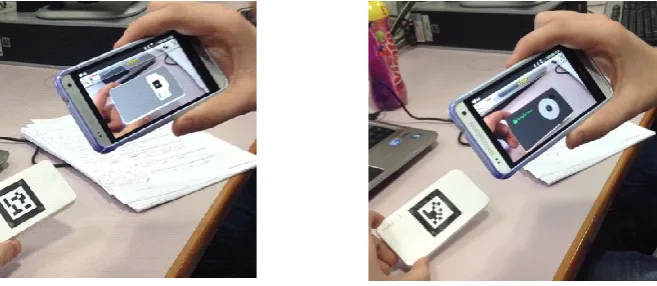
[image:6.595.142.471.255.398.2]The aim was to make the prototypes very simple. They were created out of white foam card that was cut and shaped to the size of the CAD model. No detail was in-cluded in the mock-up as it was the CAD model that was intended to show detail. The participant was to understand that the simplest model could be created to then project over a CAD model as this would take minimal time in a design process.
Fig. 1. AR displays of hand-held mobile phone model
4.2 Basic Scenarios
Certain scenarios will be developed to replicate how a designer may examine a prototype during the evaluation stage of the design process. Klinker et al (2002) pro-duced a set of scenarios that exemplify how a car designer would use their developed augmented reality system. These scenarios are different from that of a basic prototype analysis that may be completed for a consumer product. The set of scenarios have been developed from those used when testing augmented reality from car design.
1. Handling – The designer views the product holding the prototype in one hand and the mobile device in the other. They will rotate the product as if they were analys-ing its form.
2. Overview – The designer will place the product on a surface and hold the device to view it. The position of the device will be changed to evaluate the prototype at various angles.
3. Detail viewing – The designer will view a specific detail of the model by han-dling the product and the mobile device. This could be a specific component or mate-rial within the model.
During each of these scenarios, recordings of comments and visual impressions will be taken. The experiments will focus on the evaluation of concepts by a single designer. Each designer will be asked to undertake these scenarios to evaluate two given augmented reality concepts using a provided mobile device that has the AR app installed.
The criteria used for evaluation were as follows: Quality – Which model appears to be of a higher quality? (build quality, material etc.) Robust - Which model appears to be more robust in that it can resist impact from dropping? Aesthetic Appeal – Which model is more aesthetically pleasing? Usability – Which model appears to be more user-friendly i.e. simple and easy to use? Purchasing – Which product would you purchase on first impressions?
4.3 Informal Questions
The set questions for during the experiment are simply guidelines and are subject to change depending on the participant. These questions are as follows: How do you find the Augmented Reality System? Do you feel you can visualise the model clearly? Does the technique work as you had first imagined? How does this compare to other techniques for model viewing you have used? Is this a technique that you can see using in the future? If not, do you see it being used in the future when the technology advances? What are the advantages and hindrances, if any, brought with this tech-nique? Participants
The experiments included participants of varying age and experience in the design process. Participants were sourced from the Design, Manufacture and Engineering Management Department of the University of Strathclyde. Students in their fourth and fifth year were included in experimentation as they had accumulated reasonable expe-rience in the field.
5
Experiment Results and Discussion
In this section the statement provided to the participants is shown followed by the response in graphical and textual form.
Statement - ‘The use of augmented reality to view and evaluate a model is more intui-tive than when viewing a model within a 3D CAD program.’
The majority of participant comments are pro Augmented Reality when compared to CAD but for a variety of reasons. Several participants noted the novelty of AR over CAD in that it is „fun and interactive‟ and therefore would be beneficial to promote concepts to others or to involve others in the evaluation process. Others appreciated the ability to fully control the model intuitively and they naturally like the control when handling a final product. One participant stated that customers „may look at a CAD model and think “very good, but how does that affect me‟. When compared to CAD, the user found that they were able to „minutely adjust the view easily‟ and that „user adjustments become instinctive‟. One participant noted that this may only be true of hand held products. A larger product may be more difficult to assess if it can-not be handled. It is suggested that for future work, a variety of models of different sizes are used to explore the application further. It is clear from these responses that the use of augmented reality adds value to the concept design stage of the product design process.
Statement - ‘The use of augmented reality to view and evaluate a model is more intui-tive than viewing a model on an engineering drawing.’
It is evident that the technique is much more accessible to those who may not be familiar with the format of engineering drawings i.e. those with little manufacturing or product design background. One participant noted that „drawings give no sense of
0 5 10 15 20
Strongly
Disagree Disagree Agree norNeither Disagree
Agree Strongly
Agree
0 2 4 6 8 10 12 14 16 18
Strongly
Disagree Disagree Agree norNeither Disagree
Agree Strongly
scale and struggle to convey emotive shades.‟ Another stated that „2D shapes on en-gineering drawings provide little user feedback.‟ This was a common thought during the experiments. There were several participants that saw benefits in both techniques. One participant noted that there is more detail on an engineering drawing as it pro-vides details on dimensions, materials, assembly, bill of materials etc. whereas all that can be seen in the augmented reality model is the outer aesthetics which are put in the context of the surrounding environment. For those who may require details for manu-facture or higher amounts of detail of the product, the use of augmented reality may not be beneficial. Participants agreed with this, one of which stated that augmented reality is more beneficial „in some aesthetic aspects though it lacks obvious infor-mation on construction, fit, materials, etc.‟
One definite benefit would be in the collaborative design and evaluation of prod-ucts with clients, customers and those who may not be familiar with the design pro-cess. This is due to the overall intuitiveness of the AR technique which allows people to hold and view product as if it were there in front of them. This technique is natural much like viewing and handling a finished product.
Statement - ‘You would use augmented reality in future work for concept design.’
It was found in these results, as well as discussions with the participant, that they would use this technique for a variety of applications in concept design. They could see real benefit in the use of AR in this context but could also see where the technolo-gy could be developed to increase the number of possible applications.
The main application was that it would be used to present ideas to others who may not be familiar with CAD e.g. customers or clients. The reasons for this were that ideas could be shown to anyone at any time. All that is needed is a rough model and a mobile device e.g. a smartphone or tablet. In doing so, quick and early feedback could be gained from customers or clients but also, they could be involved in the develop-ment of the early concepts. This is due to the accessibility and intuitiveness of the technology. One participant mentioned that it would be beneficial to show to clients as it is similar to the empathetic modelling technique for early design. Also, multiple concepts could be shown to different user groups very early on without the need to create physical detailed prototypes. This would give an early insight into necessary
0 2 4 6 8 10 12 14 16 18
Strongly
Disagree Disagree Agree norNeither Disagree
Agree Strongly
design changes which would save time and money during the process. One participant also stated that it is a very cost effective method of „prototyping‟ and that they would use this to develop designs quickly and efficiently.
Multiple participants noted that one of the main benefits of the technology was the ability to see the product in the context of the real world. It is very intuitive when viewing the model as the user gets an instant impression of the scale and dimensions of the product which is unlike other techniques such as viewing a CAD model on a screen or on an engineering drawing. One participant stated that it is a „dynamic form of product evaluation‟. Despite the real benefits of augmented reality in this context, it was noted that it may only be beneficial for hand held devices that users can interact with. With larger models, it may not be as beneficial as the use of a small screen to view a model of 1:1 scale may not be practical and the convenience of taking small rough hand held models to meetings and clients is lost.
Statement - AR technology is beneficial for presenting concepts to managers, CEO’s, customers, clients or anyone who may not be as familiar with CAD but it is necessary for them to view and understand the design.
Of all the questions within the questionnaire, this can be seen as the most conclu-sive in terms of results. With 29 of 30 participants selecting either agree or strongly agree, it is clear that there is a real benefit of using AR in this context. Many agreed that the benefits lay in the intuitiveness of the technology for those who may not be familiar with other techniques such as CAD or 2D drawings. One participant stated that „for those not used to CAD, it would provide an easy hands-on method of view-ing concepts.‟ Many agreed that the ability to gain tactile feedback from a model aids the understanding of it in terms of design, feel, weight, how it is used etc. The results from this question showed that there are two main applications, the presentation of designs and the collaborative design of products with those unfamiliar with design processes. One participant noted the benefit of AR in the early concept design stages where prototypes may not be available or financially viable at the time. AR can pro-vide designers a tool for presenting models and a technique for evaluating them. One participant noted that AR is an „interesting and captivating form of presentation.‟ Designers who want to push for an idea may wish to use this tool to enhance the de-sign.
0 5 10 15 20 25
Strongly
Disagree Disagree Agree norNeither Disagree
From these results it is clear that AR adds value not only to the evaluation of de-sign, but the concept design stage as a whole. It allows for collaborative design as well as creating an exciting and appealing form of presenting.
6
Conclusions
The review of literature identified that there was no previous research on the appli-cation of mobile augmented reality in the concept design stage of product design. It is this identification of a gap in knowledge that formed the research focus.
The empirical study involved the contribution of participant knowledge in the field of product design. The research concluded that augmented reality does add value to the concept design process. It does so by allowing for the collaborative evaluation between those with experience in product design i.e. designers, and those who may not be familiar with the processes i.e. customers, clients etc. It was found that the system was highly intuitive and allowed for early evaluation of concepts without the need to build prototypes. This, in turn, saves time and money, further adding value for the designer.
The implementation of augmented reality in this context will add great value. As the technology advances in augmented reality and the capability of mobile devices increases, the value can only increase in the oncoming years.
References
1. S. Pugh, Total Design: Integrated Methods for Successful Product Engineering, Glasgow: Addison-Wesley Publishing Company, (1991).
2. E. Chrysikou and R. Weisberg, “Following the wrong footsteps: fixation effects of pictorial examples in a design problem solving task,” Journal of Experimental Pyschology, vol. 31, no. 5, pp. 1134-1148, (2005).
3. M. Pertulla and L. Liikkanen, “Structural tendencies and exposure effects in design idea generation,” ASME 2006, (2006).
4. O. Benami and Y. Jin, “Creative stimulation in conceptual design,” in ASME 2002, Montreal, (2002).
5. M. Fuge, M. Yumer, G. Orbay and L. Kara, “Conceptual design and modification of freeform surfaces using dual shape representations in augmented reality environments,” Computer-Aided Design, vol. 5, no. 9, pp. 1020-1032, (2011)
6. M. Fiorentino, R. de Amicis, G. Monno and A. Stork, “Spacedesign: A mixed Reailty Workspace for Aesthetic Industrial Design,” in International Symposium on Mixed and Augmented Reality, (2002).
8. J. Verlinden and I. Horváth, “Framework for testing and validating Interactive Augmented Prototyping as a Design Means in Industrial Practice,” in Virtual Concept 2006, Playa Del Carmen, (20060.
9. Ong, S. K., Pang, Y., & Nee, a. Y. C. Augmented Reality Aided Assembly Design and Planning. CIRP Annals - Manufacturing Technology, 56(1), 49–52. (2007)
10. Serdar, T., Aziz, E.-S. S., Esche, S., & Chassapis, C. Integration of Augmented Reality into the CAD Process, (2007)
11. J. Park, “Augmented Reality Based Re-Formable Mock-Up for Design Evaluation,” Proceedings of the 2008 International Symposium on Ubiquitos Virtual Reality, IEEE Computer Society Washington DC, USA, pp. 17-20, (2008)
12. R. Sidharta, J. Oliver and A. Sannier, “Augmented Reality Tangible Interface for Distributed Design Review,” in International Conference on Computer Graphics, Imaging and Visualisation (CGIV'06), (2006).
13. H. Regenbrecht, M. Wagner and G. Baratoff, “MagicMeeting - a Collaborative Tangible Augmented Reality System,” Virtual Reality - Systems, Development and Applications, vol. 6, no. 3, pp. 151-166, (2002).
14. K. Smparounis, K. Alexopoulos, V. Xanthakis, M. Pappas, D. Mavrikios and G. Chryssolouris, “A Web-based platform for Collaborative Product Design and Evaluation,” Digital Factory for Human-oriented Production Systems, (2011).
15. H. Schumann, S. Burtescu and F. Siering, “Applying Augmented Reality Techniques in the Field of Interactive Collaborative Design,” Darmstadt, Germany.
16. Y. Shen, S. Ong and A. Nee, “Augmented reality for collaborative product design anf development,” Design Studies, vol. 31, pp. 118-145, (2010).
17. Kujala, S. User involvement: A review of the benefits and challenges. Behaviour & Information Technology, 22(1), 1–16, (2003).
18. Schumann, H., Silviu, B., & Frank, S.. Applying Augmented Reality Techniques in the Field of Interactive Collaborative Design (1998)
19. Wang, X. Exploring augmented reality benefits in collaborative conceptualization. 2008 12th International Conference on Computer Supported Cooperative Work in Design, 699– 704. (2008)
20. Nee, a. Y. C., Ong, S. K., Chryssolouris, G., & Mourtzis, D. Augmented reality applications in design and manufacturing. CIRP Annals - Manufacturing Technology, 61(2), 657–679. (2012)
21. Aurasma. www.aurasma.com (2014). 22. Metaio, www.metaio.com (2014)