Physarum KISS: an Innovative Algorithm for the Preliminary Analysis of Multi-Gravity Assist Interplanetary Trajectories
L. Masia , M. Vasilea
aDepartment of Mechanical & Aerospace Engineering University of Strathclyde
75 Montrose Street, G1 1XJ, Glasgow, UK [email protected], [email protected]
Abstract
Multi-gravity assist (MGA) trajectories are used in space engineering for reducing the cost (pro-pellant and time of ight) of interplanetary missions by using the gravitational eld of celestial bodies. The probes Mariner 10 (mission to Mercury, launched by NASA on 1973), Voyager 1 (furthest human-made object, NASA, 1977), MESSENGER (mission to Mercury, NASA, 2004) and Cassini (mission to Saturn, NASA-ESA, 1997) are examples. Making use of gravity assist manoeuvres around planets, the velocity vector of the spacecraft relative to the Sun changes during a passage in proximity of the planet, while the velocity vector relative to the planet is rotated (no change in module). The problem of nding the sequence of planets (including resonances, i.e. multiple passages in proximity of the same planet) that guarantees the best transfer to a target space object is a fascinating problem in combinatorics and discrete optimisation. The computational complexity is NP-hard [1]. In this work, a simple and innovative bio-inspired multidirectional algorithm for preliminary analysis of multiple gravity assist planets' sequences is introduced and compared to a branch & cut algorithm.
Keywords: Physarum, Multi-Gravity Assist.
1 Introduction
In the MGA problems, algorithms using exact methods ([1], [2]) to analyse sequences of planets were proposed in the past: they are computationally expensive and engineering judgment is necessary before and during the optimisation process in order to discard not interesting solutions. [5] proposed a method for analysing low energy gravity-assist trajectories to Jupiter from Venus, Earth and Mars (number of y-bys is xed to 4) by dividing the problem in two stages: the rst, called path-nding, uses a simplied model for trajectory evaluations based on gravity assist potential plot for each planet; after discarding unfeasible solutions, selected combinations of planets are analysed using the software STOUR. A similar method using Tisserand's graphs is proposed in [2]. In [7] a planning and scheduling approach is proposed; the solution is incrementally built with a modied ACO (ant colony optimisation) strategy. Recently [9] and [8] proposed to tackle the problem using a modied genetic algorithm (GA) where a "hidden" or "null" gene, representing the possibility of no y-by, is introduced for dealing with sequences of variable length. In particular [9] proposed a solver divided in two parts: the outer loop and the inner loop. The outer loop generates the planet sequence through the GA that is passed to the inner loop for trajectory optimisation with a Monotonic Basin Hopping (MBH) algorithm.
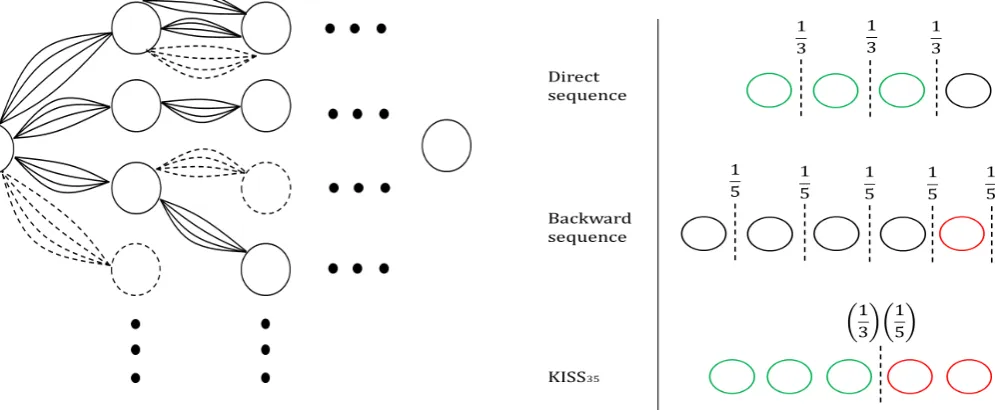
Figure 1: Graph modeling of MGA problems.
Dotted lines are decisions not built yet. Figure 2: KISS communication strategy.
objective function to be minimised is the time of ight (ToF). The physical model developed for planet sequence evaluation, introduced in Sect. 3, is based on some simplied hypothesis. All planets are supposed to move in the same plane, with a circular orbit. Transfer feasibility is based on energy considerations only, using patched-conic approximation as in [1, 5]. No deep space manoeuvres are considered and phasing problem is neglected (each planet is assumed to be in the proper position for y-by). The result is a set of optimal sequences that are feasible from an energy point of view, with phasing problem to be analysed at a later stage. The low computational eort needed to produce solutions, compared to exact methods as in [1] or branch and cut algorithms (Sect. 4), and their good quality is attractive and interesting for preliminary mission design, rst guesses for more detailed analysis (path-nding) and outer loop sequence generation.
2 Biology and mathematical modeling
[image:2.595.54.552.94.299.2]Algorithm 1 Multidirectional incremental modied Physarum solver initialize m, ρ, GF, Nagents, pram, rini
generate a random route from start to destination in DF and BF
for each generation do
for each virtual agent in all directions (DF and BF) do
if current node̸= end node then if rand≤pram then
create a new arc, building missing links and nodes else
move on existing graph using Eq. (4). end if
end if end for
look for possible matchings with KISS
contract and dilate veins using Eqs. (2), (3), (5) update uxes and probabilities using Eqs. (1), (4) end for
the sequence is terminated.
Physarum algorithmic for MGA problems Using the Hagen-Poiseuille law, the ux through the net of Physarum veins is [15, 11, 13, 14]:
Qij =
πr4
ij
8µ
∆pij
Lij
(1) where Qij is the ux between i and j, µ is the dynamic viscosity, rij the radius, Lij the length and ∆pij
the pressure gradient. Diameter variations allow a change in the ux. Veins' dilation due to an increasing number of nutrients owing can be modeled using a monotonic function of the ux:
d dtr
(n)
ij
dilation
=mr
(n)
ij
L(totn) (2)
wherem is the linear dilation coecient, r(ijn) the radius of the veins traversed by virtual agent n and L(totn)
the total length of the vein, i.e. the total cost of the complete decision (Earth to target planet) taken by agent n. Veins' contraction due to evaporative eect can be then assumed to be linear with radius:
d dtrij
contraction
=−ρrij (3)
where ρ ∈[0,1] is dened evaporation coecient. The probability associated with each vein connecting i
and j is then computed using a simple adjacency probability matrix based on uxes:
Pij =
{ Q
ij
∑
j∈NiQij if j ∈Ni
0 if j /∈Ni
(4) where Ni is the set of neighbour for i.
An additive term in the veins' dilation process, whose rst main term is expressed in Eq. (2) was added in the algorithm. This dilation is:
d dtrijbest
elasticity
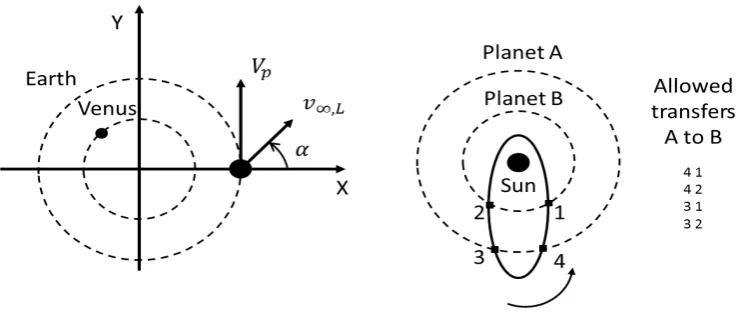
Figure 3: Initial conditions and dierent transfers on the same orbit.
whereGF is the growth factor andrijbest the veins' radii of the best chain of veins. In this work the initial
value of the radius rini is set equals to1 with the constraint that it can't be greater than5, meaning that
the vein dilation is blocked if r≥5 untilr <5 due to evaporative eect.
The incremental growth of the decision network is then based on a weighted roulette. Nutrients inside veins are interpreted as virtual agents that move in accord with adjacency probability matrix in Eq. (4). Once a node is selected (parent), there is an a priori probability pram of ramication towards new nodes
(children) that are not yet connected with the actual parent node. If ramication is the choice, the virtual agents build an arc between the ramifying node and the closer (in terms of physical distance) missing planet. This process leads to Algorithm 1.
Introducing Multidirectionality and Matching: KISS Taking inspiration from the ideas proposed in [3] and [4], a multidirectional version of the algorithm was developed. Virtual agents are able to build arcs and nodes both in the classic direct way from Earth to the target planet (direct ux, DF) and in a backward direction from target planet to Earth (back ow, BF). Since the MGA model developed in Sect. 3 is not invertible, the local information used, i.e. Lij, for arc evaluations is the distance between
planets instead of the time of ight (ToF), while the global information, i.e. Ltot, is computed using the
MGA model with the inverted backward sequence. The two superimposed graphs built using two counter-expanding Physarums, communicate using the KISS strategy: the best10BF and DF sequences are taken and each sequence DF communicate with each BF sequence. The communication occurs by randomly selecting a cut point (arc cut) for the two sequences and trying to connect the two graphs with a matching arc. This strategy is shown in Fig. 2, where the probability associated with cut at dotted lines (direct and backward sequence) and recombination (KISS35 is an example) are reported.
3 MGA Model
Table 1: Success rate: Physarum, Physarum KISS. Earth to Jupiter transfers: EJ7 (v∞,L = 7km/s,
α= 1.5π), EJ5 (v∞,L = 5km/s,α = 1.5π).
EJ5 EJ7
Function evaluations: 5000 , 30000 5000 , 30000
Physarum 0.66 0.80 0.16 0.81
Physarum KISS 0.45 0.93 0.55 0.94
Table 2: Mean simulation time (non dimensional) at 30000 function evaluations. Non dimensional coef-cient: Physarum mean simulation time at 30000 function evaluations. Earth to Jupiter transfers: EJ7 (v∞,L = 7km/s, α= 1.5π), EJ5 (v∞,L = 5km/s,α = 1.5π).
EJ5 EJ7
Physarum 1 1
Physarum KISS 0.74 0.68
variable length. Resonances are taken into account, i.e. multiple passages in proximity of the same planet. Planets are assumed to be in the right position for y-bys at every time, i.e. phasing is neglected. The result is a set of sequences that are feasible from an energy point of view but not from a phasing point of view, as in [1]. Having assigned a launch and direction velocity (v∞,L, α) from Earth (whose orbiting
velocity is Vp) a set of transfers are possible (Fig. 3). In particular, referring to Fig. 3, if Planet A is the
Earth and Planet B the following planet, and the launch happens in 4, then two possible transfer arcs are possible, i.e. 4-1 and 4-2. This is true for each transfer between two planets. In particular, since two intersections and two types of y-bys are possible (accelerating or decelerating), then each doublet of planets leads to four possible transfers, as in Fig. 1.
4 Results and Conclusion
The testing procedure proposed in [16] was used to assess the performance of the proposed algorithms. In particular the parameter of performance chosen is the success rate that represents the number of time an algorithm is able to obtain the optimal solution over a dened number of runs, i.e. 200, with a dened tolerance, i.e. 10−5. The success rate can be computed over the number of function evaluations. In this work each arc evaluated is considered a function evaluation, meaning that for example a sequence of 5 planets is made of 4 function evaluations.
The test cases here presented are the two Earth to Jupiter transfers EJ5 (v∞,L = 5km/s, α = 1.5π) and
EJ7 (v∞,L = 7km/s, α = 1.5π). The limit altitude at y-by epoch is 200km for Mercury, Venus, Earth,
Mars and Pluto, 5Jovian radii at Jupiter, 2 planetary radii at Saturn, and one planetary radius at Uranus and Neptune. Input parameters for the algorithms are: m = 0.005,ρ= 0.0001, GF = 0.005,Nagents = 20,
pram = 0.6. The best solution found by the algorithm is the sequence of planets EVVEMJ (Earth, Venus,
0 2 4 6 8 10
x 104 0
0.2 0.4 0.6 0.8 1
Function Evaluations
Success Rate
Earth−Jupiter, 5 km\s
Branch and Cut (@ best) Branch and Cut (@ best) limit Physarum
Physarum KISS
Physarum, multiple repetitions Physarum KISS, multiple repetitions
Figure 4: Success rate: Physarum, Physarum KISS and Branch & Cut. Earth to Jupiter transfer EJ5,v∞,L = 5km/s, α= 1.5π.
0 2 4 6 8 10
x 104 0
0.2 0.4 0.6 0.8 1
Function Evaluations
Success Rate
Earth−Jupiter, 7 km\s
Branch and Cut (@ best) Branch and Cut (@ best) limit Physarum
Physarum KISS
Physarum, multiple repetitions Physarum KISS, multiple repetitions
Figure 5: Success rate: Physarum, Physarum KISS and Branch & Cut. Earth to Jupiter transfer EJ7, v∞,L = 7km/s, α= 1.5π.
evaluations and above 20% at 5000 function evaluations). Furthermore there is a considerable gain in computational time by using the Physarum KISS algorithm (around30time faster, as reported in Table 2) thanks to the matching approach that rapidly combines and discovers optimal sequences. It is of interest also a comparison among these two bio-inspired algorithms and branch & cut algorithms. Fig. 4 and Fig. 5 report this comparison in terms of the success rate vs. function evaluations. The branch & cut algorithm implemented starts building a tree of sequences from Earth and proceeds level by level, cutting branches when the value of the objective function for the calculated sequence so far is above a dened threshold (i.e. the best value found for a complete sequence during the branch & cut run). As in Fig. 4 and Fig. 5, the branch & cut algorithm shape behaviour is a step function and the best solution is reached at around 55000 function evaluations both for EJ5 and EJ7. Physarum algorithm is able to achieve90%of success at around 40000 evaluations, while the addition of KISS strategy increase the success at100%(note that these values are calculated considering the probability of success by repeating the algorithm multiple time, i.e. starting from experimental data at 30000 function evaluations, the probability of unsuccess is 1−pn
30 where n is the number of repetions andp30 the experimental data at 30000 evaluations). These results demonstrates an advantage in using the proposed bio-inspired heuristic. Moreover a branch & cut strategy is not able to nd certain sub-optimal sequences that are cut during the computation without being completed, and may be useful for preliminary analysis. This is not the case using Physarum heuristic.
5 Acknowledgments
This work has been partially supported by the CNES - Thales Alenia Space contract for the study on Global Optimisation of Interplanetary Trajectories.
References
[image:6.595.48.272.88.275.2] [image:6.595.336.555.91.276.2][2] N.J Strange, J.M Longuski. Graphical Method for Gravity-Assist Trajectory Design. Journal of Spacecraft and Rockets, 39(1):916, 2002.
[3] L Masi, M Vasile. A Multidirectional Modied Physarum Solver for Optimal Discrete Decision Making. Proceedings of International Conference on Bio-Inspired Optimization Methods and their Applications, BIOMA 2012, 1:207218,2012.
[4] L Masi, M Vasile. Optimal Multi-Objective Discrete Decision Making Using a Multidirectional Modied Physarum Solver. EVOLVE 2012 International Conference, Mexico City, Mexico, 2012.
[5] A.E. Petropoulos, J.M Longuski, E.P. Bonglio. Trajectories to Jupiter via Gravity Assist from Venus, Earth and Mars. Journal of Spacecraft and Rockets, 37(6):776783, 2000.
[6] M Vasile, P. De Pascale. On the Preliminary Design of Multiple Gravity-Assist Trajectories. Journal of Spacecraft and Rockets, 42(4): 794805, 2006.
[7] M Ceriotti, M Vasile. Automated MGA Trajectory Planning with an ACO-inspired Algorithm. Acta Astronautica, 67(910): 1202-1217, 2010.
[8] A Gad, O Abdelkhalik. Hidden Genes Genetic Algorithm for Multi-Gravity-Assist Trajectory Opti-mization. Journal of Spacecraft and Rockets, 48(4): 629641, 2011.
[9] J.A Englander, B.A Conway, T Williams. Automated Interplanetary Trajectories Planning. AIAA/AAS Astrodynamics Specialist Conference, Minneapolis, Minnesota, 2012.
[10] A Adamatzky, G.J Martinez, S.V Chapa-Vergara, R Asomoza-Palacio, C.R Stephens. Approximating Mexican Highways with Slime Mould. Natural Computing, 10(3): 11951214, 2011.
[11] D.S Hickey, L.A Noriega. Insights into Information Processing by the Single Cell Slime Mold Physarum Polycephalum. UKACC Control Conference, , Manchester, UK, 2008.
[12] T Nakagaki, H Yamada, A Toth. Maze-Solving by an Amoeboid Organism. Nature, 407(6803): 470, 2000.
[13] A Tero, K Yumiki, R Kobayashi, T Saigusa, T Nakagaki. Flow-Network Adaptation in Physarum Amoebae. Theory in Biosciences, 127(2): 8994, 2008.
[14] A Tero, R Kobayashi, T Nakagaki. Physarum Solver: a Biologically Inspired Method of Road-Network Navigation. Physica: A Statistical Mechanics and its Applications, 363(1): 115119, 2006.
[15] A Tero, K Yumiki, R Kobayashi, T Saigusa, T Nakagaki. Rules for Biologically Inspired Adaptive Network Design. Science Signalling, 327(5964): 439, 2010.