An Investigation of Attrition from Community-based Offending
Behaviour Programmes
Thesis submitted in accordance with the requirements of the
University of Liverpool for the degree of Doctor in Philosophy
(or other degree as appropriate)
By
Ruth Megan Hatcher
Acknowledgements
Acknowledgements
My thanks go out to my supervisor, Professor James McGuire, for his patient support over the years. Despite many obstacles along the way, James has been positive and reassuring at times when I felt that this thesis would never be completed. I have no doubt that if it wasn’t for James’ encouragement, I would have given up the notion of this thesis a long time ago.
I am also grateful to the University of Leicester for granting me a period of study leave in September 2007 which permitted time for the data collection which forms part two of this thesis. My colleagues at the University over the last six years have also been hugely encouraging to me and their help in supporting me to the completion of this work really has been invaluable.
The local Probation Service (which I cannot name due to confidentiality reasons) has also played a large role in this thesis. I spent four months based within the programme team’s office during the winter of 2007. All of the staff, in particular the Programme Manager and the administrative staff, were welcoming and exceptionally helpful and I thank them for that. I am also grateful to the eleven individuals who gave up their time to speak with me about their experiences of the Enhanced Thinking Skills programme. Whilst their contributions have not been presented within this final volume, I will ensure that the time that they gave to this work is not wasted by writing up their contributions within subsequent papers.
I also owe a massive debt of thanks to my close friends and family (and especially my boyfriend James) for putting up with me in recent months (or perhaps years!). I
apologise for not being there when I should have been and, for when I was there, talking endlessly about the endless PhD! I am extremely thankful for your patience and support.
Abstract
An Investigation of Attrition from Community-based
Offending Behaviour Programmes
Ruth Megan Hatcher
Abstract
Objectives: This thesis investigates attrition from community-based cognitive-skills
offending behaviour programmes. Part one of the thesis investigates the influence of attrition on the reconviction outcomes of those sentenced to either the Enhanced Thinking Skills (ETS) programme or the Think First programme. The data are investigated to determine whether programme dropout is detrimental to reconviction outcomes. Part two undertakes a more thorough analysis of the characteristics of programme completers, non-completers, and non-starters of the ETS programme. The three groups are compared to assess for differences in relation to demographic, psychometric, criminal history, and offender need variables. The role of organisational, or process, factors in attrition is also investigated. Finally, the reasons recorded in probation files for non-attendance at the ETS programme are examined.
Methods: Part one comprises two chapters and utilises a quasi-experimental design.
Data relating to a national sample of offenders sentenced to an offending behaviour programme and a comparison group of offenders sentenced to probation but not required to undertake a programme and matched on a one-to-one basis to the
Abstract
Results: The analyses in part one provided tentative evidence of a negative impact of
attrition on reconviction outcomes. This trend remained after controlling for those variables found to significantly differ between groups. The analyses within part two indicated that programme non-starters were more criminogenic than programme completers and non-completers. The non-completers, however, were the youngest of the groups and hence had less of a history but displayed a similar rate of offending as the non-starters. In relation to process factors, there was a significant association between appropriateness of targeting and attrition; offenders with risk of reconviction scores above the recommended criteria were most likely to dropout. Finally, a third of dropouts could not, should not, or were not able to attend due to the unavailability of a programme place, a further third were already in breach of their order or had
committed a further offence, and the final third could and should attend, were not apparently in breach but still failed to commence.
Conclusions: Programme dropouts produce worse reconviction outcomes than
Contents
Contents
Acknowledgments i
Abstract ii
List of tables and figures vi
Chapter One: Literature Review 1
PART ONE: Attrition: Investigation of attrition and 40 reconviction outcomes utilising national probation data
An Introduction to Part One 41
Chapter Two: Attrition: An analysis of reconviction outcomes 42
Introduction 43
Hypotheses 47
Method 48
Results 54
Discussion 67
Chapter Three: Attrition: A Comparison of completers, 73 non-completers, and non-starters
Introduction 74
Hypotheses 81
Method 82
Results 87
Contents
PART TWO:Investigation of attrition utilising data from one 108 probation area
An Introduction to Part Two 109
Chapter Four: An investigation of offender demographic and 110 psychometric variables and their relationship with attrition
Introduction 111
Hypotheses 115
Method 116
Results 122
Discussion 129
Chapter Five:An investigation of offence-related variables, 135 criminogenic and non-criminogenic need and their relationship
with attrition
Introduction 136
Hypotheses 138
Method 139
Results 142
Discussion 189
Chapter Six: An investigation of process related variables and 197 their relationship with attrition
Introduction 198
Hypotheses 203
Method 204
Results 206
Contents
Chapter Seven: An analysis of the reasons for attrition 237
Introduction 238
Method 242
Results 244
Discussion 272
Chapter Eight: General Discussion 278
References 297
Appendices 319
List of Tables and Figures
List of Tables and Figures
Tables:
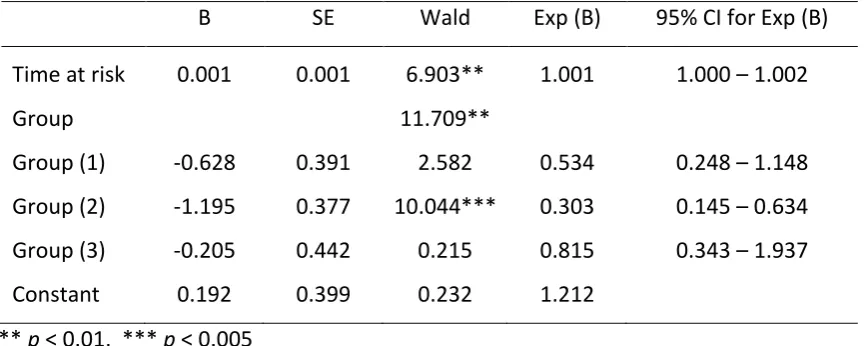
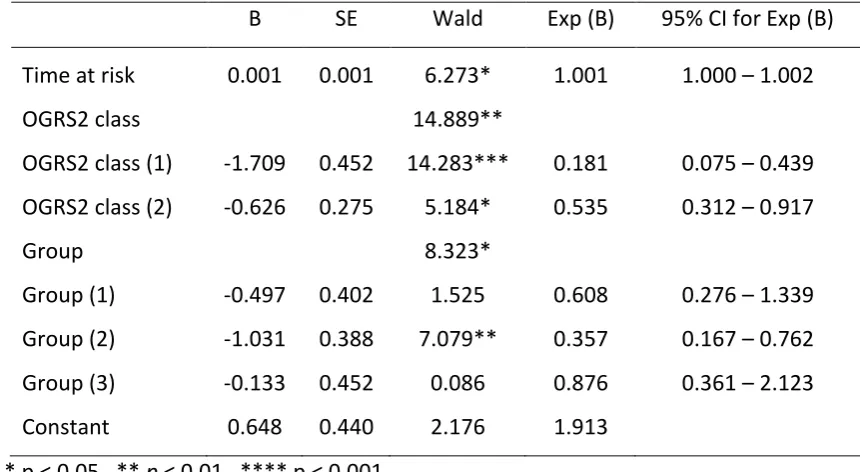
Table 2.1. Descriptive Statistics by Treatment Allocation Group 52 Table 2.2: Logistic regression of reconviction as a function of time at
risk and treatment group (experimental, comparison) 55 Table 2.3. Descriptive Statistics by Treatment Received Groups 56 Table 2.4: Logistic regression of reconviction as a function of time at risk and
treatment group (comparison, completer, non-completer, non-starter) 57 Table 2.5: Odds ratio for each pairwise comparison 58 Table 2.6: Logistic regression of reconviction as a function of time at risk and
treatment group (completer, matched comparison) 59
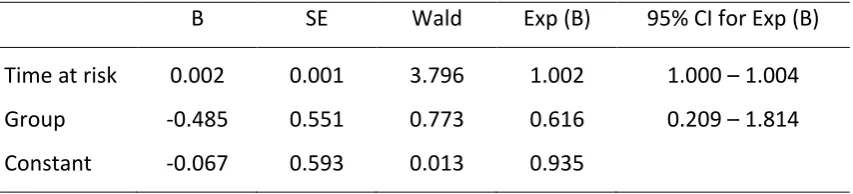
Table 2.7: Logistic regression of reconviction as a function of time at risk and treatment group (non-completer, matched comparison) 60 Table 2.8: Logistic regression of reconviction as a function of time at risk and
treatment group (non-completer, matched comparison) 61 Table 2.9: Descriptive Statistics by Treatment by Starter and Non-starter groups 61
Table 2.10: Reconviction by group 62
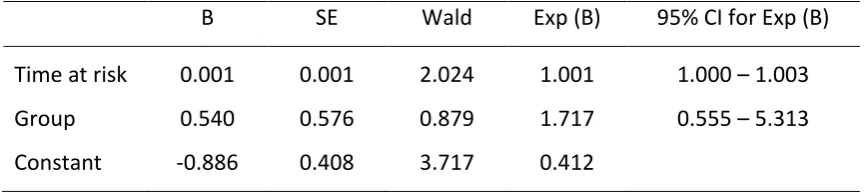
Table 2.11: Logistic regression of reconviction as a function of OGRS2, time at risk, and treatment group (starters, non-starters) 63 Table 2.12: Descriptive Statistics by Treatment by Completer and Dropout
groups 64
Table 2.13: Reconviction by group 64
Table 2.14: Logistic regression of reconviction as a function of age, OGRS2, time at risk, and treatment group (completers, dropouts) 65 Table 3.1. Descriptive Statistics by Treatment Groups 87
Table 3.2. OGRS2 criteria classification by group 88
Table 3.3. OGRS2 appropriateness by group 89
Table 3.4. Motivation to complete the programme mean scores by group. 89
Table 3.5. School leaving age by group 90
List of Tables and Figures
Table 3.7. Accommodation status by group 91
Table 3.8. Literacy problems by group 91
Table 3.9. Need scores by group 92
Table 3.10. Correlations between age, OGRS2, number of previous convictions
and need scores. 93
Table 3.11. Mean suitability scores by suitability group 93
Table 3.12. Suitability by group (three groups). 94
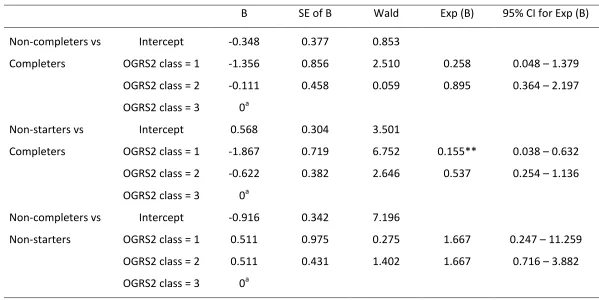
Table 3.13. Mean suitability score by group (three group) 95 Table 3.14. Multinomial logistic regression of programme completion as a
function of OGRS2 96
Table 3.15. Multinomial logistic regression of programme completion as a
function of OGRS2 appropriateness 98
Table 3.16: Logistic regression of reconviction as a function of time at risk, OGRS2, and treatment group (comparison, completer, non-completer,
non-starter) 100
Table 3.17: Logistic regression of reconviction as a function of time at risk, OGRS2 appropriateness classification, and treatment group (comparison,
completer, non-completer, non-starter) 101
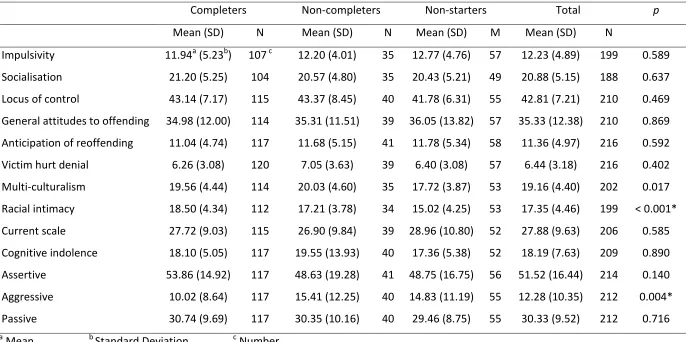
Table 4.1: Descriptive Statistics by Group 122
Table 4.2: Gender by Group 124
Table 4.3: Ethnicity by Group 124
Table 4.4: Pre-programme psychometric scores by group 126 Table 4.5: Multinomial logistic regression of programme completion as a
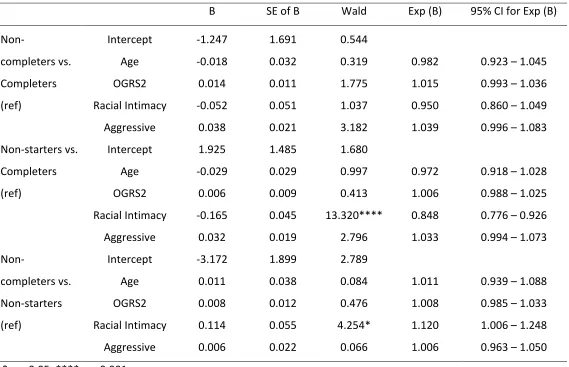
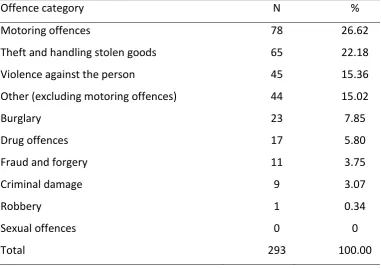
function of Age, OGRS2, Racial Intimacy and Aggressive 128 Table 5.1: Distribution of offence categories for index offences across the
Sample 142
Table 5.2: Distribution of offence categories of index offences across groups (%) 143 Table 5.3: Distribution of offence categories of index offences (with the
collapsed category of acquisitive crime) across groups (%) 144
Table 5.4: Breach by group 145
Table 5.5: Mean number of court appearances at which convicted by group 146
List of Tables and Figures
Table 5.7: Mean Copas Rate by group 148
Table 5.8: Mean number of custodial sentences by group 148 Table 5.9: Mean number of offence categories for which convicted by group 149 Table 5.10: Mean number of previous violent and sexual convictions by group 150
Table 5.11: Mean OASys total score by group 151
Table 5.12: Mean OASys criminogenic and non-criminogenic needs scores by
group 151
Table 5.13: OASys individual need scores by group 153 Table 5.14: Kolmogorov-Smirnov output for the OASys individual need scores 154 Table 5.15: OASys individual criminogenic need scores by group 156 Table 5.16: Kolmogorov-Smirnov output for the OASys individual criminogenic
need scores 157
Table 5.17: OASys individual non-criminogenic need scores by group 159 Table 5.18: Kolmogorov-Smirnov output for the OASys individual
non-criminogenic need scores 160
Table 5.19: Distribution of OASys risk classifications by group 161 Table 5.20: Multinomial logistic regression of programme completion as a
function of previous breach, OASys total score, number of court appearances at which convicted under 18 and age of first conviction. 163 Table 5.21: Multinomial logistic regression of programme completion as a
function of previous breach, OASys criminogenic score, number of court
appearances at which convicted under 18 and age of first conviction. 165 Table 5.22: Multinomial logistic regression of programme completion as a
function of previous breach, OASys total score, and Copas Rate 167 Table 5.23: Distribution of offence categories of index offences across starter
and non-starter groups (%) 168
Table 5.24: Distribution of offence categories of index offences (with the collapsed category of acquisitive crime) across starter and non-starter
groups (%) 169
Table 5.25: Breach by starter and non-starter group 170
Table 5.26: Mean number of convictions by group 170
List of Tables and Figures
Table 5.28: Mean Copas Rate by group. 171
Table 5.29: Mean number of custodial sentences by group 172 Table 5.30: Mean number of offence categories for which convicted by starter
and non-starter group 172
Table 5.31: Mean number of previous violent and sexual convictions by starter
and non-starter group 173
Table 5.32: Mean OASys total score by starter and non-starter group 174 Table 5.33: Mean OASys criminogenic and non-criminogenic needs scores by
starter and non-starter groups 175
Table 5.34: OASys individual need scores by starter and non-starter group 176 Table 5.35: Kolmogorov-Smirnov output for the OASys individual need scores 177 Table 5.36: Kolmogorov-Smirnov output for the OASys individual criminogenic
need scores 178
Table 5.37: OASys individual criminogenic need scores by starter and
non-starter group 179
Table 5.38: Kolmogorov-Smirnov output for the OASys individual
non-criminogenic need scores 180
Table 5.39: OASys individual non-criminogenic need scores by starter and
non-starter groups 181
Table 5.40: Distribution of OASys risk classifications by starter and non-starter
groups 182
Table 5.41: Logistic regression of programme starting as a function of previous breach, number of court appearances at which convicted under 18, age of
first conviction, and OASys total score. 184
Table 5.42: Logistic regression of programme starting as a function of previous breach, number of court appearances at which convicted under 18, age of
first conviction, and OASys criminogenic score 185 Table 5.43: Logistic regression of programme starting as a function of previous
breach, Copas Rate, and OASys criminogenic score. 186
Table 5.44: Summary of significant findings 187
Table 6.1: Order type by group 206
List of Tables and Figures
Table 6.3: Cumulative completion status outcomes in relation to the number of
attempts 208
Table 6.4: OGRS2 criteria classification by group 209
Table 6.5: OGRS2 appropriateness by group 209
Table 6.6: Mean time from order to programme start by group. 210 Table 6.7: Distribution of group by time of programme. 211 Table 6.8: Distribution of group numbers of programme sessions per week 212 Table 6.9: Mean Level of Engagement and Understanding scores by group 212 Table 6.10: Multinomial logistic regression of programme completion as a
function of number of previous attempts on this order and OGRS2
classification (too low, appropriate, too high) 215
Table 6.11: Logistic regression of group (completer, non-completer) as
a function of OGRS2 classification (too low, appropriate, too high), number of attempts on the order, and average level of engagement scores
(completers, dropouts) 217
Table 6.12: Age by completion and appropriateness groups 218 Table 6.13: OGRS2 by completion and appropriateness groups 219 Table 6.14: Pre-programme psychometrics by completion and
appropriateness groups 221
Table 6.15: Copas rate by completion and appropriateness groups 223 Table 6.16: Total OASys score by completion and appropriateness groups 224 Table 6.17: Total OASys criminogenic score re by completion and
appropriateness groups 227
Table 6.18: Total OASys non-criminogenic score re by completion and
appropriateness groups 230
Table 7.1: Reasons for type one non-attendance 244
Table 7.2: Reasons for type two non-attendance 245
Table 7.3: Reasons for type three non-attendance 247
Table 7.4: Reasons for Type One non-attendance 249
Table 7.5: Reasons for Type Two non-attendance 250
List of Tables and Figures
Table 7.7: Age by Attrition type (type one, type two, type three) and Group
(non-starter, non-completer) 253
Table 7.8: OGRS2 by Attrition type (type one, type two, type three) and
Group (non-starter, non-completer) 254
Table 7.9: Pre-programme Racial Intimacy by Attrition type (type one, type
two, type three) and Group (non-starter, non-completer) 255 Table 7.10: Pre-programme Aggressiveness by Attrition type (type one, type
two, type three) and Group (non-starter, non-completer) 256 Table 7.11: Previous breach by attrition (type one, type two, type three) group 256 Table 7.12: Previous breach by attrition (type one, type two, type three) and
dropout group (non-starter, non-completer) 257
Table 7.13: Total number of previous convictions and number of previous convictions prior to age 18 by attrition (type one, type two, type three) and
dropout group (non-starter, non-completer) 258
Table 7.14: Age at first conviction by attrition (type one, type two, type three)
and dropout group (non-starter, non-completer) 259
Table 7.15: Copas rate by Attrition type (type one, type two, type three) and
Group (non-starter, non-completer) 260
Table 7.16: OASys total score by Attrition type (type one, type two, type three)
and Group (non-starter, non-completer) 261
Table 7.17: OASys risk classification by attrition (type one, type two, type
three) group 261
Table 7.18: OASys risk classification by attrition (type one, type two, type
three) and dropout group (non-starter, non-completer) 262 Table 7.19: OASys criminogenic need score by Attrition type (type one, type
two, type three) and Group (non-starter, non-completer) 263 Table 7.20: Mean number of attempts at ETS on this order by Attrition type
(type one, type two, type three) and Group (non-starter, non-completer) 264 Table 7.21: OGRS2 appropriateness by attrition (type one, type two, type
three) group 264
Table 7.22: OGRS2 appropriateness by attrition (type one, type two, type
List of Tables and Figures
Table 7.23: Age and OGRS2 by Attrition type (3A, 3B, 3C) amongst the
non-starter group 266
Table 7.24: Pre-programme Racial Intimacy and Aggressiveness by Attrition
type (3A, 3B, 3C) amongst the non-starter group 267 Table 7.25: Previous breach by attrition group (3A, 3B, 3C) amongst the
non-starter group 267
Table 7.26: Total number of previous convictions and number of previous convictions prior to age 18 by attrition group (3A, 3B, 3C) amongst the
non-starter group 268
Table 7.27: Age at first conviction, Copas rate, OASys total score and OASys criminogenic score by attrition group (3A, 3B, 3C) amongst the non-starter
group 269
Table 7.28: OASys risk classification by attrition group (3A, 3B, 3C) amongst
the non-starter group 270
Table 7.29: Mean number of attempts at ETS on this order by attrition group
(3A, 3B, 3C) amongst the non-starter group 271
Table 7.30: OGRS2 appropriateness by attrition group (3A, 3B, 3C) amongst
the non-starter group 271
Figures:
Figure 6.1: Scatterplots of OGRS2 risk score against Total OASys score by
completion group (too high group only) 225
Figure 6.2: Scatterplots of OGRS2 risk score against Total OASys score by
completion group (appropriate group only) 225
Figure 6.3: Scatterplots of OGRS2 risk score against OASys criminogenic need
score by completion group (too high group only) 228 Figure 6.4: Scatterplots of OGRS2 risk score against OASys criminogenic need
Chapter One
Chapter One
Literature Review
History and development of the National Probation Service
The role of the modern National Probation Service (NPS) for England and Wales is to “protect the public, reduce re-offending, [ensure] proper punishment of offenders within the community, ensure offenders’ awareness of the effects of crime on the victims of crime and the public, and the rehabilitation of offenders” (National Probation Service, 2003a, p. 1). The NPS attempts these aims, under the umbrella of the National Offender Management Service, through the administration of a number of community-based initiatives which are sanctioned by the criminal justice and court system.
Although probation as a form of provisional release from prison was introduced as long ago as 1907, its designation as a sentence of the court was not formalised until the Criminal Justice Act of 1991. However, the development of a large proportion of present day community sentences can be traced to the new Labour government of 1997 and the implementation of the Effective Practice Initiative (Hedderman, 2007) which was predicated on the influential Underdown (1998) report for the Probation
Inspectorate. Underdown’s survey of 267 local and ‘effective’ probation initiatives alarmingly found only four of these to have been properly evaluated and to be producing positive outcomes (Raynor, 2003; Raynor & Vanstone, 2007). Such a disappointing picture of the value of the probation service ultimately led to the development of a centrally managed service. In 2001, the 54 separate Probation Services were amalgamated into the NPS which was centrally governed by the National Probation Directorate (Hedderman, 2007). This new government agency was focussed on the introduction and development of initiatives to protect the public and reduce crime that were based within the available effectiveness literature (Raynor & Vanstone, 2007).
In the meantime, a suite of ‘Pathfinder’ programmes had been under
Chapter One
“...preventing young people becoming offenders of the future, tackling crimes in communities..., developing products and systems that are resistant to crime, more effective sentencing practices, working with offenders to ensure that they do not reoffend” (Homel et al., 2004, p. v). Under the auspices of this final theme, the NPS ‘Pathfinder’ programmes were identified and piloted. The intention was to take principles from the “What Works” literature and apply them within practice
(Hedderman, 2007) to develop “constructive approaches to working with offenders to prevent crime” (Hollin & Palmer, 2006, p. xi). As such, projects focussed on four key areas were established: improving offenders’ basic skills, the resettlement of short-term prisoners on release, pro-social community service supervision, and the delivery of offending behaviour interventions.
Offending behaviour programmes within the NPS
The fourth of these ‘Pathfinders’ focussed on the provision of evidence-based offending behaviour programmes. The aim of these programmes was to reduce offending behaviour through the use of rehabilitative efforts. Defined as “structured approach[es] to helping offenders to acquire the skills and knowledge which can help them to stay out of trouble” (Canton & Hancock, 2007), the development of offending behaviour programmes was based within cognitive social learning theory (Bandura, 1977). Social learning theory stipulates that human beings learn not only from direct experience but also indirectly from the observation of the behavioural outcomes of others (McGuire, 2006). As such, deviant behaviour, such as delinquency and criminal behaviour, rather than being resultant of psychopathology, is acquired and maintained through socialisation and reinforcement in much the same way as other behaviour is learned (Akers, Krohn, Lanza-Kaduce & Radosevich, 1979). Given this premise, there comes the possibility that new skills and new forms of pro-social behaviour can be learned by criminally deviant individuals to provide them with the ‘toolkit’ to avoid future criminal behaviour.
Chapter One
theoretical and evidence base that present day offending behaviour programmes were formed. Offending behaviour programmes aim to equip offenders with interpersonal, cognitive and self-management skills to help them avoid future deviant and criminal behaviour. For example, the Think First programme, a general offending behaviour programme (as opposed to one designed for a specific type of offence, such as sex offending, or drink driving), designed by McGuire (2005), focuses on the provision of social problem solving skills, such as problem awareness, alternative-solution thinking, consequential thinking, and perspective taking. The components of self management and social interaction training, alongside values education comprise the remainder of the programme. It is the acquisition of problem solving skills, however, which is deemed to be key and the basis upon which the self management, social interaction, and values education training sits (Home Office, 2000a).
Programmes such as Think First were developed on the basis of the findings of statistical reviews of large numbers of evaluations of such interventions. The meta-analyses of juvenile and adult correctional treatment published towards the end of the twentieth century (see for example, Andrews, Zinger, Hoge, Bonta, Gendreau & Cullen, 1990; Antonowicz & Ross, 1994; Dowden & Andrews, 1999a, 1999b, 2000; Izzo & Ross, 1990; Lipsey, 1992, 1999; Redondo, Sanchez-Meca & Garrido, 1999; Whitehead & Lab, 1989) had highlighted that programmes for offenders could indeed reduce recidivistic outcomes if they are designed and implemented in such a way as to facilitate this. Given the similarity in the findings of the meta-analyses, attempts to synthesise the outcomes into a set of evidence based principles upon which effective interventions could be based followed. It is upon these ‘principles of effective practice’ (Hollin & Palmer, 2006) or ‘principles of human service’ (Andrews, 1995, 2001) that the accreditation criteria for programmes within the prison and probation services of England and Wales were founded. These ten criteria are outlined by Lipton, Thornton, McGuire, Porporino and Hollin (2000) as:
1. The programme should be based within an explicit, empirically based model of change;
Chapter One
3. The programmes should be motivational and be responsive to the needs of the offenders targeted by the programme;
4. The methods used to target the criminogenic needs should be supported by empirical evidence which verifies their effectiveness with the target population; 5. The programme should be skills oriented and should provide offenders with
those skills that support a pro-social life;
6. The programmes should address a range of conceptually different treatment targets;
7. The sequencing, intensity, and dosage of the programme should relate to the risk and seriousness of the target group of offenders;
8. The programmes should be embedded within a system that supports the rehabilitative effort;
9. There should be ongoing and built-in monitoring of the programme; 10.There should be ongoing and built-in evaluation of the programme.
The goal of accreditation, which was initially overseen by the General
Accreditation Panel (which later became known as the Joint Accreditation Panel and later still the Correctional Services Accreditation Panel), was therefore to ensure that offender programming was based within evidence based guidelines and that those that had not been substantiated as effective models of intervention were discouraged (Lipton et al., 2000; Hollin & Palmer, 2006). The aim of the ‘Pathfinder’ offending behaviour programme pilots was therefore to inform the implementation and management, and to permit thorough evaluation, of such programmes within the community of England and Wales. The findings of the evaluations that ran alongside the pilots (e.g. Hollin, Palmer, McGuire, Hounsome, Hatcher, Bilby, & Clark, 2004) would provide evidence for the Joint Accreditation Panel.
Chapter One
and subject to such comprehensive scrutiny and evaluation” (p. 72). As such, the pilot offending behaviour programmes were soon being delivered on a national scale. The suite of available programmes encompassed general offending behaviour programmes, such as the Think First programme above, and specialised programmes for those who had committed specific types of offences, such as sex offences, aggression related offences, and substance related offending. Four general offending behaviour
programmes were available: three group-based programmes, Think First, Reasoning and Rehabilitation (R&R) and Enhanced Thinking Skills (ETS), and one, the Priestley One-to-One programme, designed to be delivered on an individual basis.
The R&R programme was devised in Canada by Ross and Fabiano (Ross & Fabiano, 1985; Ross, Fabiano, & Ewles, 1988). The programme comprises 38 two hour sessions at a rate of two to four sessions a week (McGuire, 2006) and focuses on interpersonal cognitive problem-solving skills, social skills, emotional management, creative thinking, critical reasoning, value enhancement and metacognition (McGuire, 2006). A shorter version of this programme was developed within England and Wales by prison staff to meet the need of lower risk offenders. This 20 session programme was the ETS programme (Clark, 2000). Both programmes were developed, alongside the Think First programme, to meet the Correctional Services Accreditation Panel criteria for community based interventions for offenders. Each probation area was encouraged to select for delivery one of the general offending behaviour programmes (Think First, Reasoning and Rehabilitation, Enhanced Thinking Skills, or Priestley One to One) and to consider implementing the available offence specific programmes if they met the need profiles of offenders within their locality.
Attrition: Facts and figures
Chapter One
allied to these issues, the research also concluded that the programme attrition, or non-completion, rate of accredited programmes was particularly high: for example, the offence specific programmes returned non-completion rates ranging from 25% to 80% (Hollin, et al, 2002a).
Attrition is neither a new problem nor one that is specific to offending behaviour programmes, the UK, or community settings. An early review of medical and psychiatric treatments (Baekeland & Lundwall, 1975) found attrition rates of between 26% and 68% for community based services and between 23% and 39% for inpatient services.
Likewise, a review of the early substance abuse treatment literature (Stark, 1992), found dropout rates generally over 50% within the first month of treatment. Within North America, offending behaviour programmes have produced non-completion rates of 37.6% within the secure estate (Wormith & Olver, 2002) and 40% amongst parolees (van Voorhis, Spruance, Ritchy, Listwan, & Seabrook, 2004). Likewise, prison based research relating to a substance use programme delivered across 20 US prisons
reported average dropout rates at 16% but with a range of 3% to 44% across the prison estate (Pelissier, Camp, & Motivans, 2003). Within the UK, Cann, Falshaw, Nugent & Friendship (2003) reported a total rate of cognitive skills programme non-completion of just 11% across their prison sample. These latter findings highlight that completion rates for offenders on interventions within prisons tend to be more favourable than those within community settings.
Despite such knowledge, the magnitude of the attrition rates reported by Hollin et al. (2002a) for court mandated community based programmes was alarming;
however, even more so was the likelihood that these figures in all probability
underestimated the extent of the phenomenon. Clearly, if offenders on probation are not present to take part in an intervention programme, it cannot achieve its intended effects. Several questions have therefore been raised concerning attrition, focusing principally on what may be the causes of it and how it might be reduced. This thesis addresses those questions and reports on a series of research studies designed to investigate factors that may influence attrition. In this first chapter, existing literature relevant to this area will be reviewed and critically examined.
Chapter One
programme but failed to complete it (to be referred to within this thesis as ‘programme non-completers’). As such, those offenders who failed to attend any portion of the intervention (to be referred to within this thesis as ‘programme non-starters’) were not considered within these data. A 2002 national evaluation, however, reported attrition rates combining both non-starters and non-completers to be as high as two thirds of those sentenced to attend (Hollin, et al., 2004). The Think First and ETS programmes were reported as having the similar attrition rates (66% and 69% respectively) with the R&R programme faring worse: only one in five of those sentenced to the R&R
programme completed it (Palmer, McGuire, Hounsome, Hatcher, Bilby, & Hollin, 2007). By 2003-4, it was possible to provide a breakdown of attrition at the two distinct stages: of those receiving general offending behaviour programme court orders, 48.5% failed to commence the programme, 23.3% commenced but did not complete, and a meagre 28.2% completed the programme to which they were sentenced to by the courts (Hollin, McGuire, Hounsome, Hatcher, Bilby, & Palmer, 2008).
These national surveys of programme attrition can be supplemented with the findings of a series of local studies that examined the issue of attrition with a view to informing local practices. For example, Hazeltine, Walker, Nickells, and Gregg (2003) examined attrition from the Think First programme within the Bedfordshire Probation Area. Of offenders referred to attend the Think First programme, just 27% completed the programme. Of the remainder almost one quarter never received an instruction to attend a programme and another quarter dropped out prior to the group sessions (these two statistics combined takes the non-starter rate to 52%). An additional 21% dropped out during the group sessions (non-completers). Given additional complexities in the data (for example, these figures relate to referrals rather than to offenders: some offenders would have received more than one referral) such statistics should be taken as tentative indications of the extent of dropout.
Sussex Probation Area (2003) reported an overall attrition rate from their accredited programmes of one in two. However, definitional ambiguity within this report does not allow for specificity; attrition is presented as the percentage of
Chapter One
not include non-starters of programmes. As such, the figure of 51% underestimates the true attrition rate within that Probation Area at that time.
A further report commissioned by Northumbria Probation Area in 2001 (Westmarland, Hester, Reid, Coulson, & Hughes, n.d.) reported that pre-programme Think First attrition rates (i.e. non-starters only) were as high as 58%; greater than the national figures but similar to those reported by Hazeltine et al (2003). By 2002, however, the overall attrition rate, this time incorporating starters and non-completers was down to 37%: 16% non-starters and 21% non-non-completers. This
represents a reduction in the non-starter rate between the two measurement points of a commendable 42%; unfortunately no information was provided by Westmarland et al. as to how such a reduction in attrition was achieved. Additionally, it is not clear from their report how the treatment group was defined; it is unclear whether the counting started when offenders received an order to attend the programme or when they were referred to a particular delivery run of programme.
It would seem therefore that whilst informative, the findings of these local reports of programme attrition are limited because they each fail to define attrition or their attrition groups comprehensively. Where these concepts are defined, they differ across probation areas such that meaningful comparisons are not possible. Despite these ambiguities, it is clear that attrition from offending behaviour programmes, at that time, was substantial and concerning for those charged with managing these programmes both locally and centrally.
Such concern was reflected in the commissioning of a National Offender
Management System (NOMS) sponsored evaluation of programmes using data from the Interim Accredited Programme System (IAPS: Hollis, 2007). IAPS is a national computer database which holds locally inputted information relating to programme management and throughput and it was used to compile national attrition and completion rates of the general offending behaviour programmes (including the Cognitive Skills Booster programme1, the Priestley One to One programme, ETS, Think First and R&R) from a sample of almost 13000 offenders. Hollis reported a much reduced non-starter rate of
Chapter One
just less than one in five (compared to one in two in 2001/02 as reported by Hollin et al. (2008)). However, these improved commencement rates did not result in higher
completion rates: these remained relatively static at 28.7% (Hollin et al. reported completion rates of 28.2%). From the work of Hollis therefore, the overall rate of attrition had not altered but the nature of it had: whilst pre-programme attrition had reduced substantially, 52.5% of offenders now started but did not complete their programme.
A few words of caution should be expressed about Hollis’s (2007) research. One of the advantages of the research is the size of the sample utilised; the irony of this, however, is that it produces its own difficulties. With such vast quantities of data, it becomes impractical to check, on an individual level, the accuracy of the data. The author herself admits that the classifications of offenders as completers,
non-completers and non-starters on the basis of IAPS codings may have resulted in incorrect classifications. In addition, nearly ten percent of the sample was removed from the analysis because ambiguities in the data rendered it impossible to distinguish whether they were non-starters, non-completers or completers. If it is assumed that these are likely to fall randomly into these three groups then this exclusion might not significantly impact on the results. However, this is a large assumption to make in a service where there is pressure to record every completer accurately to reach ambitious funding-related targets (Raynor, 2004). It is perhaps more likely therefore that these individuals would have fallen into the non-starter or non-completer groups.
What is clear, however, is that the problem of attrition from offending behaviour programmes within the community services of England and Wales is sizeable and
requires attention. National and local reviews of the problem have highlighted issues with programme non-start and within-programme dropout. As such, these figures indicated that research is needed to investigate this issue, its causes, and the potential impact of it on programme outcomes.
Attrition: Definitional concerns
Chapter One
submit that the utilisation of different definitions of attrition makes it difficult, if not impossible, to compare research findings to further understand the concept. Not only have definitions varied between studies but the heterogeneity of programme dropouts has often been ignored within research (e.g. Craissati & Beech, 2001; Geer, Becker, Gray, & Kraus, 2001; van Voorhis et al., 2004). As such, research has often amalgamated the programme non-starters and non-completers into one group of ‘dropouts’ (e.g. Hollin et al., 2004) or have failed to consider the non-starters entirely (e.g. Sussex Probation Service, 2003).
Where research has attempted to separate out different types of programme dropout, qualitative differences have been found between such groups. For example, Pelissier, Camp and Motivans (2003) conducted a multisite evaluation of treatment non-completion within 20 prisons in the USA to determine whether individual and process variables distinguished completers from non-completers of substance use programmes. The authors were able to predict not only non-completion but also the different types of non-completion, those who had been removed from treatment and those who had withdrawn, from individual and process related variables. These differences, they argue, would have “been masked if we had not differentiated between the two types of non-completion” (p. 139).
Within UK community based research, and in an effort to understand the concept better, Stephens (2003) has proposed an action-oriented typology of
programme attrition to inform practice and research. The typology not only separates starters from completers but also classifies pre-programme attrition (i.e. non-starters) into a further three types; those who could not attend treatment, those who could attend but should not attend, and those who could and should but did not attend. Those offenders in the first group, those that could not attend treatment, will have received the order to attend a programme but circumstances would subsequently have not allowed participation. ‘Type one’ factors, as Stephens calls them, renders
programme attendance not possible. Such factors may include transference out of the area, hospitalisation or death, subsequent custody for an alternative offence, or the unknown whereabouts of the offender.
Chapter One
attend due to unsuitability for programme work. After the court has sentenced an offender to attend a programme, it is possible that further assessment may indicate unsuitability, or a change in circumstances may preclude an offender attending the programme (National Management Manual, 2000). For example, evidence of low intellectual ability, mental health problems, or substance use issues may come to light and indicate the offender may not be able to cope in a group setting. Thus attrition at this stage may not be the personal choice of the offender but instead an institutional determination which rightly complies with the targeting guidelines for the programme.
Type three offenders, Stephens argues, are those which represent ‘true’ attrition from programmes. These offenders are both able and considered suitable to attend a programme but for whatever reason have not attended it. Stephens proposes that there may be a “complex and inter-related set of factors” (p. 236) which contributes to true attrition and that these factors may be more difficult to determine than type one or type two factors. Prior to conception of this model Stephens had not researched type three factors. However, despite this she proposes there to be three distinct
sub-categories. The first of these relates to programme design and proposes that aspects of the programme (such as the requirement to complete pre-programme psychometrics) or the session contents may “present an obstacle for some offenders” (p. 238). Second, implementation or organisational issues may contribute to treatment non-compliance. Stephens argues that issues such the lack of availability of a group due to staff
shortages, or clashes of groups with employment or child care commitments, are impediments to treatment attendance which should be addressed by the organisation. Stephens highlights offender motivational factors as the third and final type 3 factor and proposes the solution of “more and/or better motivational work” (p. 239).
Whilst the ‘true’ attrition, or type three factors, within Stephen’s model may not be evidence based and hence require further consideration, the logical categorisation of non-starters of programmes allows for the sifting of offenders not able to attend or not suitable for the programme from those who were available, eligible, and suitable but chose not to attend. Such structure allows the consideration of distinct contributors to attrition and provides a useful framework for future research within this field.
Chapter One
programme within three months of the start of their court order, 11% were classified as type one offenders (not able to attend) and nine percent as type two (able to attend but shouldn’t). Type three offenders were classified into three groups. The first of these were those for whom a group was not available either due to insufficient places on the programme or because those places that were available were not appropriate to the offender’s circumstances: for example, the programme clashed with the offenders’ employment or they were waiting for a female or black/Asian group. This group comprised 36% of the non-starters. The second Type three group comprised those for whom a group place was available but they were in breach of their order (29%) and the third Type three group were those for whom a group place was available, were not in breach but still did not attend session one (16%). It would seem that from the data available to the researchers it was not possible to categorise the Type three reasons into the original categories suggested by Stephens (2003; programme issues,
implementation or organisational issues, and offender motivation issues). Such classification would necessitate speaking with each offender which is both time consuming and, in cases where the offender is non-contactable or incarcerated, impractical. Notwithstanding these issues, it would be useful to undertake further research utilising a classification system such as that proposed by Stephens (2003) to determine whether subsets of programme dropouts exist and whether such subsets result from different causal mechanisms.
What the above research indicates is that not all attrition is traceable to the offender. Indeed, from Stephens and Turner’s (2004) figures it can be established that only approximately 45% of pre-programme attrition was initiated by the offender (those for whom a place was available but were in breach plus those who failed to attend: 29% and 16% respectively). When considered in the wider context, this information starts to clear some of the fog surrounding attrition and the causes of it; if approximately half of those sentenced to a programme fail to commence it (Hollin et al., 2008; Westmarland et al., n.d.) and over half of these non-starts are the direct result of organisational issues, the argument that programmes completers are those that “would do well
Chapter One
management of programmes. Such findings add weight to Nunes and Cortoni’s (2006a, 2006b) calls for greater definitional clarity and observation of different types of
programme dropouts both within research and practice.
Why is attrition a problem?
In a clinical sense, the main concern regarding attrition from programmes is obvious; those individuals who meet the criteria, and hence are identified as having a need for intervention, fail to benefit from the intervention. Considering this from the perspective of a medical model, if a patient failed to complete (or even start) their course of treatment, it is likely that this action would impact on the individual, in addition to having costs for society. The individual would not regain full health as easily as if they fully complied with their treatment, if at all. Such action could result in a need for further more extensive treatment which would have the consequence of reducing the resources available to others and increasing the costs to the health system. Within offender treatment, the effects are potentially similar. Assuming that the completion of treatment produces reductions in recidivism, the failure to complete (or start) the intervention has the potential to result in criminal behaviour and the associated costs of this that could have been prevented.
Such thinking is applied to offender interventions through the principles of risk and need posited by the risk-needs-responsivity (RNR) theory of Andrews and Bonta (2006) and operationalised within the programme accreditation criteria outlined above. The risk principle states that for programmes to be most effective the level of
intervention, or dosage, should match the risk of reconviction of those subject to it. As such those offenders who pose a higher risk of future offending behaviour should receive a greater level of intervention. This theoretical principle receives research backing from studies which have compared low and high dosage programmes with low and high risk offenders. Generally, the results indicate that low risk offenders show larger gains in low intensity treatment and high risk individuals produce larger gains in high intensity treatment (Andrews & Dowden, 2006; Lowenkamp, Latessa, & Holsinger, 2006; Bonta, Wallace-Capretta, & Rooney, 2000).
Chapter One
on dynamic criminogenic factors rather than on static or non-criminogenic factors. Andrews and Bonta (2006) draw on Dowden’s (1998) review of treatment studies to create a list of criminogenic needs. These concur with Andrews and Bonta’s ‘Central Eight’ (2006) risk factors which they argue are linked with increased recidivism: antisocial personality, antisocial attitudes and cognition, social support for crime, substance abuse, inappropriate parental modelling and discipline, problems in the school/work context, poor self-control, and a lack of pro-social activities.
As discussed above, the CSAP accreditation criteria specify that programmes should be clear in their targeting criteria so as to address the appropriate risk category of offenders (the risk principle) and should target dynamic criminogenic need (the need principle). It can therefore be assumed that, in line with Andrews and Bonta’s principles, those offenders sentenced to attend a particular programme have been assessed as requiring the level and type of intervention that the full programme delivers.
Considered in this context, attrition thus results in a violation of the risk and need principles and hence maximal treatment gains cannot be obtained. As Merrington and Stanley (2007) state:
fulfilling the obligations imposed by a court order is clearly an important outcome for community supervision...But there is another reason for the importance of programme completion as an outcome measure. The
‘treatment’ benefits cannot be experienced if the offender does not attend and an offender who attends most of a programme should benefit more than an offender who attends only a little. (p. 442)
Chapter One
comparison group, this research demonstrates how non-attendance at an offending behaviour programme reduces the likelihood of treatment gains. Other research has reported similar findings; in considering the outcomes of treatment non-completers, Wormith and Olver (2002) found that at all levels of risk, but particularly for high risk offenders, reconviction rates were higher for non-completers than for completers. Such findings give credence to Underdown’s (2001) statement: “Improving completion rates through higher offender compliance will be crucial to outcomes in a community
context” (p. 118).
Other research has indicated, however, that the picture may not be as simple as this. McMurran and Theodosi (2007) conducted a meta-analysis of cognitive behavioural treatment studies comparing the recidivism rates of programme non-completers against untreated comparisons of comparable risk. Whilst completion of programmes was seen to be effective in reducing reoffending (d = 0.11), non-completion was found to be associated with elevated levels of reoffending (d = -0.16) with community samples of non-completers performing worse than prison samples (d = -0.23 and -0.15
respectively). Whilst such findings should be interpreted cautiously as the effect sizes reflect an averaging across studies (some of which reported reductions in reconviction for non-completers comparative to non-treatment comparisons) there is a suggestion within this work that dropout from programmes may not merely reduce the effect that completion would have produced but can instead be detrimental to programme
outcomes. Similar results were reported by Hollin et al. (2008) in their study of community based general offending behaviour programmes. Programme non-completers were twice as likely and non-starters more than twice as likely as the
comparison group to be reconvicted, even after controlling for any differences between the groups in terms of age, risk of reconviction, offence type, number of previous convictions, and follow up time.
Likewise, van Voorhis, et al. (2004) in their American study of parolees
Chapter One
the programme completers and the comparison group: by the end of a six month follow up period 27% of the non-completers had been readmitted to prison whilst it was not until the end of the twelfth month that the comparison group reached the 25% re-admittance mark.
From this growing body of research, then, it could be concluded that attrition from programmes may in some way result in increased levels of reconviction. Such claims, however, should only be regarded as tentative. The majority of research within this area has compared the outcomes of programme dropouts against those of
programme completers (e.g. Serin, Gobeil, & Preston, 2009) and/or a comparison group (e.g. van Voorhis et al., 2004). Gondolf (2001) warns against the use of programme completers as a suitable comparison group; if it is expected that a completed
intervention has a positive impact then to utilise those on whom the impact is expected as a comparison to the programme dropouts would be weak research. An alternative comparison group is therefore needed. However, what represents a suitable
comparison group has been a matter for negotiation and has formed part of a larger debate regarding appropriate methodologies for treatment evaluation.
Methodological issues in the study of attrition
The UK Home Office has argued that the evaluators of offending behaviour programmes should aspire towards the ‘gold standard’ of randomised control trials (RCTs). Within a Home Office published volume edited by Harper and Chitty (2005), a variety of authors proffer the message that: “Evaluations of correctional services interventions have often been based on sub-optimal research designs....to assess the impact of those interventions on re-offending, there is also a need to develop
randomised control trials in the correctional services” (p. xx). Drawing on an adapted version of Sherman, Gottfredson, MacKenzie, Eck, Reuter and Bushway’s (1997)
Scientific Methods Scale, which classifies quantitative research according to its scientific rigor and places RCTs at the top of this scale, Harper and Chitty (2005) state that the RCT approach:
Chapter One
outset to do better or worse. Failure to randomise means that studies are likely to include uncontrolled variables and/or selection effects, which mean interpretation of results is very difficult, if not impossible. (p. 7)
Other commentators in the field, however, have argued that RCTs within the criminal justice field are difficult to achieve in practice (Colledge, Collier, & Brand, 1999; Farrington, Gottfredson, Sherman, & Welsh, 2002; Gondolf, 2004; Hollin, 2008; Hollin & Palmer, 2009; Pawson & Tilley, 1997; Raynor, 2008) and could be considered unethical in that they withhold potentially beneficial treatment from a comparison group who, if it were not for the evaluation, would have received it (Hollin, 2006; 2008; Hollin & Palmer, 2009). Hollin (2008) has also argued that the results of good quality quasi-experimental evaluations (those which ensure tight controls between the experimental and
comparison groups, either through matching on, or statistical control of, key variables) have not differed from those of RCTs. Indeed Heinsman and Shadish (1996) have concluded that if “Randomized and non-randomized experiments were equally well designed and executed, they would yield roughly the same effect size” (p. 162).Within a field where good quality randomised designs are problematic to implement and run, it would seem therefore that high quality quasi-experimental evaluation designs offer a viable alternative.
Chapter One
which controlled for the influence of age, risk of reconviction, the number of previous convictions and the length of follow up period on the groups.
One of the limitations of such designs, however, is that statistical control can only be undertaken in relation to measured variables and the selection of these variables is the responsibility of the researcher. As such, it is perfectly possible that even after statistical control, the influence of a key unmeasured variable remains. Whilst tight control is therefore possible through careful selection of a comparison group and statistical control of any differences, quasi-experimental designs can never completely eradicate the possibility that an unmeasured variable is responsible for the outcomes observed.
Seager, Jellicoe and Dhaliwal (2004) argue that such comparisons are not valid for another reason: to compare the full comparison group to subsections of the
experimental group (for example, the completers or the non-completers) fails to
acknowledge potential differences between the subsections and hence the potential for subgroups within the comparison group. In reference to the sex offender treatment literature, the authors claim that previous evaluation research, in retaining the would-be non-completers within the comparison group sample but removing them from the treatment sample, invalidates the comparison group. When investigating treatment effects, the authors advocate the “purging” (p. 602) of the non-completion effect from the comparison group reconviction statistics to ensure a fair comparison:
We think it is mandatory that all studies collect noncompleter data and then mathematically remove the calculated inflationary effect of noncompleters from the untreated comparison group. Failure to attend to this matter casts indefensible aspersions on any purported differences between the treated and untreated, whether reported in a single study or as a meta-analysis. (p. 609)
Chapter One
likewise. The outcomes of programme non-completers should, therefore, be compared against those within the comparison group that would have commenced but failed to complete programmes. Furthermore, from such thinking it follows that the non-starters of programmes should always be considered within programme evaluation. If there are those within the comparison group that would commence but fail to complete a
programme (if given the opportunity) then there are also those who would fail to commence at all. If, therefore, programme non-starters are not included within the research but their ‘matches’ are not removed from the comparison group, the
evaluation of differences between the experimental and comparison groups is invalid (McConaghy, 1999; Nunes & Cortoni, 2006a).
One evaluation study which was able to compare completers, non-completers and non-starters with appropriate sub-sets of the comparison group reported on the
community based Aggression Replacement Training (ART) programme for adult males (Hatcher, Palmer, McGuire, Hounsome, Bilby, & Hollin, 2008). The individuals within the experimental group were matched on a one to one basis utilising the variables of age, risk of reconviction and number of previous convictions. As such, it was possible to break the comparison group into subsets that were equivalent on these variables to the naturally occurring completers, non-completers and non-starters. The research reported a 7.8% increase in reconviction amongst programme non-completers compared to their matched comparisons and hence provided further tentative evidence of a
non-completion effect.
Despite an ever growing swell of evidence, some commentators have argued that the differences in observed reconviction rates are not due to the impact (positive on the completers and negative on the dropouts) of the programme but instead reflect a process of self-selection. Debidin and Lovbakke (2005), for example, argue that unmeasured pre-programme differences between the completer and dropout groups result in both the dropout group failing to complete the programme and their elevated reconviction rates. As such, they claim that “the programme simply served to sort those who would do well anyway from those who would not, regardless of the treatment” (p. 48): those predisposed to a crime free future are those most likely to complete a
Chapter One
programme itself has no therapeutic value and serves purely to sift those who will desist from offending from those who will not.
Given that research to date has matched and/or statistically controlled for constructs such as age, risk of reconviction, and criminal history variables, if Debidin and Lovbakke’s (2005) position is to stand, there must be some other unmeasured variable which influences both the propensity to dropout and to recidivate. Indeed, Debidin and Lovbakke claim that “completion rates are strongly linked to motivation” (p. 50) despite failing to specify what type of motivation they refer to and the distinct lack of evidence for such an assertion from the available literature. Seager, Jellicoe and Dhaliwal (2004), however, agree with such a position; in relation to their evaluation of a sex offender programme they stated: “that participation in the sex offender program did not reduce recidivism rates for those who complied with treatment but merely enabled motivated offenders to concretely demonstrate their commitment to not reoffend” (Seager, Jellicoe, & Dhaliwal, 2004, p. 609).
Hollin (2006) contests the view of Debidin and Lovbakke and argues that theirs is an unlikely explanation for the observed effects. Hollin (2006) proposes that the fact that a significant level of reconviction remains within the completion group invalidates the argument; it is not the case that all completers ‘do well’. Hollin has also questioned the logic behind Debidin and Lovbakke’s merging of the motivation and ‘would do well anyway’ arguments of completion; the motivation argument states that those who are motivated will complete a programme; whilst the ‘would do well anyway’ argument states that the programme is not an agent of change. Does this mean therefore that motivation is the agent of change? Hollin (2006; Hollin & Palmer, 2009) thinks that this is too simplistic an explanation: “If motivation is important in understanding desistence from further offending, it seems highly likely that it will take an interactive role with regard to other factors within the offender’s life” (Hollin, 2006, p. 59).
Chapter One
closely matched on this variable so as to rule out any potential influence it may have on treatment outcomes.
Correlates of attrition
In relation to the investigation of the correlates of attrition research has
focussed on two main areas: those factors related to the offender themselves and those related to the programme or organisational procedures. These shall be considered in turn.
Individual Factors
International research across a variety of offending behaviour programmes has established that programme dropouts tend to have higher risk of reconviction scores (Craissati & Beech, 2001; Browne, Foreman, & Middleton, 1998; Nunes & Cortonni, 2006a; Turner, 2006; Wormith & Olver, 2002), more previous convictions (Babcock & Steiner, 1999; Zanis, Mulvaney, Coviello, Alterman, Savitz & Thomson, 2003), are more likely to have a previous violent conviction (van Voorhis et al., 2004) and tend to be younger (Hazeltine et al, 2002; Mosher & Phillips, 2001; Nunes & Cortoni, 2006a; Robinson, 1995; Turner, 2006; van Voorhis et al,. 2004; Zanis et al., 2003) than
programme completers. In addition, programme dropouts tend to be less well educated (Babcock & Steiner, 1999; van Voorhis et al. 2004; Wormith & Olver, 2002), and less stable within their lives (Butzin, Saum, & Scarpitti, 2002; Craissati & Beech, 2001; Roberts, 2004; Wormith & Olver, 2002).
Within research from England and Wales, a similar pattern emerges. Palmer et al. (2007) reported that community based general offending behaviour programme dropouts (non-completers and non-starters within one combined sample) were significantly younger, higher risk, and had more previous convictions than the programme completers within their sample. These findings have been supported by other research projects within England and Wales (Chopourian, 2003; Gill, 2004; Hollin et al. 2008; Hollis, 2007; Roberts, 2004).
Chapter One
undertook an analysis of completers and dropouts of the Think First programme within the West Midlands Probation Area and found that more dropouts than completers were found to have problems within the areas of education and employment, finances, lifestyle and associates, thinking and behaviour, and attitudes to offending as assessed by the Offender Assessment System (OASys2). Additionally, dropouts had more
problems in their lives and were more cognitively impulsive than the completers. However, the sample size utilised within this research was small, the quality of the research was basic, and the dropouts were not separated into completers and non-starters.
Other research, however, has reinforced the findings of Chopourian (2003), especially where dropout was related to withdrawal or expulsion from the programme, as opposed to administrative reasons or personal circumstance. For example, Nunes and Cortoni (2006a) in their study of nearly 8000 offenders sentenced to a correctional programme found such dropouts to have greater criminogenic need, and lower levels of motivation for intervention than the completers and the administrative non-completers whilst comparisons between all other groups did not reveal any differences in relation to risk, need, or motivation. The aim of Nunes and Cortoni’s project was admirable: to determine whether different types of programme non-completers have different correlates and hence reasons for dropout. However, the research suffers from being rather too ambitious: the sample of nearly 8000 offenders across Canada included those held within secure establishments and those within the community, on a range of different programmes with a range of intensities. These factors were not, however, disaggregated by the researchers and hence it could be argued that this research suffers from the same criticisms that the author themselves level at others: it attempts to find solutions to a problem with a heterogeneous group. The research could have been improved if the different types of attrition within the different programmes and settings had been investigated. Indeed in an associated research project, Nunes and Cortoni (2006b) reported differing rates of attrition across the different programmes types and intensities indicating that either the types of offenders varied across programmes and/or that attrition may not derive solely within the offender.
2
Chapter One
Using a mixed methodology, Westmarland et al. (n.d.) undertook to examine correlates of attrition within the Northumbria Probation Area. The research analysed PSR reports of those recommended to attend the Think First programme, the criminal histories of those sentenced to the programme, the post-programme evaluation forms of programme completers, and conducted interviews with case managers, programme completers, and programme non-completers3. From the collected data, the authors were able to determine that programme completers were more likely than non-completers and non-starters to have problems with stress management and alcohol and/or drugs and less likely to have issues with boredom/need for excitement or with self-esteem/self-image. Non-completers had more problems than completers and nonstarters in relation to reasoning/thinking skills, inter-personal/social skills, mental health, emotional well-being, and learning disabilities and/or literacy problems. The authors take this as evidence that this group “were prepared to attempt the programme but found it difficult to complete” (p. 16). Non-starters were more likely than the non-completers and non-completers to have criminal peers and less likely to take responsibility for their offending behaviour and recognise the harm caused to their victims. It would appear, hence, that the non-starter group were more criminogenic in their nature and less willing to take responsibility for their actions than both the completer and non-completer groups.
Another individual factor that has been implicated in its influence on attrition is the presence of literacy problems (Briggs, Gray, & Stephens, 2004). Davies, Lewis, Byatt, Purvis, and Cole (2004) undertook a review of the literature demands of the three UK general offending behaviour groupwork programmes and concluded that there was a mismatch between the literacy levels required by the programmes and those held by the offenders referred to them. Roberts (2004) found that this mismatch may impact on attrition: completers were found to have better verbal communication and literacy skills that the non-completers. Wormith and Olver (2002) also found that programme
completion was linked to educational level and discussed whether it was necessary therefore to alter the programme for various needs or provide additional
3 It should be noted, however, that access to non-completers was limited and, hence, a proportion of
Chapter One
programme support and preparation. Whichever is the best solution, Wormith and Olver’s findings suggestions infer that it is the responsibility of the correctional service to pay greater attention to individual issues to reduce attrition rates.
The study of the contribution of motivation, or indeed a lack of it, to programme attrition has revealed contrary results. As discussed above, Debidin and Lovbakke (2005) claim that the concept of motivation is strongly associated with programme completion and attrition. In line with this perspective, Scott (2004) found that motivation to change predicted dropout from a domestic violence treatment programme. Motivation for change has also been found to predict dropout and expulsion among correctional
samples (Beyko & Wong, 2005; Krawczyk, Witte, Gordon, Wong, & Wormith, 2002, cited in Nunes & Cortoni, 2006b; Mckenzie, Witte, Beyko, Wong, Olver, & Wormith, 2002, cited in Nunes & Cortoni, 2006b; Nunes & Cortoni, 2006a; Wormith & Olver, 2002) and within the substance use treatment literature (De Leon & Jainchill, 1986; De Leon, Melnick, Thomas, Kressel, & Wexler, 2000; Ryan, Plant, & O’Malley, 1996; Simpson & Joe, 1993; Simpson, Joe, & Rowan-Szal, 1997).
In relation to community based general offending behaviour programmes, Al-Attar (2003) claims that offender motivation is required, albeit alongside an
understanding of the programme’s aims, for a programme to be effective and treatment gains to be maintained (however, in stating such claims, Al-Attar provides no evidence from research for these statements). Wormith and Olver (2002) also reported that motivation was one of a number of factors upon which treatment completers and non-completers were found to differ. McMurran and McCulloch (2007) also reported higher self–reported motivation scores amongst prison based offender behaviour programmes completers than non-completers (77.5% and 66.5% respectively). It is possible, given the retrospective nature of this research, however, that these ratings may have been
affected by subsequent events and that the non-completers rated their motivation as lower in part due to their non-completion status.