Open Access
Research article
Antimicrobial drugs for persistent diarrhoea of unknown or
non-specific cause in children under six in low and middle income
countries: systematic review of randomized controlled trials
Katharine Abba*, Rebecca Sinfield, C Anthony Hart and Paul Garner
Address: Liverpool School of Tropical Medicine, Pembroke Place, Liverpool, L3 5QA, UK
Email: Katharine Abba* - [email protected]; Rebecca Sinfield - [email protected]; Paul Garner - [email protected] * Corresponding author
Abstract
Background: A high proportion of children with persistent diarrhoea in middle and low income countries die. The best treatment is not clear. We conducted a systematic review to evaluate the effectiveness of antimicrobial drug treatment for persistent diarrhoea of unknown or non-specific cause.
Methods: We included randomized comparisons of antimicrobial drugs for the treatment of persistent diarrhoea of unknown or non-specific cause in children under the age of six years in low and middle income countries. We searched the electronic databases MEDLINE, EMBASE, LILACS, WEB OF SCIENCE, and the Cochrane Central Register of Controlled Trials (CENTRAL) to May 2008 for relevant randomized or quasi randomized controlled trials. We summarised the characteristics of the eligible trials, assessed their quality using standard criteria, and extracted relevant outcomes data. Where appropriate, we combined the results of different trials.
Results: Three trials from South East Asia and one from Guatemala were included, all were small, and three had adequate allocation concealment. Two were in patients with diarrhoea of unknown cause, and two were in patients in whom known bacterial or parasitological causes of diarrhoea had been excluded. No difference was demonstrated for oral gentamicin compared with placebo (presence of diarrhoea at 6 or 7 days; 2 trials, n = 151); and for metronidazole compared with placebo (presence of diarrhoea at 3, 5 and 7 days; 1 trial, n = 99). In one small trial, sulphamethoxazole-trimethoprim appeared better than placebo in relation to diarrhoea at seven days and total stool volume (n = 55).
Conclusion: There is little evidence as to whether or not antimicrobials help treat persistent diarrhoea in young children in low and middle income countries.
Background
In 2002, diarrhoea caused an estimated 13.2% of child deaths worldwide[1], most of them in children under the age of five years in low and middle income countries[2]. In this group, around 3% to 19% of acute diarrhoea
epi-sodes become persistent[3] and some experts estimate that up to 50% of diarrhoea deaths may be due to persist-ent diarrhoea[1]. As the number of deaths from acute diarrhoea reduces following widespread use of oral rehy-dration therapy, the contribution of persistent diarrhoea
Published: 3 March 2009
BMC Infectious Diseases 2009, 9:24 doi:10.1186/1471-2334-9-24
Received: 19 August 2008 Accepted: 3 March 2009
This article is available from: http://www.biomedcentral.com/1471-2334/9/24 © 2009 Abba et al; licensee BioMed Central Ltd.
to overall diarrhoea mortality is increasing. Persistent diarrhoea also adversely affects nutritional status, and is often associated with malnutrition. In one study, three months after a persistent diarrhoea episode, children had significantly lower weight for age and weight for height Z scores than three months before the episode[4].
Children living in poor areas with poor hygiene and sani-tation conditions and children with poor nutritional sta-tus are most at risk of developing persistent diarrhoea[3]. As poor nutrition is both a risk factor and a consequence of persistent diarrhoea, the two are very commonly asso-ciated. Children with HIV/AIDS are at particular risk; at initial presentation to hospital with HIV/AIDS, around 36–50% [5-7] of children have persistent diarrhoea. Dys-entery and more severe diarrhoeal illness are more likely to become persistent than milder episodes[3]. Previous antibiotic use and irrational use of antibiotics for acute diarrhoea are also considered to be risk factors[3] for per-sistent diarrhoea.
Definition and causes
The World Health Organization (WHO) defines diar-rhoea as the passing of three or more loose stools (which take the shape of a container) within a 24 hour period. A new episode of diarrhoea can occur after two full days without diarrhoea. Episodes of diarrhoea lasting for less than 14 days are defined as acute, episodes lasting for 14 or more days are defined as persistent.
The causes of persistent diarrhoea in populations are com-plex and poorly understood, and in individuals are often unknown. Pathogens associated with persistent diarrhoea are also often found in healthy children without diar-rhoea[4], a finding highlighted in our related review of pathogens found in the stool of children with persistent diarrhoea and without diarrhoea, to be published at a later date. Some, such as Cryptosporidium, Giardia lamblia and enteroaggregative Escherichia coli (EAggEC) are thought to be associated with persistent diarrhoea[3] in some locations. Children with persistent diarrhoea who are HIV positive may have different patterns of enteric pathogens than those who are HIV negative[8]. In addi-tion, the diarrhoea may be caused by multiple factors: malnutrition, micronutrient deficiencies, milk or food intolerance, or diseases of the bowel, as well as prior anti-microbial therapy[9].
Treatment
The current recommendations of Integrated Management of Childhood Illness programme[10] for treating diar-rhoea is that children with bloody diardiar-rhoea are treated with antimicrobials for Shigella, or for Entamoeba histolyt-ica where the organism is detected in the stool; it is recom-mended that children with watery diarrhoea are not
treated with antimicrobials; except where Giardia lamblia is found.
Even where an enteric pathogen is detected in children with persistent diarrhoea, it is not always clear that this is the cause of the illness. In addition, health workers in low and middle income countries often do not have access to sufficient high quality diagnostic laboratory facilities to analyse stool samples for all children with diarrhoea. In these situations treatment needs to be syndromic, based on symptoms and the mostly likely cause of the symp-toms; and may include replacement fluid and electrolytes, nutritional rehabilitation and sometimes drug treat-ment[9].
Recent studies have suggested that antimicrobial treat-ment may be useful in causes of watery diarrhoea other than Giardia lamblia. For example, there have been prom-ising trials looking at the use of nitazoxanide for children with diarrhoea associated with Cryptosporidium infec-tion[11], and ciprofloxacin for diarrhoea associated with enteroaggregative E.coli in adults with AIDS[12]. How-ever, these are yet to be demonstrated in a systematic review or large scale trial in children with persistent diar-rhoea. The use of antimicrobials needs to be approached with caution due to potential problems of drug resistance and possible reactions of some micro-organisms: entero-haemorrhagic E coli (EHEC) may release toxins more read-ily when a person is treated with certain drugs, potentially causing severe illness[13].
Given the lack of diagnostic facilities, and the consequent requirement that children presenting to health facilities with persistent diarrhoea receive only presumptive treat-ment, we conducted a systematic review. This project was originally requested by WHO, due to lack of evidence in this area.
Objective
To assess the effectiveness of antimicrobial drugs for the treatment of persistent diarrhoea of unknown or non-spe-cific aetiology in children under the age of six years in low and middle income countries. Only children under the age of six were included, because this age group are most at risk from death or serious morbidity relating to persist-ent diarrhoea.
Criteria for including studies in this review Types of studies
Randomized and quasi-randomized controlled trials.
Types of participants
defined by the World Bank). Trials including only partici-pants with a known cause for their diarrhoea were excluded. Trials including people of different ages or with diarrhoea of different durations were included if data relating only children under the age of six with persistent diarrhoea could be extracted.
Types of intervention
Intervention: any antimicrobial drug treatment regimen plus usual care
Control: placebo or usual care
Types of outcome
Primary:
Duration of diarrhoea
Secondary:
Presence of diarrhoea at follow-up
Need for hospitalisation
Stool volume
Death
Adverse events:
Any adverse events
Search strategy for identification of studies
The search strategy was developed in collaboration with an information retrieval specialist (see below). The strat-egy listed applies to Medline and was amended where nec-essary to search the other databases listed. No language restrictions were applied. The reference lists of included studies were also scrutinised for additional relevant stud-ies. The last search was undertaken May 20 2008.
Search Strategy Databases searched
MEDLINE (1966 to March 2007) via the OVID interface (table 1 for strategy).
EMBASE (1980 to March 2007) via the OVID interface.
LILACS database – Latin American and Caribbean Health Sciences Literature (1982 to date) – via Virtual Health Library interface.
WEB OF SCIENCE (Science Citation Index Expanded – 1945 to present).
Cochrane Central Register of Controlled Trials (CEN-TRAL), published in The Cochrane Library.
Search strategy in MEDLINE
1. persistent (diarrhea OR diarrhoea) ti, ab.
2. chronic (diarrhea OR diarrhoea) ti, ab.
3. watery (diarrhea OR diarrhoea) ti, ab
[image:3.612.49.558.508.730.2]4. (diarrheal disease*) OR (diarrhoeal disease*) ti, ab
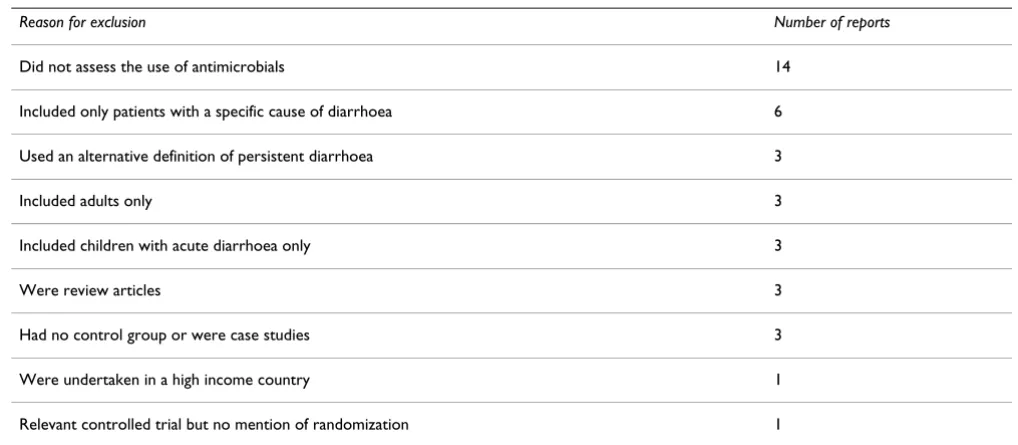
Table 1: Reasons for excluding reports initially identified as relevant
Reason for exclusion Number of reports
Did not assess the use of antimicrobials 14
Included only patients with a specific cause of diarrhoea 6
Used an alternative definition of persistent diarrhoea 3
Included adults only 3
Included children with acute diarrhoea only 3
Were review articles 3
Had no control group or were case studies 3
Were undertaken in a high income country 1
6. 1 OR 2 OR 3 OR 4) NOT cancer NOT (inflammatory bowel disease*) NOT (ulcerative colitis)
7. child* OR infant* OR pediatr* ti, ab
8. 6 AND 7
9. Diarrhea, infantile/drug therapy [MeSH] OR Diarrhea, infantile/prevention and control [MeSH] OR Diarrhea, infantile/therapy [MeSH]
10. Diarrhea/drug therapy [MeSH] OR Diarrhea/preven-tion and control [MeSH] OR Diarrhea/therapy [MeSH]
11. therap* OR treatment OR treating ti, ab
12. 9 OR 10 OR 11
13. Anti-Infective Agents/administration and dosage [MeSH] OR Anti-Infective Agents/adverse effects [MeSH] OR Anti-Infective Agents/therapeutic use [MeSH])
14. Antiprotozoal Agents/administration and dosage [MeSH] OR Antiprotozoal Agents/adverse effects [MeSH] OR Antiprotozoal Agents/therapeutic use [MeSH])
15. Antiparasitic Agents/administration and dosage [MeSH] OR Antiparasitic Agents/adverse effects [MeSH] OR Antiparasitic Agents/therapeutic use [MeSH])
16. 12 OR 13 OR 14 OR 15
17. 8 AND 16
18. randomized controlled trial [pt] OR controlled clini-cal trial [pt] OR randomized controlled trials [MeSH] OR controlled clinical trials [MeSH] OR random allocation [MeSH] OR double-blind method [MeSH] OR single-blind method [MeSH]
OR (placebos [MeSH] OR placebo* ti, ab OR random* ti, ab OR quasi-random* ti, ab
19. 17 AND 18
Methods
Study selectionTwo reviewers independently inspected titles and abstracts identified in the initial literature search in order to identify potentially relevant publications. All poten-tially relevant publications identified by at least one reviewer were obtained in full text format. One reviewer then applied the inclusion criteria to select which trials to include in the review, and scrutinised publications for duplication of trial results.
Assessment of methodological quality
Two reviewers independently assessed the methodologi-cal quality of the included trials, using a pro-forma as a guide. The methodological quality of the included trials was assessed in terms of generation of the allocation sequence and allocation concealment and reported as adequate, inadequate or unclear according to Juni 2001[14]. We recorded who was blinded in each trial. We classified inclusion of randomized participants in the analysis as adequate if 80% or more of the participants are included in the analysis, unclear if not described, and inadequate if less than 80% were included. Any disagree-ments were resolved by discussion.
Characteristics of included trials
One reviewer summarised the characteristics of the included trials. Information was extracted on the trial set-ting, location, start date, participant characteristics (such as age, sex and nutritional status), number of participants, intervention, control and outcomes for each trial. We also noted any acknowledged sources of financial support for the trial.
Data extraction
One author extracted outcomes data for the intervention and control groups. For dichotomous data we extracted the number of participants with the outcome, the total number randomized to each group, and the total number included in the analysis. For continuous data we extracted the number of participants in each group, the arithmetic mean and their standard deviations, where available.
Data analysis
The analysis was undertaken using RevMan 4.2 software. For dichotomous data we calculated relative risks and where appropriate combined results from different trials. Where continuous data were summarized by arithmetic means, we summarized the results using weighted mean difference (WMD). We stratified the analysis by class of antimicrobial drug used. We presented data on adverse events in a narrative summary.
Results
Studies identified
in Table 1. We identified one additional eligible trial through reading the reference lists of retrieved review arti-cles.
Characteristics of included trials
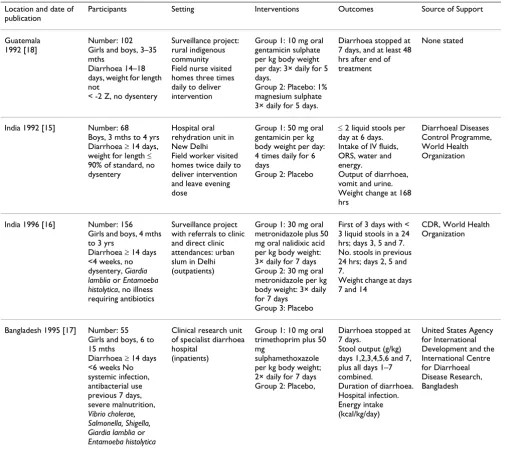
The characteristics of the four included trials are summa-rised in Table 2, and also described below.
Location
Three trials were undertaken in the South East Asia region; two in India[15,16] and one in Bangladesh[17]. Another was undertaken in Guatemala [18].
Dates of fieldwork
Two trials recruited participants during the period 1988 to 1990[15,18]. Two trial reports did not provide dates for the fieldwork; these were published in 1995[17] and 1996[16] respectively.
Participants
Each trial included children of a slightly different age range, the total age range being three months to four years. Three trials excluded children with diarrhoea lasting over a certain length of time (18 days[18], 4 weeks[16] and 6 weeks[17] respectively). Three trials excluded chil-dren with dysentery or with blood in the stool[15,16,18], and the other[17] excluded children with Shigella or
Enta-Table 2: Characteristics of Included Trials
Location and date of publication
Participants Setting Interventions Outcomes Source of Support
Guatemala 1992 [18]
Number: 102 Girls and boys, 3–35 mths
Diarrhoea 14–18 days, weight for length not
< -2 Z, no dysentery
Surveillance project: rural indigenous community Field nurse visited homes three times daily to deliver intervention
Group 1: 10 mg oral gentamicin sulphate per kg body weight per day: 3× daily for 5 days.
Group 2: Placebo: 1% magnesium sulphate 3× daily for 5 days.
Diarrhoea stopped at 7 days, and at least 48 hrs after end of treatment
None stated
India 1992 [15] Number: 68 Boys, 3 mths to 4 yrs Diarrhoea ≥ 14 days, weight for length ≤ 90% of standard, no dysentery
Hospital oral rehydration unit in New Delhi Field worker visited homes twice daily to deliver intervention and leave evening dose
Group 1: 50 mg oral gentamicin per kg body weight per day: 4 times daily for 6 days
Group 2: Placebo
≤ 2 liquid stools per day at 6 days. Intake of IV fluids, ORS, water and energy.
Output of diarrhoea, vomit and urine. Weight change at 168 hrs
Diarrhoeal Diseases Control Programme, World Health Organization
India 1996 [16] Number: 156 Girls and boys, 4 mths to 3 yrs
Diarrhoea ≥ 14 days <4 weeks, no dysentery, Giardia lamblia or Entamoeba histolytica, no illness requiring antibiotics
Surveillance project with referrals to clinic and direct clinic attendances: urban slum in Delhi (outpatients)
Group 1: 30 mg oral metronidazole plus 50 mg oral nalidixic acid per kg body weight: 3× daily for 7 days Group 2: 30 mg oral metronidazole per kg body weight: 3× daily for 7 days
Group 3: Placebo
First of 3 days with < 3 liquid stools in a 24 hrs; days 3, 5 and 7. No. stools in previous 24 hrs; days 2, 5 and 7.
Weight change at days 7 and 14
CDR, World Health Organization
Bangladesh 1995 [17] Number: 55 Girls and boys, 6 to 15 mths
Diarrhoea ≥ 14 days <6 weeks No systemic infection, antibacterial use previous 7 days, severe malnutrition, Vibrio cholerae, Salmonella, Shigella, Giardia lamblia or Entamoeba histolytica
Clinical research unit of specialist diarrhoea hospital
(inpatients)
Group 1: 10 mg oral trimethoprim plus 50 mg
sulphamethoxazole per kg body weight; 2× daily for 7 days Group 2: Placebo,
Diarrhoea stopped at 7 days.
Stool output (g/kg) days 1,2,3,4,5,6 and 7, plus all days 1–7 combined.
Duration of diarrhoea. Hospital infection. Energy intake (kcal/kg/day)
[image:5.612.54.562.278.730.2]moeba histolytica (the main causes of dysentery). One trial excluded children described as 'severely malnourished', another stipulated that weight for length was not less than -2 Z [17,18], while another included only children who had weight for length less than or equal to 90% of the standard [15]. Two trials excluded children with systemic infection[16,17], and one excluded children who had taken antibiotics in the previous seven days[17]. Two excluded children with specific enteric pathogens (Giardia lamblia and Entamoeba histolytica in one[16], Giardia lam-blia, Entamoeba histolytica, Vibrio cholerae, Salmonella and Shigella another[17]). None included specifically children with HIV/AIDS.
Settings
Participants were recruited from a range of sources includ-ing a diarrhoea surveillance project within a rural indige-nous community[18], referrals to a hospital rehydration unit[15], and attendance at a clinic provided as part of a surveillance project in an urban slum[16]. In one trial it was not clear how the participants were recruited[17]
Comparisons
Two trials compared gentamicin with placebo[15,18], one three-arm trial compared metronidazole, metronidazole combined with nalidixic acid, and placebo[16], and one trial compared sulphamethoxazole-trimethoprim with placebo[17]. All antimicrobials were given orally for between five and seven days.
Outcomes
Only one trial reported on our primary outcome of dura-tion of diarrhoea[17]. All four trials reported on recovery from diarrhoea by the end of treatment; one trial also assessed diarrhoea at three and five days[16]. Three trials reported on stool output at various time points; two meas-ured stool weight[15,17], and one measmeas-ured number of stools[16]. In addition, two trials reported on weight gain at different time intervals[15,16], one reported on various fluid intakes and outputs[15], two reported on energy intake[15,17], and one reported on hospital-acquired
infections[17]. Two trials recorded and reported on adverse events[15,18].
Sources of support
Two trials were supported by the World Health Organiza-tion[15,16], one by the United States Agency for Interna-tional Development and InternaInterna-tional Centre for Diarrhoeal Disease Research[17], and one did not men-tion a source of support[18]. None acknowledged support from pharmaceutical companies.
Quality assessment
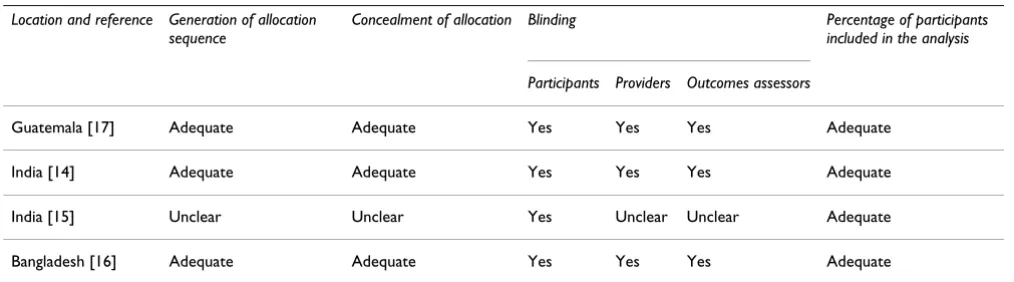
A summary of the methodological quality assessment for each study is presented in Table 3. All four studies described blinding the participants to which group they were in, and including over 80% of the randomized par-ticipants in the main analyses. Three studies also reported adequate generation of allocation sequence, allocation concealment and blinding of service providers and out-comes assessors. The remaining study[16] was unclear on these methodological issues, but stated that it used rand-omization, and that it used coded antimicrobial and pla-cebo preparations, which were identical in appearance.
Outcomes
Oral gentamicin versus placebo
[image:6.612.53.560.589.730.2]Two trials[15,18] compared oral gentamicin (10 mg/kg body weight in one trial and 50 mg/kg body weight in the other) versus placebo. Both trials assessed and reported on presence of diarrhoea at end of treatment (6 or 7 days). Combining the results of the two trials, there was no dif-ference between the gentamicin and placebo groups in the number of children with diarrhoea at the end of treatment (relative risk 1.04, 95% CI 0.78 to 1.38, 151 participants); around half the children in both groups recovered within six or seven days. There was no difference in point esti-mates between the two trials, one of which excluded chil-dren with weight for length less than -2 Z and used a standard dose of gentamicin [18], (RR = 0.01), and one of which included only children with weight for length equal to or less than 90% of the standard and used a massive
Table 3: Methodological quality assessment of included trials
Location and reference Generation of allocation sequence
Concealment of allocation Blinding Percentage of participants included in the analysis
Participants Providers Outcomes assessors
Guatemala [17] Adequate Adequate Yes Yes Yes Adequate
India [14] Adequate Adequate Yes Yes Yes Adequate
India [15] Unclear Unclear Yes Unclear Unclear Adequate
dose of gentamicin with the aim of eradicating aerobic bacterial overgrowth of the small intestine [15] (RR = 0.10). There were also no significant differences between groups in any reported measure of weight gain, fluid intake, energy intake, or fluid output.
One trial reported no drug-related untoward effects[18]. The other reported no clinical toxicity, and blood urea concentrations similar in the treatment and placebo groups[15].
Metronidazole combined with nalidixic acid versus metronidazole alone versus placebo alone
One trial[16] compared three treatment groups: metroni-dazole combined with nalidixic acid, metronimetroni-dazole alone and placebo. There was no significant difference between the groups in the primary outcome of time to recovery, or in the number of children with diarrhoea at three, five or seven days, although point estimates tended to favour the group receiving metronidazole combined with nalidixic acid.
There were no significant differences between groups in the mean number of stools in the previous 24 hours at three days or five days; at seven days the group receiving metronidazole combined with nalidixic acid had fewer stools than the group receiving metronidazole alone but the difference was small (mean difference -1.10, 95% con-fidence interval -2.07 to -0.13, 99 participants), and not significantly different when compared with the placebo group. There were no differences between the groups in percentage weight gain at seven and 14 days.
Adverse events were not mentioned in the report of this trial.
Sulphamethoxazole-trimethoprim versus placebo
One trial compared sulphamethoxazole-trimethoprim with placebo[17]. Significantly fewer children in the treat-ment group had diarrhoea at the end of treattreat-ment (7 days) (relative risk 0.4, 95% confidence interval 0.16 to 0.99, 55 participants). This related to an 82% cure rate in the anti-microbials group and 55% cure rate in the placebo group. Duration of diarrhoea also appeared to favour treatment, but the difference was not significant. Total stool output in the seven days following start of treatment was significantly lower in the treatment group (mean difference -179.4 g, 95% confidence interval -340.20 to -18.60).
Participants in the treatment group had a significantly lower risk of acquiring infections while in hospital com-pared with placebo (relative risk 0.06, 95% confidence interval 0.01 to 0.54); while energy intake from the hospi-tal diet was similar in both groups.
Adverse events were not mentioned in the report of this trial.
Discussion
Despite the comprehensive search strategy used, we iden-tified only four trials assessing the use of antimicrobials for children with persistent diarrhoea in low and middle income countries; all of which were conducted in the late 1980s and early 1990s. All four trials used good quality methods to minimise the risk of bias. However, they are also all quite small, involving between 55 and 156 partic-ipants; and so the effect estimates are consequently impre-cise. Two trials excluded children with certain laboratory-confirmed pathogens known to cause diarrhoea found in the stool, while the other two trials did not test the partic-ipants for specific pathogens. Two trials included only children with associated malnutrition or low weight for height. None of the studies included children with known HIV/AIDS.
In a related review that has been submitted for publica-tion, we examined the frequency of different pathogens found in children with persistent diarrhoea and no rhoea. We found that, while children with persistent diar-rhoea are more likely to have at least one detectable enteric pathogen than children without diarrhoea, for spe-cific pathogens there were no significant differences between the two groups; both exhibit a wide range of dif-ferent pathogens in the stool, including bacteria, parasites and viruses. These findings suggest that antimicrobial therapy may be of limited effectiveness in the majority of children with persistent diarrhoea. Trials of oral gen-tamicin, a non-absorbable drug effective against a wide range of bacteria, have tended to confirm this. Small trials of sulphamethoxazole-trimethoprim, and metronidazole combined with nalidixic acid have suggested some poten-tially worthwhile effects, which have not been tested in larger trials. Both these combinations are absorbable and effective against a wide range of bacteria; possible modes of action therefore include direct action on the enteric pathogens, and also on any systemic infections which may be delaying the child's recovery from diarrhoea.
Conclusion
Further good quality trials, of sufficient sample size to detect clinically important effect sizes, are needed to eval-uate the use of antimicrobials in the presumptive treat-ment of persistent diarrhoea. These trials should be conducted in areas where persistent diarrhoea is common in young children, and where testing for enteric pathogens is not routinely available. Children with HIV/AIDS should be included. Trials should first assess the treatment com-binations that have already given encouraging results in previous, smaller trials, and then perhaps other wide-spectrum antimicrobial drug combinations. Outcomes should include nutritional recovery, which will require a longer period of follow-up than that of the trials included in this review. Monitoring of emerging pathogen resist-ance should be undertaken within these trials.
Competing interests
The authors declare that they have no competing interests.
Authors' contributions
KA wrote the review protocol, inspected the initial search results for potentially relevant publications, selected stud-ies for inclusion, extracted data, undertook the data anal-ysis and drafted the manuscript. RS inspected the initial search results for potentially relevant publications, extracted data, and assisted in the interpretation of data. CAH provided technical advice and assisted in the inter-pretation of the findings. PG conceived of the study, secured its funding, participated in the design, assisted with the interpretation of data and helped to draft the manuscript. PG, KA and RS read and approved the final manuscript. CAH died before the completion of the man-uscript. He was a Professor within the Department of Infections and Host Defence, School of Medicine, Univer-sity of Liverpool.
Acknowledgements
Vittoria Lutje devised the search strategy and ran the search.
This review was jointly funded by the UK Department for International Development (DFID) for the benefit of developing countries; and by a grant from the World Health Organization.
References
1. Mathers CD, Bernard C, Moesgaard IK, Inoue M, Ma Fat D, Shibuya S, Stein C, Tomijima N, Xu H: Global burden of disease in 2002: data sources, methods and results. Global programme on evidencefor health policy discussion paper no. 54. (revised 2004). 2003 [http://www.who.int/healthinfo/paper54.pdf]. World Health Organization
2. Murray C, Lopez A, eds: Global health statistics: a compendium of incidence, prevalence an mortality estimates for over 200 conditions. Cambridge, MA: Harvard School of Public Health on behalf of the World Health Organization and World Bank; 1996. 3. Lima AAM, Guerrant RL: Persistent diarrhea in children:
epide-miology, risk factors, pathophysiology, nutritional impact, and management. Epidemiologic Reviews 1992, 14:222-42. 4. Lima AAM, Moore SR, Barboza MS, Soares AM, Schleupner MA,
Newman RD, Sears CL, Nataro JP, Fedorko DP, Wuhib T, Schorling JB, Guerrant RL: Persistent diarrhea signals a critical period of
spective cohort study among children in northeastern Brazil.
The Journal of Infectious Diseases 2000, 181:1643-51.
5. Lumbiganon P, Kosalaraksa P, Loapaiboon M: Survival of children with AIDS: experience in a university hospital in northestern Thailand. Journal of the Medical Association of Thailand 2000,
83(6):652-6.
6. Emodi IJ, Okafor GO: Clinical manifestations of HIV infection in children at Enugu, Nigeria. Journal of Tropical Pediatrics 1998,
44(2):73-6.
7. Lodha R, Upadhyay A, Vishal K, Kabal SK: Clinical profile and nat-ural history of children with HIV infection. The Indian Journal of Pediatrics 2006, 73(3):201-4.
8. Tumwine JK, Kekitiinwa A, Bakeera-Kitakia S, Ndeezi G, Downing R, Feng X, Akiyoshi DE, Tzipori S: Cryptosporidiosis and micro-sporidiosis in Ugandan chidren with persistent diarrhea with and without concurrent infection with human immunodefi-ciency virus. American Journal of Tropical Medicine and Hygiene 2005,
73(5):921-5.
9. Guarino A, De Marco G: Persistent Diarrhoea. In Pediatric Gas-trointestinal Disease BC Decker : USA; 2004:180-193.
10. Handbook IMCI: Integrated Management of Childhood Illness.
2006 [http://whqlibdoc.who.int/publications/2005/9241546441.pdf]. WHO and UNICEF
11. Amadi B, Mwiya M, Musuku J, Watuka A, Sianongo A, Ayoub A, Kelly P: Effect of nitazoxanide on morbidity and mortality in Zam-bian children with cryptosporidiosis: a randomized control-led trial. The Lancet 2002, 360(9343):1375-80.
12. Wanke CA, Gerrior J, Blais V, Mayer H, Acheson D: Sucessful treatment of diarrhoeal disease associated with enteroag-gregative Escherichia coli in adults infected with human immunodeficiency virus. Journal of Infectious Disease 1998,
178:1369-72.
13. Kimmitt PT, Harwood CR, Barer MR: Toxic gene expression by shiga toxin-producing Escherichia coli: the role of antibiotics and the bacterial SOS response. Emerging Infectious Diseases
2000, 6:458-65.
14. Juni P, Altman DG, Egger M: Systematic reviews in health care: assessing the quality controlled clinical trials. British Medical Journal 2001, 323(7303):42-6.
15. Bhatnagar S, Bhan MK, Sazawal S, Gupta U, George C, Arora NK, Kashyap DK: Efficacy of a massive dose oral gentamicin ther-apy in nonbloody persistent diarrhoea with associated mal-nutrition. Journal of paediatric gastroenterology and nutrition 1992,
12:117-24.
16. Bahl R, Bhandari N, Bhan MK, Saxena M, Bagati A: Efficacy of anti-microbial treatment in non-dysenteric persistent diarrhoea in a community setting. Acta Paediatrica 1996, 85(11):1290-4. 17. Alam NH, Bardhan PK, Haider R, Mahalanabis D:
Trimethoprim-sulphamethaxazole in the treatment of persistent diarrhoea: a double blind placebo controlled clinical trial. Archives of Dis-ease in Childhood 1995, 72(6):483-6.
18. Bartlett AV, Torun B, Morales C, Cano F, Cruz JM: Oral gentamicin is not effective treatment for persistent diarrhea. Acta Paedi-atrica 1992:149-54.
Pre-publication history
The pre-publication history for this paper can be accessed here: