City, University of London Institutional Repository
Citation
:
Hildreth, C.R. (1993). An Evaluation of Structured Navigation for Subject Searching in Online Catalogues. (Unpublished Doctoral thesis, City University London)This is the accepted version of the paper.
This version of the publication may differ from the final published
version.
Permanent repository link:
http://openaccess.city.ac.uk/8376/Link to published version
:
Copyright and reuse:
City Research Online aims to make research
outputs of City, University of London available to a wider audience.
Copyright and Moral Rights remain with the author(s) and/or copyright
holders. URLs from City Research Online may be freely distributed and
linked to.
City Research Online: http://openaccess.city.ac.uk/ [email protected]
An Evaluation of Structured Navigation
for Subject Searching in Online Catalogues
Charles R. Hildreth
Submitted for the Degree of Doctor of Philosophy
Department of Information Science
The City University London
CONTENTS
List of Tables 5
List of Figures 8
Acknowledgements 11
Abstract 12
Research Context of Online Catalogue Study, Part One 13 1.1 Introduction: Research Problem Context, Questions and Objectives 13
1.1.1 Research Problem Identification 13
1.1.2 Problem Refinement: Multidimenional Efforts to Improve
Subject Searching 14
1.1.3 Online Catalogue Study Research Questions and Objectives 16
1.1.4 Design of the Experiment 17
1.1.5 Research Questions of the Study 17
1.1.6 Research Objectives of the Study 18
1.2 Second Generation Online Catalogues: Subject Searching Features and
Problems 19
1.2.1 Two Approaches to Searching in Online Catalogues 22
1.2.1.1 Query Searching 23
1.2.1.2 Browse Searching 24
1.2.2 Easier Subject Searching 26
1.2.3 Conventional, Second-Generation OPAC Subject Searching 29 Summarized
1.2.4 Problems and Shortcomings of Today's OPACs 31
1.2.5 LCSH-Based Subject Searching 33
1.3 Subject Searching in the Expanded Online Library Catalogue 37 1.3.1 The Phenomenon of the Expanding Online Catalogue 37
1.3.2 Pursuing the Vision of the E-3-OPAC 38
1.3.2.1 Ways of Enhancing, Expanding and Extending the OPAC 39 1.3.3 Enhancing the Functionality of the OPAC 41
1.3.4 Expanding the OPAC 43
1.3.5 The Extended, Networked OPAC 44
1.3.5.1 Searching Interconnected OPACs - Problems, Challenges, 46 and Needed Standards
1.3.5.2 Barriers to Effective Access and Use 47
1.3.5.3 OPAC User Interface Standards 50
1.3.6 Today's Online Catalogue: New Perpectives and Escalating
Demands 52
1.3.7 The Scholar's Workstation 54
1.4 Research Context Summarized 57
1.4.1 End-user Searching of Bibliographic Retrieval Systems 57
2. Research Context, Part Two: Searching and Browsing in Information
Retrieval Systems 62
2.1 The Conventional Information Retrieval Model 62 2.1.1 Functional Objective of an Information Retrieval System 62
2.1.3 A Classification of Retrieval Techniques 65
2.1.4 The Exact Match Search Paradigm 66
2.1.5 Explicit and Implicit Online Catalogues 67
2.1.6 Browsing in Exact Match Systems 70
2.1.7 Summary: Browsing as an Information Seeking Method 71
2.2 The Nature and Types of Browsing 72
2.2.1 The Concept of Browsing 72
2.2.2 Types of Browsing 76
2.2.3 Browsing Aids 77
2.2.4 Searching or Browsing? 78
2.3 Limitations and Problems of the Conventional Model of Information
Retrieval 80
2.3.1 Performance and System Use Problems: A Reappraisal of
Boolean Retrieval Methods 81
2.4 Information Retrieval Research and the Probabilistic Model of 86 Information Retrieval
2.4.1 The Information Retrieval Situation 86
2.4.2 Information Retrieval as an Inference Process: From Matching 90 to Relevance
2.4.3 Summary of Contributions From Information Research and 94 Experimentation
2.5 A New Paradigm: Browsing as a Primary Search Strategy 95
2.5.1 New Models of Information Seeking 97
2.5.1.1 As We Often Seek 100
2.5.2 Conclusion: Information Seeking, Retrieval Systems 102 and Browsing
3. Methodology, Part I: Design and Development of Experimental
Online Catalogue 104
3.1 Chapter Overview 104
3.2 A Design Rationale for Browsing Systems: Alternative Viewpoints 104 3.3 Experimental Online Catalogue Design Aims and Objectives 115 3.4 Software and Hardware Selected for the Research Project 116
3.5 Test Database Contents and Structure 123
3.5.1 Bibliographic Records Used in the Experiment 123 3.5.2 Subject Augmentation of Bibliographic Records
in the Test Database 125
3.5.3 Thesaural Relationships in the Library of Congress
Classification Schedules 128
3.6 Catalogue Database Search Access Options 133
3.7 Three Test Online Catalogues 135
3.8 Design of the User Interface 142
3.9 Summary 150
4. Methodology, Part II: Testing and Experimenting with the Online
Catalogues 151
4.1 Chapter Overview 151
167 167 168 168 170 172 177 180 180 183 190 190 200 204 208 213 213 217 221 232 233 234 235 236 237 238 239 240 241
4.2.2 Search Performance Measures Used 153
4.3 Setting and Participants in the Experiment 156
4.3.1 Setting and Conditions 156
4.3.2 Recruitment and Scheduling of Participants in the Experiment 158 4.4 Test Procedures and Data Collection Methods 159 4.4.1 Overview of Procedures and Data Collection Methods 159 4.4.2 Personal Data Collection: Pre-Search Questionnaire 161
4.4.3 Hands-on Training in System Use 161
4.4.4 First Search Task 163
4.4.5 Second Search Task 164
4.4.6 User Responses to the Experimental Online Catalogue:
Post-Search Questionnaire 165
4.5 Summary 166
5 Data Analysis and Test Results 5.1 Chapter Overview
5.2 Analysis of Search Results
5.2.1 Preliminary Analysis of Results
5.2.2 Secondary Relevance Judgements of SELECTS 5.2.3 Overall Search Results: Overlap Analysis 5.3 Creation of the Database for Statistical Analysis 5.4 Characteristics of Searchers and Groups
5.4.1 Personal and Catalogue Use Data
5.4.2 Characteristics of Groups and Tests for Homogeneity 5.5 Search Performanced Analysis
5.5.1 Summary Statistics of Performance Scores By Group 5.5.2 Results of Group Performance Score Comparisons 5.5.3 The Correlation Between Recall and Performance 5.6 User Responses to the Experimental Online Catalogue
6 Discussion and Conclusion 6.1 Key Findings of the Study 6.2 Conclusion
References
List of Tables
Table 5.1 Total Number of Subjects By Group 169
Table 5.2 Task-A Topic Selection Totals By Group 170
Table 5.3 Task-A, Topic 3 SELECTS 172
Table 5.4 Task-A, Topic 5 SELECTS 172
Table 5.5 Task-B SELECTS 173
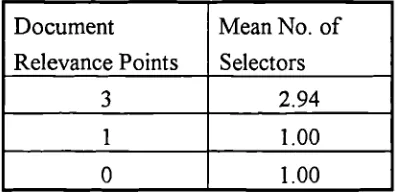
Table 5.6 Mean No. of Selectors of Relevant Documents, Topic-3 174
Table 5.7 Mean No. of Selectors of Relevant Documents, Topic-5 174
Table 5.8 Mean No. of Selectors of Relevant Documents, Task-B 174
Table 5.9 Topic-3 Overlap By Group 176
Table 5.10 Topic-5 Overlap By Group 176
Table 5.11 Task-B Overlap By Group 176
Table 5.12 Task-B Top-7 Document Selection Analysis By Group 177
Table 5.13 Task-B Top-17 Document Selection Analysis By Group 177
Table 5.14 Independent and Dependent Variables Examined in the Study 179
Table 5.15 Frequencies: Sex 180
Table 5.16 Frequencies: Age 181
Table 5.17 Frequencies: University Level 181
Table 5.18 Frequencies: Major Area of Study 181
Table 5.19 Frequencies: Level of Economic Knowledge 181
Table 5.20 Frequencies: Number of OPACs Used 182
Table 5.21 Frequencies: OPAC Use Frequency 182
Table 5.22 Frequencies: Known-item vs. Subject Search 182
Table 5.24 Frequencies: Found Term in Browse Lists 183
Table 5.25 Frequencies: Experienced Difficulties or Confusion 183
Table 5.26 Frequencies: Used BOOKSHELF BROWSING option 183
Table 5.27 Frequencies by Group: Sex 184
Table 5.28 Frequencies by Group: Age 185
Table 5.29 Frequencies by Group: University Level 185
Table 5.30 Frequencies by Group: Major Area of Study 186
Table 5.31 Frequencies by Group: Level of Economic Knowledge 186
Table 5.32 Frequencies by Group: Number of OPACs Used 187
Table 5.33 Frequencies by Group: OPAC Use Frequency 187
Table 5.34 Frequencies by Group: Known-item vs. Subject Search 188
Table 5.35 Frequencies by Group: Prior Book Knowledge 188
Table 5.36 Frequencies by Group: Used BOOKSHELF BROWSING option 189
Table 5.37 Frequencies by Group: Found Term in Browse Lists 189
Table 5.38 Frequencies by Group: Experienced Difficulties or Confusion 190
Table 5.39 Task-A Summary Group Performance Scores 191
Table 5.40 Task-B Summary Group Performance Scores 191
Table 5.41 Average E Scores by Group, Task-A and Task-B 196
Table 5.42 Summary Statistics for Browsers and Non-Browsers, Task-A 198
Table 5.43 Summary Statistics for Browsers and Non-Browsers, Task-B 199
Table 5.44 Avg. E values for browsers and non-browsers, Task-A 199
Table 5.45 Avg. B values for browsers and non-browsers, Task-B 199
Table 5.46 Results of ANOVA on Group ZSCOREA's 202
Table 5.48 Results of Mann-Whitney Tests on Group-2 and Group-3 Task-A
ZSCORES 203
Table 5.49 Results of Mann-Whitney Tests on Group-i and Group-3 Task-A
List of Figures
Figure 1.1 Second Generation Online Catalogue Advances 20
Figure 1.2 Models of Online Catalogues 21
Figure 1.3 Two Online Catalogue Search/Access Options 23
Figure 1.4 The Extended OPAC - Eight ways 40
Figure 1.5 Third-Generation OPACs 42
Figure 1.6 Microcomputer-Based Distributed Access Via LANs, Gateways,
and Wide-Area Networks 55
Figure 2.1. The Retrieval Technique Situation 64
Figure 2.2. The Classic Information Retrieval Model 64
Figure 2.3. A Classification of Retrieval Techniques 65
Figure 3.1 An Online Catalogue Database Model 119
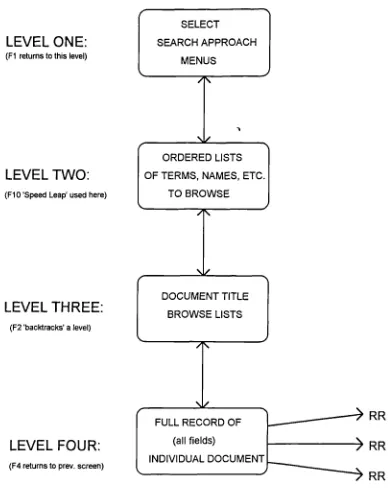
Figure 3.2 Experimental Online Catalogue Levels of Access 12i
Figure 3.3 Economics Area Sub-Classes Included in Test Database 125
Figure 3.4 Page From Library of Congress Classification Schedules 127
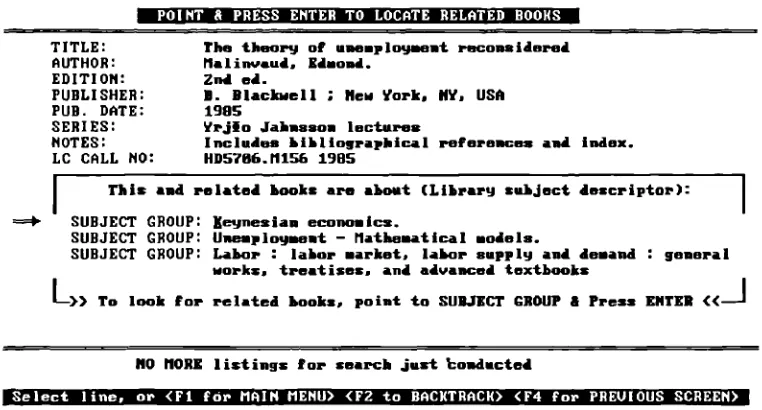
Figure 3.5 Full citation display with added LCC-derived subject heading 130
Figure 3.6 Experimental online catalogue "thesaurus" display 130
Figure 3.7 Alphabetical Subject Heading Index Display 132
Figure 3.8 Experimental Catalogue Main Menu 133
Figure 3.9 Experimental Online Catalogue "Author" Search Menu 134
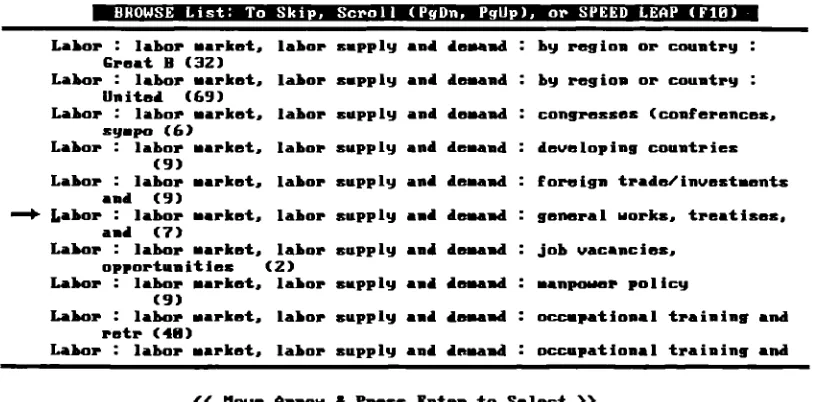
Figure 3.10 Experimental Online Catalogue Conference Name Browse List 134
Figure 3. 11 Group-i Search Display Sequence (Figs. 3.11 - 3.18) 135
Figure 3.12 Group-i Search Display Sequence (Continued) 136
Figure 3.13 Group-i Search Display Sequence (Continued) 136
Figure 3.15 Group-i Search Display Sequence (Continued) 137
Figure 3.16 Group-i Search Display Sequence (Continued) 137
Figure 3.17 Group-I Search Display Sequence (Continued) 137
Figure 3.18 Group-I Search Display Sequence (End) 138
Figure 3.19 Group-2 OPAC Full Citation Display 138
Figure 3.20 Group-2 Navigation Results Screen Display 139
-I
Figure 3.21 Group-3 OPAC Full Citation Display 139
Figure 3.22 Bookshelf Browsing Search Display Sequence (Figs. 3.22 - 3.28) 140
Figure 3.23 Bookshelf Browsing Search Display Sequence (Continued) 140
Figure 3.24 Bookshelf Browsing Search Display Sequence (Continued) 140
Figure 3.25 Bookshelf Browsing Search Display Sequence (Continued) 141
Figure 3.26 Bookshelf Browsing Search Display Sequence (Continued) 141
Figure 3.27 Bookshelf Browsing Search Display Sequence (Continued) 141
Figure 3.28 Bookshelf Browsing Search Display Sequence (End) 142
Figure 4.1 Outline of Test Procedures 160
Figure 5.1 Mean ZSCORES, Task-A SELECTS by Group 193
Figure 5.2 Mean Task-B SELECTS by Group 194
Figure 5.3 Mean Recall Scores by Group and Task 194
Figure 5.4 Mean Precision Scores by Group and Task 194
Figure 5.5 Mean Q-SCORES by Group and Task 194
Figure 5.6 Mean Task-B Fallout Scores by Group 195
Figure 5.7 ESCORES by Group and Task 196
Figure 5.8 Precision-Preference ESCORES by Task 197
Acknowledgments
I wish to express my gratitude to my colleagues in the Information Science Department at City University, especially Micheline Hancock-Beaulieu and Stephen Walker, for their friendship, encouragement and sound advice liberally supplied over the past few years
I am indebted to several individuals who generously made significant contributions to this research project. The source database of Library of Congress MARC
bibliographic records was supplied at no cost by Henriette Avram, former Associate Librarian at the Library of Congress. The TINMAN database management software and countless personal favours were provided to me by my friends and colleagues, Kate and Peter Noerr, Directors of IME Ltd. Brian Alley, Dean of Libraries at Sangamon State University, provided space, hospitality, good humour and moral support to me during the conduct of the experiment in the Sangamon State University library.
Professionally speaking, no one deserves more credit than Steve Robertson for starting me out on this venture, believing in me during difficult times, and for extending liberal amounts of encouragement, patience and advice. I want to thank Professor Robertson for his intellectual and personal support; it was an honor to work with him.
Finally, in pursuits like this, it helps to be supplied with abundant amounts of love and companionship as one is climbing the mountain. Always close by to lend
Abstract
Understanding and improving subject searching in online library catalogues is the focus of this study. Against the backdrop of current research and developments in online catalogues an analysis of the problems and prospects for subject access in the expanding online catalogue is presented.
Developments in recent information retrieval theory and practice are reviewed, and a case is made for a new model of information seeking and retrieval that more closely describes much of the subject searching and browsing activity actually conducted by library users.
The center piece of this study is the experiment that was conducted using an experimental online catalogue developed to investigate and evaluate the effect of alternative browse and navigate search methods on overall retrieval effectiveness and subject searching performance.
The objectives, methodology, and findings of this online catalogue search experiment are discussed. The primary aim of the experimental study was to evaluate the usability and retrieval performance of a pre-structured "navigation" approach to subject searching and browsing in library catalogues. The main hypothesis tested was that the provision and use of a navigation search and browse function would significantly improve overall OPAC retrieval effectiveness and the subject searching performance of OPAC users.
The OPAC used in the study was designed and implemented by this author using the database management and retrieval software known as "TiNMAN", provided by Information Management & Engineering, Ltd. TINMAN employs an entity-relational database structure which permits the linking of any field in the stored bibliographic record to any other field. These linkages establish browse and navigation pathways among data fields ("entities") and citations to support guided but flexible searching and browsing through the collection by users. Thus, a rudimentary form of hypertext is provided for the users of the OPAC. The test database consisted of 30,000 Library of Congress MARC bibliographic records selected at random from all LC catalog records for publications through 1988 in the English language in the LC classes HB-HJ (Economics, Business, etc.). For each record, the verbal description of the assigned LC class number found in the printed schedules was added as a subject descriptor to augment the subject cataloging provided by the Library of Congress.
Three different OPACs were tested for comparison purposes. The control OPAC lacked the navigation feature. The other two OPACs supported related-record navigation, one on title words only, the other on subject headings only. Searchers were encouraged to use the OPAC's features and search options in whatever manner they wished. Subjects in Group-I were permitted to navigate only on the subject headings from the controlled subject vocabulary assigned to the work cited (augmented by the verbal meanings of the Library of Congress class number). Subjects in Group-2 were permitted to navigate, but only from title words of the work cited and displayed. Navigating from one of these title words would result in the retrieval of all works whose titles had at least one occurrence of the selected word. Subjects in the control group were not permitted to navigate; that is, it was not possible for them to point to a selected data element in a displayed citation to move on to related terms or citations associated with that data element.
Chapter 1
Research Context of Online Catalogue Study, Part One
1.1 Introduction: Research Problem Context, Questions and Objectives
This study is an investigation of subject searching in online library
catalogues. Understanding and improving subject searching in online library
catalogues is the motivation for this study. Against the backdrop of current research
and developments in online catalogues an analysis of the problems and prospects for
subject access in the expanding online catalogue is presented in chapter 1. In
chapter 2, developments in recent information retrieval theory and practice are reviewed, and a case is made for a new model of information seeking and retrieval
that more closely describes much of the subject searching and browsing activity
actually conducted by library users.
1.1.1 Research Problem Identification
Online catalogues, in their present-day expanded, extended form, are being
transformed into radically new instruments for access to library collections. This access includes the traditional catalogue of books (but with subject-augmented
records), additional bibliographic databases, non-bibliographic information files, and
even full-text document files as they become available in electronic form.
The problem context addressed by the research reported here will be
discussed in considerable detail in this chapter and chapter 2. In short, it is a context
where the use of expanded, extended online catalogues to meet a growing variety of
subject information needs is increasing, and the pervasive problems and difficulties
associated with subject searching in operational online catalogues are still largely
unresolved. These problems remain and are commonly encountered even in the
retrieval systems that have been "fronted" with easy-to-use interfaces, interfaces
that have greatly reduced the "mechanical" barriers to end-user searching. The
challenge to researchers and system designers is to propose and evaluate alternative approaches to online subject searching and new methods for improving the
performance of subject searchers and the overall effectiveness of information
1.1.2 Problem Refinement: Multidimensional Efforts to Improve Subject
Searching
Most of the searching conducted in online catalogues involves searching for
information or materials on a specific subject, topic of interest, or exploration of an
area of interest. Reflection on the reported numerous and different difficulties
associated with subject searching leads to the inescapable conclusion that subject
searching in online retrieval systems is a complex, multidimensional problem.
This realization should come as no surprise. Research into online catalogue
use and end-user searching behavior is no longer in its infancy and is passing into a
more mature phase. As a scientific discipline typically matures, early issues, problems, and questions do not so much get resolved or answered as they get
restated or refined. The pressing or interesting problems undergo reductive analysis
or restatement from new perspectives. This process yields new and different
questions, questions usually more specific than the earlier ones. We get more
manageable research topics to chew on, so to speak, but we are also able to address
aspects of a complex issue in greater depth.
In recent years some information retrieval (IR) system and online catalogue
researchers have been refining the earlier research questions, "What is subject
searching?", and "How much of it takes place in the library catalogue?", and have
replaced them with a set of related questions:
* How do searchers actually go about seeking information on a topic
in the larger context of the library, or elsewhere?
* What are the varieties of search behavior undertaken by subject searchers in our bibliographic retrieval systems?
* What are the various search aims or objectives of subject searchers?
* What sort of search and display interactions are satisf'ing to
different subject searchers?
variety of kinds of subject searching?
* What are the difficulties faced by inexperienced users of
multiple-database systems?
* What search assistance or retrieval methods will lead to a
reduction in subject search failures?
Early online catalogue research focused on catalogue use, characteristics
and reactions of users, and the search approaches and features of operational online
catalogues (Hildreth, 1985). Use and user studies continue as online catalogues
evolve and expand. The application of several research methods, for example,
surveys, questionnaires, transaction logging and analysis, focus groups, and
controlled experiments, have sharpened our understanding of the problems
encountered by end-users of our online bibliographic retrieval systems (Mischo &
Lee, 1987; Drabenstott, 1991; Hancock-Beaulieu, 1989; Larson, 1991).
These problems are being addressed by researchers, developers, and
librarians on several fronts. The areas of concentration include:
- Augmenting and enhancing the bibliographic record itself with
additional subject access points and contents information
- Evaluating training, instructional, and online assistance needs of
users
- User-system interface enhancements
- Improved, alternative retrieval techniques
- Intelligent, expert system "client" front-ends to distributed database
servers
The major thrust of recent research and development in online catalogues
has been to propose, test, and assess solutions to the system performance and use problems identified in the more than ten years of concentrated research on
in the studies of online catalogues, Hancock-Beaulieu identifies three different
directions this research has taken in recent years (1989a):
- Firstly there are those studies which further explore the potential of transaction log analysis as a means of extracting more information about usage of actual operational systems which could feedback to systems design.
- Secondly we have some projects which concentrate on the system design
features, developing prototype experimental systems with new or improved features whose retrieval effectiveness could then be tested on real users.
- Thirdly several dissertations, using controlled experiments and test searches, explore the more cognitive aspects of searching behaviour and user interaction.
The research reported here fits primarily into Hancock-Beaulieu's second
category, and contains some elements of her third category.
1.1.3 Online Catalogue Study: Research Questions and Objectives
The centerpiece of this research study is an experiment that was conducted
using an experimental online catalogue developed to investigate and evaluate the
effect of alternative browse and navigation search methods on overall retrieval effectiveness and subject searching performance. A full discussion of the objectives,
methodology, and findings of this online catalogue research project will be
presented in the chapters 3 - 6. The primary aim of the experimental study was to evaluate the usability and retrieval performance of a pre-structured "navigation"
approach to subject searching and browsing in library catalogues. One of the
secondary aims was to investigate users' responses to, and the impact on search performance of, an online emulation of bookshelf browsing as it typically takes place in libraries. The main hypothesis tested was that the provision and use of a
navigation search and browse function would significantly improve overall online
catalogue retrieval effectiveness and the subject searching performance of online
1.1.4 Design of the Experiment
In design, the experiment may be characterized as a multi-factor, multi-level
comparison of three independent groups, with pair-wise comparisons intended.
Human subjects were recruited to conduct subject searches on the test online
catalogues in a controlled environment. Each subject used only one of the three
different online catalogues tested for comparison purposes. The subject searching
performance of three separate groups of searchers, each group using a different
online catalogue, was measured and evaluated.
-Group-i and Group-2 (as they will be referred to in the following text and
on data graphs) searched the online catalogues which featured navigation as a
search method. The Group-i online catalogue allowed navigation only on the
subject headings displayed with a document's citation. The Group-2 online
catalogue also allowed navigation, but only on key words from the title of a
displayed document reference. Group-3 served as the control group and searched
the online catalogue lacking the navigation search capability. The control online
catalogue featured a conventional full-record display format. Thus, subjects in Group-3 were not permitted to navigate (and they were not told about this
"missing" feature); that is, it was not possible for Group-3 searchers to point to a
selected data element in a displayed citation to move on to related terms or citations
linked to that data element.
Navigation, then, is the primary "treatment factor" or experimental variable
of interest in this study. Three "levels" of this system factor were investigated: no
navigation; navigation only on subject headings; and navigation only on title keywords.
1.1.5 Research Questions of the Study
1. What is the role of unconventional, nonlinear, hypertext-like methods of subject searching and browsing in online catalogues, and for which type of user and
search task are they the most appropriate?
2. Does the use of an unconventional browse and navigational approach to subject searching in an online catalogue lead to improvements in search
a. When navigation is permitted only via the subject headings of a
controlled vocabulary?
b. When navigation is permitted only via significant title words?
3. What is the effectiveness of a classified approach to subject searching,
namely, navigation via call numbers and online "Bookshelf Browsing", in the online
catalogue?
4. What qualitative factors influence searchers' retrieval performance?
5. What difficulties are encountered in their use and how do users assess these alternative subject searching approaches:
a. Alphabetical term browsing?
b. Navigation?
c. Bookshelf Browsing?
1.1.6 Research Objectives of the Study
1. To build an online catalogue retrieval system, including the design of the database, that could support a variety of subject browsing and display approaches
to be used as an experimental tool and demonstration system to address these and
related research questions.
2. To evaluate the usability and effectiveness of the linked-term,
cross-document navigational approach to subject searching and browsing.
3. To examine the acceptance and use of bookshelf-like browsing at the
online catalogue.
4. To employ a variety of quantitative performance measures to assess the retrieval performance of the different search approaches tested.
5. To explore which qualitative factors, if any, have an effect on subject
searching performance (e.g., sex, subject knowledge, educational level, online
1.2 Second Generation Online Catalogues: Subject Searching Features and
Problems
The most recent stage in the development and evolution of automated
library functions is the provision of online, interactive library catalogues for direct
use by the "public" (as we shall see, both "resident" in-library users and non-resident
library users). This development is historic and monumental. The online catalogue,
unlike earlier forms of the catalogue, has the practical potential to become a
microscope for deep exploration of the library's collection, and it holds the promise
of providing the user an open window to the entire universe of bibliographic and
recorded information.
Today's interactive Online Public Access Catalogues (OPACs) and
CD-ROM catalogues tend to resist definition or functional description, because, unlike
automated library cataloguing, circulation, and interlibraiy loan systems, they are
ever-changing in content, functionality, range, and usability. At birth, online
catalogues were little more than mechanized replications of the card catalogues, and at this early stage they provided less access and content than their traditional
predecessors in card, book, or microfilm forms.
Most of today's operational online catalogues, both university-based systems and the online catalogues supplied by the commercial vendors, can be
characterized as second-generation online catalogues (See Figure 1.1). Functionally
speaking, these second-generation online catalogues with their databases of library catalogue records can be viewed as special purpose online reference retrieval
systems.
Second-generation online catalogues represent a qualitative leap of
progress over first-generation online catalogues, the target of much criticism in
the professional literature. These are some of the reasons. In first-generation
online catalogues searching was initiated by derived-key input or by exact word or phrase-matching on at least the first part (left-most) of the word or phrase (as with
heading searches in the card catalogue). In addition to lacking full
bibliographic records and subject access, including any keyword access to titles or
subject headings, first-generation online catalogues provided only a single display
format, a single unforgiving mode of interaction with the system, and little or
progress, based on an evaluation of intermediate results, was out of the question.
Without full records, subject access, authority-based searching with cross
references, and meaningful browsing facilities, first-generation online catalogues
were understandably criticized as inferior to traditional, non-automated library
catalogues.
Subject Access via Library of Congress Headings Keyword Access to a Variety of Fields
Browsing Index or Thesaurus Terms (With Cross References) Interactive Search Refinement (Boolean Logic, Limiting, Etc.) Search Term Approximate Matching (Truncation, Wildcards)
Shelf List Scanning
Two or More Dialogue Modes (Menu, Command, Conversational) Informative Error Messages
Directory-Based Help Facility Automatic Search/Display Option Suggestions
Full Bibliographic Records Accessible
Multiple Display Format Options (Inc. Non-MARC Labels) Search Results Output Options (Save, Printing, Sorting)
Figure 1.1 Second Generation Online Catalogue Advances
Today's second-generation online catalogues represent a marriage of the
library catalogue and conventional online information retrieval (IR) systems familiar
to librarians who search online abstracting and indexing databases via DIALOG,
BRS, DATASTAR, MEDLINE, etc. (See Figure 1.2) Improved card
catalogue-like "main entry" searching and browsing-by-heading capabilities have been joined
with the conventional IR keyword and Boolean searching approaches. Much of the
power and flexibility familiar to online database search specialists which enables the
"post-coordinating" of search concepts and terminology has been brought to the
online catalogue searcher. Many online catalogues support the ability to restrict
searches to specified record fields, to perform character-masking and/or right-hand
bibliographic records may be viewed and printed in a number of different display
formats.
CARD CATALOG INFO. RETRIEVAL SYSTEM
Pre-coordinate Post-coordinate
Alphabetical phrase searchJ Keyword, Boolean searc!J
1 1 EXPANDED,
GUI's 2nd - GENERATION OPACS I -.J EXTENDED
OPAC
[image:22.595.125.483.127.414.2]??
Figure 1.2 Models of Online Catalogues
Second-generation online catalogues should be viewed as online
bibliographic information retrieval systems. But when compared to conventional
keyword, Boolean commercial database search and retrieval systems, these key differences should be kept in mind:
* the online public access catalogue must be usable directly by untrained
and inexperienced users (online assistance is usually provided to help with the mechanics of searching),
* records in the catalogue database lack abstracts, the subject indexing is
sparse and the vocabulary is often not representative of current terminology, and
* the catalogue database, in covering a library's collection, includes
information on a wide variety of disciplines and subject areas.
Designers of second-generation online catalogues have addressed these
(a) by providing card catalogue-like pre-coordinated phrase
searching and browsing options (along with keyword/Boolean capabilities),
and
(b) by providing more and more online user assistance in the form of
menus, help displays, suggestive prompts, and informative error messages.
Post-coordinated keyword searching on subject-rich fields (e.g., titles,
corporate names, series entries, notes, and subject headings) supported in most of
today's online catalogues can be used to alleviate the twin problems associated with
the sparse subject indexing of most library materials and the users' unfamiliarity with
the controlled subject indexing vocabularies (e.g., PRECIS - PREserved Context
Indexing System - and LCSH - Library of Congress Subject Headings).
1.2.1 Two Approaches to Searching in Online Catalogues
Two fundamentally different search approaches can be found in
second-generation online catalogues (See Figure 1.3). It is commonly recognized that
keyword, Boolean post-coordinate searching is different than pre-coordinated
phrase searching, but the difference I am addressing now cuts deeper across the
online catalogue interface territory. It is the difference between exact match
querying and browsing. These different search approaches are best understood by considering differences that may exist in 1) users' search objectives, 2) system
requirements for query specification and input, and 3) system output displayed and
I. QUERYING A. Phrase Matching
(Text strings or controlled vocabulary) B. Keyword Matching
(Discrete words, with Boolean or proximity formulations)
**Query search requirements: Search aim/criteria known and can be expressed with relative precision
and completeness
II. BROWSING
A. Pre-sequenced, linear, inflexible (Typically, lists of index terms, headings,
descriptors, or brief titles)
B. Non-linear, multi-directional, flexible ("navigation", "chain", "bridge", "relational",
"serendipitous" browsing)
**Browse search requirements: Search aim/criteria not specific, not known, and/or cannot be expressed in appropriate quexy/indexing language
Figure 1.3 Two Online Catalogue Search/Access Options
1.2.1.1 Query Searching
There are two kinds of query searching: phrase matching and keyword
matching. A query consists of a term or terms (e.g., a character, number, word or words, or a phrase) and the specification, sometimes called the query "formulation,"
which defines how the component term(s) of the query are to be interpreted or
related for matching purposes (e.g., word truncation, Boolean combinations, word adjacency). The matching function of an online catalogue is the mechanism through
represent documents and query terms to effect retrieval. The matching criteria are
specified through the query by the user or applied automatically by the system. Query searching of either kind (often called just ' searcng," to distinguish it from
an online catalogue's Browse mode) utilizes an exact matching function on the part
of the system, regardless of the manner in which the matching criteria are specified.
In this all or nothing approach, documents (bibliographic records in online
catalogues) will be retrieved in response to a search only if an exact match of the
query is found. The query may consist of a pre-coordinated phrase (with or without
truncation) or a post-coordinated Boolean expresion of keywords. In either case
the Query search matching requirements are precise and rigid. The process is purely
mechanistic. The burden is on the searcher to enter terms that will match the entry
(index) terms in the database and to specify appropriate proximity or term
relationship logic. Bates criticizes this predominant approach to subject searching for requiring a "perfect pinpoint match on the one best term.° (1986) No match
means no retrieval, as viewers of silent online catalogue screens witness too often.
The search may fail (i.e., not identify relevant documents that are in the collection)
unless the searcher knows or guesses the exact way the term (word or phrase) appears in the subject index.
In keyword, Boolean queries, the system's matching mechanism makes a
binary (yes/no) split of the database into bibliographic records that conform exactly
to the requirements of the query, and all the rest. Only the former are retrieved as
"hits." Partial or "closest" matching operations are generally not supported in
second-generation online catalogues and conventional retrieval systems.
Query searching is an appropriate, useful search option when the aim of the search is specific, when the searcher knows precisely what he wants, and when this
request can be expressed in the language of the database. Even in subject searching
for books or articles on a topic the searcher may know his topic exactly and may be
able to express it in the language of the system (e.g., the assigned subject headings
or descriptors).
1.2.1.2 Browse Searching
scanning by the searcher. Lists of index terms are usually presented in alphabetical
order. The arrangement of brief citation records may be according to date, and
some systems support short record browsing in shelf-list order. Usually the only
"navigation" option for browsers is to go backward or forward through the list in a
constrained, linear manner. Cross references, if included, represent a way of
jumping out of the sequence and over to related areas of the database. Hypertext
operations, which permit navigation throughout the database's network of related
terms and records, and the dynamic definition of "related areas and interests", have not been implemented in second-generation online catalogues. Conventional
browsing assumes a vocabulary aim on the part of the searcher. It assists in
identifying the correct form of a term and any related terms. Other forms of
browsing, rare in today's online catalogues, support related record or document
discovery through non-linear explorations of the database. They will be illustrated
further along in this report.
Browse searching is the most useful and preferred approach when the search aim is not specific (regarding, for example, discipline or topic, type of publication,
level of treatment, perspective, etc.), the desired results are not precisely known in
advance, or the correct terms for representing the user's query (which may be
vague) are not known at the outset. One or more of these circumstances may be
present in most subject searching activities.
Some designers of online catalogues have recognized the difference in these
search requirements and have provided some rudimentary browsing facilities such
as scanning index terms in the same alphabetical neighborhood. This feature is not
intrinsically tied to either phrase matching or keyword matching search facilities.
Phrase matching often incorporates index term browsing automatically in the search dialogue, whether or not an initial match occurs, but there are exceptions to this.
Most keyword match online catalogues now offer the searcher an option to browse
alphabetical term and descriptor indexes.
Most of today's online catalogues support both phrase matching and
keyword matching query searching. However, these are hybrid systems that do not
integrate or link these separate approaches in any useful way during a search. It is
usually up to the searcher to choose, through commands or menu selection, one query type or the other. If the system assumes (defaults to) a particular search
operation, the user is not informed which specific operation is being carried out on
same word order, matching specification. Keyword searching on two or more words requires the specification of a Boolean operator either by the searcher or by
the system. Most online catalogues supply the Boolean AND as a default operator
between words. When a search term like "economic indicators and business cycles"
is entered into an online catalogue, if not explicitly instructed by the user the system
automatically will decide precisely how to interpret the statement for matching
purposes. The primary decisions to be made include the indexes to be searched and
the logic to be applied to specify the word relationships.
Each type of query search has its advantages, but each may produce very
different results even when the same search statement is being processed. This can
be a source of confusion for the untrained user who may not understand the relative
value of each approach. Such a user may not even know that both ways of
searching are supported in a given online catalogue, or how to invoke one or the
other. Within a given catalogue database, one search choice on the same term can
produce poor results, another choice, good results. Given these dual, unintegrated
search approaches in many online catalogues, it is a new responsibility of many
librarians to understand their differences and to interpret these differences in a meaningful way for the users of these online catalogues.
1.2.2 Easier Subject Searching
Recent improvements to user interface software have made subject searching in online catalogues easier, if not more effective. However, these
improvements are independent of, and have had no impact on, the query matching
requirements and retrieval methods previously described. Yet, online catalogue
design is clearly moving in the right direction: namely, to a greater recognition
of the needs and difficulties of untrained or casual users of online catalogues.
New interface design features are making it easier to select and enter a subject
search in online catalogues. Difficult to learn command languages with their complex syntax requirements have largely disappeared from the online
catalogue interface. They have been replaced by straightforward menu selections,
prompted search term entry, and newer approaches such as graphic entry devices (window search logic boxes and on-screen search worksheets), and
query-by-example or query-by-form. With query-by-query-by-example a retrieved record can serve as
a model template to initiate, through editing, a new or modified subject search.
form just needing data in chosen fields to initiate a search. The fields and field
labels can be customized by the library staff. Its value lies in the intuitive
association it triggers between query expressions and document representations
(citations) in the catalogue database.
In her landmark study of subject access problems and opportunities in
online catalogues, Markey (1984) pleads for a "forgiving and simple
implementation of Boolean search capabilities." This is now being achieved
through simplified query interfaces which do not require explicit entry of
commands or Boolean operators. When a phrae search results in no hits, the
online catalogue might prompt the searcher to enter a keyword, Boolean search to
achieve broader results. Another online catalogue might require the user to type the desired command word, but the command is spelled out on the screen in the list
of options. The Boolean AND is normally assumed between search words when no
operator is entered by the searcher. Most of these online catalogues permit the
logical operator assigned by the system to be replaced with another operator
explicitly entered by the searcher.
Subject term or heading browsing in online catalogues has improved somewhat through the provision of clearer, better labeled displays and the addition
of postings data (number of citations which match each term). Some online
catalogues are incorporating "see" and "see also" cross references in these term browsing lists, and shelf list browsing is becoming a common feature although it is
not usually prompted by or linked to term or citation browsing activities.
The implicit or automatic specification and post-coordination of search
statements into formal queries is becoming both more flexible and "smarter."
Markey's research indicated that "post-coordination features of online catalogues
need to automatically or explicitly assist searchers in the selection of searching
vocabulary and the combination of terms" (1984). More and more the scope of subject keyword or "topic" searches is being automatically extended to include
matches in the title index as well as the subject headings index. Some online
catalogues also search the notes and corporate name field indexes when executing
a subject search. This multi-field subject searching does not have to be specified in advance by the searcher through a complex query syntax. Analysis of online
catalogue transaction logs has shown that this widening of the subject search
target and the implicit choice of the AND logic rather than adjacency to connect
or no decrease in search precision (absence of unwanted documents in the retrieval
results), when MARC bibliographic records are the target of online catalogue
subject searching. Perhaps most satisfjing to searchers, far fewer "0-hit" ("No
matches found") search results occur.
The online catalogue subject searching process in all its varieties has been
improved through better displays of retrieved citations. From the use of
natural language field labels to the highlighting of matched terms, citation displays
have been made more comprehensible and more informative. Matched query
terms appearing in retrieved bibliographic records can be highlighted through
reverse video or lightbar techniques, or through the use of special character or
graphic markers. This feature shows the conceptual context of a search term,
and promotes an understanding of catalogue record structure and system
matching principles. On a negative note, the improved labeling of subject headings
and call numbers in displayed citations does not yet include indications of their
special collection role or suggestions that additional potentially relevant
documents are linked to (collocated by) these subject descriptors.
Online user assistance displays and messages designed to help users
conduct subject searches and to post-coordinate search terms have improved
dramatically in online catalogues. In this area, online catalogue design leads
commercial retrieval system design. Searchers may be asked to add a word
(usually for a Boolean AND operation) or to enter limiting information such as a range of dates.
Online catalogue error messages are usually specific, helpftil, and
informative, for example:
"Your BROWSE command does not contain a browsable index name. Please type HELP for more information." (MIELVYL)
Help is frequently context-sensitive, requiring no more than the simple
request by the user to bring specific, point-of-need assistance. Specific,
addressable help displays are available to assist with the mechanics of
searching and operation of the local online catalogue. Explicit messages and menus
embedded in the routine search interaction displays explain things like what the
search process, and, in some cases, what may be done to improve the search
process to produce better results.
1.2.3 Conventional, Second-Generation Online Catalogue Subject Searching
Summarized
Subject searching in today's largely MARC-based online catalogues is supported by a variety of exact match query methods and browsing facilities. Exact
match query searches are basically of two types: 1)'phrase searching on
pre-coordinated subject headings, and 2) keyword searches on cataloguing or indexing
data in the bibliographic record (e.g., titles, notes, subject headings and their
subdivisions). Keyword subject searches may be formulated as Boolean expressions
to indicate the desired relationship between search terms, and some online
catalogues also permit explicit proximity designations in the formulation of the
query. The trend is clear: most online catalogues support both types of exact match searching.
The syntax and mechanics of entering subject searches have been simplified,
and the task of precise search statement/query formulation has been delegated to
the system software. Choice of subject query type is selected from a menu, or invoked by a pressed function key or simple typed command. Phrase searches are
automatically processed as straightforward character string matches or word
adjacency, same order matches. In most cases the match must begin with the leftmost significant word or character of the indexed entry. Keyword searches with
more than one word are automatically processed as Boolean AND queries in most
online catalogues. Keyword searches may be targeted by the user or the system to
one or more field indexes (e.g., title, notes, series statement, subject headings). Some flexibility is permitted in most keyword search online catalogues. When
searchers choose not to identify in their queries fields for subject keyword searching
(or are not permitted by the system to do so), the trend is toward automatically
searching both subject and title. ANDed keywords do not have to appear together in either the title field or the subject field to cause a match. Matching records would
include those having one word in the title and another word in the subject heading.
Successful subject phrase searching in most online catalogues still requires
Congress Subject Heading (LCSH). However, if a LCSH heading is entered as a
search term and the heading has been modified or replaced in the local catalogue
record no match will occur. In some online catalogues, when no match occurs on
the user's search term, the system displays headings in the alphabetical
neighborhood of the term. This may or may not help the searcher find a heading
which expresses his search interest.
In today's online catalogues browsing is even less developed and is generally
provided as an intermediate or secondary stage in the subject search process. Some keyword online catalogues offer the searcher an unublished (on the screen) option
to browse (scan) alphabetical lists of index terms or headings. Phrase search online
catalogues typically display these lists after a search is constructed and entered,
even when an exact match occurs. Research has not shown whether, in the latter case, this helps or conftises the searcher. A few online catalogues are beginning to
include cross references and related terms in these browsing displays. This will
make them more useflul browsing tools for certain kinds of subject searching.
More informative, flexible, and intelligent browsing facilities can be
provided in the online environment. It is time for librarians and online catalogue
designers to recognize that subject browsing may be a primary search activity in the
user's quest to discover materials on a topic, or to discover unknown items of potential interest. This kind of search activity requires more than term selection
browsing facilities, or even thesaurus-based automatic switching among related
terms. Related document browsing and discovery can be facilitated in online
catalogues through richer pre-coordination in the database of multiple subject/topic
clues found in bibliographic records (e.g., linking title terms with subject headings
with call numbers, etc.), and by providing more search navigation options between
retrieved and unretrieved (but linked) records, that is, record to record "jumping" at
the discretion of the searcher (e.g., "Show me more books from this publisher.' "What other titles are in this series?" "What documents cite this work?")
Most of today's online catalogues also fail to provide the more traditional
subject search aids. For example, they do not support browsing in displays of
classification outlines or schedules. Neither do they permit related term lookups in
online subject thesauri or lists of subject headings. Markey's research (1986a) has
shown the first of these to be useful in online catalogue subject searching.
Classification schedule terminology and systematic subject information can lead the
keyword subject search methods. It is seldom recognized that even Cutter favored
this approach. Immediately following the famous passage where he lists the
"objects" of the library catalogue, Cutter proposes the means for achieving them.
To enable finding books on a subject, the catalogue needs the subject entry, cross
references, and a "classified subject table" (1904).
1.2.4 Problems and Shortcomings of Today's Online Catalogues
Good retrieval performance in second-geheration online catalogues can
be achieved only by library staff and by library patrons trained to use and
understand their particular indexing and search idiosyncrasies. Most of these
online catalogues are not yet effective, usable "self-service" information
retrieval systems for a wide variety of untrained, occasional users.
Bates (1986b) poses the central question about subject access in today's
online catalogues: "With all the power of online subject searching of catalogs
-Boolean logic, keyword match, truncation, etc. - have we, perhaps, already given
the user all the search capability that is practically necessary?"
Online catalogue research studies have uncovered a number of common problems experienced by users of second-generation online catalogues.
In general terms the major problems include:
* too many failed searches (search attempts that are aborted, that
result in no matches, or that result in unmanageably large numbers
of items retrieved), (Markey, 1984;1986; Peters, 1991; Hunter, 1991;Larson, 1991)
* navigational confusion and frustration for the user during the
search process ("Where am I?", "What can I do now?", "How can
I start over?"), (Knipe, 1987; Hunter, 1991)
* unfamiliarity with subject indexing policy and vocabulary,
leading too often to the failure to match search terms
* misunderstanding and confusion about the fundamentally different
approaches to retrieval and search methods employed in today's
online catalogs (e.g., pre-coordinate phrase searching and browsing, and post-coordinate keywordlBoolean searching),
(Kranich et a!, 1986; Peters, 1991) and,
* partially implemented search strategies and missed opportunities
to retrieve relevant materials (e.g., searches in which large
retrieval sets are not scanned or narrowed in size, and title
keyword searches that are not follOwed by searches on the call
numbers or subject headings of the found records). (Tolle, 1983;
Wiberley et al, 1990)
Chan points out that online searching is a process of extracting a subfile of useful documents from a large file, a process where "in most cases, a
sequence of search statements is required for even minimally satisfactory
retrieval" (1986). To optimize retrieval results in subject searching, more than one
search approach may have to be employed in the overall search strategy:
"Through combination, keywords and the [controlled] vocabularies of DDC, LCC, and LCSH should offer far greater possibilities in search strategies than any
one of them can provide alone" (Chan, 1986; also, Croft, 1981). Markey (1986b)
has demonstrated, for example, that different records on a particular subject
would be retrieved by using a classified approach from those retrieved using keyword or alphabetical subject heading browsing approaches.
Conventional information retrieval systems require the user to
reformu1ate and modify or reenter queries until satisfactory results are obtained.
This is typically the case with second-generation online catalogues, as well, but
mechanisms for modifying queries interactively are minimal or not provided at all. Also, this approach assumes that the user knows what he wants and can describe
it in the language of the catalogue database being searched.
Even the best second-generation catalogues do little to help the user
transform an information need to explicit expressions of the need acceptable by the
system. Nor do these catalogues lead the user from "found" information to related, linked information that has not yet been discovered. Research has shown
that it is unrealistic to expect our catalogue users to know in advance the
1991). It is equally unrealistic to expect online catalogue users to be proficient in
the various search approaches and techniques before they engage an interactive system in the retrieval process. Humans find it easier to recognize things than to
generate formal descriptions. Online catalogues could take advantage of this
human facility by permitting requests such as, "Give me more like this!"
1.2.5 LC SH-Based Subject Searching
Markey's (1984) research has shown that online searchers are not very
successful in matching their subject terms with the catalogue's controlled
subject vocabulary. The assigned subject headings in the catalogues she
investigated were derived from the list of Library of Congress Subject Headings
(LCSH), the subject vocabulary used in most library catalogues. In one study
of subject searching on a university online catalogue (SULIRS, Syracuse
University), a total of 859 search statements entered in 188 subject searches were
analyzed. 45% of these search statements resulted in no retrievals. "We were
concerned about, and subsequently sought an explanation for, the surprisingly
large percentage of subject searches resulting in no or very few retrievals." In
comparing the subject statements with LCSH headings, only 29% of searchers'
terms matched or closely matched LCSH. Yet only 7% of these LCSH searches resulted in no matches. This is not surprising since online catalogue
subject headings are extracted from actual bibliographic records in the collection.
More often than not searchers used whatever terms popped into their minds; this
produced no retrievals 65% of the time. These depressing findings have been corroborated in studies of other university online catalogues (Carlyle, 1989; Peters,
1991; Hunter, 1991).
Another finding in Markey's SULIRS study raises questions about the
effectiveness of LCSH subject searches for retrieving only the most relevant
documents for a query. 29% of the LCSH searches retrieved 100 or more
citations. When this occurred, searchers either aborted their searching or looked
individually at all the results. Very few searchers entered valid LCSH cross references. A good guess is that they usually entered and matched LCSH terms
broader than their topic of interest. Markey concludes that the study "drives home the need for online vocabulary assistance. Alphabetically arranged or rotated
Based on a variety of online catalogue subject searching research studies,
Markey lists the major problems subject searchers face, with little or no assistance
from online catalogues:
* matching their terms with those indexed in the catalogue,
* identifying terms that are broader or narrower than their
topic of interest,
* improving search results when littleor nothing is retrieved,
* reducing search results when too much is retrieved,
* grasping LCSH indexing policies and idiosyncrasies.
In one case study, Pritchard (1986) underscores the "conceptual
problems" facing users of the Library of Congress' online subject access systems
(LOCIS): "To choose the best [subject] headings, readers may need to understand
concepts of indexing depth and specificity since the Library of Congress only catalogues for the general subject of the entire work and does not assign books
to both broad and narrow categories. This causes difficulty both in topical
headings and geographical ones. LOCIS searchers intuitively seek to
post-coordinate numerous terms, whereas MARC records contain two or three (at best) pre-coordinated, subdivided, inverted, and parenthetically qualified headings"
(1986).
Bates' research also indicates that there is more to good subject searching than matching an LCSH heading. One study "tested whether people
would actually hit upon specific relevant material in a search rather than just whether their term would match with any heading in the catalogue, whether or not
that heading indexed material relevant to their query" (1986b). Participants in the study were asked to state what word or phrase they would use to search in the
subject catalogue for a specific book described to them by its title and an
abstract. The degree of match between their terms and the subject headings used in
the library catalogue to index the books was calculated. The initial set of contributed terms matched headings in the catalogue record only slightly more
Thus, there are two (at least) major online subject access problems
associated with the official subject vocabulary (LCSJ{): 1) initially matching the assigned headings (the "entry" or "lead-in" vocabulary problem), and 2) once
into the system's vocabulary, identifying terms and term relationships that will
help direct a search to the precise topic or most relevant materials (the subject
focusing/discriminating problem). Mandel and Herschman (1983) point out that
online catalogue subject browsing displays that list only subject terms from
catalogue records in the system do not show conceptual relationships among terms
or lead the searcher to the most relevant term. A linear alphabetical arrangement
of terms scatters related terms. The authors recommend including a hierarchical
subject thesaurus online - a restructured LCSH - to help searchers overcome this
problem.
With regard to the entry term, LCSH matching problem, Mandel and
Herschman explain: "Displaying the existing LCSH headings and references will
not, in itself, solve the problem of an entry vocabulary that matches only half of users' first tries. Even without making a single change in an LC subject term,
access to the terms could be improved enormously by adding to the entry
vocabulary (i.e., adding "see" references) (1983).
Bates (1986b) describes this as the problem of low vocabulary "redundancy"
(i.e., lack of quantity and variety of synonyms and related terms) in subject catalogue records stemming directly from LC's subject indexing policies and
practices. These book indexing/subject cataloguing policies - pre-coordinate,
whole book indexing; single, uniform heading indexing; specific heading only
indexing - result in a very small amount of subject terminology in catalogue records (on average, two or fewer headings per record). Indexing a particular
book under broader or narrower terms is rarely done. As Bates says, "the searcher
is only directed to terms at the same or more specific levels. Usually, there are not
very many of even these latter references anyway."
Research has shown that subject searchers frequently enter terms broader
or narrower than the subject in which they were actually interested (Markey,
1984; Smith, 1989; Johnson and Carey, 1992). LCSH offers little assistance here
The LCSH cross reference structure is limited and weak. Cochrane (1986)
believes that following its "see also" references usually leads the searcher out of
his topic, rather than to various aspects or levels of the topic. Bates distills an
expression of the dilemmas experienced by subject searchers in this poignant
passage: "In both manual and online catalogues the user must launch the search
with a subject term. For the search to be successful, the term must not only
match with some term in the system, but must match, either directly or through
cross references, with a term describing relevant material. As I have argued
earlier, LCSH uses so few terms for indexing each document and provides so little assistance to the searcher that the latter is harcfto do" (1986).
In summary, second-generation online catalogues are deficient in
subject-searching because they:
* * do not sufficiently assist with the translation of entered
query terms into the vocabulary used in the catalogue,
** do not provide online thesaurus aids useful for subject
focusing and topic/treatment discrimination,
** do not automatically assist the user with alternative
formulations of the search statement or execute alternative search methods when the initial approach fails,
* * do not lead the searcher from successful free-text search terms
(e.g., title words) to the corresponding subject headings or class numbers assigned to a broader range of related materials,
do not provide sufficient information in the retrieved
biblio-graphic records (such as tables of contents, abstracts, and book
reviews) to enable the user to judge the usefulness of the
docu-ments,
* * do not rank the citations in large retrieval sets in decreasing order of probable relevance or "closeness" to the user's search
criteria,
following pre-established trails and linkages between
records in the database, in order to retrieve materials
related to those already found.
1.3 Subject Searching in the Expanded Online Library Catalogue
1.3.1 The Phenomenon of the Expanding Online Catalogue
It will be useful to begin with an overview oTwhat might be referred to
conservatively as the "phenomenon of the expanding online library catalogue." The
expansion of interest here is not the widespread adoption in only a few years of
online catalogues by most university and research libraries, and medium to large
public libraries, though this development is remarkable enough itself.
Since online public access catalogues were introduced in the late 1 970s as
replacements or supplements of a library's traditional catalogue, a remarkable
evolution in their functionality and scope has taken place. Recent enhancements in online catalogues are both the cause and the effect of rising expectations and new
demands of librarians and information specialists. Online catalogues have been the
subject of extensive research and discussion over the last twelve years. Still referred to by some writers as the "card catalogue online," most librarians and online
catalogue users view the online catalogue as something more than the traditional
card catalogue transferred over to a computer database and viewable at a computer
terminal or VDU.
Traditional library catalogues consisted primarily of catalogue records for
books and periodical titles. In machine-readable form, these bibliographic data
records were the first constituents of early online catalogues. These data records
generally contained no more subject information than that imprinted on the
catalogue cards of the traditional medium. However, the notions of what an online catalogue should include - and very recently, what additional data records have
been loaded - have changed as files of other bibliographic records, such as
periodical article citations and abstracts, have become readily available to libraries. As Potter (1989) has noted, librarians and system developers have acquired a new