Micro-Manufacturing: Research, Technology Outcomes and
Development Issues
Y. Qin, A. Brockett, Y. Ma, A. Razali, J. Zhao, C. Harrison, W. Pan, X. Dai and D. Loziak
DMEM, The University of Strathclyde, Glasgow, G1 1XJ UK Tel: 0044 141 548 3130; Fax:0044 141 552 7986
Abstract: Besides continuing effort in developing MEMS-based manufacturing techniques, latest effort in Micro-manufacturing is also in Non-MEMS-based manufacturing. Research
and technological development (RTD) in this field is encouraged by the increased demand on
micro-components as well as promised development in the scaling down of the traditional
macro-manufacturing processes for micro-length-scale manufacturing. This paper highlights
some EU funded research activities in micro/nano-manufacturing, and gives examples of the
latest development in micro-manufacturing methods/techniques, process chains,
hybrid-processes, manufacturing equipment and supporting technologies/device, etc., which is
followed by a summary of the achievements of the EU MASMICRO project. Finally,
concluding remarks are given, which raise several issues concerning further development in
micro-manufacturing.
Keywords:Micro-Product, Micro-Manufacturing, Manufacturing System
1. Introduction
There are various techniques which can be used for the manufacture of micro-products.
MEMS-based manufacturing involves, largely, techniques such as photolithography, chemical-etching,
plating, LIGA, laser fabrication, etc. while non–MEMS-based manufacturing often involves
techniques such as mechanical machining, EDM, laser-cutting/patterning/drilling, embossing,
injection-moulding, forging, extrusion, stamping, etc. Regarding materials to be dealt with,
micro-manufacturing is, sometimes, also categorised as silicon-based micro-manufacturing and
non-silicone-material-based manufacturing. The purpose of differentiating these may be to emphasise the
For traditional, MEMS-based manufacturing practicians, micro-manufacturing may not be new, as
manufacturing various MEMS and micro-systems has been undertaken by industry for many years,
which has also been performed in volume-production scales. Needs of developing new,
multi-function and multi-material micro-products/systems as well as improving manufacturing efficiency
due to the increased competition have, however, raised new challenges to the manufacturing. This is
not only because the manufacturing will have to deal with much wider ranges of the materials
which cannot be coped with the traditional MEMS-based manufacturing techniques alone but also
because scaling down the processes, tools and machinery from conventional ones is not a easy task
(such as mechanical and thermal cutting and forming to cope the needs of achieving much small
dimensions and intricate geometries). From this sense, emerging micro-manufacturing techniques
often refer to non-silicone-materials-based and even non-MEMS–based manufacturing. No matter
which focus is addressed, there is common recognition that micro-manufacturing should be effected
with use of miniature manufacturing equipment, which, presently, is a major part of the RTD in
micro-manufacturing.
Transforming conventional macro-manufacturing to micro-manufacturing is feasible and a lot of
successful cases have proved it. However, these might have been achieved with high costs.
Significant efforts are still needed to better understand material behaviours at micro/nano-scales,
process capabilities of certain manufacturing methods/processes, and even manufacturing
operational philosophy. New strategies are needed for tool and machinery design. Advance is
needed in handling and inspection for dealing small length-scale manufacturing. Manufacturing
process chains need to be optimised to ensure “optimal” solutions, etc. This paper intends to
address some of these issues, with particular attention to highlight recent efforts from the EU
MASMICRO project.
2. EU Funded Research Activities in Micro-Manufacturing
The European Commission has invested heavily in the research in micro- and nano-manufacturing
[1-3], and EU's leading roles in this field are evident in the WTEC report [4] which emphasised the
EU's efforts and their significance. The trend has been obviously enhanced since the EU FP6 NMP
programme started. In the manufacturing field, this was largely due to set-up of some flagship
projects [1-3], such as MASMICRO, 4M, Launch-Micro, Production4µ, EUPASS, Hydromel,
HYTI, NANOSAFE2, Manudirect, Napolyde, PRONANO, NaPa, CHARPAN, NANOIMPRINT,
NanoCMM, etc. The projects covered the areas such as Micro-manufacturing (mass-manufacture
manufacturing by laser sintering, production technologies for micro-products with glass materials,
transforming traditional SME industry to micro-manufacturing, etc.); Precision manufacturing
(ultra-precision machining and assembly systems, hybrid ultra precision manufacturing process
based on positional- and self-assembly, direct ultra-precision manufacturing); Nano-manufacturing
(safe production and use of nanomaterials, nano-structured polymer deposition processes for mass
production, nanopatterning (emerging methods), production of massively parallel intelligent
cantilevers, charged particle nanotechnologies, etc.); and Metrology (Coordinate metrology for
Micro and Nano components production, etc.). These efforts have enabled the EU to ensure its
leading position in these individual areas. For example, MASMICRO developed a new, integrated
manufacturing facility which enables mass-manufacture of micro-products with new forming and
machining techniques. This initiative also brought together the development in all related fields
such as design, analysis, materials, testing, tooling, machinery, handling, assembly, inspection and
manufacturing automation. 4M assembled a group of excellent researchers in micro-manufacturing
and related fields through this network. It particularly covered various material-processing
processes such as metals, polymers, ceramics and glass. One of the focuses was to optimise the
micro-manufacturing chains with a view to enabling better manufacturing capability, quality and
efficiency. Production4µ project aimed the investigation and application/verification of radical
new production concepts, utilising new methodologies and standards as well as radical new
manufacturing processes and automation technologies to transfer lab-scale prototype production
into industrial scale production of µ-glass-components. HYDROMEL aimed at developing a new
versatile 3D automated production system with a positioning accuracy of 100 nm for complex
micro-devices with combination of positional assembly and self-assembly. Similarly, EUPASS
aimed to develop affordable, cost effective and sustainable ultra-precision manufacturing solutions
by offering rapidly deployable ultra-precision assembly services on demand. Napa conducted the
research in three technology strands: Nanoimprint lithography, Soft lithography & self-assembly
and MEMS-based Nanopatterning. Its aim was to meet nanoscale precision requirements together
with certain mass production capability, which may open the door for new-generation, high added
value products. NAPOLYDE developed new technologies for polymer or polymer-like films
deposition at nano-scale precision supporting mass production and environmental friendly
requirements. The development included robust and scalable deposition technologies, measurement
instruments, design tools, scale-up methodologies and know-how. Manudirect was to provide a
novel platform for the manufacture, through sinterised laser of hi-resolutions with metals and
ceramics materials. The future resolution of the system will be below the 50 microns and it will
allow the manufacture of pieces with different compositions in its different zones, through the
Nanoimprint, Micro PIM and Hybrid processing technologies for emerging multi material based
micro devices.
Other relevant projects also generated significant results which are of interest to
micro/nano-manufacturing, such as: Eurotooling21 (EU FP6 SME-IP, tooling production for injection
moulding, precision and micro-manufacturing); RAMA3DP (EU FP6 SME-IP, Improving three
dimensional printing for rapid manufacturing of products with a view to solving the mechanical
strength, reproducibility, accuracy, and colour drawbacks of current rapid prototyping methods);
CUSTOM-FIT (Development of a knowledge-based manufacturing system with integration of Rapid Manufacturing, IST and Material Science to improve the quality of life through custom fit
products. The key technologies being explored include High viscosity jetting, Metal printing,
Multiple deflection continuous jetting processes, “Upside down” 3D printing processes, etc.); and
METAL-PRINT (FP6-SME, development of a new flexible manufacturing technique for highly detailed, custom made metallic products by Metal Inkjet Printing).
Past completed projects [3] such as ARMMS (BRITE/EURAM 3, Network for Agile
reconfigurable manufacturing machinery systems); CLAW (BRITE/EURAM project, Clean and
low distortion accurate welding for micro assembly); TOPAS (BRITE/EURAM 3 Project, Tool
technology for high accuracy micro part stamping); FLAME project (GROWTH project, Flexible
laser-assisted micro-engineering) aimed at the development of a novel, compact, laser based
machine tool with high flexibility concerning the variety of materials and geometry, reached by the
different laser types and realisation of a flexible strategy. This type of machine allows the economic
manufacturing of prototypes and small batch sizes of high precision micro-components. Another
project in “The integration of computer modelling, mould design & the LIGA process for
micro-injection moulding of plastic parts”, PURE (Growth project, Patterning by UV laser material
removal) was to develop and construct a laser based machining centre, that combines the latest
development in micro-machining, scanner technology and UV-laser technology. The association of
UV-laser technology with a scanning system instead of a traditional linear axis positioning system
can increase speed, precision, flexibility and accuracy of the laser material processing. By using
scanning devices, UV-lasers and improved ablation strategies, a more accurate local ablation can be
achieved.
Other relevant projects included ROBOSEM, NANOHAND in handling, MICROMAC for
Micro-EDM, LAMAR for Laser-assisted chemical micro-machining and replication, PATENT for Design
microsystem technology device.
3. The State-of-the-Art of the Research
3.1 Manufacturing Methods/Processes
Both conventional and non-conventional methods have been used to manufacture micro-products
[5]. There have also been newly emerging methods such as hybrid manufacturing
methods/processes. The following texts highlight some examples of the recent development of
micro-manufacturing methods/processes.
Micro-Mechanical-Cutting is a technology that has been widely investigated in the field of
precision engineering. Micro-machining may be seen as an ultra-precision material removal process
which is able to achieve micro-form-accuracy and nano-meters finish [6]. From
precision-machining to micro-precision-machining, there are still some challenging issues to be addressed such as
predictability, producibility and productivity in micro-scale manufacturing [7]. It is difficult to
achieve complex 3D, intricate micro-features/components with mechanical micromachining,
although it is still a powerful technology in developing micro-components for various systems such
as those operating on electronic, mechanical, fluidic, optical, and radiative signals [8], e.g. the
systems for micro-instrumentation, inertial sensing, biomedical devices, wireless communication,
high-density data storage, etc. as well as producing dies and moulds for other manufacturing
processes such as for micro-forming and injection moulding [6-8].
Due to the working principle of removing chips by mechanical forces, significant efforts have been
devoted to the improvement of the precision of the machine tools and the development of
error-compensation methods to ensure the required machine-tool-workpiece system precision. Main
issues still being addressed include understanding of chip formation mechanisms and
micro-machining mechanics, machine-tool design with “optimal” dynamics stiffness, optimal cutter
geometry/materials and motion control, in-process inspection with high resolution metrology, etc.
[6-7]. Bench-top machine-tool designs have now become a trend showing that the machine
development is being shifted from large scale, ultra-high precision machine strcuture designs to
small/miniature structure and low cost system designs. Ultra-high precision and high-speed spindle
design is another subject attracting many researchers and industries’ interest. Diamond cutting tools,
Micro-EDM: Electro-physical and chemical micromachining processes play important roles in micro-manufacturing due to their special material removal mechanisms [10].
Electrical-Discharge-Machining (EDM) is especially suitable for manufacturing micro-components due to its thermal
material removal mechanism, which allows an almost process-force free machining independently
of the mechanical properties of the processed material. High precision Micro-EDM can process
functional materials like hardened steel, cemented carbide and electrically conductive ceramics with
sub-micron precision [10]. Its applications are far beyond dies/moulds fabrication, such as
micro-gears, micro-fluidic devices, medical implants, etc. Besides the miniaturization of the tool
electrodes, compared to conventional EDM, minimising the discharge energy (e.g. We = 0.1 J) to
allow only a very small material-removal at one single discharge, and hence, extremely small gap
width (e.g. 1.5 to 5 m [11]). To achieve a reasonable material removal rate, spark generators which
are able to produce extremely high impulse frequencies are needed. Some generators for
micro-electrical discharge machining are capable of impulse frequencies up to 10 MHz [12]. In a recent
publication [13], a series of factors which could contribute to the component-form errors in
micro-EDM were reviewed, which may be used as a guidance for planning the process within the expected
tolerances.
Micro Electrochemical Machining: ECM is another popular choice for making micro-parts, due to
less effort needed for handling during the ECM, easy control of the process, being relatively simple
for the machine design/set-up (CNC possible) and capable of processing various materials,
including high-strength materials. Other attractive characteristics include burr-free surface
produced, no thermal damages, no distortion of part and no tool-wear. The issues often investigated
with reference to micro-manufacturing applications include controlling material removal,
machining accuracy, power supply, design and development of micro-tools, roles of inter-electrode
gap and electrolyte, etc. [14]. High surface roughness, relatively poor fatigue properties, difficulty
to make sharp corners, etc. are some negative aspects to be taken into account when the process is
to be considered for micro-manufacturing. For micro-machining, masks may be used (one-side or
two sides possible) for making finer geometry. For precision manufacturing, a pulsed power of
relatively short duration (about 1 ms) may be used, which enables shorter inter-electrode gaps
(<50 m) to be utilised. The small gaps with good process control can yield accuracies of 0.005 mm
and surface roughness of Ra 0.03 m [15]. A recent report stated that accuracies of the order of ±1
m on 50 m is also achievable [14].
Laser Technology: Laser technology has been qualified as an efficient micro-manufacturing
microns or even smaller, low heat input and high flexibility. One major advantage is its capability
of processing various materials which are increasingly needed for manufacturing micro-products.
Some examples for laser applications are micro-cutting, micro-drilling, micro-welding, soldering,
selective bonding of silicon and glass, micro structuring and forming [16]. Femtosecond laser
micromachining is a new approach emerging in MEMS area in recent years, and some promising
results have been shown in micromachining and micro-system applications, including that in
industrial material processing, biomedicine, photonics and semiconductors [17]. The ultra-fast, or
ultra-short, laser means that the laser pulse has a duration that is somewhat less than about 10
picoseconds [18]. It utilizes the ultrashort laser pulse properties to achieve an unprecedented degree
of control in sculpting the desired microstructures internal to the materials without collateral
damage to the surroundings. It has been proven that micro-structuring with femtosecond laser
pulses is an excellent tool for free design micro-fabrication of almost all kinds of materials [19].
With the filament, spatially scanning and other methods, many types of optical microstructures
(including 3D) such as optical memory, waveguides, gratings, couplers and photonic crystals, were
produced successfully inside a wide variety of transparent materials of solid state and also liquid
state [19]. Although further applications have been reported, this technology is still not matured
and not understood very well [17].
Micro-forming: Micro-products may be produced with plastic forming technologies [20-25], i.e.
micro-forming. Various forming/forging configurations are possible such as forging, extrusion,
stamping, bending, hydro-expansion, superplastic forming, etc. These may be achievable by
effective scaling down of the conventional configurations, tools and even machines with extra cares
[20]. The forming of small metal-parts, or miniature-parts, may not be new. However, challenges do
arise when the sizes/features reduce to such as to tens or hundreds of microns, or the precision
requirements for macro/miniature-parts reduce to such as less than a few microns. Nevertheless,
metal-forming offers some attractive characteristics that are superior to those of other processes, for
example, machining and chemical-etching, considering such features as higher production-rates,
better material integrity, less waste, lower manufacturing costs, etc. Therefore, micro-forming could
be a better option in the mass-manufacture of miniature/micro-parts at reduced cost, if current
technology is advanced further and a proper manufacturing facility is developed. Fundamental
issues concerning micro-metal-forming have been studied intensively over the last 10 years [21,
23]. Major issues examined were related to understanding of material deformation mechanisms and
material/tool interfacial conditions, materials property characterisation, process modelling and
analysis, qualification of forming limits, process design optimisation, etc., with emphasis on the
in-house resulted in the following observations:
(i) Conventional metal-forming process-configurations such as forging, extrusion, stamping,
coining, deep drawing, etc. may be equally used for the forming of miniature/micro-parts;
process capabilities are likely to be constrained more, due to additional material, interfacial and
tooling considerations in micro-forming.
(ii) The types of the materials which could be formable at micro-levels are prescribed more
significantly than for forming at macro-levels by the micro-structures and grain-boundary
properties of the materials. The forming limits for these materials are, therefore, somewhat
different, compared to those for the forming of macro-parts.
(iii) Size-effects may exist in material property and tool-material interfacial property
characterisation, depending largely on the micro-structures of the materials, which leads to the
requirement of the definition of these parameters with reference to the actual materials and
interfaces to be used.
(iv) Besides the miniature/micro-parts already produced in industry, some micro-parts with
much smaller scales have been produced in the laboratory, which have shown the feasibility of
the technology. The precision of the manufacturing needs to be further addressed.
Machines, forming-tools and handling devices are critical in the industrial applications of
forming technology. Some traditional forming-machine designs may be scaled down for
micro-forming needs, as long as the machines are able to cooperate with the use of micro-tools of
acceptable quality and efficiency. However, more particular considerations will have to be
incorporated into machine design to meet engineering applications requirements, e.g. greater
precision, handling of micro-parts/materials with higher rates and positional precision.
Laser Assisted Forming: Heating has been widely used for assisting in forming processes, largely
due to the improved material follow-ability and reduced strength at elevated temperature. Therefore,
the forming processes can be easier and forming loading can be reduced. The influence on the
forming tools is a mixture of the reduction of the forming pressures and superimposition of thermal
loads from the heating. Introducing the heating helps to process materials with higher strength
and/or extend forming ability including component/part-forms and dimensions or aspect ratios.
Heating with laser is especially effective for the forming of sheet metals or thin sections from bulk
materials. With selectively applying the laser beam to the focused area(s), the laser can be used in
processes such as bending, deep drawing, stamping, can-extrusion, tube forming, etc. [16, 26] [27,
28]. Transparent tools made of sapphire permit the guidance of the laser radiation directly onto the
needed and the avoidance of an extended processing time.
Replication Techniques: replication techniques like LIGA, injection-moulding,
casting and embossing are seen as solutions to low cost, mass-production of
micro-components/features, and reel-to-reel UV embossing is a good example for mass-production.
Materials that can be processed with replicating techniques include metals, glass, polymers, etc.
Especially, embossing, moulding and casting are very effective for fabricating microstructures for
optical elements/devices, which can produce high resolutions possibly in the nano-meter ranges
with some dedicated configurations/set-ups, and these could allow the fabrication of complex
micro-structures over large areas. Processes for gratings, holograms and diffractive foils are well
established. Efforts are continually being made to extend the process capability such as increasing
the aspect ratios of the microstructures; producing these in larger areas (such as replicating
microstructures with optical functions with dimensions between 200nm and 50 m on areas of up to
half a square meter or more); combining embossing with other processes such as lithography, dry
etching and thin-film coating, etc. Micro powder injection moulding ( PIM), is a potential low-cost
mass fabrication process for manufacturing microstructures and micro-components [29]. It could be
used for processing many different materials (e.g., ceramics and metals) for very complex
geometries. For making small geometries, silicon-mould-inserts may be used, taking advantages of
deep reactive ion etching. The processing parameters need to be carefully set in order to produce the
required quality and small features. LIGA, an alternative micro-fabrication process combining such
as deep X-ray lithography, plating-through-mask and moulding, enables the highly precise
manufacture of high-aspect-ratio microstructures with large structural height ranging from hundreds
to thousands of micrometers thickness [30] which are difficult to be achieved with other
manufacturing techniques. Significant progress in MEMS manufacturing is largely due to
introduction of the LIGA process. The Polymer LIGA process is especially suitable for
mass-production.
Deposition Methods: Electroforming is a highly specialised use of electro-deposition for the
manufacture of metal parts. The materials which can be processed include copper, nickel, iron or
silver, thickness up to 16 mm, dimensional tolerances up to 1 m, and surface finishes of 0.05 m
Ra [31]. The applications include tooling, mould-making, fabrication of MEMS directly. Physical
and chemical depositions seem to be seen as effective methods of fabricating multi-material devices
with no need to increase the process chain. Possible methods for micro-manufacturing include
Laser-assisted Chemical Vapor Deposition (LCVD), Laser Guided Direct Write (LGDW) and
Electrochemical Deposition, etc. [32]. For example, a similarity between the silicon-based MEMS
methods and Shape Deposition Manufacturing (SDM) is that “both integrate additive and
subtractive processes and use part and sacrificial materials to obtain functional structures” [33],
while the latter is able to deal with more types of the materials. A micro rapid prototyping system
was developed [33] which included micro-deposition, ultrasonic-based micro powder-feeding, dry
powders cladding/sintering, laser micromachining (a laser beam with a wavelength of 355 nm),
although the quality of the components produced is still an issue as well as the efficiency to the
actual production. Fabrication of meso- and micro-structured devices by direct-write deposition and
laser processing of dry fine powders was also attempted [34] which is also seen to be an effective
way to fabricate 3D structures with heterogeneous material compositions. The direct-write
deposition system is able to produce a “100 m minimum attainable feature size for device
footprints ranging from sub-millimeter to a few centimeters” on a movable substrate. The prototype
devices produced included micro-battery, inter-digitated capacitor, fractal antenna, Swiss-roll
micro-combustor, and functionally graded polymeric bio-implants. By combining an
electric-chemical method and an etching method, a new manufacturing technique, so-called Efab
manufacturing (a system developed by MEMGen, USA) has been developed [35]. The method adds
layers from 2 to 20 microns thickness and is able to create 3D metallic features with support of the
sacrificial material, which is late, etched away. The method may be limited to the deposition of
connectors, and the process may also be slow. SDM combining micro-casting with other
intermediate processing operations (CNC machining and shot peening) was also attempted to create
metallic parts [36]. The better product quality could be achieved with proper control of interlayer
metallurgical bonding (through substrate re-melting) and the cooling rates of both the substrate and
the deposited material. Another good example of fabricating complex metallic micro-structures is to
use lithography and etching techniques to make sacrificial silicon moulds. The multiple silicon
layers are stacked and the metallic glass is then forced into the cavities under heat and pressure in
an open air environment. Such an approach could also be a solution for low cost manufacturing
[37]. The inkjet technology offers a prospect for reliable and low cost manufacturing of Flat Panel
Display (FPD), compared to other conventional processes, such as a inkjet printing method for
colour filters (C/F) in LCD or RGB patterning in OLED which offers potential for the mass
production of enlarged-display panel with a low cost [38].
Assembly/Packaging: Basic processes for micro assembly and packaging include mechanical
placement/insertion/pressing, welding; resistance/laser/vacuum soldering,
micro-casting/moulding, bonding; gluing, etc. Interconnection and packaging solutions (e.g. 3D-moulding
Assembly/packaging gains more importance with the growth of complexity and miniaturisation of
the products and systems. Although significant progress has been made in the manufacture of
individual micro-components/parts, as well as MEMS, there is still a significant amount of manual
work involved in assembly/packaging of the micro-products and systems. Assembly of individual
technical components to hybrid micro-systems is a bottleneck to large scale production [39], which
is evident especially in the areas of heterogeneous assembly, online-inspection and quality control.
Integration of micro- and nano-devices through assembly is still a new area of challenges. A method
for achieving electrical and mechanical interconnects for use in heterogeneous integration was
combining metal reflow and a self-aligned, 3-D micro-assembly [40], which allows for the batch
processing of a large number of heterogeneous devices into one system without sacrificing
performance. Micro assembly injection moulding gives another option for joining plastics and some
inlay part such as fibre reinforced needle and other elements [41]. The use of lasers for welding has
exhibited tremendous growth over the last decade for improving efficiency and reducing costs in a
broad range of industries for the manufacture of both macro and micro components [16] [42].
Efforts are continually being made for better understanding processes and controlling key
parameters for better quality and efficiency. Online-inspection on joint quality is still not effective
enough to what actually required by industry. For some micro-devices assembly, there is almost no
efficient online-inspection-system available for industry to use, and therefore, quality control is
extremely difficult. Another key issue for both MEMS- and none MEMS-based manufacturing is
need of effective and efficient gripping techniques/systems and corresponding manipulation
strategies/means for micro-assembly [43]. More on this issue will be dealt with in a late section of
this paper.
3.2 Process Chains and Hybrid Processes
Presently significant efforts in micro-manufacturing development are focused on scaling down of
the conventional processes and equipment to meet the requirements of manufacturing
small-sizes/features, which sees that seeking higher precision and seeking better solutions to the handling
of the small parts/objects result in significant cost. This is especially the case where the
conventional macro-size-component-production methods and processes are to be transformed into
that for the manufacturing of micro-products.
The trend of the current development is still dominated by separated development of individual
methods and technologies [44-47]. For example, various processes are available for the manufacture
as applicability to mass production [45]. The same is for the manufacture of fuel cells: Various
none-MEMS micro-fabrication techniques such as electrical discharge, electrochemical, laser,
turning and milling can be used to make fuel cells [46].
New processes need to be developed to address the need of merging merits of two types of
manufacturing methods, i.e. mass-production capability of conventional manufacturing methods
(manufacture of the macro/miniature products) and capability of manufacturing the products at
micro/nano-scales (such as MEMS based manufacturing methods). The first has difficulty to go
down further in the sizes while the latter has relatively low efficiency, compared to that for
large-scale production (such as mechanical cutting and plastic forming).
To-date, some process chains have been tried in order to develop better quality and efficiency to
address needs of dealing with various materials, and/or sizes/features, etc. A typical example is to
combine lithographic tooling and injection moulding technologies for mass-production of
micro-components [48] by which various materials such as polymers, metals and ceramics can be
processed. The efforts have also been made to improve the efficiency and process scopes of both,
well-established and newly emerged micro-fabrication techniques (mostly still laboratory based),
with a view either to transforming them into volume-production processes or to further increasing
the production efficiency. Alternative lithography techniques that pattern photo-resist layers
through selective thermo-chemical cross-linking have been tried to speed up the processes with
extra heating [49]. An LIGA process could be improved by fabricating micro-moulds with direct
femtosecond laser micro-machining [50]. The approach may lead to practical, cost-effective 3-D
MEMS with various materials. Development of the buried features, following femtosecond laser
micro machining, remains a challenge. Ultraprecision manufacturing of the self-assembled
micro-systems (UPSAMS) is another example of this kind of the development, which combines
ultra-precision micromachining such as milling, turning, drilling, and grinding with sacrificial/structural
multilayer manufacturing processes to produce self-assembled, 3D micro-systems and associated
meso-scale interfaces from a variety of materials for MEMS applications. With this process, a new
class of microsystems which is highly three dimensional, precisely machined, and automatically
assembled, could be developed [51]. Rapid fabrication of micro-components may also be effected
with combination of the UV-laser assisted prototyping, laser micro-machining of the mould inserts
and replication via photo-moulding [52] which deals with materials such as polymers and
composites. Development of the mould inserts made of polymers was performed via UV laser
ablation (a promising method for the rapid manufacturing of micro-components). Another example
micro-machining of large-area polymer substrates with micro-structures, which involve rapid
prototyping, bow-tie scanning, synchronised image scanning (mask projection technique), etc.
(some of these are associated with the EU FLAME project). The applications included flat panel
display, solar panel, super-long inkjet printer nozzles, micro-lenses, diffusing structures fabrication,
etc. [53-54].
Development of hybrid processes seem now another focus for micro/nano-manufacturing-related
research the aim of which is to take advantages of the merits of some specific methods/processes
while the associated disadvantages could be reduced or eliminated. Micro-EDM and Laser
assembly were combined to fabricate 3D metal microstructures [55]. The system uses a micro-EDM
process to fabricate micro-parts and Nd-YAG laser welding to assemble these micro-parts. By such
a combination, increased numbers of the patterns, higher aspect ratios and higher joint strength of
the microstructures can be achieved. Another merit is reduction or elimination of the number of
post-assembly operations which may involve various efforts in handling and high-precision
positioning. A new technology based on laser transmission welding combined with a
photolithographic mask technique enables assembly of plastic microfluidic devices, MOEMS and
microarrays requiring high positioning and welding accuracy in the micrometer range [56]. The
system created consists of a diode laser with a mask and an automated alignment function to
generate micro welding seams with freely definable geometries. A fully automated mask alignment
system with a resolution of less than or equal to 2 m and a precise, non-contact energy input allow
a fast welding of micro structured plastic parts with high reproducibility and excellent welding
quality, as reported in [56]. Combining the ECM and EDM, i.e. so called Hybrid ECM-EDM, is
another example of improving material processing efficiency. In EDM, sparks are needed
(dielectrics), while these are unwanted for ECM (electrolyte, short circuit). The sparks would be
encouraged for combined ECM-EDM with appropriate control. The applications include drilling of
small holes in hard alloys, wire-machining removal of metallurgical samples, manufacture of dies
and moulds, etc. Other hybrid processes include Laser-ECM and ELID processes. Since no a single
technology could be dominant, development of hybrid processes and technology will prevail in near
future as a solution of reducing the gaps between the laboratory type of processes and real industrial
production, as well as solution of enabling multi-length-scale-integration manufacturing with better
efficiency. This is a field needing to be strengthened.
Although, to-date, multi-processes and multi-materials micro-manufacturing have been attempted,
fundamental understanding of how these combinations will influence product-quality is obviously
Concerning shape deposition manufacturing (SDM) with micro-casting, thermal models were used
to study the issue of the localised re-melting of previously deposited material by newly deposited
molten droplets to achieve metallurgical bonding [50]. Mechanical modelling provides insight into
residual stress build-up during the part manufacture and into the residual-stress-driven debonding
between deposited layers. A useful work dealt with the material issues for micro-manufacturing and
specific treatment was given to the materials factors unique to micro-manufacturing and different
from traditional manufacturing [57]. While focus has been heavily on the fundamentals of
individual processes, materials and products, study of tribology at micro/nano-scales and
micro-surface engineering in general are also important for multi-materials and multi-processes
manufacturing than that for single-material, single process manufacturing, due to more interfacial
interactions existing. New theories and methodologies dealing with friction, wear, lubrication, at the
micro/nano-scale are much needed. Many of the vital issues in the micro- and nano-manufacturing
are related to nanoscale wear, nano-gap lubrication, manufacture and modification of low-energy
surfaces, friction and adhesion between the interfaces, etc. [58]. There is also a need of establishing
new micro/nano-lubrication concepts. Establishment of theoretical guidance for the design related
to the above-mentioned issues would contribute greatly to the development of micro- and
nano-manufacturing technology, multi-materials and multi-processes nano-manufacturing in particular.
3.3 Manufacturing Systems/Equipment
Traditionally, micro-manufacturing (non-MEMS manufacturing) was effected with large scale
equipment, such as that for micro-mechanical-machining, micro-EDM and micro-metal-forming.
To perform micro-manufacturing tasks with the equipment, significant efforts have been made to
improve the precision of mechanical structures, to compensate for any mechanical and thermal
errors, as well as to increase the functionality, resolution and reliability for online geometrical
inspection. The cost paid for achieving these has been very high, while the resulting equipment is
too expensive, which actually limits their applications to industry. The state-of-the-art large-scale
equipment is not reviewed in this paper − miniature machinery/manufacturing systems is a focus.
3.3.1 Miniature Manufacturing Systems / Micro-factory
During the last 15 years bench-top machines or so-called miniature manufacturing systems have
been gradually developed and introduced to industry. The development of such machines/systems
has attracted a lot of interest from research organisations and industries. Various machine- and
manufacturing miniature/micro-products are not compatible, in sizes, to the products to be made in
miniature/micro-manufacturing. Therefore, it is necessary to reduce the scale of the equipment
which could, in turn, reduce the energy-consumption and material requirements, reduce pollution,
create a more user-friendly production environment, reduce equipment-cost, etc. At the same time,
as the scales of the machinery and auxiliary equipment are reduced, the mass of the mechanical
parts could be reduced dramatically and, as a result, the speed of the manufacturing tools could be
increased, which could result in increase of the production rates, as the developers would expect.
Another advantageous feature often mentioned is that the force/energy-loop and the control loops
are significantly short for small machinery, therefore, the precision of the machinery could be
increased comprehensively. These are points worthy being considered in micro-manufacturing
equipment development.
The researchers in the Mechanical Engineering Laboratory, Ministry of Trade and Industry, Japan,
were probably first group that proposed the micro-factory concept [59-61], in the early 1990s. The
concept was to build a desktop miniature-system (factory) consisting of several machine tools plus a
manipulator. To enable this, several miniature machine-tools were developed. The prototyped
micro-factory was able to machine a number of small parts and assemble them into a miniature ball
bearing [60]. This prototype-system explored the potential to build a micro-factory with real
functional capabilities. The development similar to the prototype-system reported stimulated a lot of
the interest in this area. During the last fifteen years several demonstration
miniature/manufacturing systems have been developed [62-80]. A review on factory for
micro-manufacturing applications was presented in the literature [20].
3.3.2 Multiple-Process Equipment
Majority of the equipment/device developed in a micro-factory or a miniature manufacturing
system may not be classified as multi-process equipment/device since it may still be a standalone
machine which deals with a particular process.
Development of the multi-process equipment is seen to be a solution for the minimisation of the
number of the handlings in assembly and transport of micro-components, also for the reduction of
the positioning errors of both tools and products. The idea has received very positive response in
Asia, and typical development in this region includes the multifunctional micro-machining
equipment developed in one of Chinese universities, which is able to perform several
micro-electro-discharge-machining, micro-electrochemical-micro-electro-discharge-machining, micro-ultrasonic-machining as well as their
combinations. Using micro-EDM, micro-rods with diameters of less than 5 m were ground on
block electrodes, and micro-holes and 3D microstructures were also obtained. Shaped holes were
machined with a combination of micro-EDM and micro-USM. Another, similar multifunctional
micro-machining system was developed in Ibaraki University, which is capable of micro-milling,
turning, grinding, buffing, polishing, EDM, ECM, laser machining and their combinations [82]. The
applications include fabrication of moulds for micro-lens. A recent development undertaken in
National Taiwan University is a multi-function high-precision tabletop CNC machine. With this
machine, the machining processes such as micro-high-speed-milling and micro-EDM (die-sinking
and wire EDM) can be performed on the same machine without need of unloading, reloading and
readjusting the workpiece for the subsequent operations. The system is also equipped with an
in-process workpiece/features geometrical measurement system [83]. The micro-electrodes as small
as 8 μm in diameter and the diameter/slenderness ratios as high as 100 could be achieved. Similar
development is also seen in Singapore [84]. A multi-process miniature machine-tool has been
developed at the National University of Singapore, which includes processes such as Micro-EDM,
Micro-ECM, Micro-turning, drilling, and milling, as well as Electrolytic in-process dressing (ELID)
grinding and single point diamond tool cutting. Another, interesting development which targeted
low-cost equipment is an 5 axis milling-machine for the machining of micro-parts [85]. The
machine was mainly composed of commercially available micro-stages, an air-spindle and
PC-based control board. The machine was used for machining walls, columns and
micro-blades. Although this development did not involve multiple processes, it explored an interesting
concept that targets low cost equipment.
3.3.3 Supporting Technologies/Devices/Systems for Micro-Manufacturing
Considering handling at micro-scales, factors such as gravity cannot be considered as a main force
applied to the parts to be handled. Unwanted surface forces such as van der Waals, electrostatic and
surface tension forces are dominant at such scales. The pick-and-place problem is difficult to
overcome in micro-world because adhesive forces must be taken into account. In micro handling
the joint backlash and the structural vibration due to link flexibility must be controlled at the level
of microns [86]. Higher care on manipulation and cleanliness are also required.
Challenges to micro-handling may have been well understood, and a key challenge may be that
when handling is required to match the high production-rates to be deployed with some
in normal assembly/packaging of micro-electronics products.
Sensor systems play an important role in many fields of manufacturing. Their applications in
micro-manufacturing such as that in equipment and that for online inspection, require high levels of
accuracy/resolution of the sensors. Data processing near the sensors, extracting more information
from the directly sensed information by signal analysis, system miniaturisation, multi-sensors uses,
etc. are the new demands [87]. Single-function transducers are now not enough to meet the needs,
and the system-based sensors as system components are being introduced: systems containing both
sensors, actuators and electronics, are being sought.
Since micro-manufacturing technologies for production are still being developed, lack of the
standardisation and knowledge/experience in broad bases prevents their further applications.
Quality assurance plays an even more important role in order to “efficiently support the transition of
micro production processes from non-robust to stable processes” [88]. Quality assurance faces
particular challenges in micro-production - some common quality methods would be difficult or
even impossible to be applied/implemented. A need of the development of technologies and
systems for efficient dimensional metrology at different length-scales and effectively integrating
them is evident. As critical dimensions are scaled down and geometrical complexity of the objects
increases, currently available technologies and systems may not be able to meet development needs.
“New measuring principles and instrumentation, tolerancing rules and procedures as well as
traceability and calibration, etc. will have to be developed” [89]. There are no specific tolerance
guidelines for general tolerances for the newly emerged micro-manufacturing processes, and these
currently largely rely on experience, which is normally not statistically established in a factory-site
and/or has not been approached in a systematic way [90]. 3D measurement technology that would
enable fast, accurate measurement of solid shapes in the sub-microns and even sub-nanometres
region is essential for micro-manufacturing tasks [91]. Concerning surface inspection methods and
performance of non-contact profilers, there is no single system which is able to offer all the features
that a general purpose user would like simultaneously [92]. Providing all possible means available
and integrating them into a flexible system to allow users to deal with different inspection
requirements may be a solution to the problems.
4. Technology Outcomes of MASMICRO
MASMICRO was an EU FP6 Integrated Project which was focused on three themes: development
development of miniature/bench-top equipment to bridge gaps between costly large-scale systems
and micro-machines; and applications of ultra-precision techniques to improve the precision of
previous miniature/micro-machine designs. These addressed some key-issues raised during a review
of micro-manufacturing that is presented in the section 3 of this paper. Overall project-information
and background considerations behind the project’s objectives were given in the literatures [20,
24-25] and other publications produced by the consortium's partners [24-25]. Overall, following results
were produced:
(i) A whole set of the manufacturing facilities representing an integrated manufacturing
facility for mass-manufacture of miniature/micro-products.
(ii) 3 Desk-top Micro-Forming-Machines, together with the completion of the key
technologies and device for the machines − bulk, sheet and
Micro-hydroforming Machines, as well as industry-version machine designs;
(iii) A Bench-top Micro/nano-machining machine-tool, together with the completion of the
key technologies and device for the machine, as well as the industry-version machine
design;
(iv) 5 sets of micro-forming-tools with new tool concepts (flexible bulk, sheet and
hydro-forming tools, intelligent and piezo-actuator-assisted hydro-forming tools);
(v) A series of new techniques and new/improved device for non-traditional manufacturing
for volume-micro-production (Laser-equipment, Laser-forming,
Photo-chemical-machining and forming, and Micro-EDM), and integration of these into MASMICRO
process chains;
(vi) The systems respectively for handling, assembly, testing and inspection (hardware and
software) that sever for the Masmicro manufacturing processes and equipment;
(vii) A prototype Knowledge-Based Decision-Support System (software), A prototype
Design Advisory Assessment System (software) and a Micro-Mechanics Analysis
System (software) for the design, analysis and planning of miniature/micro-products and
micro-manufacturing processes;
(viii) A set of novel micro/nano-materials and in-situ testing device/procedures for
micro/nano-manufacturing applications.
By the end of September 2008, 48 exploitable results in total had been produced, some of these
having already been introduced to industry. All of the project's development together reflect a
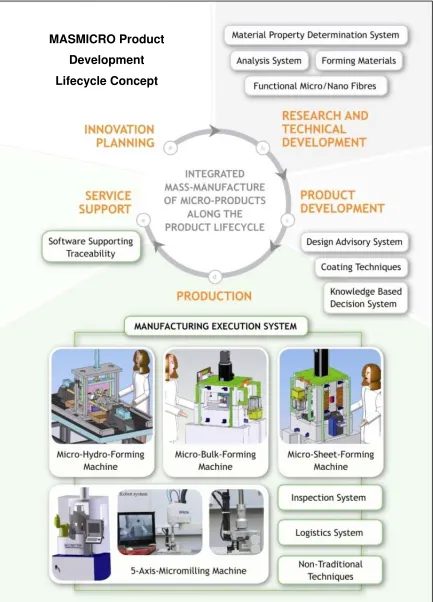
“life-cycle” concept of the development of miniature/micro-products, as indicated in Fig. 1. Industry
may selectively choose one of the developed facilities according to their own interest. According to
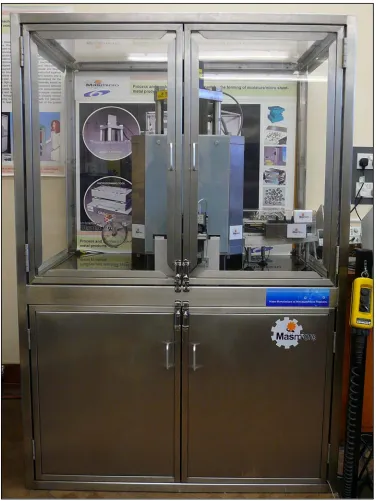
a full, integrated system (Fig. 2), that includes all of the key development from the project, hence,
an integrated solution to industry, including training programmes. The following are examples of
the manufacturing facilities developed:
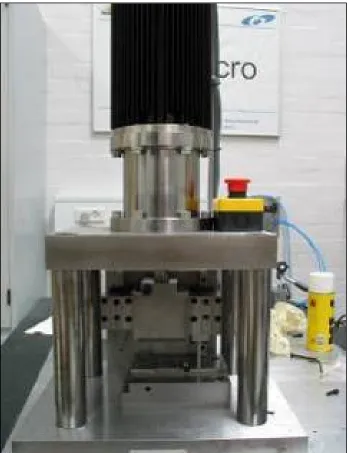
Led by the Institute of Product Development (IPU) of Denmark, a miniature press and flexible tool
system has been developed for the forming of micro-bulk-products (Fig. 3). This was the first EU
attempt to mass-manufacture miniature/micro-components via micro-forming [22, 93-94]. The
press is driven by a linear servo motor and is capable of fast and accurate motion. The tool-system
enables eight different bulk-forming processes to be carried out only by changing small portions of
the tool-elements. Precision of the tool-system is crucial due to narrow tolerances of the dimensions
of the micro-components to be formed, which requires the manufacture of die-cavities within the
sub-millimeters range in diameter and within a few microns in geometrical accuracy. The
tool-development gained support from Pascoe Engineering, Scotland, Fraunhofer Institute Production
System and Design Technology of Germany (IPK). The press and tool system were successfully
tested with the forming of two demonstration products selected by Pinol A/S of Denmark.
A new micro-sheet-forming machine system (desk-top machine) has been developed at the
University of Strathclyde [95-96], in collaboration with Pascoe Engineering of Scotland, Tekniker
of Spain and other project partners. The machine is capable of a series of micro-sheet-forming
processes for forming thin sheet-metal parts with thickness of below 100 microns. The machine has
capability of up to 800-1000 strokes per minute, force capacity of 5KN, and machine precision 2-5
microns, with modular and flexible set-up. The machine is equipped with a new, linear-motor
driven, high-speed feeder, a novel part-carrying system, and a force-displacement monitoring
system. With the tool systems developed in collaboration with Pascoe Engineering Ltd.,
Gammastamp SpA of Italy, IPK of Germany and Tekniker of Spain, different types of materials
have been tested for demonstrators. An industry-version machine is being built at Tekniker of
Spain, with support from Pascoe Engineering and University of Strathclyde.
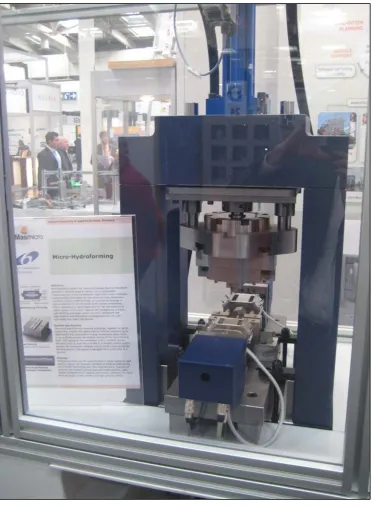
The Institute of Production (IFP) of the University of Applied Science Cologne (ASC) leads the
development of the 1st generation hydroforming machine for the forming of
miniature/micro-tubular components [97-98]. Hydorforming processes have been employed successfully in industry
for producing products predominantly relating to lightweight automotive components. The
mass-production of such components at present is, however, limited largely to the parts with
cross-sections of above about 20mm in width. There was a lack of experience in the hydroforming of
tubes with diameters down to 0.8 mm and thickness down to 20 microns. To assist in the
deformation of miniature tubes, a laser system for localised heating is incorporated into the forming
process. The applications of the system will significantly extend micro-manufacturing capabilities,
especially manufacture of hollow sectioned parts, such as that used in micro-housing, fluidic
devices, light-weight structures in micro-mechanical devices, etc. which has not been achieved
before. The approved manufacturing capabilities may also fundamentally change the way in which
some micro-products/device are currently being designed.
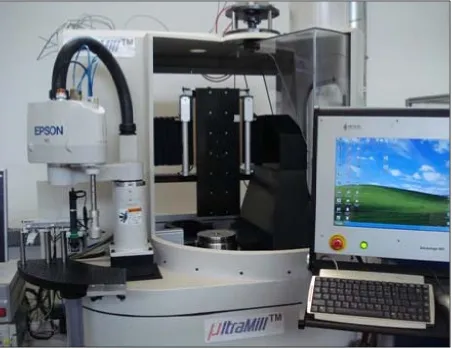
A bench-top, multiple-axis machine tool capable of machining intricate 3D geometries in
components, with nano-scale tolerances, has been developed, led by the Brunel University and
Ultra-Precision Motion Ltd. of the UK [99-100]. The associated series development includes an air
bearing slideway and a rotary table with improved damping capacity (Patent Application: GB
0505798.9) and an ultra-high speed air bearing spindle (Loadpoint Ltd./Ultra-Precision Motion Ltd.
of the UK), a piezo-driven fast tool servo system and Piezoelectric actuation unit for vibration
assisted machining (CEDRAT Technologies S.A. of France), new micro diamond tools (Contour
Fine Tooling Ltd of the UK), a robotic arm unit for micro-components/tools handling and
management (Carinthian Tech Research AG of Austria), and a tool and spindle condition
monitoring system (University of Patras of Greece).
MASMICRO Manufacturing Execution System (MES) was developed by Fraunhofer Institute IPA,
Germany, to facilitate the integration of the manufacturing facilities developed within MASMICRO
[101-102]. It was consequently built upon the concept of a service oriented architecture and
implemented a number of additional measures to improve the agility of this class of systems, such
as the integrated configuration management system covering all artifacts that determine the system's
behaviour and the integration of real-time simulations to evaluate the configuration setup. In order
to reduce the license costs for layered products, it made heavy use of proven internet concepts and
technologies and thereby, reached a high level of scalability. Altogether, the system facilitates
reduction of the time and budget required to adjust an MES to the requirements of a specific
production environment.
The mobile-robot with a manipulator for micro-manufacturing system applications was another
development by Robotnik of Spain, for facilitating the systems integration [103]. The system
consists of a mobile platform and a robot arm. The platform can be controlled remotely via joystick
or can work autonomously via laser sensor and beacons. It has also a laser range finder for obstacle
accuracy of 0.01 mm. This robot arm can be upgraded with a camera to perform difficult tasks or to
improve the final accuracy. The whole system is powered by two 50 Ah batteries, and its final
velocity is software restricted to 1 m/s.
The customized laser system for micro-material processing was another result from MASMICRO
(by Latronics of Germany) [103]. Software controlled modular laser system based on a 50 Watt
CW-Ytterbium fiber-laser. Material processing such as laser assisted Micro-forming and further
application of 3D-micro-material processing were performed with a spatial resolution of 10 µm.
Additional axes of rotation and translation can be implemented and synchronised with the ‘master
software’. In order to avoid thermal drift of the scanner, an optical auto-calibration can be started at
fixed time periods in order to achieve very accurate long term stability and reproducibility of the
positioning of the focal point. These properties make the system suitable for accurate ‘non-stop’
processing of micro-components in an industrial production line.
Fast tool servo SPT400MML (developed by Cedrat Technologies SA of France) uses the patented
Amplified Piezo Actuator from CEDRAT to achieve a fast motion of a diamond tool to machine
free forms [103]. It includes an eddy current proximity sensor to increase the accuracy of the
actuator. It is driven by a standard LA75C drive and controlled with the real time UC75 platform.
The closed loop is performed at a high sampling rate and realizes the following tasks: closed loop
between the SPT and the proximity sensor, and monitoring of the different variables of the SPT.
The SPT400MML is compatible with specific diamond tools from Contour Fine Tooling Ltd. of the
UK, with light shank of 6.35mm square cross section. The preliminary performances are: Stroke up
to 400µm, bandwidth up to 450Hz with a first resonant frequency above 600Hz, force capability up
to 10N.
An inter-machine material handling system for handling micro-parts and for manufacturing
integration was developed by Polytechnic University of Valencia of Spain [103], for which a
conveyor belt system able to fit into a linear pick-and-place micro-manufacturing plant was
developed. The system is composed of a central controller and several modules. Each module
contains a programmable logic controller (PLC), some cassettes, conveyor segments, transfer units
and handling devices. The micro-part sorting machine is another main part of this handling system.
The machine is able to arrange the micro-parts into the cells of the standard carrier. An empty
carrier is fixed on an X-Y table. It moves the carrier under a micro-part feeder subsystem to ensure
to accurately position the carrier/cells. To control the micro-parts flow, the feeding system is
An inspection system has been developed for micro-scale inspection of rotary micro-parts by
Carinthian Tech Research AG of Austria [103]. With the system geometrical and surface features
can be evaluated with a resolution of 5 µm. The parts are rotated under a line-scan camera. The
acquired images are analysed with specific pattern recognition algorithms. The previously trained
geometrical features are compared to allowable geometrical tolerances. The user receives a detailed
file of the inspected data and feature errors, if occurred. Another inspection system is the “Optical
Coherence Tomography (OCT) system”, developed by Upper Austrian Research GmbH. It was
developed as a contactless and non-destructive investigation tool of structures at the micron scales.
3D data from the interior of materials and micro-products can be acquired, as well as surface
topographies. The acquisition time for an image with the size of one megapixel is only 36 ms. The
system can be used as a module for the stent inspection system, in order to measure the thickness of
coating layers on medical stents, or can be operated as a stand-alone system for microstructure
investigations.
A series of In-situ micro-material testing procedures and nano-manipulation set-ups for the testing
of micro/nano-materials within SEM have been developed at the Swiss Federal Laboratories for
Materials Testing and Research (EMPA) [104-106] and served for the project research, which
increased the capability and flexibility of the testing of miniature/micro/nano materials with SEM.
The development gave the project an enabling technology and device to test the materials at smaller
scales with high accuracy which had not been achieved before. One of the advantages is capability
of capturing micro/nano-materials crack and instability development (subject to the
upsetting/compression) during in-situ tests of micro/nano-structures or surface features.
Other outcomes included micro- and nano-materials developed respectively by BPE International
and Swedish Institute for Fibre and Polymer Research; Surface coating techniques for micro-tools
developed by Centro de Ingenieria Avanzada de Superficies of Spain; Laser-assisted
micro-stamping and roll-to-roll micro-hot-embossing techniques and tool designs developed by
Fraunhofer Institute Laser Technology; New micro-EDM techniques developed by Fraunhofer
Institute Production System and Design Technology; Micro- and precision-machinery testing
algorithm and software system by MASMEC s.r.l. of Italy; Micro-mechanics analysis system
developed by the University of Birmingham, etc. [103]
Over the project period (2004-2008), the MASMICRO project produced over 130 technical articles,
which cover some of the scientific research and technological development described above that
have not been published before.
5. Conclusions and Remarks
Micro-manufacturing research during last 10 years has been very intensive world-wide from which,
significant results have been produced. Fundamentally, much better understanding of materials,
processes and equipment has been achieved. Effort in converting manufacturing concepts to the lab
processes, and further transforming these to volume production, has generated various, promising
results towards industrial applications. More miniature/desktop manufacturing machines have now
been marketed or to be marketed soon, and competition in this front will be very intensive within
next few years.
To generate more significant impact onto the industry, economy and people’s life in general,
micro-manufacturing will have to be better linked to macro-micro-manufacturing and nano-micro-manufacturing.
Micro-manufacturing research and technological development should not be focused on “small
things” only, but it also should serve as a vehicle to drive traditional manufacturing towards better
quality and efficiency by providing better know-how on materials, processes, tool-design and
fabrication and manufacturing precision, with more assured handling and control, and more reliable
and efficient measurement and inspection, as well as adding more functionalities to existing
products. In this sense, micro-manufacturing should have a broader definition from which
traditional, large industries could sense more relevant factors. Similarly, standardisation of the
materials, product design, manufacturing methods, processes and facility designs, will have to speed
up, with joint effort, which may involve all parties in the micro-/nano-manufacturing chains and
business. Further reducing overall cost of micro-manufacturing, especially cost of tools and
equipment, is crucial for industrial applications. Currently, some of the expensive equipment serves
mainly for research purposes. The research and technological development should also explore
more on “add-on facilities” to enable existing industry to gradually transform/expand its business
to/into micro-manufacturing without taking significant risks. Considering that many processes
could be used for manufacturing micro-products for different geometries, materials and
functionalities, while single-process equipment may only have limited applications and investment
for manufacturing a single micro-product with such equipment may not be cost-justified, more
effort should be made to develop length-scale integration manufacturing facilities, multiple-process
business models also need to be introduced, including collaborative virtual enterprises, optimised
supply chains, etc.
In the scientific research front, characterisation of the micro/nano-materials and interfaces needs
further effort. Material databases with detailed information on various materials and their
properties/interface properties including micro-structures and size-effects would be very useful for
product innovation and process design. Multi-phase, multi-scale, and heterogeneous mechanics
modelling need to be introduced directly to micro-manufacturing process and product design.
Micro/nano-wear and damages/failures of micro-manufacturing-tools need to be studied more, and
the knowledge generated should be transferred to the tool design and fabrication, especially surface
treatment of the tools. More fundamental studies are also needed on interactions between the
materials and handling-tools with a view to delivering better design for handling and assembly,
including development of better handling methods for high-rate manufacturing. Online inspection
matching high-rate micro-production is still a challenging topic for research, regarding a high level
of resolution, accuracy and speed that are to be met together.
Acknowledgement
The support from the European Commission for conducting research in the “Integration of
Manufacturing Systems for Mass-manufacture of Miniature/Micro-Products (MASMICRO)”
(NMP2-CT-2004-500095) (www.masmicro.net) is acknowledged. Contributions from all
MASMICRO consortium partners to the project’s achievements are particularly acknowledged. The
authors especially would like to thank Prof. Neal Juster, Chair of the MASMICRO project,
Vice-Principal of the University of Glasgow (formerly Pro-Vice-Vice-Principal of the University of
Strathclyde), and Mr. Hans Hartmann Pedersen, Project Officer of the European Commission, for
their encouragement, guidance and support to the project, and Prof. Frank Travis for his careful
check of the manuscripts of this special issue.
References
[1] EU MINAM Newsletters, Prepared by the University of Strathclyde, through the EU
Co-ordination Action Project Micro-Sapient, 2006-2009.
[2] http://cordis.europa.eu/fp6/projects.htm
[4] World Technology Evaluation Center (WTEC, USA), Report on Micro-Manufacturing, 2004.
[5] L. Alting, F. Kimura, H.N. Hansen and G. Bissacco, “Micro Engineering”, CIRP Annals
-Manufacturing Technology, v 52, n 2, 2003, pp. 635-657.
[6] S.Y. Liang, “Mechanical machining and metrology at micro/nano scale”, Proc. of SPIE - The
International Society for Optical Engineering, v 6280 I, Third International Symposium on
Precision Mechanical Measurements, 2006, pp. 628002.
[7] X. Luo, K. Cheng, D. Webb and F. Wardle, “Design of ultraprecision machine tools with
applications to manufacture of miniature and micro components”, J. of Materials Processing
Technology, v 167, n 2-3, Aug 30, 2005, pp. 515-528.
[8] K. Najafi, “Micromachined micro systems: Miniaturization beyond microelectronics”, IEEE
Symposium on VLSI Circuits, Digest of Technical Papers, June 2000, Honolulu, HI, USA, pp.
6-13.
[9] G.M. Robinson and M.J. Jackson, “A review of micro and nanomachining from a materials
perspective”, J. of Materials Processing Technology, v 167, n 2-3, 2005, pp. 316-337.
[10] K.P. Rajurkar, G. Levy, A. Malshe, M.M. Sundaram, J. McGeough, X. Hu, R. Resnick and A.
DeSilva, “Micro and Nano Machining by Electro-Physical and Chemical Processes”, CIRP
Annals - Manufacturing Technology, v 55, n 2, 2006, pp. 643-666.
[11] E. Uhlmann, P. Sascha and K. Schauer, “Micro milling of sintered tungsten–copper composite
materials”, J. of Mater. Proc. Technol., v 116, 2001, pp.39-43.
[12] E. Uhlmann, S. Piltz and U. Doll, “Machining of micro/miniature dies and moulds by electrical
discharge machining—Recent development”, J. of Mater. Proc. Technol., v 167, n 2-3, 2005,
pp. 488-493.
[13] D.T. Pham, S.S. Dimov, S. Bigot, A. Ivanov, K. Popov, ‘Micro-EDM – recent developments
and research issues’, J. of Mater. Proc. Technol., v 149, 2004, pp. 50-57.
[14] B. Bhattacharyya, J. Munda and M. Malapati, “Advancement in electrochemical
micro-machining”, Int. J. of Machine Tools and Manufacture, v 44, n 15, 2004, pp. 1577-1589.
[15] J.A. MacGeough, “Electrochemical Machining”, Technical Presentation, University of
Strathclyde, Glasgow, UK, March, 2009.
[16] A. Gillner, J. Holtkamp, et al. “Laser applications in microtechnology”, J. of Materials
Processing Technology, v 167, n 2-3, pp. 494-498.
[17] M. Xia and Y. Tu, “An investigation of femtosecond laser micromachining”, Proc. of 2005
International Conference on MEMS, NANO and Smart Systems, pp. 296-300.
[18] P. Bado, W. Clark and Ali Said, Micromachining Handbook, 2001, Clark-MXR, Inc. USA.
[19] Y. Li, J. Tian and Q. Sun, “Micro-fabrication by femtosecond laser pulses”, Proc. of SPIE -