Effect of blood pressure lowering medications
on leg ischemia in peripheral artery disease
patients: A meta-analysis of randomised
controlled trials
Diana Thomas Manapurathe
1, Smriti Murali Krishna
1, Brittany Dewdney
1, Joseph
Vaughan Moxon
1, Erik Biros
1, Jonathan Golledge
1,2*
1 The Vascular Biology Unit, Queensland Research Centre for Peripheral Arterial Diseases, College of Medicine & Dentistry, James Cook University, Townsville, Australia, 2 Department of Vascular and Endovascular Surgery, The Townsville Hospital, Townsville, Australia
Abstract
Background
It has been suggested that anti-hypertensive medications may worsen leg ischemia in
peripheral artery disease (PAD) patients. We undertook a meta-analysis to assess the effect
of anti-hypertensive medications on measures of leg ischemia including maximum walking
distance (MWD), pain free walking distance (PFWD) and ankle brachial pressure index
(ABPI). A meta-regression was performed to evaluate whether the effect of the
anti-hyper-tensive medications on mean arterial pressure (MAP) was associated with changes in
ABPI, MWD or PFWD.
Method
A systematic literature search was performed to identify placebo controlled randomized
con-trol trials (RCT) testing anti-hypertensive medications, which reported baseline and
follow-up measurements of: MAP and MWD, PFWD or ABPI in patients with intermittent
claudica-tion (IC) due to PAD.
Result
A meta-analysis was performed on 5 RCTs comprising a total of 180 and 127 patients
receiving anti-hypertensive medications and placebo respectively. This analysis suggested
that anti-hypertensive medication did not significantly affect MWD, PFWD or ABPI. In
con-trast, the meta-regression analysis showed that the reduction in MAP due to the
anti-hyper-tensive drugs was positively correlated with increased MWD during follow-up (
β
= 8.371, p =
0.035). Heterogeneity across studies, as assessed by I
2, was high. The follow-up period
within the included trials was generally short with 3 out of 5 studies having a follow-up period
of
6 weeks.
a1111111111
a1111111111
a1111111111
a1111111111
a1111111111
OPEN ACCESSCitation: Thomas Manapurathe D, Krishna SM,
Dewdney B, Moxon JV, Biros E, Golledge J (2017) Effect of blood pressure lowering medications on leg ischemia in peripheral artery disease patients: A meta-analysis of randomised controlled trials. PLoS ONE 12(6): e0178713.https://doi.org/ 10.1371/journal.pone.0178713
Editor: Tatsuo Shimosawa, The University of
Tokyo, JAPAN
Received: February 9, 2017
Accepted: May 17, 2017
Published: June 2, 2017
Copyright:©2017 Thomas Manapurathe et al. This
is an open access article distributed under the terms of theCreative Commons Attribution License, which permits unrestricted use, distribution, and reproduction in any medium, provided the original author and source are credited.
Data Availability Statement: All relevant data are
within the paper and its Supporting Information files.
Funding: This work was funded by grants from the
Conclusion
This study suggests that anti-hypertensive treatment does not worsen but may improve leg
ischemia in PAD patients. Larger multicenter trials with longer anti-hypertensive treatment
periods are required to clarify the effect of anti-hypertensives on leg ischemia in PAD
patients.
Introduction
Lower limb peripheral artery disease (PAD) results from narrowing and occlusion of the
arter-ies supplying blood to the legs, usually due to atherosclerosis and associated thrombosis[1,
2].
Approximately 200 million people worldwide were estimated to have PAD in 2010, a rise of
25% since 2000[3]. The most recognised presenting complaint for PAD patients is intermittent
claudication (IC). Patients with IC have significantly impaired walking ability, high rates of
cardiovascular events, such as myocardial infarction and stroke, and reduced disease-related
quality of life[4]. Approximately 20% of patients with PAD will die from a cardiovascular
event within 5 years[5] and therefore aggressive management of cardiovascular risk factors is
the primary focus of treatment[6].
Hypertension was identified by the global burden of disease study as the leading risk factor
for mortality and disability-adjusted life years lost in 2010[7]. Hypertension is considered an
important risk factor for PAD and its complications and approximately 50% of patients
pre-senting with PAD are reported to have hypertension[8–12]. Clinical trials including PAD
patients (in addition to those with other atherosclerosis-related diseases) have reported a
rela-tive reduction in cardiovascular events in those receiving blood pressure lowering medications
of 20–30%[13,
14]. Therefore current recommendations advise that PAD patients should
receive anti-hypertensive medications if their blood pressure (BP) is
>
140/90[15–17].
How-ever, the use of some anti-hypertensives, particularly
β
blockers, has been traditionally
contra-indicated in PAD patients due to concerns regarding reducing peripheral perfusion[18,
19].
This opinion has been challenged by others who have reported that BP lowering medications
do not worsen leg ischemia[20–22]. Some previously published randomised trials in PAD
patients have reported improvements in maximum walking distance (MWD), pain free
walk-ing distance (PFWD), ankle brachial pressure index (ABPI) and calf blood flow (CBF) after
commencing anti-hypertensive medications[23–30]. Other trials have reported no effect of
anti-hypertensive medications on PAD patients[31,
32]. A previous Cochrane review
con-cluded that there was lack of evidence on the efficacy of anti-hypertensive medication in
patients with PAD, but did not perform a meta-analysis or meta-regression to definitely assess
this[33]. In view of the current controversy regarding the effect of BP lowering medication on
symptoms of PAD, we undertook a systematic review and meta-analysis to assess if
anti-hyper-tensive medications worsen leg ischemia in PAD patients.
Materials and methods
This meta-analysis was performed in accordance with the Preferred Reporting Items for
Sys-tematic reviews and Meta-Analyses (PRISMA) guidelines[34]. A protocol was developed
fol-lowing the guidelines of the PRISMA-P statement[34] and was published in the PROSPERO
database (CRD42016038338).
Queensland Government. DTM is supported by JCU Post-graduate Research scholarship and JCU college of Medicine and Dentistry scholarship.
Competing interests: The authors have declared
Search strategy
A systematic search was performed to identify placebo controlled randomised trials (RCTs)
evaluating the effects of anti-hypertensive medications on three recognised measures of the
severity of leg ischemia including ABPI, MWD and PFWD in patients with IC. The search
strategy undertaken and the study selection criteria are detailed in
S1 File.
Data extraction
Two authors (DT and BD) extracted data independently using a predefined data extraction
table (see
S1 File
and
S1 Table
for further details).
Study quality assessment
A quality assessment tool was formulated using components from the following validated
tools: a) The 25 items CONSORT 2010 checklist of information to be included when reporting
a randomised trial; and b) The Cochrane collaboration tool for assessing risk of bias[35,
36].
The quality assessment details are given in
S1 File.
Quantitative data synthesis
The first author (DT) performed statistical analysis of data using the Meta-Analyst software
(version beta 3.13)[37]. A description of the data synthesis is provided in
S1 File.
Assessment of publication bias
The publication bias was assessed using funnel plots and Eggers’s test using the CMA software
package (Comprehensive Meta-Analysis version 3.3.070). The first author (DT) carried out the
publication bias assessment.
Results
Characteristics of the included studies
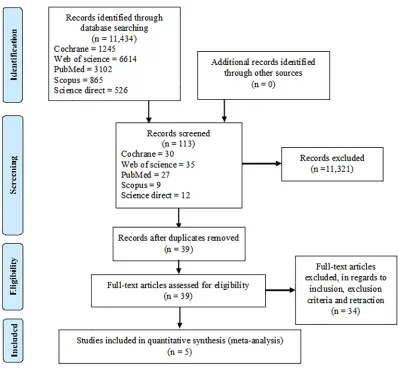
Our search identified 11,434 articles. Detailed characteristics of the included studies are given
in
S2 File. A PRISMA flow chart outlining the literature search and study selection process is
given in
Fig 1.
Quality assessment
The quality assessment showed that four studies were of high quality and the remaining one of
moderate quality. Agreement on the quality assessment between the observers ranged from 95
to 100% (S2 File). Other details of the quality of the studies are shown in
S2 File.
Description of the included studies
The characteristics of the included studies and participants are given in
S2 File.
Relationship between changes in MAP and ABPI and walking ability
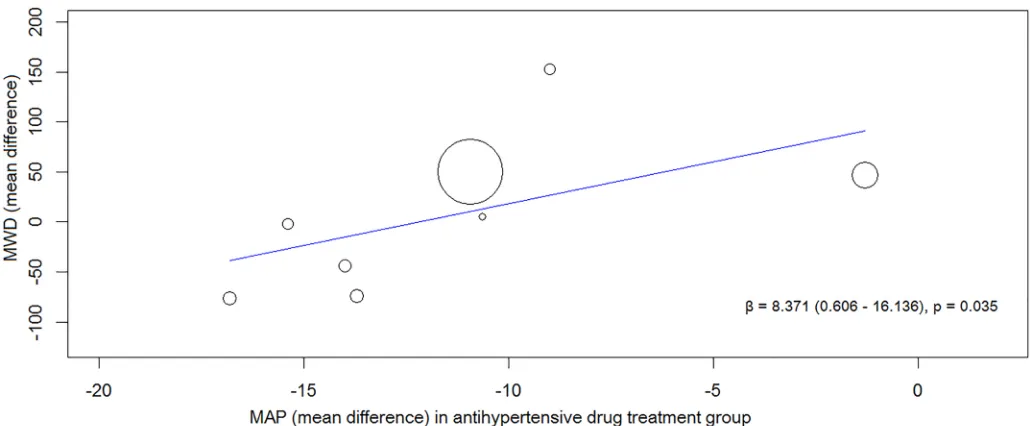
association between reduction in MAP after drug treatment with MWD and PFWD
respec-tively. The magnitude of reduction in MAP from baseline due to the anti-hypertensive drugs
showed a significant positive correlation with improved MWD (
β
= 8.371, p = 0.035) (Fig 2)
but not PFWD or ABPI (PFWD,
β
= 4.276, p = 0.195; ABPI,
β
= -0.004, p = 0.357).
The effect of anti-hypertensives on ABPI, MWD and PFWD
[image:4.612.176.574.74.442.2]Meta-analyses were conducted to see if reported reductions in BP following antihypertensive
therapy led to clinically relevant improvements in ABPI, MWD or PFWD. Studies by Robert
et al
. and Bagger
et al
. were given a baseline—post-intervention correlation value of 0.5 for this
analysis. Robert
et al
. assessed 4 anti-hypertensive drugs and placebo in a crossover design.
Hence for this meta-analysis, each treatment period was considered as a separate trial.
Accord-ingly, a total of 8 and 7 groups were used to assess the effect of anti-hypertensives on MWD
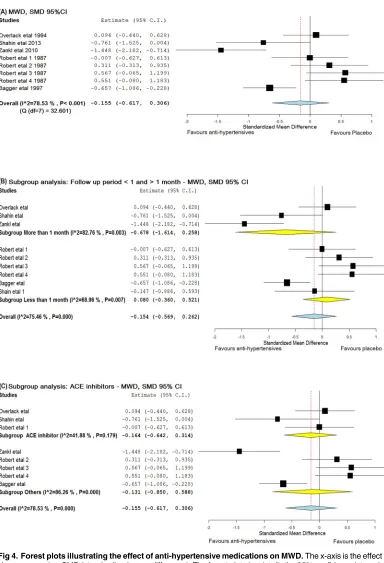
and PFWD respectively (S1 Table). The meta-analysis suggested that anti-hypertensives had
no significant effect on ABPI [SMD = -0.151 (95% CI, -0.425–0.123)], MWD [SMD = -0.155
(95% CI, -0.617–0.306)] or PFWD [d =
−
0.013 (95% CI, -0.342–0.316)] (Figs
3–5). The
find-ings for MWD were similar in sub-group analyses that assessed treatment periods of
>
1
or
<
1 month (Fig 4B).
Fig 1. PRISMA flow chart outlining the literature search and the study selection process.
A sub-analysis was performed to determine whether ACE inhibitors had an effect on leg
ischemia[18,
24,
38]. These studies had intervention period of 4, 6 and 24 weeks. No significant
effect was found on either MWD (SMD =
−
0.164, 95% CI -0.642–0.314) or PFWD (SMD =
-0.214, 95% CI -0.663–0.236) (Figs
4C
and
5B). Due to a lack of available studies, sub-analyses
could not be performed for other drug classes.
Assessment of publication bias
Eggers’s test and the funnel plots (S3 File) suggested no publication bias. The intercepts of the
funnel plots assessing publication bias in trials included to analyse the effect of
anti-Fig 2. Results of the meta-regression analysis showing the association between reduction in blood pressure and improvement in MWD after being randomised to an anti-hypertensive drug. Fig 2 shows the association between reducing MAP and improving MWD in all the included trials. Abbreviations:β–regression coefficient, MAP—mean arterial pressure and MWD—maximum walking distance.
[image:5.612.60.575.76.289.2]https://doi.org/10.1371/journal.pone.0178713.g002
Fig 3. Forest plot illustrating the effect of anti-hypertensive medications on ABPI. The x-axis is the effect size expressed as SMD (standardised mean difference). The forest plot also details the 95% confidence interval. The dotted line represents the overall effect calculated in this meta-analysis. The heterogeneity estimated as I2and Q is also provided. Abbreviation: ABPI—ankle brachial pressure index.
[image:5.612.77.574.512.656.2]Fig 4. Forest plots illustrating the effect of anti-hypertensive medications on MWD. The x-axis is the effect size expressed as SMD (standardised mean difference). The forest plot also details the 95% confidence interval. The dotted line represents the overall effect calculated in this meta-analysis. The heterogeneity estimated as I2 and Q associated with each analysis is also provided. (A) The effect of anti-hypertensive medications on MWD, (B) Subgroup analysis including trials with follow up period greater than and less than 1 month, (C) Subgroup analysis including trials which used ACE inhibitors. Abbreviations: ACE—angiotensin converting enzyme and MWD—maximum walking distance.
hypertensive medications on ABPI, MWD and PFWD were -0.825 (-8.779–7.129, p = 0.699),
0.388 (-11.038–11.814, p = 0.936) and -1.205 (-14.505–12.095, p = 0.825) respectively.
Discussion
The use and choice of anti-hypertensive medications in PAD patients has been debated for a
long time and one of the main concerns have been that anti-hypertensive drugs may worsen
leg ischemia. The main finding of this meta-analysis was that anti-hypertensive therapy did
not affect leg ischemia as assessed by ABPI, MWD and PFWD. A benefit of anti-hypertensive
medications on leg ischemia was suggested by the meta-regression since there was a significant
positive correlation between degree of reduction in BP and improvement in MWD.
[image:7.612.198.553.70.418.2]The RCTs included in this meta-analysis had many limitations. Notably, there was no
wash-out period between treatment periods in the crossover trial by Robert
et al
.[18]. Hence
signifi-cant carryover effects may have been present which may have masked the true effect of
anti-hypertensive drugs tested. Furthermore, a follow-up period of at least 6 months is
recom-mended in studies of IC to ensure that adequate time is available to demonstrate effects on the
Fig 5. Forest plots illustrating the effect of anti-hypertensive medications on PFWD. The x-axis is the effect size expressed as SMD (standardised mean difference). The forest plot also details the 95% confidence interval. The dotted line represents the overall effect calculated in this meta-analysis. The heterogeneity estimated as I2and Q associated with each analysis is also provided. (A) The effect of anti-hypertensive medications on PFWD, (B) Subgroup analysis including trials which included ACE inhibitors. Abbreviations: ACE—angiotensin converting enzyme and PFWD—pain free walking distance.
leg[39]. The trials by Bagger
et al
., Robert
et al
. and Overlack
et al
. had a follow-up period of
two, four and six weeks respectively, which were lower than advocated[18,
23,
38]. Three trials
included in this meta-analysis reported improvement in walking distance after
anti-hyperten-sive drug treatment[23–25]. The treatment period for these trials were 52, 24 and 2 weeks,
sug-gesting that longer duration of treatment with anti-hypertensives may be required to
demonstrate their efficacy[39]. Only 2 trials achieved a SBP target according to current
guide-lines of
140 mmHg [24,
25]. Attaining BP goals may have improved the outcomes. The
blinding details of the trial authored by Zankl
et al
. were unclear[25,
40]. The research was a
single blinded study, however the paper did not specify whether the investigators or the
patients were blinded. The risk of bias is significant when adequate blinding is not used[40].
RCTs without appropriate blinding have been demonstrated to show a larger treatment effect
[41].
The overall lack of effect of anti-hypertensive medications on measures of leg ischemia
reported in this meta-analysis can be attributed to many reasons. Firstly, there were few
pub-lished trials that met the entry criteria and the majority of these trials included small number
of patients. Secondly, there are potential methodological issues in combining crossover trials
and parallel studies in a meta-analysis. The correlation co-efficient between baseline and
fol-low-up scores in the included crossover trials were also not available hence a conservative
esti-mate value of 0.5 was used[42]. Furthermore, the follow-up period was different in all the trials
ranging from 2 to 52 weeks. Different trials also used different anti-hypertensive medications.
The current meta-analysis was performed by pooling all trials together regardless of their
anti-hypertensive class. In addition, the inclusion and exclusion criteria in the included RCTs were
different as a result of which the baseline characteristics of the participants were noticeably
dif-ferent. The crossover trials excluded patients with concomitant coronary heart disease and
dia-betes mellitus[18,
23], whereas all the parallel trials included patients with these risk factors[24,
25,
38]. Therefore, the degree of heterogeneity between studies both in terms of the design and
medications used was relatively high. Moreover, for analysis, data had to be represented as
mean
±
SD, hence several mathematical manipulations were needed to transform data into
this format.
Despite these limitations, the current meta-analysis suggests that anti-hypertensive
treat-ments do not worsen leg ischemia and may possibly improve MWD. This is important to
con-firm since lowering BP in patients with PAD has significant potential to reduce cardiovascular
events. Current guidelines recommend the reduction of BP to
140/90 in PAD patients[16,
17] but a recent trial conducted by the SPRINT research group showed that a target of
SBP
120 mmHg among patients at high risk of cardiovascular events, including PAD
patients, resulted in substantially lower rates of cardiovascular events and associated mortality
[43]. It is therefore likely that updated guidelines may advise lowering SBP in high risk patients
to
120 mmHg.
The findings of one of our sub-analyses, that ACE inhibitors did not influence leg outcomes
is in apparent contradiction to a previous meta-analysis which reported that ACE inhibitors
improved walking ability in patients with IC[44]. It should be noted that the prior
meta-analy-sis included two trials which have been subsequently retracted[45,
46] and positive data from
these studies may have contributed to this difference in findings. However the results of this
meta-analysis is comparable to an older meta-analysis which concluded that ACE inhibitors
did not have any significant effect on walking distance and ABPI[47].
periods are required to clarify the effect of anti-hypertensives on symptoms of IC. However,
designing such trials is difficult due to the convincing data suggesting that patients at high risk
of cardiovascular events, such as PAD patients, should be on anti-hypertensive medications to
reduce the incidence of such events[48,
49].
Supporting information
S1 File. Patients and methods.
(DOCX)
S2 File. Additional results.
(DOCX)
S3 File. Funnel plots and Egger’s test assessing publications bias.
(DOCX)
S4 File. PRISMA checklist.
(DOC)
S1 Table. Blood pressure and measures of leg ischemia reported in studies included in this
meta-analysis. Results are expressed as mean
±
SD. The mathematical approach taken for
obtaining these data is given in
S2 Table. Mean arterial pressure was defined from the
follow-ing formula: MAP = [(2
DBP) + SBP] / 3. Different anti-hypertensives were used in the trials:
Overlack trial—perindopril, Shahin
et al
.–ramipril, Zankl
et al
.–telmisartan, Bagger
et al
.–
verapamil, Robert
et al
.–captopril, atenolol, labetolol and pindolol. Abbreviations: DBP-
dia-stolic blood pressure, MAP—mean arterial pressure, PI—post-intervention and SBP—sydia-stolic
blood pressure.
(DOCX)
S2 Table. Calculations involved in the included trials.
(DOCX)
Acknowledgments
The authors would like to acknowledge the James Cook University library staff for their
assis-tance with literature search and Professor Rhondda Jones for her statistical support.
This work was funded by grants from the National Health and Medical Research Council,
the Queensland Government. JG holds a Practitioner Fellowship from the National Health
and Medical Research Council, Australia (1117061) and a Senior Clinical Research Fellowship
from the Queensland Government. DT is supported by a JCU Post-graduate Research
scholar-ship and a JCU college of Medicine and Dentistry scholarscholar-ship.
Author Contributions
Conceptualization: DTM JM JG.
Data curation: DTM SK BD.
Formal analysis: DTM EB.
Funding acquisition: DTM JG.
Investigation: DTM.
Project administration: DTM SK BD JM EB JG.
Resources: DTM EB.
Software: DTM EB.
Supervision: DTM SK JM JG.
Validation: SK BD JM EB JG.
Visualization: DTM JM JG SK EB.
Writing – original draft: DTM.
Writing – review & editing: JG JM SK.
References
1. Au TB, Golledge J, Walker PJ, Haigh K, Nelson M. Peripheral arterial disease: diagnosis and manage-ment in general practice. Aust Fam Physician. 2013; 42(6):397. PMID:23781547
2. Krishna SM, Moxon JV, Golledge J. A review of the pathophysiology and potential biomarkers for peripheral artery disease. Int J Mol Sci. 2015; 16(5):11294–322.https://doi.org/10.3390/ijms160511294
PMID:25993296
3. Fowkes FGR, Rudan D, Rudan I, Aboyans V, Denenberg JO, McDermott MM, et al. Comparison of global estimates of prevalence and risk factors for peripheral artery disease in 2000 and 2010: a sys-tematic review and analysis. Lancet. 2013; 382(9901):1329–40.https://doi.org/10.1016/S0140-6736 (13)61249-0PMID:23915883
4. Olin J. W., Sealove B. A. Peripheral artery disease: current insight into the disease and its diagnosis and management. Mayo Clin Proc. 2010; 85(7):678–92.https://doi.org/10.4065/mcp.2010.0133PMID:
20592174
5. Dormandy JA, Rutherford RB. Management of peripheral arterial disease (PAD). TASC Working Group. TransAtlantic Inter-Society Consensus (TASC). J Vasc Surg. 2000; 31(1 Pt 2):S1–S296. PMID:
10666287
6. Clement DL, Debuyzere ML. How to treat hypertension in patients with peripheral artery disease. Curr Hypertens Rep. 2007; 9(3):190–5. PMID:17519123
7. Lim SS, Vos T, Flaxman AD, Danaei G, Shibuya K, Adair-Rohani H, et al. A comparative risk assess-ment of burden of disease and injury attributable to 67 risk factors and risk factor clusters in 21 regions, 1990–2010: a systematic analysis for the Global Burden of Disease Study 2010. Lancet. 2013; 380 (9859):2224–60.
8. Binaghi F, Fronteddu PF, Cannas F, Caredda E, Uras A, Garau P, et al. Prevalence of peripheral arte-rial occlusive disease and associated risk factors in a sample of southern Sardinian population. Int Angiol. 1994; 13(3):233–45. PMID:7822900
9. Cheng SW, Ting AC, Lau H, Wong J. Epidemiology of atherosclerotic peripheral arterial occlusive dis-ease in Hong Kong. World J Surg. 1999; 23(2):202–6. PMID:9880433
10. Johnston KW, Rae M, Steiner G, Kalman PG, Schwartz L, Hill ME, et al. An atherosclerosis risk factor assessment program for patients with peripheral arterial occlusive disease. Ann Vasc Surg. 1988; 2 (2):101–7.https://doi.org/10.1016/S0890-5096(06)60789-9PMID:3196645
11. Novo S, Avellone G, Di Garbo V, Abrignani MG, Liquori M, Panno AV, et al. Prevalence of risk factors in patients with peripheral arterial disease. A clinical and epidemiological evaluation. Int Angiol. 1992; 11 (3):218–29. PMID:1460357
12. Violi F, Criqui M, Longoni A, Castiglioni C, Group A. Relation between risk factors and cardiovascular complications in patients with peripheral vascular disease. Results from the ADEP study. Atherosclero-sis. 1996; 120(1):25–35.
13. Yusuf S, Pepine CJ, Garces C, Pouleur H, Salem D, Kostis J, et al. Effect of enalapril on myocardial infarction and unstable angina in patients with low ejection fractions. Lancet. 1992; 340(8829):1173–8. PMID:1359258
15. James PA, Oparil S, Carter BL, Cushman WC, Dennison-Himmelfarb C, Handler J, et al. 2014 evi-dence-based guideline for the management of high blood pressure in adults: report from the panel members appointed to the Eighth Joint National Committee (JNC 8). JAMA. 2014; 311(5):507–20.
https://doi.org/10.1001/jama.2013.284427PMID:24352797
16. Tendera M, Aboyans V, Bartelink ML, Baumgartner I, Clement D, Collet JP, et al. ESC Guidelines on the diagnosis and treatment of peripheral artery diseases: Document covering atherosclerotic disease of extracranial carotid and vertebral, mesenteric, renal, upper and lower extremity arteries: the Task Force on the Diagnosis and Treatment of Peripheral Artery Diseases of the European Society of Cardi-ology (ESC). Eur Heart J. 2011; 32(22):2851–906.https://doi.org/10.1093/eurheartj/ehr211PMID:
21873417
17. Rooke TW, Hirsch AT, Misra S, Sidawy AN, Beckman JA, Findeiss L, et al. Management of patients with peripheral artery disease (compilation of 2005 and 2011 ACCF/AHA Guideline Recommenda-tions): a report of the American College of Cardiology Foundation/American Heart Association Task Force on Practice Guidelines. J Am Coll Cardiol. 2013; 61(14):1555–70.https://doi.org/10.1016/j.jacc. 2013.01.004PMID:23473760
18. Roberts DH, Tsao Y, McLoughlin GA, Breckenridge A. Placebo-controlled comparison of captopril, atenolol, labetalol, and pindolol in hypertension complicated by intermittent claudication. Lancet. 1987; 2(8560):650–3. PMID:2887941
19. Lepantalo M. Chronic effects of metoprolol and methyldopa on calf blood flow in intermittent claudica-tion. Br J Clin Pharmacol. 1984; 18(1):90–3. PMID:6378235
20. Bogaert MG, Clement DL. Lack of influence of propranolol and metoprolol on walking distance in patients with chronic intermittent claudication. Eur Heart J. 1983; 4(3):203–4. PMID:6861770
21. Hiatt WR, Stoll S, Nies AS. Effect of beta-adrenergic blockers on the peripheral circulation in patients with peripheral vascular disease. Circulation. 1985; 72(6):1226–31. PMID:2866047
22. Radack K, Deck C. Beta-adrenergic blocker therapy does not worsen intermittent claudication in sub-jects with peripheral arterial disease. A meta-analysis of randomized controlled trials. Arch Intern Med. 1991; 151(9):1769–76. PMID:1679624
23. Bagger JP, Helligsoe P, Randsbaek F, Kimose HH, Jensen BS. Effect of verapamil in intermittent clau-dication A randomized, double-blind, placebo-controlled, cross-over study after individual dose-response assessment. Circulation. 1997; 95(2):411–4. PMID:9008458
24. Shahin Y, Cockcroft JR, Chetter IC. Randomized clinical trial of angiotensin-converting enzyme inhibi-tor, ramipril, in patients with intermittent claudication. Br J Surg. 2013; 100(9):1154–63.https://doi.org/ 10.1002/bjs.9198PMID:23842829
25. Zankl AR, Ivandic B, Andrassy M, Volz HC, Krumsdorf U, Blessing E, et al. Telmisartan improves abso-lute walking distance and endothelial function in patients with peripheral artery disease. Clin Res Car-diol. 2010; 99(12):787–94.https://doi.org/10.1007/s00392-010-0184-0PMID:20614124
26. Catalano M, Libretti A. Captopril for the treatment of patients with hypertension and peripheral vascular disease. Angiology. 1985; 36(5):293–6.https://doi.org/10.1177/000331978503600505PMID:3896045
27. Catalano M, Tomasini M, Scandale G, Galimberti P, Milani M, Di Perri T, et al. Isradipine in the treat-ment of peripheral occlusive vascular disease of the lower limbs: a pilot study. J Int Med Res. 1992; 20 (4):323–30.https://doi.org/10.1177/030006059202000403PMID:1387369
28. Spence JD, Arnold JMO, Munoz CE, Viswanatha A, Huff M, DeRose G, Harris K. Angiotensin-convert-ing enzyme inhibition with cilazapril does not improve blood flow, walkAngiotensin-convert-ing time, or plasma lipids in patients with intermittent claudication. J Vasc Med Biol. 1993; 4(1):23–7.
29. Walker SR, Tennant S, MacSweeney ST. A randomized, double-blind, placebo-controlled, crossover study to assess the immediate effect of sublingual glyceryl trinitrate on the ankle brachial pressure index, claudication, and maximum walking distance of patients with intermittent claudication. J Vasc Surg. 1998; 28(5):895–900. PMID:9808859
30. Kimose H-H, Bagger JP, Aagaard MT, Paulsen PK. Placebo-controlled, double-blind study of the effect of verapamil in intermittent claudication. Angiology. 1990; 41(8):595–8.https://doi.org/10.1177/ 000331979004100802PMID:2202231
31. Casiglia E, Petucco S, Pessina AC. Antihypertensive efficacy of amlodipine and enalapril and effects on peripheral blood flow in patients with essential hypertension and intermittent claudication. Clin Drug Invest. 1997; 13(1):97–101.
32. Catalano M, Libretti A. A multicenter study of doxazosin in the treatment of patients with mild or moder-ate essential hypertension and concomitant intermittent claudication. Am Heart J. 1991; 121(1 Pt 2):367–71. PMID:1824663
34. Moher D, Shamseer L, Clarke M, Ghersi D, Liberati A, Petticrew M, et al. Preferred reporting items for systematic review and meta-analysis protocols (PRISMA-P) 2015 statement. Syst Rev. 2015; 4:1.
https://doi.org/10.1186/2046-4053-4-1PMID:25554246
35. Higgins JPT, Green S (editors). Cochrane handbook for systematic reviews of interventions version 5.1. 0 [updated March 2011]. The Cochrane Collaboration, 2011.www.cochrane-handbook.org. 36. Schulz KF, Altman DG, Moher D. CONSORT 2010 statement: updated guidelines for reporting parallel
group randomised trials. BMJ. 2010; 340:c332.https://doi.org/10.1136/bmj.c332PMID:20332509
37. Wallace BC, Schmid CH, Lau J, Trikalinos TA. Meta-Analyst: software for meta-analysis of binary, con-tinuous and diagnostic data. BMC Med Res Methodol. 2009; 9(1):80.
38. Overlack A, Adamczak M, Bachmann W, Bonner G, Bretzel RG, Derichs R, et al. ACE-inhibition with perindopril in essential hypertensive patients with concomitant diseases. The Perindopril Therapeutic Safety Collaborative Research Group. Am J Med. 1994; 97(2):126–34. PMID:8059778
39. Labs KH, Dormandy JA, Jaeger KA, Stuerzebecher CS, Hiatt WR. Transatlantic Conference on Clinical Trial Guidelines in Peripheral Arterial Disease: clinical trial methodology. Basel PAD Clinical Trial Meth-odology Group. Circulation. 1999; 100(17):e75–81. PMID:10534475
40. Day SJ, Altman DG. Statistics notes: blinding in clinical trials and other studies. BMJ. 2000; 321 (7259):504. PMID:10948038
41. Schulz KF, Chalmers I, Hayes RJ, Altman DG. Empirical evidence of bias. Dimensions of methodologi-cal quality associated with estimates of treatment effects in controlled trials. JAMA. 1995; 273(5):408– 12. PMID:7823387
42. Elbourne DR, Altman DG, Higgins JP, Curtin F, Worthington HV, Vail A. Meta-analyses involving cross-over trials: methodological issues. Int J Epidemiol. 2002; 31(1):140–9. PMID:11914310
43. Wright JT Jr., Williamson JD, Whelton PK, Snyder JK, Sink KM, Rocco MV, et al. A Randomized Trial of Intensive versus Standard Blood-Pressure Control. N Engl J Med. 2015; 373(22):2103–16.https://doi. org/10.1056/NEJMoa1511939PMID:26551272
44. Shahin Y, Barnes R, Barakat H, Chetter IC. Meta-analysis of angiotensin converting enzyme inhibitors effect on walking ability and ankle brachial pressure index in patients with intermittent claudication. Ath-erosclerosis. 2013; 231(2):283–90.https://doi.org/10.1016/j.atherosclerosis.2013.09.037PMID:
24267241
45. Ahimastos AA, Walker PJ, Askew C, Leicht A, Pappas E, Blombery P, et al. Effect of ramipril on walking times and quality of life among patients with peripheral artery disease and intermittent claudication: a randomized controlled trial. JAMA. 2013; 309(5):453–60.https://doi.org/10.1001/jama.2012.216237
PMID:23385271
46. Ahimastos AA, Lawler A, Reid CM, Blombery PA, Kingwell BA. Brief communication: ramipril markedly improves walking ability in patients with peripheral arterial disease: a randomized trial. Ann Intern Med. 2006; 144(9):660–4. PMID:16670135
47. Shahin Y, Mazari F, Chetter I. Do angiotensin converting enzyme inhibitors improve walking distance in patients with symptomatic lower limb arterial disease? A systematic review and meta-analysis of rando-mised controlled trials. Int j surg. 2011; 9(3):209–13.https://doi.org/10.1016/j.ijsu.2010.12.006PMID:
21195215
48. Ostergren J, Sleight P, Dagenais G, Danisa K, Bosch J, Qilong Y, et al. Impact of ramipril in patients with evidence of clinical or subclinical peripheral arterial disease. Eur Heart J. 2004; 25(1):17–24. PMID:14683738