University of Southern Queensland
Faculty of Faculty of Health, Engineering & Sciences
Sustainable Road Development and Management A dissertation submitted by:
David Price
Bachelor of Construction (Honours) Student Number
i | P a g e
ABSTRACT
ii | P a g e
DISCLAIMER PAGE
The University of Southern Queensland, in particular the Faculty of Health, Engineering & Sciences, and/or the staff of the University of Southern Queensland, does not accept any responsibility for the authenticity, accuracy or completeness of material presented within this dissertation.
Persons using all or any sections of this report do so at their own risk, and not at the risk of the University of Southern Queensland, its Faculty of Health, Engineering & Sciences and/or the staff of the University of Southern Queensland.
iii | P a g e
CANADIDATES CERTIFICATION
I certify that the ideas, results, analyses and conclusions set out in this dissertation are entirely my own effort, except where otherwise indicated and acknowledged.
I further certify that the work is original and has not been previously submitted for assessment in any other course or institution, except where specifically stated.
David Mathew Price
Student Number: 0061033158
iv | P a g e
ACKNOWLEDGEMENTS
Firstly I would love to acknowledge and thank my supervisor, Dr David Thorpe for his tireless assistance throughout the development and completion of this dissertation. It wouldn’t be possible to have accomplished what I have without his ongoing support and guidance.
Secondly I also like to thank Thiess and Ipswich City Council for allowing access to their projects and data for me to utilise in order to complete and validate this dissertation. Similarly this dissertation would not have been completed without their ongoing assistance and support.
v | P a g e
Contents
CHAPTER 1 – INTRODUCTION ... 1
1.1 Project topic ... 1
1.2 Problem Statement ... 1
1.3 Background ... 1
1.4 Objectives ... 1
1.5 Potential consequential effects of this project ... 3
CHAPTER 2 - LITERATURE REVIEW ... 5
2.1 Introduction to Literature Review ... 5
2.2 Common Practices of Sustainable Road Development and Management. ... 7
2.2.1 Rating System ... 7
2.2.2 Lean Construction ... 17
2.3 Recycled aggregates and methods to improve sustainable development. ... 22
2.3.1 Sustainable Aggregates and Methods ... 22
2.4 Current barriers affecting implementation ... 33
2.5 Conclusion of Literature Review ... 35
CHAPTER 3 - RESEARCH AND DESIGN METHODOLOGY ... 37
3.1 Methodology ... 37
3.2 Site Tours and Case Study ... 39
3.3 Limitations ... 43
CHAPTER 4 - RESULTS ... 45
4.1 Site tours ... 45
4.1.1 Redbank Plains Road upgrade ... 45
4.1.2 Moreton Bay Rail Project ... 56
4.1.2 Great Eastern Highway ... 58
CHAPTER 5 - DISCUSSION... 63
5.1 Site Tours ... 63
5.1.1 Redbank Plains Road ... 64
5.1.2 Moreton Bay Rail Project ... 67
5.1.3 Great Eastern Highway ... 69
5.2 Summary ... 71
CHAPTER 6 - CONCLUSION ... 73
6.1 Development practices ... 74
6.2 Management Practice ... 75
vi | P a g e
6.4 Future Studies ... 77
References ... 78
Appendix A: ... 82
Appendix B ... 84
Appendix C: ... 87
Appendix D ... 89
Appendix E: ... 91
Appendix F: ... 93
Appendix G: ... 95
Appendix H: ... 97
vii | P a g e
LIST OF FIGURES
Figure 1: Conceptual model of sustainable development……….. 5
Figure 2: Crushed Concrete ………. 23
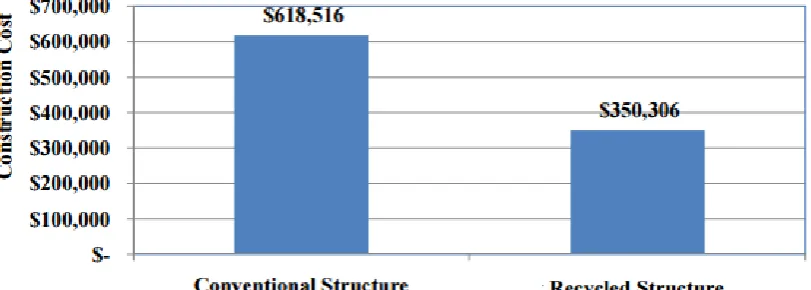
Figure 3: Cost of conventional vs. recycled pavement structures………. 29
Figure 4: Conventional road structure………..30
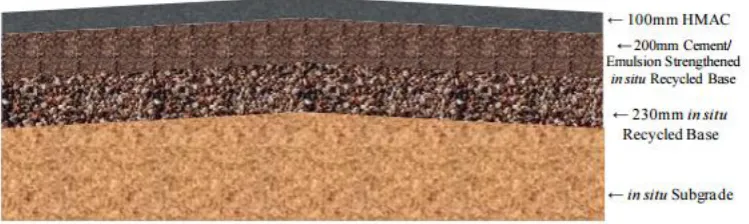
Figure 5: Recycled Structure………. 30
Figure 6: Comparison of Hot mix asphalt and warm mix asphalt……….32
Figure 7: Map of the project layout of work………...46
Figure 8: Map of the proposed flood basin……….…....46
Figure 9: Option 1 Unbound Gravel Road……….……49
Figure 10: Option 2 Lime stabilised Road……….….49
Figure 11: Resource Efficiency………..….53
Figure 12: Number of truck movements the difference……….……..54
Figure 13: Geotextile sediment fence………..55
Figure 14: Sediment control wall……….……...56
Figure 15: Acidic Sulphate Soil Redcliffe, Queensland……….……….57
Figure 16: Crushed Concrete Stockpile……….……….57
Figure 17: Extraction and Recovery……….….…….61
Figure 18: Recycle depot………..…..…61
Figure 19: Processing………...…..61
viii | P a g e
LIST OF TABLES
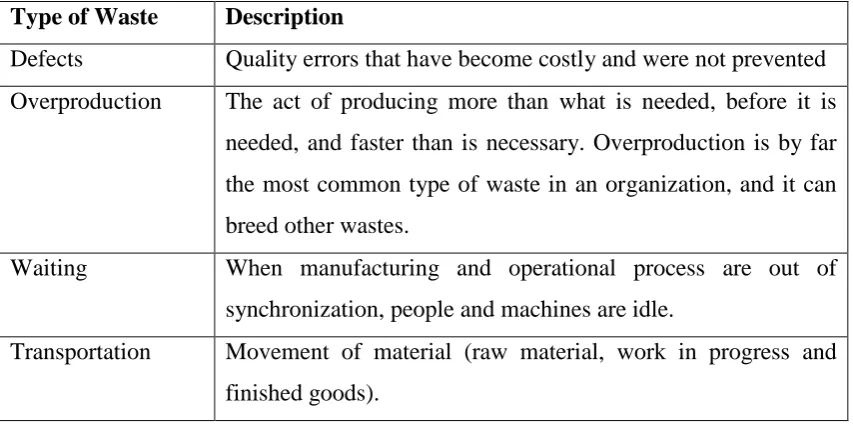
Table 1: Five types of wastes……….. 34
Table 2: Descriptive Project Methodology………. 37
Table 3: Unbound granular replacement design…………..…. 49
Table 4: Lime stabilisation design………. 50
Table 5: Costs and operation procedure for unbound
granular replacement………... 50
Table 6: Costs and operations procedure for lime stabilisation..51
Table 7: Cost saving by using Lime Stabilisation ……….. 52
ix | P a g e
NOMENCLATURE AND ACRONYMS
(OR ABBRIVATIONS)
The following abbreviations have been used throughout the text and bibliography
IS Infrastructure Sustainability
USQ University of Southern Queensland
LC Lean Construction
RS Rating System
x | P a g e
LIST OF APPENDICIES
Appendix A: Project Specs Appendix B: Green Roads
Appendix C: Envision Rating Systems
Appendix D: Infrastructure Sustainability Council of Australia Rating System Appendix E: Copy of Questionary
Appendix F: Letter of Intent
Appendix G: Copy of distribution email to companies Appendix H: Location of Acidic Sulphate Soil 1/4
1 | P a g e
CHAPTER 1 – INTRODUCTION
1.1
Project topic
The research topic that was chosen to be analysed was sustainable road development and management. The research topic will be supervised and undertaken with the aid of Dr David Thorpe. The key words that can be analysed with the topic are sustainability, economic, social and environmental sustainability, road development and management.
1.2
Problem Statement
This research was conducted to evaluate the current sustainable practices and development utilised within the road development and management industry. Currently, implementation of sustainable management and development practices can take a considerable amount of resource and cost to develop. Therefore the problem is created for clients and contractors in determining the usefulness of sustainability.
1.3
Background
This research was conducted to determine the possible utilisation of sustainable practices and methodology which can have a positive impact on environmental, social and economic aspects of this specific industry. Therefore solving the issue that is present in the road industry; whether it is all worth it? Therefore the need to research and reveal to organisations these benefits can be seen to be substantial.
1.4
Objectives
1. Undertake detailed literature review into the current sustainable issues surrounding road development and management and how they can be combatted. 2. Undertake research into possible rating systems (RS) and lean construction (LC)
and how it impacts road development and management sustainability.
2 | P a g e 4. Critically evaluate current barriers impeding on sustainable road development and
management
5. Conduct up to the three site tours to observe, understand and document how sustainable road practices are being incorporated into road development and management.
6. Submit a high quality academic dissertation in the required format.
The first significant objective for this project involves researching into current theories and procedures incorporated in today’s current road development and management approaches. This will demonstrate and reveal what companies and/organisations utilise to develop and manage sustainable roads.
Early research into sustainable practices employed by organisations reveals that a common sustainable practice is to incorporate a RS when developing and managing roads. This method of rating is essentially a list of sustainability best practices with each criteria being weighted to an acceptable level (Muench, S et al, 2011). It is deemed that this method is employed often due to two factors; its simplicity and, how it can provide guidance to any organisation wishing to develop a sustainable road as it essentially is a check-list (Muench et al, 2011). Another upcoming theory that many organisation are adopting to become sustainable is lean construction (LC). This terminology refers to minimising waste of materials, time and cost (Olatunji 2008). Even though typically LC refers to increasing maximum value for the client, it is believed this can be adapted to focus more on limiting waste of material in turn limiting the impact the road development
has upon the environment (Olatunji 2008).
3 | P a g e Often forged from demolition jobs early research reveals that this requires little screening to get a high graded aggregate, making it a favourable recycled aggregate among companies (Department of Victoria Roads, 2011). Further research reveals that currently the construction and demolition is responsible for approximately 40% of all Australian waste material; however it is believed that upwards of 50% is currently being recycled (Newson, 2011). With research revealing this information it made this objective to analyse the different recycled aggregates and materials utilised and evaluate how they limit the impact upon the environment paramount importance.
The fourth objective for this dissertation is to critically evaluate the current barriers impeding on more companies adopting sustainable road development and management. When researching into current barriers that could be hindering many companies deciding upon sustainable practices it revealed that many aspects are in fact impeding upon sustainability.
The final objective that this dissertation will explore is to conduct a minimum of three site visits and one case study, this will allow this research project to analyse current company’s sustainable methods and procedures that are being employed and allow this dissertation to critically evaluate these methods compared to other conventional methods. Therefore creating a comparison and ideally revealing why certain companies don’t opt for certain sustainable methods and/or practices. It is believed that this objective is important to achieve as three sites tours and a case study will provide significant information and knowledge in order to gain an understanding of the industry.
It has to be noted that certain objectives that are deemed to be important will be discussed in Chapter 2: Literature Review, however researched more thoroughly and discussed at greater lengths. A full list of project specifications can also be viewed in Appendix A
1.5 Potential consequential effects of this project
4 | P a g e practice and determine their impact and benefit in relation to the three spheres of sustainability; environmental, social and economic
5 | P a g e
CHAPTER 2 - LITERATURE REVIEW
2.1
Introduction to Literature Review
Over the years there has been a shift in the construction industry to now give significant importance to sustainable practices and construction. It has shifted considerably over the past decade so much so that often the clients will favour a contractor that has catered for sustainable practices and construction, even willing to award a winning tender over a cheaper competitor (USQ, 2014). The management of sustainability is becoming increasingly vital in a world that is focused on allowing the generations to have a similar
lifestyle to the lifestyles we appreciate today.
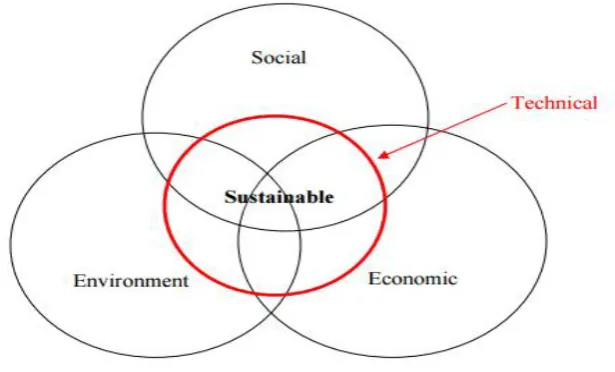
[image:16.595.150.458.526.712.2]The term sustainability can be explained in many different ways, however Smart and Sustainable Homes (2008) summarises sustainability as the development that increases the total quality of life, both currently and in the distant future, in a way that preserves the environmental processes on which life depends. From this definition it was deduced that the term sustainability for this research project will separate the term into three categories; social, economic and environmental. To better demonstrate how the three categories interrelate with each other; figure 1: Conceptual model of sustainable development can which capitulates this is seen below:
6 | P a g e Therefore it can be seen that sustainability is not only limited to environmental but social and economic, all in which play an important role in order to improve sustainable road development and management.
The first component of sustainability is environmental; this simplified means limiting the impacts that the road development and management has upon the environment (Foth et al, 2011). The second section is social; this associates to how the community is affected by the development and management of the road (Foth et al, 2011). The last section is economic; briefly, means cost-effective over time in regards to development and management procedures (Foth et al, 2011). All aspects of sustainability will be studied and related back to the development and management of sustainable roads then analysed how improvements and alterations can be made to change procedures and methods in the future.
This section of the research project relates to critically investigating and analysing the current literature and published sources on the sustainable road development and management topic. Undertaking an in-depth literature review significantly aids and improves our understanding and knowledge within the topic allowing a higher quality dissertation that reflects the current information and literature. This research project will highlight certain published sources and/or literature to evaluate the following sub topics:
Topic One: Common practices of sustainable road development and management. Topic Two: Possible recycled aggregates and methods that can be implemented
to improve sustainable development.
7 | P a g e
2.2 Common Practices of Sustainable Road Development and
Management.
After extensive research was conducted on the current sustainable practices being incorporated into the road development and management industry, it was found that there is a vast range of practices that are being utilised by the industry to improve the sustainability of road development and management.
The two that this research project is particular interested in is: Rating systems
Lean Construction
2.2.1 Rating System
8 | P a g e This is supported as literature states that the necessity of a RS in many organisations and projects can be simplified down to five main reasons:
Encourage more sustainable practices in roadway design and construction Provide a standard quantitative means of roadway sustainability assessment Allow informed decisions and trade-offs regarding roadway sustainability Enable owner organizations to confer benefits on certified road projects Establish an implementable baseline requirement for roadway sustainability. (Muench et al, 2011).
With this information provided it was believed that sustainable road RSs can have a positive influence on the project even though it is often thought otherwise. Analysing the previous literature reveals that there are numerous RSs utilised by organisations, it was decided that the main systems that will be analysed and revealed to be important are:
1. Green Roads (USA)
2. Institute for sustainable infrastructure (Envision) (USA)
3. Infrastructure Sustainability Council of Australia (ISCA) (AUS)
2.2.1.1 Green Roads Rating Systems
Analysing the literature reveals that a common RS utilised by many organisations is Green Roads. The success of Green Roads as a RS can be attributed to the fact that they offer guidance in the design phases, construction phases and maintenance and management phases. Another key factor to the success of Green Roads in the road industry is it specifically designed and created with road development and management in mind. This differs from the other common all-inclusive infrastructure RSs. The fact that Green Roads has analysed and developed sustainable practices for the entire lifecycle of the project allows a more accurate and sustainable project to be constructed. This has a positive influence as often construction projects only concentrate their thoughts about sustainable practices in the design and construction phases. This approach neglects later phases of the construction where many opportunities for sustainable practices to be implemented occur.
9 | P a g e aspects of construction. These 7 categories can be seen to encompass all aspects of sustainability from environmental, social and economic. It is often stated that organisations cannot achieve all 7 voluntary credits points due to the nature of the construction industry; however they can strive to amass as many points as possible. This allows companies in the road industry to decide which sustainable practices would be best suited for their specific project, thus making sustainability more achievable and manageable for organisations. If an organisation adopts Green Roads RS approach it can be seen to have significant advantages and benefits that can be seen below: The information utilised in this section was sourced by Bevan, T et al (2010) and Muench et al (2011).
1. Environmental benefits a. Reduce emissions
i. Reduce Air emissions
ii. Reduce wastewater emissions iii. Reduce soil/solid waste emissions b. Reduce consumption
i. Reduce water use
ii. Reduce fossil energy use iii. Reduce raw material use iv. Create renewable energy
v. Optimise habitat and land use 2. Human-Centric benefits
a. User improvements
i. Improve human health ii. Improve access and mobility b. Interaction improvements
i. Increase awareness ii. Improve aesthetics iii. Create new information 3. Economic Benefits
10 | P a g e 2.2.1.2 Envision Rating System
Another common RS that is often utilised by American based organisations is called Institute for Sustainable Infrastructure who is responsible for the creation of Envision. The literature reveals that the Envision RS is a holistic framework used for evaluating and rating the community, environmental and economic benefits of all types and sizes of infrastructure project (Clark, A 2014). The basis of the RS Envision is similar to Green Roads as both provide a simple approach to demonstrate to the organisation the possible sustainable avenues in which the organisation may take. This RS is broken down into five different categories; refer to Appendix C for the sub categories; however the main five are as followed:
Quality of life Resource allocation Climate and risk Leadership Natural World (Bertera, B 2012)
Though this specific RS does not solely specialise in road infrastructure compared to Green Roads, it does however look at the broader picture of infrastructure. However this study reveals that it can still be utilised effectively by organisation which are developing and/or managing roads. The five different levels that can be achieved by organisations implementing Envision RS are:
Improved: Performance that is at or above conventional standards. Enhanced: Indications that superior performance is within reach. Superior: Sustainable performance is noteworthy.
11 | P a g e When analysing these levels that could potentially be achieved by organisation constructing or managing roads, a realistic but impressive goal would be organisation attaining a rating above superior. Evaluating the criteria that needs to be met in order to achieve a superior or higher rating as mentioned before can be seen to be in five categories.
2.2.1.2.1 Quality of life
Critically evaluating the quality of life category it reveals that the main focus behind this category are the purpose of the project, wellbeing and finally community, in which these three points are separated into 13 subcategories (Bertera, B 2012). This is an important aspect to consider as this category relates to the social and community aspect of sustainability. For any road organisations that decided to develop and/or managing any particular road it can be deduced that this category is upmost importance that needs to be incorporated into any sustainable discussions. Albeit this often is not the case as social sustainability get scant attention in mainstream discussion compared to the other two main spheres of sustainability; economic and environmental (Peduto B 2012). This is an issue that needs to be combatted if the goal of achieving a superior rating or above in the road industry.
2.2.1.2.2 Leadership
12 | P a g e The final aspect of leadership is planning, this particular Envision category analyses and rewards criteria points for organisations that encompasses and implements plans for maintenance and monitoring and addresses the possibility of extending the useful life of the road (Bertera, 2012). This is a significant sustainable practice that all road projects can implement on their project; this is true as any road project considering its sustainability impact would benefit by analysing its lifecycle perspective (Pears, 2004). Research reveals that most of the environmental, social and economic influences associated with roads are not directly owing to the construction phases, but in fact results from policy decisions concerning how to satisfy a need and how the road is utilised (Pears, 2004). This source suggests then that the subcategory planning carries significant weighting when it comes to achieving a sustainable development and management of a road (Pears, 2004).
2.2.1.2.3 Resource Allocation
The third category in the Envision RS is resource allocation. Envision believes that this category is significant in order for road development to achieve a superior and above sustainable rating (Bertera, 2012). This particular category has been separated into; materials, energy and water (Bertera, 2012). It is believed that the material section of resource allocation analyses the project use of recycled material, use of regional materials, divert waste from landfill, and reduce excavated material taken off site. The construction industry is one of the largest contributors to waste and pollution throughout its full life cycle (Horvath 2004). It is believed that the building and construction industry accounts for 39% of total energy use, 12% total water consumption, 68% of total electricity consumption, and 38% of carbon dioxide emissions. Furthermore, construction waste composes 40% of landfill material (Allen et all, 2008). Analysing the current literature and the above statistics reveals why Envision has incorporated material into its sustainable RS. These figures are significant and highlights just how unsustainable the current construction industry is. It is believed if road development and management wishes to become sustainable then the above statistics have to be combatted and improved, which can be aided in the utilisation of Envision RS.
13 | P a g e improved significantly by Envision by giving assistance and recommending practices that can be utilised by the road industry. Though Envision does have shortcomings, in general Envision RS if incorporated correctly incites discussion and critical thinking of ways to combat these statistics stated earlier, which may otherwise be lost in the road industry.
2.2.1.2.4 Natural World
The next category that Envisions RS incorporated is natural world. Analysing this category it can be deduced that this category encompasses three main aspects; siting, land and water, and biodiversity (Bertera, 2012). The first aspect is siting, which focuses on the footprint of the road, and the site that has been selected (Bertera, 2012). When developing and planning roads, companies that are utilising Envision RS receive criteria points if they, consider and preserve prime habitat, preserve and protect
wetlands and surface water, preserve and protect farming land, avoid opposing geology, preserve and protect Greenfields sites (Bertera, 2012).
This category can be summarised as developing and constructing the road in accordance with the location selected. Whilst also taking into consideration important areas surrounding the footprint of the future road (Envision, 2012). This is an important aspect as not only does it tick the environmental sphere but by considering the surrounding area it also aids the economic and social sphere of sustainability.
The economic sphere is achieved as it is believed that brownfield sites are more economical due to the existing infrastructure and services. If the surrounding areas of the project is preserved it limits the disturbance to the community and increases the perception of the company. Therefore selecting and making decisions with sustainability in mind regarding siting can significantly reduce the impact the development and management of roads has on social, environment and economics.
14 | P a g e 2.2.1.2.5 Climate and Risk
The final category incorporated into Envision is climate and risk. This particular category is interested in two main principles: Emissions, and Resilience (Envision 2012). Analysing the emission subcategory it becomes clear in order for road development and management to attain sustainability. A hurdle that needs to be overcome is reducing greenhouse gas emissions, air and dust pollutants (Bertera, 2012). These aspects have significant effects on all three spheres of sustainability; therefore require consideration by all parties of the project. The next main principle in climate and risk is resilience, this subcategory relates to the climate threat, preparing for long term adaptability and finally preparing for short term hazards (Envision 2012). In relation to road development and management the adaptability of the road in question is a significant factor to consider when evaluating sustainability. Due to the ever changing modern road infrastructure in many countries it has become paramount that roads must process the ability to be able be upgraded, renewed and adapted (Dell et al, 2014) This will allow roads to attain a higher sustainability rating as theoretically if you increase the adaptability of the road you simultaneously increase its life expectancy thus rendering future virgin roads redundant (Dell et al, 2014). It is stated that future roads will be constructed in a way to increase its adaptability to increased travel volumes and to accommodate fluctuations in demand for public transport, cycling and walking.
2.2.1.3 Infrastructure sustainability Rating System
15 | P a g e Management and Governance
o Management systems
o Procurement and Purchasing o Climate Change Adaptation Use of resources
o Energy and Carbon o Water
o Materials
Emission, pollutions and waste o Land
o Discharge to Air, Land & Water o Waste
Ecology
o Ecology People and Place
o Community Health, Well-being and Safety o Heritage
o Stakeholders Participation o Urban & Landscape Design Innovation
(IS Overview, 2014)
The IS rating tool differs from the previous two sustainable RSs Green Roads and Envision; in the way that IS rating tool is a self-assessment tool. This can be seen as the user/project team nominate a performance that they deem they have achieved across each category and subcategory and provide supporting evidence (Hargroves, 2014). With the information and supporting evidence supplied it is then critically analysed and compared to predetermined weightings implemented into the IS rating tool, the overall rating is then estimated and compared to a likely level of achievement (Hargroves, 2014).
16 | P a g e between 76- 100, this is the ideal achievement which many road projects can achieve. The above statics and figures were sourced at Infrastructure Structure overview (2014).
It can be deemed that the fact IS rating tool added a self-assessment aspect to their tool is significant for the future and success of sustainability. This self-assessment and the need for the project to provide and support evidence of sustainable practices allow further discussion and education into sustainable practices which are all critically important. This statement can be supported as education can be seen to be an essential tool for attaining sustainability within the road industry, and that public awareness, education and training is critical to moving the industry towards sustainability (Mckeown, 2012). The importance of discussion and education of sustainability can be carried over into the road industry in specific the development and management of roads due the significant and importance of roads.
It is stated that roads are the largest asset class of many local types of councils, with road management their largest operation activity (Walters & Lees, 2013). The literature review into IS rating tool revealed that there are some key benefits that can be seen if organisation utilise the rating tool:
Provides a common national language for sustainability in infrastructure.
Supports consistent application and evaluation of sustainability in tendering processes.
Scopes whole of life sustainability risks for projects and assets, enabling smarter solution that reduces risks and control.
Foster resources efficiency and waste reduction, reducing cost.
Encourages innovation and continuous improvement in the road industry.
Builds an organisation credentials and reputation in its approach to sustainability in infrastructure.
(IS overview, 2014).
17 | P a g e The relevance of certain subcategories was questioned in relation to the
development and management of roads.
Interpretation was required on certain subcategories in relation the operations context.
Confusion around street lighting which typically resulted in the largest use of energy in road management are often not managed by the local council, but are paid for by the council.
The trialled council believes that asset deconstruction/disassembly is meaningless in road development and management as often these assets are upgraded, re-used and renewed indefinitely.
(Walters & Lees, 2013)
Further literature reveals that Infrastructure Sustainability Council of Australia if wished to combat these issues that were raised modifications had to be made (Walters & Lees, 2013). This can be a significant aspect Infrastructure Sustainability Council of Australia requires change otherwise local councils and private organisation when developing and managing roads may discontinue using a sustainable RS due to these issued raised earlier. The first modification that might be made is removing potential credits that cannot be attained by the road industry; case in point the asset deconstruction/disassembly of roads is not achievable or realistic (Walters & Lees, 2013). Another modification the literature reveals is simplifying certain categories; this is a critical aspect that has to be modified by Infrastructure Sustainability Council of Australia if they wish for project to utilise their rating tool (Walters & Lees, 2013). This is seen to be significant as they whole point rating tool is to be a simple guidance tool that can be utilised by organisation to achieve and increase sustainability in the road development and management industry.
2.2.2 Lean Construction
18 | P a g e environmental at every phase of the building process from: extraction of raw material, processing of the material, manufacturing, transportation, construction and finally demolition/disposal at the end of the building useful life (Edge Environment, 2012). These figures listed above especially the figure of construction waste contributes to 40% of the total landfill has significant impact upon the environment. The bi-product of landfill can be seen to be methane which contributes to global warming (Australian Bureru of Statistics, 2010).
Analysing the current literature and revealing statistic stated above it is common knowledge that a new practice needs be implemented across the construction industry. An upcoming practice that is creating significant change in the road and construction industry is lean construction (LC). This philosophy origin can be seen to be in the manufacturing industry, in specific Toyota production team (Koskela, 1992). Toyota was the first organisation to bring ‘lean principles’ into the spotlight, this primitive form of LC is structured around seven principles in its production manufacturing, with its core being preserving value with less work (Intergraph, 2012). This principle that was put forward by Toyota into the mainstream media required significant time to be adopted and accepted as an adequate principle (Intergraph, 2012). It wasn’t for another two decades before lean principles utilised by the manufacturing industry would be deemed to synergise and embraced by the construction industry.
With the first literature recognition of the term LC in 1992 stating that the advantages of the new production philosophy in relation to productivity, quality, and indicators resulted enough in practice to decide to enhance the rapid distribution of the new principles (Koskela, 1992). Koskela (1992) introduced to the production industry the philosophy of productivity and quality to an unexpected construction industry.
19 | P a g e to reduce cost while eliminating waste and delivering the projects on time, however it is not about eliminating everything and expecting to get more out of what is left (Kim, 2006).
Analysing the previous literature review this research project believes that LC philosophy of reducing waste to create higher profit can be adapted and modified to synergise with sustainability. This can be achieved as the fundamentals for LC principles is a proven way to reduce waste and increase productivity therefore attracting popularity within the road industry; thus in turn making sustainable roads viable for clients (Marhani, M et al 2013). Due to its inordinate potential in satisfying client’s requirements in term of growing the value and productivity of a road project, LC is seen as an alternative approach that can be implemented to the road industry (Marhani, M et al 2013).
Due to the overwhelming literature supporting the advantages that are witnessed by the construction industry from the implementation of LC; cutting down the amount of material, labour and resources to the required level significantly impacts and alters the cost of the project positively. Another advantage that is associated with LC is; due to the increased planning that is required, a shorter project duration is experienced, all the while promoting sustainable construction (Marhani, M et al 2013). Analysing the literature reveals that there is seven key aspects impeding on companies utilising LC, such as:
Managerial Technical
Human Attitude
Process of Lean Construction Educational
Government Financial
(Marhani, M et al 2013).
2.2.2.1 Managerial
20 | P a g e management stakeholders may struggle and encounter numerous difficulties in the pursuit of sustainability.
2.2.2.2 Technical
The next barrier that needs to be countered is the aspect of technical; this refers to the constructability of the project (Abdullah et. al, 2011). It is believed if a road design is difficult to construct then often members of the organisation may wish to allow extra resources, materials and/or labour to ensure any delays or problems can be dealt with adequately. A method that is suggested is to engage all stakeholders early on in the construction design phase. This will allow any foreseeable problems to be dealt with before they become critical (Morse, S & Bell, S 2010).
2.2.2.3 Human Attitude
The next barrier can be deduced to be human attitude; literature reveals that human attitude is seen to be one of the main influences that slow down the implementation of LC in the industry, particularly during the physical application period (Howell, 1999). This barrier refers to the stakeholder’s commitment, tenacity and will-power to persevere in the implementation of LC (Abdullah et. al, 2011). The success of the implementation of LC in the industry is determined by how hard the stakeholders wish for sustainability. An example can be seen to be the performance of a worker to strive for an accurate estimate of material amount instead of allowing a percentage of error in his estimate (Abdullah et. al, 2011).
2.2.2.4 Process of Lean Construction
21 | P a g e 2.2.2.5 Education
The barrier of education revolves around the stakeholder’s involvement in the construction project, and them receiving ample training in order for them to implement LC principles (Marhani, M et al 2013). As stated earlier in the research project the literature reveals that education is an essential tool for attaining sustainability within the road industry, and that public awareness, education and training is critical to moving the industry towards sustainability (Mckeown, 2002).
2.2.2.6 Government
This can be adapted to relate to the statement that stakeholders require ample training in order to successfully implementing LC principles in road development and management (Mckeown, 2002). This training entails top management and equivalent members taking time and resources in order to educate the masses, this will allow a balanced approach for LC.
2.2.2.1 Financial
The final barrier is financial, which relates to the inflation due to risky uncertain market condition for construction, additional construction cost and poor salaries of professionals (Olatunji, 2008). This effects the implementation as often clients wish to go with the safe option when construction their project thus often denying funds for LC practices to be implemented (Marhani, et al 2013). The lack of financial and reward incentive often occurring in the construction projects hinder LC being implemented (Marhani, et al 2013). In the way that contractors are not given the funds to allow for additional staff in the design phase of the project to create and develop accurate plans and resource requirements. Thus rendering LC near impossible as lack of effort in estimation and design will result in the project requiring extra resources than expected.
22 | P a g e project believes the next challenge faced is to engage the road industry into LC, all the while synergise LC with the continued efforts of recycling and other sustainable practices, to eliminate significant amounts of landfill contributed by construction industry. From the literature review, it was found that LC has the ability to improve the performance of construction projects particularly in reducing site waste, construction time and overall construction cost, improving quality of the projects and reduce its environmental impact.
2.3
Recycled aggregates and methods to improve sustainable
development.
With management practices and tools reviewed and the literature concluded, it is stated that both RSs and LC highlight that resources and materials is a significant aspect. It is believed that this aspect of resources and materials needs to be evaluated if sustainable road development and management is wished to be achieved.
2.3.1 Sustainable Aggregates and Methods
Initial research reveals that Australia’s sustainable aggregates industry is increasing in popularity within the road industry, with many making the decision to select sustainable aggregates over other less sustainable options within the market (Newson, 2012). Newson (2012) goes on to state that in 2008-2009 approximately 9 million tonnes of recycled aggregate was used to replace virgin aggregates. These are important figures to consider as early research reveals that sustainable recycled aggregates are in fact getting utilised throughout Australia. Victoria roads (2011) states that the most used aggregate within road development and management is crushed rock. This raising the question whether this crushed rock often a raw material mined could be replaced by other sustainable aggregates.
23 | P a g e greenhouse gas emissions (Ramesh et. al, 2012). It is claimed that the selection of sustainable materials often is reliant on which phase the project is currently within (Pacheco-Torgal et al, 2014). Evaluating the characteristics and properties of sustainability materials in the road project becomes paramount to the design and development of sustainable roads (Pacheco-Torgal et al, 2014). If selection of the material is left too late or not enough allowed time in design phase of the project it was found that unsustainable materials were often chosen over sustainable materials (Pacheco-Torgal et al, 2014).
2.3.1.1 Crushed Concrete
[image:34.595.119.400.363.569.2]Research reveals that the most common and readily available sustainable aggregate is crushed concrete, as seen in figure 2: Crushed Concrete (Department of Victoria Roads 2011)
Figure 2: Crushed Concrete (Department of Victoria Roads 2011)
24 | P a g e Conserving natural finite resources
Reduce the amount of waste sent to landfill Reduce natural resource exploitation Reduce transport costs
(Wangchuk, 2013).
Alex Fraser Group has emerged as an industry leading innovative organisation in recycling construction materials, they specialise in recycling concrete into crushed concrete often utilised as an aggregate in the road base (Hargroves, 2012). A case study into Alex Fraser group reveals and supports the benefits listed above in the case of the newly designed and built Clem 7 tunnel in Brisbane, Australia (Hargroves, 2012). The benefits recorded on that specific large road development project are:
A Saving of over 1, 000 tonnes of Carbon dioxide Diversion of 100,000 tonnes of waste from landfill sites 120,000 tonnes reduction in natural resource depletion
A saving of 725 truck movements ( 45,000 km of road travel)
20% reduction in material costs from savings in transport and sourcing. (Hargroves, 2012).
Another important aspect that is revealed about recycled concrete as an aggregate is to do with the often pre-existing limestone found in concrete (Hi-Way Stabilizers, 2015).
2.3.1.2 Lime Stabilisation
Often it is found that stabilisation is required on the subgrade soil due to the types of soils found in the area of the project (Hi-Way Stabilizers, 2015). Lime stabilisation is the most commonly used kind of subgrade stabilising; this is because numerous projects that have subgrade soils of which are clayey (Hi-Way Stabilizers, 2015).
25 | P a g e are often attainable depending on the type and reactiveness of the soil (Hi-Way Stabilizers, 2015). Other commonly known sustainability benefits of a lime stabilised road include but not limited to:
Subgrade stability Compaction anvil
Reduced pavement depth
Increased Strength and Stiffness (Hi-Way Stabilizers, 2015)
The increased subgrade stability that is often achieved with the extra lime in the subgrade allows for a more stable and durable subgrade (Hargroves, 2012). This allows greater resistance to the volume and strength changes that commonly occur due to moisture and temperature variations (Hi-Way Stabilizers, 2015). This in turns extends the expected life of the road before renewal and/or upgrades are required. This increased subgrade stability creates an ‘anvil’ in which subsequent aggregate layers may be compacted upon (Hi-Way Stabilizers, 2015). This allows road development to achieve denser roads in less effort, thus decreasing the amount of required energy and materials to achieve the required density of layers (Hi-Way Stabilizers, 2015).
With the implementation of lime stabilisation, a road project can reduce the required pavement depth; this is achieved by stabilising the subgrade. The increase in designed CBR strength allows a reduction in the required pavement depth, consequently reducing the volume of aggregate needed for the road development (Hi-Way Stabilizers, 2015). This generates reduced transport costs, reduced aggregate costs and reduces the amount of aggregate needed, and finally reduces time and energy if further depths were required (Hi-Way Stabilizers, 2015).
26 | P a g e 2.3.1.3 Recycled Glass
Another common sustainable aggregate that can persuade organisations away from the often chosen virgin crushed rock as an aggregate is post-consumer glass. This sustainable aggregate is different from normal materials as glass has the unique ability that it can be recycled numerous times without changing its chemical properties (Wangchuk et al, 2013). Often this sustainable material is sourced from pre-existing buildings, recycled glass bottles and glass factories (Wangchuk et al, 2013). Currently this sustainable aggregate is often implemented as an aggregate and/or binder for the asphalt pavement layer of modern roads, but it can also be used as part of the admissible foreign material component of road-base and sub-base (Hargroves, 2012).
Literature has indicated that this sustainable aggregate is not being utilised to its full potential in Australia, due to many states dictating that glass aggregate be categorised as a foreign material (Wangchuk et al, 2013). This lack of use for glass is due to governments enforcing that only 3% of foreign material can be present in asphalt pavements and road-bases (Wangchuk et al, 2013). One organisation, the municipal association of Victoria, is promoting the use of recycled materials in-particular recycled glass; they are recommending that the amount allowed by the governments be extended from 3% to 15-25% (municipal association of Victoria, 2015). This increase is supported by a trial conducted by Swinburne University which has proven that mixtures of up to 30% recycled glass are found to be achieving equal performance to, or exceeding that of blends using virgin rock as aggregate (Wangchuk et al, 2013). Another study that was conducted over in Fulton Hogan, New Zealand reveals that the trial conducted of utilising a higher content of glass displays no visual signs of rutting, distress or fracturing (Wangchuk et al, 2013)
27 | P a g e be utilised in surface pavement on highways, due to the reduced skid resistance (Clean Washington Centre, 1996).
Another issue that has been witnessed by the road industry, in relation to recycled glass being utilised in the development stage relates to bonding. It is an ever occurring issue that all road development projects are required to understand and manage the bonding between aggregate and asphalt. In particular when under heavy volume and over a long duration of time it can be seen that these bonds weaken (Clean Washington Centre, 1996). This weakening of bonds will effect and cause the asphalt to strip and free itself from the aggregate, increasing the potential for early life failure (Clean Washington Centre, 1996). This can occur to any selected aggregate and asphalt, however due to the smooth surface of glass it can be analysed that the stripping potential is higher than that of natural rougher aggregates (Clean Washington Centre, 1996). This needs to be understood and corrected as a shorter life cycle is potentially increasing maintenance therefore can be seen to be unsustainable.
2.3.2.4 Recycled Tyres
It is estimated that within Australia approximately 20 million car and truck tyres are scraped annually throughout Australia, with the situation in Queensland contributing approximately 3.5 million (Queensland Transport, 2009). This statistic is further worsened by the figures that 60% of these tyres are sent and disposed to landfill, while its estimated that only 30% of tyres are recycled either by re-treading or other methods, the final 10% of these tyres are seen to be disposed and dumped illegally (Hargroves, 2012). This quantity of un-recycled tyres is an issue that needs to be combatted, as stockpiling up of tyres is not an ideal situation (Queensland Transport, 2009). This is the case as each tyre can be calculated to approximately consist of 1L of oil, therefore extremely flammable and in the case of a fire will incur catastrophic environmental, economic and social issues (Hargroves, 2012). The statistics that only 30% of all tyres are recycled within Australia may be caused due to that fact that there is estimated to be roughly 10 recycling outlets compared to 4,000 tyre retailers and 30 organisation licensed to dispose of tyres (Hargroves, 2012).
28 | P a g e binder in the production of asphalt and has been seen to be successfully executed across Australia (ARPG, 1999). Due to the presence of rubber the asphalt improves numerous critical properties such as: increased durability; thus reducing the chance of road fractures and cracking due to limiting the fluctuations of thermal changes that are often present throughout Australia (ARPG, 1999). This allows a longer life cycle in many cases to be an achievable goal. This is supported by ARPB (1999) when they conducted tests that concluded rubber asphalts can produce both good rutting and fatigue performance simultaneously, compared to conventional asphalt (ARPB, 1999). Another benefit due to the presence of rubber in relation to asphalt production in the road industry is an increase in skid resistance (ARPG, 1999). This impacts the social aspect of sustainability as a safer road for the stakeholders that use the road is an important worth-while aspect. Another social and environmental sustainable benefit is the belief that crumbed rubber when present in the road pavement reduces the noise emitted by the traffic volume (Queensland Transport, 2009). This will have long-term beneficial impact upon the surrounding community adjacent to the particular road by limiting the disturbance that would be present. Not only is it be advantageous in limiting the disturbance to the surrounding human community it would also allow the surrounding wildlife less disturbance throughout the day and night.
29 | P a g e construction methods (Hargroves, 2012). This method allows and permits water to naturally drain without impacting on the overall strength of the road and structure (Hargroves, 2012). The utilisation of this new recycled unit affects sustainability in a positive manner as it limits the environmental impact often associated with mining haul roads, all the while providing high quality durable roads that heavy equipment can rely upon.
[image:40.595.122.528.458.603.2]These aspects are important if recycled material is wished to be widely implemented across Australia as they not only attract attention due to their environmental benefits, but often this recycled material reduces the total project cost (Foth et al, 2011). This can be seen in the case study investigated as it calculated the difference between conventional unsustainable roads developments would of cost compared to a recycled sustainable road development as seen in figure 3: Cost of conventional vs. recycled pavement structures (Foth et al, 2011). This specific case study was undertaken on an American built urban road that utilised numerous sustainable practices. The road design subgrades can be seen in figure 4 and 5. This is important as this shows another appealing aspect of sustainable road development aggregate that could be utilised, this advantageous aspect is value for money therefore attracting clients and/organisations.
Figure 3: Cost of conventional vs. recycled pavement structures (Foth et al, 2011)
30 | P a g e Figure 4: Conventional road structure (Foth et al, 2011)
Figure 5: Recycled Structure (Foth et. al, 2011)
Another methodology that can be implemented across the road industry is warm-mix asphalt. Simply put this methodology allows a reduction in the overall temperature of the asphalt in the production phase of approximately 20% (Politano, L 2012).
Typically it is seen that hot mix asphalt is produced at a temperature close to 150 Celsius or higher depending on the different types of binding agents utilised (Politano, L 2012). With the new technology and methodologies it is researched that asphalt can be produced at a cooler temperature; roughly 120 Celsius (Hurley, G & Prowell, B 2005). These reductions in temperature can be achieved by incorporating a variety of additives, foaming technology and chemically modified asphalt (Hurley, G & Prowell, B 2005). With this significant reduction of heat required in production of asphalt many benefits are associated with the new technology such as:
Reduced Fuel consumption at the asphalt pant Reduced emissions at the asphalt plant
Reduced asphalt fumes at paving site Reduced construction delays
[image:41.595.119.494.230.342.2]31 | P a g e As mentioned earlier in the research project due to the temperature reduction in the production of warm mix asphalt compared to hot mix asphalt, it is claimed that this equates to a reduction in the required energy and fuel needed in the production process (Politano, L 2012). Studies indicate that a reported total energy saving ranging from 20-35% at the asphalt plant with an average fuel saving of 23% (Politano, L 2012). This equates to roughly 1 to 2 litres of fuel saving per tonne of asphalt produced; this extrapolated can result in substantial savings in road development (Politano, L 2012). Therefore this aspect is not only creating an environmentally sustainable benefit but also an economic benefit for the organisation and/or client.
Generally, the production of asphalt can be seen to emit large quantise of emissions, primarily Greenhouse Gas (Politano, L 2012). Analysing the difference in warm and hot asphalt production it reveals that due to the reduction in energy and fuel combustion necessary to get the required temperature, typically the emission are seen to be slightly lower (Hurley & Prowell, 2005). This reduction in emissions signifies an important cost savings, considering that it is estimated that 30-50% of the total overhead costs at an asphalt plant can be linked to emission control (Hurley & Prowell, 2005).
Often the reduction in emission means that plants meet specified air pollution regulations therefore can be built in ideal location in regards to projects, which can limit transport time and cost (Politano, L 2012). Similar to the previously mentioned benefits this falls into the two spheres of sustainability: economic and environmental. This aids in the decision to select the warm mix asphalt over conventional hot mix asphalt.
32 | P a g e Figure 6: Comparison of Hot mix asphalt and warm mix asphalt (Politano, L 2012).
The use of warm mix asphalt in numerous situations shows a reduction in the duration of the laying of the asphalt (Politano, L 2012). This is a significant social and economic boost in favour of warm mix asphalt as reducing the interference to the surrounding community and stakeholders is paramount. An example of reducing the interference is in relation to the duration in which the road is closed. Simultaneously while reducing the annoyance to the community it can be seen that a cost saving can be deemed to be achievable as road closures and employment of adequate traffic staff is an expensive operation.
33 | P a g e mix asphalt is developed and poured will result in reduced asphalt binder oxidation, aging and hardening (Politano, L 2012).). Summarised this means an increased life expectancy when comparing to the conventional approach.
Analysing wet mix asphalt it is found that the most popular method of producing warm mix asphalt is in fact water based foaming (Sullivan, E & Moss, A 2014). Water based foaming is responsible for approximately 88% while additives make up 22% of the market (Sullivan, E & Moss, A 2014). Due to water-based foaming requiring no extra additives, therefore a cheaper option this is why such a significant portion of the market selected that specific technology (Sullivan, E & Moss, A 2014). The issue that arises with this selection compared to other method is the quantity of clean drinking water required to interact with the liquid binder to create a foaming effect (Sullivan, E & Moss, A 2014). Even though it has slightly lesser saving costs to the client it is believed that organic additives such as waxes are a preferred selection (Sullivan, E & Moss, A 2014). This requires significant reduced amounts of water, all the while reducing the temperature further during production.
2.4 Current barriers affecting implementation
It can be deduced that there are many factors hindering sustainable development and management in the road industry. Despite international acknowledgment that the construction industry needs to travel towards sustainability, current action has been mainly conceptual to date and has not adapted entirely by the road industry (Pryce, 2001). It can be deduced that certain factors can be attributed to hindering the implementation of sustainability in the road industry. These factors include:
Inadequate resources.
Lack of momentum and motivation from the client/contractor. Lack of knowledge and techniques within the company. (Pryce 2001).
4.3.1 Inadequate Resources
34 | P a g e to name a few examples. This is a difficult barrier to overcome with many aspects contributing to why companies struggle to achieve sustainability due to inadequate resources. As mentioned previously in the research project, this barrier could potentially be overcome by demonstrating and showing construction organisation about LC. This research project believes that LC eliminates the common five wastes often experience on construction projects as seen in table 1: Five types of wastes. These five common wastages can be seen to significantly impact the project negatively; this statement is supported by various studies revealing that:
quality costs due to non-conformance can be up to 12% of total project costs Poor materials management can be unto 10-12% of total project costs
Excess consumption of material (on sites) is on average up to 10% of total costs. Working time on non-value adding activities on sites can be up to 60% of total
time
(RIB Consultants 2013)
[image:45.595.114.541.553.766.2]If LC eliminates these five common wastages it can be seen to significant increase resources such as cost and profit, time and client relationships.To further analyse these common wastages Ortiz (2009) suggests that there are five types of waste within the construction industry. Due to the barrier that many organisation face of inadequate resources to implement sustainable practices these five types of waste need to be combatted. As suggested previously LC may eliminate or mitigate certain types.
Table 1: Five types of wastes (Ortiz, 2009)
Type of Waste Description
Defects Quality errors that have become costly and were not prevented Overproduction The act of producing more than what is needed, before it is
needed, and faster than is necessary. Overproduction is by far the most common type of waste in an organization, and it can breed other wastes.
Waiting When manufacturing and operational process are out of synchronization, people and machines are idle.
35 | P a g e Inventory Excessive levels of raw material, work in progress and finished goods in correlation to throughput time and delivery requirements.
4.3.2 Lack of Motivation
The second barrier that can be seen as a factor that impacts on the ability to achieve sustainable road development and management is the client/contractor company aren’t motivated or don’t see its advantages. Certain advantages include reducing total cost of the project and reducing the overall time to develop and manage a sustainable road. (Ortiz, 2009). It can be deduced that the main way to combat this barrier is to increase the pressure put upon the company, client and contractor by tightening the standards and procedures that are enforced by law (Ortiz, 2009). Another method that could be seen to be easier would be the community applying pressure that as a stakeholder one of their needs and expectations is a sustainable road development and management.
4.3.3 Lack of Knowledge
The third barrier that impacts on companies and council ability to achieve sustainable road development and management is there lack of knowledge and techniques (Ortiz, 2009). This term relates to the company not processing the appropriate employees who have the required knowledge and skills to achieve a sustainable road development and management (Ortiz, 2009). This is usually the case as sustainable road development incorporates new materials and techniques of implementation, causing employees or companies difficulties to adjust (Ortiz, 2009). A method to combat this barrier would be implementing an expert figure into the company who has the required skills, knowledge and experience working with sustainable roads development. Another method can be seen to be training the pre-existing employees with the new procedures and practices associated to sustainable road development and management.
2.5 Conclusion of Literature Review
36 | P a g e recycled aggregates, lime stabilisation, sustainable development practices and overcoming barriers it is believed that sustainable road development and management is a worthwhile endeavour that should be implemented across the industry.
37 | P a g e
CHAPTER 3 - RESEARCH AND DESIGN
METHODOLOGY
3.1
Methodology
The methodology utilised throughout this research project stayed consistent with all stages being completed. It was decided that this dissertation will be broken down into four distinct phases; they are as followed.
Start-up phase: This phase involves gathering all the required information about sustainable road development and management.
Applying Phase: This phase involves creating the formal letter requesting permission to undertake site visit and analysis on specific roads.
Site visit Phase: This phase of the project involves commencing the site visit, gathering any information about the site like current sustainable practices etc. Write up Phase: This phase is presenting all the finding, recommendation and
information in a formal written research project.
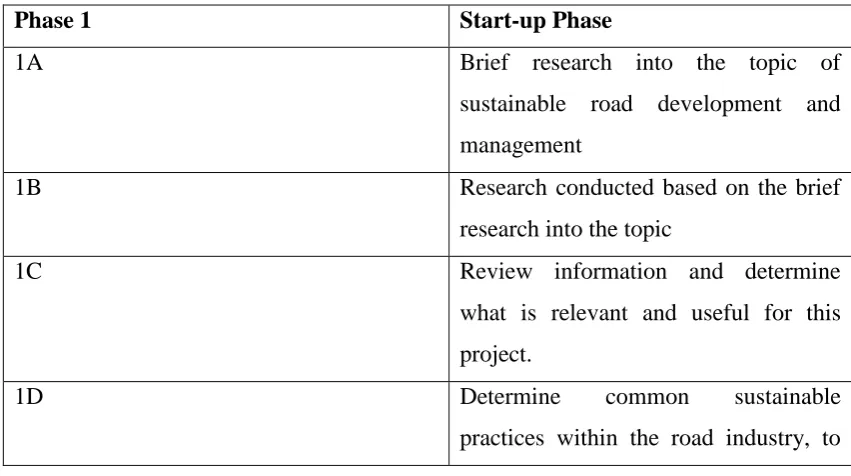
[image:48.595.112.538.533.771.2]A more in-depth breakdown of the four methodology phases including individual descriptions of tasks can be seen in table 2: Descriptive project methodology
Table 2: Descriptive Project Methodology
Phase 1 Start-up Phase
1A Brief research into the topic of
sustainable road development and management
1B Research conducted based on the brief
research into the topic
1C Review information and determine
what is relevant and useful for this project.
1D Determine common sustainable
38 | P a g e create the criteria that will be utilised when site visit occurs.
Phase 2 Applying Phase
2A Create and write a letter outlining my
intentions of the site visit
2B Undertake some research on specific
roads this research project may be interested in visiting
2C Apply and send out letters of my intentions
to appropriate companies
Phase 3 Site Visit Phase
3A
Gather all responses to the sent out letters
3B Determine which three site visits would be
most advantageous
3C Set up dates with the company when best
suited to undertake the site visit
3D Undertake the site visits
3E Analyse each site visit and determine what
sustainable practices they incorporate into their road projects.
Phase 4 Write-up Phase
4A Incorporate site visit information and
analyses.
4B Compare site visit information and
analyses to pre-existing research of common sustainable practices
4C Complete draft dissertation for supervisor
39 | P a g e When analysing this adapted methodology as to why it was decided to separate this study into four stages, it becomes clear that it allows easy understand of the sequences required to complete this dissertation. For the sake of this research project it can be deduced that all stages are important and contribute to the completion of this research project.
3.2
Site Tours and Case Study
The decision to undertake a case study and site tours (CS&ST) was selected over other methods as it is believed that this will allow a better representation of what current sustainable development and management practices are being utilised, and whether they are worthwhile additions to a project. It was decided that two site tours accompanied with one case study will allow an insight into the current road industry. In order to achieve high qualitative results it was decided that background research will be undertaken. From this initial research a potential list of organisations was created, this list was undertaken to see potential organisations that may be eligible to host a site tour. For the purpose of getting a fair portion of the road industry one private organisation; thesis was selected while one local council; Ipswich City Council was selected for the site tours. While the selection of the road in which the case study will be performed upon, research and selection was decided due to its reputable status within the road industry in being sustainable. The case study was conducted on the Great Eastern Highway. Once this selection of the CS&ST was selected it was then decided that a semi survey will be produced in order to receive like information across all three CS&ST. A copy of this questionary that was present in the CS&ST can be seen in appendix E.
The objective of undertaking three CS&ST was to collect qualitative results which will allow the primary researcher to analyse sustainable practices that are often used in the road industry, and reveal the benefits frequently present in sustainable decisions, and finally calculate whether it is worthwhile. It was also decided in order to receive adequate information and collective census of the road industry the decision of three minimum
4D Finalise dissertation making sure to