Rochester Institute of Technology
RIT Scholar Works
Theses Thesis/Dissertation Collections
5-2016
Oral Hygiene System Design
Jianlin Nie [email protected]
Follow this and additional works at:http://scholarworks.rit.edu/theses
This Thesis is brought to you for free and open access by the Thesis/Dissertation Collections at RIT Scholar Works. It has been accepted for inclusion in Theses by an authorized administrator of RIT Scholar Works. For more information, please [email protected].
Recommended Citation
Oral Hygiene System Design
by Jianlin Nie
A Thesis submitted to the Faculty of
the College of Imaging Arts and Sciences for
the Degree of
Master of Fine Arts, Industrial Design
Rochester Institute of Technology
Master of Fine Arts Degree
Industrial Design
School of Design
College of Imaging Arts and Sciences
Rochester Institute of Technology
1
Thesis Committee Approvals
Gary Molinari
Chief Advisor Lecturer
College of Imaging Arts and Science
Stan Rickel
Associate Advisor
Graduate Director Industrial Design and Associate Professor College of Imaging Arts and Science
Bruce Leonard
Associate Advisor Lecturer and Co-Chair
College of Imaging Arts and Science
Peter Byrne
Administrative Chair School of Design
Jianlin Nie
2
Acknowledgements
I would like to thank my thesis advisor Professor Gary Molinari, who taught me about
design, built my character, and pushed me out of my comfort zone so that I can become
the best version of myself. The door to Mr. Molinari’s office was always open whenever
I had a question about my research or design.
I would like to thank my thesis advisor Stan Rickel, who always gave me precious
learning experiences and extraordinary support. Also, I would like to express my sincere
gratitude to Mr. Rickel for always being approachable, helping me walk through all the
setbacks during my design process.
I would like to thank my thesis advisor Dan Harel, for always being accurate and precise,
which become the power to push me forward constantly.
I would like to thank my thesis advisor Bruce Leonard, for his valuable advice on
ideation, design rationales and aesthetics.
I would like to give my deepest gratitude to my parents, my friends and my classmates.
Without your sincere and valuable help, I would not be able to finish my thesis project.
I would like to thank my specialists Hao Zeng and Andrew Hobbs. Without their
professional knowledge and explanation in patience, I couldn’t finish the design myself. I
appreciate the help of those who were involved in the online survey for this project.
Without their passionate participation and input, the validation study would not have
3
Abstract
This thesis is focused on the design of oral hygiene system. According to the research
done by the author, poor oral hygiene mainly results from bad oral habits, including not
brushing teeth before going to bed, failing to keep using dental floss, never going to
dentists, and so on. Based on the findings, the author designed a system of oral hygiene
products, an oral health database and platform for home use. As for the market, the initial
targeting market is Chinese market. Then it can be promoted for universal use.
These oral hygiene products include a mini camera, smart sensors, a water flosser, a
toothbrush, a cell phone holder and a UV sanitizer. The oral health database and the
platform have five essential functions including providing basic oral health knowledge;
providing methods of self-diagnosis; providing oral health point system; sharing good
dental resources; providing communication platform. All functions mentioned above are
integrated in a mobile phone application. When people get high points from the point
system and get a good evaluation from dentists about their oral health status, they will get
lower insurance price from the medical insurance company, where the staff can get
access to these data.
4
Table of Content
Introduction 5
1. Background Research of Oral Hygiene 7
1.1 Mouth Anatomy Analysis 8
1.2 Definition of Oral Hygiene 13
1.3 Basic Knowledge of Oral Hygiene 15
1.4 Importance of Oral Hygiene 16
1.5 Common Oral Diseases 18
2. User Understanding 21
2.1 Common Problems 22
2.2 Online Survey 24
2.3 Interviews with Dentists 32
2.4 Personas 38
3.Further Research about Potential Ideas 42
3.1 The Potentiality of Remote Diagnosis in Future 43
3.2 Technology Related to Oral Cleaning Products 44
3.3 The Environment Analysis of Bathroom 48
4. Design Process 52
4.1 Ideation 53
4.2 Final concepts 58
4.3 Final outcomes 67
4.4 Scenarios 68
4.5 Design Statement 69
Conclusion 71
Bibliography 73
Appendices 76
5
Introduction
Regular oral cleaning is a pleasant and relaxing activity after waking up in the morning
and before going to bed at night. It can freshen your breath, remove fatigue and exercise
the muscle of mouth. This everyday activity is an essential part of everyone’s daily life.
Thus every day, we will need to spend time in washroom, where brushing teeth takes
place. The author finds oral hygiene system design interesting because it is a daily
activity that concerns health, which deserves more attention. In addition, smell, taste,
touch, sight, hearing senses are all involved. Therefore, It is always meaningful to work
6 family members, travel companions, close friends, roommates and so on.
Oral Care is an oral hygiene system consisting of a set of oral hygiene products, an oral
health database and platform for everyone. These oral hygiene products include a mini
camera, smart sensors, a water flosser, a toothbrush and a UV sanitizer. The oral health
database and platform is going to benefit patients, dentists, medical insurance company
and dental equipment company.
As for the benefits of this system, first of all, Oral Care can improve oral health by
motivating users with the point system. Moreover, it shortens the distance between
patients and dentists through the self-diagnosis system as well as oral camera, which also
benefits those who live in remote areas. In addition, it will prompt communication
between patients, dentists, medical insurance company and dental equipment company.
This system will be motivating, educational and inspiring. It will help people establish
7
Chapter 1 Background research of oral hygiene
1.1 Mouth Anatomy Analysis 8
1.2 Definition of Oral Health 12
1.3 Basic Knowledge of Oral Hygiene 15
1.4 Importance of Oral Hygiene 16
8
1. Background Research of Oral Hygiene
1.1 Mouth Anatomy Analysis
The research started with the analysis of mouth anatomy, which is shown in Figure 1 and
[image:10.612.92.518.267.625.2]2.
9 Figure 2: Anatomy of mouth
Lips: a visible body part at the mouth of humans and many animals. Lips are soft,
movable, and serve as the opening for food intake and in the articulation of sound and
speech. Human lips are a tactile sensory organ, and can be an erogenous zone when used
in kissing and other acts of intimacy. The upper and lower lips are referred to as the
"Labium superius oris" and "Labium inferius oris". The juncture where the lips meet the
surrounding skin of the mouth area is the vermilion border, and the typically reddish area
within the borders is called the vermilion zone. The vermilion border of the upper lip is
10 is a tubercle known by various terms including the procheilon (also spelled prochilon),
the "tuberculum labii superioris", and the "labial tubercle". The vertical groove extending
from the procheilon to the nasal septum is called the philtrum. [1]
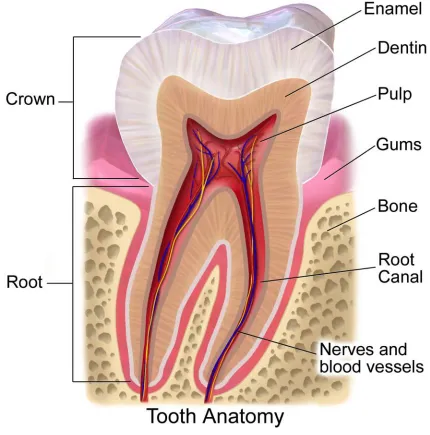
Tooth: (longitudinal section) any of the hard, bony conical structures of the upper and
lower jaws used for chewing. A tooth consists of a crown portion above the gum, a root
portion embedded in a socket (alveolus) of the jawbone, and a neck or cervical
constricted region between the crown and root. The soft-tissue gingiva covers the neck
and root to a variable extent, depending on age and oral hygiene. The major portion of a
tooth consists of dentin, which is harder than bone; enamel; and cementum, which is
similar to bone. The pulp cavity contains the dental pulp. Each tooth has five surfaces:
occlusal, mesial, distal, lingual, and facial or buccal.[2]
Tongue: a muscular organ on the floor of the mouth; it aids in chewing, swallowing, and
speech, and is the location of organs of taste. The taste buds are located in the papillae,
which are projections on the upper surface of the tongue. The condition of the tongue can
sometimes be a guide to the general condition of the body. Glossitis (inflammation of the
tongue) can accompany anemia, scarlet fever, nutritional deficiencies, and most general
infections. Sometimes it is part of an adverse reaction to medication. One form of
glossitis causes a smooth tongue, with a red, glazed appearance. A coated or furry tongue
11 tongue sometimes indicates insufficiency of fluids in the body, or it may result from fever.
When the tongue is extremely dry and has a leathery appearance, the cause may be
uremia.[3]
Soft palate: the structure composed of mucous membrane, muscular fibers, and mucous
glands, suspended from the posterior border of the hard palate forming the roof of the
mouth. When the soft palate rises, as in swallowing and in sucking, it separates the nasal
cavity and the nasopharynx from the posterior part of the oral cavity and the oral part of
the pharynx. The posterior border of the soft palate hangs like a curtain between the
mouth and the pharynx. Suspended from it is the conical, pendulous, palatine uvula.
Arching laterally from the base of the uvula are the two curved musculomembranous
pillars of the fauces. In dentistry, the soft palate serves as the anatomical landmark for
construction of a maxillary full denture and establishment of a seal which helps retain the
denture in the mouth.[4]
Hard palate: the bony portion of the roof of the mouth, continuous posteriorly with the
soft palate and bounded anteriorly and laterally by the alveolar arches and the gums. The
hard palate is covered with stratified squamous epithelium and furnished with numerous
12 Salivary glands: the glands in the mouth that secrete saliva. The major ones are the three
pairs known as the parotid, sub maxillary, and sublingual glands (see Plates); there are
other smaller salivary glands within the cheeks and tongue. The largest are the parotids,
located below and in front of each ear. Saliva secreted by these glands is discharged into
the mouth through openings in the cheeks on each side opposite the upper teeth. The
submaxillary glands, which is located inside the lower jaw, discharge saliva upward
through openings into the floor of the mouth. The sublingual glands, beneath the tongue,
also discharge saliva into the floor of the mouth. [6]
Gingiva (gums): it is part of the soft tissue lining of the mouth. They surround the teeth
and provide a seal around them. Compared with the soft tissue linings of the lips and
cheeks, most of the gingivae are tightly bound to the underlying bone, which helps resist
the friction of food passing over them. Thus when healthy, it presents an effective barrier
to the barrage of periodontal insults to deeper tissue. Healthy gingiva is usually coral pink,
but may contain melanin pigmentation.[7]
Mouth is a window into what’s going on in the rest of the body. It can also serve to help
the early detection of many diseases. In fact, according to the Academy of General
Dentistry, more than 90 percent of all systemic diseases are accompanied by oral
symptoms. Therefore, based on the structure we can predict oral illnesses from some
13 1.2 Definition of Oral Health
From the historical point of view, Dr. David Satcher, the Unites States 16th Surgeon
General, made it known that oral health is far more comprehensive than healthy teeth. He
stated that optimal oral health means being free of chronic facial pain conditions, oral or
throat cancers, oral lesions, cleft lip or palate, and all other diseases and conditions that
may affect the tissues of the head, face, and neck collectively known as the craniofacial
complex (USDHHS, 2000). Oral health status is known to be the precursor of one’s
general health status. Oral health has the potential to affect one’s general health by
causing pain by changing eating habits, speech patterns, and, ultimately, one’s quality of
life. Poor oral health can affect other chronic diseases and conditions as well (Petersen,
2003). Oral disease has been thought of as the most common disease of humanity
(Hendricson & Cohen, 2001). Oral health has been associated with nutrition, physical
growth, speech, self-image, and societal functioning (Mouradian, 2001). Oral health is a
functional, structural, aesthetic, physiologic and psychosocial state of well-being and is
essential to an individual’s general health and quality of life (ADA House of Delegates,
2014).[8] Nowadays, oral health means much more than healthy teeth. Risk factors for
oral diseases include unhealthy diet, tobacco use, harmful alcohol use, and poor oral
14 Figure 3: Anatomy of tooth
15 1.3 Basic Knowledge of Oral Hygiene
The American Dental Association (ADA) (2012) says that proper oral hygiene includes:
(a) brushing teeth at least twice per day with an ADA approved fluoride toothpaste; (b)
replacing toothbrushes every 3 or 4 months; (c) cleaning between teeth on a daily basis
with floss or an interdental cleaner; (d) eating a balanced diet, limiting sweets and
in-between-meal snacks; and (e) visiting a dental professional on a regular basis for
professional cleanings and oral exams[10].
However, the process is not all plain sailing. According to United States Department of
Health and Human Services, the barriers to oral health include lack of access to care,
whether because of limited income or lack of insurance, transportation, or the flexibility
to take time off from work to attend to personal or family needs for care. Individuals with
disabilities and those with complex health problems may face additional barriers to care.
Sometimes, too, the public, policymakers, and providers may consider oral health and the
need for care to be less important than other health needs, pointing to the need to raise
awareness and improve health literacy. Many unanswered questions remain for scientists,
practitioners, educators, policymakers and the public. This report highlights the research
challenges as well as pointing to emerging technologies that may facilitate finding
solutions. Along with the quest for answers comes the problem of applying what is
16 environmental barriers to health and well-being[11].
As is known to all, perfect oral hygiene helps people prevent tooth decay, bad breath,
gum disease and keep their teeth as they get older. Researchers are also discovering that a
healthy mouth may help people keep away medical disorders. In contrast, an unhealthy
mouth, especially one with gum disease, may increase people the risk of serious health
issues such as stroke, heart attack, poorly controlled diabetes and preterm labor.
1.4 Importance of Oral Hygiene
As the previous research shows, oral hygiene has a significant impact on people physical
and mental health. Then how to understand the importance in detail? Does oral hygiene
has anything to do with self-image, work efficiency, mouth muscle, personality or
psychological health? To dig into the topic, the author started to refer to academic papers.
According to S. Honkala, E. Honkala and N. Al-Sahli, the summary variables of life- and
school-satisfaction and self-esteem were all strongly associated with tooth brushing
frequency among both boys and girls. Life- and school-satisfaction as well as self-esteem
indicators seemed to be strongly related with recommended tooth brushing and weekly
17 hygiene and psychological health. Also, according to Garza Lynn Marie, The risks and
benefits of oral health and hygiene, will determine the overall psychological effects on
self-esteem. Bad oral health can be detrimental to one’s social life, and can have an
impact on the quality of life one lives[13], which, additionally, proves the same theory.
According to Woelber Johan P and Bienas Helena, their study showed a positive
relationship between oral hygiene-related self-efficacy and important indicators of oral
health including less gingival bleeding for non-smoking patients, a greater likelihood of
appearance of the patient to the dental practice, higher efforts of the patient to receive
professional tooth cleaning and larger goals in inter-dental hygiene planning[14], which
provides solid evidence that good oral hygiene can promote work efficiency. Meanwhile,
according to Knight Shelton Taneshia, Based on the findings, it appears that the
participants reported high levels of self-efficacy and high levels of intention to practice
proper oral hygiene. The relationship of self-efficacy and the intent to practice proper oral
hygiene was proven to be statistically significant[15], which also shows the connection.
According to Thomson, W. Murray and Caspi Avshalom, there is a consistent association
between negative emotionality and poorer self-reported oral health, whether measured
using a sophisticated scale or a single item[16], which proves the connection between oral
18 Although further proofs and investigations are needed to draw a conclusion, this can
point out the direction for future researches.
1.5 Common Oral Diseases
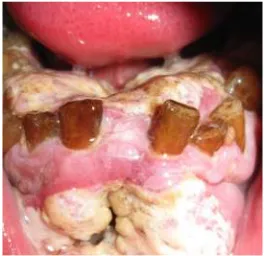
The most common oral diseases are periodontal (gum) disease, dental cavities, oral
cancer, trauma, oral infectious diseases and hereditary lesions.
Dental cavities: worldwide, nearly 100% of adults and 60–90% of school children have
dental cavities, often leading to pain and discomfort.[17]
Figure 4: Dental cavities
Periodontal disease: severe periodontal disease, which may result in tooth loss, is found
19 Figure 5: Periodontal disease
Tooth loss: periodontal disease and dental cavities are leading causes of tooth loss.
Complete loss of natural teeth is widespread and mainly affects older people. Globally,
about 30% of individuals aged 65–74 have no natural teeth.[17]
Figure 6: Tooth loss
Oral cancer: the incidence of oral cancer ranges from one to ten cases out of 100 000
people in most areas. The prevalence of oral cancer is higher in older people, in male and
among people of low education and low income. Alcohol and tobacco are major causal
20 Figure 7: Oral cancer
According to WHO, prevention and treatment include: (a) decreasing sugar intake and
maintaining a well-balanced nutritional intake to prevent tooth decay and premature tooth
loss; (b) consuming fruit and vegetables that can protect against oral cancer; (c) stopping
tobacco use and decreasing alcohol consumption to reduce the risk of oral cancers,
periodontal disease and tooth loss; (d) ensuring proper oral hygiene; (e) using protective
sports and motor vehicle equipment to reduce the risk of facial injuries.[17]
In conclusion, most oral conditions and diseases require professional dental care, but due
to limited availability and accessibility, the utility rate of oral health services is
remarkably low among the elderly, rural residents and people with low income and poor
education. In addition, there is low oral health care coverage in low- and middle-income
21
Chapter 2
User Understanding
2.1 Common Problems 22
2.2 Online Survey 24
2.3 Interviews with Dentists 32
22
2. User Understanding
2.1 Common Problems
Putting ourselves in the users’ shoes, some common issues were studied based on the
problems occurred in real life.
Bad tooth brushing habits: falling asleep without brushing teeth, not enough brushing
time, not flossing, brushing too hard, not changing toothbrush or not cleaning regularly
enough.
Children dislike brushing their teeth: it can be a challenge because young children can
only be attracted by pleasure and fun, without realizing the importance of health and
necessity.
Do not clean teeth after meals: foods and drinks, especially those high in carbohydrates
and sugar will activate bacterial growth in the mouth that ruin tooth enamel for at least
twenty minutes after eating a meal or having a snack. By brushing right after eating,
23 Do not floss: flossing is an essential part of taking care of teeth and gums. The American
Dental Association recommends that flossing at least once a day to help remove plaque
between teeth where the toothbrush can’t reach.
An electric toothbrush is hard to carry around: big in size and needs to be charged.
Public places do not provide cups: ordinary cups are difficult to carry around.
Bristles are not comfortable to use: many people do not know how to choose brush for
their teeth. Most dentists agree that the soft bristle toothbrush can suffice the cleaning
needs of most people. It gently removes the plaque and debris from the teeth.
Messy washroom: messy, unventilated and humid washroom keeps toothbrushes and
cups wet and dirty. Dirt is hidden at the bottom of cups.
To sum up, as Figure 8 shows the problems of people’s bad oral hygiene habits are most
to blame. Therefore, people need access to more oral hygiene knowledge and feedback of
24
Catalogue How to solve Examples Priority
Problems of habits Access to oral hygiene
knowledge
Feedback of oral health
Problems of products
Provide better user experience
Portable, modular and smart oral hygiene system
User needs Create new
possibilities
Ultraviolet light
sterilizer, smart sensors
Figure 8: Common problems
2.2 Online Survey
The previous research shows that oral hygiene is closely related to people’s physical
health. Then what is the present situation of oral hygiene? Moreover, the author was
wondering how to bring the project to a higher level? The project is not only aimed at
creating useful products to serve people, but also making the whole oral cleaning process
more motivating, educational and inspiring, which can solve the problem in an in-depth
and comprehensive way. Therefore, the author conducted an online survey on Survey
Monkey about oral hygiene.
The Oral Health Questionnaire took place in the primary stage of the research. The
questions in it are concise and to the point, which will provide the author with an overall
25 questionnaire include: sensors in toothbrush, receiving feedback from dentists, reminders
from something or someone, more knowledge, provide much more fun, exercise mouth
muscle, modular system for future development. Furthermore, it will guide the whole
design process during the next stage. All of the questions were confirmed, tested and
modified at the beginning of October 2015. The Oral Health Online Survey started on
October 15th 2015 and lasted for one month. 100 valid responses were collected. The
[image:27.612.91.523.326.580.2]content is about people’s habits, feelings and evaluations of oral hygiene.
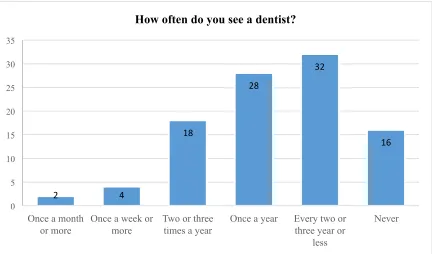
Figure 9 Frequency of going to the dentist
2 4
18 28 32 16 0 5 10 15 20 25 30 35
Once a month or more
Once a week or more
Two or three times a year
Once a year Every two or three year or
less
Never
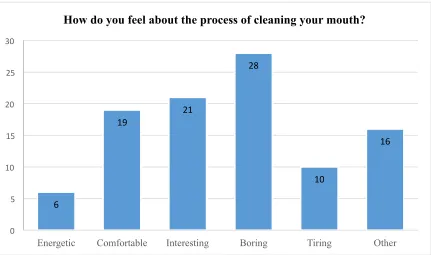
26 Figure 10: Feels of mouth cleaning
As the formal research shows, annual cleanings and examinations may be adequate for
adults without periodontal diseases while people with a higher risk may need to go more
often. However, as Figure 9 shows, there are still 48% of the people surveyed that cannot
meet the criterion. The reason behind this maybe expensive dental inspection, lack of
time, inconvenient transportation and so on, which needs further investigation. In terms
of people’s view towards oral cleaning, as Figure 10 shows, 46% of people showed an
optimistic attitude, while 38% of people dislike the mouth-cleaning process. It’s not hard
to find that there is still space for improvement in term of the user experience of oral
cleaning. 6 19 21 28 10 16 0 5 10 15 20 25 30
Energetic Comfortable Interesting Boring Tiring Other
27 Figure 11: Feelings about oral hygiene knowledge
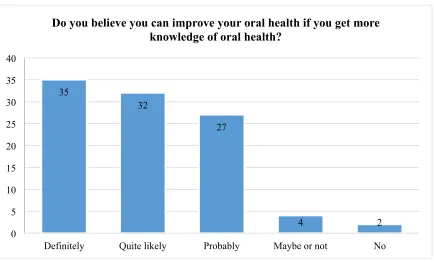
When it comes to knowledge, as Figure 11 shows, most people think more oral
knowledge will help them improve their health. On the one hand, a lot of people may lack
professional oral health knowledge. On the other hand, most people admire knowledge,
which, in other words, is education. 35
32
27
4 2
0 5 10 15 20 25 30 35 40
Definitely Quite likely Probably Maybe or not No
28 Figure 12: Habits of brushing teeth
Figure 13: Habits of flossing
5 66 28 1 0 10 20 30 40 50 60 70
Three times a day or more
Twice a day Once a day or less Never
How often do you brush your teeth with patience and care?
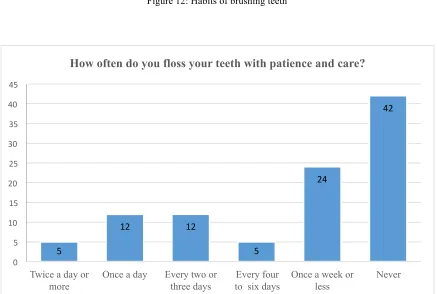
5
12 12
5 24 42 0 5 10 15 20 25 30 35 40 45
Twice a day or more
Once a day Every two or three days
Every four to six days
Once a week or less
Never
29 Figure 14: Feelings about oral cleaning process
When it comes to personal habits, lots of people cannot meet the standard of flossing at
least once a day and brushing teeth at least twice a day. As Figure 12 and 13 show, the
results are not promising, especially, in terms of flossing. Most frequently used excuses
are, too tired before going to bed, forgot and didn’t form a good habit. Figure 14 shows
most people believe it will help them enjoy the oral cleaning process if more interesting
elements are involved.
28 28 29
15
0
0 5 10 15 20 25 30 35
Definitely Quite likely Probably Maybe or not No
30 Figure 15: Meaning of oral hygiene
Figure 16: Meaning of good breath
64
23
11 2 0
0 10 20 30 40 50 60 70
Definitely Quite likely Probably Maybe or not No
Do you believe fresh breath and white teeth make you more confident and attractive?
29
37
25
6 3
0 5 10 15 20 25 30 35 40
Definitely Quite likely Probably Maybe or not No
31 Figure 17: Feelings of oral cleaning movement
As the Figure 15 and 16 show, people believe good oral hygiene can help them improve
their self-image and focus on work. Meanwhile, people are interested in trying a new way
to improve their oral health. Therefore, as Figure 17 shows, most people have realized the
importance of good oral hygiene and are willing to try even weird exercise.
9 25 42 21 3 0 5 10 15 20 25 30 35 40 45
Definitely Quite likely Probably Maybe or not No
32 Figure 18: ways to improve oral hygiene
Lastly, according to Figure 18, people tend to believe smart sensors and feedback from
dentists, could improve their oral health, which represents they believe in technology and
authority.
In conclusion, education, technology and authority can be the keywords for further
development, which needs more investigating in next stage.
2.3 Interviews with Dentists
64 64
44
0 10 20 30 40 50 60 70
Smart sensors Feedback from dentists Reminders
33 Figure 19: Triad of assumptions
As Figure 19 shows, after concluding all the work in previous research, the author came
up with the first assumption. In the triad of assumptions, patients, dentists and medical
insurance company will benefit from each other. An extensive hygiene knowledge
database and remote diagnose system will bring them together. At this stage, the project
34 oral rinses, toothpaste and gum, which can potentially make up a system for oral cleaning.
Also, new interactive ways were explored to provide users with better user experience
and better health. To test this assumption and some previous ideas, the author did an
interview with Andrew Hobbs, who is a dental assistant at Monroe Community College.
Below are the five interview questions:
1. Which methods and tools are you using for dental inspection?
2. Could you make a diagnosis by remote smart sensors and pictures of teeth and mouth?
3. What kind of knowledge do your patients have to know?
4. Are you willing to cooperate with medical insurance companies if they can bring you
more patients but you have to write personal oral health evaluations for them?
5. Would it benefit you to have an extensive database of oral health information?
Below are the answers:
1. In our clinic, we use a variety of methods to evaluate our patients. We have them fill
out a comprehensive medical history, including past/current conditions and medications.
We do an oral-facial screening to detect cancers in the mouth and the face. We use dental
tools, like the explorer, to determine the extent and location of plaque and tartar deposits.
We utilize periodontal screenings and probing to determine gum health. Various methods
are used to screen for decay and potential caries (cavities), including intra-oral,
35 of a patient’s bone and teeth. These are just a few, as dental products abound, as you have
probably seen on the Internet.
2. Some offices have experimented with remote patient screenings, having a hygienist
present with the patient, while consulting with the doctor over the web using cameras and
etc. We do not have that experience in our school clinic.
3. We strive to educate our patients, according to their ability/willingness to understand
and carry out our recommendations. Our goal is to help them achieve a high standard of
self-care at home. It can be accomplished by a number of means tailored to meet the
patient’s needs. These interventions may include: Tooth brushing technique, flossing (or
other dental aids) instruction, using of oral rinses, dentifrices (toothpastes), fluoride
treatments and etc. We want them to understand the relationship between their oral health
and their overall well-being. We hope that with each visit, they will make more and more
positive changes to their health and self-care.
4. I don’t have a lot of knowledge of the relationship between health insurance companies
and the office. I would suggest talking to a clinician in practice, or to a dentist who
36 5. Yes, I believe it would. Having a database of dental knowledge that was readily
available to use in office would help a lot in helping us educate our patients as well
as make good clinical decisions.
According to Andrew’s answers, a large database of oral health knowledge would help a
lot. However, he is not sure about the remote diagnose system part, which requires
further research in the next stage. Afterward, the author made another interview with Hao
Zeng, who is a doctor of dental surgery at Wuhan University. Mr. Hao is quite optimistic
about both the remote diagnosis system and oral hygiene knowledge database. He
believes communication between patients and dentists is significant so that a platform can
be added to the database. Also, he suggested that dental equipment company has the
motivation to invest a large sum of money to get information feedback to guide their
product development. Moreover, talking about the form of the database and platform,
both Mr. Hao and the author thought a cellphone application would be the best way
because of its convenience, popularity and maturity. In addition, He thought that a point
system like those that record sports statistics would help while medical insurance
company can access these data and provide lower insurance price to healthy people.
37 Figure 20: Tetrad of assupmtions
2.4 Personas
As Figure 21, 22 and 23 show, concluding all the information acquired in the user
understanding stage. The author created three personas as the target users for future
41
Chapter 3
Further Research about Potential Ideas
3.1 The Potentiality of Remote Diagnose in Future 43
3.2 Technology Related to Oral Cleaning Products 44
42
3.
Further Research about Potential Ideas
3.1 The Future Potential of Remote Diagnose
Taking previous research into consideration, the author still needs proof to support that
remote dental diagnosis is promising in the future. On the Internet there are lots of
supportive voices. According to Anshuman Das, “Remote diagnosis for rural patients will
become a true possibility through telemedicine centers. Screening in rural areas will help
hospitals identify patients at early stages, effectively increasing and evaluating the influx
of symptomatic patients, thereby establishing India’s first widespread early detection
system for oral cancers[18].” Additionally, the tele-diagnosis by digital photographic
technology, presented as identifying potential dental problems and is a resource to be
exploited. Therefore, it seems remote diagnose system is valuable, feasible and promising,
especially to children in rural areas, through public opinions.
However, the author still needs substantial evidences from the experiments. For example,
what do people in academic circle think? According to Amável Rui and Cruz-Correia
Ricardo, results suggest that remote diagnosis of children dental problems based on
non-invasive photographs constitute a valid resource when we pretend to exclude referred
children to a dentist for treatment of dental problems, but further studies should be
carried out to increase the validity of this proceeding to referring children for the same
43 areas, the tele-diagnosis system may allow for accurate identification of oral conditions
and act as a means of consultation at a distance between specialists, general dental
practitioners, dental hygienists and individual patients[20].
To sum up, in this stage, the author assumed remote diagnose is a useful and promising
technology to be put in the system.
3.2 Technology Related to Oral Cleaning Products
Sonic electric toothbrush: the motion and vibration of the brush have to be quick enough
to produce a sound that is within the audible range of the human ear (20 Hz to 20,000 Hz).
Sonic brushes typically produce 24,000-48,000 movements per minute. Sonic brushes
rely on a sweeping motion to clean the teeth[21].
Ultrasonic electric toothbrush: an ultrasonic toothbrush is one that using a very high
frequency of vibration referred to as ultrasound to remove bacteria and plaque from the
teeth. The brush has to emit a wave of 20,000Hz per minute, considerably more than the
44 Ionic toothbrush: the ionic toothbrush produces negative ions, which travel along the
toothbrush rod into the mouth, where the saliva mixes these negative ions to acids
produced by bacteria, which cause plaque. When the negative ions reach the plague, they
draw positive hydrogen ions out of the plaque, which will damage its molecular structure
and dissolve it away[22].
Blizzident: a 3D-printed toothbrush, looks like a mouth guard lined with 600 bristles.
People bite down into the 3D replication of the mouth and grind the teeth on the bristles,
which cleans all of the teeth simultaneously[23].
Water flosser: a water flosser is an oral hygiene appliance designed for dental care at
home. A typical water flosser includes: motor with pump, water reservoir, special water
flosser tips. The motor and pump emit a stream of pressurized, pulsating water to flow
from the water tank through the tip and into the mouth. The targeted stream of water
removes plaque, food particles and bacteria in an effective, comfortable and easy way[24].
Air floss: the air floss is a new device to remove plaque biofilm between the teeth. It uses
45 Dental intraoral camera: it is designed to allow dentists to capture and display digital
images from inside a patient’s mouth. A problem like a fractured tooth can be spotted and
hard to ignore since it is magnified on a TV screen or computer monitor. Most dental
intraoral cameras are highly portable and easily connect to a network wirelessly. Most are
commonly equipped with LEDs so that digital cameras can capture images without the
need for external lighting[26].
UV light dental cleaner: it uses germicidal UV light to clean and sanitize orthodontic
devices, dentures, athletic mouth guards, and teeth whitening trays[27].
Considering that air floss, ionic toothbrush and blizzident are not mature enough in terms
of technology and application, the author decided not to use them in the oral care design.
The author chose electric toothbrush and water flosser to put into the hardware of the oral
care system. Moreover, a mini oral camera is necessary for the remote system while a UV
light cleaner is also needed for cleaning all the parts. However, how to choose between
sonic and ultrasonic toothbrush, and why are they better than a manual one are waiting to
be discussed. Below is an article to discuss.
According to Thomas P. Connelly, a practicing dentist, “I will say that the evidence does
46 This is because the extreme vibration creates a substantial amount of energy and motion,
powering mouth fluids (saliva, water, toothpaste) into the areas between teeth and below
the gum line. The result is these areas are given an amount of attention that otherwise
would not happen with a standard (or electric) toothbrush. So in that sense, a sonic brush
is definitely superior to a standard brush. In addition, studies have shown that people
brush longer with a sonic toothbrush. All else being equal, brushing longer is usually a
good thing, so score another point for sonic toothbrushes. Lastly, many sonic toothbrush
users report that their teeth “feel” better with a sonic toothbrush. That’s worth
considering.
However, that doesn’t mean they are truly “better.” As is said earlier, it depends on you
and your oral hygiene routine. If your daily routine includes using a standard toothbrush
for two minutes, and also floss, you are getting everything (and more) than a sonic
toothbrush can give. Flossing scrapes/cleans the areas where a normal toothbrush cannot
reach, and it does so better than any sonic toothbrush can (please don’t think a sonic
toothbrush is a substitute for flossing, despite whatever advertisement claims.) Also,
some people use a water flosser (like a Water Pik®) — again, this goes beyond what a
sonic toothbrush can do.
So in the end, it really depends on you. If you don’t floss (and I’m a realist — I know
most people don’t), a sonic toothbrush will certainly serve you better than a regular
47 regularly (and/or use a water flosser), a sonic toothbrush probably isn’t totally necessary
— you are likely covering all the bases with your current oral hygiene routine (and
congratulations on doing well in this area.)
But if you REALLY want to be sure, a sonic toothbrush AND flossing AND water
flossing is an unbeatable combination. At least until technology gives us laser-powered
nuclear fusion space-age super toothbrushes[28].”
In conclusion, considering all the elements above, the combination of a sonic brush, a
water flosser and a mini oral camera will be useful and effective as the hardware part of
the system.
3.3 The Environment Analysis of Bathroom
According to Wikipedia, “A bathroom is a room for personal hygiene activities, generally
containing at minimum a toilet and sink. A bathroom may also contain a mirror,
a bathtub or a shower, and possibly also a bidet. In North America and some other
regions, it characteristically contains at least a toilet and a sink; hence in North American
English the word “bathroom” is commonly used to mean any room containing a toilet,
even a public toilet (although in the United States this is more commonly called a
restroom). In other countries, including the UK, Australia, France, Eastern Europe
48 distinct rooms for the bathroom and the toilet room. Bathrooms often have one or more
towel bars or towel rings for hanging towels. Some bathrooms contain a medicine cabinet
for personal hygiene products and medicines and drawers or shelves for storing towels
and other items.
The design of a bathroom must account for the use of both hot and cold water, in
significant quantities, for cleaning the human body. The water is also used for moving
solid and liquid human waste to a sewer or septic tank. Water may be splashed on the
walls and floor, and hot humid air may cause condensation on cold surfaces. From a
decorating point of view the bathroom presents a challenge. Ceiling, wall and floor
materials and coverings should be impervious to water and readily and easily cleaned.
The use of ceramic or glass, as well as smooth plastic materials, is common in bathrooms
for their ease of cleaning. Surfaces like that are often cold to the touch, however, and so
water-resistant bath mats or even bathroom carpets may be used on the floor to make the
room more comfortable. Alternatively, the floor may be heated, possibly by strategically
placing resistive electric mats under floor tile or radiant hot water tubing close to the
underside of the floor surface.
Electrical appliances, such as lights, heaters, and heated towel rails, generally need to be
49 minimizes the risk of electric shock. Ground-fault circuit interruptor electrical
sockets can reduce the risk of electric shock, and are required for bathroom socket
installation by electrical and building codes in the United States and Canada. In some
countries, such as the United Kingdom, only special sockets suitable for electric shavers,
and electric toothbrushes are permitted in bathrooms, and are labeled as such. UK
Building Regulations also define what type of electrical fixtures, such as light fittings (i.e.
how water-/splash-proof) may be installed in the areas (zones) around and above baths
and showers. Contrary to some information provided with bathroom light fittings, sinks
and basins do not affect bathroom zones, as a bathroom is solely defined as a room
containing a bath or shower, by wiring regulations. It is still, nevertheless good practice
to avoid installing unsuitable fixtures close to sinks, as damage from water splashes may
occur.
Bathroom lighting should be uniform, bright and must minimize glare. For all the
activities like shaving, showering, grooming etc. one must ensure equitable lighting
across the entire bathroom space. The mirror area should definitely have at least two
sources of light at least one foot apart to eliminate any shadows on the face. Skin tones
and hair color are highlighted with a tinge of yellow light. Ceiling and wall lights must be
safe for use in a bathroom (electrical parts need to be splash proof) and therefore must
carry appropriate certification such as IP44. Bathroom chandeliers for example should
50 Figure 24: Environment of the bathroom
Also, as Figure 24 shows, the bathroom is a humid but cozy place. To make the oral care
system integrated into the bathroom, the design language of the oral care system should
51
Chapter 4 Design Process
4.1 Ideation 53
4.2 Final Concepts 58
4.3 Final Outcomes 67
4.4 Scenarios 68
52
4. Design Process
[image:54.612.112.509.167.692.2]4.1 Ideation
Figure 25: Mind map 1
53 Figure 27: Mind map 3
The author’s design process started with mind maps. Firstly, as Figure 25 shows, the
author began with the word oral hygiene and tried to come up with as many words as
possible related to oral health in categories like stakeholders, current situation, history
and future. Then, as Figure 26 shows, the second step is to categorize all of the words
into another new category. Lastly, as the Figure 27 shows, different questions were
generated from the new mind map such as:
1. Is there a relationship between oral hygiene and better self-image?
2. Can we make oral hygiene easier?
3. How can we make a nice and fancy oral hygiene package system for travelers?
4. Can we improve our work efficiency with good oral hygiene?
54 6. Is flossing an important habit?
7. What is the relationship between oral hygiene and personality?
8. How can we play with germ in our mouth?
Afterward, with these questions and guidelines from previous researches the author
[image:56.612.93.523.269.488.2]started sketching some potential deliverable products.
Figure 28: Sketches
As precious researches show, the bathroom is a humid but cozy place. To make the oral
care system integrated into the bathroom, the design language of the oral care system
should be of the same style. So as for the appearance of the products, it can be round,
smooth, gentle, mild and elegant. On the other hand, mouth, as a theme of the whole
design can be related as well. Next, considering the function, as the former research
55 and a UV light cleaner. The handle part of the product should be modular to meet the
need of mufti-function. In addition, in order to connect the database, send out pictures for
remote diagnose and recording daily oral cleaning information there should be a cell
phone holder. Therefore, after negotiating with thesis committee members, the author
chose the concepts that showed in Figure 29, 30 and 31 as primary concepts for further
[image:57.612.89.528.307.600.2]development.
56 Figure 30: Sketch 2
[image:58.612.91.524.398.693.2]57 4.2 Final Concepts
Figure 32: Hardware
As is shown in Figure 32, the hardware consists of a cellphone holder, a mini oral camera,
smart sensors, a water flosser, an electric toothbrush and a UV sanitizer box. As Figure
33, 34, 35 and 36 show, it has four basic working modes including toothbrush mode, oral
camera mode, water floss mode and changing tips mode, all of which, when working
58 Figure 33: Toothbrush mode
[image:60.612.133.480.360.608.2]59 Figure 35: Water flosser mode
60 Figure 37: Oral hygiene database and platform
As Figure 37 shows, the oral hygiene database and platform have five basic functions.
Such as, providing basic oral health knowledge, providing methods of self-diagnosis,
providing oral health point system, sharing good dental resources and providing
instructions of choosing dentists and dental equipment, providing communication
platform for users, dentists, medical insurance company and dental equipment company.
61 Figure 38: Cellphone application interface
62 As Figure 39 shows, regarding knowledge part, dental equipment company provides
investment to the medical insurance company to help construct the database in exchange
of medical research results and feedback, which can help their product development.
Within the oral health knowledge system, patients get instructions for daily oral cleaning
[image:64.612.95.505.274.504.2]and pre or post surgery oral health suggestions. Dentists help to answer questions online.
Figure 40: Self-diagnosis method
As Figure 40 shows, speaking of the self-diagnosis system, patients get step-by-step
self-diagnosis instructions and provide primary oral health status collected by the oral
camera and smart sensors in return. Dentists deal with primary oral health status from
63 Figure 41: Point system
As Figure 41 shows, when it comes to the point system, patients provide the primary oral
health status collected by the oral camera and smart sensors while getting evaluation and
feedback about their oral health. The higher the points are from the point system, the
lower the insurance premium will be from the medical insurance company, which is able
to access these data at the cloud, if they are in perfect oral health status. Dentists write
64 Figure 42: Dental resources
As Figure 42 shows, while patients provide feedback on choosing dentists and equipment,
dental equipment company can get chances of putting an advertisement. At the same time
65 Figure 43: Communication platform
As Figure 43 shows, patients, dentists and dental equipment companies get precious
opportunities of exchanging for ideas with each other.
Taking all the facts into consideration, as Figure 44 shows, the square shape assumption
66 Figure 44: Tetrad of assumptions
4.3 Final Outcomes
67 Figure 45: Gallery exhibition
[image:69.612.93.523.74.365.2]4.4 Scenarios
68 Figure 47: A new way of conducting a tooth implanting surgery
As Figure 32 and 33 show, in the past, a patient needs to go to the dentists several times
before and after the surgery to finish primary examination and post-surgery examination,
which costs a lot of time and energy both for the patient and the dentists. However, with
the introduction of the oral hygiene system, the patient can finish the primary
examination and post-surgery examination at home by the self-diagnosis system. It will
save plenty of energy and time both for patients and dentists. In an assumed case, if a
patient living in rural China gets a severe oral cancer, there are only a few who might be
able to cure him while the best one lives in Chicago. So through the remote diagnose
system, his chance of survival would significantly improve.
4.5 Design Statement
Oral Care is an oral hygiene system, consisting of a set of oral hygiene products and an
69 mini camera, smart sensors, a water flosser, a toothbrush and a UV Sanitizer. The oral
health database and platform is going to benefit patients, dentists, medical insurance
company and dental equipment company. This system will be motivating, educational
and inspiring. It will also help people establish healthy oral hygiene habits and good oral
70
Conclusion
My intent was to design a system that will have the chance to help people get better oral
health and provide better interactive experience. Moreover, to be a motivating, inspiring
and educational system. The outcomes and findings of the whole thesis process met the
initial aim, thanks to the step-by-step, thorough and comprehensive research.
Oral Care is related to oral hygiene system design. The author designed a system of oral
hygiene products and an oral health database and platform for home use. As for the target
market, it has been proved that the potential user can be all kinds of people. Oral Care has
four basic working modes: E-toothbrush mode, water flosser mode, oral camera mode
and changing with cleaning mode. These are the key technologies.
These oral hygiene products include a mini camera, smart sensors, a water flosser, a
toothbrush, a cellphone holder and a UV Sanitizer. The oral health database and the
platform has five basic functions including: providing basic oral health knowledge;
providing methods of self-diagnosis; providing oral health point system; sharing good
dental resources; and providing communication platform. All functions mentioned above
are integrated in a mobile phone application.
71 dentists about their oral health status, they will get lower insurance premium from the
medical insurance company, which is able to access these data at the cloud.
As for the benefits of this system, obviously, people will have better oral health. Oral
Care will motivate them to finish oral cleaning through the point system. Also it shortens
the distance between patients and dentists through the self-diagnosis system as well as
oral camera, especially for those living in the remote areas. In addition, it will promote
communication between patients, dentists, medical insurance company and dental
equipment company.
However, due to the limitation of time and resources, there are still lots of aspects which
require future improvements. For example, the tetrad of assumptions between patients,
dentists, dental equipment company and medical insurance company is in its primary
stage. It needs further enhancement concerning economics and logics. Also, the handle of
part of the products needs more ergonomics study. In addition, the products and
cellphone application needs future tests. Last but not least, there is still room for
improvement in terms of fun and practice value of the system. For example, for children
there can be a game application maybe related to germs in the mouth to encourage them
to finish oral cleaning and bring them fun. Moreover, for couples there can be something
72
Bibliography
[1] Definition of Lips - wikipedia,
http://en.wikipedia.org/wiki/Lip (accessed September 24, 2016).
[2] Brachyodont teeth | definition of brachyodont teeth by ..,
http://medical-dictionary.thefreedictionary.com/brachyodont+teeth (accessed September 24, 2016).
[3] Tounge | definition of Tounge by Medical dictionary,
http://medical-dictionary.thefreedictionary.com/Tounge (accessed September 24, 2016).
[4] Soft palate | definition of soft palate by Medical dictionary,
http://medical-dictionary.thefreedictionary.com/soft+palate (accessed September 24, 2016).
[5] Hard palate | definition of hard palate by Medical dictionary,
http://medical-dictionary.thefreedictionary.com/hard+palate (accessed September 24, 2016).
[6] Salivary glands | definition of salivary glands by Medical ..,
http://medical-dictionary.thefreedictionary.com/salivary+glands (accessed September 24, 2016).
[7] Gums - Wikipedia, the free encyclopedia, https://en.wikipedia.org/wiki/Gums (accessed September 24, 2016).
[8] ADA Policy--Definition of Oral Health,
http://www.ada.org/en/about-the-ada/ada-positions-policies-and-statements/ada-po (accessed September 24, 2016).
[9] WHO | Oral health,
http://www.who.int/topics/oral_health/en/ (accessed September 24, 2016).
[10] 3 Ways to Remove Plaque - wikiHow,
http://www.wikihow.com/Remove-Plaque (accessed September 24, 2016).
73 [12] Honkala, S., E. Honkala, and N. Al‐Sahli. 2007. Do life‐ or school‐satisfaction and
self‐esteem indicators explain the oral hygiene habits of schoolchildren? Community
Dentistry and Oral Epidemiology 35 (5): 337-47.
[13] Garza, Lynn Marie. 2010. Oral health and hygiene: The psychological effects on self-esteem.ProQuest Dissertations Publishing.
[14] Woelber, Johan P., Helena Bienas, Goetz Fabry, Waltraud Silbernagel, Marianne
Giesler, Christian Tennert, Susanne Stampf, Petra Ratka‐Krüger, and Elmar Hellwig.
2015. Oral hygiene‐related self‐efficacy as a predictor of oral hygiene behaviour: A prospective cohort study. Journal of Clinical Periodontology 42 (2): 142-9.
[15] Knight Shelton, Taneshia. 2013. Self-efficacy and the intent to practice proper oral hygiene among college students.ProQuest Dissertations Publishing.
[16] Thomson, W. Murray, Avshalom Caspi, Richie Poulton, Terrie E. Moffitt, and Jonathan M. Broadbent. 2011. Personality and oral health. European Journal of Oral Sciences 119 (5): 366-72.
[17] WHO | Oral health, http://www.who.int/mediacentre/factsheets/fs318/en/ (accessed September 24, 2016).
[18] SmileLITE: Portable imaging Instrumentation for oral ..,
http://tatacenter.mit.edu/portfolio/inexpensive-portable-diagnostic-tools-for-or (accessed September 24, 2016).
[19] Amável, Rui, Ricardo Cruz-Correia, and José Frias-Bulhosa. 2009. Remote diagnosis of children dental problems based on non-invasive photographs - a valid proceeding? Studies in Health Technology and Informatics 150 : 458. Export As... PrintEmail
[20] Patterson, S., and C. Botchway. 1998. Dental screenings using telehealth technology: A pilot study. Journal (Canadian Dental Association) 64 (11): 806.
[21] Best Electric Toothbrush 2016, http://electrictoothbrush2016.com/ (accessed September 24, 2016).
[22] The Science Behind Ionic Toothbrushes,
74 [23] How it works - Blizzident, http://www.blizzident.com/how-it-works.html (accessed September 24, 2016).
[24] How to Use a Waterpik Water Flosser or Dental Floss,
https://www.waterpik.com/oral-health/how-to-floss/ (accessed September 24, 2016).
[25] AirFloss? Answers to your patients' questions - Dental ..,
http://www.dentaleconomics.com/articles/print/volume-101/issue-9/features/airflo (accessed September 24, 2016).
[26] Digital Dental Intraoral Cameras | Dentalcompare.com,
http://www.dentalcompare.com/Dental-Digital-Imaging-Dental-Imaging/4477-Dental-I (accessed September 24, 2016).
[27] Ultraviolet - Wikipedia, the free encyclopedia,
https://en.wikipedia.org/wiki/Near_ultraviolet (accessed September 24, 2016).
[28] Mouth Health: Are Sonic Toothbrushes Really Better ..,
75
Appendices
Online survey questionnaire
10/21/2015 SurveyMonkey Preview & Test: Oral health questionaire
https://www.surveymonkey.com/create/survey/preview?sm=Xl9OGCXUKmgV0_2B4UA65NciDizqZVYhAnznYVnt92sUU_3D 1/1 4. How often do you brush your teeth with patience and care? * Three times a day or more Twice a day Once a day or less 5. How often do you floss your teeth with patience and care? * Twice a day or more Once a day Every two or three days Every four to six days Once a week or less 6. Do you think you are going to enjoy the process if it is much more fun? * Definitely Quite likely Probable Maybe or not No 7. Do you believe fresh breath and white teeth makes you more confident and attractive? * Definitely Quite likely Probable Maybe or not PREVIEW & TEST
10/21/2015 SurveyMonkey Preview & Test: Oral health questionaire
https://www.surveymonkey.com/create/survey/preview?sm=Xl9OGCXUKmgV0_2B4UA65NciDizqZVYhAnznYVnt92sUU_3D 1/1 Probable Maybe or not No 8. Do you believe fresh and fragrant breath helps you focus and improve your work efficiency? * Definitely Quite likely Probable Maybe or not No 9. Are you willing to do weird movement to exercise your mouth muscle to improve oral hygiene? * Definitely Quite likely Probable Maybe or not No 10. Do you believe oral health could be improved by: a.including sensors in toothbrush b.receiving feedback from dentists c.receiving reminders to clean teeth from something or someone? (You can choose more than one answer) * a b c PREVIEW & TEST
10/21/2015 SurveyMonkey Preview & Test: Oral health questionaire
76 Interview questions
1. Which methods and tools are you using for dental inspection?
2. Could you make a diagnosis by remote smart sensors and pictures of teeth and mouth?
3. What kind of knowledge do your patients have to know?
4. Are you willing to cooperate with medical insurance companies if they can bring you
more patients but you have to write personal oral health evaluations for them?
77
List of figures
Figure 1. Anatomy of nose, pharynx, mouth and larynx 8
Figure 2. Anatomy of mouth 9
Figure 3. Anatomy of tooth 14
Figure 4. Dental cavities 18
Figure 5. Periodontal disease 19
Figure 6. Tooth loss 19
Figure 7. Oral cancer 20
Figure 8. Common problems 24
Figure 9. Frequency of going to the dentist 25
Figure 10. Feels of mouth cleaning 26
Figure 11. Feelings about oral hygiene knowledge 27
Figure 12. Habits of brushing teeth 28
Figure 13. Habits of flossing 28
Figure 14. Feelings about oral cleaning process 29
Figure 15. Meaning of oral hygiene 30
Figure 16. Meaning of good breath 30
Figure 17. Feelings of oral cleaning movement 31
Figure 18. Ways to improve oral hygiene 32
Figure 19. Triad of assumptions 33
Figure 20. Tetrad of assumptions 37
Figure 21. Persona of Jianguo Chen 38
Figure 22. Persona of Xiaoyu Xie 39
Figure 23. Persona of Dali Wang 40
Figure 24. Environment of the bathroom 50
Figure 25. Mind map 1 52
Figure 26. Mind map 2 52
Figure 27. Mind map 3 53
Figure 28. Sketches 54
Figure 29. Sketch 1 55
Figure 30. Sketch 2 56
Figure 31. Sketch 3 56
Figure 32. Hardware 57
Figure 33. Toothbrush mode 58
Figure 34. Oral camera mode 58
Figure 35. Water flosser mode 59
78
Figure 37. Oral hygiene database and platform 60
Figure 38: Cellphone application interface 61
Figure 39. Knowledge 61
Figure 40. Self-diagnosis method 62
Figure 41. Point system 63
Figure 42. Dental resources 64
Figure 43. Communication platform 65
Figure 44. Tetrad of assumptions 66
Figure 45. Gallery exhibition 67
Figure 46. A traditional way of conducting a tooth implanting surgery 67