This is a repository copy of
Measuring particle concentration in multiphase pipe flow using
acoustic backscatter: Generalization of the dual-frequency inversion method.
.
White Rose Research Online URL for this paper:
http://eprints.whiterose.ac.uk/79834/
Version: Accepted Version
Article:
Rice, HP, Fairweather, M, Hunter, TN et al. (3 more authors) (2014) Measuring particle
concentration in multiphase pipe flow using acoustic backscatter: Generalization of the
dual-frequency inversion method. Journal of the Acoustical Society of America, 136 (1).
156 - 169. ISSN 0001-4966
https://doi.org/10.1121/1.4883376
Reuse
Unless indicated otherwise, fulltext items are protected by copyright with all rights reserved. The copyright exception in section 29 of the Copyright, Designs and Patents Act 1988 allows the making of a single copy solely for the purpose of non-commercial research or private study within the limits of fair dealing. The publisher or other rights-holder may allow further reproduction and re-use of this version - refer to the White Rose Research Online record for this item. Where records identify the publisher as the copyright holder, users can verify any specific terms of use on the publisher’s website.
Takedown
If you consider content in White Rose Research Online to be in breach of UK law, please notify us by
Hugh P. Rice
*, Michael Fairweather, Timothy N. Hunter, Bashar Mahmoud and Simon Biggs
School of Process, Environmental and Materials Engineering, University of Leeds, Leeds
LS2 9JT, United Kingdom
Jeff Peakall
School of Earth and Environment, University of Leeds, Leeds LS2 9JT, United Kingdom
* Correspondence to [email protected]
Title: Measuring particle concentration in multiphase pipe flow using acoustic backscatter:
generalization of the dual-frequency inversion method
Running title: Measuring particle concentration in pipe flow
Published: Journal of the Acoustical Society of America, July 2014, vol. 136, issue 1, p.
ABSTRACT
A technique, which is an extension of an earlier approach for marine sediments, is
presented for determining the acoustic attenuation and backscattering coefficients of
suspensions of particles of arbitrary materials of general engineering interest. It is
necessary to know these coefficients (published values of which exist for quartz sand only)
in order to implement an ultrasonic dual-frequency inversion method, in which the
backscattered signals received by transducers operating at two frequencies in the
megahertz range are used to determine the concentration profile in suspensions of solid
particles in a carrier fluid. To demonstrate the application of this dual-frequency method to
engineering flows, particle concentration profiles are calculated in turbulent, horizontal
pipe flow. The observed trends in the measured attenuation and backscatter coefficients,
which are compared to estimates based on the available quartz sand data, and the resulting
concentration profiles, demonstrate that this method has potential for measuring the
settling and segregation behavior of real suspensions and slurries in a range of
applications, such as the nuclear and minerals processing industries, and is able to
distinguish between homogeneous, heterogeneous and bed-forming flow regimes. 184
WORDS
Keywords:
acoustic
backscatter;
sediment
transport;
scattering;
attenuation;
instrumentation.
I.
INTRODUCTION
Solid-liquid suspensions are ubiquitous, for example, in the nuclear, minerals and chemical
engineering industries, and the transport and mixing behavior of particles in turbulent,
multiphase flows is of great practical and theoretical interest. In particular, the ability to
measure the concentration of solid particles allows the operator to characterize many
aspects of the flow and suspension properties, such as homogeneity or the presence of a
moving or stationary bed that may cause a blockage or flow constriction, and the efficiency
of mass transport and solids suspension by turbulent mixing. However, in situations where
accessibility is difficult or chemical or radiological hazards are present, it is necessary to
use remote measurement systems that are portable and simple to operate.
Diagnostic methods for the investigation of velocity and particle concentration fields in
settling and non-settling, multiphase suspensions can be categorized as follows (Bachalo,
1994; Powell, 2008; Shukla
et al.
, 2007; Williams
et al.
, 1990): external radiation (
e.g.
ultrasound, X-rays, gamma rays, microwaves, optical light/lasers, neutrons); emitted or
internal radiation (
e.g.
radioactive and magnetic tracers, NMR/MRI); electrical properties
(
e.g.
capacitance, conductance/resistance, inductance and associated tomographic
methods, hot-wire anemometry); physical properties (
e.g.
sedimentation balance,
hydrometric/density measurements, pressure, rheology); and direct methods (
e.g.
physical
sampling, pumping, interruption). Consequently, a number of criteria must be considered
when choosing the most appropriate measurement technique, such as potential hazards,
flow data that are required (Admiraal and García, 2000; Hultmark
et al.
, 2010; Laufer,
1954; Lemmin and Rolland, 1997; Povey, 1997). Acoustic instruments have many
advantages over optical and other systems, most importantly their suitability for
multiphase, sediment-laden, optically opaque flows, as well as their high mobility, ease of
operation, low cost, low signal-processing and calibration requirements and their ability to
measure entire profiles, rather than make only single-point measurements.
Ultrasonic techniques can be used to study a range of processes (Povey, 2006),
e.g.
creaming, sedimentation, phase inversion and other phase transitions, and internal
suspension properties, including
volume fraction (as in this study), particle
compressibility, and particle size (McClements, 1991; Povey, 2013). Such ultrasonic
techniques utilize the speed of sound, attenuation and other, less commonly-used
ultrasonic properties,
e.g.
impedance, angular scattering profile (McClements, 1991), and
are widely used in the study of colloidal suspensions (Challis
et al.
, 2005), marine
sedimentary processes (Thorne and Hanes, 2002), and sedimentation and bed
development in higher-concentration systems (Hunter
et al.
, 2012a; Hunter
et al.
, 2012b;
Hunter
et al.
, 2011). Indeed, Challis
et al
. (2005) are particularly keen to emphasize the
benefits of ultrasonic methods, since one particularly useful capability of such methods is
to interrogate suspensions of much higher concentrations than is possible with optical
methods.
In this study, an acoustic model developed and used extensively by marine scientists
relates the backscattered acoustic signal received by an active piezoelectric transducer to
the properties of the particles in a suspension, and has been employed by a number of
groups (Admiraal and García, 2000; Hunter
et al.
, 2012a). If the acoustic backscatter and
attenuation coefficients of the suspension are known, then the particle concentration
profile can be reconstructed using an explicit dual-frequency inversion method (Hurther
et
al.
, 2011), an extension of the former model that requires echo voltage profiles to be taken
at two ultrasonic frequencies. However, published data for these acoustic coefficients only
exist for quartz-type sand (Thorne and Meral, 2008). The adaptation presented here allows
the backscatter and attenuation coefficients for suspensions of solid particles of any
arbitrary material to be measured empirically, with the aim of applying the dual-frequency
concentration inversion method to suspensions of engineering interest.
The objectives were to measure these coefficients directly for four particle species (two
spherical glass, two non-spherical plastic), compare them to predicted values based on
published quartz-sand data (Thorne and Meral, 2008), and construct concentration profiles
in horizontal pipe flow in order to delineate various flow regimes and quantify the effects
of particle concentration and size, and flow rate, on the segregation behavior of
suspensions.
The structure of the paper is as follows: (a) scattering and absorption processes in
insonified solid-liquid suspensions and an acoustic model for suspended particles are
described in Section II, a novel modification of it for arbitrary types of particle is presented,
measuring the attenuation and backscatter coefficients, and the physical properties of the
particle species used, are described in Section III; and (c) some examples of particle
concentration profiles calculated using the measured coefficients in horizontal pipe flow
II.
THEORY
A.
Acoustic scattering and absorption in suspensions of solid particles
The physical mechanisms present in an insonified suspension can be broadly divided into
two types: (a) scattering,
αsc
, and (b) absorption (
i.e.
conversion of acoustic energy into
heat, sometimes referred to as dissipation). By analogy to optics, these two mechanisms
collectively contribute towards attenuation (classically referred to as extinction) of the
emitted signal in an additive fashion (Dukhin and Goetz, 2002). Absorption mechanisms
can be categorized further, as follows (Babick
et al.
, 1998; Richter
et al.
, 2007): viscous or
visco-inertial,
αvi
; thermal,
αth
; structural,
αst
; electrokinetic,
αel
; and intrinsic,
αin or αw
,
i.e.
those mechanisms that are due to the liquid phase.
A broad summary of the various limiting cases in terms of particle size, ultrasonic
wavelength and other parameters follows, where (Shukla
et al.
, 2010):
=
/ = 2
/ = 2 /
,
[1]
with
k
the wavenumber,
a
the particle size,
ω
the ultrasonic angular frequency,
c
the speed
of sound,
f
the ultrasonic frequency and
λ
the wavelength. The long-, intermediate- and
short-wavelength (or Rayleigh, Mie and geometric, by analogy to optical scattering)
regimes correspond to
ka
≪
1,
ka
~ 1 and
ka
≫
1 (or
λ
≫
a
,
λ
~
a
, and
λ
≪
a
), respectively.
particles, as were used in this study. In particular, thermal (due to particle rigidity),
structural (because there is no aggregation) and electrokinetic absorption are insignificant.
Therefore the total attenuation,
α
, is due to: intrinsic absorption in water,
αw
; viscous
absorption,
αvi
; and scattering,
αsc
(Richards
et al.
, 1996; Thorne and Hanes, 2002), and so
α
=
αw
+
αs
, where the attenuation due to particles is
αs
=
αsc
+
αvi
.
Dukhin and Goetz (2002) note that “sub-micron particles do not scatter ultrasound at all in
the frequency range under 100 MHz” but “only absorb ultrasound”; they also note that
“absorption and scattering are distinctly separated in the frequency domain”, with
absorption dominant at lower frequencies and scattering at higher frequencies. Babick
et
al.
(1998) explain that in the long-wavelength regime (
i.e.
ka
≪
1), “scattering effects are
negligible” and attenuation is mainly due to absorption. However, in the
intermediate-wavelength regime (
i.e. ka
~ 1), dissipation is negligible and “scattering, particularly by
diffraction, increases enormously”.
Attenuation due to particles has generally been found to vary linearly with concentration at
relatively low concentrations with a variety of particle types and fluids (Hay, 1983, 1991;
Hunter
et al.
, 2012a; Richards
et al.
, 1996; Stakutis
et al.
, 1955). In early experiments, Urick
(1948) observed a similar linear dependence, as did Greenwood
et al.
(1993) and Sung
et
al.
(2008) using kaolin-water suspensions. Greenwood
et al.
concluded that scattering was
insignificant in their experiments, since
λ
≫
a
, and found that attenuation was directly
proportional to volume fraction if “there is no interaction between particles”. Moreover, the
linear over a greater range of concentration for lower values of
ka
(Carlson, 2002; Hay,
1991; Shukla
et al.
, 2010). At higher concentrations, however, the backscatter intensity
becomes independent of concentration (Hay, 1991; Hipp
et al.
, 2002).
B.
A model of acoustic backscatter strength
The model described by Thorne and Hanes (2002) and Thorne
et al.
(2011) for marine
sediment was chosen for use in this study because it is simpler to implement than some
other, similar formulations (Carlson, 2002; Furlan
et al.
, 2012; Ha
et al.
, 2011) and has a
firm theoretical basis (Hay, 1991; Kytömaa, 1995; Richards
et al.
, 1996). As a result, it has
previously been employed by a number of groups (Admiraal and García, 2000; Hunter
et
al.
, 2012a; Hurther
et al.
, 2011). In this section, the details of the model are described, with
a view to developing it into a method for determining the properties of suspensions of
arbitrary particles.
The backscattering and attenuation properties of the suspension are embodied in
f
, the
backscatter form function, which “describes the backscattering characteristics of the
scatterers” (Thorne and Buckingham, 2004), and
χ
, which is referred to by Thorne and
Hanes (2002) as “the normalised total scattering cross-section”. The same authors state
that the “sediment attenuation constant is due to absorption and scattering” which “for
noncohesive sediments insonified at megahertz frequencies the scattering component
dominates”. However, this can only be assumed to be true in the short-wavelength regime
For clarity, then,
χ
is hereafter referred to as the normalized total scattering and absorption
cross-section.
f
and
χ
are proportional to (
ka
)
2and (
ka
)
4in the Rayleigh (
i.e.
long-wavelength) regime, and both tend to constant values at high values of
ka
.
The root-mean-square of the received voltage,
V
, varies with distance from the transducer,
r
, as follows:
=
/,
[2]
where
α
=
αw
+
αs
, as described earlier;
ks
is the sediment backscatter coefficient and
incorporates the backscattering properties of the particles;
kt
is a system parameter;
M
is
the concentration by mass of suspended particles; and
ψ
is a near-field correction factor
(Downing
et al.
, 1995) that is written as follows:
=
1 + 1.35 + (2.5 )
1.35 + (2.5 )
". ".,
[3]
where
z
=
r
/
rn
and
rn
=
/
;
at
is the radius of the active face of the transducer; and
λ
is
the ultrasound wavelength.
ψ
tends to unity in the far field,
i.e.
when
r
≫
rn
.
αs
and
ks
are as
follows:
$ =
1
% &( ′)
=
〈 〉
, -
.
[5]
where
ξ
is the particle attenuation coefficient, given by:
& =
4〈 〉- .
3〈.〉
[6]
Angled brackets represent the average over the particle size distribution. In particular:
〈 〉 = 0
〈 〉〈
〈
"〉 1
〉
/,
[7]
〈.〉 =
〈 〉〈 .〉
〈
"〉 .
[8]
Clearly, both
ks
and
ξ
depend on the particle size distribution and shape and therefore
distance from the transducer in the general case, as do
M
and
αs
. Empirical expressions for
f
and
χ
are known for sandy sediment,
i.e.
quartz-type sand (Thorne and Meral, 2008) and
are as follows:
=
2 01 − 0.35 exp 8− 92 − 1.5
0.7 ; <1 01 + 0.5 exp =− 9
2 − 1.8
2.2 ; ?1
1 + 0.92
,
. =
0.95 + 1.282 + 0.252
0.292
A A,
[10]
where
2
=
ka
, with
k
the ultrasonic wavenumber and
a
the particle radius.
No such data are available for particle species other than quartz sand, and it was beyond
the remit of this study to construct equivalent expressions for other particle species.
However, for the purpose of validation of the measured values presented later, estimates of
the sediment attenuation coefficient,
ξ
, can be calculated for a particle species with a
known density and mean size using Equations [6] and [10] by setting
a
=
d
50/2 and
⟨
χ
⟩
=
χ
(
2
=
ka
), where
d
50is the 50
thpercentile (
i.e.
median) of the measured particle size
distribution (see Section IV.A).
C.
Determination of backscatter and attenuation coefficients in arbitrary suspensions
The objective in this section is to manipulate the expressions in the model presented in
Section II.B in order to derive expressions for the attenuation and backscatter coefficients,
ξh
and
Kh
, which are defined below and are measured in prepared homogeneous
suspensions (hence the
h
subscript), that is, suspensions in which
M
is known and does not
vary with distance. Measured values of
ξh
and
Kh
can then be used within the
dual-frequency concentration inversion method (Hurther
et al.
, 2011), which is described in
suspension of the same particle species. The derivation is followed by a description of the
experimental method for measuring
ξh
and
Kh
in a stirred tank mixer and a summary of the
measured values; lastly, those for
ξh
are compared to theoretical estimates of
ξ
and are
discussed.
First, it is necessary to define the quantity
G
, the range-corrected echo amplitude, such that
D = ln(
)
.
[11]
By multiplying both sides of Equation [2] by
r
, taking the natural logarithm and then the
derivative with respect to distance,
r
, the following expression is obtained:
∂D
∂ =
∂ Hln(
∂
)I =
∂ =ln(
∂
J) +
1
2 ln − 2 ($
K+ $
J)?,
[12]
where the
h
subscript signifies the specific case of homogeneity, which is necessary for the
following stages of the derivation to be valid. This expression is similar to one given by
Thorne and Buckingham (2004). Neither
ks
,
M
nor
αs
depend on
r
, so Equation [4] can be
simplified (
i.e.
αsh
=
ξhM
, where
ξh
is the sediment attenuation constant in the case of a
homogeneous suspension) and the first two terms on the right-hand side of Equation [12]
are zero. It can therefore be rewritten as follows:
∂D
So, the right-hand side of Equation [13] varies linearly with
M
and this expression also
provides a test for homogeneity. By taking the derivative with respect to concentration, an
expression for
ξh
is obtained, as follows:
&
J= −
1
2
∂ ∂r = −
∂ D
1
2
∂ M
∂
∂ Hln(
∂
)IN.
[14]
This value of
ξ
=
ξh
applies to a suspension in which the particle size distribution and
concentration do not vary spatially. The quantity
K
is defined as the combined backscatter
and attenuation constant, such that, in the general case
O ≡
=
/exp H2 ($
K
+ & )I
,
[15]
as described elsewhere (Betteridge
et al.
, 2008; Thorne and Buckingham, 2004; Thorne and
Hanes, 2002). If
ξh
is known, it is then straightforward to find
Kh
,
i.e.
K
measured in a
homogeneous suspension according to the method described above, such that
Kh
≡
kshkt
, for
any combination of particle size and transducer frequency by evaluation of Equation [15],
which also requires that
αw
, the attenuation due to water, be known. In this study, the
expression given by Ainslie and McColm (1998) was rewritten for the case of zero salinity,
as follows:
where
αw
is in Np m
-1,
f
is the ultrasonic frequency in MHz and
T
is the temperature in °C (6
°C <
T
< 35 °C).
The method for determining the acoustic properties of suspensions of particles described
in this section is novel and can be used with a very wide range of suspensions.
Alternatively, any deviation from the expected behavior can be taken as an indication of
heterogeneity, spatial variation in particle size distribution or significant attenuation.
D.
The Hurther
et al.
dual-frequency concentration inversion method
Concentration inversion methods are algorithms that allow the particle concentration to be
calculated by inversion of a suitable function that relates the concentration to some
measured electromagnetic or acoustic property. They have found wide application in food,
medical and marine science, but have not been exploited to the same extent by engineers,
despite their practical and computational simplicity and low cost relative to other methods
(
e.g.
tomography), and their ability to accurately monitor phase changes, identify critical
transport velocities and delineate flow regimes, for example. In this section, a recent and
very powerful acoustic inversion method is described, and concentration profiles in
turbulent, horizontal pipe flow are constructed using backscatter and attenuation
coefficients that were presented in Section IV.A.
many other implicit and explicit methods that exhibit numerical instability in the far-field
so that errors accumulate with distance from the transducer (Thorne
et al.
, 2011). With the
dual-frequency method, the concentration can be calculated at any measurement point,
independently of that at other points. A description of the method follows. Equation [2] can
be rewritten for the general case, using Equation [4], as follows (Hurther
et al.
, 2011;
Thorne
et al.
, 2011):
( ) = Φ ( )V( )
,
[17]
Φ
( ) ≡ R
T
A W= R
O
T
A W,
[18]
V( ) ≡
A X Y( Z)[( Z)\ Z^]= ( )/Φ ( )
.
[19]
If the particle size distribution, and therefore
ξ
and
ks
, do not vary with distance from the
probe, which is a reasonable approximation if the particle species is neutrally buoyant, has
a very narrow size distribution or is very well mixed, the exponent in Equation [19] can be
written as
−4& X ( ′)d ′
((
i.e.
ξ
≠
ξ
(
r
)), and for two transducers that operate at different
frequencies Equation [19] can be rewritten as follows:
V
_( ) =
AY`X [( Z)\ Z ]^
,
[20]
Equation [20] by
M
, then taking the natural logarithm and dividing both sides by
ξi
yields a
constant right-hand side, such that
R
V
T
Ya= R
V
T
Yb,
[21]
and rearranging for
M
yields the following:
Yb Ya
= V
YaV
Yb.
[22]
The explicit expression for particle mass concentration according to the dual-frequency
inversion method is then obtained:
= V
( Yb/Ya)cbV
( Ya/Yb)cb.
[23]
In the general case, the particle size distribution and detailed backscatter and attenuation
properties are not known. Experimentally,
J
is evaluated by
J
=
V
2/Φ
2via
Equation [19],
where
V
is the measured voltage and Φ
2is found using Equation [18], which consists of
the
known variables in Equation [2]. Therefore, a minimal requirement for closure is that
ks
and
kt
(or
K
, as in this study),
ξ
and
αw
are known. Whereas
αw
can be calculated using
Equation [16],
K
and
ξ
must be determined experimentally.
ξ
1and
ξ
2, differ so that
M
can be evaluated accurately from Equation [23]. However, this
condition – which dictates that the smaller of the two frequencies lies in the Rayleigh (
i.e.
low-
ka
) regime in which
ξ
depends very strongly on
ka
, such that
ξ
1/
ξ
2is “sufficiently
different from unity” (Hurther
et al.
, 2011) – is not so stringent in practice, and is easily
satisfied for particles sizes of
a
< 500 μm and frequencies in the range 1-5 MHz, because
ξ
is
a strong function of
ka
. Indeed, it was found that the two frequencies used in this study, 2
and 4 MHz, were sufficiently different that the ratios of the measured values of
ξ
1to
ξ
2(
i.e.
ξh
1and
ξh
2) at
f
= 2 and 4 MHz, respectively, for all four particle species differed
III.
MATERIALS AND METHODS
A.
Materials
The acoustic properties of four particle species were investigated: “Honite 22” and “Honite
16” spherical glass particles, and “Guyblast 40/60” and “Guyblast 30/40” non-spherical
plastic particles (
d
50= 41, 77, 468 and 691 μm, respectively). These species were chosen
because they span a range of material properties –
i.e.
size distribution, density and shape –
and therefore exhibit a range of acoustic scattering and absorption properties.
Particle size was measured with
Mastersizer 2000
and
3000
laser diffraction sizers
(Malvern Instruments), density with an
AccuPyc 1300
pycnometer (MicroMeritics) and
particle shape was confirmed by inspection of micrographs from a
BX51
optical microscope
(Olympus). Measured particle size distributions for the glass and plastic species are given
[image:20.595.71.534.570.699.2]in Figure 1 and Figure 2, respectively. All particle properties are summarized in Table I.
TABLE I: Physical properties of particle species. Species supplied by Guyson International, Ltd. Species Diameter, d50 (μm) Density, ρs (103 kg m-3) Shape
Smaller glass (Honite 22) 41.0 2.45 Spherical
Larger glass (Honite 16) 77.0 2.46 Spherical
Smaller plastic (Guyblast 40/60) 468 1.54 Jagged
Figure 1: Particle size distribution of Honite glass particle species. Data from Mastersizer 2000, Malvern Instruments.
Figure 2: Particle size distribution of Guyblast plastic particle species. Data from Mastersizer 3000, Malvern Instruments. 0 5 10 15 20 25
5 50 500
[image:21.595.134.450.445.658.2]B.
Operation of the
UVP-DUO
acoustic backscatter system
As discussed in Section I, the capability of ultrasonic systems to interrogate suspensions
with relatively high particle concentrations, along with the many other advantages
described, formed the basis for the choice of the
UVP-DUO
ultrasonic signal processing unit
(Met-Flow, Switzerland). This system was used with two ultrasonic emitter-receiver
transducers operating at 2 and 4 MHz, as the principal diagnostic system in this study, as
the objective was to investigate suspensions with particle concentrations of several percent
by volume. Although intended to be used primarily as an ultrasonic Doppler velocimeter,
the
UVP-DUO
is also a capable acoustic backscatter system and was used as such in this
study: the voltage data themselves were used, rather than a Fourier transform of them,
which yields the Doppler velocity (although the velocity field was used in the positional
calibration of the probes, as described in Section III.D).
In both the stirred mixing vessel and the pipe flow loop, described below, the two probes
were attached to the
UVP-DUO
unit and excited at a voltage of 150 V. For each run,
n
=
2,500 samples of the instantaneous received voltage were collected, with data from each
transducer being taken separately in concurrent runs. Custom-written MATLAB scripts
were used to process the data: the system-applied gain and digitisation constants were
removed, a three-sigma noise filter applied, and the root-mean square (RMS) of the data
C.
Homogeneous suspensions in the stirred tank mixer
As described in Section II.C,
ξh
and
Kh
are the values of
ξ
and
K
when measured in
homogeneous suspensions according to the derivation described in Section II.C. Such
suspensions of known concentrations were prepared in the stirred mixing vessel shown in
Figure 3, which consists of a rotating plastic cylindrical container, the contents of which are
mixed with an impeller connected to a high-speed mixer. Mains water (4 liters) was used as
the fluid at a total depth of around 10 cm. The probes were mounted below the water level
in parallel, with active faces 5 cm from the base of the tank.
(a)
(b)
Figure 3: (a) Stirred mixing vessel schematic and (b) photograph (color online). Mixing tank dimensions: 30 cm width, 30 cm depth. Probes were positioned at about 50 mm from, and perpendicular to, base.
The suspensions were tested for homogeneity by taking physical samples (3 × 60 ml
samples at each concentration, as was the case for the main pipe flow loop described in
more detail below) and comparing them to the total weighed concentration of solids. It was
found that the suspensions prepared in the stirred mixing vessel were very uniformly
~50 mm
[image:23.595.128.457.375.520.2]mixed, with constants of proportionality between sampled and weighed concentrations for
the Honite 22 (smaller glass), Honite 16 (larger plastic), Guyblast 40/60 (smaller plastic)
and Guyblast 30/40 (larger plastic) species of 0.998, 1.05, 0.987 and 0.863, respectively.
(a)
(b)
(c)
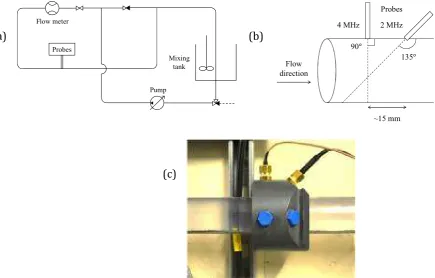
Figure 4: (a) Pipe flow loop schematic, (b) probe mounting geometry schematic and (c) photograph of probes attached to mounting clasp (color online). Inner diameter, D = 42.6 mm; entry length, L = 3.2 m.
A range of nominal particle concentrations were used, from
d
= 0.01 to 10 % by volume,
which corresponds approximately to
Mw
= 0.025 to 250 kg m
-3for the two Honite glass
species
and
Mw
= 0.015 to 150 kg m
-3for the two Guyblast plastic species. However,
attenuation was high in suspensions of Guyblast plastic particles at
Mw
≳
15 kg m
-3, and
this limitation dictated the range over which the coefficients
ξh
and
Kh
were measured (see
Flow meter
Mixing tank
Pump Probes
Flow direction
90°
135°
~15 mm Probes
[image:24.595.78.514.212.490.2]Section IV.A).
D.
Measurement of settling suspensions in horizontal pipe flow
Data were taken using the same two transducers mounted on a horizontal test section of a
recirculating pipe flow loop (Figure 4) with an inner diameter of
D
= 42.6 mm and a total
capacity of 100 liters (
i.e.
0.1 m
3). A centrifugal pump, impeller mixer and electromagnetic
flow meter were used. The probes were mounted at a distance
L
= 3.2 m (
i.e.
75 D) from the
nearest fitting to ensure the flow was fully developed (
i.e.
statistically invariant in the axial
direction) at the test section,
i.e.
at a distance much larger than the necessary entrance
length, even at the highest flow rates (Shames, 2003; Zagarola and Smits, 1998).
The flow loop was filled with suspensions of the same four particle species at several
nominal (weighed) concentrations and run over a range of flow rates. Data from pairs of
runs at the two ultrasonic frequencies were generated and combined (in which
J
1,
J
2and
M
are functions of distance,
r
, from the transducer), and concentration profiles along a
vertical cross-section were constructed using Equation [23].
As shown in Figure 4, the 2 MHz probe was mounted at 135° to the mean flow direction,
and the 4 MHz probe at 90°, through a clasp on the pipe and through holes in the pipe wall.
The positions of both probes were calibrated: (a) in the case of the 4 MHz probe, by
reference to a strong peak in the echo amplitude corresponding to the position of the lower
the mean axial velocity profile (since the peak coincides with the pipe centerline at high
flow rates), which was also measured. Because the probes were oriented at different angles
to the flow direction, it was necessary firstly to perform a linear transformation of both
datasets onto a common axis (for which the wall-normal distance,
y
, from the upper pipe
wall was chosen). For the same reason, the measurement points for each transducer were
IV.
RESULTS AND DISCUSSION
A.
Measured coefficients and comparison with predictions based on quartz sand data
As specified in Equation [14], in order to calculate
ξh
, it is necessary to know the gradient of
G
with respect to distance,
r
, and mass concentration,
M
. Echo voltage profiles were
recorded using the
UVP-DUO
at several nominal mass concentrations with both
transducers, which were aligned vertically in the stirred mixing vessel, and the data
processed to yield the RMS echo voltage,
V
, from which
G
was calculated according to
Equation [11]. Then, for each run, the gradient,
g
G
/
g
r
, was calculated over the region
r
≈ 24
to 46 mm because it was found that the variation in
G
tended to be most linear over this
region, which was outside the near-field region at both frequencies, for all particles and at
all concentrations of interest. Then, the gradient of
g
G
/
g
r
with respect to
M
was found by
compiling the results over a range of values of
M
according to Equation [14].
Figure 5 shows
G
vs.
r
with the 4 MHz probe for Honite 22, the smaller glass species, at low
and high concentrations (
Mw
= 2.41 and 121.7 kg m
-3), for illustration of the goodness of fit.
For conciseness, only data for the 4 MHz probe are shown, but the linear fits to the 2 MHz
data were equally good. It should be noted that the peaked nonlinearities in the very near-
and very far-field regions are assumed to be caused by flow around the tip of the probes (
r
< 0.01 m) and reflection from the base of the stirred mixing vessel (
r
> 0.05 m),
respectively. The values of the gradient,
g
G
/
g
r
, over a range of concentrations are shown in
Equation [14]) and goodness of fit with respect to weighed concentration,
Mw
, are also
given. As can be clearly observed from Figure 5, for example,
G
was found to vary very
linearly with respect to
r
for all particle species over the chosen region (24 <
r
< 46 mm), as
the model requires (Equation [13]). Moreover, the variation of
g
G
/
g
r
with respect to
Mw
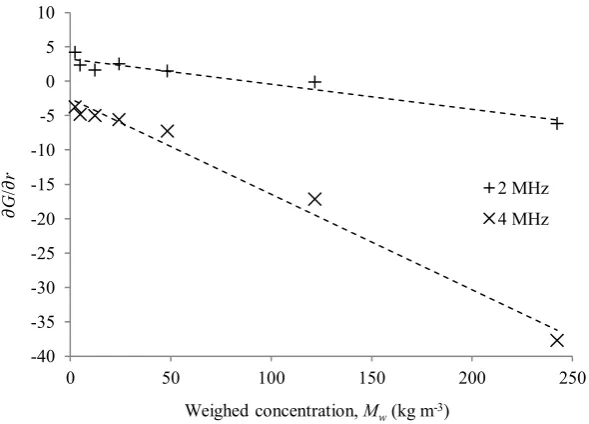
was also found to be highly linear for all particle species, as shown in Figure 6, for example,
as was also expected (Equation [14]). This kind of linear relationship between
concentration and attenuation is well known (see Section II.A).
[image:28.595.166.419.337.543.2]Figure 6: Gradient of G with respect to distance from probe vs. nominal mass concentration, Mw, of Honite 22 (smaller glass) in stirred mixing vessel at ultrasonic frequencies of f = 2 and 4 MHz. Goodness of fit for 2 and 4 MHz data was R2 = 0.932 and 0.983, respectively.
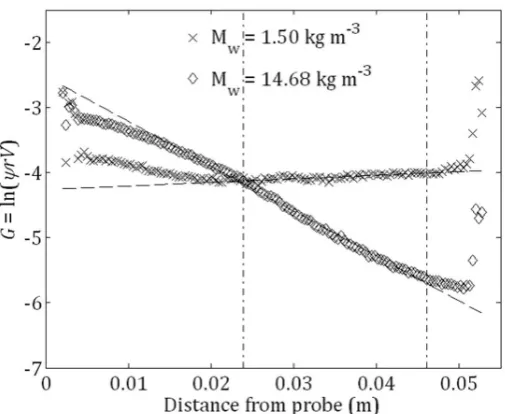
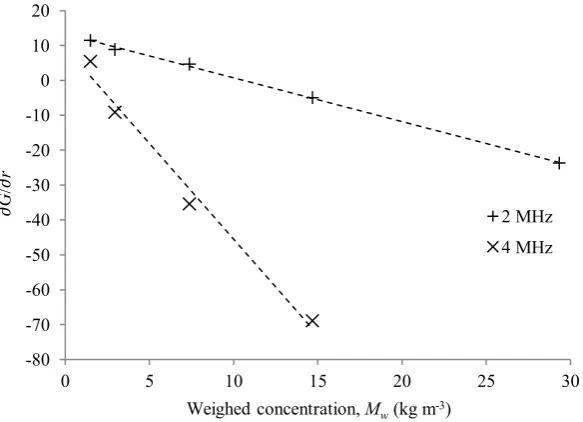
Figure 7 and Figure 8 show the same results, but for the smaller plastic species (Guyblast
40/60). Similar trends are observed as for the glass particles, with a clear linear
dependence of
G
on distance from probe,
r
, and in turn a clear linear dependence of
g
G
/
g
r
on particle concentration. Collectively, these observations demonstrate two things: firstly,
the success of the method as described, and secondly, that the suspensions in the stirred
mixing vessel were, indeed, homogeneous (as linearity would not be expected in
non-homogeneous suspensions, as described in Section II.C). Indeed, this method could be used
as a simple test for homogeneity for a range solid-liquid suspensions in which such
conditions are to be maintained. However, it should be noted that
g
G
/
g
r
could be
calculated over a much smaller range of mass concentrations for the Guyblast plastic
species than for the two Honite glass species. As is clear from Table II, in which the results
-40 -35 -30 -25 -20 -15 -10 -5 0 5 100 50 100 150 200 250
g
G
/
g
r
Weighed concentration, Mw(kg m-3)
for
ξh
are summarized, this difference can be accounted for by the fact that attenuation due
to the plastic particles is much higher than for the glass, as would be expected, since the
plastic particles are much larger.
Figure 7: G vs. distance from 4 MHz probe with Guyblast 40/60 (smaller plastic) at two nominal concentrations, Mw = 1.50 and 14.7 kg m-3 in stirred mixing vessel. Dashed lines through data are linear fits. Dot-dashed vertical lines indicate region over which gradients were calculated (r ≈ 24 to 46 mm).
Overall, then, the measured values of the attenuation coefficient,
ξh
, agree well with the
predicted values, especially if the differences in material properties of the particle species
are considered. The main conclusion to be drawn is that the degree of attenuation due to
particles in the suspensions used, as quantified by the gradient of
g
G
/
g
r
, did indeed vary
linearly with particle concentration, as was expected and as has been found by many other
[image:30.595.166.419.227.434.2]Figure 8: Gradient of G with respect to distance from probe vs. nominal mass concentration, Mw, of Guyblast 40/60 (smaller plastic) in stirred mixing vessel at ultrasonic frequencies of f = 2 and 4 MHz. Goodness of fit for 2 and 4 MHz data was R2 = 0.999 and 0.985, respectively.
The combined backscatter and system constant in the homogeneous case,
Kh
, was
calculated according to Equation [15] once the corresponding values of
ξh
were known,
from the same runs. In every case, the mean values of
Kh
were calculated over the region
r
≈
24 to 46 mm in order to be consistent with the method of calculation of
ξh
. As a
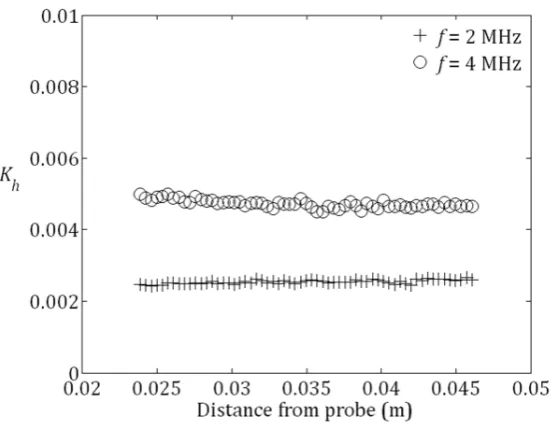
representative example and for illustration of the degree of variation with distance, Figure
9 shows
Kh
vs
. distance with both the 2 and 4 MHz probes for Honite 22 (smaller glass) at
an intermediate concentration (
Mw
= 12.2 kg m
-3). Relative standard deviations are given in
the caption. For conciseness, only data at one concentration are shown, but the data at
other concentrations were equally good. The distance-averaged mean values of
Kh
for
Honite 22 (smaller glass) are shown in Figure 10 for both the 2 and 4 MHz probes. The
-80 -70 -60 -50 -40 -30 -20 -10 0 10 200 5 10 15 20 25 30
g
G
/
g
r
Weighed concentration, Mw(kg m-3)
equivalent results for Guyblast 40/60 (smaller plastic) are given in Figure 11 and Figure
12.
Figure 9: Variation of combined backscatter and system constant, Kh, with distance from probe at Mw = 12.2 kg m-3 for smaller glass spheres (Honite 22) at ultrasonic frequencies of f = 2 and 4 MHz in stirred mixing vessel. Relative standard deviation, σ/μ = 2.2 and 2.4 %.
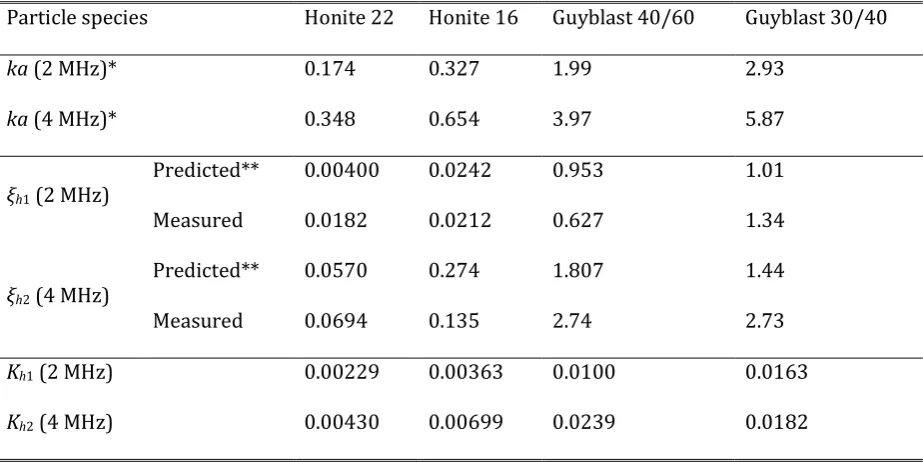
Concentration- and distance-averaged mean values of
Kh
for all particle species and both
ultrasonic frequencies are summarized for all particle species in Table II for reference,
along with predicted values of
ξ
, which were calculated
via
Equations [6] and [10], in which
the measured values of the particle density and size were used (see Table I),
i.e. a
=
d
50/2
and
⟨
χ
⟩
=
χ
(
2
=
ka
). (It was not possible to perform a similar comparison for
Kh
, as it
contains a system constant,
kt
, that could not be separated from the backscatter constant,
ksh
, both being incorporated into
Kh
. Measuring
kt
directly would require a more detailed
[image:32.595.151.427.197.410.2]TABLE II: Comparison of predicted and measured values of sediment attenuation constant, ξh, and combined backscatter and system constant, Kh. Values of ka are also given. (All results are given to three significant figures.)
Particle species Honite 22 Honite 16 Guyblast 40/60 Guyblast 30/40
ka (2 MHz)* 0.174 0.327 1.99 2.93
ka (4 MHz)* 0.348 0.654 3.97 5.87
ξh1 (2 MHz)
Predicted** 0.00400 0.0242 0.953 1.01
Measured 0.0182 0.0212 0.627 1.34
ξh2 (4 MHz)
Predicted** 0.0570 0.274 1.807 1.44
Measured 0.0694 0.135 2.74 2.73
Kh1 (2 MHz) 0.00229 0.00363 0.0100 0.0163 Kh2 (4 MHz) 0.00430 0.00699 0.0239 0.0182 * Value based on mean particle diameter, i.e. with a = d50/2.
** Calculated using Equations [6] and [10] by setting a = d50/2 and ⟨χ⟩ = χ(2 = ka).
Several of the expected trends in
Kh
were observed:
Kh
was found to be very constant with
distance (the maximum spatial variation, as quantified by the relative standard deviation,
μ
/
σ
, was 9.4 % for Guyblast 40/60 plastic at
f
= 2 MHz: see Figure 11); and the
distance-averaged values of
Kh
increased with both particle size and ultrasonic frequency (except for
the two Guyblast plastic species at
f
= 4 MHz). However, for all particle species,
Kh
was
found to vary with particle concentration, a result that was not expected, although the
variation for the two Guyblast plastic species was less severe than for the two Honite glass
most probable cause is inaccuracies in
ξh
being propagated into
Kh
through Equation [15]:
when calculated in this way,
Kh
is a strong (indeed, exponential) function of
ξh
. At higher
values of
ka
, multiple scattering is likely to enhance attenuation, and therefore
ξh
and
Kh
, at
higher concentrations, as is observed for Guyblast 40/60 (smaller plastic) at
f
= 2 MHz, for
example (Figure 12). At lower values of
ka
, it may be that absorption becomes a significant
contributor to attenuation, thereby enhancing
Kh
at lower concentrations, as was observed
with Honite 22, the smaller glass species (Figure 11) and as has been noted by Dukhin and
Goetz (2002) in some particle types. Another possibility is that the calculated values of
ξh
and
Kh
were adversely affected by the fact that data were taken at logarithmic, rather than
linear, intervals in the weighed concentration,
Mw
, thus giving undue weight to values at
lower concentrations.
Figure 10: Distance-averaged mean of combined backscatter and system constant, Kh, vs. nominal mass concentration, Mw, for smaller glass spheres (Honite 22) at ultrasonic frequencies of f = 2 and
0 0.002 0.004 0.006
0 50 100 150 200 250
Kh
M
w(kg m-3)
2 MHz
[image:34.595.140.454.435.656.2]4 MHz in stirred mixing vessel.
Figure 11: Variation of combined backscatter and system constant, Kh, with distance from probe at Mw = 7.38 kg m-3 for smaller plastic particles (Guyblast 40/60) at ultrasonic frequencies of f = 2 and 4 MHz in stirred mixing vessel. Relative standard deviation, σ/μ = 9.4 and 4.4 %.
It is clear from Table II that the measured values of
ξh
are all within a factor of order unity
of the predicted values. More generally, the measured values of both
ξh
and
Kh
increase
with
ka
, as expected: in general,
ξ
and
K
are expected to be proportional to (
ka
)
4and (
ka
)
2,
respectively, at low
ka
(
i.e.
ka
≪ 1) and approach constant values at high
ka
(
i.e.
ka
> 1),
where
k
is the ultrasonic wavenumber (
k
= 2π/
λ
) and
a
is the particle diameter (Thorne
and Hanes, 2002). However, the discrepancies between the measured and predicted values
of
ξh
are not insignificant, although this conclusion is likely less to be a failure of the
mathematical and measurement techniques developed here, but to be due to the potential
(
i.e.
d
50) of measured size distributions (Moate and Thorne, 2013; Thorne and Meral, 2008),
and more generally due to the width of the particle size distributions.
Figure 12: Distance-averaged mean of combined backscatter and system constant, Kh, vs. nominal mass concentration, Mw, for smaller plastic particles (Guyblast 40/60) at ultrasonic frequencies of f = 2 and 4 MHz in stirred mixing vessel.
Factors other than the particle size distribution are present, in particular: differences in
density, compressibility and particle shape between the two spherical glass species
(Honite) and the two non-spherical plastic species (Guyblast) and quartz sand data of
Thorne and Meral (2008) that were used to predict
ξ
. Density is accounted for explicitly in
the model, through Equations [5] and [6], and it is interesting to note that the density
contrast between the fluid and solid phases influences the strength of visco-inertial
scattering (Povey, 1997).
0 0.005 0.01 0.015 0.02 0.025 0.03 0.0350 10 20 30
Kh
Mw(kg m-3)
2 MHz
[image:36.595.138.456.194.407.2]However, the influence of the remaining three factors – particle size distribution, particle
shape and compressibility – is not accounted for explicitly in the model and is discussed
below, in that order. First, the effect of width of the particle size distribution is assessed.
Although not accounted for explicitly in the model, the size distribution is incorporated
implicitly through Equations [9] and [10], which were determined empirically. In the
Rayleigh regime (low
ka
),
⟨
χ
⟩
/
χ
> 1,
i.e.
χ
is underestimated; in the geometric regime (high
ka
),
⟨
χ
⟩
/
χ
< 1,
i.e.
χ
is overestimated; in addition, the discrepancy between predicted and
measured values is larger for low
ka
and is proportional to the width of the particle size
distribution, as quantified by
κ
=
σ
/
⟨
a
⟩
(Thorne and Meral, 2008), where
⟨
a
⟩
and
σ
are the
mean and standard deviation of the particle size distribution, respectively. Therefore,
measurements of
ξ
(which is related to
χ
through Equation [6]) will be most sensitive to the
width of the particle size distribution in the case of small, polydisperse species insonified at
low frequencies. This trend is indeed observed in the results presented here: the measured
values of
ξ
(
i.e. ξh
) at lower
ka
are generally lower than those predicted, and higher than
predicted at higher
ka
(see Table II), with the exception of Honite 22, the smaller glass
species, at both ultrasonic frequencies. However, it is stressed that the accuracy of
predicted values of
ξ
depends strongly on the polydispersity of the suspensions, which
varies between species, as can be seen from Figure 1 (Honite glass) and Figure 2 (Guyblast
plastic).
Second, particle shape is likely to have an effect on scattering and attenuation, and both the
plastic species used here are highly non-spherical. According to Thorne and Buckingham
similar volume to a sphere, would have a larger surface area and hence a higher geometric
and scattering cross section”, and it is reasonable to assume that the backscattering and
attenuation properties of highly irregular particles – that is, their ability to absorb and
scatter energy – would be enhanced for the same reasons, since such particles present a
larger projected surface area to the emitted acoustic beam than do spherical particles with
the same volume. However, whether this enhancement of attenuation properties can fully
account for the difference between the observed and predicted values at higher values of
ka
is left as a subject for further study.
Third, the compressibility of the particle species will inevitably affect their scattering and
absorption properties. The strength of thermo-elastic scattering, which influences the
strength of both backscattering and attenuation, is affected by the compressibility contrast
between the liquid and solid phases (Povey, 1997) it is reasonable to conclude that this
contrast is greater for suspensions of Honite glass particles than for Guyblast plastic
particles, suggesting that compressibility is unlikely to be responsible for the differences
between the measured and predicted values of the acoustic coefficients.
To summarize, the discrepancy between the measured and estimated values of
ξ
(and, for
analogous reasons,
K
) can be accounted by a combination of the following: differences in
the physical properties of quartz sand and the species used in this study; and inaccuracies
in the predicted values themselves, which are estimates based on the mean particle size,
rather than entire size distributions. However, overall, the measured values of
ξh
and
Kh
only exist for quartz sand, and so one objective of this study – which was achieved – was to
provide data for other kinds of particle species, in particular highly spherical glass (
i.e.
Honite) and highly non-spherical plastic (Guyblast). The ultimate aim, however, is to use
the measured values of
ξh
and
Kh
to calculate concentration profiles in suspensions in
arbitrary flow geometries of engineering interest
via
a dual-frequency inversion method
(Hurther
et al.
, 2011), as described in the following section.
B.
Implementation of the dual-frequency inversion method with measured acoustic
coefficients in settling suspensions in horizontal pipe flow
To demonstrate the efficacy of the given method for the determination of the acoustic
coefficients
Kh
and
ξh
, a series of measurements were completed in the pipe-flow loop to
observe the settling behavior of flowing suspensions. By using the measured backscatter
voltage, the parameter
J
(
r
) was calculated for a particular distance
r
using Equation [19]
and Φ
2(
r
) using Equation [18] according to the dual-frequency inversion method described
in Section II.D. The particle concentration,
M
(
r
), through a vertical, wall-normal
cross-section of the pipe could then be evaluated for a particular distance using Equation [23]
(where
ξ
1and
ξ
2are taken to be the measured values of
ξ
at 2 and 4 MHz,
i.e.
ξh
1and
ξh
2,
respectively, as given for each particle type in Table II). Some calculated concentration
profiles for the large plastic and the large glass particle species are given in Figure 13 and
Figure 14, respectively, for three different flow rates (
Q
≈ 0.8 to 3.5 l s
-1) and at different
nominal bulk particle concentrations (
Mw
= 1.50 kg m
-3,
d
w= 0.1 % for plastic;
Mw
= 24.7 kg
Figure 13: Concentration by mass, M, vs. reduced distance from centerline, y’/D, at three flow rates:
Q = 3.46, 1.71 and 0.836 l s-1 and Ms = 2.15, 1.14 and 0.553 kg m-3, respectively. Larger plastic particles (Guyblast 30/40 plastic, d50 = 691 μm), nominal mass concentration, Mw = 1.50 kg m-3 (nominal volume fraction, dw = 0.1 %). Note that axes are inverted to aid visualization.
The three flow rates shown in Figure 13 and Figure 14 were chosen because they broadly
correspond to three flow regimes: pseudo-homogeneous, heterogeneous and flow with a
moving and/or stationary bed. It is clear from both sets of concentration profiles presented
in Figure 13 and Figure 14 that at the highest flow rates (
Q
≈ 3.5 l s
-1), the concentration
gradient is closest to the nominal value through the pipe cross-section, although there is
some variation with depth. Such a pseudo-homogeneous (rather than strictly
homogeneous) flow is characteristic of a suspension in which the upward turbulent
motions of the fluid are greater than the downward gravitational force on the solid
particles. This competition is often quantified by the Rouse number, Ro, such that
0 1 2 3 4 5
-0.5 -0.4 -0.3 -0.2 -0.1 0 0.1 0.2 0.3 0.4 0.5
y
'/
D
Ro = j/k l
∗,
[24]
where
w
is the particle settling velocity, which depends on the particle size, shape and
density,
β
and
k
are constants such that
β
≈ 1 and
k
≈ 0.4, and
u
* is the shear velocity (Allen,
1997). A low Rouse number signifies a fully suspended, well mixed suspension, whereas a
[image:41.595.157.444.325.544.2]high Rouse number signifies a settling suspension with a strong concentration profile.
Figure 14: Concentration by mass, M, vs. reduced distance from centerline, y’/D, at three flow rates
Q = 3.50, 1.73 and 0.850 l s-1 and Ms = 26.6, 20.9 and 10.9 kg m-3, respectively. Larger glass particles (Honite 16 glass, d50 = 77.0 μm), nominal mass concentration, Mw = 24.7 kg m-3 (nominal volume fraction, dw = 1 %). Note that axes are inverted to aid visualization.
However, at lower flow rates,
M
was found to increase more strongly with distance from
the upper pipe wall,
y
– as would be expected for a real suspension of particles in which the
0 10 20 30 40 50
-0.5 -0.4 -0.3 -0.2 -0.1 0 0.1 0.2 0.3 0.4 0.5
y
'/
D