CEPS Working Documents are published to give an indication of the work within various research programmes at CEPS and to diffuse relevant works from external experts in these fields. Unless otherwise indicated, the views expressed are attributable only to the author in a personal capacity and not to any institution with which he is associated.
ISBN 92-9079-642-1
Available for free downloading from the CEPS website (http://www.ceps.be) © Copyright 2006, Andreas Schneider
Thinking ahead for Europe
The Effects of Trade Liberalisation on
Agriculture in Smaller Developing Countries
Implications for the Doha Round
Andreas Schneider and David Kernohan
Abstract
The Doha negotiations have renewed interest in the effects of liberalisation of markets on developing countries. Middle-income developing countries stand to gain more because the commodity composition of their exports is such that they will gain substantially in large commodity markets, while lower-income countries need additional help to take advantage of new opportunities in smaller or niche markets. This study looks at how smaller developing countries’ agricultural production systems can actually benefit from participation in trade, in terms of acquiring practical skills and techniques. Since trade policy and development is normally approached from the macroeconomic (or even mercantilist) perspective, which relates to governments adopting sound trade policies and practicing good governance, this more micro approach makes a start at examining an often-emotive issue from the practical perspective of domestic agricultural efficiency.
Andreas Schneider is a Research Fellow at CEPS and David Kernohan is Head of the Trade Policy Unit. Financial support received from Nestlé for carrying out research on this paper is gratefully acknowledged. The views expressed represent those of the authors and do not necessarily correspond to those of Nestlé or of CEPS.
European
Policy
Studies
CEPS Working Document
1. Introduction...1
2. Review of the impact of trade liberalisation on developing countries ...2
2.1 The importance of agriculture in developing countries’ economies ...4
2.2 Developing country efficiency – Why is efficiency so low? ...5
2.3 Institutional problems with trade and investment - Market access is vital, but not enough....7
2.4 How trade and investment can help developing countries to overcome these problems ...9
2.5 How does trade impact on welfare: Can growth be linked to the reforms? ...10
3. Summary/Conclusions ...11
|1
A
GRICULTURE IN
S
MALLER
D
EVELOPING
C
OUNTRIES
I
MPLICATIONS FOR THE
D
OHA
R
OUND
A
NDREASS
CHNEIDER ANDD
AVIDK
ERNOHAN1. Introduction
The present round of negotiations taking place within the WTO – referred to as the Doha Development Agenda (DDA) – aims to benefit developing countries. Under WTO commitments, each member country is required to increase market access by reducing its own tariffs and also by reducing domestic protection. The agreed move should remove barriers for developing countries in trading with developed countries and open potential lucrative markets for them.
The public debate on the DDA has renewed interest in the effects of liberalisation of markets on developing countries. In the ongoing round of WTO negotiations, the ‘macro’ level of the debate seems to neglect important questions of the actual – rather than perceived – impact of trade liberalisation on farmers in the developing world and the likely consequences on LDC farmers if further liberalisation of trade is agreed. In other words, harmful micro-level impacts on LDC farmers are usually simply assumed on the basis of high-level policy calculations carried out at the macro level of trade policy rhetoric (largely national and inter-governmental).
One critical element in this assessment therefore is the extent to which changes in world agricultural policies, as a result of WTO reforms, will actually influence prices and other market signals (such as product quality) and what impact these might have on agriculture in developing countries and on farmers themselves. For example, little is known about which critical products are likely to cause price volatility and also to influence or encourage LDC exports – or indeed definitively in what direction the price changes will go.
It is frequently pointed out that there is a downside to trade liberalisation in exposing vulnerable producers in developing countries to ‘unfair competition’ from multinational companies, which may tend to displace domestic production and in creating an uneven playing field between domestic products and cheap imports. Our starting point, however, is the straightforward notion that trade and investment (domestic and FDI) that can be an important source of advanced technology, knowledge and capital for poorer countries.
Integration into global markets can offer the potential for more rapid growth and poverty reduction for poorer countries. We maintain that an increase in trade must still generally be considered the preferred route by which rural areas in developing countries can share in the benefits from world growth. This is simply because it provides them with greater opportunities to market their produce. At the same time, increased overseas investment (or FDI) is usually seen today as an equivalent or even superior way to benefit a recipient country to that of receiving foreign exports – hence FDI can often minimise import penetration.
However, market barriers to agricultural imports within advanced economies have made it much harder for developing countries to take full advantage of stimulating exports, while foreign investment, despite its acknowledged benefits when carried out to world-class standards, has seldom been given much appreciation in the rural context for LDCs.
impact of liberalisation in agriculture and what this may mean to developing countries in terms of efficiency and welfare. The geographical focus in this review is on groupings of developing countries (the group of G20 and G90) and on selected individual countries (e.g. India, Bangladesh, Mozambique, etc.). In terms of substantive topics, we focus, on the one hand, on the productive sector, such as production efficiency and producer welfare in developing countries, and on the other hand, on the local private sector as well as the urban poor.
This literature review provides an initial platform from which to look at new issues, such as the impact of trade liberalisation and investment on rural development in developing countries. Looking first at microeconomic issues, we review the literature to see how these issues are being affected by trade policy and how this then impacts on local production, efficiency, investment and welfare in the agricultural sector. We briefly consider the potential role of local private investment, the opportunities for LDCs to develop their economies and the potential barriers they face in terms of non-trade barriers and SPS (sanitary and phytosanitary) measures, amongst others.
2.
Review of the impact of trade liberalisation on developing countries
A successful conclusion of the DDA talks will mean hope for some developing countries and internal problems for others. With the push for greater openness for world trade, new challenges and opportunities will emerge, but the real task for developing countries will still be that of fostering economic development (IMF and World Bank, 2005; Lankes, 2005). Trade expansion could be part of that development strategy, because trade policy forms a linkage between trade and development, which creates a favourable environment for investment (UNCTAD, 2003). However, as there are considerable differences among developing countries as to the level of development attained, it will be difficult to arrive at a common view of how they will be influenced by the new world trade situation.
There is considerable evidence that more outward-oriented countries tend consistently to grow faster than those ones that are inward-looking (IMF, 2001). Indeed, one finding is that the benefits of trade liberalisation can exceed the costs by more than a factor of 10. Countries that have opened their economies in recent years, including India, Vietnam and Uganda, have experienced faster growth and more poverty reduction. On average, those developing countries that lowered tariffs sharply in the 1980s grew more quickly in the 1990s than those that did not.
It is universally accepted that gains from trade liberalisation will not be distributed equally among different groups of developing countries (Valdes, 1992; Winters, 1994). The middle-income developing countries stand to gain more because of the particular commodity composition of their exports. In particular, for the world economy as a whole and for most poor people living in developing countries, the effects of trade liberalisation by developed countries is likely to be strongly positive, with Brazil and India the clear winners. There is, therefore, an international interest in finding a way of transferring some of these gains to the losers, not only as a matter of equity and to ensure development in these countries. It will also serve as an incentive to these countries not to block any WTO deal (Page, 2004).
It is also suggested that if developing countries would liberalise their own agricultural sectors, which would entail taxing their farmers in many cases, supply responses would be further enhanced. This would be due to a direct supply response of developing country farmers to trade liberalisation-induced price rises (Tyers & Anderson, 1988). As a consequence, the expected liberalisation effect on output is that greater price stability and/or higher price levels plus a more secure policy environment for developing country agriculture would encourage infra-structural investment and R&D, although less due to direct channels of price response than through the indirect channels.
Another dimension is that OECD country policies are designed to insulate domestic consumers and producers from changes in world prices, with the consequence of increasing world price instability. Because fewer countries adjust their supply and demand to any particular quantity shock, the effects of the shock on world prices is increased. Despite the fact that farmers in developed and developing countries are insulated from most instability, insulation shifts the burden of risk onto the government, and in developing countries, such burdens are large relative to overall public sector resources.
For governments of agricultural exporters, the assumption of increased risk means that long-term insulation is much less feasible in developing countries than in OECD countries. It tends to destroy the macroeconomic equilibria when insulation breaks down. Moreover and independently, some developing country governments tend to undervalue the role of agriculture in their economies. The last point is especially important, because OECD country interventions distort world markets and encourage developing country governments to intervene in their economies beyond desirable levels and far beyond their ability to do so effectively (Winters, 1994). The result is the promotion of industry over agriculture, the consequent distortion of normal patterns of savings, investment and development, and the extension of bureaucracy, inefficiency and corruption.
The effect of world price instability is different and more complex for food importers than for exporters, as it might be that locally-produced quantities may increase with OECD country liberalisation but without enhancing welfare. Often, however, developing country liberalisation tends to offset some of the output-enhancing effects of OECD country liberalisation, with the result that this may – but need not – increase developing countries’ overall import dependence (UNCTAD, 2003).
Taken together, one can say that developing countries have differing interests in trade liberalisation. While some suffer from a terms-of-trade deterioration, others would benefit from a movement towards free trade. However, there seems to be no simple link between the quantities of trade and economic welfare, as much depends on how those changes in quantities are brought about. Therefore, a true requirement for liberalisation is defined by a reduction of distortions, not market discipline defined by increases or reductions in trade.
Engaging in freer trade especially benefits the poor, as the increased growth that results from freer trade itself tends to increase the incomes of the poor in roughly the same proportion as those of the population as a whole. New jobs are created for unskilled workers, raising them into the middle class. Overall, inequality among countries has been on the decline since 1990, reflecting more rapid economic growth in developing countries, which in part is the result of trade liberalisation.
shown that developing countries are often under-investing and therefore cannot capture the benefits of full reform (Evenett, 2005). It is therefore suggested by Evenett (2005) and IMF and World Bank (2005) that an ‘Aid for Trade’ package is essential for developing countries to compensate for the shortfall in investment.
2.1 The importance of agriculture in developing countries’ economies
The group of low-income countries, however, would gain the most from agricultural liberalisation in industrial countries because of the greater relative importance of agriculture in their economies. Agriculture is much more important for the developing countries than for the high-income economies of the OECD. This fact is true whether one looks at the share of food in consumption or the share of food and agricultural production in GDP (Hertel et al., 2000). The share of agriculture exceeds 30% in South Asia and much of Africa and it is above 20% in parts of East Asia. In contrast, the relative importance of the food sector in the GDP of OECD economies is only around 5%. Therefore, trade in agricultural products is of priority importance to these countries.
The choices for developing countries with an agriculturally focused economy in a market globalisation are characterised by small markets and concentrated exports. This often forces them to open up their economies and participate in international trade in order to achieve economies of scale, but exports concentrated in one or two commodities make small countries vulnerable to price shocks. Therefore, globalisation is good for small countries in that it enables them to trade and to promote growth and raise income (Saldanha, 2003). But globalisation also carries risks for small countries due to the concentrated export.
For larger developing countries, the scenario is starkly different, largely due to greater agricultural diversification in terms of products and also the persistence of greater productivity in the agricultural sector. This is in particular the case for the larger group of developing countries, namely the G20.
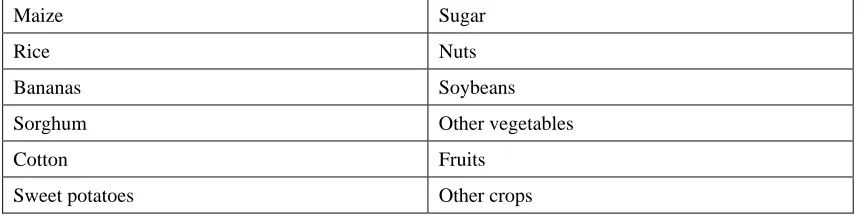
[image:6.595.84.516.608.716.2]The question arising from the debate is why developing countries are doing so badly in exporting agricultural products (see Table 1) and what is stopping them from improving their agricultural productivity and exports. Given that their economy is focused on agriculture, one would suggest that through greater opening of markets and an increased productivity in the agricultural sector they could boost their exports and hence stimulate domestic growth. Why this is often not the case will be analysed in the following section. In light of the relatively greater importance of food and agriculture for the developing countries’ economies, it is of considerable interest to examine what impact protectionism by OECD countries has had on trade in this sector in recent decades.
Table 1. List of most important agricultural export products from developing countries
Maize Sugar
Rice Nuts
Bananas Soybeans
Sorghum Other vegetables
Cotton Fruits
Sweet potatoes Other crops
2.2 Developing
country
efficiency
– Why is efficiency so low?
Low efficiency is often a big problem associated with developing countries, which come about through latent low productivity in agriculture that is often made worse by the lack of accompanying infrastructure. According to Piggin (2003), this is due to a string of microeconomic factors, such as a paucity of management skills, the low skill of farmers, a lack of processing technology, lack of markets, poor infrastructure, lack of market information, and also inadequate government policy and coordination.
Moreover, low efficiency is not attributable to product specific problems but rather to the lack of market information, technology management and infrastructure. All these problems combined suggest a lack of investment in developing countries’ agricultural sectors and they also suggest that with an increase of investment in local/domestic agriculture, the position of developing countries could be different, as opportunities for developing countries lie in free trade and large export potential.
Developing countries’ share of exports over time is also a reason for low efficiency in trade, as changing profiles of protection in OECD economies shift from bulk products (e.g. grains) to non-bulk products (e.g. meat products, fresh fruits and vegetables, processed foods) (Hertel et al., 2000). From this it is clear that developing countries are relatively more reliant on the slow-growing, bulk food product trade, with only slow growth in non-bulk food exports (16% in 1965 to 42% in 2000).
It is important to recognise that the issues facing LDCs (commonly known as G90) and middle-income developing countries (G20) differ significantly. For the middle-middle-income countries, the primary issue is market access. Many of the world’s poor live in these countries, and so market access alone can have significant poverty-reducing effects. However, for the least-developed countries, the principal problem is not market access, but lack of production capacity to take advantage of new trading opportunities (World Bank, 2002).
To that end, the World Bank and the International Food Policy Research Institute (IFPRI) point to evidence that more trade liberalisation and less agricultural support in OECD countries could decrease capacity by citing the case of cotton. Major cotton producers in the Sahel suffered a 40% drop in cotton farm level prices over the last two years, which resulted in an increase in rural poverty by 8%. Also, a 40% decrease in cotton prices results in a doubling of the poverty gap among cotton farmers and a 40% increase in the poverty gap for all farm households in the Sahel cotton-producing countries.
The indirect effect of this phenomenon is interesting because as cotton prices fall, farmers shift their resources away from cotton into other crops, livestock or non-farm activities. The impact of this substitution depends on the labour intensity of cotton production: by requiring 186 person-days per hectare, cotton is 15% more labour-intensive than the area-weighted average of other crops. It is therefore likely that resources will be shifted to maize, as this is the least labour-intensive crop, whereas fruits and vegetables are the most labour-intensive crops. As a consequence, capacity in cotton production is shrinking, despite the fact that these countries have a comparative advantage in producing cotton which also delivers high gross margins. In addition, the losses in export revenue in Mali, Benin and Chad associated with US cotton subsidies in particular are greater than US development assistance. As a result, these countries lose essential resources that could have been diverted into capacity-building.
The World Bank (2002) further stated that support for agricultural production should come in two ways:
• Support for agricultural modernisation and development – investment in productive capacity in agriculture and food processing.
• Support for agricultural-related development institutions that are not trade-distorting, e.g. research, risk-management of agricultural product price fluctuations and diversification.
Low-income developing countries need both technical and financial assistance as well as technical assistance for negotiations and marketing of exports, as product and country brands need to be established and quality concerns met. Trade-related infrastructure is vital as are other issues related to the general investment climate, such as a weak financial sector (export finance is often a major constraint inhibiting exports in many low-income countries), and challenges that are more specific to exports (developing countries and their exporters may have difficulty with both the implementation of, and demonstrating compliance with, international product standards and other multilateral agreements).
Foremost among microeconomic factors that are vital in boosting efficiency and productivity is the creation of sufficient credit at competitive rates for both producers and processors, as this has important implications for private sector investment in storage, transportation and marketing of agricultural products (Ellis, 1992).
The focus of credit has changed over the last decade to increasingly target small farmers and the rural poor for credit intervention. The reason is to tackle the low efficiency of small farmers by increasing their output potential with new technology and to provide them with cash at critical periods in the crop or livestock season and with collateral for loans, but also to undo the exploitative or monopolistic behaviour of private moneylenders (Ellis, 1992). Therefore the objectives of credit policies are to alleviate critical constraints hampering growth in agricultural output, by making money available for essential farm investments, e.g. to accelerate the adoption of new technology by smaller farmers, and by providing working capital for the seasonal purchase of variable inputs, and hence optimising agricultural output.
The lack of an irrigation policy plays a specific role in hampering agricultural growth in a different way, as it would reduce risk by diminishing the adverse impact of rainfall variation on crops, which increases crop yields directly and hence increases farm output. It would also allow a switch to a higher-value farm mix by permitting previously uncultivated land to be brought under cultivation and extending the cultivation into semi-arid regions.
Finally, investment in skills and education in rural areas is vital if agricultural productivity in developing countries is to be enhanced. Undoubtedly, low levels of skills contribute to poor agricultural output (Piggin, 2003). In addition to the microeconomic factors, trade policy reforms must address any remaining anti-export bias, and also efficient land policies and land tenure institutions are needed to ensure the functioning of land markets, property rights and efficient farm structures.
2.3 Institutional problems with trade and investment - Market access is
vital, but not enough
It is often claimed that barriers to trade result from domestic and border protection, primarily in the form of domestic subsidies and export supports. Barriers, however, can also arise from indirect obstacles to trade resulting from developing countries’ lack of institutional capacity to engage in the global economy and to participate in multilateral institutions (e.g. the WTO) on equal terms.
Evidence shows that microeconomic factors, as outlined in the previous section, are a key factor behind the low productivity. And these factors are relatively decoupled from the protectionism employed in OECD countries. Despite all this, however, agricultural policies in OECD countries do after all influence policies and agricultural practices in developing countries. This is especially true in the area of food policies, which require adherence to standards set in developed countries before products can be exported (Garcia & Poole, 2004). Compliance is very costly for developing countries and poses a huge burden for the export markets. Therefore, developing countries often find that they are faced more with non-trade barriers than with market-access issues.
A critical element in this assessment is to what extent OECD agricultural policies will influence prices and what impact this might have on farms in developing countries and on the farmers themselves. In addition, what products are most likely to cause price volatility and also influence exports? The products most likely to be affected in developing countries are sugar, cotton, milk and some selected crop products such as maize. Livestock products will not be significantly affected due to the fact that non-trade barriers in the form of food safety requirements imply a high compliance cost which often cannot be met. The same is true for fruit and vegetable products. Regarding wheat, since the EU’s internal intervention price of this commodity is already below the world market level, any effect here can be disregarded.
One example (cotton) was already given above in section 2.2 as to how a price change impacts on farms and on farmers. Another example is sugar. With the EU having ratified the new sugar policy, a 36% cut in EU support will be paid to sugar producers. This will also affect ACP sugar producers as their exports of 1.6 million tonnes of sugar to the EU, due to a preferential quota access, will be reduced, as a result of the reform, to 1.3 million tonnes – leaving a loss in revenue of about €150 million. As a consequence of this reform, less EU-subsidised sugar (two million tonnes) will be exported, which in turn will raise the world price for sugar. However, the benefits from this change will go to countries with a comparative advantage, such as Brazil, Thailand, Zambia and Mozambique to name a few. At the same time, it will also squeeze several other high-cost sugar-producing countries (namely Caribbean producers) out of the market, as they cannot afford to grow sugar without the higher EU guaranteed payments.
A decrease in the world price of sugar by 10% with a subsequent liberalisation of trade by 50% would have a mixed effect on farmers in the developing world. Farmers in LDCs would be at a price disadvantage due to cheaper production and placement onto the world market of sugar from competitive producing countries and their unprotected competition. An opportunity to market their sugar would not trickle through to those farmers, as their sugar is too expensive and investment needed to consolidate and restructure is coming too slowly to take advantage of the increased market opportunity.
arising from liberalisation are often captured by officials due to nepotism and streamlined marketing channels. As a result, the benefits rarely filter through to farmers.
It is also the case that despite the preferential trade agreement1 between most developing countries and the EU (Beattie, 2005), the allowed import quota to the EU was never filled. This suggests that there are local barriers to trade for the developing countries, including a lack of transport and low productivity, as observed with inadequate transport from producers to markets and more importantly the shipping of the products to international markets. Evidence of this is the spate of recently cancelled flights from Zambia to Europe due to insufficient traffic (Nair, 2004). To what extent the erosion of preferential trade agreements might exacerbate this situation is hotly debated.
Another barrier for developing countries is that they often tax their agriculture. As one of their only viable industries, developing countries have often no choice but to tax their agricultural sector as a source of government revenue. This is in stark contrast to the practice in OECD countries. Their products become relatively more expensive and hence they lose their competitive edge. A new government policy is needed to make the agricultural sector more competitive in developing countries.
Developing countries also have a thorny state vs. market approach which often is referred to as ‘market failure’ (Ellis, 1992). The inability of private markets to deliver all the ingredients of development, taken together with the non-working or imperfection of many markets, provided a well-known set of market failures, which state action was thought to overcome. The approach has been called into question, resulting in the identification of state failure, which is often more detrimental in its impact on society than the market failure that they purport to overcome (Ellis, 1992).
The biggest emphasis has been placed on the pervasive inefficiency and impropriety of state institutions in developing countries, and the descriptions that have been used to capture these facets include mismanagement, malpractice, overstaffing, corruption, bribery, nepotism and personal fortune-seeking. Therefore many farms in developing countries are confronted with incomplete or imperfect markets for inputs and/or outputs. As Stiglitz (1986) pointed out, sometimes markets exist but function defectively due to a lack of information. It is often observed that local farms maintain a significant degree of autonomy from the market, as typified by the share of farm output that is consumed as family subsistence rather than sold in the market.
So far, however, there is very little literature that provides any reference to the link between microeconomic factors, i.e. production-related issues such as credit, farming methods, etc. and the macroeconomic impact of trade or vice versa. There is plenty of specific literature on both of these levels individually but little or none explicitly linking the two and showing the potential impact or the interaction between them. In other words, research is needed to cover the link between trade policy (and its liberalisation) and the impact at the farm level in developing countries. This has been done to some extent in the context of FDI and trade (complements or substitutes), but what has not been done is to assess what impact trade liberalisation will or might actually have also on displacing or complementing local investment in rural areas – or indeed on how to transmit know-how or best practice.
1
2.4 How trade and investment can help developing countries to
overcome these problems
Trade policy can create an environment that favours investment through the creation of a more predictable and secure trade and investment regime, an issue that links trade policy and good governance (UNCTAD, 2003). Through such a regime, investments can operate as productively as possible through their effects on resource allocation and in generating efficiency gains. Increased competition as well as the emergence of new forms of international trade also bring increases in total factor productivity. In principle, trade liberalisation should increase competition in the domestic markets, acting as a complement to competition policy.
Openness also favours growth at the world level, as new products and ideas become more easily available, which in turn stimulates faster growth rates of productivity, but this depends on the initial level of development and efficiency of the country considered. This is because the comparative advantage and the specialisation patterns of countries are not static, shifting with movements in technology and factor endowments.
Since international economics consists intrinsically of the economics of international adjustment (international macroeconomics) and the economics of trade (international microeconomics), it is important to understand that the economics of trade policy (WTO) shaping trade liberalisation have nothing to do with the international microeconomics, but rather more with the international macroeconomics via good governance. Therefore, it becomes clear that good international microeconomics evolves into good macroeconomics and despite the fact that this causation is unidirectional, good macroeconomics such as governance, trade policy, etc., may work in parallel to bring about good microeconomics.
That said, the direction of causation runs from good inputs and techniques to better domestic performance to more exports and lastly less imports. In practical terms, this means that it is essential to provide cheap credits to farmers for investments in either machinery or other forms of inputs. The badly needed investment in developing countries drives up productivity through better inputs, such as fertilizer and seeds, but also through improved machinery, which results in changes in the methods of production. This farm-level improvements need to be accompanied by a robust extension service, whereby farmers get the relevant information of how and where to market their products, because the improved performance provides increased output. Also, as a direct result, farm gate prices will be higher and the gross margin for farmers will increase, due to more output per hectare.
The parallel effect of further trade liberalisation opens the door for potentially further exports from developing countries. In this context, one has to take into account how prices affect farmers in the developing world (some examples are given in section 2.1 and 2.2), as this determines the international competitiveness of these farmers. But assuming that some prices for some products do not deteriorate due to trade liberalisation, the newly-found export opportunity combined with the increase in output and productivity may result in an increase in exports. The economics of trade policy, providing greater market access and reduced support levels in OECD countries, has an indirect link to microeconomics via good governance in supporting the farm-level sector through investments. This phenomenon then has a direct link to greater exports which results in reduced imports and a build-up of a more stable domestic market where investments will flow easier.
Policies that make an economy open to trade and investment with the rest of the world are needed for sustained economic growth. The evidence on this is clear. No country in recent decades has achieved economic success, in terms of substantial increases in living standards for its people, without being open to the rest of the world. In contrast, trade opening (along with opening to foreign direct investment) has been an important element in the economic success of East Asia, where the average import tariff has fallen from 30% to 10% over the past 20 years.
The effect of FDI on transitional and developing countries has been the subject of a wide range of research and an extensive publication list has evolved in recent years (Garcia & Poole, 2004; Fulponi, 2005). In particular, research has focused on various aspects of vertical and horizontal integration and their implications for local suppliers.
Despite the emerging evidence of the effect of FDI on globalisation and its effect on developing countries’ local suppliers, this review does not focus on FDI as the share of FDI on investment in developing countries is approximately only on average 1.5 % with some exception in the coffee industry where the share is around or above 25 %. Therefore, it is far more important to focus on local investments originating from within the country, as these drive the local economy.
However, although FDI represents only a small percentage in terms of investment and, as a consequence, does not affect the entire economy nor all sectors, it is important to recognise the spill-over effects that FDI has in the economy, especially on improved access to finance, increased investments and quality improvements by small local suppliers. A major problem in developing countries is the breakdown of exchange systems and contract enforcement mechanisms, which are solved in some instances by private institutional innovations (Blanchard, 1999). FDI has played an important role in this process through vertical integration. Research has shown, in particular, that FDI-induced vertical integration has contributed to improved access to finance and inputs and productivity growth of suppliers (Gow & Swinnen, 2001).
The evidence presented indicates that FDI has a role to play and, in particular, in making innovation accessible. However, FDI cannot be used as a substitute for other forms of investment, especially local investment, as only this will drive the local economy.
2.5 How does trade impact on welfare: Can growth be linked to the
reforms?
To improve the economies in developing countries, freer trade in terms of greater market access but also stringent measures at home, such as improved infrastructure and adequate market information, are necessary. It is also suggested that more trade will impact positively on welfare, but the role of trade on welfare gains also needs to be identified. The findings of a case study from Ethiopia (Dercon, 2001) are used below to analyse the impact of trade on welfare issues.
It became apparent in Ethiopia that increased producer crop prices are directly linked to reforms and hence play a large part in explaining growth. Furthermore, there also appears to be a growth effect from a shift back into agriculture, especially on good-quality land of high potential. Higher returns to roads and good location play a large part in explaining growth and are consistent with the increased encouragement of market-oriented activities, even though in the case of Ethiopia this is also likely to be a reflection of a peace dividend.
more than 80% to the overall estimated reduction in the poverty gap. The other regions stayed poor and had much lower growth (about a third below average), as they did not manage to grow as much due to their land endowment (either small or of poor potential) and due to their remote location with poor road connections.
In terms of welfare gains or poverty reduction, the poverty gap index showed that crop price increases and higher returns to infrastructure contributed more to the percentage decline in the poverty gap than to growth. But this was mainly benefiting only part of the poor, those with better endowments in terms of land and location. Some of the households with the poorest endowments, such as poor location, also did not obtain much better crop output prices from the reforms. The same factors seem therefore to be driving growth and poverty. But this also constrains any poverty reduction via growth. The poor households are unlikely to be able to respond strongly to increased incentives or indeed to experience these increased incentives in the form of higher output prices or returns. This is reflected in the poverty-growth elasticity. It is well below one for all the poverty measures discussed: high growth does not yield more than a proportionate percentage decline in poverty. The counterfactuals discussed also highlight the role played by risk: for example, poor rain was also an important factor limiting growth for some of the poor. Growth benefits from better insurance systems and safety nets, but also from better savings and credit markets.
Despite the fact that these reforms do not deliver similar benefits to all the poor, the results indicate that there are high costs associated with not implementing these reforms. If there had been no reforms, returns to assets and real relative prices would have remained as they were in 1989. In that case, per adult consumption would have declined further and poverty increased by a fifth.
3. Summary/Conclusions
The Doha negotiations have renewed interest in the effects of liberalisation of markets on developing countries. Middle-income developing countries stand to gain more because the commodity composition of their exports is such that they will gain substantially, while lower-income countries need additional help to take advantage of new opportunities. Here we look at whether and how smaller developing countries’ agricultural production systems can gain from participation in trade, in practical terms on the ground (although the initial impetus still comes from sound trade policies and good governance).
It is commonly asserted that integration into global markets offers the potential for more rapid growth and poverty reduction for poor developing countries. Trade and investment (including FDI) are often seen as beneficial factors that can be an important source of much-needed technology, knowledge and capital for poorer countries. But how do these effects play out to assist microeconomic productivity and efficiency at the farm or industry level?
Economic efficiency comes from a mix of factors, often referred to as the ‘inputs’ of land, labour and capital investment. As well as being well away from the frontiers of knowledge and best practice, it has also been shown that developing countries are often under-investing in agriculture (with consequent high levels of labour inputs) and therefore cannot capture the benefits of full reform. Under-investment is particularly apparent in the lack of information and know-how, the low skill of farmers, the lack of processing technology, the lack of efficient markets and pricing, poor infrastructure and inadequate government policy coordination.
important implications for private-sector investment in storage, transportation and the marketing of agricultural products.
One way that liberalising trade may actively assist developing country agriculture is via price changes induced by trade liberalisation, resulting in the liberation of dormant or latent production (an enhanced supply response). Increases in output prices would clearly be one such channel for such economic implications to be borne out in developing countries.
It is not just export potential, however, that presents an opportunity for developing countries’ agricultural sectors. Their existing problems and lack of domestic effectiveness are not due to product-specific problems but rather to the lack of market information, technology management and infrastructure. Addressing these problems in a coordinated manner also suggests that improving the level of domestic investment, with the parallel improvement of technical knowledge derived from exposure to best practice in limited levels of import penetration and FDI (less than 10% generally of total investment) will most probably serve to stimulate the level of domestic production. The increased consumption of domestic input would not therefore lead to an explosion of imports across certain products, where foreign producers have no comparative advantage, and these can instead be met by an improved level of domestic supply (and increased efficiency).
Market barriers to agricultural imports and protectionism within large trading blocs have probably made it harder for developing countries to raise the scale of their domestic agricultural activities and increase exports. But the story is not simply about enhanced export opportunities. Both the level of local investment and farm industry knowledge can be improved by increased exposure to higher-quality international inputs (via a selective increase in imports).
The same can be said of models of best practice (via a limited exposure to foreign know-how and management skills in international operations). Both of these effects should move the domestic industry further towards what economists refer to as the efficiency frontier. Therefore, significant domestic output improvements can be achieved without western levels of labour displacement or full-scale mechanisation – neither of which are likely to be appropriate to the complex and differentiated domestic advantages (e.g. geography and climatic conditions) that exist in smaller developing countries.
Viewed in this light, enhanced liberalisation may well mean greater export opportunities for LDCs, but properly managed it need not lead to a freefall in domestic production and a surge in import penetration. Hence, while it is certainly not currently fashionable, it may yet be intellectually respectable to argue that controlled liberalisation could generate as many opportunities as threats for farmers in the smaller developing countries. The tricky issue is how to take this topic forwards from the somewhat trivial level of the present debate aimed principally at bolstering the trade-negotiation positions of poor country governments towards more relevant concerns. A topic ripe for research is the role that trade reform can play in giving poor countries a chance to improve their domestic agricultural performance.
|13
Alexandraki, K. and H. Lankes (2004), The impact of preference erosion on middle-income developing countries, IMF Working Paper WP/04/169, IMF, Washington, D.C.
Anderson, K., B. Dimaranan, J. Francois, T. Hertel, B. Hoekman and W. Martin (2001), The cost of rich (and poor) country protection to developing countries, CIES Discussion Paper No. 0136, Centre for International Economic Studies, Adelaide.
Audley, J. and H. Anker (2004), Reconciling Trade and Poverty Reduction, German Marshall Fund, Brussels.
Beattie, A. (2005), “Trading partners lose a sense of proportion”, Financial Times, 3 October. Bhagwati, J. and T. Srinivasan (2002), “Trade and Poverty in the Poor Countries”, American
Economic Review Papers and Proceedings, May.
Blanchard, O. (1999), The economics of post-communist transition, Oxford: Clarendon.
Dercon, S. (2001), Economic Reform, Growth and the Poor: Evidence from Rural Ethiopia, Working Paper 2001-8, Centre for the Study of African Economics, Oxford University.
DFID (UK Department for International Development) (2001), Making globalisation work for the world’s poor, December.
Dollar, D. and A. Kraay (2001), Trade, Growth, and Poverty, Development Research Group, World Bank, Washington, D.C.
Dries, L. (2004), “Vertical coordination and foreign direct investment: A comparative Study of the dairy chains in Bulgaria, Poland, and Slovakia”, paper prepared for The World Bank, Washington, D.C.
Dries, L. and J. Swinnen (2004), “FDI, vertical integration and local suppliers: Evidence from polish dairy sector”, World Development, Vol. 32, No. 9: 1525-1544.
Ellis, F. (1992), Agricultural Policies in Developing Countries, Cambridge: Cambridge University Press.
Evenett, S. (2005), “Some tough love on aid for trade”, Intereconomics, Vol. 40, No. 6.
François, J., B. Hoeckman and M. Manchin (2005), Preference erosion and multilateral trade liberalization, DFID project on Global Trade Architecture and Development, London. Fulponi, L. (2005), “Private voluntary standards in the food system: the perspective of major
food retailers in OECD countries”, forthcoming in Food Policy.
Garcia, M. and N. Poole (2004), “The development of private fresh produce safety standards: Implications for developing Mediterranean exporting countries”, Food Policy 29: 229-255.
Gow, H. and J. Swinnen (2001), “Private enforcement capital and contract enforcement in transition countries”, American Journal of Agricultural Economics, 83(3): 686-690. Guyomard, H. (2005), “Agricultural trade preferences: The case of EU/ACP-LDC relations”,
paper presented at seminar at the University of Rennes.
Hertel, T., K. Anderson, J. Francois and W. Martin (2000), Agriculture and Non-Agricultural Liberalisation in the Millennium Round, CIES Policy Discussion Paper No. 0015, Centre for International Economic Studies, Adelaide.
Hoeckman, B. and S. Prowse (2005), “Economic Policy Responses to preference erosion”, paper presented at Preference Erosion Symposium, Geneva, 13-14 June.
Hu. A. and G. Jefferson (2002), “FDI impact and spillover”, The World Economy, 25(8): 1063-1076.
IMF (2001), Global trade liberalisation and the developing countries, Issue Brief 01/08/2001, IMF, Washington, D.C.
IMF and World Bank (2005), “Doha Development Agenda and Aid for Trade”, Development Committee Meeting paper, 25 September.
Khor, M. (2005), “EC’s extreme WTO demands threaten development in the developing Countries”, paper presented to the European Parliament, 9 November.
Konnings, J. (2001), “The effects of foreign direct investment on domestic firms. Evidence from firm-level panel data in emerging economies”, Economics of transition, 7(1): 619-633. Klein, M. (2003), Ways out of Poverty: Perspectives on policies for poverty reduction, World
Bank, Washington, D.C.
Lankes, H. (2005), “Finding a voice: Tackling the fears of small developing countries in world trade talks”, Finance & Development, March.
Nair, S. (2004), Poverty impact of Doha: Zambia, ODI paper No. 10, Overseas Development Institute, London.
Page, S. (2004), Preference erosion: Helping countries to adjust, ODI paper No. 5, Overseas Development Institute, London.
Piggin, C. (2003), Working group SWOT analysis on agricultural development in East Timor, ACIAR Proceedings No. 113, Australian Centre for International Agricultural Research.
Polaski, S. (2005), Impact of the Doha Round on developing countries, Carnegie Endowment for International Peace, Washington, D.C.
Rodrik, D. (2004), “Growth Strategies”, John F. Kennedy School of Government, Cambridge, MA: Harvard University, August.
Saldanha, J. (2003), Agriculture, small countries and globalization, ACIAR Proceedings No. 113, Australian Centre for International Agricultural Research.
Santos-Paulinho, A. (2005), “Trade liberalization and Economic Performance: Theory and Evidence for developing countries”, The World Economy, 28 (6), 783-821.
Stiglitz, J. (1986), “The new Development Economics”, World Development, 14 No. 2.
Swinnen, J. (2005), When the market comes to you – or not, final report of the World bank on dynamics of vertical integration in Agrifood chains, forthcoming.
Tyers, R. and K. Anderson (1988), “Liberalising OECD agricultural policies in the Uruguay Round: effects on trade and welfare”, Journal of Agricultural Economics, 39: 197-216. UNCTAD (2003), Back to basics: Market access issues in the DOHA agenda, UN Conference
on Trade and Development, Geneva, May.
Winters, Alan (1994), “Agriculture in the Uruguay Round: The LDC perspective”, in K.A. Ingersent, A.J. Rayner and R.C. Hine (eds), Agriculture in the Uruguay Round, London: St Martin’s Press.
Winters, A, N. McCulloch and A. McKay (2002), Trade Liberalisation and Poverty: The Empirical Evidence, Sussex: University of Sussex.
Winters, Alan (2004), “Trade Liberalisation and Economic Performance: An Overview”,
Economic Journal, 114.
World Bank (2001), Market Access for Developing Countries’ Exports, World Bank, Washington, D.C.
C E
P S
CENTRE FOR EUROPEAN POLICY STUDIES
Place du Congrès 1 ▪ B-1000 Brussels
Tel: (32.2) 229.39.11 ▪ Fax: (32.2) 219.41.51 www.ceps.be ▪ [email protected]
Website:
www.ceps.be
Bookshop:
http://shop.ceps.be
About CEPS
Founded in 1983, the Centre for European Policy Studies is an independent policy research institute dedicated to producing sound policy research leading to constructive solutions to the challenges facing Europe today. Funding is obtained from membership fees, contributions from official institutions (European Commission, other international and multilateral institutions, and national bodies), foundation grants, project research, conferences fees and publication sales.
Goals
• To achieve high standards of academic excellence and maintain unqualified independence.
• To provide a forum for discussion among all stakeholders in the European policy process.
• To build collaborative networks of researchers, policy-makers and business across the whole of
Europe.
• To disseminate our findings and views through a regular flow of publications and public
events.
Assets and Achievements
• Complete independence to set its own priorities and freedom from any outside influence.
• Authoritative research by an international staff with a demonstrated capability to analyse policy
questions and anticipate trends well before they become topics of general public discussion.
• Formation of seven different research networks, comprising some 140 research institutes from
throughout Europe and beyond, to complement and consolidate our research expertise and to greatly extend our reach in a wide range of areas from agricultural and security policy to climate change, JHA and economic analysis.
• An extensive network of external collaborators, including some 35 senior associates with
extensive working experience in EU affairs.
Programme Structure
CEPS is a place where creative and authoritative specialists reflect and comment on the problems and opportunities facing Europe today. This is evidenced by the depth and originality of its publications and the talent and prescience of its expanding research staff. The CEPS research programme is organised under two major headings:
Economic Policy Politics, Institutions and Security
Macroeconomic Policy The Future of Europe
European Network of Economic Policy Justice and Home Affairs
Research Institutes (ENEPRI) The Wider Europe
Financial Markets, Company Law & Taxation South East Europe
European Credit Research Institute (ECRI) Caucasus & Black Sea
Trade Developments & Policy EU-Russian/Ukraine Relations
Energy, Environment & Climate Change Mediterranean & Middle East
Agricultural Policy CEPS-IISS European Security Forum