IAC-17-D1.4A.9
INTEGRATING LIFE CYCLE ASSESSMENT OF SPACE SYSTEMS INTO THE CONCURRENT DESIGN PROCESS
Andrew Ross Wilsona*, Massimiliano Vasileb
a Department of Mechanical & Aerospace Engineering, University of Strathclyde, James Weir Building, 75 Montrose
Street, Glasgow, United Kingdom, G1 1XJ, [email protected]
b Department of Mechanical & Aerospace Engineering, University of Strathclyde, James Weir Building, 75 Montrose
Street, Glasgow, United Kingdom, G1 1XJ, [email protected] * Corresponding Author
Abstract
Recent commitments by national and international bodies towards environmental problems has allowed a range of mitigation measures and key sustainability issues to filter down and become embedded in a growing number of industrial and commercial sectors. Notwithstanding this, space operations have often been overlooked in key legislation or regulatory requirements, with the result that the environmental impact of such activities were often disregarded or ignored. Over the last few years things have begun to change as interest has intensified in the transparency and accountability needed from the space industry in order to fully understand and articulate its effects on the environment.
This has led to the development of an environmental management tool called Life Cycle Assessment (LCA) which is increasingly being adopted by the space industry to assess the full environmental impact of their products and practices over their entire life cycle. The European Space Agency (ESA) began work on this topic in 2009 by employing an internal concurrent design study called ECOSAT to consider the life cycle impact of the design, manufacturing, launch and operations of a satellite. One of the key findings of this study revealed that existing terrestrial focussed LCA databases lacked the scope and capacity to conduct such advanced assessments due to the unique and specialist nature of space sector operations.
To overcome this, ESA has continued to develop LCA methodology within the space sector to the point where it is now looking at introducing it into the design of future spacecraft and space systems. This indicates the manner in which the design and execution of European space missions will likely proceed. Running alongside this green movement, the New Space trend is predicted to introduce large numbers of small satellites into the space environment which will substantially alter environmental and societal impacts.
This paper presents an open-source LCA platform currently under development at the University of Strathclyde, outlining its integration into the concurrent design process of next generation green space systems. The LCA platform includes extreme scale systems from large constellations of nanosats to solar power satellites. Both extremes have in common the need of massive production cycles. The integration of LCA into the design process allows one to minimise the environmental impact and define new optimality criteria for the space system.
Keywords: Life Cycle Assessment, Concurrent Engineering, EcoDesign, Space Systems
Acronyms/Abbreviations
Concurrent Design Facility (CDF), European Life Cycle Database (ELCD), European Space Agency (ESA), Functional Unit (FU), High Accuracy Telescope for elephant Herd Investigation (HATHI), International Organization for Standardization (ISO), Life Cycle Assessment (LCA), Life Cycle Costing (LCC), Life Cycle Impact Assessment (LCIA), Life Cycle Inventory Analysis (LCI), Life Cycle Sustainability Assessment (LCSA), Open Concurrent Design Tool (OCDT), Social Life Cycle Assessment (SLCA), Society of Environmental Toxicology and Chemistry (SETAC), Strathclyde Mechanical and Aerospace Research Toolbox (SMART), Strathclyde Space Systems
Database (SSSD), United Nations Environment Programme (UNEP).
1. Introduction
the Paris Agreement and Sustainable Development Goals by 195 member states of the United Nations has resulted in a much more coordinated global approach towards setting goals and in achieving environmental sustainability. This vision illustrates that to achieve sustainability all sections of society must be fully engaged and the space industry is no exception.
To this end, Life Cycle Assessment (LCA) has become an important environmental management technique which is increasingly being applied within the space industry to assess the environmental impacts of products over their life cycles. Furthermore, it is swiftly being recognised as an essential tool for the measurement of environmental impacts in space systems by bodies such as the European Space Agency (ESA) Clean Space Initiative and others across the industry [2].
[image:2.612.97.269.405.568.2]LCA considers the entire life cycle of a product from raw material extraction through processing & manufacturing, assembly, transportation, use and end of life as displayed in Fig. 1. This shows a cradle to cradle representation of an LCA system meaning that some or all of the material or energy is put back into the product system via a recycling process at end of life. This is not always the case and alternatively a cradle to grave system may be applied where material or energy is disposed of at end of life. A combination of these two approaches is equally as valid an option.
Fig. 1. Life Cycle Perspective of a Product System
The use of this tool has grown in recent years to become an extremely important aspect of product development and improvement. This makes its integration within product design sessions vital in order to inform decision-makers of the potential environmental impacts of design choices made during preliminary mission plans. Doing this will assist in mitigating adverse environmental impacts as early into the design process as possible in order to create environmentally sustainable products.
This paper will present a new open-source LCA platform for space systems which is currently under development at the University of Strathclyde. The LCA platform incorporates processes which are capable of modelling a wide range of systems including cubesats, general space missions, large nanosat constellations and solar power satellites. The paper will also outline the integration of this platform into the concurrent design process of next generation green space systems. The integration of LCA into the design process allows decision-makers to minimise environmental impacts and define new optimality criteria for space systems. As such, it will act as the pathfinder for the space industry in finding the route to sustainability by using cutting-edge technological solutions that have the capability and practical application to mitigate the overall environmental impacts of space programmes and activities throughout the design process.
2. Life Cycle Assessment of Space Systems
2.1 LCA Framework
LCA is an environmental management tool which can be used to measure the environmental impacts of products, processes or services over their entire life cycle. It is internationally standardised by the International Organization for Standardization (ISO) through the ISO 14040 and 14044 environmental management standards on LCA. These standards were released in 2006 and provide a globally accepted framework to which all LCA studies should adhere to [3,4]. This framework consists of four stages which can be visualised in Fig. 2.
Fig. 2. LCA Framework (ISO 14044:2006) [3,4]
[image:2.612.315.543.464.627.2]Two important features within this stage are the functional unit (FU) and system boundaries of the study. The FU is a quantified performance of a product system for use as a reference unit. As such this is what all inputs and outputs of the study should be related to. The system boundary specifies which unit processes are included as part of the product system. Defining the system of study is particularly important for clarity relating to which unit processes are included as inputs and outputs within the study.
Secondly, the life cycle inventory analysis (LCI) phase involves data collection and calculation procedures to quantify relevant inputs and outputs of the product system under study. This can often be an extremely time consuming and complex stage but importantly allows for the accounting of everything involved in the system of interest. For this reason, LCI databases are commonly used as an inventory of process input and outputs.
The third stage is the life cycle impact assessment (LCIA) phase. Using the LCI results, this stage evaluates the significance of the potential environmental impacts of the product system under study. This process involves associating inventory data with specific environmental impact categories and category indicators, thereby attempting to understand these impacts. The stage consists of three mandatory steps. The first is the selection of impact categories, indicators and characterisation models which will be used within the study. The second is classification which is the assignment of LCI results to the relevant impact categories defined in the previous step. Thirdly is characterisation which involves calculating impact category results by converting LCI results into common units using characterisation factors. These converted units are then aggregated within the same impact category to come to a numerical indicator result.
Lastly, the interpretation phase considers the findings from the LCI and LCIA together. It should deliver results that are consistent with the goal and scope whilst providing a set of conclusions, limitations and recommendations. Additionally this phase should also identify any significant issues from LCI and LCIA and provide completeness, sensitivity and consistency checks.
2.2 Background of LCA within the Space Sector
LCA within the space sector is a relatively new concept. The topic was initiated by ESA in 2009 when they employed an internal concurrent design study called ECOSAT to consider the life cycle impact of satellite design, manufacturing, launch and operation of a space mission. The successful outcome of this study led to the ESA Directorate of Launchers calling for the environmental impacts of launch vehicles to be investigated. As such, a study on a Vega and Ariane 5
launcher was carried out in 2011. Attention then turned to full missions in 2012 and the impacts of four satellite missions (earth observation, telecommunications, meteorological and science) were investigated. Each of these missions used the results from the launchers study to provide an insight into the comparative impacts of the launch, space and ground segment [5,6].
Using the results from these studies coupled with expert input, ESA were able to create a new LCA tool called SPACE OPERA which is the first LCA database capable of calculating the environmental impacts of space missions. This was a lengthy process due to the complexity and uniquely differing requirements of space systems and is still classed as under development despite involving hundreds of experts from around the world [7]. However ESA hope to expand this database over time to update the methodology and add more space systems.
In addition to this, ESA continued to work on LCA and their methodology was refined to a point where ESA managed to create the first set of LCA guidelines for space systems which was released in 2016. The guidelines follow ISO 14040/14044 standards, setting out methodological rules on how to correctly perform space-specific LCAs [8].
ESA are continuing to work on LCA and have also recently proposed a new study called GreenSat which has an objective of using ecodesign principles in order to reduce the environmental impacts of a space mission by 50% on at least three environmental impact categories without increasing the score of any others [9].
However despite ESA taking the leading role, many other organisations and institutions have been contributing to the LCA remit within the space sector in recent years. For example, Politecnico di Milano, the University of Southampton and Deloitte Sustainability in addition to Airbus Sanfran Launchers and the University of Bordeaux are actively looking at integrating space debris and orbital space use as a life cycle impact assessment method for space missions. CNES and Airbus Sanfran Launchers have also conducted independent studies on the Ariane 5 and Ariane 6 launch vehicles respectively. Life cycle studies have also been conducted by researchers at the University of Texas on environmental impacts of launchers in the USA whilst the Eco-design Alliance for Advanced Technologies initiated a study to investigate and compare alternative space propellants.
2.3 LCA of a Space Mission
outlined in Fig. 2 should be followed as closely as possible when conducting a space-specific LCA.
The goal and scope should be defined by mission requirements with crucial study-specific elements such as the FU and system boundaries taken into consideration when running the calculations. However due to varying requirements and specifications of space missions the FU can be hard to define. As such, ESA suggest a simplified FU of ‘one space mission in fulfilment of its requirements’ which can be applied to multiple space systems [8]. After defining this, consideration can be made to the study system. Using a life cycle thinking approach similar to that displayed in Fig 1, the life cycle of a space mission can be broken down into mission phases. These are:
• Phase A+B – Feasibility + Preliminary Definition
• Phase C+D – Detailed Definition + Qualification and Production
• Phase E1 – Launch and Commissioning
• Phase E2 – Utilisation Phase
• Phase F – Disposal
[image:4.612.98.520.282.701.2]Within each of these phases, the space mission can be broken down into 4 segments; space segment, launch segment, ground segment and infrastructures. When combining each of these segments across each stage, a basic system boundary of a space mission is formed. This system boundary should be followed as closely as possible (depending on the study requirements). This system boundary can be seen in Fig. 3 along with a detailed breakdown of the life cycle steps involved under each segment for each phase.
LCI procedures require that input and output data is calculated and applied. Such inputs and outputs can normally be found within databases and processes of LCA specific software. These are known as process databases which are used to determine all flows within a unit process. This is the recommended method of conducting LCA according to ESA and is how their ESA SPACE OPERA tool was created (ESA created new and unique processes for a wide range of space systems, materials, components and equipment with relevant unit flows). The relevant processes applicable to the product system need to be applied and updated by the expert user to reflect the goal and scope of the study and to quantify the intervention sizes.
The LCIA evaluation can also be conducted within specific LCA software using LCIA methods. These classify and characterise unit flows for selected impact categories based on scientific methods. There are two levels which these can exist on; midpoint and endpoint. Midpoint indicators are a problem-oriented approach used to translate impacts into environmental themes such as climate change, ozone depletion, acidification, human toxicity, etc. Endpoints are a damage-oriented approach which translates environmental impacts into issues of concern such as human health, natural environment, and natural resources. As recommended in the ESA Space systems LCA guidelines, midpoint indicators should be used for space-specific LCA studies. As such, a set of robust LCIA midpoint methods should be selected which reflect the goal and scope of the study. Examples of reliable methods include sources such as the Intergovernmental Panel on Climate Change, the World Meteorological Organization, CML, ReCiPe and USEtox. Within space-specific LCA databases, new space-space-specific processes should be created in such a way that all flows are already classified, characterised and updated into the LCIA methods to allow accurate and informative results to be obtained (although further updating may be required). In turn, this should allow for a simple evaluation and interpretation of results for each impact category.
Interpretation should be included within the reporting which is a mandatory component of an LCA study according to ISO 14040/14044 [4,5]. This can be incorporated into iteration or phase design reports. In addition to this, critical review is only required in case of comparison which is not recommended for space missions due to inherent differences in mission design and goals.
3. Concurrent Engineering & Ecodesign
3.1 The Concurrent Design Process
Dating back to the 1980s, concurrent engineering is a relatively new approach of product development
[image:5.612.317.536.176.326.2]where various design and manufacturing processes are run in a simultaneous manner in order to decrease product development time and the need for multiple design reworks [10]. It is a system engineering technique for design which is often achieved by employing multidisciplinary groups to design products in a collaborative and timely manner, leading to improved productivity and reduced costs.
Fig. 4. The Concurrent Design Process
A concurrent design session allows the complete sharing of product data through simultaneous interactions of different disciplines. This teamwork allows consensus decisions to occur through active participation of all players (including the customer). There are five basic elements of concurrent design:
• A facility
• A multi-disciplinary team
• A process
• Software/hardware infrastructure
• A design tool
In the last couple of decades this approach has begun to be adopted by the space sector during preliminary system designs of space missions [11]. As such, various space organisations have initiated work on the topic by developing their own concurrent design facilities and design tools. NASA created a tool called the Global Integrated Design Environment within their mission design facility called the Integrated Mission Design Center [12]. However, ESA are held in high regard for their work on concurrent design, having been working on the topic since the 1990s and are continually improving their concurrent design process for space missions. Initially, ESA used the Integrated Design Model as a data sharing platform during concurrent engineering studies within their CDF at the European Space Research and Technology Centre. However, although the tool was capable of delivering satisfactory outcomes for standard space missions, its flexibility for non-standard missions was severely lacking [13]. For this reason ESA launched an initiative to create a new design model that would allow collaborative cross-disciplinary work to be embedded from the embryonic stages of any given mission.
The tool, named the Open Concurrent Design Tool (OCDT), was released publically in 2014 and provides the building blocks for concurrent engineering using Open Standards Information Models and Reference Data Libraries [14]. It works as a Microsoft Excel plug-in for sharplug-ing mission design data and plug-information by allowing for domain specific data to be input to a central server. This allows for a cross-disciplinary sharing of data between disciplines by pushing and pulling data to and from a central server. Using a set of specific parameters means that other domain users can use data from other disciplines within their own calculations. However, the analysis and calculations for each discipline should occur externally to the OCDT in a separate tool as the OCDT is not a method of calculation. Results are then transitioned to an Excel worksheet and then uploaded to the OCDT server.
3.2 Integration of LCA into Concurrent Design Process for Space Systems
As one of the primary purposes of LCA is to inform decision makers of the environmental impacts of products during product development, LCA should be able to be utilised within a concurrent design session. For this reason, ESA have recently started work on methods of integrating LCA into the concurrent design process which has led to the development of an entirely new discipline called Ecodesign during the design of space missions [15]. This discipline is a method of product design whereby environmental considerations are taken into account for the entire life cycle of a product.
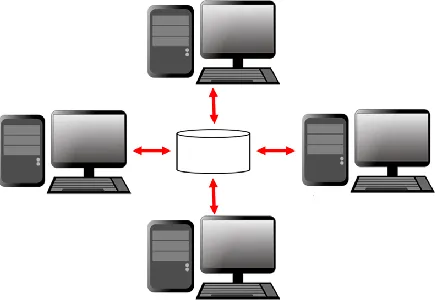
[image:6.612.312.537.155.312.2]Integrating LCA into the concurrent design process for space systems was first investigated by Chanoine et al [16] who suggested that this could be done by interfacing a space-specific Ecodesign tool (such as SPACE OPERA) with the OCDT during concurrent design sessions (see Fig. 5).
Fig. 5. Connecting LCA with the OCDT (Adapted) [16]
This is similar to how other disciplines interface with the OCDT during concurrent design. As shown in Fig. 5, other disciplines provide a range of mission-specific design data as inputs and outputs to the OCDT. The Ecodesign tool can then use this data to calculate the environmental results of the mission and/or sub-system. To do this, LCI databases will be required containing a range of background inventories (both space-specific and generic) which can be used as part of calculation procedures. This should already be implemented as part of the Ecodesign tool along with LCIA methods to generate the results. The expert user would then merely input mission-specific data into the calculation engine along with any other generic data to generate the environmental results. These results should then be fed back into the OCDT so that other domain users can view the results and alter design parameters appropriately.
In accordance with ISO 14040/14044 and the ESA Space systems LCA guidelines, everything which is calculated should refer back to the goal and scope of the study which should be set prior to the concurrent design iteration during mission requirements. The tool should therefore calculate the entire system boundary for each phase across all four segments (see Section 2.3).
Investigation (HATHI) study, a mission tasked with remotely tracking African elephants, run as part of the ESA Concurrent Engineering Workshop. The HATHI mission was the first space-specific CDF study to include the EcoDesign discipline which was executed by the corresponding author of this paper. However during this process it became apparent that there were several problems with its integration which ESA are now working to resolve. These issues are discussed fully in Section 3.3.
[image:7.612.73.298.310.478.2]Despite this, the integration of LCA into the concurrent design process is an essential development for the space sector if the environmental impacts of space systems are to be reduced. As shown in Fig. 6, this is because adverse environmental impacts are easier to modify the earlier into the design process that they are identified. In addition to this, it is also essential that LCA within the broader space sector is developed in line with the LCA sector to give parity across the industries.
Fig. 6. Ecodesign Process for Space Missions [16]
3.3 Issues Relating to Space-Specific Ecodesign The novelty of space-specific Ecodesign has meant that there has been very little evidence to base how well LCA can be integrated within a concurrent design session. Theoretically, the process of integrating LCA into the concurrent design process of a space mission is rather simple. However from the issues encountered during the concurrent design session of the HATHI mission, it was clear that the integration of LCA needs to be refined.
The HATHI study showed the lack of understanding with respect to LCA amongst CDF experts, particularly concerning its functionality within a CDF environment. The OCDT itself does not have specific parameters or units of measurement suitable to host LCA results and as such, LCA results could not be fed back into the OCDT (as suggested in Fig. 3). Instead it was suggested that these results be communicated at the end of each iteration. Evidently this has ramifications with respect to
the timely manner in which impacts are communicated and the possible modification of design.
Aside from these issues, there were also numerous other problems with the functionality of the SPACE OPERA tool itself. The HATHI study was conducted in Redu, Belgium and was the first time that ESA’s Ecodesign tool had been used outside of ESTEC and this lead to the emergence of technical issues related to the central server. In particular, the use of the tool in Redu caused the ESTEC server to shut down. Moreover, as all the formulas are connected to the CDF at Redu, this meant that the production and assembly of the space segment could not be calculated. Therefore, a major part of the mission’s impacts were omitted from the results. Also, the tool would not export results in excel meaning that restitution of results to the OCDT would have been more difficult if this approach had been used.
Finally, the results themselves lack specificity in result breakdown. This was because the results were not broken down past phase categories meaning that individual processes or materials could not be investigated. Additionally there was an apparent lack of in-space operations and end of life datasets.
In view of the issues outlined, it is clear that there is a distinct need to address these problems whilst expanding LCA development in the space sector more widely. Additionally, although there are plans to disseminated it more widely in the future, as of yet the SPACE OPERA is not yet open source meaning access to LCA databases is severely restricted for the wider space community. For this reason, a new database was constructed at the University of Strathclyde to address these problems by creating a tool that works regardless of location, can export results as excel and break results down past phase categories whilst also addressing in-space and end of life impacts. As an end goal, the SSSD should be able to function within a concurrent design session meaning that its functionality with the OCDT will also be addressed, with particular emphasis of restitution of results.
4. The Strathclyde Space Systems Database
4.1 An overview of the SSSD
systems and the SPACE OPERA tool being more widely disseminated.
As such, the SSSD should contribute to and advance the development of LCA within the space sector by creating a new LCA database which is capable of being integrated into the concurrent design process of a space mission. To do this, the SSSD is being offered as an alternative open-source database with the intention of becoming part of the Strathclyde Design and Optimisation Toolbox available at the University of Strathclyde.
This toolbox is also linked with the Space Systems Toolbox at the University of Strathclyde where together, their purpose is to support design automation of complex space systems using one or multiple performance criteria. The optimisation and space systems toolboxes are part of the Strathclyde Mechanical and Aerospace Research Toolbox (SMART) that supports all Concurrent Engineering activities. Thereby the LCA tool fits into SMART and contributes to evaluate how green space systems are. In turn, this facilitates evaluations of a variety of space systems and the development of next generation green space systems.
4.2 Methodology
It is important to note that currently the database is still under development with processes being built up. However, data used for building these space-specific processes have been obtained from a variety of sources including experimentation, analysis, research and work conducted at the University of Strathclyde. Other sources include literature reviews, LCA databases, collaboration between various space organisations and entities and expert input. It utilises openLCA as the platform to host the database which is an open source software used for life cycle assessment studies. The database has been built within this software as a ZOLCA file.
The SSSD has been built to conform to the ISO 14040/14044 standards at all times and follow the ESA guidelines as closely as possible with the view of improving the methodology used. As such, this allows LCA studies of various space systems to be conducted in a similar manner to the method described in Section 2.3.
Although the goal and scope should be defined by mission requirements, the processes built within the SSSD cover all four mission segments across each phase. This allows the user to select exactly what the system boundary should contain and choose processes to include within the product system accordingly. Additionally, the FU is automatically set to ‘one space mission in fulfilment of its requirements’ assuming that the LCA results are run for Mission Level (Level 1). This can be changed depending on mission
requirements but may require further calculation through parameters depending on what FU is used.
The LCI has been built on top of European Life Cycle Database (ELCD) and Ecoinvent processes which are purpose built background inventories. This means that data could be collected and other processes built for the specific space systems while using these databases for the background (i.e. data for metal production, electricity consumption, travel, etc.). As such, space-specific processes were created by integrating custom-made flows with flows from these two databases. By coupling these new processes with specific ELCD and Ecoinvent processes, a tier-style approach was created. As such, the platform contains 5 levels for calculation which are split into different folders. These are:
• Level 1 – Mission Level
• Level 2 – Mission Phase Level
• Level 3 – Mission Sub-Phase Level
• Level 4 – Singular Activity Level
• Level 5 – Background Inventories
Whilst Level 5 contains the ELCD and Ecoinvent databases as background inventories, it also contains the SSSD background database which has separate folders for each mission segment containing a variety of relevant processes. This tier can be seen as a standalone level, providing singular processes which can be used in Level 4 processes (i.e. electricity consumption in Europe). Level 4 contains individual activities taken from the background inventories. The products flows from these are then taken and used with Level 3 processes which groups these individual activities into mission phase categories similar to the life cycle steps shown in Fig 3. Similarly, Level 2 takes the Level 3 outputs and groups them into mission phases whilst Level 1 groups everything for the whole mission. A more detailed breakdown of this can be seen in Appendix 1.
With these generic processes already created, it means that users merely need to gather space-specific and generic data to input into these processes. Each process has been created to determine a singular unit of output. For this reason, users need to input data into the processes at Level 3 to define the quantity of these individual activities flows. Level 1 and 2 will then automatically calculate the mission impacts (although the spacecraft mass will need to be identified in Level 1).
Table 1. SSSD Impact Categories
Impact Category Unit Source
Acidification kg SO2 eq. CML
Climate Change kg CO2 eq. IPCC
Eutrophication - Freshwater kg P eq. ReCiPe Eutrophication - Marine kg N eq. ReCiPe Ionising Radiation kg U-235 eq. ReCiPe Ozone Depletion kg CFC-11 eq. CML Particulate Matter Formation kg PM10 eq. ReCiPe Photochemical Oxidation kg NMVOC ReCiPe Resource Depletion - Fossil MJ fossil CML Resource Depletion - Mineral kg Sb eq. CML Toxicity - Freshwater Aquatic PAF.m3.day USEtox
Toxicity - Human cases USEtox
Toxicity - Marine kg 1,4 DB eq. CML
Water Consumption m3 ReCiPe
These categories were intentionally chosen to comprise of a wide range of potential environmental impact areas and are considered to be representative of a space mission. Besides these, a further three impact categories are under development or are intended to be incorporated into the database including noise pollution, orbital volume depletion and collision cascading potential.
Each of these impact categories sources already have flows classified into the relevant impact categories with characterisation factors included within the LCIA method. However, new space-specific process which created new flows were classified into the relevant impact categories and a new characterisation factor created based on scientific methods dependent on the flow type. As shown in Equation 1, characterisation of a substance can be calculated using the following formula which allows the impact category result to be a single unit:
(1)
Where IRc is the indicator result for impact category c, CFcs is the characterisation factor that connects intervention s with impact category c, and 𝑚s is the size of intervention s.
Once the LCI data has been input to the relevant processes, a product system can then be created within openLCA using the Level 1 process for the whole mission. The mass of the space system under study should be inserted and then the LCIA results can be calculated. This allows the user to view the total impact category results for the entire space system and also allows an in-depth breakdown of results as a percentage per impact category across each level.
The interpretation would usually be completed at the end of design reporting. However, this can also be done within the openLCA software after the results of the
product system had been calculated by creating a new project.
4.3 Towards Life Cycle Sustainability Assessment Due to the explosion of LCA activity in recent years, there have been numerous proposals to advance its methodology, including a move from the traditional form of LCA to a more encompassing Life Cycle Sustainability Assessment (LCSA) [17]. In addition to environmental impacts, this type of assessment also captures social and economic impacts in order to come to the traditional ‘three pillar' interpretation of sustainability for products.
This move towards LCSA is a secondary goal of the SSSD and allows an assessment to be made on social and economic issues for space systems. As LCSA is considered to be the future of LCA by the environmental management sector, including such an assessment within the SSSD seems like the next logical step for space-specific LCA. As such, the SSSD has been built so that it is capable of running independent LCA, Social Life Cycle Assessment (SLCA) and Life Cycle Costing (LCC) studies.
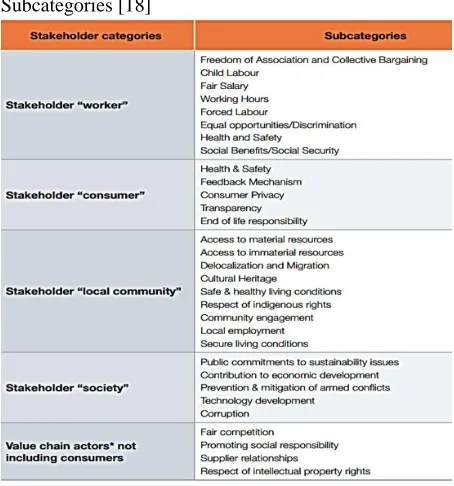
The SSSD SLCA calculates a range of social issues across all life cycle phases and is based on SLCA guidelines produced by the United Nations Environment Programme (UNEP) and the Society of Environmental Toxicology and Chemistry (SETAC) in addition to their LCSA guidelines [18,19]. It uses their suggested impact/stakeholder categories and subcategories (see Table 2) and carefully selected individual stakeholder subcategory indicators which have been developed based on space-specific data where possible.
[image:9.612.314.541.477.720.2] [image:9.612.314.540.484.720.2]The indicators have been created as social indicators within the SSSD which can then be added to the processes at Level 2 as flows. Within each of these indicators lies a suggested evaluation scheme which is based on space-specific data where possible. However, users are advised that the evaluation schemes are merely suggestions and are not intended to accurately represent a variety of different geographical regions, organisations or stages along the supply chain. It is recommended that users consider these kinds of variants in order to determine the most representative evaluation scheme. In addition, although international criteria were used where ever possible, SSSD social indicators primarily concentrate on European and UK based evaluation criteria.
Each evaluation scheme is based on reference data so when basing LCI results against the evaluation scheme, a social risk factor can be obtained. For example, an indicator for the subcategory of ‘Contribution to Economic Development’ is ‘Percentage of Spending on Education Opportunities’ which uses NASA data for percentage of the annual budget which is dedicated to education. The evaluation scheme then uses uniformed intervals to gauge the risk factors between the amount spent and nothing being spent.
The Risk Factors are determined by comparing the LCI results against a suggested evaluation scheme contained within each indicators general description. The evaluation scheme puts the LCI result into bands and these bands are attributed a risk factor and score (of between 0 and 100) which are:
• No risk (0)
• Very low risk (20)
• Low risk (40)
• Medium risk (60)
• High risk (80)
• Very high risk (100)
As shown in Equation 2, through the use of the appropriate risk factor, the impact category result can be calculated to a single score:
(2)
Where IRc is the indicator result for impact category c, RFe𝑚s is the risk factor obtained from evaluation scheme e for the size of intervention s, Ixs is the total number of interventions contained within Stakeholder Subcategory x containing intervention s, and SSc is the total number of Stakeholder Subcategories contained within impact category c.
Additionally, these impact category results can be used to reach a single score for the entire social impact
by dividing the result of each impact category by the number of impact categories and totalling these.
The SSSD LCC calculates all costs associated with space systems. It splits monetary flows into costs and revenues across all life cycle phases for a variety of impact categories. These flows can then be input into the processes at Level 2. The flows used all come under impact categories which are based on the life cycle steps included in the ESA system boundary (see Fig. 3).
For this reason, LCC is much simpler to calculate and is represented by Equation 3:
(3)
Where IRc is the indicator result for impact category c, TRcs is the total returns that connects intervention s to impact category c, and TCcs is the total costs that connects intervention s to impact category c.
Unlike LCA and SLCA, characterisation or risk factors are not needed because all the results are in a single unitary value. This means that by totalling all impact categories, the LCC result is easily calculated.
However, if combining these assessments to reach a LCSA, presenting results of three separate assessments can be rather tedious. For this reason, the SSSD has been built to combine all three into a singular assessment. To do this, a single score should be generated for SLCA and LCC. This is straightforward as each assessment type has common values (i.e. SLCA is based on a risk assessment score between 0 and 100 and LCC is based on a monetary value). These can then be used as individual impact categories within the LCIA phase of LCA.
4.4 Integration of the SSSD into the Concurrent Design Process
However as identified in Section 3.3, one of the major problems of connecting Ecodesign and the OCDT was the OCDT’s lack of functionality concerning its ability to handle LCA data. As the University of Strathclyde has its own CDF called the ‘Concurrent and Collaborative Design Studio’ where the OCDT has been installed to the central server, these problems could be addressed.
Within the OCDT server, LCA parameters have been created for the LCA impact categories which have all been assigned the applicable units of measurements as identified in Table 1. This means that a range of parameters can be added under the Ecodesign discipline for the space system under study. As the LCIA results of the SSSD allow for a detailed breakdown of indicator results for each SSSD platform level, these results could be attributed to the entire mission, mission phases or individual subsystems (depending on the level of study specificity required).
Due to novelty of the Ecodesign discipline, a new Microsoft Excel workbook required to be created that links with the OCDT server for the pushing and pulling of data. This new workbook was created based on Microsoft Excel file of LCIA results which can be exported through openLCA. This makes the exchange of data between the openLCA output file and workbook simpler and allows for a direct copy of output results which can then be integrated into the OCDT.
In addition to integrating the tool with the OCDT, the SSSD has an added benefit of being flexible enough to integrate with other tools within the University of Strathclyde’s Optimisation Toolbox. This means that the tool does not necessarily need to be part of a mission design setup to function as it can contribute to the optimisation of one or more space system components in order to satisfy a list of potential technical and system requirements.
5. Discussion
5.1 Evaluation
The SSSD offers a preliminary LCA tool for space systems to the wider space community which can be built upon to become a robust technique for calculating life cycle impacts of space-specific products. It is capable of being integrated into the concurrent design process in order to determine the environmental, social and economic impacts of the next generation of green space systems. Whilst the platform is still considered as being under development, there are numerous pros and cons which can already be observed.
The main advantage is the functionality of the SSSD as an open-source LCA database for space systems. However, as all the calculations are contained within the database itself as a ZOLCA file, it means that the tool will work regardless of location and is able to export
results as a Microsoft Excel file, breaking them down past phase categories. The SSSD is also in the process of including in-space and end of life impacts (such as impacts of orbital decay, platform erosion, space debris and re-entry). The database’s inclusion of LCSA also gives the SSSD more depth and showcases how a sustainability assessment can be reached rather than purely an environmental one. This helps to expand LCA within the space sector to be more in line with LCA development of the environmental management sector.
The SSSD’s ability to function both within a concurrent design session and with the OCDT is also fundamentally important with regard to the restitution of results. The tier-based system has an added advantage of allowing the user to change data inputs or outputs of processes at lower levels to assess how this impacts results at higher levels. It also allows the user to generate results for predefined parts of the entire product system, including components and equipment. Using this within a CDF environment allows users to go deeper with results analysis and communicate results in real time rather than at the end of each design iteration.
Without question, the ability to create such a platform is extremely challenging and time consuming. In this regard, one of the greatest obstacles to be overcome is that space mission designs are often unique and often involve unique materials and processes. Additionally, there has been very little research conducted into the environmental impacts of certain aspects (such as launch or re-entry). This makes gathering data extremely difficult and means that there are inherent uncertainties involved with any processes created. With a common need for massive production cycles across a variety of space systems, hundreds of different processes are required each with their own associated inputs and outputs. This means that it would be impossible for every process to be wholly completed with 100% accuracy. This is primarily due to lack of data and time restrictions which may sometimes lead to the requirement of generalisation for certain processes which may mean that some impacts are overlooked. However, processes where this occurs will still give a good enough result using averaged data of guestimates so that it does not need to be completely scoped out of the study.
5.2 SSSD Motives & Expected Outcomes
The SSSD was built to streamline integration of LCA into concurrent design sessions which can be used as part of SMART for use within future CDF studies. In doing this, the SSSD facilitates technological development and helps cut costs by creating a platform to calculate life cycle results for space systems as part of the overall design process.
Additionally, use of this tool may also create a competitive advantage with increasing demands for green products, whilst also allowing organisations to comply with current and future legislation. As such, it is hoped that the tool will contribute to the global environmental sustainability agenda.
5.3 Next Steps
Whilst the platform will continue to be built up over the next couple of years, the first results are expected to be generated by early 2018. However the derived results will not be considered for dissemination before the SSSD’s capabilities have been closely examined. As such the next step is now to compare the results of another similar space-specific LCA calculation tool with those of the SSSD for an identical mission. Although comparative assessments for space missions are usually not advised, this will allow for large variances and problem areas to be identified and closely investigated within both tools. As such, the inclusion of uncertainty
analysis will be pursued in the near future. Evidently the best option for this comparative assessment is ESA’s SPACE OPERA tool and as such it is hoped that the University of Strathclyde and ESA’s Clean Space Initiative will continue to work in close collaboration on this topic in the future.
6. Conclusions
This paper has presented an open-source LCA platform currently under development at the University of Strathclyde. It has shown how the database can be used to calculate the life cycle impacts of space systems and be integrated within the concurrent design process of next generation green space systems. It is hoped that the SSSD will be released widely by mid-to-late 2019 where the tool will contribute to the global sustainability agenda by assisting in creating a more sustainable world through the mitigation of adverse environmental impacts of space programmes and activities during the design process.
Acknowledgements
The authors would like to thank the Engineering & Physical Sciences Research Council and SPACE Canada for their sponsorship. This gratitude also extends to the European Space Agency’s Clean Space Initiative for their cooperation and support of this work.
Appendix A (Breakdown of SSSD Processes)
Level 1 Level 2 Level 3 Level 4 Level 5
Whole Mission
Phase A+B
Office Work Energy; Heating; Resource Use
ELCD Ecoinvent
SSSD
Travel Fuel Consumption
Phase C+D
Office Work Energy; Heating; Resource Use
Travel Fuel Consumption
Space Segment Critical Elements & Engineering Models; Production of Spacecraft Components*; Qualification & testing; Assembly, Integration & Testing
Phase E1
Launcher Activities Production of Launcher Components*; Production of Propellant & Pressurant; Stage Assembly; Launch Campaign & Event
Spacecraft Activities Launch Campaign
Travel Fuel Consumption
Phase E2
LEOP & Commissioning Energy; Heating; Resource Use Routine Energy; Heating; Resource Use Spacecraft Activities Orbital Activities
Phase F
End of Life Re-entry; Mass disposed in space, Mass disposed in ocean
References
[1] University of Colorado Boulder, Rocket Launches May Need Regulation to Prevent Ozone Depletion, Says New Study. 31 March 2009, http://www.colorado.edu/today/2009/03/31/rocket-launches-may-need-regulation-prevent-ozone-depletion-says-new-study, (accessed 30.04.2017).
[2] European Space Agency, Ecodesign, 28 June 2016,
http://www.esa.int/Our_Activities/Space_Engineering_Technology/Clean_Space/ecoDesign/(print), (accessed 30.04.2017).
[3] International Organisation for Standardization, ISO 14040:2006 Environmental management – Life cycle assessment – Principles and framework, Geneva, Switzerland, 2006.
[4] International Organisation for Standardization, ISO 14044:2006 Environmental management – Life cycle assessment – Requirements and guidelines, Geneva, Switzerland, 2006.
[5] J. Austin, Developing a standardised methodology for space-specific Life Cycle Assessment. In 5th CEAS air and space conference (pp. 1–9). Delft University of Technology, 2015.
[6] T. Soares, L. Innocenti, A. Ciucci, Life Cycle Assessment of the European Launchers. In Proc. International Workshop on Environment and Alternative Energy. Greenbelt, Maryland, 2012.
[7] European Space Agency, personal communication, May 2017.
[8] European Space Agency Life Cycle Assessment Working Group, Space system Life Cycle Assessment (LCA) guidelines, Handbook, 31 October 2016.
[9] T. Maury, J. Ouziel, P. Loubet, M. Saint-Amand, G. Sonnemann, How to Integrate Space Debris Issue into the Environmental Assessment of Space Missions? 7th European Conference on Space Debris, Darmstadt, Germany,
2017, 18-21 April.
[10] R.P. Smith, The Historical Roots of Concurrent Engineering Fundamentals, IEEE Transactions on engineering Management, 44 (1) (1997) 67-78.
[11] R.P. Lopez, T. Bieler, A. Braukhane, H.P. de Koning, R. Richardson, T. Stoitsev, European Concurrent Engineering Model for System-of-Systems Architecture Studies. 6th International Conference on Systems and
Concurrent Engineering for Space Applications, Stuttgart, Germany, 2014, 8-10 October.
[12] G. Karpati, J. Martin, M. Steiner, K. Reinhardt, The integrated mission design center (imdc) at nasa goddard space flight center, IEEE Aerospace Conference, 8 (2003), 3657–3667.
[13] A. Braukhane, T. Bieler, The Dark Side of Concurrent Design: A Story of Improvisations, Workarounds, Nonsense and Success. 6th International Conference on Systems and Concurrent Engineering for Space Applications, Stuttgart, Germany, 2014, 8-10 October.
[14] European Space Agency Open Concurrent Design Tool Community Portal, 2017, https://ocdt.esa.int/, (accessed 29.06.2017).
[15] E.J. Silva, Ecodesign for Space and Aerospace: Life Cycle Assessment Results of Photovoltaic Cells for Space Hardware, 13th Annual International Workshop on Environment and Alternative Energy, Madrid, Spain, 2015,
10-13 November.
[16] A. Chanoine, Y. Le Guern, F, Witte, J. Huesing, T. Soares, L. Innocenti, Integrating environmental assessment in the Concurrent Design of Space Missions, 6th International Conference on Systems and Concurrent
Engineering for Space Applications, Stuttgart, Germany, 2014, 8-10 October.
[17] W. Klöpffer, Life Cycle Sustainability Assessment of Products (with Comments by Helias A. Udo de Haes, p. 95), Int J LCA. 13 (2) (2008) 89-95.
![Fig. 2. LCA Framework (ISO 14044:2006) [3,4]](https://thumb-us.123doks.com/thumbv2/123dok_us/1499282.102646/2.612.97.269.405.568/fig-lca-framework-iso.webp)
![Fig. 3. Space mission system boundary [8]](https://thumb-us.123doks.com/thumbv2/123dok_us/1499282.102646/4.612.98.520.282.701/fig-space-mission-boundary.webp)
![Fig. 5. Connecting LCA with the OCDT (Adapted) [16]](https://thumb-us.123doks.com/thumbv2/123dok_us/1499282.102646/6.612.312.537.155.312/fig-connecting-lca-ocdt-adapted.webp)
![Fig. 6. Ecodesign Process for Space Missions [16]](https://thumb-us.123doks.com/thumbv2/123dok_us/1499282.102646/7.612.73.298.310.478/fig-ecodesign-process-for-space-missions.webp)