NEW
WAYS
TO
SA
\IE
ENERGY
Commission
of the European Communities
THE COMMUNITY'S
ENERGY R
&
D PROGRAMME:
\:,
INDIRECT ACTION
ENERGY CONSERVATION
2nd updated edition
Survey of Results
and Compilation of
selected new projects
COMMISSION OF THE EUROPEAN COMMUNITIES
~·
ENERGY R and D PROGRAMME:
ENERGY CONSERVATION RESEARCH
SURVEY OF RESULTS (1975-1979)
AND
--COMPILATION OF SELECTED NEW PROJECTS
(1979-1983)
Published by the
COMMISSION OF THE EUROPEAN COMMUNITIES
Directorate-General Research, Science and Education
Brussels
LEGAL NOTICE
CONTENTS
Page
INTRODUCTION 5
DETAILED LIST OF PROJECTS (CONTRACTS} OF THE FIRST
ENERGY CONSERVATION RAND D PROGRAMME (1975-1979} 7
SUMMARY OF THE RESULTS 13
ABSTRACTS OF FINAL REPORTS 19
Sector A - IMPROVEMENTS OF INSULATION IN BUILDINGS 19 Insulation (windows, walls) 21
Optimization studies 29
Sector B - HEAT PUMPS 37
Heat sources 39
Conventional heat pumps and components 45
Advanced heat pumps 55
Heat pump applications 67
Sector C - URBAN TRANSPORT 71
Sector D - RECOVERY OF RESIDUAL HEAT 81 Heat recovery of specific industrial processes 83 Heat recovery components (heat exchangers, ORC
engines) 94
Sector E - RECYCLING OF MATERIALS 1 05
Sector F - PRODUCTION OF ENERGY FROM WASTE 111
Sector G - INDUSTRIAL PROCESSES 121
General energy analyses 122
Paper industry 125
Textile industry 129
Food industry 133
Combustion control of industrial boilers 137
INTRODUCTION
The aim of this booklet is to provide for dissemination of the results obtained in the Communities' Energy Conservation A and D Programme. An overview of this programme is given by means of a complete list of the projects studied under the Community's first Energy Conservation Programme (1975-1979), a brief description of the work performed and results achieved for each of these projects and a survey of projects selected for the second programme (1979-1983).
On 22 August 1975 the Council of Ministers approved a first four-year Energy R and D programme in which energy conservation R and D formed a part. Energy Conservation Rand D was executed in the following sub-sectors:
Improved insulation of buildings Materials recycling
Use of heat pumps Production of energy from waste Urban transport Industrial processes
Residual heat recovery Storage of secondary energy
The Commission concluded more than 100 research contracts with organiza-tions or undertakings in the Member States of the European Community. The cost of this R and D programme was around 22 Mio ECU of which half was paid by the Commission. The work performed under most of these contracts is finished now and the results are available in the form of final or summary re-ports published by the Commission as EUR rere-ports. They can be purchased at the following address:
Office for official publications of the European Communites P.O. Box 1003
LUXEMBOURG
pro-2nd edition
LIST OF PROJECTS (CONTRACTS)
Final report No*)
1. SECTOR A - IMPROVEMENT OF INSULATION IN BUILDINGS
Insulation (windows and walls)
1 .1 Production of infrared reflective layers on glass
1.2 Infrared reflective coatings on plastic film 1.3 Heat and sound insulation with coated glass 1 .4 Energy savings by infrared reflective finishing 1 .5 Development and optimization of polyurea foam 1 .6 Light concrete panels made from a combination of
expanded shales and phenolic resins
1 . 7 The detection and classification of heat leaks with help of infrared thermography
Optimization studies
1.8 Energy savings in low cost houses
1.9 Building characteristics and gratuitious energy 1 .1 0 Natural ventilation and energy consumption 1 .11 The performance of a heating control system in
experimental houses
1 .12 Comparison of the efficiencies of space and water heating appliances
1 .13 Electric hot water heaters 1 .14 Heat recovery in buildings
1 .15 Heat recovery in air conditioning systems
2. SECTOR B - HEAT PUMPS
EUR 6804 FR EUR 6806 FR EUR 6741 EN EUR 6811 D EUR 6323 EN EUR 6737 EN
EUR 7385 EN
EUR 6851 EN EUR 6598 D
Conventional heat pumps and components
2.5 Development of domestic heat pumps
2.6 Air source heat pumps under Northern European climatic conditions
2. 7 Frosting and defrosting behaviour of outdoor coils of air source heat pumps
2.8 Microprocessor based control system for heat pumps 2.9 Heat pump models for microprocessor based control
systems
2.1 0 Analysis of the factors which determine the COP of a heat pump
2.11 Heat pumps for individual rooms
Advanced heat pumps
2.12 Development of an absorption heat pump fired by primary energy for domestic heating
2.13 Design construction and testing of a prototype absorption heat pump fired with primary fuel 2.14 Directly fired heat pump for domestic and light
commercial application
2.15 The design and development of an absorption heat pump for domestic heating
2.16 Heat pump operating with a fluid mixture 2.17 Feasibility and design study of a gas engine
driven high temperature industrial heat pump
Heat pump applications
2.18 A gas engine driven heat pump using air as heat source for an apartment building
2.19 Diesel heat pump for district heating plants and for the heating of large housing blocks
2.20 Air source electrical heat pumps for 56 apartments
3. SECTOR C - URBAN TRANSPORT
3.1 Potential for energy conservation by a shift to other types of engines in passenger cars 3.2 Improved efficiency of a spark-ignition engine in
part load operation
3.3 Reduction of fuel consumption by thermo-dynamical optimization of an Otto-engine
3.4 A feasibility study of a combustion chamber with variable geometry for small high speed diesel engines 3.5 No coolant ceramic diesel engine
EUR 7098 EN
EUR 7388 EN
EUR 7281 EN EUR 7283 EN
EUR 7046 FA
EUR 7007 EN
EUR 6326 EN
EUR 7064 D
EUR 7063 EN
EUR 7129 EN EUR 6848 FA EUR 7657 EN EUR 6262 EN
EUR 7133 EN
EUR 6740 EN
EUR 7303 EN
EUR 7190 FA
EUR 6711 D
4. SECTOR D- RECOVERY OF RESIDUAL HEAT
Heat recovery components (heat exchangers and ORC engines)
4.1 Comparative study of a rotating regenerator and
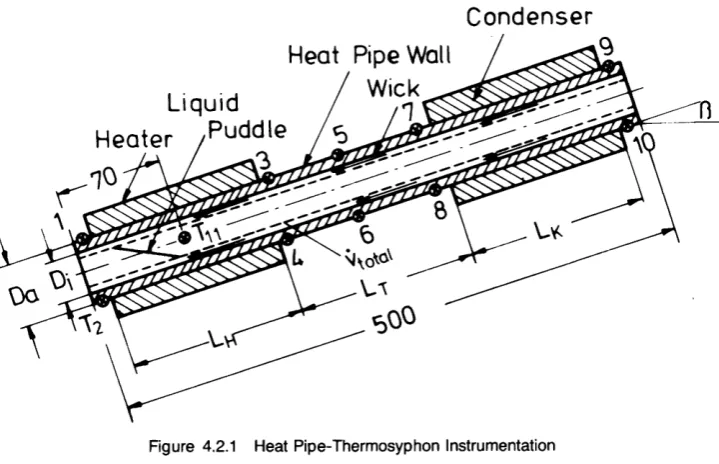
a heat pipe heat exchanger EUR 6792 EN 4.2 Research on heat pipes and thermosyphons for heat
exchangers EUR 7006 D
4.3 Heat pipe heat exchangers for waste heat recovery in
the laundry, textile and paper industry EUR 7127 EN 4.4 Heat recovery at 750°C in the aluminium industry
with a "heat wheel"
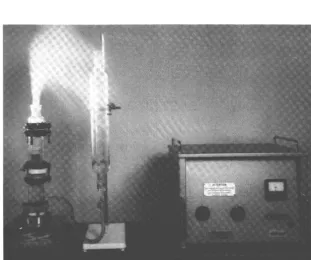
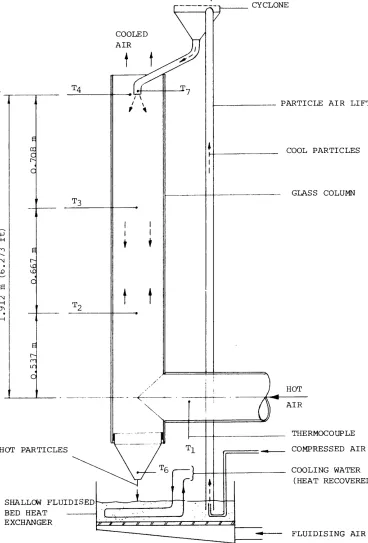
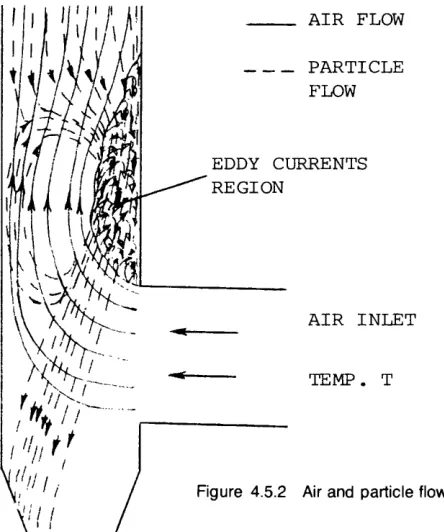
4.5 Development of a falling cloud heat exchanger
4.6 Recovery of heat from exhaust gases at 250°C from a ceramic tunnel oven with an organic Rankine cycle engine
4. 7 Recovery of heat from exhaust gases at 300-350°C with an organic Rankine cycle engine
Heat recovery in specific industrial processes
4.8 Heat recovery in the iron melting industry 4.9 Recovery of heat from flue gases for preheating
glass granulates
4.1 0 Possibilities for heat recovery in the coke industry 4.11 Heat recovery by dry cooling of hot coke
4.12 Heat recovery in the aluminium industry
4.13 Heat recovery from exhaust gases and hydrogenation of edible oils and fats
4.14 Heat recovery from milk with a heat exchanger or a heat pump for hot water production on farms 4.15 Heat recovery from exhaust air of spray dryers in
the dairy industry
5. SECTOR E - RECYCLING OF MATERIALS
EUR 7363 EN EUR 7642 EN
EUR 6916 EN EUR 7159 EN
EUR 6604 EN
EUR 6324 FR EUR 7161 FR
EUR 7387 D
EUR 6837 EN
6.4 Fluid bed gazification of low grade coal and waste 6.5 Experimental study of the combustion of low calorific
fuels
7. SECTOR G - INDUSTRIAL PROCESSES
General energy analysis
7.1 Optimized plant design to ensure energy conservation 7.2 A computer model for the evaluation of the electric
energy consumption in mechanical plants
7.3 Application of the second law of thermodynamics to basic industrial processes
7.4 Development of an economic method for industrial energy saving projects taking into account non economical effects (pollution, safety)
Paper industry
7.5 Energy analysis of the paper industry
7. 6 Reduction of power consumption in refining paper stock
7.7 Energy saving in paper drying
7.8 Energy saving in paper making by increased water removal by pressing
Textile industry
7.9 Dying wet fabric without intermediate drying after bleaching
7.1 0 Energy saving in heat setting and dye fixation of plastic fibres
7.11 Economy and energy saving in the textile industry
Food industry
7.12 Energy saving opportunities in the UK food industry 7.13 Combined heat power production in a milk powder
factory
7.14 Research on energy saving in a brewery
Combustion control of industrial boilers
7.15 Comparison of four combustion control systems for industrial boilers
7.16 Combustion control system for industrial package boilers using the flame radiation peak seeking technique
7.17 Methods of measuring the overall efficiencies of industrial boilers
EUR 6322 FR
EUR 7189 EN
EUR 6752 EN
EUR 6834 FR
EUR 7192 EN
EUR 7128 EN EUR 7152 FR
EUR 6679 EN
EUR 6889 EN
EUR 7362 EN EUR 7302 FR
EUR 7073 EN
EUR 7134 EN
EUR 7279 EN
Power production
7.18 Recovery of energy from LNG vaporization
7.19 Steam extraction from turbines for heating purposes 7.20 Energy saving in wet and dry cooling tower systems
for large power plants
7.21 Study of lean gas internal combustion engines
Miscellaneous
7.22 Energy saving in waste water treatment plants 7.23 Polarization pyrometry
7.24 Energy saving in a blast furnace
8. SECTOR H - ENERGY STORAGE
Heat and flywheel storage
8.1 Systems for chemical and latent heat storage in a temperature range from - 25°C to
+
1500C 8.2 Study of organic materials for latent heat storage 8.3 Storage of heat at 40-70° in salt solutions 8.4 Physical and chemical properties of latentheat storage materials in the temperature ranges 200-4500C and 700-9000C
8.5 A feasibility study of heat storage in shallow aquifers
8.6 Stationnary flywheel storage
Electricity storage
8. 7 Development and industrial production of beta-alumina
electrolyte tubes by electrophoresis for a Na/S battery
8.8 · Development of high energy density Li/S cells
EUR 6325 FR
EUR 6680 EN EUR 7045 EN
EUR 6936 EN
EUR 7266 EN
EUR 7065 D
EUR 7088 D
SUMMARY OF THE R AND D RESULTS OF THE FIRST
ENER-GY CONSERVATION RAND D PROGRAMME
INTRODUCTION
The results of the first A and D programme, the consequences for future A and D in the European Community and their impact on energy savings will now be summarized.
The sectors A and B deal mainly with domestic energy consumption. About 40% of the final energy in the Community and 40% of the oil is used in the domestic sector and energy savings will therefore have a big impact.
The work performed in the sectors D, E, F and G was mainly of an industrial nature. The industrial sector consumes 40% of the final energy of which more than 2/3 is required for process heat. About 24% of the imported oil is con-sumed in this sector. Industry is a very heterogenous area with a large variety of industrial processes. The possibilities for reduction of costs by mass produc-tion for most energy saving technologies is therefore limited. This and the fact that the required pay back times are mostly very short (2-3 years) hamper the possibilities for energy saving in industry. On the other hand in seven years, energy costs increased from 2% to 10-12% of the GNP in the European Com-munity. This increase is bound to have a strong impact on the profitability of the energy intensive industries. In this time where profits are marginal in many manufacturing branches, energy saving is becoming more and more important for the survival of an increasing number of industries. Further fuel price in-creases will strenghten this trend. The potential for energy savings in industry is difficult to estimate but may lie around 1 5% for the next 5-1 0 years. In the long term savings up to 30o/o are believed to be possible.
Sector A - Insulation of houses
In-- In the area of wall insulation a light self extinguishing insulation material (cost 40 ECU/m3
), and light concrete with good insulating properties have
been developed. A catalogue with reference thermograms of typical insula-tion defects in buildings has been made.
- Optimization studies: a coordinated research programme for low cost
houses has been carried out by four laboratories with the aim to minimize energy consumption. Passive solar energy, air infiltration and heating sys-tems are problems which have been studied in this programme. In another study the potential for economically attractive energy saving by recovery of heat from waste water, exhaust air and flue gases was found to be very small (2o/o and 4% of the energy consumption in buildings for existing and new buldings respectively).
Sector B- Heat pumps
The large scale introduction of heat pumps could bring 30-50o/o energy savings, but this introduction can only be expected in the long term. The heat pumps presently available (mainly electrically driven compressor heat pumps with air as heat source) are still too expensive and their energy conversion efficiency from primary fuets (90%) is comparable to good classical heating systems. R and D to decrease the cost and increase the efficiency was therefore done. More advanced heat pumps with higher efficiencies (120-150%) have also been investigated. Combustion engine driven heat pumps which have high efficien-cies due to heat recovery from the combustion engine, are not likely to be suit-able for single houses as they are rather complicated and require careful maintenance. Absorption heat pumps have the promise of being cheap, very ef-ficient and reliable. From results of the first programme it was shown that future R and D efforts should be focussed on absorption heat pumps and in particular on the development of a cheap and reliable fluid circulation pump and new working fluids. Also heat sources should be studied.
Sector C- Urban transport
The transport sector consumes about 20% of the total primary energy in the Community and accounts for 36% of the oil consumption. The fuels used in this sector are virtually all petroleum based. The energy conversion efficiency of in-ternal combustion engines in road vehicles from fuel to mechanical energy is very low (15-20%) and the potential for energy saving therefore is very large.
Work in the first programme showed that with improvements of existing en-gines, 10-20% can be saved. With more advanced engines, medium term op-tions (e.g. stratified charge engines, lean burning engine), offer savings of another 20o/o. Long term options (e.g. ceramic engines) may save even more. Energy saving with electrical vehicles is limited if one takes into account the efficiency of power plants and battery storage. They do contribute to a reduction in oil consumption and allow for load-levelling and pollution abatement.
Sector D - Heat recovery
Research projects in this sector have been divided in two categories: - heat recovery in specific industrial processes
- heat recovery components.
Research carried out in the part of the programme on recovery in industrial pro-cesses shows that significant energy savings can be achieved by recovery and re-use of heat. The most interesting and significant results are given below: - In a scrap-iron melting plant a new design in the heat recovery section
per-mits a 60% recovery of waste heat (flue gases) which gives an estimated pay back time of about one year.
- An energy saving of about 25% in the glass industry (furnaces) was ob-tained by recovering heat from flue gases in order to preheat the powder charge. This gives a 40% productivity increase and a pay back period of less than 3 years.
- Dry cooling of coke could lead to considerable energy savings. If all the coke produced in Western Germany should be dry cooled and users could be found for the resulting steam production, some 106 TOE could be saved
per year.
- The biggest potential for energy savings in the primary aluminium industry lies in waste heat recovery t but economic feasibility was difficult to achieve in the project investigated.
- Significant savings can be achieved in the food industry (edible oil produc-tion, milk cooling on farms etc ... ).
The part on heat recovery components focussed on heat exchangers and or-ganic Rankine cycle engines. Economic and technical feasibility of heat pipe heat exchangers has been demonstrated in the paper, laundry- and textile in-dustry. Waste heat from ceramic tunnel kilns has been succesfully converted into electricity with an ORC engine. E.C. work on industrial heat pumps was very limited in the first programme and should be considerably expanded.
Sector E - Recycling of materials
In this programme work was executed on the recycling of plastic waste. The yearly production of urban and industrial plastic waste in the community is ab-out 3,5.1 06 tonne/year and 4,5.1 05 tonne/year respectively. Recycling of this
SECTOR G - Assessment of specific energy of industrial processses
Whereas in sector D the possibilities for energy saving by heat recovery in dustry have been investigated, sector G focussed on other improvements of in-dustrial processes leading to energy savings.
Amonst the general studies for improved energy savings a computer program-me was developed to select components and to determine their optimum ar-rangement for energy saving in an industrial process. This programm has been applied to a chemical refining plant. A survey in the mechanical industry gave some more insight in the optimum arrangement of electrical machine tools. Fi-nally an attempt was made to take into account non-economical effects such as pollution abatement and safety, in the economical evaluation of energy saving· projects.
Different aspects of energy saving in the paper industry have been studied by four laboratories from France, Netherlands, and the UK. In the drying sector and the pulp refining processes practical proposals emerged for energy savings.
In the field of textile manufacturing, energy savings in the dying process have been explored. In total, energy savings of 30-40% are believed to be possible. One of the energy saving options is direct dying of wet tissues, thus avoiding energy expensive intermediate drying. In the heat treatment of fabrics from ther-moplastic fibres (e.g. nylon) for greater stability or dying, energy savings in the EC of 18.000 TOE/year are feasible.
A good overview of energy use in the food industry was obtained from a survey of the UK food industry. More detailed studies of breweries and on heat power coupling in the milk industry explored energy saving possibilities.
Three contracts were concerned with the optimization of boiler operation and their control. An automatic control system which keeps the boiler at its optimum point, in particular also for part load operation, requires very good combustion conditions for a start. These are often not fulfilled.
A combination of power production with closed gasturbines and LNG evapora-tion could bring about a higher gasturbine efficiency. The potential primary energy savings in Europe are believed to be about 200.000 TOE/year. Economic feasibility will depend very much on the price which will be paid for the power produced. A study on the possibilities to use low calorie syngas (H2 and CO) in combustion engines unveiled that much more R and D will be re-quired to come to useful results.
Aerators of water purification plants have large possibilities for energy saving (pay back times of 4 months).
Sector H - Energy Storage
Research in the field of energy storage has been divided in three groups: heat storage, flywheels and storage of electricity.
been demonstrated. However the energy density of these systems is on the av-erage only a factor two higher than simple and much cheaper hot water storage in insulated tanks. Also the cost of latent heat storage is high (400 ECU for a heat storage capacity equivalent to one liter oil). Economic feasibility however has not yet been achieved. The feasibility study on shallow aquifer heat storage which aimed at long term (possibly seasonal) heat storage, gave rather disap-pointing results. A discussion of experiments in the framework of the lEA imple-menting agreement, where this project was the EC contribution, showed that shallow aquifers are less suitable for long term heat storage. Deeper aquifers (30-500 m) confined above and below by clay layers are believed to be much better candidates for this purpose.
Flywheel applications have been explored. The final conclusion was that economical feasibility can only be achieved for high charging and discharging frequencies.
ABSTRACTS OF FINAL
REPORTS
The abstracts have been written completely or in part by the editor. On top off each abstract the names have been given of persons responsible for and/or involved in the project, together with the name and address of the firm. Also the contract number and the final report number are indicated.
Figure 1 .1 .1 . Machine for coating glass with an infra-red reflective layer.
[image:21.449.72.387.31.280.2] [image:21.449.72.383.333.593.2]INSULATION (WINDOWS, WALLS)
Production of glass with infrared reflective coating
1.1.
G.BLANDENET
V. LARGARDE
Commissariat
a
I'Energie Atomique - Centre d'Etudes Nucleaires de Grenoble - Departement de Metallurgie85 X 38041 Grenoble Cedex France
Final report number: EUR 6804 FR (1979) EUR 6806 FR available in French
Contract number: 201-77 EEF and 334-78 EEF
Infrared reflective coatings on plastic film
R.P. HOWSON
Loughborough University of Technology Department of Physics
Loughborough, Leicestershire LE11 3TU
Final report number: EUR 6741 available in English
Contract number: 212-77 EEUK
1.2.
To solve the problem of retrofitting, Loughborough University developed a pro-duction technique which enables Cd2Sn04 , Ti02-Ag-Tio2 or Si-Ag-Si systems
to be deposited on a thin plastic film. These films can then easily be fixed on windows of existing houses. Normal coating techniques are not suitable for this purpose as the required temperatures are too high and would melt the plastic substrate. The developed process called reactive· evaporation and sputtering ion bombardment, operates at room temperatures and does not have the above-mentioned inconvenience. A single window pane with a coated plastic film has about the same heat insulation as a double window (3 W/m2°K). The light transparency is 60%. Manufacturing costs of the film are 1 ,5 ECU/m2.
Heat and sound insulation with coated glass
P.DERNER R. GROTH D. MERTIN
W. ZERNIAL
Flachglas AG Auf der Reihe 2
D - 4650 GELSENKIRCHEN
Final report number: EUR 6811 available in German
Contract number: 254-77 EED
1.3.
Double purpose windows providing both improved heat and acoustic insula-tion have been studied by Flachglass AG. Single and double glazed panes coated with gold or silver have been investigated. Gold coated double win-dows reached heat insulation values of 1,6 W/m20K. The transmission of visible
Energy conservation in %
REMARKS Radiator Floor
heatin~
(f = 0. )
heating
(f = 0.9)
Air heating
None; E = 0.9 0 0 0
Glass area treated f = 0.3 15 17 14
f = 0.2 18 19 17
f = 0.1 23 21 19
Insulating glass 21 21 21
Glass area treated f = 0.2
other inner surfaces f = 0.3 23 26 14
f = 0.2 28 29 13
f = 0.1 34 32 9
Figure 1.4.1. Energy conservation achieved by use of infra red reflective paints and coating (win-dow area 13.6 m2
, outside temperature ± 5°C}
Price per
Energy
Expected conservation
Product Application duration m2 treated per year per m2
of life surface
MJ Currency
Tindioxide Plate or sheet 50 years f 25,00 600 f 6.00
E = 0.2 glass
in windows
Tindioxide on Wall finish 50 years f 10.00 60 f 0.60 enamelled steel
plate E = 0.15
Heat reflective Wall finish 5 years f 1.00 40 f0.40 paint E = 0.25
Aluminium foil Wall finish 10 years f 15.00 60 f 0.60 decorated by
chemical or electronical treatment
E = 0.15
1 I (dutch gulden) = 0.356 ECU
Energy savings by infrared reflective finishing
IR.J. DE JONG
Technisch Physische Dienst TNO-TH Schoemakerstraat 97
Delft
Final report number: EUR 6323 available in English
Contract number: 144-76 EEN
1.4.
The concept of infrared reflective layers on windows has been extended to walls, ceilings etc. by developing infrared reflective paints. TNO calculated that an overall application of infrared reflective materials can lead to energy sav-ings of 28%. The largest part of this energy saving is brought about by tin oxyde based coatings on single windows which can lead to 15% energy sav-ings. The remaining energy savings are mainly brought about by infrared re-flective paint on walls and ceilings. The K value for infrared rere-flective single windows is 3,5 W/m2 °K (5.8 W/m2 °K for normal single windows).
Development and optimization of polyurea foam
H.S. CREYF
PRB - Recticel R&D Center Damstraat 2
B - 9200 Wetteren
Final report number: EUR 6737 available in English
Contract number: 364-78-EEB
1.5.
A low density (7 kg/m3
) and self extinguishing insulation material has been
Light concrete panels made from a combination
of expanded shales and phenolic resins
R. LODEL
Centre d'Etudes et Recherches des Charbonnages de France (CERCHAR)
B.P. 2
F -60550 VERNEUIL-EN-HALATTE
Rna/ report number:
Contract number: 343-78 EEF
1.6.
The detection and classification
of heat leaks with help of infrared thermography
G. VENUTI
Laboratoire National d'Essais 1 rue Gaston Boissier
F - 75015 PARIS
Final report number:
Contract number: 247-77 EEF
1.7.
OPTIMIZATION STUDIES
Energy savings in low cost houses
A.DUPAGNE
J.
LEBRUN
Laboratoire de Physique du Batiment Universite de Liege
Avenue des Tilleuls 15 4000 LIEGE
Final report number: EUR 7385 EN
Contract number: 615-78-1 EEB
1.8.
conse-t
25~---~---.---~
15
0 Autumn. Winter Spring
Figure 1.9.1. Air temperature and temperature without heating and degree-days during a normal heating season
/ ' /
150~-.-.--.--.--.--.~--o7'o--.--n~. Pm
[w]
100r--r~r-;--;--~~--~~~~-r--r-~
0 4 8 12
capacity +---+----1 insulation
16 20 24
6t[K]
Building characteristics and gratuitious energy
H. HEIKHAUS
Centre Scientifique et Technique de Ia Construction CSTC 41 rue du Lorn bard
Bruxelles
Final report number:
Contract number: 361-78-1 EEB
1.9.
Natural ventilation and energy consumption
W.F. DE GIDS
lnstituut voor Milieuhygiene en Gezondheidstechniek TNO Postbus 214
NL - 2600 AE DELFT
Final report number:
Contract number: 362-78-1 EEN
1.1 0.
Energy losses due to ventilation and air infiltration was studied by TNO. Mea-surements of pressure differences across walls and ventilation shafts, indoor and outdoor- temperatures, air tightness have been made. Air infiltration was determined with tracer gas. Two types of low cost houses have been studied: an apartment house and a row house. The air infiltration (m3/s) in a row house is 6 times higher than in an apartment house. In a single house (wind 6m/sec and an inside-outside temperature difference of 15°C) 25o/o of the consumed energy is lost by air infiltration. By reducing the air change rate from the mea-sured value of 1 h -1 ·to 0,5 h-1 which is the dutch standard air change rate, considerable energy could be saved in row houses.
The performance of heating control
systems in experimental houses
R. RAYMENT K.MORGAN
Building Research Establishment Garston, Watford Herts
Final report number:
Contract number: 363-78-EEUK
1.11.
The heating systems in the collaborative programme were studied by BRE. In the work carried out so far, detailed experiments on a comparison of room thermostats and thermostatic radiator valves controlling a heating system have been executed. A very good prediction calibration between the test houses enables some statistically significant results to be shown. Firstly, the thermo-static radiator valves do not save energy and secondly do not achieve more comfortable conditions compared with room-thermostat control of these test houses. Generalisation on these results requires a number of qualifications and these are stated. Computer models of heating systems and their control have been made and losses in flue gases have been measured.
Comparison of the efficiencies of
space and water heating appliances
G. HAMILTON
Building Services Research and Information Association Old Bracknell Lane
Bracknell, Berkshire, U.K.
Final report number: EUR 6851 available in English Contract number: 187-77 EEUK
1.12.
Possibilities for energy saving in space and domestic hot water heating were explored by BSRIA. Three types of boilers providing both space and domestic hot waterheating were tested for different occupancy profiles: an oil and a gas fired high thermal capacity (HTC) boiler (± 14 KW) and a gas fired low ther-mal capacity (LTC) boiler (8 KW) all connected with radiators and a domestic hot water storage tank (140 liter). The results of the study show that:
- the part load efficiency of the appliances at a given load factor is generally insensitive to the occupancy profile
- the use of an electric immersion heater to provide domestic hot water in summer is not advantageous in terms of primary energy consumption as compared to the use of a central heating system
- for HTC boilers the overall efficiency is the same for thermostatic radiative valve control and for central room thermostat control. For LTC boilers, ther-mostative radiators valve control gave a poorer efficiency.
Electric hot water heaters
K.F. EBERSBACH
0
~L---~
§
~L---~
Iii ·-e
2
O.c
!ij_~
Q.C::
cn.c
c:: 0
w2
en
Qi
0
I
Heat recovery in buildings
DrA.GAHRMANN
Dipl.-lng. B. WEIDLICH
Battelle-lnstitut e.V. Am Romerhof 35
D - 6000 FRANKFURT 90
Final report number:
Contract number: 279-77-9 EED
1.14.
Study of energy savings by heat
recuperation in air conditioning systems
R.D. CROMMELIN, L.L.M.
van
SCHINDEL J.W.J. HEEREN, J. de BOER, W.F. SULILATUFinal report number: EUR 7377 available in English
Contract number: 624-12 EENL
1.15.
Measurements have been made at two different types of heat recovery systems in the air conditioning system. One system has a rotary type heat exchanger, the other system has two liquid-coupled heat exchangers (closed type). The measurements were made in different periods of the heating season. From the results of the measurements, heat transfer rates and thermal efficiencies have been calculated.
SECTOR B
air
tube bundle_c.{l
5
q
z
earth's surface
earth
adiabatic
boundary planes
isothermal boundary plane y
Figure 2.1.1 Model representation of earth heat exchanger consisting of buried horizontal tubes
£ (-)
r
3.5
3
11 2,max :10 kW :>..
=
2.9 W/mKstandard L =200m
(100°/o d =0.025m values) I
=
1.6 ms :1.2 m
L
o~---~---~---~---~
50 100 150 200
s i z e of p a ram e t e r ( 0/o)
HEAT SOURCES
Investigations on using the earth as a heat
2.1.
storage medium and as a heat source for heat pumps
P.G.M. NIEVERGELD AD.KOPPENOL
Organization for Industrial Research TNO P.O. Box 342
Apeldoorn
Final report number: EUR 6835 and EUR 7414 available in English
Contract numbers: 231-77-EEN and 367-78-EEN
perform-Analysis of the factors which determine
the cop of a heat pump
M. FORDSMAND A. EGGERS-LURA
European Heatpump Consultors Ltd 38 Skovshovedvej
OK - 2920 CHARLOTTENLUND
Final report number: EUR 7048 available in English
Contract number: 370-78-EEDK
2.2.
The use of soil with and without artificial
2.3.
heat regeneration as a heat source for the heat pumps
B.GEERAERT
J.C.
STEFFENS
Laborelec (Section 8
+
S.M.)P.O. Box 11
1640 RHODE SAINT GENESE
Final report number: EUR 6968 available in French
Contract number: 37 4-78-EEB
This report is an experimentally verified study of the conception of a horizontal soil heat exchanger and its potential coupling with solar collectors as a heat source for heat pump room heating.
The main conclusions are:
- the accuracy of computation methods for the performance of the soil heat exchanger is of the order of 20-25%.
- the optimal depth of the pipes is as near to be soil surface as can be al-lowed for safety reasons.
- the horizontal distance between the pipes must be between once and twice their depth.
- a double layer heat exchanger (with pipes burried at two different depths) is a good solution in order to reduce the required soil surface.
- careful attention shall be devoted to insure a sufficient flow rate at the low-est working temperature of the glycol-water mixture.
25
20
LJ 0--f
i
II
I
IKld.rwerk
DUsseldorf
Grundwasser
~
•
5
'~Mai~
-0
Don au
Jut Aug Sep
Okt
Nov Dez Jan Feb
Mar
Apr Mai Jun
Figure 2.4.1 Comparison of water temperatures of different waste water treatment plants and natural water
10096 (17EUWMWhl
',
'"
~00%
Gn...rdwesser
/
Fluo3wesser Abwasser
Temp. -Gang Temp. -Gang Grofllappen Dssd./Sud
konv. Brennerheizung bivalente Warmepumpe mit Gasmotorantrieb
§
~ren'1stoff 112EIJAIMWhlPrtmarene"atecea8.rT
~_st3~-J'~altur'] .. ~.-,d _N"r~~n'J
r<,-=1Pd.: .. ilcnerst O • ...:l ;,;.a.
~uskuhi"Spanne der //qrme...-.uel ie
·i e rdampte r3us I egur.g
:=1
ut3.vasser Grundwa~ser .:.bN::!sser
2.5 0.5
I
5.3 3.5 2.0
Recovery of waste heat in sewers
by
heat pumps
Dr. U. WIEDMANN
R. FLOHRSCHOTZ
Maschinenfabrik Augsburg-Nurnberg Aktiengesellschaft
Neue Technologie Lu dwi gsfel derstrasse 238 8000 Munchen 50
Final report number: EUR 7061 available in German
Contract number: 211-77 EED
2.4.
The possibility of recovering waste heat from waste water has been studied by MAN. The local waste water is attractive as a heat source for heat pumps due to the high temperature levels and the availability in the immediate vicinity of the consumer.
There are two possibilities as far as the place of heat withdrawal is concerned: the decentralized heat withdrawal from the non-purified waste water in the net-work of sewers or the centralized heat withdrawal from the purified waste water behind the water treatment plant.
In both cases basically heat exchange systems (exchanger and cleaning sys-tem) with conventional components can be used. The design and operation of the overall system in the waste water should be tested in a pilot plant.
With respect to the economics a comparison of costs for a 2.4 MW conven-tional boiler heating and combustion-driven heat pump with different heat sources (underground water, river water, waste water) showed advantages of the heat pump system. The lowest costs were those for the utilization of waste water as heat source.
Cost of Heat Pump
Cost of equivalent parts of oil system
£1200 £650 £550 Oil boiler efficiency assumed at 70% so effective heat value of oil is 32.4 kWh/gall
Oil cost is £0.61 per gall (Sept. 1st 1979) i.e. effective cost £0.0188/kWh
Heat demand 28,800 kWh
Cost of supplying by oil £542
Energy consumption 9,750 kWh
Cost of electricity supply £321
Energy saving 19,050 kWh
Seasonal COP 2.95* Financial saving PAYBACK PERIOD
Rate of Return on Capital
9 12 15
Rate of Return
0 39.8 41.1 41.6 5 44.4 46.0 46.5 10 49.1 50.9 51.5 £230 2.39 yrs
15
53.8 55.7 56.4
*The direct heating component was 1310 kWh and if this is allowed for, the seasonal COP of the heat pump alone becomes 3.26
CONVENTIONAL HEAT PUMPS AND COMPONENTS
Development of domestic heat pumps
J.T. McMULLAN R.MORGAN
New University of Ulster Coleraine
Northern Ireland BT52 1 SA
Final report number: EUR 7098 available in English
Contract number: 269-77-1 EEUK
This R&D project had the following objectives:
2.5.
- to optimize operation of a domestic heat pump system for partial and full-load operation
- to investigate the dynamic response of the heat pump under changing en-vironmental conditions
- to examine the influence of refrigerant turbulation on evaporator perform-ance
- to examine the effect of air-borne moisture on evaporator behaviour (sub contract from University College Galway).
- to conduct field trials of domestic heating units.
The programme therefore involved both experimental developments in the laboratory and field testing of pre-production prototypes, together with exten-sive computer analysis of the experimental data and computer modelling of the behaviour of system components.
The experimental measurements were conducted in a highly flexible controlled environment laboratory which allows extensive variation of both temperature and humidity to match outdoor conditions.
Air source heat pumps under northern
European climat1c conditions
T.C.
O'CONNOR J.A. McGOVERNDepartment of Physics University College Galway, Ireland
Final report number: EUR 7388 EN
Contract number: 271-77 EEEIR
2.6
The maritime climate of the islands and western coast of continental Europe is suitable for the use of air source heat pumps, working in the heating mode only, for domestic space heating. Field trials of several types of air to air and air to water heat pump systems in homes in Ireland are described. Laboratory investigations were also made into component performance and design modifi-cations to produce a system with optimum performance for this purpose.
With a variable climate the calculation of seasonal coefficients of performance requires a study of the thermal response of the buildings as well as the characteristics of the heat pump system. A computer programme to study this has been developed.
Frosting and defrosting behaviour of
outdoor coils of air-source heat pumps
J.W.J. BOUMA
Organisation for Industrial Research TNO P.O. Box 342
Apeldoorn
Final report number: EUR 7281 EN
Contract number: 366-78-EEN
2.7
A literature investigation shows that in spite of the fact that defrosting of out-door coils of air-source heat pumps does not yield many problems, a lot of units however are capable of improvement. Many Western European countries have mild winters. Temperatures between - 7°C and
+
2°C and high humidities where are quite normal. These are conditions where severe frosting occurs. An air source heat pump has been tested in a test facility with a control-led environment (temperature, humidity).- From the first test runs it appears that no real defrost problems occur with these heat pump coils, while defrost times are rather short (3 to 6 min.)
- The model of Lotz enabled the calculation of the simultaneous heat and mass transfer processes in air coolers with frost formation and was of great use for the design of improved coils
EVAPORATOR MOTOR! SEQ VALVE COMPRESSOR d.c, MOTOR CONDENSER
Figure 2.8.1 Microprocessor controlled heat pump
3.2 ~---~
.
Q. 0 2.8u
2.4
-6
Microprocessor based control system for heat pumps
2.8
R.K. GREEN D.F. NEALE M.SEARLE
D.R. WILSON
Division of Engineering Polytechnic of Central London New Canvend ish street London W1 M 8 JS
Final report number: EUR 7283 EN
Contract number: 306-77 EEUK
The work described is a part of a research project performed jointly by the Ecole Superieure d'lngenieurs en Electrotechniques et Electronique (ESIEE) and the Polytechnic of Central London.
An electrically driven air to water heat pump offering compressor speed con-trol, motorised expansion valve and a variable speed air flow fan has been de-signed and tested.
The heat pump system has been fully instrumented and connected, for control and data logging purposes, to a microprocessor based control unit.
By means of suitable control algorithms it has been possible to accurately con-trol the heat pump to optimum design conditions throughout a range of am-bient and load energy levels.
Heat pump models for microprocessor based
control systems
P. BILDSTEIN Y. HAMAM J. EHRHART
Ecole Superieure d'lngenieurs en Electrotechnique et Electronique
81 Rue Falg uiere F - 75015 PARIS
Final report number: EUR 7046 available in French
Contract number: 305-77 -EEF
2.9
The work described in this report is a part of a research project performed jointly by the Polytechnic of Central London (PCL) and the Ecole Superieure d'lngenieurs en Electrotechnique et Electronique (ESIEE).
The object of the research is to develop the control strategy and the micro-processor system software, necessary for the operation of a heat pump with minimum energy consumption. The system software developed will be applied to the experimental air/water heat pump which was built and instrumented at the PCL.
The elaboration of models for representing the heat pump have been studied. Two such models have been developed. The first is related to the operation of the pump under steady state conditions. The second describes the transient behaviour of the heat pump in as far as the thermal energy storage within the heat exchangers is concerned.
Computer programs have been written to test the models and a comparison is made between the calculated behaviour and the data measured on the experi-mental pump built by the Polytechnic of Central London.
Finally the applicability of models to microprocessor based heat pump control systems are discussed and a proposal is made.
Analysis of the factors which determine
the cop of a heat pump
M. FORDSMAND
A. EGGERS-LURA
European Heatpump Consultors Ltd 38 Skovshovedvej
OK - 2920 CHARLOTTENLUND
Rna/ report number:
Contract number: 142-76
2.10
The present project is an analysis of the factors which determine the COP of a heat pump, and a feasibility study on ways and means of increasing its per-formance.
The report has been devided as follows:
Firstly it presents a survey of ground heat pump installations established in De-nmark between 1956 and 1972. The installations and the experimental and measuring work which has been undertaken is described, and the experiences that have been gained are presented.
In particular the fact that a vertical soil heat exchanger (20 m deep) extracted very little energy after 3 or 4 years demonstrated the necessity of heat storage in the summer for vertical heat exchangers.
Thereafter the development of the "first generation" Fordsmand soil (water/wa-ter) heat pump, the first heat pump that was industrially produced in series in Europe, is described.
Figure 2.11.1 Outdoor view of a heat pump for a single room
Figure 2.11.2 Indoor view of a heat pump for a single room
Heat pumps for individual rooms
K.J. SEYMOUR-WALKER
Building Research Establishment Building Research Station Bucknalls Lane
Garst on
Watford, Herts. UK
Final report number: EUR 7007 available in English
Contract number: 372-78-1 EEUK
2.11
A provisional specification for an air-to-air heat pump suitable for heating a single room (output 2.25 KW) was produced, and a machine built to this specification was tested in a controlled environment facility. As a result of the tests, various modifications were made to the machine, resulting in a version which produced a steady state Coefficient of Performance of 2.15 at a simu-lated mean wintertime outdoor temperature for Southern England. Three machines of a version with further slight improvements were then used to heat a typical small British family house; although a full heating season's results were not obtained, it appears that the corrected seasonal Coefficient of Per-formance in this case would be aout 2.13.
flue gas . Cool ant-vapour
Condenser
Flue gas Aftercooler
D :;,
cr
Coolant-vapour
water
i
·Air ·Water
0
8 f!eatexchanger I
Poor solution
Jet apparatus
Absorption f!eat Pump
Bypass
f!eatexchanger II
Absorber
ADVANCED HEAT PUMPS
Development of an absorption heat pump
fired by primary energy for domestic heating
G.OELERT H.A. JANSSEN
Battelle lnstitut e.V. Am Romerhof 35 0-6000 Frankfurt 90
Final report number: EUR 6326 available in English
Contract number: 214-77 EED
2.12
A feasibility study was made of a 12 KW monovalent absorption heat pump delivering heat at 55°C in the heat pump mode and which at low outside temperatures functions in a "normal heating" mode with the fuel fired expeller operating as a "boiler" delivering 20 KW at 80°C.
The absorption cycle developed is characterized by: - R22 and E181 as working pair
- an adiabatic absorber
Design construction and testing of a prototype
absorption heat pump fired witfl primary fuer
Dipl.-lng. Hans-Jurgen KOHNKE
Stiebel Eltron Dr. Stiebelstrasse D- 3450 HOL2MINDEN
Final report number: EUR 7064 available in German
Contract number: 368-77 EED
2.13
A prototype of an absorption heat pump fired with primary fuel, which has been theoretically studied by Battelle (contract no 214-77-EED) in the previous project, has been constructed and tested. The membrane of the fluid pump turned out to be the main problem. Cheap pumps with the right properties are not available on the market. The experience with the jet pump was negative; the high pressure drop decreased the efficiency. Both the designed condensor and the expeller turned out to be too small.
...,.('\
Figure 2.14.1 Turbomachine rotors of an O.R.C. engine driven heat pump
Directly fired heat pump for domestic
and light commercial application
David T.G. STRONG
GL YNWED CENTRAL RESOURCES UNIT Cranmore Drive
GB - Shirley, Solihull West Midlands B 90 4 PG
Final report number: EUR 7063 available in Eng I ish
Contract number: 375-78 EEUK
2.14
The object of the research exercise was to demonstrate a working prototype gas fired heat pump based upon the use of miniature turbomachinery.
A Rankine vapour power unit is coupled directly to a vapour compression heat pump cycle-with the advantage of only having one major moving component, oil free lubrication and gas bearings giving long life with minimal metallic wear. Other advantages of the proposal include, silent and pollution free operation, total versatility in choice of fuel, and small physical size.
This directly fired heat pump offers a potential fuel utilization coefficient of ab-out 1 .45 (more than twice the efficiency of a gas fired boiler, having an effi-ciency of 70o/o) and a short pay back time.
A laboratory prototype system has been constructed, and performance mea-surements have been made over a wide range of operating conditions. The following conclusions have been established as a consequence of the work carried out:
- A traditional organic working fluid has been shown to have satisfactory thermal stability characteristics at elevated temperatures
- A gas fired fluid heater has been designed and tested and shown to have adequate performance
EVAPORATOR
Q"e ~
EXPANSION VALVE
PRE COOLER HX2
CONDENSER Q"c ~
w u z
~ 1. 3
r::t:: 0 u.. r::t::
""
tLU-0 1. 2
~ z. w (.) u::: 1&.
~ 1.1 0
1.0
-6
ABSORBER
SOLUTION PUMP
RECTIFIER GENERATOR STILL Q'a
t
THROTTLING VALVE - REFRIGERANT+++WEAK SOLU liON
-STRONG SOLUTION
Figure 2.15.1 Schematic diagram of absorption heat pump cycle
EVAPORATOR PRESSURE 1. 38 BAR
WATER TEMPER A TURE 60°C OUTPUT FLOW
40°C RETURN FLOW
-4 -2 0 2
AMBIENT TEMPERATURE • C
Figure 2.15.2 C.O.P. against ambient temperature
The design and development of an absorption
heat pump for domestic heating
A.M.S. QASRAWI R.E. BLAKELEY R.J. TREECE
Lucas Group Services Ltd Lucas Research Centre Shirley
Soli hull
West Midlands
Final report number: EUR 7129 available in English
Contract number: 376-78-EEUK
2.15
This report describes the results of a research programme, concerned with the design of a directly fired absorption cycle domestic heat pump optimised for the achievement of maximum coefficient of performance. The main aspects of the programme included a feasibility study, the development of a mathematical model to facilitate computer simulation and the provision of a test rig together with some component design studies.
The feasibility study which included an assessment of candidate working fluid pairs and cycle designs, indicated that an ammonia/water mixture would be most propitious for an immediate term investigation. The mathematical model-ling led to the development of a computer programme capable of predicting the steady state behaviour of a specified cycle for selected boundary conditions, together with procedures for optimising the evaporator and refrigerant pre-cooler operating variables.
A comprehensively instrumented test rig, capable of operating over a wide range of stimulated source and sink temperatures, has been built and used in conjunction with the computer programme to evaluate the influence of changes in cycle parameters on steady state behaviour and performance.
4
3
2
PC: Pure component cycle MIX: Mixture cycle
Air heating medium
CD ---
PC Exhaust air source --MIX® ---
PC Outside air+ exhaust air source - - M I X@ - - - PC Water source - - M I X
1~---~--~~---~~~~---~--~---~
500 1000 5000 10000
tT evaporator kcal/h X°C
A heat pump operating with a fluid mixture
A.ROJEY C. MEYER B. CHOFFE J. JACQ
L. ASSELINEAU J. VIDAL
lnstitut Franyais du Petrole 1-4 avenue du Bois Preau 92502 RUEIL-MALMAISON
Final report number; EUR 6848 available in French
Contract number: 365-78-EEF
2.16
Whenever heat is recovered and delivered the coefficient of performance of a heat pump can be increased by using a fluid mixture selected to have a temp-erature variation, during the vaporization and condensation stages, parallel to that of the outside fluid with which the heat exchange takes place. Such a sol-ution was investigated both theoretically and experimentally.
It has been shown that significant savings can be expected ranging up to 50o/o of the energy consumption of conventional heat pumps in some cases.
Feasibility and design study of a gas engine
driven high temperature industriaf heat pump
D.B.A. MACMICHAEL D.A. REAY
International Research and Development CO Ltd Foss way
Newcastle upon Tyne NE 6 2YD
UK
Final report number: EUR 6262 and EUR 7657 available in English
Contract number: 175-
n
-EEUK and 369-78-EEUK2.17
This is the final report of the work done on a high temperature industrial heat pump project combining the feasibility and design study, the construction and testing of a 75 kW drive prototype.
The design study has produced an outline design of the prototype consisting of a reciprocating gas engine driving a reciprocating compressor. The working fluid will be refrigerant 114 with a condensing temperature of 1200C and an evaporating temperature of 600C. The condenser and the gas engine waste heat recovery units will act as boilers, producing steam at about 11 0°C. The coefficient of performance (COP) of the heat pump cycle will be 3.19.
Refrigerant selection has been a key item in the study, with the final adoption of R-114 being based on its suitability to reciprocating com pressors, and be-cause it is the most stable of the possible conventional refrigerants.
The compressor selected is of the wet-piston reciprocating type, with modified seals and bearings for the high lubricating oil temperature. This is required to prevent refrigerant condensation in the sump, causing oil dilution. The oil will be a high viscosity grade and oils tested under the design conditions are av-ailable from more than one supplier.
HEAT PUMP APPLICATIONS
Energy conservation by use of a gas engine
driven heat pump for an apartment
building using outside air as heat source
0. HEIBURG W. LOHSTRATER
Dortmunder Stadtwerke Ag Degginstrasse 40
D - 4600 DORTMUND 1
Final report number: EUR 7133 available in German
Contract number: 309-77 -EED
2.18
A monovalent air/water heat pump consisting of a reciprocating gas engine driving a reciprocating compressor supplies an apartment building of 64 apart-ments with heat and hot water.
Present value
1100
lOCO
9CO
80Q
700
6CC
sco
4DO
50
142
1 EUA
=
Dkr. 7.0560
171
Rate of interest 10%
Life time 20 years
70
200
80
228
90
257
100
286
4
3
2
1
Dkr./MWh Dkr ./MWh eEnergy prices
1. Diesel engine
2. Dual fuel engine
3. Steam turbine (coal)
4. Electric motor
5. Boiler fuel at 85% efficiency
Diesel driven heat pump for district heating
and for the heating of large housing blocks
Benny PETERSEN
Burmeister & Wain Torvegade 2
1449 COPENHAGEN K
Final report number: EUR 67 40 available in English
Contract number: 373-78 EEDK
2.19
The aim of this project is to investigate technical, economic, and environmental aspects of large diesel driven heat pump plants for district heating and for central heating of large buildings.
A study has been made of the possible heat sources for large heat pumps, and information on the operation of existing district heating centrals has been analysed. A computer model of the heat pump system has been made to study the influence of these parameters and to make design calculations of large heat pumps.
A turnkey diesel heat pump with a heating effect of 1 0 MW has been de-signed, and the investment has been calculated to be 30 ECU per MWh of yearly heat supply or related to fuel saving, the investment will be 540 ECU per tonne of oil saved per year.
The possibility of using other prime movers like gas turbines, coal fired steam turbines and electric motors has been analysed with regard to the economy and the energy savings. Electrically driven heat pumps are the best solution for villages up to 2000 inhabitants. Diesel driven heat pumps are most suitable for towns with 2 000 to 20 000 inhabitants, where energy savings of 50% are possible.
Experience with monovalent electrical heatpumps
2.20
with air as heat source for 56 apartments
Dipl.-lng. PETER MULLER lng. (grad) HEINZ KLAUS
V.E.W. A.G. Dortmund
Final report number:
Contract number: 31 0-77-9 EED
The operation of four 50 KW1h and thirteen 15 KW1h monovalent electrical heat pumps for floor heating with air as heat source have been tested in 56 apart-ments. The measurements have been taken over a period from July 1979 to December 1980.
SECTOR C
Figure 3.1 Computed overall fuel consumption for present engine options at equal performance levels MJ/km 2 MJ/km 2 MJ/km 2 -co
co 1
-N -.:1' 1 - - - - r-.. I.D
r-.. r--: <Xl
N -.:1' I.D N c-.i
c-.i r-.. ("')
c-.i
B BM M G
s
DB - petrol
BM- petrol + 15% methanol M G L
s
D -methanol -LPG -lean bur narge stratified ch -diesel
TO - turbocha rged diesel
More severe emission standards- first proposal:
-
r-r-.. I.D
- <Xl ~
.-- r-..
r-.. co -.:1' c-.i r---- N N
N I.D I.D 0 r-.. I.D
c-.i N -.:1' ("')
c-.i
N N
B
BM
M G Ls
D
TD
More severe emi~sion standards - second proposal:
-N f - - - O'l
(J) co O'l I.D f
-r-i r-.. v N <Xl
tO N
N
r-i 0 r-.. N I.D
-.:1' M N
c--4 N
Potential for energy conservation by a shift
to other types of engines in passenger cars
Drs. W. SMIT
Centre for Energy Studies TNO P.O. Box 342
7300 AH APELDOORN
Final report number: EUR 7303 EN
Contract number: 246-77 EEN
3.1
TNO investigated whether energy savings can be obtained when car traction switches from petrol and diesel engines to other types (e.g. methanol, lean burning engine).
Improved efficiency of a spark-ignition
engine in part load operat1on
A.DOUAUD
P.EYZAT
lnstitut Franc;ais du Petrole 1 -4 avenue de Bois Preau F- 92506 Rueii-Malmaison
Final report number: EUR 7190 available in French
Contract number: 122-76-EEF