White Rose Research Online URL for this paper: http://eprints.whiterose.ac.uk/97098/
Version: Accepted Version
Article:
Godin, G, Germain, M, Conner, M orcid.org/0000-0002-6229-8143 et al. (2 more authors) (2014) Promoting the return of lapsed blood donors: a seven-arm randomized controlled trial of the question-behavior effect. Health Psychology, 33 (7). pp. 646-655. ISSN
0278-6133
https://doi.org/10.1037/a0033505
[email protected] https://eprints.whiterose.ac.uk/
Reuse
Items deposited in White Rose Research Online are protected by copyright, with all rights reserved unless indicated otherwise. They may be downloaded and/or printed for private study, or other acts as permitted by national copyright laws. The publisher or other rights holders may allow further reproduction and re-use of the full text version. This is indicated by the licence information on the White Rose Research Online record for the item.
Takedown
If you consider content in White Rose Research Online to be in breach of UK law, please notify us by
Promoting the Return of Lapsed Blood Donors:
A 7-Arm Randomized Controlled Trial of the Question-Behavior Effect
Gaston Godin
Laval University
Marc Germain
Héma-Québec
Mark Conner
University of Leeds
Gilles Delage
Héma-Québec
Paschal Sheeran
University of Sheffield
Address correspondence to:
Gaston Godin
Research Group on Behavior and Health
Laval University
Ferdinand-Vandry Building, Room 3493
Quebec, Canada G1V 0A6
e-mail: [email protected]
Abstract
Objective: The aim of this study was to test key variations in the question–behavior effect against a
control condition or an implementation intention condition on returning to give blood among lapsed
donors (individuals who had not given blood in past two years).
Design: At baseline, 7000 lapsed donors were randomized to one of six experimental or to a control
condition. Participants in the experimental conditions were asked to complete a 6-item postal
questionnaire assessing: intentions-only, interrogative intention, moral norm plus intention, anticipated
regret plus intention, positive self-image plus intention, or implementation intentions. Objective
measures of behavior were obtained 6 and 15 months later.
Main Outcome Measure: The frequency of registrations to give blood over the next 6 and 15 months.
Results: Intention-to-treat analysis of the frequency of registrations (GENMOD procedure, Poisson
distribution) indicated main effects for condition (experimental versus control) at both 6 months, 2(1) =
4.64, p < .05, and 15 months, 2(1) = 5.88, p < .05. Positive self-image and implementation intention
interventions outperformed the control condition at 6 months. At 15 months, standard intention,
interrogative intention, and regret plus intention conditions each showed more frequent registrations
compared to controls and were just as effective as implementation intention formation. Moderation
analysis showed the moral norm and positive self-image conditions were significant for first-time (one
previous donation) but not repeat (two or more previous donations) donors.
Conclusions: The question-behavior effect can be used to reinvigorate blood donation among lapsed
donors, and can be as effective as forming implementation intentions.
Promoting the Return of Lapsed Blood Donors:
A 7-Arm Randomized Controlled Trial of the Question-Behavior Effect
Health psychology studies have shown that the measurement of intentions in relation to a given
behavior increases the probability that this behavior will be adopted in the future. This phenomenon is
termed the “question –behavior effect” (QBE: (Sprott, Spangenberg, Knuff, & Devezer, 2006) and has
been observed for a variety of health behaviors including blood donation (Godin et al., 2010; Godin,
Sheeran, Conner, & Germain, 2008), cervical cancer screening (Sandberg & Conner, 2009), attending a
health check appointment (Conner, Godin, Norman, & Sheeran, 2011), influenza vaccination among
healthcare workers (Conner, Godin, Norman, & Sheeran, 2011) and exercising (Godin,
Belanger-Gravel, Amireault, Vohl, & Perusse, 2011; Williams, Block, & Fitzsimons, 2006). The present research
extends previous work on the QBE in three key ways. First, we examine whether the impact of
measuring intentions on subsequent behavior can be augmented by using the interrogative form or by
measuring constructs in addition to intentions. Second, we compare the QBE not only to a standard
no-contact control condition, but also in relation to an established behavior change intervention (i.e.,
implementation intentions; see (Gollwitzer & Sheeran, 2006) for a review). Third, we investigate the
moderating effects of whether a questionnaire was returned or not and participants’ age, sex, and donor status (first-time vs. repeat). The research focuses on a behavior of considerable importance for public
health and on a sample of particular significance in this domain, namely, returning to give blood among
lapsed blood donors.
Augmenting the Question-Behavior Effect
Several studies have tested the QBE in relation to blood donation, with mixed results. In the first
study in this area, Godin et al. (2008) observed significantly more frequent attempts to give blood at
questionnaire based on an extended version of the theory of planned behavior (TPB; (Ajzen, 1991)
compared to a control group who did not receive a questionnaire. In contrast, van Dongen, Abraham,
Ruiter, and Veldhuizen (2012) failed to observe a QBE in a similar group of active donors at 6-month
follow-up. In a study of novice donors, Godin et al. (2010) did not find a QBE at either 6- or 12-month
follow-ups, while van Dongen et al. (2012) failed to observe a QBE among first time donors at 6-month
follow-up. These different studies varied in a number of important ways including the type of donors
studied and the content of the questionnaires used to generate a QBE. Although it is not entirely clear
what aspects of donor status are key, one aspect that may be important is the extent to which an
individual is motivated to perform the behavior. Conner et al. (2011) showed the QBE to be more
effective among those with more positive intentions and attitudes towards the behavior. More recently,
Ayres et al. (2013) manipulated both the QBE and motivation and showed the combined condition to
produce the greatest engagement with the behavior. In the present research we explicitly tested the
moderating effect of donor status on the QBE. Previous studies on the QBE in relation to blood donation
also varied in terms of the content of the questionnaire items. For example, the two studies that used
similar samples of active blood donors (Godin, Sheeran, Conner, & Germain, 2008; Van Dongen A,
2012) varied in the focus of the questions. Although both included items tapping intentions towards
blood donation (the question assumed to drive the QBE in the majority of studies; (Dholakia, 2010) they
also included a number of other questions that might dilute the effects observed. For example, all
non-demographic questions in the Godin et al. (2008) study focused on cognitions about blood donation,
whereas in van Dongen et al.’s (2012) studies, 16% or 40% of the items focused on blood donation
cognitions (the remaining items focused on other lifestyle issues). This may be important because a
greater focus on blood donation cognitions, and intentions in particular, might be expected to increase
QBE is thought to operate (Morwitz & Fitzsimons, 2004). In the present research we sought to address
this issue more directly by focusing on just measuring intentions and comparing this to other conditions
where intentions were supplemented by additional measures (see below).
Behavioral intention items are assumed to be the key questions that drive the QBE (e.g.,
(Dholakia, 2010). The idea is that answering intention questions activates people’s underlying attitude towards the behavior; heightened accessibility of attitude in turn makes it more likely that people behave
in line with their attitude (Morwitz & Fitzsimons, 2004; Wood, Conner, Sandberg, Godin, & Sheeran,
Article submitted for publication). However, to date, no systematic research has been undertaken to
determine whether variations in questions might enhance QBE effects. The present study compares the
impact of standard intention questions (intention-only condition) with four key variations that have some
support in the literature: (1) asking intention questions using the interrogative form (interrogative
intention condition), (2) asking questions about anticipated regret about not donating blood before
asking intention questions (regret plus intention condition), (3) asking questions about moral norms
concerning donation prior to intention questions (moral norm plus intention condition), and (4) asking
questions about the positive view of oneself that would accrue from performing the behavior before
asking intention questions (positive self-image condition plus intention condition).
The impact of the grammatical form of the intention question was recently investigated by Godin
et al. (2012) in relation to exercise behavior, and drew upon work by Senay, Albarracin, and Noguchi
(2010) on the effect of the linguistic structure of self-talk. Senay et al. (2010) observed that asking
participants to report their intention using the interrogative form (i.e., “Do I have the intention to do X?”) rather than the standard declarative form (i.e., “I intend to do X”) significantly increased the
likelihood of performing the behavior; this effect was also observed by Godin et al. (2012). The
which increases intrinsic motivation (and perhaps the activation of the attitude), and in turn leads to
greater likelihood of acting (Senay, Albarracin, & Noguchi, 2010). Thus, phrasing intention questions in
the interrogative form could potentially strengthen the QBE compared to standard intention questions.
Anticipated regret about a target behavior is known to galvanize intentions to act and aid the
translation of intentions into action (Abraham & Sheeran, 2003, , 2004). The potential importance of
completing anticipated regret items prior to intention items in generating strong QBE was investigated
by Sandberg and Conner (2009). Participants completed either a standard TPB questionnaire (control
group) or a TPB questionnaire with the addition of a measure of anticipated regret (experimental group).
Participants in the regret condition subsequently attended more frequently for a cervical screening test
compared to participants in the TPB-only questionnaire. Although this finding was not replicated in the
study of blood donation among a sample of first time donors (Godin et al., 2010), there are reasons to
believe that measuring anticipated regret could influence the behavior of lapsed donors. Godin, Conner,
Sheeran, Bélanger-Gravel, and Germain (2007) observed that anticipated regret was one of the key
determinants of intention and future donations among a group of repeat donors.
Sprott, Spangenberg, and Fisher (2003) reported a stronger QBE when the focal behavior was
under the influence of normative beliefs. Participants who had higher normative beliefs towards low-fat
snack (experiment 1) and health fitness assessment (experiment 2) were more likely to adopt these
behaviors when asked their intention compared to participants who were not asked about their intention.
These results are in line with Sherman’s (1980) proposal that individuals refer to normative
considerations such as acting as one “should” when answering intention questions. As Godin et al.
(2007) showed that moral norm represents an important determinant of both intention and behavior
“Giving blood is, for me, a matter of principle”) prior to intention questions could improve rates of
behavioral performance beyond that engendered by intention questions only.
The final question variation tested here concerns positive self-image. Accumulated research
indicates that the desire to hold a favorable view of oneself is one of the most powerful motives
governing human behavior (Sedikides & Strube, 1997). The significance of positive self-image for
blood donation was demonstrated by Ferguson, Farrell, and Lawrence (2008). Ferguson et al. observed
that participants who were exposed to messages reinforcing self-positive image (termed the warm glow)
significantly increased their willingness to donate blood compared to messages concerning the social
benefits of giving blood. The implication is that asking questions about how donating blood would
enhance one’s self-image (e.g., “I would feel good about myself if I give blood”) prior to intention
questions could make QBE interventions more effective in promoting behavior.
The Present Study
The present study tested the impact of QBE interventions on returning to blood donation by
lapsed donors. Lapsed donors are defined as individuals who have given blood at least once in the past
but have not given blood again in the past 24 months, excluding people who cannot give blood for
medical and safety reasons. This group represents about 20% of active donors. It is not yet clear why
some donors become inactive (Germain et al., 2007). From the perspective of blood supply agencies,
however, lapsed donors are a key target group as they have already shown interest in donation and thus
hold the potential to increase the supply of blood (Schreiber et al., 2003). Interventions to promote
lapsed donors’ return to give blood are therefore apposite.
Five QBE interventions (standard intentions, interrogative intentions, regret+intention, moral
norm+intention, and positive self-image+intention) were compared to both a no-contact control
(Gollwitzer, 1999; Gollwitzer & Sheeran, 2006) are if-then plans that spell out when, where, and how
the people will act on their intentions. Specifying how one will respond to opportunities for, and threats
to, intention realization in an if-then format leads to enhanced cue detection and means that the person
acts swiftly and effortlessly when the cues are encountered (e.g., (T. L. Webb & Sheeran, 2004; T.L.
Webb & Sheeran, 2007). These processes (enhanced cue detection, automatization of responding), in
turn, improve the translation of intentions into action, as meta-analyses have shown (Bélanger-Gravel,
Godin, & Amireault, 2013; Gollwitzer & Sheeran, 2006). Implementation intentions have also been
found to significantly increase blood donation in a sample of novice donors (Godin et al., 2010) and so
implementation intentions afford a valuable condition against which to calibrate the impact of the QBE
interventions tested here.
A final issue we explored was the extent to which our interventions were more or less effective
in different groups. Several previous studies (Conner, Godin, Norman, & Sheeran, 2011) have shown
the QBE to be more effective among those completing and returning questionnaires. We therefore
assessed the intervention effects both across the sample as a whole (intention-to-treat analyses) and
among those portions of the sample who did or did not return questionnaires. We have already noted the
value of testing the moderating effects of donor status (first-time vs. repeat) in relation to helping
interpret the variation in findings among previous studies in this area. It is also worth noting that first
time donors are less likely to give blood again compared to repeat donors (Masser, White, Hyde, &
Terry, 2008). We also explored the moderating effects of gender and age given that more women than
men are temporarily deferred mainly because of a low level of haemoglobin/hematocrit (Shaz, James,
Hillyer, Schreiber, & Hillyer, 2010) and that middle age individuals are less likely to be deferred than
In summary the present research focused on (a) whether the QBE interventions outperformed the
control condition, (b) whether any of the QBE interventions engendered greater donations compared to
the standard intention condition, (c) whether QBE effects were of a similar magnitude to the
implementation intention intervention, (d) the moderating effects of questionnaire return on the findings,
and (e) the moderating effects of gender, age and donor status on the findings.
Methods
Participants and Procedure
The population targeted consisted in blood donors from the province of Quebec, Canada, who
were recently considered as lapsed donors by the blood agency as they did not register to give blood in
the past two years. The sample was obtained by extracting information from the donor information
system of Québec (Progesa, Mak Systems) following approval by the ethics committee of
Héma-Québec. A total of 12,547 donors were identified as having recently lapsed, that is between October and
December 2010. Donors were excluded if they had: a cause for temporary or permanent deferral status
in Progesa (n = 823); an incomplete mailing address or an address indicating that they were living in the
North or in a remote region; an address outside the province of Québec; no identified favored language;
no first donation date; or blood types B and AB (n = 2,253). Blood types B and AB were excluded
because the demand is low for these blood types. Thus, 7,000 out of 9,471 eligible lapsed donors were
randomized to one of six intervention conditions or to the no-contact control condition. Of the 6,000
lapsed blood donors in the experimental conditions, there were 510 incorrect mailing addresses, 2 were
living out of the country, and 4,222 did not return their questionnaire for a response rate of 23%
(excluding incorrect mailing address, as reported by the postal service). Response rates for the
intervention conditions showed significant variation, 2(5, N = 6000) = 46.05, p < .001; rates ranged
condition). Data from all individuals who were randomized to conditions (N = 7000) were included in
the intention-to-treat analyses (see Figure 1).
Intervention
Participants were randomized to one of seven conditions. Participants in the control condition
were not contacted by the researchers and did not receive a questionnaire (i.e., control participants were
effectively blind to the study). Participants in the standard intention-only condition received a
questionnaire that measured their intention to give blood in the next six months by means of six items (I
intend/ I will try/ I will/ I want/ I plan/ I will make effort… to give blood in the next 6 months). Response
choices varied from definitely no (1) to definitely yes (7) (alpha = .95). In the interrogative intention
condition, the same six intention questions and response choices used in the standard intention-only
condition were used but the form was interrogative (e.g., Do I have the intention to give blood in the
next 6 months?) (alpha = .95). Participants in the regret plus intention condition completed a
questionnaire that first measured anticipated regret about not giving blood and subsequently intention.
Intention was assessed by means of the first three items (alpha = .86) used in the intention-only
condition. Anticipated regret was also assessed by three items measured on the same 7-point scales
(definitely no-definitely yes): “If I did not give blood in the next 6 months, I would regret it/it would bother me/I would be disappointed” (alpha = .93). Participants in the moral norm plus intention
condition completed a questionnaire that adopted the same format as the intention plus regret condition.
The same 3 intention items (alpha = .90) were used and preceded by three moral norm items: “My
personal values encourage me to give blood in the next 6 months” and “To give blood in the next 6 months would be acting according to my moral values/is for me a matter of principle” (alpha = .68). Participants in the positive self-image plus intention condition were first asked to respond to 3 items
find it a personally rewarding experience; Giving blood would make me feel…
pleased/fulfilled/contended/proud of myself”) (alpha = .88). This was followed by the same 3 items of
standard intention (alpha = .95). Finally, participants in the implementation intention condition
completed a questionnaire that first asked to respond to 3 items of intention (standard form) (alpha =
.94) followed by the implementation intentions items. Implementation intention was operationalized by
having respondents link obstacles to blood donation to specific solutions; there were 8 obstacles and 8
solutions listed and the respondent was asked to identify the ones that applied to his/her personal
situation and to draw a line linking the relevant obstacles to the selected solutions (Achtziger,
Gollwitzer, & Sheeran, 2008; Armitage, 2008).
Intervention Delivery
All participants were eligible to give blood again and so they were mailed one of the six
interventions described above or they were assigned to the control condition. The intervention pack
contained an information letter explaining the study, one of the six intervention questionnaires, and a
prepaid return envelope. No reminder letter was sent in order to follow as closely as possible the usual
recruitment procedure of Héma-Québec. However, it is important to note that lapsed donors in all of the
conditions, including the control group, remain on the list of donors used by the tele-recruitment
department of Héma-Québec. As such, they are systematically contacted by phone to inform them about
the next proximal opportunity to give blood in a nearby blood drive. The trial took place in March 2011.
Participants’ behavior was then monitored at 6 months and 15 months post-baseline (i.e. until the end of
June 2012).
Measurement of Donation Behavior
Objective measures of donation behavior were obtained for each participant, namely, the number
was used because this was the time period specified in the cognition measures. The 15-month follow-up
allows testing the durability of any effects (and was the maximum available). Registration at the site of
blood drives was used because this measure includes both individuals who gave blood and individuals
who wanted to give blood but were not allowed to do so because they failed specific medical criteria.
This is the key dependent variable because it takes account of the fact that people had acted towards the
goal of giving blood. The information on registrations was extracted from Héma-Québec’s Progesa database. Participants’ identities were not known to the researchers, and the blood supply agency did not
have access to the questionnaire data. An anonymous research code was used to link individuals with
their behavioral data.
Overview of Analyses
Data analyses proceeded in five stages. First, demographic and behavioral characteristics of the
final sample are described. Second, representativeness and randomization checks are presented. Third, the
omnibus tests for the effect of condition (experimental versus control) on the mean frequency of
registrations at 6 and 15 months are outlined in order to set the stage for focused comparisons. Fourth,
planned comparisons were undertaken that compared each QBE intervention with the control condition
and the implementation intention condition on donation behavior. Analyses was undertaken according to
the intent-to-treat principle (i.e., regardless of whether the donor returned the questionnaire or not); this
was to ensure that any observed difference between groups can be ascribed to the intervention itself and
not to some extraneous factor that might influence both questionnaire completion/return and the
intention to donate. Next we assessed the impact of whether the questionnaire was returned or not by
comparing intervention effects among those who did not or did return questionnaires.Finally, tests for
moderation of intervention effects by gender, age, and donor status (only one life time donation: first time
Results
Demographic and Behavioral Characteristics of the Sample
The final sample (N = 7,000) consisted of 3,513 women (50.2%) and 3,487 men (49.8%).
Participants were predominantly French speaking (93.0%), repeat donors (74.6%) and had a mean age of
38.2 years (SD = 13.8). Overall, 1,273 (18.2%) lapsed donors registered at least once during the 6-month
follow-up and 1,918 (27.4%) at 15 months. More precisely, the number of people (proportion) attending
blood donation sessions in each condition progressively increased from 6 to 15 months, the lowest
numbers being observed in the control condition. At 6 and 15 months the observed proportions were
respectively, 14.2% and 24.9% (control), 16.5% and 27.3% (standard intention), 16.8% and 28.9%
(interrogative intention), 17.8% and 28.6% (regret plus intention), 14.7% and 25.7% (moral norm plus
intention), 18.2% and 28.1% (positive self-image plus intention), and 18.3% and 28.3% (implementation
intentions).
Representativeness and Randomization Checks
To check on the success of randomization of participants, the seven conditions (control, standard
intention, interrogative intention, regret plus intention, moral norm plus intention, positive self-image
plus intention, implementation intentions) were compared on socio-demographic variables (i.e., age,
gender, and donor status) at the time of randomization. No significant difference was observed on any of
the variables (gender, 2(6, N = 7 000) = 5.73, p = .453; age, 2(30, N = 7 000) = 24.80, p = .735; and
donor status, 2(6, N = 7 000) = 7.50, p = .277), suggesting randomization was successful. In addition,
because correlations between these variables and registration to donate (Spearman’s coefficient: rho, )
were low (at 6 months: gender, = -.014; age, = .098; and donor status, = .119; at 15 months:
gender, = .000; age, = .111; and donor status, = .153) we did not control for these variables in
n = 510) did not differ significantly from those who were successfully contacted (n = 6,490) in terms of
gender, age, and donor status (ps > .05). Thus, the final sample was representative of lapsed donors.
Finally, among the six experimental groups, donors who completed and returned the
questionnaire differed significantly from those who did not return the questionnaire on: age, t(6 000) =
14.46, p < .0001; gender, 2(5, N = 6 000) = 7.69, p < .01; and donor status, 2(5, N = 6 000) = 142.3, p
< .001. Participants who returned the questionnaire were older, more likely to be women, and repeat
donors than were those who did not return the questionnaire.
Omnibus Effect of Condition on the Frequency of Registrations to Donate
For the frequency of registration to donate (GENMOD procedure, Poisson distribution) the
analysis showed a main effect for the experimental versus control condition at the 6-month follow-up,
2(1, N = 7000) = 4.64, p < .05, as well as the 15-month follow-up, 2(1, N = 7,000) = 5.88, p < .05.
These findings justify more focused contrasts to assess pairwise differences between conditions.
Pairwise Comparisons of the Impact of Conditions on Behavior
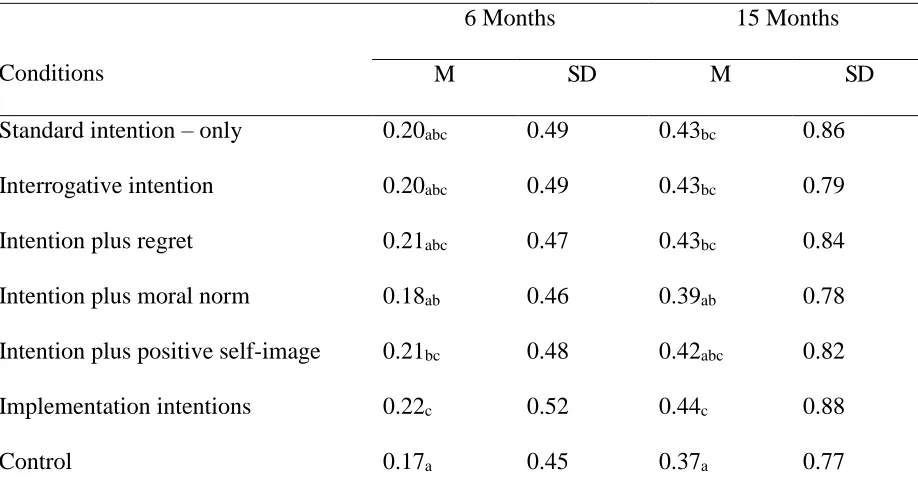
Table 1 presents the mean frequency of registrations for each condition for both follow-up
periods. As expected, the control condition exhibited the lowest mean registration scores at both
6-months (M = .17) and 15-6-months (M = .37). At the 6-month follow-up, the implementation intention
(2(1) = 6.92, p < .01, d = 0.11) and self-positive image conditions (2(1) = 4.02, p < .05; d = 0.08)
showed significantly greater frequency of donor registrations compared to the control condition; the
difference between the regret plus intention versus control condition approached significance, 2(1) =
3.27, p = .07; d = 0.08. At 15 months, the contrast analyses showed that the implementation intentions
(2(1) = 6.58, p < .01; d = 0.09), regret plus intention (2(1) = 5.11, p < .05; d = 0.08), interrogative
intention (2(1) = 3.95, p < .05; d = 0.07), and standard intention conditions (2(1) = 4.09, p < .05; d =
condition approached significance (2(1) = 3.30, p = .07; d = 0.06). These findings indicate that,
compared to a control condition, certain QBE interventions and implementation intentions are effective
in promoting return to giving blood among lapsed donors.
Contrary to expectations, none of the variations of the QBE that we tested (interrogative
intentions, regret plus intention, moral norm plus intention, positive self-image plus intention)
engendered greater donor registrations compared to the standard, intention-only condition over either
follow-up period. In addition, certain QBE interventions that outperformed the control condition proved
just as effective as forming implementation intentions in promoting lapsed donors’ return to giving
blood. The intention plus positive self-image condition was as effective as implementation intentions
over both follow-up periods, while the standard intention, interrogative intention, and intention plus
regret conditions each had equivalent impact as implementation intentions at 15 months (Table 1).
Combined Effects Condition and Questionnaire Completion on Number of registrations
This set of analyses examined whether questionnaire completion influenced the impact of
condition on registration to donate and whether completing questionnaires generated greater attempts to
donate compared to the control condition. As in the main analyses we did not add age, gender, or
donation status as covariates because each variable showed only modest relationships (Tabachnick &
Fidell, 2001) with donor registration among those completing the questionnaires (at 6 months: gender,
= .034; age, = 0.089; and donor status, = .072; at 15 months: gender, = .046; age, = .073; and donor status, = .091). Table 2 shows the mean registrations by condition and questionnaire completion.
Findings clearly supported the idea that completing the questionnaire generated more donor registrations
than not completing the questionnaire. This was true for all six experimental conditions (all ps < .01) at
both 6- and 15-month follow-up periods. Failing to complete the questionnaire resulted in a number of
moral norm; in this latter case, not completing the questionnaire resulted in a significant lower mean
compared to the control group (p < .05). Moreover, among those who completed the questionnaire, the
implementation intention intervention outperformed moral norm, anticipated regret and self-positive
image at 6-months and all interventions at 15-months.
Moderation of the QBE on Frequency of Registrations to Donate
As recommended by Aiken and West (1991), a series of three-step hierarchical regressions were
used to test whether gender, age and donor status moderated the effect of each intervention at the 6- and
15-month follow-ups. Behavior was regressed on the respective condition at step 1, the three moderator
variables were entered on the second step, and the three condition × moderator interactions term entered
the equation on the third step. There were no significant moderation effects for gender and age.
However, donor status was a significant moderator for the moral norm plus intention (ps < .05, at 6- and
15-months) and positive self-image plus intention (ps < .05, at 6- and 15-months) conditions compared
to control on return to give blood. In all cases, the intervention was significant only among first time
donors (at 6-months: intention plus moral norm: B = .57, SE = .224, p < .05 and intention plus positive
self-image: B = .67, SE = .19, p < .01; at 15-months: intention plus moral norm: B = .48, SE = .19, p <
.05; intention plus positive self-image: B = .51, SE = .15, p < .05. (The corresponding non-significant
values for repeat donors were B = -.05, -.02, .09, and .12, SE = .12, .11, .08, and .08, respectively, ns.).
Discussion
To our knowledge, the present study is the largest trial of QBE interventions to date and one of
the first interventions to target reinvigorating blood donation among lapsed donors. The trial produced
several important findings. First, different forms of the QBE were effective in promoting donor
registration in both the short term (6-months) and the longer term (15-months). At the 6-month
control condition; the impact of the intention plus regret condition was marginally significant. At the
15-month follow-up, the standard intention, interrogative intention, intention plus regret, and intention plus
positive self-image conditions all generated more frequent donor registrations compared to the control
condition. Second, the implementation intention intervention proved effective in promoting the return to
giving blood at both follow-up periods. Of interest was the fact that certain QBE interventions were just
as effective as implementation intentions at both 6-months (intention plus positive self-image) and
15-months (standard intention, interrogative intention, intention plus regret, and intention plus positive
self-image). Third, although a key goal of the present research was to identify how the QBE might be used
most effectively to promote renewed registrations among lapsed donors, the findings revealed no clear
‘winner’ among the different QBE interventions. None of the QBE variations that we tested promoted
significantly higher rates of donor registration compared to the standard intention condition. There was,
however, one clear ‘loser’ in terms of effectiveness: The intention plus moral norm condition did not
increase donor registrations at either follow-up. Fourth, whether questionnaires were returned or not
significantly moderated the effects observed. Higher rates of donor registration were observed for all
experimental conditions at both 6- and 15-month follow-ups among those returning compared to those
not returning questionnaires. At 6-months follow-up among those returning questionnaires all
intervention conditions produced high donor registration rates than the control condition and
implementation intentions produced high donor registration rates than the intention plus regret, intention
plus moral norm, and intention plus positive self-image conditions. At 15-months follow-up among
those returning questionnaires all intervention conditions produced high donor registration rates than the
control condition and implementation intentions produced high donor registration rates than all other
intervention conditions. Fifth, donor status (first-time vs. repeat donors) but not gender and age
intention plus moral norm, and intention plus positive self-image interventions were effective for
first-time donors but were not effective for repeat donors.
The present research contributes to the growing body of evidence that the QBE can be used to
promote consequential health behaviors, and offers a useful advance in terms of the scope of this
intervention. Whereas previous studies focused on the initiation of behaviors among community
samples, students, and healthcare workers (Conner, Godin, Norman, & Sheeran, 2011; Godin,
Belanger-Gravel, Amireault, Vohl, & Perusse, 2011; Godin et al., 2010; Godin, Sheeran, Conner, & Germain,
2008; Williams, Block, & Fitzsimons, 2006), here we tested whether the QBE could be used to
reinvigorate behavior among a sample who had failed to perform the focal action for at least two years
(i.e., lapsed blood donors). The present findings thus indicate that the QBE can be used also to promote
effective resumption of a behavior as well promoting getting started on new behaviors, as previous
research has shown. In relation to the use of the QBE to promote blood donation in particular the
present findings also make a contribution. Previous studies in this area (Godin, Sheeran, Conner, &
Germain, 2008; Van Dongen A, 2012) had produced mixed findings when based on intention to treat
analyses. Similar analyses in the present data also produced somewhat mixed results particularly over
the shorter follow-up. At 6-months, of the QBE conditions only the intention plus positive self-image
condition significantly outperformed the control condition. While at 15-months all QBE conditions
except intention plus positive self-image and intention plus moral norm outperformed the control
condition. These latter two conditions did outperform the control condition at both 6 and 15 months
among the first-time donors. The more consistent advantage for the QBE conditions over longer time
intervals in relation to blood donation could be usefully further tested in future studies. Unfortunately,
the present findings do not speak to the mechanisms underlying the QBE and why the QBE is observed
Findings also confirmed that the important role of forming if-then plans or implementation
intentions for increasing health behaviors (for meta-analyses, see (Adriaanse, Vinkers, De Ridder, Hox,
& De Wit, 2011; Bélanger-Gravel, Godin, & Amireault, 2013; Gollwitzer & Sheeran, 2006), and blood
donation in particular (Godin et al., 2010; Godin, Vezina-Im, Belanger-Gravel, & Amireault, 2012). The
main reason for including an implementation intention condition in the present study was to gauge the
strength of the QBE. Findings showed that not only did the standard intention, interrogative intention,
intention plus regret, and intention plus positive self-image outperform the control condition at
15-months but also that these conditions engendered the same enhanced rate of donor registrations as
implementation intentions – an established behavior change technique. These findings are all the more
impressive considering the modest overall response rate to the questionnaires. Despite the fact that 77%
of participants may not have been exposed to QBE interventions (i.e., these participants did not return
the questionnaires), there were still statistically significant effects on blood donation. Moreover, from
the perspective of blood supply agencies, the effects were substantive as the rates of donor registration
for the QBE conditions were 13% to 16% higher than the rate observed in the control condition.
Nevertheless, it is worth noting that among those completing and returning the questionnaire the
implementation intention condition produced significantly higher rates of donor registration than any of
the QBE conditions over the 15-month follow-up period.
Although four out of the five QBE interventions tested were effective in promoting lapsed
donors’ return to giving blood, contrary to expectations, the interrogative intention, regret plus intention,
and intention plus positive self-image conditions did not prove more effective than the standard QBE
condition (intention-only). As with all null effects, it is difficult to discern whether conceptual or
methodological factors were important. Previous research found support for interrogative intention
2010) and anticipated regret plus intention (Sandberg & Conner, 2009) interventions, and there is
evidence that positive self-image is an important determinant of blood donation (Ferguson, Farrell, &
Lawrence, 2008); these considerations suggest that our predictions have some conceptual basis. At the
methodological level, the modest response rate, the small number of items used to augment the intention
questions, and the lack of control over how carefully participants read or completed the questionnaire
could all have played a role. Assuming that heightened accessibility of the underlying attitude explains
the impact of asking intentions questions on subsequent donation behavior (Morwitz & Fitzsimons,
2004; Wood, Conner, Sandberg, Godin, & Sheeran, Article submitted for publication), it is possible our
interrogative intentions, regret plus intention, or positive self-image plus intention manipulations were
not sufficiently strong to increase accessibility beyond the level engendered by a standard,
intention-only QBE intervention. In sum, although the present study finds support for the QBE in promoting
registrations to give blood by lapsed donors, we obtained no consistent evidence that the QBE can be
enhanced using the variations tested here.
One QBE variation tested here, moral norm plus intention, proved ineffective. That is, the moral
norm plus intention questionnaire did not increase donor registrations compared to the no-contact
control condition. The lack of effect in this condition can be explained by Schwartz’s (1977) observation that when moral norm was manipulated or activated, it sometime led to a decrease in behaviour among
individuals with high personal normative beliefs. Schwartz (1977) showed that this boomerang effect
occurs when people are suspicious that someone is trying to intentionally manipulate their feelings of
moral obligation to adopt the behavior or when the request is seen as illegitimate. Reactance theory
(Brehm & Brehm, 1981) also suggests when people believe that they are being manipulated, they are
less inclined to comply with the focal request. It is possible that participants in the present study
measuring moral norms in future in QBE research (see also (Smith & Masser, 2012).
The present study also tested a number of moderators. Like previous studies (Conner, Godin,
Norman, & Sheeran, 2011) all our interventions were significantly more effective than the control
condition among participants who completed and returned the questionnaires. More interestingly, at
6-months, the implementation intention condition produced significantly more donor registrations than
intention plus regret, intention plus moral norm, and intention plus positive self-image. While at
15-months the implementation intention condition produced significantly more donor registrations than all
the QBE conditions. Neither gender nor age emerged as significant moderators, although donor status
did for some comparisons: moral norm plus intention versus control, and the positive self-image plus
intention versus control. In each case, the QBE interventions proved effective for first time donors but
not for repeat donors. These findings were not anticipated. It is possible that repeat donors have more
crystallized attitudes compared to first-time donors and that moral norm plus intention, and the positive
self-image plus intention interventions were not sufficiently powerful to heighten the accessibility of
attitudes among the repeat donors. Additional primary research is needed to investigate this possibility.
The fact that no significant moderator effects were observed for the standard intention, interrogative
intention, regret plus intention, and implementation intention conditions is important, however, as it
indicates that these interventions should prove effective among all participants irrespective of their
donor status (or for that matter their gender and age).
Strengths of the present study are the use of a randomized controlled trial design testing multiple
conditions, a large sample size (N = 7000), use of intent-to-treat analysis, and exploration of moderation
effects. However, three limitations of the present study are also worth mentioning. First, there was no
control group that received a questionnaire on a topic unrelated to blood donation. Such a condition
interaction of the donor with the blood collection agency. However, if this effect was prevalent it would
have exerted its effect on all interventions at the first follow-up (6 months). This was not the case since
not all QBE interventions were significant. Moreover, all lapsed donors including those in the control
group were phoned by the blood agency to inform them of a nearby blood drive when it occurs. In this
regard, it is documented that such phone calls are a powerful strategy to favor the return of blood donors
(Godin, Amireault, Vezina-Im, Germain, & Delage, 2011). Thus, given that all blood donors had some
contacts with the blood agency, it is unlikely that the QBE observed in the present study can be
attributed to the lack of interaction of the donors in the control condition with the blood agency. Second,
the response rate was modest (23%). This is likely due to the fact that (a) participants had not given
blood for two years and may not have been motivated to complete the questionnaire, and (b) no
reminder was sent. Reminders were not sent in order to follow as closely as possible the usual
recruitment protocol of the blood supply agency. The use of the intention-to-treat analysis is important
in this regard, as it indicates that the QBE and implementation intention interventions were effective
despite the modest response rate. Finally, the present study was designed to test whether variations in the
QBE were effective in promoting blood donation among lapsed donors. Behavioral effects and not
cognitive effects were explored here. Future studies should endeavour to deploy measures of attitude
accessibility and autonomous motivation as well as behavioral measures in order to test the underlying
mechanisms of the QBE.
Several directions for future research arise from the present study. First, few studies have been
specifically concerned with comparing the impact of different types of questions and additional tests are
needed both to explore the question variations tested here and to examine new variations. Firm
conclusions about the role of interrogative intentions, regret plus intention, moral norm plus intention,
altruism, or the type of person who regularly donates blood may warrant investigation. Second, future
studies would do well to attempt to enhance response rates to QBE surveys to examine effects on
subsequent rates of behavior. In the present study, the lowest response rate was observed in the
implementation intention condition that asked blood donors to link a number of potential barriers to
specific solutions, whereas the highest response rate was observed in the condition asking about
self-positive image. One might speculate that the former is a more demanding task than the latter. However,
combining a QBE intervention with one designed to increase rates of questionnaire completion (e.g.,
personalized invitation letters) might be a useful direction for future research. There are also a number
of interesting methodological strategies by which response rates to postal questionnaires can be
increased (Edwards, 2009). Finally, it may be worthwhile to test the effectiveness of combining
effective variations of the QBE with an implementation intention intervention in future studies.
To conclude, this study showed that specific QBE interventions have the potential to increase
blood donation behavior among lapsed donors. In particular, interventions based on standard intentions,
interrogative intentions, regret plus intention, and positive self-image plus intention all proved effective
in promoting registration for blood drives over a 15-month period. Moreover, these QBE interventions
were just as effective as implementation intentions, and generally promoted donation behavior
irrespective of participants’ age, sex, and donor status.
Author Notes
We thank Sophie Dubuc for conducting the statistical analysis. Preparation of this manuscript
was supported in part by a grant from the UK Economic and Social Research Council
(RES-062-23-2220) to Mark Conner, Cath Jackson, Paschal Sheeran, and Gaston Godin (Understanding and using
References
Abraham, C., & Sheeran, P. (2003). Implications of goal theories for the theories of reasoned action and
planned behaviour. Current Psychology, 22(3), 264-280.
Abraham, C., & Sheeran, P. (2004). Deciding to exercise: the role of anticipated regret. British Journal of
Health Psychology, 9(2), 269-278.
Achtziger, A., Gollwitzer, P. M., & Sheeran, P. (2008). Implementation intentions and shielding goal striving
from unwanted thoughts and feelings. Personality and Social Psychology Bulletin, 34(3), 381-393.
Adriaanse, M. A., Vinkers, C. D., De Ridder, D. T., Hox, J. J., & De Wit, J. B. (2011). Do implementation
intentions help to eat a healthy diet? A systematic review and meta-analysis of the empirical evidence.
Appetite, 56(1), 183-193.
Aiken, L. S., & West, S. G. (1991). Multiple Regression: testing and interpreting interactions. New Park, CA:
Sage.
Ajzen, I. (1991). The theory of planned behavior. Organizational Behavior and Human Decision Processes, 50,
179-211.
Armitage, C. J. (2008). A volitional help sheet to encourage smoking cessation: a randomized exploratory trial.
Health Psychology, 27(5), 557-566.
Ayres, K., Conner, M., Prestwich, A., Hurling, R., Cobain, M., Lawton, R., et al. (2013). Exploring the
question-behaviour effect: Randomized controlled trial of motivational and question-behaviour
interventions. British Journal of Health Psychology, 18(1), 31-44.
Bélanger-Gravel, A., Godin, G., & Amireault, S. (2013). A meta-analytic review of the effect of implementation
Brehm, S. S., & Brehm, J. W. (1981). Psychological reactance. A theory of freedom and control. New York,
New York: Academic Press.
Conner, M., Godin, G., Norman, P., & Sheeran, P. (2011). Using the question-behavior effect to promote
disease prevention behaviors: Two randomized controlled trials. Health Psychology, 30(3), 300-309.
Dholakia, U. M. (2010). A critical review of question-behavior effect research. Review of Marketing Research,
7, 147-199.
Edwards, P., Roberts, I, Clarke, MJ, DiGuiseppi, C, Wentz, R, Kwan, I, Cooper, R, Felix, LM, Pratap, S. .
(2009). Methods to increase response to postal and electronic questionnaires. Cochrane Database of
Systematic Reviews Issue 3. Art. No.: MR000008, DOI: 10.1002/14651858.MR14000008.pub14651854.
.
Ferguson, E., Farrell, K., & Lawrence, C. (2008). Blood donation is an act of benevolence rather than altruism.
Health Psychology, 27(3), 327-336.
Germain, M., Glynn, S. A., Schreiber, G. B., Gelinas, S., King, M., Jones, M., et al. (2007). Determinants of
return behavior: A comparison of current and lapsed donors. Transfusion, 47(10), 1862-1870.
Godin, G., Amireault, S., Vezina-Im, L. A., Germain, M., & Delage, G. (2011). The effects of a phone call
prompt on subsequent blood donation among first-time donors. Transfusion, 51(12), 2720-2726.
Godin, G., Belanger-Gravel, A., Amireault, S., Vohl, M. C., & Perusse, L. (2011). The effect of
mere-measurement of cognitions on physical activity behavior: a randomized controlled trial among
overweight and obese individuals. The International Journal of Behavioral Nutrition and Physical
Activity, 8, 2.
Godin, G., Bélanger-Gravel, A., Vézina-Im, L.-A., Amireault, S., & Bilodeau, A. (2012). Question–behaviour effect: A randomised controlled trial of asking intention in the interrogative or declarative form.
Godin, G., Conner, M., Sheeran, P., Belanger-Gravel, A., & Germain, M. (2007). Determinants of repeated
blood donation among new and experienced blood donors. Transfusion, 47(9), 1607-1615.
Godin, G., Sheeran, P., Conner, M., Delage, G., Germain, M., Belanger-Gravel, A., et al. (2010). Which survey
questions change behavior? Randomized controlled trial of mere measurement interventions. Health
Psychology, 29(6), 636-644.
Godin, G., Sheeran, P., Conner, M., & Germain, M. (2008). Asking questions changes behavior: Mere
measurement effects on frequency of blood donation. Health Psychology, 27(2), 179-184.
Godin, G., Vezina-Im, L. A., Belanger-Gravel, A., & Amireault, S. (2012). Efficacy of interventions promoting
blood donation: a systematic review. Transfusion Medicine Reviews, 26(3), 224-237.
Gollwitzer, P. M. (1999). Implementation intentions, strong effects of simple plans. American psychologist,
54(7), 493-503.
Gollwitzer, P. M., & Sheeran, P. (2006). Implementation Intentions and Goal Achievement: A Meta-analysis of
Effects and Processes. In P. Z. Mark (Ed.), Advances in Experimental Social Psychology (Vol. 38, pp.
69-119). Waterloo, Ontario: Academic Press.
Masser, B. M., White, K. M., Hyde, M. K., & Terry, D. J. (2008). The psychology of blood donation: Current
research and future directions. Transfusion Medicine Reviews, 22(3), 215-233.
Morwitz, V. G., & Fitzsimons, G. J. (2004). The Mere-Measurement Effect: Why Does Measuring Intentions
Change Actual Behavior? Journal of Consumer Psychology, 14(1/2), 64-74.
Sandberg, T., & Conner, M. (2009). A mere measurement effect for anticipated regret: impacts on cervical
screening attendance. British Journal of Social Psychology, 48(Pt 2), 221-236.
Schreiber, G. B., Glynn, S. A., Damesyn, M. A., Wright, D. J., Tu, Y., Dodd, R. Y., et al. (2003). Lapsed
Schwartz, S. H. (1977). Normative influences on altruism. In L. Berkowitz (Ed.), Advances in Experimental
Social Psychology (pp. 221-279). New York NY: Academic Press.
Sedikides, C., & Strube, M. J. (1997). Self-evaluation: To thine own self be good, to thine own self be sure, to
thine own self be true, and to thine own self be better. In M. P. Zanna (Ed.), Advances in Experimental
Social Psychology (Vol. 29, pp. 209-269). New York, NY: Academic Press.
Senay, I., Albarracin, D., & Noguchi, K. (2010). Motivating goal-directed behavior through introspective
self-talk: The role of the interrogative form of simple future tense. Psychological Science, 21(4), 499-504.
Shaz, B. H., James, A. B., Hillyer, K. L., Schreiber, G. B., & Hillyer, C. D. (2010). Demographic variations in
blood donor deferrals in a major metropolitan area. Transfusion, 50(4), 881-887.
Sherman, S. (1980). On the self-erasing nature of errors of prediction. Journal of Personality and Social
Psychology, 39, 211-221.
Smith, M. K., & Masser, B. M. (2012). Principles and popularity: the interplay of moral norms and descriptive
norms in the context of volunteerism. British Journal of Social Psychology, 51(4), 762-771.
Sprott, D. E., Spangenberg, E. R., & Fisher, R. (2003). The importance of normative beliefs to the self-prophecy
effect. J Appl Psychol, 88(3), 423-431.
Sprott, D. E., Spangenberg, E. R., Knuff, D. C., & Devezer, B. (2006). Self-prediction and patient health:
influencing health-related behaviors through self-prophecy. Med Sci Monit, 12(5), RA85-91.
Tabachnick, B. G., & Fidell, L. S. (2001). Using multivariate statistics (4th ed.). Needham Heights: Allyn &
Bacon.
Van Dongen A, A. C., Ruiter RAC, Veldhuizen IJT. (2012). Does questionnaire distribution promote blood
donation? An investigation of question-behavior effects. Annals of Behavioral Medicine, DOI
Webb, T. L., & Sheeran, P. (2004). Identifying good opportunities to act: Implementation intentions and cue
discrimination. European Journal of Social Psychology, 34, 407-419.
Webb, T. L., & Sheeran, P. (2007). How do implementation intentions promote goal attainment? A test of
component processes. Journal of Experimental Social Psychology, 43(2), 295-302.
Williams, P., Block, L. G., & Fitzsimons, G. J. (2006). Simply asking questions about health behaviors
increases both healthy and unhealthy behaviors. Social Influence, 1(2), 117 - 127.
Wood, C., Conner, M., Sandberg, T., Godin, G., & Sheeran, P. (Article submitted for publication). Why does
Table 1
Overall Impact of Condition on Behavior (Mean Frequency of Donor Registrations) at 6 and 15 Months
(N = 7000)
Conditions
6 Months 15 Months
M SD M SD
Standard intention – only 0.20abc 0.49 0.43bc 0.86
Interrogative intention 0.20abc 0.49 0.43bc 0.79
Intention plus regret 0.21abc 0.47 0.43bc 0.84
Intention plus moral norm 0.18ab 0.46 0.39ab 0.78
Intention plus positive self-image 0.21bc 0.48 0.42abc 0.82
Implementation intentions 0.22c 0.52 0.44c 0.88
Control 0.17a 0.45 0.37a 0.77
Note. Means within each column that do not share the same subscript differ significantly (p < .05,
Table 2
Impact of Condition and Questionnaire Completion on Behavior (Mean Frequency of Donor Registrations) at 6 and 15 Months
Conditions
6 Months (M) 15 Months (M)
Not completed Completed Not completed Completed
Standard intention – only 0.16 0.36b,c,d,e 0.35 a,b 0.72b
Interrogative intention – only 0.16 0.37c,d,e 0.36 a,b 0.69b
Intention plus regret 0.17 0.32b,c 0.35 a,b 0.73b
Intention plus moral norm 0.15 0.26b 0.31 b 0.63b
Intention plus self-positive image 0.16 0.34b,c 0.32 a,b 0.69b
Implementation intentions 0.18 0.47e 0.35 a,b 0.95c
Control 0.17 0.17a 0.37a 0.37a
Note. Means within a column that do not share the same subscript differ significantly (p < .05, 2-tailed).
Mean frequency of registration differed significantly between “not completed” and “completed” for each condition at both 6- and
15-month follow-up periods (all ps < .01).
NA = not applicable because control participants did not complete a questionnaire so this factor does not apply to the control
condition. The mean for the control condition is presented in both the not completed and completed columns to indicate the pairwise
Figure Captions
Figure 1
32
Assessed for eligibility
(n = 12,547)
Enrollment
Randomization
Excluded (n = 3,076)
-Non-convocable status (n = 823)
-Not meeting inclusion criteria
Standard
intention-only
Interrogative intention
(n = 1,000)
Intention +
implementation
intention
Moral norm + intention
(n = 1,000)
Regret + intention
(n = 1,000)
Self-positive image + intention
Control group
(n = 1,000)
Lost to follow-up (n = 800)
-Incorrect address
(n = 85)
-Did not return
Lost to follow-up (n = 807)
-Incorrect address
(n = 74)
-Did not return
Intention-to-treat (n = 1000)
Questionnaire completed:
-Yes (n = 200)
Intention-to-treat (n = 1000)
Questionnaire completed:
-Yes (n = 193)
Lost to follow-up (n = 846)
-Incorrect address
(n = 72)
-Did not return
Lost to follow-up (n = 774)
-Incorrect address
(n = 104)
-Did not return
Lost to follow-up (n = 772)
-Incorrect address
(n = 86)
-Did not return
Lost to follow-up (n = 733)
-Incorrect address
(n = 89)
-Did not return
Intention-to-treat (n = 1000)
Questionnaire completed:
-Yes (n = 154)
Intention-to-treat (n = 1000)
Questionnaire completed:
-Yes (n = 236)
Intention-to-treat (n = 1000)
Questionnaire completed:
-Yes (n = 228)
Intention-to-treat (n = 1000)
Questionnaire completed:
-Yes (n = 267)
Intention-to-treat (n = 1,000)
Not retained in the study