1
UNIVERSITI TEKNIKAL MALAYSIA MELAKA
DEVELOPMENT OF PUBLIC TRANSPORTATION (BUS)
NOTIFICATION USING PIC MICROCONTROLLER
This report is submitted in accordance with the requirement of the Universiti
Teknikal Malaysia Melaka (UTeM) for the Bachelor of Electrical Engineering
Technology (Industrial Power) with Honours.
by:
MOHAMAD AFIF BIN MOHAMAD
B071410695
870312-38-5173
FACULTY OF ENGINEERING TECHNOLOGY
2
ACKNOWLEDGEMENT
Firstly, I would like to express my gratitude to my family for their guidance
and encouragement throughout the course. The blessing and assistance from them
bring me a long way in the journey of life on which I am to embark. Besides that, I
would like to express my appreciation to my beloved project supervisor, Prof Madya
Mohd Ariff Bin Mat Hanafiah who gives a lot of guidance, encouragement,
assistance and support to me in completing this project. All he had done to assist me
will be remembered forever. Finally, I would like to thank all my lecturers and
3
ABSTRACT
Locating a public transport bus and to transfer itlocation to the knowledge of
people using Global Positioning System (GPS), Radio Frequency Identification
(RFID) tags and General Packet Radio Services (GPRS) are all useful, but the main
objective is its not yielded with this where the people receives information with
many delay and thus people get misguide with different bus in the crowed metro city,
In this project a bus location monitoring using Zigbee is used. The passenger in the
bus stops is provided with a Zigbee Trans receiver which gets the data from the
Zigbee Trans receiver of the incoming bus. The PIC controller makes the Zigbee
displays the data in the bus stops and also it takes the data from the Zigbee and sends
it to target bus stops. Thus, the passengers in the bus stops can be aware of the buses
coming so they can board their respective buses. The bus stops details are displayed
inside the bus along with LCD display using programming. The controllers used here
is PICF877A. This idea also helps the passengers and the bus driver about
information of bus unavailability and also unaware of the passengers at the bus stop
4
ABSTRACT
Mencari pengangkutan awam(bas) dan menghantar maklumat lokasi
kepada pengetahuan orang menggunakan gps, tag id rf dan gprs semuanya berguna
tetapi matlamat utama tidak diberikan, dengan ini di mana penumpang telah
menerima maklumat tentang banyak kelewatan bas dan oleh itu orang mendapat
salah arah dengan menaiki bas yang berlainan di bandar metro. Dalam projek ini
pemantauan lokasi bas menggunakan zigbee digunakan. Penumpang di perhentian
bas disediakan dengan penerima Transmit zigbee yang mendapat data dari penerima
Zigbee Trans pada bas masuk Pengawal PIC menjadikan Zigbee memaparkan data di
perhentian bas dan juga mengambil data dari Zigbee dan menghantarnya ke sasaran
hentian bas .itu penumpang di perhentian bas boleh menyedari bus yang datang
supaya mereka dapat menaiki bas yang betul. Butiran perhentian bas dipaparkan di
dalam bas bersama dengan paparan LCD menggunakan pengaturcaraan. Pengawal
yang digunakan di sini ialah PIC11F877A.Idea ini juga membantu pemandu bas
mengenai maklumat setiap hentian bas serta lokasi penumpang dan juga penumpang
5 TABLE OF CONTENTS
CHAPTER TITLE PAGES
ACKNOWLEDGEMENT i
ABSTRACT ii
ABSTRAK iii
TABLE OF CONTENTS iv
LIST OF FIGURES vii
LIST OF TABLES ix
LIST OF SYMBOLS x
LIST OF ABBREVIATIONS xi
1 INTRODUCTION 1
1.1 Project Background 1
1.2 Problem Statement 3
1.3 Objectives 4
1.4 Project Scope 4
1.5 Contribution of Project 5
2 LITERATURE REVIEW 6
2.1 Overview 6
2.2 Theory and basic principle 7
2.2.1 Zigbee Wireless 7
2.2.1.1 History 9
2.3 Microcontroller 14
2.3.1 PIC Microcontroller 15
6
2.5. Switch 17
2.6. Keypad 18
CHAPTER TITLE PAGES
2.7 Buzzer 20
2.8 Previous Studies 20
2.8.1 Comparative Performance Analysis of Wireless Communication Protocols for Intelligent Sensors and Their Application
18
2.8.2 Passenger Bus Alert System For Easy Navigation Of Blind People
21
2.8.3 Selective Vehicle Detection (SVD) - Bus Priority and GPS Technology
22
3 METHODOLOGY 24
3.1 Introduction 24
3.2 Project Implementation 25
3.3 Hardware 28
3.3.1 Bus Stop design 28
3.3.2 Bus design 29
3.4 Component Selection 30
3.5 Software 34
3.5.1 Proteus 7.0 34
3.5.2 ISIS 35
3.5.3 ARES 35
3.5.4 MicroC PRO 36
3.5.5 SolidWorks 37
3.5.6 XCTU 39
4 RESULT AND DISCUSSION 42
4.1 Result Overview. 42
4.2 Bus Stop panel 42
7
4.4 Operation of the project. 45
5 CONCLUSION AND FUTURE WORK 50
5.1 Conclusion 50
CHAPTER TITLE PAGES
5.2 Recommendation 50
REFERENCES 52
APPENDIX 54
Appendix 1 54
8 LIST OF FIGURES
Figure Title Page
2.1 Zigbee Symbol 8
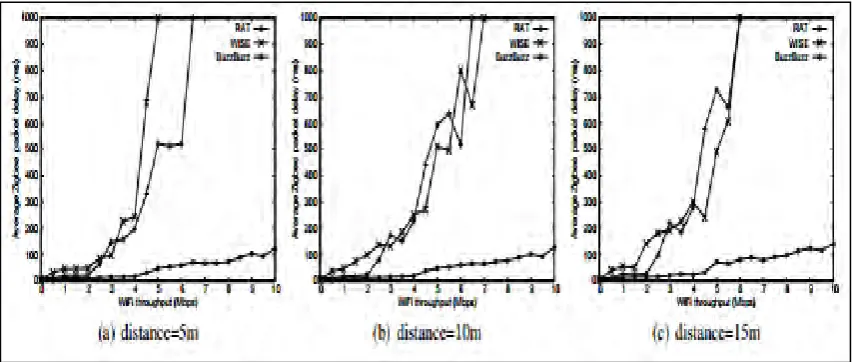
2.2 Zigbee Throughput Vs Wifi Throughput 8
2.3 Zigbee packet delivery delay vs wifi throughput 9
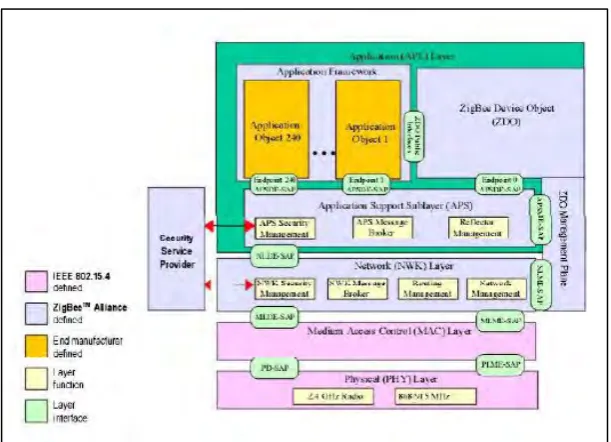
2.4 Zigbee stacks architecture, which is made up of blocks called layers.
10
2.5 Microcontroller 15
2.6 PIC11F877A 16
2.7 LCD 17
2.8 Switch 18
2.9 Keypad 19
2.10 Buzzer 20
3.1 Flowchart of the project development 25
3.2 Flow Chart project operation 27
3.3 Bus stop design 29
3.4 Bus Design 30
3.5 Schematic Drawing 31
3.6 PCB layout for circuit project 36
3.7 3d visualization of PCB layout 36
3.8 Three boxes at same sizing 38
3.9 Front box for bus stop circuit 38
3.10 Front plate box for circuit on bus 39
3.11 Setting parameter and write parameter of bus station 39
3.12 Setting parameter and write parameter of bus stop A 40
3.13 Setting parameter and write parameter of bus stop B 40
3.14 Test for three modules 41
4.1 Schematic of bus stop 42
4.2 The complete circuit of bus stop panel 43
4.3 Schematic of bus A and B 43
9
4.5 All three panel 45
4.6 Function operation of project 46
4.7 Function operation of project when different direction 47
4.8 Finding range of Zigbee 48
10 LIST OF TABLES
Table Title Page
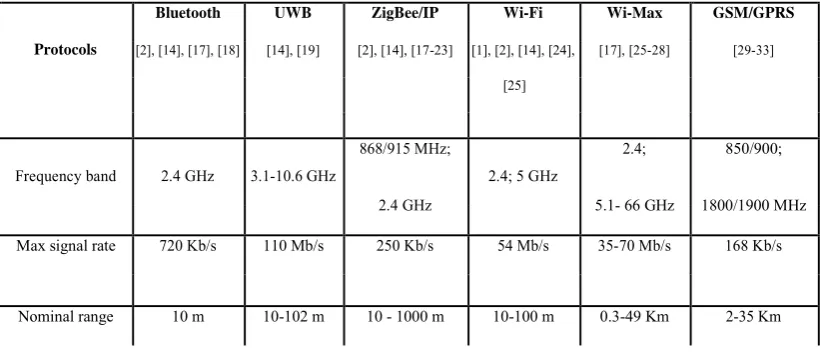
2.1 Comparison Of Characteristic For Different Wireless Protocol 12
3.1 Bus stop design 28
3.2 Bus Design Component 29
3.3 Specification of Zigbee 31
3.4 Specification of LCD 33
11
CHAPTER
1
INTRODUCTION
This section gives an overview about the project such as the idea of the
project and the project’s background. In this part, the objectives and the scope of the
project are explained as well as the background of the study. This discussion is based
on the problem statement of the project. The project title is “Development Of Public
Transportation (BUS) Notification Using PIC Microcontroller”. This project is want
to help alert the passenger about the bus is arriving and also alert the driver bus by
building the project that used Radio Frequency (RF) transmitter, receiver as the
medium to pass and propagate the signal wave when trigger the button on the
transmitter circuit while PIC16F877A as a microcontroller.
1.0Project Background
With enormous bus stations and plenty of passengers the bus transportation
system gets more complex, as well as the possibility of passengers will having
problem by losing their direction and missed their bus. Sometime people inside the
bus miss the destination that they desire due to the too much crowd in the bus. It’s
going to gives lot of trouble to the bus driver and passenger itself.
In order to overcome this problem local government may use GPS system to locate
the bus and thus they can inform the people in the bus stop about the bus location
and the people inside the bus also get information about the bus location inside the
12 transportation using gprs thus they can monitor the bus location. But the problem is
not reduced in this system it has been increased. The GPS usage may get delay in
locating the moving bus and also the usage of internet may cost local government
high thus this system may create a major trouble of giving wrong information to the
people and may also mislead them to different bus stop.
Bus monitoring and alert system using Zigbee and microcontroller
(PIC11F877A) is been proposed to overcome this difficulty. Zigbee is used in the
bus stop to send the information to the bus and PIC is also connected with Zigbee
to send the data received as a message. The driver bus will be alert about the
passenger and their direction. At the same time at the bus stop the passenger itself
will be notify that bus is near. Thus, this project is build with automatic alert and it
easy to use. Plus, it’s also a low cost and using low power consumption.
The amount of population increases and their need for more transportation
systems increase as well.(Koga, 1999)[1] .Not all people are being able to process
their own transport and travel individually, but the main objective is not yielded
with this where the people receives information with many delay and thus people
get misguide with different bus in the crowed metro city, In this project a bus
location monitoring using Zigbee is used. The passengers in the bus stops are
provided with a Zigbee Trans and receiver which gets the data from the Zigbee
Trans receiver of the incoming bus. The PIC controller displays the data in the bus
stops and also it takes the data from the Zigbee and sends it to the control section of
transportation and also to other target bus stops. Thus the passengers in the bus
stops can be aware of the buses coming so they can board their respective buses.
13 programming. The controllers used here is an PIC controller (PIC16F877A). This
idea also reduces traffic and overloading of public in buses.
The collective transport means are essential to enable people to move around
cheaply and reduce the traffic jam on roads. (Koga, 1999)[1]. Bus transportation is a
capable system that allows people to travel to a variety of destinations at low cost.
Developed countries have implemented assorted modernized bus transportation
systems that enable passengers to freely travel to any desired locations. However,
there are some obstacles that encountered by passengers who using bus
transportation(Koga, 1999)[1].
One of them is the possibility of passengers missing a bus due to the
deficiency of the bus transportation system(Me, 2013)[3]. Another thing is that, it
would be a waste of time and cost in which, when the bus is coming into a bus
station that no passengers waiting. A modernized bus transportation system can be
implemented in order to reduce these deficiencies.
1.2 Problem statements
Nowadays the need for traveling from place to place is becoming a routine
that people almost do every day. There are various transportation systems, in which
people can travel from one place to another. Bus transportation is the people's
common choice to use due to its availability at low cost and simple traveling
methods to the user’s destination.
The disadvantages of using the bus transportation is when there are many
passengers want to use it, they could be missing the bus and this makes them unable
14 transportation vendors waste time and cost by driving a bus to an empty bus
station(Koga, 1999)[1]. All these obstacles exist due to the olden and inefficient
systems and technologies of bus transportation.
However, these bus transportation system's deficiencies can be reduced by
developing a technology system that can significantly contribute to managing,
improving, and modernizing the bus transportation systems. The system utilizes a
microcontroller that controls the Zigbee wireless communication module that acts as
a communication tool between the bus stations and the buses.
The systems working principle include PIC16F877A microcontroller, Zigbee,
LCD, and sound buzzer where the bus drivers will receive an indicating signal
through Zigbee(Ke, Ruiqiang, & Cuixia, 2008)[2]. The signal will show that the
passengers are waiting in specified destinations. In addition, a signal will be send to
the bus station that will sound a buzzer that notifies the passengers that a bus is
coming to their station. Passengers can also see which bus is coming to their station
through an LCD. This will be reduced the time and cost wasted, and improves the
15 1.3 Objectives
The objectives of Public Transportation (BUS) Commuter Notification system
are:
1) To design a notification system for bus transportation by using the Zigbee
wireless module.
2) To develop a program for the notification system by using the PIC
Microcontroller.
3) To build the project, which implements a system that can help alerted, noticed
and warned the passenger and driver with low cost and low power consumption.
1.4 Scope
The scope of this project includes designing bus transportation systems
utilizing a Zigbee, PIC16F877A microcontroller, buzzer, and LCD. The Zigbee
wireless module is the communication device between the buses and the bus stations.
Furthermore, the PIC microcontroller acts as the controlling and processing device
that drives the entire system. A programming code will be developed and uploaded
into the PIC.
Then, it will be interfaced with the Zigbee module for communication
purposes. Signals will be sent from bus stations to the buses and from buses to the
bus stations. It provides a two-way communication. Upon receiving the signals, it
will be notified by the sound of the buzzers and visualization of texts on LCDs.
Moreover, after the passengers ride the bus, the driver can reset the notified messages
16 1.5 Project Contribution
This project will notify the bus drivers by sending signals from Zigbee that
there are passengers waiting at the specified destinations. In addition, the passengers
will know that the bus is available and the message will be shown at their bus stop
via LCD screen. For the driver also receive the signal which shown the destination of
passenger and sound from buzzer. This project improves the bus transportation
system and reduces the time and cost wasted as it is in the current bus transportation
system. This system also aids the passengers who sometimes miss their bus due to
their carelessness. Moreover, passengers can spend their waiting time by reading
books or using gadgets without worrying about missing the bus. Indirectly, this
17
CHAPTER 2
LITERATURE REVIEW
2.1 Overview
Travelling is the process in which people would spend days and even months
to reach the desired destination. People started using boats that made of wood to
travel across the sea. Now, travelling becomes easy with the availability of several
transportation means ranging from simple motorcycle to huge airplane. The
present-day consumers should be able to ride any vehicle, and easy to get the transportation
to the destination with desired time and speed. Among the various transportation
system currently used is the bus transportation systems, which is a collectively
transport mean. Bus transportation is widely developed in most countries. It is
utilized to provide a collective transport for people who are not affordable to have
own transport(Koga, 1999)[1] .Then, bus transportation would reduce the traffic jam
occurred due to the plenty of individual transport moving on the roads. The
developed countries implement an organized system, including station and booking
tickets are implemented just like any other transportation system such as airlines
transport systems(Gardner, Souza, & London, 2009)[4]. The most important is
implementing the system for bus transportation, since it enables passengers to move
around in convenience and arranged way. As a tourist may not possess an individual
18 destination. Apart from that, energy consumption could be reduced by utilizing bus
transportation where passengers will take collectively transport instead of using
individual transport. Hence bus transportation not only convenience to passengers,
but also contributes in reducing energy consumption and travelling costs as well.
2.2 Theory and basic principle
Many theories have been proposed to explain what are Zigbee wireless and
PIC microcontroller. Although the literature covers a wide variety of such theories,
this review will focus on the basics of Zigbee and PIC microcontroller method of
analysis and a gap in literature. However, other information from past, researchers
will also be included in this chapter for readers to understand more about this project.
2.2.1 Zigbee Wireless
Zigbee is a specification for a suite of high-level communication protocols
used to create personal area networks with a small, low-power for digital radios. The
technology defined by the Zigbee specification is intended to be simpler and less
expensive than other wireless personal area networks (WPANs), such
as Bluetooth or Wi-Fi. Applications include wireless light switches, electrical meters
with in home displays, traffic management systems, and other consumer and
industrial equipment that require a short-range low rate wireless data transfer(Ke,
Ruiqiang, & Cuixia, 2008)[2].
Low power consumption will limit the transmission distances to 10–100 meters
19 data rate and has a long battery life, which makes it widely useful in monitoring and
control applications(A.Mounica & G.V.,2017). Zigbee devices can transmit data over
long distances by passing data through a mesh network of intermediate devices to
reach more than the distance. Zigbee is typically used in low data rate applications
that require long battery life and secure networking (Zigbee networks are secured by
128 bit symmetric encryption keys.) Zigbee has a defined rate of 250 Kbit/s, is best
[image:19.595.178.464.273.373.2]suited for intermittent data transmissions from a sensor or input device.
Figure 2.1: Zigbee symbol
[image:19.595.108.530.469.641.2]20 Figure 2.3: Zigbee packet delivery delay vs wifi throughput
2.2.1. History
Zigbee was created in 1998 and standardized in 2003, and revised in 2006.
The Zigbee standard has evolved since its original release in 2004 and it is a new low
cost, low power wireless networking standard for sensors and control devices.
Zigbee provides network speeds of up to 250kbps and is expected to be
largely used in wireless sensor network applications where high data rates are not
required. Zigbee uses the media access to control the layer and physical layer for
communication between devices. Zigbee also offers a short-range wireless
networking capability with low cost, low data rate and low power
21 Figure 2.4: Zigbee stacks architecture, which is made up of blocks called
layers.
Each layer will perform a specific function in the Zigbee protocol
architecture. The data will entity provides the data transmission service and a
management entity provides the all other services. Each service entity
exposes an interface to the upper layer through a service access point (SAP)
and each SAP supports a number of service primitives to achieve the required
functionality .The Zigbee protocol will be built upon on this foundation by
providing the network layer (NWK) and the framework for the application
layer. The application layer framework consists of the application support
sub-layer (APS) and the Zigbee device objects (ZDO).
The lower frequency PHY layer covers both of the 868MHz European
bands and the 915 MHz band that are used in the United States and Australia.
22 The responsibilities may also include transmitting frames, synchronization
and providing a reliable transmission mechanism. The Zigbee network layer
supports star, tree, and mesh network topologies. The Zigbee coordinator is
responsible for initiating and maintaining the devices on the star network
topology.
Star network topology will control the coordinator and all the devices
and directly communicate to the coordinator. The Zigbee will coordinates for
starting the network and choosing the key network of parameters.The routers
move data will control messages through the network by using the
hierarchical routing strategy and Zigbee is employed by carrier sense multiple
access (CSMA)
The advantages of Zigbee is that it will get through the CSMA is will
be reduced the current drain and having longer battery life elimination of
waiting time for polling. Zigbee also be developing the sensor and control the
application for wireless personal area network (WPAN) applications that
cover short distance communication and control requiring low data
rates(Nugroho & Sahroni, 2014)[6]. The contributions of the paper are
summarized as follows:
1) Conduct extensive statistical analysis of data traces captured in real-life
WiFi networks. We show that, in a channel shared by a group of WiFi
devices, the size of WiFi frame clusters well satisfy the power law
distribution.
2) Test the encoding/decoding time of a series of light-weight coding
23 model, we derive the transmission efficiency for each coding technique, and
present the optimal encoding strategy for different WiFi traffic load.
3) Observe that there is distinct duration gap between encoding time and
decoding time on Zigbee devices, which can be effectively exploited for
channel sampling. Hence, Zigbee devices can keep updating the WiFi traffic
model while delivering packets, without frequently suspending their
transmissions for channel sampling(P. Guo& J. Cao,2014).
The factors of prime propelling will be caused the significant of
reduction in the power consumption and will provide the wireless stand,
which the facilitators will improve the battery life from hours to months.
Therefore Zigbee technology will innovate the proprietary solution by
creating numerous interoperability issues. The implementation will combine
with the very low power consumption and limited cost of implementation.
The active development of Zigbee Chipsets and complete solution
development by various companies globally stand witness to the expected
boom of the Zigbee Standard in the very near future in several applications
including ITS.
Bluetooth UWB ZigBee/IP Wi-Fi Wi-Max GSM/GPRS
Protocols [2], [14], [17], [18] [14], [19] [2], [14], [17-23] [1], [2], [14], [24], [17], [25-28] [29-33]
[25]
Frequency band 2.4 GHz 3.1-10.6 GHz
868/915 MHz;
2.4; 5 GHz
2.4; 850/900;
2.4 GHz 5.1- 66 GHz 1800/1900 MHz
Max signal rate 720 Kb/s 110 Mb/s 250 Kb/s 54 Mb/s 35-70 Mb/s 168 Kb/s
[image:23.595.114.526.574.753.2]Nominal range 10 m 10-102 m 10 - 1000 m 10-100 m 0.3-49 Km 2-35 Km
24
Nominal TX power 0 - 10 dBm
-41.3
-25 - 0 dBm 15 - 20 dBm 23 dBm 0-39 dBm
dBm/MHz
Number of RF
79 (1-15) 1/10; 16
14 (2.4 GHz) 4;8
124
channels 64 (5 GHz) 10;20
Channel bandwidth 1 MHz 0.5- 7.5 GHz
0.3/0.6 MHz;
25-20 MHz 20;10 MHz 200 kHz
2 MHz
GFSK, CPFSK, BPSK, PPM, BPSK BPSK, QPSK, QAM16/64,
Modulation type 8-DPSK,π/4- PAM, OOK, QPSK, OFDM, QPSK, BPSK, GMSK, 8PSK
DQPSK PWM O-QPSK M-QAM OFDM
Spreading FHSS
DS-UWB, MB-
DSSS
MC-DSSS,
CCK, OFDM,
OFDMA TDMA, DSSS
OFDM OFDM
Basic cell Piconet Piconet Star BSS Single-cell Single-cell
Extension of the basic
Scatternet Peer-to-Peer Cluster tree, Mesh ESS
PTMP, PTCM, Cellular
cell Mesh system
Max number of cell
8 236 > 65000 2007 1600 1000
nodes
AES block
AES block cipher
RC4 stream
GEA,
cipher cipher
Encryption E0 stream cipher (CTR, counter
AES-CCM
cipher MS-SGSN,
(CTR, counter (WEP),
mode) MS-host