,0
•
--..
UJ~
DIRECTORATE GENERAL XV
Internal Market and Financial Services
General matters and coordination, free movement of persons and direct taxation External dimension of the internal market and financial services
MEXICO
Rue de la Loi 200, B-1049 Brussels, Belgium -Office: C 107 8/4327.
Brussels, 15 June 1995
Ref: Nigg- jv\tcr\mexico
XV-A-2
Introduction
In 1993, GDP in Mexico was estimated in 1,140 bn of New Mexican pesos
(312 bn ECU1), a real growth rate of 0.7%. With a population of 91.2 mn, this
represented a. GDP per head of 12,500 Mexican pesos (3,426 ECU) compared to 15,800 ECU in the EU.
CREDIT INSTITUTiONS
Establishment
The reprivatisation of the banking sector, nationalized in 1982, was initiated in 1991 and completed at the end of 1992. This to~ether with the entry into force on 1 January 1994 of the North American Free Trade Agreement (NAFTA) constitute significant changes to conditions for access of foreign credit institutions to the Mexican market.
The Mexican financial sector is divided between banking institutions ( commercial banks, development b ~ , limited scope financial institutions), auxiliary credit organisations
and _ activities (bonded warehouses, financial leasing companies, financial factoring
companies, credit unions, saving and loan companies and foreign exchange firms), securities firms, security specialists, investment companies and managing companies of investment companies, insurance companies (including mutual and stock insurance companies). So far, 27 financial groups involving at least three financial intermediaries have been authorised; From 1 January 1994, financial groups can be formed with two of the three following financial institutions : commercial banks, securities firms or insurance companies.
In December 1993, Mexico's commercial banks recorded assets equivalent to $202 bn. Outstanding loans constituted the equivalent of $128 bn or 63% of total assets. Liabilities amounted to the equivalent of $189 bn which included the equivalent of $112 bn in deposits or 59% of liabilit.ies. Capital amounted to the equivalent of $13 bn. Banks tend to rely on international loans, repurchase agreements, and money markets for funding. In the money markets they can borrow from corporate and institutional lenders. The market share of the commercial banking system is highly concentrated. The three largest banks hold 50% of all assets, 53% of a.JI loans, and 59% of the net worth. Financing to the private sector grew rapidly in the early 1990's as the public sector's demand for funds decreased with the elimination of the fiscal deficit. Real growth in financing the private sector rose an average of 50% annually between 1990 and 1993. The rate of growth slowed significantly in 1993 as banks reverted to more conservative lending policies.
Exchange rates :
· The banking
system in Mexico includes7
government-owned developmentbanks
that lend to priority sectors, often through commercial banks or other financial institutions. Development banks have been moving toward market-based financing and lending and moving away from subsidised lending. As of 31 December 1993, development-banks held assets equivalent to $62.9 bn. Loans made up almost 74%. of assets. Benefiting from Mexico's improved credit rating, development banks have been borrowing actively on local and international capital markets. Funds raised with overseas issues and local . securities grew from 6% ofliabilities in 1991 to 18.5% in 1993.Prudential regulation has been enhanced and bank capital requirements have been raised. The required level of capitalisation for banks (net capital as a percentage of risk-based assets) is at present 8%. As of December 1993, the :. percentage of net capital£to risk..: weighted assets among commercial banks was 9.93, up from 7.64 at the end of 1991. In April 1992 the bank of Mexico imposed a limit of foreign currency liabilities held by commercial banks. This was initially set at 10% of average peso deposits plus foreign
currency liabilities. In November 1992 there was some liberalisation of these
requirements to allow banks to acquire additional foreign currency liabilities in certain circumstances, e.g., for the granting of export credits. At present the daily average balance may not exceed 16%.
Prior the entry into force of NAFTA, foreign financial institutions were not allowed to enter the Mexican market be it as subsidiaries or branches. Foreign banks were limited to a 30% share of voting capital in Mexican banks and would only establish a presence through a representative office. The legislation adopted to implement NAFT A allows financial institutions, based in Canada or the United States to establish fully-owned subsidiaries - but not branches - in Mexico as of 1 January 1994. This right will be phased in gradually, with interim individual and aggregate limits placed on the market share ofNAFTA-based banks. By 1 January 2000, these limits will disappear altogether, although temporary safeguard measures will remain in force until 1 January 2007 in case the foreign market share reaches 25% of the market. This liberalisation applies only to investment by foreign financial institutions engaged in the same general type of activity.
The aggregate market share allowed to NAFTA-based financial institutions will increase from 8% on 1 January 1994 to 15% on 1 January 2000 in equal annual amounts. During that period, individual banks will also be limited to 1.5% of market capitalisation of the Mexican market. After 1 January 2000 and not taking into consideration what they could achieve through internal growth, foreign banks will face an individual permanent size limit for mergers and acquisitions when the resulting institution exceeds 4% of the net capital of all commercial banks established in Mexico.
The National Banking Commission has set new capital requirements for the banks : a capital/asset ratio of9% and reserves at 60% of past-due loans or 4% ofto§tal loans. The Mexican Chamber of Deputies passed on 27 January 1995 the amendments to the laws governing financial institutions. Ther gist of the changes is :
• Ordinary capital of a financial institutions, bank or brokerage house can be made up
of
• Additional capital (non-voting L shares - owned by anyone, including foreigners) is increased from a limit of 30% to 35% of ordinary capital.
• No individual can hold more that 20% of shares in one institutions without the permission of the Finance" Ministry. No acquisition of a bank can involve capital which exceeds 6% of the total capital of the banking sector.
• Foreigners cannot control more than 25% of the ·market during the transition period of NAFT A, i.e. until 2000.
• The capital of foreign subsidiaries will be made up of
at least 51 % F shares ( owned by a foreign institution) up to 49% off or B shares.
Subsidiaries of US and Canadian banks established under NAFTA must be I 00% owned by the parent institution.
Thus Community credit institutions are still prohibited from branching into Mexico and from establishing direct subsidiaries.
In April 1994, the Ministry of Finance published its regulations governing applications by foreign financial institutions for approval to establish a subsidiary .. US and Canadian banks had until 31 July 1994, to complete their applications. The Mexican Finance Ministry granted 7 licenses to US and Canadian-based banks for the establishment of Mexican subsidiaries. 1 is a subsidiary of EU origin (Spain). The banks are expected to be operating by the end of the first quarter of 1995.
Table 1 - Total assets of the banking sector (bn Mxn)
1992 1993
State development banks 144.8 195.4
Multiple banking institutions 493.6 627.7
Table 2 · - .Total deposits (bn Mxn)
State development banks 24.4 48.9
Multiple banking institutions 303.0 360.8
Table 3 - Number of institutions
State development banks 7 7
Multiple banking institutions 20 20
Source : Comisi6n Nacional bancaria.
Table 4 - Concentration of the market deposits (%)
1992 1993
, State development banks (seven) 7.4 11.9
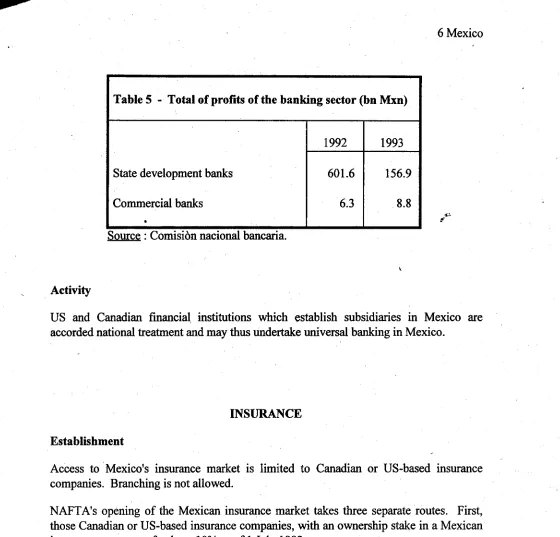
[image:5.594.19.585.21.789.2]Table 5 - Total of profits of the banking sector (bn Mxn)
1992 1993
State development banks 601.6 156.9
Commercial banks 6.3 8.8
.
Source : Comision nacional bancaria.
Activity
US and Canadian financial institutions which establish subsidiaries in Mexico are
accorded national treatment and may thus undertake universal banking in Mexico.
INSURANCE
Establishment
Access to · Mexico's insurance market is limited to Canadian or US-based insurance companies. Branching is not allowed.
NAFTA's opening of the Mexican insurance market takes three separate routes. First, those Canadian or US-based insurance companies, with an ownership stake in a Mexican insurance company of at least 10% as of 1 July 1992, may :
a) exercise any contractual right or option in existence as of 1 July 1992, with respect to ownership interest in such Mexican insurance companies ; and
b) as of 1 January 1996, acquire a controlling interest of up to 100% in such Mexican
.
.
msurance companies.
Secondly, NAFTA-based insurance firms forming joint-ventures with Mexican insurers will be able to gradually increase their foreign equity participation from 30% in '1994 up to 51 % by 1988 and up to 100% by 2000. Thirdly, Canadian or US-based insurers will be able to establish wholly ,0wned subsidiaries subject to aggregate limits of 6% on 1 January 1994 up to 12% on 1 January 2000. No restrictions will apply after that date.
[image:6.594.18.578.17.554.2]I
i '
I
I'
I
l
'
7 Mexico
No market share limitations apply to joint ventures by NAFTA-based msurance companies or minority participation in existence as of 1 January 1994.
Canadian or US-based insurance companies establishing subsidiaries in Mexico are only required to have a 51 % minimum of the capital stock.
Atthe end of 1994 Mexico had 43 insurance institutions, 2 reinsurance companies and three mutual benefit companies.
'
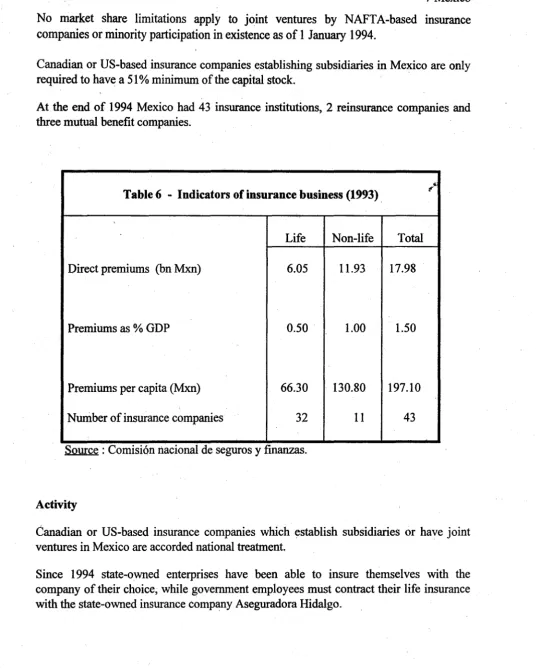
Table 6 - Indicators of insurance business (1993) . £
Life Non-life Total
Direct premiums (bn Mxn) 6.05 11.93 17.98
Premiums as% GDP 0.50. 1.00 1.50
Premiums per capita (Mxn) 66.30 130.80 197.10
Number of insurance companies 32 11 43
Somce : Comisi6n rtacional de seguros y finanzas.
Activity
Canadian or US-based insurance companies which establish subsidiaries or have joint ventures in Mexico are accorded national treatment.
[image:7.598.35.572.52.722.2]SECURITIES
Establishment
Access to Mexico's securities market is limited to Canadian or US-based firms. US and Canadian securities firms, securities specialists and mutual fund management companies can enter the Mexican market through wholly-owned subsidiaries. The companies need to own at any time at least 99% of the capital stock of their subsidiaries. Branching is not allowed.
...
Individual and aggregate market · share ceilings apply during a transition period from I January 1994 to I January 2000. The individual market share limit is 4% of the global capital of all Mexican and foreign securities firms. Global capital is paid in capital andcapital reserves are adjusted by earnings and changes in asset valuation. As of 31
. December 1993, the global capital of Mexican brokerage houses was US$ 1.9 bn.
Aggregate market share ceilings are 10% by 1 January 1994 raising to 20% as of 1999 and are eliminated in the year 2000. During the period between I January 2000 to 31 December 2003 Mexico may freeze the aggregate foreign capital share if it reaches a safeguard threshold of30% of the market.
As of I January 1994, the following US and Canadian-based financial institutions are allowed to establish or acquire wholly owned subsidiaries, with no market share limitations, of the following intermediaries : investment companies, management companies of investment companies, bonding companies and securities specialists,
saving associations and foreign exchange firms. ·
So far 16 US or Canadian-based securities firms have been granted operating licenses, of which six are of EU origin.
Mexico has one securities exchange, the Bolsa Mexicana de Valores. The exchange has two sections, the main exchange and a market for smaller companies with lower capitalisation. The introduction of a section for trading securities .issued in overseas markets is underway.
Trading in money market operations dominates the securities market, accounting for 98% of trading activity. Money market trading is concentrated in government paper. A total of approximately $66 bn in government securities was outstanding as of April 1994.
The securities market is regulated by the National Securities Commission, the Ministry of Finance, and to some degree the Bank of Mexico. The Mexican Stock Exchange and the Mexican Association of Trading Intermediaries exercise self-regulatory functions.
Mexican investors and carry voting rights. Foreigners may also freely purchase limited or non-voting shares ("C" or "N" shares), and through a neutral fund operated by Nacional Finan~iera, they may purchase stock normally reserved for Mexican investors, "A" shares.
Table 7 - Securities market indicators - Shares
Turnover (Market value of trading) (bn Mxn)
Turnover as % of GDP
Capitalization(l) (Market value of shares) (bnMxn)
Trading volume(2) (No of shares traded) (in bn)
No of listed companies
No of companies newly listed
(1) Excluding investment funds. (2) Excludes trades in mutual funds. Source : Comisi6n nacional de valores.
1992 156 15 433 35 200 23
Table 8 - Securities market indicators - Bonds
Turnover (Market value of trading) (bn Mxn)
Turnover as % of GDP
Capitalization(!) (Market value of bonds) (bn Mxn),
No of bonds and debentures listed
No of new listings bonds and debentures
(1) Excluding investment funds. Source: FIBV 1992 754 74 85 359 199 1993
[image:9.596.7.575.43.865.2]Activity