Efficiency of Problem-Based Learning (PBL) over Lecture
method in terms of enhancing critical thinking skills and
problem solving ability among Nursing students in
selected Nursing Institutions of Tamil Nadu
A Thesis
Submitted to The Tamil Nadu Dr. M.G.R Medical University, Chennai, for the award of the Degree of
Doctor of Philosophy in Nursing
By
SHYLA KAMALAKUMARI.R, M.Sc(N).,
Principal
Sree Abirami College of Nursing
Coimbatore
Under the Guidance of
PROF.
DR.A. CHARLES STEPHEN RAJASINGH, M.S., M.Ch.,
Research Guide
C.S.I Jeyaraj Annapackiam College of Nursing Madurai
Efficiency of Problem-Based Learning (PBL) over Lecture
method in terms of enhancing critical thinking skills and
problem solving ability among Nursing students in
selected Nursing Institutions of Tamil Nadu
Signature of the Guide: _____________________________________
PROF.DR.A. CHARLES STEPHEN RAJASINGH, M.S.,M.Ch., RESEARCH GUIDE
C.S.I JEYARAJ ANNAPACKIAM COLLEGE OF NURSING
MADURAI
Signature of the Co- Guide: ____________________________________
PROF. Mrs.HELEN RANI
RESEARCH CO- GUIDE
C.S.I JEYARAJ ANNAPACKIAM COLLEGE OF NURSING
MADURAI
A Thesis
Submitted to The Tamil Nadu Dr. M.G.R Medical University, Chennai,
for the award of the Degree of
Doctor of Philosophy
in Nursing
CERTIFICATE BY GUIDE
This is to certify that the thesis entitled “
Efficiency of
Problem-Based Learning (PBL) over Lecture method in terms of enhancing
critical thinking skills and problem solving ability among Nursing
students in selected Nursing Institutions of Tamil Nadu”,
submitted
by
Shyla Kamalakumari.R
, who registered for Ph.D in 2009 is a
bonafide record of the research done by her during the period of study
under my supervision and guidance and that it is not formed on any basis
for the award of any other Degree, or Diploma, Associateship, Fellowship
or any other similar title or any other Universities.
I also certify that this thesis is her original independent work. I
recommend this thesis should be placed before the examiners for the
award of Ph. D degree
.
---
PROF.DR.A. CHARLES STEPHEN RAJASINGH, M.S., M.Ch.,
RESEARCH GUIDE,
C.S.I. JEYARAJ ANNAPACKIAM COLLEGE OF NURSING, MADURAI.
DECLARATION
BY THE CANDIDATE
I hereby declare that this thesis entitled “
Efficiency of
Problem-Based Learning (PBL) over Lecture method in terms of
enhancing critical thinking skills and problem solving ability
among Nursing students in selected Nursing Institutions of Tamil
Nadu
, is an original work done by me under the guidance of
Prof.Dr.A.Charles Stephen Rajasingh, M.S., M.Ch.,
and has not been
submitted elsewhere, either partially or fully for the award of any other
Degree, or Diploma, Associateship, Fellowship or any other similar title.
---
SHYLA KAMALAKUMARI.R, M.Sc (N).,
Principal,
Sree Abirami College of Nursing,
Coimbatore.
Efficiency of Problem-Based Learning (PBL) over Lecture
method in terms of enhancing critical thinking skills and
problem solving ability among Nursing students in
selected Nursing Institutions of Tamil Nadu.
Research Guide
: ---
Prof.Dr.A. Charles Stephen Rajasingh M.S.,M.ch., Research guide
C.S.I Jeyaraj Annapackiam College of Nursing Madurai
A THESIS SUBMITTED TO THE TAMILNADU DR. M.G.R MEDICAL
UNIVERSITY, CHENNAI, INDIA, FOR THE DEGREE OF
DOCTOR OF PHILOSOPHY IN NURSING
ACKNOWLEDGEMENT
God grant me the serenity to accept the things I cannot change; courage to
change the things I can; and wisdom to know the difference.
I offer my undying gratitude to my Almighty God, who brought me to this
extent according to His plans, though unworthy I am.
I am charged with immense sense of gratitude to Prof.Dr.Jothi Sophia,
M.Sc.N., Ph.D.,Principal, CSI Jeyaraj Annapackiam College of Nursing, for having
given me an opportunity to pursue my doctoral degree in this esteemed Institution.
I express my deep sense of gratitude to my Research Guide Prof.Dr.A. Charles
Stephen Rajasingh, MS.,M.ch., for his encouragement, motivation and valuable
suggestions, which helped me a lot for completing this study on time.
I wish to place on record my profound thanks to Prof.Dr. K. Rajalakshmi,
M.Sc.N.,Ph.D., Professor and Head of the Department of Research, C.S.I. Jeyaraj
Annapackiam College of Nursing, Madurai for her invaluable encouragement,
support, and suggestions.
It is my bounden duty to thank Prof. Dr. Gabriel Jeyachandran, Ph.D
Director, C.S.I. College of Education, Madurai who was unfailingly available for my
questions and concerns, large or small, and always ready with thoughtful suggestions
and valuable insights.
I owe my sincere thanks to my Co-guide Prof.K.Helen Rani, M.Sc.N., for
I extend my heartfelt thanks and wish to acknowledge the support of the
Management of Sree Abirami College of Nursing, Coimbatore. Thanks especially to
Dr.P.Periasamy, M.S.,M.ch., Chairman of Sree Abirami College of Nursing,
Dr.Kunthavidevi, M.B.B.S.,D.G.O., and Dr.Senthilkumar, M.S.,M.ch., for all
their concern and support throughout my study period.
I express my sincere gratitude to Prof. Velusami Mani, M.Sc.,M.Phil., for
his assistance and guidance in statistical analysis.
My special thanks to Prof.Dr.G.John David Raja, M.A., M.Phil., Ph.D., for
his careful and patient proofreading.
It is bounden responsibility to thank all the members of the ethical
committee for their valuable support and guidance.
I am pleased to express my sincere gratitude to all the Principals of colleges
for their cooperation and for having granted me permission to conduct my study in
their respective institutions.
I am highly indebted to thank all the experts who validated the tool for my
study and for their valuable suggestions.
My special thanks to my Ph.D batch mates, Prof.Jaya Thangaselvi, M.Sc.N.,
and Prof. Jancy Rachel Daisy, M.Sc.N., whose support made difficult times
pleasant. They were always by my side and encouraged me when I was down in my
spirit.
I add a special note of thanks to Rev. David Suresh, who never missed to
keep my studies in his prayers. His prayers were a great boon for me during the
A special word of thanks to Laser Point, Madurai for the computer
assistance which helped me to bring out this manuscript.
I am indebted to my loving husband Isaac Robert, M.A., M.L., who provided
me with undying love and support during all the years of my studies. Your dedication
to my education is an incredible gift and I thank you for your continued
encouragement and support throughout this process. Without your support, this
dissertation would never had reached its completion.
Loving thanks to my sweet loving son Hanniel Simon, who had
acknowledged my absence of support whenever and wherever a child of his age
would get and had never disturbed me in my studies. Rather, had helped me
ABSTRACT
A study was done to evaluate the efficiency of problem-based learning (PBL)
over Lecture method in terms of enhancing critical thinking skills and problem
solving ability among nursing students in selected Nursing Institutions of Coimbatore,
Tamil Nadu for the award of the degree of Doctor of Philosophy in Nursing toThe
Tamil Nadu Dr. M.G.R. Medical University, Chennai during the year 2012.
INTRODUCTION: In today's fast paced, technologically advanced world,
the challenge for nursing faculty is to teach students critical thinking (CT) skills and
the ability to practice competently in a variety of situations. The rapidly changing
nature of the health care system presents nurses with varied complex practice issues
with no clear solutions. These health care problems require nursing students and
nurses to have CT skills. Educators have to equip nursing students with skills that
promote their CT to solve complex issues. The development of CT skills requires
students to engage in discussions to become active participants in their own learning.
Education with an active learning will result in significant increase between the
education and medical practice. Unfortunately, traditional undergraduate exercise
science courses using lecture based instruction are often content driven, emphasizing
abstract concepts over concrete examples and application. Nurse educators in
academia have long supported the notion of self-directed problem-based learning
(PBL). Problem-based learning originated in the late 1960s at McMaster University in
Ontario, Canada. Howard Barrows, the founder of this educational methodology,
developed the self-directed model to improve education in the school of medicine. It
was developed to improve medical education by moving from a subject and
lecture-based curriculum to an interdisciplinary one guided by 'real-life' problems. Its
self-directed learning, the development of critical thinking and problem solving skills
is the main goal of PBL.
THE OBJECTIVES
TheObjectives of the study were:
1. To assess the pre test level of critical thinking skills and problem solving
ability of nursing students among the control and the interventional groups.
2. To assess the post test level of critical thinking skills and problem solving
ability of nursing students among the control and the interventional groups.
3. To determine the effectiveness of PBL on critical thinking skills and problem
solving ability of nursing students.
4. To assess the students’ perception on the influence of PBL and Lecture
method on their critical thinking skills and problem solving ability in both
control and the interventional groups.
5. To associate the level of critical thinking skills and problem solving ability of
both the groups with selected demographic variables.
6. To associate the students’ perception on the influence of PBL and Lecture
method on critical thinking skills and problem solving ability in the control
and the interventional groups with selected demographic variables.
METHODS: AQuasi Experimental study with control group pre test and post
test design was adopted to determine the effectiveness of PBL in enhancing critical
thinking skills and problem solving ability among Nursing students. A total sample of
260- II year B.Sc Nursing students from selected colleges of Nursing in Coimbatore
were included in this study, out of which 130 were allotted to the interventional group
and the remaining 130 to the control group. Purposive Sampling Technique was
cognitive skills was used to assess critical thinking skills and problem solving ability
of nursing students. A five point Rating scale to assess the perceived benefits of the
teaching method on critical thinking skills and problem solving ability was used. The
data collected were analyzed using descriptive and inferential statistics based on the
objectives and hypotheses.
RESULTS: The result of the present study reveals that there was a significant
increase in the overall level of critical thinking skills and problem solving ability in
the interventional group than in control group. Further, the students who underwent
PBL process had a favorable perception towards PBL method of learning.
Comparison of pre test and post test levels of critical thinking skills and problem
solving ability of nursing students within both the groups. The overall ‘t’ level in all
the areas were 4.97 and 32.87 in the control and the interventional groups
respectively, which shows a highly significant difference between the pre test and
post test scores of interventional group (P<0.001). Further, there was a significant
difference between post test -2 of control group and post test -2 of interventional
group in the level of critical thinking skills and problem solving ability. The obtained
overall‘t’value 12.17, was higher than the table value, which is highly significant at
0.001 level of significance. Differences between the control and the interventional
groups at different points of time show astatistically significant difference was found
in both the control group ( P < 0.001) and the interventional group ( P < 0.001). “F”
value was highly significant in Interventional group compared to control group.
CONCLUSION: In the light of the findings, there is a positive effect on the
influence of PBL in enhancing critical thinking skills and problem solving ability
among nursing students. It offers several advantages over traditional lecture methods.
encouraging them to set their own learning objectives, and giving them a role in
decisions that affect their own learning. So, it was concluded that PBL is a potentially
powerful and essential approach to promote quality in nursing practice, which is
dependent upon the educational preparation of nurses to think critically and solve
problems.
RECOMMENDATIONS:
1. The study can be replicated in a larger sample size.
2. A similar study can be conducted in other parts of Tamil Nadu.
3. Longitudinal studies can be done to provide a profile of students’ development
of approaches to learning over time in order to assess the enduring effect of
PBL.
4. PBL should be introduced into nursing curriculum in order to promote critical
TABLE OF CONTENTS
CHAPTERS CONTENTS PAGE NO
CHAPTER I INTRODUCTION 1
1.1. Background of the study 1
1.2. Significance and need for the study 10
1.3. Statement of the problem 21
1.4.Aim and Objectives of the study 21
1.5. Hypotheses 22
1.6. Operational definitions 23
1.7. Assumptions 25
1.8.Delimitations 25
1.9. Projected outcome 26
CHAPTER II REVIEW OF LITERATURE 27
2.1. Studies related to Critical Thinking Skills and Problem Solving Abilities.
28
2.2. Studies related to Problem Based Learning 52 2.3. Studies related to Problem Based Learning on
Critical Thinking Skills and Problem Solving Abilities
59
2.4. Studies related to Problem Based Learning VSs Lecture method on Critical Thinking Skills and Problem Solving Abilities
62
2.5.Conceptual Framework 68
CHAPTER III MATERIALS AND METHODS 72
3.1. Research Approach 72
3.2. Research Design 72
3.3. Variables 75
3.4. Setting of the Study 75
3.5. Population 75
3.6. Sample 75
3.6.1.Sample size 76
3.6.2.Sampling technique 76
3.6.3.Criteria for sample selection 76
3.7.Instrument 77
3.7.1.Development of the instrument 77 3.7.2.Description of the instrument 78
3.7.3.Scoring procedure 80
3.8.Validity and Reliability 82
3.9.Pilot study 82
3.10.Data collection procedure 83
3.11.Plan for data analysis 86
3.12.Ethical consideration 87
CHAPTER IV RESULTS AND INTERPRETATION 89
CHAPTER V DISCUSSION 156
5.1. Instrument development 158
5.2. Demographic variables of nursing students 159 5.3.Effectiveness of PBL on critical thinking skills
and problem solving ability of nursing students
162
5.3.1. Overall level of critical thinking skills and problem solving ability of nursing students
162
5.3.2. Area wise scores on critical thinking skills and problem solving ability
164
5.3.3.Item wise scores on critical thinking skills and problem solving ability in the area of “Knowledge”
165
5.3.4.Item wise scores on critical thinking skills and problem solving ability in the area of “Comprehension”
166
5.3.5.Item wise scores on critical thinking skills and problem solving ability in the area of “Application”
167
5.3.6.Item wise scores on critical thinking skills and problem solving ability in the area of “Analysis”
168
5.3.7.Item wise scores on critical thinking skills and problem solving ability in the area of “Synthesis”
168
5.3.8. Comparison of pre test and post test levels of critical thinking skills and problem solving ability of nursing students within both the groups
169
5.3.9.Comparison of pre test and post test levels of critical thinking skills and problem solving ability of nursing students between the groups
170
5.3.10.Comparison of the differences on the level of critical thinking skills and problem solving ability of nursing students between the control and the interventional groups at different points of time
171
5.3.11.Overall level of perceived benefits of the teaching method
173
5.3.12. Item wise comparison on the perceived benefits of the teaching method
174
5.3.13.Comparison of the level of perceived benefits on the teaching method between control and the interventional groups
174
5.4.Relationship between the level of critical thinking skills and problem solving ability of nursing students and their perceived benefits of the teaching method in control and the interventional groups
176
5.4.1. Correlation between the level of critical thinking skills and problem solving ability and their perceived benefits among nursing students in control group and interventional group
176
5.4.2.Relationship between critical thinking skills and problem solving ability of nursing students and their selected demographic variables
178
5.4.3. Relationship between the level of perceived benefits of teaching method and their selected demographic variables
178
5.5.Association between the level of critical thinking skills and problem solving ability of nursing students and their perceived benefits of the teaching method with selected demographic variables
179
5.5.1. Association between the level of critical thinking skills and problem solving ability of nursing students and their selected demographic variables
179
5.5.2. Association between the level of perceived benefits of the teaching method with selected demographic variables
180
CHAPTER VI SUMMARY, CONCLUSION AND RECOMMENDATIONS
181
6.1.Aim of the study 181
6.2.Objectives 181
6.3.Hypotheses 182
6.4.Significant findings of the study 183 6.4.1.Overall level of critical thinking skills and
problem solving ability of nursing students
183
6.4.2.Overall level of perceived benefits of the teaching method
183
6.4.3.Area wise scores on critical thinking skills and problem solving ability
184
6.4.4.Item wise scores on critical thinking skills and problem solving ability
184
6.4.5.Item wise comparison on the perceived benefits of the teaching method
184
6.4.6.Comparison of pre test and post test levels of critical thinking skills and problem solving ability of nursing students within both the groups.
184
6.4.7.Comparison of pre test and post test levels of critical thinking skills and problem solving ability of nursing students between the groups
184
6.4.8.Comparison of the differences on the level of critical thinking skills and problem solving ability of nursing students between the control and the interventional groups at different points of time
185
6.4.9.Comparison of the level of perceived benefits on the teaching method between control and the interventional groups
185
6.4.10.Correlation between the level of critical thinking skills and problem solving ability and their perceived benefits among nursing students in control group and interventional group
185
6.5.Conclusion 186
6.6.Limitations 186
6.7. Impact of the Study 187
6.8.Implications of this study 188
6.8.1.Implications for Nursing Practice 188 6.8.2.Implications for Nursing Education 188 6.8.3.Implications for Nursing Administration 189 6.8.4.Implications for Nursing Research 190
6.9.Recommendations 190
LIST OF TABLES
TABLE
NO TABLES
PAGE NO.
1.1. Comparison – Case Method and PBL 10
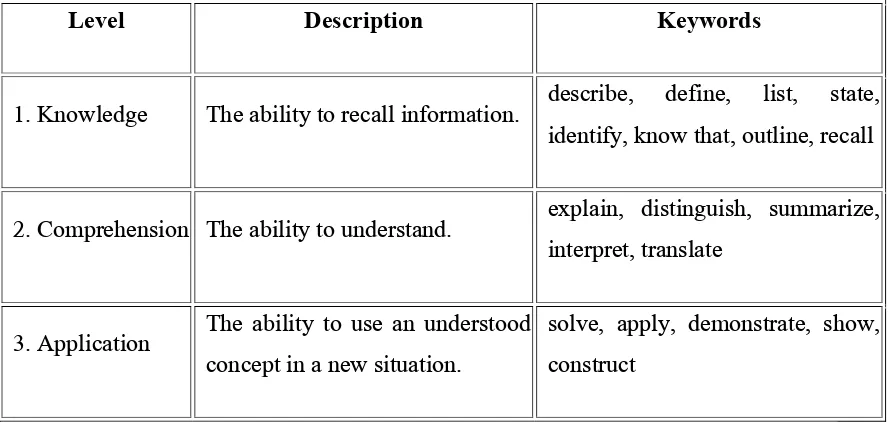
2.1. Lower Order Thinking Skills 37
2.2. Higher Order Thinking Skills 37
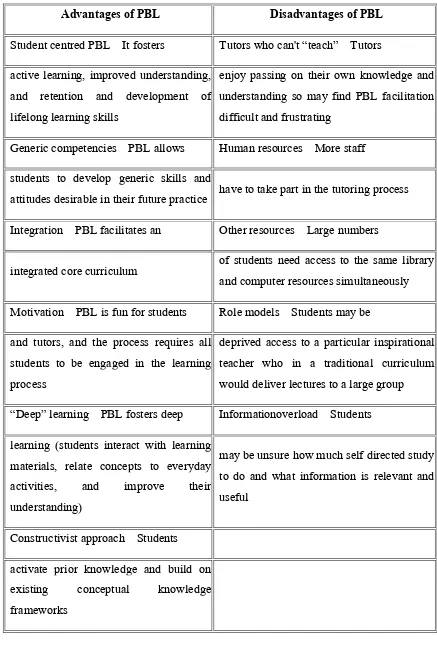
2.3. Advantages and disadvantages of PBL 57
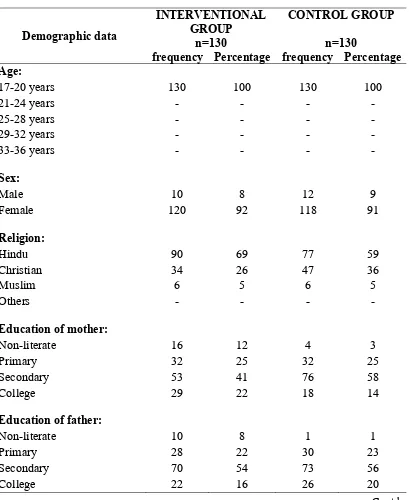
4.1.1. Distribution (frequency and percentage wise) of nursing students based
on their Demographic variables 94
4.2.1. Area wise distribution of mean, SD and mean percentage of pre-test and post-test;2 scores in control group on critical thinking skills and problem solving ability
110
4.2.2. Area wise distribution of mean, SD and mean percentage of pre-test and post-test;2 scores in interventional group on critical thinking skills and problem solving ability
111
4.2.3. Area wise distribution of mean, SD and mean percentage of post test-2
scores of interventional and control groups 112
4.2.4. Area wise distribution of mean, SD and mean percentage of post test scores of interventional and control groups on perceived benefits of the influence of the teaching method on critical thinking skills and problem solving ability
113
4.2.5. Pre test and post test levels of critical thinking skills and problem solving ability of nursing students between control and the interventional groups
114
4.2.6. Levels of perceived benefits of the teaching method on critical thinking skills and problem solving ability among nursing students between control and the interventional groups
115
4.3.1. Item wise comparison of pre test - post test scores of control group and pre test -post test scores of interventional group in the area of “Knowledge” on critical thinking skills and problem solving ability of nursing students
117
4.3.2. Item wise comparison of pre test - post test scores of control group and pre test - post test scores of interventional group in the area of “Comprehension” on critical thinking skills and problem solving ability of nursing students
119
4.3.3 Item wise comparison of pre test -post test scores of control group and pre test - post test scores of interventional group in the area of “Application” on critical thinking skills and problem solving ability of nursing students
121
4.3.4 Item wise comparison of pre test -post test scores of control group and pre test – post test scores of interventional group in the area of “Analysis” on critical thinking skills and problem solving ability of nursing students
123
4.3.5 Item wise comparison of pre test - post test scores of control group and pre test – post test scores of interventional group in the area of “Synthesis” on critical thinking skills and problem solving ability of nursing students
125
4.3.6 Item wise comparison between control and interventional groups on their perceived benefits of the teaching method on critical thinking skills and problem solving ability.
127
4.3.7 Comparison of pre test and post test-2 levels of critical thinking skills
and problem solving ability of nursing students in Control group 131
4.3.8 Comparison of pre test and post test-2 levels of critical thinking skills
and problem solving ability of nursing students in Interventional group 132
4.3.9 Un-paired ‘t’-test for control group; pre test and interventional group ; post test-2 for the level of critical thinking skills and problem solving ability among nursing students
133
4.3.10 Un-paired ‘t’-test for post test -2 of control group and post test -2 of interventional group on the level of critical thinking skills and problem solving ability among nursing students
134
4.3.11 Un-paired ‘t’-test for the level of perceived benefits on the teaching
method between control and the interventional group 135
4.3.12 Analysis of variance (ANOVA) for the effectiveness of PBL in enhancing the level of critical thinking skills and problem solving ability of nursing students
136
4.4.1 Correlation between the level of critical thinking skills and problem solving ability and their perceived benefits among nursing students in control group
137
4.4.2 Correlation between the level of critical thinking skills and problem solving ability and their perceived benefits among nursing students in interventional group
138
4.4.3 Multiple Regression for the level of critical thinking skills and problem solving ability of nursing students with their demographic variables in control group; post test-2
139
4.4.4 Multiple Regression for the level of critical thinking skills and problem solving ability of nursing students with their demographic variables in interventional group; post test-2
141
4.4.5 Multiple Regression for the level of perceived benefits of teaching method on critical thinking skills and problem solving ability of nursing students with their demographic variables in control group; post test
143
4.4.6 Multiple Regression for the level of perceived benefits of teaching method on critical thinking skills and problem solving ability of nursing students with their demographic variables in interventional group; post test
145
4.5.1 Association between the level of critical thinking skills and problem solving ability of control group; pre test with their selected demographic variables
148
4.5.2 Association between the level of critical thinking skills and problem solving ability of control group; post test-2 with their selected demographic variables
150
4.5.3 Association between the level of critical thinking skills and problem solving ability of interventional group; pre test with their selected demographic variables
152
4.5.4 Association between the level of critical thinking skills and problem solving ability of interventional group; post test-2 with their selected demographic variables
154
4.5.5 Association between the level of perceived benefits on the influence of teaching method of control group; post test with their selected demographic variables
LIST OF FIGURES
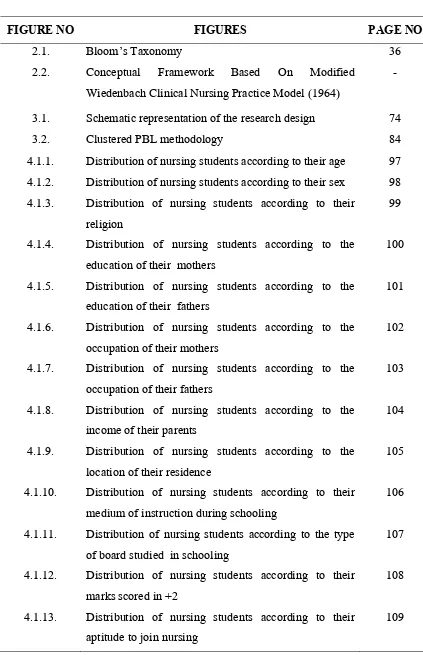
FIGURE NO FIGURES PAGE NO
2.1. Bloom’s Taxonomy 36
2.2. Conceptual Framework Based On Modified Wiedenbach Clinical Nursing Practice Model (1964)
-
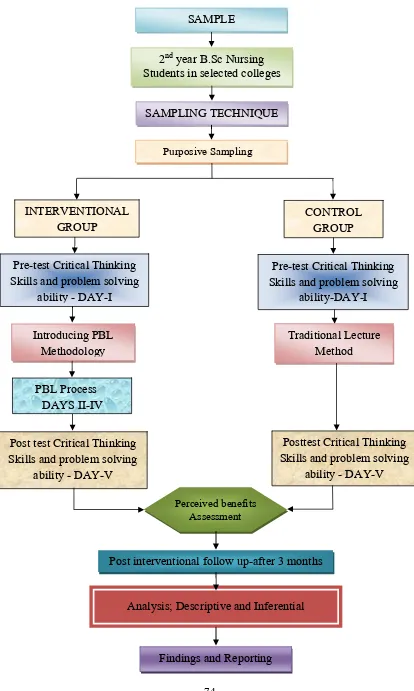
3.1. Schematic representation of the research design 74
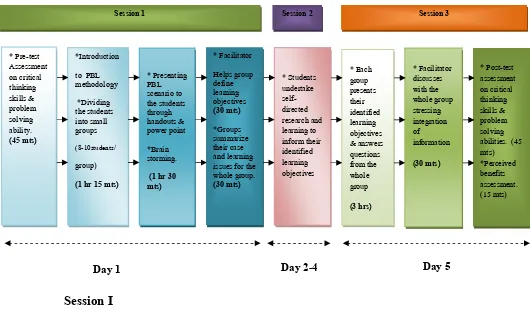
3.2. Clustered PBL methodology 84
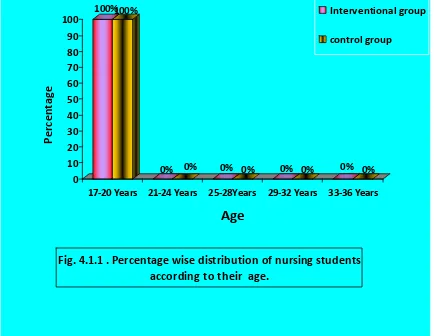
4.1.1. Distribution of nursing students according to their age 97 4.1.2. Distribution of nursing students according to their sex 98 4.1.3. Distribution of nursing students according to their
religion
99
4.1.4. Distribution of nursing students according to the education of their mothers
100
4.1.5. Distribution of nursing students according to the education of their fathers
101
4.1.6. Distribution of nursing students according to the occupation of their mothers
102
4.1.7. Distribution of nursing students according to the occupation of their fathers
103
4.1.8. Distribution of nursing students according to the income of their parents
104
4.1.9. Distribution of nursing students according to the location of their residence
105
4.1.10. Distribution of nursing students according to their medium of instruction during schooling
106
4.1.11. Distribution of nursing students according to the type of board studied in schooling
107
4.1.12. Distribution of nursing students according to their marks scored in +2
108
4.1.13. Distribution of nursing students according to their aptitude to join nursing
LIST OF APPENDICES
APPENDIX TITLE
A Copy of letter with content validity certificate seeking experts’ opinion of the tool
B Copy of letter seeking permission for conducting the study
C Institutional ethical clearance certificate
D List of Experts
E Tool
F Criteria checklist for tool validation
1
CHAPTER-1
INTRODUCTION
1.1. BACKGROUND OF THE STUDY
Health care organizations have made dramatic advances and transformations
during the last few decades, resulting in rapid growth of technology and theory. Some
of the changes facing nursing today are an expansion in technology, consumer
demand for quality care, pressure for cost containment, decreased length of stay in
hospitals, an aging population, complex disease processes and increased patient
acuity. These changes have been associated with incumbent ethical and moral
dilemmas which are borne out in the daily practice of nurses. More marked changes
are predicted in the coming decades, such as the development of technology
prolonging an individual’s life-span, which compounds the aging population situation
and increases the burden of escalating healthcare expenditure.1-9
If nurses are to deal effectively with complex change, increased demands and
greater accountability, they must become skilled in higher level thinking and
reasoning abilities. Knowles10 states that “facts learned in youth have become
insufficient and in many instances actually untrue; skills learned in youth have
become outmoded by new technologies”. Nurses are now required to provide skilled,
multidimensional care in multiple, often unfamiliar environments or settings.11
With its global social, economic, educational, environmental and health
challenges, the 21st century does not demand the teaching of soon-to-be obsolete
facts, but, rather, the fostering of critical thinking at all levels of education.12 The need
for documentation and evidence of critical thinking development in the accreditation
2
Nursing.13 The promotion of critical thinking as a major educational outcome of the
nursing curriculum is also stipulated by the Council of Europe.14 No thoughtful
person can be appeared in a society in which educational system accepts the problems
uncritically.15
The world of nursing has been changing daily specially in the last two
decades. In today's fast paced, technologically advanced world, the challenge for
nursing faculty is to teach students critical thinking (CT) skills and the ability to
practice competently in a variety of situations. The rapidly changing nature of the
health care system presents nurses with varied complex practice issues with no clear
solutions. These health care problems require nursing students and nurses to have CT
skills.16
Educators have to equip nursing students with skills that promote their CT to
solve complex issues. The development of CT skills requires students to engage in
discussions to become active participants in their own learning.17 An efficient nurse
requires some skill in order to overcome some practical difficulties. Most universities
in the world are trying to find some educational approaches by which practical
decision capacities, continuous and self-confidence educations to be enhanced in
students.18 Nurses have found that there is a gap between theory and practice. They
are usually unable to do medical performances.19 Education with an active learning
will result in significant increase between the education and medical practice.20
Too often we... enjoy the comfort of opinion without the discomfort of thought."
3
Critical thinking is the first needed skill for nurse students.21 It is the advance
process of cognitive domain for decision making upon caring patients. The affective
disposition of a critical thinker includes being inquisitive, systematic, judicious, truth
seeking, analytical, open-minded, and confident in reasoning.22
In the contemporary healthcare environment characterized by rapidly changing
developments and relentlessly increasing knowledge, the possession of critical
thinking is essential for nurses in order to make sound judgment when solving clinical
problems.23-25
Fowler 26 claims that practicing nurses and nurse educators concur that the
increasing complexity of modern healthcare demands critical thinking. Every day,
nurses sift through an abundance of data and information to assimilate and adapt
knowledge for problem clarification and solution. Moreover, nurses are constantly
involved in making decisions within their practice. These decisions are frequently
concerned with situations where there is no single or absolutely correct response.27
Colucciello28 proclaims the use of critical thinking is vital in examining simple
and complex situations in nurses’ day-to-day responsibilities. It is an essential means
of establishing whether the information or assessment obtained has been accurately
captured in order to articulate specifically and distinctly what the information
conveys. Alfaro-LeFevre23 asserts that critical thinking belongs in nursing because
nursing is concerned with purposeful goal-directed thinking, with the primary aim of
making judgments grounded on factual evidence rather than conjecture.
In the current climate of short staffing, cost containment and high expectations
4
organizational and system problems. Failure to act on these problems may result in
inequitable, poor quality or even dangerous nursing care.29
Snyder 2 states in the past, nursing has not been concerned with administrative
aspects of health care. However, the time is ripe for nursing to address
consumer-focused care. The process of critical thinking will enhance the ability of nurses to
identify clinical indicators, assess their significance and discuss areas for
improvement. Nurses use information from nursing practice, nursing theory and other
sciences to apply knowledge to individual situations. As indicated by Halpern,30 it is
vital that teachers encourage students to apply the knowledge and skills learned in one
context to other situations. Students should be encouraged to transfer critical thinking
knowledge, skills, and dispositions learned in the educational environment to their
personal and professional lives. Nurses need to be prepared for lifelong learning.31,32
and the future nursing profession is going to recognize a graduate who can think
critically and identify complex clinical phenomena. In order to solve unique and
complex problems nurses need to be organized and utilize information innovatively.
This is an empowering activity.10
Invest a few moments in thinking. It will pay good interest." - Author Unknown
Ulsenheimer34 suggests critical thinking is a process for reasoning which
anyone has the capacity to master, proposing that “such a reasoning process will
provide nurses with a capacity to defend their actions”. Alfaro-LeFevre23 emphasizes,
it is imperative that nurses become critical thinkers in order to practice sound clinical
judgment. He defines clinical judgment as critical thinking in a clinical area. Nurses
must use critical thinking skills to rigorously investigate and reflect on all aspects of a
5
Incorporating critical thinking skills also involves a reflective component. The nurse
must make decisions based on sound clinical judgments, as gathered from a wide
variety of sources, as well as the nurse's own observations. The reflective component
is a review of those judgments and a validation of their appropriateness.
Kurfiss35 perceives critical thinking as an investigation in order to explore a
situation, question, problem or phenomenon. From this inquiry, the person is able to
arrive at a reasoned conclusion that can be justified. As Kurfiss states “in critical
thinking all assumptions are open to questioning, divergent views are aggressively
sought and the inquiry is not biased in favour of a particular outcome.”
“Children are not vessels to be filled but lamps to be lit."
-Swami Chinmayananda, Indian Spiritual Leader
“Out of the questions of students come most of the creative ideas and discoveries."
- Ellen Langer
Central to this interpretation of critical thinking is a realization that critical
thinking is not a method to be learned, but rather a process, an orientation of the mind
and so, includes both the cognitive and affective domains of reasoning.36 As a
concept, critical thinking has been expressed in several ways. A major influence in
critical thinking traces back to the work of John Dewey.37
From a philosophical perspective Dewey37 proposes that critical thinking
involves suspension of judgment and healthy skepticism. Early writers such as Ennis38
suggest students should be assisted in the engagement of thinking that is reflective,
6
“the correct assessing of statements” and notes an individual who is able to think
critically, according to this definition, has the skills to evaluate statements.
Employers seek graduates who are highly knowledgeable, skilled problem
solvers, team players, and lifelong learners.39 In order to prepare students for entry
into professional practice, educators must create learning environments that engage
students in ways that help them develop the necessary context expertise as well as
problem solving, collaboration, and lifelong learning skills.40
Unfortunately, traditional undergraduate exercise science courses using lecture
based instruction are often content driven, emphasizing abstract concepts over
concrete examples and application. Little attention is given to learning problem
solving, collaboration, and lifelong learning skills.41 Furthermore, faculty often have
little pedagological training and revert to previous learning experiences, simply stated
“teaching as we were taught”.42 Traditionally, lecture has been the choice method of
instruction because it is seen as the most efficient and convenient method of
instruction to offer the most information in the shortest time. Faculty may be unaware
that it is reported that only 5-15% of presented content is learned in lecture based
courses.43 Furthermore, there is often little concern for the students’ capacity to
absorb, understand, retain, and apply the information in subsequent clinical
situations.41 If students cannot retain or apply information given by lecture than the
goal of professional preparation is not being met. In retrospect, lecture-only courses
may not be the most effective method of professional education.
"The objective of education is to prepare the young to educate themselves throughout
7
Information–heavy presentation within a lecture likely results in students
cramming to simply memorize information in order to pass examinations. Such
instructional methods may not result in long-term knowledge retention.44 Long-term
knowledge is acquired through activation of prior knowledge, discussion, application,
and reflection. Cognitive psychology principles suggest that prior knowledge is the
key in determining what additional knowledge can be learned.45 Instructional methods
must allow the activation of prior knowledge in order to process and garner new
knowledge.
No problem can be solved by the same consciousness that created it. We need to see
the world anew." - Albert Einstein
Problem solving has been referred to as the ability to apply appropriate
metacognitive and reasoning strategies. 46 In the traditional classroom setting students
often are exposed to problem solving application lectures in a contextual situation; yet
for a student to truly learn to perform problem solving skills, he or she must be given
the opportunity to actively do so.
During the problem-solving process, the professional must analyze the
problem using prior knowledge activation to determine what is known and unknown
and seek a variety of sources to assist in finding the unknown information. The
professional synthesizes a solution through critical thinking and reflects upon the
experience through self-evaluation once all the pertinent information is collected and
critiqued. In critical thinking, a person gives reasoned consideration to evidence,
context, theories, methods, and criteria in order to form a purposeful judgment and
simultaneously monitors, corrects, and improves the process through meta-cognitive
8
purposeful, self regulatory judgment; an interactive, reflective, reasoning process.47
For example, The National League of Nursing has affirmed that professionalism
requires thoughtful decision making founded on the ability to make purposeful,
reflective judgments which involve analysis, interpretation, inference, evaluation and
explanation i.e., critical thinking.48
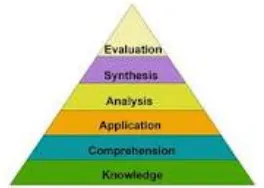
Bloom’s taxonomy moves from the simplest level of learning (knowledge) --
to the most complex level (evaluation). The words used to construct a question will
determine the level of the answer.
Too often we give children answers to remember rather than problems to solve."
- Dr.Roger Lewin, British anthropologist and science writer
Recent trends in education point to a shift from a traditional teaching paradigm
of teacher-directed and traditional lecture format to a learning paradigm of self-
directed, interactive learning.49 Nurse educators in academia have long supported the
notion of self-directed problem-based learning (PBL). Problem-based learning
originated in the late 1960s at McMaster University in Ontario, Canada. 50 Howard
Barrows, the founder of this educational methodology, developed the self-directed
model to improve education in the school of medicine.51 It was developed to improve
medical education by moving from a subject and lecture-based curriculum to an
interdisciplinary one guided by 'real-life' problems.50 Its effectiveness has been well
documented in medical education research.
An essential characteristic of the PBL approach is the concept of self-directed
learning. The literature reveals that self-directed learning is associated with Malcolm
9
andragogy, based on the assumption that adults learn differently than children, is the
central concept of Knowles' model of teaching adults.
Along with self-directed learning, the development of critical thinking and
problem solving skills is the main goal of PBL. According to Ladouceur et al, 53
"critical thinking is one of the core competencies identified by nursing faculty through
educational experience and support from the literature as essential for individuals to
become self-directed learners". Problem-based learning affords an environment
conducive to teaching and learning critical thinking skills.
There is an abundance of literature to support the effectiveness of PBL in
medical and nursing education.
Key words:
¾ Problem – Based Learning
¾ Critical Thinking
¾ Problem Solving
Problem – Based Learning (PBL)
Problem Based Learning (PBL) encourages students to identify their own gaps
in knowledge. It is a process – driven method for learning, which has as its goal self –
directed information retrieval, and utilization of that information to solve clinical
problems.
An essential component of PBL is that context is introduced in the context of
10 Critical Thinking
Critical thinking (CT) is a learned behavior which is essential for decision
making. Skills in critical thinking provide the necessary broader outlook, creative
solution, and multiple pathways needed for successful quality improvement
initiatives.
Problem Solving
Problem solving is the practical application of critical thinking skills. Problem
[image:32.595.97.533.362.617.2]solving is a systematic process leading to the achievement of outcomes.
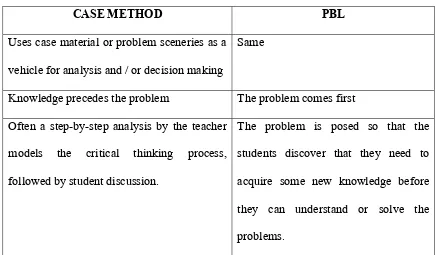
Table No. 1.1. Comparison – CASE Method and PBL
CASE METHOD PBL
Uses case material or problem sceneries as a
vehicle for analysis and / or decision making
Same
Knowledge precedes the problem The problem comes first
Often a step-by-step analysis by the teacher
models the critical thinking process,
followed by student discussion.
The problem is posed so that the
students discover that they need to
acquire some new knowledge before
they can understand or solve the
problems.
1.2. SIGNIFICANCE AND NEED FOR THE STUDY
Information – dense lectures, presented by a series of experts to large student
audiences, seemed disconnected from the application of content to real life, which
11
with others. The traditional lecture is one of the oldest and predominantly used
teaching methods in American colleges and universities. Traditional educational
curricula are didactic, teacher-centered teaching methods organized around subject
areas or disciplines.54 A prominent feature of such an educational philosophy is a
hierarchical view of teacher and students, in which the faculty teaches, and students
learn by listening to the teacher. Hence, the traditional classroom is teacher-centered,
with students passively accepting information given by the lecturer, who is in the
position of authority. A traditional teaching-learning environment tends to produce
shallow, surface thinkers who primarily rely on rote memory rather than careful
understanding of the content.55 It has been argued that outcomes of didactic learning
fail to exhibit a patient-oriented; critically thinking nurse capable of adequate decision
making in practice, as lecturing principally provide basic knowledge and theory.56
According to Charlton,57 lectures are for the most part a form of spoken
communication that is delivered to an audience by an actually-present and visible
person. Once combined with active learning strategies, teaching becomes a process
where the learner takes an energetic role in education. Active learning is usually
enjoyable, motivational and effective, and retention of knowledge is perceived to be
increased.58
The teacher delivers structured packages of theoretical or practical knowledge
complete with analysis, insight, and conclusions, while students are expected to take
notes, memorize and master the imparted information.59 Traditional educational
curricula are didactic, teacher-centered teaching methods organized around subject
areas or disciplines.59 A prominent feature of such an educational philosophy is a
12
learn by listening to the teacher. Hence, the traditional classroom is teacher-centered,
with students passively accepting information given by the lecturer, who is in the
position of authority. The teacher decides about the teaching-learning process. A
traditional teaching-learning environment tends to produce shallow, surface thinkers
who primarily rely on rote memory rather than careful understanding of the content.55
Once combined with active learning strategies, teaching becomes a process where the
learner takes an energetic role in education. Active learning is usually enjoyable,
motivational and effective, and retention of knowledge is perceived to be increased.58
According to Richardson,60 the key student behavior that brings about active
learning is engagement. According to Kane,61 it is satisfying for educators to think
that students might enjoy themselves while being engaged in their learning, as they
learn something useful. The traditional lecture format in higher education often
represents an exercise in one way communication that places students in a passive
rather than an active role and which ultimately minimizes the students’ ability to
develop higher order skills such as analysis, evaluation and synthesis of ideas and
concepts. Studies have shown that the “pure” lecture method is not the most effective
teaching strategy to stimulate thought and enhance problem-solving skills. At the
same time, there is an abundance of literature that challenges educators to consider
moving beyond the lecture method to active learning models which requires students
to take greater responsibility in their own learning. The rapid changes in healthcare
and growing complexity of nursing requires that students be proficient in critical
thinking in order to provide safe, quality care for increasingly acute and complicated
problems in a variety of settings. Nurses are frequently called upon to make
immediate life and death decisions, and their ability to do so is dependent upon their
13
various names in the profession, including “the nursing process” and “clinical
reasoning”, they are modeled on the scientific method and entail goal directed
thinking using judgments based on evidence. 62 Although the ability to solve problems
and make decisions has been identified by employers as the most important
competency for beginning nurses, it is also the one that was least likely to be
observed.63
Fostering critical thinking ability in nursing students has become one of the
most imperative tasks for nursing education. Over the past ten years, critical thinking
became a required learning outcome for national accreditation of nursing education
programs, yet there is still lack of consensus in regard to what critical thinking is in
nursing, and very little formal research has been done to determine which teaching
methodologies improve critical thinking in nursing students. Teaching methodologies
used to promote critical thinking needs to be investigated to enhance the delivery of
safe and effective care to improve student success on the NCLEX-RN Exam. To
McPeck64 critical thinking involves both a propensity and skill – “one must develop
the disposition to use those skills”.
There is some evidence to suggest that medical students following PBL
curricula are better disposed towards researchand show significant improvements in
preventive care and diagnostic performance in practice after graduation. PBL is an
educational tool that has been widely used in medical education to introduce learners
to independent problem solving. PBL has strong political support in health care
studies. Among others, the World Health Organization, the World Bank Group and
the ENB (The English National Board for Nursing, Midwifery and Health Visiting)
14
World Bank Group set as a condition for financing nursing training in developing
countries, that the study programme had to be based on the PBL idea.65,66
National Strength and Conditioning Association Certification Commission
(NSCA-CC) defines three cognitive levels as recall, application, and analysis.
Although recall is important, application and analysis are complex cognitive skills
applied to critical thinking, not rote memorization. The NSCA-CC definitions of
application and analysis include additional higher order cognitive thinking based on
Bloom’s Taxonomy67 such as synthesis and evaluation. To best prepare students for
the strength and conditioning profession, educators must find the most effective
instructional method for teaching students how to design strength training and
conditioning programs. In order to properly design a program the student will need to
learn critical thinking skills of application and analysis. Because traditional lecture
instruction (TI) has been shown to be less effective than other teaching methods in
practical application and critical thinking skills,68-70 a solution might be
Problem-Based Learning (PBL). PBL is an active learning instructional method that uses “real
world” problems to facilitate instruction so students can develop critical thinking and
problem solving skills while gaining new knowledge. PBL allows students to become
active learners because learning is placed in the context of real-world problems and
requires students to become responsible for their own learning, i.e. self-directed
learning .46 Problem based learning courses have also been reported as having an
increase in course enrolment and more positive feedback from faculty and
employers.71 In addition to emphasizing learning by “doing,” PBL requires students to
be meta-cognitively aware, that is, students must learn to be conscious of what
information they already know about the problem, what information they need to
15
to articulate such thoughts helps students become more effective problem-solvers and
self-directed learners.72
PBL in the education of health professionals was first established in North
America at McMaster University in 1969 due to the increasing frustration of the
inability of medical students to apply knowledge learned in previous years.72 It has
also been used in the fields of health professionals such as nurses, chiropractors,
physical therapists, athletic trainers, and pharmacists, as well as basic science
courses.73-81
In a study comparing PBL with conventional lecture approaches, the PBL
students rated themselves higher as a measure of clinical problem solving ability.82 In
nurse education, the relation between theory and services is strengthening. Nurse
education may be significantly improved if new teaching practices are introduced.
One suggested way to bridge the gap between education and medical practice is to
change the traditional education system (lecture based learning) into a problem-based
learning (PBL) approach which historically can be traced back to Socrates.83
According to Celia and Gordon,84 problem scenarios are designed to challenge
the learners to meet the curriculum's objectives. Learners are presented with a clinical
situation or issue about which they must engage in collaborative learning. This
integrative group approach to learning develops interpersonal skills, teamwork, and
personal growth for the participant. According to Price and Price,85 "The application
of this learning methodology can be viewed as essential for staff nurses in that it
allows them to contextualize their knowledge. Furthermore, they suggested that
adjustments to the traditional process of PBL in the clinical setting may be necessary.
16
a period of time. It is imperative that the nurses recognize this and be able to transfer
and contextualize their knowledge to different patient populations. In addition,
clinical supervisors or clinical leaders may fulfill the role of the facilitator but in a
modified manner ’’. It is essential, however, that the facilitators in the clinical setting
promote and create a culture of learning that is aligned with the primary objectives
and key concepts associated with a PBL program.
PBL promotes students’ confidence in their problem solving skills and strives
to make them self-directed learners. These skills can put PBL students at an advantage
in future courses and in their careers. While such confidence does not come
immediately, it can be fostered by good instruction. Teachers who provide a good
learning community in the classroom, with positive teacher-student and
student-student relationships, give student-students a sense of ownership over their learning, develop
relevant and meaningful problems and learning methods, and empower students with
valuable skills that will enhance students’ motivation to learn and ability to achieve.86
The literature on self-directed learning is expansive. Faculty at McMaster
University's School of Nursing has integrated many of Knowles' concepts in the
development of the PBL approach to nursing education. Based on Knowles' basic
principles of self-directed learning, the faculty of McMaster proposed six
competencies essential for individuals to become self-directed learners: the
assessment of learning gaps, evaluation of self and others, reflection, information
management, critical thinking, and critical appraisal.87 “Students develop a deeper
awareness and ownership of important concepts in the course by working on
17
Several studies have reported on the effectiveness and applicability of PBL in
medical education. According to Beers,89 "one of the strongest arguments in favor of
PBL is that it provides a more enjoyable and stimulating learning environment for
both students and faculty". Studies have assessed student's attitudes, clinical reasoning
abilities, problem solving skills, critical thinking skills, effect on learning styles, and
retention of information as related to the use of PBL. "Albanese and Mitchell90
conducted a literature review on outcomes and implementation issues of PBL. All of
the studies cited found students' attitudes toward PBL to be positive".44 Powerful
learning environments should support the constructive cumulative, goal oriented
acquisition processes in all students, they should allow for the flexible adaptation of
the instructional support, especially the balance between self-discovery and direct
instruction.91 Although active learning requires additional work on the part of students
and faculty, Kingsland92 observed that students find PBL courses satisfying.
Albanese and Mitchell 90 as cited in Morales-Mann and Kaitell27 reported that
students and faculty felt more rewarded and nurtured and thus enjoyed PBL more than
traditional learning approaches. According to Siu, Laschinger, and Vingilis82
"findings from research have shown PBL is more effective than conventional
approaches in facilitating greater student motivation, breadth of interest, learning
satisfaction, confidence with clinical functioning, knowledge acquisition, use of a
variety of learning resources, and self-directed work". Furthermore, the educational
methodology of PBL provides an environment conducive to flexible learning,
collaborative learning, opportunities for self and professional development, and
18
Meyers93 suggests that for a learning environment to be conducive for the
development of critical thinking, four elements have to be present: (1) stimulating
students’ interest, (2) creating meaningful discussion, (3) exposure to thoughts and
views of others, and (4) fostering a trusting and supportive atmosphere. When the
principles and processes of PBL are examined, it seems that this learning strategy
encapsulates those four elements proposed by Meyers. PBL embodies the principle
that the starting point of learning is a problem. By presenting students with a problem
for which no certain answer exists, their interest is captured. As the students reason
their way through the learning process, questioning and debating through each stage
of the problem-solving, they are engaging in meaningful discussion. PBL encourages
students to share their analyses of the problem situation, and to consider theirs as well
as alternative analyses. Finally, PBL acknowledges students as key players in their
own learning and capable of thinking for themselves. This philosophy of recognizing
students’ ability in independent thinking and active learning fosters trust and respect
in the learning environment. Thus, it can be argued that PBL creates suitable
conditions for students to develop their critical thinking. Indeed, it has been suggested
that PBL is one of the most effective ways of fostering critical thinking in nursing
students.94
At the New Mexico VA Health Care System, problem-based learning was
implemented in ambulatory care to enhance critical thinking and decision-making
skills. Both critical thinking and decision making are fundamental to providing
quality, efficient, and cost-effective care
The complexity of today’s society is characterized by an infinite, dynamic and
changing mass of information, the massive use of the internet, multimedia and
19
labor force that is directed towards a growing proportion of knowledge-intensive
work in teams and lifelong learning.95 As a consequence, today’s information
community expects graduates not only to have a specific knowledge base but also to
be able to apply this knowledge to solve complex problems in an efficient way.96
Educational research has shown that successful problem solvers possess an organized
and flexible knowledge base and master the skills to apply this knowledge for
problem solving.97 Assessment needs to fit the philosophy of active learning rather
than passive reproductive learning. It may be preferable, and more rigorous, for
assessments to follow the PBL philosophy and to require the individual to analyze a
problem, search for and then apply relevant information.98
The concept of critical thinking is described synonymously in the literature as
creative thinking, smart thinking, high-quality thinking, and in-depth thinking.99 The
philosophical origins of critical thinking can be traced to that of Socrates and his use
of cross questioning and the process of reasoning.100 Both inductive thinking and
deductive thinking are part of the critical thinking process. Hence, critical thinkers are
able to relate concepts and determine causal relationships.99 Critical thinking must and
can be nurtured in both the academic and clinical settings for nurses. Problem-based
learning affords an environment conducive to teaching and learning critical thinking
skills.
Although new in some aspects, problem-based learning (PBL) is generally
based on ideas that originated earlier and have been nurtured by different
researchers.101-105 PBL, as it is known today, aimed to increase students’ abilities in
independent study, problem-solving skills and analysis.106 In 1971, PBL moved to
Europe; the first faculty to use this strategy was the Mastrich Faculty of Limberg
University. In 1982, medical teachers were introduced to an independent study as a
20
the aim. It grew from dissatisfaction with the common medical education practices in
Canada.107,108 Nowadays PBL is developed and implemented in a wide range of
domains.
Barrows and Tamblyn72 were two of the principal creators of the
problem-based learning approach that was introduced at MacMaster University, and they offer
the following definition:
Problem-based learning is the learning that results from the process of
working toward the understanding or resolution of a problem. The problem is
encountered first in the learning process! Barrows and Tamblyn suggest that
problem-based learning is not simply the presentation of problems as a focus for learning, but
rather it involves a very specific approach to education, which is supported by tools
designed to support the teaching–learning process. Indeed, Barrows and Tamblyn
claim that: problem-based, student-centered learning is the most efficient method of
simultaneously developing knowledge, reasoning skills and study skills. Although the
method was designed for use in medical education, Barrows and Tamblyn argue that
problem-based learning is relevant and appropriate to other healthcare professionals,
because it will enable them to apply their knowledge and enhance their practice.
The author also believes that healthcare organizations should actively support
and promote educational methodologies such as PBL that will assist and support
nurses in their clinical education and professional development. Moreover, the
integration of PBL into clinical practice for nurses as an effective educational
methodology allows nurses to achieve best practice outcomes based on real-life
clinical problems, thus linking research evidence to nursing practice.
21
(1) No such detailed study has been done in Indian context.
(2) Problem-based learning (PBL) has been advocated as a promising strategy to
promote students’ critical thinking. The desire to ascertain the effect of PBL
on students’ critical thinking led to this study.
(3) There is an abundance of literature to support the effectiveness of PBL in
medical and nursing education. However, there is little evidence to support
the transfer of this effective educational methodology to the clinical setting
as a primary method of educating nurses.
Therefore, the researcher felt the need to enhance the critical thinking skills
and problem solving ability of the learners through PBL approach.
1.3. STATEMENT OF THE PROBLEM
A study on the efficiency of Problem Based Learning (PBL) over Lecture
method in terms of enhancing critical thinking skills and problem solving ability
among Nursing students in selected Nursing Institutions of Tamil Nadu.
1.4. AIM AND OBJECTIVES
Aim of the Study
To investigate the efficacy of PBL approach on nursing students in enhancing
their critical thinking skills and problem solving ability with that of lecture method.
Objectives
1. To assess the pre test level of critical thinking skills and problem solving
22
2. To assess the post test level of critical thinking skills and problem solving
ability of nursing students among the control and the interventional groups.
3. To determine the effectiveness of PBL on critical thinking skills and problem
solving ability of nursing students.
4. To assess the students’ perception on the influence of PBL and Lecture
method on their critical thinking skills and problem solving ability in both
control and the interventional groups.
5. To associate the level of critical thinking skills and problem solving ability of
both the groups with selected demographic variables.
6. To associate the students’ perception on the influence of PBL and Lecture
method on critical thinking skills and problem solving ability of both the
groups with selected demographic variables.
1.5. HYPOTHESES
1. H1- There is a significant difference in the level of critical thinking skills and
problem solving ability of nursing students between the control group and the
interventional group.
2. H2- There is a significant difference in the level of perceived benefits on the
influence of teaching method on critical thinking skills and problem solving
ability of nursing students between the control group and the interventional
group.
3. H3- There is a significant relationship between the critical thinking skills and
problem solving ability of nursing students and their perceived benefits on the
23
4. H4- There is a significant association between the level of critical thinking
skills and problem solving ability of nursing students and their perceived
benefits with selected demographic variables.
1.6. OPERATIONAL DEFINITIONS
Efficiency
Efficiency refers to the outcome of PBL methodology in terms of enhancing
critical thinking skills and problem solving ability of nursing students, as measured by
the developed structured questionnaire on diabetes mellitus.
Problem – Based Learning (PBL)
Problem – Based Learning is a student-centered instructional strategy in which
students collaboratively solve problems and reflect on their experiences. It is a
learning that results from the process of working towards the understanding or
resolution of a problem. As a curriculum, it consists of carefully designed and scripted
problem scenario that demand a range of skills from the learner. These skills include:
self-directed learning, critical thinking, team participation and acquisition of critical
knowledge.
In this study PBL is an innovative learning method introduced to 2nd year
B.Sc.Nursing students in which a case scenario on diabetes mellitus was assigned,
that requires students to apply the seven steps of PBL, including (i) clarifying
concepts, (ii) defining the problem, (iii) analyzing the problem, (iv) organizing facts
and knowledge, (v) formulating learning objectives, (vi) self directed study and (vii)
24
gain in-depth learning on the given scenario on diabetes mellitus through enhanced
critical thinking skills and problem solving ability of nursing students.
Lecture Method
Lecture Metho