0022-538X/93/095685-07$02.00/0
Copyright X)1993,American
Society
forMicrobiology
Herpes
Simplex Virus
Type
1
Variant
a
Sequence
Generated
by
Recombination and Breakage of the
a
Sequence
in
Defined
Regions, Including the One
Involved in Recombination
KENICHI UMENE
Department of
Virology,
Faculty of Medicine, Kyushu University 60, Fukuoka 812 Japan Received 7 April 1993/Accepted 15 June 1993Aherpessimplex virus type 1clone, GN29, having
exclusively
thevarianta sequencewasisolated. Thisasequence was composed of unique (U) and
directly
repeated (DR) elements DR1, Ub, (DR2)14, Ucd, Ubd,(DR2),,
DR4n2, and Uc and was assumed to be generated by recombination between sites in Ub and Uc.UnusualDNAfragments containingparts of theasequence, presentin the DNApreparationsofGN29,were
molecularly
cloned.Almostalltermini oftheclonedunusualDNAfragmentsweresituatedindefinedregions assumedtoberecombinogenic: (i)asiteintheinvertedrepeatof theL component, (ii) DR1, (iii)DR2,(iv)the DR4stretch,and(v) the novel recombination stretchinthe variantasequenceof GN29.The terminiofunusual DNAfragments,possibly
produced by strand breaks,canserve asfreeDNA endstoinitiaterecombinationofthea sequence. These results support the model ofdouble-strand-break repairfor recombination of the a
sequence. Sequence-specific enhancement of the recombination ofthea sequence
probably
depends on thepresenceofrecombinogenic elements apt tobreak, such asDR2 repeatsand the DR4stretch.
The linear 155-kb genomeofherpes simplex virustype 1 (HSV-1) consists of two covalently linked components, L andS (16).The shortsequence a is repeated directlyatboth ends of the genomeand at the L-S junction (5, 12, 13, 16). The region spanning the L-S junction isinherently recombi-nogenic, and thea sequence could beahotspotfor
recom-bination (1-3, 17, 22, 25, 28-30). The a sequence contains unique (U) and directlyrepeated (DR)sequenceelements of DR1, Ub, (DR2)n, DR4 stretch, and Uc and is flanked by DR1 (5, 12, 25). Thelengths of thea sequences of various
strainsrange from 220to 550 bp anddepend mainlyon the number ofreiterationsof DR2 (5, 12, 14, 21, 25, 27, 28).
Isolation of an HSV-1 clone, GN29, with the variant a
sequence. The difference in lengths of the a sequence of
different HSV-1 strains became evident with Southern hy-bridization analyses of HSV-1 DNAs digested with SmaI, usingthe0.175-kb SmaIfragment ofTW14containing most of theasequence astheprobe (25). When theasequenceof HSV-1 strain K52 was analyzed, four SmaI fragments of 0.175, 0.245, 0.26,and 0.27kbwere detected(27) (lane 1 of Fig. la). To isolate HSV-1 clones having an a sequence generatingoneSmaIfragment, 30single-plaque cloneswere
isolated fromK52 and the DNAswere analyzed (23). One
clone had ana sequence generating one SmaI fragment of
0.26 kb andwasnamedGN16 (lane2 ofFig. la). Two clones
hada sequences generatingone SmaI fragment of 0.27 kb,
andone wasnamedGN28(lane 3ofFig. la). Thirteen clones
hadasequencesgeneratingtwoSmaI fragments of 0.175 and 0.245 kb, and one was named GN29 (lane 4 of Fig. la). Fourteen other clones had a sequences generating three
SmaI fragments. To separate clones of the 0.175-kb SmaI fragment from those of the 0.245-kb SmaI fragment, 85 single-plaquecloneswereisolated fromGN29.All85 clones hadtwoSmaIfragmentsof0.175 and 0.245kb. The failureto isolate an HSV-1 clone having one of the two SmaI frag-ments of0.175 and 0.245 kb suggested that the two SmaI fragments had derived from one a sequence having an
additional SmaI site. One DraI site is present on the a
sequence, andapairof Dralfragments correspondingtothe
a sequence are detected by Southern hybridization (5, 12, 14, 25, 28). One is the fragment of unit length of the a
sequence,and the other isshorterby16.5bpbecause of the
cleavage of DR1 (13). DNAs of K52 derivatives digested with DraI were analyzed by Southern hybridization (Fig. lb).DraIfragments ofGN29were0.46 and0.48kb inlength, longerthan those ofGN16(0.29and 0.31kb)and GN28(0.30 and 0.32 kb), while SmaI fragments of GN29 (0.175 and 0.245 kb) were shorter than those of GN16 (0.26 kb) and
GN28(0.27 kb) (Fig. la andb). The resultsof DraIanalyses support the assumption that two SmaI fragments of 0.175 and 0.245kb of GN29 hadderived fromone asequence.The restrictionfragments derived from the endof the L
compo-nent of the HSV-1 genome appear as a set of ladder-like fragments, and the interval between two neighboring frag-ments of the ladder corresponds to the length of one a
sequence (5, 12, 13, 16). When DNAs of K52 derivatives digested with KpnIwere analyzed by Southern hybridiza-tion,theinterval of the ladder ofGN29waslongerthan those of GN16 andGN28.Therefore,thelengthof theasequence
ofGN29was assumedtobelongerthan those ofGN16 and GN28.
Thea sequences of K52 derivatives and characterization.
DraI fragments corresponding to thea sequence ofGN16, GN28, andGN29wererecovered fromacrylamide gelsand
weremolecularly clonedintotheSmaIsiteofplasmidvector pUC18 (24). After subcloning of the cloned fragments into both phage vectors M13mplO and M13mpll, nucleotide
sequences of the a sequences were determined by the dideoxynucleotide chain termination procedure using Bca Best DNA polymerase (Takara ShuzoCo., Kyoto, Japan), whichwas obtained from the thermophileBacillus cardot-enax and functions best at 65 to 75°C. Thea sequence of GN28was338bpinlengthwith 14copiesofDR2 andwas ordinaryinstructure(Fig. 2a).TheasequenceofGN16was
327bpinlengthwith 13copiesof DR2 andwasthesame as
that of GN28, except for the copy number ofDR2. The a
sequenceof GN29was 476bp inlength and had twoDR2
arrays(Fig. 2b). Theasequenceof GN29wasassumed to be
5685
on November 9, 2019 by guest
http://jvi.asm.org/
(a)
M 1 2 3 4
- - m
- __ m
(b)
1 2 3 4
(c)
2 3 4 M
0.603
0,310
0.281 0.271
0.234
-
0.194
' 0.118
FIG. 1. Southern hybridization profiles of a sequences of K52 derivatives of HSV-1. HSV-1 DNAs digested with SmaI (a) and DraI (b and c) were electrophoresed in a 5% acrylamide gel, transferredto anylon membrane, and hybridized with a32P-labeled 0.175-kbSmaIfragmentof pUK340(25).Lanes: 1, K52; 2, GN16; 3, GN28;4,GN29.Theautoradiograms afterprolongedexposures are shown inpanelc.Lane M is a marker mixture ofHaeIIIdigests of 4X174phage DNA(21).Sizes of fragments are shown in kilobases.
DRI Ulb
I
DRI Ub
II E J
DR2 DR4n2 Uc DR1
Ub Lk
DR2 DR4n2aUtd DR2 DR4n2 Uc DRI
R1c Smal
Dral I
FIG. 3. Model for generation of the a sequenceof GN29 with
twoDR2arrays.TheasequenceofGN29(III)wasassumedtobe generated by recombination between the site on Uc of the a sequence having14copiesof DR2(I)and the site on Ub of the a sequencehaving 5 copies ofDR2(II). The novel recombination site onthea sequence ofGN29(Rec) is indicatedby a closed circle. Cleavage sites of SmaI andDraI onthea sequenceofGN29 are shown(III).
generated by recombination between a site on Uc (corre-sponding to nucleotide [nt] 311 of GN28) and the site on Ub (corresponding to nt 76 of GN28) (Fig. 3). A cytosine residue, the derivation of which was unclear, was present at nt 312
(Fig.
2b). This residue was diagnostic of the novel recombination site on the a sequence of GN29. A new SmaI sitewasgenerated at nt310to315(Fig. 2b).
Thenucleotide sequencesof
DR4 stretches of the K52derivatives
resem-bled those of DR4n (25), and the DR4 stretch of K52 derivatives was named DR4n2. When one-stepgrowth
curvesof GN28 and GN29wereconstructed,no differences were evident (25).
UnusualDNAfragments containingasequences presentin the DNA preparationsof GN29.Additional faint bandswere detected, with prolonged exposures,ontheSouthern blotof GN29 DNAsdigested with DraI (lane4ofFig. lc). Toclone the unusual DNAfragments of GN29, DNAs of GN29were treated with Klenow fragment, digested with DraI, and electrophoresed ina5%acrylamide gel and the region of the gel correspondingtoDNAfragments of 0.2to0.4 kbwas cut out. DNAs wereextracted from thegel and clonedinto the
(a) GN28
1 30 60 90
CCGCGGGGGGCCCGGGCTGCCCGCCGCCGCGCTTTAAAGGGCCGCGCGCGACCCCCGGGGGGTGTGTTTCGGGGGGGGGCCCGTTTTTGG
DR1 SmaI Ub DraI SmaI
98 253 270 300 312
GGTCTGGG (CGCTCCTCCCC),4CGCCTTTTTCGGCCCCGCCCCCCACGCCCGCCGCGCGCGCGCACGCCGCCCGGACCGCCGCCCGCC
DR2 DR4n2 Uc
330 338
TTTTTTGCGCGCGCGCACGC
(b) GN29
-31 -1
(Inverted repeat of L component) AGTGCTTGCCTGTCTAACTCGCTAGTCTCGG IR2
1 30 60 90
CCGCGGGGGGCCCGGGCTGCCCGCCGCCGCGCTTTAAAGGGCCGCGCGCGACCCCCGGGGGGTGTGTTTCGGGGGGGGGCCCGTTTTTGG
DR1 SmaI Ub DraI SmaI
98 253
GGTCTGGG (CGCTCCTCCCC),4CG
DR2 DR
330 335 CGTTTTTGGGGTCTGGG 450
270 300 312
GCCTTTTTCGGCCCCGCCCCCCACGCCCGCCGCGCGCGCGCACGCCGCCCGGACCGCCCGGGGCC
R4n2 391
Uc 420
Rec SmaI
(CGCTCCTCCCC) CGCCTTTTTCGGCCCCGCCCCCCACGCCCGCCGCGCGCGCGCACGCCGCCCCGGACCG
496
Uc
CCGCCCGCCTTTTTTGCGCGCGCGCACGCCCGCGGGGGGCCCGGGCTT
DR1 SmaI
FIG. 2. Nucleotide sequences of a sequences ofGN28(a)and GN29 (b). Nucleotide numbers start at the left end of the left DR1 and terminateattherightend ofUc(GN28inpanela)andattheright endof therightDR1(GN29inpanel b).Theleftendof eachcomponent of theasequenceis indicated. The DR4stretch ofK52 derivatives was named DR4n2. DR1 and DR2 are underlined. Nucleotide sequences ofmajor invertedrepeatsof theL componentadjoiningtotheasequence arealso shown inpanelb and numbered -1to -31.IR2defined in strain F is underlined (5, 12). The cleavage sites ofSmaI and DraI are shown. The cytosine residue at nt 312, diagnostic ofnovel recombination of theasequenceofGN29, is underlined(Rec).
DR2 DR4n2
476
on November 9, 2019 by guest
http://jvi.asm.org/
[image:2.612.57.298.74.203.2] [image:2.612.317.556.74.194.2] [image:2.612.129.491.440.664.2](a) pUK359-1 (363 bp)
(253)
CTCCTCCCC (CGCTCCTCCCC ),CGCCTTTTTCG
DR2 DR4n2
(330)(335) (253)
CGTTTTTGGGGTCTGGG (CGCTCCTCCCC)14CG
DR2 DF
(312) GCCCGG
Rec
(270) (300) (312)
GGCCCCGCCCCCCACGCCCGCCGCGCGCGCGCACGCCGCCCGGACCGCCCGGGGCC
Uc
(270) (300)
Rec
GCCTTTTTCGGCCCCGCCCCCCACGCCCGCCGCGCGCGCGCACGCCGCCCGGACC
R4n2
(b) pUK359-2 (384 bp)
(253) (270)
CCC (CGCTCCTCCCC)12CGCCTTTTTCGGCCCCGCCCCC
DR2 DR4n2
(330)(335) (253 or 391)
TTGGGGTCTGGG (CGCTCCTCCCC)14CGCCTTTTTCGG
DR4n2
Uc
(300) (312)
CCACGCCCGCCGCGCGCGCGCACGCCGCCCGGACCGCCCGGGGCCCGTTT
Uc Rec
300 312
CCCCACGCCCGCCGCGCGCGCGCACGCCGCCCGGACCGCCCGGGGCCCGTTTTTGG
Uc
(269 or 407)
TTTCGGCCCCG
(d) pUK361-5 (212 bp)
(391)
CCCC (CGCTCCTCCCC)I2CGCCTT
DR2 DR4n2
(466)
TGCGC
(e) pUK360-4 (250 bp)
(279) (300)
Rec
(420)
(312) (330) (335
CCCGCCGCGCGCGCGCACGCCGCCCGGACCGCCCGGGGCCCGTTTTTGGGGTCTGGG
Uc (270)
Rec
(300) (312)
330 335 (253 or 391)
GGTCTGGG (CGCTCCTCCCC),4CGCCTT
DR2 DR4n2
(450)
5) (253)
; (CGCTCCTCCCC)5CGCCTTTTTCGGCCC
DR2 DR4n2
(330)(335)
CGCCCCCCACGCCCGCCGCGCGCGCGCACGCCGCCCGGACCGCCCGGGGCCCGTTTTTGGGGTCTGGG
Uc Rec
(CGCTCCTCCCC ) DR2
(f) pUK360-2 (290 bp)
(60) (71) (79) (90) (98)
AAAGGGCCGCGCGCGACCCCCGGGGGGTGTGTTTCGGGGGGGGGGCCGTTTTTGGGGTCTGGG
(291 or 429)
CGCCTTTTTCGGCCCCGCCCCCCACGCCCGCCGCGCGCG
DR4n2 Uc
(CGCTCCTCCCC),7
DR2
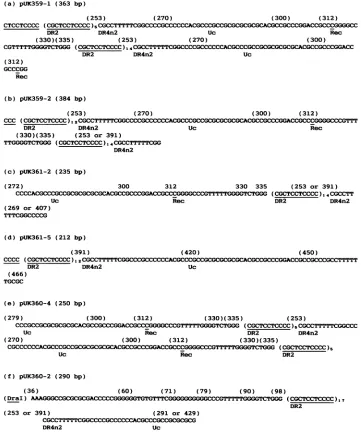
FIG. 4. Nucleotidesequences ofcloned, unusual DNAfragments containinga sequencesnotdirectly derived from thea sequenceof
GN29. Thenamesofhybrid plasmids carryingthe unusual DNAfragments containingasequences areshown,andlengthsof the insert DNA
areinparentheses. The nucleotide numbers shown in parentheses indicate those of corresponding regionsontheasequenceof GN29 (Fig. 2b).DR2is underlined. Thecytosine residueat nt312, diagnostic of novel recombination of theasequenceofGN29, is underlined (Rec).The
rightendof insertDNAofpUK360-2 (f)wasthe Dralsite. Thecopynumberof the DR2arrayofpUK360-2 (f)was17and differed from those
oftwoDR2arraysof GN29.
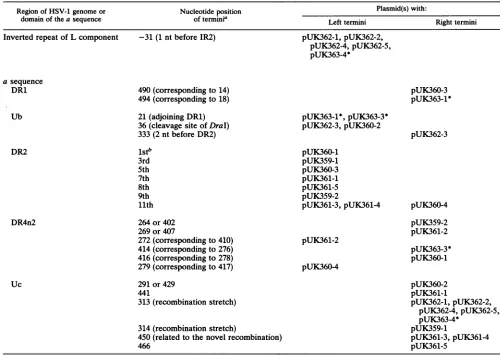
SmaI site of pUC18. Nucleotide sequences of the insert DNAs of16hybrid plasmidsweredetermined. Structuresof theunusual DNAfragments assumedtobederiveddirectly fromtheasequenceofGN29aresummarized in Table1,and
structures not drawn from the a sequence of GN29 are
shown inFig. 4. Of the 16 unusual DNAfragments studied,
two (pUK362-3 and pUK360-2) had termini generated by DraIdigestion,but terminiof theother 14 unusualfragments werenotthosegenerated bythe DraIdigestion.Theunusual DNAfragments without the DraIterminuswerenot
gener-ated byDraI digestion offull-length HSV-1 genomes and probablynotderivedfrom DNAspackagedwithin the virus particle. Uptothispoint, the HSV-1 DNAswere prepared as follows (crude preparation). The infected cultures (cells
and medium) were centrifuged at 54,000 x g for 2 h. The pelletsweresuspended, sonicated, andcentrifugedat5,000
rpm 2,300 xgfor 5 min.The supernatantwaslayered over aglycerolstepgradientandcentrifugedat81,000x gfor 1 h (7, 26). The pellet containing nucleocapsids was digested with proteinase K and then was phenol extracted. Two modificationsweremadetoincrease theproportionofDNAs derived from viralnucleocapsids (purified preparation).One modification was the centrifugation of infected cultures at 2,300 x g for 5 min after the cytopathic effect became apparent, and thesupernatantswerecentrifugedat54,000x g for 2 h. The other modification was the digestion of
nucleocapsid preparations with DNase I afterglycerol step gradient centrifugation.Unusual bandsdetected in the crude
(c) pUK361-2 (235 bp)
(272)
PTTTCGGCCCGCCCCCCACGCCCGCCGCGCGCGCGCACGCCGCCCGGACCGCCGCCCGCCTTTTT
uc
(3 (DraI)
16)
(253 or 391)
on November 9, 2019 by guest
http://jvi.asm.org/
[image:3.612.133.494.82.517.2]Mt
o H~~~~~~~~~~~~~
0 Z4)~~~~0U,00
4-4 ~ ~ ~
0 0 0 ~~~.o0 '-~~~M
0 0 H '-'o ~~~~~~o(NOE-0 ~~~ 0
0 o o ~~~~Eo oE
0 c~~~ 0 ~~ ~ ~ ~ 00
0.~~~~~0 0E- E0
-~~ H 0 ~~E- 0 4)4
.~~~~~~ 0~- 0 . U
0~~~ ~ ~ ~~~~~~~~~c
O 0 ~ 0~
* H 0 E0 0
0 0 r
* 0 ~~~~~~~~~~~~.0
0
0 AC
0I* .- *N 0 H0 O) r
0 0 m.0
0 H~~~~~~~~~~~~
o~~~~~~~~~~~~~ H~~~~~~~c
4) ri 0 ~~~~~~~~~~~~~~~~~~~~~~~~~~~~~~~csr
04 ~ ~
C) 0 0
0~~~~~~~~'~
,0 0~m4 0 C 04
on November 9, 2019 by guest
http://jvi.asm.org/
TABLE 2. Distribution of termini of cloned unusual DNAfragmentsonthe a sequence and the IRof the L component
Region of HSV-1 genome or Nucleotide position Plasmid(s) with:
domain of thea sequence of terminia Left termini Righttermini
Inverted repeatof L component -31(1 nt before IR2) pUK362-1,pUK362-2, pUK362-4,pUK362-5, pUK363-4*
asequence
DR1 490(correspondingto14) pUK360-3
494(correspondingto18) pUK363-1*
Ub 21(adjoining DR1) pUK363-1*, pUK363-3*
36(cleavagesite ofDraI) pUK362-3, pUK360-2
333(2ntbeforeDR2) pUK362-3
DR2 1st' pUK360-1
3rd pUK359-1
5th pUK360-3
7th pUK361-1
8th pUK361-5
9th pUK359-2
11th pUK361-3, pUK361-4 pUK360-4
DR4n2 264 or 402 pUK359-2
269 or 407 pUK361-2
272(correspondingto410) pUK361-2
414(correspondingto276) pUK363-3*
416(correspondingto278) pUK360-1
279(correspondingto417) pUK360-4
Uc 291or429 pUK360-2
441 pUK361-1
313(recombination stretch) pUK362-1, pUK362-2,
pUK362-4, pUK362-5, pUK363-4*
314(recombination stretch) pUK359-1
450(relatedtothe novelrecombination) pUK361-3, pUK361-4
466 pUK361-5
a Nucleotide positionsarethose of theasequence and theinvertedrepeat of the L componentofGN29(Fig. 2b).
bPositions within one DR2 elementof11bpareindicated.
preparations
werehardly
visible inthepurified preparations
by
Southern hybridization.
Formolecularcloning of longer unusual DNAfragments,
thepurified preparation
of GN29 DNAwastreated with Klenowfragment
and electrophore-sed in a5%
acrylamide gel
and theregion
of thegel
corresponding
toDNAfragments
of 0.35 to0.6 kbwas cut out. Threehybrid plasmids containing
a sequences were obtained from thepurified preparation,
and theirdesigna-tionsweremarked with asterisks
(pUK363-1*, pUK363-3*,
and
pUK363-4*).
Thenucleotide sequences of insert DNAs of thesehybrid plasmids
weredetermined
(Table 1).
pUK363-1*
containedanalmost-full-length
a sequence, ex-cept for 2bp
ofDR1. The insert DNA ofpUK363-4*
was the same asthose of four otherplasmids derived
from the crudepreparation (pUK362-1,
pUK362-2, pUK362-4, andpUK362-5) (Table 1).
Distribution of the termini of molecularly cloned unusual DNA
fragments
in each domain of thea sequence is sum-marized in Table 2.(i)
Five termini were not within the a sequence but rather were at nt -31 of themajor
inverted repeatof the L component,nearinverted repeat 2(IR2) (12).
(ii)
Termini of DNA fragments cloned in pUK360-3,pUK363-1*,
andpUK363-3*
wereinoradjoining
DR1. Theright
terminus ofpUK363-1*
corresponds
to the authenticcleavage
terminusby
cleavage-packaging machinery.
Left termini ofpUK363-1*
andpUK363-3*were1bp shorter than the authenticcleavage
product.
Spontaneous deletionsre-moving
one copyof the DR1 element from thea sequence werefound in variant viruses and suggest involvement of thecleavage
of DR1 ingeneration
of the deletions(11,
20).
These observations support the
hypothesis
that thesite-specific
DNA breaks inducedby
thecleavage-packaging
systemstimulate the initiation of recombination
(4, 8, 15, 18,
28). (iii)
Nine terminiwereinDR2,
and theright
terminus ofpUK362-3
in Ubwas 2bp
before DR2. The termini in the DR2 arraywere notrestrictedto aspecific
site in the DR2 sequence;rather, they
seemedtobedistributedrandomly
in the DR2 element. These terminiwereassumedtobe gener-atedmostly by nuclearendonucleolytic activity
specifically
cleaving
sequencesof non-B DNAconformation,
suchasthe DR2 array(31-33). Thus,
strand breaks necessary for recom-bination of the a sequence could be introducedby
theDR2-specific
nuclease.(iv)
Six terminiwere in DR4n2 and withinastretch of 16bp
(nt
264to279ornt402to417).
Four typesof DR4stretch,
i.e., DR4, DR3.5, DR4t,
andDR4n,
have beenidentified
(5, 12, 14, 25,
28).
DR4and DR3.5were reiterated(12, 14).
Theheterogeneity
andreiteration of the DR4 stretch could be due to recombination of the DR4on November 9, 2019 by guest
http://jvi.asm.org/
[image:5.612.58.558.93.448.2]stretch, and theDR4n2 DR4 stretch of K52 derivatives was assumed to be derived from DR4n by recombination.These findingssupport recombinogenicity of the DR4 stretch, and the DR4 element of strain F enhanced the recombinational activity of thea sequence (3). (v) Five termini were at nt 313 and oneterminus was at nt 314 in the novel recombination stretch of the a sequence of GN29. The right termini of pUK361-3 andpUK361-4 were at nt 450inthe region ofUc and corresponded to the stretch involved in generation of the novel recombination site. The region around the novel recombination site was assumed to be recombinogenic, as shown bythe recombination event generating the variant a sequence of GN29 and strand breaks in the novel recom-bination stretch detected as termini of unusual DNA fragments. Three termini of pUK360-2, pUK361-1, and pUK361-5 were in Uc and were not directly related to the novel recombination. Thus, almost all termini of the cloned unusual DNA fragments were situated in the definedregions, i.e., the site in the major inverted repeat of the L component,
DR1,
DR2, the DR4 stretch, and the novel recombination stretch,which may have recombination potential (Table 2). The recombination between a sequences occurs by stan-dard homology-dependent generalized recombination, and activity that may mediate recombination between a se-quences ina site-specific manner was detected (2, 9, 17). The double-strand-break repair model for recombination has been proposed (10, 19). Amplification of the a sequence of HSV-1 was explained by the model proposed for the cleav-age-packaging process, based on the double-strand-break repair mechanism (6). Double-strand break is an efficient initiator of homologous recombination, and it has been suggested that free DNA ends find an intact homologous sequence and use it as a template for the repair of its sequence, via DNA synthesis and ligation. The generation of free DNA ends of DR1 by the cleavage-packaging system and cleavage of the DR2 array by a virus-induced nuclear endonuclease have been reported (13, 32). Results in the present study support these findings. The generation of breakage in the DR4 stretch and in the novel recombination stretch and nucleotide sequences of termini ofcleaved DR2 elements are described for the first time in thepresent study. These findings support the double-strand-break repair model for recombination of the a sequence. The presence of recombinogenic elements such as DR2 and DR4 stretch in the a sequence would explain thesequence-specific increase in the frequency of recombination of the a sequence by the standard homology-dependent generalizedrecombination
(2, 9, 17).Gratitude is extended to M. Ohara for assistance withthe prepa-ration of this report.
Part of this study was supported by grants from theMinistryof Education, Science, and Culture of Japan.
REFERENCES
1. Brown, S. M., J. H. Subak-Sharpe, J. Harland, and A. R. MacLean. 1992.Analysis of intrastrain recombination inherpes simplex virus type 1 strain 17 andherpes simplex virus type 2 strain HG52 using restriction endonuclease sites asunselected markers and temperature-sensitive lesionsasselected markers. J. Gen. Virol. 73:293-301.
2. Bruckner, R. C., R. E. Dutch,B. V.Zemelman,E. S.Mocarski, andI. R. Lehman. 1992. Recombinationinvitrobetween herpes simplex virus type 1 a sequences. Proc. Natl. Acad. Sci. USA 89:10950-10954.
3. Chou, J., and B. Roizman. 1985. Isomerization ofherpes
sim-plexvirus 1genome: identificationof thecis-actingand
recom-binationsites withinthedomainoftheasequence. Cell 41:803-811.
4. Chou, J., and B. Roizman. 1989. Characterization of DNA sequence-common and sequence-specific proteins binding to
cis-acting sites forcleavage of theterminal a sequence ofthe herpessimplexvirus1genome.J.Virol. 63:1059-1068. 5. Davison,A.J.,and N. M.Wilkie. 1981.Nucleotide sequencesof
thejointbetweenthe L andS segments ofherpessimplexvirus types1and2. J. Gen. Virol. 55:315-331.
6. Deiss,L.P., J. Chou,and N. Frenkel. 1986. Functionaldomains within the a sequence involved in the cleavage-packaging of herpes simplexvirusDNA.J.Virol. 59:605-618.
7. Denniston, K.J.,M.J. Madden,L. W.Enquist, andG. Vande Woude. 1981. Characterization of coliphage lambda hybrids carrying DNA fragments from herpes simple-x virus type 1 defective interfering particles. Gene 15:365-378.
8. Desai, P., N. A. DeLuca, J. C. Glorioso, and S. Person. 1993. Mutations in herpes simplexvirustype 1 genes encodingVP5 andVP23 abrogatecapsid formation andcleavageofreplicated DNA. J. Virol. 67:1357-1364.
9. Dutch,R.E.,R. C.Bruckner,E.S.Mocarski,andI. R.Lehman. 1992.Herpessimplex virus type 1 recombination: role of DNA replication and viral asequences. J. Virol. 66:277-285. 10. Kobayashi, I. 1992. Mechanisms for gene conversion and
ho-mologousrecombination: thedouble-strand breakrepairmodel and the successive half crossing-over model. Adv. Biophys. 28:81-133.
11. MacLean, A. R., M.Ul-Fareed, L.Robertson, J. Harland, and S. M. Brown. 1991. Herpes simplex virus type 1 deletion variants 1714 and 1716 pinpoint neurovirulence-related
se-quencesinGlasgow strain 17+ between immediate early gene1 and the 'a' sequence. J. Gen. Virol. 72:631-639.
12. Mocarski,E. S., and B. Roizman. 1981. Site-specific inversion sequence of the herpes simplex virus genome: domain and structuralfeatures. Proc. Natl. Acad. Sci.USA78:7047-7051. 13. Mocarski,E.S.,and B. Roizman.1982. Structureandroleof the
herpes simplexvirus DNA termini ininversion, circularization andgenerationof virion DNA. Cell31:89-97.
14. Mocarski, E. S., L. P.Deiss, and N. Frenkel. 1985. Nucleotide sequence and structural features of a novel Us-a junction present in a defective herpes simplex virus genome. J. Virol. 55:140-146.
15. Nasseri, M., andE. S.Mocarski. 1988.Thecleavagerecognition signal is contained within sequencessurroundingan a-ajunction inherpessimplex virusDNA. Virology 167:25-30.
16. Roizman, B. 1979. The structure and isomerization ofherpes simplex virus genomes. Cell 16:481-494.
17. Smiley, J. R., J. Duncan, and M. Howes. 1990. Sequence requirements for DNArearrangements induced bythe terminal repeat of herpes simplex virus type 1 KOS DNA. J. Virol. 64:5036-5050.
18. Smiley, J. R., C. Lavery, and M. Howes. 1992. The herpes simplexvirustype 1(HSV-1)a sequence servesas a cleavage/ packaging signal but does not drive recombinational genome isomerization when it is inserted into the HSV-2 genome. J. Virol.66:7505-7510.
19. Szostak, J. W., T. L. Orr-Weaver, R. J. Rothstein, and F.W. Stahl. 1983.The double-strand-break repairmodel for recombi-nation. Cell 33:25-35.
20. Taha, M. Y., G. B. Clements, and S. M. Brown. 1989. The herpes simplex virus type2 (HG52) variant JH2604has a 1488 bp deletion which eliminates neurovirulence in mice. J. Gen. Virol.70:3073-3078.
21. Umene, K. 1985. Variability of theregion of the herpes simplex virus type 1 genome yielding defective DNA: SmaI fragment polymorphism. Intervirology 23:131-139.
22. Umene, K. 1985. Intermolecular recombination of the herpes simplex virus type1genome analysed usingtwo strainsdiffering in restriction enzyme cleavage sites. J. Gen. Virol. 66:2659-2670.
23. Umene, K. 1987. Transition fromaheterozygous to a homozy-gousstateof apairofloci in theinverted repeatsequencesofthe
on November 9, 2019 by guest
http://jvi.asm.org/
L component of the herpes simplexvirus type 1genome. J.
Virol.61:1187-1192.
24. Umene, K. 1989. Short, duplicated sequenceindicative of the recombinogenicity of the junction between a unique and an
inverted repeat sequence in the S component of the herpes simplexvirustype 1genome.J. Virol. 63:1877-1883.
25. Umene, K. 1991. Recombination of the internal direct repeat
element DR2 responsible for the fluidityof thea sequenceof
herpes simplexvirustype1. J. Virol.65:5410-5416.
26. Umene, K., and L. W. Enquist.1985. Isolationof novelherpes simplex virus type 1 derivatives with tandemduplications of DNA sequences encoding immediate-early mRNA-5 and an
originofreplication.J.Virol. 53:607-615.
27. Umene, K., and M. Yoshida. 1989. Reiterated sequences of
herpes simplex virus type 1 (HSV-1) genome can serve as
physicalmarkers for thedifferentiation ofHSV-1 strains. Arch. Virol. 106:281-299.
28. Varmuza, S. L., and J. R. Smiley. 1985.Signals for site-specific cleavage of HSV DNA: maturation involves two separate
cleavage events at sites distal to the recognition sequences.
Cell41:793-802.
29. Weber, P. C., M. D. Chaliberg, N. J. Nelson, M. Levine, and J. C. Glorioso. 1988. Inversioneventsinthe HSV-1genome are
directly mediated by theviral DNAreplication machineryand lacksequencespecificity. Cell 54:369-381.
30. Weber, P. C., M. Levine, and J. C. Glorioso. 1990. Recombino-genic propertiesof herpessimplexvirustype1 DNAsequences
resident insimianvirus40 minichromosomes. J. Virol. 64:300-306.
31. Wells, R. D., D. A.Collier,J.C. Hanvey, M. Shimizu,and F. Wohlrab. 1988. The chemistry and biology of unusual DNA
structuresadopted by oligopurine oligopyrimidine sequences.
FASEBJ. 2:2939-2949.
32. Wohlrab,F.,S.Chatterjee,and R. D. Wells. 1991. Theherpes simplexvirus 1segmentinversion site isspecificallycleavedby
avirus-induced nuclearendonuclease. Proc. Natl. Acad. Sci.
USA88:6432-6436.
33. Wohlrab, F., M. J.McLean, and R. D. Wells. 1987. Thesegment
inversion site ofherpes simplex virus type 1 adopts a novel
DNAstructure. J. Biol.Chem. 262:6407-6416.