LECTURER'S WORKLOAD (TEACHING) MANAGEMENT SYSTEM
MOHD ANIQ BIN MOHD SAID
BORANG PENGESAHAN STATUS TESIS
Judul : Lecturer Workload (Teaching) Management System Sesi Pengajian : 200812009
Saya : MOHD AN10 BIN MOHD SAID
Mengaku membenarkan tesis ( P S M / W ) ini disimpan di Perpustakaan Fakulti Teknologi Maklurnat dan Komunikasi dengan syarat-syarat kegunaan seperti berikut:
1. Tesis dan projek adalah hakrnilik Universiti Teknikal Malaysia Melaka.
2. Perpustakaan Fakulti Teknologi Maklumat dan Komunikasi dibenarkan membuat salinan untuk tujuan pengajian sahaja.
3. Perpustakaan Fakulti Teknologi Maklumat dan Komunikasi dibenarkan membuat salinan tesis ini sebagai bahan pertukaran antara institusi pengajian tinggi.
4.
**
Sila tandakan(0
SULIT (Mengandungi maklumat yang berdarjah keselamatan atau kepentingan Malaysia seperti yang termaktub di dalam AKTA RAHSIA RASMI 1972)
TERHAD (Mengandungi maklumat TERHAD yang telah ditentukan oleh organisasihadan di mana penyelidikan dijalankan)
I TIDAK TERHAD
(TANDATAN~AN PENULIS) (TANDATANGAN PENYELIA)
Alarnat tetap : 1294-2A, Berek Dr. Hidayah Bt. Rahmalan Polis, Jln. Pelabuhan Selatan, Nama Penyelia
42000 Pelabuhan Klang.
LECTURER'S WORKLOAD (TEACHING) MANAGEMENT SYSTEM
MOHD ANIQ BIN MOHD SAID
This report is submitted in partial fulfillment of the requirements for the Bachelor of Computer Science (Software Development)
FACULTY OF INFORMATION AND COMMUNICATION TECHNOLOGY UNIVERSITI TEKNIKAL MALAYSIA MELAKA
DECLARATION
I hereby declare that this project report entitled
LECTURER'S WORKLOAD (TEACHING) MANAGEMET SYSTEM
is written by me and is my own effort and that no part has been plagiarized without citations.
STUDENT : Date : 13 July 2009
(M D A N B. MOHD SAID)
SUPERVISOR :
-
-
&
--
E
. ..-
-
.j
_---&
,
Date: I &JaLN
moor
DEDICATION
ACKNOWLEDGEMENTS
First of all, thank to Allah Almighty because of His blessing I'm able to develop "Projek Sarjana Muda 1" and completed my report. I would like to express my gratitude to all those who gave me the possibility to complete this thesis. I want to give my special thank to my beloved parents, Azizah bt. Abdul Aziz and Mohd Said bin Layot for giving me support and motivation throughout my project, and always pray for my success. I am deeply .indebted to my supervisor, Dr. Hidayah bt. Rahrnalan whose help, stimulating suggestions and encouragement helped me in all the time of research for and writing of this thesis and develops the system.
I want to thank the Faculty of Information Technology and Communication, especially Department of Software Engineering for giving me permission to commence this thesis in the first instance, to do the necessary research work and to use departmental data.
ABSTRACT
Generally, lecturer workload at university includes three major categories which are teaching, research and services. However, the workload depends on the university itself. In Universiti Teknikal Malaysia Melaka (UTeM), there are other workload terms such as supervising, publishing and consultation.
This project focuses on the teaching workload among of the FTMK's lecturers. All teaching activities such as material preparation and actual teaching can be defined as teaching workload. Currently, the teaching workload management was done manually in UTeM. Hence, Lecturer Workload (Teaching) Management System was developed in order to automate the processes in teaching workload management.
ABSTRAK
Kebiasaannya, beban tugaskerja pensyarah di universiti meliputi tiga kategori penting iaitu mengajar, kajian dan servis. Walau bagaimanapun, beban tugas pensyarah bergantung pada setiap universiti itu sendiri. Di Universiti Teknikal Malaysia Melaka (UTeM), terdapat lain-lain kategori beban tugas seperti pengawasan, penerbitan dan khidmat nasihat.
Tesis ini menfokuskan pada beban tugas pembelajaran oleh pensyarah- pensyarah FTMK. Kesemua aktiviti pengkuliahanlpengajaran seperti penyediaan bahan dan pengajaran boleh didefinasikan sebagai beban tugas pembelajaran. Dalarn situasi sekarang, aktiviti pengurusan beban tugas pembelajaran dilakukan secara manual di UTeM. Jesteru itu, "Lecturer
S
Workload (Teaching) Management System" dibangunkan bagi menjadikan proses pengurusas beban tugas pembelajaran dapat di automasikan.TABLE OFCONTENTS
CHAPTER SUBJECT PAGE
DECLARATION DEDICATION ACKNOWLEDGEMENTS ABSTRACT ABSTRAK TABLE OFCONTENTS LIST OF TABLES LIST OF FIGURE
CHAPTER I INTRODUCTION 1.1 Project Background 1.2 Problem Statement 1.3 Objective
1.4 Scope
1.5 Project Significant 1.6 Expected Output 1.7 Conclusion
CIIAPTER I1 LITERATURE REVIEW AND PROJECT METHADOLOGY
2.1 Introduction
2.2 Facts and Finding 2.2.1 Domain
2.2.2 Existing System 2.2.3 Technique 2.3 Project Methodology 2.4 Project Requirements
2.4.1 Software Requirement 2.4.2 Hardware Requirement 2.4.3 Other requirement 2.5 Project Schedule and Milestones 2.6 Conclusion
CHAPTER 111 ANALYSIS 3.1 Introduction 3.2 Problem Analysis 3.3 Requirement Analysis
3.3.1 Data Requirement 3.3.2 Functional Requirement 3.3.3 Non-Functional Requirement 3.3.4 Others Requirement
3.4 Conclusion CHAPTER IV DESIGN
4.1 Introduction 4.2 High-Level Design
4.2.1 System Architecture 4.2.2 User Interface Design
4.2.2.1 Navigation Design 4.2.2.2 Input Design 4.2.2.3 Output Design 4.2.3 Database Design
4.2.3.1 Conceptual and Logical Database Design
4.3 Detailed Design
4.3.2 Physical Database Design 4.4 Conclusion
CHAPTER V IMPLEMENTATION
5.1 Introduction
5.2 Software Development Environment Setup 5.3 Software Configuration Management
5.3.1 Configuration Environment Setup 5.3.2 Version Control Procedure
5.4 Implementation Status 5.5 Conclusion
CHAPTER VI TESTING
6.1 Introduction 6.2 Test Plan
6.2.1 Test Organization 6.2.2 Test Environment 6.2.3 Test Schedule 6.3 Test Strategy
6.3.1 Classes of Test 6.4 Test Design
6.4.1 Test Description 6.4.2 Test Data
6.5 Test Result 6.6 Conclusion
CHAPTER VII PROJECT CONCLUSION
7.1 Observation on Weakness and Strengths 7.2 Proposition for Improvement
7.3 Contribution 7.4 Conclusion REFERENCES
LIST OF TABLES
TABLE TITLE PAGE
Table 2.1 : Schedule of PSM 1 Table 2.2: Schedule of PSM 2
Table 3.1 : Performance Non-Functional Requirement Table 3.2: Security Non-Functional Requirement Table 3.3 : Integrity Non-Functional Requirement Table 3.4: Reliability Non-Functional Requirement Table 3.5 : Availability Non-Functional Requirement Table 4.1 : Input Design for Login
Table 4.2: Input Design for Apply Teaching Subject Table 4.3: Input Design for Edit Subject
Table 4.4: Input Design for Assign Lecturer's Teaching Workload Table 4.5: Input Design for Assign New
Table 4.6: Input Design for Approve Lecturer's Teaching Workload Table 5.1: Implementation Status for LWMS
. . .
V l l lTable 6.3: LWMS Test Design Specification Table 6.4: Test data of login the system module
Table 6.5: Test data of manage subject module (View Subject) Table 6.6: Test data of manage subject module (Add Subject) Table 6.7: Test data of manage subject module (Edit Subject) Table 6.8: Test data of manage subject module (Delete Subject) Table 6.9: Test data of offer available subject module
Table 6.1 0: Test data of view available subject and apply teaching subject modules
Table 6.1 1 : Test data of approve lecturer's teaching subject modules Table 6.12: Test data calculate cumulative workload module
LIST OF FIGURE
DIAGRAM TITLE PAGE
Figure 1.1 : The main menu or Switchboard 8
Figure 1.2: The ER Diagram 9
Figure 3.1 : DFD Level 0 for the Current System 18
Figure 3.2: Context Diagram for LWMS 23
Figure 3.3: DFD Level 0 for LWMS 24
Figure 3.4: DFD Level 1 (Login the System) for
LWMS [SDD-LWMS-01 001 25
Figure 3.5: DFD Level 1 (Listing Available Subject) for LWMS
[SDD-LWMS-02001 26
Figure 3.6: DFD Level 2 (Select View Available Subject) for LWM
[SDD-LWMS-020 11 27
Figure 3.7: DFD Level 2 (Display Available Subject Interface) for LWMS
[SDD-LWMS-02021 2 8
Figure 3.8: DFD Level 1 (Apply Teaching Subject) for LWMS [SDD-LWMS-03001 29 Figure 3.9: DFD Level 2 (Display Apply Teaching Subject Interface) for LWMS
[SDD-LWMS-03 011 3 0
Figure 3.10: DFD Level 2 (Propose Teaching Subject) for LWMS
Figure 3.1 1 : DFD Level 1 (Edit Subject) for LWMS [SDD-LWMS - 04001 3 1 Figure 3.12: DFD Level 2 (Display Edit Subject Interface) for LWMS
[SDD-LWMS-040 11 3 1
Figure 3.13: DFD Level 2 (Edit Subject) for LWMS [SDD-LWMS-04021 3 2 Figure 3.14: DFD Level 1 (View Lecturer's Information) for LWMS
[SDD-LWMS-05001 3 2
Figure 3.15 : DFD Level 2 (Request Lecturer's Information) for LWMS
[SDD-LWMS-05011 33
Figures3.16: DFD Level 2 (Display Lecturer's Information) for LWMS
[SDD-LWMS-05021 34
Figure 3.17: DFD Level 1 (Assign Lecturer's Teaching Subject) for LWMS
[SDD-LWMS-06001 34
Figure 3.1 8: DFD Level 2 (Display Assign Lecturer's Teaching Subject) for LWMS
[SDD-LWMS-06011 3 5
Figure 3.19: DFD Level 2 (Assign Lecturer's Teaching Subject) for LWMS
[SDD-LWMS-06021 3 5
Figure 3.20: DFD Level 1 (Approve Supervisor's Teaching Subject) for LWMS
[SDD-LWMS-07001 36
Figure 3.21: DFD Level 2 (Display Approve Lecturer's Teaching Subject) for
LWMS [SDD-LWMS-07011 36
Figure 3.22: DFD Level 2 (Approve Lecturer's Teaching Subject) for LWMS
[SDD-LWMS-07021 37
Figure 3.23: DFD Level 1 (Generate Report) for LWMS [SDD-LWMS-08001 37 Figure 3.24: DFD Level 2 (Get Teaching Workload Information) for LWMS
[SDD-1,WMS-08011 3 8
Figure 4.1 : Two-Tier Architecture
Figure 4.2: Hierarchy Structure for LWMS Figure 4.3: Login GUI
Figure 4.4: Apply Teaching Subject GUI Figure 4.5: Edit Subject GUI
Figure 4.6: Assign Lecturer's Teaching Workload GUT Figure 4.7: Assign New GUI
Figure 4.8: Approve Lecturer's Teaching Workload GUI Figure 4.9: View Available Subject GUI
Figure 4.10: View Lecturer's Information GUI Figure 4.1 1 : Generate Report GUI
CHAPTER I
INTRODUCTION
1.1 Project Background
Generally, lecturer workload at university includes three major categories which are teaching, research and services. All teaching activities such as material preparation and actual teaching can be defined as teaching workload. Research workload includes all activities that related to lecturer research such as conference presentation, administration of research project, publication of professional report and developing research output. Service workload includes the services offered by the lecturer to the university, university associations, the community or larger society. However, this workloads are depends on the university itself. For example, in Universiti Teknikal Malaysia Melaka (UTeM), there are other workload terms such as supervising, publishing and consultation.
or she wants to teach at the next semester. Then, Head of Department will approve the form after conducting a meeting. In the meeting, Head of Department will make the decision based on some factors such as the priority and lecturer's expertise.
Lecturer Workload Management System: Teaching (1,WMS) is developed to automate all the process includes in 1 of the categories of lecturer workload which is teaching workload. This system will make the management of lecturer workload is more ease, well organized and systematic.
Some processes in teaching workload management such as propose to teach available subject for the next semester, assign the lecturer to the subject he or she will be teaches for the next semester, and approve lecturer workload will be automated in LWMS. In addition, LWMS also provides additional functions likes calculate total lecturer teaching workload and generate report based on the teaching workload.
1.2 Problem Statement
Currently, Lecturer workload management process is done manually. Manual system is not so efficient and not well-organized because it acquires long duration of times to assign lecturer workload and use un-computerized database system. When using manual system, there are chances that human mistake will occur such as miscalculation of total hours of the teaching workload and error in writing the data or information. Not only that, the current system is not an online system so it is difficult to use by the staffs because of some external factors such as time constraint.
1.3 Objective
1.3.1 List available teaching subject according to semester (excluding "Semester Khas").
1.3.2 To manage subject information.
1.3.3 To select potential teaching subject by lecturer.
1.3.4 To help the Head of Department or Dean on approving the subject that the lecturer propose to teach for the next semester.
1.3.5 To help the Head of Department or Dean on assigning the subjects that will be teach by the lecturer. The assign process happens if the Head of Department or Dean does not approve the proposed subject by the lecturers.
1.3.6 To calculate the total lecturer's workload on teaching subject. 1.3.7 Generate report based on the previous or current teaching workload.
1.4 Scope
1.5 Project Significant
1.5.1 Lecturer
Can fill in form to propose the subject that they want to teach for the next semester using on-line method. Hence, they can save their times and make the process more ease because it can be done at any place and any time as long as they have Internet connection.
1.5.2 Head of Department or Dean
The system will help the Head of Department or Dean to do the processes that related to lecturer teaching workload. For example, assign and approval process will be more ease after it is automated in the system.
The Head of Department also can easily manage the database after it is computerized. In this situation, computerized database is more effective rather than using manual file system because there are many data need to manage. Computerized database is also more secure than manual file system.
LWMS also help the I-Iead of Department or Dean because the system can generate the teaching workload report. So, it can help them to make some decision based on the report.
1.6 Expected Output
1.7 Conclusion
This chapter explained about the introduction of Lecturer Workload Management: Teaching (LWMS). LWMS is developing to automate the all process of lecturer workload such as assign and approve lecturer workload that currently done manually. The development of LWMS are also to overcome all the problems that occur in the current system and enhance some extra function such as calculate the total lecturer workload. However, there are limitation of this system where as it is develop for the using of Software Engineering Department and only cover the teaching workload management process. This system is expected can be implemented in Software Engineering Department and enhanced to all type of lecturer workloads. For the future, LWMS hopefully can be used by other departments in UTeM.
CHAPTER I1
LITERATURE REVIEW AND PROJECT METHADOLOGY
2.1 Introduction
2.2 Facts and Finding
2.2.1 Domain
The LWMS that will be developed is related to one of the software engineering specialization which is Business Intelligence and Data Mining. Nowadays, Information System (IS) needs to align with the business or organization objectives. IS is not only a system but it also need to contribute some value to the business perspective. LWMS is the example of IS that can help the organization to reach its objectives. It helps by make the management process more ease. Hence, efficient and systematic management contribute some values to the organization to reach its objectives.
LWMS also related to data mining. In this system, data mining is one its main function. Data mining is critical in this system because all the data need to be safe, well-organized and accurate.
2.2.2 Existing System
F a h ~ l t y of
ZcPmpuZing, Er@l~sWk%%g
[image:24.556.114.472.52.325.2]and MathernaFca: k!cm-.
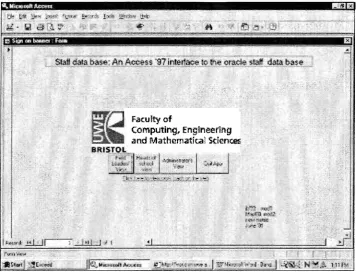
Figure 1.1: The main menu or Switchboard
There are eight requirements of this system. Some of the requirements are to allocate work to tutors and at the same time allocate resources to tasks, to identify tasks with inadequate resources, to identify tutors who are underlover hours and to produce reports showing individual workloads and school workloads.
The system based on the structure of University faculties. Faculties contains Schools while academic is a part of a School. The curriculum for each Course is delivered mainly through the medium of qualified modules. The modules are owned by Fields. Schools have Heads while Fields have their Field Leaders. This establishes a situation that Field Leader request staff time and Heads of School responds by giving information about their members' time to the field leaders.