Ymchwil gymdeithasol Social research
Rhif/Number: 48/2013
Programme of Action Research
to Inform the Evaluation of the
Additional Learning Needs Pilots:
Robust Trialling Phase
Programme of Action Research to Inform the Evaluation
of the Additional Learning Needs Pilots: Robust Trialling
Phase
Main Report
Duncan Holtom with Sarah Lloyd-Jones, The People
and Work Unit
Views expressed in this report are those of the researcher and not necessarily those of the Welsh Government
For further information please contact: Joanne Starkey
Knowledge and Analytical Services Welsh Government
Cathays Park Cardiff CF10 3NQ
02920 826734
Welsh Government Social Research, 2013 ISBN 978-1-4734-0122-8
Glossary of acronyms
ALN Additional learning needs
ALNCo Additional Learning Needs Co-ordinator ELLS Education, Lifelong Learning and Skills EOTAS Education other than at School
IDP Individual development plan NAfW National Assembly for Wales PCP Person centred planning PID Project initiation document PWU People and Work Unit QA Quality assurance
SALT Speech and language therapy SEN Special educational needs
SENCo Special educational needs co-ordinator SIMS Schools information management system WAG Welsh Assembly Government
Table of Contents
Glossary of acronyms ... 2
1. Introduction ... 5
2. Aims and objectives of the study ... 8
3. Approach and methods... 10
4. Evidence from the robust trialling phase... 20
5. Development and trialling of models during the robust trialling phase ... 57
6. Management and implementation of the pilots ... 1
Table of Tables
Table 1 responses to the stakeholder survey by sector/setting... 15
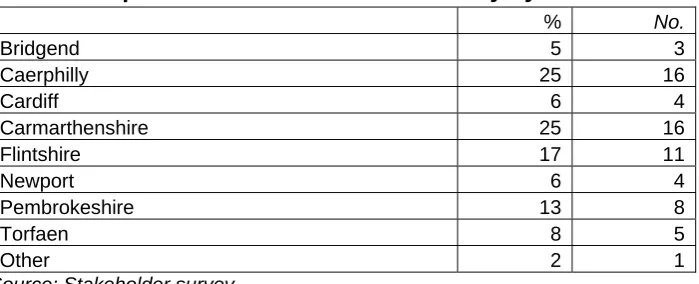
Table 2 responses to the stakeholder survey by area... 15
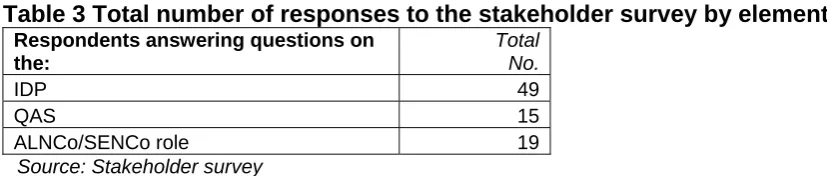
Table 3 total number of responses to the stakeholder survey by element ... 16
Table 4 Terms used to describe the proportion of respondents ... 16
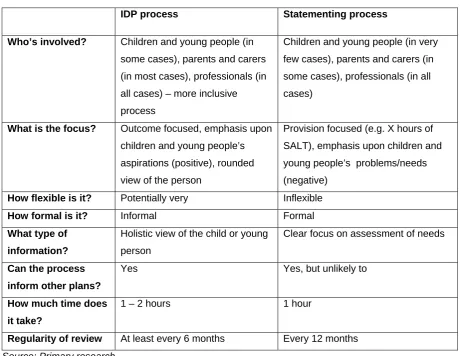
Table 5 Comparison of the IDP process with the statutory assessment process. 23 Table 6 responses to the question: the IDP process ‘is flexible, able to accommodate the differing needs of children and young people’ ... 24
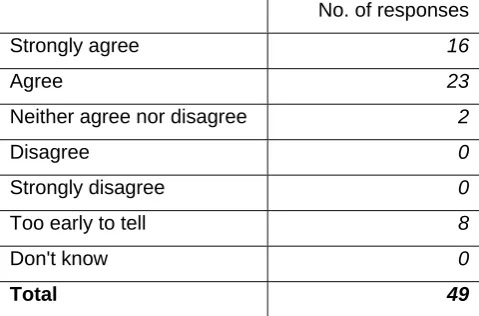
Table 7 responses to the question: Based upon your experience, the IDP process.... is an effective way of integrating or coordinating planning to meet a child or young person’s needs ... 27
Table 8 responses to the question: the IDP process ‘could be used to provide information needed for....’ ... 28
Table 9 responses to the question: “Reviews of an IDP are an effective way of informing judgments about the effectiveness of interventions for individual children or young people ... 29
Table 10 The impact of the IDP process upon the number of meetings respondents attend ... 36
Table 12 Responses to the question How long have person centred review meetings you have been involved in taken?” ... 39
Table 13 Reponses to the question ‘what impact has the IDP process had upon the number of meetings you attend’ ... 40
Table 14 Reponses to the question ‘what impact has the IDP process had upon the amount of time you spend contributing to plans in advance of meetings (e.g. writing reports)?’ ... 40
Table 15 responses to the question: ‘when compared to the existing statutory assessment process. the IDP process that is being piloted is…’ ... 42
Table 17 responses to the question “Which of these descriptions would you associate with the quality assurance system” ... 47
Table 19 Summary of the baseline position of each of the local authorities in the robust trialling phase ... 61
Table 20 Summary of the end line position of each of the local authorities in the robust trialling phase (i.e. August 2012)... 62
1. Introduction
Proposed reforms of the statutory framework for special educational needs
1.1. The Welsh Government is reforming the statutory framework for children and young people with special educational needs.1 This process of reform follows a policy review of special educational needs (SEN) undertaken by the
National Assembly for Wales (NAfW) Education Lifelong Learning and Skills (ELLS) Committee (NAfW, 2006a, 2007, 2008). The policy review identified weaknesses in relation to each stage of the process for meeting special educational needs (identification, assessment, planning and review) and in relation to quality assurance and evaluation of the process. This is discussed in detail in the evaluation of the developmental phase of the ALN Pilots (Holtom & Lloyd-Jones, 2012a).
The Additional Learning Needs Pilots
1.2. In 2009, in response to these weaknesses, four pilot projects were set up as part of a programme of action research designed to inform and enable reform of the statutory framework for children and young people with special
educational needs. The pilots were established to address particular elements of reform as follows:
• pilot A, to develop a pilot model for the quality assurance of provision made for children and young people with additional learning needs (undertaken by Caerphilly and Flintshire local authorities);
• pilot B, to develop and pilot an inter-disciplinary model for the
identification, assessment, planning and review of provision for children and young people with severe and/or complex needs (undertaken by Carmarthenshire and Torfaen local authorities);
1
• pilot C, to develop and pilot a model for the identification, assessment, planning and review of provision for children and young people with additional learning needs that are not severe and/or complex
(undertaken by Bridgend, Pembrokeshire and Torfaen local authorities) and
• pilot D, to develop the role of the Special Educational Needs Co-ordinator/Additional Learning Needs Co-ordinator (SENCo/ALNCo) (undertaken by Cardiff and Newport local authorities).
1.3. The initial developmental phase of the pilot ran from September 2009 until July 2011 and was evaluated in 2012 (Holtom & Lloyd-Jones, 2012a). By the end of the developmental phase, most progress had been made in developing and piloting models for children and young people aged 5-16. This included a common IDP planning process, jointly developed by Pilots B and C and separate online tools to support the IDP process (Planning Together,
developed by Pilot B and John/Jenny’s Plan, developed by Pilot C). At the end of the developmental phase, the decision was made to adopt Planning
Together as the online tool (Holtom and Lloyd-Jones, 2012).
The robust trialling phase
1.4. In October 2011, the pilot was extended for a further year to enable robust trialling of the approaches developed during the developmental phase. However, there were delays in starting and, as a consequence, trialling was scheduled for the period February 2012 to July 20th 2012. The robust trialling phase concluded in August 2012.
1.5. The aim of the robust trialling phase was to trial a ‘whole systems’ approach that incorporated each aspect of the work developed by the pilot projects. This would include an individual development planning (IDP) process, encompassing:
• an online tool (Planning Together), which facilitates the development of the IDP, by for example facilitating multi-agency working by providing
opportunities for communication;
• The IDP itself, an action plan and key output of the process2
;
• the quality assurance system (incorporating three parts – a provision map,
outcome measures and capacity measures);
• the ALNCo/SENCo role in co-ordinating the IDP planning process and • parental engagement/dispute resolution arrangements (WG, unpublished
document a).
2
2.
Aims and objectives of the study
2.1. The study had nine objectives. To:
• provide support to the pilots on applying monitoring and self-evaluation procedures to track progress on the pilots;
• provide support to the pilots through a ‘critical friend’ role;
• undertake an action research study on the robust testing of the IDP process through a whole systems approach;
• review the self-evaluations and provide independent judgments on the implementation and impact of the pilots;
• design and implement a method of collecting evidence from
professionals, children and young people with ALN, their parents and carers and other stakeholders whose work is expected to change as a result of the pilot;
• develop a method for assessing the counterfactual created by pilots B and C;
• develop and implement programme level research that draws together the four pilots and investigates their coherence and the wider learning about the operation of the system;
• assess the contribution the pilots have made to achieving the goals of
the wider reform agenda;
• review the overall management and implementation of the pilots and identify features of good practice that can be used to inform future implementation. This will include the practical aspects of delivery and a cost benefit analysis.
2.2. Although the study addressed all the objectives, the limited piloting affected the scope to fully address them all. In particular:
• the scope to undertake an action research study on each of the four pilot schemes was constrained by the limited trialling (objective 3); and
• a method for assessing the counterfactual created by pilots B and C was developed, but could not be used due to the limited trialling.
3.
Approach and methods
Introduction
3.1. Action research is particularly appropriate where an innovative pilot project is being evaluated and rich data on what can be learned from its operation is needed, with the aim of informing the development of models and policy (HM treasury, 2011). The approach required the PWU to work closely with
members of the Welsh Government’s Additional Learning Needs Branch and the pilot projects, in order to identify both what was working and what was not working so well, and to develop solutions based on this analysis. This, in turn, was intended to identify and anticipate issues before decisions about the potential roll out of the approaches that were being developed and piloted were made. In order to be successful, an action research approach requires that researchers regularly feed back their analysis and, where possible, identify possible solutions (ibid.).
3.2. This report is the fifth in a series of evaluation reports on the ALN pilots3. These reports provide an opportunity to draw together and analyse the data in order to identify what is working, what is not working so well and to identify potential solutions. They have been complemented by more informal feedback to the Welsh Government statutory reform team and pilots
throughout the process. This has been enabled primarily through the research team’s participation in, and contribution to, pilot meetings.
3.3. The data needed to analyse and identify what is working well and what is not working so well can be drawn from a range of sources and methods (ibid). This evaluation report draws upon three key sources of data:
• a desk based review of project documentation;
3
• observation of the process through for example, attendance at project meeting and events and
• a survey of stakeholders using a self-completion questionnaire and interviews with stakeholders.
Desk based review of project documentation
3.4. Key project documentation on the robust trialling phase was reviewed. This included:
• grant variation agreements and project initiation documents for each of the eight local authority pilots;
• local authority progress reports;
• monitoring documents developed by the Welsh Government project team and completed by the pilots; and
• update reports provided by SNAP Cymru, the Parent Partnership service used by seven of the eight pilots.
3.5. The review was used primarily to provide context for the study, including details of the aims and objectives of the pilot and to provide evidence of progress. This complemented the scoping review of documentation
undertaken for the evaluation of the developmental phase of the ALN pilots. This sets out the case for, and context of, the need for statutory reform and the role of the pilots in exploring this, including:
• evidence of the need for change;
• the pilots’ potential contribution to reform of the statutory framework for
children and young people with special educational needs and
• key issues, such as barriers to reform. (Holtom & Lloyd-Jones, 2012a).
Observation of the process
3.6. The evaluation team attended a range of project meetings, including pilot project meetings4, meetings of the ALN project board and also consultation
4
events5. This enabled the research team to develop a rich understanding of the operation of the pilots and to keep abreast of developments within the pilots. The evaluation team’s participation and contribution to project meetings also enabled regular informal feedback to the Welsh Government and pilots.
Primary Research
3.7. In order to enable the implementation of the robust trialling phase to be explored in depth, four groups of stakeholders were surveyed in January and February 2013, using interviews and self-completion questionnaires. The stakeholders included:
• the parents and carers of children and young people with ALN who were involved in the pilot projects;
• members of the Welsh Government Statutory Additional Learning Needs Branch;
• pilot lead officers and/or project managers from each of the eight pilot projects and
• professionals (n=12) involved in the pilots, including SENCos, head teachers, occupational therapists, physiotherapists, local authority and voluntary sector staff involved in trialling the individual development planning process.
5
Interviews with professionals
3.8. In depth, semi-structured interviews were conducted with those managing the pilot projects (n= 8) and with a sample of those involved in piloting the IDP process (n= 12). The semi-structured interviews explored both experiences and where appropriate, judgments about the effectiveness of the different models that were being piloted.
Interviews with families
3.9. The aim was to also include 20 children and young people with ALN, together with10 parents and carers who were involved in trialling the IDP process. Given the delays in rolling out the online tool, Planning Together , and of trialling the IDP (discussed in section 5), the research team focused upon trying to recruit potential participants in Carmarthenshire and Torfaen, where the individual development planning process being piloted was most
established.
3.10. Project staff acted as intermediaries in contacting families and children or young people via schools, to ask them to contribute to the research. They were requested to help by providing feedback on their experience of the IDP and PCP process. However, it proved difficult to recruit families. Schools appeared reluctant to contact the families whose child had an IDP, often out of a concern not to add anything to the strains the families already faced. Therefore it was only possible to interview five parents (representing four families). The parents interviewed were asked about their experiences of the PCP process and of having an IDP prepared and reviewed for their child. They were also asked about their experience of statements. Interviewees were given the choice of a face-to-face or telephone interview.
the part of the small number of parents who took part in the study to let their children contribute. Parents’ reluctance was rooted in concerns their children would not be able or would struggle to contribute, given the complexity and/or severity of their ALN.
Questionnaires for professionals with experience of the pilot projects
3.12. In order to add breadth to the depth offered by in-depth interviews, a self-completion questionnaire covering the models that were trialled was developed. The questionnaire was structured into four sections covering:
• respondents’ role and contact with the pilot project; • the IDP process;
• the Quality Assurance Systems and • the proposed ALNCo/SENCo role.
Routing was used so that respondents could skip parts that were not relevant to them because they did not have sufficient knowledge or experience of them. The questions on each of these elements explored respondents’ judgments about what was working well, what was not working so well and what needed to be developed.
3.13. The online stakeholder survey was piloted at the beginning of January 2013 through the pilot project staff. The survey was available in English and Welsh and offered as both an online survey and as a paper based questionnaire.
3.15. The aim was for a census survey of all professionals involved in the piloting. As noted above, pilot projects were asked to identify professionals involved in the pilot and to invite them to complete the survey. Tables 1 and 2 provide details on the responses from each local authority and responses from different groups of professionals. In addition 12 professionals in Cardiff and Torfaen who agreed to be interviewed were not asked to also complete the online questionnaire.
Table 1 Responses to the stakeholder survey by sector/setting
% No.
Primary school 50 32
Secondary school 23 15
Special school 13 8
Early years 17 11
Further education 0 0
Local authority education service 34 22
Health service 5 3
Social services 3 2
Other (please specify) 0 0
[image:16.595.113.463.437.579.2]Source: Stakeholder survey
Table 2 Responses to the stakeholder survey by area
% No.
Bridgend 5 3
Caerphilly 25 16
Cardiff 6 4
Carmarthenshire 25 16
Flintshire 17 11
Newport 6 4
Pembrokeshire 13 8
Torfaen 8 5
Other 2 1
Source: Stakeholder survey
element. As a consequence, as table 3 illustrates, the majority of respondents only completed the section on IDPs, with smaller numbers of respondents completing the other sections.
Table 3 Total number of responses to the stakeholder survey by element
Respondents answering questions on the:
Total No. IDP 49 QAS 15
ALNCo/SENCo role 19
Source: Stakeholder survey
3.17. Rather than using percentages (which may be misleading given the small numbers) the number of responses is reported in tables and, as outlined in table 4, the terms used by Estyn to provide an indication of the proportion of responses is adopted in text.
Table 4 Terms used to describe the proportion of respondents
Terms Proportions
nearly all with very few exceptions
Most 90% or more
Many 70% or more
a majority over 60%
Half 50%
around half close to 50%
a minority below 40%
few below 20%
very few less than 10%
Source: Estyn, 2011
3.18. Although it was not possible to calculate the response rate, because there was no sampling frame, it was possible to provide some estimates of the likely size of the “populations” with experience of the IDP and/or QAS. Specifically:
• in relation to those with experience of the IDP process, the numbers of
• in relation to those with experience using the QAS, the QAS has been used in over 100 schools, and assuming that at least one person in each school which has trialled the QAS has experience of it, this indicates a total population of over 100 people with experience of the QAS. However, because it is possible that more than one person in each school piloting the QAS has experience of the QAS, it is likely that this is an under-estimate of the total population with experience of the QAS.
3.19. Because, unlike the QAS or IDP, the proposed ALNCo/SENCo role has not been trialled, it is more difficult to estimate the number of people who have sufficient knowledge and experience of the proposed role to respond to questions on it.
3.20. The small total number of respondents in the sample with experience of the IDP (49) compared to the likely population (at least 220) and of the QAS (10) compared to a minimum population of 100, means that the sample of
respondents to the survey cannot be confidently described as representative of the whole population with knowledge and experience of the IDP. This is also likely to apply to the proposed ALNCo/SENCo role.
3.21. Because it is not possible to be confident that the sample of respondents completing the survey is representative, it is important to interpret responses from the survey in light of evidence from other interviews with professionals and parents and staff members from each of the pilot projects. This
methodological and data triangulation6 can give greater confidence that the findings from one method and source are valid, when they are consistent with findings from other methods and sources (HM Treasury, 2011).
3.22. It is important to remember that triangulating data and sources cannot ensure that findings are valid. For example, if the research does not include a
6
particular group of people whose experiences are different to those included in the research, triangulating data from research with the groups included in the study will not reveal the experiences of the group not included in the study. In this case there is some evidence that health and social care professionals are under-represented. Although, there is also evidence from the survey (discussed in section four) that these groups may not have participated as extensively in the IDP process as other groups.
3.23. In order to help offset any bias created by an unrepresentative sample the evaluation also draws upon evidence from staff members from the pilots projects. They have worked with a range of professionals in each area, and their accounts are used in order to help judge the extent to which the
experiences of those in the survey are likely to be shared by other professionals.
Strengths and weaknesses of the approach
Evaluating the process
3.24. The use of process observation of project meetings built on the work done during the initial developmental phase. It gave the research team access to aspects of the work of the statutory reform team and the pilot projects,
enhancing their knowledge and understanding of each. In particular, it allowed the research team to understand the barriers to progress, what had caused these and to consider their relevance to any future development of the work. As outlined above, it also enabled the research team to provide feedback to the Welsh Government and pilots throughout the process.
there were problems engaging families as well as professionals from some sectors such as health and social care. Therefore, the study could not draw upon the broad range of perspectives that it aimed to and there is risk that the experiences of some groups have not been fully understood.
Capturing the lessons from the trialling process
3.26. The IDP process is intended to enable a multi-agency approach through a common planning process based on PCP. The outcome of the process is intended to be captured in a single, integrated accessible, plan which may be supported by a web based tool. However, as outlined in section 5, there were significant difficulties in piloting this process. These included the need to determine the information sharing protocols that were necessary for the trialling of the IDP, hosting and access agreements and rationalising the work involved in contributing to the plan without the scope to replace existing plans and processes. Given these difficulties, it was only ever possible to undertake a partial trial of the IDP process. Therefore, much of the action research focused upon capturing lessons about developing and implementing the approach rather than about using the processes or evaluating their impact.
3.27. Nevertheless, as the report illustrates, the robust trialling phase and this study of it has developed a great deal of insight into the kinds of difficulties that local authorities and health authorities experience in trying to adopt new
4.
Evidence from the robust trialling phase
Introduction
4.1 The evaluation of the developmental phase of the ALN pilots (Holtom & Lloyd-Jones, 2012) concluded that while three models - the quality assurance system, an individual planning process incorporating the IDP and the ALNCo role - had been developed, they had been subject to only limited piloting. Therefore, there was only limited evidence of the likely impact or cost-effectiveness and further trialling was required.
4.2 In this section, the evidence from the robust trialling phase on which aspects of the three pilot models are working well, not working well or need to be further developed and where there is a need for further trialling or research (what is not known) is considered. The report draws upon evidence from interviews with stakeholders and summarise responses from the survey. It also considers evidence on the PCP/IDP one day training. Finally, although, given the limited trialling, at this stage there was insufficient data to complete the analysis of costs and benefits7, where relevant additional evidence is included from the robust trialling phase, of the likely cost implications of the models.
4.3 The conclusions from the analysis of the evidence are summarised in figures 1 and 2.
Key for figures 1 and 2.
What is working well
What is working well sometimes, but
not well at other times
What is not working well
What is not known
7
Figure 1 Summary of evidence from the robust trialling phase of the IDP process
The IDP Process
Assessment
Impact upon implementation of action plans is mixed
There remains a great deal of ‘parallel planning’
The cost implications of introducing the IDP Gives a rounded picture or
understanding of the child/young person
Stakeholder involvement
Improves parents and carers’ involvement in and
experiences of the process
Increases parental trust and confidence
Increases children and young peoples’ involvement in the process
Improves multi-agency working (e.g. encourages integrated rather than parallel
Information can be used in other processes/plans
Planning
The engagement of some professionals (particularly health) in both training and the process, has been limited
The online IDP has experienced technical
problems; is not always used
The extent of children and young people’s participation in the planning process differs
Concerns about the detail, about how it will work in
ti
Concerns that it increases workloads
Variation in the way the process was developed and implemented in different areas
The impact of the IDP process upon provision or outcomes
Implementation
Differences of view between the Welsh Government and those involved in delivery in the level of detail that is required/appropriate
Pilots struggled to engage ‘hard to reach’ parents and carers in the process
Figure 2 Summary of evidence from the robust trialling phase on the quality assurance system
The QAS
The provision map
The outcome
measures
The capacity
measure
Implementation
Too early to judge its impact (e.g. whether it leads to changes in provision)
Less effective in special schools
Delays getting a SIMS based provision map operational
User friendly Comprehensive
Strong support for the principles
Strong support for the principles
Strong support for the principles
Effectiveness (due to limited trialling)
Effectiveness (due to limited trialling)
Useful, effective at informing judgments of outcomes and cost-effectiveness
The person-centred individual development planning process
[image:24.595.70.531.234.590.2]4.4 The person-centred individual planning process (referred to as the ‘IDP process’ in this section) is generally working well for those who are using it. For some it is a natural development or extension of their work, for others a more radical change. Table 5 illustrates the key differences.
Table 5 Comparison of the IDP process with the statutory assessment process
IDP process Statementing process Who’s involved? Children and young people (in
some cases), parents and carers
(in most cases), professionals (in
all cases) – more inclusive
process
Children and young people (in very
few cases), parents and carers (in
some cases), professionals (in all
cases)
What is the focus? Outcome focused, emphasis upon children and young people’s
aspirations (positive), rounded
view of the person
Provision focused (e.g. X hours of
SALT), emphasis upon children and
young people’s problems/needs
(negative)
How flexible is it? Potentially very Inflexible
How formal is it? Informal Formal
What type of information?
Holistic view of the child or young
person
Clear focus on assessment of needs
Can the process inform other plans?
Yes Yes, but unlikely to
How much time does it take?
1 – 2 hours 1 hour
Regularity of review At least every 6 months Every 12 months Source: Primary research
What is working well?
4.6 The IDP process is uniformly felt by interviewees to give a more rounded picture or understanding of the child or young person (when compared to
existing processes, such as a statutory assessment). It can help pull together all the different threads, encouraging integrated rather than parallel or
sequential planning. It can also help people see the ‘bigger picture’, as one stakeholder put it. Although it may not necessarily change the assessment of need, it may change how those needs are met. The questionnaire did not include a question on this specific point, but respondents were asked if they felt that the IDP process was flexible enough to accommodate differing needs. As table 6 illustrates, many respondents felt that it was. ,
Table 6 Responses to the question: the IDP process ‘is flexible, able to accommodate the differing needs of children and young people’
No of responses
Strongly agree 13
Agree 27
Neither agree nor
disagree 3
Disagree 0
Strongly disagree 0
Too early to tell 5
Don't know 1
Source: Stakeholder survey
4.7. Nevertheless, as discussed below, the evidence from the stakeholder survey on the effectiveness of the process of assessing of needs is more equivocal.
4.8. The IDP process is generally felt to have improved parents and carers’ involvement in and experiences of the process. Many respondents felt that
the IDP process increased parents’ and carers’ confidence that their child’s needs will be met. However, at this stage, there is less evidence on the extent to which it helps resolve concerns and disagreements, with a minority of responses reporting that it is either too early to say or they don’t know.
process (when compared to existing processes such as statementing reviews). For example as one stakeholder reported:
‘Parents are much more involved through the PCP process... It gives families a much clearer picture of what is happening... last week we had a review with a parent who felt that nothing was working, she felt very angry – but the process challenged her perceptions, showed her that some things were working well and she rang the next day to say she felt so much better about everything. Parents feel that they are being listened to, they can talk about behaviour at home and realised that this does not happen in school, and vice versa, so everyone has a fuller picture. However, it is very important that someone has gone through things with them before – they need to have someone who is linked to their child and who can talk things through’.
4.10. In addition, it is reported to have increased parental involvement increased parental trust and confidence. Most parents reported that they were
confident that decisions taken would be acted on and felt that the IDP gave them an effective tool to be able to monitor what was happening. One family described how they felt able to relax and focus on family life now, confident that their child’s needs were being addressed whereas before such a lot of time had been spent on chasing services and trying to fight for the child that it had seriously impacted on their lives.
4.11. Professionals (working with families) reported that in some cases it has improved parents’ understanding and given them a clearer picture of what is happening, including what is working, as well as the problems (which are typically the source of tension). In some cases it has led parents to change their demands upon local services. Their increased involvement and
understanding is, in turn, reported to have increased satisfaction with provision. For other parents it has meant that they have felt listened to. It is hoped that this will give parents greater confidence that their child’s needs are met, making the transition from statements to IDPs easier.
the survey reported that the IDP process was effective way of involving a child or young person in planning. However, while their involvement has improved, children and young people’s involvement in meetings (as distinct from other parts of the process) remains mixed. As outlined below (in paragraphs 4.18-19), the importance of involving children and young people in meetings divided stakeholders and was seen by some as less important than a meaningful involvement in other parts of the process.
4.13. The interviews identified a small number of examples where the IDP process has enabled new ways of delivering interventions. For example, as one stakeholder explained:
‘Recently an occupational therapist was withdrawing and there was still a need, as we discussed it the social worker said ‘I can do that’, so we were able to incorporate this into the plan instead of finding some new OT provision’.
4.14. The IDP process is generally felt to improve multi-agency working. For example:
• many respondents to the survey reported that the IDP process was ‘an effective way of involving professionals, such as yourself, in planning’; and
• many respondents to the survey reported that the IDP process was ‘an effective way of sharing information between those contributing to the plan’.
4.15. This was supported by the very positive responses to the question in the survey on the extent to which the IDP process is an effective way of
Table 7 responses to the question: Based upon your experience, the IDP process.... is an effective way of integrating or coordinating planning to meet a child or young person’s needs
No. of responses
Strongly agree 16
Agree 23
Neither agree nor disagree 2
Disagree 0
Strongly disagree 0
Too early to tell 8
Don't know 0
Total 49
Source: Stakeholder survey
4.16. As noted, it is felt by interviewees to give a more rounded understanding of the child or young person. It also helps give those involved an overview of what is happening with the child or young person, helps identify who needs to be involved and encourages greater discussion. For example, a distinction was drawn by some professionals between ‘waiting’ for their turn to contribute in existing planning meetings and actively discussing a child in the IDP
process. The former encourages planning and assessment in a service-centred way, conducted in sequence, or “silos”; the latter leads to much greater integration of assessment and planning in a more child- or young person-centred way. The emphasis some stakeholders placed upon
discussion and dialogue in IDP meetings was a key reason why they felt it was important that other professionals attended meetings rather than, for example, simply uploading their report.
4.17. There is some evidence that the IDP process can contribute to other processes and plans. This reflects the Welsh Government’s expectation
because for example, the structure and headings used in other plans are different to those used by the IDP. Therefore, evidence has to be adapted and changed in order to fit into other plans. This issue is considered further in the discussion of what is not working so well).
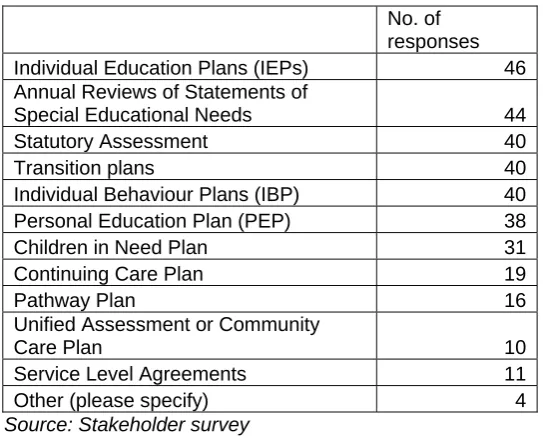
[image:29.595.106.378.385.604.2]4.18. In order to explore the scope to use the IDP to bring together different plans, respondents to the survey were asked about which plans the IDP process could contribute to. In the survey, around half of respondents report that ‘the information gathered in a person-centred planning meeting is…useful for other planning processes’. As table 8 illustrates, the information is most useful for other education plans and processes such as statutory assessments and individual education plans.
Table 8 Responses to the question: the IDP process ‘could be used to provide information needed for....’
Source: Stakeholder survey
No. of responses Individual Education Plans (IEPs) 46 Annual Reviews of Statements of
Special Educational Needs 44
Statutory Assessment 40
Transition plans 40
Individual Behaviour Plans (IBP) 40 Personal Education Plan (PEP) 38
Children in Need Plan 31
Continuing Care Plan 19
Pathway Plan 16
Unified Assessment or Community
Care Plan 10
Service Level Agreements 11
Other (please specify) 4
Table 9 Responses to the question: “Reviews of an IDP are an effective way of informing judgments about the effectiveness of
interventions for individual children or young people”
No. of responses
Strongly agree 11
Agree 27 Neither agree nor
disagree 0 Disagree 2
Strongly disagree 0
Too early to tell 6
Don't know 0
Total 46
Source: Stakeholder survey
4.20. There are however, differences between stakeholders’ views on who should attend ‘follow up/ review’ meetings. On the one hand some believe
that the potential for the IDP to be developed online provides the flexibility that means people can contribute without attending all meetings (emphasising that meetings are only part of the process) and on the other hand, some fear it will enable people who should attend meetings (and therefore join in the
discussions) to simply upload documents and send their apologies. The perceived flexibility is particularly attractive to those who are not co-ordinating the process and who are concerned about the workload implications of the process.
What is not working so well, or needs to be developed
4.21. Although, as outlined above, the IDP process is felt to have improved the involvement of children and young people, the nature and the extent or depth of children and young people’s participation in the planning
process differs considerably. In some cases, they are reported to have
participated fully in the process, whilst in others they have either not participated at all, or their participation is reported to be limited.
whole. Some of those who have questioned the level of young people’s involvement have pointed to the problems of engaging young people in meetings (e.g. because not all children or young people are interested or comfortable in a meeting setting) and enabling young children and young people with complex needs to participate fully in meetings. As a consequence, rather than directly participating in meetings, some children and young
people’s views have been expressed by others (an advocacy model). Others have argued that the focus upon participation in meetings may be misplaced and taking a broader view of the process as a whole, there are often more appropriate opportunities to involve children and young people before and after meetings.
4.23. One case was cited in which decisions made during the IDP process were overturned after the meeting, with no involvement from the family. This left the parents feeling very upset and disillusioned with the process. It is only a single case and may therefore be an example of isolated poor practice. Equally, it may also reflect a tension between a process which is carried out in a person-centred way and the wider context, which remains service-person-centred.
4.24. The online IDP has only been subject to limited piloting. Therefore, the evidence base is narrow. Where it is operational (the roll out of the IDP is considered further in section 5) the online IDP has drawn a mixed response from families. For some families it is valued. For example, some parents
have used it to challenge professionals and have used it to monitor and help ensure that plans are implemented. However for those families who are not IT literate and/or have problems accessing the online IDP, its value has been diminished8 and many prefer to work from a paper-based version. Moreover, even where an IDP is available online , there is little evidence of families accessing the IDP online between meetings to, review any changes to the IDP, update people on any changes, or problems, to communicate with
professionals working with their child or to check that actions have taken place as planned. This may change though once the process is more firmly
8
established. It is also felt to be a barrier or to create barriers for other parents and carers who are not IT literate or mistrustful of IT. The latter is a more fundamental problem, as whilst the IDP process can be completed on paper, the intention is for the information collected through that process to be stored online. This was a particular problem with gypsy traveller families (and was reported to be the key reason why they were difficult to engage) but has also been reported amongst other groups of parents and carers.
4.25. In addition, the IDP, whether completed online or on paper, does not, of itself, address other potential barriers to parents’ or carers’ participation in, and contribution to planning and assessment processes, such as poor literacy or numeracy and/or a lack of confidence.
4.26. Similarly, the online IDP has drawn a mixed response from professionals. Some professionals are hopeful that it will provide greater transparency and help improve implementation/follow up, and some hope it will save time. However, for those professionals who are not IT literate and/or have problems accessing the online IDP9, its value has been diminished and considerable numbers prefer to work from a paper- based version. Concerns have also been raised about the impact of the online or ‘live’ nature of IDPs upon workloads. For example, support co-ordinators have raised concerns about the additional work it may create in monitoring and responding to changes to an online IDP between meetings. Some stakeholders have also questioned how effective the online tool will be as a tool for dialogue, because unlike a meeting, ‘conversations’ using the online tool would often be staggered, with people contributing and responding at different times over a period of time.
4.27. Professionals acting as support co-ordinators report that they have struggled to create online IDPs in ‘real’ time’ during meetings, unless they have
administrative support from someone trained in PCP and the process who can input information, whilst the support co-ordinator chairs the meeting. For example one commented that while the process worked well with the active
9
support from the pilot, they questioned what would happen when that support was withdrawn. This is not inherent in the online nature of the tool though, because even if the process is conducted “offline” (on paper), the need to facilitate IDP review meetings in a dynamic, person-centred way, is reported by some of those who are currently co-coordinating the IDP process to make it difficult for one person to both facilitate the process and also take detailed notes.
4.28. People facilitating IDP meetings reported different approaches to taking notes, but were unanimous in the view that it was important that a record of the process was kept. For example, some made extensive use of flipcharts, some used flip charts and notes, and some used the online tool during a meeting (or a combination of these) to record the process. Unless data was entered
directly onto the online tool in “real time” during the meeting, it was reported to be necessary to write or type up notes after the meeting. In some cases this was done by those facilitating the process, in others administrative support staff took on the role. However, even in the latter case, those facilitating the process still reported that it was necessary for them to read through and, in effect, sign off the notes as an accurate record of the process.
4.29. The issues raised about the time devoted to note taking and writing up suggested that people are not always clear about what the process should involve. The Welsh Government’s ALN team reported that extensive note-taking is not necessary and that professionals involved in co-ordinating the meeting should explore alternative methods of recording information, which should not add to workload. They stressed that this message was emphasised through the training on PCP/IDP and should have also been reiterated by Pilot Leads. They also provided examples of how post-it notes were used to record decisions taken in a meeting and then photographed using digital
4.30. IT problems during the robust trialling phase were reported to have shaken some people’s confidence in using the online IDP. For example, some interviewees described their lack of confidence that they could easily access the online IDP and that it would work well. As a consequence, they had not tried to use the online IDP with families.
4.31. Although the process is felt to have improved multi-agency working, and as illustrated above, the process is felt to be effective at integrating or
coordinating planning to meet a child or young person’s needs, concerns have still been raised. In particular, whilst some health professionals, most
notably occupational therapists and physiotherapists, have engaged in the process in some areas, the engagement of other health professionals, such as paediatricians, in both training and the process itself, has been more limited.10 The extent to which they actively contribute to a PCP approach rather than, for example, simply uploading a report to the online IDP, remains unclear. Some stakeholders have also pointed to the pre-existing problems getting services such as health to share information. Concerns have also been raised about burden sharing and the extent to which different agencies will not only participate in the process but also take on responsibility for arranging and funding interventions.
4.32. These reports from interviewees were consistent with responses to the survey which found that a minority of stakeholders reported that one or more people who should have attended start up meetings did not attend, with a slightly larger proportion reporting that one or more people who should have attended the subsequent review meetings, did not attend.
4.33. When asked who should have attended review meetings but did not, twenty four respondents identified people. Of these, twenty one specifically identified health professionals amongst those who did not attend. Where
roles/professions were identified (in most cases respondents simply listed ‘health’), five people identified speech and language therapists, four people
10
identified paediatricians and three people identified physiotherapists. Amongst other roles/professions, three people identified social care or social services.
4.34. Three broad reasons why people who were felt should have attended, but did not, have been put forward: the practical problems finding a date which
everyone could attend; the potential, created by the online nature of the IDP, for people to contribute ‘virtually’ (which as noted above, divided opinion) and underlying problems with multi-agency working.
4.35. The underlying problems with multi-agency working, identified by many
stakeholders, reflects the distinction between the IDP process (which is being piloted) and the wider context in which it operates (which has not been
changed). Whilst the IDP process may encourage multi-agency working, it cannot and was not designed to overcome all barriers to multi-agency working.
4.36. Given the problems engaging all services in the IDP process, some stakeholders talked about the need for cultural shifts in the way services operate, in order to enable the IDP process to function effectively. In at least one case, the process is reported to have not worked well because people were ‘not on board’ as one stakeholder put it. This is linked to training. As some stakeholders reported, if people don’t understand the process, they will struggle with it. Nevertheless, many stakeholders pointed to deeper structural factors, such as heavy workloads, differing cultures, targets and legal
requirements that training alone cannot address.
4.37. Similarly, although the process is felt to have improved parental
involvement, concerns and questions have still been raised. Attempts to
involve the parents or carers of gypsy traveller young people proved
4.38. There is evidence that the impact of the IDP process upon implementation of action plans is mixed. In the course of interviews with stakeholders,
examples of where the IDP process improved implementation of actions were cited. For example as one stakeholder explained:
‘The PCP process improves the impact of services on pupils because at the end of the review the action plan has clear dates, clearly sets out who is doing what, sets deadlines – and makes people more responsible for their work. This goes out to everybody, and so people must do what they have said they would do.’
4.39. However, this needs to be balanced against examples, where it is reported that action plans have not been followed through. In general, the evidence that it has changed how things are done is much stronger than the evidence that it has changed what is done. So for example, an existing intervention might be delivered differently.
4.40. As outlined above, there is confidence that the IDP process can inform other plans and processes (the aspiration for a single planning process that can lead to multiple plans) and there are examples of this happening on the ground. However, there remains a great deal of ‘parallel planning’ in which plans are produced in isolation from each other (Monmouthshire CC, n.d.) and even where attempts have been made to use the data generated by the IDP in other plans and processes, it has rarely been straightforward. For example, as one stakeholder explained, currently the PCP process does not replace other processes they were involved in:
‘The PCP process has the potential to bring agencies together around a child’s needs. If a child is looked after I can find myself having to do an IEP, IBP (individual behaviour plan), personal social and emotional support plan for social services, appendix B for funding – and they all hold the same information but each requires a different form to be filled out.’
increase in the short to medium term as systems are developed and
tested. This is consistent with evidence from the stakeholder survey. It indicates that:
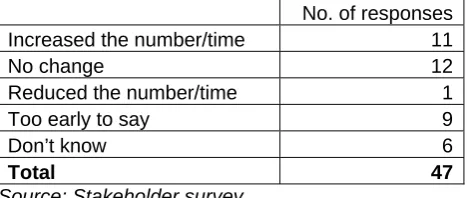
• A minority of stakeholders say it has increased the number of meetings they attend; and
[image:37.595.109.343.272.371.2]• A minority of stakeholders say it has increased the time they spend contributing to meetings.
Table 10 The impact of the IDP process upon the number of meetings respondents attend
No. of responses Increased the number/time 11
No change 12
Reduced the number/time 1
Too early to say 9
Don’t know 6
Total 47
Source: Stakeholder survey
Table 11 The impact of the IDP process upon the time respondents spend contributing to plans in advance of meetings (e.g. writing reports)
No. of responses Increased the number/time 11
No change 13
Reduced the number/time 5
Too early to say 10
Don’t know 6
Total 45
Source: Stakeholder survey
4.42. Parallel planning is likely to be one reason why only a minority of stakeholders believe that the individual planning process is ‘an efficient use of my time’.
responses to the survey (illustrated by table 8, exploring the potential for the IDP to contribute to other processes) indicate that it has often been difficult at this stage, to integrate the IDP with other processes and plans. This issue is explored further in section seven and recommendations made on how the issue of parallel planning could be addressed.
4.44. Although there is widespread support for the IDP process’s approach and ethos, there is also widespread concern about the detail, about how it will work in practice. This includes, in particular, concerns and uncertainty about:
• definitions and criteria, including for example, the perceived lack of clarity about thresholds for who will have an IDP and the extent of legal protection/entitlements conferred (which was raised in both interviews and in written comments on the questionnaire);
• how the IDP process can feed into other processes and reports. Some stakeholders reported how, in the absence of guidance or central direction, they had worked out for themselves how to use and fit the information generated by the IDP process into other processes and plans. This was raised in interviews and whilst sometimes reported to be straightforward, was more often reported to be complex, or messy, involving ‘workarounds’, which contributed to inefficiencies, frustration and some anxiety11 amongst those using different systems; and • the support co-ordinator role, including uncertainty about who will take
it on, what the role covers and what the co-ordinators’ responsibilities are when, for example, an agency or service does not participate or deliver.
4.45. In relation to the support co-ordinator role, evidence from the stakeholder survey indicates that only a minority of stakeholders agreed or strongly agreed that the individual development planning process provides clarity on the role of a ‘support co-ordinator’ in schools or other settings (e.g. further education or early years settings):
11
4.46. As a consequence of these factors, there is considerable variation in the way the process is being developed and implemented in different areas
and settings. Some stakeholders expressed the view that: • the process has not been thought through yet;
• there is a danger of people in different settings and areas constantly ‘reinventing the wheel’; finding different ways of making the process work with other pre-existing processes and requirements;
• much of the practice is dependent upon the good will of those involved, which means changes in practice may be vulnerable to changes in the personnel involved and
• parents and carers may lose confidence in the new process.
4.47. The lack of clarity on the future is also reported by some stakeholders to have hindered progress and engagement of other agencies. For example as one stakeholder reported:
‘I haven’t got colleagues involved with me because we do not know if it is going to be rolled out and people do not want to invest time into something that may not happen.’
What are the cost implications of the reforms
4.48. To date the bulk of the evidence of the cost implications of the IDP process relate to the time professionals need to contribute to the process.
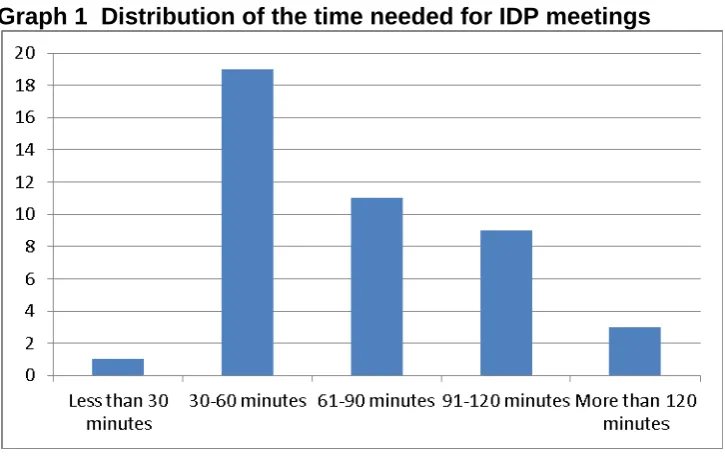
Graph 1 Distribution of the time needed for IDP meetings
Source: Stakeholder survey
4.49. It is difficult to generalise though, as the length of time needed for meetings is likely to vary depending on the complexity of a child or young person’s needs, the number of agencies involved and the stage they are at. For example, a review for a young person aged 16-19, which involves transition planning, is likely to take longer than one for a young person aged 11-14. Moreover, given the time needed, stakeholders are looking at ways to cut down the time need for meetings by, for example, undertaking more preparatory work.
[image:40.595.109.472.71.300.2]4.50. As table 12 illustrates, responses to the survey indicate that most ‘review’ meetings are comparable in length to the initial ‘start up’ meetings.
Table 12 Responses to the question ‘How long have person centred review meetings you have been involved in taken?’
No. of responses
Less than 30 minutes 0
30-60 minutes 23
61-90 minutes 9
91-120 minutes 3
More than 120 minutes 0
I have not been involved in a planning
meeting 14
4.51. The main other concerns raised by stakeholders in relation to the time needed to contribute to the IDP process were the frequency of reviews and the
additional work required to contribute to the process, as at present the IDP process operates in parallel to (i.e. in addition to) other processes 12. This was a particular concern for those working with large numbers of children or young people. For example as one stakeholder explained
‘The problem is not the length of the PCP meeting – but the fact that it does not replace the four other meetings you have to attend on that child’.
[image:41.595.109.352.389.494.2]4.52. As tables 13 and 14 illustrate, this was reflected in responses to the survey, with increases in the number of meetings and the time many stakeholders spent contributing to meetings. Nevertheless, a minority of respondents felt that it was too early to say or they did not know.
Table 13 Reponses to the question ‘what impact has the IDP process had upon the number of meetings you attend’
No. of responses
Increased the number 19
No change 12
Reduced the number/time 1
Too early to say 9
Don’t know 6
Total 47
Source: Stakeholder survey
Table 14 Reponses to the question ‘what impact has the IDP process had upon the amount of time you spend contributing to plans in advance of meetings (e.g. writing reports)?’
No. of responses Increased the number/time 11
No change 13
Reduced the number/time 5
Too early to say 10
Don’t know 6
Total 45
Source: Stakeholder survey
4.53. In assessing the workload implications, it is important to draw a distinction between the length of meetings and other types of contributions to the
12
process. For example, for some the IDP process has involved more
preparatory work, but for some it has reduced follow-up work. For example as one stakeholder explained:
‘The PCP process takes less time because I write shorter reports now - using the headings.’
4.54. It is also important to consider who bears the time/costs of contributing. For example as one stakeholder reported:
‘Schools are happy because I type up the action plan and the meeting notes – so makes things easier for them. It is time consuming – the actual meeting takes a good hour and there is a lot of preparation to be done before – especially the first – and then it has to be typed up. However, this investment in time is worth it because of the clear picture that emerges. The key difficulty is the time involved. A PCP review meeting takes a good hour to an hour and a half – but in addition there is a one hour preparatory visit with the school [although this does not have to be repeated and so is a one-off] and a one and a half hour visit in the home with the family, and then there is the time in typing it up. It is quicker after the first review – and, as time progresses, it will get more embedded into everyday practice and should take less time as people are more used to the process.’
4.55. As outlined earlier, the total number of IDPs in the pilot phase has been small. Based upon this limited piloting, some stakeholders have been concerned about the impact upon their workloads if IDPs were rolled out to more children and young people (as is currently proposed) in the future. As a consequence, many stakeholders were keen to restrict access to IDPs by, for example, limiting them to those with the most severe and complex needs, rather than all children and young people with special educational or additional learning needs. For example as one stakeholder commented on the questionnaire:
‘Will all pupils currently on the COP [SEN Code of Practice] be expected to have an IDP? - this would have huge implications for workload for SENCos’.
What is not known
Moreover, amongst this group, responses to the survey suggest that around a fifth of respondents either did not know, or felt it was too early to say, when asked to respond to questions about the IDP process. In addition, there is very limited direct evidence from families and the study is therefore often reliant upon evidence from professionals about families’ experiences.
4.57. As a consequence of the limited piloting, at this stage, it is too early to judge what impact the IDP process is having upon the assessment of needs,
the provision made for children and young people and the consequent
impact upon their children and young people’s well-being and development.
[image:43.595.107.340.442.531.2]There are some encouraging examples and some less positive examples and overall there is insufficient evidence to make a judgment at this stage. This is reflected by responses to the survey (illustrated by table 15) where around half the respondents said it was too early to say, when asked to compare the robustness of the existing statutory assessment process with the IDP process.
Table 15 responses to the question: ‘when compared to the existing statutory assessment process. the IDP process that is being piloted is…’
No. of responses
More robust 11
as robust 5
less robust 7
too early to say 23
don't know 0
Source: Stakeholder survey
Table 16 responses to the question: The IDP process ‘Is an effective way of ensuring that a child or young person’s needs are met’
No. of responses
Strongly agree 13
Agree 20
Neither agree nor
disagree 4
Disagree 1
Strongly disagree 0
Too early to tell 11
Don't know 0
Total responses 49
Source: Stakeholder survey
4.59. The impact of delegation of funding to schools and of wider cut backs in public services is also unknown. For example, some schools raised concerns about the impact of cuts in services such as speech and language therapy and have queried whether, once budgets are devolved, they will have to pay speech and language therapists to attend meetings. In this scenario, there may be a temptation for schools to pay for provision - interventions - but not for
specialists to attend planning meetings.
4.60. There are particular concerns around assessment amongst a minority of stakeholders. As outlined above, the process is generally felt to give a much more rounded view or picture of a child or young person. This does not necessarily change the assessment of needs, but more how those needs could be met and in some cases gives a clearer picture of the impact of those needs. For example, a person-centred review may highlight the vulnerability of a young person, which might be missed if the focus was only upon the nature of the ALN, such as their autism.
4.61. However, there are concerns that by focusing upon the positives and upon outcomes (which is considered a strength), the IDP process may mean that insufficient attention is paid to assessment of the underlying need or condition. A distinction may be drawn between:
• a child’s underlying condition;
• the desired outcomes, which are captured in the action plan.
The IDP process places much greater emphasis upon impact and outcomes. For example, in written comments on the questionnaire one stakeholder reported that:
‘The process of statutory assessment includes detailed assessments, potentially by a number of agencies, prior to a meeting. We have not had these detailed assessments built in prior to an IDP meeting. Prior to an annual review, school and agencies involved must produce detailed advice which is sent out for reading and consideration prior to the annual review meeting; this is not built in to the IDP process.’
4.62. Two professionals who were interviewed commented that they wanted to add more detailed assessments to the IDP, but had been discouraged from doing so, as the IDP is intended to be a record of the person centred planning process, rather than a tool for storing or filing reports (which have not been created through the person centred planning process). Other professionals raised concerns about the appropriateness of sharing reports written for a particular purpose with children and young people. This in turn has led some professionals to question whether the process will provide sufficient evidence for moderation panels. It is important to stress that this is only a risk; it is not inherent to the process and there is no reason why more detailed
assessments cannot continue. As noted there is insufficient evidence to judge whether this risk is materialising or not. This is consisted with responses to the survey on how robust assessment is under the IDP process, compared to the existing system (with half of respondents reporting that it is too early to say).
what’s not working – in preparing reports. However, they stressed that there is no reason why detailed assessment reports should not be attached to the IDP and that professionals should not be discouraged from doing so. They
reported that this was emphasised in the training and should have been reiterated by Pilot Leads.
4.64. Although as outlined above the process has generally been effective at
involving the families who chose to take part in the pilot, some groups such as gypsy travellers have not participated. This group was identified as one of a number of potentially ‘hard to reach’ groups who may have additional learning needs and could be entitled to an IDP (under the proposed reforms). Other groups included young offenders and those in alternative education, such as pupil referral units. As outlined in section five, there was limited piloting of the IDP outside of school settings and although attempts were made to engage gypsy traveller families in the IDP process by two schools in Cardiff, these were generally unsuccessful. There were only isolated attempts to engage other hard to reach groups across the eight pilot areas It is expected that the current expanded trialling phase will provide more evidence of the
effectiveness of the IDP outside of school settings and with ‘hard to reach’ groups.
shared by all parents and carers, were the process rolled out to all children and young people with ALN.13
4.66. There is support in principle for the IDP running from birth to 25 and in particular the potential to improve planning for those aged 16 -25 (who have left a secondary school) or 19 – 25 (who have left a special school). However, the limited trialling means that there is insufficient evidence to reach judgment about its impact and effectiveness in non-school settings, particularly in
alternative education such as pupil referral units and in post-16 settings such as FE colleges and, to a lesser degree, early years settings. As noted, it is expected that these will be addressed in the current expanded trialling phase.
The quality assurance system (QAS)
What is working well?
4.67. There is uniformly strong support for the principles of the QAS and the provision map in particular, in primary and secondary schools (special schools are considered in the following section). For example, schools in Flintshire identified a range of benefits including:
• being able to plan resources and provision for the following year; • tracking the success of interventions;
• highlighting trends, training needs, problem areas and the progress made by target groups and
• The centralisation of data and the transparency offered in relation to finances (Flintshire, n.d.).
4.68. Given these benefits, some schools in the pilot areas had already developed systems and processes for doing some or all of the functions of the quality assurance system.
13