Rochester Institute of Technology
RIT Scholar Works
Theses
4-26-2019
smile
Luke PolitoFollow this and additional works at:https://scholarworks.rit.edu/theses
This Thesis is brought to you for free and open access by RIT Scholar Works. It has been accepted for inclusion in Theses by an authorized
Recommended Citation
smile
Luke Polito
A Thesis Submitted in Partial Fulfillment
of the Requirements for
the Degree of Master of Fine Arts in
Film and Animation
School of Film and Animation
College of Art and Design
Rochester Institute of Technology
Rochester, NY
Advisory Committee
Mari Jaye Blanchard, Thesis Committee Chair
Signed:____________________________________________________________
Date: __________________________
Brian Larson, Thesis Committee Member
Signed:____________________________________________________________
Date: __________________________
Peter Murphey, Thesis Committee Member
Signed:____________________________________________________________
Table of Contents
Abstract ………..…...3
Introduction .………..………..4
Pre-Production, Research and Development ………...……...………..………..7
A Time and Place ………..………..7
Visual Development and Influences ………...………..…………....12
Color ………..……….…...12
Style and Aesthetic ………...….12
Character Design ..………...…….14
Telling the Right Story ……….………..20
The Constant Elements ..………...………….20
Slimming Down .………..………..23
Animatic Night and the Great Rewrite ……….……….25
Production: Making Things Happen ..………...………….27
Music, Actors, and the Uncertainty of Collaboration .………….………..27
Production Pipeline .……….…..29
Building the Bike ..………....….31
Post Production ..……….………..…….32
The Additional Challenges of Making it Personal ………...……….33
Reception ..………....…….34
Final Thoughts .………....………..36
Abstract
Smile is a film about June, an unhappy high school girl who lives in a world of
unrelenting positivity. Everyone in this world has a massive, overwhelming smile and
wears bright, vibrant colors. As she leaves school one day June is invited to a karaoke party
that evening by a group of exceedingly enthusiastic students, which she hesitantly agrees to
attend. June rides her rusty, uneven bicycle home to find her father working in the garage.
She tries to enter the house unnoticed, but her father scoops June up in a massive hug and
excitedly tells her that he picked up Chinese food for dinner. After watching Dad gleefully
inhale his meal, June excuses herself to her room.
June eats her dinner alone and looks at her sad reflection in the mirror. In an effort
to give herself a smile, she inserts the chopsticks into her mouth. Briefly they give her a
wide smile like everyone else, but the chopsticks soon snap and leave her as she was: sad.
However, this gives her a better idea. In her father’s garage she constructs a harness for
herself that will pull her mouth out into a permanent smile.
As soon as she arrives she is pulled on stage to sing. All eyes are on her and the
shining smiles of the crowd surround her as she struggles to sing through her harness. As
the song builds the harness collapses, causing June to pick up the pieces and go home. She
pushes her broken bicycle uphill as she struggles to carry the pieces of her harness before
throwing everything to the ground in frustration. Through this frustration she has an idea
and uses the pieces of the broken harness to repair the wheel of the bike. June continues
Introduction: What Do I Have to Say?
I did not set out to make a personal film for my thesis. My initial batch of ideas for this
year-long production were about peculiar small towns and focused more on building worlds and
high-concept science fiction in a rural setting. A suburb of monsters living their lives, an
oppressive government and the two outcasts who rise against, a mysterious explosion that lights
up the sky and creates an uncomfortable unknown. Ultimately these ideas fell to the wayside,
they were fun explorations but whenever I tried to find a compelling narrative core to these
concepts I came up empty. In this struggle my advisor asked me what I wanted to get out of this
process the most, what aspect of filmmaking did I see as my top priority. The answer came to me
easily: to tell a story that would make the audience feel something. I didn’t know what, but it was
important for the last film that I would ever make as a student carried more impact than anything
I had done previously. This answer, of course, carried with it a much more complicated question,
“What do I want the audience to feel,” a thought that would quickly force me to ask myself,
“What do I have to say?”
Those who know me casually could potentially answer that question with two words:
“too much.” Honestly, they wouldn’t be out of line with that reaction. In conversation I can have
a tendency to interject and ramble and make significant effort to put on a good show. I use that
last phrase intentionally: I find myself in most conversations giving some amount of
performance whether I am intending to or not. Everybody does this to some extent I’m sure, but
normal, why did I feel the need to put out this performative version of myself in order to get
people to keep talking to me? The short version: because I was miserable.
To fully understand the reasoning behind my decision to make this specific film, as well
as the production process I went through, it is important for me to explain my own mental health
struggles to some extent. Depression and Anxiety are two issues I have been learning to live with
for my whole life, and they aren’t the easiest or the most interesting things to talk about,
especially to people who don’t experience those issues in the same way. Trying to explain
irrational, unrelenting negative emotions to people who don’t experience life with those asterisks
attached can be a frustrating proposition. This isn’t through anyone’s lack of empathy or desire
to understand, I’ve just had a hard time putting into words the way things can feel on the worst of
days. How do you explain feeling completely alone when you have a loving family? How do you
tell the person trying to help that on most days you feel completely unable to connect to
anybody? Explaining that every day you feel surrounded by people who have some fundamental
difference from you that allows them to be happy. They are conversations that I have mostly
tried to avoid because who wants to keep hanging around an unhappy, anxious, isolated person?
So, rather than keep making vain attempts to explain my feelings and field questions I don’t have
answers for, I overcorrected. Instead I’d be the most outgoing, the most enthusiastically
conversational, and I would be a person that others would have to want to be around. This is not
a healthy way to go about this problem, but it was the best I could come up with at the time.
The act of taking who I was and distorting it into something I felt was more socially
everything I could to be as big a presence as possible in the hope that eventually I’d feel less
isolated. This was, at the time, the most logical way to deal with my illogical depression and
anxiety: I’d simply mask it through actions. I’d learn to present myself as happy and hope that
the performance was good enough and the cracks wouldn’t show. The phrase “fake it till you
make it” gets thrown around a lot to people who are unhappy or lack confidence. Just pretend to
be happy and confident and eventually things will sort themselves out. Of all of the
well-meaning advice I have been given through the years, this has been the most personally
destructive.
It’s only been relatively recently, the last few years, that I have become to come to terms
with the way my brain works, how it lies to me and what are healthy ways to address the issues it
causes. All of the effort that was put into maintaining a facade of happiness, a constant
performative joy, was energy that could be spent in healthier ways. Ways that can actually begin
to repair the pieces of yourself that feel broken, rather than hiding the cracks. There are tangible
things you can do as a person suffering that can improve your situation, but they often hide in the
shadow of everything outside of your control. Even small, seemingly insignificant acts of self
care and self improvement can have a massive ripple effect, albeit a slow one. It does not affect
great change over night, and on some days it will still feel like I’m back at square one, but
progressing is a process and understanding that is an important milestone.
These experiences and my desire to turn my experience into something tangible would
become the emotional core of my thesis film, Smile. I sought to create a film that I could point to
as an explanation for what it has felt like for me as a person dealing with poor mental health, and
isolation that can happen when you are depressed. To give the sensation of being surrounded by
an oppressive joy that you, for some unknown reason, can’t experience yourself. I wanted to
show the desperate, irrational lengths that someone can go through to try to present as “normal”
and the damage that approach to the problem can cause. Finally, I wanted to show the first step
in the right direction: making the conscious choice to put effort inward towards self care and
improvement. That is what I had to say at the time of preparing my thesis proposal, and is what
would become the foundation for the story I would tell.
Pre-production, Research and Development
Part 01: A Time and Place
Once I decided to make a film about the feeling of being surrounded by an unrelatable
joy, and the lengths a person might go to “fix” that feeling, I knew I wanted to set it in a high
school. One evening I was out with a friend and fellow animator to grab a drink and discuss our
respective thesis films, both of us still firmly in the writing/exploratory phase of production. He
asked if I had considered staging the film in another setting that might be more effective, if that
my desire to make the film set at a high school was truly the best option for the story I wanted to
tell. Honestly, the concept of setting my story anywhere else had not occurred to me at that point.
We kicked around some other potential situations in which a person would feel the kind of
specific societal alienation I was going for: the streets and subway cars of a crowded city, a new
Something I remember vividly from my grade school education is how overwhelmingly
“supportive” it all was on the surface. This sounds like a positive thing, I know, but for some
reason it rang as hollow and insincere to me at the time. Plastered on the walls, in every
classroom and hallway, were bright and colorful posters with words of encouragement. “Never
Settle For LESS Than Your BEST,” using four fonts across seven words, hung as a banner above
the white boards. Images of scientists and doctors telling us, in multicolor type, than if we can
believe it, we can achieve it. Monthly assemblies daring us to reach for the stars and that our
dreams were all within reach. At a certain point all of that messaging becomes meaningless,
especially if you’re a kid trying to figure themselves out and wondering why you’re so unhappy
if you are truly capable of achieving anything. I’m sure the reality of the situation was far less
exaggerated than how it lives in my memory, but regardless of the number of posters the feeling
of overwhelming, unrelatable positivity stands out as a constant element of that time of my life.
So if that was going to be an emotion I wanted to convey in this film, a school was the most
appropriate setting for the film.
To make the school and the other students elicit the feeling of overwhelming optimism
and unapproachable cheer that I wanted, I once again looked back to my experience growing up.
More specifically, the visual cacophony of 1990s-early 2000s pop culture and media targeted
towards teenagers, set in a high school setting. I found that these types of films, magazines, and
television shows tended to fall into one of two visual motifs: things that are bright and shiny, and
things that are grungy. This is something true of all eras: there is a “mainstream” culture that
comes to the forefront, and there are subcultures that form outside of it for those who don’t fit
colors, attitude, and enthusiasm of the mainstream 90s culture, while allowing June, the unhappy
protagonist of my film, to exist on the opposite side of the spectrum. In essence, I wanted to put
[image:11.612.177.436.187.347.2]Lindsay Weir in Bayside High.
Fig 1. Lindsay Weir, Freaks and Geeks.
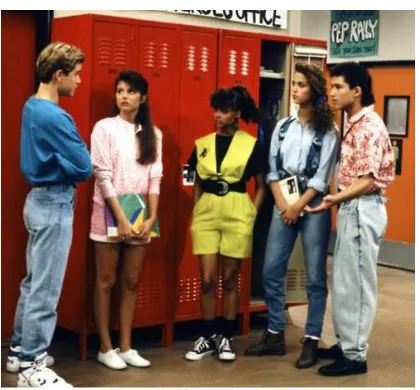
[image:11.612.202.412.419.614.2]I’ll explain. Bayside High is the setting for the NBC sitcom Saved by the Bell
(1989-1993), a show which follows a group of friends who get into wacky hijinks and, more
often than not, learn a lesson somewhere along the way. It’s an extremely by-the-numbers sitcom
by today’s standards, but it was a staple of syndication for a lot of people growing up in the 90s
(alongside Boy Meets World, Full House, and an ocean of other programs of the era, but we’ll
focus on Saved by the Bell for our purposes here). The colors and fashion are bright and abrasive,
but it’s the primary cast of characters that stand out to me as notably “mainstream.” The
following are descriptions of the primary cast of Saved by the Bell: Zach, an attractive
troublemaker, A.C. Slater, an attractive athlete, Kelley, an attractive cheerleader, Lisa, an
attractive rich fashionista, Jessie, an attractive A student, and Screech, a lame dork who everyone
laughs at. These may seem like reductive descriptions of these characters, but the writers of the
show were painting with particularly broad brushes, which did not provide much nuance or
character development.
Saved by the Bell is a show about the perceived ideals of the time: an aspirational group
of “cool” friends who the audience can either identify with or strive to become more like, while
having a “loser” like Screech in the mix to serve as our comic relief. SBTB feels hollow and
vapid because it isn’t trying to be anything outside of that, that isn’t it’s purpose. It set out to be
popular and easily consumed by it’s target audience, which is the goal of most produced media
in at least some respect. It achieved this by being colorful, attractive, and showing an idealized
version of a friend group, in an idealized version of a high school. Those were the elements I
However, I wanted to utilize that attitude and aesthetic to create a stark juxtaposition with my
lead character June, who didn’t feel like she fit into this kind of world.
Freaks and Geeks (1999-2000) was a show set in a high school in 1980, focusing on the
lives of Lindsay and Sam Weir, a sister and brother trying to find out who they are and where
they fit in. Prior to the start of the series Lindsay was a straight A student, part of the mathletes,
and as buttoned-up as they come. The show starts with her hanging out with the “freaks,” a
group of lovable burnouts and slackers who go against the grain of not just the majority of their
school, but against the kinds of teenagers we typically focus on in shows like this. The first shot
of the first episode makes this point exceptionally clear. We crane in towards the bleachers of a
football field where two classically attractive students are talking about their low-stakes
problems, before the camera dips down under the bleachers where we meet our primary cast of
anti-establishment slackers. The kids under the bleachers. It was a show that was made for the
people who related more to the “losers” on typical sitcoms than they did with the primary cast,
for people who felt lost and like they didn’t fit like they were supposed to. Lindsay was the
epitome of this: she actively rejected continuing to fill a mold she didn’t believe in and attempted
to discover who she was, who she was supposed to be. Having a character like that, in a setting
like the school in Saved by the Bell, gave the strong juxtaposition I needed for my film. Not just
Part 02: Visual Development and Influences
Color
I knew what I wanted the world and the characters to feel like, but how would I transfer
that into the visuals of the film? The first piece of that puzzle I knew was within the color palette.
Like Saved by the Bell, I wanted the world to have elements that were highly saturated and
oozing with primary colors, whereas June’s colors would be significantly more muted and would
lean more into earth tones. This includes June’s olive jacket, which was a direct reference to the
one Lindsay wears in every episode of Freaks and Geeks. That visual distinction between June
and the world around her was as important to me as the differences in their attitude and
personality. Whenever June was alone, the colors around her would closer mirror her own. This
is most notable in her bedroom, which I wanted to feel like a place she had some amount of
control over and could feel more comfortable and further highlight how often she is visually out
of place.
Style and Aesthetics
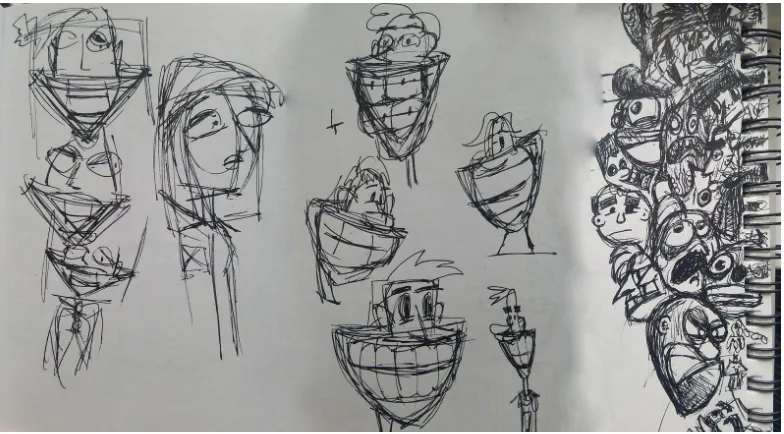
The visual aesthetic of the film is something I landed on fairly early in the process. The
film is 2D, hand animated and features thick, rough ink lines for the characters and
environmental elements. The final linework for the film was meant to evoke the rough, scratchy
sketches in the margins of my notebooks. It was important for me to see the rough edges. This
time in June’s life is messy and imprecise, so having perfectly smooth and consistent linework
wouldn’t have been thematically consistent with the mood I was trying to set. It needed visual
Fig 3. Samples of sketches from my thesis production notebooks.
That texture can also be seen in my approach to painting the background elements. I
wanted to paint the backgrounds with a tangible texture that would continue to reinforce the
mood. A massive influence for the heavily-textured style I incorporated was the illustrations in
the book Monster Mama (1993) from the artist Stephen Gammell, an illustrator also known for
his work on Scary Stories to Tell in the Dark (1981). Gammell’s illustrations have stuck with me
since my mom read the book to me as a kid. Every splatter of paint, every stroke of the brush,
every speck on the canvas was visible and added to the tone of the story. I knew I would be
painting my backgrounds digitally in Photoshop, but it was vital that I incorporate painterly
textures in my assets. I experimented with several brush types to find ones that would give me
the textured paint feeling I wanted. It wasn’t quite paint on canvas, but it proved effective. The
that felt unique and well suited for the film I wanted to make, as well as the feelings I wanted to
[image:16.612.122.490.158.384.2]evoke.
Fig 4, 5. Stephen Gammell illustrations from Monster Mama
Character Design
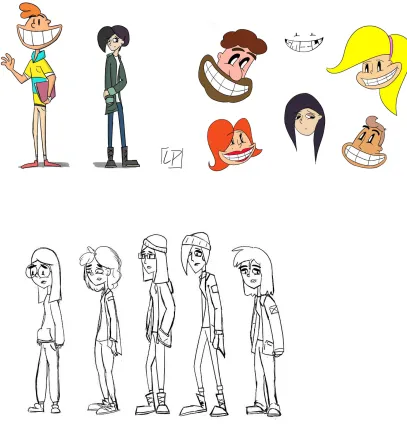
The students with the massive smiles was the first design element of the film that came
together, as it was the image that started the concept in the first place. It was how I could
visualize the internal struggle June was experiencing: she would be literally surrounded by
massive smiling faces and she would be the only one who didn’t have one. A world full of
characters with prominent, silhouette-breaking smiles was the idea nugget that became Smile, so
their design aesthetics were vital to nail down early. Conceptually it was simple enough, but in
The primary concern with extending a mouth far beyond the scope of a skull was this:
what do they look like from all angles? An important aspect for me was to always have their
silhouette be affected by their smile, meaning that on a profile and ¾ view of the characters, their
mouth would extend back behind their neck. I had to figure out how to quickly visualize their
head shapes in more basic construction terms so that I wouldn’t get hung up during the animation
process with worries about how to get their heads looking right. The answer was relatively
simple: to picture their heads as roughly the same shape as a spinning top. The top handle would
represent the top of the head, where the eyes, ears and nose would be placed, while the mouth
would occupy the general shape of the base. The bottom “rotation point” of this shape would be
where the head and neck connect. This approach to their design streamlined/unified their head
shapes: relatively thin “heads” that sit atop wide, round smiles. The silhouette of the smile read
from all angles which made it feel inescapable for June and reinforced that element of the
narrative. Once the smiles had been accounted for, designing the other students was fairly
straightforward. I kept their wardrobe simple and colorful and tried to stay true to the 90s
aesthetic I have been leaning so hard into. I ensured that, regardless of design, their smiles were
Fig 6-8. Early Character Designs.
June took a significantly more time to arrive at her final design. She needed to be a
character that was capable of broad and subtle emotional performances. She also needed to have
knew that if the smile was the prominent feature of the rest of the cast, June’s design needed to
be the personification of a frown. My first instinct of including that in her overall design was in
her hair: making her hair droop over her face would create a sort of umbrella effect in her
silhouette, acting as an opposite to the upturned smiles of everybody else. This created a few
problems in terms of animatability and making sure her design was viable from all angles. I had
to make sure I could evoke the elements I wanted to while still having a design that was practical
to animate.
A point of visual reference I used to sort out how to design and animate characters with
such severe design elements was the works of Jhonen Vasquez. He was responsible for the
creation of Invader Zim, an animated series that had a massive influence on my developing art
style as a kid. His designs are severely angular and often had elements like eyes and hair break
silhouette in order to be more present from all angles. Depending on the perspective different
pieces might be shifted in order to create the best silhouette, a practice I would utilize heavily in
this production. June’s massive, expressive eyes extend beyond her head from most angles, and
the placement of her hair was designed to be able to shift slightly to always create the most
Fig 9. Scene from Invader Zim.
The longest lingering design problem was that of the harness June constructs to pull her
mouth into a smile, breaking her silhouette to look more like everyone else. This was another
element where Vasquez’s work was an influence as he often deals with the cartoonishly
grotesque, and that was certainly a vibe I explored in designing the harness. I began by looking
into medical braces throughout history, both for the spine and for the mouth. I have never been
more thankful for medical advancement because some of the images I found were genuinely
unsettling. There was a lot of bare metal and leather straps holding people into unnatural
positions in an attempt to fix their teeth or their bones. Initially I had wanted the harness in Smile
to include a torso component as well, forcing June into an uncomfortably perfect posture, but
those designs proved too complicated to animate efficiently and the decision to only focus on the
headgear component was made. I knew from the outset I wanted to include hooks of some kind
as the thing that was pulling her mouth into the grim smile and experimented with several styles
of construction. The first iterations had hinged arms and pulley systems and were massive,
if I was to rig and animate the harness elements in After Effects to then composite onto the hand
[image:21.612.109.473.131.336.2]drawn animation, but this prospect proved inefficient and the decision was made to simplify.
Fig 10,11. Examples of historical medical/dental braces.
The next round of designs focused on creating a harness that was practical to animate in
TVPaint. The end result was based on a fairly simple tactic: a design that would easily fit in a
cylinder around June’s head, with structural elements that would match up to parts of June’s
design so that I would easily know where the harness needed to be in relation to June’s
positioning. The bottom of the harness would rest on June’s shoulders and extend a few inches
past them, with poles at the ends that extend upward. There would be a top support in the form of
a ring of metal, securing to the top of June’s head, and a half-ring of metal midway up the poles.
At the ends of that half-ring are the hooks that June attaches to the sides of her mouth, pulling
her mouth into a smile that mirrors the ones her peers possess. The harness was the cornerstone
of absurdity and unsettlement that was so important to the story.
Fig 8. Rough sketch of what would become the final harness design.
Telling the Right Story
Part 01: The Constant Elements
My primary goal with this film was to tell a story that I found important, so it would be
expected that I would go through several revisions before things were cemented. I expected this,
but I did not expect how long it would take me to line up all of the right pieces. Before I go into
how I got from the first treatment to the final film, I want to touch on the things that were
constants throughout the process:
1. The film would be centered on an unhappy teenage girl who exists in a
world where everyone but her has a massive, unwavering smile.
2. The film would take place in a high school in some capacity, loosely set in
3. Our protagonist would ride an old, broken bicycle.
4. She would eventually build a harness that would pull her mouth into a big
smile, mirroring the rest of the world.
5. The harness would collapse in a public setting.
6. She would take the pieces of her harness and use them to repair the
bicycle.
7. The final moment is a small, honest smile from our protagonist, finally
able to start the long journey to being okay.
These elements were constantly present in the narrative from the time I first proposed the
project up through my premiere screening. I have explained earlier in this document why the
high school setting was important, but not my reasoning for making the lead female, especially if
this is supposed to be a film so directly tied to my own personal experience and I am a male
identifying individual. This note will be more present in versions of the story I will describe
shortly, but there is significantly more pressure put on women to smile and be
pleasant/approachable than there is for men. The unfair societal expectation that women be
attractive and happy to have worth is so much more prevalent than any pressure that I feel as a
straight white man. I wanted the film’s feelings of not meeting expectations, both societal and
self-inflicted, to cover as wide a spectrum as possible, and making June a girl opened up more
opportunities for my film to feel relatable to a wider audience.
The broken bicycle and the smile harness would serve the same narrative purposes in all
same goes for your mental/physical health as a human being. In the beginning of the film June
stubbornly strains herself to ride her broken bike, making it a burden for herself which causes her
more strain and discomfort. Instead of taking the time to fix her bike, which would create a
tangible improvement to her life, she puts her energy into building a harness that gives the
illusion of an improved mental state while creating even more strain to herself. The harness
collapses, as faking your way to good mental health is not a sustainable way to live, and she
takes the pieces of that harness and uses that same energy to finally fix her bike. By the end of
the film June learns that you have to take care of yourself and your mental health if you want to
begin to truly get better.
The final note of the film, June’s small smile, was something of great contention in my
Thesis Preparation course and throughout production. It was repeatedly suggested that I make the
moment more grand to end the film, that they wanted June to be happy and having fun and not
sad anymore by the time credits rolled. This was not the film I wanted to make for many reasons.
Recovery does not happen overnight, it takes a long time and a lot of work to start truly
becoming okay. This is especially true with people living with atypical brain chemistry. You
don’t suddenly wake up one morning and no longer have Depression, it’s something you have to
learn to deal with in a healthy way and it can take years to develop those habits. This was never
meant to be a film about how to be happy, it was always about understanding that you need to
make efforts to build yourself up. That the road to being okay means taking the agency that you
do have and using that power to better your situation, however you can. Often that will be small
things, but those small things still matter. This is why the small, quiet ending of my film was so
Part 02: Slimming Down
The version of Smile that was in my thesis proposal took place over three days, while the
finished film takes place within a single day. I think this particular fact is representative of the
major changes that happened between those two versions of the story: I started out attempting to
cram far too much story into the film. The early versions had June creating multiple versions of a
smile-forcing device, going to school, having it fail, and trying something else the next day. At
the time I wanted the build up to the full monstrous harness to be more gradual and, ultimately,
shocking. She started small using tape, then tried stuffing pencils in her cheeks, and when both
proved ineffective she resorted to a large metal contraption. A version of this progression does
exist in the finished film, when June is eating Chinese food in her room and uses the chopsticks
to force a smile in the mirror. This one scene (which was also present in the multi-day versions
of the story) serves the same purpose of set up without bloating the film’s timeline.
Another cause of bloat in early versions was the amount of exposition I tried to fill the
beginning of the film with. The first offender of this was the original opening scene: June in a
meeting with the school guidance counselor. The film opened in the counseling office where
June had gone to try to figure out why she wasn’t happy, and the only advice the counselor had
for her was “Well, just smile through it and everything will be alright!” before giving her a
button that just said the word “smile.” I liked this scene in theory for a lot of reasons. I saw value
in establishing that June was making some amount of effort to understand what she was feeling,
experience with high frequency and something I wanted to highlight. Additionally, this version
included a male student who I used to bait-and-switch a romantic subplot, only to directly deny it
at the end when June realizes she needs to fix herself to be a better person on her own timeline. If
there is one thing I regret losing so much of from this initial version of the story, it’s the more
explicit feminist components. As mentioned earlier, I think addressing cultural expectations of
happiness affects women much more than it does myself, and it’s an element I wanted to play a
larger role in this film. Unfortunately those aspects became less prevalent as the story revisions
continued and my focus shifted to massaging the core elements to play as intended.
One of the larger issues that this story had from its inception was the question of if June
has friends or not. It was important to me that June not be a social outcast, or bullied, or even
generally disliked by the happier students. Her family being loving and supportive was also vital
to prevent any misreading of her situation. I wanted June’s struggles to not come from her
surroundings, but within herself. I have friends, I have a good family, and I still struggle with
Depression because having those things in your life does not fix your brain chemistry. I didn’t
want the film to present ideas that I didn’t believe in myself, so just as the guidance counselor
was cut, June’s friend Becky came into the picture. Initially she had a lot to say and spent
significant screen time trying to get June out of her shell, but that too was severely cut back for
being too expository and taking up too much of the film’s focus. She remains in the opening
Part 03: Animatic Night and the Great Rewrite
As part of the thesis process, we are required to screen an in-progress animatic of our
film as part of a public critique day for SOFA faculty and students. The goal of this screening is
to make sure your film is functioning as intended and to gather feedback from people who are
not as familiar with your project as you and your advisor. My desire for this screening was to
gauge if the emotional throughline of my film was reaching the audience. In short, it was not.
Nobody knew why she was sad, or if she was just being an angsty teen for no reason. This was
my biggest concern, so I asked why they felt that way and what could be done to highlight my
intended premise. I got a few answers that were of great value when it came to the restructuring
that would follow.
The audience felt that June was being more angsty and moody than sad or lonely, and
looking back at the version of the animatic they saw I can see why. This version involved Becky
excitedly planning a birthday party for June and June being very passive about the whole
situation. It came off more as June being rude and ungrateful rather than her feeling
uncomfortable being in the spotlight, the latter being my intention. They also sighted the dinner
scene June has with her father and how they didn’t know why she was being so cold to her
clearly loving family. I intended to make his enthusiasm for the mediocre Chinese food feel like
another source of overwhelming positivity that June can’t relate to, but the scene reads as a
moody brat ignoring her dad. I also received plenty of feedback for making my compositions
more clear and ways to tighten the pacing of some scenes, but it was the notes on the story and
Over the next two months, up through December of 2017, I would constantly be
re-writing and making adjustments to scenes and dialogue. This was putting me behind schedule,
but it was critical time that needed to be invested in polishing the story of Smile above all else
(though I did start animation on the scenes I knew I would keep). It was in this time that a lot of
small tweaks and changes would be made, but most importantly, it was when the karaoke party
was formed. This was the final piece of the film that was missing: what situation or event would
be the thing that made June go to such extreme lengths to seem happy? A few ideas were
experimented with, including June’s birthday party which was the version in the animatic that
screened, but none felt right. When my advisor suggested something like a karaoke party, it
clicked immediately. It was truly the perfect solution, for one reason in particular: it was a
performance. I’ve written the phrase “performative joy” earlier in this document and have cited it
as something I wanted to highlight: the act of presenting a facade of happiness for the benefit of
those around you. What better way to drive that point home than to have June sing a cheery
karaoke song through the forced smile of her harness, on a stage in front of all of those smiling
faces. It created the perfect crescendo to the film: a moment where June’s misplaced efforts
could fall apart in a spectacular fashion and force her to realize that this was not the road to being
happy. There would still be a few shots and sequences to be tweaked, but once the karaoke
Production:Making Things Happen
Part 01: Music, Actors, and the Uncertainty of Collaboration
Prior to my animatic screening I attended an artists call meeting, an event where
filmmakers and musicians from the area (mostly schools) present their work and try to find
collaborators. I have traditionally done my own music and sound design for the films I have
made, but I knew that my time would be spread thin with the rest of production and it would be a
good idea to find a collaborator to shoulder some of the load, as well as contributing elements I
might not otherwise have considered. At this meeting I met Marc Laroussini, an Eastman student
who expressed interest in working with me on Smile. I had actually met Marc a few times
previously, as we shared a few mutual friends, and I was also familiar with the work he was
capable of creating, so I was thankful to find someone so well-fitting to collaborate with on this
film. Additionally, he expressed interest not just in composing music, but in doing sound design
as well. It was a field he wanted more experience working on and it would mean that all audio
issues would be in his hands and out of mine, allowing me to focus on the animation and the
writing.
We met a few times that fall to discuss the project and I kept him updated on the changes
that were happening on my end. We both wanted to keep it relatively grounded, using natural
sounds primarily to make up the soundscape. He had the idea of using construction sounds to
create the “music” that plays during the harness building sequence. Like myself, he was excited
perform in a piano bar, but really leaning into the “happy” messaging to fit the moment. June
would pick the cheesiest, happiest sounding song to sing to prove that she was truly happy, and
Marc was eager to take on that challenge. My favorite touch of the song is the slide whistle, a
surprise that wasn’t in until the final version. It brought this childlike playfulness into a scene
where a girl wearing a horrible smile harness sings through gritted teeth and gave the scene an
elevated level of absurdity that it needed.
Marc also was involved with the Eastman theater productions and had an in with a
number of actors who were interesting in working on the project. I didn’t get a chance to meet
these actors until the first day of dialogue recording, so I was tremendously nervous to see if they
would be a good fit. I trusted Marc as he knew what I wanted from the characters and what the
tone of the film was, but it was still a potential problem if they could not deliver what was
needed. Thankfully the trust was well placed and the actors were fantastic, especially Meredith,
the actress who played June. We had three recording days all together, one with the full cast and
two more with just Meredith to get the song and the rest of her dialogue. There were some
scheduling issues that cut out record times shorter than I would have liked, but everything we
need we were able to get with relative ease.
The only problems that arose on the audio end of production was the consistency of
communication between myself and Marc. Marc was involved in a theatrical production and was
relatively unreachable for long stretches of our working time together. Weeks would go by and
without hearing from him or getting an updated audio track, and as May came closer I became
more concerned. I had scheduled, and we had agreed on, a final delivery date for the total audio
file from him the day before I had to upload my film to the RIT servers. This caused a massive
amount of stress for me: the whole reason I looked into working with someone was so that things
wouldn’t be coming together at the very last minute. However, that being said, I’m more than
happy with the work he was able to give me. I can have problems with what the situation was,
but I don’t have any with the end result, and at the end of the day it was a successful working
relationship.
Part 02: Production Pipeline
The production for this film was fairly straightforward. Backgrounds would be drawn and
painted in Photoshop with each “layer” of depth broken out into separate pieces so that it could
be composited in After Effects, using the 3D camera functionality to create depth in the scenes. I
would paint each element a flat color on one layer, then on another layer paint with a textured
brush to achieve that more tactile feeling I wanted the environments to have. Then it was a
simple matter of exporting out every element of each shot as a .png so it would be ready for
compositing later. Since I would be placing these elements in various proximity to the After
Effects camera, it was important that all Photoshop assets were created at an extremely high
resolution to ensure there would be no pixelation of the artwork. I imported the linework for the
backgrounds into TVPaint so I would know where in the frame the characters needed to be in
order to line up correctly.
TVPaint is the program where all of my character animation was hand generated, frame
project file, which was a massive help during my rewriting process. TVPaint allows the user to
hide individual scenes so they do not playback when viewing the whole project. After I got
feedback from my animatic screening and knew what scenes I had to scrap or rework, I simply
hid those scenes from playback and inserted new ones to take their place. I wanted to make sure I
kept a record of everything, just in case I needed to look back at something from a few weeks or
months prior. This is also why every day I worked on the animation I saved it as a new version
of the file with that days date in the file name. All of this would be backed up on my hard drive
and cloud storage so that in the event any file got corrupted the most I could ever lose is one days
work..
I animated my characters in a traditional pose-to-pose fashion for 2D animation. I drew
the key poses of the action and timed them to fit the pace of the shot, then drew the breakdown
poses to solidify the timing of the action. There was definitely a lot of pushing and pulling the
timing of these frames to get them feeling right. I tried to keep these frames rough and loose so
as to not waste too much time on images I’d only be re-drawing and then inking over. This was
easier said than done for me, especially in the early stages of this animation while I was still
getting used to drawing the character. Because of this I began to fall behind in my production
schedule. I addressed this in a few ways. First, I made more effort to be more loose with my
rough animation. This was the biggest time sink for me during that period and was the most
important to get a handle on. Additionally I enlisted help from others to assist me in my inking
and coloring process so that I could be getting work done on multiple areas simultaneously.
Asking anyone for help is not one of my strengths, but it was a key factor in getting back on
My inking and coloring was also done directly in TVPaint. For the ink I used one of the
programs built in brushes that had the kind of toothiness to the line quality that I was looking for.
Anyone who assisted me on inking was given that brush and all of the settings I used to keep
things consistent across the board. Coloring was done with the special CTG layers in TVPaint,
which made the process relatively fast and efficient. Color was the one aspect of this production
that didn’t take longer than I anticipated.
Rough animation and inking both took significantly more time than I can originally
accounted for in my production timeline. Part of this is because of the additional time I took in
rewriting the story, and part of it was me overestimating the speed in which I could achieve the
quality I expected from this film. It was too important a project to me to settle for anything I saw
as less than my best. So I pushed myself harder, worked longer days, and did everything I could
to make up the difference.
Part 03: Building the Bike
June’s bicycle was built from assets made in Photoshop and assembled in After Effects as
a rig. This was done by parenting the different elements together in a standard hierarchy so that
things would behave naturally. The pedals linked to the gears, which linked to the frame, etc.
The wrinkle came in needing to make a version of the rig with the uneven back tire. This would
be parented together in the same fashion but required going frame by frame to keep the bike
“flat” on the ground. The end result of the broken bike felt jerky and awkward in all the ways it
animation on those shots. Slightly more bounce or sway to accentuate the comparative
smoothness now that it’s fixed. Still, I’m happy I didn’t resort to hand animate a broken bicycle
and was able to arrive at this solution
Part 04: Post Production
Once a shot was finished with animation, ink, and color, the character layers would be
exported as an .mov with transparency so that it could be composited with the background
elements in After Effects. Once all of the pieces were in AE I would set them in a 3D space so I
could make use of the program’s camera and lighting tools. Placing each asset layer at varying
distances from the camera allows it to simulate realistic depth of field and parallax effects. This
was something I had done on several projects previously, so there were no unexpected
complications to most of the shots of this film.
This was my first project where I attempted to use After Effects’ built in lights to add
shading and shadow to my characters. I did some experiments in pre-production to see if it
would be a suitable alternative to painting my shadows in TVPaint, which would add a whole
extra layer of work to every frame of the coloring process. Thankfully I was able to achieve a
soft, gradual shadow by using the edges of the AE spot light tool. I was also able to manually
exclude layers from being affected by the light tool, so that each character was only being
affected by the light I wanted them to be influenced with. Aside from the camera and the light
layer of visual texture that complimented the paint strokes of the backgrounds and the heavy ink
of the characters. A few shots, mostly in the karaoke sequence, had some extra lighting effects to
heighten the mood, but none of the compositing was overly complicated or was too much of a
struggle to execute.
The Additional Challenges of Making it Personal
When I brought this film concept to my advisor as something I was interested in making,
she told me to make sure this was really something I could work on for the next year of my life.
Working on something personal and dealing with a heavy personal subject matter, even when it’s
exaggerated to the point of absurdity, can take a heavy toll. Animation is already an artform that
requires a massive time and energy commitment to execute well, and a year long animation
would be the longest I’ve worked on a single project to date. She wanted to make sure that I was
going to be prepared to handle the work and the subject before I locked myself into it. I knew I
wanted to make an honest film about what it feels like to be unhappy in the ways I have been for
most of my life.
I wrote the following in a production blog on January 29, 2018:
“ I underestimated how difficult it would become to work on this
film. This was especially true when it wasn’t being received the
way I had intended. That’s one of the big problems with making a
film that is a representation of who you are: when it doesn’t go well
There was a period of time between the fall and spring semesters where I was in an
exceptionally poor mental state. This wasn’t purely a result of the film, but the production stress
was definitely a factor. If I was going to have the mental and physical energy to finish the work,
I was going to need to take some additional preventative steps to keep myself going. The thing
that did the most good was the kind of action that was at the center of the film: taking the time to
take care of myself. There was one day a week where after my work obligations I wouldn’t touch
my thesis at all, so I could gain some mental distance from it. I’d usually run errands that day,
but once I was home or out with friends I’d try to not let the film live at the front of my attention
for that moment. This allowed me to come back the next day with higher energy and the ability
to work through the next week. As this film and its production is so rooted in my own struggles
with mental health, it felt appropriate to make note of this time of the production and how I dealt
with it in the moment.
Reception
The film screened at RIT in a theater full of my peers, teachers, and friends. I got to
campus two hours before the first screening of the day because I was already awake and I
couldn’t just sit at home waiting. Eventually my film was up and the reception was positive,
though not exactly what I expected. The most surprising thing to me was how many people
laughed. I was very unsure of how the film would read in a crowd of people who knew who I
was, but didn’t really know the film I was making. If I was going to categorize Smile in a genre
the closest thing I could come up with would be dark comedy, but I didn’t see it as “haha” funny
as much as I saw it as an absurdist look at the lengths someone can go to address their
was relieved that it didn’t come off as a heavy handed melodrama about sadness. After the
credits rolled I approached the podium to deliver my artist statement. My written statement
talked about a lot of what I’ve written in this document: how unhappiness is a hard thing for
people to relate to, how performative joy is a toxic notion and that the only real solution to
dealing with an issue is to actually deal with it. My last note was that a small step forward is still
movement, and that at the end of the day, any movement forward is good.
After the statement was delivered I fielded some comments from the audience. The
feedback was overwhelmingly positive, which was a relief. A faculty member called it my best
work by a long shot, which was great to hear. A few students talked about how well realized
June’s performance was and how unsettling the smiling people felt. An old childhood friend of
mine who made the trip told everyone about a school assembly where they handed out big fake
smiles for all of the students and how, even as a kid, I was massively irritated by the notion. I
had absolutely forgotten about this event, but it sounded like something young me would have a
problem with. If nothing else, that moment reminded me that I have been wanting to tell this
story and express these feelings for longer than I can recall. Eventually the light came on and I
left the stage, thanking everybody one last time.
The film was a success for the audience, but more importantly, it felt like a success to
myself. I did what I had set out to do: make a film that told a story I felt was important for me to
tell. At the time it was the best animation I had done from a technical standpoint, the best designs
I have created, and the best execution on a story that I wrote. A few weeks later I got notification
had done. In the months since completion I have submitted Smile to over twenty film and
animation festivals. To date, it has not been accepted into any. This is a point of frustration for
me, but ultimately one that I have elected to move past. I know I made the film I wanted to
make, and I know that I’m happy with it as it is.
Final Thoughts
I started making films when I was twelve. My English teacher would allow me to screen
them for the class on Fridays and after showing something I made to an audience for the first
time, I knew it was all I wanted to do. At this point I’ve spent a long time doing exactly that, in
various mediums and levels of quality. The root was always in telling stories. Okay, sometimes
the root was in just trying to get them to laugh, but overall it was in telling stories. Stories are the
things I can remember. I don’t remember every day or moment of my life, but I remember the
stories. The events that were important or different or funny enough to tell someone who wasn’t
there so they’d have the chance to experience it too, albeit in a different way. But though all the
films I’ve made and the stories I’ve tried to tell, Smile is the most personal by a wide margin. It
is the most honest to who I am and how I have felt/still feel about my place in the world. And
that’s the risk in creating something that is, ultimately, deeply tied to yourself: it can be easy to
tie up your self-worth with the reception of the film.
I came to RIT and to this program at a time in my life in which I was at an impasse.
Either I was going to stay where I was and drown, or I was going to try to move forward. I
when I did, but it was no different than June fixing her bike in the end. It was a conscious effort
to improve my situation through action. If Smile does anything, hopefully it’ll help someone else
realize that’s always a possibility. Progressing is a process and I hope that I never stop
Smile
A 2D Animated Thesis Film
Luke Polito
For MFA in Film and Animation School of Film and Animation
Rochester Institute of Technology, Rochester New York April, 2016
Approved for Submission by:
Logline:
Surrounded by smiles and bad advice, an unhappy teen constructs a device to make her
seem like everyone else.
Treatment:
June, an awkward high school girl, sits uncomfortably in the office of the high school
counselor. He asks how she’s been doing and she timidly responds, saying that she feels
completely out of place and unhappy. Her counselor, and everything in his office, is disgustingly
positive and cheery and his face is pulled into an unnaturally large smile. He tells her everything
is fine and that she should just smile more. He pins a button on her jacket that says “Smile.”
June leaves the office and walks through her high school hallway, passing by a lot of
bright, smiling people and motivational posters with sayings like “Achieve!” and “Don’t Forget
Your Smile!” written in large letters. Other students and teachers exchange pleasant greetings,
but June awkwardly sulks through the hallway and exits the school. She unlocks her rusty old
bike from a bike rack of perfect, clean bikes. As she does the kickstand snaps off. She looks down
at it for a moment before pedaling away, leaving the kickstand behind.
That night, she lays in her bedroom and stares up at the ceiling. Her mom knocks at the
door and tells her dinner is almost ready. June tells her she isn’t hungry. Mom tells her she likes
her button and goes back downstairs to finish dinner. June takes off the button and looks at it.
“Smile,” in big letters.
She looks at herself in the mirror and attempts to smile, but it quickly fades into an
awkward sneer, then back to a frown. She looks around her room and reaches for a bin of art
uncomfortable smile. She looks into the mirror and attempts to flaunt it. Unsatisfied, she looks
over to the paint in her art supply bin.
The next day at school, she walks through the hallway with her taped-up grin and cheeks
painted bright pink. As students greet her she tries her best to reciprocate, but is clearly very
uncomfortable. A cute dude stops at her locker to say she looks really nice today. June is startled
and tries to respond, but the tape forcing her smile snaps loose. The guy asks if something is
wrong. She puts her head down, closes her locker, and hurries away.
That night she enters her bedroom with her arms full of construction supplies (wood,
wire, hooks, etc) and throws them onto her bed. She unfurls a blueprint for a kind of massive
harness, ties her hair back, and gets to work. From outside of her house her light is the only one
on in the neighborhood, flashing occasionally as the sounds of her building echo through the
suburbs.
She arrives outside of her school the next morning. The harness is a true monstrosity, it
forces her spine in a perfect, uncomfortable posture and an elaborate series of hooks and pulleys
shape her face into an unnatural grin. It creaks and jangles as she makes her way into the school,
clearly struggling with how top-heavy this contraption is.
She walks through the hallway and tries to greet everyone, but the other people are
(understandably) a bit uneasy around her and her harness. As she struggles to use her locker the
cute guy from before approaches her and asks if she’s okay. June tells him that she’s never been
better, through her mechanical smile. She closes her locker and a part of her harness gets
caught. She struggles to free herself, assuring the guy that she’s totally fine and everything is
great. The harness breaks apart and clatters to the floor around her. She stands alone in the
hallway and looks at the crowd of people watching her. She slumps back into her normal, sad
She picks up the pieces of her harness and puts them into her (overflowing) bookbag.
The cute guy asks if she needs a hand. She says she’s fine. He asks if she’s sure. June puts the
last piece of her harness into her bag, stands up, and walks away. She walks through the hallway,
still full of people with massive smiles and cheery colors. June puts up her hoodie and hurries
out of the building.
She gets to the bike rack and unlocks her bike in a hurry. She gets on the bike but after a
few feet the rusty old bike collapses and falls apart. She hits the ground, her backpack bursts
open and the pieces of her harness scatter around her. June picks herself up and looks at the
damage to her bike, then to the pieces of her harness. She pulls her hair back and tinkers for a
bit, eventually revealing that she has fixed her bike with pieces of her harness. She looks at her
handiwork, smiles slightly, and rides down the road away from the school. Her bike rides
smoothly.
Rationale:
When you are unhappy for an extended period of time, the happiness of others becomes
an entirely unrelatable trait. It becomes impossible to imagine what it feels like to feel good, to
feel “normal”, which causes even more feelings of isolation and loneliness. Everyone else seems
like a more complete person and even the good fortune of your friends becomes an
uncomfortably unpleasant event. Smile is a film about capturing what it feels like to see
everyone and everything around you as everything you are not: happy, complete, and seemingly
able to live a normal and fulfilling life. The film is set in a bright and over saturated high school
to add to the overwhelming nature of feeling bombarded by the perceived perfection of those
Being told to “smile more” is something that people who aren’t smiling hear a lot. Not
only is it terrible advice to give someone with depression, or even someone just having a bad
day, but it also brings about the idea that their job is to just smile, be pleasant, and set aside
their actual feelings. This isn’t a film about having depression, it’s about feeling like who you are
is less than what you should be. It’s about feeling like you’re at 15% when everyone else is at 95.
It’s about feeling like your best isn’t good enough, for yourself or anybody else. These are
concepts that are familiar to a lot of people, for a lot of reasons, and one of my goals for the film
is to capture these feelings in such a way so that it can be relatable to anybody who can relate,
even if for completely different reasons than my own. The film ends on a small moment of
personal satisfaction. June’s life isn’t suddenly perfect, she isn’t suddenly a happy person.
Instead she learns that her effort is better spent affecting the things she can improve, rather than
the things outside of her control.
Vision:
As a 2D animated film,June will be clearly different from those around her through incorporating the emotional traits of characters in their design. She sees everyone else not only
as being happy, but so much so that it’s their only feature. They exist as shining, beautifully
smiling people who only exist to make her feel worse (in her perception), and their designs will
reflect that both in shape and color. Their smiles stretch well past their faces, their hair shines
brightly, their clothes pop with vibrant colors. June herself will be very drab and subdued by
comparison, her silhouette tight and compressed to avoid the gaze of those around her.
However, when she creates her smiling solutions, she will go through drastic physical distortions
Her form will be stretched and broken, the sharp angles and points of the harness will
emphasise her pained effort to appear “normal.” The harness itself is going to have a lot of
weight to it, making believable character animation critical to the success of Smile. It is going to be a very animation-intensive film and I will be doing extensive tests to ensure that things will
go smoothly during production. Though I will be animating primarily in TVPaint, I will also be
incorporating After Effect animation to assist in making sure the elements of the harness move
Budget:
Item Estimated Cost
PRODUCTION
Laptop $1,000
TVPaint License $600
Adobe CC IK
Wacom Intuos/Cintiq IK
Animation IK
POST PRODUCTION
Music $300
Voice Actors (3) $300
Sound Mix $100
Compositing IK
Festival Fees $400
Bibliography
Saved by the Bell. Created by Sam Bobrick, NBC, 1989-1993.
Freaks and Geeks. Created by Paul Feig, NBC, 1999-2000.
Rosenberg, Liz, and Stephen Gammell. Monster Mama. Philomel, 1993.