i
FORMULATION DEVELOPMENT AND EVALUATION OF ETORICOXIB ORAL DISINTEGRATION TABLET BY USING ION EXCHANGE RESIN
COMPLEXATION TECHNIQUE Dissertation submitted to
THE TAMILNADU Dr. M.G.R. MEDICAL UNIVERSITY,
CHENNAI-600032
In partial fulfillment of the requirements for the award of the degree of
MASTER OF PHARMACY IN
PHARMACEUTICS
Submitted By R.SUBISH
(REG NO: 261510405)
Under the guidance of
Dr.S.R.SENTHILKUMAR, M.Pharm.,Ph.D., Associate Professor
DEPARTMENT OF PHARMACEUTICS
ARULMIGU KALASALINGAM COLLEGE OF PHARMACY
ANAND NAGAR, KRISHNANKOIL – 626 126
Dr.N.Venkateshan. M.Pharm., PhD.,
Principal
Arulmigu Kalasalingam College of Pharmacy
Anand Nagar, Krishnankoil-626 126
CERTIFICATE
This is to certify that the investigation described in the dissertation
entitled
“
Formulation development and evaluation of etoricoxib oral
disintegration tablet by using ion exchange resin complexation techniqu
e
”
submitted by Reg.No:261510405 was carried out in the Department of
Pharmaceutics,
Arulmigu
Kalasalingam
College
of
Pharmacy,
AnandNagar,Krishnankoil-626 126, which is affiliated to The Tamil Nadu Dr.
M.G.R. Medical University, Chennai, under the supervision and guidance of
Dr.S.R.SENTHILKUMAR,M.Pharm.Ph.D.,
Department of Pharmaceutics
for the partial fulfillment of degree of MASTER OF PHARMACY in
PHARMACEUTICS.
Place:Krishnankoil Dr.N.VENKATESHAN. M.Pharm., PhD.,
iii
Dr.S.R.SENTHILKUMAR M.Pharm. Ph.D
.,
Department of Pharmaceutics
Arulmigu Kalasalingam College of Pharmacy
Anand Nagar, Krishnankoil-626 126
CERTIFICATE
This is to certify that this investigation described in the dissertation
entitled
“
FORMULATION DEVELOPMENT AND EVALUATION OF
ETORICOXIB ORAL DISINTEGRATION TABLET BY USING ION
EXCHANGE RESIN COMPLEXATION TECHNIQUE
”
submitted by
Reg.No:261510405
was carried out in the Department of Pharmaceutics,
Arulmigu Kalasalingam College of Pharmacy, AnandNagar,Krishnankoil-626
126, which is affiliated to The Tamil Nadu Dr. M.G.R. Medical University,
Chennai, under my supervision and guidance for the partial fulfillment of
degree of MASTER OF PHARMACY in PHARMACEUTICS.
EVALUATION CERTIFICATE
This is to certify that the dissertation work entitled
“
FORMULATION
DEVELOPMENT
AND
EVALUATION
OF
ETORICOXIB
ORAL
DISINTEGRATION TABLET BY USING ION EXCHANGE RESIN
COMPLEXATION TECHNIQUE
”
submitted by
Reg.No:261510405
to The Tamil
Nadu Dr. M.G.R. Medical University, Chennai, in partial fulfillment of the
requirements for the award of degree of MASTER OF PHARMACY in
PHARMACEUTICS were evaluated by
1.EXAMINER 2. EXAMINER
Date:
Centre
:
Arulmigu Kalasalingam College of Pharmacy
v
ACKNOWLEDGEMENT
“
Talent and capabilities are of course necessary but opportunities and right
guidance is two very important backups without which anyone can climb the
ladder to success
”.
I would like to express our thanks to the founder of our institution
“
kalvivallal Thiru. T. kalasalingam, B.com
for providing us required facilities
for extending a rich. And also I convey thank
‟
llaiyavallal”
Dr.K.Sridharan,
Ph.D.,
dynamic
Vice
Presidents
Dr.S.Shasianand,
Ph.D.,
Mr.S.Arjunkalasalingam, M.S.,
and management of our institution for providing
us necessary infrastructure.
I take a step forward to express my deep regards to
Dr.N.Venkateshan
M.Pharm., PhD
.,
Principal, Arulmigu Kalasalingam College of Pharmacy for this
enduring support.
I express my gratitude to my guide
Dr.S.R.Senthilkumar, M.Pharm,
Ph.D
.,
Department of Pharmaceuticsfor this valuable guidance.
I express my gratitude to
Dr.Ramprasad, M.Pharm, Ph.D.,
Department of
Pharmaceutics, Arulmigu Kalasalingam College of Pharmacy for their guidance
and constant encouragement during the course of study.
We are deem it a great pleasure to place on record our deep sense of
Pandiyan, M.Pharm., Department of Chemistry
the valuable guidance during
the course of study.
I warmly acknowledge
Mr.M.Murugan, M.pharm, Head of the
department of Formulation Research and Development
,
Mr.T.Stephen
M.pharm, M.Tech Biopharmaceutics, Mr.Henry M.pharm, Mrs.Kanchana
M.pharm,
department of formulation research and development Saimirra
Innopharm pvt.ltd, Chennai. For this inputs throughout the process of this research
and they not only served as guide but also encouraged and challenged me
throughout my academic program. They never accepted less than my best efforts. I
thank them. They exchanged their interesting ideas, thoughts & made this project
easy and accurate.
I extend a special thanks to non-teaching staff members of Arulmigu
Kalasalingam College of pharmacy specially Mr.Laxmana Gurusamy and other for
their help and co-operation.my enormous debt of gratitude can hardly to colleagues
and my juniors. My friends provided many stylistic suggestions and sustentative
challenges to help me improve my presentations and clarify my aruguments. I am
heartily thankful to my best friends Mr.M.Thirupathi Mr.P.Vijay nagendiran
Mr.R.Sasikumar,
Mr.K.Rajkumar,
T.B.Eaknath
babu,
Mr.D.Sivakumar,
Mr.R.Hari, R.Paul McGrath.
vii
INDEX
S NO. CONTENT PAGE
NUMBER
1 INTRODUCTION 1
2 LITERATURE REVIEW 42
3 DRUG PROFILE 61
4 EXCIPIENTS PROFILE 73
5 DISEASES PROFILE 83
6 AIM AND OBJECTIVES 93
7 MATERIAL METHOD 95
8 RESULT AND DISCUSSION 110
9 SUMMARY AND CONCLUSION 128
S no. Abbreviation Full form
1 ODTs Orally Disintegrating Tablets
2 CDER Center for Drug Evaluation and Research
3 GIT gastrointestinal tract
4 FDTs Fast dissolving tablet
5 FDA's Food and Drug Administration's
6 WHO World health organization
7 MDTs Mouth dissolving tablets
8 WOW without water’
9 NDDSs novel drug-delivery systems
10 COX-1 Cyclo oxygenase enzyme -1
11 COX-2 Cyclo oxygenase enzyme -2
12 HPC Hydrox propyl cellulose
13 HPMC Hydroxyl propyl methyl cellulose
14 NSAIDs Non steroid anti-inflammatory drugs
15 CYP 450 cytochrome P450
16 EXB Etoricoxib
19 DSC differential scanning calorimeter
20 UV Ultra violet
21 AA arachidonic acid
22 TxA Thromboxane
23 PG prostaglandin
24 FAP familial adenomatous polyposis
25 LOD Loss on drying
26 mm Mille meter
27 μm Micro metre
28 DRC Drug resin complex
29 EDI Etoricoxib dispersion improvement
30 ETI Etoricoxib taste improvement
31 RH Room humidity
INTRODUCTION
Over the past three decades, orally disintegrating tablets (ODTs) have gained much
attention as a preferred alternative to conventional oral dosage forms such as tablets and
capsules. An ODT is a solid dosage form that disintegrates and dissolves in the mouth (either or
beneath the tongue or in the buccal cavity) without water within 60 seconds or less [1]. The US
Food and Drug Administration Center for Drug Evaluation and Research (CDER) defines in
the Orange Book an ODT as "A solid dosage form containing medicinal substances, which
disintegrates rapidly, usually within a matter of seconds, when placed upon the tongue [2]. The
European Pharmacopoeia however defines a similar term; orally disperse,as a tablet that can be
placed in the mouth where it disperses rapidly before swallowing[3].
These tablets are distinguished from conventional sublingual tablets, lozenges, and buccal
tablets which require more than a minute to dissolve in the mouth. In the literature, ODTs also
are called orally disintegrating, orally disperse, mouth-dissolving, quick-dissolve, fast-melt, and
rapid-disintegrating tablets and freeze-dried wafers[4].
Orally disintegration tablet release drug in the mouth for absorption through local
oromucosal tissues and through pre-gastric (e.g.,oral cavity, pharynx, and esophagus), gastric
(i.e., stomach), and post-gastric (e.g.,small and large intestines) segments of the gastrointestinal
tract [5]. In this article, the term conventional oral dosage forms refers to tablets and capsules that
must be swallowed with water for dissolution, release, and absorption of the drug in the stomach
and GIT distal sites[6].
For the past one decade, there has been an enhanced demand for more patient-friendly
and compliant dosage forms [7]. As a result, the demand for developing new technologies has been increasing annually. Since the development cost of a new drug molecule is very high,
efforts are now being made by pharmaceutical companies to focus on the development of new
drug dosage forms for existing drugs with improved safety and efficacy together with reduced
dosing frequency, and the production of more cost effective dosage forms[8].
For most therapeutic agents used to produce systemic effects, the oral route still
a
g
e
2
a
g
e
2
major portion of drug delivery systems that are currently available. However, many patient
groups such as the elderly, children, and patients who are mentally retarded, uncooperative,
nauseated, or on reduced liquid-intake/diets have difficulties swallowing these dosage forms.
Those who are traveling or have little access to water are similarly affected[10].
To fulfill these medical needs, pharmaceutical technologists have developed a novel oral
dosage form known as Orally Disintegrating Tablets (ODTs) which disintegrate rapidly in saliva,
usually in a matter of seconds, without the need to take it water [11]. Drug dissolution and absorption as well as onset of clinical effect and drug bioavailability may be significantly greater
than those observed from conventional dosage forms [12]. Although chewable tablets have been on the market for some time, they are not the same as the new ODTs. Patients for whom chewing
is difficult or painful can use these new tablets easily. ODTs can be used easily in children who
have lost their primary teeth but do not have full use of their permanent teeth[13].
Recent market studies indicate that more than half of the patient population prefers ODTs
to other dosage forms and most consumers would ask their doctors for ODTs (70%), purchase
ODTs (70%), or prefer ODTs to regular tablets or liquids (>80%)[14].
Orally disintegration tablet products have been developed for numerous indications
ranging from migraines (for which rapid onset of action is important) to mental illness (for which
patient compliance is important for treating chronic indications such as depression and
schizophrenia)[15].
A freeze-dried wafer:
Is a quick-dissolving, thin matrix that contains a medicinal agent that does not need water
for swallowing. This fragile dosage form requires unit-dose packaging to ensure physical
stability. The wafer disintegrates instantaneously in the oral cavity and releases drug, which
dissolves or disperses in the saliva.[16] The saliva is swallowed and the drug is absorbed across the gastrointestinal tract (GIT). An orally disintegrating tablet (ODT) is a solid dosage form that
contains medicinal substances and disintegrates rapidly (within seconds) without water when
placed on the tongue. The drug is released, dissolved, or dispersed in the saliva, and then
A quick-dissolving tablet:
A quick-dissolving tablet (also known as a fast-dissolving, fast-dissolving
multiparticulate, rapid-dissolving, mouth-dissolving, fast melting, or orodispersing tablets) is an
oral tablet that does not require water for swallowing. The tablet dissolves within 60 seconds
when placed in the mouth [18]. The active ingredients are absorbed through mucous membranes in the mouth and GIT and enter the blood stream. A fraction of pre-gastric drug absorption may
bypass the digestive system and metabolism by the stomach acids and enzymes. In general, the
tablets are physically robust and can be packaged in multi dose containers[1, 19].
WHO Guidelines:
This guidance represents the Food and Drug Administration's (FDA's) current thinking on
this topic. It does not create or confer any rights for or on any person and does not operate to
bind FDA or the public. You can use an alternative approach if the approach satisfies the
requirements of the applicable statutes and regulations. If you want to discuss an alternative
approach, contact the FDA staff responsible for implementing this guidance. If you cannot
identify the appropriate FDA staff, call the appropriate number listed on the title page of this
guidance.
This guidance provides pharmaceutical manufacturers of new and generic drug products
with an Agency perspective on the definition of an orally disintegrating tablet (ODT)—which is
a different dosage form than, for example, a chewable tablet or a tablet that should be swallowed
whole with liquid—and also provides recommendations to applicants who would like to
designate proposed products as ODTs.
FDA's guidance documents, including this guidance, do not establish legally enforceable
responsibilities. Instead, guidance describes the Agency's current thinking on a topic and should
be viewed only as recommendations, unless specific regulatory or statutory requirements are
cited. The use of the word should in Agency guidance means that something is suggested or
a
g
e
4
a
g
e
4
Ideal properties of ODTS:
The performance of ODTs depends on the technology used during their manufacture. The
necessary property of such tablets is the ability to disintegrate rapidly and disperse or dissolve in
saliva, thereby obviating the need for water. Various technologies have been developed that
enable ODT to perform this unique function[21].
An ideal ODT should meet the following criteria:
• Does not require water for oral administration yet disintegrates and dissolves in oral
cavity within a few seconds
• Has sufficient strength to withstand the rigors of the manufacturing process and
post-manufacturing handling
• Allow high drug loading
• Has a pleasant mouth feel
• Is insensitive to environmental conditions such as humidity and temperature
• Is adaptable and amenable to existing processing and packaging machineries
• Is cost-effective[22].
The Need for Development of ODTS:
The need for non-invasive delivery systems persists due to patients• poor acceptance of,
and compliance with, existing delivery regimes, limited market size for drug companies and drug
uses, coupled with high cost of disease management.
Challenge in formulating ODTS:
Palatability:
As most drugs are unpalatable, orally disintegrating drug delivery systems usually
contain the medicament in a taste-masked form. Delivery systems disintegrate or dissolve in
patient•s oral cavity, thus releasing the active ingredients which come in contact with the taste
Mechanical strength:
In order to allow ODTs to disintegrate in the oral cavity, they are made of either very
porous and soft-molded matrices or compressed into tablets with very low compression force,
which makes the tablets friable and/or brittle, difficult to handle, and often requiring specialized
peel-off blister packing that may add to the cost. Only few technologies can produce tablets that
are sufficiently hard and durable to allow them to be packaged in multi dose bottles, such as
Wowtab® by Yamanou[24].
Several orally disintegrating dosage forms are hygroscopic and cannot maintain physical
integrity under normal conditions of temperature and humidity. Hence, they need protection from
humidity which calls for specialized product packaging[25].
Amount of drug:
The application of technologies used for ODTs is limited by the amount of drug that can
be incorporated into each unit dose. For lyophilized dosage forms, the drug dose must be lower
than 400 mg for insoluble drugs and less than 60 mg for soluble drugs. This parameter is
particularly challenging when formulating a fast-dissolving oral films or wafers.
Aqueous solubility:
Water-soluble drugs pose various formulation challenges because they form eutectic
mixtures, which result in freezing-point depression and the formation of a glassy solid that may
collapse upon drying because of loss of supporting structure during the sublimation process.
Such collapse sometimes can be prevented by using various matrix-forming excipients such as
mannitol than can induce crystallinity and hence, impart rigidity to the amorphous composite[26].
Size of tablet:
The degree of ease when taking a tablet depends on its size. It has been reported that the
easiest size of tablet to swallow is 7-8 mm while the easiest size to handle was one larger than 8
mm. Therefore, the tablet size that is both easy to take and easy to handle is difficult to achieve
a
g
e
6
a
g
e
6
Selection of ODT Drug Candidates:
Several factors must be considered when selecting drug candidates for delivery as ODT
dosage forms. In general, an ODT is formulated as a bioequivalent line extension of an existing
oral dosage form. Under this circumstance, it is assumed that the absorption of a drug molecule
from the ODT occurs in the post-gastric GIT segments, similar to the conventional oral dosage
form. But this scenario may not always be the case. For example, ODT formulations of
selegiline, apomorphine, and buspirone have significantly different pharmacokinetic profiles
compared with the same dose administered in a conventional dosage form[28].
It is possible that these differences may, in part, be attributed to the drug molecule,
formulation, or a combination of both. If significantly higher plasma levels have been observed,
pre-gastric absorption leading to the avoidance of first-pass metabolism may play an important
role. This situation may have implications for drug safety and efficacy, which may need to be
addressed and assessed in a marketing application for an ODT. For example, safety profiles may
be improved for drugs that produce a significant amount of toxic metabolites mediated by first
pass liver metabolism and gastric metabolism and for drugs that have a substantial fraction of
absorption in the oral cavity and segments of the pre-gastric GIT[29].
Drugs having ability to diffuse and partition into the epithelium of the upper GIT (log P >
1, or preferable > 2) and those able to permeate oral mucosal tissue are considered ideal for ODT
formulations. Patients who concurrently take anticholinergic medications may not be the best
candidates for these drugs.
Similarly, patients with Sjögren•s syndrome or dryness of the mouth due to decreased
saliva production may not be good candidates for these tablet formulations. Drugs with a short
half-life and frequent dosing, drugs which are very bitter or otherwise unacceptable taste because
taste masking cannot be achieved or those which require controlled or sustained release are
unsuitable candidates of rapidly dissolving oral dosage forms.
Researchers have formulated ODT for various categories of drugs used for therapy in
which rapid peak plasma concentration is required to achieve the desired pharmacological
anti-epileptics, anxiolytics, sedatives, hypnotics, diuretics, anti-parkinsonism agents, anti-bacterial
agents and drugs used for erectile dysfunction[30].
Approaches to ODT development:
The fast disintegrating property of the tablet is attributable to a quick ingress of water
into the tablet matrix resulting in its rapid disintegration. Hence, the basic approaches to develop
rapidly dissolving oral dosage forms include maximizing the porous structure of the tablet
matrix, incorporating the appropriate disintegrating agent and using highly water soluble
excipents in the formulation. As is often the case, a technology that is originally developed to
address a particular administration need can quickly become adopted as part of a pharmaceutical
company•s product life cycle management strategy, which is precisely what has happened with
ODT technologies. The technologies that have been used by various researchers to prepare
orally disintegrating dosage forms include: Freeze Drying or Lyophilization, Molding, Direct
Compression, Disintegrant addition, Sublimation, Spray Drying, Mass Extrusion, Cotton-candy
process, Nano Crystal TM Technology, Oral films/wafers. Specific properties of the various
ODT technologies are listed[31, 32].
Types of dosage forms:
Dosage forms are the means (or the forms) by which drug molecules is delivery to site of
actions within the body. The need for dosage forms:
• Accurate dose.
• Protections. E.g. coated tablet, sealed ampoules.
• Protections of gastric juice.
• Masking taste and odor.
• Placement of drug within body tissues.
• Sustained release medications.
• Controlled release medications.
• Optimal drug action
a
g
e
8
a
g
e
8
Route of administration:
A route of administration in pharmacology in toxicology is the path by which a drug,
fluid, poison, or other substance is taken in to the body. Route of administration are generally
classified by the location which the substance is applied. Common examples include oral and
intravenous administration.
Type of administrations:
• Oral route .many drugs of administered orally as liquids, capsules, tablets,
• Parenteral route.
• Inhalation.
• Topical
Tablet:
Tablet may be defined as the solid unit dosage form of medicament or medicaments with
or without suitable excipients and prepared either molding or by compression. It comprises a
mixture of active substance and excipients, usually in powder form, pressed or compacted form a
powder in to a solid dose.
Types of tablets:
(A) Tablet ingested orally:
• Compressed tablet e.g. paracetamol tablet
• Multiple compressed tablet
• Repeat action tablet
• Delayed release tablet e.g. enteric coated tablet
• Sugar coated tablet e.g. multivitamin tablet.
• Film coated tablet e.g. Metronidazole
• Orally disintegrating tablet e.g. ondonsetron
(B) Tablet used in buccal cavity:
• Buccal tablet e.g. vitamin-c tablet
• Sublingual tablet e.g. nitro glycerin
• Troches or lozenges
• Dental cone
(C) Tablet administered by other route:
• Implantation tablet
• Vaginal tablet
(D) Tablet used to prepare solution:
• Effervescent tablet e.g. dispirin tablet (aspirin)
• Dispensing tablet e.g. enzyme tablet
• Hypodermic tablet (digiplex)([33].
Orally disintegrating tablet
Orally disintegrating tablets (ODTs) were defined as a solid dosage form containing
medicinal substances that disintegrate within a matter of seconds when placed on tongue.
According to European Pharmacopeia, ODTs were defined as orodisperse that can be placed in
mouth where it disperses rapidly before swallowing. These are appropriate dosage form for older
people, children, and bedridden patients because it can be difficult for these patients to swallow
conventional tablets or capsules. In these patients, medication compliance and therapeutic effect
a
g
e
1
0
a
g
e
1
[image:19.612.131.533.74.320.2]0
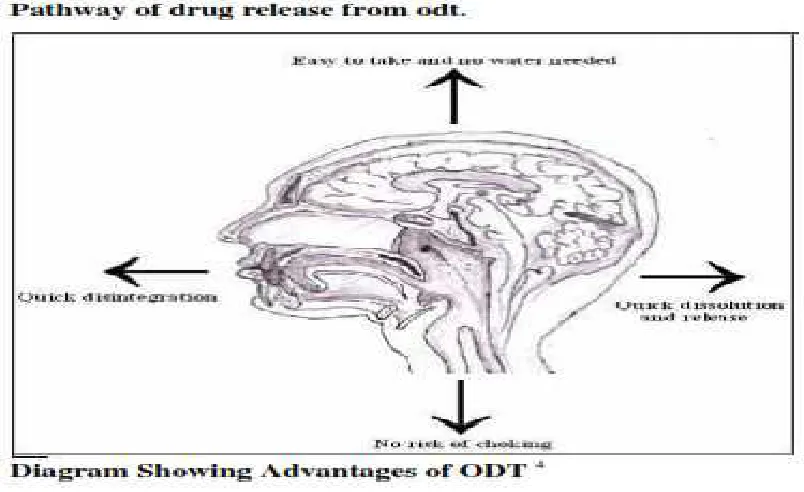
Figure no. 1 orally disintegration tablet
Advantages of ODT:
• Ease of administration to patients who refuse to swallow a tablet, such as pediatric,
geriatric, mentally ill, disabled and uncooperative patients.
• Rapid dissolution of drug and absorption may produce rapid onset of action.
• Pregastric absorption can result in improved bioavailability, and as a result of reduced
dosage, improved clinical performance by reducing side effects.
• No need of water to swallow the dosage form, which is highly convenient feature for
patients who are travelling and do not have immediate access to water.
• Convenience of administration and accurate dose as compared to liquids.
• Some drugs are absorbed from the mouth, pharynx and esophagus as the saliva passes
down into the stomach; in such cases bioavailability of drugs is increases.
• Good mouth feel property of ODTS helps to change the psychology of medication as
“bitter pill” particularly in pediatrics•patients.
• Ability to provide advantages of liquid medication in the form of solid preparation.
• New business opportunities product differentiation, line extension and lifecycle
1
1
Disadvantages of ODT:
• Rapid disintegrating tablets are hygroscopic in nature so must be kept at controlled
environment i.e. Humidity and temperature.
• For properly stabilization and safety of stable product, ODT requires special packaging.
• Usually have insufficient mechanical strength. Hence, careful handling is required.
• Leave unpleasant taste and/or grittiness in mouth if not formulated properly[35].
Need for ODTs:
• Orally disintegrating dosage forms are particularly suitable for patients find it
inconvenient to swallow traditional tablets and capsules with glass of water.
• Pediatric and geriatric patients
• Patients who are unwilling to take solid preparation due to fear of choking
• A patient with persistent nausea, who may be in journey, or has little or no access to
water
• Increased bioavailability and faster onset of action are a major claim of these
[image:20.612.198.477.430.678.2]a
g
e
1
2
a
g
e
1
2
Figure no. 3 Mechanism of drug release
Figure no. 4 Disintegration of drug particles
Main ingredients used in preparation of ODT:
Important ingredients that are used in the formulation of ODT should allow quick release
of the drug, resulting in faster dissolution. This includes both the active and the excipients.
Disintegration and solubilization of a directly compressed tablet depend on single or combined
1
3
1
3
Regulatory definitions:
US Definition:
• Orally disintegrating tablet
• A solid dosage form containing medicinal substances which disintegrates rapidly, usually
within a matter of seconds when placed upon the tongue
• Tablet weight <500mg. In-vitro USP disintegration test <30 seconds.
• FDA guidance for industry -orally disintegrating tablets
EU Definition:
• Orodispersible tablets
• Orodispersible tablets are uncoated tablets intended to be placed in the mouth where they
disperse rapidly before being swallowed
• Disintegration Test: Orodispersible tablets disintegrate within 3 mins when examined by
the test for disintegration.
a
g
e
1
4
a
g
e
1
4
Mechanism of tablet disintegration:
• Swelling
• Porosity and Capillary action
• Deformation
• Due to disintegrating particle/particle repulsive forces
Swelling:
Although not all effective disintegrant swell in contact with water, swelling is believed to
be a mechanism in which certain disintegrating agents (such as starch) impart the disintegrating
effect. By swelling in contact with water, the adhesiveness of other ingredients in a tablet is
overcome causing the tablet to fall apart.
Porosity and Capillary Action (Wicking):
Effective disintegrant that do not swell are believed to impart their disintegrating action
through porosity and capillary action. Tablet porosity provides pathways for the penetration of
fluid into tablets. The disintegrant particles (with low cohesiveness & compressibility)
themselves act to enhance porosity and provide these pathways into the tablet. Liquid is drawn
up or “wicked” into these pathways through capillary action and rupture the inter-particulate
bonds causing the tablet to break apart.
Due to disintegrating particle/particle repulsive forces:
Another mechanism of disintegration attempts to explain the swelling of tablet made with
†non swellable• disintegrants. Guyot-Hermann has proposed a particle repulsion theory based on
the observation that non swelling particle also cause disintegration of tablets. The electric
repulsive forces between particles are the mechanism of disintegration and water is required for
it. Researchers found that repulsion is secondary to wicking. In recent years, several newer
agents have been developed known as “Super disintegrants”. These newer substances are more
effective at lower concentrations with greater disintegrating efficiency and mechanical strength.
On contact with water the super disintegrants swell, hydrate, change volume or form and produce
a disruptive change in the tablet. Effective super disintegrants provide improved compressibility,
5
5
high-dose drugs. Super disintegrants offer significant improvements over starch. But
hygroscopicity may be a problem in some formulations. As day•s passes, demand for faster
disintegrating formulation is increased. Super disintegrants which are effective at low
concentration and have greater disintegrating efficiency and they are more effective Intra
granularly. And this super disintegrants act by swelling and due to swelling pressure exerted in
the outer direction or radial direction, it causes tablet to burst or the accelerated absorption of
water leading to an enormous increase in the volume of granules to promote disintegration.
Three major groups of compounds have been developed which swell to many times their original
size when placed in water while producing minimal viscosity effects[39].
Selection of super-disintegrates:
The ideal superdisintegrant should have:
• Poor gel formation.
• Good hydration capacity.
• Good molding and flow properties
• No tendency to form complexes with the drugs.
• Good mouth feel.
• It should also be compatible with the other excipients and have desirable tableting
properties[40].
Mechanism action of super-disintegrant:
Swelling:
Perhaps the most widely accepted general mechanism of action for tablet disintegration is
swelling. Tablets with high porosity show poor disintegration due to lack of adequate swelling
force. On the other hand, sufficient swelling force is exerted in the tablet with low porosity. It is
worthwhile to note that if the packing fraction is very high, fluid is unable to penetrate in the
a
g
e
1
6
a
g
e
1
6
Figure no. 6 Swelling
Porosity and capillary action (Wicking):
Disintegration by capillary action is always the first step. When we put the tablet into
suitable aqueous medium, the medium penetrates into the tablet and replaces the air adsorbed on
the particles, which weakens the intermolecular bond and breaks the tablet into fine particles.
Water uptake by tablet depends upon hydrophilicity of the drug/excipients and on tableting
conditions. For this type of disintegrants, maintenance of porous structure and low interfacial
tension toward aqueous fluid is necessary which helps in disintegration by creating a hydrophilic
network around the drug particles[42].
7
7
Due to disintegrating particle-particle repulsive forces:
Another mechanism of disintegration attempts to explain the swelling of tablet made with
†non swellable• disintegrants. Guyot-Hermann has proposed a particle repulsion theory based on
the observation that no swelling particles also cause disintegration of tablets. The electric
repulsive forces between particles are the mechanism of disintegration and water is required for
it.[43].
Figure no. 8 Particle-particle repulsive forces
Due to deformation:
During tablet compression, disintegrated particles get deformed and these deformed
particles get into their normal structure when they come in contact with aqueous media or water.
Occasionally, the swelling capacity of starch was improved when granules were extensively
deformed during compression. This increase in size of the deformed particles produces a breakup
a
g
e
1
8
a
g
e
1
[image:27.612.272.329.73.215.2]8
Figure no.9 Deformation
Because of heat of wetting (air expansion):
When disintegrants with exothermic properties gets wetted, localized stress is generated
due to capillary air expansion, which helps in disintegration of tablet. This explanation, however,
is limited to only a few types of disintegrants and cannot describe the action of most modern
disintegrating agents[45].
Due to release of gases:
Carbon dioxide released within tablets on wetting due to interaction between bicarbonate
and carbonate with citric acid or tartaric acid. The tablet disintegrates due to generation of
pressure within the tablet. This effervescent mixture is used when pharmacist needs to formulate
very rapidly dissolving tablets or fast disintegrating tablet. As these disintegrants are highly
sensitive to small changes in humidity level and temperature, strict control of environment is
required during manufacturing of the tablets. The effervescent blend is either added immediately
9
9
By enzymatic reaction:
Here, enzymes present in the body act as disintegrants. These enzymes destroy the
binding action of binder and helps in disintegration. Actually due to swelling, pressure exerted in
the outer direction or radial direction, it causes tablet to burst or the accelerated absorption of
water leading to an enormous increase in the volume of granules to promote disintegration[47].
Table1.1 List of superdisintegrants:
S NO. Example Superdisintegrants Mechanism of action Special comments
1 Crosslinked cellulose Crosscarmellose Ac-Di-Sol Primellose Vivasol
Swells 4-8 folds in
<10seconds.
Swelling and wicking both
Swelling is in two
dimensions.
-Direct compression or
granulation
-Starch free
2 Crosslinked
PVP
Crosspovidone Swells 7-12 folds
in <30 second
Swells in three dimensions
and high level serve as
sustain release matrix
3 Crosslinked
starch
Sodium starch
Glycolate
Swells 7-12 folds
in <30 seconds
Swells in three dimensions
and high level serve as
sustain release matrix
4 Cross linked
alginic acid
Alginic acid NF Rapid swelling
in aqueous medium
or wicking action
Promote disintegration in
both dry or wet granulation
5 Natural
super
Disintegrates
Soya
Polysaccharides
Rapid Dissolving Does not contain any starch
or sugar. Used
a g e
2
0
a g e2
0
Table no. 2 Synthetic superdisintegrant
S.NO. Synthetic
superdisintegrant Properties
Effective concentration for
Disintegrants
1 Crospovidone 1. It is completely insoluble in
water. Rapidly disperses and
swells in water. Greatest rate of
swelling .compared to other
disintegrants
2. Available in grades if needed
for improving state of dispersion
in the powder blend
3. Swelling index - 58±1.5%v/v
It is used in the range of 1-3%
w/w
2 Croscarmellose
sodium
1.It is insoluble in water, although
it rapidly swells to 4-8 times its
original volume on contact with
water
2. Specific surface area -
0.81-0.83m/g
3. Swelling index- 65±1.7%v/v
It may be used as a tablet
disintegrant at concentration up
to5%w/w, although normally
2% w/w is used in tablets
prepared by direct compression
and 3% w/win tablets prepared
by wet-granulation process
3 Sodium starch
glycolate
1. Absorbs water rapidly, resulting
in swelling up to 6%. High
concentration causes gelling and
loss of disintegration
2.Swelling index - 52±1.2%v/v
It is used in the range of 4-6%.
Above 8%, disintegration times
may actually increase due to
gelling
and its subsequent viscosity
producing effects
4 Polacrilin
potassium
No lump formation after
disintegration
High compatibility with excipients
and common therapeutic
Used as a tablet disintegrant and
as taste masking agent for
1
1
Taste-masking agents:
Taste masking of drug may be achieved with preventing the exposure of drug to the
tongue through processing or adding competing taste-masking agents. Exposure of solubilized
drug to the oral cavity can be prevented by encapsulation in polymer systems or complexation.
The approaches are as follows:
• Layering the drug onto inert beads using a binder followed by coating with a
taste-masking polymer.
• Granulating the drug and coating with a taste masking polymer.
• Spray drying the drug dispersed or dissolved in a polymeric solution to get
taste-masked particles.
• Complexation by the use of inclusion in cyclodextrins.
• Psychological modulation of bitterness
• Coacervation to form microencapsulated drug within a polymer.
• Formation of pellets by extrusion spheronization[50].
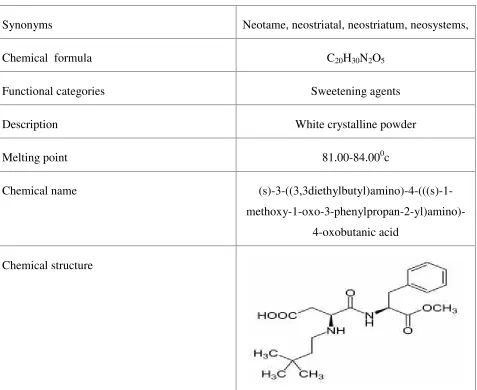
Sweeteners:
Sucrose and other natural sweeteners, such as sorbitol, can be used in effervescent
products, although artificial sweetening agents are customary. However, the application of
artificial sweeteners is restricted by health regulations. Saccharin or its sodium and calcium salts
are used as sweeteners. Aspartame is also employed as a sweetener in effervescent tablets.
Earlier, cyclamates and cyclamic acid were the artificial sweeteners of choice, but their use has
now been restricted. Some commonly used sweeteners are:
Example: Sorbitol, Mannitol, Maltitol solution, Maltitol, Xylitol, Erythritol, Sucrose, Fructose,
Maltose, aspartame, Glycerin, sugars derivatives etc[51].
Binders:
Main role of Binders is to keep the composition of these fast melting tablets together
a
g
e
2
2
a
g
e
2
2
combination of binders is essential to maintain the integrity and stability of the tablet. The
temperature of the excipient should be preferably around 30–35oC for faster melting properties. Further, its incorporation imparts smooth texture and disintegration characteristics to the system.
Example:
Binders commonly used are cellulosic polymers such as ethylcellulose, hydroxylpropyl
cellulose (HPC), and hydroxyl propylmethyl cellulose (HPMC), alone or in admixtures
povidones, polyvinyl alcohols, and acrylic polymers. Acrylic polymers used are the
ammoniomethacrylate copolymer, polyacrylate, and polymethacrylate. Among the cellulosic[52].
Antistatic agent:
An antistatic agent is a compound used for treatment of materials or their surfaces in
order to reduce or eliminate buildup of static electricity generally caused by the turboelectric
effect. An additional thickening agent, generating a stabilized suspension, is added to avoid
settling of the particles and moreover provide a pleasant mouth feeling. Example: colloidal silica
(Aerosil), precipitated silica (Sylod.FP244), micronized or non micronized talc, maltodextrins,
beta-cyclodextrins, etc. Magnesium stearate, stearic acid, sodium stearylfumarate, micronized
polyoxyethylene glycol (micronized Macrogol 6000), leucine, sodium benzoate are used as
lubricant[53].
Lubricants:
Lubricants remove grittiness and assist in the drug transport mechanism from the mouth
down into the stomach.
Example: Magnesium stearate, stearic acid, leucine, sodium benzoate, talc, magnesium lauryl
sulphate, liquid paraffin etc[54].
Flavors:
Example: Peppermint flavor, clove oil, anise oil, eucalyptus oil. Flavoring agents include,
3
3
Fillers:
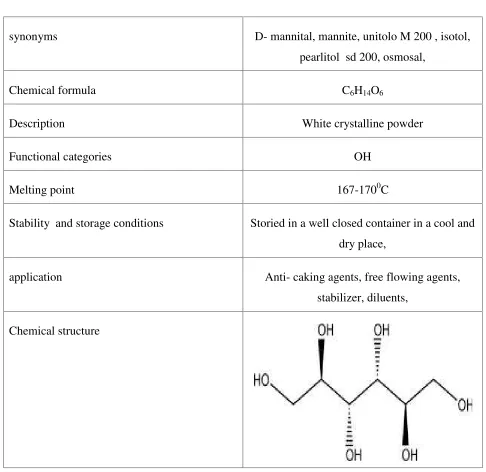
Example: Directly compressible spray dried Mannitol, Sorbitol, xylitol, calcium
carbonate, magnesium carbonate, calcium phosphate, pregelatinized starch, magnesium
trisilicate, aluminium hydroxide etc.[56].
Surface active agents: Example: sodiumdoecylsulfate, sodiumlaurylsulfate, Tweens, Spans,
polyoxyethylene stearat[57].
Table no.3: Excipients profile details:
S
no.
Flavors€ Fillers Surface
active agents
Binder color Lubricants Sweeteners€
1 Peppermint Flavor Directly compressible spray dried Mannitol Sodium doecyl sulfate Polyvinyl pyrrolidone (PVP) Sunset yellow
Stearic acid Aspartame
2
Cooling
Flavor
Sorbitol Sodium lauryl
Sulfate Hydroxy propylmethyl cellulose (HPMC) Amaranth Magnesium stearate Sugars derivative 3 Flavor oils and Flavoring aromatic oil
Xylitol Sorbitan fatty
a g e
2
4
a g e2
4
5Clove oil Calcium
Bay oil
phosphate
Polyoxy
ethylene
sorbitan
fatty acid
esters(tweens)
Polyethylene
glycole
6 Bay oil Calcium sulfate
Liquid
paraffin
7
Anise oil Pregelatinized
starch Coilloidal silicon dioxide 8 Oil of bitter almonds trisilicate Magnesium Magnesium lauryl sulfate
Taste masking methods:
The drugs are mostly bitter in nature. Skillful taste masking is needed to hide the bitter taste in ODT formulations. Following methods are used in Taste masking.
Simple wet granulation method or rollercompaction of other excipients. Spray drying can also employed to shroud the drug.
Drugs can be sifted twice or thrice in small particle size mesh with excipients such as sweeteners and flavors etc.
Drug particles are coated directly.
Granulation of the drug with certain excipients followed by the polymer coating.
If the drug is tasteless or very low dose, direct blend of bulk drug substance into fast
disintegrating matrix is straightforward.
Formation of pellets by extrusion spheronization.
Coacervation to form microencapsulated drug within a polymer.
5
5
Drug complexation with resinates are insoluble and no taste in oral cavity. Examples of drugs where this technique has been successfully demonstrated include ranitidine,
risperidone and paroxetine.
Other methods include hot melt and supercritical fluids.
Adjustment of pH Values: Many drugs are less soluble at pH different from the pH value of the mouth, which are around 5.9. Solubilization inhibitor, such as sodium carbonate,
sodium bicarbonate, sodium hydroxide, or calcium carbonate, was added to increase the
pH when granules including a drug-sildenafil dissolved in aqueous medium, the bitter
taste of the drug were successfully masked by a sweetener alone.[58].
Table no.4 Approaches for preparation of methods:
Technologies
Conventional technologies Patented technologies
1 Freeze drying 1 Zydus technology
2 Sublimation 2 Orasolv technology
3 Spray drying 3 Durasalv technology
4 Ion exchange resin complexation 4 Wowtab technology
5 Mass extrusion 5 Flshdose technology
6 Moulding 6 Flashtab technology
7 Direct compression 7 Oraquick technology
8 Cotton candy method 8 Pharmabust technology
9 Nanotization 9 Nanocrystal technology
10 Fast dissolving flim 10 Frosta technology
11 Melt granulation 11 Dispersible technology
Freeze drying or lyophilisation:
a
g
e
2
6
a
g
e
2
6
which saliva rapidly moves to disintegrate lyophilized mass after it is placed in mouth. Apart
from the matrix and active constituents, the final formulation may contain other excipients,
which improve the process characteristics or enhance the quality of final product. These include
suspending agents, wetting agents, preservatives, antioxidants, colors and flavors. The preferred
drug characteristics for freeze drying formulations are water insoluble, low dose, chemically
stable, small particle size and tasteless.
Figure no. 10 Freeze drying or lyophilisation
Merits:
Pharmaceutical substances can be processed at non elevated temperature, thereby
eliminating adverse thermal effects.
Demerits:
(i) Due to high cost of equipments Lyophilization is relatively expensive and time consuming
manufacturing process.
(ii) Fragility, which make the use of conventional packing difficult and poor stability during
7
7
Sublimation:
This process involves addition of some inert volatile substances like urea, urethane,
naphthalene, camphor, etc to other excipients and the compression of blend into tablet. Removal
of volatile material by sublimation creates pores in tablet structure, due to which tablet dissolves
when comes in contact with saliva. Additionally several solvents like cyclohexane, benzene etc
can also be used as pore forming agents. Orodispersable Tablets with highly porous structure and
good mechanical strength have been developed by this method[60].
Figure no.11 Sublimation
Spray drying:
A highly porous and fine powder is prepared by spray drying an aqueous
composition containing support matrix and other components. This is then mixed with active
ingredient and compressed into tablet. The formulations contained hydrolyzed and unhydrolyzed
gelatin as a supporting agent for the matrix, mannitol as a bulking agent and sodium starch
glycolate/croscaramellose as a disintegrant. Disintegration and dissolution were further
enhanced by adding an acid (e.g. citric acid) or an alkali (e.g., sodium bicarbonate). The
suspension of above excipients was spray-dried to yield a porous powder which was compressed
into tablets. Tablets manufactured by this method disintegrated in < 20 sec. in an aqueous
a
g
e
2
8
a
g
e
2
8
Figure no.12 spray drying
Molding:
Molded tablets are prepared by using water soluble ingredients so that the tablets
dissolve completely and rapidly. The powder blend is moistened with a hydro-alcoholic solvent
and is molded into tablets under pressure lower than that used in conventional tablet
compression. The solvent is then removed by air drying.
9
9
Figure no.14 molding tablet
Merits:
• Molded tablets posses• porous structure, which facilitates rapid disintegration and easy
dissolution.
• Molded tablets offer improved taste due to water-soluble sugars present in dispersion
matrix.
Demerits:
• But molded tablets lack good mechanical strength and can undergo breakage or erosion
during
• Handling and opening of blister packs increase mechanical strength[62].
Heat molding:
A molten matrix in which drug is dissolved or dispersed can be directly molded into
Orodispersable Tablets.[63].
No vacuum lyophilization:
This process involves evaporation of solvent from a drug solution or suspension at a
a
g
e
3
0
a
g
e
3
0
Mass extrusion:
In this technique, a blend of active drug and other ingredients is softened using solvent
mixture of water soluble polyethylene glycol, using methanol and then the softened mass is
extruded through the extruder or syringe to get a cylinder of product, which is finally cut into
even segments with the help of heated blades to get tablets. The dried cylinder can be used to
coat the granules of bitter tasting drugs and there by masking their bitter taste[65].
Direct compression:
The disintegrant addition technology (direct compression) is the most preferred technique to
manufacture the tablets. Advantages:
• High doses can be accommodated and final weight of the tablet can exceed that of other
methods.
• Easiest way to manufacture the MDT tablets.
• Conventional equipment and commonly available excipients are used.
• A limited number of processing steps are involved. Cost-effectiveness
Tablet size and hardness strongly affect the disintegrant efficacy. Hard and large tablets have
more disintegration time than normally required. Very soft and small tablets have low
mechanical strength. So, an optimum kind and concentration of disintegrant should be chosen to
achieve quick disintegration and high dissolution rates. Above the critical concentration level,
1
1
Figure no.15 direct compression
Cotton-candy process:
In this process Shear form technology is used in the preparation of a matrix known as
FLOSS, made from the combination of the recipients either alone or with the drugs. The fibrous
nature of the floss is similar to the cotton-candy fibers. The floss is commonly made of
saccharides such as sucrose, dextrose, lactose and fructose at temperatures ranging between
180-266 °F. Other polysaccharides such aspolymaltodextrins and polydextrose can be transformed
a
g
e
3
2
a
g
e
3
2
Figure no16. Cotton-candy process
Nanonization:
In this process, the particles of the drug are reduced in size to nanoparticles by milling the
drug in the proprietary wet milling process. The agglomeration can be prevented by surface
adsorption of the nanocrystals. These are then compressed and changed into a tablet. This
technique is very useful for less water soluble drugs. The bioavailability of the drug is increased
as the disintegration time is reduced to a significant extent[68].
Fast dissolving films:
In this technique, a non-aqueous solution is prepared containing water soluble film
forming polymers (carboxy methylcellulose, hydroxypropyl methylcellulose, hydroxyl
ethylcellulose, hydroxyl propylcellulose etc.), drug and other taste masking ingredients, which is
allowed to form a film after evaporation of solvent
In case of a bitter drug, resin adsorbate or coated microparticles of the drug can be
incorporated into the film. This film, when placed in mouth, melts or dissolves rapidly, releasing
3
3
Melt granulation:
Abdelbary prepared ODT by incorporating a hydrophilic waxy binder (super polystate)
PEG6Sterate. Super polystate is a waxy material with a melting point of 33-370C. It is not only
acts as a binder and increases the physical resistance of tablets, but also helps the disintegration
of tablets as it melts in the mouth and solubilizes rapidly leaving no residue.
Advantages:
• Neither solvent nor water used in this process.
• Fewer processing steps needed thus time consuming drying steps eliminated
• Uniform dispersion of fine particle occurs.
• Good stability at varying pH and moisture levels.
Disadvantages:
• Requires high energy input
• Higher-melting-point binders require high melting temperatures and can contribute to
instability problems especially for heat-labile materials.[70].
Ion exchange resin Complexation technique:
Ion-exchange resins are vinyl, divinyl benzene and polystyrene copolymers available as
high molecular weight polyelectrolytes having extensive charged functional sites. They are
insoluble in nature and exchange their exchangeable ions with same charge ions in the
surrounding ionic medium .A part from taste masking, resins have been used in modified drug
release, drug stabilization, and tablet disintegration even in therapeutics too. Long-term
physicochemical stability and safety of ion exchange resins have provided an additional benefit
to consider them as drug carriers for a wide array of applications.
Bitter cationic drugs can get adsorbed onto the weak cation exchange resins of carboxylic
acid functionality to form the complex, which is non-bitter. The complex of cationic drugs and
weak cation exchange resin does not break at pH 6–7 of saliva with cation concentration of
40meq/l. But at high cation concentration and stomach pH of 1–3, free drug is immediately
a
g
e
3
4
a
g
e
3
4
General reaction of ion exchange resin complexation:
Re-So3–Na+ + Drug+ Re-SO3–Drug+ + Na+ ...1
Re-N (CH3) + Cl–+ Drug–Re-N (CH3) + Drug–+ Cl–...2
Patented technologies for ODT€s:
The main patented technologies for mouth dissolving tablets are as follows:
Zydis Tecnology:
Zydis formulation is a unique freeze dried tablet in which drug is physically entrapped or
dissolved within the matrix of fast-dissolving carrier material. When Zydis units are put into the
mouth, the freeze- dried structure disintegrates instantaneously and does not require water to aid
swallowing. The Zydis matrix is composed of many materials designed to achieve a number of
objectives. To impart strength and resilience during handling, polymers such as gelatin, dextran
or alginates are incorporated. These form a glossy amorphous structure, which imparts strength.
To obtain crystallinity, elegance and hardness, saccharides such as Mannitol or sorbitol are
incorporated. Water is used in the manufacturing process to ensure production of porous units to
achieve rapid disintegration. Various gums are used to prevent sedimentation of dispersed drug
particles in the manufacturing process. Collapse protectants such as glycine prevent the
shrinkage of Zydis units during freeze drying process or long term storage. Zydis products are
5
5
Figure no.17 Zydis Tecnology
Merits:
• Buccal pharyngeal and gastric regions are all areas of absorption from this formulation.
Any
• Pre-gastric absorption avoids first-pass metabolism and can be an advantage in drugs that
undergo a great deal of hepatic metabolism.
• The Zydis formulation self-preserving because the final water concentration in the freeze
dried
• Product is too low To\ allow for microbial growth.
• Patients who have difficulty swallowing oral medication due to dysphagia, stroke or
medical
• Conditions such as gastro esophageal reflux disease, multiple sclerosis or Parkinson•s
disease.
• Pediatric patients.
• Patients who refuse or spit out oral medications, including patients with psychiatric or
a
g
e
3
6
a
g
e
3
6
Demerits:
• The process of freeze-drying is a relatively expensive manufacturing process.
• The formulation is very lightweight and fragile, and therefore should not be stored in
• Backpacks or the bottom of purses.
• It has poor stability at higher temperatures andhumidity•s.
• The freeze-drying is time consuming process.
• It has poor physical resistance
• Loading of high dose of water-soluble drugs is not possible[72].
Orasolv technology:
This technology is patented by CIMA Labs. This includes use of effervescent
disintegrating agents compressed with low pressure to produce the MDTs. The OraSolv process
typically involves blending the microencapsulated API with magnesium oxide and mannitol to
aid in the release of the drug from the polymeric coating. These micro particles are further
blended with other excipients and loosely compressed to maintain some degree of tablet porosity
to aid dispersion. Compression forces need to be kept to a minimum so as not to disrupt the API
taste-masking coating. With OraSolv tablet technology, tablets are compressed to a hardness of
6-25 N and packaged in blister cards. The resultant tablet is relatively weak and friable and
requires specific patented packaging technology (PakSolv, CIMA Labs) was developed to
protect the tablets from breaking during transport and storage.
The OraSolv ODT technology uses taste-masked drug microparticles in a formulation
that enhances tablet disintegration. On contact with saliva, the effervescent system promotes
disintegration of the tablet. Carbon dioxide is generated by a reaction of the formulation
components upon exposure to water (saliva in the mouth). This causes a sensation in the mouth
that is pleasant to the patient and tends to stimulate further saliva reduction, which also aids in
7
7
Advantages:
The OraSolv technology has been used for drug strengths in the range of 1 mg to 750 mg.
Depending on formulation and tablet size, the disintegration time of the tablet can be designed in
the range of 10 to 40 seconds
PakSolvRis a “dome-shaped” blister package that prevents the vertical movement of the
tablet within the depressions, because the diameter of the lower portion of the dome is too
narrow to accommodate the tablet. PakSolvR also offers light, moisture, and child resistance.
Disadvantages:
Both OraSolv and DuraSolv products are sensitive to moisture due to the presence of the
effervescent system and must be packaged appropriately[73].
Durasolv technology:
The DuraSolv technology has a formulation similar to the OraSolv technology,
combining taste masked drug micro particles with or without a low effervescence-containing
formulation, was developed by CIMA labs, consist of a drug, fillers and the lubricants. The
tablets are prepared by conventional tabletting equipment and have good rigidity. They can be
packed in the conventional tabletting equipment and have good rigidity.
Advantages:
DuraSolv technology is good for tablets having low amount (125 mcg to 500 mg) of
active ingredients and tablets are compressed to a greater hardness of 15-100 N, resulting in a
more durable ODT. As a result, this technology enables packaging flexibility; tablets can be
bottled and blistered.
Disadvantages:
The technology is not compatible with larger doses of active ingredients, because the
formulation is subjected to high pressure during compaction. The drug powder coating in
a
g
e
3
8
a
g
e
3
8
Wowtab technology:
Yamanauchi pharmaceutical company patented this technology. †wow• means †without
water•.The WOW in the WOWTAB signifies the tablet is to be given without water. The active
ingredients may constitute up to 50% w/w of the tablet. In this technique, saccharides of both
low and high mould ability are used to prepare the granules. Mould ability is the capacity of a
compound to be compressed. This technology utilizes sugar and sugar-like excipients. The two
different types of saccharides having high mold ability like maltose, mannitol, sorbitol, and
oligosaccharides (good binding property) and low mold ability like lactose, glucose, mannitol,
xylitol (rapid dissolution) are combined to obtain a tablet formulation with adequate hardness
and fast dissolution rate. Highly mould able substance has high compressibility and thus shows
slow dissolution. The combination of high and low mould ability is used to produce tablets of
adequate hardness[75].
Advantages:
• The Wowtab product dissolves quickly in 15 s or less.
• Wowtab product can be packed in both into conventional bottle and blister packs[75].
Flash dose technology:
This technology is patented by Fuisz. This system uses the combination of both
Shearform and Ceform technologies in order to mask the bitter taste of the drug. A sugar based
matrix, called †Floss• is used, which is made up of a combination of excipients (crystalline
sugars) alone or in combination with drugs. Nurofen meltlet, a new form of Ibuprofen, as a
mouth-dissolving tablet is the first commercial product prepared by this technology and launched
by Biovail Corporation.
Drawbacks
• The dosage form can accommodate only up to 600 mg of drug.
• Tablets produced are highly friable, soft and moisture sensitive. Therefore specialized
packing is required.[76].
9
9
Oraquick technology:
K. V. S. Pharmaceuticals have a patent over this technology. It utilizes taste masking
microsphere technology called as micromask, which provides superior mouth feel over taste
masking alternatives, significant mechanical strength, and quick disintegration/dissolution of
product. Any kind of solvents are not utilized by taste masking process. Therefore it leads to
superior and fast efficient production.[77].
Pharmaburst technology:
SPI Pharma, New Castle has a patent over this technology. It utilizes the coprocessed
excipients to develop MDTs, which dissolves within 30-40 s. This technology involves dry
blending of drug, flavor, and lubricant followed by compression into tablets. Tablets obtained
have sufficient strength so they can be packed in blister packs and bottles[78].
Nanocrystal technology:
Elans, King of Prussia have a patent over this technology. This technology includes
Nanocrystal colloidal dispersions of drug substance are combined with water-soluble GRAS
(Generally Regarded as Safe) ingredients, filled into blisters, and lyophilized. The resultant
wafers are remarkably robust, yet dissolve in very small quantities of water in seconds. This
method avoids manufacturing process such as granulation, blending, and tabletting, which is
more advantageous for highly potent and hazardous drugs. As manufacturing losses are
negligible, this process is useful for small quantities of drug.
Advantages:
• Pharmacokinetic benefits of orally administered nanoparticles (< 2 microns) in the form
of rapidly disintegrating tablet matrix.
• Cost-effective manufacturing processes that utilize conventional, scalable unit operations.
• Exceptional durability, enabling use of conventional packaging equipment and formats
(i.e., bottles and/or blisters).
a
g
e
4
0
a
g
e
4
0
Frosta technology:
A new technology called Frosta (Akina) was developed for making FMTs. The Frosta
technology utilises the conventional wet granulation process and tablet press for cost-effective
production of tablets. The Frosta tablets are mechanically strong with friability of < 1% and are
stable in accelerated stability conditions when packaged into a bottle container. They are robust
enough to be packaged in multi-tablet vials. Conventional rotary tablet presses can be used for
the production of the tablets and no other special instruments are required. Thus, the cost of
making FMTs is lower than that of other existing technologies. Depending on the size, Frosta
tablets can melt in < 10 s after placing them in the oral cavity for easy swallowing. The Frosta
technology is ideal for wide application of FMTs technology to various drug and nutritional
formulations.[80].
Dispersible tablet technology:
Leks in Yugoslavia have a patent over this technology. Dihydroergotoxine is poorly
soluble in water in the free base form. An improved dissolution rate of dihydroergotoxine
methane sulphonate was observed with dispersible tablets containing 0.8-10%, preferably about
4% by weight, of an organic acids. One of the essential excipients in the cimetidine formulation
was a disintegrating agent. The disintegrating agents include starch or modified starches,
microcrystalline cellulose, alginic acid, cross-linked sodium carboxymethyl cellulose, and
cyclodextrin polymers. Dihydroergotoxine and cimetidine, which were claimed to disintegrate in
1
1
Table No: 5 Marketed ODT tablet:
Nimulid-MD Nimesulide Panacea Biotech
Zyrofmeltab Rofecoxib ZydusCadila
MOSID-MD Mosapride Citrate Torrent Pharmaceuticals
Feledine Melt Piroxicam Pfizer
Maxalt ODT Famotidine Merck
Remeron Sol Tab Mirtazapine Organon
Romilast Montelukast Ranbaxy
Manza BDT Olanzepine Orchid
Olanexinstab Olanzepine