Research Report DCSF-RR204
The Double Club
Evaluation
National Foundation for Educational Research
Caroline Bergeron, Caroline Sharp,
The Double Club Evaluation
National Foundation for Educational Research
Caroline Bergeron, Caroline Sharp, Sarah Wilson,
Tilaye Yeshanew, Ben Styles, Peter Rudd
The views expressed in this report are the authors’ and do not necessarily reflect those of the Department for Children, Schools and Families.
© National Foundation for Educational Research 2009 Registered Charity No. 313392
ISBN 978-1-84775-645-9
Contents
Contents 1
Acknowledgements 3
Executive summary
5
1.
Introduction 9
1.1 The Double Club programme 9
2.
About the research
10
2.1 Aims of the study 10
2.2 Design and methods 10
3.
Main findings
13
3.1 How the Double Club is operating in schools 14 3.2 The impact of Double Club: case-study evidence 19 3.3 The impact of Double Club: evidence on pupil attainment using the
national pupil database 25
4.
Positive features of the programme
29
4.1 Programme appeal 29
4.2 Pupil selection 30
4.3 Learning content, style and environment 32
4.4 The impact of the sports sessions 33
5.
Impact of different programme models
37
6.
Conclusions and recommendations
39
References 42
Appendix 1
Information about case-study schools
43
Appendix 2
Analysis of national pupil attainment data
44
Main findings
Acknowledgements
We wish to express our sincere thanks to all the staff and young people who participated in the case-study strand of the evaluation and gave generously of their time. We would also like to thank the members of the project steering group, who have provided valuable information, support and guidance, including Rosalyn Xavier, Richard Page and Jodie Semp of the DCSF, and Scott Cohen, the National Double Club coordinator. We also wish to
Executive Summary
Executive summary
The Double Club (DC) programme
Double Club (DC) is an in-school extension of the Playing for Success (PfS) programme, working with underachieving pupils in Key Stage (KS) 3 to improve attainment, particularly in literacy and numeracy. It provides an innovative ‘double experience’ that combines classroom education, with coaching in football or another sport. Young people attend at least twice a week in groups of approximately 15.
Double Club has been funded by the DCSF since 2004. By 2008 (at the start of this evaluation), DC consisted of 15 sports clubs; with 48 schools and approximately 3,000 young people. In April 2009, 15 new Double Clubs commenced operation, taking the total to 30 clubs working with 63 secondary schools and 2,497 pupils. In the academic year 2008/9, the vast majority of pupils attending DC were in Years 7 and 8 (only 159 were in Year 9).
About the evaluation
The evaluation of the DC programme was carried out for the Department for Children, Schools and Families (DCSF) by researchers based at the National Foundation for Educational Research (NFER). The DC evaluation was conducted in two strands.
• Strand 1 provided detailed qualitative data about how five case-study schools implemented the DC initiative, and how any positive impacts were achieved.
• Strand 2 examined the impact of DC on pupil attainment by obtaining relevant information about participating young people from DCs and matching this to the National Pupil Database. The research compared the KS3 progress of 448 DC pupils from 15 DC Centres with the progress of similar pupils who had not attended the programme.
Executive Summary
The second strand of the evaluation provided an analysis of the impact of DC on pupil attainment, comparing the KS3 attainment of young people who had attended DC with the KS3 attainment of similar young people who had not attended, using a form of statistical analysis called multi-level modelling. We should stress that, although there may have been some overlap between the pupil samples for Strands 1 and 2, they were essentially different
samples. Strand 2, by definition, could only include those pupils who had KS3 results available in 2008: these pupils were in the ‘older’ DC cohorts. By 2008/9, as noted above, less than ten per cent of DC pupils were in Year 9 and in many of the schools taking part, the DC project was designed specifically for pupils in Year 7.
Key findings
The evaluation identified four main models of programme organisation in the case-study DCs, each of which was felt to be appropriate in the local context:
1. Full-time DC teacher based in each participating school.
2. DC delivered by a teacher who is not based in the school.
3. DC delivered by a member of school’s own teaching staff.
4. DC delivered by both a DC teacher not based in the school and members of the school teaching staff.
• The evidence from the five case studies suggested that DC had been successful in achieving its aims of motivating and re-engaging
underachieving young people.
• Teachers and young people perceived the DC programme very positively. They saw it as an opportunity for lower-attaining young people to access additional support with their learning.
• Young people reported that they enjoyed taking part in DC. Most young people thought DC had helped them to improve their learning (especially in literacy) and their self-confidence.
• All interviewees thought that young people’s school attendance had improved during their participation in DC, and one school provided evidence to support this.
• Local evaluation results showed that the majority of young people made progress in an adapted KS2 English test (30 out of 43 improved by one or two levels).
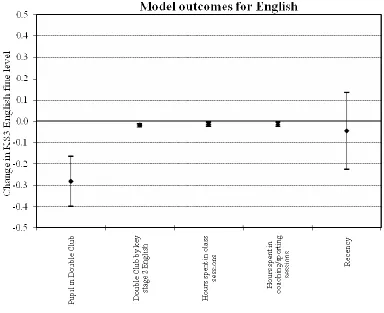
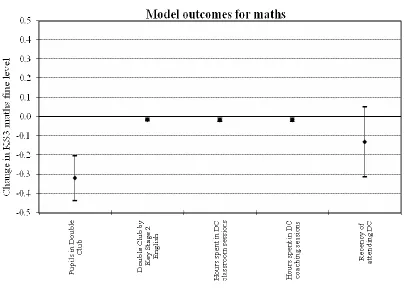
More robust statistical analyses, however, conducted during Strand 2 of the evaluation, found DC to have negative associations with KS3 attainment. Controlling as far as possible for differences between pupils who had attended DC and those who had not, these analyses found that pupils who had attended DC had achieved on average 0.28 of a KS3 level lower in English than those who had not attended DC. In mathematics, pupils who had attended DC achieved on average 0.32 of a KS3 level lower than the
Executive Summary
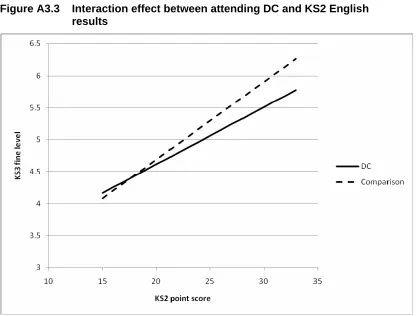
The exception to these negative associations was a finding that very low attaining pupils at KS2 (defined as being at level 2 or below in English) who attended DC made more progress in English between KS2 and KS3 than very low attainers who had not attended DC, although the effect is so small that it is unlikely1 to be of statistical significance.
Key features identified by participants as promoting the success of DC were:
1. The programme’s appeal to schools and young people (the focus on basic skills combined with the popularity of professional sport).
2. Pupil selection (in particular selecting young people who had levels of literacy and numeracy below the expected level for their age, an interest in the sport offered by the DC and those who lacked self-confidence).
3. Learning content, style and environment (offering a motivating and attractive learning experience).
4. The added value of the sports coaching sessions (promoting sports skills, teamwork and enjoyment).
Conclusions
The evaluation consisted of two complementary methodological strands, one qualitative and one quantitative. Evidence from Strand 1, based on five
qualitative case studies, suggests that DC was achieving its core objectives. It was having a positive impact on pupils’ motivation and self-esteem, with young people reporting that they worked hard in DC sessions and that they felt more confident and able to contribute in their other lessons. The
programme was viewed as being engaging, motivating, well planned and with the appropriate levels of adaptability and flexibility.
The statistical analyses in Strand 2 did not identify any statistically significant positive outcomes in DC pupils’ attainment, and in fact found negative associations.
There are several possible explanations for these apparently contradictory findings, including the fact that the two strands used different samples, with Strand 1 focused predominantly on Years 7 and 8. It is also worth stressing that the statistical modelling may not have been able to account fully for differences between DC pupils and the comparison group. The negative associations found in Strand 2 may well indicate an inadequacy in our
statistical models: pupils in the comparison group may, in reality, not have the same level of needs, as those in the DC sample, and the statistical models may not have been able to capture this.
We should also point out that the two strands measured different outcomes. Strand 2 focused on attainment data, while Strand 1 examined a much broader range of outcomes, including pupil attitudes. The school-based assessment results reported in Strand 1 were collected while pupils were still attending DC, whereas results used in Strand 2 took were recorded some
1
Executive Summary
time after pupils had taken part. The two strands covered different periods of time: Strand 1 included information collected in 2008/9, whereas Stand 2 collected data from pupils who attended DC from 2005 to 2008. It therefore included results from DC Centres at an earlier stage of development.
The evaluation concludes that, overall, the DC has been a positive
programme because, to date, it has been successful in achieving the majority of its aims, and therefore, the research team would recommend continued funding for the initiative. The case-study research, which was based on data collected from the more ‘typical’ DC year groups of 7 and 8, produced positive findings, especially in relation to the attendance, motivation and engagement of DC learners. Although the statistical analyses, based on ‘less typical’ older DC cohorts, produced some negative findings, it should be stressed that these are not ‘causal’ findings – there are several factors, some of which are unrelated to DC provision, which could explain these associations. These analyses do flag up the need, however, for continued scrutiny of the impact of DC on pupil attainment in the future. We recommend adoption of a
Executive Summary
1. Introduction
1.1
The Double Club programme
The Double Club programme was established in 1998, by Arsenal in the Community. The programme aimed to provide young people with a ‘double experience’ of classroom-based learning through football, together with a football coaching session. It was developed to motivate and re-engage underachieving young people and to improve attainment, by harnessing young people’s interest in football. Originally, the programme operated as an after school literacy programme in primary schools. By 2004, however, the project had developed different modules, including numeracy and ICT, and was being run during curriculum time as a KS3 programme.
The Department for Children, Families and Schools (DCSF) has contributed funding towards the KS3 programme since 2004. The Department provides funding to cover the essential costs of the programme and has asked Arsenal in the Community to work with other English sports clubs to help set up and develop DCs (DCs) in their local schools. In 2006/07, seven sports clubs, through their Playing for Success (PfS) Centres2, were running DCs in one or more of their secondary schools. By 2007/08, the number of sports clubs involved had risen to 15, with 48 schools and about 3000 secondary young people participating in the programme. In April 2009, 15 new Double Clubs began operating, taking the total to 30 clubs working with a total of 63 secondary schools and 2,497 pupils participating. In the academic year 2008/9, the vast majority of these pupils were in Years 7 and 8 (only 159 were in Year 9).
2
About the research
2.
About the research
The evaluation of DC was carried out on behalf of the DCSF by a team at the National Foundation for Educational Research (NFER). The aims, design and methods of the study are outlined below.
2.1
Aims of the study
The main aims of this evaluation were to assess the effectiveness of the DC programme, to identify good practice and to provide evidence on how best to operationalise DCs in a wider roll out. The study has sought to address the following research questions:
1. How has the DC programme been implemented in different schools?
2. To what extent has DC achieved its objectives, and how have these been achieved?
3. What has been the impact of DC on pupils’ motivation and self-esteem, and what were pupils’ and teachers’ perceptions of the programme?
4. What impact has DC had on pupil attainment?
5. Have some models of the DC scheme been more effective than others?
2.2
Design and methods
The research design combined an analysis of qualitative data to illustrate key processes with analyses of large-scale pupil outcomes data. There were two strands to the evaluation:
• Strand 1 focused on the implementation of DC, its impact on pupil motivation and self-esteem, and perceptions of the programme in five DCs. It provided qualitative data about how schools have implemented the initiative, and how any positive impacts have been achieved.
• Strand 2 of the study sought, as far as possible, to establish the impact of DC on pupil attainment by obtaining relevant information about
participating young people from DCs and matching this to data from the National Pupil Database. The progress of DC pupils in KS3 was then compared with the progress of similar pupils who had not participated in the programme.
About the research
visits to four of the five case-study DCs during the summer term of 2008, and visited the fifth case-study DC in January 20093.
As part of each visit, the team carried out an interactive survey with young people participating in DC using an ARS. This system enabled young people to respond to a set of standard questions using a personal touchpad. Their responses were then collated and displayed on a screen. More in-depth responses were gained from paired interviews with young people, interviews with members of school staff, and interviews with Centre managers/DC coordinators and DC teachers. In total, we interviewed:
• 20 young people
• seven members of school teaching staff • five DC teachers
• five Centre managers/DC coordinators.
In addition, a total of 51 young people participated in the audience response survey (ranging from nine to 13 young people in each school). These
numbers reflected the numbers of young people participating in DC in each of the case-study schools. The young people involved in the interviews also took part in the interactive survey.
Strand 1 of the research was carried out some months before the data was available for Strand 2. The findings from Strand 1 were therefore published as an interim report (see Wilson
et al.
, 2009). The findings from Strand 1 are also reported again here, alongside the findings from Strand 2, in order to provide a complete overview of the whole evaluation).In Strand 2 of the research, we used the National Pupil Database (NPD)4 to compare the KS3 English and mathematics attainment in 2007/08 of young people who had attended DC, to a matched comparison group of young people who had not attended DC. This strand of analysis provides evidence for research questions four (impact on attainment) and five (effectiveness of different DC models).
It should be stressed that, although there was some overlap between the Strand 1 and Strand 2 samples, they were different in both size and nature. As noted above, the audience response surveys in the case-study visits (Strand 1) featured 51 young people from five schools participating in the DC initiative (20 of these 51 pupils were also interviewed). These young people were in five case-study schools four of which were selected on the basis of demonstrating good practice. . They were in the classes and year groups that were participating in DC at the time of the case-study visits. The Strand 2 sample could only include pupils who had attended DC and had taken their National Curriculum KS3 assessments by the end of the academic year 2007/8: these were therefore the ‘older’ DC cohorts. By 2008/9, as noted
3
The visit took place later, as it was not possible to arrange a visit during the summer term. 4
About the research
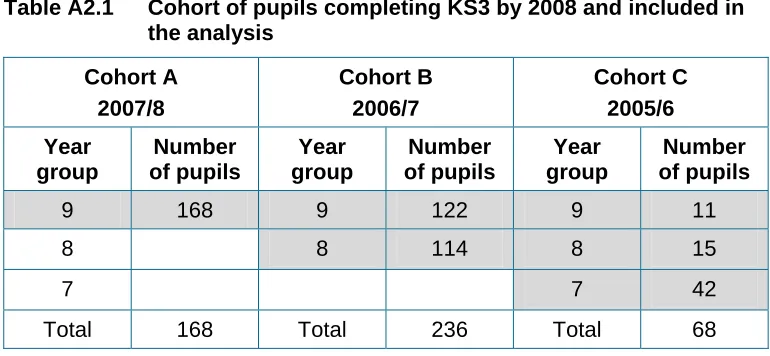
above, less than ten per cent of DC pupils were in Year 9, and in many of the schools taking part the DC project was designed specifically for Year 7 pupils. For Strand 2 of the study, pupil outcome information was requested on pupils from all the 15 DCs that were operating in 2007/8. The final Strand 2 sample of consisted of 448 young people from nine DC Centres5.
The statistical modelling allowed the research team to address questions such as whether there was any evidence that pupils attending DC improved their progress between KS2 and KS3 over and above what might be
expected; as well as whether more specific aspects of DC (number of hours spent in class sessions, and in sports coaching sessions) were associated with improved progress between these Key Stages. We were also able to look at whether different centres and models of DC had different relationships with pupil progress between KS2 and 3.
It was of particular interest to examine the prior attainment of pupils in KS2, as previous studies had found that there was differential performance among the pupils who attended Playing for Success Centres according to ability (see Sharp et al., 2007). Pupils with low prior attainment who attended PfS made greater progress at KS2, 3 and 4 than a comparison group of low attaining young people who had not attended PfS6. However, relatively higher attainers who had attended PfS did less well in KS2, 3 and 4 than higher attainers in the comparison group.
We also examined whether the timing of pupils’ involvement in DC affected progress from KS2 to KS3. This was because pupils may have attended DC up to three years before taking end of KS3 assessments (for pupils attending during the first term of Year 7) or the interval could have been as little as one month (for those attending during the spring term of Year 9 and taking their assessments in 2008).
Further information about the selection of the matched pupil comparison group, and the statistical analyses, can be found in Appendix 2.
5
Full details of the year groups and the numbers of pupils who had completed KS3 by the time of the research (and were therefore eligible for the Strand 2 sample) are provided in Table A2.1 in Appendix 2.
6
Main findings
3. Main
findings
This section reports the main findings from Strands 1 and 2 of the evaluation, based on visits to case-study DCs and schools, and statistical analyses of national pupil attainment data.
•
The key findings are as follows:
• The evaluation identified four main models of organisation in the case-study DCs:
1. Full-time DC teacher based in each participating school.
2. DC delivered by a teacher not based in the school.
3. DC delivered by a member of school’s own teaching staff.
4. DC delivered by both a DC teacher not based in the school and members of the school teaching staff.
• Each model was felt to be appropriate in the local context.
• Young people enjoyed taking part in DC. Most thought that DC had helped them to improve their learning (especially writing and reading) and self-confidence.
• Local evaluation results indicated that young people attending DC made progress in an adapted Key Stage 2 English test (30 out of 43 improved by one or two levels).
• However, more robust statistical analyses in Strand 2 which controlled for the influence of other key factors which can affect attainment (such as gender and prior attainment) did not identify any statistically significant positive outcomes in DC pupils’ attainment, and in fact found negative associations. (This apparently contradictory finding may be due to the fact that Strands 1 and 2 used different pupil samples and measures, and/or to the inability of statistical modelling to account for differences between DC and the comparison group).
• All interviewees thought that young people’s school attendance had improved during their participation in DC, and one school provided evidence to support this.
• School staff identified several organisational benefits from their involvement in DC, including raising achievement for participating pupils and providing a broader curriculum offer.
• Key aspects identified by participants as promoting the success of DC in achieving its aims were: the programme’s appeal (learning linked to professional sport); selecting the right pupils; providing a relevant and engaging programme of work in a supportive environment; and providing opportunities to play sports.
• Young people said they found the work in DC more interesting and easier to understand than school lessons.
Main findings
3.1
How the Double Club is operating in schools
The five DCs visited had been operating for varying lengths of time, ranging from one to five years. Four of the DCs were associated with football clubs, and one with a club representing another sport. The number of secondary schools involved with the programme, in the case-study areas, ranged from one to ten.
3.1.1 Models
of
organisation and delivery
As Figure 1 shows, each of the DC case studies approached the delivery of the programme in a different way. There were differences in the background, employment, funding and deployment of staff. There appeared to be four main models of DC organisation and delivery:7
1. Full-time DC teacher based in each participating school.
2. External DC teachers coming in to schools to deliver DC sessions.
3. DC sessions delivered by member of school teaching staff.
4. DC sessions delivered by both an external DC teacher, and members of school teaching staff.
7
Main findings
Figure 1 Approaches to implementing double Club (DC) in case-study schools
De
Double Club 1 4 schools participating [Model 1] Double Club 2 10 schools participating [Model 3] 2 schools participating [Model 2] 3 schools participating [Model 2] 1 school participating [Model 4]Location: One full-time teacher based in each school Funding: Salary cost of DC teacher
covered by school
Location: Full-time DC coordinator manages DC across all 10 schools in
area.
Funding: DCSF-funded DC coaches provide coaching sessions. Schools provide member of staff to
deliver DC
5th year of
programme
2nd year of
programme
Double Club 3
1st year of
programme
Double Club 4
2nd year of
programme
Double Club 5
2nd year of
programme
Location: Part-time, peripatetic DC teacher works in the two schools Funding: Salary of DC teacher and community coach paid by Centre. No
cost to schools
Location: Full-time DC teacher works in the 3 schools
Funding: Salary costs of DC teacher shared between the three schools
Location: Part-time, peripatetic DC teacher based in school and runs DC
with school staff Funding: All staff DCSF funded
Case-study school Case-study school Case-study school Case-study school Case-study
school Background: PE teacher DC teacher
Member of school staff Background: PE and social studies teacher
DC teacher Background: primary
teacher
DC teacher Background: PE teacher
DC teachers Background: community
Main findings
Model 1:
Full-time DC teacher based in each participating
school
In one DC, a full-time DC teacher was based in each of the participating schools, delivering both the classroom and football coaching sessions. The participating schools paid the salary costs of their DC teacher.
Model 2:
External DC teachers delivered DC sessions
In two of the DCs, peripatetic teachers came in to school to deliver DC
sessions. In one of these clubs, the salary cost of the DC teacher was shared between the three participating schools. The DC teacher in this area provided the classroom and the coaching sessions. In the other club, the salary cost of the DC teacher was absorbed by the local football club’s community trust. The community trust in this area also provided a coach to deliver football sessions outside of school hours, at no cost to the schools.
One of the key reasons for taking this approach to delivering the DC
programme was a concern that schools would not be able to, or be interested in, fully funding the programme. One club had discussed possible models with interested schools and while it was felt that individual schools could not cover the salary costs of a full-time DC teacher, sharing the costs of a teacher between three schools would be more manageable. In the other area, the decision was taken to provide the programme at no cost to the two participating schools. In this case, the DC programme was running at a financial loss. However, the community trust had decided to keep funding the DC initiative, as they felt it had a positive impact on participating young people, and had been very well received by schools.
Model 3:
DC sessions delivered by member of school teaching
staff
In the fourth DC area, participating schools provided a member of their own teaching staff to deliver the DC sessions. The Club offered to provide community coaches to run football sessions at no additional cost to the schools. However, in the school we visited, the DC teacher was a qualified P.E. teacher and the school was a strong football school, and so the decision had been taken to have the same member of teaching staff deliver both the classroom session and the football coaching. A full-time DC coordinator, funded through the Football Foundation, managed the delivery of DC across all participating schools, providing resources and advice to DC teachers or help with classroom skills. This model was adopted because it was felt to be the best way of maximising the number of schools able to participate in the DC programme. Ten schools were running DC sessions in this area.
Model 4:
DC sessions delivered by both an external DC
teacher and members of school teaching staff
In the fifth Double Club, DC sessions were delivered by two members of school staff: a higher level teaching assistant (HLTA) and an inclusion manager; and an external DC teacher employed by the sports club. The HLTA planned and delivered the literacy and numeracy lessons, with
Main findings
divided into three ‘teams’, with the three members of staff working with one team each. In this DC, staffing costs were covered by the DC funding
received from the DCSF. This was the only secondary school involved in the DC initiative in this area.
It should be noted that, in the case-study areas where DC teachers were external to the school, members of school staff told us that they had a good working relationship with the DC teacher and that communication between the DC teacher and the school was excellent. In one case-study area, participating schools had been actively involved in the recruitment of the DC teacher, and on appointment, the DC coordinator had arranged for the DC teacher to meet with key members of school staff before the programme began.
DC teachers and members of teaching staff worked together to identify pupils they thought would benefit most from the programme, and information and feedback on participating young people’s progress was shared throughout the programme.
In three of the five case-study areas, volunteers helped to run the DC classroom sessions. Work experience and gap year students helped in two schools, in order to give them an opportunity to experience working in a non-traditional educational setting. In another school, the assistant head of year provided additional support and a member of the school administration team gave up her free time to work on a one-to-one basis with the young people in the class. Members of school staff also regularly observed DC classroom lessons in order to develop their understanding of the programme, with a view to running DC in school themselves in future.
3.1.2 Selecting young people to participate in Double Club
All of the schools visited became involved in DC because they wished to motivate and re-engage underachieving young people and improve attainment levels in their school. Two of the schools had high numbers of young people with English as an additional language (EAL) and were seeking to improve young people’s communication skills.
The schools decided which year groups they would like to involve in the programme. DC teachers then worked with members of the school staff (such as learning support coordinators and heads of year) to identify young people whom they thought would benefit most from the programme.
3.1.3 Year groups and number of young people involved
Main findings
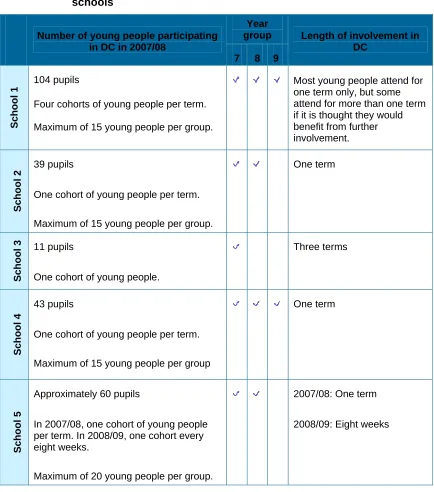
Young people in most of the case-study schools attended DC sessions for one term. Four DC groups had a maximum of 15 young people. The other school offered DC to about 20 young people at a time, although this group was then divided into three smaller groups, with one adult working with each group.
Details of the numbers of young people involved in the five schools are provided in Appendix 1.
3.1.4 Double Club classroom lessons
In each of the schools we visited, classroom sessions were delivered in curriculum time, in a dedicated DC classroom. Young people attended at least twice a week in small groups. The smaller class sizes were seen as having a number of benefits for the young people involved, including opportunities for:
• greater interaction between the DC teacher and the class • opportunities for a more personalised style of teaching
• more focused attention on individual young people in the class • pupils had access to support as and when they needed it.
The group is small with focused attention. In a class of 20-25 it’s easy to get away without reading, but here during most lessons they are reading out loud to each other.
[DC teacher]
The main motivating factor for attending Double Club is that we give them a voice. We allow them to express themselves in an appropriate way, because it is normally a small group with a high staff to pupil ratio.
[Member of the school teaching staff]
Three of the five case-study schools focused exclusively on literacy, and two included both literacy and a numeracy component. One school also ran classes on healthy living.
Main findings
3.1.5 Double Club resources and worksheets
The DC classroom sessions were generally designed to engage young people in their learning through the use of colourful and topical sports-based materials which reflected the interests of many of the young people in the group. (Further information on young pupils’ views on the sports focus is presented in Section 4.3.)
DC teachers in each of the case-study schools used a mixture of Arsenal DC resources (adapted to incorporate their own club’s name, logos and players) and materials they developed themselves.
The engagement with the football club or its community partnership is key, as through them we get access to the brand, which we can then use in the resources.
[DC coordinator]
The resources from [Arsenal] are brilliant and spark off other ideas. It’s about knowing your kids, and adapting the materials that way and also making sure that everything is [name of club] based.
[DC teacher]
In one area resources were produced by a central DC coordinator and distributed to all participating schools. DC teachers in the schools we visited also shared their ideas and resources with DC teachers in other clubs via email.
3.2
The impact of Double Club: case-study evidence
This section presents evidence from the case studies (Strand 1) concerning two of the key research questions, namely:
Has DC achieved its objectives and how were these achieved? What has been the impact of DC on pupils’ motivation and self-esteem, and what were pupils’ and teachers’ perceptions of the programme?
The following Section (3.3) discusses the Strand 2 statistical findings in relation to the impact of DC on attainment.
3.2.1 Has DC achieved its objectives?
Double Club was developed to motivate and re-engage underachieving young people and to improve attainment, by harnessing young people’s interest in football. As Scott Cohen, the National Double Club coordinator, explained:
Main findings
The case-study interviewees said that involvement in DC had been successful in achieving the aims of motivating and re-engaging
underachieving young people. As well as giving their views of its perceived
impact on attainment, several case-study school staff provided evidence from their own evaluations of pupils’ progress during their involvement in DC (see Section 3.2.3 below).
In each of the schools visited, members of the school leadership team were supportive of DC and the programme was well known in the school. All of the members of staff we spoke to wanted their school to continue its involvement with the programme and said that they would recommend, or already had recommended, the programme to teachers in other schools.
3.2.2 What are the benefits of participating in Double Club for
young people?
The DC coordinators, members of school teaching staff and pupils we interviewed all spoke very highly of the DC programme and provided many examples of the positive impact of the programme on young people’s
attainment, self-esteem and motivation. A summary of the main things which the pupils enjoyed about DC, obtained by means of the audience response survey, is provided in the box below.
Findings from the Audience Response Survey on what pupils enjoy
about DC
• To find out what young people enjoyed about going to Double Club, we provided a list of six options and invited young people to select all the options that were true for them.
• The majority of young people (39 out of 51) said that they enjoyed going to Double Club to improve their learning. The same proportion (39) enjoyed playing sport.
• Two-thirds of the young people enjoyed visiting the stadium (34). • Over half of the young people enjoyed the prizes (29) and a similar
proportion (27) said that they enjoyed going to Double Club to improve their confidence.
Main findings
3.2.3 How was young people’s progress measured?
Each of the five case-study schools tracked the progress made by young people involved in the DC programme. Progress was tracked through setting personal targets and assessment results (adapted KS2 papers).
Setting personal targets
Staff in three of the five case-study schools reported that they had set
personal targets with their pupils. In these schools, young people were asked to set targets for themselves for literacy, numeracy and sport, during their first week of attendance. Some examples of targets included: ‘to improve my spelling skills’, ‘to have more confidence with speaking tasks’, ‘to work better with a partner or in a group’ and ‘to pass the ball more accurately’. Each young person set between one and four targets that they would work towards during the course of the next few weeks. Pupils kept records of their targets in their DC file. The DC teacher also kept a copy to refer to and discuss with the young people during and at the end of the programme.
Adapted KS2 papers
The Qualifications and Curriculum Authority (QCA) gave permission for the DC programme to adapt and bring together different questions from past KS2 National Curriculum Assessment papers and put them into a sporting context. The same marking scheme was used as for the original papers, enabling DC teachers to obtain a ‘fairly crude national curriculum level’ for participating young people. In each of the five schools young people were tested at the beginning of the programme and again at the end of their involvement.
One of the case-study DCs had also undertaken their own analysis of National Curriculum results, which entailed comparing the changes in levels from KS2 to KS3 for DC pupils with a group of other (non-DC) young people in the school.
Main findings
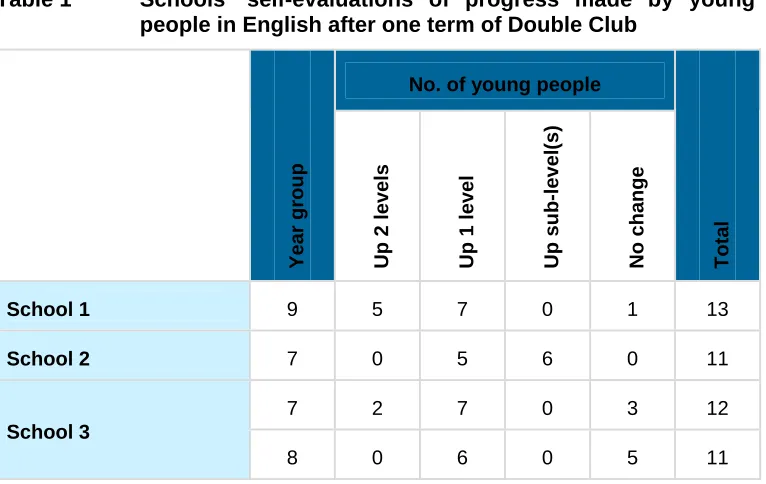
Table 1 Schools’ self-evaluations of progress made by young
people in English after one term of Double Club
No. of young people
Year group Up 2 levels Up 1 level Up sub
-level
(s)
No cha
nge
Total
School 1 9 5 7 0 1 13
School 2 7 0 5 6 0 11
7 2 7 0 3 12 School 3
8 0 6 0 5 11
One case-study school also provided their analysis of their KS3 mathematics results. This data showed that most young people (eight out of 13) had progressed at least one level, three young people had progressed two levels and one young person’s results had gone up three levels. Data collected by this school from a comparison group of pupils with similar characteristics, showed that a higher proportion of DC pupils had improved by at least one level at KS3 in English and mathematics, compared to pupils who had not participated in the DC programme.
In one area, where young people attended DC for a whole school year, the DC Coordinator assessed pupils’ English performance each term. The test results showed that the biggest improvement in attainment took place at the end of the first term. After that, attainment levels appeared to reach a plateau. The DC teacher felt that the fact that young people maintained the same grade was a positive outcome as it demonstrated security in the grading band. However, she agreed with the school that the following year they would change the length of time young people spent in DC from a year to a term.
I think… it’s the first term that is the initial boost. That’s the wow factor and the ‘this is new, this is my intervention and this is me trying’. They’ve then got that basis to progress. It made me think, let’s do it for one term with the kids, instead.
[DC teacher]
In four of the five case-study schools, the young people we interviewed reported that they felt that being involved with DC had improved their reading and writing.
It’s helped me catch up with my English lessons, because when I was excluded I missed a year.
Main findings
You remember the little hints, they stick in your head. Sometimes [name of DC teacher] like dragged on but it was good because he got all them little hints in your head.
[Year 8 pupil]
In the remaining case-study school, the purpose of attending DC (to improve literacy and numeracy) was not made explicit to participating young people and as a result they perceived the benefits and impact of the programme differently to the other young people we interviewed. The young people in this case-study school did not report any progress in their literacy or numeracy skills or feel that their confidence in these areas had improved. While they enjoyed going to DC, they often described the main benefit to them as the opportunity to miss lessons and to do extra sport.
It’s good because you get out of lessons. If they said ‘You are going to do literacy and numeracy’, then I probably wouldn’t have gone. We haven’t done none of that… It’s about the sport, I want to be a PE teacher at primary school.
[Year 7 pupil]
In this school, five out of nine young people responding to the audience response survey said that the best thing about being able to do sport at DC was missing lessons, which was not an answer mentioned by young people attending other DCs. Only one young person in this school said that the thing they enjoyed the most about DC was improving their learning, which was the most popular answer among young people in other DCs.
3
.
3.2.4 Impact of Double Club on young people’s self-confidence,
motivation and self-esteem
DC teachers and members of the school teaching staff felt that the DC programme had had a positive impact on young people’s self-confidence, motivation and self-esteem. One aspect of confidence mentioned by several interviewees, was young people’s willingness to answer questions in class.
Findings from the Audience Response Survey on pupils’ attainment
• In order to find out young people’s views on how Double Club had helped them with their schoolwork, we offered a list of four options and asked the young people to select all that were true for them.
• The majority of the young people said that Double Club had helped improve their writing (41 out of 51) and reading (34).
• Under half of the young people (22) felt that Double Club had helped
improve their computer skills.
Main findings
You see the pupils who come in and aren’t very confident. They did a questionnaire at the end of Double Club and they said that they didn’t want to put their hand up in lessons, but after Double Club they feel more confident and better in their lessons they go to. The feedback from teachers has been brilliant, they say the pupils have become more confident around the school and seem happier.
[DC teacher]
When teachers ask questions in your lessons, some people get scared. But now [name of DC teacher] has shown us – don’t be scared; speak, it isn’t exactly going to kill you!
[Year 8 pupil]
The audience response survey results suggested that most young people felt that DC contributed to their self-confidence, enjoyment of school and
persistence, but they were less sure about its impact on other lessons or on their relationships with other teachers.
3.2.5 Impact of Double Club on young people’s attendance
As well as improvements in attainment, motivation and self-esteem, teachers in all five schools felt that the DC programme had helped improve the
attendance of many of the young people involved. One school provided evidence to support this. In this school, seven out of 13 pupils had achieved 100 per cent school attendance by the end of the programme, with the biggest increase for one young person being from 84 per cent in the previous term to 100 per cent attendance during the term s/he took part in the
programme. Both staff and young people from all DCs recognised the impact on attendance. One teacher summarised the importance of improving
attendance as follows:
Findings from the Audience Response Survey on self-confidence and motivation
• To find out young people’s views on the different ways in which Double Club had helped them, we gave pupils a list of five options and asked them to select any that were true for them.
• Over half of young people felt that Double Club had helped them be a
more confident person (32 out of 51), enjoy school more (31) and learn not to give up (28).
Main findings
I think it has given some of our more difficult pupils one of the only reasons why they will come to school a lot of the time… Over the years with Double Club, we have dealt with a lot of pupils who are at risk of exclusion. For a very hardcore group of kids, you have given them a reason for wanting to come to school, and given them an environment where they can achieve and feel that they are actually gaining something. That has a knock on effect because you know if they are here they’re going to be going to other lessons as well through the day.
[Member of teaching staff]
3.2.6 Impact
of
Double Club on schools
In addition to having a positive impact on young people attending DC, school and Centre staff reported that DC has had wider benefits on the school community, including:
• the opportunity for more disruptive pupils to be taken out of lessons, thereby enabling teachers to focus on teaching other young people in the class
• opportunities to provide a broader curriculum for young people and to address different learning styles and needs
• the promotion of social inclusion through early intervention and the raising of young people’s aspirations
• greater links with, and improved rapport between, young people from other schools involved in the programme in the local area
• ‘spin-offs’ that improved links with the sports clubs bring for other young people in the schools (e.g. opportunities to attend events at the club).
3.3
The impact of Double Club: evidence on pupil attainment using
the national pupil database
In this section of the report we provide an overview of the findings from Strand 2 of the study. While Strand 1 has examined the pupils’ views on confidence and motivation, the focus on Strand 2 has been on the attainment of DC participants. Strand 2 provides a broad indication of pupil progress some time after they attended DC.
For Strand 2 of the analysis, we identified young people who had attended DC in the National Pupil Database, so that their progress in English and mathematics could be compared to the progress of similar young people who had not attended a DC. This enabled the research to control for background characteristics which can affect attainment, such as gender and prior
Main findings
Controlling as far as possible for differences between pupils who had
attended DC and those who had not, the analysis found that pupils who had attended DC had achieved on average 0.28 of a KS3 level lower in English than those who had not attended DC (see Table A3.1 in Appendix 3). In mathematics, pupils who had attended DC achieved on average 0.32 of a KS3 level lower than the comparison group who had not (see Table A3.4).
We also looked at the interaction between attending DC and prior attainment at KS2, because the previous evaluation of Playing for Success (Sharp et al., 2007) had examined this and had produced interesting findings. In the
previous study, the models showed variable performance of PfS pupils overall. However one finding was consistent across almost all models: there was differential performance within the group of PfS pupils, such that pupils with low attainment who attended PfS made greater progress than those with similar low attainment8 in the comparison group. (Sharp et al., 2007, p.17)9.
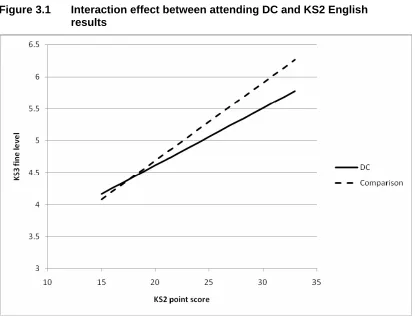
We found some evidence of a similar trend, though less pronounced, in this evaluation: KS2 attainment was related to outcomes for pupils attending DC in both English and mathematics. Pupils who were very low achievers (defined as being at Level 2 and below) and attended DC performed slightly better on average in English than very low achieving pupils who did not attend DC, although the effect is so small that it is unlikely10 to be of statistical
significance (see Figure 3.1 below). In mathematics this ‘cross-over’ effect was not observed and, controlling for background factors, attainment for DC pupils remained at or below that of comparison pupils across the KS2 ability range (see Figure A3.6).
It is also worth noting that the interaction of ‘girls and DC’ was included in the statistical models but there was no significant association with this in either the main English or mathematics models. In other words, no significant differences were found in the attainment of girls and boys attending DC in these subjects at KS3.
8
Low attainment was defined in terms of pupils being below their expected level at KS2. 9
The finding that PfS appeared to be successful for lower attaining pupils prompted the
recommendation that some PfS Centres may wish to review their selection criteria, in order to further ensure that they matched the PfS offer to those pupils who could most benefit from it. (Sharp et al., 2007, p.66, Recommendation 2).
10
Main findings
Figure 3.1 Interaction effect between attending DC and KS2 English results
Note: this figure is also presented in Appendix 3 as Figure A3.3. The diagram showing the equivalent interaction for mathematics can be found in Figure A3.6.
More specific aspects of attending DC, such as the number of hours attending classroom and/or coaching sessions, were similarly related to pupils having lower achievement. Attending DC classroom sessions was related to pupils achieving on average 0.01 of a KS3 level lower in English, and 0.02 of a KS3 level lower in mathematics, per standard deviation increase in the number of hours spent in classroom sessions. Pupils who attended DC coaching sessions achieved on average 0.01 of a KS3 level lower in English, and 0.02 of a KS3 level lower in mathematics, per standard deviation increase in the number of hours spent in coaching sessions. The timing of participation in DC (for instance whether pupils had attended DC one term ago, or three years ago) had no discernable impact on pupil attainment in either English or mathematics. This is in line with earlier findings from evaluations of Playing for Success (Sharp et al., 2004, Sharp et al., 2007). (Further information about these findings is presented in Appendix C.)
3.4 Overview
on
impact
Strands 1 and 2 of the evaluation produced apparently contradictory findings. The findings from the qualitative strand of the work, based upon the case studies, were positive about the impact of DC. The main benefits of participating in DC as reported by school and Centre staff were:
Main findings
• improved self-evaluation test results • benefits to the wider school community.
Strand 2 of the research, using statistical modelling conducted on national KS3 data, found negative associations between pupils attending DC and progress in English and mathematics.
There are several possible reasons for the differences between the outcomes from the two strands. First, the samples were different. Strand 1 comprised five schools and 51 young people, most of whom were in Years 7 and 8. Strand 2 focused on 448 pupils from 15 DC Centres, most of whom were in Year 9 when they attended DC.
Second, Strand 2 focused on attainment data, while Strand 1 examined a broader range of outcomes. Although Strand 1 collected the results of locally administered tests, differences in results may be partly be explained by the small-scale nature of the local assessment results reported in Strand 1, especially as these did not control for differences in background pupil characteristics or use a comparison group. Third, the two Strands reported results from different outcome measures, collected at different intervals – most of the tests administered by the schools in Strand 1 were KS2 National Curriculum Levels, whereas Strand 2 used KS3 point scores. The
assessment results reported in Strand 1 were collected while pupils were still attending DC, whereas results used in Strand 2 took place some time after pupils had taken part. Fourth, the period covered by the two strands differed: Strand 1 included information collected in 2008/9, whereas Stand 2 collected data from pupils who attended DC from 2005 to 2008. It therefore included results from DC Centres at an earlier stage of development.
Clearly both strands have different strengths and weaknesses. Strand 1 reports largely positive perceptions of participants, which may have been influenced both by their partial selection as ‘good practice’ examples and their wish to reflect positively on the experience of taking part. Strand 2 found a negative association between being involved in DC and progress from KS2 to KS3. However, we need to make an important qualification here. Rather than involvement in DC actually being associated with ‘negative’ progress, we consider it to be more likely that these associations are indications of the inadequacy of our statistical models in terms of capturing the differences between those pupils selected for DC and those in the comparison group (e.g. in terms of their characteristics and level of need), because we think it highly unlikely that DC was responsible for pupils’ comparative lack of progress.
No statistical model can capture all the complexities of educational
Positive features of the programme
4.
Positive features of the programme
An important question for policy makers and practitioners concerns ‘what works?’ in DC provision. This is a difficult question in the context of the mixed findings reported in the previous chapter. But, having said this, certain
features of DC provision were identified, especially in the qualitative strand of the evaluation, as contributing to positive impacts for pupils and other
stakeholders. These features, as identified by pupils and DC staff, can be summarised as follows:
• the appeal of the programme to young people • the pupil selection process
• learning content, style and the DC environment • engagement using the medium of sport.
4.1 Programme
appeal
The DC programme appealed to schools because it offered a means of raising standards and helping individual young people. The programme was viewed as both well-considered and adaptable because it could be tailored to meet the needs of particular schools.
The programme also held a strong appeal for young people. Most of the pupils required help with basic skills, but also needed an alternative to normal classroom lessons. In the words of one Year 7 pupil, the experience of
Positive features of the programme
I
t
w
a
s
i
m
p
o
r
t
a
n
t
The findings collected from the case-study visits showed that it was important to explain the programme to young people and to help them to view it as a positive opportunity – a prestigious programme that it was a privilege to attend. As one DC Coordinator explained:
The way they are engaged in the programme, it’s not done as often is the case and young people see themselves as ‘I’m on this programme because I’m thick’. It’s actually: ‘Congratulations you are on the
programme because you have the ability to do well. We think you will enjoy this and it will help you.’ The way it’s presented makes a significant difference to the way they perceive the programme and to their self-confidence.
4.2 Pupil
selection
Several interviewees highlighted the importance of selecting pupils who would benefit from taking part in DC. The selection process appeared to work well where DC teachers had drawn on a number of different sources of
information, including assessment and attendance data, as well as the views of staff in the school who knew the young people well.
Findings from the Audience Response Survey on motivation for attending DC:
• To find out why young people had decided to go to Double Club, we asked pupils to select (from a list of five reasons) all that were true for them.
• Over half of the young people (29 out of 51) said they had decided to go because a teacher had suggested it to them.
• Around half (26) said they had decided to go because they thought it would help with their literacy/numeracy.
• 20 decided to go because they wanted to play football/sport.
• 18 had gone to Double Club because their friends were going as well. • 16 had decided to go because they liked the football/sports club
associated with Double Club.
• We asked young people if they would have still wanted to go to Double Club if it had not been about football/sports.
• 32 out of 51 young people said they would still have wanted to go. • 10 young people said they would not have wanted to go.
Positive features of the programme
As noted in Chapter 3, there may be a possible weakness in the statistical modelling (in Strand 2) in that it may not have been able to identify all the relevant characteristics of young people who could or would benefit from DC. For example, staff at one school suggested that young people who were gifted and talented at sport could benefit particularly from involvement in DC. Overall, DC teachers and members of school staff told us that the young people who benefited most from participating in DC:
• had an interest in football (though were not necessarily good football players)
• had levels of literacy and numeracy below the level expected for their age,
or
• were coasting – ‘the ones who potentially could do really well but need that intervention to give them a boost’
• lacked self-confidence • had poor attendance.
One DC coordinator explained:
Our advice would be they [DC coordinators] target particular kids who need a bit of a boost. Their attendance might be starting to be a bit wobbly and they might be becoming disengaged. It’s the ‘four Ds’ really: demotivated, disengaged, disappearing and eventually departing – if we don’t do something about it.
The personalities of the young people involved and the group dynamics were also important factors to be considered, as one DC teacher explained:
You want [only] two pupils with behaviour problems in a group at the most, as it would upset the dynamic if there was more than that. Someone who would benefit the most would be someone with low levels of literacy, but not SEN… They have to have an interest in football even if they aren’t good at playing it. A lot of the boys aren’t good at football, although some in the group are. A lot of the boys don’t have hobbies, don’t have friendships and they benefit in particular from the sense of team work and working together.
The importance of ‘feeling special’ was reinforced by another DC teacher, who said:
There’s a lot of students who do come in who are quite difficult, who at the end I think go out a lot happier and I think feel quite special
because they’re doing it and they’ve been chosen from everybody else to do it. It’s sort of a privilege to do, I think.
Positive features of the programme
4.3
Learning content, style and environment
The programme content, pedagogical style and the learning environment were all fundamental to DC having a positive impact. Teaching quality was of fundamental importance.
School staff commented on the importance of the interpersonal skills of the DC teachers: they were able to build a good rapport with the young people in their class and create an atmosphere that was more relaxed than other lessons in school. They also worked hard to encourage a ‘team’ identity and to help young people feel proud of their involvement in DC. This was
considered especially important in encouraging young people’s positive self-esteem.
The identification with football and the link with a local football club was a key feature which was particularly appreciated by some of the young people, as illustrated by the following comment:
We like football and everything, and if we like football we want to learn about and we want to write about football. It’s every little boy’s dream to play for their team, isn’t it? So it’s like doing it for our local club and we really want to get stuck in.
[Year 7 pupil]
Likewise, teachers delivering the programme described sport as ‘a massive hook’ for young people: sport ‘breaks down a barrier to learning straight away’. It was also seen as a way of enabling young people to ‘access information on literacy and numeracy which they wouldn’t normally engage with.’ One DC teacher explained:
Some teachers have said that the lads won’t do any writing in their lessons. In my lessons, seeing a picture of a footballer and asking them to write about a goal has got them writing and talking about their work. Just because it’s football it gets them started. In a normal lesson they won’t do it as they think: ‘It’s English and I’ll have to do writing’.
The young people we spoke to also said how much they enjoyed using the resources and worksheets.
The English sheets were fun because they talk about Arsenal football players and how to spell their names, and team work.
[Year 7 pupil]
The high quality of the resources used in the DC sessions was commented on by members of the teaching staff in all of the case-study schools.
They are of a quality we couldn’t begin to produce ourselves. They are in colour; they are all bang up-to-date.
[Member of teaching staff]
Positive features of the programme
There are posters of players and it looks really bright. The atmosphere is excellent, exciting and original.
[Year 9 pupil]
The audience response survey contained several questions for young people about their work in the DC environment. Their responses indicated that the work was interesting, pitched at the right level and that they worked hard.
4.4
The impact of the sports sessions
The opportunity to play sport and develop sports skills made a specific contribution, especially in helping to develop a sense of team work amongst the young people participating in DC, enable them to make friends and gel as a group.
They have their own shirts for when they play football provided by
[name of football club]. It gives them an identity and a sense of belonging.
[DC teacher]
A learning mentor spoke of the impact the opportunity to play football had had on one of the young people with whom she worked:
He’s not brilliant at football, he does struggle, but the others haven’t laughed at him – they’ve joined in and passed the ball to him. It has done him good and built his confidence up as the others involve him. It’s working with others, the team work, that has helped him most.
Other benefits included enjoyment, developing a good level of fitness and the opportunity to receive expert coaching.
Findings from the Audience Response Survey on the work in Double Club
• We asked young people whether or not they agreed with a series of statements about Double Club Lessons.
• Most of the young people (46 out of 51) agreed that the work at Double Club was more interesting than most school lessons.
• Most young people agreed (42 out of 51) that the work at Double Club was easier to understand than work in other lessons. A similar proportion (41 out of 51) agreed that the teachers explained things more clearly at Double Club.
Positive features of the programme
As mentioned previously, some young people emphasised that they were motivated to be involved in DC because of the opportunity to play sport; but not all young people were equally motivated by this aspect of the programme. For some, the sports theme of the classroom sessions was an attraction even though there was no great interest in playing the sport itself. Views were mixed as to whether DC was as effective for young people who were interested in football, but not interested in playing it. One DC teacher explained his approach to this as follows:
I have a few kids who just want to do English and not football and I say it isn’t a problem. I just let them do the English and then they can go to their normal lesson.
We also found that not all young people would have been put off participating in DC if they hadn’t had the opportunity to play sport.
I would still have enjoyed it because at least you are talking about football and you can learn more about the team.
[Year 7 student]
We asked all young people about the importance of the opportunity to play sport by means of the audience response survey.
Findings from the Audience Response Survey on the importance of playing sport
• Young people were invited to select from a list of options, how they would have felt if they hadn’t had the chance to play sport as part of DC.
• The most common single response was it wouldn’t have mattered to me
(selected by 23 out of the 51 young people).
• 13 young people said they wouldn’t have wanted to go. 13 young people said they would have been unhappy.
• Only two young people said they would have been happy if they had not been able to play sport at DC.
Findings from the Audience Response Survey on learning sports skills
• We asked young people to select, from a list of four options, what they thought was good about being able to do sport at DC.
• Most young people said they liked having the opportunity to learn new sports skills as part of the programme (38 out of 51) and enjoyed
improving their fitness (39).
• Over half the young people (31) enjoyed playing as a team.
Positive features of the programme
These responses indicate a divergence of views, though it is clear that the opportunity to play sport was an important aspect of ‘added value’ for many young people (26 out of 51 said the absence of sport would make them unhappy or that they would not have wanted to attend).
Four of the case-study DCs were linked to football clubs and one was associated with another sport. In this case, the teacher felt that the ethos of the sport could help to encourage good behaviour amongst young people. He also acknowledged, however, that other sports may not be as popular as football and, as a result, the coaching sessions focused on a range of sports:
We try a range of sports to increase participation for everyone. They know that they might not like this week’s sport, but next week we’ll do something that they like.
The majority of young people (39 out of 51) said they enjoyed playing sports in DC regardless of whether the sport was football.
The importance of sequencing the sessions, so that the coaching immediately followed the classroom sessions was stressed by most DC teachers. DC teachers felt that having the coaching sessions follow immediately helped young people’s concentration in the first lesson and provided young people with ‘an instant reward’.
It’s a carrot for the kids to get their work done in the classroom. It’s there as an incentive… they know they can’t mess around in English or they will miss the football.
[DC teacher]
Members of teaching staff in two case-study areas highlighted their concern that offering sports sessions after school could have negative consequences for DC. As one teacher said:
It would negate the whole thing. It’s the balance that works so well. Some schools might run the football sessions after school, not [in] school time, as there is a perception amongst staff that they shouldn’t be playing football, when they should be in their lessons. It has to be how it is, as it works!
Positive features of the programme
To summarise, teachers and DC staff were asked to identify the most successful elements of the programme and they identified the following features as important to its success: (1) provide a programme that is
appealing both to schools and to underachieving young people; (2) selecting young people for the programme is of crucial importance, especially in terms of ensuring that those with the potential to benefit are selected; (3) once young people become involved, the programme needs to be sufficiently engaging and supportive of learning to enable them to maintain their
motivation and the promotion of their learning; (4) the opportunity to play sport contributes to the appeal of the programme, and makes a distinctive
Impact of different programme models
5.
Impact of different programme models
Section 3.1 of this report sets out the characteristics of four different ‘models’ of DC programme delivery. One aim of the research was to find out whether there were particular strengths and weaknesses associated with different DC models. To investigate this, in Strand 2 we compared KS3 data across the four different DC models, to see whether different models were associated with different KS3 attainment. We used chi-squared tests, controlling for background factors, for this purpose. The findings suggest that none of the models of DC delivery were associated with progress in English. There did appear to be a link between the models and the strength of the negative association with mathematics attainment11; nevertheless, we should point out that all models were associated with negative attainment. For the same reasons that we cannot conclude that DC is detrimental to pupils’ progress, we should not read too much into this result.
The Strand 2 finding that there were no meaningful differences between different DC models in terms of positive pupil progress was supported by viewpoints collected in the Strand 1 case studies: DC coordinators and teachers, members of the wider school teaching staff and young people all felt that their particular model worked well. When asked what improvements could be made to the DC programme, all interviewees felt the programme worked well in its current format.
There were, however, strong views on both sides about the value of having DC staff based on-site. DC teachers who are based in the school feel that the main benefit to this is that they see the young people they work with around the school on a daily basis and get to know them well.
A lot of the time it takes a while for the kids to trust you, because teachers change all the time and if they see someone constant they feel more comfortable.
[DC teacher]
Having a DC teacher based in the school was also felt to provide them with a good understanding of the school environment:
Anyone who has ever worked in a school knows what a strange place it can be from the outside. Every school works differently. Being based in the school, he knows the right people to speak to