Theses Thesis/Dissertation Collections
9-1-2009
A Vital environment
Taesung Jeng
Follow this and additional works at:http://scholarworks.rit.edu/theses
This Thesis is brought to you for free and open access by the Thesis/Dissertation Collections at RIT Scholar Works. It has been accepted for inclusion in Theses by an authorized administrator of RIT Scholar Works. For more information, please [email protected].
Recommended Citation
By
TAESUNG JENG
THESIS
Submitted in Partial Fulfillment of the Requirements for the Degree of
Master of Fine Arts in Imaging Arts
College of Imaging Arts & Sciences
Rochester Institute of Technology
September 2009
Angela Kelly, Committee Chair Date
Table of Contents
Acknowledgements iii
Abstract iv
List of Figures v
Introduction 1
The Process 5
Anthropocentrism 10
Humans and Nature 14
Conclusion 18
Acknowledgments
It has been great experience to meet good people and great teachers. I learned
something new ideas in Rochester and met those mentors to whom I would like to
express my gratitude: Angela Kelly, Alex Miokovic, Richard Gray and Therese Mulligan.
Professor Angela Kelly always made me aware of my weak points and showed
me patience. She also helped me with things beyond my ability.
Professor Alex Miokovic recognized possibility in me as an artist and taught me how to
develop it. Professor Richard Gray also gave me wisdom about how to work and taught
me how to express and produce ideas of art.
My acknowledgments cannot be completed without referring to my classmates. I
A Vital Environment
By
Taesung Jeng
Abstract
Every day, nature is being used and is also being destroyed through over cutting
and overgrazing of forests and grasslands because of the expansion of human numbers.
The economic and material demands of growing villages and towns are not the causes but
the results of human activity. What is the impact of the careless occupancy of so many of
earth’s human occupants? Are we turning everything in nature into something
human-made and human used?
My artworks emphasize how nature as a lay concept is changed by humans’
desire for comfort and materialism. In addition, since human creation is another form of
List of Figures
Figure 1.1 Destruction as Second nature 2007 2
Figure 1.2 Human Figures on Canvas 2008 4
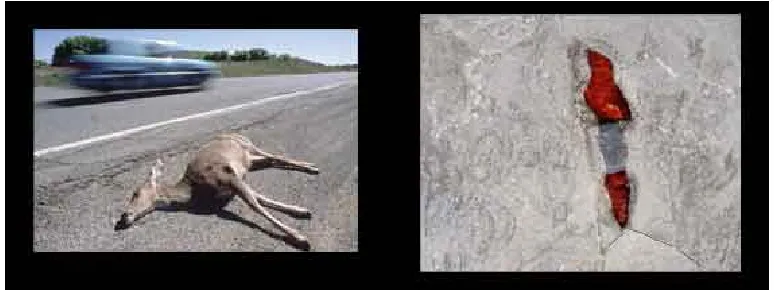
Figure 1.3 Road kill image and Destruction as Second Nature 2007 6
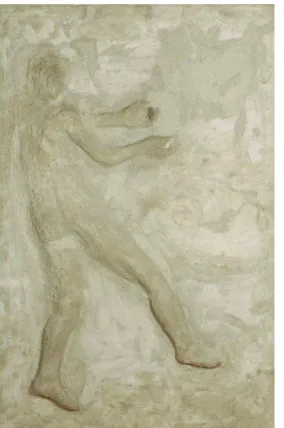
Figure 1.4 Human Figures on Canvas 2008 7
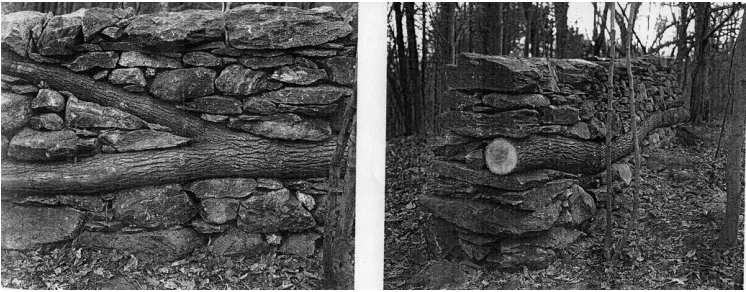
Figure 1.5 Woods by Andy Goldsworthy 11
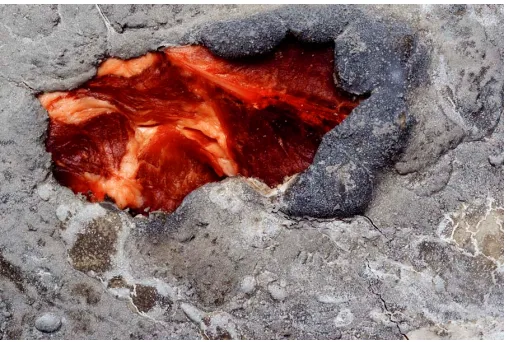
Figure 1.6 Destruction as Second nature 2007 12
Figure 1.7 Portraits on Concrete 2008 16
Introduction
Since the industrial revolution, our environment has changed dramatically.
Buildings, factories, and expressways have replaced trees, grass, flowers and streams
and natural goods have given way to synthetic products. The inspiration for my
exposition came from a commonly used man-made material: concrete. Since the 19th
century concrete1 has been used more than any other structural material in the world
and the concrete building has become a symbol for modern convenient space.
Although concrete brought us rapid economic growth and facility, it also
produced many harmful after effects causing both health and environmental
concerns. Today, the global effort is addressed by organizations such as
Greenpeace and the World Wildlife Fund (WWF); yet, we still need to see action
before we can believe it. I consider that my work has its place in the conduct of
the environmental movement because it suggests ways for ecological
conservation in metropolitan areas.
1 Bjorn Lomborg, “Measuring the real state of the world” The skeptical Environmentalist, (Cambridge:
I chose concrete, a man-made creation that has its own nature, to be
the main medium of my work. This construction material, primarily used to
make architectural structures and the foundation for roads amongst many
other modern day structures, has taken over the space that was formerly
occupied by wild plants and animals. I want to analyze that environmental
situation by reflecting on our current circumstance based on understanding
the visible changes in nature that we have come to accept today.
The first set of photographic series (Figure 1.1) indicates how
creatures cannot live harmoniously on or under concrete; it symbolizes a
victim of a road kill. To create these images, I placed red meat in each box
and poured concrete mix over it to produce the following six abstract images.
I chose meat to represent an organic object that is already dead and
concrete as physical evidence of what we are doing to the Earth. The visual
juxtaposition of meat and concrete expresses an abstract representation of
nature versus artifact. From this combination, the viewer is reminded of the
destroyed ecosystem, the cause and effect of the interaction between two
objects, and the dualism in our belief that contradicts the idea that one’s own
survival and comfort are above all, as well as thoughts of preserving Earth.
On the sculptural relief works, there are concrete figures slumbering
on each canvas. The poses indicate rest, comfort, and partial or total
unconsciousness within their own personal boxed space. I made these
bas-relief works (or low bas-relief works) to show that we spend most of our time on
concrete rather than on soil because we may subconsciously feel safer in our
own creation. The symbolic meaning of a living body is more strongly
expressed through 3-dimensional relief rather than 2-dimensional
photographic surfaces alone. I prepared three 48x72 and two 48x60inch
rectangular canvases (Figure 1.2). These rectangular frames are the general
dimensions of standard beds and are large enough for ordinary people and
Figure 1. 2 Human Figures on Canvases, Gallery installation view, 2008
To shape the human figures, I attached plaster bands on actual human
bodies. By using the casting shapes, the plastered bodies were taken out and
replaced on canvases to create the sleeping poses. The figures convey
different generations and sexes to show how the issue of living within our
own creation does not affect any one specific age or gender.
Through all my concrete works, I want to show a true reflection of
how human beings perceive the natural environment. As an artist, it is my
desire to provide the motivation to look back and question our relationship to
The Process
My work aimed at expressing, in a visual sense, how humans desire to
possess nature. This idea began while driving on the road one night. I passed
a deer lying dead on the shoulder. Since then I have come face to face with
other dead animals, which clearly furthered my realization that they did not
die for lack of food consumption or the attack of other animals, but by
automobile accidents. I came to a conscious understanding that is often
forgotten and neglected: the importance of protecting all living organisms in
our ecosystem.
According to the Animal People Newspaper2, the following chart
reveals the number of animals that are killed annually by motor vehicles in
the United States.
• 1.2 million dogs
• 15 million raccoons
• 19 million opossums
• 5.4 million cats
• 22 million rats
• 350,000 deer
Human beings constitute only a portion of nature. As such, we are not free
from the effect nature has on us. With these experiences, I gravitated towards
2 Edutel Technology, “ Road Kill,” 14 February, 2008, 4 March 2009
channeling these thoughts into my own work.
To create this hypothesis, I thought back on the road kill. Concrete is the most
common structural material to encroach on the territory of others in nature, such as
fauna and flora. I used the images of the road kill I saw everyday as the basis for my
work.
The first set of photographic work is an abstract interpretation of
destruction and deterioration of the environment. I portrayed the actual image
next to a unique visual image (Figure 1.3), not only as a statement of my
concept, but also as an aesthetic art form. As Mel Gooding writes in Abstract
Art, “A great deal of abstract art, as we have seen, seems to return or contain
reference, of one sort or another, to the external world. These might be found
in disguised or distorted form, in hints and suggestion of figures, or in
[image:12.595.146.533.260.405.2]passages opened to visual interpretation.”3 With this statement, I want to
point out that the combined materials are a metaphor of the results of human
transportation on concrete highways. The first photographic series signifies
nature around us, and represents anthropocentrism, that is, humans as
preeminent. As a result, my abstract photographs explore the possibility of
destruction, suggesting a more metaphoric approach rather than simply
reflecting on what we see, which is incessantly changing and expanding.
By using man-made material – concrete – my work imitates the
human process of using concrete to create something. As shown in Figure
1.4, it is, ironically, a depiction of a human. My
sculptural pieces were made from plaster to
create human figures with the canvas
symbolizing a confined block of concrete in
today’s visual society. Though I physically
brushed the canvas with concrete, the actual
texture formation is a natural phenomenon. This
can be seen as a false reality between humans
and nature. In this study, these relief works express a contemporary
[image:13.595.118.260.406.620.2]explanation of nature in modern society by recognizing how meaning can be
Figure 1. 4 Human figure
an explanation of nature in modern society. By recognizing how meaning can
be read through materiality, we may come to a new understanding and
acceptance of this social phenomena occurring in our surroundings.
The other purpose of making sculptured relief was to extend beyond
the medium of photography itself. To pursue sculptural work is to deviate
from the comprehension of customary and universal meaning and reject the
central idea by challenging the obvious.
All things existing in daily life have been developed into materials for
use and expression, in addition to the conventional materials used over the
past few centuries. This contributes to the experimentation of art, allowing
fundamental materials to be used for art without confinement. Historically,
this experimental spirit has provided the purpose of art. For instance, a
collage based on the cubist paintings of the early 20th century was the
beginning of attention to objects. Such attention was widely influential
throughout the century. Dadaist Marcel Duchamp 4 in particular
conceptualized objects as ready-made. Such conceptions were developed into
the pop art of the 1960s. This genre allowed freedom from typical rectangular
frameworks, from two-dimensional planes to three-dimensional solids, that
is, small spaces to large environments. Much like the experimental spirits, I
want to analyze the environmental situation of nature made artificial in this
current age and express the meanings of nature in modern society through
abstract photographs and sculptural relief works.
My concrete images can be visual objects by themselves without the actual
material presentation. Concrete images become a more realistic model than the real
world itself. Therefore, my abstract photographs and sculptural relief works show that
individuals also exist in the simulated and imaginary world. By newly recognizing
natural meanings and reviewing our real environment based on surrounding nature,
one makes nature an object in art. It is the intuitive power of nature, the spirit in
which it is observed rather than how it is reproduced. The way in which man, nature
and art coexist and can communicate with one another can be facilitated by
expressing internal images through the essence of vitality hidden on the inside. It is
not merely the superficial reality of nature, but a thorough reflection on human
Anthropocentrism
Francis Bacon said that the human makes nature the object of his
activities; human life is part of nature existing in nature and the human
problems dealt with by art could not but be affected by environment5.
Therefore, creative activities with nature as the object of concrete will
express the visual measures of an age. Such expression about nature is the
inevitable approach towards the source and the essence of life, and is
regarded as the act by which a human as a living body has his existence
confirmed. Art and nature have an indivisible relationship, and nature has
been repeatedly expressed as the fundamental object of art from the dawn of
time.
Many artists’ creative presentations target nature. In the case of
Goldsworthy, his working methods and styles are as diverse as the natural
phenomenon that he incorporated in his art works. His purpose in creating
artwork is to accomplish a dialogue between art and nature, and to express
the coexistence and union between the two.
5 Solomon, Julie robin and Martin, catherine gimelli. “eassys to commemorate the advancement of
Figure 1.5 Woods by Andy Goldsworthy
In his woods series (Figures 1.5), I understand that he regards nature
as the harmony and the equilibrium within mutual interaction, emphasizing
that humans should adjust themselves to nature, specifically, as one part of
nature as a whole, demonstrating the concept of an ecological worldview.
He considers the processes, namely, individual experiences and
behaviors, more important elements to the art work than finished works that
become a replica of an idea. His works are not obtainable as objects, but are
created in a natural environment to become one with nature. Human beings
and nature coexist in society, although not always in harmony as Andy
Figure 1.6 Destruction as Second Nature 2007
Figure 1.6, one of my abstract photographic images of concrete and
meat, represents the desire for human beings to dominate and possess nature.
This perhaps originated from the beginning of the existence of mankind.
From early in our history until the present, as science and technology
advance, nature has been conquered and exploited more and more. After the
development of civilization, symbiosis and coexistence became a doubtful
goal. The most important environmental concept to change is to stop
believing that humans are more important that anything else. The current
environmental crisis can be looked upon as being caused by an
anthropocentric value system. Often we consider human being as the most
significant entities of the universe. We should, however, be wary of
anthropocentrism and not assume that human existence is more superior to
We can overcome anthropocentrism that exploits the environment and
the common human belief that we have superiority over nature by
recognizing the interdependence of nature and culture. Human intervention
premised on those values can be the guiding ethical principle for future
generations. Anthropocentrism interprets reality exclusively in terms of
human values and experiences. Anthropocentrism, however, is unable to
provide a theory of how to preserve nature; therefore, the balance of the
entire ecosystem could be at risk. If nature is believed to be a big network for
linking existence, then the pursuit of individualism cannot be adequate for its
Humans and Nature
"We feel sorry for the disappearance of the characteristics of our
native town the most. The biggest shock of all is that we have destructed the
place of our free will where we have lived and also have to live for the period
to come ...we own this as the inevitable as far as human beings are not
separated from nature... however, the biggest hope of yours lies in the
improvement in such environmental problems."6 Robert Adams
We can see that nature is surrounded by an artificially constructed
space overflowing with industrial products. We are living in a myriad of
artificial structures produced by ourselves. City planning which corresponds
to population increases is intensifying the growing demand for artificial
structures. It could be argued that landscapes overflowing with artificial
structures have become a new version of the natural, and that such an attitude
towards artificial structures is one of many perspectives in observing today's
landscapes.
According to Robert Adams’ statement, we can formulate a general
idea. Our surroundings have become a place where plants can no longer grow
naturally and tree-lined streets, grassplots, park reservoirs, skyscrapers and
large-density apartments fill in the city.
People may not consider nature as a landscape until they gradually
become alienated from nature. We have brought exotic plants into our homes
and removed underwater creatures from the ocean into contained spaces to
satisfy our needs and pleasure. Nature is easily obtained through pet stores
and is gradually replaced by imitations made of synthetic materials. Nature,
through our control-complex, is made more convenient to possess and
manage within our man-made boundaries, particularly metropolitan areas;
however, we should not forget that we exist, on a larger scale, within nature’s
boundaries.
I created portraits that were manipulated in Photoshop to extend the
second step of the meat series by having actual human faces overlaid on
concrete blocks. In the visual images (Figure 1.7), I interpret that we find it
difficult to get out of the artificial structures, which have become the new
landscape today. It represents us, metaphorically, as we sink silently into the
Figure 1.7 Portraits on Concretes 2008
These portraits are overlapping on a background of three different
types of concrete, which are compounds of the same material. This shows our
physical limitation as human beings through the uniformity of figures despite
being born into various environments.
It also considers that the human being is part of nature and intends to
find his identity and live in accordance with the fundamental laws of nature.
Hence, they place the emphasis not on the representation of the object but on
the expression of the spiritual aspect of the figure, which makes the portraits
appear calm and subjective.
Humans have the advantage of convenience in life and material
affluence. The relationship between humans and nature is destroyed when
humans choose convenience over harmony. This has become a serious issue;
beings cannot survive while continually denying nature’s needs. We must
coexist with each other. Living in a society with a rapidly changing living
environment and a highly developed scientific civilization has made us lose
our nature; if we are to continue living on the planet, we must reconnect with
Conclusion
In Asking for the Earth, James George writes: “We have a dominant
culture that is, in an objective sense, a counter-culture, because it is, in
practice (if not in theory), against the order of Nature.” 7
While this may seem like an obvious statement, mainstream media
vastly distorts it. We might see animals in TV ads, anthropomorphized to
behave like us. Wild animals are stretched then shrunk in animated
sequences. In John Berger’s essay, Why look at Animals?8, he says that
humans have used animals as food, clothes and transportation but ever since
the 19th century, they have used them for other purposes. Now, wild animals
have been transformed into characters in animated films such as Disney’s to
mimic the human condition today. By being able to have control over animal
behavior, human beings show their anthropocentric tendencies.
7 George, James, Asking for the Earth: Waking Up to the Spiritual/Ecological Crisis, (Rockport, Mass.:
Figure1.8 Geico Insurance Company’s Commercial Picture
Such imagery (Figure 1.8) is attractive, but it conditions us to view
nature in a manipulated, disembodied, and absolutely detached context. The
effects on modern day media have led us to generalize and simplify nature as
we do all things.
When I first started my work, I was curious about the circumstances
within our environment. Ever since that encounter with the deer, I questioned
my everyday lifestyle, such as sleeping, walking, and most of my every day
activities, which were in fact part of a larger problem. I wanted to create a
body of work that would embody the ideas of nature as artifice. Looking at
environmental issues as an occurrence separate from us makes it something
we can despise and proclaim must change, but we forget that pollution comes
exploration has brought me to ask what we perceive as nature and what we
perceive as pollution, and how the line between the two has become very
thin. It is almost as if they are merged together, yet separate. My work brings
forth the idea of how we must change to coexist with nature.
While I was making my body of work, I realized that art is the
combination of time and environment. I gained a greater knowledge through
the working process rather than my expectations of the final result.
Based on this research, I hope to expand more deeply on my ideas
about art and its materiality along with exploring the role of the artist in the
Selected Bibliography
Lovelock, James. “Gaia and Man”a new look at life on Earth, Oxford: Oxford
university press, 1979.
Solomon, Julie Robin and Martin, Catherine Gimelli. “eassys to commemorate the
advancement of learing(1605-2005), Francis bacon and the refiguring of early modern
thought, Vermont, Ashgate publishing company, 2005
Attfield, Robin and Belsey.Andrew. Mary Midgley,The End of
Anthropocentrism?Philosophy and the natural Environment, Cambridge: University
of Cambridge, 1994.
H. Wildon Carr. The philosophy of change, Henri Bergson, Texas: Kennikat Press,
1970.
Berger, John, why look at animal? About Looking, New York: Pantheon Books, 1980
Friedman, Terry. Wood: Andy Goldsworthy, New York: Hang n. Abram, 1996.
Morton, Robert. Reality under siege: Sandy Skoglund, Massachusetts: The Smith
Collage Museum of Art, 1998.
Krakow, Barbara. Print and Multiples: KiKi Smith, Massachusetts: Barbara Krakow
Gallery, 1994.
Poster, Mark, From Jean Baudrillard, Selected writing, Stanford; Stanford university
press 1988.
George, James, Asking for the Earth: Waking Up to the Spiritual/Ecological Crisis,
Rockport, Mass.: Element, 1995.
Gooding, Mel. Abstract Art, Cambridge: University of Cambridge, 2001.
Baudrillard, Jean. The Vital Illusion, NewYork: Columbia University, 2000.