FPGA-BASED LIGHTNING SENSOR
A thesis submitted in partial fulfilment of the Requirements for the degree of
Bachelor of Electronics Engineering (Wireless Communication) (Hons.)
By
Seah Boon York (B021310093)
Under the guidance of Sani Irwan bin Salim
And
Dr. Mohd. Riduan bin Ahmad
Faculty of Computer and Electronics Engineering (FKEKK)
Technical University of Malaysia Malacca (UTeM)
II
UNIVERSTI TEKNIKAL MALAYSIA MELAKA
FAKULTI KEJURUTERAAN ELEKTRONIK DAN KEJURUTERAAN KOMPUTER
BORANG PENGESAHAN STATUS LAPORAN PROJEK SARJANA MUDA II
Tajuk Projek : ………
……… Sesi Pengajian :
1.
Saya ……….. (HURUF BESAR)
mengaku membenarkan Laporan Projek Sarjana Muda ini disimpan di Perpustakaan dengan syarat-syarat kegunaan seperti berikut:
2. Laporan adalah hakmilik Universiti Teknikal Malaysia Melaka.
3. Perpustakaan dibenarkan membuat salinan untuk tujuan pengajian sahaja.
4. Perpustakaan dibenarkan membuat salinan laporan ini sebagai bahan pertukaran antara institusi pengajian tinggi.
5. Sila tandakan ( √ ) :
SULIT* *(Mengandungi maklumat yang berdarjah keselamatan atau kepentingan Malaysia seperti yang termaktub di dalam AKTA RAHSIA RASMI 1972)
TERHAD** **(Mengandungi maklumat terhad yang telah ditentukan oleh organisasi/badan di mana penyelidikan dijalankan)
TIDAK TERHAD
Disahkan oleh:
__ ________________________ ___________________________________
(TANDATANGAN PENULIS) (COP DAN TANDATANGAN PENYELIA)
Tarikh: ……….. Tarikh: ………..
III
DECLARATION
I hereby, declared this report entitled FPGA-Based Lightning Sensor is the results of my own research except as cited in references.
Signature : ………... Author’s Name : Seah Boon York
IV
APPROVAL
This report is submitted to the Faculty of Engineering Technology of UTeM as a partial fulfillment of the requirements for the degree of Bachelor of Engineering Technology (Wireless Coomunication) (Hons.). The member of the supervisory are as follow:
Signiture: ... Name : Sani Irwan bin Salim (Supervisor) Position : Senior Lecturer FKEKK, UTeM
Department of Computer Engineering
Signiture: ...
Name : Dr. Mohd. Riduan bin Ahmad (Co-supervisor) Position : Senior Lecturer FKEKK, UTeM
V
This thesis is dediceted to my beloved mom, Loh Phaik See;
my father, Seah Say Tat;
my sister, Seah Boon Yun;
and
VI
ACKNOWLEDGEMENT
First of all, I would like to express my indebtedness to my supervisors, En. Sani Irwan bin Salim from FKEKK of UTeM for his invaluable guidance and kind helps in understanding and contracting the syntax of FPGA, Verilog code.
Besides, I would also like to express my gratitude to Dr. Mohd. Riduan bin Ahmad, my co-supervisor, for his guidance, constant encouragement, allowing access to his lab facilities, and a lot of knowledge about lightning flashes such as its formation from thundercloud, types (CG, IC, NBE and so on), how to determine the types of lightning and their return stroke respectively from the graphs of PicoScope.
Finally, I am grateful to my fellow friends and not exceptional for my seniors, Nur Qalbi, Dinesh and Haziq, who are currently taking researches about beacon frame and lightning as master students under Dr. Riduan for their helps during this entire dissertation work.
………... Seah Boon York (B021310093)
Fakulti Kejuruteraan Elektronik dan Kejuruteraan Komputer, Universiti Teknikal Malaysia Melaka, Hang Tuah Jaya, 76100 Durian Tunggal,
VII
ABSTRACT
Lightning has been a mysterious natural phenomenon since ancient time. People used to fear and worship the lightning and took it as the wrath of God. Although the phenomenon of lightning has been revealed as the transmission of electrical discharges, there are still many unknown areas inside the occasion of lightning itself such as the positron, the contents of the emission in lightning flashes and so on. Thus, the studies or researches about lightning are still a hot topic and being carried out until nowadays. Many equipment involved during these researches but they are very expensive and turn out to be a costly budget to the whole research or studies for example, PicoScope. This PicoScope is a PC software developed by Pica Technology Inc. which a lot of functionalities such as oscilloscope and digitizer. However, the market pricing for a standard PicoScope package nowadays is around RM 8,000. A master kit of PicoScope can even reach more that RM10,000 per unit. Thus, this project is carried out to make a low-cost digitizer by implementing the module (syntax) onto the FPGA board so that it will be running as a digitizer. Why is this digitizer so important? As we know, the signals from this real world, including lighting signals are in the analog form which cannot be understand by the electronics components which communicate in digital form. Therefore, implementing the FPGA board as the ADC is of great use and help in converting the real-world signals and further processing to extract vital information from the lightning signals.
Keywords: Field Programmable Gate Array (FPGA), Analog to Digital Convertor(ADC),
VIII
ABSTRAK
Kilat telah merupakan salah satu fenomena semula jadi yang misteri sejak zaman purba lagi. Orang purba takut akan kilat dan menganggap kilat sebagai murka Allah. Walaupun fenomena kilat telah dikemukakan sebagai penghantaran pelepasan elektrik selepas abab ke- 18, namum di situ masih terdapat banyak kawasan yang tidak diketahui dalam kriteria kilatnya seperti positron, kandungan pelepasan dalam kilat dan sebagainya. Oleh itu, kajian dan penyelidikan tentang kilat masih merupakan satu topik hangat dan giat dijalankan sehingga masa kini. Banyak peralatan yang terlibat dalam kajian ini tetapi peralatan ini adalah sangat mahal dan secara tidak langsung telah membebankan bajet penyelidikan secara keseluruhannya. Sebagai contoh, PicoScope. PicoScope ini adalah perisian PC yang diperkenalkan oleh Pica Technology Inc. yang boleh digunakan dalam pelbagai fungsi seperti osiloskop dan digitizer. Namun begitu, harga pasaran untuk satu PicoScope yang standard pada masa kini adalah sekitar RM 8,000 dan boleh mencecah RM10,000 sekiranya terdapat kelebihan yang lain lagi. Oleh itu, projek ini dijalankan untuk membuat digitizer kos rendah dengan memperisikan modul (syntax) pada FPGA supaya ia akan berfungsi seperti digitizer. Apakah kepentingan digitizer? Sebagaimana yang kita tahu, isyarat dari dunia ini adalah dalam bentuk analog yang tidak boleh difaham oleh komponen elektronik yang berkomunikasi dalam bentuk digital. Oleh itu, FPGA akan digunakan sebagai ADC untuk membantu dalam penukaran isyarat dunia nyata kepada isyarat digital dan selanjutnya untuk mendapatkan maklumat penting daripada isyarat kilat yang ditangkapkan.
IX
CONTENTS
COVER PAGE………...I CERTIFICATE……….………II DECLARATION………III APPROVAL………...………IV DEDICATION………V ACKNOWLEDGEMENT……….………...VI ABSTARCT………VII ABSTRAK……….…VIII LIST OF FIGURES………...…XI LIST OF TABLE………XV LIST OF EQUATIONS………XVI LIST OF APPENDIX………XVII
CHAPTER 1: INTRODUCTION………...1
1.1Background………....1
1.2Problem Statement……….2
1.3Objectives……….3
1.4 Scope of Work………...3
1.5Thesis Structure……….4
CHAPTER 2: LITERATURE REVIEW…………...……….5
2.1 Lightning……….….……….5
2.1.1 Formation of Thundercloud……….……….………….5
2.1.2 Thundercloud Structure……….………….6
2.1.3 Lightning Flashes and Thunder……….……….7
2.2 Electromagnetic Field Emitted by Lightning……….………8
2.2.1 How Does the EM Field Produced?...8
2.2.2 Ampere’s Law and Related Equations……….……9
2.2.3 How Does the EM Field Be Detected by Antenna?...10
X
2.4 Field-Programmable Gate Array (FPGA)………...….……12
2.4.1 Introduction……….……12
2.4.2 Workings Principle of FPGA………...………13
2.4.3 FPGA Board – SPARTAN 3AN……….…14
2.5 Analog-to-Digital Converter………...….…16
2.5.1 Conversion Process of the Analog Signal into Digital Output………….…18
2.5.2 Sensitivity and Accuracy of ADC………....……21
2.5.3 Analog Capture Circuit of Spartan 3AN……….…….……21
2.5.4 Comparison of ADCs Specifications………...….……24
2.6 Hardware Description Language – Verilog……….….……25
CHAPTER 3: METHODOLOGY……….………...………26
3.1 FPGA As the Digitizer……….……26
3.1.1 Steps of Running ISE Design Suit……….…….…….26
3.1.2 Flow Chart of ADC_16bits Module……….….…….36
3.1.3 Flow Chart of ADC_12bits Module……….………38
CHAPTER 4: RESULTS, ANALYSIS, AND DISCUSSION………....………….40
4.1 ADC_16bits Module……….……….……….40
4.1.1 Results and Analysis……….……….……...40
4.1.2 Implementation result………43
4.2 ADC_12bits Module……….………….……….44
4.2.1 Results and Analysis………44
4.2.2 Implementation result………48
4.3 Discussions……….………49
CHAPTER 5: CONCLUSION AND FUTURE WORK………...51
5.1 Conclu sion ………51
5.2 Future Works………51
XI
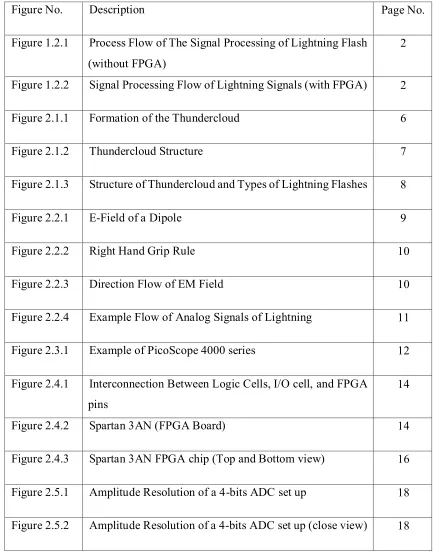
[image:11.612.109.542.138.690.2]LIST OF FIGURES
[image:11.612.115.541.138.695.2]Figure No. Description Page No.
Figure 1.2.1 Process Flow of The Signal Processing of Lightning Flash (without FPGA)
2
Figure 1.2.2 Signal Processing Flow of Lightning Signals (with FPGA) 2
Figure 2.1.1 Formation of the Thundercloud 6
Figure 2.1.2 Thundercloud Structure 7
Figure 2.1.3 Structure of Thundercloud and Types of Lightning Flashes 8
Figure 2.2.1 E-Field of a Dipole 9
Figure 2.2.2 Right Hand Grip Rule 10
Figure 2.2.3 Direction Flow of EM Field 10
Figure 2.2.4 Example Flow of Analog Signals of Lightning 11 Figure 2.3.1 Example of PicoScope 4000 series 12 Figure 2.4.1 Interconnection Between Logic Cells, I/O cell, and FPGA
pins
14
Figure 2.4.2 Spartan 3AN (FPGA Board) 14
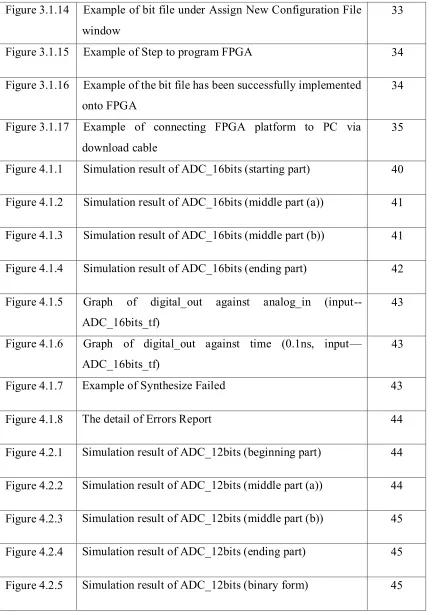
XII
Figure 2.5.3 Block Diagram of ADC Conversion Process 19 Figure 2.5.4 Process of Sampling and Holding (S/H) 20 Figure 2.5.5 Process of Quantizing and Encoding (Q/E) 21 Figure 2.5.6 Analog Capture Circuit and its Associated Stake Pin
Header (J22)
22
Figure 2.5.7 Analog Capture Circuit Diagram 22
Figure 2.5.8 External ADC (PmodAD5) 25
Figure 3.1.1 Example of Start Window of ISE Design Suit 27
Figure 3.1.2 New Project Wizard 27
Figure 3.1.3 Example of Project Setting 28
Figure 3.1.4 Example of Package Marking (SPARTAN 3E) 28
Figure 3.1.5 Example of New Source Wizard 29
Figure 3.1.6 Example of ADC module with testbench 30 Figure 3.1.7 Example of a module with its ucf 30
Figure 3.1.8 Running Simulation 30
Figure 3.1.9 Example of ISim 31
Figure 3.1.10 Example of LEDs on FPGA Board 31
Figure 3.1.11 UCF Location Constrains for LEDs 32 Figure 3.1.12 Example of bit. file successfully being generated 32
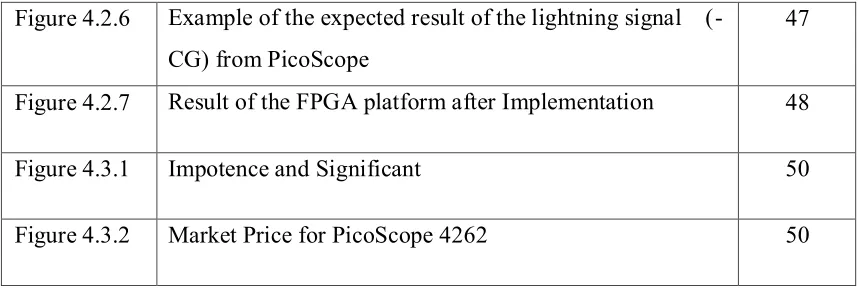
XIII
Figure 3.1.14 Example of bit file under Assign New Configuration File window
33
Figure 3.1.15 Example of Step to program FPGA 34 Figure 3.1.16 Example of the bit file has been successfully implemented
onto FPGA
34
Figure 3.1.17 Example of connecting FPGA platform to PC via download cable
35
Figure 4.1.1 Simulation result of ADC_16bits (starting part) 40 Figure 4.1.2 Simulation result of ADC_16bits (middle part (a)) 41 Figure 4.1.3 Simulation result of ADC_16bits (middle part (b)) 41 Figure 4.1.4 Simulation result of ADC_16bits (ending part) 42 Figure 4.1.5 Graph of digital_out against analog_in
(input--ADC_16bits_tf)
43
Figure 4.1.6 Graph of digital_out against time (0.1ns, input— ADC_16bits_tf)
43
Figure 4.1.7 Example of Synthesize Failed 43
Figure 4.1.8 The detail of Errors Report 44
XIV
Figure 4.2.6 Example of the expected result of the lightning signal (-CG) from PicoScope
47
Figure 4.2.7 Result of the FPGA platform after Implementation 48
Figure 4.3.1 Impotence and Significant 50
XV
LIST OF TABLE
Table No. Description Page No.
Table 1 PicoScope 4000 series Specifications 12 Table 2 Descriptions of each package of Spartan 3AN 16
Table 3 AMP Interface Signal 23
Table 4 Programmable setting for Pre-Amplifier 23
Table 5 ADC Interface Signals 24
Table 6 Specifications of ADCs 24
Table 7 Relationships between time taken of a sample being digitized to the sampling rate of the device
46
[image:15.612.115.541.140.450.2]XVI
LIST OF EQUATIONS
Equation No. Description Page No.
Equation 1 ∇ × B = Jfree 9
Equation 2 𝑑𝑄
𝑑𝑡 = 𝐼(𝑡)
9
Equation 3
𝐽 = 𝐼
𝐴
9
Equation 4 𝐽 = 𝜎𝐴 9
Equation 5 9
Equation 6 𝑓𝑠 ≥ 2𝑓𝑐 17
Equation 7
𝑟𝑒𝑠𝑜𝑙𝑢𝑡𝑖𝑜𝑛 =
𝑉𝑟2ᶰ
21
XVII
LIST OF APPENDIX
Appendix No. Description Page No.
Appendix A ADC_16bits Verilog Module 55
Appendix B Test bench of ADC_16bits Verilog Module 58
Appendix C ADC_12bits Verilog Module 59
1
CHAPTER 1
INTRODUCTION
1.1Background
Lightning has been a field of studies since the civilization of the Europe science. The phenomenon of the lightning is feared by people during ancient and assumed as the wrath of the God until it is being revealed as the propagation of the electrons inside the cloud. Somehow or rather, the lightning is still consisting of many unknown phenomena such as its fundamental mechanism, emission of the lightning flash (gamma ray and positron) and so on. Despite the records based on the raw eyes observations about the lightning in the ancient scriptures, we cannot really or fully understand what are the mechanisms of lightning flash and there are a lot of scientists still carry on the research on it until nowadays.
2
1.2Problem Statement
[image:19.612.117.534.302.381.2]Even though there are a lot of equipment that will help us a lot during capturing the lightning flash signals, there are still some improvement can be made such as combining all the equipment into one system which can carry out all the functions of those equipment respectively at the same time. As for the FPGA based lightning sensor, it is proposed to be able to run the doings of ADC, PC, oscilloscopes, and temporary storages of data collected. The details working flows are shown in Figure 1.2.1: Process Flow of The Signal Processing of Lightning Flash (without FPGA) and Figure 1.2.2: Signal Processing Flow of Lightning Signals (with FPGA).
Figure 1.2.1: Process Flow of The Signal Processing of Lightning Flash (without FPGA)
Figure 1.2.2: Signal Processing Flow of Lightning Signals (with FPGA) This project is mainly to compromise with the existence of the equipment involved, in other word, we are constructing a FPGA based lightning sensor that can run all the properties of the equipment so that we do not need too many of the equipment during carry out the lightning studies.
receiver Antenna Convert analog input into digital data ADC Read and process the digital data Data Storage
Computer Result/ Data
Display Oscillo
scope
[image:19.612.155.535.461.515.2]3
1.3Objectives
This project aims to design and develop a digitizer with FPGA-based system which can digitize the analog signal from the antenna (receiver) into digital signal with the sample rate up to 100MS/s and 12-bits vertical resolution. In the other words, we will have a Spartan 3AN FPGA platform which is able to detect the lightning signals with maximum frequency of 50MHz in a finest display sector of 4054 divisions/ boundaries.
1.4Scope of Work
The project mainly consists of four parts, understanding the working principle of ADC and Picoscope, constructing the flow of Verilog modules (ADC, LCD, SDRAM controller), implementing the coding onto the FPGA Board and then conducting the experiments.
The first scope, understanding the working principle of ADC and Picoscope is to identify the functionalities of a Picoscope in reading the input data and how does it display on the monitor. Besides, the working of ADC should be understood so that it will help a lot in programming the FPGA as a virtual ADC via Verilog code and clearly know about the specification of the components, devices capable of.
4
1.5Thesis Structure
This thesis consists of five chapters which are Introduction (Chapter 1), Literature Review (Chapter 2), Methodology (Chapter 3), Results & Analysis (Chapter 4) and Conclusion & Suggestions (Chapter 5).
The first chapter states a brief introduction about the history of lightning and the evolution of human knowledge in the understanding about lightning, the problem statement about the difficulty faced and expected to be overcome by conducting this project, thus lead us to the objectives or goals expected to be achieved at the end of this project. Besides, there are also some information about the scope of works in this project and the last part is about the thesis structure which shows us the brief structure flow of each chapters respectively.
5
CHAPTER 2
LITERATURE REVIEW
2 HEADING 3 – CHANGE COLOR TO WHITE BEFORE PRINTING
2.1Lightning
2.1.1 Formation of Thundercloud
6
Figure 2.1.1: Formation of the Thundercloud [29]
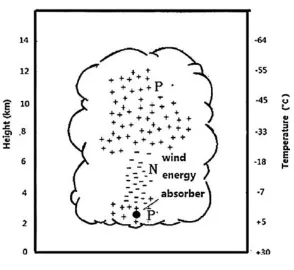
2.1.2 Thundercloud Structure
Before continuing explain about lighting, we need to understand what is thundercloud, what is its structure and how does it lead to an electrical discharge occurrence. A cloud vertical distance is basically from 500m up to 2km above the ground and the vertical diameter of the cloud itself can reach up to 19km. One of the conditions to form a thundercloud is the vertical diameter of the cloud must be at least 10km [2].
7
Figure 2.1.2: Thundercloud Structure
Thus, when the lower part of the thundercloud exceeds -30C, the objects on the earth such as trees, buildings, and earth surface itself will become positively charged, causing a great potential difference or imbalance that nature seeks remedy by passing current between two points and this phenomenon is known as corona. Corona discharge is due to the partial breakdown in the air at the points of high voltage conductor with the highest electrical stress [1]. As for a thundercloud, the electrons inside will try to move to the other opposite region (objects and earth surface) and the attachment process formed with the ‘leader’ or leader channel which is lightning [3].
2.1.3 Lightning Flashes and Thunder



![Figure 2.1.1: Formation of the Thundercloud [29]](https://thumb-us.123doks.com/thumbv2/123dok_us/135525.13179/23.612.119.536.71.292/figure-formation-of-the-thundercloud.webp)