University of Southampton Research Repository
ePrints Soton
Copyright © and Moral Rights for this thesis are retained by the author and/or other copyright owners. A copy can be downloaded for personal non-commercial
research or study, without prior permission or charge. This thesis cannot be
reproduced or quoted extensively from without first obtaining permission in writing from the copyright holder/s. The content must not be changed in any way or sold commercially in any format or medium without the formal permission of the
copyright holders.
When referring to this work, full bibliographic details including the author, title, awarding institution and date of the thesis must be given e.g.
AUTHOR (year of submission) "Full thesis title", University of Southampton, name of the University School or Department, PhD Thesis, pagination
UNIVERSITY OF SOUTHAMPTON
FACULTY OF ENGINEERING, SCIENCE & MATHEMATICS School of Electronics and Computer Science
Links Personalisation with Multi-Dimensional Linkbases
by
Panchit Longpradit
UNIVERSITY OF SOUTHAMPTON ABSTRACT
FACULTY OF ENGINEERING, SCIENCE & MATHEMATICS SCHOOL OF ELECTRONICS AND COMPUTER SCIENCE
Doctor of Philosophy by Panchit Longpradit
Adaptive hypermedia has provided a way information can be presented online. Based on adaptive presentation and adaptive navigational support, a static page can now be dynamically personalised for an individual user. Users who possess different needs, interests and background knowledge can now be provided with a different presentation of the same information. Many frameworks for adaptive hypermedia systems and applications have been proposed that use different strategies.
This thesis proposes a new approach for the presentation and personalisation of links based on the idea of a multi-dimensional linkbase. It is the notion that describes a single linkbase that contains links annotated with metadata that place the links in several different contextual dimensions at once. These sets of links signify different dimensions of expertise of the user and are encoded to condition the visibility of links. This work builds upon the implementation of FOHM and Auld Linky at Southampton University. To provide users with control over the personalisation of their links, the users are provided with navigational tools for the presentation of these links. The presentation of the links depends on the preferences of the users and the linkbases they have enabled and disabled. This facilitates flexibility and reduces the user syndrome of ‘too many-irrelevant-additional links’.
Contents
Chapter 1 Introduction ... 1
1.1 Overview of this Research ... 1
1.2 Objectives and Scope... 3
1.3 Contributions ... 5
1.4 Document Structure ... 6
1.5 Declaration... 7
Chapter 2 Background ... 9
2.1 Introduction... 9
2.2 Hypermedia... 9
2.2.1 History of Hypermedia ... 10
2.3 Adaptive Hypermedia ... 11
2.3.1 Adaptive Hypermedia System ... 12
2.3.2 User Modelling ... 13
2.4 Adaptation Techniques in AH ... 14
2.4.1 Adaptive Presentation... 14
2.4.2 Adaptive Navigation Support ... 15
2.5 Review of Adaptive Hypermedia Systems and Applications ... 16
2.5.1 ISIS-Tutor ... 16
2.5.2 INTERBOOK ... 17
2.5.3 ELM-ART... 17
2.5.4 AHA! ... 17
2.5.5 HERA ... 19
2.5.6 JointZone ... 20
2.5.7 HA3L... 20
2.5.8 ILASH... 21
2.5.9 User-Controlled Link Adaptation ... 21
2.6 Summary of AH systems and applications ... 21
2.7 AH Research Direction ... 24
2.7.1 Adaptive Web Systems... 24
2.7.2 Ontologies in AH ... 24
2.7.3 Web Services and Semantic Web ... 25
2.8 Summary ... 27
Chapter 3 Open Hypermedia and FOHM... 28
3.1 Introduction... 28
3.2 Open Hypermedia ... 28
3.2.1 Concepts of Open Hypermedia... 29
3.2.2 Examples of Open Hypermedia Systems ... 29
3.3 The Link Service Approach ... 31
3.4 Open Hypermedia Protocols and FOHM... 34
3.5 FOHM Structures... 35
3.6 Auld Linky ... 38
3.7 Open Adaptive Hypermedia ... 39
3.8 Ontological Hypermedia... 40
3.9 Summary ... 42
Chapter 4 Initial Work... 43
4.1 Introduction... 43
4.2 Technologies ... 44
4.3 Link Augmentation with Auld Linky ... 44
4.4 The Integration of the AHA! System with the Link Service ... 48
4.4.1 The Thai-Dutch Cookery Application with AHA! ... 49
4.4.2 The Preliminary Integration of AHA! with Auld Linky... 52
4.4.3 Screenshots of the Cooking Tutorial with the AHA! system ... 54
4.5 Different Dimensions in Linkbases (DDL) ... 59
4.5.1 System Architecture... 61
4.5.2 The Implementation of DDL ... 65
4.6 Reflections on the Initial Work... 69
4.7 Summary ... 72
Chapter 5 Multi-Dimensional Linkbase and Inquiry-led Navigation System .. 73
5.1 Introduction... 73
5.2 Revisiting AH and its Shortcomings ... 73
5.3 Revisiting OH and FOHM ... 74
5.4 Multi-Dimensional Linkbase (MDL)... 76
5.5 Inquiry-led Navigation System (INS)... 79
5.5.1 Definition of Inquiry-led Navigation System ... 79
5.5.2 Characteristics of an Inquiry-led Navigation System ... 81
5.5.3 Why Choose INS with MDL? ... 81
5.6.1 Domain Preparation ... 82
5.6.2 Domain Ontology ... 82
5.6.3 Types of Inquiry ... 87
5.6.4 Link Classification... 88
5.6.5 Link Presentation ... 91
5.7 Summary ... 92
Chapter 6 Inquiry-led Personalised Navigation System (IPNS) ... 94
6.1 Introduction... 94
6.2 Web site Description... 94
6.3 System Architecture... 95
6.3.1 Domain Model ... 97
6.3.2 Navigational Model ... 99
6.3.3 Adaptation Model ... 100
6.3.4 User Model ... 101
6.4 System Implementation ... 102
6.4.1 Multi-Dimensional Linkbase(s)... 102
6.4.2 Link Structures within the IPNS... 105
6.4.3 Inquiry-led tools... 108
6.4.4 Mechanism for Connecting the Personalised Components with the Link Server ... 112
6.5 Adaptive Techniques Used in IPNS ... 116
6.6 Other Personalised Features in IPNS... 118
6.6.1 Personalised Site Map... 118
6.6.2 Personalised Assessment ... 119
6.6.3 Personalised User Report... 120
6.6.4 Personalised Inquiry of the Day ... 121
6.7 Summary ... 121
Chapter 7 Evaluation ... 123
7.1 Introduction... 123
7.2 Background ... 123
7.3 Human-Computer Interaction (HCI) Evaluation ... 124
7.4 Evaluation of Hypermedia and Adaptive Hypermedia Applications ... 126
7.4.1 Evaluation of Hypermedia Applications ... 126
7.4.2 Evaluation of Adaptive Hypermedia ... 128
7.5 Evaluation Approach to IPNS... 129
7.5.2 Defining Evaluation Tasks and Evaluation Methods ... 132
7.6 Experimental Design... 135
7.6.1 Experiment 1... 136
7.6.2 Experiment 2(a) ... 137
7.6.3 Experiment 2(b) ... 137
7.6.4 Experiment 3... 137
7.7 Summary ... 138
Chapter 8 Evaluation Results ... 139
8.1 Introduction... 139
8.2 Heuristic Evaluation ... 139
8.2.1 Additional Comments from the Heuristic Evaluation ... 142
8.3 Empirical Evaluation ... 146
8.3.1 Experiment 1: To investigate the effectiveness of the user-controlled adaptation provided by the MDL concept as applied in the IPNS prototype in comparison to navigation without the presence of personalised tools... 146
8.3.2 Experiment 2(a): To examine the efficiency of the user adaptation provided by the MDL concept as applied in the IPNS in comparison with the system without the presence of personalised tools ... 150
8.3.3 Experiment 2(b): To examine if users prefer the user-controlled adaptation provided by the MDL concept as applied in the IPNS more than non-personalised systems ... 153
8.3.4 Experiment 3: To study the user's satisfaction towards the usefulness of the user-controlled adaptation provided by the MDL concept as applied to the IPNS... 158
8.4 Synopsis of Results ... 167
8.5 Discussion ... 169
8.6 Summary ... 172
Chapter 9 Conclusions and Future Work ... 174
9.1 Summary and Conclusion ... 174
9.1.1 MDL concept ... 174
9.1.2 MDL implementation ... 175
9.1.3 MDL and Multiple Linkbases... 176
9.1.4 MDL and AH criticisms ... 176
9.1.5 Evaluation ... 177
9.2 Novelty of the research in this thesis ... 178
9.3 Future Work ... 178
9.3.1 Research Issues ... 178
9.3.2 Future Research Directions... 181
9.4 Concluding remarks ... 184
Appendix A. Heuristic Evaluation ... 185
Appendix B. Empirical Evaluation ... 190
Appendix C. Data from Experimental Study... 211
Appendix D. HCI Evaluation Methods and Techniques... 222
List of Figures
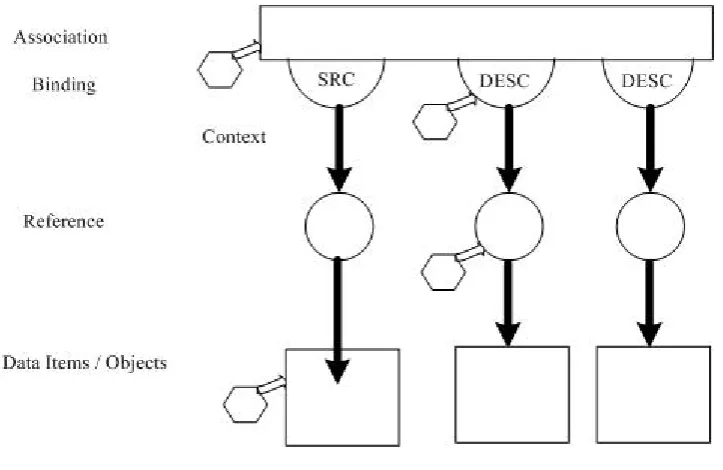
Figure 3-1: A basic FOHM structure with the Context object attached ... 35
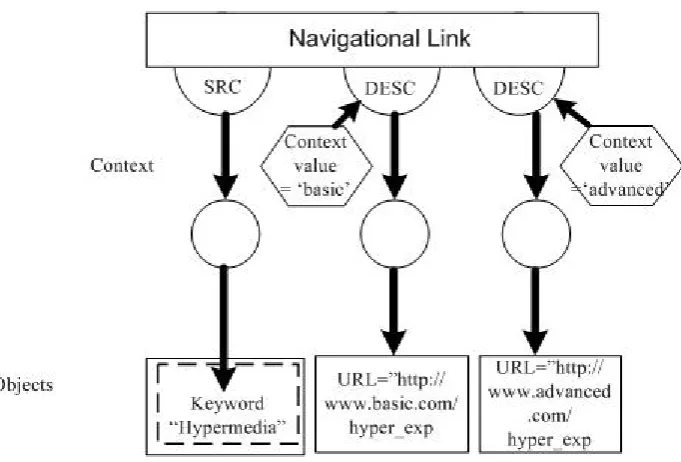
Figure 3-2: A FOHM Navigational Link Structure ... 37
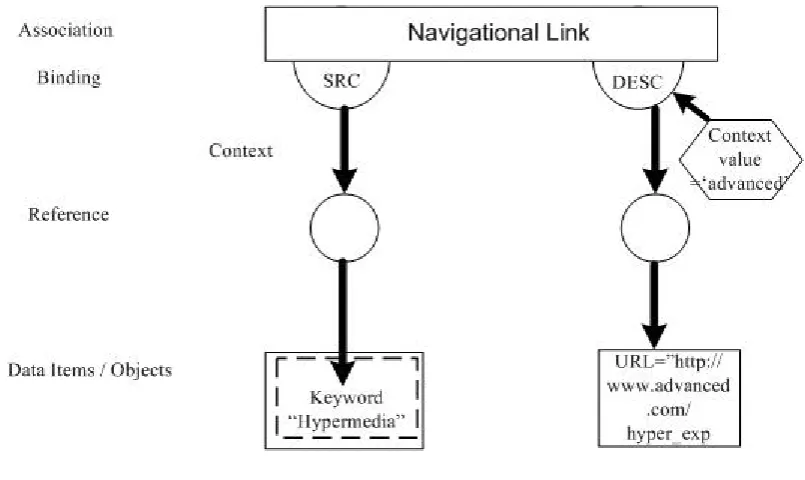
Figure 3-3: Remaining FOHM Link Structure after the context culling process ... 38
Figure 3-4: Ontological linking (modified Wills, 2005b) ... 41
Figure 4-1: The use of conditional inclusion of fragments in ASP ... 45
Figure 4-2: The system architecture of the cookery website... 46
Figure 4-3: The recommended lessons for beginners ... 48
Figure 4-4: The example of a concept file - ‘Overview’ ... 50
Figure 4-5: The Overview.xhtml ... 51
Figure 4-6: The Overview.xml ... 51
Figure 4-7: The use of “AHA! Phase” tag to capture the knowledge phase of the user 52 Figure 4-8: An example of a linkbase in Thai-Dutch Cookery Application ... 53
Figure 4-9: The entry page of the Thai–Dutch Cooking Tutorial ... 55
Figure 4-10: The Thai–Dutch Cooking Tutorial: the welcome page ... 55
Figure 4-11: The Thai-Dutch Cooking Tutorial: the learning page ... 56
Figure 4-12: The Thai–Dutch Cooking Tutorial: the activation of the beginner lessons ... 57
Figure 4-13: The Thai–Dutch Cooking Tutorial: the activation of the beginner quiz... 57
Figure 4-14: The Thai–Dutch Cooking Tutorial: the quiz page ... 57
Figure 4-15: The list of pages the user has read ... 58
Figure 4-16: The colour configuration page... 58
Figure 4-17: The dataflow diagram of a new Thai Cookery site... 60
Figure 4-18: The system architecture of a personalised Thai Cookery Web-based application... 63
Figure 4-19: An example of a linkbase in General Cookery Expertise Dimension ... 65
Figure 4-20: The Personalised Thai Cookery siste: the use of conditional inclusion to recommend the user to take a pre-test ... 66
Figure 4-21: The Personalised Thai Cookery site: the Pre-Test Page ... 66
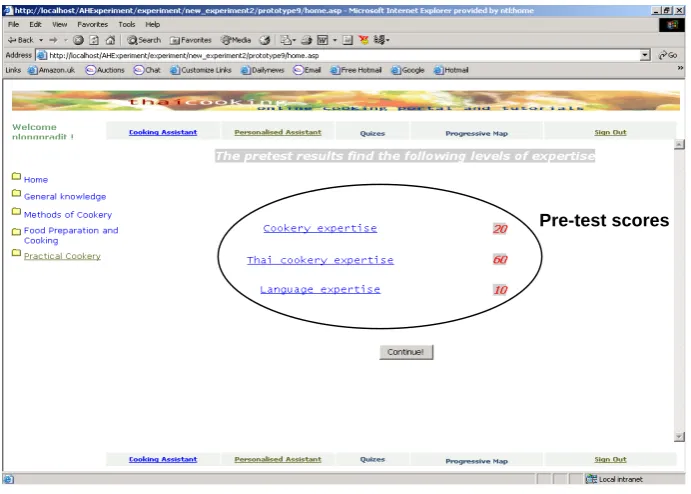
Figure 4-22: The Personalised Thai Cookery site: the pre-test result ... 67
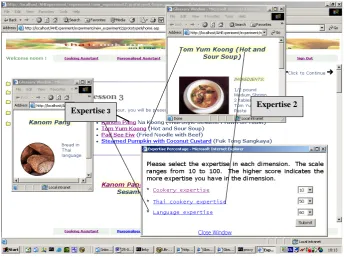
Figure 4-24: The Personalised Thai Cookery site: the ‘Personalised Assistant’
interface ... 68
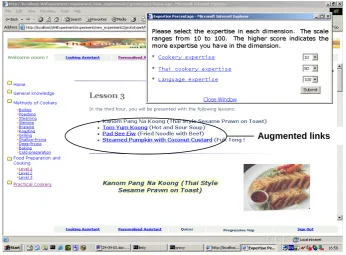
Figure 4-25: The Personalised Thai Cookery site: the augmented links from expertise linkbase………..69
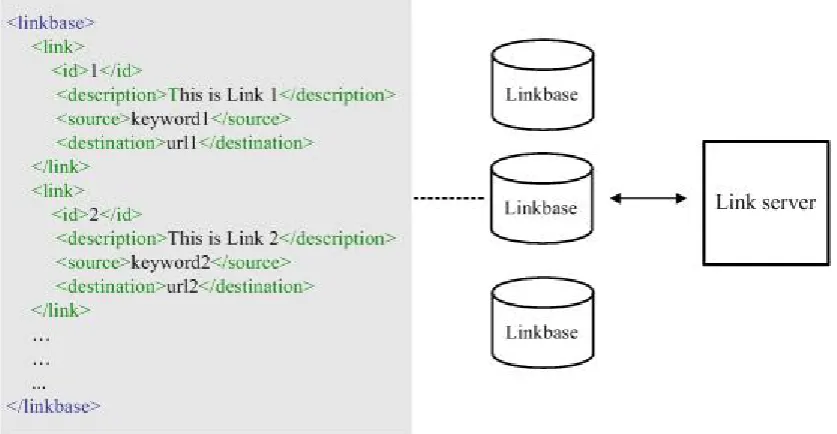
Figure 5-1: Traditional XML linkbase ... 77
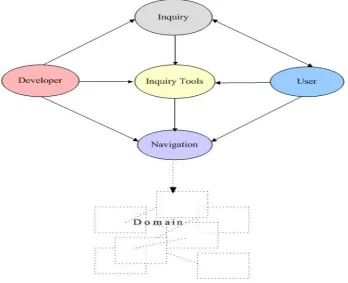
Figure 5-2: An Inquiry-led Navigation System (INS)... 80
Figure 5-3: Concept hierarchy with ontological relationships between concepts ... 83
Figure 5-4: Example of the topic ‘Protein’ and its related concepts ... 86
Figure 5-5: Concept inquiry that a user can perform... 87
Figure 5-6: Original links classification ... 89
Figure 5-7: The Input-Transformation-Output model (Slack et al., 1998) ... 90
Figure 5-8: Classification of the Subject dimension links... 90
Figure 5-9: (a) Stereotyping and (b) High-level concept mapping ... 91
Figure 5-10: Links Presentation with MDL ... 92
Figure 6-1: The IPNS architecture... 96
Figure 6-2: (a) The E-Book data content in IPNS and (b) the content from Domain Ontology... 98
Figure 6-3: The Navigational model in IPNS – Informal Browsing (1) and Inquiry-led Tools (2)... 99
Figure 6-4: Adaptation Model ... 100
Figure 6-5: The initialisation of the user model ... 102
Figure 6-6: Multi-Dimensional Linkbase (s) (MDL(s)) ... 103
Figure 6-7: A simple FOHM Expertise MDL ... 106
Figure 6-8: An example of FOHM Glossary link... 107
Figure 6-9: An example of FOHM Inquiry Link... 108
Figure 6-10: The ‘Personalised Links Assistant’ interface ... 109
Figure 6-11: The ‘Inquiry Links Assistant’ Interface... 110
Figure 6-12: The resulting page of the ‘Inquiry Links Assistant’ interface ... 110
Figure 6-13: The ‘Select Text’ button for the Follow Links assistant interface... 111
Figure 6-14: The ‘Follow Links’ assistant interface ... 112
Figure 6-15: The mechanism for connecting the ‘Personalised Links Assistant’ interface with Auld Linky and the Expertise MDL……….114
Figure 6-16: Adaptive presentation in IPNS………116
Figure 6-18: A screen shot of the personalised site map of IPNS………118
Figure 6-19: The 'interactive' version of the personalised assessment……….119
Figure 6-20: The drag and drop interface using Flash MX 2004……….119
Figure 6-21: The scoring page of the interactive exercise………120
Figure 6-22: The personalised user progress………120
Figure 6-23: The personalised inquiry of the day……….121
Figure 8-1: The overall result of the heuristic evaluation... 141
Figure 8-2: The percentage of each heuristic... 142
Figure 8-3: Percentage of task completed between non-personalised system and IPNS ... 150
Figure 8-4: Subjective feedback on the ‘Affect’ aspect of the system ... 159
Figure 8-5: Subjective feedback on the ‘Control’ aspect of the system ... 160
Figure 8-6: Subjective feedback on the ‘Efficiency’ aspect of the system ... 161
Figure 8-7: Subjective feedback on the ‘Helpfulness’ aspect of the system ... 162
Figure 8-8: Subjective feedback on the ‘Learnability’ aspect of the system... 163
Figure 8-9: Subjective feedback on the ‘Navigation’ aspect of the system ... 164
Figure 8-10: Subjective feedback on the ‘Comprehension’ aspect of the system... 164
Figure 8-11: Subjective feedback on the ‘Overall reactions using the system and the tools’... 166
Figure 8-12: Percentage of the users’ overall reactions using the system and the tools ... 166
Figure 9-1: The current representation of a user’s search result for a topic in the ontology ... 181
List of Tables
Table 2-1: Examples of techniques used in AH systems and applications... 23
Table 4-1: Mapping between the score of expertise levels and the context in linkbases ... 64
Table 4-2: Road map of the development of the three AH system... 71
Table 5-1: Relationship types and their uses ... 84
Table 6-1: Mapping between the score of expertise levels and the context in the Expertise MDL... 115
Table 7-1: The distribution of subjects ... 131
Table 7-2: The distribution of subjects for the ‘users evaluation’ in terms of computer usage ... 132
Table 7-3: Heuristics and their description (taken from Nielsen, 1993) ... 133
Table 7-4: Scales for measuring user’s satisfaction (modified from Wills, 2000) ... 135
Table 8-1: The allocation of subjects for Experiment 1 ... 147
Table 8-2: The calculation of Time percentage ... 148
Table 8-3: The calculation of Completion percentage... 148
Table 8-4: The calculation of Score percentage ... 149
Table 8-5: Descriptive statistics for the two systems in Experiment 1 produced by SPSS ... 149
Table 8-6: Result produced by SPSS for the ‘related t test’ for Experiment 1... 149
Table 8-7: The allocation of subjects in the Experiment 2 (a)... 151
Table 8-8: The calculation of the Time percentage ... 152
Table 8-9: The calculation of the Percentage of tasks found... 152
Table 8-10: Descriptive statistics for the systems in Experiment 2(a) produced by SPSS... 153
Table 8-11: Result produced by SPSS for the ‘independent t test’ for Experiment 2(a) ... 153
Table 8-12: The allocation of the subjects in the Experiment 2(b)... 154
Table 8-13: Result produced by SPSS for the three systems in Experiment 2(b) ... 155
Table 8-14: The statistical result for non-personalised systems and the IPNS... 155
Table 8-16: Result produced by SPSS for the subjective feedback on
the ‘user control’ aspect of the IPNS ... 157
Table 8-17: Summary of the statistical results of the subjective feedback for Experiment 2(b)... 157
Table 8-18: The allocation of the subjects in the Experiment 3 ... 158
Table 8-19: Result produced by SPSS for the scale ‘Affect’... 159
Table 8-20: Result produced by SPSS for the scale ‘Control’ ... 161
Table 8-21: Result produced by SPSS for the scale ‘Helpfulness’... 163
Table 8-22: Result produced by SPSS for the scale ‘Comprehension’ ... 165
Acknowledgements
This PhD thesis has been completed with a number of dependable supporters, and I would like very much to acknowledge all their encouraging contributions that I have received throughout my studies.
Firstly, I thank Professor Wendy Hall for her constructive supervision and for all her support and understanding of my circumstances and abilities.
Secondly, I express my sincere thanks to Dr Gary Wills, my co-supervisor, who is not only a supervisor but also an advisor, for his continuous superb supervision, support and help up to the completion of this thesis, and to Dr Hugh Davis for his very helpful advice on initial issues regarding my work.
Thirdly, I am indebted to Dr Christopher Bailey and Terence Howe, my best friends and my Java programming advisors, for devoting their valuable time guiding me in coding the early integration and assisting me in the later modification between the front-end and the back-end of my system, and also for proofreading some of the chapters of my thesis.
I also thank Dr Dave Millard for offering his constructive advice to help me conceptualise my conference papers, Mr Quintin Gee for his superb proofreading all my chapters, Mr Lester Gilbert for valuable advice on the statistical analysis, and Dr Maria Karam for advice on evaluation. My thanks are also reserved for my friends; particularly IAM friends, Dr Nor Aniza Abdullah, Thanyalak Maneewatthana, Dr Muan Hong Ng, Wasara Rodhetbhai, Dr Jin Zhou; David Wild; Thomas Richter; and all other Thai friends, for all their friendship, love, and support.
Chapter 1 Introduction
The advent of Adaptive Hypermedia (AH) enhanced how information could be presented and personalised online. It is an area of research which attempts to reduce cognitive overload and the disorientation problem by assisting users in their navigation and decreasing their time in finding the right information. Based on its adaptive presentation and adaptive navigation support (Brusilovsky, 1996; Brusilovsky, 2001), a (static) page can be viewed differently in response to individual users. Users with different background knowledge and interests are presented with different portions of the same information, or different information adapted accordingly, in the form of contents and navigational links. The user model, a model to capture users’ information about their initial interests and their dynamic browsing behaviour, is one of the major components for the personalisation and adaptation to take place. Many frameworks for AH systems and applications have been proposed and AH research has also been recently extended to cover issues such as shareability and reusability and the Semantic Web (De Bra et al., 2004; Maneewattana et al., 2005).
1.1 Overview of this Research
The Open Hypermedia (OH) subgroup of the hypertext community originated in the late 1980s. They viewed hypermedia as a system providing services for integration of information and processes in a distributed heterogeneous environment where there are no distinctive access rights between the reader and the author (Davis et al., 1993). The underlying principle of the OH concept is that links are separated from the body of a hypermedia document and stored independently in a link database (linkbase). A linkbase can be therefore viewed as a database of link structures. An example of a link structure is one which maintains information about the source and destination of that particular link. Within the link-oriented view of hypermedia, a link service – an application to provide link functionality to other applications – is required. This link service operates on demand. One technique to provide such functionality is link augmentation. This is defined as a technique whereby external links are inserted directly into the body of a document (Bailey et al., 2001). However, the common difficulty with link augmentation is that every significant word on a page can become a link and this can cause a problem of link overload. This thesis proposes a concept which reduces this problem of too many additional links being inserted into a page, as discussed later.
Over a number of years of research, the OH community has proposed generalised models such as Intermedia (Yankelovich et al., 1988), Sun’s Link Service (Pearl, 1991), Chimera (Anderson et al., 1994) and Hyper-G (Andrews et al., 1995), and protocols to provide interoperability between systems. Researchers at the University of Southampton evolved several systems: Microcosm (Davis et al., 1993), an OH system in which users were provided with dynamic and cross-application hyperlinks; the Distributed Link Service (DLS) (Carr et al., 1995), which widened the Microcosm philosophy to incorporate the newly-arrived Web model and supported multiple users in a distributed environment; and the Fundamental Open Hypermedia Model (FOHM) (Millard et al., 2000), an OH model with contextual structures used to describe the structure of hypertext objects and their associations between data in different domains of hypertext systems.
information. When we now want to know about something, everyone’s first choice is to use a search engine to look for that particular information on the Web. The Web hosts billions pages of original information and the ‘Google’ search engine announced the increasing of its index to 8 billion pages in November 2004 (Sullivan, 2005). It is claimed that the clarity of the hypertext model behind the Web has led to its success (Bailey, 2002). Nevertheless, although the Web provides users with navigation facilities using hypermedia links and search engines, its full potential is yet to be discovered and made available. One of the shortcomings of the Web as a hypermedia application is that most links are embedded in the source document, and that there is no support for associative linking (Hall, 2000). Embedding links in the source document results in the problem of updating and maintaining materials, which users observe as broken links. The lack of support for associative linking leads to the difficulty in finding the right information. There have been a number of research attempts to solve these shortcomings, two of which are open hypermedia and adaptive hypermedia.
Adaptive Hypermedia (AH) is also a sub-discipline of hypertext research. This area of research has aimed at improving the usability of hypermedia applications by solving the above-mentioned problems as well as the problem caused by the free-exploration environment. It is an approach that takes into consideration individuals’ differences, and provides a selection of adapted contents and links uniquely tailored to each user’s needs.
1.2 Objectives and Scope
The link augmentation technique offers the advantage that links can be created, added, or modified without the original document being affected, and likewise the text can be modified or moved around, while the original links still function correctly (Hughes, 2000; Bailey et al., 2001). However, the main problem with this technique is that most existing applications base their link insertion on replacing known or visited keywords or phrases in a document, which results in every keyword becoming a link. As a consequence, this inevitably creates problems such as ‘prolific linking’ (Carr et al., 2002) and ‘out of place’ links (El-Beltagy et al., 2002).
having control over the system’s behaviour (Tsandilas and schraefel, 2004). That is, the user does not always understand what and why the system is adapting the content and links.
The objective of this work is first to present a new application of the link augmentation technique; and secondly to facilitate user control over a personalised system. This new framework uses the concept of a multi-dimensional linkbase with direct manipulation. On the one hand, the notion of a multi-dimensional linkbase is an approach where different groups of links created and stored in a single linkbase symbolise different dimensions of expertise and these links are encoded to condition the visibility of links based on an individual user profile. On the other hand, the concept of direct manipulation (Schneiderman and Maes, 1997) is a user interface technique which provides users with the control over the manipulation of objects presented by applications/systems. By joining the notions of a multi-dimensional linkbase and direct interaction, not only will the user be equipped with some degree of control over the personalisation of links, allowing the user to have a better understanding of the behaviour of the adaptive system, the user will also not experience the difficulty of having too many navigational links inserted into a page (as encountered in conventional link augmentation process, Bailey et al., 2001).
For this proposal, a prototype system called an Inquiry-led Personalised Navigation System (IPNS) was developed to prove the applicability and usefulness of the concept proposed. IPNS is described as a Web-based personalised navigation system presenting users with ‘inquiry-led’ navigational tools for link presentation and personalisation. The term inquiry-led is used to denote the inquiring action and that these inquiry tools can function on demand to support more navigational strategies when needed. The idea of the Web-based application is to present a platform for exploration as well as systematic navigation. Although it is implemented in a specific domain, it can also be enhanced to facilitate shareability and reusability issues when further developed into a Web service environment.
Formal evaluation studies are also another objective of this work, in order to investigate whether the proposed concept and its prototype system developed is seen as contributing, applicable, and meaningful to the user.
1.3 Contributions
This thesis documents several key contributions made to the field of adaptive hypermedia and open hypermedia, particularly for Web-based personalised navigation systems.
The primary contribution this work makes to the two fields is the proposed concept of a Multi-Dimensional Linkbase (MDL) for link presentation and personalisation, an idea where set of links created and stored in a single linkbase are representative of different expertise dimensions, and the representations of links come from these different expertise dimensions and their different expertise levels based on the user model. MDLs, when used to support adaptive behaviour, enable users to perceive the working behaviours of the adaptive system more easily than other adaptation approaches. Through this better understanding of the adaptive behaviours, a user can make adaptation better work for them and hence it can help to reduce the link overload problem.
Secondly, the integration of the MDL concept into a Web-based personalised navigation system provides adaptive functionality which can be practically applied to any existing system with provision of link augmentation and the link server. The user can experiment with and tailor the system at runtime to choose the best presentation of links to suit their preference, by either enabling or disabling the contextual dimensions. In addition, the work uses taxonomy-based ontology in FOHM structures to provide semantic representation of concepts to assist the process of querying for a concept.
1.4 Document
Structure
This thesis describes a concept of a multi-dimensional linkbase and its application which resulted in the development of a Web-based personalised navigation system. Early chapters of this work specify the literature review of hypermedia, adaptive hypermedia, and open hypermedia, which are primarily key research issues, followed by the initial experiments of the author. Later chapters document a concept of a multi-dimensional linkbase (MDL), the inquiry-led navigation system, and the integration of the inquiry-led personalised navigation system (IPNS) with the MDL concept, together with the system and user evaluation of the implemented prototype.
Chapter 2 gives an overview of literature relating to this work in the area of hypermedia, its history and concepts, and examples of hypermedia systems. Then the field of adaptive hypermedia is presented with its various adaptation techniques, together with examples of some established systems and the highlights of the research direction.
Chapter 3 presents the field of open hypermedia, its concepts, the link service approach, the link augmentation process, a technique resulting from the open hypermedia community, and the Fundamental Open Hypermedia Model (FOHM) which provided the openness and interoperability between different domains of hypertext systems. The chapter also depicts attempts to introducing open hypermedia research to the field of adaptive hypermedia, as well as a brief introduction to ontological hypermedia.
Chapter 4 documents the author’s early experiments concerning link augmentation with Auld Linky, a link server, one of the main technologies of this work. In addition, this chapter describes the early integration of the AHA! system with Auld Linky, and the implementation of different dimensions in linkbases (DDL) for the cookery domain. All of the experiments have provided the grounding and experience essentially for the core of the thesis.
Chapter 6 details the development of a Web-based inquiry-led personalised navigation system (IPNS) as the result of the integration of the multi-dimensional linkbase concept and the inquiry-led navigation system. The adaptive techniques applied in the proposed system will then be described, as well as the provision of other personalised features the prototype website has to offer.
Chapter 7 presents a fundamental background of the usability and evaluation, their definitions, methods and techniques of evaluation of user interface, hypermedia and adaptive hypermedia. The chapter also places an emphasis on the evaluation approach of the prototype developed.
Chapter 8 provides a heuristic evaluation and a user-centric evaluation of the system presented and their results. The hypotheses are introduced and tested. The statistical analysis is documented. The chapter concludes with a discussion of the experimental results of the evaluation.
Chapter 9 concludes by summarising this work on the concept of a multi-dimensional linkbase. The chapter also documents some possible future directions in which this work can be extended.
1.5 Declaration
This thesis describes the research undertaken by the author while working within a collaborative research environment. Initial work by the author, which centred on the link augmentation technique, resulted in the development of three different straightforward Web-based AH systems. The central part of this work presents a concept of a multi-dimensional linkbase and its application, a Web-based prototype system, built upon the implementation of FOHM and Auld Linky. In addition, formal evaluation studies of the proposed concept and its application were undertaken.
Danius Michaelides, and Dr Mark Weal (Michaelides et al., 2001). Further enhancement of Proxy and Auld Linky was initially guided coding, and the later modification was made by Dr Christopher Bailey. The stemming algorithm for the ‘follow link’ option of the IPNS prototype system was developed by Samhaa El-Beltagy for the QuIC project (El-El-Beltagy, 2001). The early integration between the AHA! system and Auld Linky, which was used in the Thai-Dutch cookery system, was developed in conjunction with Koen Aben, an internship student from Eindhoven University of Technology. Lastly, the following publication has been produced in the course of undertaking this research:
Chapter 2 Background
2.1 Introduction
The following two chapters present the background related to this work. The first chapter begins with the history of hypermedia, its fundamentals, and examples of hypermedia systems and applications. The second half of this chapter documents the field of Adaptive Hypermedia (AH), a research area which attempts to increase the functionality of hypermedia applications by using its techniques to personalise information in relation to individual users. The varied adaptation techniques are described, together with some chosen well-established AH systems and applications that have been developed. The chapter also documents the AH research direction.
2.2 Hypermedia
The terms hypertext and hypermedia are now commonly used interchangeably. However, originally, hypertext is meant to be used for the text only version, whereas hypermedia included other types of media, such as image, video and audio (W3C, 1992).
Hypermedia is a concept that allows authors to structure information as a non-linear network of different forms of material. With a graphical user interface, users can browse through these materials in a variety of ways. Its key concept is a database of
nodes, links and anchors and their linking mechanisms (Halasz and Schwartz, 1994).
Nodes are entities which contain a collection of information in the forms of text, image, audio or video. On the other hand, links represent an association between nodes and support sequential and non-sequential navigation from one node to another, each of which is composed of the link source and the link destination. Link sources are the starting points of navigation, most of which can be a particular part of a node such as keywords, phrases, or images, whereas link destinations are desired places the links point to, for instance, a new node or even a part or whole of the originating node. An
images, or any designated items which can be a link’s source or destination. Finally,
linking mechanisms allow each node to be connected to other nodes to form a hypermedia network. These linking mechanisms can vary from ‘simple linking’, i.e. one link source to one destination, to ‘multi destinations linking’, i.e. linking one source to many destinations, or many sources to one link destination (Lowe and Hall, 1999; Leggett and Schnase 1994).
The primary advantage of hypertext is said to be that it permits associations of textual information as well as images and media other than text to be linked non-sequentially in a variety of ways, which results in the ability to follow these associations and search for related materials more rapidly than the traditional printed medium could offer. Unlike the textbook or printed documents, the user can easily browse and navigate this collection of information back and forth and simply leave out or skip through irrelevant and unwanted materials.
2.2.1 History of Hypermedia
consequence, there have been many hypertext systems and applications developed and the hypertext research has effectively swung from designing to evaluation of hypertext systems. A comprehensive survey of hypertext and early hypertext systems and applications can be found in Conklin (1987).
2.3 Adaptive
Hypermedia
Adaptive hypermedia (AH) is an area of research that attempts to increase the functionality of hypermedia applications by individualising their presentation in relation to individual users (Brusilovsky, 1996). It is a field that applies the research in user modelling and artificial intelligence to hypertext. Despite hypermedia applications enabling users to browse and navigate between different sources of information, traditional hypermedia systems lead to usability problems in terms of cognitive overhead (Conklin, 1987), or content comprehension (De Bra and Calvi, 1998a) and
disorientation or lost in space (Conklin, 1987) due to the fact that there is too much information and too many possible navigational paths that a user can follow, and that documents are so cross-referenced that users can lose their location and direction. In addition, conventional hypermedia applications fail to take into consideration users with different backgrounds and goals, which have great impact on the way they navigate the hypertext system or the Web and their need for particular information (Brusilovsky, 1994; Höök, 1998; Hall, 2000). It is apparent that users with different backgrounds and knowledge require different portions of information. Therefore, the use of adaptive techniques is aimed at providing users with different pieces of the same or dissimilar information and different navigational links, depending on the user profile. For instance, a user who is a novice might require descriptive information, whereas an advanced user may need only concise or more summarised information. To make adaptation possible, the user profile, a model to captures information about users, is one of the crucial components in any AH system.
changes. Similarly, Hothi (2001) viewed an adaptive system as a system where the adaptation occurs dynamically during the session consequent on the end user’s behaviour, whereas a hypermedia system is considered adaptable when the end user has the facility to change its functionality and characteristics. In addition, Wadge and schraefel (2001) referred to adaptive hypermedia as systems where the delivery of user-specific content is dependent on a user model (system-determined), whereas they observed adaptable hypermedia as systems where users can adapt the hypertext by choosing from a range of parameters according to their needs (user-determined).
By contrast, Ohene-Djan et al. (2003) instead considered the distinction between personalisation and adaptation, in which the former is referred to as a user-initiated process whereas the latter is regarded as system-initiated action. In this paper, the author has chosen the term personalisation to refer to a system that depends on the user profile to sustain the system’s presentation and that the user takes the initiative in the adaptation process.
From a different perspective, Millard et al. (2003) commented that AH research has taken a deterministic approach to the design and authoring of hypertexts. By deterministic, he means that authors are aware of the navigational paths available to the user. The author defines the possibility of adapted contents and links at design time and the user attains the dynamic results of the adaptation process at run time based on his or her user profile. Henze (2005) similarly stated that the development of AH systems has been so far in a closed world setting. By this, she claimed that these systems operate on a fixed list of resources created by the system developers at design time.
Adaptive hypermedia is now over ten years old and the AH research has been extended to cover issues such as shareability and reusability and the Semantic Web. Nevertheless, the AH techniques and methods used for adaptation still arise and provide a basis for personalisation and adaptation in the WWW. The following sections present the concept of AH as well as its techniques employed to make personalisation and adaptation possible.
2.3.1 Adaptive Hypermedia System
knowledge in a chosen subject the system developer aims at describing or delivering. It particularly describes how the content of the domain is organised and interconnected. De Bra et al. (1999) described three types of concept: atomic concepts or fragments, that is, the smallest information units; pages (interconnection of atomic concepts or fragments); and abstract concepts or larger units of information.
Secondly, the system should consist of a user model. User modelling (UM) is the process of capturing knowledge about users which can be applied to represent their state of action or progress. AH systems rely heavily on user profiling which can be constructed either the first time the user logs on to the site and provides explicit information about themselves, or after the user has browsed the pages for a reasonable period of time and the system implicitly observes the user’s behaviour. The user modelling is an essential feature in any AH application for making adaptation decisions. Without it, information or instructional materials cannot be personalised to the individual user, and all users would be presented with the same contents and links. The UM is in fact another field in its own right. Section 2.3.2 gives an overview of what a user model is, and what information could be contained in user modelling.
Finally, the (AH) system utilises the domain model and the user model to adapt various aspects of the system to the user.
2.3.2 User Modelling
A user model is a representation of information about users that can be traditionally accessed by retrieve, insert and update processes. This information includes user characteristics (i.e. user’s goal/tasks, level of expertise, background, hyperspace experience, preferences, interests, and individual traits – a group name for user features that together define the user as an individual); user behaviours (user’s performance indicators, user’s trail or browsing history); and environment (i.e. user location, platform, direction of sight, and movements) (Hothi, 2001; Bailey, 2001; Brusilovsky, 2001). There are two ways of capturing user information: explicit and
throughout sessions (user behaviour and environment). AHA!, for instance, captures the user’s (domain) expertise implicitly.
Moreover, UM can be static or dynamic (Hothi, 2001). By static, is meant that the system will use information provided by the user when it was first created throughout the interaction. In contrast, dynamic user modelling caters for user progress and behaviour and uses this information to update the user model continuously.
2.4 Adaptation Techniques in AH
To create an AH system, the questions needing answers are: what components of the information are to be presented (contents or links), and what user information is to be captured in order to construct the user model (user modelling). Brusilovsky (1996) distinguished two main types of adaptation techniques which any adaptive hypermedia system can be equipped with: adaptive presentation (content-level adaptation), and
adaptive navigation support (link-level adaptation).
2.4.1 Adaptive Presentation
Adaptive presentation refers to adapting the presentation of the content of a hypermedia page before presenting it to the user, depending upon the user’s goals, knowledge, and needs (Brusilovsky, 1996). A content or concept is a part of the whole information that depicts an item of knowledge (De Bra, 1999). As users vary in their level of understanding and background knowledge, the goal of adaptive presentation is to elicit that difference and to present the right level of content to a particular user. For instance, novices will be provided with basic concepts, whereas advanced users will be presented with more complicated and additional information.
Brusilovsky (2001) produced a new taxonomy of adaptive presentation based on the expansion of his 1996 AH taxonomy incorporating the developments and changes of AH research over the years, as follows:
• Adaptive text presentation, that is, adaptation of textual presentation which he further refined by dividing it into: canned text adaptation (inserting/removing fragments, stretchtext, altering fragments, sorting fragments, and dimming fragments) and natural language adaptation.
• Adaptive multimedia presentation, that is, adaptation of multimedia items. • Adaptation of modality concerning adaptation of different types of media to
represent the same data objects in a semantic way.
Nevertheless, most applications that employ adaptive content techniques are centred on the use of canned text adaptation, particularly ‘conditional fragments’. De Bra and Calvi (1998a, 1998b) used the term conditional fragment to specify that pieces of content will only be included or hidden in presentation when a definite condition is reached. There are different versions of the same page and they can be fragments of text or page, hence called fragment variants and page variants (De Bra and Calvi, 1998a, 1998b). Stretchtext is also a form of conditional fragment where the user can turn on and off pieces of content (Brusilovsky, 1996; De Bra and Calvi, 1998a). In addition, to facilitate content adaptation, concept relationships – a representation of associative formation of units of knowledge that make up a domain of the presented subject field – need to be structured but not necessary hierarchically (Bailey, 2001), in order to enable the author to make decisions on which piece of information will be rendered to users. Bailey (2001) claimed this technique requires a great deal of understanding of domain knowledge.
2.4.2 Adaptive Navigation Support
Brusilovsky (2001) overviewed a new taxonomy for adaptive navigation support, as follows:
• Direct guidance highlighting the links to the next best node for the user to visit according to the user model, or present an additional dynamic link which is connected to the best node
• Adaptive link sorting sorting all the links in a particular page that appear to a user based on sorting algorithms
• Adaptive link hiding limiting the navigation space by hiding links leading to irrelevant pages or pages which are not ready to be viewed or visited by making the links appear as if they do not exist, but the links are actually still available • Adaptive link annotation supplementing the links with some form of comment
that gives the user more information about the current state of the nodes behind the annotated links
• Adaptive link generation discovering new useful links, generating links for similarity-based navigation, and recommending relevant links related to a page • Map adaptation techniques for adapting the form of global and local
hypermedia maps, as well as the structure of maps, presented to the user.
2.5 Review of Adaptive Hypermedia Systems and Applications
AH is concerned about the way in which information can be personalised and adapted. To date, AH researchers have presented a variety of systems and employed different strategies to facilitate this adaptivity. There was a discussion about the generalisation of the components within AH systems; however, there has been no firm consensus about the components such a universal system should comprise. This section gives an overview of some of the well-established AH applications and systems.
2.5.1 ISIS-Tutor
2.5.2 INTERBOOK
INTERBOOK (Brusilovsky and Eklund, 1998) is a system for authoring and delivering electronic textbooks based on the World Wide Web that employs server-side technology with the use of multiple windows and frames. The system uses concepts which relate to each other by if-then relationships to represent knowledge presenting on a page that the user can learn. Once the user understands the first concept, they can then proceed to the second concept. The system applies adaptive navigation support by using different fonts and colours in order to indicate the status of a link: ‘ready-to-be-learned’, ‘not-ready-to-be-‘ready-to-be-learned’, ‘visited’, and ‘unknown’. These states are changed when the user’s knowledge increases. In addition, the system also provides a glossary, which has links to and from the main page.
2.5.3 ELM-ART
ELM-ART (Brusilovsky et al., 1996) is an adaptive learning system which was developed to teach introductory LISP on the WWW. It is an electronic textbook providing learners with interactive features such as tests, quizzes, programming support, interaction with tutors and other peers via a chat room, and with adaptive presentation and adaptive navigation by means of link annotation and link sorting. User models (one model allows for link annotation, and another model enables the system to analyse and individualise programming problem solutions) are dynamically updated during the session, and used as a means for adaptation. All documents presented to users are generated dynamically while the system is running.
2.5.4 AHA!
AHA! consists of concepts which are used to represent the subject domain. A concept can be a fragment, page, or object and has interconnection with other concepts through “concept relationships” (De Bra and Calvi, 1998a). Each concept is associated with attributes, such as the access attribute (a Boolean attribute which becomes true when a page is accessed) and the knowledge attribute (an attribute that can be set to be increased or decreased once a page is visited and can have effect on the knowledge attribute of associated concepts). An attribute in turn consists of conditions and actions. The condition is expressed as a Boolean expression and can trigger the action which in turn consists of one or more assignments to update some attributes of other related concepts.
The AHA! system assumes that the user gains the knowledge by accessing (reading) pages, and the system uses this assumption to generate adaptation. The following steps (modified from De Bra and Stash, 2002) exhibit how the AHA! system operates once a user visits a page.
• The requested page is retrieved from the local file system. • The domain model and the user model are loaded.
• The name of the page (which represents a concept) is passed to the adaptation engine.
• The adaptation model is executed and functions by activating the access attribute of that concept. The condition of the access attribute is checked, and if it is true then a number of related assignments of the attribute’s action will be triggered.
• The knowledge attribute is increased or decreased and may correspond to the knowledge attribute of other concepts depending on the concept relationships and requirement expressions.
• The user model is updated.
• The requested page is adapted by means of conditional inclusion of fragments, link annotation and link hiding.
reads: if the beginner knowledge equals 100, then the message is displayed that the user is in intermediate level, otherwise the user is in the beginner level. That is, if the beginner knowledge is assigned to 100, it means that the user has already visited, hence learned, some of the introductory and beginner’s lessons, and the user is then now ready for the next higher level (i.e. the intermediate level). The <if> and <block> statement can be nested.
Secondly, the link adaptation can be seen by means of link annotation and link hiding. This is achieved by marking each link anchor as conditional. Once the requirement expression (the suitability of link destinations designed by the author) is met, the link will become good (ready to be visited links), bad (not-ready-to-be visited link) or neutral (visited link). The default colours are blue for good links, black for bad links, and purple for neutral links. However, the user can always tailor the colour of the link anchors to their own preference; hence enabling the link hiding technique when the colour of the links match the surrounding document text.
The later versions of the AHA! application, version 2.0+ has placed emphasis on the authoring tool aiding the author in constructing graphically the concept relationships required in the domain (De Bra et al., 2003). For detail of the development of AHA! and its newer versions can be found on the Web site aha.win.tue.nl.
2.5.5 HERA
Hera (Houben, 2000; Houben, 2005) is an adaptive Web-based information system. The aim of the Hera research project is to develop software that generates automatic hypermedia presentations for semi-structured data that are retrieved from a heterogenoeous and dynamic set of information resources. The hypermedia presentations are delivered to a heterogeneous group of users with different preferences using different platforms to view the presentations.
<if expr="cThaiDutch_Beginner_knowledge==100"> <block>
Intermediated Level </block>
<block>
Beginner Level </block>
2.5.6 JointZone
JointZone (Ng et al., 2002a; Ng et al., 2002b; Ng, 2003; Maier et al., 2005) is a Web-based learning application, which was funded by the Arthritis Research Campaign. The goal of the application is to serve undergraduate medical students and practising doctors in the study of rheumatology by providing users with a rich source of self-exploratory learning materials, and reducing ‘cognitive overload’. Although there are many projects carried out in the AH field which assume that a page was read when users load that page without considering the time spent at each page and the pages visited by each user are stored in the user model, there are only few projects, e.g. MANIC (Stern and Woolf, 2000) and JointZone, which take into consideration the determination of whether a page is actually read. MANIC considers time spent. JointZonetakes account of reading speed, power of assimilation and prior knowledge (Ng et al., 2001). In the JointZone project, information can be adapted to users according to their knowledge level which is evaluated by means of a prior knowledge test, or a self-selection level based on user’s registration; their browsing history, which is a record stored to keep track of pages that each user visits, and how much time each user spends on those page; and their goals which will lead users to pages based on selected learning goals.
2.5.7 HA3L
2.5.8 ILASH
ILASH (Incorporating Learning Strategies in Hypermedia) system (Bajraktarevic, 2003) is a Web-based system with the novel idea of incorporating learning strategies within adaptive hypermedia. Its adaptation centres on the provision of an appropriate learning strategy for students whilst learning.
2.5.9 User-Controlled Link Adaptation
Tsandilas and schraefel (2003) proposed a novel approach of incorporating the direct manipulation technique with adaptive link annotation methods to provide an adaptable hypermedia system. The user is supplied with multiple topics of interest that the user can choose, and the system then manipulates how these topics and their associated links are presented or annotated to the user in a resulting page.
2.6 Summary of AH systems and applications
AH research has taken users’ differences in background, tasks, and interests into consideration and provides an enhanced usability of hypertext functionality in terms of adaptation and personalisation based on this individualisation. AH allows same or different information to be presented in a number of dissimilar ways. Most early established AH systems and applications were centred on the employment of AH techniques for either adaptive presentation, or adaptive navigational support, or both, and mainly developed specifically in a particular domain. Table 2-1 provides a summary of techniques used in some of AH systems and applications, as described earlier.
Despite the fact that AH techniques offer users with personalisation of contents and links and their challenges, some of the criticisms of adaptive systems are that users are prevented from having control of the system’s actions (Tsandilas and schraefel, 2004). That is the users do not always understand or find it difficult to understand what and why the system is adapting the contents and links. This is due to the fact as Millard
users are not aware of the system’s behaviour and have no control over the system’s action, and hence they do not know the adaptation consequences. In addition, as seen in Table 2-1, exemplified AH systems and applications are centred on either adaptive presentation, or adaptive navigation support, or both. However, few systems have taken user’s choice into consideration.
Espinoza and Höök (1995) also suggested that users should have some control over the adaptivity but should not have to control it constantly. As a consequence, one of the primary objectives of this work is to propose a concept which allows users’ more control over personalisation. However, the issues such as the balancing control made available to users and the extent to which user should be made aware of system made changes, or the transparency of the adaptivity, can introduce other arguments (Conlan, 2003), which is beyond the scope of this work.
Systems Adaptive Presentation Adaptive Navigation Support Learning Styles User’s Choice
AHA!
(De Bra and Calvi, 1998a; De Bra et al., 2003
Content fragment variants Link hiding Link removing Link disabling Link annotation ELM-ART
(Brusilovsky et al., 1996) Adaptive annotation ISIS-Tutor
(Brusilovsky and Pesin, 1994)
Link hiding Link annotation ILASH
(Bajraktarevic, 2003)
Conditional fragment Link hiding Link annotation
Link ordering
Learning strategy representation Interbook
(Brusilovsky and Eklund, 1998)
Direct guidance Adaptive link annotation JointZone
(Ng, 2003)
Conditional fragment Knowledge-based link hiding History-based link annotation User-controlled adaptation
(Tsandilas and schraefel, 2003) Link annotation
[image:37.595.43.794.103.458.2]Choice of topics of interest
2.7 AH Research Direction
AH researchers have expanded their research boundary from domain specific applications, employing particular AH techniques, to relate to issues such as shareability and reusability, and the Semantic Web. This section gives a brief overview of the research direction AH researchers have taken over the past few years.
2.7.1 Adaptive Web Systems
From AH systems, the term Adaptive Web has emerged (Brusilovsky and Maybury, 2002). In this paper, they noted that, like pioneering AH research that embraced pre-Web systems, the adaptive Web research has combined a number of different research approaches such as hypertext, user modelling, machine learning, information retrieval, and so on, to develop Web systems that are capable of adapting their behaviour in accordance with the background, goal or interest of individual users or groups of users. In this regard, they pointed out that the main difference was that the scope of AH has been widened to incorporate the technologies such as adaptive content selection and adaptive recommendation (the ability of the system to choose and rank most relevant items, and make recommendations based on individuals or groups of users with similar interests, respectively), as well as mobile generation (adaptation based on an expansion of the user model to respond to the context of a user’s work such as location, time, computer platform and bandwidth (Brusilovsky and Maybury, 2002; Cheverst et al., 2002).
2.7.2 Ontologies in AH
The use of ontology in AH is to provide a model for the shared conceptual representation of a domain concept. Together with Web Services and Semantic Web technology, the ontology provides an essential part of the system that makes possible the reusability of the data structure and its content between different components or applications.
2.7.3 Web Services and Semantic Web
Web services are software systems designed to support interoperable machine-to-machine interaction over a distributed network. The Semantic Web research has its primary objective as defining and organising data and its associated relationships in a way its meaning can be understood by software processes rather than people (Berners-Lee et al., 2001). The two technologies are therefore commonly counterparts. While the Semantic Web represents semantically-defined data structures which can be interpreted by the machine, the Web services provide standard means to enable the interoperability between various applications that operate on heterogeneous resources or frameworks (Maneewattana et al., 2005). Examples of Web Services and Semantic Web-based AH Systems are summarised below.
De Bra et al. (2004) proposed a new, modular AH architecture which allows the collaboration between different applications in the creation and maintenance of a user model. These different components communicate with each other via service invocations. Ontologies define the unifying system’s terminology and properties of each system service, and promote the shareability and interoperability among the services. Similarly, Kuruc (2005) suggested sharing a user model between AH applications via the use of Web Service technology. These AH systems have their own domain and adaptation model and make use of User Model Web Service (UMWS) to manipulate their user model.
Aroyo et al. (2004) presented a service-oriented framework for adaptive Web-based systems Web-based on the provision of richer semantics for the adaptive support, the standardisation of user profiling to facilitate adaptation, and the application of reasoning services within distributed Web applications.
mediates between user requests and available personalisation services, and delivers additional personal recommendations on the viewing context.
Furthermore, Maneewatthana et al. (2005) presented a system called Adaptive Personal Information Environment (a-PIE), a service-oriented framework using Open Hypermedia and Semantic Web technologies to support the shareability and reusability of knowledge in response to the requirements of the users. a-PIE offers users the functionality to search an information space and add and/or manipulate required data into their personal information space without any changes in original information structures.
2.7.4 Remarks on AH Research Direction
AH research has recently been very much about the authoring of adaptable and adaptive hypermedia, applying service-oriented architectures to adaptive Web-based systems, recommender systems and intelligent user interfaces, and the application of the Semantic Web Technologies for adaptive hypermedia and adaptive educational hypermedia. Since 2003, there have been no major steps in establishing new methods for the adaptation of contents and links. Adaptive Web-based systems are no longer single or domain specific applications, but instead modular distributed applications, where new technologies have been implemented so that user models and adaptation rules can be shared and reused amongst multiple distributed applications (De Bra et al., 2004).
ontologies. A semantically-derived AH system can suggest ontologies for navigation based on the user profile and the page content the user is navigating. This would enable the navigational links to be adapted based on different users or groups of users.
2.8
Summary
This chapter has given the background to the research in hypermedia and adaptive hypermedia. The history of hypertext evolved from the hypertext pioneers Vannevar Bush and the idea about his Memex system in 1945, Engelbart and his NLS in 1962, as well as his invention of the mouse pointing device, and Ted Nelson and the Xanadu project, who coined the term hypertext as a non-sequential way of reading and writing information. The concept of hypertext permits associations of textual information as well as images and media other than text to be linked non-sequentially in a variety of ways, which results in the capability of following these associations and searching for related materials easily and quickly. However, due to the fact that it provides users with free exploration, it can generate usability problems such as
cognitive overhead and disorientation. This is how the adaptive hypermedia community has begun.
AH research is aimed at providing the functionality to solve the problems caused by traditional hypermedia systems and also increase their functionality. Taking users with dissimilar interests and goals into consideration enables the users to be provided with relevant pieces of information corresponding to their individual user profile. The two main techniques comprise adaptation of the contents and links available in the information space. The user model which captures user information such as user registration, interest and background, is an essential component used to make personalisation possible. Despite AH enhancing how information to be adapted online, one of the criticisms of adaptive systems is that users find it difficult to understand and control the system’s actions. One of the primary objectives of this work is therefore to address this issue and will be further elaborated in the following chapters.
Chapter 3 Open Hypermedia and FOHM
3.1 Introduction
In Chapter 2, the concept of hypermedia and adaptive hypermedia was presented. This chapter focuses on open hypermedia and its related issues that have influenced this thesis.
This chapter first documents Open Hypermedia (OH) research, its philosophies and concepts, as well as examples of OH systems. Secondly, the chapter explains the link service approach, or the link-oriented view of hypermedia, particularly the link augmentation technique which has been termed as the process of inserting supplementary links. Then, the chapter highlights the Fundamental Open Hypermedia Model (FOHM), a model of open hypermedia with contextual structures developed at Southampton University, and Auld Linky (formerly named Auld Leaky), a contextual link server designed to store and serve FOHM structures, which are the primary research areas that this work is built on as a means to implementing an AH system. Finally, this chapter gives a brief description of open adaptive hypermedia and ontological hypermedia research.
3.2 Open
Hypermedia
take part in the hypermedia service (Davis et al., 1993; Lowe and Hall, 1999; Hall, 2000).
3.2.1 Concepts of Open Hypermedia
The main idea of open hypermedia is the separation of links from documents and treating them as first class objects (Davis et al., 1993). In open hypermedia systems, links are stored in link databases (linkbases) instead of being embedded into documents. This enables the links to be stored, processed, retrieved, and applied to documents of any format (Carr et al., 1998). This link maintenance decreases the authoring time and managing effort, as documents do not need to be edited or amended every time the links are changed or edited (Carr et al., 1995). The provision of links this way, which researchers have termed the link service approach, allows client applications to manipulate (create, edit, and activate) links freely (Fountain et al., 1990). In addition, the documents themselves can be accessed externally by other programs, hence promoting extensibility and interoperability (Bailey, 2002).
The criteria for truly open hypermedia systems include the following aspects (Davis et al., 1993; Hall et al., 1996; Lowe and Hall, 1999; Hothi, 2001):
• unlimited size of domain • the use of any data format
• being accessible by any application
• the ability to import new contents, links, and anchors • the possibility of implementing on distributed platforms • supporting multiple users
• having no distinction between readers and authors
• and enabling users to hold individual views within the systems
It is noted that to date no systems can be said to be truly open (Hothi, 2001; Zhou, 2004).
3.2.2 Examples of Open Hypermedia Systems
functionality (Sun’s Link Service), to creation of hypertext across hetrogenous environments (Chimera) and distributed open hypermedia (Hyper-G). This section describes some of the early OH systems.
Intermedia (Yankelovich et al., 1988) was developed at Brown University’s Institute for Research in Information and Scholarship (IRIS) and was one of the earliest systems which applied the concept of the link service. It was a multi-application hypermedia system which allowed users to author and follow links across its various applications. Links were preserved in the Intermedia environment and manipulated by a link server. Users could also require different sets of links (multiple links) on the same document and create and maintain their own set of links. Intermedia, however, contained a closed link service that could only be accessed within its own environment (Bailey, 2002).
Sun’s link service (Pearl, 1991) was the first protocol for the link service integrated in addition to other components to provide linking functionality. The link service functioned as a central intermediary where other applications needed to register for their link handling capabilities. However, it offered access to only a single linkbase (Bailey, 2002).
Chimera (Anderson et al., 1994) was a client-server open hypermedia system, aimed at the provision of hypertext services in heterogeneous software development environments. Its principle lies in the concepts of objects (or entities), viewers (entities that display objects), views (an association of a viewer and an object, where an object can sometimes be viewed by more than one viewer), anchors (visual components such as buttons managed by viewers with respect to the particular view of the object) and links (set of anchors used to relate to views).