Title: Analysis of Shared Heritability in Common Disorders of the Brain
1Authors:V Anttila*1,1,2,3, B Bulik-Sullivan1,3, H Finucane4,5, R Walters1,2,3, J Bras6, L Duncan1,3,
2
V Escott-Price7, G Falcone8, P Gormley9, R Malik10, N Patsopoulos3,11, S Ripke1,2,3,12, Z Wei13, D
3
Yu2,9, PH Lee2,9, P Turley1,3,IGAP consortium, IHGC consortium, ILAE Consortium on Complex
4
Epilepsies, IMSGC consortium, IPDGC consortium, METASTROKE and Intracerebral 5
Hemorrhage Studies of the International Stroke Genetics Consortium, Attention-Deficit 6
Hyperactivity Disorder Working Group of the Psychiatric Genomics Consortium, Anorexia 7
Nervosa Working Group of the Psychiatric Genomics Consortium, Autism Spectrum Disorders 8
Working Group of The Psychiatric Genomics Consortium, Bipolar Disorders Working Group of 9
the Psychiatric Genomics Consortium, Major Depressive Disorder Working Group of the 10
Psychiatric Genomics Consortium, Tourette Syndrome and Obsessive Compulsive Disorder 11
Working Group of the Psychiatric Genomics Consortium, Schizophrenia Working Group of the 12
Psychiatric Genomics Consortium, G Breen14,15, C Churchhouse1,2,3, C Bulik16,17, M Daly1,2,3, M
13
Dichgans10,18, SV Faraone19, R Guerreiro20, P Holmans7, K Kendler21, B Koeleman22, CA
14
Mathews23, AL Price3,5, JM Scharf2,3,8,9,24,25, P Sklar26, J Williams7, N Wood20,27,28, C Cotsapas3,29,
15
A Palotie1,2,3,9,30,31, JW Smoller2,9, P Sullivan16,32, J Rosand3,8,25, A Corvin†*2,33, BM Neale †*3,1,2,3,
16
on behalf of the Brainstorm consortium
17
Affiliations:
18
1) Analytic and Translational Genetics Unit, Massachusetts General Hospital and Harvard Medical School, Boston, Massachusetts, USA 19
2) Stanley Center for Psychiatric Research, Broad Institute of MIT and Harvard, Cambridge, Massachusetts, USA 20
3) Program in Medical and Population Genetics, Broad Institute of MIT and Harvard, Cambridge, Massachusetts, USA 21
4) Department of Mathematics, Massachusetts Institute of Technology, Cambridge, Massachusetts, USA 22
5) Department of Epidemiology, Harvard T.H. Chan School of Public Health, Boston, Massachusetts, USA 23
6) Department of Molecular Neuroscience, UCL Institute of Neurology, London, UK 24
7) Cardiff University, Medical Research Council Center for Neuropsychiatric Genetics & Genomics, Institute of Psychology, Medicine & Clinical Neuroscience, Cardiff, Wales, 25
UK 26
8) Center for Human Genetic Research, Department of Neurology, Massachusetts General Hospital, Boston, MA, USA 27
9) Psychiatric and Neurodevelopmental Genetics Unit (PNGU), Center for Human Genetics Research, Massachusetts General Hospital, Boston, MA, USA 28
10) Institute for Stroke and Dementia Research, Klinikum der Universität München, Ludwig-Maximilians-University, Munich, Germany 29
11) Department of Neurology, Brigham & Women’s Hospital, Harvard Medical School, Boston, MA 30
12) Charite Universitatsmedizin Berlin, Berlin, Germany 31
13) Department of Computer Science, New Jersey Institute of Technology, New Jersey, USA 32
14) Kings College London, Institute of Psychiatry, Psychology & Neuroscience, Social Genetics & Developmental Psychiatry Center, MRC, London, England 33
15) NIHR, Biomed Research Center for Mental Health, South London & Maudsley NHS Trust & Institute Psychiatry, London, England 34
16) Departments of Psychiatry and Nutrition, University of North Carolina at Chapel Hill, Chapel Hill, NC, USA. 35
17) Department of Medical Epidemiology and Biostatistics, Karolinska Institutet, Stockholm, Sweden. 36
18) Munich Cluster for Systems Neurology (SyNergy), Munich, Germany 37
19 Departments of Psychiatry and of Neuroscience and Physiology, SUNY Upstate Medical University, Syracuse, NY, USA 38
20) Department of Molecular Neuroscience, Institute of Neurology, University College London, London, UK 39
21) Department of Psychiatry, Virginia Commonwealth University, Richmond, VA, USA 40
22) Division Biomedical Genetics, University Medical Center Utrecht, Utrecht, the Netherlands 41
23) Department of Psychiatry and UF Genetics Institute, University of Florida: Gainesville, Florida, USA 42
24) Division of Cognitive and Behavioral Neurology, Brigham and Women's Hospital, Boston, MA, USA 43
25) Department of Neurology, Massachusetts General Hospital, Boston, MA, USA 44
26) Icahn School of Medicine at Mount Sinai, New York, New York, USA 45
27) Sobell Department of Motor Neuroscience and Movement Disorders, Institute of Neurology, University College London, London, UK 46
28) Institute of Genetics, University College London, London, UK 47
29) Department of Neurology, Yale School of Medicine, New Haven, CT, USA 48
30) Institute for Molecular Medicine Finland (FIMM), Helsinki, Finland 49
32) Department of Genetics and Psychiatry, University of North Carolina School of Medicine, Chapel Hill, North Carolina, USA 51
33) Neuropsychiatric Genetics Research Group, Department of Psychiatry, Trinity College Dublin, Ireland 52
53
† These authors jointly supervised this work 54
55
56
57 58
One Sentence Summary: Comprehensive heritability analysis of brain phenotypes demonstrates a 59
clear role for common genetic variation across neurological and psychiatric disorders and 60
behavioral-cognitive traits, with substantial overlaps in genetic risk. 61
Abstract: Disorders of the brain exhibit considerable epidemiological comorbidity and frequently share
62
symptoms, provoking debate about the extent of their etiologic overlap. We quantified the genetic sharing
63
of 24 brain disorders and 16 phenotypes based on summary statistics from genome-wide association studies.
64
Psychiatric disorders show substantial sharing of common variant risk, while neurological disorders appear
65
more distinct from one another. We observe limited evidence of sharing between neurological and
66
psychiatric disorders, but do identify sharing between several quantitative measures and brain disorders.
67
We also performed extensive simulations to explore power and the impact of diagnostic misclassification
68
and phenotypic heterogeneity. These results highlight the importance of common genetic variation as a
69
source of risk for brain phenotypes and the value of heritability-based methods in understanding their
70
etiology.
71
Main Text:
72
The classification of brain disorders has evolved over the past century, reflecting the
73
medical and scientific communities’ best assessments of the presumed root causes of clinical
74
phenomena such as behavioral change, loss of motor function, spontaneous movements or
75
alterations of consciousness. A division between neurology and psychiatry developed, with the
76
more directly observable phenomena (such as the presence of emboli, protein tangles, or unusual
77
electrical activity patterns) generally defining the neurological disorders(1). Applying modern
78
methods to understand the genetic underpinnings and categorical distinctions between brain
79
disorders may be helpful in informing next steps in the search for the biological pathways that
80
underlie their pathophysiology(2, 3).
81
In general, brain disorders (here excepting those caused by trauma, infection or cancer)
82
show substantial heritability from twin and family studies (4). Epidemiological and twin studies
83
have explored patterns of phenotypic overlaps(5-7), and substantial comorbidity has been reported
84
for many pairs of disorders, including bipolar disorder-migraine(8), stroke-major depressive
85
disorder(MDD)(9), epilepsy-autism spectrum disorders (ASD) and epilepsy-attention deficit
86
hyperactivity disorder (ADHD)(10). Furthermore, neurological and psychiatric research has
87
shown that mutations in the same ion channel genes confer pleiotropic risk for multiple distinct
88
brain phenotypes(11-13). Recently, genome-wide association studies (GWAS) have demonstrated
89
15), and that disorders like schizophrenia, MDD and bipolar disorder can have strong genetic
91
correlations(16).
92
GWAS have also demonstrated that common genetic variation substantially contributes to
93
the heritability of brain disorders. In most cases, this occurs via many common variants with small
94
risk effects, as has been the case with Alzheimer’s disease(17), bipolar disorder(18), migraine(19),
95
Parkinson’s disease(20), and schizophrenia(21). In addition to locus discovery, larger sample sizes
96
enable analyses of shared genetic influences, to improve our understanding of the degree of
97
distinctiveness of brain disorders(22). Using recently developed heritability-based methods(23)
98
we can now extend our evaluation of the nature of these diagnostic boundaries and explore the
99
extent of shared common variant genetic influences across a wide set of neurological and
100
psychiatric phenotypes.
101
102
Study design 103
We formed the Brainstorm consortium, a collaboration among GWAS meta-analysis
104
consortia of 24 disorders (see Data sources), to perform the first comprehensive heritability and
105
correlation analysis of brain disorders. The study sample consists of 212,367 brain disorder cases
106
and 647,979 controls (Table 1), including every common brain disorder for which we could
107
identify a meta-analysis consortium and reflecting the respective current diagnostic gold standards.
108
This includes at least the most common representative in each ICD-10 block in F20-59 (mental
109
and behavioral disorders) and G20-G47 (diseases of the central nervous system). Also included
110
are 1,113,280 samples for 12 “behavioral-cognitive” phenotypes (n=666,178) chosen for being
111
traditionally viewed as brain-related, and four “additional” phenotypes (n=447,102), selected to
112
represent known, well-delineated etiological processes (e.g. immune disorders [Crohn’s disease]
113
and vascular disease [coronary artery disease]; Table 2).
114
GWAS summary statistics for the 40 disorders and phenotypes were centralized and
115
underwent uniform quality control and processing(24). We generated European-only
meta-116
analyses for each disorder to avoid potential biases arising from ancestry differences, as many of
117
the brain disorder datasets included sample sets from diverse ancestries. We have recently
118
developed a novel heritability estimation method, linkage disequilibrium score regression
119
(LDSC)(23), which was used to calculate heritability estimates and correlations, as well as to
120
estimate their statistical significance from block jack-knife-based standard errors. Heritability for
121
binary disorders and phenotypes was transformed to liability-scale. We further performed a
122
weighted-least squares regression analysis to evaluate whether differences relating to study
123
makeup (such as sample size) were correlated with the magnitude of the correlation estimates. We
124
also performed a heritability partitioning analysis using stratified LD score regression to examine
125
whether the observed heritability was enriched in any tissue-specific regulatory partitions of the
126
genome, using the ten top-level tissue-type and 53 functional partitions from Finucane et al. (25).
Finally, simulated phenotype data was generated under several different scenarios by permuting
128
the 120,267 genotyped individuals from the UK Biobank (24) to both evaluate power and aid in
129
interpreting the results (see Supplementary Text).
130
131
Heritability and correlations among brain disorders 132
We observed a similar range of heritability estimates among the disorders and the
133
behavioral-cognitive phenotypes (Fig. S1A-B and Table S1, S2), roughly in line with previously
134
reported estimates in smaller datasets (see Table S3 and Supplementary Text). Three ischemic
135
stroke subtypes (cardioembolic, large-vessel disease and small-vessel disease) as well as the
136
“agreeableness” personality measure from NEO Five-Factor Inventory(26) had insufficient
137
evidence for additive heritability for robust analysis and were excluded from further analysis(24).
138
We did not observe a correlation between heritability estimates and factors relating to study
139
makeup (Table S4; Fig S1C-F).
140
In expanding on the number of pairwise comparisons in brain disorders, we observed
141
widespread sharing across psychiatric disorders (Fig. 1 and S3) beyond those previously reported
142
(16), but not among neurological disorders. Among the psychiatric disorders, schizophrenia in
143
particular showed significant genetic correlation with most of the psychiatric disorders. Further,
144
schizophrenia, bipolar disorder, anxiety disorders, MDD and ADHD each showed a high degree
145
of correlation to the four others (average rg=0.40; Table S5). Anorexia nervosa, OCD and
146
schizophrenia also demonstrated significant sharing amongst themselves. Tourette’s syndrome
147
(TS) was only significantly correlated with OCD and migraine and not with any of the other
148
disorders. From this analysis, the common variant risk of both ASD and TS appear to be somewhat
149
distinct from other psychiatric disorders, although with some evidence of correlation between TS
150
and OCD and between ASD and schizophrenia. The modest power of the ASD and TS
meta-151
analyses, however, limits the strength of this conclusion.
152
Neurological disorders revealed greater specificity, and a more limited extent of genetic
153
correlation than the psychiatric disorders (Fig. 2 and S4, Table S5). Parkinson’s disease,
154
Alzheimer’s disease, generalized epilepsy and multiple sclerosis showed little to no correlation
155
with any other brain disorders. Focal epilepsy showed the highest degree of genetic correlation
156
among the neurological disorders (average rg=0.46, excluding other epilepsy datasets), though
157
none were significant, reflecting the relatively modest power of the current focal epilepsy
meta-158
analysis. However, the modest heritability and the broad pattern of sharing observed for focal
159
epilepsy may be consistent with considerable heterogeneity and potentially even diagnostic
160
misclassification across a range of neurological conditions.
161
In the cross-category correlation analysis, the overall pattern is consistent with limited
162
sharing across the included neurological and psychiatric disorders (Fig. 3; average rg=0.03). The
163
only significant cross-category correlations were with migraine, suggesting it may share some of
its genetic architecture with psychiatric disorders; migraine-ADHD (rg=0.26, p=8.81 x 10⁻⁸),
165
migraine-TS (rg=0.19, p=1.80 x 10⁻⁵), and migraine-MDD (rg=0.32, p=1.42 x 10⁻²² for all
166
migraine, rg=0.23, p=5.23 x 10⁻⁵ for migraine without aura,rg=0.28, p=1.00 x 10⁻⁴ for migraine
167
with aura).
168
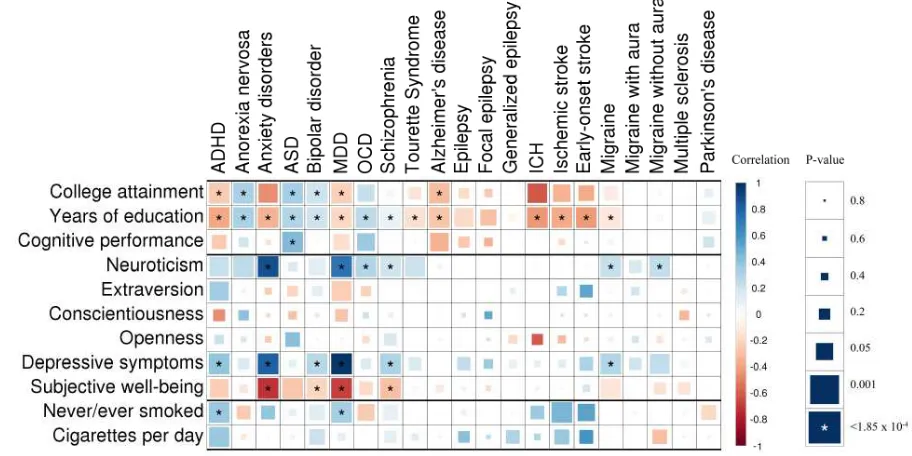
We observed several significant genetic correlations between the behavioral-cognitive or
169
additional phenotypes and brain disorders (Fig. 4 and S5, Table S6). Years of education showed a
170
significant correlation to each psychiatric disorder (negative for ADHD, anxiety disorders, MDD
171
and TS; positive for the others), while five neurological phenotypes (Alzheimer’s disease and the
172
four “vascular” phenotypes, intracerebral hemorrhage, all and early-onset stroke and migraine)
173
showed a significant negative correlation (Fig. S6; correlations with bipolar disorder(23),
174
Alzheimer’s disease and schizophrenia have been previously reported(27)). Among the personality
175
measures, significant positive correlations were observed for neuroticism (anxiety disorders,
176
migraine, migraine without aura and OCD; Fig. S7), depressive symptoms (ADHD, anxiety
177
disorder, bipolar disorder, MDD, and schizophrenia) and subjective well-being (anxiety disorder,
178
bipolar disorder, MDD, as well as replicating the previously reported correlation between
179
neuroticism with both MDD and schizophrenia(28)). For smoking-related measures, the only
180
significant genetic correlations were to never/ever smoked (MDD: rg=0.33, p=3.10 x 10⁻¹¹and
181
ADHD:rg=0.37, p=3.15 x 10⁻⁶).
182
Among the additional phenotypes, the two diseases chosen as examples of disorders with
183
well-defined etiologies had different results: Crohn’s disease, representing immunological
184
pathophysiology, showed no correlation with any of the study phenotypes, while the phenotype
185
representing vascular pathophysiology (coronary artery disease) showed significant correlation to
186
MDD (rg=0.19, p=8.71 x 10⁻⁵) as well as the two stroke-related phenotypes (rg=0.69, p=2.47 x 10
-187
6to ischemic stroke andrg=0.86, p=2.26 x 10⁻⁵for early-onset stroke), suggesting shared genetic
188
effects across these phenotype. Significant correlations were also observed for BMI, which was
189
positively correlated with ADHD and MDD, and negative correlated with anorexia nervosa (as
190
previously reported with a different dataset(23)) and schizophrenia.
191
Functional enrichment analysis (Table S7 and S8) replicated the previously reported central
192
nervous system (CNS) enrichment for schizophrenia and bipolar disorder (here in a larger dataset
193
compared to the original report (25), but with considerable sample overlap). We also demonstrated
194
novel significant heritability enrichments to CNS (for generalized epilepsy, MDD, TS, college
195
attainment, neuroticism, never/ever smoked) and to immune system cells and tissues (multiple
196
sclerosis).
197
198
Discussion 199
By integrating and analyzing the current genome-wide association summary statistic data
200
from consortia of 24 brain disorders, we find that psychiatric disorders broadly share a
considerable portion of their common variant genetic risk,especially across schizophrenia, MDD,
202
bipolar disorder, anxiety disorder and ADHD, while neurological disorders are more genetically
203
distinct. Across categories, psychiatric and neurologic disorders share relatively little of their
204
common genetic risk, suggesting that multiple different and largely independently regulated
205
etiological pathways may give rise to similar clinical manifestations (e.g., psychosis, which
206
manifests in both schizophrenia(29) and Alzheimer’s disease(30)). Except for migraine, which
207
appears to share genetic architecture with psychiatric disorders, the existing clinical delineation
208
between neurology and psychiatry is recapitulated at the level of common variant risk for the
209
studied disorders.
210
Given that the broad and continuous nature of psychiatric disorder spectra in particular has
211
been clinically recognized for a long time(31-33), we evaluated whether diagnostic
212
misclassification (given that genetic correlations are always a function of the underlying
213
ascertained phenotypes) could cause the observed correlations. For example, substantial numbers
214
of cases progressing through multiple diagnoses over lifetime or some the diagnostic boundaries
215
between some phenotype pairs being particularly porous to misclassification, congruent with the
216
clinical controversies in classification, could give rise to the appearance of correlation. Previous
217
work(34) suggests that even substantial misclassification is likely insufficient to introduce high
218
levels of genetic correlation. We expanded on this work by performing a series of simulations
219
across a variety of scenarios. These simulations demonstrate that reasonable levels of
220
misclassification or changes in the exact level of heritability appear unlikely to induce substantial
221
changes in the estimated genetic correlation (Fig. S8, S9, Table S9 and Supplementary Text),
222
though the lower resulting heritability (Fig. S8A) would decrease the power to estimate the genetic
223
overlap (Fig S10). Further, such evidence of genetic overlap is unlikely to appear in the absence
224
of underlying genetic correlation (Table S10), as it is apparent that very high (up to 79%) degree
225
of misclassification would be required to produce the observed correlations in the absence of any
226
true genetic correlation. Therefore, the observed correlations suggest true sharing of a substantial
227
fraction of the common variant genetic architecture among psychiatric disorders as well as between
228
behavioral-cognitive measures and brain disorders.
229
The high degree of genetic correlation among the psychiatric disorders adds further
230
evidence that current clinical diagnostics do not reflect the underlying genetic etiology of these
231
disorders, and that genetic risk factors for psychiatric disorders do not respect clinical diagnostic
232
boundaries. This suggests an interconnected nature for their genetic etiology, in contrast to
233
neurological disorders, and underscores the need to refine psychiatric diagnostics. This study may
234
provide important ‘scaffolding’ to support a new research framework for investigating mental
235
disorders, incorporating many levels of information to understand basic dimensions of brain
236
function, such as through the National Institute of Mental Health’s RDoC initiative.
237
The observed positive genetic correlations are consistent with a few different scenarios.
238
For example, rg may reflect the existence of some portion of common genetic risk factors
239
conferring equal risks to multiple disorders where other distinct additional factors contribute to the
eventual clinical presentation. The presence of significant genetic correlation may also reflect the
241
phenotypic overlap between any two disorders; for example, the sharing between schizophrenia
242
and ADHD might reflect underlying difficulties in executive functioning, which are
well-243
established in both disorders(35). Similarly, the sharing between anorexia nervosa, OCD and
244
schizophrenia may reflect a shared mechanism underlying cognitive biases that extend from
245
overvalued ideas to delusions. Another scenario is that a heritable intermediate trait confers risk to
246
multiple outcomes, thereby giving rise to the genetic correlation, as the genetic influences on this
247
trait will be shared for both outcomes (e.g., obesity as a risk factor for both type 2 diabetes and
248
coronary artery disease), or even that the majority common genetic effects are shared between a
249
pair of traits, but each individual effect may confer different degrees of risk and lead to different
250
aggregate genetic risk profiles. While a combination of these is likely, it will become increasingly
251
feasible to evaluate these overlaps at the locus level in the future as more genome-wide significant
252
loci are identified.
253
The low correlations observed across neurological disorders suggest that the current
254
classification reflects relatively specific genetic etiologies, although the limited sample size for
255
some of these disorders and lack of inclusion of disorders conceived as “circuit-based” in the
256
literature, such as restless legs syndrome, sleep disorders and possibly essential tremor, constrains
257
the generalizability of this conclusion. Generally, this analysis recapitulates the current
258
understanding of the relatively distinct primary etiology underlying these disorders; degenerative
259
disorders (such as Alzheimer’s and Parkinson’s diseases) would not be expecteda priorito share
260
their polygenic risk profiles with a neuro-immunological disorder (like multiple sclerosis) or
261
neurovascular disorder (like ischemic stroke). Similarly, we see limited evidence for the reported
262
co-morbidity between migraine with aura and ischemic stroke(36) (rg=0.29, p=0.099); however,
263
the standard errors of this comparison are too high to draw strong conclusions. At the disorder
264
subtype level, migraine with and without aura (rg=0.48, p=1.79 x 10⁻⁵) show substantial genetic
265
correlation, while focal and generalized epilepsy (rg=0.16, p=0.388) show much less.
266
The few significant correlations across neurology and psychiatry, namely between
267
migraine and ADHD, MDD and TS, suggest modest shared etiological overlap across the
268
neurology/psychiatry distinction. The co-morbidity of migraine with MDD and ADHD has been
269
previously reported in epidemiological studies (37-39), while in contrast, the previously reported
270
co-morbidity between migraine and bipolar disorder seen in epidemiological studies (40) was not
271
reflected in our estimate of genetic correlation (rg=-0.03, p=0.406).
272
Several phenotypes show only very low-level correlations with any of the other studied
273
disorders and phenotypes, despite large sample size and robust evidence for heritability, suggesting
274
their common variant genetic risk may largely be unique. Alzheimer’s disease, Parkinson’s
275
disease, and multiple sclerosis show extremely limited sharing with the other phenotypes and with
276
each other. Neuroinflammation has been implicated in the pathophysiology of each of these
277
conditions(41-43), as it has for migraine(44) and schizophrenia(45), but no considerable shared
278
heritability was observed with either of those conditions nor with Crohn’s disease. While this
observation does not preclude shared neuroinflammatory mechanisms in these disorders, it does
280
suggest that on a large scale, common variant genetic influences on these inflammatory
281
mechanisms are not shared between the disorders. Further, we only observed significant
282
enrichment of heritability to immunological cells and tissues in multiple sclerosis, showing that
283
inflammation-specific regulatory marks in the genome do not show overall enrichment for
284
common variant risk for either Alzheimer’s or Parkinson’s diseases (though this does not preclude
285
the effects of specific, non-polygenic neuroinflammatory mechanisms(46)). Among psychiatric
286
disorders, ASD and TS showed a similar absence of correlation with other disorders, although this
287
could reflect small sample sizes.
288
Analysis of the Big Five personality measures suggests that the current sample sizes for
289
personality data are now starting to be sufficiently large for correlation testing; neuroticism, which
290
has by far the largest sample size, shows a number of significant correlations. Most significant of
291
these was to MDD (rg=0.737, p=5.04 x 10-96), providing further evidence for the link between
292
these phenotypes, reported previously with polygenic risk scores(47) and twin studies(48, 49);
293
others included schizophrenia, anxiety disorders, migraine, migraine without aura, and OCD
294
(Table S6). Further, the observation of strong correlation between MDD and anxiety disorders
295
together with their remarkably strong and similar patterns of correlation between each of these
296
disorders and the dimensional measures of depressive symptoms, subjective well-being, and
297
neuroticism suggests that they all tag a fundamentally similar underlying etiology. The novel
298
significant correlation between coronary artery disease and MDD supports the long-standing
299
epidemiological observation of a link between MDD and CAD(50), while the observed correlation
300
between ADHD and smoking initiation (rg=0.374, p=3.15 x 10⁻⁶) is consistent with the
301
epidemiological evidence of overlap(51) and findings from twin studies(52), supporting the
302
existing hypothesis that impulsivity inherent in ADHD may drive smoking initiation and
303
potentially dependence (though other explanations, such as reward system dysfunction would fit
304
as well).
305
For the neurological disorders, five (Alzheimer’s disease, intracerebral hemorrhage,
306
ischemic and early-onset stroke, and migraine) showed significant negative genetic correlation to
307
the cognitive measures, while a further two (epilepsy and focal epilepsy) showed moderate
308
negative genetic correlation (Fig. S6). For Alzheimer’s disease, poor cognitive performance in
309
early life has been linked with increased risk for developing the disorder in later life(53), but to
310
our knowledge no such connection has been reported for the other phenotypes. ADHD, anxiety
311
disorders and MDD show a significant negative correlation to cognitive and education attainment
312
measures, while the remaining five of the eight psychiatric disorders (anorexia nervosa, ASD,
313
bipolar disorder, OCD, and schizophrenia) showed significant positive genetic correlation with
314
one or more cognitive measures. These results strongly suggest the existence of a link between
315
cognitive performance already in early life and the genetic risk for both psychiatric and
316
neurological brain disorders. The basis of the genetic correlations between education, cognition
317
and brain disorders may have a variety of root causes including, indexing performance differences
based on behavioral dysregulation (e.g., ADHD relating to attentional problems during cognitive
319
tests) or may reflect ascertainment biases in certain disorders conditional on impaired cognition
320
(e.g., individuals with lower cognitive reserve being more rapidly identified for Alzheimer’s
321
disease).
322
BMI shows significant positive genetic correlation to ADHD, consistent with a
meta-323
analysis linking ADHD to obesity(54), and negative genetic correlation with anorexia nervosa,
324
OCD and schizophrenia. These results connect well with the evidence for enrichment of BMI
325
heritability in CNS tissues(25) and that many reported signals suggest neuronal involvement(55);
326
this may also provide a partial genetic explanation for lower BMI in anorexia nervosa patients
327
even after recovery(56). Given that no strong correlations were observed between BMI and any of
328
the neurological phenotypes, it is possible to hypothesize that BMI’s brain-specific genetic
329
architecture is more closely related to behavioral phenotypes. Ischemic stroke and BMI show
330
surprisingly little genetic correlation in this analysis (rg=0.07, p=0.26), suggesting that although
331
BMI is a strong risk factor for stroke(57), there is little evidence for shared common genetic effects.
332
These analyses also suggest that the reported reduced rates of cardiovascular disease in individuals
333
with histories of anorexia nervosa (58, 59) are due to BMI-related effects; with the limited evidence
334
of genetic correlation of anorexia nervosa with intracerebral hemorrhage, ischemic stroke,
early-335
onset stroke and coronary artery disease, these results suggest that any lower cardiovascular
336
mortality is more likely due to direct BMI-related effects rather than shared common genetic risk
337
variants.
338
Broadly it is apparent that the current clinical boundaries for the studied psychiatric
339
phenotypes do not appear to reflect distinct underlying pathogenic processes based on the genetic
340
evidence, while in contrast, the studied neurological disorders show much greater genetic
341
specificity. Although it is important to emphasize that while some disorders are under-represented
342
here (e.g. personality disorders in psychiatry and circuit-based disorders such as restless leg
343
syndrome in neurology), these results clearly demonstrate the limited evidence for widespread
344
common genetic risk sharing between psychiatric and neurological disorders, while on the other
345
hand providing strong evidence for links between them and behavioral-cognitive measures. We
346
highlight the need for some degree of restructuring of psychiatric nosology and that genetically
347
informed analyses may provide a good basis for such activities, consistent with the historical
348
knowledge from twin- and family-based results. Further elucidation of individual disorders and
349
their genetic overlap, especially as distinct loci map onto a subset of disorders and etiological
350
processes, may form the basis for either defining new clinical phenotypes or support a move to a
351
more continuous view of psychiatric phenotypes. Ultimately, such developments give hope for
352
reducing diagnostic heterogeneity and eventually improving the diagnosis and treatment of
353
psychiatric disorders.
354
Author Information Correspondence and requests for materials should be addressed to V.A.
356
([email protected]), A.C. ([email protected]) or B.M.N. ([email protected]).
357
References: 360
1. J. B. Martin, The integration of neurology, psychiatry, and neuroscience in the 21st century.Am J
361
Psychiatry159, 695 (May, 2002). 362
2. J. W. Smoller, Disorders and borders: psychiatric genetics and nosology.Am J Med Genet B
363
Neuropsychiatr Genet162B, 559 (Oct, 2013). 364
3. T. R. Insel, P. S. Wang, Rethinking mental illness.JAMA303, 1970 (May 19, 2010). 365
4. T. J. Poldermanet al., Meta-analysis of the heritability of human traits based on fifty years of 366
twin studies.Nat Genet47, 702 (Jul, 2015). 367
5. K. S. Kendler, C. A. Prescott, J. Myers, M. C. Neale, The structure of genetic and environmental 368
risk factors for common psychiatric and substance use disorders in men and women.Arch Gen
369
Psychiatry60, 929 (Sep, 2003). 370
6. R. Jensen, L. J. Stovner, Epidemiology and comorbidity of headache.Lancet neurology7, 354 371
(Apr, 2008). 372
7. J. Nuyenet al., Comorbidity was associated with neurologic and psychiatric diseases: a general 373
practice-based controlled study.J Clin Epidemiol59, 1274 (Dec, 2006). 374
8. R. M. Hirschfeldet al., Screening for bipolar disorder in the community.The Journal of clinical
375
psychiatry64, 53 (Jan, 2003). 376
9. A. Pan, Q. Sun, O. I. Okereke, K. M. Rexrode, F. B. Hu, Depression and risk of stroke morbidity 377
and mortality: a meta-analysis and systematic review.JAMA306, 1241 (Sep 21, 2011). 378
10. A. Lo-Castro, P. Curatolo, Epilepsy associated with autism and attention deficit hyperactivity 379
disorder: is there a genetic link?Brain & development36, 185 (Mar, 2014). 380
11. C. G. de Kovelet al., Recurrent microdeletions at 15q11.2 and 16p13.11 predispose to idiopathic 381
generalized epilepsies.Brain133, 23 (Jan, 2010). 382
12. T. D. Graves, M. G. Hanna, Neurological channelopathies.Postgraduate medical journal81, 20 383
(Jan, 2005). 384
13. J. Haan, G. M. Terwindt, A. M. van den Maagdenberg, A. H. Stam, M. D. Ferrari, A review of the 385
genetic relation between migraine and epilepsy.Cephalalgia28, 105 (Feb, 2008). 386
14. S. Debetteet al., Common variation in PHACTR1 is associated with susceptibility to cervical 387
artery dissection.Nat Genet47, 78 (Jan, 2015). 388
15. S. M. Purcellet al., Common polygenic variation contributes to risk of schizophrenia and bipolar 389
disorder.Nature460, 748 (Aug 6, 2009). 390
16. C. Cross-Disorder Group of the Psychiatric Genomicset al., Genetic relationship between five 391
psychiatric disorders estimated from genome-wide SNPs.Nat Genet45, 984 (Sep, 2013). 392
17. J. C. Lambertet al., Meta-analysis of 74,046 individuals identifies 11 new susceptibility loci for 393
Alzheimer's disease.Nat Genet45, 1452 (Dec, 2013). 394
18. T. W. Muhleisenet al., Genome-wide association study reveals two new risk loci for bipolar 395
disorder.Nature communications5, 3339 (Mar 11, 2014). 396
19. V. Anttilaet al., Genome-wide meta-analysis identifies new susceptibility loci for migraine.Nat
397
Genet45, 912 (Aug, 2013). 398
20. M. A. Nallset al., Large-scale meta-analysis of genome-wide association data identifies six new 399
risk loci for Parkinson's disease.Nat Genet46, 989 (Sep, 2014). 400
21. C. Schizophrenia Working Group of the Psychiatric Genomics, Biological insights from 108 401
schizophrenia-associated genetic loci.Nature511, 421 (Jul 24, 2014). 402
22. N. Solovieff, C. Cotsapas, P. H. Lee, S. M. Purcell, J. W. Smoller, Pleiotropy in complex traits: 403
challenges and strategies.Nat Rev Genet14, 483 (Jul, 2013). 404
23. B. Bulik-Sullivanet al., An atlas of genetic correlations across human diseases and traits.Nat
405
24. Materials and methods are available as supplementary materials on Science Online. 407
25. H. K. Finucaneet al., Partitioning heritability by functional annotation using genome-wide 408
association summary statistics.Nat Genet47, 1228 (Nov, 2015). 409
26. M. H. de Mooret al., Meta-analysis of genome-wide association studies for personality.Mol
410
Psychiatry17, 337 (Mar, 2012). 411
27. A. Okbayet al., Genome-wide association study identifies 74 loci associated with educational 412
attainment.Nature533, 539 (May 11, 2016). 413
28. D. J. Smithet al., Genome-wide analysis of over 106 000 individuals identifies 9 neuroticism-414
associated loci.Mol Psychiatry21, 749 (Jun, 2016). 415
29. P. F. Buckley, B. J. Miller, D. S. Lehrer, D. J. Castle, Psychiatric comorbidities and schizophrenia. 416
Schizophrenia bulletin35, 383 (Mar, 2009). 417
30. C. G. Lyketsoset al., Mental and behavioral disturbances in dementia: findings from the Cache 418
County Study on Memory in Aging.Am J Psychiatry157, 708 (May, 2000). 419
31. R. Kendell, A. Jablensky, Distinguishing between the validity and utility of psychiatric diagnoses. 420
Am J Psychiatry160, 4 (Jan, 2003). 421
32. A. S. Cristinoet al., Neurodevelopmental and neuropsychiatric disorders represent an 422
interconnected molecular system.Mol Psychiatry19, 294 (Mar, 2014). 423
33. D. A. Regieret al., Limitations of diagnostic criteria and assessment instruments for mental 424
disorders. Implications for research and policy.Arch Gen Psychiatry55, 109 (Feb, 1998). 425
34. N. R. Wray, S. H. Lee, K. S. Kendler, Impact of diagnostic misclassification on estimation of 426
genetic correlations using genome-wide genotypes.Eur J Hum Genet20, 668 (Jun, 2012). 427
35. E. G. Willcutt, A. E. Doyle, J. T. Nigg, S. V. Faraone, B. F. Pennington, Validity of the executive 428
function theory of attention-deficit/hyperactivity disorder: a meta-analytic review.Biol
429
Psychiatry57, 1336 (Jun 1, 2005). 430
36. J. T. Spectoret al., Migraine headache and ischemic stroke risk: an updated meta-analysis.The
431
American journal of medicine123, 612 (Jul, 2010). 432
37. O. B. Fasmer, A. Halmoy, K. J. Oedegaard, J. Haavik, Adult attention deficit hyperactivity disorder 433
is associated with migraine headaches.European archives of psychiatry and clinical neuroscience
434
261, 595 (Dec, 2011). 435
38. N. Breslau, R. B. Lipton, W. F. Stewart, L. R. Schultz, K. M. Welch, Comorbidity of migraine and 436
depression: investigating potential etiology and prognosis.Neurology60, 1308 (Apr 22, 2003). 437
39. K. R. Merikangas, J. Angst, H. Isler, Migraine and psychopathology. Results of the Zurich cohort 438
study of young adults.Arch Gen Psychiatry47, 849 (1990). 439
40. R. S. McIntyreet al., The prevalence and impact of migraine headache in bipolar disorder: 440
results from the Canadian Community Health Survey.Headache46, 973 (Jun, 2006). 441
41. M. T. Henekaet al., Neuroinflammation in Alzheimer's disease.Lancet neurology14, 388 (Apr, 442
2015). 443
42. E. C. Hirsch, S. Hunot, Neuroinflammation in Parkinson's disease: a target for neuroprotection? 444
Lancet neurology8, 382 (Apr, 2009). 445
43. E. M. Frohman, M. K. Racke, C. S. Raine, Multiple sclerosis--the plaque and its pathogenesis.N
446
Engl J Med354, 942 (Mar 2, 2006). 447
44. C. Waeber, M. A. Moskowitz, Migraine as an inflammatory disorder.Neurology64, S9 (May 24, 448
2005). 449
45. J. Steineret al., Increased prevalence of diverse N-methyl-D-aspartate glutamate receptor 450
antibodies in patients with an initial diagnosis of schizophrenia: specific relevance of IgG NR1a 451
antibodies for distinction from N-methyl-D-aspartate glutamate receptor encephalitis.JAMA
452
46. C. International Genomics of Alzheimer's Disease, Convergent genetic and expression data 454
implicate immunity in Alzheimer's disease.Alzheimer's & dementia : the journal of the
455
Alzheimer's Association11, 658 (Jun, 2015). 456
47. C. Genetics of Personalityet al., Meta-analysis of Genome-wide Association Studies for 457
Neuroticism, and the Polygenic Association With Major Depressive Disorder.JAMA psychiatry
458
72, 642 (Jul, 2015). 459
48. K. S. Kendler, M. Gatz, C. O. Gardner, N. L. Pedersen, Personality and major depression: a 460
Swedish longitudinal, population-based twin study.Arch Gen Psychiatry63, 1113 (Oct, 2006). 461
49. R. E. Orstavik, K. S. Kendler, N. Czajkowski, K. Tambs, T. Reichborn-Kjennerud, The relationship 462
between depressive personality disorder and major depressive disorder: a population-based 463
twin study.Am J Psychiatry164, 1866 (Dec, 2007). 464
50. H. Hemingway, M. Marmot, Evidence based cardiology: psychosocial factors in the aetiology and 465
prognosis of coronary heart disease. Systematic review of prospective cohort studies.BMJ318, 466
1460 (May 29, 1999). 467
51. F. J. McClernon, S. H. Kollins, ADHD and smoking: from genes to brain to behavior.Ann N Y Acad
468
Sci1141, 131 (Oct, 2008). 469
52. T. Korhonenet al., Externalizing behaviors and cigarette smoking as predictors for use of illicit 470
drugs: a longitudinal study among Finnish adolescent twins.Twin Res Hum Genet13, 550 (Dec, 471
2010). 472
53. D. A. Snowdonet al., Linguistic ability in early life and cognitive function and Alzheimer's disease 473
in late life. Findings from the Nun Study.JAMA275, 528 (Feb 21, 1996). 474
54. S. Corteseet al., Association Between ADHD and Obesity: A Systematic Review and Meta-475
Analysis.Am J Psychiatry173, 34 (Jan 1, 2016). 476
55. D. Shunginet al., New genetic loci link adipose and insulin biology to body fat distribution. 477
Nature518, 187 (Feb 12, 2015). 478
56. L. Mustelinet al., Long-term outcome in anorexia nervosa in the community.The International
479
journal of eating disorders48, 851 (Nov, 2015). 480
57. T. Kurthet al., Prospective study of body mass index and risk of stroke in apparently healthy 481
women.Circulation111, 1992 (Apr 19, 2005). 482
58. S. R. Korndorferet al., Long-term survival of patients with anorexia nervosa: a population-based 483
study in Rochester, Minn.Mayo Clinic proceedings78, 278 (Mar, 2003). 484
59. P. F. Sullivan, Discrepant results regarding long-term survival of patients with anorexia nervosa? 485
Mayo Clinic proceedings78, 273 (Mar, 2003). 486
60. International League Against Epilepsy Consortium on Complex Epilepsies, Genetic determinants 487
of common epilepsies: a meta-analysis of genome-wide association studies.Lancet neurology
488
13, 893 (Sep, 2014). 489
61. D. Wooet al., Meta-analysis of genome-wide association studies identifies 1q22 as a 490
susceptibility locus for intracerebral hemorrhage.Am J Hum Genet94, 511 (Apr 3, 2014). 491
62. M. Trayloret al., Genetic risk factors for ischaemic stroke and its subtypes (the METASTROKE 492
collaboration): a meta-analysis of genome-wide association studies.Lancet neurology11, 951 493
(Nov, 2012). 494
63. N. A. Patsopouloset al., Genome-wide meta-analysis identifies novel multiple sclerosis 495
susceptibility loci.Ann Neurol70, 897 (Dec, 2011). 496
64. C. A. Rietveldet al., GWAS of 126,559 individuals identifies genetic variants associated with 497
educational attainment.Science340, 1467 (Jun 21, 2013). 498
65. C. A. Rietveldet al., Common genetic variants associated with cognitive performance identified 499
66. A. Okbayet al., Genetic variants associated with subjective well-being, depressive symptoms, 501
and neuroticism identified through genome-wide analyses.Nat Genet48, 624 (Jun, 2016). 502
67. Tobacco, C. Genetics, Genome-wide meta-analyses identify multiple loci associated with 503
smoking behavior.Nat Genet42, 441 (May, 2010). 504
68. A. R. Woodet al., Defining the role of common variation in the genomic and biological 505
architecture of adult human height.Nat Genet46, 1173 (Nov, 2014). 506
69. L. Jostinset al., Host-microbe interactions have shaped the genetic architecture of inflammatory 507
bowel disease.Nature491, 119 (Nov 1, 2012). 508
70. H. Schunkertet al., Large-scale association analysis identifies 13 new susceptibility loci for 509
coronary artery disease.Nat Genet43, 333 (Apr, 2011). 510
511
512
AcknowledgmentsThe authors wish to acknowledge Rosy Hoskins and Joanna Martin for their helpful comments 514
on the manuscript, Matthew Whittall for inspiration, and the patients and participants of the respective consortia. For 515
study-specific acknowledgments, see Supplementary Materials. GWAS summary statistics used in the paper are 516
available either directly from, or via application submitted in, the web addresses listed below. Data on coronary artery 517
disease has been contributed by CARDIoGRAMplusC4D investigators and have been downloaded from 518
www.CARDIOGRAMPLUSC4D.ORG. matSpD is available at neurogenetics.qimrberghofer.edu.au/matSpD/. This 519
research has been conducted using the UK Biobank Resource (application #18597). 520
521 522
Data sources
523
Disorder or phenotype – Consortium or dataset identifier – web address:
524
Psychiatric disorders
525
ADHD – PGC-ADD2 - http://www.med.unc.edu/pgc/results-and-downloads 526
Anorexia nervosa – PGC-ED - http://www.med.unc.edu/pgc/results-and-downloads 527
Anxiety disorder – ANGST - http://www.med.unc.edu/pgc/results-and-downloads 528
Autism spectrum disorders(16) – PGC-AUT - http://www.med.unc.edu/pgc/results-and-downloads 529
Bipolar disorder – PGC-BIP2 - http://www.med.unc.edu/pgc/results-and-downloads (soon) 530
Major depressive disorder – PGC-MDD2 - http://www.med.unc.edu/pgc/results-and-downloads (soon) 531
OCD – IOCDFGC - https://iocdf.org/ 532
Schizophrenia(21) – PGC-SCZ2 - http://www.med.unc.edu/pgc/results-and-downloads 533
Tourette Syndrome – TSAIGC – http://www.med.unc.edu/pgc/results-and-downloads 534
535
Neurological disorders
536
Alzheimer's disease(17) – IGAP - http://www.pasteur-lille.fr/en/recherche/u744/igap 537
Epilepsy and subtypes, focal and generalized(60) – ILAE – http://www.epigad.org/page/show/gwas_index 538
Intracerebral hemorrhage(61) – ISGC - http://www.strokegenetics.com/ 539
Ischemic stroke and subtypes (cardioembolic, early-onset, small-vessel and large-vessel)(62) – METASTROKE 540
dataset of the ISGC – http://www.strokegenetics.com/ 541
Migraine and subtypes, migraine with and without aura – IHGC – www.headachegenetics.org 542
Multiple sclerosis(63) – IMSGC - http://eaglep.case.edu/imsgc_web 543
Parkinson's disease(20) – IPDGC – www.pdgene.org 544
545
Behavioral-cognitive phenotypes
546
College attainment, years of education(64) – SSGAC – http://www.thessgac.org/data 547
Childhood cognitive performance(65) – SSGAC – http://www.thessgac.org/data 548
Extraversion, agreeableness, conscientiousness and openness (26) – GPC – http://www.tweelingenregister.org/GPC/ 549
Neuroticism, depressive symptoms and subjective well-being (66) – SSGAC - http://www.thessgac.org/data 550
Never/ever smoked, cigarettes per day(67) - TAG - http://www.med.unc.edu/pgc/results-and-downloads 551
552
Additional phenotypes
553
BMI(55) – GIANT – https://www.broadinstitute.org/collaboration/giant 554
Height(68) – GIANT – https://www.broadinstitute.org/collaboration/giant 555
556
Crohn’s disease(69) – IIBDGC - http://www.ibdgenetics.org/downloads.html 557
Figure 1.Genetic correlation matrix across psychiatric phenotypes.
559
560
Color of each box indicates the magnitude of the correlation, while size of the boxes indicates its significance, with
561
significant correlations filling each box completely. Asterisks indicate genetic correlations which are significant
562
after Bonferroni correction. ADHD – attention deficit hyperactivity disorder; ASD – autism spectrum disorder;
563
MDD – major depressive disorder; OCD – obsessive-compulsive disorder.
Figure 2.Genetic correlation matrix across neurological phenotypes.
565
566
Color of each box indicates the magnitude of the correlation, while size of the boxes indicates its significance, with
567
significant correlations filling each box completely. Asterisks indicate genetic correlations which are significant
568
after Bonferroni correction. Some phenotypes have substantial overlaps (see Table 1), e.g. all cases of generalized
569
epilepsy are also cases of epilepsy. Asterisks indicate significant genetic correlation after multiple testing
570
correction. ICH – intracerebral hemorrhage.
571
Figure 3.Genetic correlation matrix across neurological and psychiatric phenotypes.
573
574
Color of each box indicates the magnitude of the correlation, while size of the boxes indicates its significance, with
575
significant correlations filling each box completely. Asterisks indicate genetic correlations which are significant
576
after Bonferroni correction. ADHD – attention deficit hyperactivity disorder; ASD – autism spectrum disorder; ICH
577
– intracerebral hemorrhage; MDD – major depressive disorder; OCD – obsessive-compulsive disorder.
Figure 4.Genetic correlation matrix across brain disorders and behavioral-cognitive phenotypes.
579
580
Color of each box indicates the magnitude of the correlation, while size of the boxes indicates its significance, with
581
significant correlations filling each box completely. Asterisks indicate genetic correlations which are significant
582
after Bonferroni correction. ADHD – attention deficit hyperactivity disorder; ASD – autism spectrum disorder; ICH
583
– intracerebral hemorrhage; MDD – major depressive disorder; OCD – obsessive-compulsive disorder; BMI –
584
body-mass index.
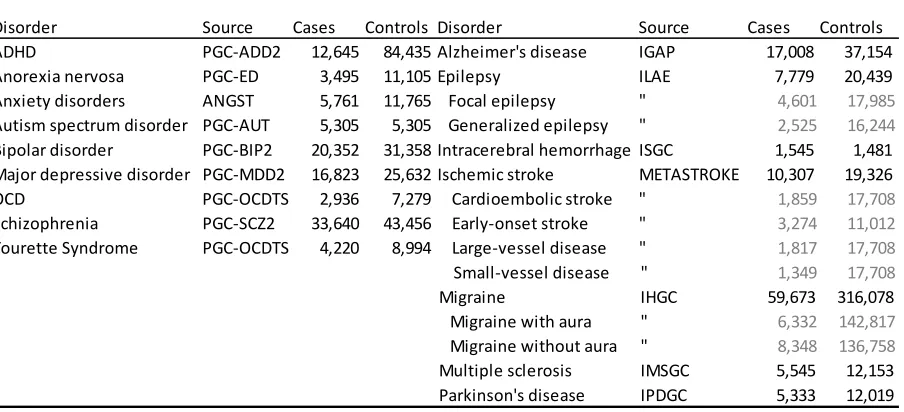
Table 1.Brain disorder phenotypes used in the Brainstorm project. Indented phenotypes are part of a larger whole,
586
e.g. the epilepsy study consists of the joint analysis of focal epilepsy and generalized epilepsy. Numbers in gray denote
587
a sample set which is non-unique, e.g. cardioembolic stroke samples are a subset of ischemic stroke samples. ADHD
588
– attention deficit hyperactivity disorder; OCD – obsessive-compulsive disorder. ‘Anxiety disorders’ refers to a
meta-589
analysis of five subtypes (generalized anxiety disorder, panic disorder, social phobia, agoraphobia and specific
590
phobias). Source details are listed under Data Sources and the references in Table S1.
591
592
593 594
Psychiatric disorders Neurological disorders
Disorder Source Cases Controls Disorder Source Cases Controls ADHD PGC-ADD2 12,645 84,435 Alzheimer's disease IGAP 17,008 37,154 Anorexia nervosa PGC-ED 3,495 11,105 Epilepsy ILAE 7,779 20,439 Anxiety disorders ANGST 5,761 11,765 Focal epilepsy " 4,601 17,985
Autism spectrum disorder PGC-AUT 5,305 5,305 Generalized epilepsy " 2,525 16,244
Bipolar disorder PGC-BIP2 20,352 31,358 Intracerebral hemorrhage ISGC 1,545 1,481 Major depressive disorder PGC-MDD2 16,823 25,632 Ischemic stroke METASTROKE 10,307 19,326 OCD PGC-OCDTS 2,936 7,279 Cardioembolic stroke " 1,859 17,708
Schizophrenia PGC-SCZ2 33,640 43,456 Early-onset stroke " 3,274 11,012
Tourette Syndrome PGC-OCDTS 4,220 8,994 Large-vessel disease " 1,817 17,708
Small-vessel disease " 1,349 17,708
Migraine IHGC 59,673 316,078 Migraine with aura " 6,332 142,817
Migraine without aura " 8,348 136,758
Multiple sclerosis IMSGC 5,545 12,153 Parkinson's disease IPDGC 5,333 12,019
Table 2.Behavioral-cognitive and additional phenotypes used in the study. Numbers in gray denote overlapping study
595
sets, e.g. samples in the college attainment analysis are a subset of those in the analysis for years of education. (d) –
596
dichotomous phenotype, (q) – quantitative phenotype. BMI – body-mass index. Source details are listed under Data
597
Sources, while references are listed in Table S2.
598
599
600
601
Phenotype Source Samples
Cognitive
Years of education (q) SSGAC 293,723 College attainment (d) " 120,917 Cognitive performance (q) " 17,989
Personality measures
Subjective well-being SSGAC 298,420
Depressive symptoms " 161,460
Neuroticism (q) " 170,911
Extraversion (q) GPC 63,030
Agreeableness (q) " 17,375
Conscientiousness (q) " 17,375
Openness (q) " 17,375
Smoking-related
Never/ever smoked (d) TAG 74,035
Cigarettes per day (q) TAG 38,617
Additional phenotypes
BMI (q) GIANT 339,224
Height (q) " 253,288
Coronary artery disease (d) Cardiogram 86,995
Crohn's disease (d) IIBDGC 20,883
Supplementary Materials 602
Materials and methods
603
Supplementary Text
604
Comparison with previous heritability estimates
605
Effect of misclassification
606
Correlation by misclassification alone
607
Study-specific acknowledgements
608
Consortium memberships
609
Figures S1-10
610
Tables S1-9