Rochester Institute of Technology
RIT Scholar Works
Theses
6-2018
Impact of SNAP Fruit and Vegetable Incentive
Programs: An Analysis of USDA FINI Projects
Katherine EngelFollow this and additional works at:https://scholarworks.rit.edu/theses
This Thesis is brought to you for free and open access by RIT Scholar Works. It has been accepted for inclusion in Theses by an authorized administrator of RIT Scholar Works. For more information, please [email protected].
Recommended Citation
Impact of SNAP Fruit and Vegetable Incentive Programs: An Analysis of
USDA FINI Projects
By Katherine Engel
A Thesis Submitted in partial fulfillment of the requirements for the degree of
Master of Science in Science, Technology, and Public Policy
Department of Public Policy
College of Liberal Arts
Rochester Institute of Technology
Rochester, NY
1
Impact of SNAP Fruit and Vegetable Incentive Programs: An Analysis of
USDA FINI Projects
By Katherine Engel
Master of Science, Science, Technology and Public Policy
Thesis Submitted in Partial Fulfillment of the Graduation Requirements for the
College of Liberal Arts/Public Policy Program at
ROCHESTER INSTITUTE OF TECHNOLOGY
Rochester, New York
June 2018
Submitted by:
Katherine Engel
Signature Date
Accepted by:
Elizabeth Ruder, Ph.D., M.P.H./Assistant Professor, Thesis Advisor
Wegmans School of Health and Nutrition/Rochester Institute of Technology Signature Date
M. Ann Howard, J.D./Professor, Thesis Committee
Science, Technology, and Society/Rochester Institute of Technology Signature Date
Franz Foltz, Ph.D./Professor, Thesis Committee
Public Policy/Rochester Institute of Technology Signature Date
Dr. Franz Foltz/Graduate Director
2
Abstract
As diet-related chronic diseases continue to jeopardize public health in the United States, improving the dietary quality of Supplemental Nutrition Assistance Program (SNAP)
participants is essential. One strategy that has been proposed as a means of doing so is utilizing fruit and vegetable incentives. Incentives serve to lower the cost of these foods for participants and thus theoretically encourage and enable them to purchase and consume more fruits and vegetables. The existing research indicates that incentives are an effective approach for
3
Table of Contents
Signature Page……….………...1
Abstract………..2
Table of Contents………...3
Figures & Tables………4
I. Introduction………5
II. Literature Review……….14
A. Outcomes………...18
B. Factor 1: Program Structure………...20
C. Factor 2: Definition of Fruits and Vegetables………24
D. Factor 3: Venues……….………26
E. Factor 4: Participant Demographics………...29
F. Additional Research………...31
III. Methods………33
A. Analytical Framework……….…………...35
B. Case Selection………39
C. Data Collection……….…………..42
D. Data Coding………...45
IV. Analysis………49
A. Necessity………49
B. Sufficiency……….51
a. Multi-Factor Analysis………51
b. Single-Factor Analysis………...54
V. Discussion………57
VI. Limitations………...59
VII. Future Research…………..……….……….62
VIII. Policy Recommendations……….66
A. Recommendation 1: Continuation of Existing Incentive Programs………66
B. Recommendation 2: Rigorous Research……….68
IX. Conclusion………...70
4
Figures & Tables
Table 1: Papers Reviewed………..17
Table 2: Measuring Fruit and Vegetable Purchases and Consumption………...19
Table 3: Observed Increases in Fruit and Vegetable Purchases and Consumption………...20
Table 4: Types of Benefits……….……….21
Table 5: Fruit and Vegetables Targeted by Incentive Programs………24
Table 6: Venues Used for Incentive Programs………...…..………...26
Figure 1: Necessity and Sufficiency……….………..………38
Table 7: Factors for Analysis……….44
Table 8: Outcomes Considered………..45
Table 9: Decision Rules for Type of Retailers………...46
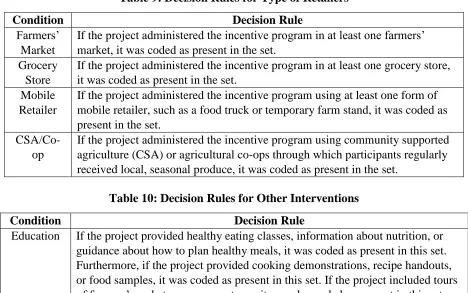
Table 10: Decision Rules for Other Interventions………..………….46
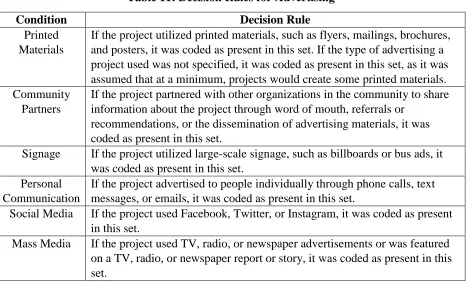
Table 11: Decision Rules for Advertising……….……….……….47
Table 12: Decision Rules for Benefit Value………..47
Table 13: Decision Rules for Benefit Distribution………..………47
Table 14: Decision Rules for Outcomes………48
Table 15: Coded Data………49
Table 16: Condition Necessity Scores………...50
Table 17: Minimized Truth Table of All Factors………..………..53
Table 18: Truth Table for Type of Retailer………..………...55
Table 19: Truth Table for Other Interventions………..………..55
Table 20: Truth Table for Advertising………...55
Table 21: Truth Table for Benefit Value……….………...56
Table 22: Truth Table for Benefit Distribution……….……….56
5
I.
Introduction
The increasing rates of obesity and other diet-related chronic diseases in the United States
coupled with the ongoing challenge of mitigating food insecurity demonstrates the need for
policies that improve both food access and the dietary quality of low-income individuals (Ogden,
C., Carroll, M.D., Fryar, C.D., & Flegal, K.M., 2015; Economic Research Center, 2017). One
way of addressing these concerns is altering the food assistance programs. There are currently
numerous food assistance programs in place that provide low-income households with benefits
for purchasing food. It is vital that these programs not only enable low-income households to
acquire sufficient amounts of food but also support these households in eating healthy diets. As a
result, multiple strategies have been employed to encourage participants in food assistance
programs to purchase and consume healthy foods. These strategies include restrictions on the
types of foods that participants can purchase with their government benefits, nutrition education,
and healthy food incentives. Restrictions on the types of foods that are benefit eligible and
nutrition education have been implemented in some federal food assistance programs with
varying degrees of success (Food and Nutrition Service, 2013b). In addition, the federal
government as well as private organizations and state and local governments have begun to
experiment with healthy food incentives as an approach for improving the diets of federal food
assistance participants. Accordingly, understanding the impact of these incentives is critical for
informing future policies and ultimately improving the dietary quality of federal food assistance
participants.
There are currently fifteen United States Department of Agriculture (USDA) domestic
6
Supplemental Food Program, the Nutrition Services Incentive Program, the Elderly Nutrition
Program, the Food Distribution Program on Indian Reservations, the Emergency Food
Assistance Program, the Child and Adult Care Food Program, the Fresh Fruit and Vegetable
Program, the National School Lunch Program, the Special Milk Program, the Summer Food
Service Program, the School Breakfast Program, the Special Supplemental Nutrition Program for
Women, Infants, and Children, the Farmers’ Market Nutrition Program, and the Supplemental
Nutrition Assistance Program. Taken together, these programs are intended to create a
“nutritional safety net” for low-income individuals and households and are the main mechanisms
for reducing food insecurity, defined by the USDA Food and Nutrition Service (FNS) as
“reduced food intake or disrupted eating patterns in a household due to a lack of money or other
resources” (Food and Nutrition Service, 2013a). Altogether, food assistance programs make up
about 75% of the USDA budget (Morgan, 2015). It is estimated that approximately 25% of
United States citizens participate in one federal food assistance program every year (Morgan,
2015). Although the USDA provides the funding for these programs, state agencies are tasked
with their implementation. As such, participant eligibility requirements vary not only from
program to program but also from state to state.
Federal food assistance programs are structured in a variety of ways based on the type of
assistance they provide and the populations they serve. For instance, the Senior Farmers’ Market
Nutrition Program provides grants to states, territories, and Native American tribal governments
to provide low-income seniors with coupons to purchase food from farmers’ markets, roadside
stands, and community supported agriculture programs (Food and Nutrition Service, 2016).
There are also food distribution programs, which issue agricultural products to participants.
7
Program on Indian Reservations, and the Emergency Food Assistance Program (Food and
Nutrition Service, 2016). Moreover, child nutrition programs aim to reduce hunger and obesity
among children by providing reimbursements to organizations that provide this population with
healthy foods. These programs include the Child and Adult Care Food Program, the Fresh Fruit
and Vegetable Program, the National School Lunch Program, the Special Milk Program, the
Summer Food Service Program, and the School Breakfast Program (Food and Nutrition Service,
2016). In addition, there are food assistance programs exclusively for pregnant and post-partum
women, infants, and their young children. These programs are intended to protect the health of
these populations by providing monthly benefits for purchasing nutritious foods as well as
healthy eating information and healthcare referrals. This category of programs includes the
Special Supplemental Nutrition Program for Women, Infants, and Children (WIC) and the
Farmers’ Market Nutrition Program (Food and Nutrition Service, 2016). Similar to WIC, the
Supplemental Nutrition Assistance Program (SNAP) provides monthly benefits to participants to
purchase food. However, this program is not specific to a particular demographic population.
Moreover, WIC provides vouchers for very specific foods included in the WIC Foods Package,
whereas SNAP benefits can be used to purchase nearly any food or beverage item with limited
restrictions.
Currently, SNAP is the largest federal food assistance program in the United States and is
thus the cornerstone of the United States’ nutritional safety net. The mission of the program is to
“increase food security and reduce hunger by providing children and low-income people access
to food, a healthful diet and nutrition education in a way that supports American agriculture and
inspires public confidence,” and its stated goal is to ensure that no Americans experience hunger
8
to millions of low-income households as means of expanding the financial resources that they
have available to purchase food. Households qualify for SNAP based on income and countable
resources. These countable resources are defined differently from state-to-state but generally
include vehicles, pension plans, and other government assistance benefits (Food and Nutrition
Service, 2017a). Traditionally, households that are SNAP eligible have gross incomes of less
than 130% of the federal poverty line. SNAP therefore assists low-income households that are or
are at risk for experiencing food insecurity. As of June 2017, 41,310,785 people participate in
SNAP, with the average recipient receiving $124.91 each month (Food and Nutrition Service,
2017b). Importantly, these people are frequently members of vulnerable populations. Nearly
70% of SNAP participants are members of households with children, and over 25% of
participants are members of households with seniors or disabled people (Center on Budget and
Policy Priorities, 2017). In fiscal year 2016, the Program costs totaled $66,539,351,219 (Food
and Nutrition Service, 2017b).
It is worth noting that compared to other federal food assistance programs, SNAP has
relatively few restrictions in terms of what the benefits can be used for as well as little emphasis
on nutrition education. Specifically, SNAP benefits can be used for any food product, including
plants and seeds to grow food to be consumed by the receiving household, with the exception of
hot foods and foods that are intended to be eaten in stores. Additionally, SNAP benefits cannot
be applied to the purchase of nonfood items, alcohol and tobacco, or vitamins and medications
(Food and Nutrition Service, 2017c). In contrast to SNAP, WIC restricts the foods that can be
purchased using benefits to milk, cheese, yogurt, fruits and vegetables, canned fish, tofu,
breakfast and infant cereal, whole wheat breads and grains, infant food meat, soy-based
9
and has strict specifications that these foods must meet to be WIC eligible (Food and Nutrition
Service, 2017d). Furthermore, unlike WIC, which has nutrition education requirements that
participants must fulfill in order to receive benefits, SNAP does not require participants to
complete any nutrition education to receive benefits. A nutritional educational component was
added to SNAP through the 1990 Food Stamp Act as a means of equipping participants with the
knowledge and tools necessary to use their benefits to purchase nutritious foods within their
budgets and ultimately to encourage the consumption of healthy foods. Today, this nutritional
education component is called SNAP-Ed and operates as a grant program funded by FNS and the
National Institute of Food and Agriculture (NIFA). SNAP-Ed supports projects and interventions
directed towards obesity prevention and nutrition education for SNAP participants. However,
there is no federal requirement for SNAP participants to take-part in SNAP-Ed, and it has not
been implemented in all states (National Institute of Food and Agriculture, n.d.a). Thus, although
SNAP plays an integral role in ensuring that millions of people have the resources they need to
access sufficient amounts of food, it lacks specific restrictions that dictate the nutritional quality
of foods that participants can purchase as well as a consistent and reliable way to educate
participants on how to use their benefits to maximize the quality of their diets. As such, the
Program has few mechanisms in place for encouraging participants to purchase and consume
healthy foods when compared to other federal food assistance programs.
The impact of SNAP on healthy food consumption and overall dietary quality is widely
disputed. Without restrictions on food purchases, SNAP may make food more accessible to
low-income individuals, but it does not result in an increase in the consumption of nutritious foods
(Tanner, 2013). It has been shown that even individuals who receive SNAP benefits have poor
10
Bruce, & Jahns, 2012; Gregory, 2013; Gleason, 2000; Yen, 2010). Specifically, Yen et al. (2012)
found that SNAP participation is inversely correlated to self-assessed health status. Although the
negative correlation between SNAP participation and self-assessed health status may occur
because people who are in poorer health are more likely to participate in SNAP, Yen et al.
(2012) noted that this finding may indicate that the Program has a negative effect on the
well-being of participants. In particular, they speculated that the observed relationship between SNAP
participation and self-assessed health status may be attributable to the “boom and bust cycle”
created by monthly benefit distribution, as participants tend to have fewer resources to purchase
food at the end of the month, and thus their nutrient intake is irregular. In addition, SNAP
participants often have lower quality diets compared to both low-income non-participants as well
as to the entirety of the American population, and it has been shown that participants consume
few whole grains and vegetables and do not meet dietary recommendations for key minerals,
such as iron and potassium, as well as fiber (Gregory, 2013; Gleason, 2000; Yen, 2010). In
particular, Gregory (2013) found that SNAP participants have lower Healthy Eating Index
scores, a measure of adherence to the federal Dietary Guidelines for Americans, than other
low-income individuals who do not participate in the Program. However, in contrast to these
findings, Nguyen, Shuval, Bertmann, and Yaroch (2015) demonstrated that SNAP plays a role in
supporting individuals who are at risk for experiencing food insecurity to eat healthy diets and
avoid obesity. Specifically, these researchers found that among individuals experiencing
marginal food security, SNAP participants had lower BMI and lower probability of obesity than
non-participants and that among individuals experiencing marginal, low, and very low food
11
Regardless of the current impact SNAP has on the diets and health of low-income
individuals, inducing SNAP participants to eat high-quality diets is vital for improving health
outcomes, as it has been demonstrated that the consumption of nutritious food, particularly fruits
and vegetables is essential for good health. For instance, there is an association between diet and
chronic diseases, such as certain cancers, type 2 diabetes, high blood pressure, cardiovascular
disease, and obesity (United States Department of Health and Human Services and United States
Department of Agriculture, 2015). In the 2015-2020 Dietary Guidelines for Americans, the
United States Department of Health and Human Services and the USDA note that a high intake
of fruits and vegetables serves as a marker of healthy eating patterns and is associated with a
lower risk of cardiovascular disease as well as protects against certain cancers (United States
Department of Health and Human Services and United States Department of Agriculture, 2015).
For this reason, increasing the consumption of healthy foods, primarily fruits and vegetables, is a
logical focus of efforts directed toward improving the diets and subsequently the health
outcomes of SNAP participants.
Due to the health benefits of nutritious foods like fruits and vegetables, implementing
strategies for improving the dietary quality of SNAP participants is a salient area of focus for
researchers and policymakers. Among the many strategies that have been utilized are healthy
food incentives. Incentives are potentially appropriate for improving dietary quality because they
are a tool for facilitating behavior change. The theory that incentives serve as a strategy for
inducing changes in behavior centers on the standard direct price effect (Gneezy, Meier, &
Rey-Biel, 2011). This effect is observed when the behavior being incentivized becomes more
attractive to people as they are rewarded with a financial reward for exhibiting the desired
12
positive habits as well as end pre-existing, negative habits. Thus, when applied on a large enough
scale, incentives may have the ability to shift cultural norms (Gneezy, Meier, & Rey-Biel, 2011).
Moreover, incentives may be particularly useful for promoting healthy behaviors, such as
consuming healthy foods, since the benefits of healthy behaviors are often uncertain and delayed,
while the cost of these behaviors is immediate. As people value current costs and benefits more
than future costs and benefits, it is rational to choose not to engage in healthy behaviors, since
the present value of these behaviors is low. By creating short-term or immediate, certain rewards
for healthy behaviors, incentives serve to make these behaviors more appealing by increasing
their present value and in turn encourage people to exhibit them (Loewenstein, Brennan, &
Volpp, 2007).
Incentives also create an immediate benefit because they lower the cost of healthy foods
for consumers. In general, the cost of food plays a critical role in how people make food choices.
In fact, Glanz, Basil, Maibach, Goldberg, and Snyder (1998) found that behind taste, price is the
second most important influence on food choice. For SNAP participants specifically, it has been
demonstrated that the cost of healthy foods is a barrier for improving dietary quality (Leung,
Hoffnagle, Lindsay, Lofink, Hoffman, Turrell, Willett, & Blumenthal, 2013; Blumenthal,
Hoffnagle, Leung, Lofink, Jensen, Foerster, Cheung, Nestle, & Willett, 2017). To overcome this
barrier, researchers have suggested incentivizing the purchase of healthy foods, as incentives
expand the financial resources participants have available to purchase healthy foods and thus
address the barrier that the cost of healthy food poses to dietary quality (Leung et al., 2013;
Blumenthal et al., 2017; Richards & Sindelar, 2013).
Incentivizing the purchase of healthy foods has been explored as a strategy for improving
13
most prominent examples of the use of incentives in SNAP is the Health Incentives Pilot (HIP).
As part of the 2008 Farm Bill, the USDA allocated $20 million for evaluating the efficacy of
implementing incentives as a means of increasing fruit and vegetable purchases by SNAP
participants, and in conjunction with this funding, HIP was initiated as a pilot project. HIP was
administered by the Massachusetts Department of Transitional Assistance in Hampden Country,
MA from November 1, 2011 until December 31, 2012. The Pilot tested the effectiveness of
financial incentives for the purchase of targeted fruits and vegetables by giving program
participants an additional $0.30 of EBT to spend on any SNAP-eligible food or beverage for
every $1.00 of EBT that they spent on targeted fruits and vegetables. The Evaluation of the
Healthy Incentives Pilot (HIP): Summary of Findings published by FNS maintains that HIP
households reported higher total spending on fruits and vegetables than non-HIP households and
that HIP households spent 11% more of their SNAP benefits on targeted fruits and vegetables
than non-HIP households. In addition, the report states that HIP participants consumed about
26% more targeted fruits and vegetables than non-HIP participants. In terms of overall dietary
quality and health, FNS reported that HIP participants had higher Healthy Eating Index scores
than non-HIP participants. Moreover, FNS concluded that the HIP was feasible from a technical
and operational standpoint (Food and Nutrition Service, 2014). As such, HIP illustrates the
effectiveness of incentive programs as tool for improving the dietary quality of SNAP
participants as well as highlights the potential for incorporating incentives in federal food
assistance policy.
The USDA has not modified SNAP based on the results of HIP. Rather, in response to
the apparent success of the pilot, the USDA established the Food Insecurity Nutrition Incentive
14
implementation, and evaluation of programs that incentivize the purchase of fruits and
vegetables by SNAP participants (National Institute of Food and Agriculture, n.d.b). The
continued experimentation with fruit and vegetable incentives by the USDA indicates that
incentives may be one policy mechanisms utilized by the federal government to support the
health of food assistance program participants in the future. Consequently, further investigation
of the use of incentives in this context is pertinent to current policy considerations and is useful
for understanding the effectiveness and impact of incentive programs. As such, this research
examines the impact of FINI projects on SNAP participants’ fruit and vegetable purchase and
consumption behaviors and perceptions of affordability.
II.
Literature Review
The following literature review provides an analysis of incentives as an approach for
encouraging and enabling federal food assistance program participants to increase their purchase
and consumption of healthy foods. There is a relative lack of research surrounding the use of
incentives for promoting the dietary quality of SNAP participants, and many of the investigations
that have been performed have studied incentive programs that were open to individuals who
participated in other types of federal food assistance programs, such as WIC and FMNP, in
addition to SNAP participants. As such, this literature review is not exclusively focused on
incentive programs for SNAP participants. However, its scope is limited to studies that were
conducted on incentive programs offered to federal food assistance programs. State, local, and
private food assistance programs were not considered because of the relatively small reach of
these programs as well as the substantial variations in their eligibility requirements. Moreover,
15
the literature has focused on these foods as the target of incentive programs and used their
consumption as a proxy for dietary quality. The reason for this focus is presumably related to
association that exists between consuming fruits and vegetables and overall dietary quality and
health, as discussed in greater detail above. A small minority of the literature has accounted for
other foods, including eggs, meat, and bread, in addition to fruits and vegetables.
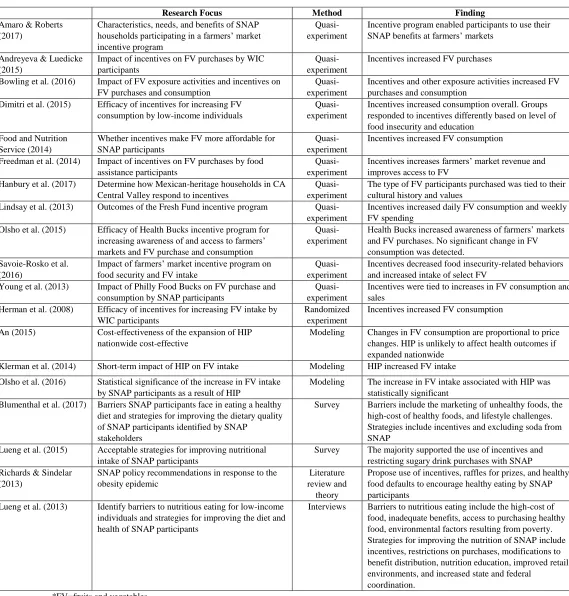
This review considerers a total of nineteen papers, as illustrated in Table 1. These papers
include twelve empirical studies that have examined the use different incentive programs for
federal food assistance participants. Additionally, three papers evaluating HIP and analyzing the
expansion of the program nationwide using mathematical and economic models were identified,
and four papers involving current SNAP policy were considered. Several other papers were also
reviewed for background information regarding the justification for the use of incentive
programs as well as the relevance of certain factors involved in their design and implementation.
All of the papers were identified using RIT Summon, Google Scholar, ProQuest, and Sage
Journals Online as search tools. The search terms that were used include “SNAP incentives,”
“WIC incentive,” “food benefits incentive,” and “food assistance incentive.” The focus on SNAP
and WIC is appropriate, as these programs are structured such that they provide participants with
monthly benefits for purchasing food. This structure is conducive to the implementation of
incentive programs, because it provides participants with considerable autonomy in deciding
what foods to purchase. Thus, incentives can be used to influence the individual food purchasing
behavior of participants in these programs. In addition to the use of these search terms, papers
were identified by examining the articles cited by the papers found in the preliminary search. The
16
detailing HIP was also reviewed. Due to the relative lack of research on this topic, papers were
17
Table 1: Papers Reviewed
*FV=fruits and vegetables
**Table is organized by the method employed in each study
Research Focus Method Finding
Amaro & Roberts (2017)
Characteristics, needs, and benefits of SNAP households participating in a farmers’ market incentive program
Quasi-experiment
Incentive program enabled participants to use their SNAP benefits at farmers’ markets
Andreyeva & Luedicke (2015)
Impact of incentives on FV purchases by WIC participants
Quasi-experiment
Incentives increased FV purchases
Bowling et al. (2016) Impact of FV exposure activities and incentives on FV purchases and consumption
Quasi-experiment
Incentives and other exposure activities increased FV purchases and consumption
Dimitri et al. (2015) Efficacy of incentives for increasing FV consumption by low-income individuals
Quasi-experiment
Incentives increased consumption overall. Groups responded to incentives differently based on level of food insecurity and education
Food and Nutrition Service (2014)
Whether incentives make FV more affordable for SNAP participants
Quasi-experiment
Incentives increased FV consumption
Freedman et al. (2014) Impact of incentives on FV purchases by food assistance participants
Quasi-experiment
Incentives increases farmers’ market revenue and improves access to FV
Hanbury et al. (2017) Determine how Mexican-heritage households in CA Central Valley respond to incentives
Quasi-experiment
The type of FV participants purchased was tied to their cultural history and values
Lindsay et al. (2013) Outcomes of the Fresh Fund incentive program Quasi-experiment
Incentives increased daily FV consumption and weekly FV spending
Olsho et al. (2015) Efficacy of Health Bucks incentive program for increasing awareness of and access to farmers’ markets and FV purchase and consumption
Quasi-experiment
Health Bucks increased awareness of farmers’ markets and FV purchases. No significant change in FV consumption was detected.
Savoie-Rosko et al. (2016)
Impact of farmers’ market incentive program on food security and FV intake
Quasi-experiment
Incentives decreased food insecurity-related behaviors and increased intake of select FV
Young et al. (2013) Impact of Philly Food Bucks on FV purchase and consumption by SNAP participants
Quasi-experiment
Incentives were tied to increases in FV consumption and sales
Herman et al. (2008) Efficacy of incentives for increasing FV intake by WIC participants
Randomized experiment
Incentives increased FV consumption
An (2015) Cost-effectiveness of the expansion of HIP nationwide cost-effective
Modeling Changes in FV consumption are proportional to price changes. HIP is unlikely to affect health outcomes if expanded nationwide
Klerman et al. (2014) Short-term impact of HIP on FV intake Modeling HIP increased FV intake
Olsho et al. (2016) Statistical significance of the increase in FV intake by SNAP participants as a result of HIP
Modeling The increase in FV intake associated with HIP was statistically significant
Blumenthal et al. (2017) Barriers SNAP participants face in eating a healthy diet and strategies for improving the dietary quality of SNAP participants identified by SNAP
stakeholders
Survey Barriers include the marketing ofunhealthy foods, the high-cost of healthy foods, and lifestyle challenges. Strategies include incentives and excluding soda from SNAP
Lueng et al. (2015) Acceptable strategies for improving nutritional intake of SNAP participants
Survey The majority supported the use of incentives and restricting sugary drink purchases with SNAP Richards & Sindelar
(2013)
SNAP policy recommendations in response to the obesity epidemic
Literature review and
theory
Propose use of incentives, raffles for prizes, and healthy food defaults to encourage healthy eating by SNAP participants
Lueng et al. (2013) Identify barriers to nutritious eating for low-income individuals and strategies for improving the diet and health of SNAP participants
Interviews Barriers to nutritious eating include the high-cost of food, inadequate benefits, access to purchasing healthy food, environmental factors resulting from poverty. Strategies for improving the nutrition of SNAP include incentives, restrictions on purchases, modifications to benefit distribution, nutrition education, improved retail environments, and increased state and federal
18
The literature points to several factors that may influence the impact of incentive
programs on federal food assistance program participants’ fruit and vegetable purchasing and
consumption behaviors. This review details the ways in which the literature has evaluated the
impact of these incentives. It also outlines the outcomes reported in the literature. This review
then assesses the literature to evaluate key factors involved in the design and implementation of
incentive programs, including the structure of the programs, the fruits and vegetables targeted by
the programs, the venues in which the programs are deployed, and the demographics of program
participants.
A. Outcomes
All of the studies included in this review considered the effectiveness of incentives in
terms of their impact on fruit and vegetable purchases and/or consumption. However, the
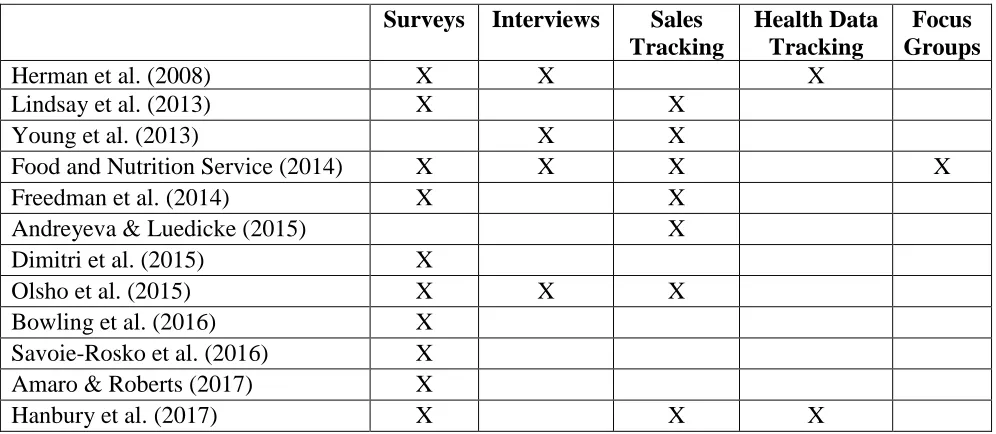
empirical studies employed a variety of approaches for measuring these outcomes, as shown in
Table 2. The literature has largely depended on self-reported spending on fruits and vegetables,
diet patterns, and perception of health status in addition to sales data from food retailers to
evaluate incentive program outcomes. The most common strategies utilized were surveys and
interviews in which participants reported their perceived fruit and vegetable consumption and
health status (Food and Nutrition Service, 2014; Bowling, Moretti, Ringelheim, Tran, &
Davison, 2016; Savoie-Roskos, Durward, Jeweks, & LeBlanc, 2016; Freedman, Mattison-Faye,
Alia, Guest, & Hébert, 2014; Dimitri, Oberholtzer, Zive, & Sandolo, 2015; Lindsay, Lambert,
Penn, Hedges, Ortwine, Mei, Delaney, & Wooten, 2013; Olsho, Payne, Walker, Baronberg,
Jernigan, & Abrami 2015; Young, Aquilante, Solomon, Colby, Kawinzi, Uy, & Mallya, 2013).
19
of incentives has largely been judged based on self-reports, as described in greater detail below
[image:21.612.58.556.169.386.2]in the “Additional Research” section of this review.
Table 2: Measuring Fruit and Vegetable Purchases and Consumption
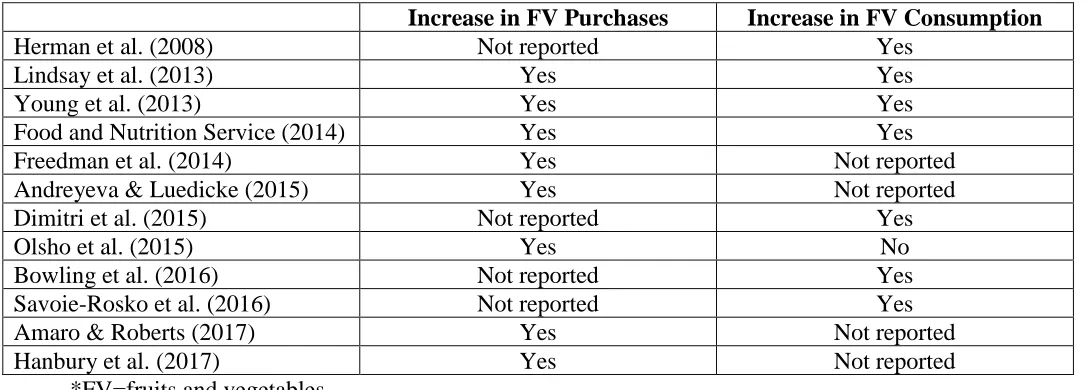
As demonstrated in Table 3, four of the empirical studies reviewed focused exclusively
on fruit and vegetable purchases, and four focused exclusively on fruit and vegetable
consumption (Amaro & Roberts, 2017; Bowling et al., 2016; Dimitri et al., 2015; Herman,
Harrison, Afifi, & Jenks, 2008; Savoie-Rosko et al., 2016; Freedman et al., 2014; Hanbury,
Gomez-Camacho, Kaiser, Sadeghi, & de la Torre, 2017; & Andreyeva & Luedicke, 2015).
Notably, each of these eight studies reported increases in either fruit and vegetable purchases or
consumption in conjunction with incentive programs. Thus, all of the studies that assessed
changes in either purchases or consumption reported that incentives were associated with an
increase in these behaviors. These findings demonstrate the efficacy of incentives for enhancing
the dietary quality of federal food assistance participants.
Surveys Interviews Sales Tracking
Health Data Tracking
Focus Groups
Herman et al. (2008) X X X
Lindsay et al. (2013) X X
Young et al. (2013) X X
Food and Nutrition Service (2014) X X X X
Freedman et al. (2014) X X
Andreyeva & Luedicke (2015) X
Dimitri et al. (2015) X
Olsho et al. (2015) X X X
Bowling et al. (2016) X
Savoie-Rosko et al. (2016) X Amaro & Roberts (2017) X
20
The remaining four empirical studies considered in this review accounted for both fruit
and vegetable purchases and consumption (Lindsay et al., 2013; Food and Nutrition Service,
2014; Young, et al., 2013; Olsho et al., 2015). Of these studies, three reported that the use of
incentives is associated with both increases in purchases and consumption (Lindsay, et al., 2013;
Food and Nutrition Service, 2014; Young, et al., 2013). The remaining study, Olsho et al., 2015,
reported an increase in purchases but concluded that there was no observable difference in
consumption between incentive program participants and non-participants. With this exception,
these studies further illustrate that incentives are an effective approach for improving the dietary
[image:22.612.37.580.363.558.2]quality of federal food assistance program participants.
Table 3: Observed Increases in Fruit and Vegetable Purchases and Consumption
*FV=fruits and vegetables
B. Factor 1: Program Structure
A variety of types of incentives have been explored as approaches for increasing the
purchase and consumption of fruits and vegetables by federal food assistance program
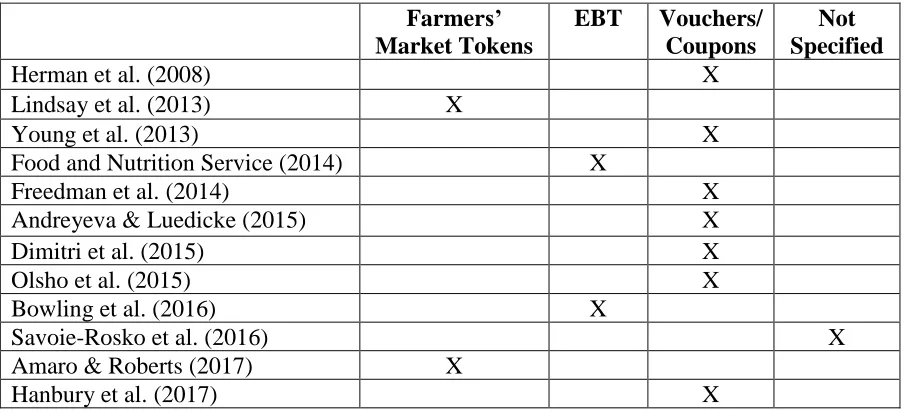
participants. Table 4 summarizes the types of benefits that have been granted to participants
through incentive programs. Generally, programs discussed in the literature provided participants Increase in FV Purchases Increase in FV Consumption
Herman et al. (2008) Not reported Yes
Lindsay et al. (2013) Yes Yes
Young et al. (2013) Yes Yes
Food and Nutrition Service (2014) Yes Yes
Freedman et al. (2014) Yes Not reported
Andreyeva & Luedicke (2015) Yes Not reported
Dimitri et al. (2015) Not reported Yes
Olsho et al. (2015) Yes No
Bowling et al. (2016) Not reported Yes
Savoie-Rosko et al. (2016) Not reported Yes
Amaro & Roberts (2017) Yes Not reported
21
with a financial incentive in the form of coupons/vouchers, tokens redeemable at farmers’
markets, or EBT credits. These incentives were typically granted either as a result of healthy
food purchases or before purchases were made as a means of discounting the cost of healthy
food. As such, these benefits serve to induce participants to increase their fruit and vegetable
purchases by providing them with financial rewards for these purchases or resources that enable
[image:23.612.81.534.280.487.2]them to purchase these foods at a lower price.
Table 4: Types of Benefits
In most of the incentive programs discussed in the literature, participants were required to
make a purchase before they received a benefit (Food and Nutrition Service, 2014; Olsho et al.,
2015; Young et al., 2013; Dimitri et al., 2015; Bowling et al., 2016; Freedman et al., 2014;
Savoie-Rosko et al., 2016; Lindsay et al., 2013; Amaro & Roberts, 2017). In these cases, the
value of the benefit was either pre-determined or determined by the value of participants’
purchases. For example, in the incentive program studied by Freedman et al. (2014), participants
received benefits valued at $5 regardless of the cost of their initial purchases. However, many Farmers’
Market Tokens
EBT Vouchers/ Coupons
Not Specified
Herman et al. (2008) X
Lindsay et al. (2013) X
Young et al. (2013) X
Food and Nutrition Service (2014) X
Freedman et al. (2014) X
Andreyeva & Luedicke (2015) X
Dimitri et al. (2015) X
Olsho et al. (2015) X
Bowling et al. (2016) X
Savoie-Rosko et al. (2016) X
Amaro & Roberts (2017) X
22
incentive programs evaluated in the literature functioned such that the value of the benefit was
determined by the magnitude of participants’ spending (Lindsay et al., 2013; Food and Nutrition
Service, 2014; Savoie-Roskos et al., 2016; Olsho et al., 2015; Young et al., 2013; Amaro &
Roberts, 2017; Bowling et al., 2016; Dimitri et al., 2015). In these cases, the value of the benefit
was either equal to participants’ spending or a percentage of their spending. In many instances,
such as in the Double-Up Bucks programs, 100% of participants’ spending was matched,
meaning that the value of the benefits was equal to the amount of money spent by participants
(Amaro & Roberts, 2017; Lindsay et al., 2013; Savoie-Roskos et al., 2016). Other programs
provided benefits that were valued as a percentage of participants’ spending. For instance, the
Health Bucks and Philly Food Bucks programs provided $2 vouchers for every $5 participants
spent, and thus acted as a 40% match of participants’ spending (Young et al., 2013; Lindsay et
al., 2013). Notably, incentives that are granted in proportion to participants’ spending are
designed to encourage participants to purchase more fruits and vegetables, since with these
programs, the more participants spend on these foods, the more they are rewarded.
In cases in the literature in which participants were not required to make a purchase to
receive benefits, the benefits had a pre-determined value. They were either awarded when
participants signed up for the program, handed out when participants visited a farmers’ market,
or distributed on a regularly scheduled basis (Herman et al., 2008; Hanbury et al., 2017; Bowling
et al., 2016; Andreyeva & Luedicke, 2015). Accordingly, these types of incentive programs are
designed to increase participants’ healthy food purchases solely by increasing the financial
resources they have available to purchase these foods.
It is also worth noting that multiple forms of incentives have also been implemented in
23
cost of participants’ purchases as well as provided $20 for fruit and vegetable purchases every
third farmer’s market visit. As such, some of programs utilize multiple types of incentives and
thus have employed several strategies to increase healthy food purchases.
Another difference between incentive programs is that while some of the programs
provide benefits that can be utilized to purchase only fruits and vegetables, others provide
benefits that are applicable to a more diverse range of foods, such as any SNAP-eligible food or
any food sold at a participating farmers’ market. It is important to note that one drawback of
awarding benefits that can be used for a broad range of foods is that participants do not
necessarily utilize the benefit to purchase healthy foods. For example, in the HIP program,
participants were awarded additional EBT after purchasing fruits and vegetables and therefore
could use the benefits to purchase any SNAP eligible product. Since SNAP has very few
restrictions on what foods can be purchased with benefits, participants had more resources to
purchase food, but there were no mechanisms in place for ensuring that these foods were
healthful. As such, Richards and Sindelar (2013) note that creating nationwide incentive
programs for SNAP participants by extending HIP raises concerns related to the use of bonus
EBT for unhealthy purchases. Accordingly, these researchers suggest that other types of
interventions that encourage participants to spend their benefits on healthy food may also be
necessary if this type of incentive program is utilized (Richards & Sindelar, 2013).
Consequently, the literature indicates that incentive programs that provide participants with
additional benefits to purchase any SNAP qualifying food may not be as effective in improving
dietary quality absent of other interventions when compared to programs that only provide
24
C. Factor 2: Definition of Fruits and Vegetables
The incentive programs discussed in the literature varied in how they defined fruits and
vegetables, as shown in Table 5. HIP incentives, for example, could be applied to targeted fruits
and vegetables, which were defined as any fresh, canned, frozen, and dried fruit or vegetable as
long as it did not contain added sugars, fats, oils, and salts. In addition, the pilot excluded fruit
juice, mature legumes, and white potatoes (Food and Nutrition Service, 2014). These
specifications were selected to mirror the restrictions that WIC places on the produce items that
can be purchased with benefits (Olsho, Klerman, Wilde, & Bartlett, 2016). In contrast, other fruit
and vegetable incentive programs applied only to fresh fruits and vegetables (Dimitri et al., 2015;
Bowling et al., 2016; Herman et al., 2008; Lindsay et al., 2013; Freedman et al., 2014; Olsho et
[image:26.612.55.562.426.651.2]al., 2015).
Table 5: Fruit and Vegetables Targeted by Incentive Programs
*FV=fruits and vegetables
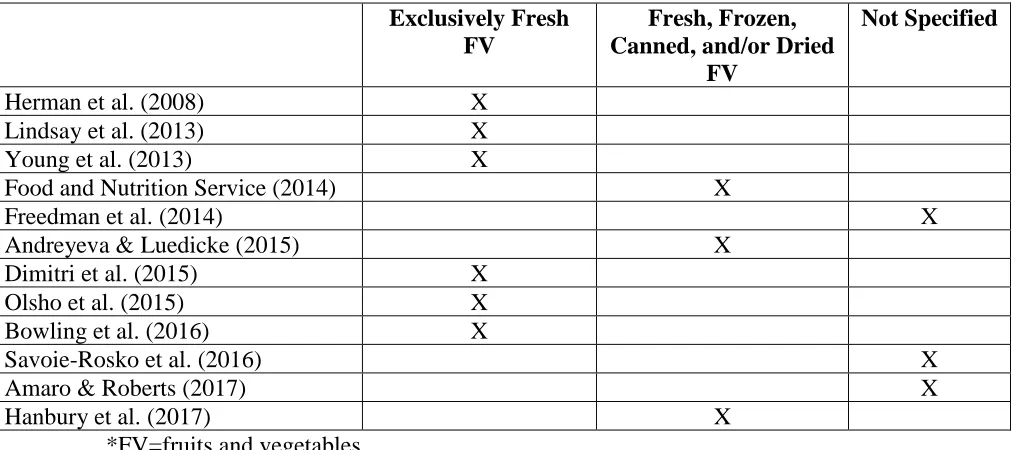
The definition of fruits and vegetables may be especially relevant when considering
issues related to food access. Notably, the literature surrounding the relationship between the Exclusively Fresh
FV
Fresh, Frozen, Canned, and/or Dried
FV
Not Specified
Herman et al. (2008) X
Lindsay et al. (2013) X
Young et al. (2013) X
Food and Nutrition Service (2014) X
Freedman et al. (2014) X
Andreyeva & Luedicke (2015) X
Dimitri et al. (2015) X
Olsho et al. (2015) X
Bowling et al. (2016) X
Savoie-Rosko et al. (2016) X
Amaro & Roberts (2017) X
25
effectiveness of incentives and physical access to food retailers is conflicting (Beaulac,
Kristjansson, & Cummins, 2009; Grindal, Wilde, Schwartz, Klerman, Bartlett, & Berman, 2016).
In the case of incentive programs that include fresh, frozen, canned, and dried fruits and
vegetables, offering incentives for these products may be a more effective pathway for increasing
fruit and vegetable purchases and consumption for participants who live in areas where access to
these foods is limited. These environments tend to contain small convenience stores rather than
supermarkets, and thus, residents may only have access to canned, frozen, or dried fruits and
vegetables (Beaulac et al. 2009). Therefore, incentives that are not exclusive to fresh fruits and
vegetables may be more easily utilized in these communities. In contrast, the literature has
demonstrated that distance from food retailers has a negligible effect on the ability of participants
to use incentives and therefore does not impact the outcomes of the programs (Grindal et al.
2016). In the case of HIP, Grindal et al. (2016) found that distance to HIP-participating grocery
stores had no influence on the impact of the incentives. Specifically, these researchers noted that
households that were located farther from participating grocery stores did spend fewer of the
benefits they received from incentive programs on fruits and vegetables, reporting that every
additional mile that a household was from a participating retailer was correlated with a $0.69
reduction in fruit and vegetable spending per month. However, they concluded that the
magnitude of this reduction was insignificant. Accordingly, it is unclear whether the definition of
fruits and vegetables affects the likelihood that participants will use the benefits they acquire
through incentive programs.
The literature also indicates that incentives that apply only to fresh fruits and vegetables
are often administered at farmers’ markets, where fresh fruits and vegetables tend to be
26
food vendors in addition to incentivizing fruit and vegetable purchases, as they increase market
sales and the revenue of local food producers (Lindsay et al., 2013; Freedman et al., 2014).
Furthermore, the utilization of farmers’ markets by program participants has been reported to
positively impact dietary quality, as discussed in greater detail in the following section.
D. Factor 3: Venues
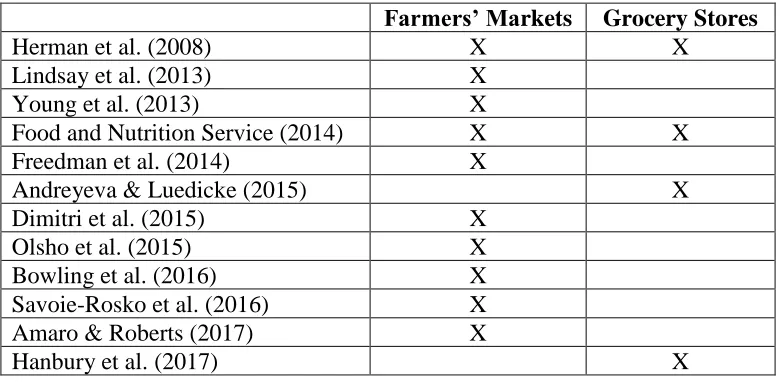
Table 6 illustrates that the majority of the literature has examined farmers’ markets as a
venue for incentive programs. In addition, some programs have been implemented at grocery
stores in addition to farmers’ markets or as an alternative venue to markets (Amaro & Roberts,
2017; Bowling et al., 2016; Dimitri et al., 201; Herman et al., 2008; Lindsay et al., 2013;
Savoie-Rosko et al., 2016; Freedman et al., 2014; Olsho et al., 2015; Food and Nutrition Service, 2014;
[image:28.612.112.502.434.625.2]& Young et al., 2013).
Table 6: Venues Used for Incentive Programs
Farmers’ markets serve as a particularly attractive venue for implementing incentive
programs as a means of improving dietary quality. In particular, the literature indicates that Farmers’ Markets Grocery Stores
Herman et al. (2008) X X
Lindsay et al. (2013) X
Young et al. (2013) X
Food and Nutrition Service (2014) X X
Freedman et al. (2014) X
Andreyeva & Luedicke (2015) X
Dimitri et al. (2015) X
Olsho et al. (2015) X
Bowling et al. (2016) X
Savoie-Rosko et al. (2016) X
Amaro & Roberts (2017) X
27
incentives attract federal food assistance participants who otherwise might not shop at the
markets to these venues (Olsho et al., 2015; Lindsay et al., 2013; Freedman et al., 2014).
Notably, Freedman et al. (2014) found that 57% of participants in a farmers’ market incentive
program had never been to a farmer’s market. Similarly, Olsho et al. (2015) noted that SNAP
participants’ awareness of farmers’ markets rose in relation to their exposure to the Health
Bucks. These researchers also found that 54% of Health Bucks participants who used their
benefits at farmers’ markets strongly agreed that “I shop at farmers’ markets more often because
of Health Bucks.” Lindsay et al. (2013) also found a correlation between incentive programs and
farmer’s market attendance, noting that 82% of participants in the Farmers Market Fresh Fund
Incentive Program had never attended a farmer’s market prior to participating in the program.
They went on to note that many participants reported that incentives were “important” or “very
important” in their decision to shop at farmers’ markets. These researchers also demonstrated
that in addition to drawing more SNAP participants to farmers’ markets, the incentive program
had the potential to impact participants’ long-term shopping behavior. In particular, the majority
of participants reported that they would be “somewhat likely” or “completely likely” to shop at
farmers’ markets even without the continuation of the incentive program (Lindsay et al., 2013).
Accordingly, there is evidence that farmers’ market incentive programs increase participants’
exposure to markets as venues offering affordable, healthy food and in turn have the potential to
positively influence their long-term food purchasing behavior.
Another potential benefit of implementing incentive programs at farmers’ markets is that
the consumption of fruits and vegetables may be positively impacted by the utilization of these
venues. The literature has demonstrated that farmers’ market use is linked to increased fruit and
28
improve dietary quality beyond merely increasing the financial resources participants have to
purchase fruits and vegetables (Pitts, Gustafson, Wu, Mayo, Ward, McGuirt, Rafferty, Lancaster,
Evenson, Keyserling, & Ammerman, 2014). Specifically, Olsho et al. (2015) found that even
absent of incentives, both SNAP participants and non-participants who shopped at farmers’
markets reported higher fruit and vegetable consumption than other residents in their
neighborhoods. Moreover, incentives seem to maximize the positive effect that shopping at
farmers’ markets has on fruit and vegetable consumption. Herman et al. (2008) evaluated the
same incentive program in both grocery stores and farmers’ markets and noted that participants
who utilized their benefits at farmers’ markets reported consuming more fruits and vegetables
than those who used their benefits at grocery stores. Notably, the benefits used as an incentive in
this program could only be applied to the purchase of fruits and vegetables, and as such, the
discrepancy in fruit and vegetable consumption among participants who used their benefits at
farmers’ markets and those who used them at grocery stores cannot be explained by participants
using the benefits to purchase other SNAP eligible foods at grocery stores. Thus, this study
demonstrates that farmers’ markets may have a positive impact on the effectiveness of incentive
programs.
Despite the potential benefits that farmers’ markets may have on the outcomes of
incentive programs, it is important to consider access issues in this context. Specifically, farmers’
markets are not as abundant as other types of food retailers, such as grocery stores, and may not
exist in certain communities. Moreover, many markets are not open year-round. In this regard,
Klerman, Bartlett, Wilde, & Olsho (2014) cited HIP’s implementation in grocery stores as well
as farmers’ markets as one of the Program’s strengthens, since participants’ access to fruits and
29
creation of other programs and discounts for low-income families in addition to farmers’ market
incentives, as many regions of the United States have relatively short farming seasons.
E. Factor 4: Participant Demographics
The literature indicates that the outcomes of incentive programs may be connected to
certain demographic characteristics (Hanbury et al., 2017; Dimitri et al., 2015; Herman et al.,
2008). Notably, Hanbury et al. (2017) reported that incentive program participants’ fruit and
vegetable purchases were influenced by their ethnic and cultural backgrounds, noting that many
of the foods Mexican-heritage households purchased most frequently, including tomatillo,
chayote, chili/jalapeño peppers, and Mexican squashes, were culturally-significant. Additionally,
Hanbury et al. (2017) compared their results to those of Herman et al. (2008). While both studies
included participants that were Latino, the population considered by Hanbury et al. (2017)
resided in a rural area, while the population considered by Herman et al. (2008) resided in an
urban area. Through the comparison of the studies, Hanbury et al. (2017) determined that Latinos
in rural areas purchased more culturally-significant foods with the benefits they received as a
result of incentive programs than Latinos in urban areas. They attributed this difference to the
preservation of culture that more often occurs in rural communities than in urban communities.
These researchers also compared their findings to those of Andreyeva and Luedicke (2015).
They assumed that since the analysis performed by Andreyeva and Luedicke (2015) was
conducted on an incentive program in New England, their sample included a high proportion of
non-Hispanic whites. Subsequently, Hanbury et al. (2017) assessed the significance of ethnicity
of fruit and vegetable purchases in conjunction with incentive programs. They reported that
Mexican-heritage households spent 55% of their benefits on fruits and 45% of their benefits on
30
their benefits on vegetables. Similarly, Herman et al. (2008) noted that English-speaking African
American and white participants consumed more vegetables as a result of incentives, while
Spanish-speaking non-Hispanic white participants consumed more fruits as a result of incentives.
They attributed this difference to the association between recent immigration status and Spanish
language preference and thus concluded that participants who have a strong attachment to their
cultural heritage are more likely to maintain culturally-significant eating behaviors. These
findings demonstrate that ethnicity and cultural background may affect which foods participants
choose to purchase with the benefits they acquire through incentive programs. In turn, they
suggest that incentivizing culturally-significant fruits and vegetables for a particular population
may increase the effectiveness of programs.
Several demographic factors have also been linked to incentive program retention.
Specifically, Dimitri et al. (2015) noted that participants who were more reliant on food banks,
very income restrained, and lived in areas where access to food was limited were more likely to
drop out of the incentive program they studied. These researchers were not able to determine
whether these factors directly caused participants to drop out of the program. However, their
finding suggests that the presence of these factors may impact the effectiveness of incentive
programs, as participant retention is essential for incentives to influence fruit and vegetable
purchases and consumption.
Although the literature illustrates that demographic characteristics may impact which
fruits and vegetables participants purchase as well as program retention, it indicates that these
characteristics do not substantially impact the degree to which incentives increase total fruit and
vegetable purchases and consumption. Notably, Klerman et al. (2014) examined HIP’s impact on
31
status, employment status, household composition, WIC status, and SNAP benefit amount. They
found that differences in total consumption between these demographic subgroups were not
statistically significant. Accordingly, the literature suggests that demographic characteristics may
affect which fruits and vegetables participants’ purchase and consume as well as program
retention but do not impact overall changes in the amount of fruits and vegetables that
participants purchase and consume as a result of incentive programs.
F. Additional Research
Although the literature indicates that incentive programs positively impact fruit and
vegetable purchases and consumption by federal food assistance participants, it also reveals
several areas that require additional research in order to understand how to create effective
programs. For instance, other interventions, such as nutrition education, cooking demonstrates,
and food tastings, are often deployed in conjunction with incentives. These interventions not
only equip participants with the knowledge they need to make healthy eating decisions and
integrate healthy foods into their diets but may also contribute to participant retention. For
example, Bowling et al. (2016) reported that exposure interventions such as cooking
demonstrations, tastings, recipe card offerings, and children's educational activities was equally
important for retention as incentives. In addition, Dimitri et al. (2015) hypothesized that the
integration of education or health consultations may improve participant retention. As retention
is a key determinant of program effectiveness, these findings highlight the need for additional
research to understand the interplay between incentives and other interventions in increasing fruit
and vegetable purchases and consumption.
Another area in which additional research is needed is the actual impact that incentives
32
perceptions of their health (Lindsay et al, 2013; Food and Nutrition Service, 2014). However,
with the exception of Hanbury et al. (2017) and Herman et al. (2008), which evaluated
participants’ weights, BMIs, and other relevant health metrics, few studies have used health data
to draw conclusions about the actual effect of incentives on health. Instead, most of the research
has relied on self-reported assessments of health status as well as inferences about health based
on the established relationship between fruit and vegetable intake and chronic disease.
Consequently, the actual impact of incentives on health remains unclear. In addition, the
magnitude of fruit and vegetable consumption increases in relation to health outcomes requires
further study. Specifically, in evaluating HIP, An (2015) determined that although expanding
HIP nationwide would likely increase fruit and vegetable purchases and consumption, changes in
diet are proportional to changes in the price of fruits and vegetables. Thus, An concluded that
even reducing the cost of fruits and vegetables by 30% would not increase consumption enough
to generate substantial changes in weight, disease prevention, and quality of life. Accordingly,
identifying the point at which incentives create a tangible difference in health outcomes is key
for creating programs that promote participants’ well-being.
Another gap in the literature relates to the long-term effects of incentives. Few studies
have investigated the capacity of incentive programs to influence long-term food consumption
and purchasing behavior. Thus, the long-term efficacy of incentives is uncertain (Savoie-Roskos
et al., 2016; Olsho et al., 2016). While Herman et al. (2008) reported that incentives increased
participants’ fruit and vegetable consumption even six months after the program’s conclusion,
the majority of the literature has only measured changes in fruit and vegetable purchases and
consumption while the program in still in progress and immediately after its conclusion.
33
relied on self-reported predictions of future food purchasing behavior (Lindsay et al., 2013). As
no longitudinal studies of the impact of incentive programs have been performed, additional
research is required to determine the long-term impact of these programs.
Overall, studies of incentive programs reveal the potential effectiveness of incentive
programs for improving the dietary quality of federal food assistance program participants. The
literature indicates that incentive programs have a positive impact on both fruit and vegetable
purchases and consumption. However, the research regarding the application of incentives to the
food purchasing and consumption behavior of federal food assistance participants has been fairly
limited, as there are only twelve empirical papers examining the use of incentives. Moreover,
there are several challenges regarding the effective design and implementation of incentive
programs that require additional research, including ensuring that benefits are spent on healthy
foods, establishing the parameters for the foods targeted by incentives, employing incentives in
venues in which they will have a maximum impact, and appealing to certain demographic
subgroups. In addition, there is a need for additional investigation regarding the impact of
incentives on long-term food consumption behavior and health outcomes. Exploring these factors
is critical for understanding how to effectively design and implement effective incentive
programs.
III.
Methods
Although a number of studies have explored incentives as a strategy for improving the
dietary quality of low-income individuals by studying the design and implementation of
individual programs (Amaro & Roberts, 2017; Bowling, Moretti, Ringelheim, Tran, & Davison,
34
Mei, Delaney, & Wooten, 2013; Savoie-Roskos, Durward, Jeweks, & LeBlanc, 2016; Freedman,
Mattison-Faye, Alia, Guest, & Hébert, 2014; Olsho, Payne, Walker, Baronberg, Jernigan, &
Abrami 2015; Hanbury, Gomez-Camacho, Kaiser, Sadeghi, & de la Torre, 2017; Young,
Aquilante, Solomon, Colby, Kawinzi, Uy, & Mallya, 2013; Andreyeva & Luedicke, 2015),
these studies have largely utilized pretest-posttest designs in which one type of incentive
program is implemented and evaluated. As such, no studies have evaluated the outcomes of
multiple incentive programs simultaneously, and no comparative case studies have been
conducted.
Using a comparative case study, this research contributes to the literature by employing a
novel approach to assess the impact of incentive programs on SNAP participants’ behaviors
related to the purchase and consumption of fruits and vegetables and perceptions of the
affordability of these foods. While this research has as a similar objective as the existing
literature—to evaluate incentives as a strategy for increasing the purchase and consumption of
fruits and vegetables by SNAP participants—rather than the pretest-posttest studies that have
been used previously, it evaluates incentive program outcomes through a case study of
completed FINI pilot grant projects. By doing so, this research addresses several gaps in the
literature by comparing different incentive programs that have been implemented across the
country.
Moreover, this research builds on the existing literature by using a case study approach to
verify the impact of various factors on program outcomes. Some of these factors, including type
of retailer and benefit distribution, have been previously identified as influencing program
outcomes using single-case quasi-experiments but have not been the primary focus of previous
35
factors that have not been considered in past studies, such as program advertising. Subsequently,
it expands understanding of the potential of incentive programs to positively impact SNAP
participants’ behaviors concerning fruit and vegetable purchase and consumption as well as their
perception of fruit and vegetable affordability.
A. Analytical Framework
In this research, the impact of incentive programs is assessed through a case study
approach. Specifically, programs are evaluated by analyzing the relationship between factors that
were identified as potentially impacting incentive program outcomes in the literature. Qualitative
comparative analysis (QCA) is utilized for the analysis. QCA is an approach through which
cases can be compared by considering their similarities and differences using logic rules (Shalev,
2007). Through this method, it is possible to identify conditions and combinations of conditions
that result in a certain outcome. To identify these conditions and combinations, conditions are
assessed by considering their presence and absence in each case. In turn, conditions and
combinations are linked to specific outcomes using truth tables (Shalev, 2007). As such, QCA
acts as an alternative to regression analysis for analyzing a medium number of cases for which a
variety of combinations of factors may lead to the same outcome. In addition, QCA is useful for
comparing heterogenous cases and is thus particularly effective for understanding nuanced social
phenomena (Hudson & Kühner, 2013).
As this research is focused on whether several conditions and combinations of conditions
influence the outcomes of incentive programs, QCA is an appropriate methodology because it
allows for the evaluation of multiple combinations of factors that potentially give rise to a
36
between factors in the design and implementation of incentive programs and programs that
positively impact participants’ behaviors concerning fruit and vegetable purchase and
consumption and perceptions of fruit and vegetable affordability. Furthermore, by allowing for
the consideration of multiple combinations of conditions, utilizing QCA increases the external
validity of this case study and provides a means of understanding the complex relationship
between conditions that explain participants’ behaviors and perceptions of affordability
regarding fruit and vegetable purchase and consumption. In addition, QCA is appropriate due to
the number of cases being analyzed. Specifically, this research considers nineteen cases, and
consequently, utilizing a small-n case study approach and obtaining detailed information about
the history of the design and implementation of each program is not feasible. Moreover, taking a
large-n case study approach and utilizing statistical analyses is not suitable due to the limited
number of cases. QCA does not require a minimum number of cases for statistical significance
and therefore allows for nineteen cases to be considered in this analysis. Furthermore, the data
used for this research make the use of QCA appropriate. Specifically, the incentive programs
considered used a variety of metrics to assess and report their impacts. QCA allows for the
studies to be evaluated despite the variation in the ways in which they assess and report their
outcomes by creating a framework in which potential causal factors are systematically coded
based on their presence and absence in each of the cases considered. More specifically, crisp-set
QCA (csQCA) was chosen for this analysis. For csQCA, conditions are coded dichotomously
based on their presence or absence in each case. This approach was chosen over fuzzy-set QCA
(fsQCA), an approach for which conditions are coded using values based on 0 and 1 to represent